









Gold Price Today: Latest Updates, Market Trends, and Investor Insights
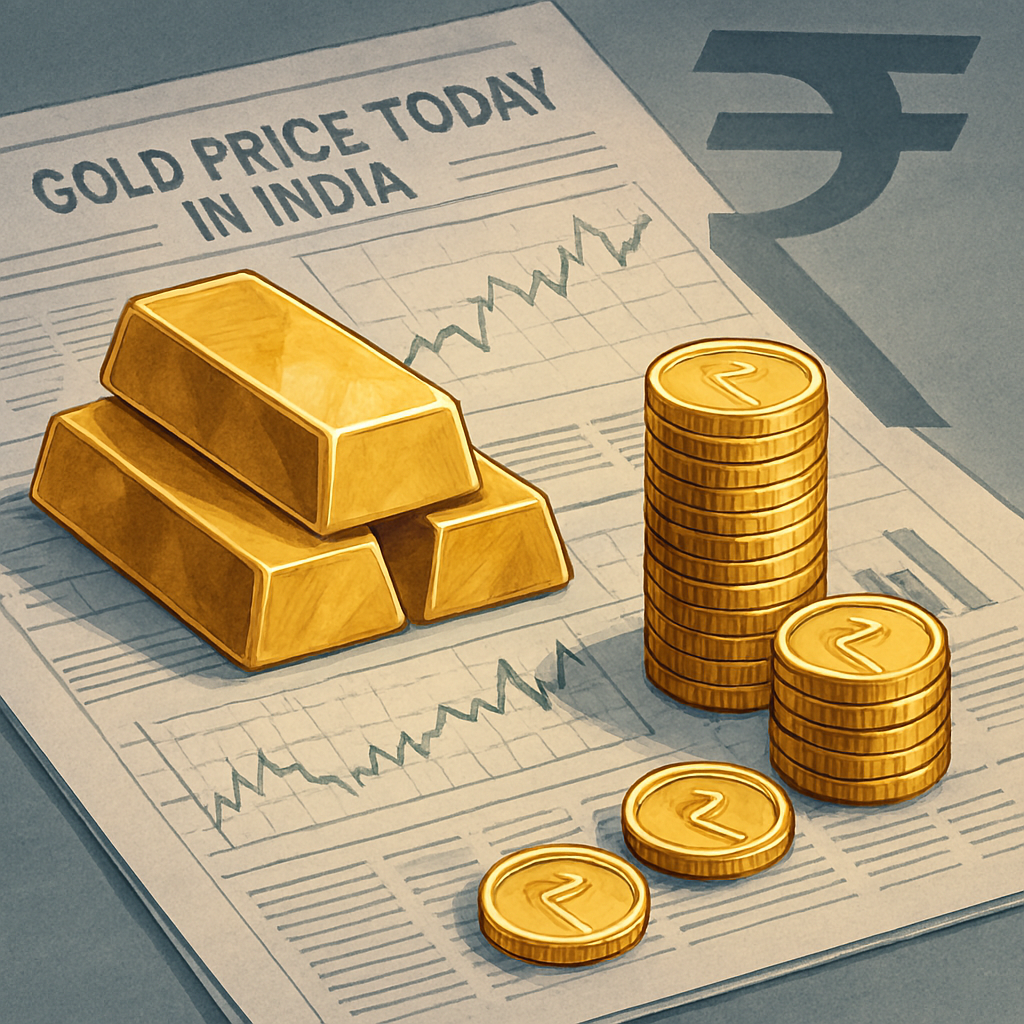
Gold price today continues to dominate financial headlines as global investors watch U.S. rate cut expectations and silver’s record-breaking surge. This detailed analysis breaks down the latest price trends, market drivers, and expert insights for Indian investors.
Table of Contents
The precious metals market has experienced significant activity during September 2025, with gold prices attracting considerable attention from investors worldwide. In India, one of the world’s largest gold-consuming nations, understanding price movements and market dynamics has become increasingly important for both individual and institutional investors.
As of September 30, 2025, gold prices reflect multiple economic factors including monetary policy developments, currency fluctuations, and geopolitical conditions. This analysis examines current market conditions, underlying drivers, and practical considerations for investors navigating the precious metals landscape.
The Indian gold market operates within a unique context that combines investment demand, cultural traditions, and economic factors. Understanding these elements provides essential perspective for making informed decisions about gold allocation in investment portfolios.
Overview of Current Gold Market Conditions
Global Price Movements in September 2025
Gold markets have demonstrated notable strength throughout September 2025. International prices reflect investor response to evolving economic conditions across major economies. The precious metal’s performance indicates sustained demand from multiple buyer categories including central banks, institutional investors, and retail consumers.
Market data shows gold maintaining elevated price levels compared to earlier periods in 2025. Trading activity across major exchanges including COMEX, London Bullion Market, and Indian commodity exchanges indicates robust participation. Volume data suggests genuine demand underpins price movements rather than speculative positioning alone.
Price volatility has remained moderate relative to other asset classes. Daily price ranges have stayed within parameters consistent with established precious metals trading patterns. This stability during a period of broader market uncertainty underscores gold’s characteristic role in investment portfolios.
Indian Market Pricing Structure
Indian gold prices as of September 30, 2025, reflect both international price levels and domestic factors. The pricing structure varies based on purity standards, with distinct rates for 22-karat and 24-karat gold serving different consumer segments.
22-Karat Gold: This purity level remains the standard choice for jewelry manufacturing in India. The composition combines gold with small amounts of other metals to enhance durability. Prices for 22K gold in major metropolitan areas show increases compared to early September levels.
24-Karat Gold: Investment-grade gold at maximum purity attracts buyers focused primarily on store-of-value characteristics. Prices for 24K gold command premiums over 22K gold reflecting the higher gold content. Investment products including coins, bars, and digital gold typically utilize this purity standard.
Regional price variations exist across Indian cities due to local tax structures, transportation costs, and dealer margins. Mumbai, Delhi, Chennai, Kolkata, and Bangalore represent major price-setting centers with slightly different rate structures based on local market conditions.
Currency Impact on Domestic Pricing
The USD/INR exchange rate significantly influences gold prices in India. International gold trading occurs primarily in U.S. dollars, requiring Indian importers to convert rupees for purchases. Exchange rate movements therefore directly affect the rupee cost of gold imports.
September 2025 has witnessed rupee volatility against the dollar. Several factors influence currency performance including capital flows, crude oil prices, and broader emerging market currency trends. A weaker rupee translates to higher domestic gold prices even when dollar-denominated international prices remain stable.
This currency dynamic creates a multiplicative effect for Indian consumers. When both international gold prices increase and the rupee depreciates simultaneously—the situation observed in September 2025—domestic price increases become amplified. Conversely, rupee strength can partially offset international price gains.
Import duties and Goods and Services Tax (GST) further affect final consumer prices. Current fiscal policies add significant premiums to international gold prices. Any modifications to import duty structures or tax rates could substantially impact domestic pricing levels.
Economic Factors Influencing Gold Prices
Monetary Policy Developments
Central bank policy decisions represent primary drivers of gold price movements. The U.S. Federal Reserve’s monetary policy stance particularly influences global gold markets given the dollar’s role as the primary reserve currency.
Market participants have increasingly incorporated expectations of interest rate adjustments into pricing. Rate cut expectations have grown during September 2025, marking a shift from the tightening cycle implemented during 2022-2023. Lower interest rates reduce the opportunity cost of holding non-yielding assets like gold, potentially increasing investor demand.
Federal Open Market Committee communications suggest a measured approach to policy adjustments. Policymakers continue balancing multiple considerations including inflation metrics, employment data, and economic growth indicators. The September FOMC meeting outcomes contributed to market expectations regarding potential fourth quarter 2025 rate adjustments.
Central banks globally maintain varying policy stances based on domestic economic conditions. The Reserve Bank of India follows its own policy framework while considering global monetary trends. RBI decisions affect domestic liquidity conditions and real interest rates, influencing gold demand within India.
Inflation Dynamics
Inflation rates across major economies remain above central bank target levels despite moderation from peak readings observed during 2022-2023. This persistent inflation environment reinforces gold’s traditional role as a purchasing power hedge.
Consumer price data from the United States, European Union, and India show inflation gradually declining but remaining elevated. Core inflation metrics, which exclude volatile food and energy components, demonstrate particular persistence. This suggests underlying price pressures continue despite headline inflation improvements.
Historical evidence supports gold’s effectiveness in preserving value during inflationary periods. Multi-decade analysis shows gold prices generally maintain purchasing power relative to consumer goods baskets. This characteristic makes gold allocation relevant for investors concerned about long-term wealth preservation.
Real interest rates—nominal rates adjusted for inflation—provide important context for gold pricing. When real rates remain low or negative, gold becomes relatively more attractive. September 2025 real rate calculations across major economies suggest conditions supportive of precious metals demand.
Geopolitical Considerations
Global geopolitical conditions influence investor risk perceptions and safe-haven asset demand. Complex international relationships, regional conflicts, and diplomatic uncertainties contribute to elevated risk awareness among market participants.
Gold’s safe-haven characteristics become particularly relevant during periods of heightened geopolitical tension. Historical patterns show gold prices typically strengthen when confidence in geopolitical stability weakens. Investors seek assets perceived as stores of value independent of specific national or political circumstances.
Central bank gold purchases from emerging market monetary authorities add structural demand supporting price levels. Several nations have publicly stated intentions to diversify reserve holdings, increasing gold allocations relative to foreign currency reserves. These institutional purchases provide ongoing demand distinct from investment or consumer buying.
The relationship between global uncertainty and gold demand extends beyond immediate crisis response. Persistent uncertainty creates sustained elevated demand as investors maintain defensive portfolio positioning. This sustained demand differs from temporary spikes followed by rapid reversals.
Silver Market Developments and Implications
Silver Price Performance in September 2025
Silver has experienced remarkable strength during September 2025, reaching price levels not observed since 2011. This represents a 14-year high for the white metal, attracting significant market attention alongside gold’s performance.
Silver’s price behavior differs from gold in important ways. While both qualify as precious metals with monetary characteristics, silver maintains substantial industrial applications. This dual nature creates unique supply-demand dynamics not present in primarily monetary metals.
The industrial demand component distinguishes silver from gold fundamentally. Manufacturing sectors including electronics, solar panel production, and emerging technologies consume significant silver quantities. This industrial usage provides demand independent of financial market sentiment.
Industrial Demand Drivers
Renewable energy expansion globally has emerged as a major silver demand factor during 2025. Solar photovoltaic installations worldwide require silver for cell production. As countries pursue climate commitments and renewable energy targets, this structural demand source continues growing.
Each solar panel contains specific silver quantities essential for electrical conductivity. Global solar installation acceleration translates directly into increased silver consumption. Industry analysts project this demand segment will continue expanding through the remainder of the decade.
Beyond renewable energy, silver applications in 5G telecommunications infrastructure, electric vehicle components, and advanced electronics contribute to industrial demand. The electronics industry’s continued growth, particularly in developing economies, creates sustained consumption patterns.
This industrial foundation differentiates silver’s price drivers from gold’s primarily financial demand profile. While gold prices mainly reflect monetary considerations and investment sentiment, silver incorporates both financial demand and real-world industrial consumption patterns.
Gold-Silver Ratio Analysis
Market analysts monitor the gold-silver ratio—the number of silver ounces required to purchase one gold ounce. This ratio provides insights into relative valuation between the two metals and can indicate investment opportunities.
The gold-silver ratio has fluctuated throughout history within certain ranges, though these ranges evolve over time. September 2025’s silver strength has compressed the ratio, meaning silver has outperformed gold on a percentage basis recently.
Some technical analysts interpret ratio compression as indicating silver’s recovery after extended periods of relative underperformance compared to gold. Historical precedents suggest the ratio tends to compress during precious metals bull markets as silver’s smaller market size creates more pronounced percentage movements.
For portfolio construction, movements in both metals create diversification considerations. Gold typically serves as core precious metals exposure due to liquidity and stability characteristics. Silver’s industrial demand profile offers different return drivers that can complement gold positions within broader commodity allocations.
Investment Considerations for Different Gold Products
Physical Gold Options
Indian investors access gold through multiple physical formats, each with distinct characteristics and considerations.
Gold Jewelry: Traditional jewelry purchases combine adornment with investment purposes. Cultural significance makes jewelry important in Indian households. However, jewelry carries manufacturing charges (making charges) typically ranging from 10-25% depending on design complexity. When reselling, these charges are generally not recovered, reducing investment returns.
Gold Coins and Bars: Investment-grade coins and bars provide purer investment exposure without jewelry making charges. Banks, authorized dealers, and certified retailers offer these products with minimal premiums over underlying gold prices. Buyers should verify proper certification and hallmarking to ensure purity and weight accuracy.
Physical gold ownership involves practical considerations. Storage security represents an important concern whether maintaining home storage or utilizing bank locker facilities. Insurance costs for physical holdings add ongoing expenses. Verification of purity when purchasing or selling requires attention to hallmarking and dealer reputation.
Digital Gold Platforms
Technology-enabled gold investment products have expanded access and convenience for Indian investors.
Digital Gold Services: Online platforms enable gold purchases in any denomination including amounts as small as one rupee. Gold is stored in secure vaults on investors’ behalf while maintaining ownership rights. Physical delivery options exist if desired.
Digital gold offers several advantages including convenience, elimination of storage concerns, and liquidity through easy transaction mechanisms. Platform selection should consider factors including security measures, storage facility quality, and terms for physical delivery if required.
Gold Exchange Traded Funds
Gold ETFs trade on stock exchanges similar to equity shares, providing liquid and transparent gold price exposure.
Each ETF unit represents a specific physical gold quantity held by the fund. ETFs offer advantages including easy trading during market hours, no storage requirements, and elimination of purity verification concerns. Management fees remain relatively low compared to actively managed funds.
Gold ETFs track gold prices with minimal tracking error, making them effective tools for obtaining gold price exposure. Trading during market hours provides liquidity and price transparency. Investors can build positions gradually or deploy larger capital amounts as strategies dictate.
Tax treatment for gold ETFs follows capital gains rules. Holdings exceeding three years qualify as long-term capital assets with gains taxed at 20% plus indexation benefits. Shorter holding periods result in short-term capital gains taxation at applicable income tax rates.
Sovereign Gold Bonds
The Government of India’s Sovereign Gold Bond (SGB) scheme represents a unique investment option combining gold price exposure with additional benefits.
Key SGB Features:
- Fixed annual interest rate of 2.5% paid semi-annually
- Capital gains tax exemption if held until maturity (eight years)
- Government backing providing security
- Exit option available after five years
- Tradable on stock exchanges for liquidity
SGBs eliminate storage and purity concerns since they represent paper claims backed by government guarantee. The interest income provides returns unavailable through other gold formats. Tax benefits, particularly capital gains exemption at maturity, create significant advantages for long-term investors.
The Reserve Bank of India announces SGB issuances periodically throughout the year. Purchasing during subscription windows generally provides better pricing than secondary market purchases. However, secondary market trading volumes typically remain lower than gold ETF volumes.
Cultural and Seasonal Demand Factors in India
Festive Season Gold Buying Patterns
September marks the beginning of India’s major festive season, a period traditionally associated with elevated gold purchases. Multiple festivals create concentrated demand affecting market dynamics.
Major Festivals Influencing Demand:
Navratri and Durga Puja: Celebrated with particular intensity in eastern and western India, these festivals have historically generated substantial gold purchases. Cultural traditions consider these periods auspicious for important acquisitions.
Diwali: The festival of lights represents one of the largest gold buying occasions annually. Purchasing gold during Diwali carries cultural significance related to prosperity and good fortune.
Dhanteras: This festival specifically celebrates wealth and prosperity, making it an especially popular day for gold purchases. Retail gold sales typically reach annual peaks on Dhanteras.
The September-October 2025 period encompasses several auspicious occasions. Market participants anticipate sustained demand momentum from festive buying. However, elevated price levels may influence the volume of physical purchases compared to periods with lower prices.
Wedding Season Demand Patterns
Indian wedding seasons represent another major gold demand source. Regional variations in timing exist based on auspicious date calendars and climate considerations.
The post-monsoon period beginning in September traditionally marks a major wedding season extending through December. Gold jewelry purchases for weddings constitute significant portions of annual demand including bridal jewelry and gifts.
September 2025’s price environment creates interesting dynamics for wedding-related gold buying. While weddings proceed regardless of price levels due to cultural importance, higher prices may lead to adjustments in purchase quantities or purity preferences.
Jewelers report families increasingly considering strategies including partial advance payments for jewelry with collection closer to wedding dates. Some buyers explore designs achieving desired aesthetic appearance with slightly lower gold content when price sensitivity increases.
Regional Market Dynamics Across Indian Cities
Mumbai Gold Market
Mumbai functions as India’s financial capital and maintains one of the nation’s most significant gold markets. The city’s extensive jewelry trade and proximity to import facilities make it a price-setting center for national markets.
September 2025 has witnessed robust demand in Mumbai from both traditional jewelry purchases and investment buying. The city’s diverse consumer base includes retail buyers, jewelers, and institutional participants. Trading volumes in Mumbai typically reflect broader national demand trends.
Delhi-NCR Gold Market
The capital region maintains one of India’s largest gold markets with significant wholesale and retail activity. Delhi prices typically track Mumbai closely but can show variations based on local supply dynamics and regional preferences.
The Delhi market serves as a distribution hub for northern India. Wholesale dealers in Delhi supply jewelry retailers across multiple states. Market sentiment in Delhi often provides indicators for broader regional demand patterns.
Chennai and Southern Markets
South Indian states demonstrate strong historical affinity for gold, particularly during wedding seasons and festivals. Chennai represents a major market center for southern India with distinct consumer preferences.
September traditionally marks the beginning of festive periods in southern states. Chennai markets reflect this seasonal demand pattern. Cultural factors in southern India often translate to higher per-capita gold consumption compared to national averages.
Kolkata and Eastern Markets
Eastern India’s gold markets have distinct dynamics influenced by regional festivals and traditional buying patterns. The Durga Puja season, which falls during September-October, generates substantial gold demand in this region.
Kolkata serves as the primary market center for eastern India. The city experiences pronounced seasonal demand patterns aligned with major regional festivals. Gold purchases during Durga Puja carry cultural significance driving retail activity.
Tax Implications for Gold Investments in India
Capital Gains Taxation Structure
Understanding tax implications is essential for calculating net investment returns and determining optimal holding strategies.
Physical Gold and Gold ETF Taxation:
- Long-term capital gains (holding period exceeding three years): 20% tax rate with indexation benefits
- Short-term capital gains (holding period under three years): Taxation at applicable income tax slab rates
- Indexation adjusts purchase price for inflation, reducing taxable gains
Sovereign Gold Bond Taxation:
- Capital gains completely tax-exempt if held until maturity
- Interest income taxed at applicable income tax rates
- If sold before maturity, regular capital gains taxation applies
Digital Gold Taxation:
- Follows physical gold tax rules
- Long-term and short-term gains taxed based on holding period
- Proper record maintenance essential for accurate tax reporting
Wealth Tax Considerations
Gold holdings above certain thresholds may have wealth reporting requirements. Investors should consult tax professionals regarding disclosure obligations for substantial gold holdings.
Proper documentation of all gold purchases helps establish cost basis for capital gains calculations. Retaining purchase invoices, payment records, and purity certificates facilitates accurate tax compliance.
Historical Context and Price Patterns
The 2008 Financial Crisis Period
The 2008 global financial crisis provides relevant historical context for understanding gold’s behavior during economic stress periods.
During 2008 and subsequent years, gold entered a significant bull market with prices more than doubling from pre-crisis levels. Federal Reserve responses included aggressive rate cuts and quantitative easing—monetary policies that reduced real interest rates substantially.
These conditions proved highly favorable for gold. Investors who recognized structural drivers and maintained positions through periodic volatility achieved substantial returns. The period demonstrates how monetary policy responses to economic stress can create extended favorable environments for precious metals.
The 2020 Pandemic Rally
The COVID-19 pandemic created another instructive historical parallel. As central banks worldwide implemented unprecedented stimulus measures, gold surged to new all-time highs in August 2020.
The pandemic period demonstrated gold’s value during extreme uncertainty and unconventional monetary policy implementation. While subsequent stimulus withdrawal led to consolidation periods, gold’s crisis performance validated allocations maintained during the uncertainty.
Long-Term Appreciation Patterns
Multi-decade perspectives reveal gold’s substantial long-term appreciation despite intermediate corrections and consolidation periods. Measurements over 20, 30, or 50-year timeframes show dramatic appreciation reflecting gold’s fundamental store-of-value characteristics.
For Indian investors, gold’s long-term track record aligns with cultural wisdom regarding wealth preservation. Generational wealth transfer strategies have traditionally relied heavily on gold holdings, and this approach finds support in empirical appreciation data.
Risk Factors and Cautionary Considerations
Potential Price Correction Scenarios
While current conditions support gold prices, investors should recognize potential correction scenarios.
Factors That Could Pressure Gold Prices:
- Stronger-than-expected economic data reducing rate cut expectations
- Rapid inflation decline diminishing hedge demand
- U.S. dollar strength driven by capital flows
- Resolution of geopolitical tensions reducing safe-haven demand
Market corrections represent normal features of any bull market. Gold has historically experienced significant drawdowns even within longer-term uptrends. Position sizing should reflect capacity to withstand temporary price declines without forced liquidation.
Liquidity Considerations
Different gold investment formats present varying liquidity characteristics. Physical gold requires finding buyers and verifying purity. Gold ETFs offer high liquidity during market hours. SGBs have lower trading volumes creating potential execution challenges for large positions.
Emergency liquidation scenarios should be considered when determining appropriate allocation sizes and product selections. Maintaining adequate non-gold liquid assets ensures financial flexibility for unexpected needs.
Volatility Management
Gold prices can exhibit significant short-term volatility despite long-term appreciation trends. Daily price swings occasionally reach several percentage points during periods of market stress.
Investors uncomfortable with this volatility should size positions accordingly. Systematic investment approaches help manage volatility impact by averaging purchase prices over time. This removes pressure to time market entries perfectly.
Professional Investment Strategies
Systematic Investment Planning
Financial advisors increasingly recommend systematic approaches to gold accumulation rather than lump-sum investments.
Systematic Investment Plans (SIPs) in gold provide several benefits:
- Average purchase costs over time
- Remove timing pressure and emotional decision-making
- Build positions gradually matching cash flow availability
- Reduce impact of short-term price volatility
Gold SIPs can be implemented through digital gold platforms, gold ETFs via systematic purchase plans, or regular physical gold purchases on predetermined schedules.
Portfolio Allocation Guidelines
Investment professionals typically suggest gold allocations ranging from 5-15% of total portfolio value depending on individual circumstances.
Factors Influencing Optimal Allocation:
- Risk tolerance and investment time horizon
- Overall portfolio composition and diversification goals
- Income requirements and liquidity needs
- Age and financial obligations
- Market outlook and economic conditions
Conservative investors might maintain lower allocations around 5%, while those seeking more aggressive diversification or holding strong conviction in gold’s outlook might allocate toward the upper end of the range.
Rebalancing Disciplines
Portfolio rebalancing maintains target allocation percentages as asset values change. When gold appreciates significantly, its portfolio percentage increases beyond target levels. Rebalancing involves reducing gold positions to restore target allocations.
Conversely, when gold prices decline, its portfolio percentage falls below targets. Rebalancing then involves purchasing additional gold to restore appropriate exposure. This disciplined approach inherently implements “buy low, sell high” principles.
Regulatory Framework and Consumer Protection
Bureau of Indian Standards Hallmarking
The BIS hallmarking system ensures gold purity standards in India. Mandatory hallmarking requirements have been progressively implemented and enforced for jewelry sales.
Hallmarking certification protects consumers against purity misrepresentation. The system involves independent assaying and stamping of purity marks on gold items. Reputable jewelers readily provide properly hallmarked gold with appropriate documentation.
BIS Hallmark Components:
- BIS logo indicating certification
- Purity grade in carats or fineness
- Assaying center mark
- Jeweler’s identification mark
Consumers should insist on proper hallmarking when purchasing physical gold. This certification provides legal recourse if purity disputes arise and ensures transparency in transactions.
SEBI Regulatory Framework
Securities and Exchange Board of India regulates gold ETFs and related financial products. This regulatory oversight provides investor protections and market integrity assurance.
SEBI regulations require disclosure of fund holdings, expense ratios, and tracking error. Regular audits verify physical gold holdings backing ETF units. These regulatory structures enhance confidence in paper gold products.
Digital gold platforms operate under various regulatory frameworks depending on their specific business models. Investors should verify regulatory compliance and understand storage arrangements when selecting digital gold providers.
Future Outlook and Market Scenarios
Base Case Projection
Most market analysts project continued gold strength through the remainder of 2025 and into 2026, with periodic consolidations representing normal bull market behavior.
This scenario assumes Federal Reserve rate cuts materialize broadly as expected, geopolitical uncertainties persist at current or elevated levels, and inflation remains above target ranges despite gradual moderation. Under these conditions, gold’s fundamental support structure remains intact.
Indian investors following this scenario might consider maintaining or gradually building gold allocations. Systematic investment approaches become particularly valuable, removing timing decision burdens while building positions over time.
Bullish Scenario Considerations
A more optimistic scenario envisions accelerated gold appreciation if certain conditions develop. Potential catalysts include more aggressive Federal Reserve easing than currently anticipated, escalation of geopolitical tensions, or unexpected financial market disruptions triggering safe-haven flows.
Under such scenarios, gold could substantially exceed previous all-time highs. Historical precedents demonstrate gold can appreciate rapidly once momentum builds, particularly when speculative interest joins fundamental buying.
Investors should recognize that accelerated appreciation scenarios typically involve increased volatility. Sharp advances often precede equally sharp corrections as profit-taking emerges. Position sizing becomes crucial relative to risk tolerance and investment time horizons.
Bearish Scenario Risks
Alternative scenarios involve gold price corrections from September 2025 levels. Potential triggers include stronger-than-expected economic data, rapid inflation decline, or dollar strength driven by capital flows.
Even in bearish scenarios, most analysts do not project devastating collapses. Gold’s fundamental characteristics as store of value and safe-haven asset provide downside support. More likely outcomes involve consolidation periods where prices trade in ranges or decline moderately before potentially resuming uptrends.
Conservative investors might find bearish scenarios less concerning than aggressive traders, since long-term wealth preservation goals remain achievable despite temporary price declines. Maintaining perspective becomes important—gold investments typically span years or decades, making short-term fluctuations less relevant.
Practical Action Steps for Investors
Evaluation and Planning
Prospective gold investors should begin with careful evaluation of investment objectives, risk tolerance, and time horizons. Gold serves different purposes in portfolios including wealth preservation, inflation hedging, portfolio diversification, and cultural wealth transfer.
Clarifying primary objectives helps determine appropriate allocation levels and product selections. Wealth preservation goals might emphasize physical gold or SGBs. Portfolio diversification might favor gold ETFs for their liquidity and ease of rebalancing.
Product Selection Process
Choosing among available gold investment options requires comparing characteristics against individual needs.
Considerations for Product Selection:
- Liquidity requirements and expected holding period
- Storage and security preferences
- Tax optimization opportunities
- Transaction costs and ongoing fees
- Cultural or traditional considerations
Many investors maintain multiple gold formats serving different purposes. Physical gold for cultural wealth transfer, ETFs for liquid investment exposure, and SGBs for tax-efficient long-term holdings can coexist within comprehensive strategies.
Implementation Timing
Rather than attempting to identify perfect market entry points, investors benefit from systematic implementation approaches. Dollar-cost averaging through regular purchases reduces timing risk and removes emotional decision-making pressure.
For those preferring selective timing, monitoring for temporary price pullbacks within established uptrends can provide better entry opportunities. Technical analysis tools including support level identification and momentum indicators can assist timing decisions for those comfortable with these approaches.
Ongoing Monitoring and Review
Gold investments require periodic review to ensure continued alignment with investment objectives and market conditions. Annual portfolio reviews should assess whether gold allocations remain within target ranges.
Significant life changes including marriage, children’s education needs, retirement planning, or inheritance may warrant allocation adjustments. Market condition changes might also suggest rebalancing to maintain appropriate risk exposure.
Author Information
Author: Nueplanet
Professional Background: Financial markets analyst with extensive experience covering precious metals markets, commodities trading, and Indian investment products. Specializes in translating complex market dynamics into accessible information for individual investors.
Research Methodology: This analysis incorporates data from multiple authoritative sources including central bank publications, commodities exchanges, market research firms, and regulatory disclosures. All pricing data and market statistics are verified against official sources and current as of September 30, 2025.
Editorial Standards: Content is developed following strict editorial guidelines emphasizing accuracy, objectivity, and transparency. No promotional relationships exist with any gold dealers, platforms, or investment products mentioned. Analysis represents independent assessment based on verifiable data and established financial principles.
Commitment to Accuracy: Information presented undergoes verification against official sources before publication. Where uncertainty exists or projections involve speculation, this is clearly indicated. Readers should conduct their own due diligence and consider consulting financial advisors before making investment decisions.
Frequently Asked Questions
What factors are driving gold prices higher in September 2025?
Multiple converging factors support current gold price levels. U.S. Federal Reserve interest rate cut expectations represent a primary driver, making non-yielding assets like gold relatively more attractive. Geopolitical uncertainties globally have amplified safe-haven demand from investors seeking protection against potential disruptions.
Persistent inflation concerns continue motivating allocation to inflation hedges despite moderation from peak rates. For Indian markets specifically, rupee depreciation against the U.S. dollar amplifies domestic price increases since gold trades internationally in dollars. Finally, seasonal demand factors including India’s festive season add buying pressure at retail levels.
How does the USD/INR exchange rate specifically impact gold prices for Indian buyers?
The exchange rate creates a multiplicative effect on Indian gold prices. International gold trading occurs in U.S. dollars, requiring Indian importers to convert rupees for purchases. When the rupee weakens against the dollar, more rupees are needed to purchase the same dollar amount of gold. This means Indian consumers face price increases even if international dollar-denominated gold prices remain stable.
The double impact of rising dollar gold prices combined with rupee depreciation—the situation in September 2025—creates particularly pronounced domestic price increases. Conversely, rupee strength can partially offset international gold price gains, moderating domestic price increases.
Should investors choose physical gold, gold ETFs, or Sovereign Gold Bonds in the current market?
The optimal choice depends on individual objectives and circumstances. Physical gold offers tangible ownership and cultural significance important to many Indian families, making it appropriate for traditional purposes and generational wealth transfer. However, physical gold involves manufacturing charges for jewelry, storage costs, security concerns, and purity verification when selling.
Gold ETFs provide pure price exposure without these complications, offering superior liquidity, transparent pricing, no storage requirements, and easy position adjustments. For pure investment purposes focused on portfolio diversification, ETFs generally provide more efficient vehicles.
Sovereign Gold Bonds offer unique advantages including 2.5% annual interest income and capital gains tax exemption if held to maturity, making them highly attractive for long-term tax-conscious investors. Many investors maintain multiple formats serving different purposes.
What is driving silver’s rally to 14-year highs and how does it affect gold markets?
Silver’s remarkable strength to 14-year highs stems primarily from industrial demand growth, particularly renewable energy expansion. Solar photovoltaic panel production requires silver, and global solar installation acceleration creates structural demand independent of financial considerations. Additional industrial applications in 5G telecommunications, electric vehicles, and electronics contribute sustained consumption.
Silver’s rally influences gold markets by validating bullish sentiment across the entire precious metals complex, suggesting fundamental factors favor hard assets. The gold-silver ratio compression as silver outperforms indicates strong precious metals bull market dynamics according to technical analysts. However, silver and gold serve different roles with distinct demand drivers, so the relationship is mutually reinforcing rather than competitive.
What strategies work best for buying gold at current elevated price levels?
Several strategic approaches help navigate current price levels effectively. Systematic Investment Plans (SIPs) in gold ETFs or digital gold allow gradual position building, averaging costs over time and eliminating timing pressure. This approach suits most investors regardless of market conditions.
Value-based buying during short-term price dips treats corrections as opportunities rather than threats if fundamental long-term outlook remains positive. Aligning physical gold purchases with naturally occurring occasions—festivals, weddings, auspicious dates—maintains cultural traditions while avoiding forced market timing attempts. Diversifying across multiple gold formats (physical, ETFs, SGBs) optimizes for different objectives and tax treatments.
Maintaining appropriate position sizing within overall portfolio allocation, typically 5-15%, avoids over-concentration regardless of entry timing. Finally, adopting long-term perspectives—gold investments typically span years or decades—makes short-term entry levels less critical than maintaining discipline and consistency.
How do Sovereign Gold Bonds compare to other gold investments for tax efficiency?
Sovereign Gold Bonds offer significant tax advantages unavailable through other gold formats. The most substantial benefit involves capital gains taxation: if held until maturity (eight years), all capital gains are completely tax-exempt. This represents a unique advantage over physical gold, gold ETFs, and digital gold, all of which face either short-term capital gains taxation at applicable income tax rates (holding under three years) or long-term capital gains taxation at 20% with indexation (holding over three years).
Additionally, SGBs provide 2.5% annual interest paid semi-annually, creating income streams other gold formats don’t generate. Interest income faces taxation at applicable rates, but overall tax efficiency—particularly for long-term holders achieving capital gains exemption—makes SGBs extremely attractive from tax perspectives. The primary tradeoff involves lower liquidity compared to gold ETFs, as SGB secondary market trading volumes typically remain modest.
How should India’s festive season during September-October influence gold buying decisions?
The festive season creates competing considerations for gold buyers. Traditional and cultural factors make these periods auspicious for gold purchases, with particular dates like Dhanteras and Diwali carrying special significance.
However, concentrated festive demand typically creates temporary supply-demand imbalances that can push prices higher as jewelers and dealers experience peak customer traffic. Strategic approaches include purchasing in advance of peak demand periods when possible to avoid premium pricing. Alternatively, systematic investment approaches that purchase regularly regardless of seasonal patterns avoid timing concerns entirely.
For physical jewelry purchases tied to specific occasions like weddings or festivals, cultural and timing factors may outweigh price optimization considerations. For pure investment purchases through ETFs or digital gold, separating decisions from seasonal demand peaks may prove advantageous. Ultimately, balancing cultural significance against price considerations represents a personal decision based on individual priorities.
What are the main risks investors should consider when allocating to gold in September 2025?
Several risk factors warrant consideration despite current favorable conditions. Stronger-than-expected economic data could reduce Federal Reserve rate cut expectations, potentially pressuring gold prices by increasing opportunity costs of holding non-yielding assets. Rapid inflation decline diminishing hedge demand represents another risk, though current data suggests gradual rather than rapid moderation.
U.S. dollar strength driven by capital flows could create headwinds given gold’s inverse relationship with dollar movements. Resolution of geopolitical tensions reducing safe-haven demand would remove one current support factor. Additionally, investor positioning becoming excessively bullish creates vulnerability to profit-taking and sharp corrections.
Gold price volatility can be significant short-term despite long-term appreciation trends. Liquidity varies across gold investment formats—physical gold requires finding buyers while secondary SGB market volumes remain modest. Finally, allocation sizing should reflect capacity to withstand temporary declines without forced liquidation during unfavorable periods.
Conclusion and Key Takeaways
Gold markets as of September 30, 2025, reflect multiple supportive fundamental factors including expected interest rate cuts, persistent inflation concerns, geopolitical uncertainties, and currency dynamics. Indian investors face unique considerations including rupee depreciation effects and seasonal demand patterns.
Understanding different gold investment formats—physical gold, digital gold, ETFs, and Sovereign Gold Bonds—helps investors select appropriate options matching individual objectives. Tax considerations vary significantly across formats, with SGBs offering particularly attractive treatment for long-term holders.
Strategic approaches emphasizing systematic accumulation, appropriate portfolio sizing, and long-term perspectives generally serve investors better than attempts to time market movements perfectly. Gold’s role extends beyond simple return generation to encompass portfolio diversification, wealth preservation, and cultural significance.
Current elevated price levels should not necessarily deter strategic gold accumulation given supportive fundamental conditions. However, risk awareness and appropriate position sizing remain essential components of prudent investment approaches.
Published: September 01, 2025
Last Updated: September 01, 2025
Disclaimer: This article provides educational information and analysis only. It does not constitute investment advice. Readers should conduct their own research and consult qualified financial advisors before making investment decisions. Past performance does not guarantee future results. All data and pricing information are accurate as of September 01, 2025, but market conditions change continuously.
Helpful Resources
Latest Posts
- KVB (Kölner Verkehrs-Betriebe): Navigating Cologne’s Urban Mobility Landscape
- Standard Chartered: Strategic Moves and Market Outlook
- Adani Power Share Price: Surge Following 800 MW Thermal Project Award
- IBPS RRB Notification 2025: Apply for 13,217 Vacancies in Regional Rural Banks
- SBI PO Prelims Result 2025: Expected Release Date, How to Check, and More
Tag
Gold Price Today
Related Posts












Post Comment