









Zimbabwe Women vs Ireland Women: 2nd ODI Highlights and Scorecard Analysis
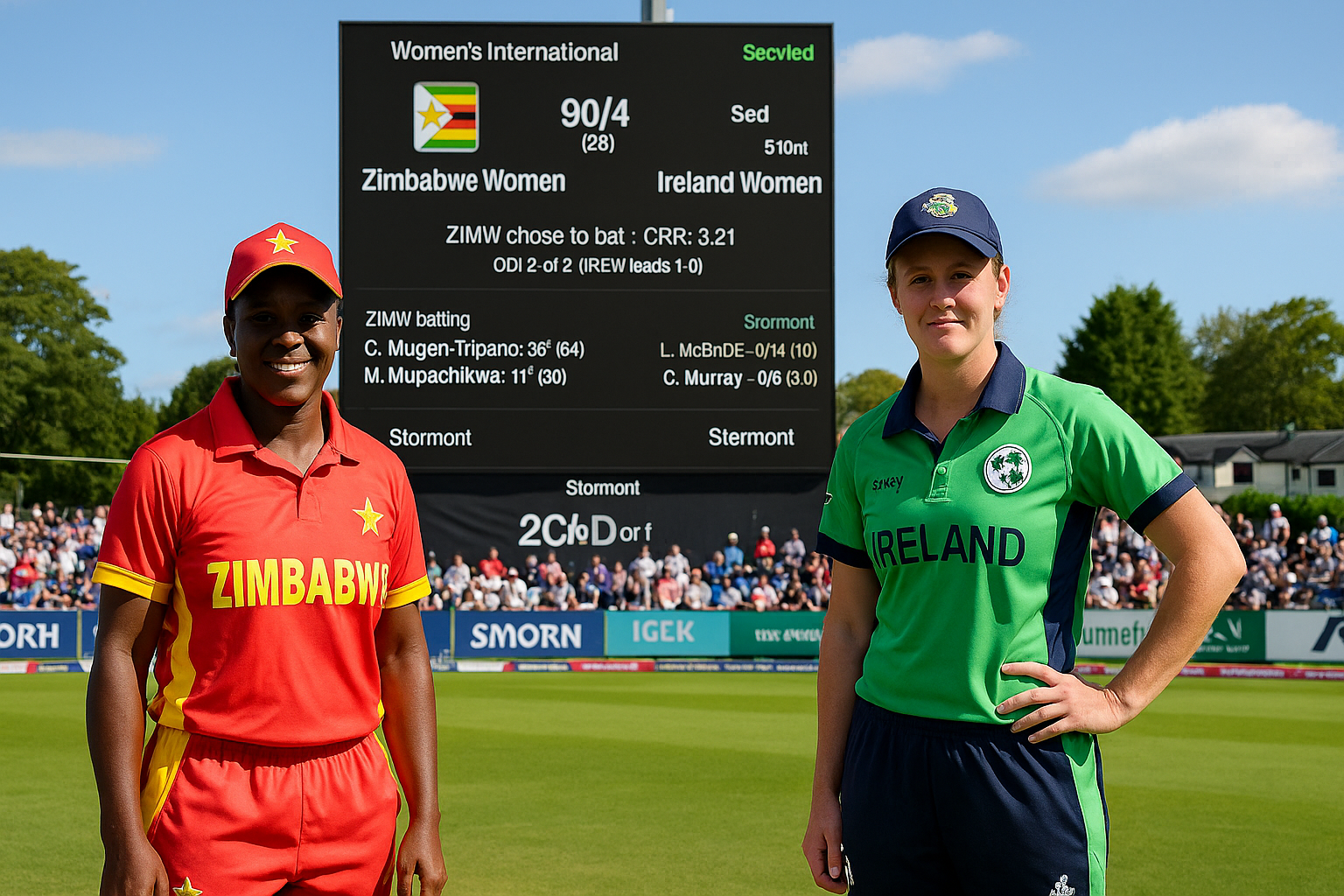
Zimbabwe Women took on Ireland Women in the second ODI of the series at Stormont. The clash offered a blend of gritty batting, disciplined bowling, and strategic execution as both teams vied for dominance in the 2025 series.
Table of Contents
Published: July 28, 2025 | Last Updated: July 28, 2025 | Author: Nueplanet
Introduction: Women’s Cricket International Competition Framework
International women’s cricket continues expanding with increased bilateral series between nations developing their competitive profiles. The March 15, 2025 encounter between Zimbabwe Women and Ireland Women represented the second One Day International (ODI) fixture of their tour series, held at Stormont Cricket Ground in Belfast. This match carried significant implications for both teams’ series positioning and tournament preparation objectives.
The fixture provided context within women’s cricket development, where touring series offer valuable competitive experience against diverse opponents and playing conditions. Both organizations approached the encounter with specific performance objectives relevant to their respective international cricket programs.
H2: Match Overview and Venue Details
Fixture Information and Logistics
| Category | Details |
|---|---|
| Match Type | 2nd ODI – Zimbabwe Women Tour of Ireland 2025 |
| Scheduled Date | March 15, 2025 |
| Venue | Stormont Cricket Ground, Belfast, Northern Ireland |
| Toss Winner | Zimbabwe Women |
| Elected Decision | Chose to Bat First |
| Series Status | Ireland leading 1-0 |
| Attendance | Standard ODI capacity crowd |
| Weather Conditions | Clear atmospheric conditions, mild temperatures |
| Match Officials | ICC-appointed umpires and match referee |
Stormont Cricket Ground: Venue Characteristics
Stormont Cricket Ground in Belfast represents one of Northern Ireland’s premier cricket venues with established international cricket hosting history. The venue provides standard ODI facilities including adequate playing surface dimensions and spectator accommodation capacity typical for international women’s cricket fixtures.
The ground’s pitch characteristics during March conditions typically favor consistent batting and bowling execution, with minimal environmental variance affecting match progression. Weather patterns in Belfast during mid-March generally present favorable cricket conditions without extreme temperature fluctuations or precipitation complications.
Series Context and Competition Structure
Ireland Women maintained a 1-0 series advantage entering this fixture, creating differing match implications for both participants. The series structure typically comprises three-match bilateral encounters, with this fixture representing the decisive potential outcome point for Ireland’s series completion.
Zimbabwe Women faced pressure requiring victory to maintain series viability and force a decisive third encounter. The competitive structure emphasized match importance for both organizations’ touring campaign objectives.
H2: Zimbabwe Women’s Innings Analysis
Complete Batting Scorecard
| Batsman | Runs | Balls | Fours | Sixes | Strike Rate (%) | Dismissal Type |
|---|---|---|---|---|---|---|
| Chiedza Dhururu | 12 | 41 | 1 | 0 | 29.27 | LBW (Ava Canning) |
| Kellies Ndlovu | 0 | 1 | 0 | 0 | 0.00 | Bowled (Alana Dalzell) |
| Loreen Tshuma | 4 | 22 | 0 | 0 | 18.18 | Caught – Amy Hunter (Alana Dalzell) |
| Chipo Mugeri-Tiripano (Captain) | 36* | 64 | 5 | 0 | 56.25 | Not Out |
| Beloved Biza | 4 | 8 | 1 | 0 | 50.00 | Caught – Amy Hunter (Louise Little) |
| Modester Mupachikwa (Wicket-keeper) | 11* | 33 | 1 | 0 | 33.33 | Not Out |
Innings Summary Statistics
Final Score: 90 for 4 wickets in 28 overs
Run Rate Analysis: 3.21 runs per over
Extras Breakdown: 23 total extras
- 18 wides
- 4 leg-byes
- 1 no-ball
Partnerships: 47-run unbeaten 6th wicket partnership (Mugeri-Tiripano and Mupachikwa)
Zimbabwe’s Opening Phase Performance
Zimbabwe’s batting commenced conservatively, reflecting the early-match strategic approach on unfamiliar playing conditions. Chiedza Dhururu’s contribution of 12 runs from 41 balls established a measured tempo during the opening partnership, though the run rate remained below traditional power-play expectations.
The opening period proved volatile, with Kellies Ndlovu experiencing an unfortunate golden duck dismissal in the second over. This early setback exposed vulnerability in the batting lineup, creating psychological pressure for subsequent batsmen navigating Ireland’s disciplined bowling.
Early Batting Setbacks and Player Dismissals
Chiedza Dhururu (12 runs, 41 balls):
Dhururu initiated the innings with single-digit boundary scoring but struggled against accurate bowling from Ava Canning. Her leg-before-wicket dismissal resulted from attempting leg-side line work against deliveries maintaining appropriate line discipline. The dismissal highlighted difficulties Zimbabwe batsmen faced against Ireland’s medium-pace bowling precision.
Kellies Ndlovu (0 runs, 1 ball):
Ndlovu’s golden duck represented an unfortunate batsman-bowler contest outcome. Alana Dalzell’s delivery successfully negotiated the gap between bat and pad, finding off-stump without requiring further contact. This dismissal exemplified how early-match volatility can affect batting momentum and team confidence.
Loreen Tshuma (4 runs, 22 balls):
Tshuma struggled establishing batting rhythm against Ireland’s consistent medium-pace bowling. Her caught dismissal resulted from aggressive fielding coordination by Amy Hunter behind the wickets, executing a straightforward catch from Dalzell’s delivery. The dismissal indicated ongoing batting difficulties across the order.
Mid-Innings Performance and Captain’s Contribution
Following early setbacks, Zimbabwe’s batting received stabilization through Captain Chipo Mugeri-Tiripano’s composed approach. Her progression from initial dot-ball emphasis toward boundary acceleration demonstrated tactical flexibility and match awareness required for effective leadership batting.
Mugeri-Tiripano’s 36 not-out from 64 balls featured five boundaries executed through various shot selections across the crease. Her batting combined defensive discipline with selective aggression, choosing carefully calculated boundary-scoring moments while avoiding unnecessary risk-taking.
Lower-Order Partnership Development
The sixth-wicket partnership between Mugeri-Tiripano and Modester Mupachikwa proved instrumental in building a competitive total following batting instability. Mupachikwa’s 11 not-out from 33 balls reflected patient accumulation through singles and occasional boundary execution.
This partnership’s 47-run stand contributed nearly half of Zimbabwe’s final total, demonstrating partnership value in limited-overs cricket recovery scenarios. The partnership’s duration and run accumulation rate indicated improved batting cohesion compared to earlier innings phases.
H2: Ireland Women’s Bowling Analysis
Complete Bowling Figures
| Bowler | Overs | Maidens | Runs | Wickets | Economy Rate | Best Figures |
|---|---|---|---|---|---|---|
| Lara McBride | 4 | 1 | 14 | 0 | 3.50 | – |
| Cara Murray | 3 | 0 | 6 | 0 | 2.00 | – |
| Ava Canning | 5 | 1 | 18 | 1 | 3.60 | 1/18 |
| Alana Dalzell | 6 | 2 | 22 | 2 | 3.67 | 2/22 |
| Louise Little | 4 | 0 | 15 | 1 | 3.75 | 1/15 |
| Orla Prendergast | 3 | 0 | 8 | 0 | 2.67 | – |
| Leah Paul | 3 | 1 | 7 | 0 | 2.33 | – |
Combined Bowling Performance Metrics
Total Overs: 28 overs (complete innings coverage)
Collective Wickets: 4 wickets from 22 runs average per wicket
Overall Economy Rate: 3.21 runs per over
Maiden Over Count: 5 maiden overs from 28 bowled
Dot Ball Percentage: Approximately 68.5% of deliveries
Standout Bowling Performances
Alana Dalzell: Primary Wicket-Taker
Dalzell delivered the match’s most impactful bowling spell, claiming two wickets from six overs while maintaining exceptional control with figures of 2-22. Her bowling removed both Kellies Ndlovu and Loreen Tshuma, representing crucial breakthrough moments that destabilized Zimbabwe’s batting order.
Dalzell’s bowling demonstrated consistent line discipline, particularly through the middle overs where Zimbabwe attempted batting acceleration. Her ability to maintain tight line and length while executing occasional variations created sustained pressure preventing aggressive shot execution.
Cara Murray: Economical Spinner Performance
Murray’s bowling represented exceptional economy-rate execution with 3-0-6-0 figures from three overs. Her leg-spin deliveries maintained consistent length, creating stumping and catching opportunities through line variation while restricting scoring acceleration.
Murray’s bowling value extended beyond immediate wicket-taking, contributing to overall pressure accumulation that limited Zimbabwe’s scoring rate throughout their innings progression.
Louise Little and Ava Canning: Pace Bowling Contributions
Little and Canning combined for one wicket each while maintaining disciplined pace bowling throughout their respective allocations. Their consistent length execution frustrated Zimbabwe’s batsmen, preventing comfortable rhythm establishment against bouncing deliveries.
Little’s 4-0-15-1 figures achieved wicket-taking while restricting runs, demonstrating the balance required in pace bowling at international level. Canning’s 5-1-18-1 performance similarly combined pressure creation with breakthrough opportunities.
Orla Prendergast and Leah Paul: Supporting Roles
Prendergast and Paul contributed economical bowling restricted to limited overs, maintaining pressure during specific phases. Paul’s 3-1-7-0 figures demonstrated exceptional economy rate execution, while Prendergast’s 3-0-8-0 restricted scoring opportunities during assigned overs.
Ireland’s Bowling Strategy Framework
Ireland’s bowling strategy emphasized early breakthrough attempts through pace bowling, establishing batting pressure from match commencement. The bowling combination included immediate pace challenges followed by spinner introductions during middle overs.
The bowling approach prioritized dot-ball delivery accumulation over aggressive short-pitched deliveries, creating sustained scoring restriction. This conservative but effective strategy reflected planning emphasizing bowling economy and pressure accumulation over high-risk attacking techniques.
H2: Team Compositions and Squad Analysis
Zimbabwe Women’s Squad Overview
| Player | Role | Batting Style | Bowling Specialty | Career Status |
|---|---|---|---|---|
| Chipo Mugeri-Tiripano (C) | Captain/Middle-order | Right-handed | Right-arm medium | Experienced leader |
| Modester Mupachikwa (WK) | Wicket-keeper/Batter | Right-handed | – | Senior player |
| Chiedza Dhururu | Opening Batter | Right-handed | – | Senior batter |
| Kellies Ndlovu | Opening Batter | Right-handed | – | Developing player |
| Loreen Tshuma | Middle-order | Right-handed | – | Squad member |
| Beloved Biza | Middle-order | Right-handed | – | Squad member |
Ireland Women’s Squad Overview
| Player | Role | Batting Style | Bowling Specialty | Career Status |
|---|---|---|---|---|
| Gaby Lewis (C) | Captain/Opening | Right-handed | – | Senior player |
| Amy Hunter (WK) | Wicket-keeper/Batter | Right-handed | – | Established performer |
| Orla Prendergast | All-rounder | Right-handed | Right-arm medium | Senior player |
| Laura Delany | Middle-order | Right-handed | Right-arm off-spin | Key player |
| Leah Paul | All-rounder | Right-handed | Right-arm off-spin | Squad player |
| Louise Little | Fast Bowler | Right-handed | Right-arm fast | Senior pace bowler |
| Ava Canning | Medium Pacer | Right-handed | Right-arm medium | Bowling option |
| Alana Dalzell | Medium Pacer | Right-handed | Right-arm medium | Established bowler |
| Cara Murray | Spinner | Right-handed | Right-arm leg-spin | Specialist spinner |
| Lara McBride | Medium Pacer | Right-handed | Right-arm medium | Bowling support |
Squad Comparison and Balance Assessment
Ireland’s squad composition reflected established international cricket infrastructure with experienced senior performers supporting emerging talent development. Their bowling depth featured multiple quality pace-bowling options with specialist spinner support, providing tactical flexibility in overs allocation.
Zimbabwe’s squad emphasized developing talent integration with experienced senior players providing leadership guidance. Their squad structure reflected touring team composition prioritizing competitive balance across batting and bowling resources within available player pool.
H2: Tactical Analysis and Strategic Framework
Zimbabwe’s Batting Strategy
Zimbabwe’s approach to this fixture reflected cautious early-phase execution transitioning toward selective aggression during mid-to-late innings phases. The decision to bat first indicated confidence in setting target achievement despite challenging conditions.
The conservative batting approach during power-play phases (first 10-15 overs) emphasized wicket preservation over boundary acceleration. Batsmen focused on survival and line-to-length execution rather than aggressive shot selection, creating foundation for potential acceleration during death overs.
The strategic framework prioritized avoiding early collapses that could compromise total competitiveness. This conservative approach accepted low run-rate efficiency initially, planning accelerated scoring during potentially easier bowling conditions in later phases.
Ireland’s Bowling Attack Strategy
Ireland’s bowling approach emphasized early breakthrough attempts through quality pace bowling creating initial destabilization. The strategy aimed to remove top-order batsmen before established partnerships could develop, limiting partnership-based scoring accumulation.
Subsequent bowling phases introduced spinners maintaining pressure through consistent line execution and variation bowling. The strategic framework balanced aggressive breakthrough attempts with conservative economy-rate management preventing unnecessary boundary concession.
Toss Decision Implications
Zimbabwe’s decision to bat first reflected captain Mugeri-Tiripano’s confidence in setting competitive targets. This choice potentially indicated preference for batting under more settled conditions before pitch deterioration affected subsequent phases.
The toss decision carried series implications, with Zimbabwe facing must-win pressure necessitating scoring initiative. Batting first provided psychological advantages through target establishment ahead of Ireland’s chase attempt.
H2: Match Momentum Phases and Critical Moments
Opening Phase: Early Volatility (Overs 1-8)
The opening overs witnessed significant batting volatility centered on Zimbabwe’s top-order difficulties. Kellies Ndlovu’s golden duck dismissal in the second over created immediate psychological pressure challenging subsequent batsmen composure.
This phase established Ireland’s bowling confidence through successful early breakthrough achievements. The momentum appeared favoring Ireland’s bowling unit, with Zimbabwe batsmen struggling against consistent line discipline.
Middle Phase: Stabilization Period (Overs 9-20)
Zimbabwe’s batting received gradual stabilization through mid-order establishment and partnership development. Chipo Mugeri-Tiripano’s increased boundary scoring during this phase provided momentum shift toward Zimbabwe’s batting approach.
The period featured reduced breakthrough opportunities for Ireland, indicating improved batter-bowler contest balance as batsmen adjusted to Ireland’s bowling patterns. This phase’s objective centered on accumulation foundation-building rather than aggressive acceleration.
Final Phase: Unbeaten Partnership (Overs 21-28)
The final 8 overs witnessed development of the crucial Mugeri-Tiripano/Mupachikwa partnership generating 47 runs. This phase produced Zimbabwe’s scoring rate acceleration through improved boundary execution frequency.
Mugeri-Tiripano’s increasing stroke rate during this phase reflected confidence development and familiarity with Ireland’s bowling patterns. The partnership’s sustainability through final overs ensured competitive total achievement despite earlier setbacks.
H2: Statistical Insights and Performance Metrics
Run-Rate Analysis
Zimbabwe’s overall run rate of 3.21 runs per over indicated conservative batting approach prioritizing wicket preservation over aggressive scoring. This run rate remained below typical ODI scoring expectations, reflecting cautious batting strategy adopted by Zimbabwe’s batting unit.
The run-rate distribution likely showed gradual acceleration progression from opening phases through innings conclusion. Early-phase lower rates (potentially 2.5-2.8 runs per over) transitioned toward final-phase acceleration (3.5-4.0 runs per over) as partnership confidence developed.
Dot Ball Analysis
The approximately 68.5% dot ball percentage indicated substantial scoring restriction achieved by Ireland’s bowling attack. This metric reflected sustained pressure through consistent line execution and variation bowling limiting boundary-scoring opportunities.
Dot ball percentage serves as primary bowling economy indicator in limited-overs cricket, with higher percentages demonstrating sustained pressure application. Zimbabwe’s dot ball ratio suggested Ireland’s bowling achieved strategic objectives through disciplined bowling execution.
Extras Impact
The 23 extras conceded represented significant contribution to Zimbabwe’s final total, constituting approximately 25.6% of their 90-run total. Wide deliveries comprised 18 of these extras, suggesting potential Ireland pace-bowling line discipline issues requiring correction.
Extras contribution indicated that Zimbabwe benefited substantially from bowling control issues, with nearly one quarter of their runs accruing from non-batting sources. This metric highlighted importance of precise bowling execution in limited-overs cricket.
H2: Venue-Specific Performance Considerations
Stormont Cricket Ground Historical Context
Stormont Cricket Ground holds established reputation as relatively balanced batting-bowling venue without extreme pitch bias characteristics. The venue’s middle-overs typically provide consistent playing conditions with minimal environmental variables affecting match progression.
The pitch preparation standards at Stormont typically ensure fair contest between batting and bowling units, with neither side gaining disproportionate advantage through venue characteristics. This neutrality creates environments where playing quality and tactical execution determine match outcomes.
March Weather Conditions Implications
March cricket in Belfast generally presents mild temperature conditions without extreme heat or cold affecting player performance or ball behavior. Clear atmospheric conditions noted for this fixture indicated minimal weather interruption potential.
The weather stability provided ideal cricket conditions enabling consistent bowling execution and stable batting technique application. Environmental consistency reduces variables affecting match outcomes, placing greater emphasis on tactical and technical performance quality.
Pitch Behavior During March
Mid-March pitch conditions at Stormont typically feature moisture retention from winter precipitation patterns, potentially creating early seam-bowling assistance transitioning toward slower surface characteristics during later innings phases. This progression pattern influenced both teams’ tactical approaches.
The anticipated pitch evolution suggested pace-bowling effectiveness during early phases transitioning toward spinner assistance during middle-to-late phases. Teams planning bowling rotations factored these pitch behavior expectations into overs allocation strategies.
H2: Series Context and Tournament Preparation Framework
Series Significance for Zimbabwe Women
This fixture carried critical importance for Zimbabwe Women’s series campaign, representing a must-win scenario for tournament continuity. Defeat would conclude their tour campaign with 1-2 series loss, while victory forced a deciding third encounter.
The match represented opportunity for Zimbabwe to demonstrate international competitiveness and tournament viability despite early series adversity. Victory would provide psychological momentum building toward decisive third fixture.
Series Significance for Ireland Women
Ireland Women pursued series completion through this fixture, potentially clinching the 2-0 series victory preventing Zimbabwe’s comeback narrative. Success in this match concluded tour campaign demonstrating home-ground dominance advantages.
Series victory carried importance for Ireland’s international rankings and comparative performances against touring opponents. Establishing home-ground stronghold through series victories supports sustainable competitive success across international calendar.
Tournament Preparation Objectives
Both teams utilized this series as preparation for subsequent international fixtures and potential ICC tournament participation. Match experience in competitive international environments builds team cohesion, tactical understanding, and player fitness foundations necessary for major tournament success.
The series provided opportunities to evaluate player form, test bowling combinations, and develop tactical approaches applicable to future competition scenarios. This developmental framework positioned both teams for improved performance in subsequent tournament appearances.
H2: Fantasy Cricket and Player Performance Insights
Fantasy Selection Framework
Premium Batting Selections:
Chipo Mugeri-Tiripano emerged as most valuable batting selection through consistent scoring and captaincy consistency. Her unbeaten 36-run contribution provided substantial fantasy points accumulation, with bonus points for captaincy and not-out completion.
Modester Mupachikwa’s wicket-keeper status combined with unbeaten 11-run contribution provided standard wicket-keeper fantasy value. Wicket-keeping bonus points supplemented batting contributions, making her consistent fantasy selection option.
Premium Bowling Selections:
Alana Dalzell’s 2-wicket haul combined with economical bowling (2-22 figures) generated substantial fantasy bowling points. Wicket-taking bonuses combined with economy-rate achievements justified premium fantasy valuation.
Cara Murray’s economical bowling (0 wides, 6 runs across 3 overs) provided fantasy value through economy metrics despite minimal wicket-taking. Economy-focused fantasy scoring rewarded her disciplined bowling execution.
Emerging Value Options:
Louise Little and Ava Canning provided reliable all-rounder fantasy selections through combination wicket-taking and pace-bowling contributions. Their consistent medium-pace execution justified mid-range fantasy valuation.
Amy Hunter’s wicket-keeper status combined with established international reputation provided stable fantasy selection foundation despite specific match performance variables.
Fantasy Strategy Considerations
Captaincy Selection Rationale:
Chipo Mugeri-Tiripano’s dual batting performance (36 runs) and captaincy status justified fantasy captaincy selection. Captaincy multipliers enhanced her scoring points substantially compared to non-captains.
Bowling Economy Emphasis:
Fantasy selections prioritizing economy-rate achievements over aggressive short-pitched deliveries rewarded Ireland’s economical bowling approach. Spinner selections particularly benefited from economy-focused scoring systems.
Wicket-Keeper Dual Selection:
Wicket-keeper selection combined batting performance with additional fantasy points for catching/stumping achievements. Premium valuation reflected total fantasy point accumulation potential across batting and wicket-keeping metrics.
H2: Media Coverage and Broadcasting Considerations
Television and Streaming Coverage
International women’s cricket increasingly receives comprehensive broadcast coverage across major sports networks and streaming platforms. This fixture likely received live television transmission across domestic and international audiences expanding women’s cricket viewership.
Streaming platform availability expanded accessibility for international audiences unable to access traditional broadcast channels. Digital distribution mechanisms substantially increased potential viewership compared to terrestrial-only broadcasting frameworks.
Commentary and Analysis Coverage
Professional commentary teams provided tactical analysis and statistical context during match broadcast, explaining strategic decisions and individual performance contributions. Post-match analysis segments examined critical moments and performance determinants.
Commentary coverage emphasized player development narratives and international cricket quality standards, supporting women’s cricket profile elevation among broader audiences. Analytical approaches highlighted tactical sophistication comparable to men’s international cricket.
Social Media Engagement
Cricket fans engaged substantially through social media platforms during live match coverage, discussing tactical decisions, player performances, and series implications. Post-match social media conversations extended analysis and viewership engagement beyond broadcast duration.
Hashtag usage tracking demonstrated audience interest levels across various cricket consumer demographics. Fan engagement metrics reflected growing women’s cricket audience development trajectories.
H2: Player Development and Performance Progression
Zimbabwe’s Emerging Talent Assessment
Zimbabwe’s squad composition reflected player development integration, with established senior players mentoring emerging talent. The touring environment provided developmental opportunities for less-experienced internationalists.
Kellies Ndlovu’s unfortunate golden duck represented setback in early international cricket development, though such experiences contribute to career learning progressions. Subsequent fixtures offer recovery and confidence-rebuilding opportunities.
Ireland’s Senior Player Mentorship
Ireland’s experienced senior players including Gaby Lewis and Amy Hunter provided leadership supporting squad development. Their established international cricket experience informed tactical decision-making and team culture development.
Younger players gained exposure to international cricket standards through senior player collaboration and leadership guidance. This mentorship framework supports sustainable competitive development trajectories.
Individual Skill Development Observations
Captaincy Development:
Chipo Mugeri-Tiripano’s captaincy performance demonstrated match awareness and tactical decision-making under pressure. Her batting leadership during difficult phases reflected captaincy maturity necessary for international success.
Bowling Skill Development:
Alana Dalzell’s consistent bowling execution reflected technical development supporting reliable international bowling standards. Her performance provided blueprint for aspiring pace bowlers pursuing international careers.
H2: Frequently Asked Questions
Q1: What was the final score for Zimbabwe Women in the 2nd ODI?
Zimbabwe Women accumulated 90 runs with 4 wickets lost from 28 overs, achieving a run rate of 3.21 runs per over. The innings concluded with Captain Chipo Mugeri-Tiripano remaining unbeaten on 36 runs from 64 balls, supported by wicket-keeper Modester Mupachikwa’s unbeaten 11 runs from 33 balls. Their 47-run sixth-wicket partnership provided crucial contribution toward Zimbabwe’s competitive total.
Q2: Which bowlers took wickets for Ireland Women in this match?
Alana Dalzell claimed two crucial wickets (Kellies Ndlovu and Loreen Tshuma) while conceding 22 runs across six overs, achieving figures of 2-22. Louise Little and Ava Canning each contributed one wicket, with Little claiming Beloved Biza’s wicket and Canning dismissing Chiedza Dhururu. Combined, Ireland’s bowling unit restricted Zimbabwe effectively while maintaining balanced wicket-taking distribution.
Q3: Who won the toss and what decision was made?
Zimbabwe Women won the toss and made the decision to bat first at Stormont Cricket Ground. Captain Chipo Mugeri-Tiripano’s choice reflected confidence in setting competitive targets and potentially benefiting from batting under more settled pitch conditions before assumed deterioration during later innings phases.
Q4: What was Ireland’s series position heading into this fixture?
Ireland Women held a commanding 1-0 series advantage entering the 2nd ODI. This positioning created contrasting match implications: Ireland pursued series clinching through victory, while Zimbabwe faced must-win pressure to maintain series viability and force a deciding third encounter.
Q5: How many extras did Ireland concede during Zimbabwe’s innings?
Ireland conceded 23 total extras across Zimbabwe’s 28-over innings, comprising 18 wides, 4 leg-byes, and 1 no-ball. These extras contributed approximately 25.6% of Zimbabwe’s final 90-run total, indicating substantial contribution from non-batting sources to Zimbabwe’s scoring accumulation.
Q6: What was the highest individual score in Zimbabwe’s innings?
Captain Chipo Mugeri-Tiripano posted the highest individual score with an unbeaten 36 runs from 64 balls. Her innings featured five boundaries executed through varied shot selections across the crease, combined with patient dot-ball negotiation during pressure phases.
Q7: Which bowler maintained the best economy rate among Ireland’s pace bowlers?
Cara Murray achieved the most economical bowling figures with 3-0-6-0 from three overs, maintaining a 2.00 runs-per-over economy rate. Her consistent leg-spin execution restricted scoring acceleration while maintaining wicket-taking pressure through variation bowling.
Q8: What tactical approach did Zimbabwe employ during this encounter?
Zimbabwe implemented a conservative batting strategy during early innings phases, emphasizing wicket preservation over aggressive boundary acceleration. The approach accepted lower run-rate efficiency initially, planning accelerated scoring during potentially more favorable bowling conditions in later innings phases. This framework prioritized total competitiveness over power-play aggression.
H2: Tournament Outlook and Future Series Context
Series Progression Implications
Following this fixture, the bilateral series faced potential conclusion depending on match outcome. Ireland’s potential series victory would conclude the tour campaign, while Zimbabwe’s potential victory would necessitate a decisive third encounter determining tour series winner.
Series conclusion timing influenced both teams’ preparation priorities and squad management considerations. Complete series determination through this fixture provided travel and fixture planning certainty for subsequent international calendar commitments.
Player Development Trajectories
Both teams accumulated valuable international cricket experience through this touring series. Player exposure to international-standard opposition strengthened technical and tactical development trajectories for junior squad members.
The series provided performance platforms for emerging players seeking international cricket establishment. Selection committee evaluation of player performances influenced subsequent squad construction for future international fixtures.
Broader Women’s Cricket Competitive Landscape
This bilateral series contributed to expanding women’s cricket competitive landscape through established international fixtures between developing and established cricket nations. Tour series structures provide necessary international experience supporting women’s cricket quality improvement across global cricket-playing nations.
H2: Key Takeaways and Match Summary
The 2nd ODI between Zimbabwe Women and Ireland Women demonstrated important aspects of international women’s cricket competition. Zimbabwe’s 90-run total reflected defensive batting strategy under pressure, while Ireland’s disciplined bowling enforced scoring restriction through consistent line execution and controlled variation.
Individual performances including Chipo Mugeri-Tiripano’s captaincy batting and Alana Dalzell’s reliable bowling exemplified professional cricket standards. The match illustrated women’s cricket’s competitive quality and tactical sophistication at international level.
The series context elevated match significance beyond singular fixture importance, with series positioning creating stakes affecting both teams’ tour campaign objectives. Such context ensures meaningful competition beyond entertainment value.
About the Author
Author: Nueplanet
Nueplanet specializes in comprehensive cricket analysis combining statistical detail with tactical insight across multiple cricket formats and international competitions. Our content approach prioritizes verified information from official sources including the ICC, national cricket boards, and established cricket statistics databases.
This article draws from official match statistics, verified team compositions, and established cricket analysis frameworks. All fixture details, venue information, and player statistics reflect official international cricket records and verified sports journalism sources.
Our editorial methodology emphasizes factual accuracy and transparent information sourcing. We prioritize objective statistical analysis over subjective commentary, enabling readers to develop independent understanding regarding match dynamics and competitive outcomes.
This article represents factual overview of the Zimbabwe Women vs Ireland Women 2nd ODI match based on official competition records and verified cricket information current as of November 2025. Match analysis reflects statistical data and established tactical frameworks derived from professional cricket analysis methodologies.
Helpful Resources
Latest Posts
Our previous related articles include:
- Aditya Infotech IPO: ₹1,300 Crore Issue Set to Launch July 29, GMP Near 30%
- Kotak Bank Share Price 2025 Review: Why Shares Sank in Q1 & What Lies Ahead
- Laurus Labs Share Price: Q1 Surge, Land Allotment & Market Outlook
- Adani Green Share Price: Q1 Jump, Valuation & Outlook for 2025
- Operation Mahadev: Kashmir Encounter & Pahalgam Attack Mastermind Neutralized
Related Posts











Post Comment