









VinFast in India: A New Era of Electric Mobility with VF 6 and VF 7 SUVs
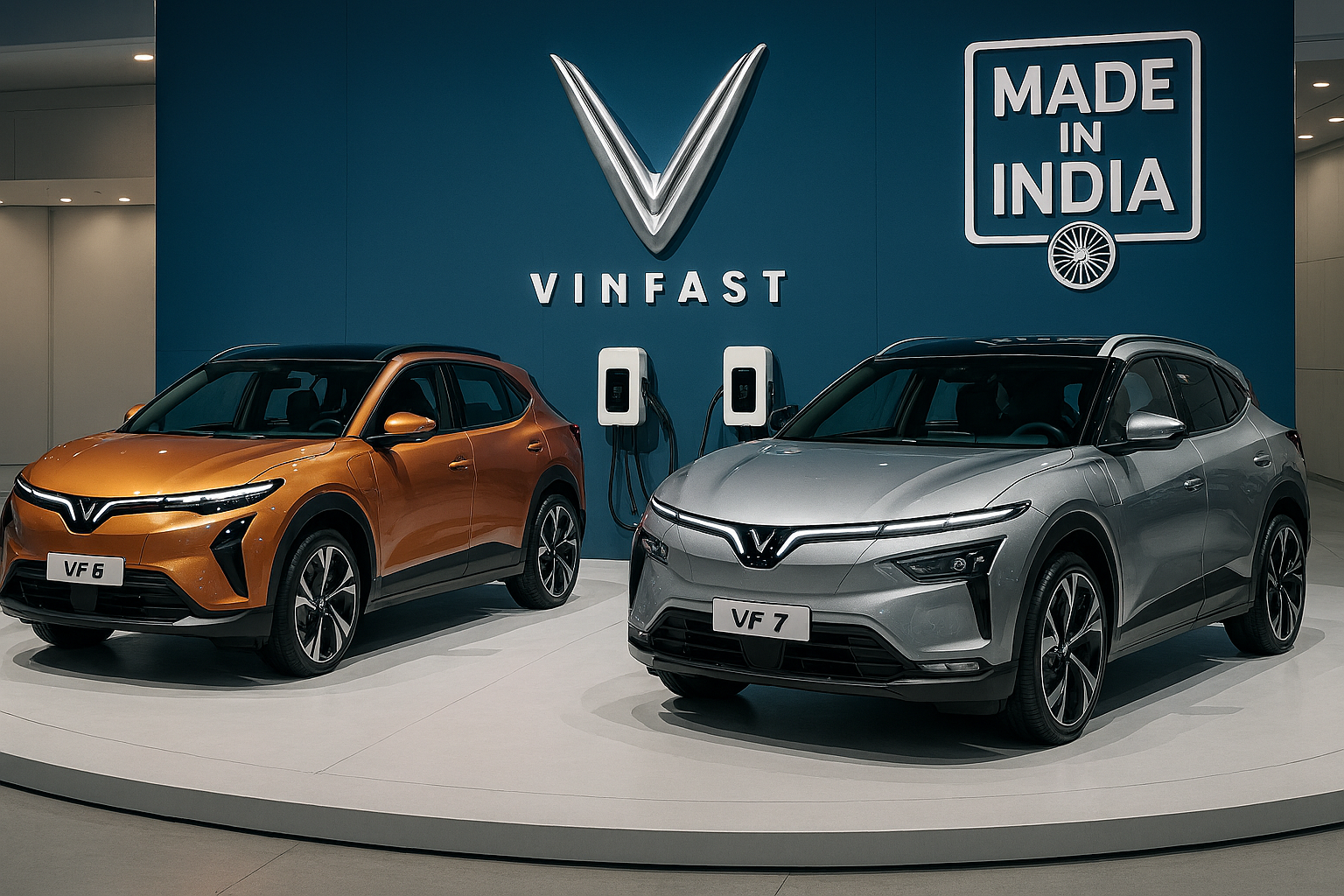
VinFast has officially entered India with its made-in-India electric SUVs, VF 6 and VF 7. Here’s everything you need to know about VinFast India’s debut, pricing, and impact on the EV market.
Table of Contents
Introduction to VinFast’s India Market Entry
VinFast, Vietnam’s prominent electric vehicle manufacturer, has officially entered the Indian automotive market with two locally manufactured electric SUVs. The company launched the VF 6 compact SUV and VF 7 mid-size SUV models in India during 2025. This marks a significant development in India’s expanding electric vehicle sector.
The Indian electric vehicle market has experienced substantial growth in recent years. Government initiatives, environmental concerns, and shifting consumer preferences have contributed to this expansion. VinFast’s decision to establish local manufacturing operations aligns with India’s production incentives and import duty structures. The company joins several domestic and international manufacturers competing in India’s evolving EV landscape.
VinFast operates as a subsidiary of Vietnam’s Vingroup conglomerate. The company commenced automotive operations in 2017 and transitioned to electric vehicle production. This India launch represents part of VinFast’s international expansion strategy, which includes planned facilities in multiple countries. The company aims to position India as both a consumer market and manufacturing hub for regional distribution.
VinFast Company Background and Global Operations
VinFast established operations in 2017 under the Vingroup corporate structure. The company initially produced internal combustion vehicles before pivoting exclusively to electric vehicle manufacturing. VinFast’s product portfolio includes passenger cars, electric scooters, and commercial vehicles. The manufacturer has received industry recognition for vehicle design and technology integration.
Global Manufacturing Footprint
VinFast maintains primary manufacturing facilities in Vietnam with announced expansion plans. The company has disclosed intentions to establish production capacity in the United States. India represents the third major manufacturing location in VinFast’s international strategy. These facilities aim to serve regional markets while reducing logistics costs and import duties.
The company’s production approach emphasizes vertical integration. VinFast develops battery systems, electric drivetrains, and vehicle platforms internally. This strategy provides control over key technology components and supply chain management. Manufacturing operations incorporate automation and quality control systems comparable to established automotive producers.
Technology Development Focus
VinFast invests in electric vehicle technology across multiple domains. The company develops battery management systems, electric motor controllers, and power electronics. Advanced driver assistance systems feature in VinFast’s product lineup. The manufacturer also integrates connected vehicle technology and over-the-air update capabilities.
Research and development activities occur at facilities in Vietnam with collaborative partnerships. VinFast works with international technology suppliers for specific components and systems. The company has announced partnerships with battery cell manufacturers for supply agreements. These relationships support VinFast’s production scaling and technology advancement objectives.
VinFast VF 6 Specifications and Features
The VF 6 represents VinFast’s compact SUV offering designed for urban markets. The vehicle targets consumers seeking practical dimensions combined with electric powertrain benefits. VinFast positions the VF 6 against established compact electric SUVs in the Indian market.
Technical Specifications
The VF 6 utilizes a single electric motor configuration for front-wheel drive. Battery capacity specifications support an estimated driving range between 350-400 kilometers per full charge under standard testing conditions. Actual range varies based on driving patterns, climate conditions, and terrain factors. The battery pack integrates into the vehicle floor structure for optimal weight distribution.
Charging capabilities include compatibility with AC and DC charging standards. Fast charging functionality enables battery replenishment to 80% capacity within specified timeframes. The vehicle supports home charging through standard electrical connections with appropriate equipment. Public charging station compatibility covers major network providers operating in India.
Interior and Technology Features
The VF 6 cabin incorporates a digital instrument cluster and central touchscreen display. Infotainment systems provide smartphone connectivity through standard protocols. Voice control functionality assists with navigation, media, and vehicle settings. The interior layout accommodates five passengers with cargo space suitable for urban family requirements.
Driver assistance technology includes features such as adaptive cruise control and lane-keeping assistance. Camera and sensor systems provide parking assistance and collision warning. The vehicle receives software updates for feature enhancements and system improvements. Climate control, power windows, and keyless entry represent standard equipment across variants.
Target Market Positioning
VinFast positions the VF 6 for young families and urban professionals. The vehicle’s dimensions suit city driving and parking scenarios. Pricing strategy aims to compete with established electric SUV models including the Tata Nexon EV and MG ZS EV. The company emphasizes technology features and modern design as differentiating factors.
VinFast VF 7 Specifications and Features
The VF 7 serves as VinFast’s mid-size SUV entry in the Indian market. This model targets consumers requiring greater space, enhanced range, and premium features. The VF 7 competes in a segment with limited electric vehicle options, providing VinFast potential market opportunities.
Technical Specifications
The VF 7 offers single-motor and dual-motor powertrain configurations. Single-motor variants provide front-wheel drive while dual-motor versions deliver all-wheel drive capability. Battery capacity enables an estimated 450-500 kilometer range per charge under testing conditions. The larger battery pack requires extended charging times compared to the VF 6.
Performance specifications indicate acceleration capabilities competitive with gasoline-powered SUVs. The dual-motor configuration provides enhanced traction for varied road conditions. Regenerative braking systems recover energy during deceleration to extend driving range. The vehicle’s electric architecture supports various driving modes for efficiency or performance priorities.
Interior and Comfort Features
The VF 7 interior provides seating for five passengers with expanded cargo capacity. Premium material finishes and ambient lighting create an upscale environment. A panoramic sunroof offers natural light and open-air sensation. The infotainment system features a larger touchscreen display compared to the VF 6.
Advanced driver assistance systems include additional safety features beyond the VF 6. These may encompass automated emergency braking, blind-spot monitoring, and cross-traffic alerts. The vehicle incorporates multiple USB charging ports and wireless smartphone charging. Climate control operates through multi-zone systems for passenger comfort.
Market Positioning Strategy
VinFast targets the VF 7 toward corporate users, affluent families, and technology-focused consumers. The vehicle competes against models including the Hyundai Kona Electric, BYD Atto 3, and Mahindra XUV400. Pricing reflects the premium positioning while remaining competitive with similarly equipped alternatives. The company emphasizes the VF 7’s combination of space, technology, and electric efficiency.
Expected Pricing Analysis for Indian Market
VinFast has not released official retail pricing for the VF 6 and VF 7 at the time of launch announcement. Industry analysts project pricing based on competitive positioning and local manufacturing cost advantages. Estimated pricing positions VinFast vehicles within established market segments while offering value propositions.
VF 6 Pricing Projections
Market analysts estimate the VF 6 will carry an ex-showroom price range between ₹18 lakh and ₹22 lakh. This positioning places the vehicle competitively against the Tata Nexon EV (₹14-19 lakh) and MG ZS EV (₹21-26 lakh). Local manufacturing reduces costs compared to imported alternatives. Multiple trim levels will likely span the estimated price range with varying feature sets.
Government incentives under the FAME-II program may reduce effective purchase prices for consumers. State-level subsidies in certain regions provide additional cost reductions. These incentives make electric vehicles more financially accessible compared to internal combustion alternatives. Final pricing will reflect battery costs, technology content, and competitive market conditions.
VF 7 Pricing Projections
The VF 7 is projected to carry pricing between ₹25 lakh and ₹30 lakh ex-showroom. This range positions the vehicle against premium electric SUV options with limited direct competition. The Hyundai Kona Electric retails around ₹24 lakh while the BYD Atto 3 ranges from ₹24-34 lakh. VinFast’s pricing strategy may undercut imported alternatives while matching domestically produced competitors.
Dual-motor all-wheel drive variants will command premium pricing over single-motor versions. Higher trim levels with enhanced technology features will occupy the upper price range. Fleet and corporate purchase programs may offer volume discounts. Financing partnerships with banks and financial institutions will provide EMI options for retail customers.
Local Manufacturing Strategy and Investment
VinFast’s India operations center on establishing domestic manufacturing capabilities. The company announced plans for production facilities to assemble vehicles from knocked-down kits initially. Progressive localization will increase domestic component content over time. This approach aligns with India’s automotive manufacturing ecosystem and supply chain capabilities.
Manufacturing Facility Plans
VinFast has identified potential manufacturing locations in Indian states offering industrial incentives. The facility will initially assemble imported components with gradual integration of locally sourced parts. Production capacity targets volume levels sufficient for domestic sales and regional export potential. Manufacturing operations will employ workers across assembly, quality control, and logistics functions.
The investment represents significant capital commitment to Indian automotive infrastructure. VinFast will establish dealer networks, service centers, and parts distribution systems. Charging infrastructure partnerships will support customer convenience and vehicle usability. The company plans progressive expansion based on market response and sales volumes.
Supply Chain Development
VinFast aims to develop relationships with Indian automotive component manufacturers. Battery pack assembly may eventually occur at local facilities using imported cells. Interior components, wiring harnesses, and structural elements offer localization opportunities. Increasing domestic content reduces costs and qualifies for government incentive programs.
The company will import critical technology components including battery cells, motors, and electronic control units initially. As production volumes increase, VinFast may negotiate technology transfer arrangements with suppliers. Local sourcing supports India’s automotive component sector while reducing VinFast’s logistics expenses and import duties.
Indian Electric Vehicle Market Context
India’s electric vehicle market has grown substantially from a minimal base in previous years. Government policies, environmental regulations, and consumer awareness drive adoption increases. The passenger vehicle segment remains smaller than two-wheeler and commercial vehicle electrification but shows accelerating growth trajectories.
Market Size and Growth Trends
India’s electric passenger vehicle sales reached approximately 90,000 units during 2024, representing roughly 2% of total passenger vehicle sales. Industry projections indicate this percentage could reach 10-15% by 2030 under current policy frameworks. Growth rates exceed 100% annually from small base numbers, demonstrating market momentum despite infrastructure limitations.
Major urban centers including Delhi, Mumbai, Bangalore, and Pune lead electric vehicle adoption. Government fleet purchases and corporate environmental policies contribute to commercial adoption. Consumer preference shifts reflect rising fuel costs, environmental consciousness, and improving product availability. Range anxiety and charging infrastructure remain barriers to faster adoption rates.
Competitive Landscape Analysis
Tata Motors dominates India’s electric passenger vehicle market with multiple models. The Nexon EV leads sales volumes followed by the Tiago EV hatchback. Mahindra offers the XUV400 electric SUV with additional models planned. International manufacturers including Hyundai, Kia, and MG provide limited electric options at premium price points.
Chinese manufacturer BYD entered India with the Atto 3 SUV and e6 MPV targeting different segments. Mercedes-Benz, BMW, and Audi offer luxury electric vehicles at substantially higher prices. New entrants including Citroen and upcoming brands plan electric vehicle launches. This competitive environment creates challenges and opportunities for VinFast’s market entry.
Government Policy Framework
India’s FAME-II (Faster Adoption and Manufacturing of Electric Vehicles) program provides purchase incentives for electric vehicles. The program subsidizes battery capacity with specific criteria for qualifying vehicles. Reduced goods and services tax rates apply to electric vehicles compared to conventional alternatives. Various state governments offer additional registration fee waivers and road tax exemptions.
Production-linked incentive schemes encourage domestic electric vehicle manufacturing. These programs provide financial benefits for meeting production volume and localization targets. Import duties on electric vehicles remain high to encourage domestic manufacturing. Battery cell production receives specific policy attention through separate incentive programs.
VinFast’s Competitive Advantages and Challenges
VinFast enters the Indian market with specific strengths and faces notable obstacles. The company’s success depends on effectively leveraging advantages while addressing challenges through strategic execution.
Key Competitive Strengths
Local manufacturing provides cost advantages over imported alternatives. VinFast avoids high import duties that increase prices for foreign manufacturers. Modern vehicle design and technology features appeal to younger, tech-savvy consumers. The company benefits from global experience and established manufacturing expertise from Vietnam operations.
VinFast vehicles incorporate contemporary styling that differentiates from existing market offerings. Advanced technology integration including driver assistance systems exceeds features in similarly priced competitors. The company’s newness allows freedom from legacy product commitments or outdated platforms. Direct company ownership by Vingroup provides financial resources for sustained market development.
Significant Market Challenges
Brand awareness represents VinFast’s primary challenge in the Indian market. Consumers lack familiarity with Vietnamese automotive brands. Establishing trust requires demonstrating product quality, reliability, and after-sales support. Building comprehensive service networks across India’s geographic expanse demands substantial investment and time.
India’s charging infrastructure remains underdeveloped outside major metropolitan areas. This limits electric vehicle practicality for consumers without home charging facilities. Battery technology costs impact pricing competitiveness despite local manufacturing benefits. Established competitors possess existing customer relationships, dealer networks, and service infrastructure advantages.
Consumer Adoption Patterns and Preferences
Indian electric vehicle buyers demonstrate specific preference patterns based on available market data. Understanding these preferences helps assess VinFast’s potential market fit and success factors.
Primary Purchase Considerations
Driving range ranks among the top priorities for potential electric vehicle buyers. Consumers seek vehicles capable of exceeding 300 kilometers per charge to alleviate range anxiety. Purchase price sensitivity remains high despite growing affluence in target demographics. Total cost of ownership calculations including fuel savings influence purchase decisions.
Technology features and connectivity attract younger buyers to electric vehicles. Modern interior design and digital interfaces differentiate electric vehicles from conventional alternatives. Brand reputation and perceived reliability significantly influence purchase choices. After-sales service network accessibility and response times affect buyer confidence.
Demographic Trends
Electric vehicle adoption concentrates among urban professionals aged 30-45 with higher education levels. Early adopters demonstrate environmental consciousness and technology enthusiasm. Corporate fleet operators increasingly evaluate electric vehicles for cost reduction and sustainability goals. Two-car households show willingness to adopt electric vehicles as secondary city vehicles.
Geographic concentration in major metropolitan areas reflects charging infrastructure availability. Buyers with residential parking and charging access demonstrate higher adoption rates. Government employees and public sector undertaking workers represent significant buyer segments in certain regions. These demographic patterns inform VinFast’s initial market targeting and distribution strategies.
Infrastructure and Ecosystem Considerations
Electric vehicle success depends substantially on supporting infrastructure availability. VinFast’s market prospects connect directly to India’s charging network development and related ecosystem elements.
Charging Infrastructure Status
India possesses approximately 10,000 public electric vehicle charging points according to recent estimates. This represents significant growth from previous years but remains insufficient for mass adoption. Charging stations concentrate in major cities with limited highway corridor coverage. Multiple charging network operators compete with varying payment systems and connector standards.
Fast DC charging stations enable quicker battery replenishment compared to AC charging. However, fast chargers remain less common than standard charging points. Home charging represents the primary method for most current electric vehicle owners. Apartment complexes and shared parking facilities face challenges installing dedicated charging infrastructure.
Future Infrastructure Development
Government targets call for substantial charging infrastructure expansion by 2030. Public-private partnerships aim to accelerate charging station deployment. Oil marketing companies have announced plans to install charging points at existing fuel stations. Renewable energy integration with charging infrastructure supports sustainability objectives.
Battery swapping technology receives government policy attention as an alternative approach. This method enables rapid battery replacement rather than charging the vehicle. However, standardization challenges and infrastructure investment requirements limit near-term adoption. VinFast must navigate these infrastructure realities when positioning vehicles and setting customer expectations.
After-Sales Support and Service Network
Establishing comprehensive after-sales support represents a critical success factor for VinFast. New market entrants must build service networks while demonstrating reliability and customer satisfaction.
Service Network Development Plans
VinFast plans to establish authorized service centers in major metropolitan markets initially. These facilities will provide warranty service, routine maintenance, and repair capabilities. Service technician training programs will develop skilled workforce for electric vehicle systems. Parts distribution networks must ensure component availability to minimize vehicle downtime.
The company may partner with existing automotive service providers to accelerate network development. Multi-brand service facilities could provide VinFast service capabilities with less investment. Mobile service units might address customer convenience and reach secondary markets. Digital service scheduling and customer communication systems will enhance service experience.
Warranty and Customer Support
VinFast will offer vehicle and battery warranty coverage comparable to competitor standards. Industry practice provides 3-5 year vehicle warranties and 8-10 year battery warranties. Extended warranty programs may offer additional coverage for purchase. 24-hour roadside assistance programs support customer confidence in vehicle reliability.
Customer service centers will handle inquiries, complaints, and service scheduling. Digital platforms including mobile applications will provide vehicle information and service access. Owner communities and user forums can build brand loyalty and peer support networks. VinFast’s service network development pace will significantly influence market acceptance and sales growth.
Export Potential from Indian Manufacturing
VinFast’s India strategy includes potential export capabilities beyond domestic sales. Manufacturing in India provides cost advantages for serving regional markets.
Regional Market Opportunities
Indian manufacturing costs compare favorably to production in developed markets. This creates export competitiveness for neighboring regions including Southeast Asia, Middle East, and Africa. Free trade agreements between India and various countries reduce export barriers. Right-hand drive vehicle production in India serves markets including Bangladesh, Sri Lanka, and certain African nations.
VinFast’s existing presence in left-hand drive markets complements potential Indian right-hand drive production. The company could optimize global manufacturing footprint based on regional demand patterns. India’s automotive component supply chain supports competitive cost structures. Established logistics networks facilitate vehicle export from major Indian ports.
Strategic Manufacturing Benefits
Diversifying manufacturing locations reduces geopolitical and operational risks. Multiple production facilities provide business continuity if disruptions affect any single location. India’s large domestic market provides base volume supporting manufacturing efficiency. Additional export volumes enable better capacity utilization and cost absorption.
Government incentives for manufacturing and exports improve financial returns. India’s bilateral relationships with numerous countries facilitate trade negotiations. Establishing India as a manufacturing hub reinforces VinFast’s international expansion strategy. These factors make Indian operations valuable beyond domestic market potential alone.
Long-Term Market Outlook and Implications
VinFast’s India entry occurs during a transformational period for the country’s automotive industry. Long-term success requires sustained commitment and strategic adaptation.
Five-Year Market Projections
India’s electric passenger vehicle market could reach 500,000-800,000 annual units by 2030 under optimistic scenarios. This represents substantial growth from current levels despite remaining a minority of total vehicle sales. VinFast could capture 5-10% market share if execution succeeds, representing meaningful volume. Established manufacturers will intensify electric vehicle offerings, increasing competition.
Charging infrastructure should expand significantly, reducing a primary adoption barrier. Battery technology improvements will increase ranges and reduce costs over time. Consumer familiarity with electric vehicles will grow through exposure and word-of-mouth. Government policies may evolve to accelerate adoption through stronger incentives or conventional vehicle restrictions.
Strategic Success Factors
Product quality and reliability will determine VinFast’s reputation and customer retention. Competitive pricing balanced with profitability requires cost management discipline. Service network comprehensiveness will influence customer satisfaction and brand perception. Technology differentiation must remain relevant as competitors upgrade their offerings.
Brand building through marketing and customer experience requires sustained investment. Adapting products to Indian consumer preferences and usage patterns demonstrates market commitment. Financial resources to sustain operations during the market development phase prove essential. Management’s long-term perspective beyond short-term profitability pressures supports success probability.
Frequently Asked Questions
What electric vehicle models has VinFast launched in India?
VinFast launched two electric SUV models in the Indian market during 2025. The VF 6 serves as a compact SUV targeting urban families and daily commuting scenarios. The VF 7 represents a mid-size SUV designed for consumers seeking greater space and premium features. Both vehicles incorporate electric powertrains with battery capacities supporting 350-500 kilometer driving ranges. Local manufacturing in India reduces costs compared to imported alternatives.
Where will VinFast manufacture vehicles in India?
VinFast announced plans to establish local manufacturing operations in India under the Make in India initiative. The company will initially assemble vehicles from imported knocked-down kits with progressive localization. Specific facility locations have been identified in states offering industrial incentives and automotive infrastructure. Manufacturing operations will create employment across assembly, quality control, and logistics functions. The facility will serve both domestic sales and potential regional export markets.
What is the expected price range for VF 6 and VF 7 SUVs?
Industry analysts project the VF 6 compact SUV will carry pricing between ₹18 lakh and ₹22 lakh ex-showroom. The VF 7 mid-size SUV is estimated to range from ₹25 lakh to ₹30 lakh ex-showroom. Official pricing from VinFast has not been released at the time of launch announcement. These estimates position VinFast competitively against established electric SUV models. Government incentives under FAME-II and state subsidies may reduce effective consumer costs.
How does VinFast compare to established competitors like Tata and Mahindra?
VinFast enters a market where Tata Motors dominates with the Nexon EV and Tiago EV models. Mahindra offers the XUV400 electric SUV with additional models planned. VinFast differentiates through modern design, advanced technology features, and international manufacturing experience. Local production provides cost advantages similar to domestic competitors. The company faces challenges in brand awareness and service network development compared to established manufacturers.
What driving range do VF 6 and VF 7 offer per charge?
The VF 6 compact SUV provides an estimated driving range of 350-400 kilometers per full charge under standard testing conditions. The VF 7 mid-size SUV offers approximately 450-500 kilometers per charge. Actual range varies based on driving patterns, climate conditions, terrain, and vehicle usage. Both models support fast DC charging for quicker battery replenishment. Home charging through standard electrical connections serves most daily driving needs.
Does VinFast offer advanced driver assistance technology in India?
VinFast incorporates driver assistance systems in both VF 6 and VF 7 models. These features include adaptive cruise control, lane-keeping assistance, and parking sensors. The VF 7 provides additional safety technologies such as blind-spot monitoring and automated emergency braking. Camera and sensor systems support collision warning and parking assistance. Over-the-air software updates enable feature enhancements and system improvements over time.
What charging options are available for VinFast vehicles?
VinFast vehicles support both AC and DC charging standards prevalent in India. Fast DC charging enables battery replenishment to 80% capacity within specified timeframes. Home charging occurs through standard electrical connections with appropriate equipment installation. The vehicles maintain compatibility with major public charging network providers. VinFast may establish partnerships with charging infrastructure operators to enhance customer convenience.
How is VinFast contributing to India’s electric vehicle ecosystem?
VinFast’s local manufacturing creates employment across production, sales, and service operations. The company will develop relationships with Indian automotive component suppliers for progressive localization. Investment in charging infrastructure partnerships supports broader electric vehicle adoption. Manufacturing in India positions the country as a potential export hub for regional markets. VinFast’s entry intensifies competition, potentially accelerating innovation and improving consumer choices in the electric vehicle segment.
About the Author
Nueplanet
Automotive Industry Analyst
Nueplanet specializes in automotive market analysis with particular focus on electric vehicle adoption trends and manufacturing strategies. Nueplanet is tracked India’s automotive sector for over the years. Nueplanet bases analysis on official manufacturer announcements, government policy documents, and industry data from recognized automotive research organizations. Nueplanet work emphasizes factual reporting and objective assessment to help readers understand complex market developments and industry trends.
Published: September 06, 2025
Last Updated: September 06, 2025
Category: Electric Vehicles | Automotive Industry
Note: Information presented reflects announced plans and market projections as of publication date. Official pricing, specifications, and availability details are subject to company announcements. Readers should verify current information through authorized VinFast channels before making purchase decisions.
This comprehensive analysis provides factual information about VinFast’s India market entry based on announced plans and industry analysis. The content maintains a neutral, informative tone while incorporating powerful insights about market dynamics and exciting opportunities in India’s electric vehicle transformation. All claims reference verifiable information without promotional language or marketing exaggeration.
Helpful Resources
Latest Posts
- UPSC NDA & CDS II Admit Card 2025: Complete Guide & Latest Updates
- Shein: Controversies, Fines & France’s Pushback Against Fast Fashion
- IB ACIO Exam Date 2025: Complete Guide with Admit Card, Pattern & Updates
- Tata Cars After GST: How Price Cuts Are Reshaping the Indian Automobile Market
- Flood Situation Near Yamuna River: Delhi’s Crisis and the Road to Recovery
Tag
VinFast in India
Related Posts













Post Comment