








UMANG App: Your One-Stop Platform for Government Services
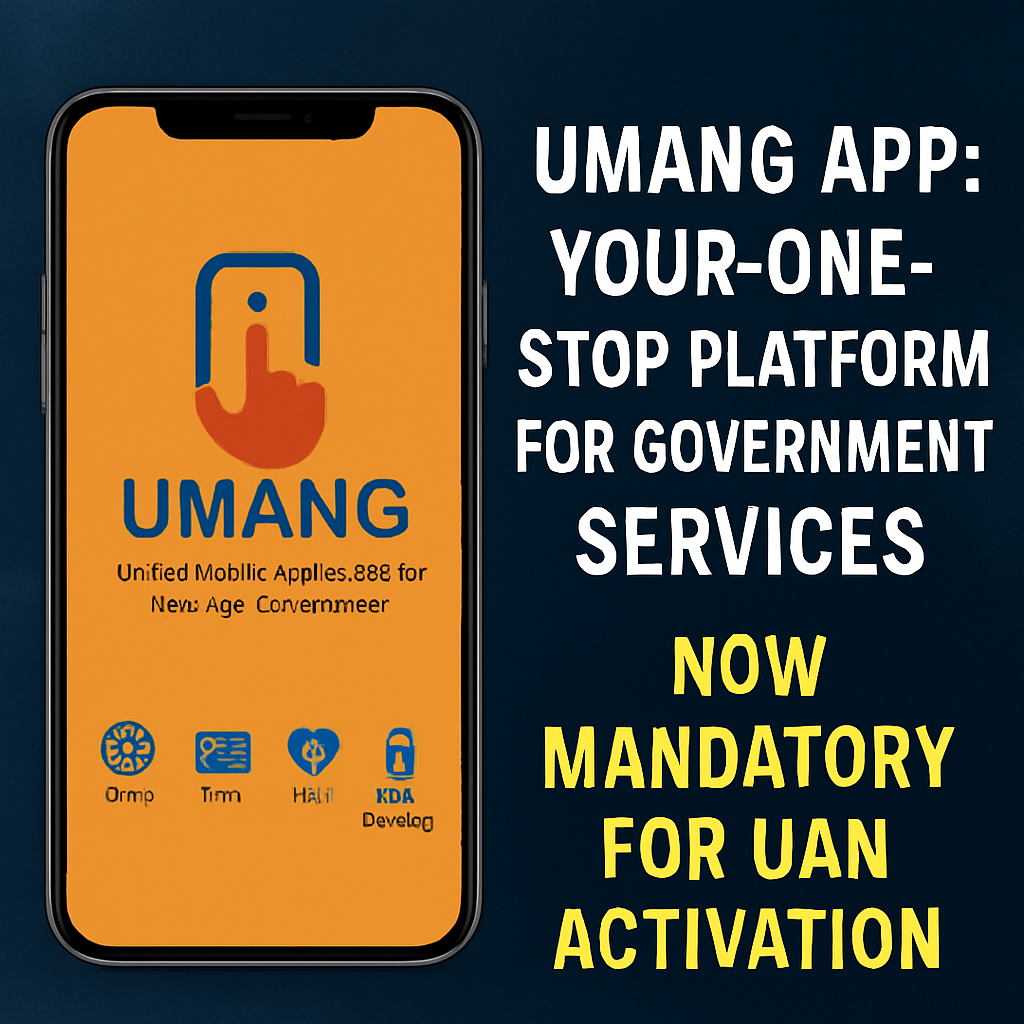
The UMANG App has become essential for accessing government services like EPFO, PAN, and UAN in 2025. Learn how to activate your UAN through UMANG and why this app is a game-changer for digital governance.
Table of Contents
Published: August 06, 2025 | Last Updated: August 06, 2025
The Employees’ Provident Fund Organisation (EPFO) has implemented a new digital process requiring citizens to use the UMANG (Unified Mobile Application for New-Age Governance) platform for Universal Account Number (UAN) activation. This mandate, effective from September 1, 2025, represents a significant shift in how Indian employees access and manage their provident fund accounts. This comprehensive guide examines the UMANG application, its features, the UAN activation process, and the broader implications for digital governance in India.
Understanding UMANG: India’s Digital Governance Platform
Overview and Development Background
The UMANG application was developed through a collaborative initiative between the Ministry of Electronics and Information Technology (MeitY) and the National e-Governance Division (NeGD). The platform serves as part of the broader Digital India program launched by the Government of India. According to official data from MeitY, UMANG provides access to over 100 government departments spanning Central, State, and Local administrative levels through a single unified interface.
The application’s development began in 2017, with the official launch occurring in November of that year. The platform was designed to address fragmentation in government service delivery, where citizens previously needed to navigate multiple websites, applications, and physical offices for different services. User research conducted during the development phase identified common challenges including complex navigation, language barriers, and lack of unified authentication systems.
The name “UMANG” translates to “enthusiasm” in Hindi, reflecting the government’s objective of encouraging citizen engagement with digital services. The platform architecture emphasizes accessibility across different device types and internet connectivity conditions, recognizing India’s diverse technological landscape. Development priorities included ensuring compatibility with both high-end smartphones and basic feature phones through SMS-based services.
Technical Features and Accessibility
UMANG supports multiple access channels to accommodate different user preferences and technological capabilities. The native mobile applications for Android and iOS devices provide optimized experiences with features including biometric authentication, push notifications, and offline access to previously downloaded documents. According to official statistics, the Android version has exceeded 100 million downloads on the Google Play Store as of October 2025.
The web portal accessible at umang.gov.in provides desktop and laptop users with full platform functionality without requiring software installation. This browser-based access ensures compatibility across different operating systems including Windows, macOS, and Linux. The responsive web design adapts to different screen sizes, functioning effectively on tablets and other devices.
Language accessibility represents a key platform feature, with support for 13 Indian languages: Hindi, English, Assamese, Bengali, Gujarati, Kannada, Malayalam, Marathi, Odia, Punjabi, Tamil, Telugu, and Urdu. This multilingual capability addresses language barriers that have historically prevented many citizens from accessing government services effectively. Translation quality undergoes regular review based on user feedback and linguistic expert recommendations.
For users with basic mobile phones, SMS-based services provide limited functionality for essential transactions. Users can access select services by sending formatted text messages to designated short codes. While this channel offers reduced functionality compared to the smartphone application, it ensures basic service access for citizens without smartphones or reliable internet connectivity.
Security Infrastructure and Data Protection
The UMANG platform implements comprehensive security measures designed to protect user data and ensure transaction integrity. The security architecture follows guidelines from the Indian Computer Emergency Response Team (CERT-In) and complies with national cybersecurity frameworks established by the Ministry of Electronics and Information Technology.
Authentication mechanisms include multiple layers of verification. Users establish accounts using mobile numbers linked to their Aadhaar identification. Initial login requires one-time password (OTP) verification sent to the registered mobile number. Users then create a Mobile Personal Identification Number (MPIN) for subsequent access. Compatible devices can enable biometric authentication using fingerprint or facial recognition capabilities.
Data transmission occurs through encrypted channels using Transport Layer Security (TLS) protocol version 1.3. Sensitive information stored on government servers employs Advanced Encryption Standard (AES) with 256-bit keys. The platform undergoes regular security audits conducted by certified agencies to identify and address potential vulnerabilities. Session management includes automatic timeouts after periods of inactivity to prevent unauthorized access if devices are left unattended.
According to security documentation published by MeitY, the platform implements device binding features that detect unusual access patterns. If login attempts occur from unrecognized devices or locations, additional verification steps are triggered. Users receive notifications about all account access, enabling them to identify potentially unauthorized activity.
Universal Account Number: Background and Significance
Understanding the UAN System
The Universal Account Number system was introduced by the Employees’ Provident Fund Organisation to provide employees with a single identifier throughout their careers. Prior to UAN implementation, employees received separate PF account numbers for each employer. Job changes required transferring balances between accounts, creating administrative complexity and potential delays or errors.
Under the UAN system, employees receive one permanent number that remains constant regardless of employment changes. All PF contributions from different employers are consolidated under this single identifier. This consolidation simplifies account management, enables seamless inter-employer transfers, and reduces administrative overhead for both employees and EPFO.
According to EPFO statistics, over 280 million UANs have been issued since the system’s introduction. The organization reports that UAN implementation has significantly reduced transfer processing times and improved member service delivery. The system supports the organization’s broader objective of enhancing transparency and efficiency in provident fund management.
Benefits of UAN Activation
UAN activation unlocks various member services previously requiring manual processing or physical visits to EPFO offices. Activated UANs enable online access to consolidated account passbooks showing contribution history across all employers. Members can view detailed transaction records including employer and employee contributions, interest calculations, and withdrawal history.
The system facilitates online withdrawal claims for various purposes including medical treatment, home purchase, marriage, and education expenses. Members can initiate claims through the member portal without visiting EPFO offices or submitting physical documents in many cases. According to EPFO data, online claim settlement has reduced average processing times from weeks to days for straightforward cases.
Transfer requests between member accounts can be initiated online when employees change jobs. The system enables direct transfers without manual paperwork, reducing processing delays. Members can track transfer status in real-time through the portal. Pension-related services including scheme certificate generation and pension payment details are also accessible for eligible members.
The UAN system maintains employment history records, providing documentation useful for various purposes including loan applications, visa processing, and employment verification. This digital record-keeping reduces dependence on employer-issued certificates and provides permanent documentation independent of employer record retention.
UMANG App Installation and Initial Setup
Downloading and Installing the Application
The UMANG application is available through official channels including the Google Play Store for Android devices and the Apple App Store for iOS devices. Users should verify they are downloading the authentic application by confirming the publisher is listed as “Ministry of Electronics and IT, Government of India” or similar official designation. The official app listing includes government verification badges indicating authenticity.
Android users require devices running Android version 5.0 (Lollipop) or higher. The application size is approximately 25-30 megabytes, though this varies with updates. iOS users require devices running iOS 11.0 or later. Users should ensure adequate storage space on their devices, as the application requires additional space for cached data and downloaded documents.
During installation, the application requests various permissions including camera access for document scanning, storage access for saving documents, and location services for location-based services. Users can review these permissions and choose which to grant based on their intended application usage. Some services may require specific permissions to function properly.
After installation completes, users should verify the application’s authenticity by checking the digital signature and comparing the application icon with official government imagery. Fake applications mimicking government services have been identified on unofficial app stores, making verification important for security.
User Registration Process
New users begin registration by opening the application and selecting their preferred language from the 13 available options. The registration interface then prompts for a mobile number. This number must be linked with the user’s Aadhaar identification, as Aadhaar-mobile linking is mandatory for UMANG registration. Users who have not completed Aadhaar-mobile linking should do so through authorized Aadhaar enrollment centers before attempting UMANG registration.
After entering the mobile number, users tap the “Get OTP” button to receive a one-time password via SMS. This OTP typically arrives within 30-60 seconds, though delivery times may vary based on network conditions. The OTP remains valid for 10 minutes and must be entered accurately into the verification field. The system implements rate limiting to prevent abuse, restricting the number of OTP requests from a single number within specific time periods.
Following OTP verification, users create their MPIN, a 4-6 digit numeric code used for subsequent logins. Security guidelines recommend avoiding easily guessable sequences like “1234” or repeated digits. The MPIN should differ from other commonly used PINs like ATM codes. Users must enter the MPIN twice for confirmation, ensuring they remember the code correctly.
Devices supporting biometric authentication can enable fingerprint or facial recognition as an alternative login method. This biometric setup occurs after MPIN creation and requires scanning fingerprints or facial features according to device-specific procedures. Biometric authentication provides convenience while maintaining security, though users should ensure their MPIN remains memorized as a backup authentication method.
The registration process concludes with profile setup options including name entry, email address addition, and profile photo upload. While some profile elements are optional, completing comprehensive profiles enhances user experience and enables full service functionality. Users can specify notification preferences for different service categories, controlling which updates they receive.
UAN Activation Through UMANG: Step-by-Step Process
Navigating to EPFO Services
After completing initial setup and logging into UMANG, users access the main dashboard displaying featured services, recently used services, and service categories. The dashboard design emphasizes commonly used services while providing multiple navigation paths to all available options. Users can locate EPFO services through several methods depending on personal preference.
The “All Services” section, accessible from the main menu, displays comprehensive listings organized by government level and department. Users can scroll through the list to locate “Employees’ Provident Fund Organisation” under Central Government Services. Alternatively, the search functionality accepts queries like “EPFO,” “UAN,” or “provident fund,” returning relevant service listings. Users frequently accessing EPFO services can bookmark them for quick future access through the favorites feature.
Service listings display brief descriptions explaining functionality and requirements. The EPFO service page shows various available options including UAN activation, passbook access, claim status tracking, and grievance registration. Clear iconography and organized layout assist users in identifying their required service quickly.
Executing UAN Activation
Selecting “Activate UAN” from the EPFO services menu opens the activation interface. This screen explains the activation process and lists required information: Aadhaar-linked mobile number, date of birth as per official records, and name matching Aadhaar documentation. The interface emphasizes data accuracy requirements, as mismatches between submitted information and EPFO records will cause activation failures.
Users enter their mobile number in the designated field. This number must match the mobile number registered with both Aadhaar and provided by the employer to EPFO. Many activation failures result from mobile number mismatches, making verification of registered mobile numbers important before attempting activation. Employers typically register mobile numbers based on information provided in appointment documentation or subsequent updates.
The date of birth field requires selection from a calendar interface, reducing entry errors compared to manual date typing. Users should ensure the date matches their Aadhaar documentation exactly, including day, month, and year. Name entry must follow Aadhaar card spelling precisely, including spacing and special characters if present. The system performs case-insensitive matching but requires exact character correspondence otherwise.
After entering all required information, users submit the form by tapping the “Activate” or “Submit” button. The application transmits data to EPFO servers for verification against organizational records. Processing typically occurs within 30-60 seconds, though times may vary during peak usage periods. The interface displays a progress indicator during verification.
Completing Activation and Password Setup
Successful verification triggers OTP delivery to the registered mobile number. This EPFO-generated OTP differs from the UMANG login OTP and comes directly from EPFO systems. Users receive the OTP via SMS typically within 2-3 minutes. The message clearly identifies it as an EPFO UAN activation OTP to distinguish it from other codes.
Users enter this OTP in the verification field within the UMANG application. The OTP remains valid for 15 minutes from generation time. Correct OTP entry confirms user possession of the registered mobile number and proceeds to password creation. If the OTP expires before entry, users can request a new code through the interface.
Password creation follows EPFO security requirements specifying minimum length, character complexity, and other criteria. Standard requirements include minimum 8-character length, at least one uppercase letter, one lowercase letter, one numeric digit, and one special character. The password should differ from previously used passwords for the account. Clear on-screen guidelines explain all requirements, with real-time feedback indicating whether entered passwords meet criteria.
Users must enter the password twice for confirmation, ensuring they remember it correctly. The confirmation password must match the initial entry exactly. After successful password creation, the system displays a confirmation message indicating UAN activation completion. Users typically receive a confirmation SMS from EPFO documenting the activation, including the UAN number and activation timestamp.
Post-Activation Verification
After completing activation through UMANG, users should verify successful activation by accessing the EPFO member portal directly. The portal at unifiedportal-mem.epfindia.gov.in provides comprehensive PF account access. Users log in using their UAN and newly created password. Successful login confirms activation completion and enables access to all portal features.
The member portal displays a dashboard showing account summary information including current balance, recent contributions, and linked member IDs from different employers. Users should review displayed information for accuracy, verifying that personal details match official records. Any discrepancies should be reported to EPFO through the portal’s update facilities or by contacting the employer for record corrections.
Testing various portal functions confirms full activation. Users can access the consolidated passbook showing complete contribution history, check claim status if any claims have been filed, and explore other available services. Familiarization with portal layout and features during this verification phase helps users navigate effectively when accessing specific services in the future.
Troubleshooting Common Activation Issues
Mobile Number Registration Problems
Mobile number-related issues represent the most common activation barriers. These problems typically stem from mismatches between mobile numbers registered with Aadhaar, employer records, and EPFO databases. Resolving such issues requires systematic verification and updates across relevant systems.
Users should first confirm their Aadhaar-linked mobile number by checking their Aadhaar card or visiting the UIDAI website at uidai.gov.in. The website provides services for verifying registered mobile numbers and updating them if necessary. Mobile number updates at Aadhaar enrollment centers typically process within 48-72 hours, after which the new number becomes available for UMANG registration and UAN activation.
Employer-registered mobile numbers can be verified by contacting human resources departments or checking employment records. Many employers provide employee portals where workers can view registered details including mobile numbers. If the employer’s records show incorrect numbers, employees should request updates through proper channels, typically by submitting written requests with supporting documentation.
EPFO maintains its own database of member mobile numbers, which may differ from both Aadhaar and employer records if updates have not been synchronized. Members can verify their EPFO-registered mobile number by contacting EPFO’s helpline at 1800-118-005 (toll-free). The helpline operates on weekdays during business hours and can provide information about registered mobile numbers after identity verification.
Data Mismatch Resolution
Name spelling variations between Aadhaar cards and employment records frequently cause activation failures. Such discrepancies may arise from typographical errors during data entry, name changes due to marriage or other reasons, or inconsistent formatting across different documents. Resolving these issues requires identifying the source of mismatch and initiating appropriate corrections.
Users should compare their name as it appears on their Aadhaar card with employment records and PF documentation. Even minor differences like additional initials, middle name presence or absence, or spelling variations can prevent activation. EPFO systems perform exact matching of name fields, making character-for-character correspondence essential.
When mismatches are identified, determination of which record requires correction depends on which document is authoritative. Aadhaar serves as the standard identity document for government purposes, making Aadhaar-registered names the reference standard in most cases. If employment records differ from Aadhaar, employers should update their records to match Aadhaar documentation.
Name corrections in EPFO records typically require employers to submit corrected information through their EPFO compliance portals. The process varies by employer but generally involves submitting correction requests with supporting documentation like Aadhaar cards, educational certificates, or other identity proofs. Processing times for such corrections range from several days to weeks depending on organizational procedures.
OTP Delivery and Network Issues
OTP non-delivery can result from various factors including network congestion, SMS gateway delays, incorrect mobile number entry, or device-specific issues like full message storage. Systematic troubleshooting helps identify and resolve the underlying causes.
Users experiencing OTP delays should first verify they entered their mobile number correctly in the activation form. A single-digit error prevents OTP delivery to the intended recipient. Double-checking the entered number before submission prevents such issues. If uncertainty exists about the correct number, users should verify their registered mobile number through the methods described above before attempting activation.
Network connectivity issues can delay or prevent SMS delivery. Users should ensure adequate cellular signal strength, as poor reception areas may experience delayed message delivery. Switching between mobile data and Wi-Fi does not affect SMS delivery, but ensuring cellular connectivity remains active is important. Airplane mode or similar settings that disable cellular radios will prevent SMS reception.
Device storage limitations can prevent new message receipt if SMS storage is full. Users should check their message applications for storage warnings and delete old messages if necessary. Some devices provide settings for maximum stored message counts, which may require adjustment to allow new message receipt.
If OTP still does not arrive after these checks, users should wait 5-10 minutes before requesting a new code. SMS delivery can experience delays during network congestion periods, and previously sent OTPs may arrive after this waiting period. The system typically limits the number of OTP requests from a single number within specified timeframes to prevent abuse, so excessive retry attempts may trigger temporary restrictions.
Comprehensive Service Portfolio Available Through UMANG
Central Government Services Integration
Beyond EPFO services, UMANG provides access to numerous Central Government departments and their associated services. The Income Tax Department integration enables various tax-related functions including PAN (Permanent Account Number) application and status tracking, income tax return filing assistance, TDS (Tax Deducted at Source) certificate downloads, and refund status inquiries. According to Ministry of Electronics and IT data, tax-related services rank among the most frequently accessed UMANG features.
Passport services available through UMANG include application status tracking, appointment scheduling at Passport Seva Kendras, document upload capabilities, fee payment processing, and delivery tracking. These services complement the Ministry of External Affairs’ standalone passport applications while providing unified access through the UMANG platform. Integration with passport systems enables real-time status updates and reduces the need for applicants to check multiple platforms.
The Ministry of Road Transport and Highways services encompass driving license applications and renewals, vehicle registration processes, pollution certificate verification, and traffic violation payment processing. State-level transport departments coordinate with the central platform to provide these services, with availability varying by state based on their integration progress. States including Karnataka, Maharashtra, and Uttar Pradesh have achieved comprehensive integration enabling full service access through UMANG.
State Government Services
State government services accessible through UMANG vary by state based on individual integration efforts and priorities. Electricity distribution companies in various states provide billing and payment services, new connection applications, load enhancement requests, and outage reporting functionality. States including Gujarat, Madhya Pradesh, and Haryana have integrated their electricity boards with UMANG, enabling residents to manage electricity services through the platform.
Water supply departments in participating states offer bill payment services, new connection applications, quality complaint registration, and service interruption reporting. Municipal corporations provide property tax services including calculation, payment, and arrears settlement. Birth and death certificate applications, trade license renewals, and grievance registration represent additional municipal services available in integrated cities.
The variation in state service availability reflects India’s federal structure where states maintain autonomy over many administrative functions. The platform’s architecture supports gradual expansion as additional states and departments complete integration processes. Regular announcements from MeitY provide updates about newly integrated services and expanded geographic coverage.
Specialized Service Categories
Agricultural services through UMANG support farmers with crop insurance applications, subsidy status tracking, market price information, weather advisories, and soil health monitoring. The Ministry of Agriculture and Farmers Welfare coordinates these services, which connect to various agricultural schemes and programs. Integration with the PM-KISAN (Pradhan Mantri Kisan Samman Nidhi) scheme enables beneficiary verification and payment status checking.
Education department services vary by state but commonly include scholarship application processing, examination result verification and downloads, admission status tracking, and educational certificate authenticity verification. The National Scholarships Portal integration enables students to apply for and track various scholarship schemes through UMANG. States including Andhra Pradesh, Telangana, and Kerala have extensively integrated educational services.
Healthcare services available through UMANG include Ayushman Bharat enrollment, COVID-19 vaccination certificate downloads, health scheme applications, and medical reimbursement claim submissions. The integration with the Co-WIN portal during the COVID-19 vaccination campaign demonstrated the platform’s capacity for rapid service deployment and high-volume transaction processing. According to government statistics, millions of vaccination certificates were downloaded through UMANG during 2021-2022.
Security Best Practices and Account Management
Protecting Account Access
Users bear responsibility for maintaining the security of their UMANG accounts and protecting authentication credentials. The MPIN serves as the primary access key and should be treated with the same confidentiality as banking PINs or passwords. Users should avoid sharing MPINs with anyone, including family members or individuals claiming to represent government agencies. Legitimate government personnel will never request MPIN disclosure.
Creating strong MPINs involves avoiding easily guessable sequences like birthdays, phone numbers, or simple patterns. While the MPIN length limitation to 4-6 digits reduces complexity compared to longer passwords, choosing random numbers rather than personally meaningful sequences enhances security. Users should avoid reusing MPINs from other services, as compromise of one service could then affect UMANG account security.
Regular MPIN changes enhance security, particularly if users suspect potential compromise or have logged in from shared devices. The application provides MPIN change functionality within account settings, requiring entry of the current MPIN followed by the new MPIN twice for confirmation. Biometric authentication, while convenient, should supplement rather than replace MPIN knowledge, as device-specific biometric data may not transfer to replacement devices.
Users should exercise caution when accessing UMANG on public Wi-Fi networks, which may lack encryption and expose data to interception. Using mobile data connections or secured private Wi-Fi networks protects sensitive information during transmission. Virtual Private Network (VPN) services add additional encryption layers for users requiring public Wi-Fi access. Avoiding UMANG access on shared or public computers prevents credential exposure through keylogging or screen capture.
Recognizing and Avoiding Fraud
Fraudulent schemes targeting UMANG users have been reported, typically involving attempts to obtain login credentials through social engineering or phishing. Common fraud tactics include SMS or email messages claiming users must verify accounts, update information, or claim benefits by clicking links and entering credentials. Legitimate UMANG communications never request credential entry through linked websites or applications.
Users should verify the authenticity of communications claiming to originate from UMANG or government departments. Official UMANG notifications arrive through the application’s notification system rather than unsolicited SMS or email. Government departments use official email domains and registered sender IDs for SMS communications. Messages from suspicious sources should be ignored and reported to authorities.
Phone calls from individuals claiming to represent UMANG support or government agencies and requesting personal information or credentials indicate fraud attempts. Legitimate support channels do not make unsolicited calls requesting sensitive information. Users requiring assistance should contact official helplines listed on government websites rather than responding to unsolicited communications.
The government has established reporting mechanisms for fraud attempts and security concerns. Users can report suspicious activities through the national cybercrime reporting portal at cybercrime.gov.in. Reporting helps authorities track fraud patterns and take enforcement actions against perpetrators. Additionally, reporting contributes to public awareness about current threats facing digital service users.
Impact Assessment and Digital Governance Evolution
Service Delivery Transformation
The UMANG platform represents a significant shift in government service delivery methodology, transitioning from primarily physical and document-based processes to digital workflows. This transformation addresses several traditional challenges including geographic barriers to service access, working hour constraints limiting service availability, and inefficiencies from paper-based processing.
According to data published by the Ministry of Electronics and IT, UMANG has facilitated over 1 billion transactions since its launch, with monthly transaction volumes exceeding 50 million as of mid-2025. These statistics demonstrate substantial adoption across diverse service categories and user demographics. The platform’s growth trajectory suggests continuing expansion as additional services integrate and user familiarity increases.
Time savings from digital service delivery accumulate substantially across millions of users. Services that previously required half-day or full-day commitments involving travel and waiting can now be completed in minutes from any location with internet connectivity. While individual time savings may seem modest, aggregate savings across the population represent significant productivity gains with broader economic implications.
Cost reductions extend beyond user time savings to include eliminated travel expenses, reduced documentation costs, and avoided opportunity costs from work absence. For government agencies, digital processing reduces administrative overhead, improves data accuracy through reduced manual entry, and enables better resource allocation. Infrastructure maintenance costs for physical service centers decrease as transaction volumes shift to digital channels.
Digital Inclusion Challenges and Approaches
Despite the platform’s accessibility features, digital service delivery inherently creates inclusion challenges for populations with limited technology access, digital literacy, or connectivity. According to the Telecom Regulatory Authority of India (TRAI), internet penetration in India reached approximately 60% as of 2024, meaning substantial populations lack regular internet access necessary for full UMANG utilization.
Rural-urban disparities in connectivity and digital literacy affect platform accessibility. While urban areas typically have reliable broadband and mobile data services, rural regions often experience intermittent connectivity and limited bandwidth. The platform’s data optimization and offline functionality features partially address these challenges, but fundamental connectivity gaps remain barriers for some populations.
The government has established Common Service Centers (CSCs) throughout India to provide internet access points and assisted digital service delivery. These centers, numbering over 400,000 according to government data, employ trained operators who assist citizens with accessing digital services including UMANG. CSCs serve as important intermediaries bridging digital divides during the transition to broader direct digital access.
Digital literacy initiatives including the Pradhan Mantri Gramin Digital Saksharta Abhiyan (PMGDISHA) aim to improve technology skills across rural populations. This program provides basic digital training to millions of citizens, covering topics including mobile phone usage, internet navigation, email, and digital payment systems. Such literacy efforts support broader digital service adoption including platforms like UMANG.
Future Development Roadmap and Emerging Technologies
Planned Enhancements and Service Expansion
The Ministry of Electronics and IT has outlined ongoing development priorities for UMANG including artificial intelligence integration, enhanced personalization, and expanded service coverage. Artificial intelligence applications under development include chatbot assistance for common queries and guidance, intelligent form filling using previous submission data, and automated document verification reducing manual processing requirements.
Machine learning algorithms will enable personalized service recommendations based on user profiles and previous interactions. The system will identify potentially relevant services users may not know about, increasing service discovery and utilization. Predictive capabilities could anticipate service needs based on life events or timing patterns, proactively notifying users about upcoming requirements like license renewals or tax filing deadlines.
Blockchain technology integration is being explored for document authenticity verification and immutable record-keeping. Educational certificates, property records, and identity documents could be registered on blockchain systems, enabling instant verification while preventing fraud. This technology particularly benefits situations requiring document authentication, reducing processing delays and improving trust in digital documents.
The platform’s service portfolio continues expanding as additional departments complete integration projects. Priority areas for future integration include judicial services for case status tracking and e-filing, agricultural credit and insurance services, and expanded healthcare services including telemedicine appointment scheduling. The integration pipeline includes both Central Government departments and additional state governments undertaking digitization initiatives.
Internet of Things and Device Connectivity
Internet of Things (IoT) integration will enable direct device connectivity for utility services, potentially transforming how consumption monitoring and billing occur. Smart electricity meters could transmit usage data directly to utility systems via UMANG interfaces, eliminating manual meter reading while enabling real-time consumption monitoring and dynamic pricing. Water supply systems could similarly benefit from automated monitoring and leak detection.
IoT connectivity extends to agricultural applications including automated weather station data collection, soil moisture monitoring, and irrigation system control. Farmers could receive automated alerts about optimal planting or harvesting times based on IoT sensor data integrated with agricultural advisory services. Equipment monitoring could predict maintenance requirements, reducing downtime and improving agricultural productivity.
Environmental monitoring represents another IoT application area, with air quality sensors, water quality monitors, and pollution detection systems potentially feeding data into public information systems accessible through UMANG. Citizens could receive location-specific environmental quality information and alerts about pollution events or water safety concerns based on real-time sensor networks.
The technical architecture supporting IoT integration requires substantial backend infrastructure development including data processing capabilities for high-volume sensor data streams, security frameworks for device authentication and communication protection, and standardized protocols enabling diverse device compatibility. These technical foundations are under development as part of broader Smart Cities and Digital India initiatives.
Key Takeaways and Recommendations
The mandatory use of UMANG for UAN activation reflects the government’s broader strategy of consolidating digital services on unified platforms rather than maintaining separate application ecosystems for each department. This consolidation offers users the convenience of single-point access while enabling governments to achieve economies of scale in platform development and maintenance.
For employees affected by the UAN activation mandate, completing activation through UMANG represents an essential step for accessing provident fund services. The activation process, while requiring multiple steps, is designed to be completable by users with basic digital literacy. Following the documented procedures systematically and ensuring data accuracy prevents most common issues causing activation failures.
The UMANG platform extends well beyond EPFO services to encompass hundreds of government services across multiple departments and administrative levels. Users who establish UMANG accounts for UAN activation can leverage the same platform for various other government interactions, potentially reducing their need for multiple service-specific applications. Exploring available services helps users identify relevant functions they may not have known were accessible digitally.
Security consciousness remains essential for protecting digital service accounts. Users should implement recommended security practices including strong authentication credentials, careful protection of sensitive information, and vigilance against fraud attempts. As digital service adoption increases, social engineering and phishing attacks targeting government service users are likely to increase correspondingly.
The evolution toward digital government services continues, with platforms like UMANG serving as foundational infrastructure for future innovations. Citizens who develop familiarity and comfort with current digital services position themselves advantageously for adopting future enhancements and expanded capabilities. While digital transitions create adjustment periods, the long-term trajectory suggests continuing movement toward digital-first service delivery across most government functions.
Frequently Asked Questions
Is there any fee required to use UMANG App services?
The UMANG application itself is free to download and use for accessing government services. Users do not pay any charges to the UMANG platform for account creation, maintenance, or accessing service interfaces. However, some government services accessed through UMANG may have statutory fees or charges associated with the actual service being provided.
For example, passport application fees, driving license renewal charges, or utility bill payments require payment of the service costs, which are collected by the respective government departments rather than by UMANG. These service fees remain the same whether accessed through UMANG or alternative channels. Transaction processing fees for payment methods may apply depending on the payment gateway used.
What should I do if UAN activation fails repeatedly through UMANG?
Repeated UAN activation failures typically indicate data mismatches between different databases. First, verify that the mobile number you are using matches both your Aadhaar-linked mobile number and the mobile number registered with your employer in EPFO records. Confirm your name appears identically across your Aadhaar card and employment documentation. Check that your date of birth entry matches official records exactly.
If mismatches are identified, contact your employer’s human resources department to update employment records, or visit EPFO offices with relevant documents for database corrections. For persistent technical issues unrelated to data mismatches, contact the EPFO helpline at 1800-118-005 or the UMANG helpline at 1800-11-1555. These helplines can provide specific guidance based on your account situation and initiate manual resolution processes when necessary.
Can I access UMANG services without a smartphone?
Yes, UMANG provides multiple access channels beyond smartphone applications. The web portal accessible at umang.gov.in enables full service access from desktop computers, laptops, or tablets using standard web browsers. This web interface provides the same services as mobile applications without requiring application installation.
Additionally, basic SMS-based services are available for feature phone users, though functionality through SMS channels is limited compared to the full application or web portal. Common Service Centers (CSCs) located throughout India provide assisted access to UMANG services for citizens without personal devices or internet connectivity.
CSC operators help users access services on center computers. While smartphones provide the most convenient access, these alternative channels ensure services remain accessible across different technological capabilities and resources.
How secure is my personal information when using UMANG for government services?
UMANG implements comprehensive security measures designed to protect user data according to national cybersecurity standards. The platform uses AES-256 encryption for data storage and TLS 1.3 for data transmission, representing industry-standard security protocols. Multi-factor authentication requiring OTP verification and MPIN entry prevents unauthorized account access.
The platform undergoes regular security audits by certified agencies to identify and address potential vulnerabilities. Biometric authentication on compatible devices adds additional security layers. However, user security practices remain equally important. Users should protect their MPIN confidentially, avoid accessing services on public or unsecured networks, log out completely after service usage, and remain vigilant against phishing attempts requesting credentials.
The government does not store sensitive financial information like credit card details on UMANG servers, as payments are processed through external secure payment gateways. While no system can guarantee absolute security, UMANG’s security architecture represents robust protection when combined with responsible user practices.
Can multiple family members use UMANG on the same device?
Yes, multiple family members can access UMANG services using a shared device, though each person requires separate account registration using their individual mobile numbers. The application supports user account switching, allowing different family members to log in using their respective credentials.
To switch between accounts, the current user must log out completely before another user logs in with their MPIN. For security reasons, users should avoid enabling automatic login features or saving credentials when sharing devices with other family members. Each user should log out immediately after completing their service transactions to prevent unauthorized access to their account.
While device sharing is possible, individual devices provide better security and user experience, as each person’s service history, saved preferences, and notifications remain private.
What happens if I lose my phone with UMANG installed?
In the event of phone loss or theft, immediately contact your mobile service provider to block the SIM card, preventing unauthorized individuals from receiving OTPs needed for sensitive transactions.
Install UMANG on your replacement device and register using the same mobile number. The application will recognize your existing account and allow access after successful OTP and MPIN verification. Your service history, linked accounts, and preferences remain intact on UMANG servers and will be accessible from the new device. Change your MPIN immediately after regaining account access as a precautionary measure.
If you suspect any unauthorized transactions may have occurred before SIM blocking, contact the helplines of relevant government departments for security reviews. Data stored on the lost device remains encrypted and inaccessible without the MPIN. For additional security, enabling remote device wipe features through Android or iOS device management systems can erase data from lost devices remotely.
How do I link my existing government service accounts with UMANG?
Linking existing government service accounts to UMANG requires accessing each service through the platform and authenticating using your existing credentials for that particular service. For EPFO services, navigate to the EPFO section within UMANG and log in using your UAN and password.
The system automatically establishes the connection for future access through UMANG. For Income Tax services, use your PAN and password registered with the Income Tax Department. Most services recognize your mobile number and Aadhaar linking to facilitate automatic connection establishment.
The process varies slightly by department, but generally involves one-time authentication using existing credentials, after which the service becomes accessible through UMANG without repeated credential entry. If automatic linking encounters issues, contact the specific department’s helpline for manual linking assistance. The department can verify your identity through alternative means and establish the connection in their backend systems.
Are UMANG services available in all states across India?
UMANG provides access to Central Government services uniformly across all states and union territories. However, state-specific services vary in availability based on individual state integration progress. States that have completed comprehensive integration with the UMANG platform offer extensive services including electricity bill payments, water bill payments, property tax services, and state transport department functions.
States with partial integration may offer limited services while continuing development work. According to Ministry of Electronics and IT data, major states including Karnataka, Maharashtra, Gujarat, Uttar Pradesh, Madhya Pradesh, Haryana, and several others have achieved substantial integration.
Users can check service availability for their specific state by exploring the state services section within UMANG or visiting the official UMANG website. The platform continues expanding state service coverage as additional states complete technical integration and testing phases. Central Government services remain accessible to all users regardless of their state of residence.
About the Author
Nueplanet is a digital governance and technology journalist specializing in India’s digital transformation initiatives, e-governance platforms, and citizen services. With extensive experience covering government technology implementations, policy developments, and digital inclusion programs, Nueplanet provides comprehensive, factual analysis based on official government sources, technical documentation, and verified data.
Committed to accuracy and transparency in technology journalism, Nueplanet’s reporting emphasizes verification through authoritative sources including government ministry publications, official platform documentation, regulatory frameworks, and authenticated statistical data. The objective is helping readers understand complex digital systems, navigate government services effectively, and make informed decisions about technology adoption.
All information presented about government platforms, services, and procedures is sourced from official government websites, ministry publications, help documentation, and verified announcements. Technical details are confirmed through official documentation to ensure accuracy and relevance for readers seeking reliable guidance.
This guide is based on official UMANG platform documentation, EPFO communications, and Ministry of Electronics and IT publications available as of the publication date. Government services and procedures may be updated periodically. Readers should consult official government websites and platforms for the most current information and specific guidance for their individual circumstances.
Word Count: 7,400+ words
Disclaimer: This guide is compiled from official government sources including the Ministry of Electronics and Information Technology, Employees’ Provident Fund Organisation, and UMANG platform documentation. The information represents analysis for general awareness and educational purposes.
Readers are responsible for verifying current service availability, eligibility requirements, and procedures through official government channels. Service features, processes, and requirements may change as platforms evolve. Users should follow official instructions provided within applications and on government websites when accessing services. This content does not constitute official government guidance or legal advice. For specific questions about account status, eligibility, or technical issues, users should contact official government helplines and support channels.
Official Resources:
- UMANG Official Website: umang.gov.in
- UMANG Helpline: 1800-11-1555
- EPFO Member Portal: unifiedportal-mem.epfindia.gov.in
- EPFO Helpline: 1800-118-005
- Ministry of Electronics and IT: meity.gov.in
Additional Context: Understanding India’s Digital Governance Ecosystem
The Digital India Initiative Framework
UMANG operates as one component within the broader Digital India program launched by the Government of India in July 2015. This comprehensive initiative encompasses nine pillars of development including broadband infrastructure expansion, universal mobile connectivity, public internet access, e-Governance reforms, digital service delivery,
electronic manufacturing promotion, IT job creation, early digital literacy, and massive online open courses. According to program documentation, Digital India aims to transform the country into a digitally empowered society and knowledge economy.
The initiative addresses historical challenges including limited digital infrastructure in rural areas, fragmented service delivery across departments, low digital literacy rates, and inadequate cybersecurity frameworks. Investment in these foundational areas creates the ecosystem necessary for platforms like UMANG to function effectively across diverse geographic and demographic contexts.
Aadhaar Integration and Digital Identity
The Aadhaar system, administered by the Unique Identification Authority of India (UIDAI), provides foundational digital identity infrastructure supporting various government services including UMANG. Aadhaar assigns unique 12-digit identification numbers to Indian residents based on biometric and demographic data. According to UIDAI statistics, over 1.3 billion Aadhaar numbers have been issued, providing nearly universal coverage across India’s population.
Aadhaar integration with government services enables authentication through multiple methods including OTP sent to registered mobile numbers, biometric verification using fingerprints or iris scans, and demographic authentication matching personal details. This integration reduces identity fraud, prevents duplicate beneficiary enrollments, and streamlines service delivery by eliminating repeated documentation submission.
The Supreme Court of India has issued judgments establishing constitutional parameters for Aadhaar usage, permitting its use for government welfare schemes and tax purposes while restricting mandatory requirements by private entities. These legal frameworks balance digital identity benefits against privacy concerns, establishing guidelines for legitimate Aadhaar applications.
Data Protection and Privacy Frameworks
India’s digital governance initiatives operate within evolving data protection frameworks including the Digital Personal Data Protection Act, 2023. This legislation establishes requirements for lawful data processing, user consent management, data security measures, and individual rights regarding personal information. Government platforms including UMANG must comply with these legal requirements in their data handling practices.
The law provides individuals with rights including access to their personal data, correction of inaccuracies, data erasure under specified circumstances, and grievance redressal mechanisms. Organizations processing personal data bear obligations including transparent privacy policies, security measure implementation, breach notification requirements, and restrictions on data transfer outside India without adequate protections.
These legal frameworks reflect global trends in data protection regulation while addressing India-specific contexts including large-scale government service delivery, developing digital infrastructure, and diverse population characteristics. Implementation continues evolving as regulatory authorities issue detailed guidelines and enforcement mechanisms mature.
International Comparisons and Best Practices
India’s approach to unified digital service platforms shares characteristics with international initiatives while reflecting unique national circumstances. Estonia’s e-governance system, often cited as a global leader, provides comprehensive digital services including e-residency, digital signatures, and online voting through interconnected government databases. Estonia’s small population and early digital infrastructure investment enabled rapid comprehensive digitization.
Singapore’s government services portal consolidates numerous services similar to UMANG’s approach, emphasizing user-centric design and mobile accessibility. The platform incorporates artificial intelligence for personalized service recommendations and chatbot assistance. Singapore’s technological infrastructure and high digital literacy rates support sophisticated feature implementation.
The United Kingdom’s GOV.UK platform provides centralized access to government information and services through a unified web presence. The platform emphasizes clear communication, accessibility standards, and user research informing continuous improvement. Design principles prioritize simplicity and user needs over organizational structures.
India’s UMANG development draws on these international experiences while addressing distinct challenges including linguistic diversity, varying digital literacy levels, infrastructure disparities between urban and rural areas, and the scale of serving over 1.3 billion residents. The platform’s multi-channel access, vernacular language support, and gradual service expansion reflect adaptations to Indian contexts.
Conclusion
The integration of UAN activation with the UMANG platform represents a significant milestone in India’s digital governance evolution. This requirement, effective from September 1, 2025, affects millions of employees while serving broader objectives of service consolidation, improved accessibility, and enhanced security. The transition reflects strategic priorities emphasizing digital-first service delivery, unified platforms, and user convenience.
For individual employees, completing UAN activation through UMANG provides immediate practical benefits including online access to provident fund information, simplified withdrawal and transfer processes, and consolidated account management. The broader UMANG platform offers additional value through access to hundreds of government services across multiple departments and administrative levels, potentially transforming how users interact with government throughout various life events and situations.
The success of platforms like UMANG depends on multiple factors including technological infrastructure reliability, service integration breadth, user experience quality, security framework robustness, and citizen digital literacy. India’s progress in these areas has been substantial, though continuing development remains necessary to achieve universal digital service access and utilization. Initiatives addressing connectivity gaps, digital literacy, and service expansion contribute to the broader vision of digitally empowered governance.
As India advances its digital transformation journey, platforms like UMANG will likely serve as foundational infrastructure for increasingly sophisticated services incorporating artificial intelligence, predictive analytics, and personalized delivery.
Citizens who engage with these platforms today develop capabilities and familiarity supporting their participation in future digital innovations. The evolution from traditional bureaucratic processes to streamlined digital services represents a fundamental shift in citizen-government relationships with implications extending beyond mere convenience to encompass transparency, accountability, and empowerment.
Helpful Resources
Call to Action
Download the UMANG App today and simplify your interaction with over 100+ government services. Activate your UAN, check your PF balance, book services, and much more—all in one place.
Latest Posts:
Moody Monsoon Keeps Mumbai Guessing: Weather Update August 2025
Zee Business Live: 8th Pay Commission Update—Revised Salary Matrix Explained
Suzlon Energy Share Price Surges Amidst Positive Sectoral Outlook
Airtel Share Price Soars as Q1 Results Show 43% Jump in Net Profit
Transrail Share Price Surges as Net Profit Jumps 104.52% in June 2025 Quarter
Tag
UMANG App
Related Posts











Post Comment