









TS EAMCET Phase‑2 Seat Allotment 2025: Result, Admission Dates & Guide
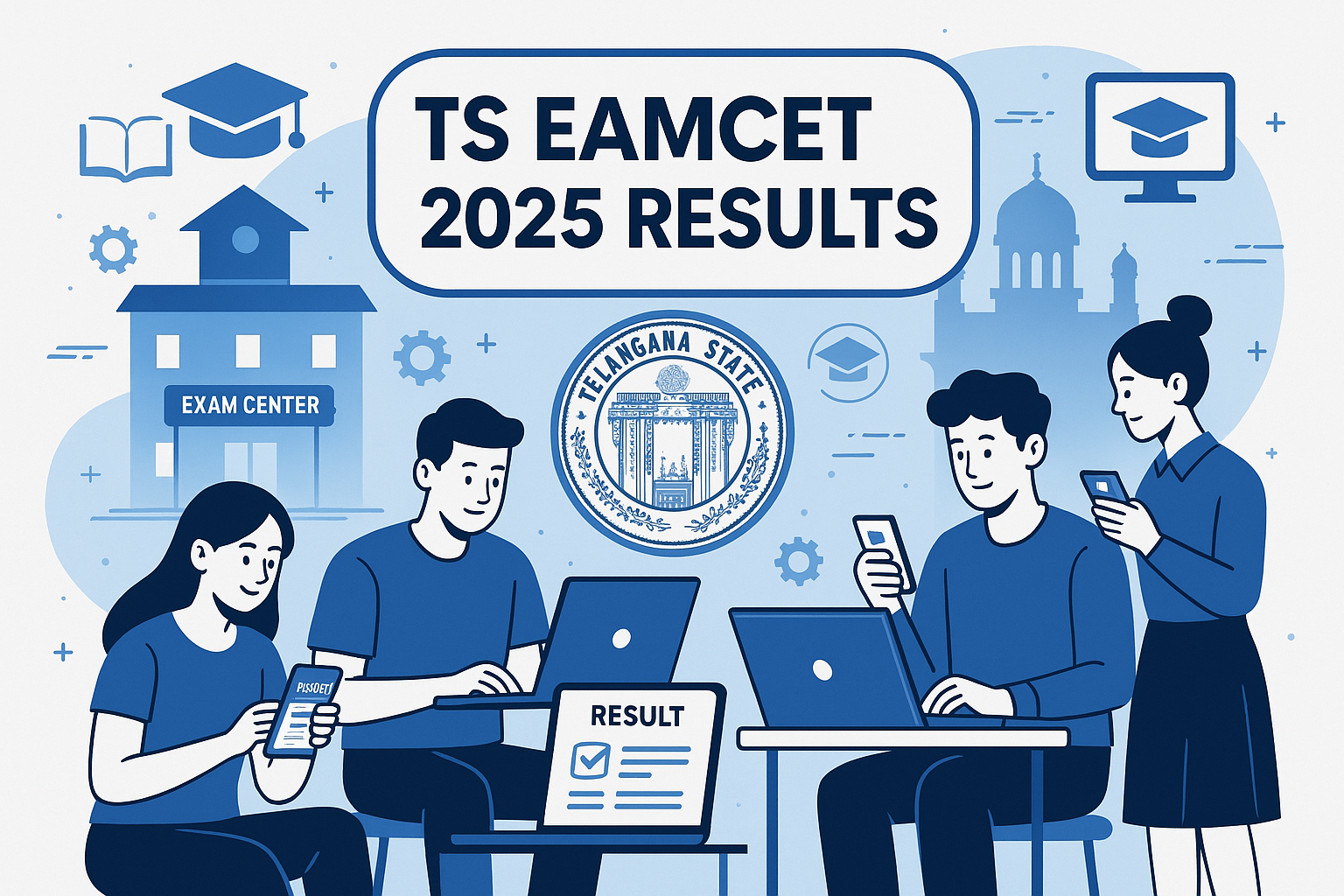
Table of Contents
Overview of TS EAMCET 2025
The Telangana State Engineering, Agriculture and Pharmacy Common Entrance Test (TS EAPCET), formerly known as TS EAMCET, serves as the primary entrance examination for undergraduate admissions in engineering, agriculture, and pharmacy programs across Telangana. The examination is conducted jointly by the Telangana State Council of Higher Education (TSCHE) and Jawaharlal Nehru Technological University Hyderabad (JNTU-H).
The Phase-2 seat allotment results for TS EAMCET 2025 were released on July 29, 2025, through the official portal at tgeapcet.nic.in. This article provides comprehensive information about the admission process, important dates, and required procedures for candidates who have received their seat allotments.
Understanding the counselling process is essential for securing admission to preferred institutions. This guide covers all aspects of Phase-2 counselling, including eligibility criteria, document requirements, fee structures, and reporting procedures.
Understanding TS EAPCET Examination Structure
Examination Overview
TS EAPCET 2025 was conducted in May 2025 across two separate streams. The engineering stream examinations took place from May 3-8, 2025, while the agriculture and pharmacy stream tests were held from May 10-12, 2025. The examination maintains recognized standards for assessing student preparedness for professional courses.
According to official data, approximately 2,52,847 candidates registered for the examination. The state offers around 1,82,456 seats across 847 participating institutions. This results in a seat availability ratio that requires candidates to make informed choices during counselling.
The examination tests candidates on subjects relevant to their chosen streams. Engineering aspirants are evaluated on physics, chemistry, and mathematics, while agriculture and pharmacy candidates face questions from physics, chemistry, and biology or mathematics.
Examination Statistics and Performance
The 2025 edition witnessed substantial participation from across Telangana. Official records indicate that approximately 72% of candidates who appeared for the examination qualified for counselling. This qualification rate reflects the examination’s difficulty level and candidate preparation standards.
Seat distribution varies across different categories and regions. The reservation policy follows Telangana state guidelines, ensuring equitable access to educational opportunities. Candidates are allotted seats based on their ranks, category reservations, and web option preferences submitted during counselling.
Phase-2 Counselling Process Explained
Eligibility for Phase-2 Counselling
Phase-2 counselling accommodates multiple categories of candidates. Students who did not participate in Phase-1 counselling are eligible to register for Phase-2. Additionally, candidates who participated in Phase-1 but were not allotted any seat automatically become eligible for subsequent phases.
Candidates who received seat allotments in Phase-1 can also participate in Phase-2 if they wish to upgrade their college or branch. The system allows flexibility for students to explore better options while maintaining their existing allotments as backup.
Fresh registrations are accepted for Phase-2, subject to valid reasons for non-participation in earlier phases. Candidates must provide appropriate documentation explaining their absence from previous counselling rounds.
Web Option Filling Procedure
The web option filling process allows candidates to select their preferred college and course combinations. The system accepts up to 1,500 different options, enabling students to maximize their chances of favorable allotment.
Strategic option filling requires careful consideration of multiple factors. Candidates should analyze previous year cutoff trends, college infrastructure, placement records, and faculty qualifications. Including options from different geographic regions and institution types increases the probability of seat allotment.
The official portal provides real-time information about seat availability across different colleges and courses. This transparency helps candidates make informed decisions during the option filling process.
Checking Your Phase-2 Seat Allotment
Accessing Allotment Results Online
Candidates can check their Phase-2 seat allotment results through the official TS EAPCET portal. The process requires logging in with specific credentials including the 12-digit hall ticket number, application number, password, and date of birth.
The allotment result page displays comprehensive information about the assigned college and course. Candidates should verify all details carefully before proceeding with subsequent steps. Any discrepancies should be reported immediately to the helpline at 040-23120139.
After viewing the results, candidates must download the allotment letter. This document serves as official proof of seat allocation and is required during physical reporting at the college.
Understanding Your Allotment Letter
The allotment letter contains essential information required for admission procedures. Key details include the candidate’s hall ticket number, EAPCET rank, regional rank, and category classification. The document also specifies the allotted college code, college name, course details, and complete institutional address.
Reporting instructions are provided in the allotment letter. These guidelines specify the timeline and procedures for completing admission formalities. Candidates must follow these instructions precisely to avoid losing their allotted seats.
The letter also indicates whether physical document verification is mandatory. Some categories of candidates may need to complete additional verification steps before final admission confirmation.
Important Dates and Timeline
Critical Deadlines for Phase-2
The Phase-2 admission process follows a strict timeline. The allotment results were released on July 29, 2025, at 10:00 AM through the official portal. Candidates must complete online fee payment and self-reporting between July 30 and August 1, 2025, from 10:00 AM to 11:59 PM daily.
Document verification, where required, must be completed on July 31 or August 1, 2025, between 9:00 AM and 5:00 PM. Physical reporting at the allotted college should be done between July 31 and August 2, 2025, during college working hours.
Participating colleges are required to update admission status by August 3, 2025. This information helps authorities plan subsequent counselling phases and manage seat availability.
Phase-3 Counselling Schedule
For candidates participating in Phase-3, web option filling is scheduled from August 5-7, 2025. The system operates 24/7 during this period, allowing candidates to fill options at their convenience. Phase-3 allotment results are expected around August 10, 2025, at 10:00 AM.
Missing any deadline results in automatic cancellation of seat allotment. The system does not provide grace periods or extensions. Candidates must complete all required procedures within specified timeframes to secure their admissions.
Self-Reporting and Fee Payment
Understanding Self-Reporting
Self-reporting is a mandatory online process where candidates confirm acceptance of their allotted seats. This digital confirmation must be completed through the TS EAPCET portal within the designated window. The process involves logging into the portal, navigating to the self-reporting section, and verifying allotment details.
Candidates have two acceptance options during self-reporting. The “Accept and Freeze” option confirms the allotment and withdraws the candidate from subsequent counselling phases. The “Accept and Continue” option retains eligibility for upgradation in Phase-3 while securing the current allotment.
After selecting the appropriate option, candidates must complete online fee payment. The system generates a self-reporting confirmation document that should be downloaded and saved for future reference.
Fee Structure Details
The fee structure for Phase-2 admissions includes multiple components. Tuition fees vary based on college category and management type, ranging from ₹35,000 to ₹1,50,000 annually. A non-refundable processing fee of ₹1,200 applies to all candidates.
University registration fees of ₹5,500 per annum are mandatory. If counselling fees of ₹600 were not paid during earlier phases, they must be settled during self-reporting. Additional charges may include examination fees, library fees, and laboratory fees depending on the institution.
Payment can be completed through multiple modes including net banking, debit or credit cards, UPI applications, or challan deposits at authorized banks. Candidates should ensure sufficient account balance and verify transaction completion before proceeding.
Document Verification Requirements
Essential Documents for Admission
Candidates must present original documents during physical reporting. The mandatory list includes the TS EAMCET hall ticket and rank card, SSC or 10th class certificate for age verification, and intermediate or 12th class certificate with marks memorandum.
A transfer certificate from the last attended institution is required. Study certificates covering classes 6 through 12 establish educational continuity. Aadhaar card is mandatory for all candidates as per government regulations.
Category-specific documents include caste certificates for reserved category candidates, income certificates for fee reimbursement eligibility, and medical fitness certificates from registered medical practitioners. Migration certificates are necessary for candidates from other states.
Special Category Documentation
Candidates claiming special category benefits must submit relevant certificates. Persons with disabilities should carry disability certificates issued by competent medical boards. Sports quota applicants need certificates from recognized sports authorities.
NCC certificate holders seeking quota benefits must present valid NCC certificates. Children of armed forces personnel should submit employment certificates from appropriate military authorities. All certificates must be issued by authorized agencies and should be valid as per current regulations.
Photocopies of all documents should accompany the original documents. Colleges typically require two sets of attested photocopies for institutional records. Candidates should organize documents systematically to facilitate smooth verification.
Physical Reporting Procedures
Reporting at Allotted College
Physical reporting represents the final step in securing admission. Candidates must visit their allotted colleges during the specified timeline, typically between July 31 and August 2, 2025. Most colleges accept admissions during regular working hours from 9:00 AM to 5:00 PM.
Upon arrival, candidates should proceed to the designated admission counter. The verification process involves document checking, biometric authentication, and medical fitness evaluation. Administrative staff verify the authenticity of submitted documents against original records.
After successful verification, colleges issue enrollment numbers and institutional identity cards. Candidates receive admission confirmation letters and fee receipts for their records. Some institutions conduct orientation sessions for newly admitted students.
Completing Admission Formalities
Admission formalities may include additional fee payments for items not covered during online transactions. Candidates might need to pay hostel deposits, mess advance payments, or caution deposits through demand drafts or online transfers.
Colleges collect biometric information for attendance and security purposes. Medical fitness certificates are reviewed to ensure students meet health requirements for academic programs. Photography sessions for identity cards may be conducted on reporting day.
Candidates receive academic calendars, course schedules, and institutional guidelines during admission. Some colleges provide information about library access, laboratory protocols, and hostel accommodation. Students should clarify any doubts regarding academic or administrative procedures during this process.
Available Options After Allotment
Accept and Freeze Option
The “Accept and Freeze” option is suitable for candidates satisfied with their allotments. This choice confirms the seat and completes the admission process. Candidates selecting this option are removed from participation in subsequent counselling phases.
This option provides certainty and eliminates the risk of losing the allotted seat. Students can focus on preparing for their academic journey without concerns about future counselling rounds. The seat remains secured regardless of developments in later phases.
However, this choice prevents any possibility of upgrading to better colleges or courses. Candidates should carefully evaluate their satisfaction level before selecting this option. Factors to consider include college reputation, course preference, location convenience, and career prospects.
Accept and Continue Option
The “Accept and Continue” option allows candidates to participate in Phase-3 while retaining their Phase-2 allotment. This choice provides an opportunity for upgradation to preferred colleges or courses. The current allotment serves as a backup if Phase-3 does not yield better results.
Candidates choosing this option must complete all Phase-2 admission procedures including fee payment and physical reporting. If a better allotment is received in Phase-3, candidates can shift to the new college after completing withdrawal formalities at the Phase-2 institution.
This option involves additional financial commitment as fees paid for Phase-2 may not be fully refundable. Candidates should review the refund policy before making decisions. The option is ideal for those willing to invest in pursuing better academic opportunities.
Declining Phase-2 Allotment
Candidates may choose to decline their Phase-2 allotment and wait for Phase-3 counselling. This decision is appropriate when the allotted college or course significantly deviates from preferences. However, this choice carries substantial risk.
Phase-3 typically has limited seat availability as most sought-after options are filled in earlier phases. Competition increases with more candidates participating. There is no guarantee of receiving any allotment in Phase-3.
Candidates declining Phase-2 allotments should have strong reasons based on careful analysis. Factors justifying this decision might include significant preference for specific institutions, confidence in improved options, or incompatibility with allotted programs. This choice requires accepting the possibility of not securing admission in the current academic year.
Addressing Common Challenges
Technical Issues Resolution
Login failures often occur during peak access times. Candidates should verify that hall ticket numbers are entered correctly with all 12 digits. Date of birth must follow the DD/MM/YYYY format precisely. Clearing browser cache and cookies often resolves authentication problems.
Server overload can prevent portal access during high-traffic periods. Accessing the portal during early morning or late evening hours reduces congestion. Using mobile data instead of WiFi sometimes provides better connectivity. The official mobile application may offer more stable access than web browsers.
Payment gateway failures require immediate attention. Candidates should confirm sufficient account balance before initiating transactions. Trying different payment methods or smaller denomination cards may resolve issues. Contacting banks to verify online transaction limits prevents payment failures.
Document-Related Problems
Name discrepancies across documents create verification challenges. Candidates facing this issue should prepare name correction affidavits from competent authorities. Supporting documents from issuing agencies help establish identity. Gazette notifications for legal name changes should be carried when applicable.
Missing transfer certificates pose significant obstacles. Candidates should immediately contact their previous institutions to obtain duplicate certificates. Provisional transfer certificates may be accepted with undertakings specifying timelines for submitting permanent documents. College admission committees sometimes provide guidance on handling such situations.
Resolving Allotment Discrepancies
Errors in allotment letters require immediate reporting. Candidates should contact the TS EAPCET helpline at 040-23120139 upon discovering discrepancies. Visiting facilitation centers enables direct interaction with counselling authorities. Documenting all communications through screenshots and written records supports error resolution.
Common discrepancies include incorrect name spellings, wrong category classifications, or inaccurate rank listings. These errors must be corrected before proceeding with fee payment. Most issues are resolved within 24-48 hours when reported promptly with appropriate evidence.
Financial Planning for Education
Understanding Total Cost Structure
Beyond tuition fees, students incur various additional expenses. University registration fees of ₹5,500, examination fees of approximately ₹2,500 annually, and library fees around ₹1,500 are standard charges. Laboratory fees vary by branch and specialization.
Sports fees of ₹500 and medical fees of ₹300 are typically included in first-year charges. Hostel accommodation, where required, costs between ₹25,000 and ₹50,000 annually. Mess charges for boarding facilities range from ₹30,000 to ₹40,000 per year.
Caution deposits between ₹10,000 and ₹25,000 are refundable at course completion. Candidates should budget approximately ₹15,000 to ₹20,000 for miscellaneous first-year expenses. Personal expenses, transportation, and study materials require additional financial planning.
Scholarship Opportunities
The Telangana government offers fee reimbursement schemes covering up to ₹35,000 for eligible candidates. Post-matric scholarships for minority communities provide financial assistance. Merit-cum-means scholarships support academically strong students from economically disadvantaged backgrounds.
Central government schemes accessible through the National Scholarship Portal include various programs for different categories. The Prime Minister’s Special Scholarship Scheme assists specific beneficiary groups. The AICTE Pragati Scholarship specifically supports female engineering students.
Private sector scholarships from corporate entities and foundations offer additional funding sources. Many institutions provide merit-based scholarships to high-performing students. Candidates should research available scholarship programs and submit applications within specified deadlines.
Education Loan Options
Major public sector banks including SBI, HDFC, and ICICI provide education loans for higher studies. Interest rates typically range from 8.5% to 12% depending on loan amount and bank policies. Collateral-free loans up to ₹7.5 lakhs are available for eligible candidates.
Loan repayment includes a moratorium period covering study duration plus one additional year. This arrangement allows students to begin repayment after securing employment. Documentation requirements typically include admission confirmation, fee structure, and co-applicant financial details.
Verifying College Authenticity
Checking Accreditation Status
Verifying college legitimacy prevents admission to unauthorized institutions. The All India Council for Technical Education (AICTE) maintains an updated database of approved colleges on their official website at aicte-india.org. Candidates should confirm their allotted college appears in the approved institutions list.
University Grants Commission (UGC) recognition ensures institutional credibility. Affiliation with recognized universities such as JNTU-H or Osmania University indicates academic legitimacy. The National Board of Accreditation (NBA) status reflects program quality and industry recognition.
College websites typically provide detailed information about accreditations, approvals, and affiliations. Absence of proper accreditation documentation or unrealistic placement claims indicate potential issues. Candidates should independently verify all information through official regulatory body websites.
Frequently Asked Questions
Q1. What is the deadline for completing self-reporting after Phase-2 seat allotment?
Self-reporting must be completed between July 30 and August 1, 2025, from 10:00 AM to 11:59 PM. Missing this deadline results in automatic cancellation of the allotted seat. No grace period or extension is provided under any circumstances.
Q2. Can I participate in Phase-3 counselling after accepting a Phase-2 allotment?
Yes, if you select the “Accept and Continue” option during self-reporting. This maintains your Phase-2 allotment while allowing participation in Phase-3 for possible upgradation. The “Accept and Freeze” option withdraws you from subsequent phases.
Q3. What documents are mandatory for physical reporting at the allotted college?
Mandatory documents include TS EAMCET hall ticket and rank card, SSC certificate for age proof, intermediate marks memorandum, transfer certificate, Aadhaar card, category certificate if applicable, income certificate for fee reimbursement, and medical fitness certificate. Carry original documents with photocopies.
Q4. Is it possible to change from engineering stream to agriculture or pharmacy stream?
Stream switching within the same counselling phase is not permitted. To change streams, you must participate in Phase-3 counselling and fill web options for the desired stream, provided you qualified in that stream’s examination. Seat availability in different streams varies significantly.
Q5. What happens if I cannot reach the allotted college for physical reporting by the deadline?
Failure to complete physical reporting between July 31 and August 2, 2025, leads to seat forfeiture. The college updates admission status as “Not Joined,” releasing the seat for subsequent rounds. You lose all rights to that seat and cannot reclaim it later.
Q6. How can I resolve name mismatches between different documents?
Prepare a name correction affidavit from appropriate authorities. Obtain supporting documents from issuing agencies establishing correct identity. Carry gazette notification if legal name change occurred. Submit school leaving certificate as additional evidence. Consult college admission committee for specific guidance.
Q7. Are refunds available if I get a better college in Phase-3 after paying Phase-2 fees?
Refund policies vary by institution. Most colleges retain processing fees and may deduct administrative charges. Tuition fees are often partially refundable based on institutional policies. Review the specific refund policy before selecting “Accept and Continue” option.
Q8. Where can I get official assistance if technical issues prevent portal access?
Contact the TS EAPCET helpline at 040-23120139 for technical support. Email queries to helpdesk.tgeapcet@gmail.com with specific error descriptions. Visit nearby facilitation centers for direct assistance. Maintain documentation of all technical issues through screenshots.
Key Takeaways and Next Steps
Phase-2 seat allotment represents a significant opportunity for candidates seeking admission to engineering, agriculture, and pharmacy programs in Telangana. Understanding the counselling process, completing procedures within deadlines, and making informed decisions are essential for successful admission.
Candidates must complete self-reporting and fee payment between July 30 and August 1, 2025. Physical reporting at allotted colleges should occur between July 31 and August 2, 2025. All required documents must be organized and verified before reporting.
Strategic decision-making regarding acceptance options influences future opportunities. The “Accept and Freeze” choice provides certainty, while “Accept and Continue” allows upgradation possibilities with associated risks. Declining allotments should be considered carefully given limited Phase-3 seat availability.
Regular monitoring of the official portal at tgeapcet.nic.in ensures access to updates and notifications. Maintaining contact with the helpline facilitates quick resolution of issues. Proper financial planning, including exploring scholarship and loan options, supports long-term educational goals.
Verification of college accreditation and institutional credentials protects against fraudulent admissions. Candidates should independently confirm AICTE approval, UGC recognition, and NBA accreditation status. Thorough research about college infrastructure, faculty qualifications, and placement records aids in making informed choices.
The admission process requires attention to detail, timely action, and careful planning. Following official guidelines, maintaining proper documentation, and meeting all deadlines ensures successful completion of admission procedures. Students who approach this process systematically position themselves for successful academic careers.
About the Author
Nueplanet
Nueplanet is an educational content specialist focusing on entrance examinations and admission processes across India. With extensive experience in analyzing official notifications and counselling procedures, Nueplanet provides accurate, verified information to help students navigate complex admission systems.
This article is based exclusively on official notifications from the Telangana State Council of Higher Education (TSCHE) and information published on the official TS EAPCET portal. All dates, procedures, and guidelines are verified against authentic government sources to ensure accuracy and reliability.
Commitment to Accuracy: All content is regularly updated based on official announcements. Information presented here reflects the latest available data as of the publication date. Readers are encouraged to verify critical details directly with official sources before making final decisions.
Publication Date: July 29, 2025
Last Updated: July 29, 2025
For official information and latest updates, visit the TS EAPCET portal at tgeapcet.nic.in or contact the helpline at 040-23120139.
Latest Posts
Our previous related articles include:
- Kotak Bank Share Price 2025 Review: Why Shares Sank in Q1 & What Lies Ahead
- Laurus Labs Share Price: Q1 Surge, Land Allotment & Market Outlook
- Adani Green Share Price: Q1 Jump, Valuation & Outlook for 2025
- Operation Mahadev: Kashmir Encounter & Pahalgam Attack Mastermind Neutralized
- International Tiger Day 2025: India Roars as Global Leader in Tiger Conservation
Helpful Resources
Tag
ts eamcet seat












Post Comment