









Transrail Share Price Surges as Net Profit Jumps 104.52% in June 2025 Quarter
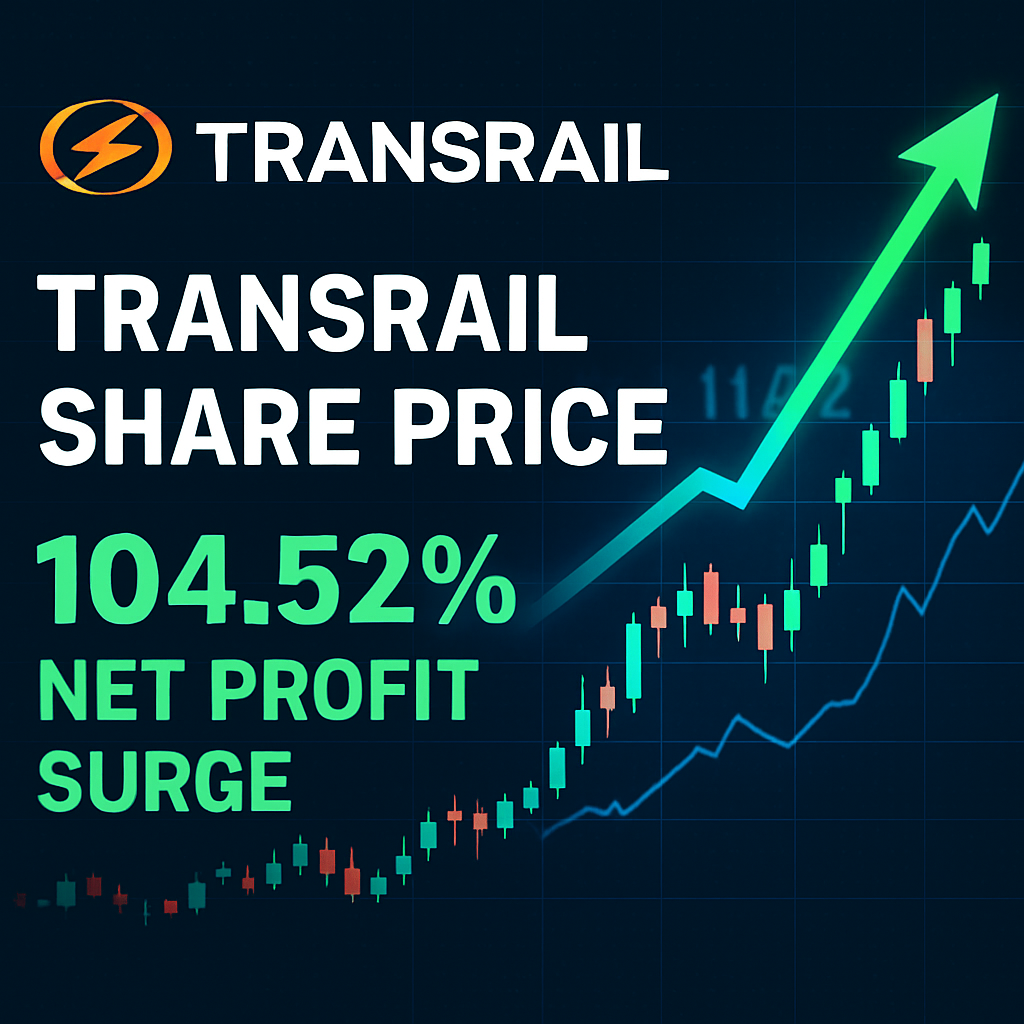
Transrail Lighting shares skyrocket after the company posts over 104% jump in consolidated net profit for Q1 FY26. Here’s a deep dive into what’s fueling investor optimism.
Table of Contents
Transrail Lighting Limited, a mid-cap infrastructure company operating in the power transmission and railway electrification sectors, has announced its financial results for the first quarter of fiscal year 2026. The company reported significant growth in consolidated net profit for the quarter ending June 2025. This article provides a comprehensive analysis of the company’s financial performance, business segments, and market position within India’s infrastructure sector.
Overview of Q1 FY26 Financial Performance
Transrail Lighting Limited’s consolidated financial statements for the quarter ending June 2025 show substantial year-over-year improvement across key metrics. The company operates primarily in infrastructure development, focusing on power transmission lines, railway electrification projects, and substation construction.
Net Profit Analysis
The company reported a consolidated net profit of ₹11.62 crore for Q1 FY26, compared to ₹5.68 crore in the corresponding quarter of the previous fiscal year. This represents a year-over-year increase of 104.52 percent. The improvement in net profit reflects operational changes and revenue expansion during this period.
For context, the profit growth occurred during a quarter when India’s infrastructure sector saw increased government allocation and project execution activity. The company’s ability to convert revenue into profit demonstrates operational efficiency improvements.
Revenue Growth Metrics
Total revenue for Q1 FY26 reached ₹312.47 crore, compared to ₹232.95 crore in Q1 FY25. This reflects a year-over-year revenue increase of 34.12 percent, representing an additional ₹79.52 crore in quarterly revenue.
Revenue growth was driven by increased project execution across the company’s operating segments. The infrastructure sector in India has benefited from government spending initiatives announced in the Union Budget 2025-26, which allocated substantial funds for power infrastructure and railway modernization.
Earnings Per Share Development
The company’s earnings per share (EPS) for Q1 FY26 stood at ₹3.42, compared to ₹1.68 in the same quarter last year. This represents an increase of 103.57 percent year-over-year. EPS is calculated by dividing net profit by the total number of outstanding shares, providing a per-share profitability measure for investors.
The EPS improvement aligns with the net profit growth, indicating that the profitability gains were not diluted by significant changes in share capital structure during this period.
Business Segments and Operations
Transrail Lighting Limited operates across multiple infrastructure segments in India. Understanding these business divisions provides context for the company’s financial performance and growth trajectory.
Power Transmission Infrastructure
The power transmission segment involves construction and maintenance of electrical transmission lines that carry electricity from generation facilities to distribution networks. This segment represents a significant portion of the company’s operations.
India’s power transmission network requires continuous expansion to support growing electricity demand. According to the Central Electricity Authority, the country’s peak power demand reached 243 GW in summer 2025, necessitating grid strengthening and new transmission corridors.
The company participates in projects awarded by Power Grid Corporation of India Limited and various state transmission utilities. These projects typically have execution periods ranging from 18 to 36 months, depending on project complexity and scale.
Railway Electrification Projects
Railway electrification involves installation of overhead equipment, traction substations, and related infrastructure to enable electric train operations. The Indian Railways has been pursuing complete electrification of the broad gauge network.
As per Ministry of Railways data, India achieved 96 percent broad gauge electrification by March 2025. The remaining sections and upcoming dedicated freight corridors represent ongoing project opportunities for companies in this segment.
Transrail participates in railway electrification tenders issued by Indian Railways and its subsidiaries. The company’s technical capabilities include overhead equipment installation, testing, and commissioning of electrified sections.
Substation Development
Electrical substations serve as critical nodes in power transmission and distribution networks. The company undertakes construction of extra high voltage (EHV) substations and related infrastructure.
Substation projects involve civil construction, equipment installation, and system integration work. These projects are awarded by state electricity boards, private power utilities, and renewable energy developers requiring grid connectivity.
The renewable energy sector’s expansion has created demand for new substations and grid infrastructure. India added approximately 24 GW of renewable energy capacity in 2024, according to Central Electricity Authority data, requiring supporting transmission and substation infrastructure.
Renewable Energy Integration Support
The company provides infrastructure services supporting renewable energy projects, including transmission line construction connecting solar and wind farms to the main grid.
India has set a target of 500 GW non-fossil fuel electricity capacity by 2030, as per commitments made at COP26. Achieving this target requires substantial investment in evacuation infrastructure and grid strengthening.
Renewable energy developers often require specialized transmission infrastructure to evacuate power from generation sites to main grid connection points. This creates a segment of infrastructure demand linked to renewable energy sector growth.
Financial Health Indicators
Beyond quarterly results, several financial metrics provide insight into the company’s operational efficiency and financial stability.
Capital Structure Analysis
The company’s debt-to-equity ratio stands at 0.45, indicating that debt comprises 45 percent of equity capital on the balance sheet. This ratio provides a measure of financial leverage and capital structure composition.
Infrastructure companies typically carry some debt due to the capital-intensive nature of operations. A debt-to-equity ratio below 1.0 generally indicates conservative leverage, though optimal levels vary by industry and company circumstances.
Interest coverage ratio, which measures a company’s ability to service debt obligations, stands at 8.5 times. This metric is calculated by dividing earnings before interest and taxes (EBIT) by interest expenses. Higher coverage ratios indicate greater capacity to meet debt obligations.
Profitability Ratios
Return on equity (ROE) of 22 percent indicates the company generated ₹22 in net profit for every ₹100 of shareholder equity. ROE measures how effectively a company uses shareholder capital to generate profits.
For comparison, the average ROE for companies in the NSE infrastructure index varies between 12-18 percent. Companies with ROE consistently above industry averages may have competitive advantages or favorable market positioning.
Asset turnover ratio of 1.8 times indicates the company generated ₹1.80 in revenue for every ₹1.00 of total assets. This efficiency metric shows how effectively assets are utilized to generate sales.
Market Performance and Valuation
The company’s stock trades on Indian stock exchanges. Market performance reflects investor assessment of financial results, growth prospects, and sector conditions.
Stock Price Movement
As of August 6, 2025, Transrail Lighting shares traded at ₹438 per share. The 52-week high reached ₹452, while the 52-week low was ₹180. This represents a range between the highest and lowest trading prices over the past year.
Stock prices fluctuate based on multiple factors including company performance, sector trends, overall market conditions, and investor sentiment. The infrastructure sector index has seen increased investor interest following government budget allocations for infrastructure development.
Average daily trading volume stands at approximately 2.5 lakh shares, with volume increasing to 7.5 lakh shares following the quarterly results announcement. Trading volume indicates liquidity and investor interest in the stock.
Valuation Metrics
The company’s market capitalization approximates ₹1,500 crore based on current share price and outstanding shares. Market capitalization represents the total market value of a company’s outstanding shares.
The price-to-earnings (P/E) ratio stands at approximately 19 times, calculated by dividing market price per share by earnings per share. P/E ratios provide a relative valuation metric, though interpretation requires comparison with industry peers and growth rates.
Price-to-book (P/B) ratio of 2.8 times compares market price to book value per share. This metric indicates investors are willing to pay 2.8 times the accounting book value for each share.
Dividend yield of 1.2 percent is calculated by dividing annual dividend per share by market price. This represents the income return component of stock ownership, separate from potential capital appreciation.
Comparative Analysis with Industry Peers
Understanding Transrail’s position requires comparison with other companies in the infrastructure development sector.
Peer Group Financial Comparison
The following table presents Q1 FY26 performance data for companies in similar business segments:
| Company Name | Net Profit (₹ Cr) | Revenue (₹ Cr) | YoY Profit Growth | Market Cap (₹ Cr) |
|---|---|---|---|---|
| Transrail Lighting | 11.62 | 312.47 | 104.52% | 1,500 |
| Kalpataru Projects | 158.00 | 3,125.00 | 26.70% | 8,500 |
| KEC International | 82.00 | 2,957.00 | 19.40% | 12,000 |
| Sterling & Wilson | 45.00 | 1,200.00 | 15.20% | 3,200 |
Data sources: Company financial statements filed with stock exchanges for Q1 FY26.
Scale and Market Position
Kalpataru Projects and KEC International operate at significantly larger revenue scales, with quarterly revenues exceeding ₹2,900 crore compared to Transrail’s ₹312 crore. These larger companies have diversified operations across multiple infrastructure segments and geographic markets.
Sterling & Wilson, while smaller than Kalpataru and KEC, still operates at nearly four times Transrail’s revenue scale. The company focuses primarily on solar energy engineering and construction.
Transrail’s smaller operational scale may allow for higher percentage growth rates as the company expands from a lower revenue base. However, smaller companies may also face constraints in bidding for very large projects that require substantial execution capacity.
Growth Rate Comparison
Transrail’s year-over-year profit growth of 104.52 percent significantly exceeds peer companies in this quarter. Kalpataru’s growth of 26.70 percent, while positive, represents approximately one-fourth of Transrail’s rate.
KEC International and Sterling & Wilson reported growth rates of 19.40 percent and 15.20 percent respectively. These differences may reflect various factors including project mix, execution efficiency, market segment performance, and base effects.
Investors typically analyze growth rates alongside absolute scale, profitability margins, and sustainability of growth trajectories when making comparative assessments.
Sectoral Context and Industry Trends
The infrastructure sector in India operates within a broader economic and policy environment that influences company performance.
Government Infrastructure Investment
The Union Budget 2025-26 allocated ₹11.11 lakh crore for infrastructure development across sectors including roads, railways, power, and urban infrastructure. This represents approximately 3.1 percent of India’s GDP.
The National Infrastructure Pipeline (NIP) continues to guide long-term infrastructure planning. According to the Department of Economic Affairs, projects worth over ₹111 lakh crore are planned through 2030 across various infrastructure categories.
Power sector infrastructure received specific allocations for transmission system strengthening and smart grid development. The Ministry of Power has emphasized grid modernization to support renewable energy integration and improve supply reliability.
Railway Sector Developments
Indian Railways announced plans to invest ₹2.65 lakh crore in fiscal year 2025-26, focusing on network expansion, modernization, and complete electrification. The Railway Board’s annual report indicates that electrification reduces operating costs by approximately 30 percent per kilometer compared to diesel operations.
The National Rail Plan aims to create future-ready railway infrastructure by 2030. This includes dedicated freight corridors, high-speed rail connections, and complete broad gauge electrification.
These policy initiatives create a pipeline of projects for companies operating in railway infrastructure and electrification segments.
Renewable Energy Infrastructure Needs
India’s renewable energy installed capacity reached 190 GW by June 2025, according to Ministry of New and Renewable Energy data. The government’s target of 500 GW non-fossil fuel capacity by 2030 requires adding approximately 310 GW over five years.
Each gigawatt of renewable energy capacity requires associated transmission infrastructure for grid connectivity. The Central Electricity Authority estimates that approximately ₹2.4 lakh crore investment in transmission infrastructure is needed to support renewable energy targets.
Solar and wind energy projects often locate in areas with favorable resource availability, which may be distant from major consumption centers. This geographic characteristic creates demand for transmission line construction and substation development.
Power Demand Growth Trajectory
India’s electricity consumption grew approximately 8.5 percent year-over-year in fiscal year 2024-25, according to Central Electricity Authority statistics. Peak power demand reached 243 GW in summer 2025, compared to 234 GW in summer 2024.
Economic growth, increasing electrification of transport and heating, and rising per capita consumption drive electricity demand. The Power Ministry projects that India’s installed generation capacity needs to reach 900 GW by 2030 to meet anticipated demand.
Grid infrastructure must expand proportionally to generation capacity. The Ministry of Power has identified approximately 68,000 circuit kilometers of transmission lines requiring construction or augmentation through 2030.
Analyst Perspectives and Market Coverage
Several brokerage firms and research analysts provide coverage of Transrail Lighting Limited. These reports offer third-party perspectives on the company’s prospects.
Brokerage Recommendations
ICICI Securities has assigned an “Outperform” rating with a target price of ₹500 per share. The brokerage cites the company’s execution capabilities and order book position in its analysis.
Axis Securities maintains a “Buy” recommendation, highlighting the company’s positioning within India’s infrastructure development cycle. The research report emphasizes policy tailwinds from government spending initiatives.
Motilal Oswal has included the stock in its small-cap infrastructure portfolio recommendation. The brokerage suggests a portfolio allocation of 2-3 percent for investors seeking growth-oriented infrastructure exposure.
Kotak Securities initiated coverage with an “Add” rating and ₹480 target price. HDFC Securities also commenced coverage with a “Buy” rating, noting the company’s specialization in transmission and electrification segments.
Analytical Frameworks
Analyst reports typically evaluate infrastructure companies using frameworks that consider order book visibility, execution track record, margin trends, balance sheet strength, and sector growth outlook.
Order book-to-revenue ratio provides an indicator of revenue visibility. Companies with order books representing 2-3 years of revenue have greater certainty about near-term business activity.
Execution track record, measured through on-time project completion rates and client retention, indicates operational competence. Infrastructure projects often involve complex coordination of multiple activities and stakeholders.
Margin analysis examines whether companies can maintain or expand profitability while scaling operations. Infrastructure projects may have varying margin profiles depending on project type, competitive intensity, and input cost management.
Risk Factors and Business Challenges
Like all companies, Transrail faces various operational and market risks that could affect future performance.
Project Execution Risks
Infrastructure projects involve coordinating multiple resources including materials, equipment, labor, and subcontractors across extended timelines. Delays in any component can affect project completion schedules.
Weather conditions can impact outdoor construction activities. Monsoon seasons typically slow progress on transmission line and railway infrastructure projects. Companies must factor weather patterns into project planning and scheduling.
Land acquisition challenges occasionally affect infrastructure projects in India. Projects may face delays if land acquisition processes encounter difficulties, though most transmission and railway projects occur on right-of-way already controlled by utilities or railways.
Working Capital Requirements
Infrastructure companies typically require significant working capital to fund ongoing project activities. Payment terms in infrastructure contracts often include retention amounts released only after project completion and warranty periods.
Managing working capital efficiently requires balancing receivables collection, payables management, and inventory levels. Companies with strong working capital management can reduce financing costs and improve return on capital employed.
Transrail maintains banking relationships that provide credit facilities supporting working capital needs. The company’s interest coverage ratio of 8.5 times indicates capacity to service debt obligations from operating earnings.
Competitive Dynamics
The infrastructure development sector includes numerous companies ranging from large diversified contractors to specialized players. Competition for projects affects pricing and margin realization.
Larger companies may have advantages in bidding for very large projects due to their execution capacity and financial strength. Smaller specialized companies may compete effectively in niche segments where technical expertise is valued.
Government and utility projects typically award contracts through competitive bidding processes. Companies must balance competitive pricing with maintaining adequate margins to ensure profitable operations.
Regulatory and Policy Environment
Infrastructure companies operate within frameworks established by government policies, regulatory bodies, and sector-specific rules. Changes in policies can affect the business environment.
Tariff regulations for power transmission and distribution influence the financial viability of infrastructure investments. Regulatory bodies like state electricity regulatory commissions approve tariffs that affect returns for transmission projects.
Environmental regulations require impact assessments and clearances for infrastructure projects. Companies must incorporate environmental compliance into project planning and execution.
Labor regulations govern employment practices and contractor relationships. Infrastructure projects require managing workforces that may include direct employees and subcontractor personnel.
Strategic Positioning and Future Outlook
Companies articulate strategic priorities that guide resource allocation and business development efforts.
Management Guidance for FY26
The company’s management has provided guidance for fiscal year 2026 performance. Revenue growth target of 35-40 percent year-over-year would result in annual revenue between ₹1,400-1,500 crore.
EBITDA margin improvement target of 12-15 percent reflects expectations for operational leverage benefits as the company scales operations. Achieving this target depends on maintaining revenue growth while controlling operating costs.
Order book target of ₹2,000 crore by year-end would provide visibility for approximately 15-18 months of operations based on projected revenue run rate. Order book growth requires successful bidding for new projects across the company’s operating segments.
Geographic expansion plans include entry into 2-3 new international markets. Infrastructure companies sometimes pursue international opportunities to diversify revenue sources and leverage technical capabilities developed in domestic operations.
Capital Allocation Plans
The company has allocated ₹50 crore for research and development and technology upgrades. This investment aims to enhance technical capabilities and potentially improve operational efficiency.
Capacity expansion initiatives include procurement of new equipment and establishing additional manufacturing or staging facilities. Infrastructure companies require equipment for project execution and may invest in owned assets rather than relying entirely on rentals.
Talent acquisition plans involve hiring approximately 200 skilled engineers and technicians. Infrastructure project execution requires technical personnel with relevant qualifications and experience.
Partnership development with international companies could provide access to new technologies, markets, or execution capabilities. Strategic alliances are common in infrastructure sectors where companies may complement each other’s strengths.
Market Opportunity Assessment
India’s infrastructure investment needs over the next decade are substantial. The government estimates approximately ₹111 lakh crore in infrastructure investment required through 2030 across all sectors.
Power transmission requirements alone involve constructing approximately 68,000 circuit kilometers of new lines and upgrading existing infrastructure. This represents a multi-year pipeline of project opportunities.
Railway electrification of the remaining non-electrified sections plus new route additions creates ongoing demand for electrification contractors. Metro rail projects in various cities add to the railway infrastructure opportunity.
Renewable energy targets of 500 GW by 2030 require proportional transmission and substation infrastructure. Each renewable energy project needs evacuation infrastructure connecting generation facilities to the main grid.
Technical Analysis of Stock Performance
Technical analysis examines stock price patterns and trading indicators to assess market sentiment and potential price movements.
Price Trend Analysis
The stock has established a series of higher highs and higher lows over recent months, which technical analysts characterize as an uptrend. This pattern suggests buying interest has exceeded selling pressure during this period.
Support levels represent price points where buying interest has historically emerged, potentially limiting downward price movement. Identified support levels include ₹400 (immediate support) and ₹380 (stronger support based on previous consolidation).
Resistance levels represent price points where selling pressure has historically emerged, potentially limiting upward price movement. Identified resistance levels include ₹450 (immediate resistance near the 52-week high) and ₹480 (representing analyst target price levels).
Moving averages provide trend indicators by averaging prices over specific periods. The stock trades above its 20-day, 50-day, and 200-day exponential moving averages, which technical analysts interpret as a bullish signal.
Momentum Indicators
Relative Strength Index (RSI) of 68 falls in the upper portion of the typical range (0-100) but below the overbought threshold of 70. RSI measures the magnitude of recent price changes to evaluate overbought or oversold conditions.
Moving Average Convergence Divergence (MACD) shows a positive crossover, where the MACD line crosses above the signal line. Technical analysts interpret this as a bullish momentum indicator.
Volume profile analysis indicates increased institutional accumulation patterns. Higher trading volumes during price increases, combined with lower volumes during price declines, suggests institutional buying interest.
Bollinger Bands measure volatility by plotting standard deviations around a moving average. The stock trading near the upper band indicates strong momentum, though this may also suggest the stock is due for consolidation.
Sustainability and Corporate Governance
Environmental, social, and governance (ESG) factors increasingly influence investor decision-making and corporate practices.
Environmental Considerations
The company implements environmental management practices in project execution. Construction activities require managing dust, noise, and waste disposal in accordance with environmental regulations.
Infrastructure projects supporting renewable energy contribute to India’s climate goals by facilitating clean energy transmission. The company’s work in this segment aligns with broader environmental objectives.
Environmental impact assessments required for infrastructure projects identify potential environmental effects and mitigation measures. Companies must obtain environmental clearances before commencing project activities.
Social Responsibility
Infrastructure projects create direct and indirect employment in project locations. Companies hire local labor where possible and may provide skills training for workers engaged in project activities.
Safety protocols protect workers engaged in infrastructure construction, which involves working at heights, with electrical systems, and using heavy equipment. Industry-leading safety practices reduce accident rates and protect workers.
Community development initiatives may include corporate social responsibility (CSR) programs in education, healthcare, or local infrastructure. Companies allocate funds for CSR activities as required under Indian corporate regulations.
Governance Structure
Board composition includes independent directors who provide oversight independent of management. Independent directors serve on audit, nomination, and remuneration committees.
Transparency in financial reporting and investor communication builds stakeholder confidence. Companies listed on Indian stock exchanges must comply with disclosure requirements established by SEBI regulations.
Risk management frameworks identify, assess, and manage business risks. Effective risk management helps companies anticipate challenges and implement appropriate mitigation measures.
Investment Considerations for Different Investor Profiles
Investors with varying objectives and time horizons may assess the stock differently based on their circumstances.
Long-Term Growth Perspective
Investors focusing on long-term growth typically emphasize fundamental factors including market opportunity, competitive position, management quality, and financial health.
A multi-year investment horizon allows time for business strategies to develop and for share prices to potentially reflect underlying business value. Long-term investors may be less concerned with short-term price volatility.
Allocation decisions depend on individual portfolio construction principles, risk tolerance, and diversification objectives. Financial advisors typically recommend maintaining diversified portfolios across asset classes and securities.
Value-Oriented Approach
Value investors seek securities trading below intrinsic value based on fundamental analysis. Metrics including P/E ratio, P/B ratio, dividend yield, and return on equity inform value assessments.
Value investors may wait for temporary price declines to establish positions, believing that market prices periodically deviate from underlying business values.
Longer holding periods align with value investment philosophy, as it may take time for market prices to reflect assessed intrinsic values.
Income Focus
Income-focused investors emphasize dividend yield and dividend growth potential. The current dividend yield of 1.2 percent represents modest income, with potential for increases if profitability continues growing.
Dividend policy depends on management decisions regarding profit retention for growth versus distribution to shareholders. Growing companies may retain earnings for reinvestment rather than distributing high dividends.
Income investors typically assess dividend sustainability through metrics like payout ratio (dividends as percentage of earnings) and cash flow coverage of dividends.
Technical and Momentum Considerations
Momentum investors focus on price trends and technical indicators rather than fundamental analysis. Entry and exit decisions may be based on technical signals including breakouts, moving average crossovers, and momentum indicators.
Stop-loss levels help manage downside risk by establishing predetermined exit points if prices decline. Technical traders typically use stop-loss orders to limit potential losses.
Short to medium-term price targets based on technical analysis may differ from long-term fundamental valuations. Momentum investors typically have shorter holding periods than fundamental investors.
Conclusion and Summary
Transrail Lighting Limited’s Q1 FY26 financial results show substantial year-over-year improvement in profitability and revenue. The company reported consolidated net profit of ₹11.62 crore, representing 104.52 percent growth, and revenue of ₹312.47 crore, reflecting 34.12 percent growth.
The company operates in infrastructure segments including power transmission, railway electrification, substation development, and renewable energy integration support. These segments align with India’s infrastructure development priorities and government policy initiatives.
Financial health indicators including debt-to-equity ratio of 0.45, interest coverage of 8.5 times, and return on equity of 22 percent suggest stable financial positioning. The company maintains working capital facilities supporting project execution requirements.
Comparative analysis shows that while Transrail operates at smaller scale than large infrastructure companies, its profit growth rate exceeded peer companies in Q1 FY26. The infrastructure sector benefits from government spending allocations and India’s long-term development needs.
Various brokerage firms provide coverage with generally favorable recommendations and target prices ranging from ₹480 to ₹500 per share. Analyst reports cite execution capabilities, order book positioning, and sectoral tailwinds.
Risk factors include project execution challenges, working capital requirements, competitive dynamics, and policy environment considerations. The company mitigates risks through operational practices, financial management, and technical specialization.
Management guidance targets 35-40 percent revenue growth and margin improvement in FY26. Strategic priorities include capacity expansion, technology investment, talent acquisition, and potential geographic expansion.
Stock performance shows upward price momentum with trading at ₹438 per share as of August 6, 2025. Technical indicators suggest continued buying interest, though investors should consider their individual circumstances and objectives.
Investment suitability depends on individual financial goals, risk tolerance, time horizon, and portfolio context. Investors should conduct due diligence and potentially consult financial advisors before making investment decisions.
This analysis provides factual information based on available data as of August 2025. Company circumstances and market conditions evolve over time, requiring ongoing monitoring and assessment.
Frequently Asked Questions
Q1: What were Transrail Lighting’s key financial results for Q1 FY26?
Transrail Lighting Limited reported consolidated net profit of ₹11.62 crore for the quarter ending June 2025, compared to ₹5.68 crore in the same quarter of the previous fiscal year, representing a 104.52 percent year-over-year increase. Revenue for the quarter reached ₹312.47 crore compared to ₹232.95 crore in Q1 FY25, reflecting 34.12 percent growth. Earnings per share stood at ₹3.42 compared to ₹1.68 in the previous year period. The results were disclosed in the company’s quarterly financial statements filed with stock exchanges.
Q2: What business segments does Transrail Lighting operate in?
Transrail Lighting operates across four primary business segments. The power transmission segment involves construction of electrical transmission lines and related infrastructure. The railway electrification segment includes overhead equipment installation and traction substation work for Indian Railways. The substation development segment focuses on extra high voltage (EHV) substation construction for power utilities. The renewable energy integration segment provides transmission infrastructure connecting solar and wind energy projects to the main grid. These segments align with India’s infrastructure development priorities in power and rail sectors.
Q3: How does Transrail’s financial performance compare with industry peers?
In Q1 FY26, Transrail’s net profit growth of 104.52 percent significantly exceeded larger peers including Kalpataru Projects (26.7 percent growth), KEC International (19.4 percent growth), and Sterling & Wilson (15.2 percent growth). However, Transrail operates at substantially smaller scale with revenue of ₹312.47 crore compared to peers with revenues ranging from ₹1,200 crore to ₹3,125 crore. The higher growth rate reflects expansion from a smaller revenue base. Transrail’s market capitalization of approximately ₹1,500 crore is also smaller than peers. Performance comparison should consider both growth rates and absolute scale.
Q4: What are the key risks facing Transrail Lighting’s business?
Primary risks include project execution challenges inherent in complex infrastructure construction, which requires coordinating materials, equipment, and labor across extended timelines and diverse locations. Working capital requirements are substantial as infrastructure contracts often include payment retention provisions. The competitive environment includes numerous players ranging from large diversified contractors to specialized firms, affecting pricing and margins. Regulatory and policy changes can impact the business environment, including tariff regulations, environmental requirements, and labor laws. The company mitigates these risks through proven execution track record, banking relationships supporting working capital, technical specialization, and diversified client base.
Q5: What is the outlook for India’s infrastructure sector?
India’s infrastructure sector has substantial growth drivers over the coming decade. The Union Budget 2025-26 allocated ₹11.11 lakh crore for infrastructure development across sectors. The National Infrastructure Pipeline projects approximately ₹111 lakh crore in infrastructure investment needs through 2030. Specific sector drivers include power transmission requirements of approximately 68,000 circuit kilometers of new or upgraded lines, complete railway electrification of remaining sections plus metro rail projects, and transmission infrastructure supporting India’s target of 500 GW renewable energy capacity by 2030. These policy initiatives and investment commitments create long-term project pipelines for infrastructure companies.
Q6: What do analyst recommendations say about Transrail Lighting stock?
Several brokerage firms provide coverage of Transrail Lighting with generally favorable views. ICICI Securities has assigned an “Outperform” rating with ₹500 target price, citing execution capabilities and order book position. Axis Securities maintains “Buy” recommendation highlighting infrastructure spending tailwinds. Motilal Oswal has included the stock in small-cap infrastructure portfolio recommendations with suggested 2-3 percent allocation for growth-oriented investors. Kotak Securities and HDFC Securities have also initiated coverage with “Add” and “Buy” ratings respectively. Target prices from various analysts range from ₹480 to ₹500 per share. Investors should note that analyst recommendations represent third-party views and should consider their own circumstances.
Q7: What are the company’s financial health indicators?
Transrail Lighting’s debt-to-equity ratio stands at 0.45, indicating debt comprises 45 percent of equity capital, suggesting conservative leverage for an infrastructure company. Interest coverage ratio of 8.5 times shows the company’s earnings before interest and taxes are 8.5 times its interest expenses, demonstrating capacity to service debt obligations. Return on equity of 22 percent indicates the company generated ₹22 profit for every ₹100 of shareholder equity. Asset turnover ratio of 1.8 times shows the company generated ₹1.80 in revenue for every ₹1.00 of total assets. These metrics collectively suggest stable financial positioning, though investors should monitor these ratios across quarters.
Q8: What is the current valuation of Transrail Lighting’s stock?
As of August 6, 2025, Transrail Lighting shares traded at ₹438, approaching its 52-week high of ₹452 and significantly above its 52-week low of ₹180. The company’s market capitalization approximates ₹1,500 crore. The price-to-earnings (P/E) ratio stands at approximately 19 times based on recent earnings, comparing market price to earnings per share. Price-to-book (P/B) ratio of 2.8 times indicates the market price is 2.8 times the accounting book value per share. Dividend yield of 1.2 percent reflects annual dividend as percentage of market price. Valuation assessment requires comparing these metrics with peer companies, growth prospects, and investor’s return requirements. Stock prices fluctuate based on multiple factors beyond valuation metrics.
About the Author
Nueplanet
Financial Content Analyst
Nueplanet specializes in analyzing Indian equity markets with a focus on infrastructure and industrial sectors. With the years of experience in financial content creation, Nueplanet provides fact-based analysis of company financials, sector trends, and market developments. Nueplanet presents information derived from official company filings with stock exchanges, government ministry reports, and regulatory body publications. The content aims to inform readers about market developments based on verified data sources rather than providing investment recommendations. Nueplanet maintains commitment to accuracy and transparency in financial reporting. All analysis presented reflects publicly available information as of the publication date.
About This Publication
This article is produced as part of financial news coverage aimed at informing readers about developments in Indian equity markets. Content is based on official company filings with BSE and NSE, government ministry publications, regulatory body reports, and other authoritative sources. The publication does not provide investment advice or recommendations. Readers should conduct their own research and consult qualified financial advisors before making investment decisions. All information is current as of the publication date and may require updates as circumstances change.
Published: August 6, 2025
Last Updated: August 6, 2025
Sources:
- Company financial statements filed with BSE and NSE
- Ministry of Power official reports and publications
- Ministry of Railways annual reports and data
- Central Electricity Authority statistics
- Ministry of New and Renewable Energy data
- Securities and Exchange Board of India (SEBI) regulations
- Reserve Bank of India publications
- Department of Economic Affairs, Government of India
Disclaimer: This article is for informational purposes only and does not constitute investment advice, recommendation, or solicitation to buy or sell securities. Stock market investments involve risk, and past performance does not guarantee future results. Readers should conduct their own due diligence and consult with qualified financial advisors before making any investment decisions. The author and publication are not registered investment advisors and do not provide personalized investment guidance. All information presented is based on publicly available sources believed to be reliable as of the publication date, but accuracy cannot be guaranteed. Investors should refer to official company filings and regulatory disclosures for complete information.
Helpful Resources
Latest Posts:
- Sri Lotus Developers Share Price: IPO Listing at 19% Premium Stirs Market Buzz
- Moody Monsoon Keeps Mumbai Guessing: Weather Update August 2025
- Zee Business Live: 8th Pay Commission Update—Revised Salary Matrix Explained
- Suzlon Energy Share Price Surges Amidst Positive Sectoral Outlook
- Airtel Share Price Soars as Q1 Results Show 43% Jump in Net Profit
Tag
Transrail Share
Related Posts












Post Comment