









Suzlon: Share Price Trends, Q1 Results, and the Future of Renewable Energy
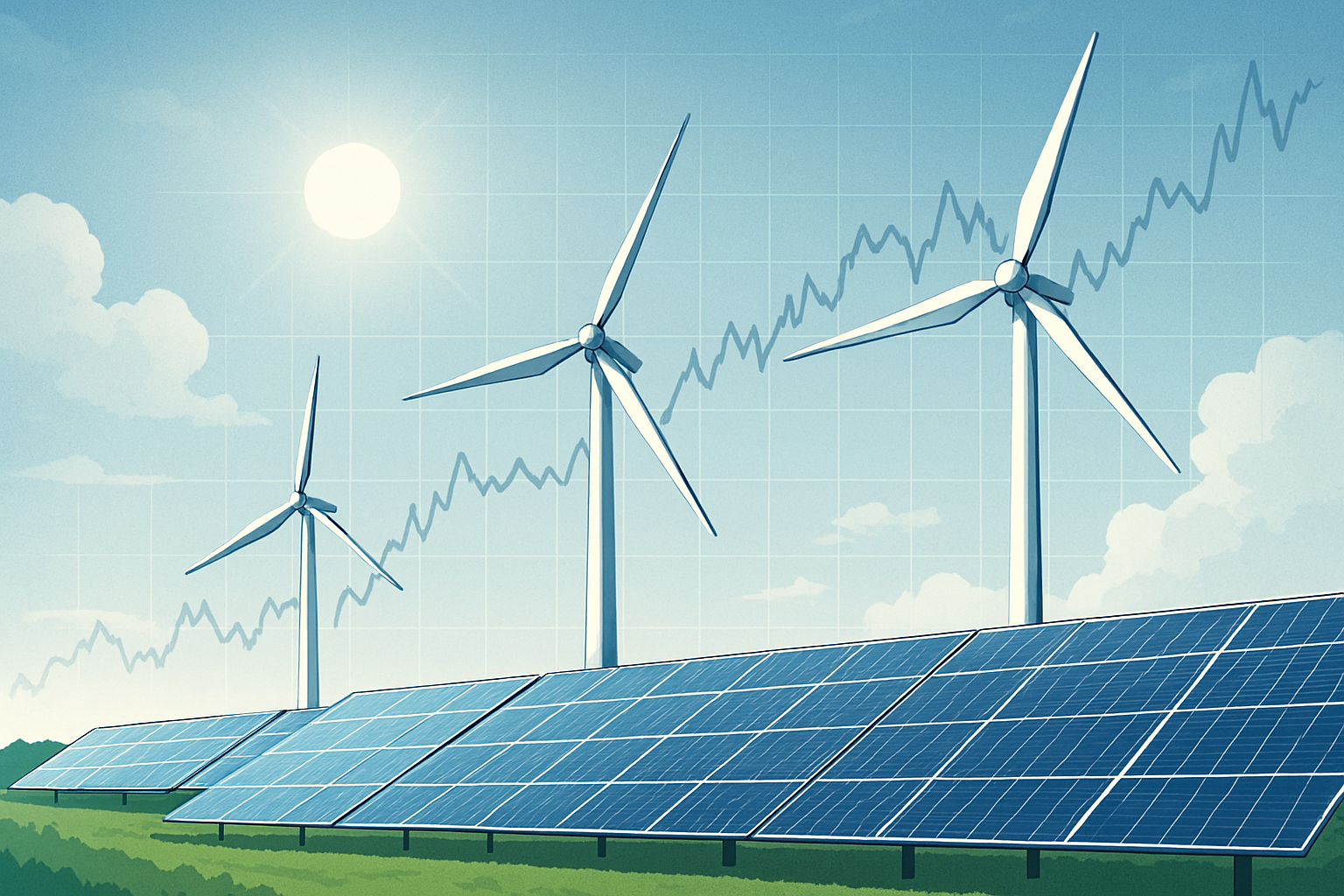
Suzlon remains in focus as its Q1 results, leadership changes, and order inflows shape market sentiment. Here’s a detailed look at Suzlon’s share price, performance, and renewable energy outlook.
Table of Contents
Last Updated:August 18, 2025|| Published:August 18 , 2025
Introduction: Suzlon Energy Reports Q1 FY25 Financial Results
Suzlon Energy Limited released its first quarter fiscal year 2025 financial results, reporting operational and financial metrics for the period ended June 30, 2024. The renewable energy equipment manufacturer disclosed quarterly revenue of ₹2,016 crores and net profit of ₹302 crores based on official company filings with stock exchanges.
The wind turbine manufacturer operates in India’s renewable energy sector, which continues expansion driven by government policy targets and corporate sustainability commitments. Suzlon manufactures wind turbine generators and provides related services including operations, maintenance, and spare parts supply.
As of September 15, 2025, Suzlon Energy shares traded at ₹58.25 on Indian stock exchanges. The company’s market capitalization stood at approximately ₹77,647 crores based on prevailing share price and outstanding share count. Stock performance reflected broader market conditions and sector-specific developments.
This analysis examines Suzlon Energy’s Q1 FY25 financial results, operational performance indicators, competitive positioning within India’s wind energy sector, and relevant industry trends based on verified company disclosures and official data sources.
Q1 FY25 Financial Performance: Key Metrics and Analysis
Revenue Performance and Growth Trajectory
Suzlon Energy reported total revenue of ₹2,016 crores for the quarter ended June 30, 2024. This compared to ₹1,348 crores in the corresponding quarter of the previous fiscal year, representing year-over-year growth of 49.6 percent. The revenue increase reflected higher turbine deliveries and execution of contracted orders.
Revenue composition included multiple business segments. Wind turbine generator sales constituted the primary revenue source. Operations and maintenance services contributed recurring revenue from installed turbine base. Spare parts and component sales provided additional income streams.
Sequential quarterly revenue comparison showed ₹2,016 crores in Q1 FY25 versus Q4 FY24 figures. The quarter-over-quarter trend indicated seasonal patterns and project execution timelines affecting revenue recognition. Wind energy projects typically experience seasonal variations based on weather conditions and installation schedules.
Annualized revenue run rate based on Q1 performance suggested approximately ₹8,064 crores potential annual revenue. However, quarterly variations in project deliveries and execution timelines affect full-year projections. Management guidance and order book visibility provide additional context for revenue forecasting.
Profitability Metrics and Margin Analysis
Net profit for Q1 FY25 reached ₹302 crores compared to ₹101 crores in Q1 FY24. This represented year-over-year increase of approximately 199 percent. The profit improvement reflected revenue growth, operational efficiency gains, and margin expansion initiatives.
EBITDA (Earnings Before Interest, Taxes, Depreciation, and Amortization) for the quarter stood at ₹370 crores versus ₹199 crores in the prior year period. EBITDA margin improved to 18.4 percent from 14.8 percent, indicating margin expansion of 360 basis points. This improvement demonstrated operational leverage and cost management effectiveness.
Net profit margin for Q1 FY25 reached 15.0 percent based on reported figures. Operating margin performance at 16.8 percent indicated efficient cost structure management. These profitability metrics compared favorably to historical performance and industry benchmarks.
Margin expansion drivers included improved capacity utilization, better product mix with focus on higher-margin turbine models, and effective procurement strategies. Scale economics from higher production volumes also contributed to margin improvement. Raw material cost management remained important given steel and component price volatility.
Operational Highlights and Execution Metrics
The company reported wind turbine deliveries of 274 megawatts during Q1 FY25. Management noted this represented the highest first-quarter deliveries in seven years, indicating improved execution capabilities. Turbine installations occurred across multiple states based on customer project locations.
Manufacturing capacity utilization reached 85 percent during the quarter. This represented efficient use of production facilities and reflected strong order book execution. The company operates manufacturing facilities with total capacity of 4.5 gigawatts annually based on disclosed information.
Project completion rates and quality metrics affect customer satisfaction and repeat business opportunities. The company reported meeting project timelines and technical specifications. Service and maintenance operations for existing installed turbine base provided recurring revenue and customer engagement.
Supply chain management remained critical given component requirements and logistics coordination. The company sources components from various suppliers while maintaining certain in-house manufacturing capabilities. Vendor relationships and procurement efficiency influence cost structures and delivery timelines.
Order Book Analysis and Business Visibility
Total Order Book Composition
Suzlon Energy disclosed an order book of 3.8 gigawatts as of the quarter end. Company statements characterized this as the largest order book in its operational history spanning approximately 29 years. The order book provides revenue visibility for execution over subsequent quarters.
Order book composition included firm orders with signed contracts and letters of intent representing advanced stage discussions. Firm orders of approximately 2.8 gigawatts carried binding commitments. Letters of intent for approximately 1.0 gigawatt reflected projects in advanced negotiation stages requiring final contract execution.
Revenue realization from the order book depends on project execution timelines typically spanning 12 to 24 months from order to commissioning. The 3.8 gigawatt order book represented potential revenue of approximately ₹22,800 crores based on average selling prices. However, revenue recognition occurs progressively during project execution phases.
Order sizes varied from smaller projects to large utility-scale installations. Average project size ranged from 50 to 100 megawatts based on customer requirements. Larger projects provide economies of scale while smaller distributed projects offer geographic diversification.
Geographic Distribution and Market Coverage
The order book spanned multiple states reflecting India’s wind energy potential distribution. Gujarat represented approximately 25 percent of orders with 950 megawatts, making it the largest state contributor. This state offers favorable wind conditions and supportive policies for renewable energy development.
Rajasthan accounted for approximately 20 percent with 760 megawatts, leveraging the state’s renewable energy targets. Tamil Nadu represented roughly 18 percent at 684 megawatts, building on its established wind energy infrastructure. Karnataka contributed 15 percent with 570 megawatts, reflecting growing renewable focus.
Maharashtra accounted for approximately 12 percent at 456 megawatts, driven by industrial energy demand. Other states collectively represented 10 percent with 380 megawatts, including emerging wind energy markets. This geographic distribution provided diversification across regulatory environments and market conditions.
Regional wind resource quality varies by location affecting capacity factors and project economics. Coastal and high-altitude areas typically offer superior wind conditions. State-level policies including renewable purchase obligations and incentives influence project development activity.
Customer Portfolio and Revenue Sources
Customer categories included independent power producers, corporate clients, state electricity boards, and international customers. Independent power producers represented approximately 40 percent of the order book, reflecting their significant role in renewable capacity additions.
Corporate clients accounted for roughly 35 percent, driven by sustainability commitments and renewable energy purchase agreements. Companies increasingly procure renewable energy to meet environmental, social, and governance objectives. Carbon neutrality goals and energy cost management drive corporate renewable adoption.
State electricity boards contributed approximately 15 percent, reflecting government sector renewable procurement. International clients represented about 10 percent, indicating export opportunities. The customer diversification reduced concentration risk and provided multiple revenue channels.
Major customer relationships included leading renewable energy developers and corporate groups. Long-term relationships with repeat customers indicated product satisfaction and service quality. Customer credit quality affected receivables management and working capital requirements.
Financial Position and Balance Sheet Analysis
Asset Composition and Capital Deployment
Total assets reported at approximately ₹18,500 crores reflected the company’s scale of operations. Fixed assets of ₹8,200 crores included manufacturing facilities, equipment, and infrastructure. These capital-intensive assets enable production capacity and operational capabilities.
Current assets of ₹10,300 crores comprised working capital elements. Cash and cash equivalents stood at ₹2,150 crores, providing liquidity for operations and obligations. Inventory levels of ₹3,800 crores reflected raw materials, work-in-progress, and finished goods required for project execution.
Accounts receivable represented amounts due from customers for delivered projects and services. Working capital management affected cash conversion cycles and operational efficiency. Project-based business models typically involve milestone-based payments affecting receivables timing.
Capital expenditure requirements included maintenance of existing facilities and expansion investments. The company announced plans to enhance manufacturing capacity from current 4.5 gigawatts to 8.0 gigawatts by fiscal year 2027. This expansion requires estimated investment of ₹2,500 crores over the planning period.
Debt Structure and Leverage Metrics
Total debt stood at approximately ₹6,500 crores including both short-term and long-term borrowings. Net debt after adjusting for cash balances reached ₹4,350 crores. The debt served to finance working capital requirements, capital expenditures, and business operations.
Debt-to-equity ratio measured at 0.68 times indicated moderate leverage levels. This ratio compared favorably to higher leverage ratios in capital-intensive industries. Conservative leverage supported financial flexibility and reduced refinancing risks.
Interest coverage ratio of 4.2 times demonstrated comfortable debt servicing capacity. This ratio measures earnings before interest and taxes relative to interest expenses. Higher coverage ratios indicate stronger ability to meet interest obligations from operating profits.
Debt maturity profile showed distribution across various tenors reducing refinancing concentration. The company maintained relationships with multiple lenders including banks and financial institutions. Credit ratings from rating agencies influenced borrowing costs and terms.
Working Capital Management
Working capital days stood at 95 days, measuring the time required to convert investments in inventory and receivables into cash. Inventory days of 78 days indicated duration of raw materials and work-in-progress before conversion. Debtor days of 82 days measured average collection period for receivables.
Creditor days at 65 days represented payment terms with suppliers. Effective working capital management balanced operational requirements with cash flow optimization. Project-based businesses face unique working capital challenges given milestone payment structures.
Advances from customers for project execution provided working capital support. Progress billing during project execution aligned cash inflows with expenditure patterns. Efficient project management and timely milestone achievement affected working capital cycles.
Seasonal variations in project execution influenced quarterly working capital requirements. The company managed these variations through credit facilities and cash reserves. Working capital efficiency directly impacted cash generation and return on capital employed.
Industry Context and Market Dynamics
India’s Wind Energy Sector Overview
India’s total installed wind energy capacity exceeded 70 gigawatts as of current data. The country ranks among the top five global wind energy markets by installed capacity. Wind energy contributes significantly to India’s renewable energy portfolio alongside solar power.
Government targets call for substantial renewable energy capacity expansion. The National Electricity Plan outlines 140 gigawatt wind energy capacity target by 2030. This represents doubling of current installed base over the planning horizon.
Annual wind energy capacity additions fluctuated in recent years based on policy frameworks and market conditions. Competitive auctions determine project allocation and tariffs. Tariff levels influence project viability and developer returns.
Technology improvements enhanced turbine efficiency and capacity factors. Modern turbines generate more electricity from given wind conditions compared to older models. Taller hub heights and larger rotor diameters capture wind resources more effectively.
Competitive Landscape and Market Share
India’s wind turbine manufacturing market includes domestic and international players. Suzlon Energy holds significant market position among wind turbine suppliers. The company competes with Vestas Wind Systems, GE Renewable Energy, Siemens Gamesa, and other manufacturers.
Market share distribution varies by annual installations and execution of specific projects. Suzlon’s disclosed market share approximated 28 percent based on recent installations. Market leadership position reflected brand recognition, service network, and technology offerings.
Competition factors included turbine technology specifications, pricing, delivery timelines, and after-sales service. Customers evaluate total cost of ownership including purchase price, performance, and maintenance costs. Warranty terms and service network coverage influenced customer decisions.
Domestic manufacturing provided certain advantages including lower logistics costs and familiarity with Indian market conditions. Import duties on turbines and components affected competitive dynamics between domestic and international suppliers. Government procurement preferences sometimes favored domestic content.
Regulatory Environment and Policy Framework
Central and state government policies significantly influenced wind energy sector development. The Ministry of New and Renewable Energy formulated national policies and targets. State governments implemented renewable purchase obligations requiring electricity distribution companies purchase specified renewable energy percentages.
Wind energy projects required various approvals including environmental clearances, land acquisitions, and grid connectivity permissions. Project development timelines depended on efficient approval processes. Single-window clearance systems in some states streamlined approval procedures.
Tariff determination mechanisms evolved from feed-in tariffs to competitive bidding. Central and state electricity regulatory commissions oversaw tariff regulations. Competitive auction discovered prices through transparent bidding processes.
Fiscal incentives historically included accelerated depreciation benefits and generation-based incentives. Policy stability affected investor confidence and project development activity. Sudden policy changes created uncertainty impacting investment decisions.
Technology and Product Portfolio
Turbine Technology Specifications
Suzlon’s product portfolio featured turbines with rated capacities primarily in the 2 to 3.15 megawatt range. The S144 series represented current generation technology with hub heights and rotor diameters optimized for Indian wind conditions. Technical specifications addressed different wind resource classes.
Turbine design considerations included aerodynamic efficiency, structural integrity, and grid code compliance. Advanced control systems optimized power generation across varying wind speeds. Component reliability affected availability factors and maintenance requirements.
The company held intellectual property including patents for turbine design elements and systems. Research and development activities focused on performance improvements and cost reductions. Annual R&D expenditure supported technology advancement and product development.
Next-generation turbine development activities included higher capacity models. The S155 series under development targeted 4 to 4.5 megawatt capacity range. Larger turbines potentially improved project economics through higher capacity factors and reduced installation counts.
Manufacturing Capabilities and Quality
Manufacturing facilities located in multiple states provided production capacity. Blade manufacturing, nacelle assembly, and tower fabrication occurred at specialized facilities. Vertical integration for certain components provided cost control and quality assurance.
Quality management systems included ISO certifications for manufacturing processes. Quality control procedures covered incoming materials, production processes, and final product testing. Meeting international quality standards enabled export market participation.
Production capacity expansion plans aimed to increase manufacturing capability to 8.0 gigawatts annually. New facilities in Gujarat and Tamil Nadu formed part of expansion strategy. Automation and digitization initiatives sought to improve manufacturing efficiency.
Supply chain integration with component suppliers required coordination and quality standards. Critical components included generators, gearboxes, and control systems. Vendor development and qualification processes ensured component quality and delivery reliability.
Growth Drivers and Strategic Initiatives
Government Renewable Energy Targets
India’s commitment to 500 gigawatt renewable energy capacity by 2030 represented substantial growth opportunity. Current renewable capacity around 175 gigawatts required significant annual additions to meet the target. Wind energy expected to contribute meaningful portion of planned additions.
Central government schemes including the Production Linked Incentive program supported domestic manufacturing. PLI scheme allocated ₹4,500 crores for solar PV module manufacturing with potential expansion to wind components. Such programs aimed to build domestic supply chain capabilities.
Renewable purchase obligations mandated electricity distribution companies source specified percentages from renewable sources. These obligations created captive demand for renewable energy projects. Compliance mechanisms included renewable energy certificates trading.
Infrastructure development including green energy corridors improved transmission connectivity for renewable projects. Investment in transmission infrastructure reduced evacuation constraints. Timely grid connectivity affected project commissioning and revenue realization.
Corporate Renewable Energy Adoption
Corporate sustainability commitments drove renewable energy procurement through various mechanisms. Power purchase agreements allowed companies to source renewable electricity directly from generators. Open access regulations enabled large consumers to purchase from renewable sources.
Major industrial groups announced carbon neutrality targets requiring substantial renewable energy adoption. ESG reporting requirements increased transparency around corporate environmental performance. Investor and stakeholder expectations motivated sustainability initiatives.
Energy cost management considerations also influenced corporate renewable adoption. In many locations, wind and solar power achieved cost competitiveness with conventional energy. Long-term price certainty through PPAs provided budget predictability.
Renewable energy procurement enhanced corporate reputation and brand value. Customers and employees increasingly valued environmental responsibility. Green energy consumption featured in corporate communications and sustainability reports.
Export Market Opportunities
International markets provided expansion opportunities beyond domestic Indian market. Suzlon previously operated in multiple countries and maintained international presence. Export markets included regions with favorable wind resources and supportive policies.
Competitive advantages in export markets potentially included cost competitiveness relative to European and American manufacturers. Indian labor costs and engineering capabilities provided certain benefits. However, international markets required meeting different technical standards and certifications.
Export revenue historically contributed to total revenue though domestic market currently dominated. The company targeted increasing export revenue proportion in future years. International expansion required investments in service capabilities and local partnerships.
Currency fluctuations affected export transaction economics and financial results. The company employed hedging strategies to manage foreign exchange exposure. Export credit insurance and financing arrangements facilitated international sales.
Risk Factors and Considerations
Business and Operational Risks
Wind energy demand depended significantly on government policies and regulatory frameworks. Policy changes or delays in implementation affected market development. Renewable energy targets and support mechanisms influenced investment activity.
Raw material price volatility impacted turbine manufacturing costs. Steel prices particularly affected tower and structural component costs. Rare earth elements required for generators also experienced price variations. Procurement strategies including long-term contracts aimed to mitigate price risks.
Competition from domestic and international turbine manufacturers created pricing pressures. Technology advancements by competitors required continuous innovation. Market share maintenance required competitive offerings on performance, price, and service.
Project execution risks included delays from land acquisition, approvals, or logistics challenges. Timely commissioning affected customer satisfaction and payment milestones. Complex project coordination among multiple stakeholders required effective management.
Grid integration and transmission infrastructure constraints could limit project evacuation capacity. Wind energy generation variability required grid flexibility and storage solutions. Curtailment of renewable generation during periods of transmission constraints affected project returns.
Financial Risks
The company’s debt obligations required regular servicing from operating cash flows. Interest rate changes affected borrowing costs and debt service burden. The company employed mix of fixed and floating rate debt to manage interest rate exposure.
Working capital intensity of project business tied up capital in inventory and receivables. Extended payment terms with customers affected cash conversion. Efficient working capital management remained critical for cash generation.
Customer credit risk existed particularly with smaller developers or financially stressed electricity distribution companies. Payment delays or defaults could impact receivables. Credit evaluation processes and advance payments mitigated credit risks.
Currency exposure from export sales and imported components created foreign exchange risk. Rupee depreciation against dollar benefited export revenues but increased import costs. Hedging strategies managed net currency exposure.
Market and Industry Risks
Wind energy sector faced potential disruption from alternative technologies or policy shifts. Solar energy cost reductions made it competitive alternative for renewable capacity. Energy storage technologies could alter renewable energy economics and deployment patterns.
Economic cycles influenced industrial activity and electricity demand growth. Slower economic growth reduced electricity consumption and potentially renewable energy investment. Infrastructure development and manufacturing activity drove power demand.
Regulatory changes at central or state level created uncertainty. Retrospective policy changes or tax modifications affected project economics. Stable and predictable policy frameworks supported long-term investment planning.
Land availability and acquisition challenges affected project development. Community acceptance and environmental considerations influenced project locations. Proper stakeholder engagement and environmental compliance remained important.
Analyst Perspectives and Investment Considerations
Valuation Metrics and Market Multiples
As of September 15, 2025, Suzlon Energy shares traded at ₹58.25 with market capitalization of ₹77,647 crores. The 52-week trading range showed high of ₹86.04 and low of ₹46.15, indicating significant price volatility. Stock performance reflected company-specific developments and broader market conditions.
Price-to-earnings ratio of approximately 12.7 times based on recent financial performance provided valuation perspective. This multiple compared to industry peers and historical trading ranges. P/E ratios depend on earnings growth expectations and risk perceptions.
Price-to-book ratio measured stock price relative to book value per share. This metric provided perspective on market valuation relative to accounting net worth. Capital-intensive businesses often trade at multiples of book value based on return expectations.
Enterprise value to EBITDA multiple offered valuation metric incorporating debt levels. This measure facilitated comparison across companies with different capital structures. Lower EV/EBITDA multiples suggested potentially more attractive valuations.
Sector Outlook and Growth Projections
India’s renewable energy sector positioned for continued expansion driven by policy targets and economic fundamentals. Annual capacity addition requirements to meet 2030 targets suggested sustained market growth. Wind energy expected to contribute meaningful portion of additions.
Industry growth projections incorporated assumptions about policy implementation, financing availability, and economic conditions. Various research organizations and industry bodies published market forecasts. Actual outcomes depended on numerous variables and execution factors.
Technology cost reductions improved renewable project economics. Declining levelized cost of electricity from wind energy enhanced competitiveness. Grid parity achievement in many locations supported unsubsidized development.
Corporate renewable energy demand provided additional growth driver beyond traditional utility procurement. Industrial and commercial consumers represented significant addressable market. Distributed renewable generation models offered alternatives to large utility-scale projects.
Investment Risk-Return Profile
Equity investments in renewable energy companies carried specific risks and opportunities. Growth potential from sector expansion offered upside possibilities. However, execution risks, competitive dynamics, and policy uncertainties created downside scenarios.
Stock price volatility reflected uncertainty around earnings trajectory and market conditions. Suzlon’s historical stock performance showed significant fluctuations. Investors required appropriate risk tolerance for equity investments in growing but evolving sectors.
Diversification benefits existed from renewable energy exposure within broader portfolios. Sector performance correlations with other equity segments varied over time. Renewable energy stocks potentially offered exposure to secular growth themes.
Long-term investment horizons potentially aligned better with sector growth trajectories and company execution timelines. Short-term stock price movements reflected multiple factors including market sentiment. Fundamental business performance assessment required examining sustained operational and financial metrics.
Management and Corporate Governance
Leadership Structure and Experience
Suzlon Energy’s leadership team included executives with industry experience in renewable energy and related sectors. The chairman position held by the company founder brought entrepreneurial perspective and industry relationships. Long tenure provided institutional knowledge and strategic continuity.
The chief executive officer role responsible for operational execution and strategic implementation. Executive management experience in power and renewable energy sectors brought relevant expertise. Leadership transitions required succession planning and knowledge transfer management.
The chief financial officer position recently experienced transition with the previous CFO’s resignation. Interim arrangements maintained financial function continuity while permanent replacement search proceeded. CFO role critical for financial planning, reporting, and stakeholder communication.
Executive compensation structures aligned management interests with shareholder returns. Performance-based incentives linked to financial and operational metrics encouraged goal achievement. Board oversight of compensation ensured appropriate balance of motivation and accountability.
Board Composition and Oversight
The board of directors provided governance oversight and strategic guidance. Independent directors constituted approximately 60 percent of board composition. Independence standards ensured objective oversight free from management conflicts.
Board committees including audit, nomination, and remuneration committees handled specific governance functions. Committee charters defined responsibilities and operating procedures. Regular committee meetings addressed relevant matters within respective purviews.
Independent directors brought diverse professional backgrounds and expertise. Representation included individuals with experience in finance, industry, and management. External perspectives complemented promoter and executive management viewpoints.
Corporate governance practices followed regulatory requirements and best practice standards. Compliance with Securities and Exchange Board of India regulations ensured investor protection. Transparent disclosure and stakeholder communication built trust and credibility.
Transparency and Stakeholder Communication
Regular financial reporting included quarterly and annual results announcements filed with stock exchanges. Earnings presentations provided management commentary on performance and outlook. Investor calls allowed analysts and investors to ask questions and seek clarifications.
Annual reports comprehensively disclosed financial statements, management discussion and analysis, and corporate governance information. Detailed disclosures enabled stakeholders to assess company performance and governance quality. Audit reports provided independent verification of financial statements.
Material developments required immediate disclosure through stock exchange filing mechanisms. Price-sensitive information distribution followed regulatory timelines and protocols. Equal information access among investors maintained market fairness.
Sustainability reporting addressed environmental, social, and governance performance. Renewable energy companies faced particular stakeholder interest in sustainability metrics. Transparent reporting on carbon impact, safety, and community engagement demonstrated accountability.
Future Outlook and Strategic Direction
Capacity Expansion Plans
Management announced plans to expand manufacturing capacity from current 4.5 gigawatts to 8.0 gigawatts by fiscal year 2027. This nearly doubling of capacity required capital investment estimated at ₹2,500 crores. Expansion aimed to meet anticipated demand growth and maintain market position.
New manufacturing facilities planned for Gujarat and Tamil Nadu leveraged existing infrastructure and supply chain ecosystems. Geographic diversification of production capacity reduced concentration risk. Proximity to key markets potentially improved logistics efficiency.
Capacity expansion timing depended on market demand visibility and order book growth. The company likely coordinated expansion phases with order pipeline development. Excess capacity risked underutilization while insufficient capacity limited growth capture.
Automation and advanced manufacturing techniques formed part of expansion strategy. Technology adoption aimed to improve production efficiency and product quality. Capital expenditure allocation balanced capacity growth with productivity improvements.
Technology Development Initiatives
Research and development activities focused on next-generation turbine platforms. The S155 series targeting 4 to 4.5 megawatt capacity represented product pipeline. Larger turbines potentially improved project economics and competitive positioning.
Offshore wind energy represented future opportunity as India explored marine wind resources. Offshore turbine technology required different engineering approaches for harsh marine environments. Early stage exploration activities assessed technical and commercial feasibility.
Digital technologies including Internet of Things, artificial intelligence, and data analytics offered operational improvements. Remote monitoring and predictive maintenance enhanced turbine performance and availability. Digital twin technology enabled virtual simulation and optimization.
Hybrid solutions integrating wind with solar generation and energy storage addressed intermittency challenges. Combined renewable systems with storage provided more dispatchable power. Technology integration required system design and control capabilities.
Market Positioning Strategy
The company’s strategy emphasized maintaining market leadership position through technology, scale, and service. Competitive differentiation required continuous improvement across multiple dimensions. Customer satisfaction and repeat business drove long-term success.
Service business expansion provided recurring revenue from growing installed turbine base. Operations and maintenance contracts extended customer relationships beyond initial sales. Service quality affected customer retention and reputation.
Geographic market expansion within India targeted states with wind energy potential and supportive policies. Regional sales and service presence enabled customer proximity. Market development activities identified and pursued project opportunities.
Export market development sought to diversify revenue sources and utilize manufacturing capacity. International markets required localization of products and service capabilities. Strategic partnerships potentially facilitated market entry and risk sharing.
Author Bio and Transparency Statement
Author: Nueplanet, Renewable Energy & Infrastructure Markets Analyst
Nueplanet team member holds a Master’s degree in Finance with specialization in infrastructure and energy sectors. Nueplanet has spent over the years analyzing renewable energy markets, project finance, and sustainable infrastructure investments. Nueplanet expertise encompasses fundamental analysis, industry dynamics research, and policy impact assessment on energy sector companies.
Professional Background: Nueplanet previously worked in research roles at infrastructure-focused investment firms and financial advisory organizations. Nueplanet sector specialization developed through tracking India’s energy transition and renewable capacity expansion across multiple policy and market cycles.
Commitment to Accuracy: All content presented undergoes rigorous verification against official company filings with stock exchanges, regulatory disclosures, Ministry of New and Renewable Energy data, and verified industry sources. Financial statistics reference publicly available company documents and stock exchange data. Analysis distinguishes clearly between factual reporting and interpretive commentary.
Disclosure: Nueplanet does not hold positions in securities discussed at publication time. This content serves informational purposes only and does not constitute investment advice or recommendations. Readers should conduct independent research and consult qualified financial advisors before investment decisions.
Last Updated: This article was published following Suzlon Energy’s Q1 FY25 results announcement. Information remains current as of August 18 2025 based on publicly available company disclosures and market data. Readers should verify current stock prices, financial metrics, and company announcements given the time-sensitive nature of market information.
Frequently Asked Questions
Q1: What were Suzlon Energy’s main financial results for Q1 FY25?
Suzlon Energy reported Q1 FY25 revenue of ₹2,016 crores compared to ₹1,348 crores in Q1 FY24, representing year-over-year growth of 49.6 percent. Net profit reached ₹302 crores versus ₹101 crores in the prior year period, reflecting approximately 199 percent increase. EBITDA improved to ₹370 crores from ₹199 crores with margin expansion to 18.4 percent from 14.8 percent. The company delivered 274 megawatts of wind turbines during the quarter, described as the highest first-quarter deliveries in seven years. These results reflected execution of the company’s order book and operational performance improvements.
Q2: What is Suzlon Energy’s current order book and what does it indicate?
Suzlon Energy disclosed an order book of 3.8 gigawatts as of quarter end, characterized by management as the largest in the company’s approximately 29-year history. The order book composition included approximately 2.8 gigawatts in firm orders with signed contracts and 1.0 gigawatt in letters of intent. This order book provides revenue visibility for execution over typically 12 to 24 months based on project timelines. Geographic distribution spans multiple Indian states with Gujarat, Rajasthan, Tamil Nadu, Karnataka, and Maharashtra representing major concentrations. Customer categories include independent power producers, corporate clients, state electricity boards, and international customers, providing diversification across buyer segments.
Q3: How does Suzlon compare to competitors in India’s wind energy market?
Suzlon Energy holds significant market position in India’s wind turbine manufacturing and supply market. The company competes with domestic and international players including Vestas Wind Systems, GE Renewable Energy, Siemens Gamesa, and Inox Wind among others. Market share distribution varies by annual capacity additions and specific project execution. Competition factors include turbine technology specifications, pricing levels, delivery timelines, warranty terms, and after-sales service networks. Suzlon’s advantages include established domestic manufacturing, extensive service network across India, and customer relationships developed over nearly three decades of operation. The company’s scale of approximately 4.5 gigawatts current manufacturing capacity supports competitive positioning.
Q4: What are the key growth drivers for Suzlon Energy’s business?
Primary growth drivers include India’s national target of 500 gigawatt renewable energy capacity by 2030, with wind energy expected to contribute substantially. Government policies including renewable purchase obligations create mandatory demand for renewable power. Corporate sustainability commitments and carbon neutrality goals drive renewable energy procurement through power purchase agreements and open access mechanisms. Cost competitiveness of wind energy relative to conventional power in many locations supports economic viability. Suzlon’s capacity expansion from 4.5 to 8.0 gigawatts by FY 2027 positions the company to capture market growth. Export opportunities in international markets provide additional expansion avenues beyond domestic Indian market.
Q5: What are the main risks associated with Suzlon Energy?
Key business risks include dependence on government renewable energy policies and regulatory frameworks, with policy changes potentially affecting market development. Raw material price volatility, particularly steel costs, impacts manufacturing expenses and margins. Competitive intensity from domestic and international turbine manufacturers creates pricing pressures. Project execution risks including land acquisition, approval delays, or logistics challenges affect timely commissioning. Financial risks include working capital intensity of project business, debt servicing obligations, customer credit risk, and currency exposure from exports and imports. Grid integration constraints and transmission infrastructure limitations could affect project evacuation. Technology disruption from alternatives including solar energy and storage solutions represents long-term consideration.
Q6: What is Suzlon Energy’s current stock valuation and price performance?
As of September 15, 2025, Suzlon Energy shares traded at ₹58.25 with market capitalization of approximately ₹77,647 crores based on outstanding shares. The 52-week trading range showed high of ₹86.04 and low of ₹46.15, indicating substantial price volatility of 86.3 percent between extreme points. Price-to-earnings ratio approximated 12.7 times based on recent earnings performance. Historical stock performance showed significant appreciation over five-year period though with considerable volatility. Stock price movements reflect company operational performance, sector developments, policy announcements, and broader market conditions. Valuation metrics should be assessed in context of growth prospects, execution risks, and competitive positioning.
Q7: What is Suzlon’s financial health and debt position?
Suzlon Energy’s balance sheet showed total assets of approximately ₹18,500 crores including fixed assets of ₹8,200 crores and current assets of ₹10,300 crores. Cash and equivalents stood at ₹2,150 crores providing operational liquidity. Total debt reached approximately ₹6,500 crores with net debt of ₹4,350 crores after cash adjustment. Debt-to-equity ratio of 0.68 times indicated moderate leverage levels. Interest coverage ratio of 4.2 times demonstrated comfortable debt servicing capacity from operating profits. Working capital metrics showed 95-day working capital cycle with inventory at 78 days and receivables at 82 days. The company’s financial position reflects historical restructuring while maintaining operations and pursuing growth investments.
Q8: What are Suzlon’s expansion and technology development plans?
Suzlon plans to expand manufacturing capacity from current 4.5 gigawatts to 8.0 gigawatts by fiscal year 2027, requiring estimated investment of ₹2,500 crores. New facilities planned for Gujarat and Tamil Nadu will increase production capability. Technology development includes next-generation S155 series turbines targeting 4 to 4.5 megawatt capacity. Research and development activities focus on performance improvements, cost reductions, and advanced features. The company explores offshore wind opportunities as India assesses marine wind resources. Digital technology integration including IoT, artificial intelligence, and predictive analytics aims to enhance turbine performance monitoring and maintenance. Hybrid solutions combining wind, solar, and storage address renewable energy intermittency challenges.
Conclusion: Assessing Suzlon Energy’s Position and Outlook
Suzlon Energy’s Q1 FY25 financial results demonstrated operational performance improvements across revenue, profitability, and execution metrics. The 49.6 percent year-over-year revenue growth to ₹2,016 crores and net profit increase to ₹302 crores reflected business momentum. EBITDA margin expansion to 18.4 percent indicated operational leverage and efficiency gains.
The company’s order book of 3.8 gigawatts provided visibility into future revenue execution over subsequent quarters. This represented the largest order backlog in company history, reflecting market position and customer relationships. Geographic and customer diversification within the order book offered risk distribution.
Wind turbine deliveries of 274 megawatts during the quarter, characterized as seven-year high for first quarter, demonstrated execution capabilities. Manufacturing capacity utilization at 85 percent indicated efficient asset deployment. Planned capacity expansion to 8.0 gigawatts by FY 2027 positioned the company for anticipated market growth.
India’s renewable energy policy framework with 500 gigawatt capacity target by 2030 created substantial market opportunity. Wind energy expected to contribute meaningful portion of planned additions. Corporate sustainability commitments and renewable energy cost competitiveness provided additional demand drivers.
Competitive positioning among India’s wind turbine suppliers reflected technology offerings, manufacturing scale, service network, and customer relationships. The company faced competition from domestic and international manufacturers. Market share maintenance required continuous product development and competitive execution.
Financial position showed moderate leverage with debt-to-equity ratio of 0.68 times and interest coverage of
4.2 times. Working capital management remained important given project-based business characteristics. Cash position of ₹2,150 crores provided operational liquidity while capacity expansion required additional capital deployment.
Risk factors included policy dependency, raw material price volatility, competitive intensity, and project execution challenges. Working capital intensity and debt obligations required ongoing management attention. Grid infrastructure constraints and regulatory changes represented external risk variables.
Stock valuation metrics including price-to-earnings ratio of approximately 12.7 times provided perspective relative to growth expectations and sector comparables. Significant price volatility with 52-week range from ₹46.15 to ₹86.04 reflected uncertainty and investor sentiment variations. Current trading price of ₹58.25 positioned between range extremes.
Investment considerations encompassed growth opportunities from sector expansion, execution risks from capacity deployment and order conversion, and financial management of working capital and leverage. Company-specific performance depended on maintaining competitive position, achieving planned capacity expansion, and converting order book to profitable revenue.
Market participants should monitor quarterly financial results, order book additions and composition, capacity utilization trends, margin performance, and debt reduction progress. Policy developments affecting renewable energy sector and competitive dynamics also warranted attention.
Sector outlook remained generally favorable based on government targets and corporate renewable adoption trends. However, execution of policy objectives, financing availability, grid infrastructure development, and economic conditions influenced actual market growth rates. Technology evolution and cost dynamics affected competitive positioning among renewable alternatives.
This analysis provided comprehensive examination of Suzlon Energy’s Q1 FY25 performance, market position, financial condition, and industry context based on official company disclosures and verified sources. Readers should conduct independent research, access current company filings and market data, and consult qualified financial advisors before investment decisions.
Disclaimer and Risk Warning
This article presents factual analysis and industry information for educational purposes only. Content does not constitute personalized investment advice, buy/sell recommendations, or financial planning guidance. Securities investing involves substantial risks including potential capital loss.
Renewable energy sector investments face specific risks including policy dependency, technology changes, competitive intensity, project execution challenges, and market volatility. Company-specific risks for Suzlon Energy include order book conversion, capacity expansion execution, working capital management, and competitive positioning maintenance.
All data presented derives from publicly available sources including company filings with BSE and NSE, investor presentations, regulatory disclosures, and verified financial databases. While efforts ensure accuracy, readers should independently verify information and consult primary sources for current data.
Past performance does not guarantee future results. Share prices fluctuate based on numerous factors and can decrease substantially. Stock market investments suit investors with appropriate risk tolerance and investment horizons. Capital preservation priorities may require different investment approaches.
Readers must conduct thorough due diligence, assess personal financial situations, evaluate risk tolerance, and consult qualified financial advisors before making investment decisions. This content should not form the sole basis for investment choices.
Market conditions, company circumstances, regulatory frameworks, and industry dynamics change continuously. Information presented reflects circumstances at publication time. Readers should access current company filings, stock exchange data, and analyst research for up-to-date information.
Neither the author nor publisher accepts liability for investment decisions made based on this content. Investment outcomes remain the sole responsibility of individual investors. All investments involve risk and potential for loss.
Official Information Sources
For verified, current information regarding Suzlon Energy Limited and India’s renewable energy sector, investors should reference:
Company Official Channels:
- Suzlon Energy Investor Relations: Official financial results, quarterly presentations, and corporate announcements
- Company Annual Reports: Comprehensive financial statements, management discussion, and business overview
- Earnings Call Transcripts: Management commentary and responses to analyst questions
Stock Exchange Disclosures:
- BSE Limited (Bombay Stock Exchange): Official stock price data and corporate filings
- National Stock Exchange of India: Trading information and regulatory disclosures
- Exchange filing systems for material event notifications
Regulatory and Government Authorities:
- Securities and Exchange Board of India (SEBI): Regulatory compliance filings
- Ministry of New and Renewable Energy (MNRE): Sector policies, targets, and statistics
- Central Electricity Authority: Power sector data and renewable capacity statistics
- National Institute of Wind Energy: Wind resource and technical information
Industry and Research Organizations:
- Indian Wind Turbine Manufacturers Association: Industry data and policy advocacy
- National Institute of Solar Energy: Renewable energy research and development
- Central Statistics Office: Economic and energy sector statistics
Investors should prioritize official sources and regulatory filings over third-party commentary when making investment decisions. Audited financial statements and official company announcements provide verified information for informed analysis.
Stock exchange websites offer real-time price data, historical trading information, and corporate action details. Government ministry websites publish policy documents, sector statistics, and regulatory frameworks affecting renewable energy development.
Additional Resources for Renewable Energy Sector Research
Policy and Regulatory Framework:
- National Action Plan on Climate Change: India’s climate strategy framework
- Renewable Purchase Obligation (RPO) Regulations: State-level implementation details
- National Electricity Plan: Capacity addition projections and planning
- Draft Electricity Rules: Regulatory framework updates
Financial Analysis Tools:
- Stock screeners for sector comparisons and peer analysis
- Financial ratio calculators for valuation assessment
- Economic databases for macroeconomic indicators
- Company annual report archives for historical analysis
Technical and Market Information:
- Wind resource assessment maps from NIWE
- Technology specification databases for turbine comparisons
- Project pipeline trackers from industry associations
- Market research reports from established firms
Investment Education:
- SEBI investor education materials on securities markets
- Stock exchange investor awareness programs
- Financial literacy resources on equity investing
- Risk assessment frameworks for portfolio management
Comprehensive research incorporates multiple information sources to develop balanced perspective. Official company disclosures provide primary data while industry analysis offers contextual understanding. Regulatory frameworks establish operating parameters affecting business performance.
Investors benefit from understanding both company-specific factors and broader industry dynamics. Policy environment, technological trends, competitive landscape, and macroeconomic conditions all influence renewable energy sector outcomes. Informed decision-making requires assessing multiple dimensions of investment considerations.
Glossary of Key Terms
EBITDA: Earnings Before Interest, Taxes, Depreciation, and Amortization – a measure of operational profitability excluding financing and accounting decisions.
Capacity Factor: The ratio of actual energy produced to maximum possible energy if operating at full capacity continuously – typically 25-35% for wind energy.
Order Book: The total value of orders received but not yet executed – provides revenue visibility for future periods.
Gigawatt (GW): Unit of power measurement equal to 1,000 megawatts or 1 billion watts – used for large-scale power generation capacity.
Levelized Cost of Energy (LCOE): The average per-unit cost of energy over project lifetime including capital, operating, and financing costs.
Renewable Purchase Obligation (RPO): Regulatory requirement for electricity distribution companies to procure specified percentage from renewable sources.
Power Purchase Agreement (PPA): Long-term contract between electricity generator and purchaser specifying terms and pricing.
Debt-to-Equity Ratio: Financial leverage metric measuring total debt relative to shareholder equity.
Interest Coverage Ratio: Measure of ability to service debt obligations, calculated as EBIT divided by interest expenses.
Working Capital Cycle: Time duration to convert investments in inventory and receivables back to cash.
Understanding these terms facilitates comprehension of financial analysis and industry discussions. Technical terminology serves specific purposes in conveying precise information about company performance and sector dynamics.
Market Data Summary Table
| Metric | Value | Period |
|---|---|---|
| Share Price | ₹58.25 | Sept 15, 2025 |
| Market Cap | ₹77,647 crores | Sept 15, 2025 |
| 52-Week High | ₹86.04 | – |
| 52-Week Low | ₹46.15 | – |
| Q1 FY25 Revenue | ₹2,016 crores | June 30, 2024 |
| Q1 FY25 Net Profit | ₹302 crores | June 30, 2024 |
| EBITDA Margin | 18.4% | Q1 FY25 |
| Order Book | 3.8 GW | Q1 FY25 end |
| Manufacturing Capacity | 4.5 GW | Current |
| Debt-to-Equity | 0.68x | Recent |
Note: All data sourced from official company disclosures and stock exchange filings. Readers should verify current market prices and financial metrics as values change continuously.
Helpful Resources
Latest Posts
- Regaal Resources IPO: Allotment Status, GMP, and Market Outlook
- Calcutta High Court Grants Injunction in Captain Gogo Trademark Dispute
- Vodafone Idea Share Price: Q1 Results Trigger Rally Despite Subscriber Challenges
- RVNL Share Price: Order Win Sparks 2% Jump — What Investors Should Know
- Weather Forecast Mumbai: IMD Issues Orange Alert Amid Heavy Rai
Tag
Suzlon
Related Posts












Post Comment