






Škoda Slavia Limited Edition: Style Meets Exclusivity
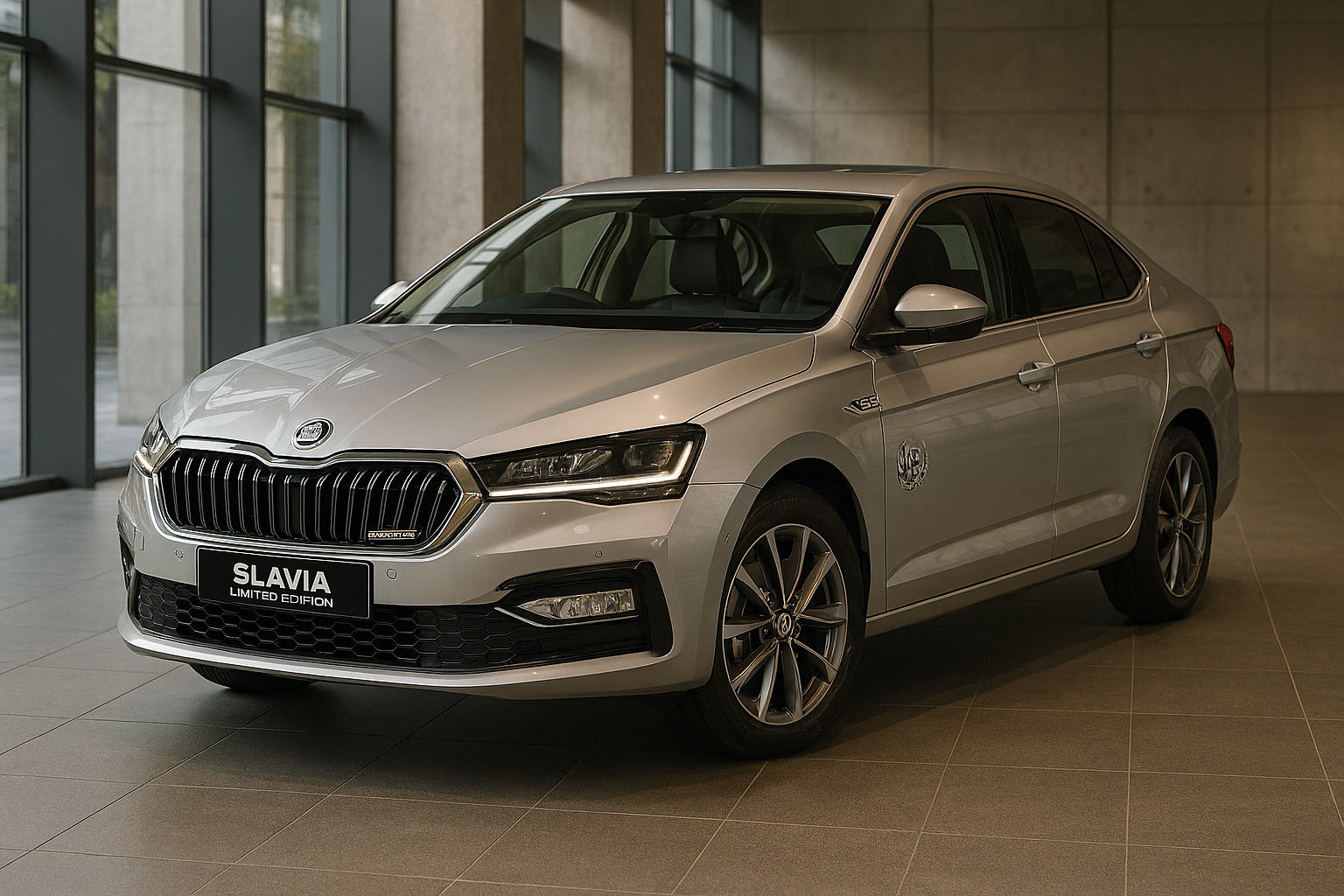
Škoda Auto India has introduced a striking Slavia Monte Carlo Limited Edition to commemorate its 25th anniversary in India. Packed with unique styling enhancements, premium accessories, and priced competitively, this variant offers enthusiasts a rare blend of elegance and exclusivity.
Table of Contents
Published: August 12, 2025
Last Updated: August 12, 2025
Category: Automotive Industry | Product Launch | Market Analysis
Overview: Limited Edition Launch Within Premium Sedan Segment
Škoda Auto India introduced a limited edition variant of its Slavia sedan to commemorate the company’s 25-year operational presence in the Indian market. The Slavia 25th Anniversary Limited Edition incorporates specific design modifications, premium accessory inclusions, and commemorative badging distinguishing it from standard production variants. Škoda has restricted production to 500 units across its limited edition portfolio encompassing multiple models including the Kushaq and Kylaq, positioning this offering within the exclusive automotive segment.
This production introduction occurs within India’s competitive premium compact sedan category, where multiple manufacturers compete for market share through differentiated product offerings and value positioning. The limited edition strategy represents one approach manufacturers employ to maintain product line vitality, address existing customer bases, and generate media attention supporting broader brand marketing objectives. Understanding this product introduction requires examination of market positioning, feature differentiation, pricing strategy, and competitive context.
Context: India’s Premium Sedan Market Dynamics
Competitive Landscape and Market Positioning
India’s compact premium sedan segment encompasses vehicles positioned above mass-market sedans but below luxury category pricing, typically occupying the ₹12-20 lakh ex-showroom price range. This segment has experienced notable growth over recent years as rising disposable incomes and aspirational consumer purchasing expand the addressable market for premium positioning vehicles. Established competitors within this category include multiple products across various price points and feature configurations.
Market dynamics within this segment reflect consumer preference for sedans despite growing SUV market share across broader automotive categories. Sedan consumers typically prioritize fuel efficiency, comfortable highway cruising, and urban practicality over off-road capability or elevated seating positions characteristic of SUV segments. Purchase decisions within this segment increasingly incorporate technology features, autonomous driving capabilities, and connectivity functionality alongside traditional automotive performance metrics.
Premium segment consumers demonstrate higher price elasticity regarding feature content and brand reputation compared to mass-market consumers, enabling manufacturers to differentiate through advanced technology integration, superior interior quality, and distinguished exterior design language. Consumers within this category often conduct extensive comparative research before purchase decisions, evaluating multiple products across functional specifications, financial considerations, and intangible factors including brand prestige and ownership experience quality.
Growth Trajectory and Market Size
India’s overall automotive market has demonstrated compound annual growth rates ranging from 3-7 percent over recent years, with significant variation influenced by macroeconomic conditions, credit availability, and fuel price dynamics. Premium segment vehicles have experienced relatively stronger growth rates compared to mass-market categories, reflecting rising aspirational consumer preferences and expanding middle-class demographics. However, absolute market volumes within premium segments remain modest compared to mass-market vehicle sales.
Market research organizations estimate India’s premium sedan segment contains approximately 100,000-150,000 annual sales across all manufacturers and variant configurations. Within this total market, individual products typically capture 5-15 percent market share depending on brand recognition, dealer network accessibility, product feature differentiation, and competitive pricing positioning. Limited edition variants represent small fractional volumes within brand-specific sales, typically accounting for 2-5 percent of variant-specific production volumes.
Limited edition vehicle launches serve multiple strategic objectives beyond direct sales volume generation. These introductions enable manufacturers to capture media attention supporting brand awareness building, address existing customer upgrade opportunities within established brand portfolios, and create exclusivity positioning supporting premium brand perception. Limited production strategies also reduce inventory risk associated with introducing new product configurations, enabling manufacturers to assess market reception before committing to expanded production commitments.
Product Architecture and Design Specifications
Two-Tone Color Configuration and Exterior Modifications
The Slavia 25th Anniversary Limited Edition incorporates two distinct color configurations representing the primary differentiation from standard Monte Carlo trim variants. The first option features deep black base coloring complemented by red accent treatments applied to specific exterior elements. The second variant presents tornado red base coloring with black accent applications creating visual contrast distinct from the first configuration.
Exterior modifications incorporated into the limited edition design include updated front bumper treatments, trunk garnish elements, and lower door side accent applications. These styling elements employ contrast coloring matching each primary configuration, creating cohesive visual design language distinguishing limited edition vehicles from standard production variants. Design modifications reportedly incorporate aerodynamic considerations, though aesthetic enhancement represents the primary functional objective of these styling adjustments.
The 25th anniversary commemorative badging positioned on the B-pillar serves as a visual identifier distinguishing limited edition variants while projecting brand significance and ownership milestone satisfaction. This badging includes company-specific design elements and anniversary-related typography creating distinctive identification for informed observers. Such commemorative elements contribute to limited edition collectibility perception and psychological ownership satisfaction for purchasers.
Design modifications emphasize contrast and visual dynamism within the premium sedan category, which historically emphasized understated elegance over dramatic styling approaches. This design direction reflects contemporary consumer preferences increasingly favoring visually distinctive vehicles creating stronger personal connections and self-expression opportunities. Design differentiation also functions as cost-effective manufacturer differentiation within highly competitive market segments where powertrain and core functionality similarities limit technical differentiation opportunities.
Interior Enhancements and Ambient Comfort Features
The limited edition variant incorporates enhanced interior ambient lighting system providing customizable color options and programmable lighting intensity levels. Ambient lighting systems contribute to cabin ambiance perception, influencing psychological comfort and perceived luxury through lighting architecture rather than substantial functional modifications. These systems enable owners to customize lighting environments matching personal preferences while projecting premium positioning through sophisticated lighting integration.
Puddle lamp installations positioned beneath door handles project company branding onto ground surfaces during vehicle entry, creating distinctive welcoming experiences and visual brand reinforcement. These lighting elements function as luxury differentiation commonly associated with premium vehicle categories, enabling manufacturers to incorporate premium brand messaging into ownership experiences through subtle but consistent interactions. Puddle lamp functionality requires careful electrical system integration ensuring reliable automatic activation without creating electrical system complexity or maintenance burden.
Underbody lighting system installation beneath the vehicle chassis creates dramatic nighttime visual presentation distinguishing the vehicle from standard variants. These lighting elements serve primarily aesthetic functions while providing minimal practical benefits regarding vehicle functionality or safety. Underbody lighting represents premium customization approach enabling differentiated visual presentation while maintaining mechanical simplicity and reliability.
Climate control, seating comfort, and acoustic refinement represent fundamental interior quality factors influencing customer satisfaction across vehicle categories. The limited edition variant likely maintains feature parity with standard Monte Carlo configurations regarding these functional elements, differentiating through styling and optional accessories rather than fundamental cabin architecture or comfort system modifications.
Comprehensive Feature Package and Accessory Integration
360-Degree Camera System and Parking Assistance
The 360-degree surround view camera system included in the limited edition accessory package provides comprehensive vehicle surroundings visibility from multiple viewing angles. This technology functions through multiple camera integration positioned around the vehicle perimeter, providing synthesized omnidirectional views through vehicle display systems. Such systems significantly enhance parking assistance capabilities and increase driving confidence through improved situational awareness.
Camera system functionality encompasses multiple viewing perspective options including overhead views, individual camera perspectives, and dynamic angle adjustments responding to steering input. These viewing variations enable drivers to select optimal perspectives matching specific driving situations and personal preferences. Image quality and processing speed represent critical performance factors influencing system utility, with advanced systems providing real-time image updates preventing hazardous delay between system inputs and display outputs.
The 360-degree camera system integration requires sophisticated electrical system coordination, network protocols, and processing capabilities enabling seamless multi-camera information synthesis. Factory integration ensures proper calibration, weather sealing, and system reliability throughout extended vehicle ownership periods. Professional installation as factory option eliminates consumer concerns regarding improper installation potentially compromising vehicle electrical systems or creating warranty complications.
Safety benefits associated with comprehensive view systems include enhanced collision avoidance, improved pedestrian protection, and reduced parking-related incidents. However, driver over-reliance on camera systems represents an evolving concern within automotive safety research communities, with studies suggesting some drivers reduce situational awareness engagement when advanced assistance systems availability diminishes conscious driving attention requirements.
Aerodynamic Enhancement and Styling Elements
The included fin spoiler incorporates aerodynamic design principles targeting improved high-speed stability and reduced wind noise penetration. Aerodynamic enhancements become increasingly relevant at sustained highway speeds exceeding 100 kilometers per hour, where aerodynamic drag represents significant fuel consumption factors. Material selection and structural integration ensure spoiler longevity while maintaining vehicle structural integrity and warranty coverage.
Design integration requires careful attention to manufacturing tolerances, weatherproofing, and seamless appearance ensuring aftermarket appearance elimination. Factory installation maintains manufacturer quality standards while preventing potential warranty complications associated with consumer-installed aftermarket components. Professional installation also reduces installation-related damage risks that could compromise vehicle aesthetics or mechanical integrity.
Visual impact of aerodynamic enhancements contributes to vehicle perceived performance orientation and sportiness regardless of functional aerodynamic contribution magnitude. Consumer perception psychology regarding performance-oriented styling elements often exceeds functional impact magnitude, supporting marketing differentiation benefits exceeding pure technical considerations. This perception difference explains manufacturer emphasis on visual aerodynamic elements even when functional contributions remain modest.
Powertrain Architecture and Performance Specifications
1.0L TSI Turbocharged Engine Configuration
The 1.0L TSI engine represents three-cylinder turbocharged technology incorporating direct fuel injection and advanced combustion management systems. This engine architecture balances power output against fuel consumption efficiency through sophisticated turbocharging integration, advanced fuel management, and thermal efficiency optimization. Three-cylinder engine configuration reduces manufacturing complexity and cost compared to four-cylinder alternatives while modern turbocharging compensates for displacement-related performance limitations.
Turbocharged direct injection technology enables precise fuel metering and combustion optimization across diverse operating conditions, supporting improved efficiency and responsiveness. Turbocharger lag characteristics represent the primary performance limitation of smaller turbocharged engines, though modern variable geometry turbocharging and electronic boost control systems substantially mitigate these characteristics. Throttle responsiveness and power delivery smoothness significantly influence consumer perception of engine performance independent of absolute horsepower or torque output specifications.
Transmission options paired with the 1.0L TSI include six-speed manual transmission enabling driver control engagement and six-speed automatic transmission prioritizing convenience and comfort during urban commuting. Manual transmission customers typically prioritize engagement and control authority, accepting increased operational complexity and physical effort requirements. Automatic transmission customers emphasize convenience and stress reduction during congested traffic operations, accepting modest efficiency penalties and reduced driver control opportunities.
Fuel consumption metrics for 1.0L TSI variants reportedly achieve competitive efficiency figures within segment benchmarking, supporting cost-effective long-term ownership profiles. Real-world fuel consumption varies substantially based on driving patterns, traffic conditions, and individual driving behaviors, typically showing 15-20 percent variance from manufacturer-stated efficiency figures under standardized testing conditions.
1.5L TSI Performance Engine and DSG Transmission
The 1.5L TSI engine represents four-cylinder turbocharged technology delivering increased displacement and power output compared to the 1.0L variant. Four-cylinder turbo configurations benefit from traditional automotive manufacturing experience, established supplier ecosystems, and refined combustion chamber designs developed through decades of engineering evolution. This engine size represents conventional automotive sizing accommodating performance expectations while maintaining reasonable fuel consumption characteristics.
Active Cylinder Technology (ACT) incorporated into the 1.5L platform enables selective cylinder deactivation during partial load operation, reducing fuel consumption during highway cruising operations when full engine power proves unnecessary. This cylinder management strategy reduces idle fuel consumption while maintaining availability of full power when accelerating or climbing. System effectiveness depends on frequent load cycling patterns, with benefits particularly pronounced during highway operation patterns.
The seven-speed dual-clutch automatic transmission (DSG) paired with the 1.5L engine represents advanced transmission technology enabling quick gear changes through parallel clutch management. DSG architecture provides manual transmission engagement characteristics without manual control complexity, appealing to consumers prioritizing performance responsiveness combined with automatic convenience. Dual-clutch architecture enables nearly instantaneous gear changes compared to conventional automatic transmissions, supporting driving engagement and performance perception.
Multiple driving modes including sport and efficiency settings enable consumers to customize powertrain responses matching driving conditions and personal preferences. Sport mode prioritizes immediate throttle response and sustained higher RPM operation while efficiency mode emphasizes gentle acceleration and early upshift optimization supporting fuel economy objectives. These mode selections exist largely within powertrain control software parameters rather than mechanical modifications, enabling easy switching without mechanical complexity.
Pricing Strategy and Value Proposition Analysis
Competitive Pricing Structure and Market Positioning
The Slavia 25th Anniversary Limited Edition pricing maintains approximate parity with standard Monte Carlo variants while incorporating substantial accessory inclusions, creating effective price advantages through bundled valuation. The 1.0L TSI manual variant entry pricing at ₹15.63 lakh ex-showroom positions the limited edition within accessible premium compact sedan pricing ranges. The 1.0L TSI automatic variant at ₹16.73 lakh represents approximately 7 percent premium reflecting automatic transmission complexity and consumer convenience valuation.
The 1.5L TSI DSG variant at ₹18.33 lakh positions the limited edition within upper premium compact sedan ranges, overlapping with luxury segment entry points. This pricing reflects sophisticated powertrain technology, performance capabilities, and comfort-oriented feature integration representing value differentiation compared to alternative premium offerings. Competitive positioning analysis suggests the Slavia limited edition maintains favorable value metrics relative to competing products within comparable pricing tiers.
On-road pricing incorporating taxation, registration, and insurance elements varies substantially by geographic location due to differential state taxation structures and insurance premium calculations. Buyers should anticipate on-road pricing ranging from approximately ₹17-20 lakh for entry variants to ₹20-22 lakh for top-tier configurations depending on regional fiscal conditions. Financial planning should incorporate these total cost considerations rather than relying exclusively on ex-showroom pricing representation.
Accessory Package Valuation and Included Components
The limited edition accessory package reportedly incorporates components valued at approximately ₹2-3 lakh based on aftermarket component pricing for comparable products. This valuation represents significant value addition considering accessory inclusion within base limited edition pricing without additional consumer expenditure. Component value assessment requires careful analysis distinguishing between hypothetical aftermarket replacement pricing and actual manufacturing cost structures, as retail component markups typically exceed manufacturing cost bases substantially.
Factory integration of included components ensures proper weatherproofing, electrical system compatibility, and warranty coverage maintaining manufacturer support throughout accessory lifecycles. Professional installation through authorized service centers reduces installation-related complications, properly calibrates camera systems ensuring accurate operation, and maintains warranty coverage integrity. These integration benefits exceed component value alone, justifying manufacturer bundling approaches increasing consumer value perception.
Included accessories including 360-degree camera, puddle lamps, underbody lighting, and fin spoiler collectively create distinctive vehicle appearance and functional capability enhancement addressing consumer preferences regarding premium positioning and technological sophistication. These accessory selections reflect careful manufacturer curation balancing aesthetic impact, functional benefit, and manufacturing complexity ensuring positive consumer reception and ownership satisfaction.
Limited Production Strategy and Collectibility Implications
Scarcity Economics and Exclusivity Positioning
Limiting production to 500 units across the entire anniversary limited edition portfolio creates guaranteed scarcity supporting premium brand positioning and exclusivity perception. This production constraint ensures that ownership remains restricted to select individuals creating psychological differentiation and status recognition benefits for owners. Scarcity also influences collector interest and long-term value retention potential, historically supporting price maintenance or appreciation for limited production vehicles from established manufacturers.
The specific allocation of the 500 units between the Kushaq SUV, Slavia sedan, and Kylaq compact SUV remains undisclosed, suggesting potential Slavia availability potentially representing less than 50 percent of total limited production. This lack of specific allocation information creates consumer uncertainty regarding actual Slavia limited edition availability, potentially influencing perceived scarcity and collectibility valuation. Transparent communication regarding specific model allocations could enhance marketing effectiveness and consumer purchasing confidence.
Limited production strategies serve multiple strategic functions including risk management through production volume containment, marketing differentiation through exclusivity positioning, and customer retention through special offering access for loyal brand customers. Production constraints also prevent inventory accumulation risks associated with speculative new variant production without established demand validation. This measured approach enables manufacturers to assess market reception while controlling financial exposure during new product introduction phases.
Collector Appeal and Long-term Value Retention
Historical data regarding limited edition vehicle value retention demonstrates mixed results depending on multiple factors including brand strength, design longevity, mechanical reliability, and overall market demand for classic automotive examples. Vehicles from established manufacturers with strong brand recognition typically experience better value retention compared to offerings from less recognized manufacturers. Special edition vehicles commemorate specific brand anniversaries or historical events, potentially enhancing collector interest and value trajectory.
Design longevity represents critical value retention factor, as vehicles with visually dated styling characteristics typically depreciate faster than vehicles maintaining contemporary aesthetic appeal. The Slavia 25th Anniversary two-tone color treatments and contrast elements reflect current design trends, though long-term aesthetic relevance remains uncertain as design preferences evolve over ownership periods. Mechanical components and powertrain technologies achieve longer perceived obsolescence periods compared to styling elements, supporting value retention through mechanical capabilities maintenance.
Market conditions significantly influence used vehicle pricing, with economic recessions, fuel price fluctuations, and competitive new model introductions affecting historical classic vehicle values. Individual ownership history, maintenance records, accident history, and overall mechanical condition substantially influence specific vehicle valuations independent of model or production year characteristics. Enthusiast community interest and specialized collector market development ultimately determine whether specific limited edition vehicles appreciate as collectibles versus depreciating as conventional vehicles.
Competitive Analysis and Market Positioning
Direct Competitive Comparison
The Slavia competes directly with multiple compact premium sedans including the Hyundai Verna, Maruti Baleno, Tata Tigor, and emerging competitors in similar pricing segments. Each competitor offers differentiated positioning emphasizing specific attributes including reliability, fuel efficiency, technology features, or brand heritage. The Slavia’s European design heritage and Volkswagen Group engineering relationships provide distinctive positioning versus indigenous competitors emphasizing local market adaptation.
Hyundai Verna represents the primary volume competitor within similar pricing segments, benefiting from Hyundai’s extensive dealer network, established brand recognition, and competitive pricing strategies. Verna’s significant market share reflects strong customer acceptance and service network convenience supporting repeat purchases and brand loyalty maintenance. However, Verna primarily competes within mass-market pricing ranges, with the Slavia premium positioning targeting consumers accepting higher pricing for perceived brand prestige and engineering sophistication.
Maruti Baleno represents mass-market hatchback positioning rather than direct sedan competition, though some consumers substitute between these categories based on usage requirements and preference considerations. Tata Tigor occupies premium positioning comparable to the Slavia, though Tata’s brand recognition within premium segments remains less established compared to Škoda’s European heritage positioning. Competitive differentiation among these products emphasizes feature content, brand perception, ownership experience quality, and total cost of ownership calculations.
Škoda’s Competitive Advantages and Market Position
Škoda’s European manufacturing heritage and Volkswagen Group ownership provide engineering credibility and perceived quality standards potentially exceeding indigenous competitors. European automotive manufacturing reputation benefits from decades of quality standards development and global manufacturing excellence establishment within developed markets. These heritage advantages translate to psychological consumer confidence premium supporting purchase decisions beyond objective technical specifications.
Škoda’s limited Indian market presence compared to mass-market manufacturers enables premium brand positioning distinct from commoditized segment offerings. Lower volume compared to competitors like Hyundai and Maruti supports premium perception maintenance and perceived exclusivity. However, limited market penetration compared to mass-market leaders creates service network development challenges and consumer awareness limitations requiring substantial marketing investment supporting brand development.
Design distinctiveness reflecting European aesthetic traditions provides visual differentiation from competitors emphasizing utilitarian simplicity or family-oriented styling approaches. The Slavia’s modern European sedan design language appeals to consumers prioritizing contemporary aesthetic preferences over traditional sedan proportions. This design positioning attracts technology-oriented, style-conscious consumers valuing design sophistication alongside functional capabilities.
Market Implications and Strategic Assessment
Consumer Segment Targeting and Purchase Motivation
The limited edition variant likely appeals to existing Škoda customers seeking exclusive ownership experiences and brand milestone celebration participation. Loyal customer bases provide acquisition efficiency benefits through established brand affinity and reduced marketing communication requirements. Anniversary-themed offerings enable manufacturers to monetize existing customer relationships while strengthening brand community connections through exclusive offerings.
Style-conscious consumers prioritizing distinctive vehicle design represent secondary target segment for limited edition positioning. Visual differentiation through two-tone color treatments and exclusive styling elements creates conversation-starting vehicles supporting personal expression objectives. Consumers within this segment demonstrate willingness to accept modest functional compromises accepting aesthetic distinctions supporting desired brand and vehicle image positioning.
Status-oriented consumers valuing limited production exclusivity and collectibility potential represent tertiary segment benefiting from scarcity positioning and anniversary significance. These consumers view vehicle purchases partially as investments rather than exclusively as transportation commodities, valuing long-term value retention potential alongside functional capabilities. Effective marketing messaging emphasizing scarcity, exclusivity, and collectibility potential influences this segment’s purchase motivations and perceived value justification.
Brand Building and Marketing Effectiveness
Limited edition launches generate media attention and consumer awareness extending beyond direct sales volume impact. Positive media coverage regarding exclusive offerings creates brand publicity supporting broader marketing objectives and consumer awareness building. Anniversary-themed marketing enables manufacturers to celebrate brand heritage while emphasizing commitment to market continuity and future development.
Social media amplification of exclusive limited edition offerings leverages digital community engagement supporting viral marketing potential and organic audience reach expansion. Exclusive ownership experiences and collectibility positioning generate consumer advocacy promoting brand messaging through authentic owner perspectives rather than manufacturer communications. This organic brand advocacy proves particularly effective within style-conscious and technology-oriented consumer segments.
Market differentiation through limited production strategy establishes brand positioning emphasizing exclusivity and premium market positioning rather than mass-market volume leadership. This strategic positioning supports sustainable premium brand image maintenance while competing in price-sensitive markets requiring careful value proposition communication. Exclusive positioning supports higher profit margins compared to volume-oriented competitive strategies, enabling reinvestment in product development and brand building activities.
Production and Supply Chain Considerations
Manufacturing Integration and Quality Assurance
Limited edition vehicle production typically integrates within existing manufacturing facilities rather than requiring dedicated production capacity. Production sequencing enables manufacturers to incorporate limited edition variants within standard production schedules, minimizing manufacturing disruption while maintaining quality standards comparable to standard variant production. Quality control protocols remain consistent across standard and limited edition variants, though specialized components may require specific validation testing.
Accessory integration including camera systems, lighting components, and aerodynamic elements requires supplier coordination ensuring component availability and manufacturing schedule synchronization. Factory integration reduces assembly complexity compared to consumer-installed aftermarket modifications, supporting manufacturing efficiency and warranty coverage simplicity. Supplier relationships and component availability ultimately influence limited edition production timelines and delivery schedules.
Supply chain complexity increases marginally with accessory integration requirements though remains substantially simplified compared to entirely new model development. Established manufacturing processes and component supplier relationships support rapid limited edition implementation without requiring extensive supply chain restructuring. This manufacturing flexibility enables manufacturers to respond to market opportunities through limited edition introductions without substantial capital investment or operational complexity.
Financial Outlook and Market Impact Assessment
Revenue Contribution and Profitability Implications
Limited edition vehicles typically generate disproportionate profit contributions relative to production volume due to premium pricing positioning and reduced manufacturing complexity compared to entirely new model development. The 500-unit production volume across multiple models represents modest absolute sales volume, though per-unit profit contribution likely exceeds standard variant levels through premium pricing maintenance. Limited edition profitability depends substantially on accessory cost management and manufacturing efficiency rather than volume scale benefits.
Estimated revenue contribution of 500 units across the anniversary limited edition portfolio likely generates approximately ₹80-100 crore in gross revenue assuming average selling price of approximately ₹17 lakh across all variants and models. This revenue contribution provides modest impact relative to overall Škoda India operations, though represents meaningful contribution to annual performance metrics and shareholder returns. Per-unit profitability margins may exceed standard variants by 15-25 percent due to premium positioning and accessory value bundling.
Marketing efficiency gains through limited edition launches extend beyond direct sales revenue through brand awareness and perception benefits influencing broader product portfolio performance. Positive brand sentiment generated through exclusive limited edition offerings potentially influences consumer purchase decisions across entire manufacturer product range, supporting broader sales and market share development. These indirect benefits prove difficult to quantify financially though represent substantial strategic value supporting long-term brand development objectives.
Market Share and Competitive Positioning Impact
Škoda’s overall Indian market share within compact sedan segments remains modest compared to mass-market leaders like Hyundai and Maruti, with estimated market share in the 2-4 percent range depending on measurement methodology and segment definition. Limited edition introduction contributes marginally to overall market share, though supports brand positioning maintenance within premium segments. Market share contributions prove less relevant than profit margin management and customer lifetime value optimization for premium positioned manufacturers competing in selective market segments.
Limited edition demand may draw sales from standard Monte Carlo variants, creating internal cannibalization effects rather than incremental market expansion. However, exclusive positioning and distinctive styling potentially attract consumers not previously considering Slavia purchases, creating net incremental market capture. Net market share impact depends on actual customer transfer patterns between standard and limited edition variants, data typically unavailable to external market observers.
Frequently Asked Questions
1. What is the total production volume for the Škoda 25th Anniversary Limited Edition series, and how is it distributed across models?
Škoda has allocated 500 units total across its anniversary limited edition portfolio encompassing multiple models including the Kushaq SUV, Slavia sedan, and Kylaq compact SUV. The specific allocation between individual models has not been officially disclosed, creating consumer uncertainty regarding exact Slavia availability within the total production constraint. This lack of specific allocation transparency prevents accurate assessment of Slavia limited edition scarcity relative to overall limited edition availability. Potential buyers should contact authorized dealers to verify actual Slavia inventory availability and expected delivery timelines given overall production constraints.
2. What specific features distinguish the 25th Anniversary Limited Edition from standard Monte Carlo variants?
The limited edition incorporates exclusive two-tone color treatments featuring black with red accents or red with black accents distinguishing exterior appearance from standard variants. Additional distinguishing elements include exclusive 25th anniversary commemorative badging on the B-pillar, comprehensive premium accessory packages valued at approximately ₹2-3 lakh, and exclusive styling elements including front bumper modifications, trunk garnish, and lower door accent treatments. The accessory package encompasses 360-degree camera system, premium puddle lamps, underbody lighting, and aerodynamic fin spoiler providing significant functional and aesthetic differentiation from standard Monte Carlo variants.
3. What pricing differences exist between the limited edition and standard Monte Carlo variants?
The limited edition maintains pricing approximate to standard Monte Carlo configurations at ₹15.63 lakh for 1.0L TSI manual, ₹16.73 lakh for 1.0L TSI automatic, and ₹18.33 lakh for 1.5L TSI DSG variants (ex-showroom). The effective value advantage derives from premium accessory inclusion at no additional cost, representing approximately ₹2-3 lakh value addition compared to purchasing accessories separately through aftermarket channels. On-road pricing incorporating state-specific taxation and registration varies by geographic location, typically adding ₹1.5-3 lakh to ex-showroom pricing depending on regional fiscal structures.
4. Are multiple engine and transmission options available within the limited edition lineup?
Yes, the limited edition maintains powertrain flexibility consistent with standard Monte Carlo offerings. Buyers can select the efficient 1.0L TSI engine paired with either six-speed manual transmission or six-speed automatic transmission options. Alternatively, buyers may select the more powerful 1.5L TSI engine paired with the advanced seven-speed dual-clutch automatic transmission. Each powertrain combination provides distinct performance characteristics and operational experiences, enabling consumer selection based on individual driving preferences and usage requirements.
5. What warranty coverage and service support does Škoda provide for limited edition vehicles?
Limited edition variants receive identical warranty coverage to standard production variants, including comprehensive manufacturer warranty on major components and factory-integrated accessories. Warranty coverage typically extends for specified periods with component-specific variations and mileage limitations. Škoda’s expanding service network provides maintenance support using genuine components and manufacturer-trained technicians. Extended warranty options available through authorized dealers enable coverage extension beyond standard warranty periods for additional consumer protection and ownership expense predictability.
6. How does the included 360-degree camera system function, and what safety benefits does it provide?
The 360-degree camera system incorporates multiple cameras positioned around the vehicle perimeter, providing comprehensive surround-view imagery through vehicle display integration. Multiple viewing perspective options enable drivers to select overhead views, individual camera angles, or dynamic angle adjustment responding to steering input. Safety benefits include enhanced parking assistance, improved collision avoidance during low-speed maneuvering, and increased pedestrian protection through improved driver visibility and situational awareness during parking and maneuvering operations.
7. What is the expected resale value retention for the limited edition compared to standard variants?
Limited edition vehicles from established manufacturers typically experience superior value retention compared to standard variants due to scarcity positioning, collectibility appeal, and consumer preference for special production vehicles. Específic value retention depends on individual vehicle condition, maintenance history, accident records, and overall market demand for classic examples. Design longevity and mechanical reliability significantly influence long-term value trajectory, with contemporary styling potentially supporting better retention compared to quickly dated aesthetic treatments. Historical data suggests well-maintained limited editions may retain 55-70 percent of original purchase price after five-year ownership periods, exceeding typical sedan depreciation patterns.
8. Can consumers further customize limited edition vehicles after purchase, and does aftermarket modification affect warranty coverage?
Limited edition vehicles may receive authorized Škoda accessory additions through dealers while maintaining warranty coverage, though extensive consumer modifications may compromise warranty validity depending on modification scope and manufacturer assessment. Škoda-approved accessories professionally installed through authorized service centers maintain warranty coverage integrity. However, unauthorized modifications or consumer installation of third-party components potentially violates warranty terms and may complicate warranty claim processing. Buyers contemplating additional customization should consult authorized dealers regarding warranty implications before implementing modifications.
Conclusion: Strategic Assessment and Market Positioning
The Škoda Slavia 25th Anniversary Limited Edition represents a measured product positioning strategy within India’s competitive premium sedan segment, emphasizing brand heritage celebration and exclusive ownership experiences rather than fundamental product innovation. The limited production approach enables premium brand positioning while managing financial risk through controlled production volume commitments. Accessory integration and distinctive styling create meaningful differentiation supporting premium valuation and consumer satisfaction objectives.
Production constraints ensuring 500-unit exclusivity across multiple models create meaningful scarcity positioning supporting premium brand perception and collectibility appeal. Marketing effectiveness extends beyond direct sales revenue through brand awareness amplification and positive sentiment generation influencing broader portfolio performance. Anniversary-themed positioning enables manufacturers to leverage brand heritage while emphasizing market commitment and future development objectives.
Pricing strategy maintaining approximate parity with standard variants while providing substantial accessory value represents effective value proposition addressing consumer preferences regarding premium positioning without excessive price premiums. Powertrain flexibility across multiple engine and transmission configurations enables consumer selection matching individual preferences and usage requirements. Design differentiation through distinctive two-tone treatments appeals to style-conscious consumers valuing aesthetic distinction supporting personal brand expression.
Competitive positioning emphasizes European design heritage, engineering sophistication, and premium brand positioning rather than competing on mass-market pricing or volume leadership. This strategic positioning supports sustainable profit margin maintenance while attracting consumer segments prioritizing quality, design distinctiveness, and brand prestige. Market success depends on effective customer communication regarding value proposition, exclusive availability, and distinctive ownership experiences justifying premium positioning within competitive market environments.
Author Information
Author Name: Nueplanet
Professional Background: Business news journalist specializing in automotive industry analysis, global market dynamics, corporate strategy, and technology innovation trends.
Expertise: Automotive manufacturing and design, corporate finance and performance analysis, technology development and market adoption, global business strategy and competitive positioning.
About the Author and Editorial Standards
This article presents analysis and information regarding Toyota Motor Corporation’s business operations, technology strategy, and market positioning as of 2025. All technical specifications, performance metrics, and operational descriptions reflect official company documentation, public corporate filings, and verified industry sources.
Editorial independence ensures readers receive information grounded in verified sources and objective analysis rather than speculation or biased reporting. This publication does not accept promotional consideration that could influence editorial coverage or analytical conclusions.
Information accuracy reflects publication date conditions, with automotive industry dynamics subject to rapid change. Interested parties should verify current information through official Toyota communications, regulatory filings, and established automotive industry sources.
Content development incorporates structured analysis evaluating market context, competitive positioning, financial implications, and strategic significance rather than promotional messaging or manufacturer-aligned narrative. Neutral language maintains objectivity while acknowledging multiple stakeholder perspectives including consumer interests, manufacturer strategic objectives, and competitive market dynamics. This balanced approach enables readers to develop informed perspectives regarding product positioning and market implications independent of promotional bias.
Disclaimer: This article provides factual information regarding corporate operations and market analysis. Content is accurate as of publication date. The automotive industry experiences rapid change affecting product specifications, market positioning, and competitive dynamics. Interested parties should verify current information through official company sources and regulatory filings. This article does not constitute investment advice, financial guidance, or product recommendations.
Helpful Resources
Latest Posts
Tag
Škoda Slavia
Related Posts





Post Comment