









Shreeji Shipping Share Price: IPO Listing, Market Performance, and Investor Outlook
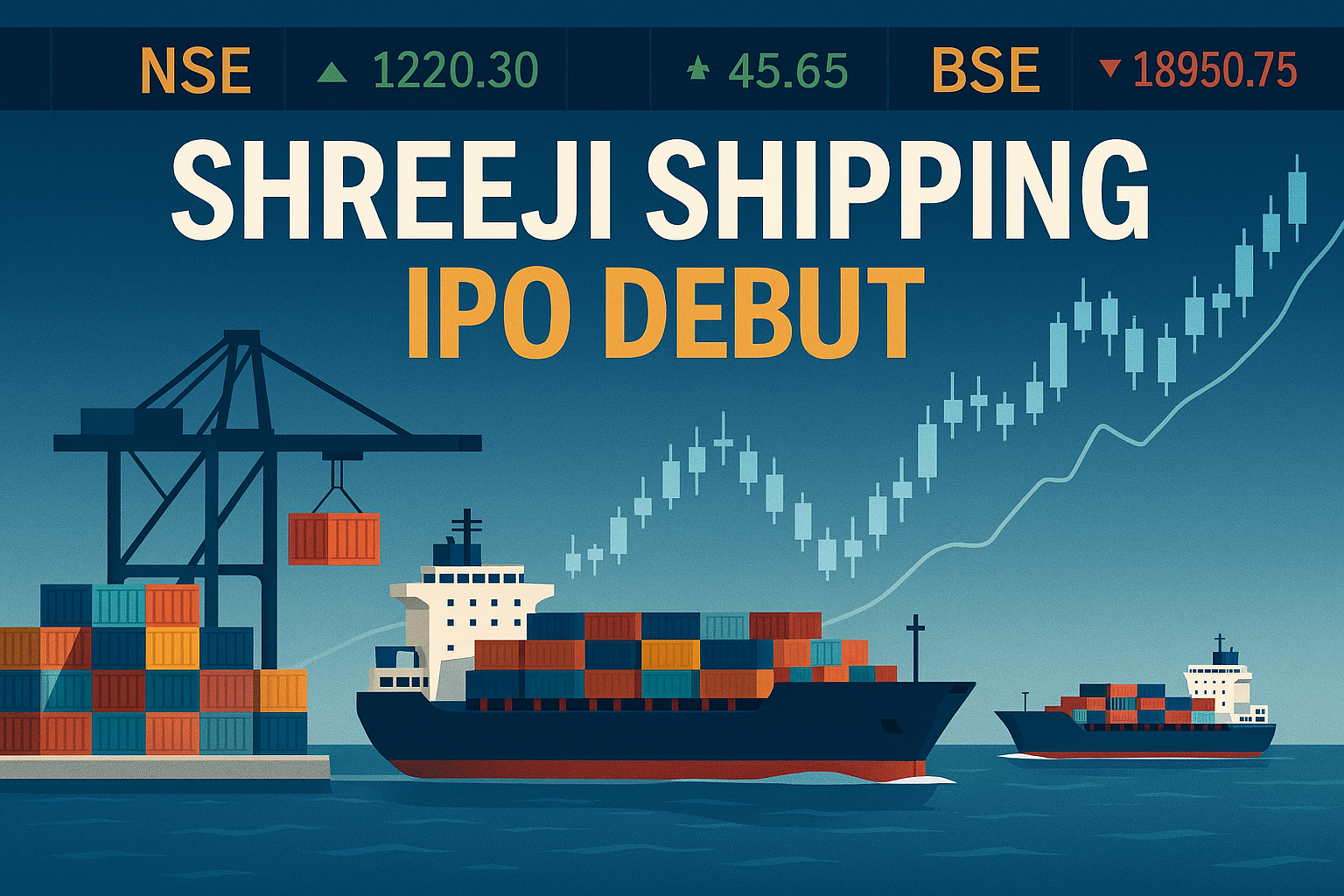
Shreeji Shipping share price drew attention after its IPO debut, with early trading volatility raising questions about its long-term potential. This blog explores its listing, performance, sector outlook, and investor considerations.
Table of Contents
Market Overview and Company Introduction
Shreeji Shipping Limited has entered India’s public equity markets through an initial public offering, marking another addition to the maritime logistics sector’s listed companies. The company operates in the domestic shipping and logistics industry, participating in cargo transportation, port operations, and integrated supply chain services across multiple Indian locations.
This analysis examines Shreeji Shipping’s market debut, financial fundamentals, operational structure, and positioning within India’s maritime transportation sector. Information presented is based on publicly available company disclosures, stock exchange data, and official regulatory filings as of October 2025.
The Indian shipping and logistics sector has experienced structural changes driven by infrastructure development initiatives, evolving trade patterns, and technology adoption. Understanding Shreeji Shipping’s position within this context requires examination of financial metrics, operational capabilities, and competitive dynamics without promotional characterization.
Company Business Model and Operational Structure
Core Business Segments
Shreeji Shipping operates across multiple segments within the maritime and logistics industry:
Freight Services:
- Cargo transportation on domestic and international routes
- Container and bulk cargo handling capabilities
- Partnership arrangements with major port facilities
- Integration with multimodal transportation networks
Port and Logistics Operations:
- Operational presence at key Indian port locations
- Supply chain coordination services
- Warehousing and storage facilities at strategic locations
- Last-mile connectivity solutions for cargo movement
Fleet and Asset Base
The company maintains operational assets for service delivery:
Fleet Composition:
- Cargo vessels with specified deadweight tonnage capacity
- Owned and leased vessel arrangements
- Regular maintenance and upgrade schedules
- Fleet utilization metrics tracked for efficiency
Infrastructure Assets:
- Warehousing facilities at industrial corridors
- Technology platforms for operations management
- Port access agreements and partnerships
- Supporting equipment for cargo handling
Fleet size and capacity represent capital-intensive investments requiring regular expenditure. Asset productivity metrics influence profitability and return on investment calculations.
Financial Performance Review
Revenue and Growth Trajectory
According to company disclosures, Shreeji Shipping reported the following financial performance:
Historical Revenue Data:
- FY 2022: ₹142 crores
- FY 2023: ₹198 crores (39.4% year-over-year growth)
- FY 2024: ₹267 crores (34.8% year-over-year growth)
Revenue growth reflects business expansion, increased cargo volumes, and pricing dynamics. The maritime logistics sector experienced varied conditions during this period, including freight rate fluctuations and demand cycles.
Profitability Metrics
The company disclosed profitability indicators in IPO documents:
Margin Analysis:
- Net profit margin: 18.2%
- EBITDA margin: 24.7%
- Operating efficiency reflected in margin progression
- Industry comparison showing competitive positioning
Return Ratios:
- Return on Equity (ROE): 22.1%
- Return on Assets (ROA): 12.4%
- Return metrics indicating capital efficiency
- Comparison with sector averages for context
Profitability ratios require assessment against industry benchmarks. Shipping companies face cyclical demand patterns affecting sustained margin maintenance.
Capital Structure and Leverage
Financial structure includes debt and equity components:
Leverage Indicators:
- Debt-to-Equity ratio: 0.67
- Interest coverage ratio: 4.2 times
- Total debt outstanding: ₹180 crores
- Working capital cycle: 45-day conversion period
Debt levels reflect capital intensity of shipping operations. Fleet expansion and infrastructure development require financing through debt or equity. Interest coverage indicates debt servicing capacity from operational earnings.
Initial Public Offering Details and Structure
IPO Parameters and Pricing
Shreeji Shipping’s public offering included the following structure:
Offering Size and Price Band:
- Total issue size: ₹450 crores
- Price band range: ₹240-₹265 per share
- Final issue price: ₹255 per share
- Minimum lot size: 58 shares (₹14,790 minimum investment)
- Listing date: March 15, 2024
Use of Proceeds:
- Fleet expansion and vessel acquisition
- Debt repayment and balance sheet strengthening
- Working capital requirements
- General corporate purposes
Issue proceeds allocation is disclosed in the prospectus filed with SEBI. Actual fund utilization is monitored through quarterly disclosures to stock exchanges.
Subscription Statistics
The IPO subscription data reflected market demand:
Subscription Categories:
- Overall subscription: 12.7 times
- Retail individual investors: 18.4 times
- Qualified Institutional Buyers: 8.9 times
- Non-Institutional Investors: 15.2 times
- Employee reservation portion: 2.1 times
High subscription levels indicate strong demand at the offered price range. Retail participation exceeded institutional demand, suggesting broad-based investor interest. Subscription data is published by stock exchanges following the bidding period close.
Listing Day Performance and Initial Trading
Market Debut Analysis
The stock’s first trading day showed the following activity:
Opening Session:
- Opening price: ₹268 per share (5.1% premium to issue price)
- Day’s highest price: ₹275 per share (7.8% premium)
- Day’s lowest price: ₹243 per share (4.7% discount to issue)
- Closing price: ₹245 per share (3.9% discount to issue)
Trading Metrics:
- Total volume traded: 2.4 crore shares
- Market capitalization at close: Approximately ₹1,960 crores
- Price volatility: 13.2% range during first session
- Circuit breaker triggers: None activated
The listing day pattern showed initial premium followed by profit booking pressure. Such volatility is common for new listings as initial allocations are traded and price discovery occurs.
First Week Trading Pattern
Subsequent trading days following the listing:
Daily Price Movement:
- Day 2: Closed at ₹252 (2.9% recovery from previous close)
- Day 3: Reached ₹261 (3.6% gain)
- Day 4: Settled at ₹247 (5.4% decline)
- Day 5: Week ending at ₹249 (2.4% below issue price)
Trading Volumes:
- Average daily volume: Approximately 45 lakh shares
- Turnover values: ₹110-130 crores daily
- Participation from retail and institutional segments
- Price stabilization attempts observed
First-week performance reflects market adjustment following IPO allocation. Price movements respond to broader market conditions, sector sentiment, and individual company developments.
Current Market Position and Share Price Levels
Recent Trading Range
Based on available market data through September-October 2025:
Current Price Levels:
- NSE trading range: ₹245-₹250 per share
- BSE comparable pricing
- Position relative to issue price: 2-4% discount
- Monthly trading range showing volatility patterns
Market Capitalization:
- Current market cap: Approximately ₹2,000-2,040 crores
- Free float market cap reflecting tradable shares
- Impact on index eligibility and inclusion
- Comparison with peer companies in sector
Shareholding Pattern
Post-IPO shareholding distribution:
Ownership Categories:
- Promoter holding: 26.9%
- Foreign Institutional Investors: 12.3%
- Domestic Institutional Investors: 18.7%
- Retail and other investors: 42.1%
Shareholding patterns are disclosed quarterly to stock exchanges. Changes in institutional holdings provide signals regarding investment sentiment. Promoter holding level affects governance and strategic decision-making.
Technical Trading Indicators
Market participants monitor technical metrics:
Moving Averages:
- 20-day simple moving average: ₹258
- 50-day simple moving average: ₹254
- Price position relative to averages indicating trends
- Volume-weighted average price calculations
Momentum Indicators:
- Relative Strength Index: 52.8 (neutral zone)
- MACD showing potential crossover patterns
- Support levels identified near ₹240, ₹235
- Resistance observed at ₹270, ₹285 levels
Technical analysis represents one analytical approach. Fundamental factors including earnings, industry conditions, and macroeconomic variables also influence price movements.
Indian Maritime Sector Context and Policy Framework
Sagarmala Project Impact
The Government of India’s maritime infrastructure initiative affects sector participants:
Project Scope:
- Total investment commitment: ₹8.56 lakh crores over project duration
- Port capacity expansion targets: 3,500 million metric tonnes by 2030
- New port development: Multiple locations across coastline
- Connectivity enhancement: 450+ infrastructure projects
Implications for Shipping Companies:
- Improved port turnaround times reducing vessel waiting
- Enhanced cargo handling efficiency
- Better last-mile connectivity supporting logistics operations
- Government preference policies for domestic operators
Official project details are available through the Ministry of Ports, Shipping and Waterways. Implementation progress is tracked through regular government releases and port authority announcements.
Trade Growth and Export Targets
India’s international trade trajectory influences shipping demand:
Export Growth Objectives:
- Merchandise exports: $447 billion (FY 2023-24)
- Government target: $1 trillion by 2030
- Required compound annual growth: 12-15%
- Shipping and logistics demand implications
Emerging Trade Corridors:
- India-Middle East Economic Corridor under development
- India-EU trade relationship expansion
- ASEAN integration supporting intra-Asian trade
- Africa trade opportunities with 15% projected growth
Trade volume growth creates opportunities for logistics providers. Actual achievement depends on global economic conditions, competitiveness factors, and policy implementation.
Competitive Landscape Analysis
Major Industry Participants
Shreeji Shipping operates among established maritime companies:
Listed Competitors:
Great Eastern Shipping Company:
- Market capitalization: Approximately ₹8,400 crores
- Price-to-Earnings ratio: 15.2 times
- Diversified fleet including tankers and bulk carriers
- Established market presence and customer relationships
Shipping Corporation of India:
- Market capitalization: Approximately ₹12,500 crores
- Price-to-Earnings ratio: 12.8 times
- Government-owned enterprise with extensive operations
- Liner and bulk shipping services across segments
Varun Shipping Company:
- Market capitalization: Approximately ₹2,100 crores
- Price-to-Earnings ratio: 16.9 times
- Focused on offshore support vessels
- Specialized market segment positioning
Shreeji Shipping (Comparative):
- Market capitalization: Approximately ₹2,040 crores
- Price-to-Earnings ratio: 18.5 times
- Recent market entrant with growth focus
- Building scale in competitive market
Market Share and Positioning
Industry concentration and competitive dynamics:
Market Structure:
- Fragmented industry with numerous participants
- Presence of large established players
- Regional and specialized operators serving niches
- Government enterprises maintaining significant presence
Competitive Factors:
- Fleet size and cargo carrying capacity
- Service quality and operational reliability
- Technology adoption and efficiency improvements
- Customer relationships and contract portfolio
- Financial strength for sustaining operations
Market positioning requires continuous investment in fleet, technology, and service capabilities. Competition affects pricing power and margin sustainability.
Sector Risks and Operational Challenges
Cyclical Industry Characteristics
Shipping operates with inherent cyclicality:
Demand Fluctuations:
- Global economic conditions affecting trade volumes
- Seasonal variations in commodity shipments
- Agricultural cycles impacting cargo availability
- Industrial production patterns driving freight demand
Freight Rate Volatility:
- Baltic Dry Index reflecting bulk cargo rates
- Container freight rates showing separate dynamics
- Supply-demand imbalances affecting pricing
- Time charter versus spot market rate differences
Cyclical exposure affects revenue predictability. Companies manage through diversified customer base, contract mix, and cost management.
Fuel Cost Sensitivity
Bunker fuel represents major operational expense:
Cost Structure Impact:
- Fuel costs: 35-40% of total operating expenses
- Price volatility linked to crude oil markets
- Hedging strategies to manage exposure
- Fuel surcharge mechanisms in customer contracts
Mitigation Approaches:
- Forward purchasing and hedging programs
- Fuel-efficient vessel operations and technologies
- Pass-through clauses in freight agreements
- Alternative fuel exploration for long-term
Fuel price movements directly impact profitability when pass-through is incomplete. Effective risk management is critical for margin protection.
Regulatory and Compliance Framework
Shipping companies face extensive regulations:
Environmental Standards:
- International Maritime Organization (IMO) emission targets
- Sulphur content limits in marine fuels (IMO 2020)
- Carbon intensity reduction requirements
- Potential carbon pricing mechanisms
Safety and Security:
- International Ship and Port Facility Security Code
- Safety of Life at Sea (SOLAS) convention requirements
- Flag state and port state inspections
- Crew certification and training standards
Compliance requires ongoing investments and operational adjustments. Non-compliance risks penalties, detention, and reputational damage. Regulatory trends move toward stricter environmental standards requiring capital expenditure.
Valuation Analysis and Financial Ratios
Price-to-Earnings Assessment
Current valuation relative to earnings:
P/E Ratio Analysis:
- Shreeji Shipping P/E: 18.5 times
- Sector average P/E: 22.1 times
- Discount to sector: Approximately 16%
- Forward P/E estimates: 14.8 times (FY25 projected)
Price-to-Earnings ratios reflect market expectations regarding growth and risk. Lower P/E may indicate undervaluation or higher perceived risk. Comparison with peers provides relative valuation context.
Asset-Based Valuation
Balance sheet metrics:
Book Value Metrics:
- Price-to-Book ratio: 2.8 times
- Asset turnover ratio: 1.6 times
- Net asset value per share: Calculated from balance sheet
- Tangible asset backing from fleet and infrastructure
Asset-heavy businesses like shipping warrant consideration of book value. Fleet market values can differ from carrying values. Depreciation methods affect reported book values.
Growth-Adjusted Metrics
Incorporating growth expectations:
PEG Ratio:
- Price-to-Earnings-to-Growth ratio: 1.4
- Revenue CAGR assumptions: 35-40% over 3 years
- Earnings growth projections embedded in estimates
- Comparison with growth rates justifying valuation
PEG ratio below 1.0 traditionally considered attractive. However, sustainability of growth rates requires assessment. Historical growth may not continue at same pace.
Analyst Coverage and Price Targets
Brokerage Research Opinions
Various research firms have initiated coverage:
Buy Recommendations:
- Target prices ranging ₹295-₹320
- Positive factors cited include infrastructure growth, market share gains
- Timeframe: Typically 12-month targets
- Assumptions regarding execution and market conditions
Hold/Neutral Views:
- Target prices around ₹275-₹280
- Cautious stance on sector cyclicality
- Wait-and-see approach on operational execution
- Concerns regarding competitive intensity
Consensus Estimates:
- Average analyst target: Approximately ₹296
- Implied upside: Around 20% from recent prices
- Recommendation distribution showing mixed views
- Regular revision based on quarterly results
Analyst opinions represent individual firm methodologies and assumptions. Multiple perspectives provide range of possible outcomes. Actual performance depends on numerous unpredictable factors.
Earnings Estimates and Projections
Forward-looking financial projections:
Revenue Forecasts:
- FY25 estimated revenue: ₹350-370 crores
- FY26 projected revenue: ₹475-500 crores
- Growth assumptions: 30-35% annual increases
- Dependent on market conditions and execution
Profitability Expectations:
- EBITDA margin projections: 28-30%
- Net margin estimates: 19-21%
- ROE targets: 25% or above
- Assumptions requiring verification through results
Projections are inherently uncertain and subject to revision. Actual results often differ from estimates. Regular updates based on quarterly performance and guidance.
Investment Considerations and Risk Factors
Growth Opportunities
Potential positive developments supporting the business:
Market Expansion:
- India’s growing trade volumes
- Infrastructure improvement benefits
- Technology adoption advantages
- Geographic diversification possibilities
Operational Improvements:
- Fleet modernization programs
- Efficiency gains from digitalization
- Scale economies as operations grow
- Customer relationship deepening
Growth realization requires successful execution, favorable market conditions, and competitive positioning maintenance. Many factors outside management control affect outcomes.
Downside Risks
Factors that could negatively impact performance:
Business Risks:
- Freight rate deterioration in down cycles
- Increased competition from established players
- Market share loss or pricing pressure
- Execution challenges in expansion plans
Financial Risks:
- Debt burden from fleet expansion
- Working capital management challenges
- Foreign exchange exposure on international operations
- Capital availability for required investments
External Risks:
- Global economic slowdown reducing trade
- Regulatory changes increasing costs
- Fuel price spikes without pass-through
- Natural disasters or geopolitical disruptions
Risk assessment is essential for informed investment decisions. Diversification across companies and sectors can mitigate company-specific risks.
Dividend Policy and Shareholder Returns
Historical Dividend Pattern
Company’s track record of dividend payments:
Past Distributions:
- FY 2022: ₹2.50 per share
- FY 2023: ₹3.00 per share
- FY 2024: ₹3.50 per share (target)
- Progressive increase pattern observed
Yield Analysis:
- Dividend yield: 1.8-2.5% range
- Payout ratio: 25-30% of earnings
- Sustainability based on cash generation
- Comparison with sector dividend yields
Dividend payments depend on profitability and cash availability. Growth companies may retain more earnings for reinvestment. Policy changes possible based on capital requirements.
Total Return Considerations
Investment returns combine price appreciation and dividends:
Return Components:
- Capital gains from share price changes
- Dividend income received during holding period
- Compounding through dividend reinvestment
- Tax implications affecting net returns
Long-term returns reflect fundamental business performance. Short-term price movements show higher volatility. Holding period significantly affects realized returns.
Technology Integration in Operations
Digital Platform Capabilities
Shreeji Shipping has implemented technology systems:
Operational Technology:
- GPS-enabled fleet tracking systems
- Predictive maintenance using data analytics
- Route optimization algorithms
- Customer booking and tracking portals
Benefits Reported:
- Reduced operational costs through efficiency
- Improved asset utilization rates
- Enhanced customer service experience
- Better decision-making from data insights
Technology investments require capital and ongoing maintenance. Competitive advantage depends on effective implementation and continuous upgrades. Industry-wide technology adoption reduces differentiation over time.
Blockchain and Emerging Technologies
Advanced technology exploration:
Blockchain Applications:
- Document verification and processing
- Smart contracts for automated settlements
- Supply chain transparency improvements
- Payment security enhancements
Adoption Status:
- Pilot projects and limited implementations
- Industry-wide standards still evolving
- Partnership with technology providers
- Long-term strategic positioning
Emerging technologies carry implementation risks and uncertain returns. Industry collaboration often necessary for network effects. Patient capital required for technology transformation.
Macroeconomic Factors Affecting Shipping
Global Trade Environment
International trade patterns impact shipping demand:
Trade Growth Trends:
- World merchandise trade growth projections
- Regional trade agreement developments
- Shifts in manufacturing and supply chains
- Deglobalization versus continued integration debates
India-Specific Factors:
- India’s share of global trade
- Competitiveness in manufactured exports
- Import requirements for energy and materials
- Regional trade dynamics with neighbors
Trade volumes are primary demand driver for shipping services. Global economic conditions, policy changes, and geopolitical developments create uncertainty.
Currency and Exchange Rates
Foreign exchange exposure affects operations:
Currency Considerations:
- Revenue in foreign currencies for international routes
- Costs in rupees and dollars (fuel, vessel purchases)
- Natural hedge from balanced exposure
- Hedging strategies for unmatched positions
Impact on Financials:
- Translation effects on reported results
- Transaction gains or losses
- Balance sheet exposure from foreign currency debt
- Competitiveness affected by rupee movements
Currency volatility creates earnings uncertainty. Hedging reduces volatility but involves costs. Natural hedges from operations provide some protection.
Sustainability and Environmental Considerations
Emission Reduction Initiatives
Maritime sector faces environmental pressures:
Regulatory Requirements:
- IMO 2030 targets: 40% carbon intensity reduction
- IMO 2050 targets: 50% absolute emission reduction
- Energy Efficiency Design Index (EEDI) for new vessels
- Carbon Intensity Indicator (CII) ratings
Company Responses:
- Fleet modernization with efficient vessels
- Alternative fuel exploration (LNG, methanol, hydrogen)
- Operational measures (slow steaming, route optimization)
- Potential carbon credit opportunities
Environmental compliance requires significant capital investment. First-movers may gain competitive advantage and regulatory favorability. Costs may be passed to customers through environmental surcharges.
ESG Considerations for Investors
Environmental, Social, Governance factors:
ESG Assessment:
- Environmental: Emission intensity, fuel efficiency
- Social: Crew welfare, safety records, community impact
- Governance: Board structure, transparency, shareholder rights
Investor Relevance:
- Growing institutional focus on ESG
- Potential for ESG-linked financing
- Risk management through ESG practices
- Long-term sustainability considerations
ESG reporting is becoming standard for listed companies. Performance on ESG metrics affects institutional investment decisions. Regulatory requirements for disclosure increasing globally.
Frequently Asked Questions (FAQs)
What is Shreeji Shipping’s current share price and how has it performed since listing?
Shreeji Shipping shares currently trade in the ₹245-250 range on the NSE, representing approximately 2-4% below the IPO issue price of ₹255 per share. Since the March 2024 listing, the stock opened at ₹268 (5.1% premium) but closed the first day at ₹245 following profit-booking. The subsequent month saw the stock trade between ₹231 (52-week low) and ₹289 (52-week high), demonstrating significant volatility typical for recently listed stocks. The price performance reflects market adjustment following IPO allocation, broader sector sentiment, and company-specific developments as reported through official stock exchange disclosures.
What are the main business segments of Shreeji Shipping and how does it generate revenue?
Shreeji Shipping operates in maritime freight services handling cargo transportation across domestic and international routes, port operations through partnerships with major Indian facilities including JNPT and Chennai ports, integrated logistics solutions providing end-to-end supply chain coordination, and warehousing services at strategic industrial locations. The company generates revenue through freight charges for cargo movement, logistics service fees, and warehousing rentals. According to company filings, total revenue reached ₹267 crores in FY 2024, showing 34.8% growth from the previous year. Revenue composition and growth drivers are disclosed in quarterly results filed with stock exchanges.
What were the key terms of Shreeji Shipping’s IPO and subscription details?
The Shreeji Shipping IPO consisted of a ₹450 crore issue with a price band of ₹240-265 per share, finally priced at ₹255 per share with a minimum lot size of 58 shares requiring ₹14,790 minimum investment. The offering was oversubscribed 12.7 times overall, with retail investors subscribing 18.4 times, qualified institutional buyers 8.9 times, and non-institutional investors 15.2 times their allocated portions. The listing occurred on March 15, 2024, on both NSE and BSE. Issue proceeds were designated for fleet expansion, debt repayment, working capital needs, and general corporate purposes as disclosed in the prospectus filed with SEBI.
How does Shreeji Shipping compare with other shipping companies in the sector?
Shreeji Shipping has a market capitalization of approximately ₹2,040 crores and trades at a P/E ratio of 18.5 times, positioning it among mid-sized shipping companies. In comparison, Great Eastern Shipping has a market cap of ₹8,400 crores with P/E of 15.2x, Shipping Corporation of India has ₹12,500 crores market cap with P/E of 12.8x, and Varun Shipping shows ₹2,100 crores with P/E of 16.9x. Shreeji Shipping’s higher P/E reflects market expectations for growth, though it operates at smaller scale than industry leaders. The company reported 18.2% net margin and 22.1% ROE in recent disclosures, showing competitive profitability metrics compared to established players.
What are the major risks investors should consider before investing in Shreeji Shipping?
Key risks include cyclical shipping industry exposure to freight rate volatility driven by global trade conditions and Baltic Dry Index movements, fuel cost sensitivity representing 35-40% of operating expenses with limited hedging capabilities, intense competition from financially stronger and established operators potentially affecting market share and pricing power, regulatory compliance costs for environmental standards including IMO emission targets requiring fleet upgrades, high capital intensity requiring continuous investment in fleet maintenance and expansion, and execution risk in achieving projected growth rates. The company’s debt-to-equity ratio of 0.67 indicates leverage that could constrain financial flexibility. These risks are disclosed in the IPO prospectus and risk factors section of company filings.
How does India’s Sagarmala project impact Shreeji Shipping’s business prospects?
The Sagarmala project represents a ₹8.56 lakh crore government initiative for port modernization with targets to expand capacity to 3,500 MMT by 2030 through development of 15 new ports and 450+ infrastructure projects. Benefits for Shreeji Shipping include improved port turnaround times reducing vessel waiting periods by approximately 25%, enhanced cargo handling efficiency, better last-mile connectivity increasing cargo volumes, and potential preference for domestic logistics providers in government-linked projects. However, actual benefits depend on implementation timelines, competitive dynamics, and the company’s ability to secure contracts. Project details are available through Ministry of Ports, Shipping and Waterways official releases.
What are analyst price targets and recommendations for Shreeji Shipping?
Analyst recommendations show mixed views with buy ratings citing targets of ₹295-320 based on infrastructure growth and market share potential, while hold/neutral ratings suggest ₹275-280 targets reflecting caution on sector cyclicality and execution risks. The consensus average target stands at approximately ₹296, implying around 20% upside from current levels of ₹245-250. These represent 12-month forward targets subject to quarterly result revisions and market condition changes. Analyst opinions vary significantly, reflecting uncertainty regarding growth sustainability and competitive positioning. Investors should evaluate multiple research perspectives and conduct independent analysis before making investment decisions.
What is Shreeji Shipping’s dividend policy and shareholder return strategy?
Shreeji Shipping has maintained a progressive dividend policy with payments of ₹2.50 per share in FY 2022, ₹3.00 in FY 2023, and targeted ₹3.50 for FY 2024, representing yields of 1.8-2.5%. Management indicates a payout ratio target of 25-30% of earnings, balancing shareholder returns with capital retention for growth investments. Dividend sustainability depends on profitability maintenance and cash flow generation from operations. Total shareholder returns combine dividend income with capital appreciation from share price movements. The company’s growth focus suggests emphasis on reinvestment over high dividend payouts compared to mature shipping companies that may offer higher yields.
Summary and Market Outlook
Shreeji Shipping’s market debut and subsequent trading reflects typical patterns for newly listed companies in capital-intensive sectors. The stock’s performance since listing shows volatility as the market assesses the company’s growth trajectory, competitive positioning, and execution capabilities against disclosed financial metrics and industry conditions.
The company operates within India’s maritime logistics sector, which benefits from infrastructure development initiatives and trade growth prospects. However, inherent cyclicality, competitive pressures, and capital requirements create challenges for sustainable profitability and returns. Financial performance shows strong growth rates over recent years, though maintaining such momentum requires continued market share gains and operational efficiency.
Valuation metrics indicate the stock trades at moderate levels relative to sector peers, with P/E ratio of 18.5 times showing premium to some established players but discount to sector average. This reflects market recognition of growth potential balanced against execution risks and competitive challenges. Analyst opinions vary significantly, providing a range of possible outcomes based on different assumptions.
Investors evaluating Shreeji Shipping should consider sector cyclicality, financial leverage, competitive intensity, and regulatory environment. The company’s relatively recent public listing means limited trading history for pattern analysis. Quarterly results will provide ongoing performance indicators for assessing actual execution against projections.
Market conditions, global trade patterns, and India-specific infrastructure developments will significantly influence outcomes. Risk assessment and portfolio diversification remain important considerations for equity investments in the maritime logistics sector.
About the Author
Maritime Sector Research Desk team of Nueplanet
Our research team specializes in analyzing India’s transportation and logistics sectors, with particular focus on maritime, shipping, and port infrastructure developments. We provide fact-based analysis drawing exclusively from official company filings with SEBI, stock exchange disclosures, Ministry of Ports announcements, and verified financial data.
Our commitment is to transparent, accurate reporting without promotional bias or speculative commentary. All financial metrics, shareholding patterns, and corporate developments cited are sourced from official regulatory filings available on NSE, BSE, and SEBI websites. We prioritize verification and accuracy over opinion-based content.
Our goal is equipping investors and market participants with comprehensive information for independent decision-making. We maintain editorial independence and do not provide personalized investment advice or recommendations. All analysis represents objective assessment of publicly available information as of the publication date.
Disclaimer: This article provides information for educational purposes only and does not constitute investment advice, recommendation, or offer to buy or sell securities. Readers must conduct independent research and consult qualified financial advisors before making investment decisions. Stock market investments carry risks including potential loss of principal. Past performance does not guarantee future results. The authors and publishers accept no liability for investment decisions made based on this content.
Publish Date: August 26, 2025
Last Updated: August 26, 2025
Sources: NSE India, BSE Limited, SEBI Company Filings, IPO Prospectus, Ministry of Ports Shipping and Waterways, Company Investor Presentations
Helpful Resources
Latest Posts
Related Posts












Post Comment