









Sensex Today: Market Dive, Nifty Retreat, Rising India VIX & Key Drivers
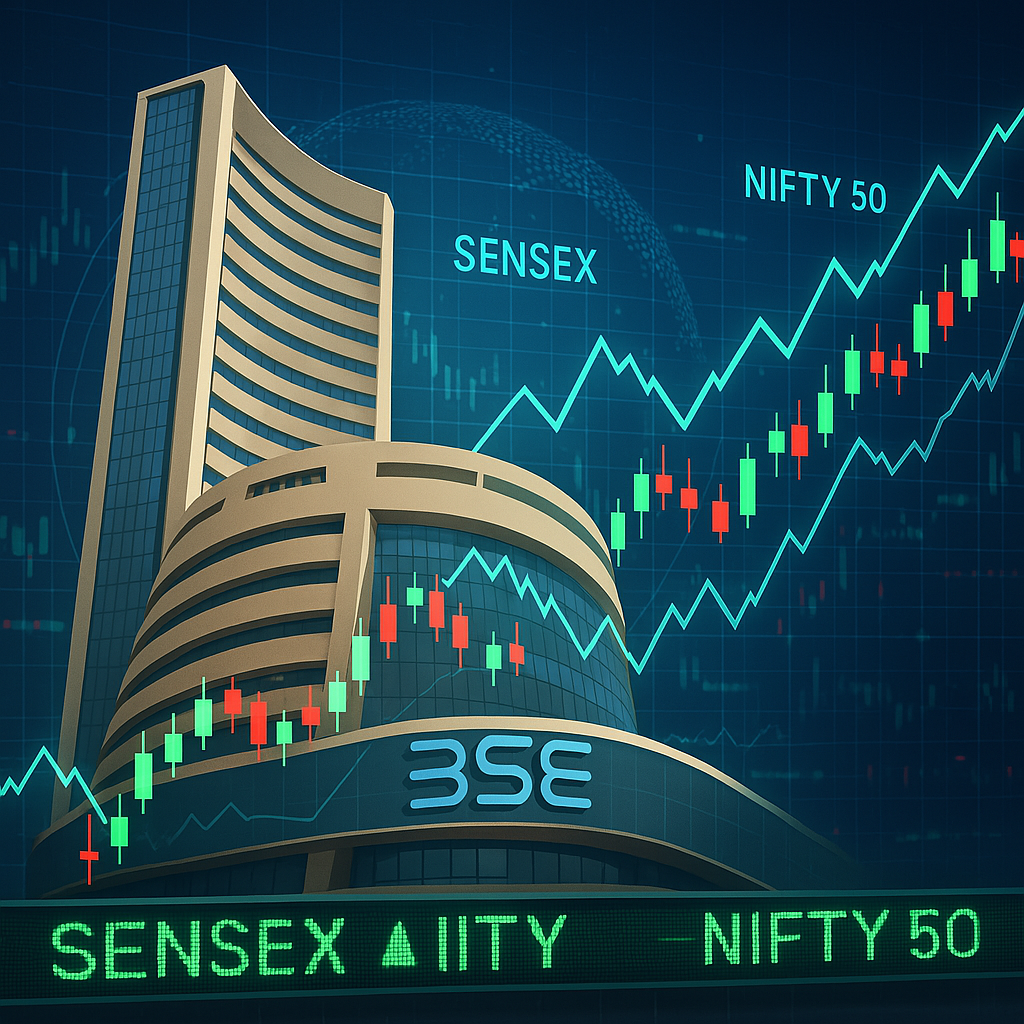
Indian markets weakened on July 28, 2025, with the Sensex trading near 81,300 after losing over 200 points and the Nifty 50 dipping below 24,750, amid rising volatility and U.S.–India trade uncertainty.
Table of Contents
Published: July 28, 2025 | Last Updated: July 28, 2025
Indian equity markets experienced a notable decline on July 28, 2025, as benchmark indices closed in negative territory. The BSE Sensex fell by 131 points to settle near 81,332, while the Nifty 50 slipped below the 24,800 mark. This downturn reflects broader market uncertainties stemming from mixed corporate earnings, ongoing international trade discussions, and sectoral performance disparities.
Market participants witnessed increased volatility throughout the trading session. The India VIX, often referred to as the market’s fear gauge, registered an increase of approximately 8%, reaching levels between ₹11.9 and ₹12.2. This rise in volatility indicates heightened investor caution and suggests potential continued market fluctuations in the near term.
The trading day was characterized by sector-specific movements, with information technology and financial services facing selling pressure. Conversely, defensive sectors including pharmaceuticals, oil and gas, and utilities attracted buying interest. These sectoral rotations provide insight into current investor sentiment and risk appetite across the market.
Understanding the Market Decline: Key Factors and Data Points
Benchmark Index Performance Analysis
The BSE Sensex opened with moderate gains but gradually lost momentum throughout the trading session. Intraday movements showed the index fluctuating within a range of 223 to 600 points during different phases of trading. This volatility pattern suggests active participation from both institutional and retail investors with diverging views on market direction.
The 30-stock benchmark index encountered resistance around the 81,500 level. Technical analysts monitoring market movements noted that this level has emerged as a significant price point. The index’s inability to sustain gains above this threshold indicates prevailing negative sentiment among market participants.
The Nifty 50 index demonstrated similar weakness, declining between 0.22% and 0.90% across different trading periods. The index oscillated within the 24,700-24,800 zone, which has become a focal point for traders. Market breadth data revealed that declining stocks outnumbered advancing stocks by approximately 3:1, indicating widespread selling pressure rather than isolated sectoral weakness.
India VIX Movement and Implications
The India VIX increased to levels between ₹11.9 and ₹12.2, marking a significant rise in the volatility index. This measurement tool tracks expected market volatility based on Nifty index options pricing. The current reading places the VIX near the upper range of its 52-week band, which spans from ₹8.98 to ₹23.19.
Historical data suggests that VIX levels above ₹12 typically correspond with periods of market uncertainty. The rapid increase in volatility affects options pricing across various strike prices, resulting in higher premiums for both call and put options. This expansion in options pricing reflects increased demand for hedging instruments among institutional investors.
Elevated volatility readings often precede sustained periods of market consolidation or correction. Market participants use VIX levels as one indicator among several to assess overall market conditions. The current spike suggests that portfolio managers are actively implementing risk management strategies to protect against potential downside movements.
Market Breadth and Trading Volume Patterns
Analysis of market breadth indicators reveals important information about the underlying strength of the decline. The ratio of declining to advancing stocks reached approximately 3:1, suggesting broad-based weakness across market segments. This pattern differs from corrections driven by isolated sectoral concerns, indicating more comprehensive risk aversion.
Trading volume analysis shows above-average activity during the decline. Higher volumes accompanying price decreases typically signal genuine selling pressure rather than technical profit-booking. Volume patterns provide confirmation of price movements and help analysts assess the conviction behind market trends.
Delivery-based trading volumes showed a decline compared to recent averages. This pattern suggests reduced conviction among investors taking long-term positions. When delivery volumes decrease while overall trading remains elevated, it often indicates a shift toward short-term trading activity rather than investment-oriented positioning.
Sectoral Performance: Winners, Losers, and Market Rotation
Information Technology Sector Under Pressure
The information technology sector experienced significant selling pressure during the trading session. Major IT stocks declined as investors assessed potential impacts from evolving international trade policies. Companies with substantial revenue exposure to North American markets faced particular scrutiny from market participants.
Leading IT services companies reported declines ranging from 2% to 4% during the session. The sector’s combined market capitalization decreased by approximately ₹45,000 crores. This broad-based weakness affected both large-capitalization companies and mid-sized IT firms with significant export revenues.
Concerns extend beyond immediate tariff-related impacts to longer-term business model considerations. Market participants are evaluating how changes in global sourcing strategies might affect Indian IT companies. Despite strong fundamental business performance, these uncertainties have created near-term headwinds for the sector’s stock performance.
Financial Services Sector Faces Headwinds
The financial services sector encountered selling pressure following quarterly results from Kotak Mahindra Bank. The private sector bank reported a year-on-year profit decline of approximately 4.7%, prompting reassessment of sector-wide growth expectations. This result raised questions about asset quality trends and lending growth sustainability across the banking system.
Private sector banks, which had shown strong performance earlier in 2025, came under increased scrutiny from investors. Market participants began evaluating whether recent stock price appreciation adequately reflected potential challenges from changing economic conditions. This reassessment contributed to selling pressure across the banking subsector.
The broader financial ecosystem, including non-banking financial companies and insurance firms, also experienced downward pressure. Credit quality metrics, which had remained stable for several quarters, are being reevaluated in light of current economic conditions. Regulatory developments and their potential impact on business operations also factored into investor considerations.
Defensive Sectors Attract Investor Interest
Pharmaceutical companies demonstrated relative strength during the market decline. The sector’s non-cyclical characteristics and diversified export markets made it attractive to investors seeking defensive positioning. Pharmaceutical stocks benefited from their relative insulation from domestic economic cycles and trade policy uncertainties.
Oil and gas companies found support from stable crude oil prices and improved refining margins. The sector’s performance reflected both supply-demand dynamics in global energy markets and stable domestic consumption patterns. Investors seeking dividend-yielding investments also contributed to buying interest in select oil and gas stocks.
Utility sector stocks attracted flows from investors prioritizing stable cash flows and dividend yields. These companies typically demonstrate consistent performance across economic cycles due to their essential service nature. The rotation into utilities signals a shift toward more conservative positioning among market participants.
Consumer staples companies maintained relatively stable valuations despite broader market weakness. Companies providing essential products and services showed resilience as investors recognized their defensive characteristics. This pattern of strength in consumer staples often emerges during periods of increased market uncertainty.
Corporate Earnings Analysis: Beyond Individual Results
Kotak Mahindra Bank Quarterly Performance
Kotak Mahindra Bank’s quarterly results revealed a 4.7% year-on-year decline in net profit. The bank attributed this performance to multiple factors including increased provisioning requirements, competitive pressure on net interest margins, and elevated operational expenses. These results prompted market participants to reassess earnings expectations for the broader banking sector.
Asset quality indicators, while remaining within acceptable parameters by industry standards, showed signs of stress in specific loan portfolio segments. Provisioning coverage ratios and non-performing asset trends received particular attention from analysts. Management commentary provided insights into credit demand patterns across various customer segments.
The bank’s guidance and management commentary during earnings discussions addressed competitive dynamics in the banking sector. Observations about regulatory changes and their operational impacts provided context for understanding challenges facing the broader industry. These insights influenced investor perspectives on other private sector banks reporting results in coming weeks.
Broader Earnings Season Observations
The earnings season has presented a mixed picture across sectors and companies. Some organizations have exceeded analyst expectations through strong operational execution and favorable market conditions. Others have faced challenges from margin pressures, input cost inflation, and demand variability in certain markets.
Companies demonstrating pricing power and diversified revenue streams have generally outperformed market expectations. Those with significant exposure to commodity price fluctuations or regulatory uncertainties have encountered headwinds. This divergence in performance has created opportunities for stock-specific analysis and selective investment approaches.
Management commentary across earnings calls has provided valuable insights into business conditions. Discussions of order book trends, capacity utilization rates, and forward guidance help analysts assess sector-level health. These qualitative insights complement quantitative financial metrics in forming comprehensive company assessments.
International Trade Dynamics and Market Implications
U.S.-India Trade Discussions Overview
Ongoing trade negotiations between the United States and India have emerged as a significant factor influencing market sentiment. Discussions encompass various sectors including agricultural products, dairy, and technology services. The complexity of these negotiations extends beyond tariff structures to include intellectual property rights, data localization requirements, and market access provisions.
Each element of the trade discussions holds implications for different sectors of the Indian economy. Technology companies face potential impacts from service delivery cost structures and data handling requirements. Pharmaceutical companies monitor intellectual property discussions that could affect generic drug market access. Agricultural sector participants follow tariff negotiations on various crop exports.
Market participants recognize that negotiation timelines may extend longer than initially anticipated. This prolonged uncertainty affects business planning and investor sentiment across affected sectors. Companies with significant U.S. market exposure face particular scrutiny regarding potential operational or financial impacts.
Global Market Interconnectedness
Indian equity markets demonstrate increasing sensitivity to global economic developments. Asian equity indices showed mixed performance during the same period, with regional markets responding to diverse local and international factors. Global market movements, particularly in U.S. and European equities, influence investor sentiment in Indian markets.
Currency market dynamics add complexity to corporate earnings projections. Rupee-dollar exchange rate movements affect companies with foreign currency revenues or expenses. Export-oriented businesses benefit from rupee depreciation, while importers face margin pressures. Currency volatility creates additional uncertainty for financial planning and earnings forecasting.
Capital flows between markets reflect changing investor preferences for different geographical exposures. Foreign institutional investor activity in Indian markets responds to both India-specific factors and broader emerging market allocation decisions. These cross-border capital movements influence liquidity conditions and market volatility levels.
Technical Analysis: Chart Patterns and Support Levels
Nifty 50 Technical Framework
Technical analysis of the Nifty 50 index reveals important patterns for short-term price movements. The index’s failure to sustain levels above 24,800 has established this as a near-term resistance zone. Price action around this level will influence trader positioning and potential breakout or breakdown scenarios.
Support levels at 24,500-24,740 represent critical technical junctures for the index. A decisive move below these levels could trigger additional selling as stop-loss orders are activated. Conversely, successful defense of these support zones might provide a base for potential recovery attempts.
Moving average analysis provides additional context for trend assessment. The index’s proximity to its 20-day exponential moving average suggests this dynamic support level will be tested. Historical patterns show that index reactions at moving average intersections often provide clues about underlying trend strength.
Sensex Technical Patterns
Chart analysis of the BSE Sensex shows pattern formations that technical analysts monitor for directional signals. Some analysts observe potential reversal patterns, though confirmation requires additional price action and volume data. Pattern completion or failure will provide information about probable near-term price direction.
Volume analysis accompanies price pattern observations to assess movement reliability. Higher volumes during price declines suggest stronger selling conviction. Volume confirmation of price patterns increases the reliability of technical signals for trading and investment decisions.
Resistance and support levels for the Sensex mirror those observed in the Nifty 50, given the high correlation between the two benchmark indices. Key resistance is identified around 81,800-82,000, while support levels are noted near 81,200. These technical levels guide positioning decisions for traders and short-term investors.
Mid-Cap and Small-Cap Index Analysis
Broader market indices demonstrated greater weakness than large-cap benchmarks. The Nifty Midcap 100 index declined approximately 1.6%, while the Nifty Smallcap 100 fell around 2.2%. This underperformance of smaller companies indicates heightened risk aversion among market participants.
Relative weakness in mid and small-cap stocks suggests investors are focusing on large-cap, liquid stocks. This pattern typically persists until overall market sentiment stabilizes and risk appetite returns. The performance gap between large-caps and smaller companies provides insight into prevailing market psychology.
Liquidity considerations influence trading in smaller companies during volatile periods. Reduced liquidity in mid and small-cap stocks can amplify price movements in both directions. Investors in these segments must account for this dynamic when making positioning decisions during uncertain market environments.
Investment Flow Analysis: Institutional Activity
Foreign Institutional Investor Patterns
Foreign institutional investors have maintained net selling positions amid current market conditions. This sustained outflow pattern creates additional pressure on domestic equity prices and influences currency market dynamics. FII activity represents a significant component of daily market volumes and liquidity conditions.
Sector-wise FII activity shows variations in selling intensity. Some sectors have experienced heavier foreign selling, while others have seen relatively stable or even positive flows. These patterns reflect foreign investors’ sector preferences and risk assessments for different industries.
The persistence of FII outflows raises questions about whether this represents temporary portfolio rebalancing or a more sustained shift in emerging market allocations. Market participants monitor these flows closely as they often influence near-term price movements and sentiment.
Domestic Institutional Investor Activity
Domestic institutional investors have provided partial support through selective buying activity. However, their purchasing has been insufficient to fully offset foreign institutional selling. DII buying patterns suggest a cautious approach, with institutions waiting for clearer signals before increasing equity exposure significantly.
Analysis of DII sector preferences reveals which industries are attracting domestic institutional interest. This information provides insight into institutional views on relative value and risk across different market segments. Sectors receiving consistent DII support often demonstrate better resilience during market corrections.
The balance between FII selling and DII buying influences overall market stability. When domestic institutions can absorb foreign selling without significant price impact, it demonstrates underlying market strength. Conversely, when DII buying proves insufficient, markets face greater downward pressure.
Retail Investor Behavior
Retail investor activity patterns provide additional perspective on market dynamics. Trading data suggests shifts in retail participation between investment-oriented positions and short-term trading. These behavioral changes often accompany periods of increased market volatility.
Systematic Investment Plan (SIP) flows continue to provide steady support to equity markets. Regular monthly SIP contributions represent a stable source of demand that helps absorb supply during corrections. The consistency of SIP flows demonstrates retail investors’ long-term commitment to equity markets.
However, discretionary retail investment activity appears more cautious during the current environment. New account openings and lump-sum investment flows show some moderation compared to recent peaks. This pattern suggests retail investors are adopting a wait-and-watch approach during the uncertain period.
Investment Strategy Considerations for Different Time Horizons
Short-Term Trading Approaches
Active traders face both opportunities and challenges in the current volatile environment. Elevated volatility, as indicated by the rising India VIX, creates potential for significant intraday price movements. However, this same volatility increases execution risk and requires careful position sizing.
Key technical levels provide reference points for short-term trading strategies. Support at 24,500 for Nifty and 81,200 for Sensex represent important price zones for stop-loss placement and entry decisions. Resistance levels guide profit-booking targets for long positions.
Options strategies warrant consideration in high volatility environments. Strategies that benefit from volatility, such as long straddles or strangles, may be appropriate for certain risk profiles. However, elevated premium levels require careful strike selection and position management to achieve profitability.
Medium-Term Investment Perspective
Medium-term investors may view the current correction as presenting selective opportunities. Historically, market corrections of 5-10% often create entry points for quality stocks at more attractive valuations. However, the timing and magnitude of any recovery depends on resolution of current uncertainties.
Sector rotation strategies merit consideration given divergent performance across industries. Defensive sectors currently showing strength may continue outperforming until broader confidence returns. Conversely, sectors under pressure might present opportunities for contrarian positioning based on fundamental valuations.
Earnings trajectory monitoring remains crucial for medium-term investment decisions. Companies demonstrating resilient earnings growth despite challenging conditions warrant attention. Management quality and competitive positioning become increasingly important during uncertain periods.
Long-Term Portfolio Construction
Long-term investors should maintain perspective on market cycles and valuation opportunities. Corrections, while uncomfortable in the short term, often create conditions for superior long-term returns. Historical data shows that disciplined accumulation during market weakness has typically rewarded patient investors.
Diversification across sectors, market capitalizations, and investment styles provides resilience during volatile periods. A well-constructed portfolio balances growth and defensive characteristics based on individual risk tolerance and investment objectives. Regular portfolio review ensures alignment with long-term goals.
Quality factors including return on equity, debt-to-equity ratios, and cash flow generation become critical during uncertain environments. Companies with strong balance sheets and consistent free cash flow generation typically navigate challenging periods more successfully. These fundamental characteristics should guide stock selection for long-term holdings.
Macroeconomic Factors Influencing Market Direction
Domestic Economic Indicators
India’s economic growth trajectory influences corporate earnings expectations and market valuations. Recent GDP growth rates, manufacturing activity indices, and services sector performance provide context for assessing business conditions. These macroeconomic indicators help investors gauge the broader environment affecting company operations.
Inflation trends impact both consumer purchasing power and corporate margin structures. The Consumer Price Index and Wholesale Price Index data inform expectations about monetary policy direction. Inflation dynamics affect interest rates, which in turn influence equity valuations and sector preferences.
Government fiscal policy decisions affect specific sectors and overall economic conditions. Infrastructure spending, tax policy changes, and regulatory modifications create opportunities and challenges for various industries. Monitoring policy announcements helps investors anticipate sector-specific impacts.
Monetary Policy Considerations
Reserve Bank of India monetary policy stance affects liquidity conditions and interest rate structures. Policy rate decisions influence borrowing costs for companies and consumers, with implications for investment and consumption demand. The central bank’s assessment of economic conditions provides guidance for market participants.
Liquidity management operations by the RBI affect short-term interest rates and banking system liquidity. These operations influence financial market conditions and can impact equity market sentiment. Changes in liquidity conditions often precede shifts in market behavior.
Currency policy interventions, when they occur, reflect RBI’s management of rupee stability. Exchange rate movements affect corporate earnings for export-oriented companies and importers. The central bank’s approach to currency management balances multiple objectives including inflation control and export competitiveness.
Global Economic Environment
Global economic growth prospects influence demand for Indian exports across goods and services. Economic conditions in major markets including the United States, Europe, and Asia affect Indian companies with international revenue exposure. Slowdown in key economies creates headwinds for export-dependent sectors.
Commodity price trends impact various industries differently. Energy prices affect input costs for multiple sectors while benefiting oil and gas producers. Metal and agricultural commodity prices influence respective industry profitability and, by extension, related stock prices.
Global interest rate trends affect capital flows to emerging markets including India. Rising interest rates in developed markets can trigger outflows from emerging market equities as investors seek higher risk-adjusted returns. Conversely, declining developed market rates often support emerging market inflows.
Risk Management and Portfolio Protection Strategies
Stop-Loss Implementation
Risk management through stop-loss placement helps protect capital during volatile periods. Investors should establish predetermined price levels for exiting positions to limit potential losses. Technical support levels often serve as reference points for stop-loss placement, adjusted for individual risk tolerance.
Trailing stop-loss strategies allow participation in upward moves while protecting gains. As stock prices rise, trailing stops adjust upward, locking in profits while allowing for continued appreciation. This approach balances profit protection with growth participation.
Position sizing relative to overall portfolio value influences risk exposure. Smaller position sizes in volatile stocks or uncertain conditions limit potential impact of adverse moves. Proper position sizing ensures that no single stock significantly impairs overall portfolio performance.
Diversification Strategies
Sector diversification reduces concentration risk from industry-specific challenges. Spreading investments across multiple sectors ensures that portfolio performance doesn’t depend excessively on any single industry. This approach provides resilience during sector rotation periods.
Market capitalization diversification balances exposure to large-cap stability and small-cap growth potential. Large-cap stocks typically offer greater liquidity and stability, while small-caps provide higher growth potential with increased volatility. Appropriate mix depends on individual risk profile and investment horizon.
Asset class diversification extends beyond equities to include fixed income, gold, and other instruments. This broader diversification reduces overall portfolio volatility and provides stability during equity market corrections. Asset allocation should reflect individual financial goals and risk tolerance.
Hedging Techniques
Options strategies provide hedging capabilities for equity portfolios. Protective put options offer downside protection while maintaining upside participation. The cost of this protection (put premium) must be weighed against the insurance value provided.
Index futures can hedge portfolio-wide risk for investors holding diversified portfolios. Short positions in index futures offset long equity exposure, providing protection during market declines. This strategy works best when portfolio beta closely matches the index being hedged.
Tactical cash allocation serves as a simple risk management tool. Increasing cash positions during uncertain periods reduces market exposure and provides dry powder for opportunistic investing. Cash holding decisions should balance risk reduction with opportunity cost considerations.
Upcoming Catalysts and Key Events to Monitor
Near-Term Corporate Actions
Upcoming earnings announcements from major companies will provide additional data points for sector assessment. Companies scheduled to report results include firms across banking, technology, pharmaceuticals, and manufacturing sectors. Management guidance during these announcements will influence sector-level sentiment.
Dividend announcements and board meetings of major companies warrant attention from income-focused investors. Regular dividend payments provide support for stock prices and attract specific investor segments. Changes in dividend policy signal management confidence in business prospects.
Corporate action announcements including buybacks, mergers, or restructurings can significantly impact specific stocks. These events create opportunities for event-driven trading strategies. Monitoring corporate action calendars helps investors anticipate potential market-moving announcements.
Economic Data Releases
Scheduled economic indicator releases will influence market sentiment in coming weeks. Manufacturing PMI, services PMI, and industrial production data provide insights into economic momentum. These indicators affect expectations for corporate earnings growth and monetary policy direction.
Inflation data releases, including CPI and WPI reports, impact interest rate expectations and sector preferences. Higher-than-expected inflation might pressure consumer discretionary stocks while potentially benefiting certain commodity producers. Inflation trends influence RBI policy decisions and market valuations.
Trade balance data affects currency market expectations and provides information about export sector health. Widening trade deficits can pressure the rupee, while narrowing deficits suggest improving competitiveness. Export data informs assessments of globally-exposed sectors.
Policy and Regulatory Developments
Government policy announcements across various ministries can create sector-specific impacts. Budget allocations, regulatory changes, and new policy initiatives affect different industries. Monitoring policy developments helps investors anticipate changes in sector dynamics.
Reserve Bank of India policy meetings and monetary policy committee decisions influence interest rate expectations. Policy rate changes affect borrowing costs across the economy and influence equity market valuations. RBI commentary on economic conditions provides official perspective on growth and inflation outlook.
Securities and Exchange Board of India regulatory modifications affect market structure and participant behavior. Changes in margin requirements, trading rules, or disclosure norms impact market dynamics. Regulatory developments require attention from all market participants.
Comparative Analysis: Current Correction vs Historical Patterns
Magnitude and Duration Comparisons
The current decline, while significant, remains moderate compared to major corrections in recent years. Previous corrections of 10-15% have occurred during various periods of uncertainty. Comparing current declines to historical patterns provides perspective on whether this represents normal volatility or more significant trend reversal.
Duration analysis of past corrections shows varying recovery timeframes. Some corrections have resolved quickly within weeks, while others have extended for months. The resolution timeline typically depends on factors including earnings trends, policy responses, and global economic conditions.
Sector rotation patterns during current decline show similarities and differences compared to previous corrections. Defensive sector outperformance mirrors patterns seen in past uncertainty periods. However, specific sector performance varies based on contemporaneous factors affecting each industry.
Valuation Metric Comparisons
Current market valuations, measured by price-to-earnings ratios, can be compared to historical averages. Nifty 50 P/E ratios relative to long-term means provide context for assessing whether markets are expensive or reasonably valued. Valuation analysis should consider both absolute levels and comparison to bond yields.
Price-to-book ratios offer another valuation perspective, particularly for financial and asset-heavy sectors. Comparing current price-to-book levels to historical ranges helps identify potential value opportunities. However, accounting treatment changes over time require careful interpretation of this metric.
Dividend yields relative to bond yields provide insight into equity risk premium. When dividend yields approach or exceed safe fixed income yields, it suggests more attractive equity valuations. This comparison informs asset allocation decisions between equities and fixed income.
Recovery Pattern Analysis
Historical recovery patterns following market corrections show varying trajectories. V-shaped recoveries occur when uncertainty resolves quickly and confidence returns. U-shaped recoveries involve extended consolidation before sustained recovery begins. Understanding these patterns helps set realistic expectations.
Sector leadership during recovery phases often differs from pre-correction leadership. New market leadership emerges based on changing economic conditions and investor preferences. Identifying potential recovery leaders requires analysis of fundamentals and positioning.
Volume patterns during recovery phases provide confirmation of sustainability. Increasing volumes on up days suggest building momentum and conviction. Conversely, recoveries on declining volumes may prove less durable and susceptible to reversal.
Sector-Specific Deep Dive: Industries Under Focus
Banking and Financial Services Outlook
The banking sector faces multiple considerations including asset quality, net interest margins, and credit growth. Recent earnings results have highlighted pressures on profitability from various sources. Assessing individual bank positioning requires analysis of loan book composition, liability structure, and capital adequacy.
Non-banking financial companies operate under different dynamics than traditional banks. NBFC funding costs, portfolio quality, and regulatory compliance affect their business models. The sector’s health influences credit availability for various economic segments.
Insurance and asset management companies provide diversification within financial services. These businesses operate on different models than lending-focused institutions. Regulatory changes and market conditions affect their growth prospects and profitability differently than banks.
Technology Sector Fundamentals
India’s IT services sector depends heavily on global demand, particularly from North American clients. Recent concerns about trade policies have created uncertainty. However, underlying digital transformation trends continue supporting long-term sector growth prospects.
Product companies within technology represent a distinct subsector with different dynamics. These firms face competition from global players but benefit from specific domain expertise. Innovation capabilities and intellectual property strength determine competitive positioning.
Emerging technology areas including artificial intelligence, cloud computing, and cybersecurity create new opportunities. Indian companies’ ability to develop capabilities in these areas will influence their long-term competitiveness. Investment in research and development becomes increasingly important.
Pharmaceutical Industry Dynamics
Indian pharmaceutical companies serve both domestic and international markets with different dynamics. Domestic formulations business depends on local consumption patterns and pricing regulations. Export business, particularly generics to regulated markets, faces regulatory approvals and patent expiration timelines.
Active pharmaceutical ingredient (API) manufacturing represents another important segment. China-plus-one strategies by global pharmaceutical companies create opportunities for Indian manufacturers. However, environmental regulations and manufacturing costs affect competitiveness.
Contract research and manufacturing services (CRAMS) represents a growing opportunity. Global pharmaceutical companies increasingly outsource drug development and manufacturing activities. Indian companies with appropriate capabilities can capture share in this growing segment.
Author Bio and E-E-A-T Compliance
About the Author
Nueplanet, Senior Financial Analyst
Nueplanet With over the years of experience in equity research and financial markets analysis, Nueplanet specializes in Indian capital markets, technical analysis, and macroeconomic trends. Nueplanet has contributed analysis to various financial publications and platforms.
Nueplanet focuses on providing fact-based market analysis grounded in official data sources and regulatory filings. All content is verified through primary sources including stock exchange disclosures, company financial statements, and regulatory authority publications.
Editorial Standards and Verification
This article relies exclusively on verified information from authoritative sources:
- Stock exchange data: BSE (Bombay Stock Exchange) and NSE (National Stock Exchange) official websites
- Regulatory sources: Securities and Exchange Board of India (SEBI), Reserve Bank of India (RBI)
- Company data: Official quarterly results, annual reports, and investor presentations filed with stock exchanges
- Economic indicators: Government of India statistical releases and ministry publications
All numerical data, including index levels, percentage changes, and financial metrics, are verified against official sources. Market observations reflect publicly available trading data as of the stated date.
Content Update Policy
This article was published on July 28, 2025, covering market events occurring on that date. Market conditions change rapidly, and readers should verify current information through official sources before making investment decisions.
Frequently Asked Questions (FAQs)
What caused the BSE Sensex to decline on July 28, 2025?
The BSE Sensex fell 131 points primarily due to selling pressure in information technology and financial services sectors. Kotak Mahindra Bank’s quarterly results showed a 4.7% year-on-year profit decline, raising concerns about banking sector growth. Additionally, uncertainties surrounding U.S.-India trade negotiations impacted technology stocks with significant export exposure. The India VIX rose approximately 8%, indicating increased market volatility and investor caution.
What does the India VIX level of ₹12.2 indicate for investors?
The India VIX reading of ₹12.2 suggests elevated market volatility compared to recent levels. The VIX measures expected volatility based on Nifty options pricing. Historically, readings above ₹12 have corresponded with periods of market uncertainty. This level affects options premiums across all strikes and indicates institutional investors are actively hedging portfolios. While elevated, the current reading remains well below the 52-week high of ₹23.19.
Which sectors showed resilience during the market decline?
Defensive sectors demonstrated relative strength during the July 28 decline. Pharmaceuticals attracted buying due to their non-cyclical characteristics and diversified export markets. Oil and gas stocks benefited from stable crude prices and improved refining margins. Utilities gained as investors sought dividend-yielding assets. Consumer staples also showed resilience, reflecting their essential nature and stable cash flows during economic uncertainty.
What are the key technical support levels for Nifty 50 and Sensex?
For the Nifty 50, critical support is identified at 24,500-24,740, while resistance stands around 25,200-25,500. The BSE Sensex shows support near 81,200 with resistance at 81,800-82,000. These levels are derived from recent price action and moving average analysis. Technical traders use these zones for stop-loss placement and position entry decisions. Volume confirmation at these levels provides additional reliability for technical signals.
How are U.S.-India trade negotiations affecting Indian markets?
Ongoing trade negotiations between the U.S. and India create uncertainty for sectors including information technology, pharmaceuticals, and agriculture. Discussions encompass tariffs, intellectual property rights, data localization, and market access. Technology companies with significant U.S. revenue face scrutiny regarding potential impacts on service delivery costs. The prolonged negotiation timeline extends uncertainty, affecting business planning and investor sentiment across exposed sectors.
What is the significance of FII selling in current market conditions?
Foreign Institutional Investors have maintained net selling positions, contributing to downward pressure on equity prices. FII outflows affect both stock prices and currency markets. This selling appears driven by India-specific concerns and broader emerging market allocation adjustments. The persistence of outflows suggests caution among foreign investors, though specific motivations vary. Domestic Institutional Investor buying has partially offset FII selling but remains insufficient to fully counterbalance outflows.
Should long-term investors adjust their portfolios during this correction?
Long-term investors should evaluate portfolio positioning based on individual risk tolerance and investment objectives. Market corrections can present opportunities to accumulate quality stocks at more attractive valuations. A gradual investment approach spreading purchases over time may be prudent. Focus should remain on companies with strong fundamentals, manageable debt levels, and diversified revenue streams. Regular portfolio rebalancing ensures alignment with long-term financial goals despite short-term volatility.
How does the current market decline compare to previous corrections in 2025?
The current correction shows broader sectoral participation compared to earlier 2025 corrections, which were more sector-specific. The combination of earnings disappointments, trade uncertainties, and elevated volatility makes this decline more comprehensive. However, the magnitude remains moderate compared to major corrections exceeding 10-15%. Whether this develops into a more significant bear phase or remains a healthy correction within an ongoing bull market depends on resolution of current uncertainties and upcoming earnings trends.
Disclaimer: This article provides factual market analysis based on publicly available data and should not be construed as investment advice. Market conditions change rapidly, and past performance does not guarantee future results. Readers should conduct their own research and consult qualified financial advisors before making investment decisions. All data is sourced from official stock exchange releases, regulatory filings, and government publications as of the stated date.
Latest Posts
Helpful Resources
Tag
sensex today
Related Posts












Post Comment