







School Holidays in August 2025: Full List, Regional Updates and Key Highlights
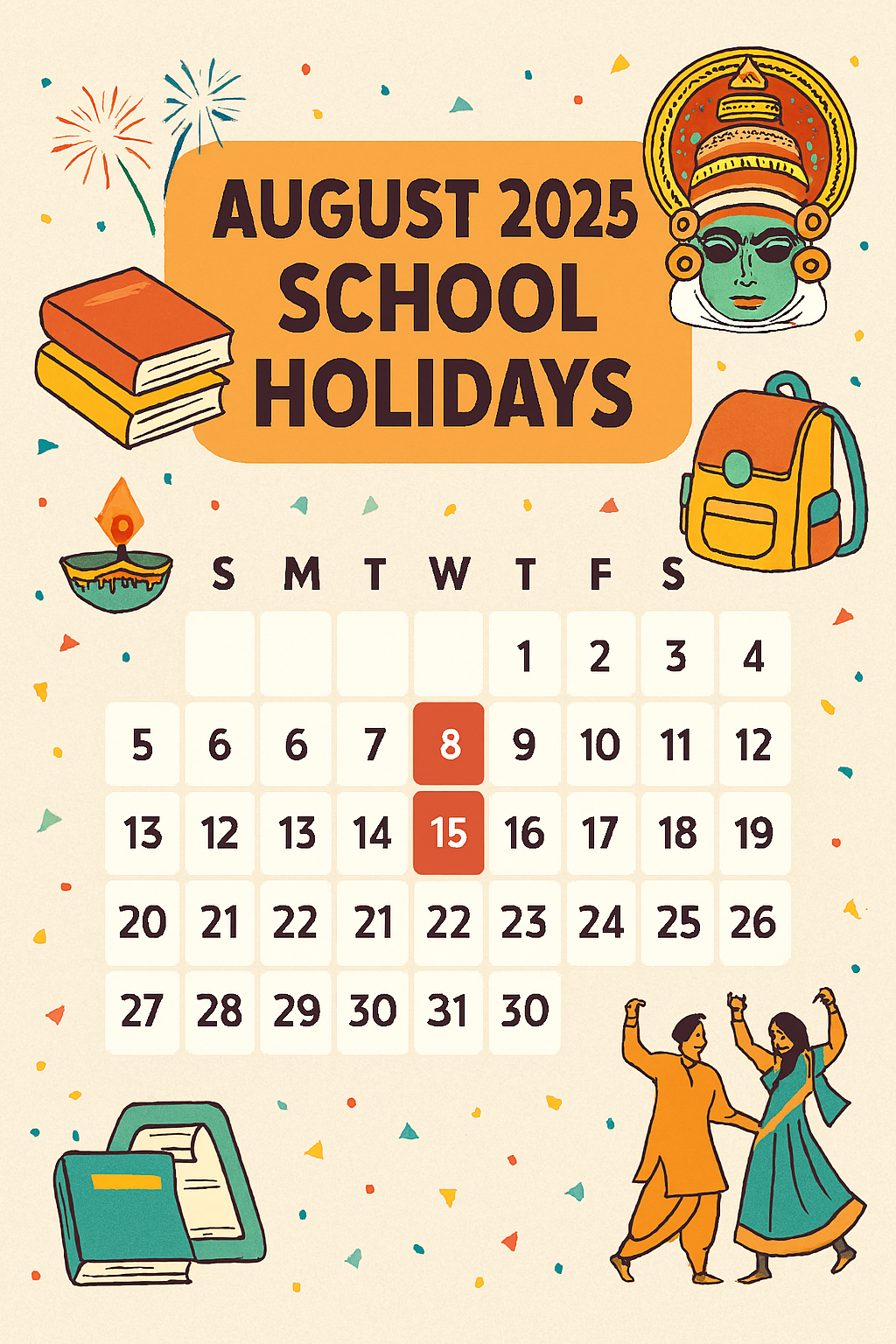
School holidays in August 2025 bring a mix of national, regional, and festive breaks across India. Here’s the complete list and key updates for students and parents.
Table of Contents
Published: August 19, 2025
Last Updated: August 19, 2025
Reading Time: 16 minutes
August 2025 presents a significant academic break period for students across India, with multiple holidays scheduled due to national celebrations and regional festivals. The month includes Independence Day, Raksha Bandhan, Krishna Janmashtami, and various state-specific observances that create extended weekend opportunities for families. Educational institutions nationwide will observe these holidays according to their respective state calendars and local traditions.
The academic calendar for August 2025 reflects India’s diverse cultural landscape, with holidays varying by region and state educational policies. Schools typically plan their schedules months in advance, coordinating with state education departments to balance academic requirements with cultural observances. Understanding this calendar helps families plan travel, cultural activities, and educational enrichment during these breaks.
This guide examines the official holiday schedule for August 2025, including national observances, regional variations, and practical planning considerations for parents and students. Information presented draws from academic calendars, government holiday notifications, and educational policy documents to provide accurate scheduling information.
Understanding August 2025 Academic Calendar Structure
The academic calendar for August 2025 follows patterns established by state education departments and the Ministry of Education. Schools operate under guidelines that specify minimum instructional days while accommodating cultural and national observances. Each state maintains authority to declare additional holidays based on regional festivals and local requirements.
Academic calendars typically account for approximately 200-220 instructional days per year, distributed across the academic session. August represents a mid-year period when schools have completed first-term assessments and are preparing for second-term curriculum units. The holiday distribution in August provides breaks that educational researchers identify as beneficial for student cognitive development and family engagement.
Educational planning documents indicate that holiday periods serve multiple purposes beyond rest. These breaks allow for cultural education through festival participation, family bonding experiences, and opportunities for supplementary learning activities. Schools often coordinate their calendars with neighboring institutions to facilitate inter-school activities and regional educational programs.
The timing of August holidays reflects both fixed annual dates like Independence Day and variable dates determined by lunar calendars for Hindu festivals. This combination creates scheduling patterns that change annually, requiring families to consult current calendars rather than relying on previous years’ patterns. Educational institutions typically publish their annual calendars by April or May preceding the academic session.
National Holidays: Core August 2025 Observances
Independence Day Observance
India observes Independence Day annually on August 15, commemorating independence achieved in 1947. Schools nationwide remain closed on this date, designated as a gazetted holiday under the Negotiable Instruments Act. Educational institutions typically organize flag-hoisting ceremonies and cultural programs on August 14 or schedule these activities for the following week if August 15 falls on a weekend.
In 2025, August 15 falls on Friday, creating a natural three-day weekend when combined with the regular Saturday-Sunday break. This timing allows extended participation in community celebrations and provides families with planning flexibility. Many schools coordinate with local administrations to facilitate student participation in district-level Independence Day programs.
Educational activities surrounding Independence Day include curriculum units on India’s freedom movement, essay competitions on patriotic themes, and cultural presentations featuring national songs and dances. These programs align with National Council of Educational Research and Training guidelines for value education and citizenship development. Schools often distribute study materials about constitutional values and democratic principles during this period.
The holiday’s educational significance extends beyond ceremonial observances. Teachers use this period to discuss civic responsibility, national development goals, and students’ roles in nation-building. Many institutions organize community service activities or social awareness programs that connect patriotic sentiment with practical action.
Raksha Bandhan 2025
Raksha Bandhan is scheduled for August 17, 2025, falling on Sunday according to the Hindu lunar calendar. This festival celebrates sibling relationships, with traditional observances involving sisters tying protective threads (rakhis) on brothers’ wrists. While not universally declared as a school holiday across all states, many educational institutions in northern and western India observe this day.
The festival’s timing on Sunday in 2025 means it naturally falls during the weekend, minimizing academic disruption. However, schools in states like Rajasthan, Uttar Pradesh, Maharashtra, and Gujarat typically include Raksha Bandhan in their official holiday calendars regardless of the day it falls. This reflects regional cultural practices and community expectations.
Educational activities related to Raksha Bandhan often occur in the days preceding the festival. Schools organize craft sessions where students create handmade rakhis, cultural programs explaining the festival’s historical and mythological significance, and discussions about sibling relationships and family values. These activities integrate festival celebrations with curriculum objectives for art, social studies, and value education.
The festival’s cultural significance varies by region, with some areas observing additional local customs. Schools accommodate these variations by allowing flexible participation and incorporating diverse cultural perspectives into their programming. This approach supports inclusive education while respecting regional traditions.
Krishna Janmashtami Celebration
Krishna Janmashtami occurs on August 16, 2025, marking the birth of Lord Krishna according to Hindu tradition. This festival holds particular significance in northern India, with major celebrations in Uttar Pradesh, Rajasthan, Gujarat, and Maharashtra. Schools in these states typically declare holidays for Janmashtami, though the duration varies by local practice.
The 2025 date falls on Saturday, positioning Janmashtami during the weekend period. However, many schools observe the holiday on the preceding Friday or following Monday to accommodate midnight celebration traditions and allow family participation. Educational institutions in areas with significant Krishna temple presence often coordinate their schedules with local religious observances.
Cultural programs for Janmashtami in schools include dramatic presentations of Krishna’s life stories, traditional dance performances, devotional music sessions, and art activities featuring Krishna-themed designs. These programs serve educational purposes by teaching students about religious traditions, classical arts, and philosophical concepts from Hindu texts. Teachers often incorporate age-appropriate discussions of values and ethics drawn from Krishna’s teachings.
Regional variations in Janmashtami celebrations include Dahi Handi traditions in Maharashtra, where teams form human pyramids to break hanging pots. Schools organizing such activities implement safety protocols and adult supervision. These events promote teamwork, physical activity, and cultural participation while maintaining student welfare standards.
Regional Holiday Variations Across Indian States
Kerala: Onam Festival Period
Kerala’s academic calendar for August 2025 includes provisions for Onam celebrations, the state’s most significant cultural festival. While Onam’s main celebration day (Thiruvonam) typically falls in late August or early September, schools often observe an extended holiday period encompassing multiple days of the ten-day festival calendar. The exact dates depend on the Malayalam calendar and are announced by the Kerala State Education Department.
Onam celebrations in educational institutions involve cultural activities including traditional dance performances (Thiruvathira and Kaikottikali), floral carpet (Pookalam) competitions, traditional games, and feast preparations. Schools coordinate these activities before the holiday period begins, allowing students to participate in both institutional and family celebrations. The festival provides opportunities for experiential learning about Kerala’s cultural heritage, agricultural traditions, and social customs.
The extended holiday period accommodates family gatherings, temple visits, and community celebrations that characterize Onam observances. Educational policy in Kerala recognizes the festival’s cultural importance and its role in transmitting regional identity to younger generations. Schools schedule their academic calendars to complete curriculum units before this break and plan assessment schedules accordingly.
Post-Onam academic activities often include students sharing their celebration experiences, discussing festival traditions, and participating in cultural exchange presentations. These activities reinforce cultural learning while supporting social development and communication skills. Teachers incorporate Onam themes into multiple subject areas, creating integrated learning experiences.
Maharashtra and Gujarat: Multiple Festival Observances
Maharashtra and Gujarat observe several festivals in August, including Raksha Bandhan, Krishna Janmashtami (with Dahi Handi), and Parsi New Year (Navroz). State education departments coordinate holiday calendars to accommodate these celebrations while maintaining required instructional days. The specific holiday dates vary between schools within these states based on local practices and religious community composition.
Maharashtra schools typically observe holidays for both Janmashtami and the following day for Dahi Handi celebrations in areas where this tradition is prominent. Educational institutions in Mumbai, Pune, and Nashik coordinate with local Govinda mandals (groups organizing Dahi Handi events) regarding student participation and safety guidelines. Schools may adjust schedules to accommodate these regional practices while ensuring academic continuity.
Gujarat’s academic calendar reflects the state’s diverse religious communities, including holidays for Hindu festivals and Parsi New Year. Schools with significant Parsi student populations often organize educational programs about Zoroastrian traditions, Persian cultural heritage, and the community’s contributions to Indian development. These programs promote intercultural understanding and appreciation for religious diversity.
Educational activities during this period include traditional craft workshops, cooking demonstrations (with appropriate supervision and safety measures), classical music and dance programs, and community service projects. Schools coordinate with parent committees to organize these activities, ensuring cultural authenticity while meeting educational objectives.
Northern States: Delhi, Uttar Pradesh, and Haryana
Northern Indian states observe holidays for Independence Day, Raksha Bandhan, and Janmashtami, with some variation in additional observances. The Delhi government’s education department publishes an official school calendar specifying mandatory holidays and optional observances. Schools affiliated with the Central Board of Secondary Education (CBSE) follow guidelines that allow flexibility for regional festivals while maintaining national standards.
Uttar Pradesh schools observe extended holiday periods around major festivals, particularly Janmashtami given its significance in cities like Mathura and Vrindavan. Educational institutions coordinate with local temple administrations and cultural organizations regarding student participation in public celebrations. Schools implement permission and supervision protocols for off-campus activities to ensure student safety.
Haryana’s academic calendar balances agricultural season considerations with cultural observances. Schools in rural areas sometimes adjust schedules to accommodate farming activities during peak agricultural periods. This flexibility reflects educational policy adaptations to local economic conditions while maintaining academic standards.
Cultural programs in northern states emphasize regional folk traditions alongside classical presentations. Schools organize competitions in folk singing, traditional dance forms, and regional craft demonstrations. These activities preserve local cultural heritage while providing students with performance and creative expression opportunities.
Southern States: Tamil Nadu and Karnataka
Tamil Nadu and Karnataka observe Independence Day and accommodate various regional festivals in their academic calendars. Tamil Nadu schools follow calendars approved by the state education department, which balance Hindu, Christian, and Islamic festivals reflecting the state’s religious diversity. August holidays typically include Independence Day with additional observances determined by school location and community composition.
Karnataka’s academic calendar includes holidays for major national observances and significant regional festivals. Schools in Bangalore, Mysore, and other urban centers accommodate diverse religious communities, declaring holidays for festivals observed by significant student populations. Educational institutions coordinate with parent associations to determine optional holiday observances while maintaining required instructional days.
Cultural education during August in southern states includes programs on regional history, classical arts traditions, and contemporary social issues. Schools organize film screenings, guest lectures, and field trips to museums and historical sites. These activities integrate with social studies and history curriculum objectives while providing experiential learning opportunities.
The academic calendar structure in southern states typically divides the year into three terms with breaks between each term. August falls within the second term, with holidays providing mid-term breaks that educational research suggests benefit student learning and retention. Schools use these breaks to conduct remedial programs for students needing additional academic support.
Northeastern States: Cultural and Tribal Festival Integration
Northeastern states observe national holidays while accommodating diverse tribal and regional festivals. State education departments in Assam, Meghalaya, Manipur, and other northeastern states publish calendars reflecting local cultural practices and indigenous traditions. August calendars vary significantly across this region based on tribal community practices and agricultural cycles.
Schools in northeastern states often serve as cultural preservation centers, organizing programs that teach traditional languages, crafts, and customs. August holidays provide opportunities for community elders to conduct traditional knowledge transmission activities with students. Educational institutions coordinate with tribal councils and cultural organizations to organize these programs.
The region’s educational policies emphasize multilingual education and cultural inclusion. Schools conduct programs in multiple languages, recognizing linguistic diversity within student populations. August cultural programs often feature traditional music, dance, and storytelling in indigenous languages, supporting language preservation efforts.
Agricultural considerations influence academic calendars in rural northeastern areas, with schools sometimes adjusting schedules to accommodate planting or harvest periods. This flexibility reflects educational policy adaptations to local economic realities while striving to maintain educational quality and required instructional time.
Extended Weekend Opportunities in August 2025
Independence Day Long Weekend
The August 15 Independence Day holiday falling on Friday creates a three-day weekend opportunity extending through August 17. This timing allows families to plan short trips or extended cultural activities without requiring additional leave from work or absence from school. Tourism industry data indicates increased travel bookings during such extended weekends, particularly to historical sites and national parks.
Educational institutions sometimes organize optional programs during this weekend, including educational tours to historical locations, nature camps, or cultural exchange visits. These programs provide supervised learning experiences for students whose families may not plan independent activities. Schools coordinate with professional tour operators and implement safety protocols for such programs.
The timing allows participation in both Independence Day celebrations on Friday and Raksha Bandhan observances on Sunday, accommodating multiple cultural activities within one extended period. Families often use this opportunity to visit relatives, participate in community celebrations, and engage in traditional practices across multiple festivals.
Transportation and accommodation providers typically experience high demand during this period. Families planning travel should make advance reservations and anticipate increased costs during peak travel times. Government transportation services often operate special schedules to accommodate holiday travel demand.
End-of-Month School Schedule Patterns
Academic institutions typically plan their instructional schedules to optimize learning continuity around holiday periods. Some schools conduct assessments before major holiday periods, while others schedule reviews and reinforcement activities immediately after breaks. The specific approach varies by school, grade level, and curriculum requirements.
Teachers often assign holiday homework or project work designed to maintain academic engagement during breaks. These assignments typically involve reading activities, creative projects, or cultural exploration tasks that align with festival themes. Educational research suggests that appropriately designed holiday assignments can support learning continuity without creating excessive burden.
Schools use the period immediately before August holidays to complete curriculum units, allowing breaks to occur at natural stopping points in instructional sequences. This planning helps students return to school ready to begin new topics rather than interrupting ongoing learning units. Curriculum coordinators typically plan these divisions when preparing annual teaching schedules.
Post-holiday academic activities often include opportunities for students to share their holiday experiences through presentations, writing assignments, or art projects. These activities support social-emotional learning objectives while reinforcing communication skills and cultural awareness.
Academic Planning Considerations for Parents
Balancing Rest and Educational Continuity
Educational experts recommend that families balance rest and recreation with learning continuity during school breaks. While cognitive rest is important for preventing academic burnout, some engagement with learning activities helps maintain skills and knowledge. The appropriate balance depends on individual student needs, age levels, and academic situations.
Reading activities provide valuable learning continuity without excessive academic pressure. Parents can encourage recreational reading by selecting age-appropriate books aligned with student interests. Libraries and bookstores often feature special children’s sections and provide reading recommendations. Some schools maintain reading logs where students record their holiday reading activities.
Educational games, puzzles, and creative activities offer learning opportunities through engaging formats. These activities can develop mathematical thinking, language skills, problem-solving abilities, and creativity without resembling traditional homework. Parents can select activities appropriate for their children’s age and developmental levels.
Cultural festival participation itself provides educational value through experiential learning about traditions, social customs, religious practices, and community values. Parents can enhance this learning by discussing festival significance, explaining traditional practices, and encouraging children’s questions and observations.
Travel Planning and Safety Considerations
Families planning travel during August holidays should consider several practical factors. Monsoon weather conditions affect many Indian regions during August, potentially impacting transportation and outdoor activities. Weather forecasts should inform destination selection and activity planning. Flexible itineraries that can accommodate weather-related changes help prevent disappointment and safety issues.
Travel bookings should be made well in advance during peak holiday periods. Transportation services including railways, airlines, and bus operators experience high demand during major holidays. Early booking provides better availability and potentially lower costs. Families should also research accommodation options and book in advance at popular tourist destinations.
Health and safety preparations are essential for holiday travel. Families should ensure necessary vaccinations are current, pack appropriate medical supplies for common ailments, research medical facilities at destinations, and maintain travel insurance coverage. Monsoon season increases risks for certain waterborne and vector-borne diseases, requiring appropriate preventive measures.
Documentation requirements for travel, including identification documents for children, should be verified before departure. Some destinations or activities may have specific requirements. Parents should research entry requirements for protected areas, monuments, or special attractions they plan to visit.
Budget Management for Holiday Expenses
August holidays involve various expenses including festival celebrations, travel costs, gifts, and special food preparations. Families benefit from advance planning and budget allocation for these expenses. Creating specific budget categories for different types of holiday spending helps manage costs effectively.
Festival expenses typically include clothing, decorations, gifts, and special food items. Families can manage these costs by planning purchases in advance, comparing prices across vendors, and distinguishing between essential and optional expenses. Some families establish savings programs throughout the year specifically for festival expenses.
Travel costs vary significantly based on destination, transportation mode, accommodation type, and activity choices. Budget-conscious families can reduce costs by selecting less popular destinations, traveling during off-peak times within the holiday period, choosing budget accommodation options, and planning activities that don’t require significant entrance fees.
Educational expenses during holidays might include books, educational materials, enrollment in holiday programs or camps, or museum and attraction entrance fees. Families should evaluate these expenses against their educational value and children’s interests. Many free or low-cost educational activities exist including library programs, free museum days, and nature exploration.
Weather and Seasonal Considerations for August 2025
Monsoon Season Impact on Holiday Activities
August falls within the southwest monsoon season for most Indian regions, with rainfall patterns varying by geography. Western coastal areas, northeastern states, and many central regions experience significant rainfall during this month. Northern plains and some southern areas may have moderate rainfall. These patterns affect outdoor activity planning and travel destination selection.
Monsoon conditions create both challenges and opportunities for holiday activities. While heavy rainfall may limit outdoor plans, the season brings natural beauty with lush landscapes and flowing waterfalls. Many families specifically seek monsoon destinations to experience this seasonal transformation. Hill stations, forest areas, and regions known for scenic monsoon beauty become popular destinations.
Weather-dependent travel requires flexible planning and backup options. Families should research typical weather patterns for their intended destinations, pack appropriate clothing and gear for wet conditions, and plan both outdoor and indoor activity options. Some regions experience intermittent rainfall allowing for outdoor activities during dry periods.
Rainfall affects transportation reliability, with potential delays or cancellations for air, rail, and road travel. Families should allow extra time in travel schedules, monitor weather forecasts and transportation updates, and maintain communication with accommodation providers regarding potential delays. Travel insurance that covers weather-related disruptions provides additional security.
Health Considerations During Monsoon Period
Monsoon season increases incidence of certain communicable diseases including waterborne diseases, vector-borne diseases like dengue and malaria, and respiratory infections. Families should take appropriate preventive measures including drinking purified water, using mosquito repellents and protective clothing, maintaining hygiene practices, and seeking prompt medical attention for illness symptoms.
Food safety requires particular attention during monsoon periods. Street food consumption carries increased risks during this season. Families should choose food from hygienic sources, ensure thorough cooking of food items, wash fruits and vegetables carefully, and avoid raw or partially cooked foods when sanitary conditions are uncertain.
Children’s health during holiday periods requires parental vigilance. Parents should ensure adequate rest despite activity schedules, maintain nutritious diet despite festival foods, encourage hydration especially in humid conditions, and monitor for signs of illness. First aid supplies and basic medications should be available during travel.
Medical facility access should be researched for travel destinations. Parents should identify nearby hospitals or clinics, carry necessary medical records and prescriptions, inform accommodation providers of any medical conditions requiring special attention, and understand local emergency response systems.
Educational Value of August Festival Celebrations
Cultural Education Through Festival Participation
Festival celebrations provide experiential cultural education that complements classroom learning. Children learn about religious traditions, historical events, social customs, and regional diversity through direct participation. This experiential learning creates deeper understanding than textbook instruction alone can provide.
Independence Day activities teach children about India’s freedom struggle, constitutional values, and democratic principles. Participation in flag ceremonies, patriotic programs, and community celebrations instills national identity and civic consciousness. Schools and families can enhance this learning through discussions about freedom fighters, historical events, and current national challenges.
Religious festivals like Raksha Bandhan and Janmashtami teach children about Hindu traditions, mythology, and philosophical concepts. Participation in religious observances, when aligned with family beliefs, transmits cultural heritage across generations. Parents can explain symbolic meanings, historical contexts, and values underlying festival practices.
Regional festivals like Onam provide insights into state-specific cultures, agricultural traditions, historical events, and social customs. Children develop appreciation for India’s regional diversity and unity within diversity. This learning supports national integration while respecting regional identities.
Social and Emotional Development Benefits
Festival celebrations support children’s social and emotional development through family bonding experiences. Shared activities, conversations, and traditions strengthen family relationships and create positive memories. Extended family gatherings during festivals provide children with broader social connections and understanding of family structures.
Cultural participation builds children’s identity formation and self-understanding. Understanding their cultural heritage helps children develop positive self-concept and confidence in their cultural identity. This foundation supports psychological well-being and social adjustment.
Festival preparations and celebrations teach practical life skills including planning and organization, resource management, cooperation and teamwork, and creative expression. Children participating in festival preparations learn through hands-on experience about household management and event coordination.
Social interaction during festivals develops children’s communication skills, understanding of social norms, empathy and perspective-taking, and conflict resolution abilities. Negotiating with siblings over gifts, interacting with relatives, and participating in community celebrations all provide social learning opportunities.
Technology Integration in Holiday Planning and Activities
Digital Tools for Holiday Planning
Digital platforms provide resources for holiday planning including calendar applications showing all festival dates, weather forecasting services for destination planning, travel booking platforms comparing transportation and accommodation options, and cultural information websites explaining festival traditions and practices. Parents can use these tools to plan effectively and make informed decisions.
Educational applications offer learning opportunities during holiday periods through engaging digital formats. Reading applications provide access to extensive book libraries, educational game applications teach concepts through interactive play, virtual museum tours offer cultural learning experiences, and language learning applications support language skill development. These tools can supplement traditional educational activities.
Social media and communication platforms help families stay connected during holidays through video calling for distant relatives, photo and experience sharing, group planning coordination, and event information access. These technologies support extended family connections even when physical distance prevents in-person gatherings.
Digital documentation of holiday experiences creates lasting memories through photography and videography, digital scrapbooking, online journals or blogs, and family social media pages. Children can participate in documentation activities, developing digital literacy skills while preserving family memories.
Managing Screen Time During Holidays
While technology offers benefits, excessive screen time during holidays concerns many parents and education experts. The increased free time during holidays can lead to increased device usage if not managed appropriately. Families benefit from establishing clear guidelines about screen time limits, appropriate content, balanced activities, and family screen-free times.
Alternative activities to screen time include outdoor play and exploration, traditional games and puzzles, creative arts and crafts, reading physical books, social interaction and conversation, and physical exercise and sports. Parents can encourage these activities by participating with children and making them engaging and fun.
Educational screen time differs from pure entertainment screen usage. Parents can encourage productive technology use including educational applications and games, documentary and educational video content, virtual museum or cultural site tours, and creative digital activities like coding or digital art. These activities provide learning value while using technology.
Digital safety during holidays requires parental attention including monitoring online activities, discussing appropriate internet behavior, using parental control features, teaching privacy protection, and maintaining awareness of online interactions. Increased holiday screen time makes these safeguards particularly important.
Economic and Tourism Aspects of August Holidays
Tourism Industry Impact
August holidays generate significant economic activity in India’s tourism sector. Domestic tourism experiences peak demand during this period as families utilize school breaks for travel. Popular destinations experience increased visitor numbers, higher accommodation and transportation prices, and expanded service offerings to accommodate demand.
Historical and cultural sites, particularly those related to India’s independence movement, see increased visitation around Independence Day. Red Fort in Delhi, Cellular Jail in Andaman and Nicobar Islands, and various freedom struggle museums experience high tourist traffic. These sites often organize special programs during this period.
Hill stations and natural destinations popular during monsoon season attract families seeking cooler weather and scenic beauty. Destinations in Uttarakhand, Himachal Pradesh, Kerala, and Maharashtra experience high booking rates. Tourism infrastructure in these regions prepares for seasonal peak demand through staffing increases and service expansions.
Religious tourism increases during major festivals, with significant movement to pilgrimage sites associated with specific festivals. Mathura and Vrindavan see increased visitors during Janmashtami, while various temples and religious sites experience higher attendance. Local economies in these areas benefit substantially from festival-related tourism.
Retail and Commercial Activity
Retail sectors experience increased activity during August due to festival shopping. Clothing, jewelry, gift items, sweets and special foods, and decorative materials see heightened sales. Retailers often offer special promotions and extended business hours during festival periods to capitalize on increased demand.
Local artisans and craftspeople benefit from festival markets and fairs. Traditional craft items, handmade decorations, and festival-specific products provide income opportunities for small-scale producers. Many schools and communities organize craft fairs that support local artisans while providing students with cultural learning opportunities.
Food and hospitality sectors see increased business during holiday periods. Restaurants, sweet shops, catering services, and food delivery platforms experience higher demand. Festival-specific food items and traditional preparations become particularly popular. Many businesses hire seasonal workers to manage increased demand.
Online retail platforms play an increasingly significant role in festival shopping. E-commerce sites offer convenience for busy families, comparison shopping opportunities, and home delivery services. Digital payment systems facilitate transactions during this high-spending period. However, traditional in-person shopping remains important for many families as part of festival experience.
School Preparation and Post-Holiday Academic Activities
Pre-Holiday Academic Planning
Schools typically complete specific curriculum units before major holiday periods to provide natural break points in learning sequences. Teachers plan their instruction to reach unit conclusions, conduct formative assessments, and provide students with clear understanding of completed content before breaks.
Holiday homework assignments serve multiple educational purposes including reinforcing previously learned concepts, maintaining engagement with academic content, providing enrichment activities beyond regular curriculum, and encouraging independent learning skills. Well-designed holiday homework balances educational value with reasonable workload.
Project-based assignments during holidays allow students to engage in extended exploration of topics. These projects might involve cultural research related to festivals, creative work expressing festival experiences, reading and reporting on selected books, or community service activities. Such projects develop various skills beyond specific subject content.
Communication with parents before holidays helps ensure productive use of break time. Schools provide information about holiday dates, assigned work, safety considerations for travel, and suggestions for educational activities. Parent-teacher communication supports partnership in children’s education and development.
Post-Holiday Academic Transition
Schools implement strategies to help students transition back to academic routines after holiday breaks. Initial days after holidays often include review activities, sharing of holiday experiences, settling-back exercises and routines, and gradual increase in academic demands. These approaches help students re-adjust to school environment.
Assessment of holiday homework provides feedback to students while allowing teachers to gauge learning retention during the break. This information helps teachers adjust their instruction to address any gaps or reinforce concepts that need additional attention.
Social-emotional support after holidays recognizes that some students may struggle with transition back to school routines. Teachers and counselors remain attentive to students showing adjustment difficulties, providing support and gradually helping them re-engage with academic and social demands.
Curriculum planning for post-holiday periods considers the break as a natural division point. New units or topics often begin after holidays, providing fresh starts and renewed engagement opportunities. This planning helps maintain student motivation and interest.
Frequently Asked Questions
Q1: What are the confirmed national school holidays in August 2025 across all Indian states?
August 15, 2025 (Independence Day) is the confirmed national school holiday observed across all Indian states and union territories. This date is designated as a gazetted holiday under Indian law. Schools nationwide will remain closed on this Friday. Additional holidays for festivals like Raksha Bandhan (August 17) and Krishna Janmashtami (August 16) vary by state education department policies. Northern and western states typically observe Raksha Bandhan, while Janmashtami is widely observed in states with significant Hindu populations. Parents should consult their specific school calendars and state education department notifications for complete holiday lists.
Q2: How do monsoon weather conditions in August 2025 affect school schedules and holiday plans?
Monsoon conditions during August can cause occasional school closures due to heavy rainfall, flooding, or related safety concerns in affected regions. These unscheduled closures are announced by local authorities based on weather severity and safety assessments. For holiday travel planning, families should monitor weather forecasts for their intended destinations, maintain flexible itineraries that can accommodate weather changes, book accommodations with cancellation provisions where possible, and select destinations appropriate for monsoon conditions. Coastal regions, northeastern states, and certain central areas typically experience significant rainfall during August.
Q3: Which Indian states observe the longest school holiday periods in August 2025?
Kerala typically observes extended holiday periods during late August due to Onam celebrations, though the exact dates depend on the Malayalam calendar year. The Onam break can extend for several days, sometimes over a week. Northern states including Uttar Pradesh, Rajasthan, and parts of Haryana may observe extended periods around Raksha Bandhan and Janmashtami depending on school policies. Maharashtra and Gujarat schools may have multiple short breaks for various festivals. Specific holiday duration varies significantly between individual schools even within the same state based on school management decisions and local community practices.
Q4: Do private schools and government schools follow the same holiday calendar in August 2025?
Government schools follow holiday calendars issued by state education departments, which specify mandatory holidays for national observances and major state festivals. Private schools, including those affiliated with CBSE, ICSE, or state boards, must observe mandatory national holidays but may have flexibility in observing optional holidays. Many private schools follow the government school calendar closely, though some may declare additional holidays or adjust timing based on their institutional calendar. Parents should check their specific school’s published annual calendar. Schools typically distribute these calendars at the beginning of the academic year or publish them on school websites.
Q5: How can parents effectively plan educational activities during August 2025 school holidays?
Effective planning involves balancing rest, cultural participation, and educational enrichment. Parents can schedule reading time with age-appropriate books that interest their children, plan visits to museums, historical sites, or science centers offering educational value, encourage cultural learning through festival participation and discussions about traditions, enroll children in short-term skill development workshops if available, organize educational games and activities at home, and coordinate with other families for group educational activities. The key is maintaining balance between structured activities and free play time, ensuring children have adequate rest while remaining engaged in productive activities.
Q6: What safety protocols should families follow when traveling during August 2025 holidays?
Essential safety measures include researching destination weather conditions and monsoon impact, booking transportation and accommodation through reputable providers, maintaining travel insurance coverage for the family, carrying identification documents for all family members including children, packing appropriate medical supplies and prescriptions, researching medical facilities at the destination, sharing travel itineraries with relatives or friends, monitoring children closely at tourist sites and public spaces, following health guidelines including food and water safety during monsoon, and maintaining emergency contact information. Parents should discuss safety rules with children before travel and ensure they understand how to respond to potential situations.
Q7: How do schools typically structure curriculum and assessments around August 2025 holidays?
Schools generally plan curriculum units to conclude at natural break points before major holidays. This approach prevents interrupting learning sequences and provides students with completion sense for topics studied. Teachers may conduct formative assessments before holidays to evaluate learning progress. Some schools schedule term-end examinations before or after the August break depending on their academic calendar structure. Holiday homework is commonly assigned to maintain learning engagement, typically involving review exercises, project work, or enrichment activities. After holidays, schools usually begin new curriculum units, using the break as a natural division point in the academic year.
Q8: What role do August 2025 holidays play in children’s overall development according to educational research?
Educational research indicates that appropriately structured holiday periods benefit children’s cognitive development by providing necessary mental rest that prevents academic burnout and supports memory consolidation. Breaks allow for experiential learning through cultural participation, travel, and family activities that complement classroom education. Holidays support social-emotional development through family bonding and extended social interactions. Physical development benefits from increased time for outdoor play and physical activities. Cultural identity formation occurs through festival participation and cultural education. The key is balancing rest with engagement, avoiding both excessive academic pressure and complete disengagement from learning during holiday periods.
About the Author
Nueplanet is an educational content platform dedicated to providing accurate, thoroughly researched information about academic calendars, educational policies, and student development topics across India. Our editorial approach prioritizes verification through official sources including state education department notifications, Ministry of Education guidelines, and established educational research.
We compile information from multiple authoritative sources including government education portals, official school calendar publications, state gazette notifications for public holidays, and educational policy documents. Our content serves parents, students, and educators seeking reliable information for academic planning and educational decision-making.
Our commitment to accuracy means we distinguish clearly between confirmed information from official sources and general guidance based on typical patterns. We update our content regularly as new information becomes available from educational authorities and clearly indicate publication and revision dates on all articles.
Nueplanet maintains editorial independence and does not endorse specific schools, commercial services, or products. Our goal is providing factual, useful information that supports informed decision-making about children’s education. We encourage readers to verify specific dates and policies with their individual schools and state education departments, as institutional variations exist within general patterns we describe.
For corrections, updates, or additional information requests, we maintain open communication channels with our reader community. We value feedback that helps improve the accuracy and usefulness of our educational content.
Sources Referenced:
- State education department holiday notifications
- Ministry of Education academic calendar guidelines
- National Council of Educational Research and Training (NCERT) curriculum documents
- Negotiable Instruments Act (for gazetted holiday definitions)
- State government gazette notifications
- Educational research on holiday periods and student development
- Tourism and weather pattern data for planning considerations
Disclaimer: Holiday dates and school schedules may vary between institutions. Parents should consult their specific school’s official calendar and relevant state education department notifications for confirmed dates applicable to their children’s schools. This article provides general guidance based on typical patterns and available official information as of the publication date.
Helpful Resources
Latest Posts
- Miss Universe India 2025: Manika Vishwakarma Crowned Winner with a Powerful Finale Answer
- Apple Music Airtel Prepaid: A New Entertainment Perk for Subscribers
- High Tide in Mumbai Today: IMD Alert, Waterlogging, Train Disruptions, and Flight Updates
- SBI PO Prelims Result 2025 Expected Soon: What Candidates Should Know
- MDSU BA Semester 1 Result 2025 Released: Direct Link, Scorecard Details, and Key Updates
Tag
School Holidays
Related Posts






Post Comment