









SBI PO Recruitment 2025: Last Date to Apply, Exam Pattern, Eligibility, and Key Details
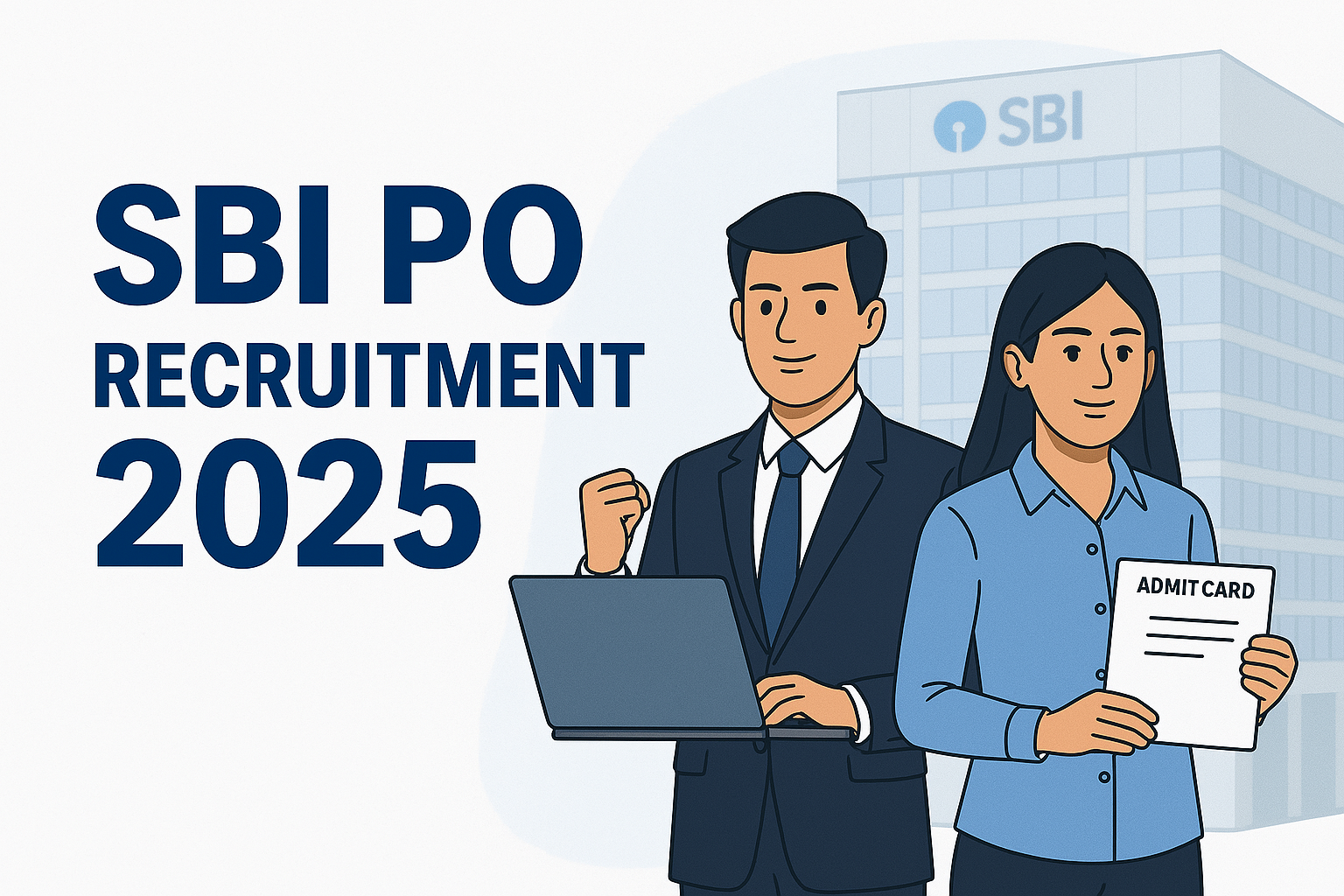
SBI PO recruitment 2025 application closes tomorrow. Know eligibility, exam dates, pattern, and direct application link for aspiring candidates.
Table of Contents
The State Bank of India (SBI) has announced the Probationary Officer (PO) recruitment for 2025, marking one of the most significant banking recruitment drives in the country. This comprehensive guide provides verified information about the application process, eligibility criteria, exam pattern, and selection procedure for aspiring banking professionals.
The SBI PO position represents a prestigious entry point into India’s largest public sector bank, offering competitive compensation and structured career progression. Understanding the complete recruitment process is essential for candidates planning to pursue a banking career.
Overview of SBI PO Recruitment 2025
The State Bank of India conducts the Probationary Officer recruitment annually to fill officer-level positions across its nationwide branch network. This recruitment cycle is expected to announce approximately 2000 vacancies, based on historical trends from previous years. The selection process follows a three-tier examination system designed to assess candidates’ aptitude, knowledge, and interpersonal skills.
The recruitment notification is published on the official SBI careers portal at sbi.co.in/web/careers. Candidates must monitor this portal regularly for authentic updates and announcements. The application window typically remains open for 20-30 days from the notification date.
This position falls under Officer Scale-I cadre and provides opportunities for advancement through various banking domains. Selected candidates undergo mandatory training before final posting to branches across India.
Important Dates and Timeline
Application Schedule
According to the official notification, the application submission deadline is a critical date that candidates must note carefully. The online registration process requires completion of multiple steps including form filling, document upload, and fee payment. All components must be finished before the stipulated deadline.
| Event | Tentative Timeline |
|---|---|
| Online Application Period | Check official website for exact dates |
| Fee Payment Last Date | Same as application deadline |
| Admit Card Release | 15 days before examination |
| Preliminary Examination | October-November 2025 |
| Prelims Result Declaration | November 2025 |
| Main Examination | December 2025 |
| Mains Result Announcement | January 2026 |
| Interview Call Letters | January 2026 |
| Group Exercise and Interview | February 2026 |
| Final Result Publication | February 2026 |
| Document Verification | March 2026 |
| Training Commencement | April 2026 |
Examination Calendar
The preliminary examination is conducted across multiple days to accommodate the large number of applicants. Candidates receive their specific exam date and shift timing through the admit card. The main examination follows approximately one month after preliminary results.
Interview rounds are scheduled based on candidate performance in the main examination. The entire selection process spans approximately five months from preliminary exam to final result declaration.
Eligibility Criteria for SBI PO 2025
Educational Qualifications
Candidates must possess a graduation degree in any discipline from a university recognized by the University Grants Commission (UGC). The degree must be completed before the interview stage, though final-year students can apply provisionally.
There is no minimum percentage requirement specified in the official notification. However, candidates must have successfully completed their degree program with passing marks. Professional degrees such as B.E., B.Tech., CA, CS, or MBA are considered eligible qualifications.
Candidates with degrees obtained through distance education must ensure their program is recognized by the Distance Education Bureau or UGC. Verification of educational credentials occurs during document verification after selection.
Age Requirements
The age bracket for applicants is calculated as of April 1, 2025. The minimum age requirement is 21 years, while the maximum age limit is 30 years for general category candidates.
Category-wise Age Relaxation:
- Scheduled Caste/Scheduled Tribe: 5 years
- Other Backward Classes (Non-Creamy Layer): 3 years
- Persons with Benchmark Disabilities: 10 years
- Ex-Servicemen: 5 years (after adding military service period)
- Candidates from Jammu & Kashmir (1980-1989): 5 years (subject to applicable conditions)
Age is calculated precisely based on birth date documented in Class 10 certificate or equivalent official document. Candidates falling outside the age bracket after relaxation are not eligible to apply.
Attempt Limitations
General category candidates can attempt the SBI PO examination a maximum of four times within the permissible age range. Reserved category candidates have higher attempt limits corresponding to their age relaxation benefits.
Each appearance in the preliminary examination counts as one attempt, regardless of whether the candidate qualifies for subsequent stages. Strategic preparation is recommended to optimize available attempts.
Application Process and Fee Structure
Online Registration Steps
The application process is conducted entirely online through the SBI careers portal. Candidates must first register using a valid email address and mobile number, which will be used for all official communication.
The registration generates a unique application number that must be preserved for future reference. After registration, candidates complete the detailed application form with personal, educational, and contact information.
Document upload requires digital copies of recent photograph and signature in specified dimensions and file size. The photograph must be in color with plain background, while the signature should be on white paper using black ink.
Application Fee Details
The application fee varies by candidate category:
- General/EWS/OBC candidates: ₹750
- SC/ST/PwD candidates: ₹125
Payment is accepted through online modes including net banking, debit cards, credit cards, and UPI. The transaction must be completed successfully to finalize the application submission.
The fee includes examination charges and intimation costs. No refund is provided under any circumstances after payment. Candidates should retain payment receipt for verification purposes.
Document Requirements
Candidates must arrange scanned copies of the following documents before starting the application:
- Recent passport-size photograph (digital format: JPEG, size: 20KB-50KB, dimensions: 4.5cm x 3.5cm)
- Signature sample (digital format: JPEG, size: 10KB-40KB, dimensions: 3cm x 1cm)
- Educational certificates (provisional or final degree certificate)
- Category certificate (for SC/ST/OBC/EWS candidates)
- Disability certificate (for PwD candidates, if applicable)
- Government-issued photo ID proof (Aadhaar, PAN, Passport, Voter ID)
All documents should be clear, legible, and in the prescribed format. Non-compliance with specifications may lead to application rejection.
Examination Pattern and Structure
Preliminary Examination Format
The preliminary examination serves as a screening test to shortlist candidates for the main examination. It consists of 100 objective-type questions carrying 100 marks, to be completed in 60 minutes.
Subject-wise Distribution:
| Section | Questions | Marks | Duration |
|---|---|---|---|
| English Language | 30 | 30 | 20 minutes |
| Quantitative Aptitude | 35 | 35 | 20 minutes |
| Reasoning Ability | 35 | 35 | 20 minutes |
Each section has a separate time limit, and candidates cannot switch between sections during the designated time. Negative marking of 0.25 marks applies for each incorrect answer.
Qualification requires clearing both sectional and overall cutoff marks. The prelims score is not counted in final merit; it only determines eligibility for the main examination.
Main Examination Components
The main examination is comprehensive and consists of two parts: an objective test and a descriptive test. The total duration is 3 hours with 250 maximum marks.
Objective Test Breakdown:
| Section | Questions | Marks | Time |
|---|---|---|---|
| Reasoning & Computer Aptitude | 45 | 60 | 60 minutes |
| Data Analysis & Interpretation | 35 | 60 | 45 minutes |
| General/Economy/Banking Awareness | 40 | 40 | 35 minutes |
| English Language | 35 | 40 | 40 minutes |
Descriptive Test Details:
The descriptive section carries 50 marks and must be completed in 30 minutes. It evaluates written communication skills through:
- Letter Writing (25 marks): Business correspondence, formal letters
- Essay Writing (25 marks): Current topics related to banking, economy, social issues
The descriptive test is evaluated for content quality, language proficiency, and presentation. Both objective and descriptive sections contribute to the main examination score.
Interview and Group Exercise
Candidates qualifying the main examination are called for the final phase consisting of group exercises and personal interview. This stage carries 50 marks distributed as:
- Group Exercises: 20 marks
- Personal Interview: 30 marks
Group exercises assess teamwork, leadership, and communication through group discussions and case study analysis. The personal interview evaluates personality, banking knowledge, current affairs awareness, and career motivation.
The final merit list is prepared based on combined performance in main examination and interview. Marks obtained in prelims are not considered for final selection.
Detailed Syllabus Coverage
English Language Topics
The English section tests comprehension, grammar, and vocabulary skills essential for banking communication. Major topics include:
- Reading Comprehension passages from business, economy, and general interest areas
- Grammar concepts: tenses, voice, narration, subject-verb agreement
- Vocabulary: synonyms, antonyms, idioms, phrases
- Sentence improvement and error detection
- Para jumbles and sentence arrangement
- Cloze test and fill in the blanks
Proficiency in business English and formal writing style is beneficial for the descriptive section. Regular reading of quality English newspapers and magazines strengthens comprehension abilities.
Quantitative Aptitude Areas
This section evaluates mathematical and analytical skills relevant to banking operations. Key areas covered include:
- Number systems, simplification, and approximation
- Data Interpretation: tables, bar graphs, line graphs, pie charts
- Arithmetic: percentage, ratio and proportion, profit and loss, simple and compound interest
- Time and work, time speed and distance problems
- Averages, mixtures, and allegations
- Probability, permutation, and combination
Strong command over mathematical formulas and quick calculation techniques significantly improves performance. Practice with diverse problem types builds confidence and accuracy.
Reasoning and Computer Aptitude
Logical reasoning and computer knowledge are tested together in the main examination. Topics encompass:
- Logical reasoning: syllogisms, statements and conclusions, blood relations
- Analytical reasoning: seating arrangements, puzzles, coding-decoding
- Direction sense and distance calculation
- Computer fundamentals: hardware, software, operating systems
- Internet, networking, and cybersecurity basics
- Database management and MS Office applications
Computer knowledge questions are straightforward and cover fundamental concepts. Reasoning questions require systematic approach and pattern recognition skills.
Banking and General Awareness
This section tests knowledge of current affairs, banking sector, and economic developments. Coverage includes:
- Banking terminology and concepts
- Reserve Bank of India policies and monetary regulations
- Financial institutions: SEBI, NABARD, SIDBI
- Government schemes for financial inclusion
- Economic indicators: GDP, inflation, fiscal deficit
- International organizations: World Bank, IMF, ADB
- Current events from last six months
- Static GK: awards, books, sports, important dates
Regular newspaper reading and monthly current affairs compilation help maintain updated knowledge. Understanding banking sector reforms and digital banking initiatives is particularly relevant.
Salary Structure and Benefits
Compensation Package
Selected candidates receive competitive remuneration aligned with public sector banking standards. The initial pay structure includes:
- Basic Pay: ₹41,960 with four advance increments
- Dearness Allowance: Revised quarterly based on inflation index
- House Rent Allowance: 8-10% of basic pay (varies by location)
- Special Allowance: ₹11,765 monthly
- City Compensatory Allowance: Location-specific
The gross monthly salary ranges between ₹65,000 to ₹70,000 depending on posting location and allowances. Annual CTC for new joiners is approximately ₹8-10 lakhs.
Additional Benefits
Employment with SBI includes comprehensive benefits beyond salary:
Financial Security:
- Provident Fund contribution (12% of basic pay with employer matching)
- Pension scheme for post-retirement financial stability
- Gratuity as per Payment of Gratuity Act provisions
- Group insurance covering life and health for employee and dependents
Career Development:
- Regular promotion opportunities based on performance
- Sponsorship for professional courses and higher education
- Training programs for skill enhancement
- International assignment possibilities
Work-Life Benefits:
- Annual leave of 30 days plus festival holidays
- Medical facilities with cashless treatment at network hospitals
- Staff quarters at subsidized rates in metro cities
- Education assistance for children
- Home and vehicle loans at concessional interest rates
The career progression path leads from Probationary Officer to Assistant General Manager, Deputy General Manager, and higher management positions over time.
Preparation Strategy and Success Tips
Foundation Building Approach
Systematic preparation spanning 4-6 months yields optimal results. Begin with thorough syllabus understanding and concept clarity in each subject. Allocate daily study hours proportionate to subject weightage and personal strengths.
Create a realistic study schedule balancing all sections. Dedicate specific time slots for concept learning, practice questions, and revision. Maintain consistency in daily preparation rather than irregular intensive study sessions.
Identify weak areas through initial assessment and focus on improving those sections. However, do not neglect strong subjects as maintaining high scores in comfortable areas is equally important.
Mock Test Practice
Regular mock tests are essential for exam readiness. Start with section-wise tests to build confidence, then progress to full-length mock examinations. Attempt at least 30-40 full-length tests before the preliminary examination.
Analyze each mock test performance thoroughly. Review incorrect answers, understand solution approaches, and identify time management issues. Track accuracy percentages and average time per question across sections.
Simulate actual exam conditions during mock tests: maintain strict time limits, avoid distractions, and complete entire tests in single sittings. This builds stamina and reduces exam-day anxiety.
Current Affairs Updates
Banking and general awareness sections require consistent current affairs updating. Develop a daily routine of reading one quality newspaper and monthly current affairs magazine or compilation.
Maintain organized notes of important events, government schemes, appointments, and policy decisions. Review these notes weekly to retain information. Focus particularly on banking sector news, RBI policy changes, and economic developments.
Utilize reliable online sources and mobile applications for daily news updates. However, verify information from multiple sources before noting as accurate preparation material.
Descriptive Writing Practice
The descriptive section requires separate focused preparation. Practice writing essays and letters regularly to improve speed and quality. Set timer limits matching exam duration for realistic practice.
Study various essay topics related to current affairs, banking sector, technology, and social issues. Develop outlines quickly and structure content logically with introduction, body, and conclusion.
For letter writing, familiarize yourself with business correspondence formats. Practice different letter types: complaints, requests, inquiries, and official communications. Use formal language and maintain professional tone.
Post-Selection Process
Document Verification
Candidates appearing in the final merit list must submit original documents for verification. The verification process occurs before training commencement and confirms all eligibility criteria.
Required documents include:
- Class 10 certificate for age proof
- All educational certificates and mark sheets
- Degree certificate (provisional or final)
- Category certificate (valid for current year)
- Income and asset certificate for OBC-NCL candidates
- Disability certificate for PwD candidates (if applicable)
- Experience certificates (if any)
- Caste validity certificate where applicable
All documents must be original with photocopies. Self-attested copies are submitted while originals are returned after verification. Non-submission of required documents leads to candidature cancellation.
Medical Examination
Selected candidates undergo medical examination to assess fitness for banking service. The examination includes general physical health assessment, vision test, and routine medical tests.
Candidates with disabilities are assessed based on specific guidelines ensuring fair evaluation. The medical examination determines capability to perform banking duties effectively.
Training Program
Successful candidates join a comprehensive training program before branch posting. The training duration varies but typically spans several weeks covering:
- Banking operations and procedures
- Banking laws and regulations
- Customer service protocols
- Banking software and technology platforms
- Communication and interpersonal skills
Training is conducted at SBI training centers across India. Trainees receive stipend during this period. Successful completion of training is mandatory before formal appointment as Probationary Officer.
Comparison with Previous Recruitments
Vacancy Trends
SBI PO recruitment numbers have fluctuated over recent years based on organizational requirements:
- 2024: 2000 positions announced
- 2023: 1800 positions offered
- 2022: 2100 positions across various categories
- 2021: Recruitment deferred due to pandemic-related factors
The 2025 recruitment is expected to maintain similar vacancy levels based on bank expansion plans and retirement projections. Official notification provides confirmed vacancy numbers.
Exam Pattern Evolution
The three-tier examination structure has remained consistent since 2017. However, certain modifications have been introduced:
- Computer aptitude merged with reasoning in mains examination
- Descriptive test weightage maintained at 50 marks
- Sectional timing implemented in preliminary examination
- Interview marks contribution retained at 50 marks
Understanding these patterns helps candidates prepare strategically with focus on current examination structure rather than outdated formats.
Competition Analysis
The SBI PO examination attracts lakhs of applicants annually, making it highly competitive. The success rate typically ranges between 0.10% to 0.15%, highlighting the rigorous selection process.
Competition intensity varies across regions and categories. Reserved category candidates face relatively lower competition due to reserved vacancies and higher attempt limits. However, absolute numbers indicate intense competition across all categories.
Quality preparation and consistent performance across all examination stages are essential for success given the competitive landscape.
Official Resources and Information Sources
Primary Information Channels
The official SBI careers website (sbi.co.in/web/careers) serves as the primary source for authentic information. All notifications, admit cards, results, and updates are published on this portal exclusively.
Candidates should bookmark this website and check regularly during the recruitment cycle. Email and SMS notifications are sent to registered contact details, but candidates must independently verify information on the official website.
Avoiding Misinformation
Numerous unofficial websites and coaching platforms publish speculative information about SBI PO recruitment. Candidates must exercise caution and rely only on official sources for accurate information.
Do not trust third-party websites claiming early access to results, admit cards, or answer keys. Such platforms often spread misinformation for commercial purposes. The bank releases all information simultaneously to all candidates through official channels.
Similarly, be wary of fraudulent calls, emails, or messages claiming to offer guaranteed selection or requesting payments for additional services. SBI never requests money beyond the specified application fee paid during registration.
Key Takeaways for Aspirants
The SBI PO recruitment represents an excellent career opportunity in India’s largest public sector bank. Successful qualification requires thorough preparation, strategic planning, and consistent effort over several months.
Candidates should focus on building strong fundamentals in all subjects rather than attempting last-minute preparation. Regular mock test practice and current affairs updating are non-negotiable components of successful preparation.
Understanding the complete selection process, eligibility requirements, and examination pattern enables focused preparation aligned with actual requirements. This comprehensive approach significantly improves success probability.
Monitor official channels regularly for authentic updates and timely information. Complete the application process carefully within deadlines, ensuring all requirements are met accurately.
Maintain realistic expectations about competition levels and success rates. Use available attempts judiciously with adequate preparation rather than rushing into examinations without readiness.
The banking sector offers rewarding careers combining financial stability, professional growth, and social contribution. Dedicated aspirants who prepare systematically stand excellent chances of achieving their career goals through SBI PO recruitment.
Frequently Asked Questions (FAQs)
Q1. What is the complete application deadline for SBI PO 2025 recruitment?
The exact application deadline is specified in the official recruitment notification published on sbi.co.in/web/careers. Candidates must complete all application steps including form submission, document upload, and fee payment before the closing date and time. Extensions are rarely provided, so timely application is crucial. Monitor the official website for confirmed dates as speculative information may be inaccurate.
Q2. Can final year graduation students apply for this recruitment?
Yes, students in their final year or semester can apply provisionally for SBI PO recruitment. However, candidates must obtain and submit their degree certificate before the interview stage. Failure to produce a valid graduation degree leads to disqualification regardless of performance in examinations. Ensure your degree completion timeline aligns with the recruitment schedule before applying.
Q3. What is the selection process and approximate timeline?
The selection involves three stages: preliminary examination (qualifying), main examination (merit-based), and interview with group exercises. The preliminary exam typically occurs in October-November, mains in December, and interviews in February. Results are declared progressively after each stage. The entire process spans approximately five months from preliminary exam to final result declaration.
Q4. Is there negative marking in SBI PO examinations?
Yes, both preliminary and main examinations have negative marking. For each incorrect answer, 0.25 marks (one-fourth of the question’s marks) are deducted. This penalty system emphasizes accuracy over speed. Candidates should attempt questions only when reasonably confident about answers. Random guessing without elimination strategy typically reduces overall scores.
Q5. What documents are mandatory for application submission?
Essential documents include a recent passport-size photograph and signature in digital format meeting specified dimensions and file size. Additionally, valid email address and mobile number are required for registration. Educational certificates are needed for form completion. Category certificates (SC/ST/OBC/EWS) and disability certificates (if applicable) must be available during application. Post-selection, original documents undergo verification before appointment.
Q6. How is the final merit list prepared for selection?
The final merit list combines scores from the main examination and interview stage. Preliminary examination scores are not included in final merit calculation; prelims only determines eligibility for mains. Candidates must score minimum qualifying marks in both main exam and interview. Final selection occurs based on total marks in descending order up to available vacancies within each category.
Q7. What is the expected competition level for SBI PO 2025?
Historical data indicates lakhs of candidates apply for SBI PO recruitment annually, with success rates typically below 0.2%. The competition is intense across all categories, though varies by region and reservation category. Quality preparation spanning several months is essential given the high competition. Strong performance in all examination stages simultaneously is necessary for final selection.
Q8. Are there any changes in exam pattern compared to previous years?
The three-tier structure with preliminary exam, main exam, and interview has remained consistent since 2017. Recent patterns include sectional timing in prelims, computer aptitude integrated with reasoning in mains, and 50-mark descriptive section. Interview carries 50 marks combined with 20-mark group exercises. Candidates should refer to the official notification for any year-specific modifications in 2025 recruitment.
About the Author
Nueplanet
I am an educational content writer specializing in government recruitment examinations and competitive test analysis. With extensive research into official notifications, exam patterns, and selection processes, I provide accurate, verified information to help aspirants make informed decisions about their career preparation.
My commitment is to present factual, transparent content sourced exclusively from official government portals, banking websites, and authenticated public sector announcements. I regularly update articles to reflect the latest information, ensuring readers receive current and reliable guidance.
All information in this article has been compiled from official SBI notifications and publicly available government sources. I encourage readers to verify critical details independently through official channels before making application or preparation decisions.
Published: July 13, 2025
Last Updated: July 13, 2025
Verification Status: Information compiled from official SBI notifications and government sources
Note: This article provides general guidance based on typical SBI PO recruitment patterns. Candidates must refer to the official notification for exact details, dates, and requirements specific to 2025 recruitment. The State Bank of India reserves the right to modify recruitment terms, and candidates should monitor official channels for authentic updates.
Helpful Resources
Latest Posts
- National RailOne App: Indian Railways’ One-Stop Solution for Travellers
- HDB Financial Services IPO Allotment GMP: All You Need to Know
- TNPSC Admit Card 2025 Released: Everything You Need to Know
- Jharkhand Polytechnic Result 2025 Declared: Check Your Scores, Merit List, and Admission Process
- 7th July Public Holiday India: Is Muharram 2025 a National Holiday?
Tag
sbi po










Post Comment