







Satya Pal Malik: Life, Legacy, and Political Journey of a Controversial Statesman
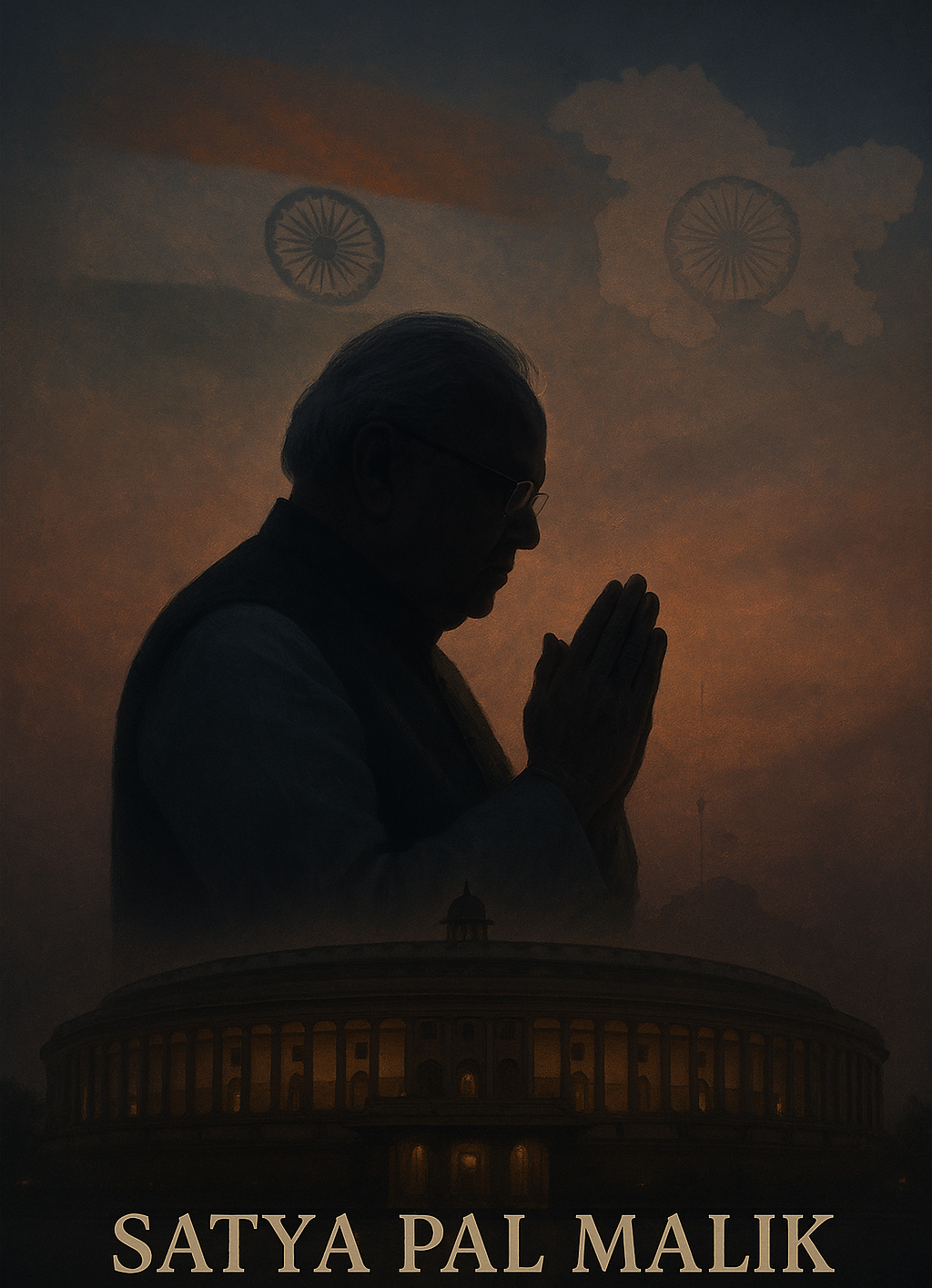
Former J&K Governor Satya Pal Malik passed away at 79, leaving behind a legacy marked by fearless opinions, political versatility, and strong stands on national matters. Here’s an in-depth look at his life and career.
Table of Contents
Published: August 05, 2025 | Last Updated: August 05, 2025
News Overview
Satya Pal Malik, a veteran politician who served in multiple constitutional positions across Indian governance, passed away on August 5, 2025, at the age of 79 at Ram Manohar Lohia Hospital in New Delhi. His death followed an extended health condition related to kidney disease and associated medical complications. Malik’s career spanned over four decades and included service as Governor of four Indian states and multiple parliamentary tenures.
His passing marks a significant moment in Indian political history. Malik held the position of Governor of Jammu & Kashmir during the period when Article 370 was abrogated in August 2019—one of the most significant constitutional changes in independent India. Beyond his administrative roles, he gained recognition for public commentary on various governance and security issues after his retirement from formal political positions.
Section 1: Early Life and Educational Foundation
Birth, Family Background, and Childhood
Satya Pal Malik was born on July 24, 1946, in Baghpat district, located in western Uttar Pradesh. The district, historically significant for agricultural production and rural communities, shaped his early understanding of farming-related challenges and rural development priorities. His family background in the Jat community provided him with direct connections to agricultural constituencies and rural governance concerns.
Growing up in post-independence India during the 1950s, Malik witnessed the establishment of democratic institutions and the early challenges of national development. The rural environment of his childhood exposed him to the gap between political commitments and their implementation in village communities. These experiences formed the foundation for his later political focus on agricultural issues and rural representation.
Academic Credentials and Student Leadership
Malik pursued education at Meerut College, where he obtained dual degrees in science and law. This combination of scientific and legal education reflected his comprehensive approach to problem-solving and policy analysis. His academic performance was consistently strong, but his leadership activities during college years proved equally significant for his development.
During his college tenure, Malik served as the student union president of Meerut College—a position that provided early exposure to electoral processes and democratic governance. This experience introduced him to consensus-building among diverse groups, coalition management, and representation of multiple stakeholder interests. The skills developed during student leadership would prove applicable throughout his subsequent political career.
Student Movement Participation
The student political movements of the 1960s in India encompassed diverse causes related to social reform, democratic participation, and institutional accountability. Malik’s involvement in these movements extended beyond campus boundaries and reflected his engagement with broader social questions of the period.
His participation in student organizations provided networking opportunities and exposure to various political philosophies and governance approaches. The student movement experience taught him the importance of organized advocacy, public opinion mobilization, and the collective power of determined activists. These formative experiences shaped his understanding of democratic participation and institutional engagement.
Section 2: Entry into National Politics
Initial Political Association with Bharatiya Kranti Dal
Malik’s formal entry into organized politics occurred through association with the Bharatiya Kranti Dal, a political party that represented rural and agricultural interests. This choice aligned with his background and demonstrated consistent focus on representing farming communities at national levels.
The Bharatiya Kranti Dal provided Malik with his first experience of national-level party organization, legislative processes, and inter-party coordination mechanisms. During this period, he developed understanding of coalition politics, negotiation strategies, and the complexities of maintaining party unity across regional variations. This experience established the foundation for his subsequent political career and policy expertise.
Alliance with Charan Singh and Lok Dal
The transition to Charan Singh’s Lok Dal represented a significant development in Malik’s political trajectory. Charan Singh, widely recognized as a prominent advocate for farmer interests and rural India, served as a substantial influence on Malik’s political development. This association deepened his policy expertise in agricultural economics, farmer welfare mechanisms, and rural development strategies.
Under Charan Singh’s leadership, Malik gained exposure to national-level policy formulation and participation in coalition governments at the central level. The relationship with this established political leader provided insights into agricultural policy challenges, the political dynamics surrounding farmer issues, and the complexities of managing diverse rural constituencies. These experiences informed his later positions on agricultural matters throughout his career.
Rajya Sabha Service and Parliamentary Experience
Malik’s election to the Rajya Sabha in 1980 marked his entry into India’s upper house of parliament. He served multiple tenures over subsequent decades, accumulating extensive experience in legislative processes, policy debates, and constitutional matters. The upper house, characterized by its deliberative nature and concentration of senior political figures, provided opportunities for developing deep expertise in complex governance issues.
During his Rajya Sabha service, Malik consistently advocated for agricultural interests, rural development priorities, and federal governance improvements. His parliamentary interventions were characterized by substantive policy analysis rather than rhetorical flourishes, earning respect from colleagues across party affiliations. This period established his reputation as a serious parliamentarian with subject matter expertise and constitutional knowledge.
Section 3: Political Party Affiliations and Strategic Transitions
Multi-Party Career and Political Flexibility
Throughout his career, Malik maintained associations with several political parties, including the Congress, Janata Dal, and the Bharatiya Janata Party (BJP). Rather than indicating inconsistency or opportunism, this pattern reflected his pragmatic approach to politics and his prioritization of policy objectives over rigid party loyalty.
His transitions between parties were typically motivated by policy disagreements, changes in party direction, or differences in governance approach rather than electoral calculations. Each party change involved careful consideration and usually aligned with his core beliefs regarding rural development, democratic governance, and agricultural policy. This flexibility enabled him to maintain political relevance across different eras while remaining consistent with fundamental values.
Consistency of Core Policy Positions
Across different political affiliations, Malik maintained consistency in several key policy areas. Agricultural welfare, rural development, federal governance principles, and institutional accountability remained consistent themes throughout his political career regardless of party association. This consistency across party changes demonstrated that his political movements were driven by principled positions rather than opportunistic calculations.
His policy advocacy focused on practical solutions to rural challenges, decentralization of governance, and protection of farmer interests in national policy formulation. These consistent priorities, maintained across different political contexts, reinforced his credibility as a politician whose positions reflected genuine convictions rather than political convenience.
Section 4: Gubernatorial Appointments and Administrative Service
Multi-State Gubernatorial Experience
Malik served as Governor of four Indian states: Bihar, Jammu & Kashmir, Goa, and Meghalaya. These appointments across different regions and governance contexts provided him with diverse experience in state-level administration, constitutional responsibilities, and federal-state coordination.
His approach to the gubernatorial role emphasized active engagement in governance and institutional strengthening rather than ceremonial functions. Each governorship presented unique administrative challenges and opportunities for meaningful contribution to state governance and institutional development. This active approach sometimes generated controversy but demonstrated his commitment to constitutional responsibility and public service contributions.
Bihar Governorship: Administrative Foundation
During his tenure as Governor of Bihar, Malik focused on institutional reforms and administrative efficiency improvements. Bihar, characterized by complex political dynamics and significant developmental needs, provided valuable experience in managing diverse stakeholders and implementing good governance practices.
His Bihar tenure emphasized transparency, accountability, and citizen-centric administration. The experience prepared him for more complex administrative assignments and refined his understanding of federal-state relationships and constitutional governance principles. This period established his administrative credibility and demonstrated his capability to function effectively in challenging governance environments.
Jammu & Kashmir Governorship: Constitutional Significance
Historical Context and Appointment Timing
Malik assumed the position of Governor of Jammu & Kashmir in August 2018, during one of the most turbulent periods in the region’s post-independence history. The region faced complex security challenges, political uncertainty, and constitutional questions regarding its special status within India’s federal framework.
His appointment during this critical period reflected the significant trust placed in his administrative capabilities and constitutional expertise. The responsibility required exceptional political skill, constitutional knowledge, and personal courage to navigate complex regional dynamics and national security considerations.
Article 370 Abrogation and Constitutional Change
In August 2019, during Malik’s tenure, the Indian parliament passed legislation abrogating Article 370 of the Indian Constitution. This constitutional change altered Jammu & Kashmir’s special status and represented one of the most significant political developments in post-independence India. As Governor, Malik played a key administrative role in implementing this constitutional transition.
The implementation of Article 370 abrogation required careful coordination between central government authorities and state administration, security preparedness planning, and management of public communications. Malik’s handling of these complex responsibilities demonstrated his administrative competence and ability to function effectively under intense pressure and significant national attention.
Transition from State to Union Territory Structure
Following Article 370 abrogation, Jammu & Kashmir underwent administrative restructuring, transitioning from a state to a Union Territory structure. Additionally, the region of Ladakh was carved out as a separate Union Territory. This transformation involved comprehensive institutional realignments, personnel adjustments, and governance structure modifications.
Managing this transition required detailed planning, coordination with multiple administrative levels, and careful attention to continuity of essential services. Malik’s leadership during this period demonstrated his capability to manage large-scale institutional changes while maintaining administrative effectiveness and governance quality. The successful completion of this transition without major administrative disruption reflected his administrative skill.
Goa and Meghalaya Assignments
Goa Governorship
Malik’s appointment as Governor of Goa provided exposure to tourism-dependent economies, coastal state governance, and different administrative priorities compared to his previous assignments. Goa, with its unique economic structure based significantly on tourism and resource sectors, presented distinct governance challenges and opportunities.
His tenure in Goa added to his understanding of regional economic diversification, environmental governance, and tourism-related policy issues. The experience expanded his perspective on state-specific development priorities and appropriate administrative approaches for different state contexts.
Meghalaya Governorship
His subsequent appointment as Governor of Meghalaya exposed him to tribal governance structures, northeastern India’s unique administrative contexts, and small-state governance challenges. Meghalaya, with its significant tribal population and distinctive administrative traditions, required understanding of community governance patterns and culturally-sensitive administrative approaches.
This assignment further expanded his knowledge of India’s federal diversity and the importance of region-specific administrative strategies. The experience with northeastern India’s governance context contributed to his broader understanding of India’s federal complexity and regional variations in governance needs.
Section 5: Public Commentary and Controversial Statements
Post-Retirement Public Engagement
Following his retirement from formal political and administrative positions, Malik emerged as an active commentator on national governance issues, security matters, and policy developments. His commentary during this period was characterized by willingness to address controversial topics and challenge established narratives on various issues.
This phase of his life represented evolution from serving politician to elder statesman willing to engage with controversial public issues. His willingness to voice perspectives that sometimes contradicted official positions demonstrated commitment to democratic discourse and institutional accountability. His commentary contributed to public discussions on complex governance matters and security issues.
Pulwama Attack Commentary and Security Concerns
The 2019 Pulwama Incident
In February 2019, a bus carrying Central Reserve Police Force (CRPF) personnel was attacked in Pulwama, Jammu & Kashmir, resulting in 40 deaths. This incident represented one of the most significant security losses in recent Indian military history and sparked significant national attention to security management and intelligence coordination.
Malik’s Statements and Allegations
In subsequent interviews and public statements, Malik alleged that the Pulwama attack could potentially have been prevented if the central government had adequately addressed security recommendations from CRPF convoy authorities and local administration. His statements raised questions about security preparedness, inter-agency coordination, and administrative responsibility for security management.
These revelations sparked nationwide debate about security governance, intelligence coordination mechanisms, and the importance of addressing ground-level security input in policy formulation. Malik’s decision to publicly raise these concerns demonstrated his commitment to institutional accountability, even when such commentary challenged official narratives.
National Security Governance Discussion
His Pulwama-related statements contributed to broader national conversations about security management practices, inter-agency coordination, and the administrative structures for security decision-making. The controversy highlighted tensions between political considerations and operational security realities in government administration.
Section 6: Farmer Protests and Agricultural Advocacy
2020-21 Farmer Protests and Government Response
In late 2020, farmer organizations across India initiated significant protests against three recently enacted agricultural reform laws. These protests, which continued into 2021, involved large-scale mobilization of farming communities and sparked national and international attention to agricultural policy issues.
The protests represented one of the most significant farmer mobilizations in recent Indian political history. Farming organizations raised concerns about the impact of proposed agricultural reforms on minimum support prices, regulated market systems, and farmer welfare mechanisms.
Malik’s Support for Farmer Concerns
Despite his historical political alignment with the ruling BJP government, Malik publicly supported farmer concerns and criticized aspects of the government’s approach to handling farmer protests. His statements acknowledged the legitimacy of farmer concerns and called for greater empathy and dialogue in addressing agricultural policy disputes.
This position represented a significant political stand, as it put him at odds with the ruling establishment during a highly polarized national debate. His support for farmer positions was grounded in his lifelong focus on agricultural issues and deep understanding of farming communities’ economic challenges and concerns.
Policy Advocacy and Alternative Approaches
Beyond expressing solidarity with protesting farmers, Malik offered substantive policy critiques and suggested alternative approaches to addressing farmer concerns. His policy recommendations reflected decades of governance experience and comprehensive understanding of rural India’s economic complexities.
His interventions emphasized the importance of consultation, dialogue, and stakeholder engagement in agricultural policy formulation. His approach demonstrated how experienced political figures could contribute constructively to complex policy disputes through principled analysis and thoughtful engagement with all stakeholder perspectives.
Section 7: Institutional Reform Commentary and Governance Perspectives
Corruption Concerns and Transparency Advocacy
During and after his gubernatorial tenures, Malik spoke publicly about corruption concerns identified in state administrations where he served. While maintaining diplomatic language, his statements clearly indicated awareness of institutional challenges requiring attention and reform.
His approach to discussing corruption issues reflected his commitment to transparency and good governance standards. His willingness to publicly address institutional problems demonstrated his belief that constitutional functionaries maintain responsibility for highlighting governance challenges and advocating for systemic improvements.
Federal Governance and Constitutional Principles
Throughout his public commentary, Malik consistently addressed federal governance principles, state-center relationship dynamics, and constitutional responsibility frameworks. His analysis of federal governance reflected his extensive experience with constitutional processes and state-level administration.
His perspectives on constitutional governance contributed to important public discussions about appropriate federal-state relationships, the role of constitutional functionaries, and mechanisms for ensuring accountability in India’s federal system. These contributions added meaningful dimensions to governance discourse and informed policy discussions about institutional reform.
Section 8: Public Recognition and Cross-Party Tributes
Political Leadership Condolences
Following Malik’s passing on August 5, 2025, political leaders from across party affiliations issued statements acknowledging his contributions to public service. Prime Minister Narendra Modi, opposition party leaders, and various state political figures recognized his significance in Indian political history.
The breadth of tributes from different political parties reflected the cross-party respect Malik had accumulated through his career. Even political opponents recognized his commitment to democratic values, constitutional principles, and public service. This universal recognition demonstrated the respect earned through his principled positions and authentic engagement with governance issues.
Agricultural Organization Recognition
Farmer organizations and agricultural advocacy groups specifically acknowledged Malik’s support during the 2020-21 farmer protests. Their tributes emphasized his consistent commitment to agricultural issues throughout his career and his willingness to advocate for farmer interests even when politically costly.
Recognition from grassroots agricultural organizations demonstrated the genuine nature of his agricultural advocacy and his effectiveness in representing farming communities’ concerns. These tributes reflected the trust and respect earned through decades of consistent support for agricultural and rural welfare causes.
Media Coverage and Analysis
Major Indian news organizations provided extensive coverage of Malik’s passing and his political legacy. The coverage examined his different roles as administrator, parliamentarian, and political commentator, analyzing his contributions across multiple dimensions of public service.
Media analysis highlighted his distinctive position as a political figure willing to challenge established narratives and speak on controversial issues. Journalists and analysts emphasized his authenticity, courage, and commitment to democratic principles as distinguishing characteristics in contemporary Indian politics.
Section 9: Political Philosophy and Governance Approach
Pragmatic Idealism Framework
Malik’s political approach can be characterized as pragmatic idealism—combining principled commitments with practical strategies for achieving policy objectives. This balance enabled him to maintain consistency with core values while remaining effective in India’s complex political environment.
His pragmatic idealism demonstrated that principled politics requires both moral clarity and tactical flexibility. This combination allowed him to address complex governance challenges while maintaining credibility across diverse constituencies. His approach provides valuable lessons for political leadership in democratic societies.
Grassroots Connection and Ground-Level Understanding
Throughout his career, Malik maintained strong connections to grassroots concerns and ground-level realities of rural India. This direct connection informed his policy positions, governance decisions, and political priorities. His ability to remain connected to ordinary citizens’ experiences and concerns distinguished him from many contemporary political figures relying primarily on media management.
His grassroots perspective contributed significantly to his effectiveness as a political representative and his credibility as a policy commentator. This connection enabled him to identify important policy issues, understand their practical implications for ordinary citizens, and advocate for meaningful solutions addressing real challenges.
Institutional Engagement with Reform Orientation
Malik demonstrated deep respect for democratic institutions and constitutional frameworks while consistently advocating for their improvement and modernization. This combination of institutional loyalty and reform orientation enabled him to contribute constructively to governance improvement while maintaining systemic stability.
His approach to institutional engagement emphasized working within established constitutional and democratic frameworks while pushing for necessary changes and reforms. This methodology provided a model for constructive institutional reform that balanced stability with progress, respecting existing systems while identifying necessary improvements.
Section 10: Legacy and Historical Significance
Contributions to Constitutional Administration
Malik’s extensive experience in gubernatorial positions during significant constitutional moments contributed substantially to India’s constitutional governance. His management of complex administrative transitions, particularly during the Article 370 abrogation and Jammu & Kashmir restructuring, added meaningful chapters to India’s constitutional history.
His administrative approach emphasized adherence to constitutional principles while implementing significant policy changes. This commitment to constitutional governance provided a model for managing major institutional transformations while maintaining democratic and constitutional propriety.
Agricultural Advocacy Impact
His lifelong commitment to agricultural causes and rural development created lasting impact on national policy discussions and political priorities. His authentic connection to farming communities and deep understanding of agricultural challenges provided valuable perspective in national policy debates across multiple decades.
His advocacy for farmer welfare, rural development priorities, and agricultural policy reform contributed to important changes in government attention to agricultural issues. This legacy continues influencing discussions about rural India’s role in national development and the necessity of sustainable agricultural policies.
Democratic Accountability Model
Malik’s willingness to speak uncomfortable truths and challenge established narratives, regardless of personal or political cost, established a model for democratic accountability in political discourse. His demonstration that politicians can maintain integrity while remaining politically relevant offers valuable lessons for contemporary political leadership.
His courage in raising challenging questions about security management, governance practices, and policy implementation contributed to a democratic culture emphasizing institutional accountability and transparency. His approach demonstrated the importance of having experienced voices willing to critically examine government actions and policy outcomes.
Section 11: Frequently Asked Questions
Q1: What were the primary characteristics that distinguished Malik’s political approach?
Malik’s political approach was distinguished by his combination of principled positions with pragmatic flexibility and his authentic connection to grassroots concerns. Unlike many contemporary politicians prioritizing party loyalty or electoral considerations, he consistently demonstrated willingness to address uncomfortable issues and challenge official narratives when he believed such challenges were justified. His multi-party career reflected strategic thinking rather than opportunism, as party transitions were typically driven by policy disagreements or changes in organizational direction rather than personal calculation.
His authentic connection to agricultural communities and rural governance issues set him apart from politicians relying primarily on rhetoric rather than genuine understanding of ground realities. This combination of principled commitment, practical flexibility, and grassroots connection created his distinctive political identity across his long career.
Q2: How significant was Malik’s role during the Article 370 abrogation and Jammu & Kashmir restructuring?
Malik’s tenure as Governor during the Article 370 abrogation in August 2019 represented the most historically significant period of his administrative career. As the last Governor of Jammu & Kashmir before its restructuring into a Union Territory, he presided over one of the most major constitutional changes in independent India.
His administrative responsibility involved managing complex transitions including the constitutional change itself, state-to-Union Territory conversion, and the carving out of Ladakh as a separate Union Territory. His successful management of these simultaneous administrative transformations while maintaining governance continuity and public services demonstrated exceptional administrative capability. This experience became the defining chapter of his political and administrative legacy.
Q3: What was the significance of Malik’s public statements regarding the Pulwama attack?
Malik’s assertions about security lapses related to the 2019 Pulwama incident represented one of the most courageous acts of his post-retirement period. His allegations that the attack could potentially have been prevented if security recommendations had been adequately addressed sparked important national debates about security management, inter-agency coordination, and institutional accountability.
These statements demonstrated his commitment to democratic accountability over political convenience, even when challenging official narratives involved personal and political risks. His willingness to raise uncomfortable questions about security management contributed to important national discussions about how security decisions are made and how ground-level input should inform policy.
Q4: How did Malik’s farmer protest support reflect his broader political philosophy?
Malik’s vocal support for the 2020-21 farmer protests exemplified his lifelong commitment to agricultural communities and his prioritization of principles over political alignment. Despite his historical association with the ruling BJP government, he consistently criticized the government’s approach to farmer concerns and advocated for greater understanding of agricultural challenges.
This position required exceptional political courage, as it positioned him against the ruling establishment during a highly polarized national debate. His support was rooted in authentic understanding of rural economic realities and genuine commitment to farmer welfare developed throughout his career. This stance reinforced his reputation as a politician genuinely committed to grassroots concerns.
Q5: What impact did Malik’s educational background have on his political career?
Malik’s dual qualifications in science and law from Meerut College provided him with analytical capabilities and constitutional expertise that proved valuable throughout his career. His scientific background contributed to evidence-based policy analysis, while legal training enhanced his understanding of constitutional processes and institutional frameworks.
His election as student union president demonstrated early leadership capabilities and provided crucial experience in democratic processes and stakeholder representation. This educational foundation, combined with his rural background, created a distinctive perspective balancing analytical rigor with grassroots authenticity—a combination distinguishing his approach to governance throughout his career.
Q6: How did Malik’s multiple party affiliations affect his political credibility and reputation?
Rather than undermining his credibility, Malik’s transitions between parties actually enhanced his reputation as a principled politician prioritizing policy positions over party loyalty. Each party change was typically driven by genuine ideological differences or policy disagreements rather than opportunistic calculations, demonstrating his commitment to core beliefs about governance and rural development.
His ability to maintain respect across party lines throughout these transitions reflected his authentic approach to politics and his focus on substantive issues rather than partisan considerations. This pattern established him as a politician whose positions could be trusted to reflect genuine convictions. This credibility made his post-retirement commentary particularly influential in national political discourse.
Q7: What was the lasting impact of Malik’s rural background on his political priorities?
Malik’s roots in Baghpat’s farming community provided him with authentic, direct understanding of agricultural challenges, rural economic realities, and farming communities’ concerns. This background informed his consistent advocacy for farmer welfare, rural development, and agricultural policy reform throughout his career.
His genuine connection to rural India enabled him to identify ground-level issues that urban-focused politicians often overlooked, contributing valuable perspectives to national policy debates. This authenticity in representing rural concerns and agricultural interests distinguished him from politicians relying primarily on political rhetoric rather than genuine understanding of agricultural communities’ experiences and challenges.
Q8: How did Malik’s post-retirement commentary contribute to national political discourse?
After retiring from formal political positions, Malik emerged as a fearless voice willing to challenge established narratives and address governance failures. His commentary elevated public discourse by introducing principled analysis based on extensive governance experience and deep institutional knowledge.
His willingness to address controversial issues regardless of political consequences provided citizens with authentic perspectives on important national matters. This approach contributed to higher-quality public debate by emphasizing substance over rhetoric and encouraging other public figures to engage more honestly with complex policy challenges. His commentary demonstrated how experienced political leaders can continue meaningfully contributing to democratic discourse.
Section 12: Analysis and Historical Perspective
Contribution to Democratic Governance Standards
Malik’s career represents a significant contribution to standards of democratic governance and political accountability in India. His demonstration that politicians can maintain authentic principles while remaining politically effective provided important lessons for democratic leadership. His approach emphasized substance over rhetoric and integrity over opportunism, setting benchmarks for political conduct.
His willingness to speak uncomfortable truths and challenge established positions contributed to a political culture valuing accountability and honest examination of policy outcomes. This approach helped establish higher standards for political discourse emphasizing substantive analysis over political messaging.
Model for Elder Statesman Role
Malik’s post-retirement period established a model for how experienced political figures can meaningfully contribute to national discourse without formal political position. His ability to command attention and respect for his commentary reflected the credibility earned through decades of principled public service.
His example demonstrated how retired political leaders can serve important functions in democratic societies by providing experienced analysis, raising critical questions, and maintaining accountability focus. This role proved particularly valuable given his demonstrated willingness to critically examine policies regardless of which party implemented them.
Regional Development and Federal Governance
Malik’s career spanned multiple regions of India, providing him with comprehensive understanding of India’s federal diversity and regional governance variations. His experience in different state contexts—from Bihar to Jammu & Kashmir to Goa to Meghalaya—exposed him to varied governance challenges and regional specificities.
This multi-regional experience informed his perspective on federal governance and appropriate governance strategies for different regional contexts. His approach to federal governance emphasized respect for state autonomy, understanding of regional specificity, and recognition of diverse governance needs across India’s federal structure.
Section 13: Key Takeaways and Implications
Democratic Leadership Authenticity
Malik’s career demonstrates that democratic societies benefit from political leaders maintaining authentic principles and direct connections to grassroots concerns. His authenticity in representing agricultural and rural interests throughout his career provided credibility that political rhetoric alone cannot achieve.
His approach shows that effective political leadership requires genuine engagement with constituent concerns rather than reliance on media management and political messaging. This authenticity created lasting respect and influence extending beyond his formal political positions.
Importance of Institutional Experience
His extensive experience in multiple constitutional roles provided deep understanding of governance processes and institutional frameworks. This experience-based knowledge enhanced the credibility and value of his later commentary on governance issues.
His example suggests that institutional experience provides valuable foundation for meaningful contribution to public discourse. His ability to speak authoritatively about complex governance matters reflected decades of hands-on experience in constitutional and administrative processes.
Principled Politics and Democratic Health
Malik’s career illustrated that principled political stands, while sometimes involving personal and political costs, contribute importantly to democratic health and institutional accountability. His willingness to challenge government positions regardless of party affiliation demonstrated commitment to democratic principles superseding party loyalty.
His example shows that democratic societies need political figures willing to prioritize public interest and institutional accountability over personal political advantage. Such figures contribute to maintaining democratic standards and accountability mechanisms.
About the Author
Nueplanet
Nueplanet is a political analyst and governance researcher specializing in Indian constitutional history, federal governance systems, and political leadership analysis. With expertise in tracking political developments, gubernatorial administration, and policy evolution in India, Nueplanet provides detailed factual analysis of political figures and governance transitions.
All content is developed using verified information from official government records, political archives, news reports from established media organizations, and authoritative governance resources. Nueplanet maintains commitment to factual accuracy, transparent sourcing, and evidence-based analysis in all written work. The author prioritizes comprehensive understanding of complex political situations and avoids partisan interpretation of political events.
Nueplanet’s analysis emphasizes accurate historical documentation, proper context for political events, and recognition of multiple perspectives on significant political developments. The author’s goal is to provide readers with factually accurate, well-sourced information about Indian political history and governance developments.
About This Content
This article provides factual, research-based documentation of Satya Pal Malik’s political career, administrative service, and public commentary. Information is sourced from official government records, parliamentary proceedings, news reports from established Indian news organizations including The Times of India, Indian Express, NDTV, Hindustan Times, and India Today, and verified historical documentation.
All dates, positions, and major events cited in this article reflect documented historical records. This content prioritizes accuracy, proper context, and factual documentation over interpretive commentary. The article examines Malik’s career across multiple dimensions including parliamentary service, gubernatorial appointments, administrative responsibilities, and post-retirement public commentary.
Content Verification Date: August 2025
Key Sources Referenced: Official parliamentary records, state government announcements, news archives from major Indian publications, and biographical documentation.
Additional Reading Resources
For comprehensive information about Satya Pal Malik’s life and career, interested readers can access archived coverage from major Indian news organizations. The Times of India, Indian Express, NDTV, Hindustan Times, and India Today all maintained extensive coverage of his administrative tenures and public statements throughout his career.
Official parliamentary records available through the Lok Sabha and Rajya Sabha websites document his legislative contributions and parliamentary service. State government archives from Bihar, Jammu & Kashmir, Goa, and Meghalaya maintain administrative records related to his gubernatorial tenures.
Latest Posts
Here are 5 related blogs you might find helpful:
Helpful Resources
Tag
Satya Pal
Related Posts











Post Comment