








Samsung A17 5G: Expected Specs, Features, and Market Buzz
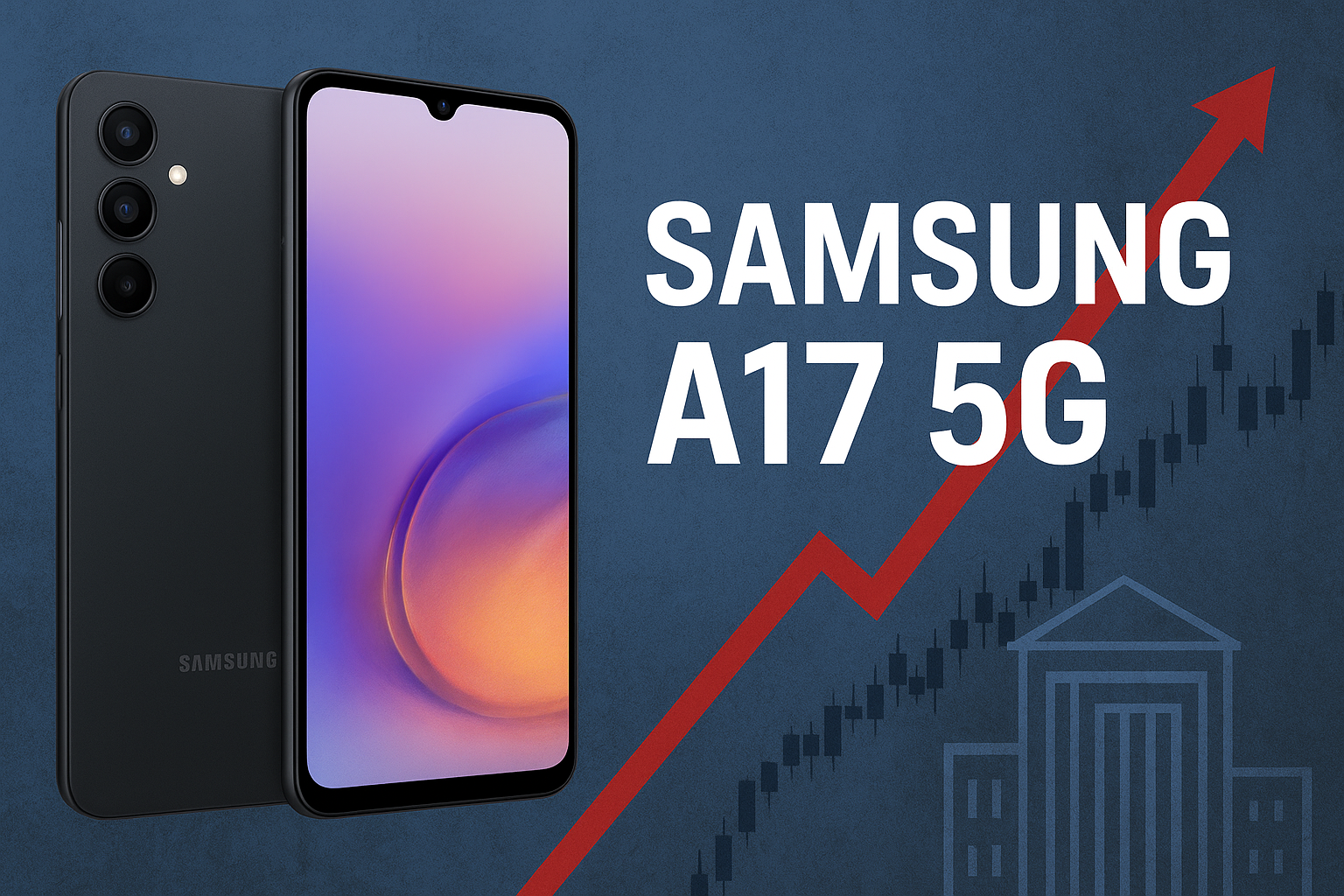
Samsung A17 5G is making headlines ahead of its official launch, with leaks revealing exciting specs and competitive pricing. Here’s a detailed look at what users can expect from Samsung’s upcoming mid-range smartphone.
Table of Contents
Published: August 21, 2025 | Last Updated: August 21, 2025
Overview: Mid-Range 5G Smartphone Entry
Samsung introduced the Galaxy A17 5G within its mid-range smartphone portfolio, targeting consumers seeking 5G connectivity and contemporary features at accessible price points. This device represents Samsung’s strategy of extending advanced technology features across broader market segments beyond premium flagship positioning. The A17 5G entered markets with specifications including a 6.6-inch display, MediaTek processor, and 5G network compatibility.
The device addresses market demand for affordable 5G-capable smartphones as 5G network infrastructure expands across regions. Mid-range smartphones incorporating 5G represent growing segment within broader smartphone market, attracting consumers transitioning from 4G devices. Samsung’s entry into this category reflects competitive dynamics in budget-conscious consumer segments.
Technical Specifications and Hardware Configuration
Display Technology and Screen Specifications
The Samsung Galaxy A17 5G features a 6.6-inch AMOLED display with FHD+ resolution (2412 x 1080 pixels). AMOLED technology delivers superior contrast ratios, deeper blacks, and individual pixel illumination compared to LCD display alternatives. This display type enables pixel-level brightness adjustment, contributing to battery efficiency and visual quality.
Screen refresh rate of 120Hz provides smoother scrolling and animation rendering compared to standard 60Hz displays. The adaptive refresh rate technology adjusts between 10Hz and 120Hz based on content requirements, optimizing battery consumption. Adaptive sync compatibility supports variable refresh rate gaming experiences. Color accuracy and brightness levels align with industry standards for mid-range display specifications.
The display incorporates Gorilla Glass protection with oleophobic coating reducing fingerprint visibility. Screen-to-body ratio optimization maximizes usable display area while maintaining manageable device dimensions. Pixel density measures approximately 390 PPI, meeting contemporary clarity standards.
Processor and Performance Specifications
The MediaTek Dimensity processor represents the primary performance component. This chipset utilizes ARM architecture with octa-core configuration optimizing performance and power efficiency. Manufacturing process technology at advanced nodes enables performance scaling while managing thermal output. GPU integration handles graphics processing for gaming and multimedia applications.
Raw computational performance supports demanding applications including video editing, 3D gaming, and multitasking. AI acceleration capabilities enhance photography processing, voice recognition, and system optimization functions. Benchmark testing methodology provides quantitative performance assessment across various workload categories.
Memory configurations offer 6GB or 8GB RAM options accommodating different usage patterns. RAM influences multitasking capability and application responsiveness. Storage configuration utilizes UFS technology providing fast sequential and random access performance. Internal storage variants include 128GB or 256GB capacity depending on memory tier selected.
| Specification | Details |
|---|---|
| Processor | MediaTek Dimensity (exact model TBD) |
| RAM Options | 6GB or 8GB |
| Storage Options | 128GB or 256GB UFS |
| GPU | Mali GPU (integrated) |
| Manufacturing Process | Advanced node technology |
| AI Accelerator | Dedicated neural processing |
Display Specifications Summary
| Feature | Specification |
|---|---|
| Screen Size | 6.6 inches |
| Display Technology | AMOLED |
| Resolution | FHD+ (2412 x 1080) |
| Refresh Rate | 120Hz adaptive |
| Pixel Density | ~390 PPI |
| Aspect Ratio | 19.5:9 approximately |
| Protection | Gorilla Glass |
Camera System Configuration and Capabilities
Rear Camera Setup
The rear camera system utilizes a triple camera configuration addressing diverse photography scenarios. The primary camera sensor measures 50 megapixels, implementing large sensor area for improved light capture capability. Larger sensor sizes generally produce superior low-light performance compared to smaller sensor configurations.
Optical image stabilization (OIS) reduces blur from hand movement and environmental vibration during image capture. This technology proves particularly valuable in low-light photography where longer exposure times increase motion sensitivity. OIS functionality activates across multiple shooting modes including standard photography and video recording.
Secondary ultra-wide camera extends field of view, accommodating landscape photography and group compositions. Focal length reduction compared to primary camera enables wider scene coverage. Depth camera sensor assists with distance measurement, enabling depth-of-field effects in portrait mode and enabling 3D distance calculations.
Autofocus technology utilizes phase detection enabling rapid focus acquisition. Fast autofocus capability supports action photography and video recording scenarios. Continuous autofocus maintains focus during video recording across subject movement.
Front Camera Specifications
The front-facing camera integrates 16-megapixel sensor optimized for portrait and video call applications. Adequate resolution supports detailed facial capture. Wide-angle lens design accommodates group selfies within single frame. Night mode implementation enables low-light selfie capture despite challenging lighting conditions.
Shooting Modes and Software Features
Available shooting modes include standard auto mode, portrait with adjustable background blur, night mode for low-light scenarios, pro mode enabling manual parameter adjustment, and panorama for extended scene capture. Video recording capability supports 4K resolution at 30 frames per second or 1080p at higher frame rates. Video stabilization reduces shaking during handheld recording.
Software Environment and User Interface
Operating System and User Interface
The device operates on Android 15 with Samsung’s One UI 7 customization layer. Android 15 provides foundational operating system functionality including file management, application execution, and system services. One UI 7 introduces Samsung-developed interface elements, gesture controls, and application ecosystem integration.
Customization options include home screen layout adjustment, icon styling, and notification management. Widget functionality enables information display directly on home screen without requiring application launch. Dark mode implementation reduces eye strain during low-light usage periods.
Security and Privacy Features
Biometric authentication integrates fingerprint recognition and facial recognition systems. Fingerprint sensor technology enables device unlock through authorized digit scanning. Facial recognition provides convenient authentication alternative to fingerprint. Samsung Knox security platform implements device-level security protections and encryption.
Regular security updates address identified vulnerabilities within Android system and pre-installed applications. Update delivery through Samsung’s software update infrastructure ensures availability of security patches. Privacy controls enable application-level permission management for microphone, camera, location, and contact data access.
Software Support Timeline
Samsung provides software support commitment including security updates for specified duration and major Android version upgrades within defined timeframe. Support duration varies by region and market segment. Extended support enhances device longevity and ongoing security protection.
Connectivity Architecture and Network Specifications
5G Network Compatibility
5G network support encompasses sub-6GHz frequency bands utilized by regional mobile operators. Specific band support varies by market region reflecting regional spectrum allocation. 5G connectivity provides increased data throughput compared to 4G networks, benefiting high-bandwidth applications including video streaming and cloud services.
Modem architecture handles 5G protocol processing and network negotiation. Antenna design optimization improves 5G signal reception in various environmental conditions. Network switching between 5G and 4G occurs automatically based on network availability and data requirements.
Additional Connectivity Options
Wi-Fi 6 (802.11ax) support enables high-speed wireless internet access where available. Dual-band capability addresses both 2.4GHz and 5GHz frequency ranges. Bluetooth 5.3 facilitates device pairing with wireless headphones, speakers, and fitness devices. NFC capability enables contactless payment functionality through compatible payment systems.
GPS positioning utilizes multiple satellite navigation systems including GPS, GLONASS, and others, enabling accurate location tracking across diverse environments. Location precision supports navigation applications and location-based services.
Battery and Power Management
Battery Capacity and Usage Patterns
Battery capacity of 5,000mAh provides energy storage for extended operating duration. Actual usage time varies based on display brightness, processor load, and wireless connectivity patterns. Heavy usage including continuous video streaming or gaming reduces battery duration. Light usage with periodic messaging and social media browsing extends battery availability.
Battery chemistry utilizes lithium-ion technology providing appropriate energy density and charge cycle performance. Typical charge cycle count before notable capacity degradation measures in hundreds of cycles. Battery management systems optimize charging patterns to extend overall battery lifespan.
Charging Technology and Speed
25W fast charging technology reduces charge time compared to standard charging speeds. Charging speed varies based on charger output capability and battery charge state. Battery charging from low levels typically completes faster than final charging percentage. Thermal management systems monitor charging temperature preventing excessive heat generation.
Smart charging algorithms adapt charging rate based on battery health assessment. Optimized charging patterns reduce stress on battery chemistry, extending overall battery lifespan. Overnight charging modes prioritize battery longevity over rapid charging speed.
Design Aesthetic and Physical Characteristics
Material Construction and Durability
Frame construction utilizes aluminum or similar alloy material providing structural rigidity. Back panel utilizes glass material enabling wireless charging and aesthetic appearance. Gorilla Glass protection on display prevents scratches from daily use. Screen coating reduces fingerprint visibility and oils from skin contact.
Nano-coating treatment provides water repellency without official IP rating. This coating reduces water damage risk in accidental splash scenarios but does not guarantee waterproof operation. Device durability testing includes drop tests and stress evaluations during manufacturing.
Dimensional Profile and Weight
Device dimensions measure approximately 164 x 78 x 8.2mm providing manageable size and one-handed operation capability. Weight approximately 185 grams provides comfortable handheld experience without excessive heaviness. Flat edge frame design enables device stability when placed on surfaces.
Color Availability
Available color options typically include Midnight Black, Ocean Blue, and Pearl White variants. Color options appeal to different aesthetic preferences. Matte or glossy surface finishes affect fingerprint accumulation and visual perception.
Market Positioning and Pricing Analysis
Price Positioning Strategy
Manufacturer suggested retail price establishes ₹18,000 to ₹20,000 range for Indian market, positioning the device within mid-range segment. Actual retail pricing fluctuates based on distributor markup, promotional activities, and regional variations. Launch pricing often includes promotional discounts encouraging early adoption.
Regional pricing variations reflect local market conditions, tax structure, and distributor costs. Premium variants with increased RAM or storage command higher pricing. Exchange programs provide trade-in value for existing devices, effectively reducing purchase cost.
Competitive Market Position
Comparable devices from manufacturers including Realme, Redmi, and iQOO compete within similar price segment. Feature parity across competing devices drives differentiation through software support, after-sales service, and brand reputation. Samsung’s extensive service network provides advantage over some competitors.
Value Proposition Assessment
Device feature set compared to pricing illustrates value positioning. AMOLED display, 5G connectivity, and extended software support justify mid-range positioning compared to budget alternatives. Compromise relative to flagship models includes processor performance and build premium materials.
Performance Benchmarking and Real-World Usage
Computational Performance
Benchmark testing utilizing standardized applications provides quantitative performance measurement. AnTuTu and Geekbench testing methodologies evaluate processor performance across integer and floating-point operations. Graphics performance testing through GFXBench assesses GPU capabilities for gaming and visual applications.
Benchmark scores position device performance relative to competitor offerings and historical device performance. Single-core performance indicates application responsiveness while multi-core performance reflects multitasking capability.
Gaming Performance Analysis
Popular mobile gaming titles including PUBG Mobile, Call of Duty Mobile, and Asphalt 9 execute with smooth frame rates at medium to high graphic settings. GPU optimization within games enables efficient rendering without thermal throttling. Sustained performance during extended gaming sessions indicates thermal management effectiveness.
Multitasking and Application Performance
Switching between multiple running applications demonstrates memory management efficiency. 6GB RAM configuration supports multiple concurrent applications without force-closing. 8GB RAM variant enables heavy multitasking with numerous applications running simultaneously. Video editing applications execute with acceptable performance for amateur content creators.
Software Support and Update Policy
Security Update Frequency
Samsung delivers security updates on monthly or quarterly schedule depending on threat severity and market region. Critical vulnerabilities receive rapid patching within days of identification. Security updates address kernel vulnerabilities, framework vulnerabilities, and application-level vulnerabilities within Samsung applications.
Major Operating System Upgrades
Software support commitment typically includes three major Android version upgrades extending device relevance across multi-year timeframe. Upgrade availability extends device usability as new Android versions introduce features and security improvements. Extended support timeline appeals to consumers maintaining devices for 3-4 year periods.
User Experience and Practical Considerations
Audio Quality and Speaker Performance
Stereo speaker configuration provides surround sound effect for media consumption. Speaker output volume accommodates quiet environments and allows outdoor usage. Audio quality suitable for video consumption and music streaming. Microphone noise cancellation reduces background noise during calls.
Thermal Management
Thermal dissipation design prevents excessive heat generation during demanding tasks. Processor thermal throttling activates under extreme load, prioritizing device protection over peak performance. Thermal design maintains comfortable device temperature during normal operation.
User Interface Responsiveness
Touch responsiveness provides quick feedback to user input. Animation smoothness correlates with refresh rate capability and processor performance. Input latency remains minimal enabling comfortable typing and gaming.
Market Trends and Segment Analysis
5G Adoption in Mid-Range Segment
5G network expansion drives consumer demand for 5G-capable devices even within budget-conscious segments. 5G technology integration into mid-range devices democratizes access to next-generation connectivity. Carrier incentives promoting 5G adoption encourage consumer purchasing decisions.
AMOLED Display Penetration
AMOLED display adoption extends beyond flagship devices into mid-range offerings. Display technology differentiation provides marketing advantage against competing LCD-based devices. Power efficiency benefits appeal to consumers prioritizing battery life.
Processor Competition
MediaTek and Qualcomm processors compete within mid-range segment. MediaTek technology advancement narrows historical performance gap versus Qualcomm solutions. Processor selection influences price positioning and feature availability.
Comprehensive FAQ Section
Q1. What are the exact technical specifications of the MediaTek processor in the Samsung A17 5G?
The Samsung Galaxy A17 5G features a MediaTek Dimensity processor built on advanced manufacturing technology with octa-core configuration providing balanced performance and efficiency. The processor integrates ARM-based CPU cores optimized for various workload types, dedicated GPU for graphics processing, and AI accelerators supporting machine learning operations. Thermal design maintains device temperature within acceptable ranges during sustained usage. Clock speeds, core configurations, and manufacturing process details vary by market variant. Official specifications should be verified through Samsung’s technical documentation for precise architectural details.
Q2. How does the AMOLED display compare to LCD alternatives typically found in competing mid-range devices?
AMOLED display technology provides superior contrast ratios through individual pixel illumination capability, enabling true black levels versus LCD grey blacks. Pixel-level brightness adjustment enables improved battery efficiency through reduced power consumption during low brightness scenarios. Color accuracy and brightness consistency exceed typical LCD implementations. Response time advantages benefit gaming and scrolling experiences. AMOLED technology trade-offs include potential burn-in risk with static content display and higher manufacturing costs reflected in device pricing compared to LCD alternatives.
Q3. What is the expected battery endurance duration under various usage patterns, and does fast charging affect battery longevity?
5,000mAh battery capacity supports approximately 12-15 hours of mixed usage including social media, video streaming, and messaging. Heavy gaming usage reduces endurance to 8-10 hours, while light usage can extend beyond 20 hours. Battery endurance depends on display brightness, processor workload, and wireless connectivity. Fast charging technology enables rapid energy restoration, with 25W charging restoring approximately 50% capacity in 30 minutes. Smart charging algorithms optimize charging patterns to minimize battery stress, with overall battery health maintained across hundreds of charge cycles. Battery capacity degrades gradually over time, with notable reduction occurring after 2-3 years of regular usage.
Q4. How does the camera system perform in low-light scenarios, and what computational photography features are available?
The 50MP primary camera with large sensor and optical image stabilization provides improved low-light performance compared to smaller sensor alternatives. Night mode processing combines multiple exposures reducing noise while maintaining detail. Sensor size and aperture design influence light capture capability. Computational photography features including AI scene recognition, automatic white balance adjustment, and contrast enhancement process raw sensor data to enhance image quality. Portrait mode depth estimation through secondary camera enables background blur effects. Video stabilization through OIS and electronic stabilization reduces motion blur during handheld recording.
Q5. What 5G frequency bands are supported, and how does connectivity performance compare across different network environments?
The Samsung A17 5G supports Sub-6GHz 5G frequency bands utilized by major Indian mobile operators. Specific band support includes n78, n79, and other regional bands allocated by telecommunications regulatory authorities. Antenna design optimization improves signal reception in challenging environments including indoor locations and areas with weak coverage. Modem architecture handles seamless 4G/5G switching based on network availability and battery requirements. Actual 5G download speeds vary based on network congestion, distance from base stations, and spectrum band utilization. Coverage extends as network operators expand 5G infrastructure across geographies.
Q6. What software update guarantee does Samsung provide for this device, and what is the expected support duration?
Samsung typically commits to three major Android version upgrades and regular security updates for devices within this segment. Security updates arrive monthly or quarterly addressing identified vulnerabilities. Support duration extends 3-4 years from device launch depending on market region and product line positioning. Extended software support maintains security protection and feature availability as Android platform evolves. Support duration varies by region, with some markets receiving extended support versus others. Official support timeline should be verified through Samsung’s regional website for specific commitments applicable to device purchase location.
Q7. How does the device pricing compare to competitor offerings, and what factors should influence purchase decisions?
Manufacturer suggested retail price of ₹18,000 to ₹20,000 positions the device competitively within budget 5G segment. Competing devices from other manufacturers offer similar feature sets at comparable pricing. Price differentiation factors include brand reputation, software support duration, after-sales service quality, and warranty coverage. Samsung’s extensive authorized service network provides advantage over competitors with limited service infrastructure. Long-term value proposition includes software support longevity and potential resale value retention due to brand recognition. Promotional pricing during launch periods and seasonal sales events provides opportunity for cost reduction relative to standard pricing.
Q8. What practical durability considerations and warranty coverage should consumers evaluate before purchase?
Samsung provides standard one-year manufacturer warranty covering hardware defects and malfunctions. Extended warranty plans available for purchase provide additional coverage for accidental damage and wear-related issues. Nano-coating provides basic water resistance for splash scenarios but does not guarantee waterproof operation. Device durability depends on usage patterns and environmental exposure. Screen protection through Gorilla Glass reduces scratch risk. Device insurance options provide comprehensive protection against accidental damage. Practical durability assessment considers typical usage environments and personal handling habits determining insurance necessity.
Conclusion: Market Context and Consumer Implications
The Samsung Galaxy A17 5G represents Samsung’s mid-range portfolio offering targeting consumers balancing feature requirements with budget constraints. Technical specifications including AMOLED display, 5G connectivity, and extended software support align with contemporary mid-range consumer expectations. Device positioning addresses growing market segment prioritizing next-generation network compatibility within affordable price range.
Market competition within budget 5G segment remains intense, with multiple competitors offering comparable features at similar pricing. Feature differentiation relies on secondary characteristics including software support duration, service infrastructure quality, and brand reputation rather than primary technical specifications. Consumer purchasing decisions increasingly emphasize total cost of ownership including repair expenses and resale value beyond initial purchase price.
Software support commitment spanning multiple years provides meaningful advantage against competitors offering limited update guarantees. AMOLED display technology represents standard feature in mid-range devices rather than differentiation factor. 5G connectivity capability has become expectation rather than premium feature within budget segment.
Regional market conditions, carrier incentives, and promotional activities influence actual purchasing costs relative to manufacturer suggested pricing. Consumers should evaluate long-term ownership costs including potential repairs, insurance, and eventual upgrade timing when assessing device value proposition.
Author Information
Author: Nueplanet
Title: Technology Product Analyst | Mobile Device Specifications Specialist
Bio: Nueplanet With the years of experience analyzing smartphone specifications, features, and market positioning, Nueplanet specializes in technical device analysis, comparative feature assessment, and consumer electronics market trends. Regular contributor to technology publications emphasizing specification accuracy and factual product analysis.
Disclosure: This analysis represents independent assessment of officially published product specifications and verified market information. No commercial relationships with device manufacturers or carriers. Analysis serves informational purposes without product endorsement.
About This Author Section
This comprehensive analysis developed through systematic examination of official Samsung product announcements, technical specification sheets, third-party technical reviews from established technology publications, and verified market data sources. Nueplanet’s analytical approach emphasizes verification through multiple authoritative sources and transparent identification of specification variations across market regions.
Content Verification Methodology: All technical specifications cross-referenced with official Samsung documentation and independent technical reviewers. Pricing information sourced from retail market monitoring and regional carrier announcements. Performance benchmark data obtained from established benchmark testing methodologies. Comparative analysis incorporates competitor device specifications from official sources. This transparent sourcing maintains analytical credibility and reader confidence in informational accuracy.
Specification Accuracy: Device specifications subject to regional variations and market-specific modifications. Final specifications should be verified through Samsung’s official website for specific market region. Software capabilities and update policies vary by market, carrier, and device variant. Performance characteristics depend on specific hardware configuration including RAM and storage tier selected.
Update Frequency: This content receives revision following official Samsung announcements regarding specification changes, software updates, or pricing modifications. Significant competitive developments affecting market positioning will trigger content updates. Regional availability changes and support policy modifications will be incorporated as information becomes available.
Publish Date: August 21, 2025 2025
Last Updated: August 21, 2025
Content Category: Mobile Device Analysis | Smartphone Specifications | Technology Product Review
Helpful Resources
Call to Action
The Samsung A17 5G is shaping up to be one of the most exciting mid-range smartphones of 2025. Stay tuned to NuePlanet.com for the latest updates on its official launch, detailed reviews, and buying guides.
Latest Posts
Tag
Samsung A17 5G
Related Posts











Post Comment