









RRB NTPC Undergraduate Exam Date 2025 and Admit Card Updates: Everything You Need to Know
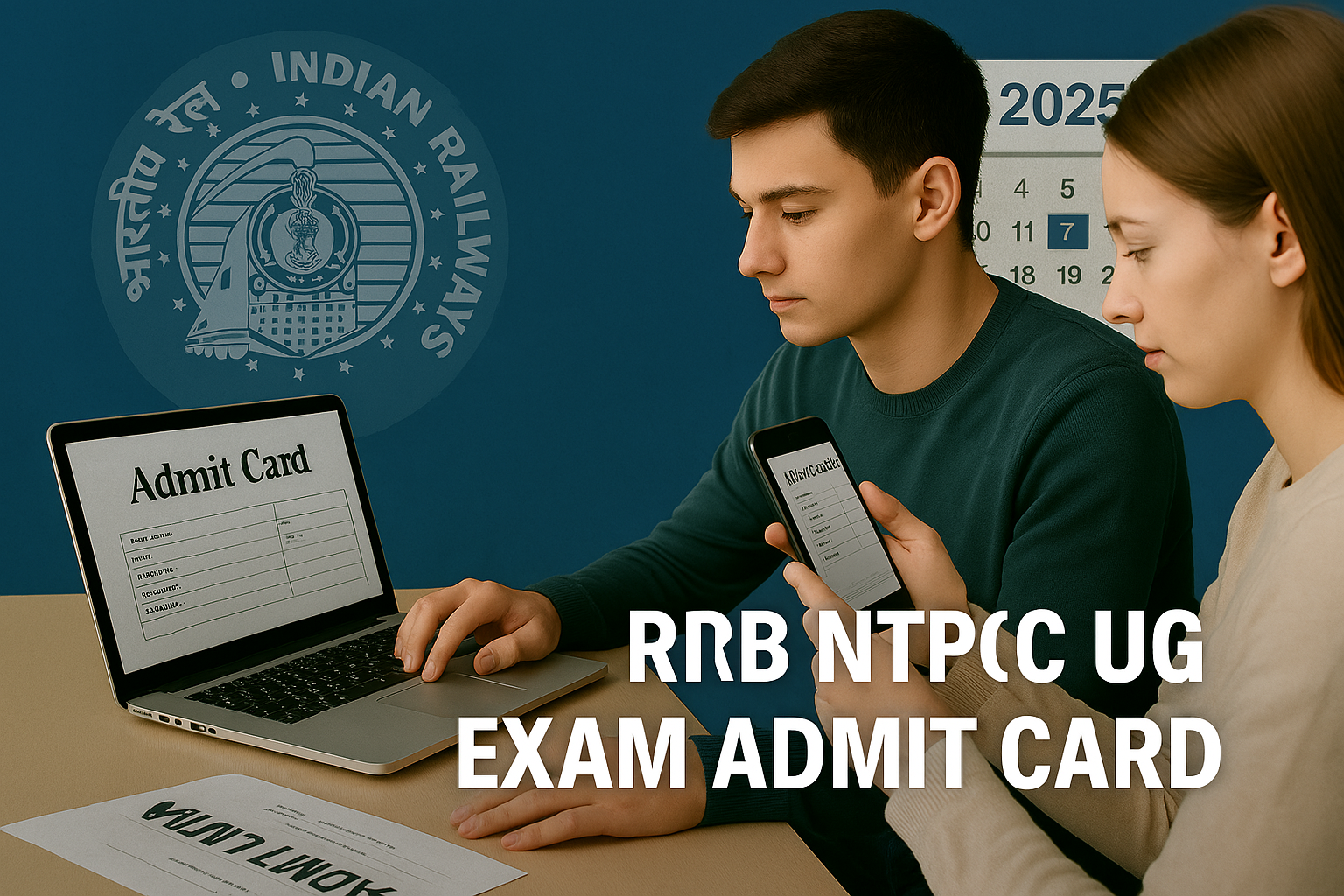
RRB NTPC undergraduate exam date 2025 is awaited as candidates prepare for the CBT stages. Check expected dates, admit card updates, and answer key details here.
Table of Contents
The Railway Recruitment Board conducts the Non-Technical Popular Categories (NTPC) examination for undergraduate positions across Indian Railways. This comprehensive guide provides verified information about the RRB NTPC Undergraduate Examination 2025, including exam dates, pattern, eligibility criteria, and preparation guidelines based on official notifications.
Understanding RRB NTPC Undergraduate Examination
The RRB NTPC examination serves as a recruitment mechanism for various non-technical positions in Indian Railways. The exam is designed for candidates who have completed their Class 12th education and wish to pursue careers in railway administration, operations, and support services.
Indian Railways, being one of the world’s largest railway networks, requires substantial workforce across multiple departments. The NTPC examination addresses this need by conducting centralized recruitment for undergraduate-level positions. The recruitment process follows transparent procedures established by the Railway Recruitment Board.
The examination provides opportunities for employment in positions such as Junior Clerk cum Typist, Accounts Clerk cum Typist, Commercial cum Ticket Clerk, and Traffic Assistant. These positions form the operational backbone of railway administration and passenger services.
Purpose of NTPC Examination
The primary objective of the NTPC examination is to identify qualified candidates for non-technical positions requiring Class 12th educational qualification. The examination assesses candidates’ aptitude in general awareness, mathematics, and reasoning abilities. This standardized testing ensures fair selection across all regions of India.
Railway services require personnel who can handle administrative tasks, maintain records, coordinate operations, and provide customer service. The examination structure tests these fundamental capabilities through objective-type questions. Successful candidates contribute to the efficient functioning of railway operations nationwide.
Significance for Career Seekers
Government employment with Indian Railways offers stability and structured career progression. Positions recruited through NTPC provide regular salary increments, pension benefits, and medical coverage. The job security associated with railway employment makes these positions highly sought after.
Railway employees receive various allowances including house rent allowance, transport allowance, and dearness allowance. Additional benefits include railway passes for employees and their families, enabling free or concessional travel. These comprehensive benefits make railway positions attractive career options for Class 12th pass candidates.
Eligibility Criteria for RRB NTPC Undergraduate 2025
Understanding eligibility requirements is essential before applying for the examination. The Railway Recruitment Board specifies clear criteria regarding educational qualifications, age limits, and nationality requirements.
Educational Qualifications
Candidates must possess a Class 12th certificate or equivalent qualification from a recognized board. The certificate must be issued by a Central or State Board of Secondary Education. Candidates appearing in their final year examination are not eligible to apply.
Different positions under NTPC may require specific subject combinations at the Class 12th level. Some positions might specify requirements for mathematics or science subjects. Candidates should verify position-specific requirements in the official notification before applying.
The educational certificate must clearly show the date of completion and marks obtained. Provisional certificates are generally not accepted during document verification. Candidates must have their original certificates available for the verification stage.
Age Requirements
The minimum age requirement for NTPC undergraduate positions is typically 18 years. The maximum age limit varies by position but generally ranges between 30 to 33 years. Age is calculated as of a specific date mentioned in the official notification.
Age relaxation is provided for candidates belonging to reserved categories:
- OBC candidates receive 3 years relaxation
- SC/ST candidates receive 5 years relaxation
- PWD candidates receive additional relaxation as per government norms
- Ex-servicemen receive relaxation equal to military service plus 3 years
The upper age limit for different positions may vary. For instance, certain positions might have a maximum age of 28 years, while others allow up to 33 years. Candidates must check position-specific age criteria in the official notification.
Nationality and Domicile
Candidates must be Indian citizens as defined by the Constitution of India. The recruitment is open to candidates from all states and union territories. No specific domicile requirements restrict applications based on state of residence.
For certain positions in specific regions, knowledge of local language might be required. However, this does not constitute a domicile restriction. Candidates selected for positions in any region must be willing to serve anywhere across Indian Railways network.
Physical Standards
Certain positions under NTPC may require specific physical standards. These standards typically include minimum height and vision requirements. The exact physical requirements depend on the nature of duties associated with each position.
Candidates with disabilities can apply under the PWD quota, subject to compatibility of disability with position requirements. The Railway Recruitment Board provides detailed guidelines about disability categories and applicable positions. Medical fitness standards are verified during the document verification stage.
RRB NTPC Undergraduate 2025: Expected Timeline
Based on previous recruitment cycles and the notification pattern, the following timeline represents expected dates. Candidates should monitor official RRB websites for confirmed announcements.
Tentative Schedule
| Event | Expected Timeline | Status |
|---|---|---|
| Official Notification Release | August 2025 | Tentative |
| Application Start Date | August 2025 | Tentative |
| Application Last Date | September 2025 | Tentative |
| Application Correction Window | September 2025 | Tentative |
| Admit Card Release | October 2025 | Tentative |
| CBT-1 Examination | October-November 2025 | Tentative |
| CBT-1 Answer Key | November 2025 | Tentative |
| CBT-1 Result | December 2025 | Tentative |
| CBT-2 Examination | January-February 2026 | Tentative |
| Final Result | March 2026 | Tentative |
Understanding the Timeline
The Railway Recruitment Board typically releases notifications 2-3 months before the commencement of examinations. The application window remains open for approximately 30 days. Candidates receive sufficient time to gather required documents and complete the application process.
After the application deadline, a correction window allows candidates to rectify errors in their applications. This window typically remains open for 3-5 days. Candidates cannot make corrections after this window closes.
Admit cards are released approximately 7-10 days before the examination date. Candidates must download admit cards from the respective RRB zone website where they applied. The admit card contains examination center details, reporting time, and important instructions.
Factors Affecting Schedule
The actual examination dates depend on various factors including total number of applications, availability of examination centers, and logistical arrangements. Indian Railways conducts these examinations across hundreds of cities to accommodate lakhs of candidates.
Seasonal considerations also influence scheduling. Examinations are typically avoided during extreme weather conditions or major festival periods. The Railway Recruitment Board aims to provide optimal examination conditions for all candidates.
Administrative processes including venue bookings, technical preparations, and coordination with various zones require considerable time. Any changes in the official schedule are communicated through RRB websites and major newspapers.
Application Process for RRB NTPC Undergraduate 2025
The application process is conducted entirely online through official RRB websites. Understanding each step ensures error-free submission and prevents disqualification.
Online Registration Process
Step 1: Website Access Visit the official website of any Railway Recruitment Board zone. All zones accept applications for NTPC positions. Candidates can apply through any RRB zone regardless of their location.
Step 2: New Registration Click on the registration link for NTPC Undergraduate recruitment. Provide basic information including name, father’s name, mother’s name, date of birth, and gender. This information must match exactly with Class 10th certificate.
Step 3: Contact Details Enter a valid mobile number and email address. These contact details receive important communications regarding the examination. One mobile number and email can be used for only one registration.
Step 4: Password Creation Create a strong password for your account. This password is required for subsequent logins. Store this password securely as it cannot be retrieved if forgotten.
Step 5: Registration Number After successful registration, a unique registration number is generated. Note this number carefully as it is required for all future transactions related to this recruitment.
Completing the Application Form
Personal Information Section Fill in complete personal details including permanent address, present address, and identification marks. Provide accurate information as these details are verified during document verification stage.
Educational Qualifications Enter details of Class 10th and Class 12th examinations including board name, roll number, year of passing, and percentage obtained. Additional educational qualifications can also be mentioned.
Category Selection Select the appropriate category (General, OBC, SC, ST, EWS, PWD). Category certificates must be uploaded during application. Claiming wrong category can lead to disqualification.
Position Preferences The application form allows selection of multiple positions based on eligibility. Candidates can choose positions according to their preference order. This preference order affects allocation during final merit list preparation.
Choice of RRB Zone Select the RRB zone through which you wish to apply. This choice determines the examination center allocation. Generally, candidates receive centers near their chosen RRB zone.
Document Upload Requirements
Photograph Specifications Upload a recent color photograph taken against light background. The photograph should be in JPG/JPEG format. File size should be between 20 KB to 50 KB. The photograph must clearly show the face without sunglasses or headgear.
Signature Specifications Scan your signature on white paper using black ink. The signature file should be in JPG/JPEG format. File size should be between 10 KB to 20 KB. The signature must be clear and legible.
Certificate Uploads Upload scanned copies of required certificates including Class 10th, Class 12th, category certificate (if applicable), and disability certificate (if applicable). Each document should be clearly readable.
Document Format Requirements All documents must be in PDF format except photograph and signature. Each file should not exceed 1 MB in size. Ensure documents are scanned properly without any blur or distortion.
Fee Payment
Application fees vary based on category:
- General and OBC candidates: Fee as specified in notification (typically around ₹500)
- SC/ST/PWD/Women/Ex-servicemen candidates: Usually exempted or nominal fee
- Fee refund: Examination fee is refunded after deducting bank charges if the candidate appears for the examination
Payment can be made through multiple modes including net banking, debit cards, credit cards, and UPI. After successful payment, save the payment receipt for future reference.
Application Submission
After completing all sections and uploading documents, review the entire application carefully. Check all entries for accuracy before final submission. Once submitted, most details cannot be changed except during the correction window.
Take multiple printouts of the submitted application form. Keep copies of all uploaded documents and payment receipts. These documents may be required during subsequent stages of recruitment.
RRB NTPC Undergraduate Examination Pattern
Understanding the examination pattern helps in strategic preparation. The NTPC examination is conducted in multiple stages to assess candidates comprehensively.
Computer-Based Test Stage 1 (CBT-1)
CBT-1 is the screening examination conducted for all applicants. It consists of objective-type multiple-choice questions.
Examination Specifications:
| Parameter | Details |
|---|---|
| Total Questions | 100 |
| Duration | 90 minutes |
| Maximum Marks | 100 |
| Exam Mode | Computer-Based Test |
| Languages | Hindi, English, and 13 regional languages |
| Question Type | Multiple Choice (4 options) |
Subject-wise Distribution:
| Subject | Number of Questions | Marks |
|---|---|---|
| General Awareness | 40 | 40 |
| Mathematics | 30 | 30 |
| General Intelligence and Reasoning | 30 | 30 |
Marking Scheme: Each correct answer awards 1 mark. Incorrect answers result in a deduction of 0.33 marks. Unattempted questions receive zero marks. This negative marking system requires careful attempt strategy.
Qualifying Criteria: Candidates must secure minimum qualifying marks to be eligible for CBT-2. The qualifying percentage is 40% for unreserved categories and 30% for reserved categories. These percentages are calculated on the total marks.
Computer-Based Test Stage 2 (CBT-2)
Candidates who qualify CBT-1 are eligible to appear for CBT-2. The number of candidates shortlisted is typically 20 times the number of vacancies.
CBT-2 Specifications:
| Parameter | Details |
|---|---|
| Total Questions | 120 |
| Duration | 90 minutes |
| Maximum Marks | 120 |
| Difficulty Level | Higher than CBT-1 |
The subject distribution in CBT-2 includes:
- General Awareness: 50 questions
- Mathematics: 35 questions
- General Intelligence and Reasoning: 35 questions
The same marking scheme applies with 1 mark for correct answers and 0.33 marks deduction for incorrect answers.
Skill Test and Document Verification
Candidates qualifying CBT-2 undergo skill tests depending on the position applied for. These tests assess practical abilities required for specific positions.
Typing Test: For positions involving typing duties, candidates must demonstrate typing speed. The minimum speed requirement is typically 30 words per minute in English or 25 words per minute in Hindi. The test duration is usually 10 minutes.
Document Verification: All candidates clearing CBT-2 and skill tests must attend document verification. Original certificates along with photocopies are verified. Any discrepancy in documents leads to disqualification.
Medical Examination
Successful candidates undergo medical examination to verify physical fitness standards. The medical examination assesses vision, hearing, and general health parameters. Candidates must meet the prescribed medical standards for railway employment.
Detailed Syllabus for RRB NTPC Undergraduate 2025
Understanding the syllabus ensures focused preparation. Each subject has specific topics that require thorough study.
General Awareness Syllabus
Current Affairs: Current events of national and international importance from the past 12 months. Major government schemes and their implementation. Important appointments, awards, and honors. Sports events and achievements.
Indian Geography: Physical features of India including mountains, rivers, and plateaus. Climate patterns and natural resources. Economic geography including agriculture, industries, and trade. State capitals, important cities, and geographical facts.
Indian History: Ancient Indian history covering major dynasties and cultural developments. Medieval period including Mughal and other regional kingdoms. Modern Indian history focusing on freedom struggle. Important historical events and their significance.
Indian Polity: Constitutional framework and fundamental rights. Structure of government including executive, legislature, and judiciary. Important constitutional amendments and their impact. Electoral system and democratic processes.
General Science: Basic concepts from Physics including mechanics, heat, light, and electricity. Chemistry concepts covering elements, compounds, acids, bases, and chemical reactions. Biology topics including cell structure, human body systems, diseases, and environmental science.
Economics: Basic economic concepts and Indian economic system. Banking and financial institutions. Budget and taxation. Economic reforms and development programs.
General Science and Technology: Recent developments in science and technology. Space research and achievements. Information technology and digital initiatives. Environmental conservation and climate change.
Mathematics Syllabus
Number Systems: Natural numbers, integers, rational and irrational numbers. HCF and LCM of numbers. Operations on numbers and BODMAS rule. Divisibility tests and prime numbers.
Algebra: Basic algebraic concepts and linear equations. Quadratic equations and their solutions. Polynomials and factorization. Algebraic identities and applications.
Geometry: Lines, angles, and their properties. Triangles and their properties including congruence and similarity. Circles and their theorems. Properties of quadrilaterals and polygons.
Mensuration: Area and perimeter of plane figures. Surface area and volume of solid figures. Applications of mensuration in practical problems.
Trigonometry: Basic trigonometric ratios and identities. Heights and distances problems. Trigonometric equations and their solutions.
Statistics and Probability: Collection and presentation of data. Measures of central tendency including mean, median, and mode. Probability concepts and basic problems.
Arithmetic: Percentage and its applications. Profit and loss calculations. Simple and compound interest. Ratio and proportion. Time and work problems. Time, speed, and distance. Averages and mixtures.
General Intelligence and Reasoning Syllabus
Analogies: Completing analogies based on relationships between words, numbers, or figures. Understanding patterns and similarities. Applying logical relationships.
Similarities and Differences: Identifying common features among given items. Distinguishing between similar-looking items. Classification based on characteristics.
Coding-Decoding: Letter coding using various patterns. Number coding and decoding. Mixed letter and number coding.
Mathematical Operations: Solving problems by substituting mathematical operations. Understanding relationships between operations. Applying operations in sequences.
Relationships: Understanding blood relations and family trees. Determining relationships between individuals. Solving complex relationship problems.
Analytical Reasoning: Analyzing given information to reach conclusions. Solving logical puzzles and arrangements. Seating arrangements and directions.
Syllogism: Understanding logical arguments and conclusions. Valid and invalid syllogisms. Solving problems based on given statements.
Jumbling: Arranging jumbled words to form meaningful sentences. Dictionary ordering of words. Sequential arrangement of words.
Venn Diagrams: Understanding set relationships through diagrams. Solving problems using Venn diagram logic.
Puzzle Test: Solving various types of logical puzzles. Arrangement problems based on given conditions.
Data Interpretation: Reading and interpreting data from tables and graphs. Drawing conclusions from presented information.
Series Completion: Number series and their patterns. Letter series and logical progressions. Missing term identification.
Statement and Conclusions: Drawing logical conclusions from given statements. Determining valid and invalid conclusions.
Decision Making: Making decisions based on given information and constraints. Evaluating different options logically.
Admit Card Download Process
The admit card is a mandatory document for appearing in the examination. It contains essential information about the examination.
Admit Card Release Timeline
Admit cards are typically released 7-10 days before the scheduled examination date. The Railway Recruitment Board announces the release through official websites and notifications. Candidates receive email and SMS alerts on registered contact details.
The admit card remains available for download until the examination is completed. However, candidates should download it immediately after release to avoid last-minute technical issues.
Step-by-Step Download Process
Access Official Website: Visit the official website of the RRB zone through which you applied. Navigate to the NTPC recruitment section on the homepage.
Locate Admit Card Link: Find the link for downloading the admit card for NTPC Undergraduate examination. The link is prominently displayed during the admit card release period.
Enter Credentials: Provide your registration number or roll number as mentioned in your application. Enter your date of birth in the specified format (DD/MM/YYYY). Complete the captcha verification to prove you are not a robot.
Download and Print: After successful login, the admit card appears on screen. Download the PDF file to your device. Print at least 2-3 copies on A4 size paper. Ensure all details are clearly visible in the printout.
Verify Details: Check all personal details including name, father’s name, date of birth, and category. Verify examination details such as date, shift timing, and reporting time. Confirm the examination center address and ensure you know the location.
Important Information on Admit Card
The admit card contains the following essential details:
- Candidate’s name and roll number
- Registration number used during application
- Examination date and session timing
- Reporting time at the examination center
- Complete address of examination center with center code
- Candidate’s photograph and signature
- Category and PWD status if applicable
- Important instructions for examination day
- Self-declaration to be signed on examination day
Common Issues and Solutions
Unable to Download: If you cannot download the admit card, try using different browsers. Clear browser cache and cookies before attempting again. Check your internet connectivity and try during non-peak hours.
Details Mismatch: If any detail appears incorrect on the admit card, contact the concerned RRB immediately. Keep supporting documents ready for verification. Do not attempt to modify the admit card yourself.
Lost or Damaged Admit Card: If you lose your admit card or it gets damaged, download a fresh copy from the website. The admit card remains available for download until the examination date. Always maintain multiple copies to avoid problems.
Examination Centers and Reporting
Understanding examination center allocation and reporting procedures ensures smooth examination day experience.
Examination Center Allocation
The Railway Recruitment Board conducts examinations across multiple cities to accommodate all candidates. Centers are allocated based on the RRB zone selected during application. Candidates typically receive centers within their chosen zone.
The examination is conducted in various cities classified into zones:
- Northern Railway Zone: Delhi, Chandigarh, Jammu, etc.
- Western Railway Zone: Mumbai, Ahmedabad, Rajkot, etc.
- Eastern Railway Zone: Kolkata, Bhubaneswar, Ranchi, etc.
- Southern Railway Zone: Chennai, Bangalore, Hyderabad, etc.
- Central Railway Zone: Mumbai, Nagpur, Bhopal, etc.
Additional zones include North Eastern Railway, North Central Railway, South Central Railway, and others. Each zone has multiple examination cities to ensure candidates don’t have to travel excessive distances.
Reporting at Examination Center
Arrival Time: Candidates must reach the examination center at least one hour before the scheduled examination time. Late arrivals may not be permitted to enter. The reporting time is mentioned on the admit card and must be strictly followed.
Entry Procedure: Show your admit card and valid photo identification proof at the entry gate. Security personnel verify details before allowing entry. Carry only permitted items inside the examination hall.
Biometric Verification: Candidates undergo biometric verification before entering the examination hall. Fingerprint scanning or photograph verification is conducted. This process prevents impersonation and ensures examination integrity.
Seating Arrangement: Each candidate is assigned a specific computer terminal. Seat numbers are displayed at the examination center. Find your seat and settle down before the examination begins.
Items Allowed and Prohibited
Permitted Items:
- Admit card with clear photograph
- Original photo identification proof (same as mentioned in application)
- Additional photograph (as backup if required)
- Transparent water bottle without label
- Admit card printout (advisable to carry extra copies)
Prohibited Items:
- Mobile phones and electronic devices
- Calculators and smartwatches
- Written notes or study materials
- Handbags, wallets, and belts with metallic buckles
- Jewelry and ornaments (except small items)
- Any communication devices
- Food items (except small candies if needed)
Examination centers provide lockers or designated areas for storing prohibited items. However, the Railway Recruitment Board is not responsible for loss or theft of personal belongings.
Examination Day Guidelines
Candidates must follow all instructions provided by examination center staff. Maintain silence and discipline throughout the examination. Any misbehavior or unfair means leads to immediate disqualification.
During the examination, candidates cannot leave the hall except in emergencies. Washroom breaks may be permitted under supervision. The examination timer on the computer screen shows remaining time.
Answer Key and Objection Process
The Railway Recruitment Board releases provisional answer keys after the examination. This transparency allows candidates to estimate their scores and raise objections if needed.
Answer Key Release
The provisional answer key is typically released 5-7 days after the examination concludes. It is published on the official RRB website for all candidates to access. The answer key is released in PDF format showing question booklet series and corresponding answers.
Candidates can download the answer key without any login requirement. The document contains questions, options, and marked correct answers. This enables candidates to compare their responses and calculate expected scores.
Calculating Expected Score
Use the answer key to mark your correct and incorrect attempts. Apply the marking scheme: add 1 mark for each correct answer and deduct 0.33 marks for each incorrect answer. The total gives your expected score before normalization.
Normalization is applied when the examination is conducted in multiple shifts. This process adjusts scores to compensate for difficulty variations across shifts. The final score after normalization determines merit list ranking.
Objection Filing Process
Candidates who believe any answer in the provisional answer key is incorrect can file objections. The objection period is announced along with the answer key release. This window typically remains open for 3-5 days.
Filing Objections:
Access the official RRB website and log in with your credentials. Navigate to the objection submission section. Select the question number you wish to challenge. Provide your answer with detailed explanation. Upload supporting documents from standard reference books or official sources.
Objection Fee:
Each objection requires a processing fee, typically around ₹50 per question. This fee is refundable if the objection is accepted after expert review. Payment is made online through available modes.
Expert Committee Review:
All objections are reviewed by subject matter experts. The committee examines each objection with supporting evidence. If the objection is found valid, the answer key is modified. In some cases, questions may be dropped if found ambiguous.
Final Answer Key:
After considering all objections, the final answer key is published. This final key is used for calculating candidate scores. No further objections or modifications are entertained after this stage.
Result Declaration and Merit List
The Railway Recruitment Board declares results based on performance in CBT-1 and subsequent stages. Understanding the result process helps candidates track their progress.
CBT-1 Result Process
CBT-1 results are declared within 30-45 days after the answer key objection process completes. Results are published on the official RRB website. Candidates can check results using their registration number and date of birth.
The result document shows:
- Candidate’s name and registration number
- Raw score obtained in the examination
- Normalized score (if applicable)
- Qualifying status (Qualified/Not Qualified)
- Cutoff marks for different categories
Cutoff Marks Analysis
Cutoff marks represent the minimum score required for qualifying to the next stage. These marks vary based on several factors including total number of candidates, difficulty level, and vacancies available.
Historical Cutoff Trends:
Analyzing previous years’ cutoff provides insight into expected qualifying marks. However, cutoff varies year to year based on examination difficulty and competition level.
Category-wise Cutoffs:
Different categories have different cutoff marks:
- Unreserved category typically has the highest cutoff
- OBC category cutoff is lower than unreserved
- SC/ST categories have further relaxed cutoffs
- PWD candidates receive additional relaxation
Zone-wise Variation:
Cutoff marks may vary slightly across different RRB zones. Some zones experience higher competition leading to marginally higher cutoffs. However, the variation is generally within 2-3 marks.
Merit List Preparation
Final merit lists are prepared based on performance in CBT-2. Candidates are ranked according to their normalized scores. The number of candidates selected equals the number of vacancies plus a reserve list.
Tie-Breaking Rules:
When candidates obtain equal marks, preference order is applied:
- Higher marks in Mathematics section
- Higher marks in General Intelligence section
- Elder candidate by date of birth
- Alphabetical order of name
Document Verification Call
Candidates whose names appear in the merit list are called for document verification. The call letter for verification is sent via email and SMS. Candidates must attend verification with all original documents.
During verification, educational certificates, category certificates, age proof, and identification documents are checked. Any discrepancy leads to disqualification. Successfully verified candidates proceed to medical examination.
Preparation Strategies for RRB NTPC Undergraduate
Systematic preparation significantly improves success chances. Following structured strategies helps cover the entire syllabus effectively.
Time Management for Preparation
Create a realistic study schedule allocating time to all subjects. Dedicate more time to weaker areas while maintaining strengths. Include regular breaks to avoid burnout.
A suggested daily schedule:
- Morning (2-3 hours): Mathematics practice
- Afternoon (2-3 hours): General Awareness reading
- Evening (2 hours): Reasoning practice
- Night (1 hour): Revision and note-making
Allocate one day weekly for full-length mock tests. Use another day for analyzing test performance and addressing weaknesses.
Subject-wise Preparation Tips
General Awareness:
Read newspapers daily focusing on national and international events. Note important events, government schemes, appointments, and awards. Maintain a current affairs notebook for quick revision.
Study NCERT books for history, geography, polity, and science topics. These books provide conceptual clarity essential for objective questions. Focus on understanding concepts rather than rote learning.
Follow monthly current affairs compilations from reliable sources. This consolidated information helps during final revision. Regular quiz practice reinforces learning.
Mathematics:
Master fundamental concepts before attempting complex problems. Clarity in basics enables solving varied question types. Practice NCERT mathematics books from classes 8 to 10 thoroughly.
Learn shortcut methods and formulas for quick calculations. Time-saving techniques are crucial given the limited time per question. Regular practice improves calculation speed and accuracy.
Solve previous years’ questions to understand question patterns. Identify frequently asked topics and prioritize them. Practice different types of problems from each topic.
General Intelligence and Reasoning:
Reasoning requires regular practice more than theory learning. Solve 30-40 questions daily to build pattern recognition skills. Start with basic level and gradually increase difficulty.
Understand different question types and solving approaches. Some questions need logical analysis while others require spatial visualization. Practice under timed conditions to improve speed.
Learn shortcuts for common question types. Many reasoning questions follow patterns that can be quickly identified. However, avoid over-reliance on tricks at the expense of understanding.
Mock Tests and Practice Papers
Mock tests simulate actual examination conditions. Regular mock test practice builds exam temperament and time management skills. Take at least 20-25 full-length mock tests before the actual examination.
Effective Mock Test Strategy:
Take mock tests in examination-like environment without distractions. Strictly adhere to time limits. This builds ability to perform under pressure.
After completing each test, analyze performance thoroughly. Identify topics causing most errors. Note time consumed per section and per question. This analysis guides focused improvement efforts.
Review incorrect answers to understand mistakes. Determine whether errors resulted from conceptual gaps or carelessness. Address conceptual weaknesses through additional study.
Track progress across multiple mock tests. Consistent score improvement indicates effective preparation. Stagnant or declining scores signal need to modify study strategies.
Previous Years’ Question Papers
Previous years’ papers provide invaluable insights into examination patterns. Solving these papers reveals frequently asked topics and question types. This helps prioritize preparation accordingly.
Attempt previous papers under timed conditions. This practice builds speed and confidence. Compare your answers with solutions to identify areas needing improvement.
Analyze patterns across multiple years:
- Topics appearing repeatedly deserve extra attention
- Question difficulty trends help set expectations
- Format familiarization reduces examination day anxiety
Study Resources and Materials
Books for Mathematics:
- R.S. Aggarwal’s Quantitative Aptitude
- NCERT Mathematics textbooks (Class 8-10)
- Fast Track Objective Arithmetic by Rajesh Verma
- Practice sets specifically designed for railway examinations
Books for General Awareness:
- Lucent’s General Knowledge
- NCERT textbooks for History, Geography, Polity, and Science
- Current Affairs monthly magazines
- Yearbook for comprehensive coverage
Books for Reasoning:
- R.S. Aggarwal’s Reasoning
- Analytical Reasoning by M.K. Pandey
- Practice sets from railway-focused publications
Online Resources:
- Official RRB websites for authentic information
- Educational YouTube channels for concept learning
- Mobile applications for daily practice
- Online test platforms for mock examinations
Select 2-3 quality resources for each subject rather than collecting numerous books. Thorough completion of limited resources proves more effective than superficial coverage of many books.
Maintaining Motivation and Health
Competitive examination preparation requires sustained effort over months. Maintaining physical and mental health ensures consistent performance.
Get adequate sleep of 7-8 hours daily. Sleep deprivation impairs memory and concentration. Quality rest enhances learning effectiveness.
Exercise regularly to maintain physical fitness and mental freshness. Even 30 minutes of daily physical activity significantly improves focus and reduces stress.
Eat nutritious meals at regular intervals. Avoid excessive caffeine or junk food. Proper nutrition supports brain function and sustained energy levels.
Stay connected with family and friends for emotional support. Share concerns and challenges rather than isolating yourself. Positive social interactions reduce stress.
Take regular breaks during study sessions. Short breaks improve concentration and prevent mental fatigue. Use breaks for activities that relax and refresh you.
Salary Structure and Benefits
Understanding compensation and benefits helps candidates appreciate the value of these positions.
Pay Scale Details
Railway employees are paid according to the 7th Central Pay Commission recommendations. Different NTPC positions fall under different pay levels.
Level-wise Pay Structure:
| Pay Level | Pay Scale Range | Applicable Positions |
|---|---|---|
| Level 2 | ₹19,900 – ₹63,200 | Junior Clerk, Train Clerk |
| Level 3 | ₹21,700 – ₹69,100 | Accounts Clerk, Traffic Assistant |
| Level 4 | ₹25,500 – ₹81,100 | Commercial cum Ticket Clerk |
| Level 5 | ₹29,200 – ₹92,300 | Senior Commercial cum Ticket Clerk |
The pay scale represents the range from entry level to maximum after all increments. Regular annual increments increase the basic pay progressively.
Allowances and Benefits
Dearness Allowance (DA): Calculated as a percentage of basic pay to compensate for inflation. DA rates are revised twice yearly based on consumer price index. Current DA rates are approximately 38-42% of basic pay.
House Rent Allowance (HRA): Provided to employees not residing in railway quarters. HRA varies based on city classification:
- X-class cities (metro areas): 24% of basic pay
- Y-class cities (other urban areas): 16% of basic pay
- Z-class cities (smaller towns): 8% of basic pay
Transport Allowance: Provided to meet commuting expenses. The standard transport allowance is ₹3,600 per month. This amount is fixed regardless of pay level.
Other Allowances: Various additional allowances may apply based on posting location and job requirements. These include washing allowance, night duty allowance, and special compensatory allowances.
Additional Financial Benefits
Annual Bonuses: Railway employees receive performance-linked bonuses typically equivalent to one month’s basic pay. Bonuses are paid annually based on overall railway performance.
Advances: Interest-free or low-interest advances available for various purposes:
House building advance: Up to 34 months’ basic pay
Vehicle advance: ₹7.5 lakhs for car, ₹50,000 for two-wheeler
- Computer advance: ₹50,000 for purchasing computers
- Festival advance: Available during major festivals
Non-Financial Benefits
Medical Facilities: Comprehensive medical coverage for employees and dependents. Treatment available at railway hospitals and empaneled private facilities. Reimbursement for medical expenses as per entitlement.
Leave Travel Concession (LTC): Free rail travel for employee and family members once in two years. Air travel is also covered for certain classes of employees. This benefit enables family vacations at minimal cost.
Pension and Retirement Benefits: Government pension scheme ensures financial security after retirement. Pension amount depends on length of service and last drawn basic pay. Gratuity payment on retirement based on years of service.
Railway Accommodation: Subject to availability, railway quarters are provided at subsidized rent. Quarters are allocated based on pay level and family size. Priority allocation for employees posted away from hometown.
Free Railway Passes: Unlimited free rail travel for self and eligible family members. Separate passes for official and personal travel. Complementary and privilege passes with various entitlements.
Career Progression Opportunities
Railway employment offers structured career advancement through:
Promotional Avenues: Regular promotions based on seniority and performance. Junior positions progress to senior and supervisory roles. Time-bound promotions after completing specified service years.
Departmental Examinations: Internal examinations enable movement to higher grades. These exams test job-specific knowledge and aptitude. Qualifying these exams accelerates career growth.
Training Programs: Regular training for skill development and knowledge updates. Specialized training for specific roles and responsibilities. Management development programs for leadership roles.
Inter-Departmental Transfers: Opportunities to move across departments based on vacancies. This enables exploration of different railway functions. Lateral movement broadens experience and career options.
Official Resources and Contact Information
Accessing authentic information sources ensures candidates receive accurate updates and guidance.
Official RRB Websites
Each Railway Recruitment Board zone maintains an official website. These websites are the primary source for all recruitment-related information.
List of RRB Zone Websites:
- RRB Ahmedabad: rrbahmedabad.gov.in
- RRB Ajmer: rrbajmer.gov.in
- RRB Allahabad: rrbald.gov.in
- RRB Bangalore: rrbbnc.gov.in
- RRB Bhopal: rrbbpl.nic.in
- RRB Bhubaneswar: rrbbbs.gov.in
- RRB Bilaspur: rrbbilaspur.gov.in
- RRB Chandigarh: rrbcdg.gov.in
- RRB Chennai: rrbchennai.gov.in
- RRB Gorakhpur: rrbguwahati.gov.in
- RRB Guwahati: rrbguwahati.gov.in
- RRB Jammu: rrbjammu.nic.in
- RRB Kolkata: rrbkolkata.gov.in
- RRB Malda: rrbmalda.gov.in
- RRB Mumbai: rrbmumbai.gov.in
- RRB Muzaffarpur: rrbmuzaffarpur.gov.in
- RRB Patna: rrbpatna.gov.in
- RRB Ranchi: rrbranchi.gov.in
- RRB Secunderabad: rrbsecunderabad.nic.in
- RRB Siliguri: rrbsiliguri.org
- RRB Thiruvananthapuram: rrbthiruvananthapuram.gov.in
Helpline and Support
Each RRB zone provides helpline numbers for candidate queries. These numbers operate during business hours on working days. Common queries regarding applications, admit cards, and results can be addressed through helplines.
Email Support: Official email addresses are available on respective RRB websites. Email queries typically receive responses within 3-5 working days. Provide complete details including registration number for faster resolution.
Grievance Redressal: Each RRB has a grievance redressal mechanism for addressing complaints. Candidates can submit grievances through online portals. Serious issues are escalated to appropriate authorities for resolution.
Social Media Presence
Some RRB zones maintain official social media accounts. These platforms provide timely updates about examinations and recruitments. However, verify information from official websites before taking action.
Caution Against Fake Sources: Numerous websites and social media pages claim to provide RRB information. Many of these sources spread misinformation or outdated details. Always verify information from official RRB websites only.
Avoid sharing personal information on unofficial platforms. Fraudulent elements may attempt to collect sensitive data. The Railway Recruitment Board never requests fees for results or appointments through unofficial channels.
Important Guidelines and Instructions
Following official guidelines ensures smooth participation in the recruitment process.
Application Guidelines
Complete the application form carefully with accurate information. Cross-verify all entries before final submission. Incorrect information may lead to application rejection or later disqualification.
Upload documents meeting specified size and format requirements. Poor quality or oversized files cause upload failures. Keep scanned copies ready before starting the application process.
Pay the application fee through authorized modes only. Save payment confirmation for records. Fee paid through unauthorized means is not refunded.
Examination Day Instructions
Report to the examination center well before the scheduled time. Late arrivals beyond the permissible time are not allowed entry. Plan your journey considering possible delays.
Carry admit card and original photo identification proof. Photocopies of ID proof are not accepted. The name on ID proof must match the name in the application.
Follow instructions provided by examination center staff. Maintain discipline and silence throughout the examination. Any violation results in cancellation of candidature.
Do not carry prohibited items to the examination center. The Railway Recruitment Board is not responsible for loss of personal belongings. Use center-provided lockers at your own risk.
Post-Examination Guidelines
Check results and merit lists on official websites only. Verify the authenticity of any communication received via email or SMS. Fraudulent elements send fake selection letters demanding money.
Attend document verification with all original certificates. Carry photocopies as specified in the call letter. Missing or invalid documents lead to disqualification.
Medical examination reports must be from authorized medical boards. Reports from private doctors are not accepted. Follow all medical examination procedures as directed.
Common Mistakes to Avoid
Learning from common errors helps candidates improve their chances of success.
Application Stage Mistakes
Providing Incorrect Information: Many candidates make errors while entering personal or educational details. These mistakes cause problems during verification. Double-check all entries against original documents before submission.
Poor Quality Document Uploads: Unclear or improperly scanned documents lead to application rejection. Ensure photographs show clear facial features. Signatures must be legible and match your actual signature.
Missing Application Deadline: Some candidates delay application thinking they have sufficient time. Last-minute technical issues can prevent submission. Complete applications well before the deadline.
Incorrect Category Selection: Claiming wrong category without valid certificates causes disqualification. Ensure you possess required certificates before claiming reserved category benefits. General category candidates should not incorrectly claim reservations.
Preparation Stage Mistakes
Lack of Systematic Planning: Random study without structured planning reduces effectiveness. Create a comprehensive schedule covering all topics. Track progress regularly and adjust plans as needed.
Ignoring Weak Areas: Candidates often focus only on topics they find easy. This approach leaves gaps in preparation. Dedicate extra time to difficult subjects for comprehensive readiness.
Insufficient Practice: Theory knowledge alone is insufficient for competitive examinations. Regular practice builds speed and accuracy. Solve adequate number of questions from each topic.
Neglecting Mock Tests: Some candidates skip mock tests considering them unimportant. Mock tests are crucial for time management and exam temperament. Take mock tests seriously as practice for actual examination.
Examination Day Mistakes
Poor Time Management: Spending excessive time on difficult questions reduces time for easier ones. Attempt questions strategically based on difficulty and marks. Skip questions consuming too much time and return later if time permits.
Careless Errors: Hurried attempts lead to silly mistakes despite knowing correct answers. Read questions carefully before selecting options. Verify calculations before marking answers.
Negative Marking Negligence: Random guessing without eliminating wrong options increases negative marks. Make educated guesses only after eliminating clearly incorrect options. Leave questions blank if completely unsure.
Technical Issues: Unfamiliarity with computer interface causes time wastage. Practice on computers before the examination. Understand how to navigate between questions and change answers if needed.
Important Updates and Notifications
Staying updated with official announcements ensures candidates don’t miss critical information.
Monitoring Official Announcements
Check official RRB websites regularly for updates. Important notifications regarding examination dates, admit cards, and results are posted on homepages. Enable email and SMS notifications if the option is available.
Major announcements are also published in leading national and regional newspapers. The Railway Recruitment Board publishes notices in employment newspapers. However, official websites remain the most reliable and timely source.
Changes in Examination Schedule
Occasionally, examination dates or center allocations change due to unforeseen circumstances. Such changes are communicated through official websites and registered contact details. Candidates must remain flexible and check for updates regularly.
In case of postponement, new dates are announced with sufficient advance notice. Admit cards reflect updated information. Download fresh admit cards if changes are announced.
Additional Recruitment Drives
The Railway Recruitment Board conducts multiple recruitment drives throughout the year. Information about new notifications is available on official websites. Candidates can apply for multiple recruitments if they meet eligibility criteria.
Separate application processes are followed for different recruitments. Registration for one examination does not automatically include candidates in other recruitment drives. Monitor announcements to avoid missing opportunities.
Frequently Asked Questions (FAQs)
When is the RRB NTPC Undergraduate Examination 2025 scheduled?
Based on typical recruitment timelines, the RRB NTPC Undergraduate CBT-1 examination is expected to be conducted in October-November 2025. The exact dates will be announced in the official notification released by the Railway Recruitment Board. The examination is conducted over multiple days in different shifts to accommodate the large number of candidates.
Specific date and shift allocation for individual candidates will be mentioned in their admit cards, which are typically released 7-10 days before the examination. Candidates should regularly check the official RRB website of their respective zone for confirmed schedule announcements.
What is the educational qualification required for RRB NTPC Undergraduate positions?
Candidates must possess a Class 12th certificate or equivalent qualification from a recognized Central or State Board of Secondary Education. The certificate must be issued before the application deadline, and candidates appearing in final examinations are not eligible to apply. Some specific positions may require particular subject combinations at the Class 12th level, which will be clearly mentioned in the official notification.
The educational qualification is verified during the document verification stage, and candidates must present original certificates along with photocopies. Provisional certificates are generally not accepted for verification purposes.
How many stages are there in the RRB NTPC recruitment process?
The RRB NTPC recruitment process consists of multiple stages. First, candidates appear for Computer-Based Test Stage 1 (CBT-1), which is a screening examination consisting of 100 questions to be answered in 90 minutes. Candidates who qualify CBT-1 are called for Computer-Based Test Stage 2 (CBT-2), which contains 120 questions of higher difficulty level. After CBT-2, shortlisted candidates undergo skill tests such as typing tests depending on the position applied for.
Candidates qualifying all tests are called for document verification where original certificates are checked. Finally, candidates undergo medical examination to verify physical fitness standards before final appointment.
What is the exam pattern and marking scheme for CBT-1?
The CBT-1 examination consists of 100 multiple-choice questions to be answered in 90 minutes. The subject distribution includes 40 questions from General Awareness (40 marks), 30 questions from Mathematics (30 marks), and 30 questions from General Intelligence and Reasoning (30 marks). Each correct answer awards 1 mark, while each incorrect answer results in a deduction of 0.33 marks.
Unattempted questions receive no marks or penalties. The examination is available in Hindi, English, and 13 regional languages. Candidates must secure minimum qualifying marks of 40% for unreserved categories and 30% for reserved categories to proceed to the next stage.
When will admit cards for RRB NTPC Undergraduate 2025 be released?
Admit cards are typically released 7-10 days before the scheduled examination date. The Railway Recruitment Board announces the release date through official websites and sends notifications via email and SMS to registered contact details. Candidates can download admit cards from the official website of the RRB zone through which they applied by entering their registration number and date of birth.
The admit card contains important information including examination date, shift timing, center address, and reporting time. Candidates should download and print multiple copies of the admit card as it is mandatory for examination entry. No candidate is allowed to appear without a valid admit card.
What documents are required for the examination and document verification?
For the examination, candidates must carry their admit card and original photo identification proof such as Aadhar card, PAN card, driving license, passport, or voter ID card. The name on the ID proof must match the application details. For document verification stage, candidates need Class 10th and Class 12th certificates and mark sheets (originals plus photocopies), category certificate if claiming reservation, recent caste certificate for OBC candidates (issued within three years), income certificate for EWS category,
disability certificate for PWD candidates, and recent passport-size photographs. All certificates must be from competent authorities as specified in the official notification. Any discrepancy in documents leads to disqualification from the recruitment process.
How can I check the answer key and raise objections?
The provisional answer key is released on the official RRB website 5-7 days after the examination concludes. Candidates can download the answer key without requiring login credentials. To raise objections, candidates must log in to the official website using their registration credentials during the specified objection window, which typically remains open for 3-5 days. For each objection, candidates must provide detailed explanation with supporting evidence from standard reference materials.
An objection fee of approximately ₹50 per question is charged, which is refundable if the objection is accepted after expert committee review. The final answer key is published after considering all valid objections, and this final key is used for calculating candidate scores.
What is the expected cutoff for RRB NTPC Undergraduate 2025?
Expected cutoff marks vary based on multiple factors including total number of applicants, examination difficulty level, number of vacancies, and previous years’ trends. For unreserved category, the cutoff typically ranges between 80-87 marks out of 100. OBC category cutoff is generally 8-10 marks lower, expected around 72-79 marks. SC category cutoff may be around 62-70 marks, while ST category cutoff could be around 58-66 marks.
These are estimates based on historical trends, and actual cutoffs are determined by various factors specific to each recruitment cycle. Zone-wise cutoff variations of 2-3 marks are also observed. Candidates should aim to score well above expected cutoffs to ensure selection with comfortable margin.
What is the salary structure for RRB NTPC positions?
RRB NTPC positions are paid according to the 7th Central Pay Commission recommendations. Entry-level positions like Junior Clerk fall under Level 2 with pay scale of ₹19,900 to ₹63,200. Accounts Clerk and Traffic Assistant positions come under Level 3 with pay scale of ₹21,700 to ₹69,100. Commercial cum Ticket Clerk falls under Level 4 with pay scale of ₹25,500 to ₹81,100. In addition to basic pay, employees receive Dearness Allowance (approximately 38-42% of basic pay), House Rent Allowance
(24%/16%/8% based on city classification), Transport Allowance of ₹3,600 per month, and other benefits. The total in-hand salary for entry-level positions ranges from ₹30,000 to ₹45,000 per month depending on pay level and posting location. Employees also receive annual bonuses, medical benefits, pension, and free railway travel for self and family members.
How do I stay updated about official announcements and notifications?
Candidates should regularly visit the official website of their respective RRB zone for all updates and announcements. Bookmark the official website and check it at least twice weekly during the recruitment process. Enable email and SMS notifications during application registration to receive important alerts. Official notifications are also published in major national and regional newspapers, particularly in employment supplements.
Follow only verified official sources and avoid relying on unofficial websites or social media pages that may provide incorrect information. Save helpline contact numbers provided on official websites for clarification of doubts. Download and save all important documents including application confirmation, admit card, and result announcements immediately when available.
Conclusion and Final Recommendations
The RRB NTPC Undergraduate Examination 2025 provides significant employment opportunities for Class 12th pass candidates across India. Understanding the complete recruitment process, eligibility requirements, examination pattern, and preparation strategies enhances success prospects.
Key Takeaways
Thorough preparation covering all subjects systematically is essential. Mathematics requires regular practice for building speed and accuracy. General Awareness demands consistent reading of current affairs and standard reference materials. Reasoning skills improve through daily practice and pattern recognition.
Mock tests and previous years’ papers provide invaluable practice under examination conditions. Time management during the examination determines overall performance. Strategic attempt sequence and avoiding negative marking maximize scores.
Regular monitoring of official RRB websites ensures timely access to important notifications. Maintaining accurate documentation prevents problems during verification stages. Following all official instructions and guidelines ensures smooth participation throughout the recruitment process.
Next Steps for Aspirants
Candidates planning to appear for RRB NTPC Undergraduate 2025 should begin preparation immediately. Start with diagnostic assessment to identify strengths and weaknesses. Create a comprehensive study schedule allocating adequate time to all subjects.
Gather quality study materials including standard reference books and online resources. Join test series for regular mock test practice. Connect with other aspirants for motivation and information sharing.
Monitor official RRB websites regularly for notification release. Complete the application process carefully when applications open. Prepare all required documents in advance for smooth submission.
Final Words
Government employment with Indian Railways offers stability, growth opportunities, and comprehensive benefits. The NTPC examination provides a transparent and merit-based selection process. Dedicated preparation with systematic approach significantly improves success chances.
Stay focused on your preparation goals and maintain consistency in efforts. Avoid distractions and remain committed to your study schedule. Believe in your capabilities while working diligently towards improvement.
The examination rewards thorough preparation and smart strategy. Your sincere efforts combined with proper guidance will help achieve your railway career aspirations. Approach the examination with confidence built through comprehensive preparation.
About the Author
Nueplanet
This comprehensive guide has been prepared by educational content specialists with expertise in competitive examination analysis and career guidance. The information presented is sourced from official Railway Recruitment Board notifications, government portals, and verified institutional sources.
Our team focuses on providing accurate, transparent, and up-to-date information to help candidates navigate complex recruitment processes. We are committed to presenting factual content that empowers aspirants to make informed decisions about their career paths.
All information is regularly updated to reflect the latest official announcements and policy changes. We maintain strict adherence to authentic sources and cross-verify details before publication.
Verification and Transparency
Content Sources:
- Official Railway Recruitment Board notifications and circulars
- Government of India employment portals and notifications
- Verified educational resources and standard reference materials
- Historical data analysis from previous recruitment cycles
Update Commitment: We regularly monitor official sources for updates and modifications. Any changes in examination schedules, patterns, or procedures are promptly reflected in our content.
Disclaimer: While every effort is made to ensure accuracy, candidates must verify all critical information from official RRB websites before taking any decisions. This guide serves as an informational resource and does not constitute official notification. The author is not affiliated with Railway Recruitment Board or any government organization.
For official information and notifications, candidates should visit:
- Official RRB zone websites (list provided in Official Resources section)
- Railway Recruitment Board central portal
- Government of India employment news publications
Published: July 03, 2025
Last Updated: July 03, 2025
Next Review: Upon official notification release
Contact for Corrections
If you identify any inaccuracies or outdated information in this guide, please contact through official feedback channels. We appreciate corrections that help maintain content accuracy and reliability.
Important Notice: This article provides information based on expected timelines and historical patterns. Actual dates and procedures will be confirmed only through official RRB notifications. Candidates are advised to rely on official sources for final information and not make any commitments based solely on this guide.
Helpful Resources
Latest Posts
- National RailOne App: Indian Railways’ One-Stop Solution for Travellers
- HDB Financial Services IPO Allotment GMP: All You Need to Know
- TNPSC Admit Card 2025 Released: Everything You Need to Know
- Jharkhand Polytechnic Result 2025 Declared: Check Your Scores, Merit List, and Admission Process
- 7th July Public Holiday India: Is Muharram 2025 a National Holiday?










Post Comment