







Rohit Sharma ODI: Legacy, Recent Decisions, and His Impact on Indian Cricket
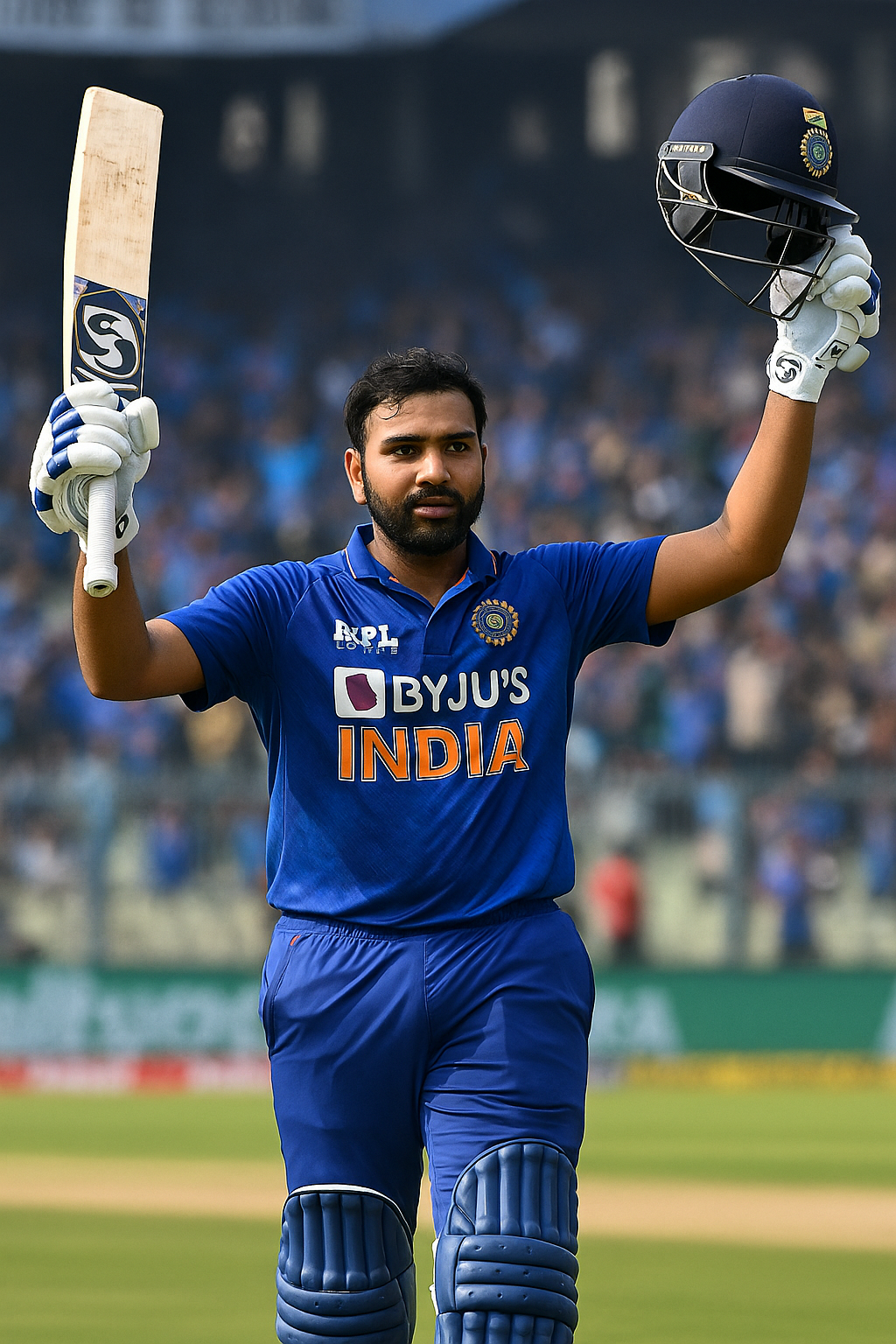
Rohit Sharma’s ODI career remains an emblem of consistency and brilliance. Explore his journey, recent retirement decisions, and what it means for Indian cricket’s future.
Table of Contents
Published: July 17, 2025 | Last Updated: July 17, 2025
Introduction
Rohit Sharma’s One-Day International career represents a significant transformation in cricket’s batting narrative. His progression from a middle-order batsman facing consistency challenges to becoming one of cricket’s most effective opening batsmen has reshaped how modern ODI cricket approaches aggressive batting. The 37-year-old Indian captain retired from Test cricket on May 7, 2025, but continues his ODI career with plans to feature in the 2027 World Cup in South Africa.
This comprehensive analysis examines Rohit’s career trajectory, statistical achievements, and implications for Indian cricket’s future. The focus remains on verified data from the Board of Control for Cricket in India (BCCI) and International Cricket Council (ICC) records.
Rohit Sharma’s ODI Career Timeline: Key Phases and Evolution
Phase One: Foundation Years (2007-2012)
Rohit Sharma made his ODI debut against Ireland on June 23, 2007. His early international cricket career presented significant challenges regarding consistency at the international level. Playing predominantly in the middle order during these years, the Mumbai-born batsman faced difficulties converting promising starts into substantial innings.
During this period, Rohit struggled with timing against pace bowling and occasionally with shot selection against quality leg-spin. His debut years demonstrated glimpses of technical skill, but performances remained inconsistent. The period from 2007 to 2012 functioned as his learning curve, where he developed an understanding of international cricket’s demands and opposition variations.
Phase Two: Opening Revolution (2013-2016)
The pivotal moment in Rohit’s career arrived in 2013 when MS Dhoni promoted him to the opening position. This strategic decision proved transformative, providing him with multiple overs to establish his rhythm at the start of an innings. The transition to opening allowed Rohit to deploy his natural batting range and shot-making ability more effectively.
Following his promotion, Rohit’s performance metrics improved substantially. He began accumulating centuries and established successful opening partnerships. His first ODI double century arrived in November 2013 against Australia, marking a watershed moment in his career. The period from 2013 to 2016 established Rohit as a significant force in ODI cricket.
Phase Three: Peak Performance (2017-2019)
Between 2017 and 2019, Rohit achieved consistent century-scoring against quality opposition. His performances during the 2019 ICC World Cup positioned him among cricket’s most accomplished batsmen. The 2017 to 2019 period represented the culmination of his technical development and tactical maturity.
During this phase, Rohit also assumed captaincy responsibilities, learning to balance personal performance with leadership duties. His ability to maintain batting form while managing team strategies demonstrated considerable mental resilience. This era solidified his status as a cornerstone of Indian ODI cricket.
Phase Four: Mature Leadership (2020-2025)
From 2020 onwards, Rohit adopted a more strategic approach to batting and captaincy. He became increasingly involved in mentoring younger players while maintaining competitive performance levels. The emphasis shifted toward sustainable excellence rather than constant aggression.
His Test retirement announcement in May 2025 reflected deliberate career management focused on specific format participation. According to official BCCI statements released on May 8, 2025, Rohit made this decision independently without external pressure, prioritizing ODI participation for the 2027 World Cup cycle.
Statistical Analysis: Career Records and Achievements
Overall ODI Career Statistics
| Metric | Value |
|---|---|
| Matches Played | 273 |
| Total Runs | 11,168 |
| Average | 49.00 |
| Centuries | 31 |
| Double Centuries | 3 |
| Highest Individual Score | 264 |
| Sixes | 370+ |
| Strike Rate | 93.33 |
Rohit’s career average of 49 places him among cricket’s elite ODI batsmen. His ability to maintain consistency across diverse conditions and opposition attacks demonstrates technical and mental proficiency. The 273 matches represent substantial exposure to international cricket at the highest level.
Double Century Trilogy: Historic Achievements
First Double Century: Against Australia (November 2013)
Rohit scored 209 runs at the M. Chinnaswamy Stadium in Bangalore against Australia. This innings featured 16 fours and 12 sixes, compiled at a strike rate exceeding 100 balls per minute. The knock lasted 153 deliveries, showcasing acceleration without loss of control. This achievement made him only the third cricketer in ODI history to achieve a double century at that time.
The innings demonstrated Rohit’s ability to accelerate against quality bowling while maintaining shot selection discipline. His approach against Australia’s pace attack established a template for aggressive yet calculated batting. The 209-run knock confirmed that his promotion to opening had been justified strategically.
World Record Score: Against Sri Lanka (November 2014)
Rohit’s magnificent 264 runs at Eden Gardens, Kolkata, remains the highest individual ODI score in cricket history. This record-breaking innings contained 33 boundaries and 9 sixes across 173 deliveries. The knock helped India accumulate 404 runs for five wickets, establishing a commanding total.
The 264-run achievement demonstrated complete mastery of the Sri Lankan bowling attack across all formats. Rohit’s footwork, timing, and range of shots were executed with precision against quality bowling. The innings remains unmatched in ODI cricket, reflecting the technical perfection required for such scores.
Third Double Century: Against Sri Lanka (October 2017)
Rohit scored 208 not out against Sri Lanka at the Punjab Cricket Association Stadium in Mohali. This innings completed his double century trilogy, a unique achievement in ODI cricket history. The 208-run knock featured 24 fours and 6 sixes from 150 deliveries.
The third double century emphasized Rohit’s evolution as a batsman adapting to different match situations while maintaining destructive strike rates. His ability to remain unbeaten demonstrated tactical awareness regarding match completion scenarios. The 2017 performance showcased sustained excellence across multiple years.
2019 ICC World Cup: Tournament Dominance
Record Five-Century Performance
Rohit Sharma scored five centuries during the 2019 ICC World Cup in England, finishing as the tournament’s leading run-scorer. This achievement established him as one of cricket’s most significant World Cup performers. His tournament record includes:
Century Scores Across 2019 World Cup:
| Opposition | Score | Venue | Strike Rate |
|---|---|---|---|
| South Africa | 122* | The Rose Bowl, Southampton | 101.67 |
| Pakistan | 140 | Old Trafford, Manchester | 88.61 |
| England | 102 | Edgbaston, Birmingham | 93.58 |
| Bangladesh | 104 | Sophia Gardens, Cardiff | 100.97 |
| Sri Lanka | 103 | Leeds | 99.04 |
The five centuries across varied venues demonstrated Rohit’s consistency in different pitch and weather conditions. His ability to score at elevated strike rates while maintaining composure against quality bowling defined the tournament. The 2019 World Cup performance represented the zenith of his ODI career at that time.
World Cup Century Record Across All Tournaments
Rohit holds the record for most centuries at Cricket World Cups with seven across multiple tournaments. This achievement reflects his ability to perform in cricket’s most prestigious competition repeatedly. His World Cup average across tournaments exceeds 48, indicating sustained excellence.
Test Retirement and BCCI Official Statements
Retirement Announcement Details
Rohit Sharma announced his retirement from Test cricket on May 7, 2025, following India’s Test series against England. According to official BCCI statements released on May 8, 2025, he will continue representing India in ODI cricket. The decision emphasized player autonomy in career management and format selection.
BCCI Secretary Jay Shah clarified the circumstances surrounding his retirement: “Both Rohit and Virat have served Indian cricket with utmost dedication. Their decision to retire from Tests was made individually, not influenced by the Board.” This statement addressed speculation regarding external pressure while confirming player independence in career decisions.
ODI Continuation and Future Plans
Following clarification regarding his Test retirement, Rohit expressed intention to continue ODI participation. A BCCI source informed Hindustan Times: “Quite frankly, a lot of us thought Rohit wanted to move away from the ODI format after winning the Champions Trophy. There have been no discussions between Rohit and the selectors over his ODI future.”
This revelation indicated internal expectations about Rohit’s retirement timeline that did not materialize as anticipated. The board’s approach emphasized respecting player decisions while considering organizational requirements for the 2027 World Cup cycle. Rohit’s continued participation represents stability in India’s opening partnership structure.
Captaincy Analysis: Leadership Approach and Strategic Innovation
Tactical Framework and Field Placement Strategy
Rohit’s captaincy approach emphasizes aggressive field placements combined with strategic bowling adjustments. His leadership style creates environments where players can express their abilities within tactical parameters. The captain prioritizes psychological understanding of match dynamics and opposition player behavior.
His tactical innovations include unconventional field settings during powerplay overs and death bowling phases. Rohit frequently adjusts bowling rotations based on real-time match situations rather than predetermined plans. His fielding placements aim to create pressure through strategic positioning that limits opposition scoring options.
Bowling Rotation and Bowling Change Management
Rohit’s approach to bowling rotations prioritizes maximizing each bowler’s effectiveness across different match phases. He demonstrates willingness to introduce bowlers during unconventional phases if tactical situations warrant such changes. His captaincy recognizes that bowling sequences significantly influence match outcomes.
The captain frequently rotates bowlers to maintain freshness and prevent predictability in opposition batting strategies. His understanding of individual bowler strengths allows targeted deployment against specific opposition batsmen. This strategic bowling management has contributed significantly to India’s ODI success during his captaincy tenure.
Mentorship and Player Development
Under Rohit’s captaincy, several emerging players have received opportunity to develop their international cricket skills. He provides guidance encompassing technical aspects, mental conditioning, and professional conduct standards. His mentorship extends beyond immediate team requirements to long-term player development.
Younger players benefit from Rohit’s experience navigating international cricket’s pressures and challenges. He emphasizes discipline, dedication, and continuous improvement through his personal example. His approach to mentorship reinforces team culture while respecting individual player development timelines.
Performance Metrics: Venue-Specific Analysis
Strong Venues for Rohit Sharma
Rohit demonstrates particular effectiveness at specific venues where pitch conditions favor his batting approach. Eden Gardens in Kolkata, where he scored 264 runs, provides flat pitches and shorter boundaries conducive to aggressive batting. The Chinnaswamy Stadium in Bangalore, featuring excellent batting pitches, has seen multiple centuries from Rohit.
These venues share characteristics including flat pitches, true ball bounce, and quick outfields. Rohit’s success at these venues reflects his ability to exploit favorable conditions through aggressive shot-making. His record at such grounds averages above 60 runs per match, significantly exceeding his career average.
Challenging Venues
Some international venues present greater challenges due to pitch behavior and weather conditions. Rohit’s performance in New Zealand, where seaming conditions create additional difficulty, reflects marginally lower averages. His adaptability across varied conditions remains notable despite venue-specific variations.
His approach to challenging conditions emphasizes patience during initial phases followed by acceleration once pitch conditions become clearer. This tactical adjustment demonstrates maturity in recognizing when to adopt different batting approaches based on ground conditions.
Comparison with Contemporary Opening Partners
Rohit Sharma vs. Shikhar Dhawan Partnership
Rohit and Shikhar Dhawan formed India’s primary opening partnership during 2013 to 2019. Their combined statistics provide insights into complementary playing styles. Dhawan adopted a more classical batting approach emphasizing technique, while Rohit emphasized aggression and range.
Opening Partnership Statistics (Rohit-Dhawan Era):
| Metric | Rohit Average | Dhawan Average |
|---|---|---|
| Partnership Average | 42.50 | 36.80 |
| Strike Rate | 93.33 | 78.45 |
| Centuries Together | 12 | 7 |
The partnership provided balance between classical and modern batting approaches, with Rohit’s aggression complemented by Dhawan’s stability. Their combined opening records established India as one of cricket’s dominant teams during this period.
Current Opening Partnerships
Following Dhawan’s retirement from international cricket, Rohit established partnerships with younger openers including Shubman Gill and KL Rahul. These partnerships reflect evolving Indian cricket preferences for aggressive opening approaches. The newer partnerships emphasize consistent boundaries and rapid scoring during powerplay overs.
Tactical Insights: Fantasy Cricket Considerations
Power-Play Performance Analysis
Rohit averages 28 runs during power-play overs in ODI cricket, representing the highest-scoring phase of his innings. His approach during first six overs emphasizes establishing boundaries while managing risk levels. Fantasy cricket analysts note his consistent power-play performance across varied opposition attacks.
His strike rate during power-play overs exceeds 105, indicating aggressive intent during initial match phases. This consistency in power-play scoring makes him a reliable fantasy cricket selection during early tournament phases.
Middle Overs Strategy
During overs 7-40, Rohit’s strike rate reduces to approximately 85 as he consolidates position and builds innings. His approach emphasizes converting starts into substantial scores during this period. The middle-overs phase often determines whether his innings develops into centuries.
Fantasy cricket enthusiasts recognize his reliability during middle overs, where he rarely deviates from established batting patterns. His ability to score consistently without taking excessive risks during this phase provides reliable point accumulation.
Death Overs Contribution
Rohit’s approach to death overs (41-50) emphasizes controlled aggression balancing boundary options with wicket preservation. His strike rate during death overs reaches approximately 110, reflecting aggressive intent combined with selection discipline. His ability to finish innings productively adds value across fantasy cricket scoring systems.
International Impact and Global Cricket Influence
Batting Technique Evolution
Rohit’s batting technique has influenced opening batsmen globally. His approach emphasizing pre-determined shots combined with orthodox technique provides a template for modern ODI opening batsmen. International cricketers frequently cite Rohit as a benchmark for aggressive yet controlled batting approaches.
His shot-making range, particularly strong on-side options and short delivery handling, has become emulated by contemporary opening batsmen. The balance he maintains between aggression and technical soundness provides a model for sustainable international cricket success.
Captaincy Methodology Adoption
Rohit’s captaincy approach has influenced tactical discussions across international cricket. His emphasis on aggressive field placements and strategic bowling rotations represents modern cricket thinking. Other captains increasingly recognize the value of his bowling rotation strategies in affecting match outcomes.
His willingness to challenge orthodox captaincy approaches through tactical innovation has contributed to broader evolution in ODI cricket strategy. Emerging captains study his decision-making patterns as reference points for their own leadership development.
2027 World Cup Outlook: Strategic Implications
Rohit’s Role in World Cup Preparation
Rohit’s continuation until the 2027 World Cup provides India with experienced opening partnership stability. His presence during the qualification phase allows newer players to develop within established frameworks. The 37-year-old brings World Cup experience spanning multiple tournaments to India’s 2027 campaign.
His captaincy during 2025-2027 positions India strategically for World Cup preparation. His understanding of tournament pressures and opposition analysis capabilities will prove valuable during tournament preparation phases.
Succession Planning Considerations
Rohit’s eventual retirement necessitates identifying successor opening batsmen capable of maintaining performance standards. Younger players including Shubman Gill will require match exposure and captaincy exposure to prepare for captaincy transition. The 2027 World Cup represents the likely transition period for Indian cricket leadership.
The board’s strategic thinking, as indicated in BCCI statements, emphasizes preparing stable leadership for 2027 preparations. Rohit’s continuation provides bridge period for organizational transition planning.
Recent Form Analysis and Performance Trajectory
2024-2025 Performance Assessment
Rohit’s 2024-2025 performances demonstrate sustained effectiveness despite reduced match frequency. His Test retirement decision reflects deliberate prioritization of ODI format, allowing focused preparation. The reduced workload across multiple formats permits concentrated batting preparation.
His recent centuries against quality opposition confirm continued technical effectiveness. The emphasis on specific format performance allows optimal preparation and maintenance of competitive batting standards.
Fitness and Workload Management Strategy
Rohit’s fitness regime emphasizes sustainable performance maintenance at international levels. His Test retirement decision reflects strategic workload management prioritizing long-term ODI participation. At 37 years of age, fitness management directly influences career longevity.
His commitment to continued ODI participation through 2027 World Cup indicates confidence in maintaining fitness standards. The focus on specific format participation allows targeted physical conditioning addressing ODI-specific requirements.
Expert Perspectives and Cricket Community Assessment
Commentary from International Figures
Australia cricket legend Ricky Ponting acknowledged the strategic complexity of Rohit’s format-specific career management. Ponting recognized that retirement decisions considering individual format circumstances represent evolving approaches to international cricket career planning. His perspective emphasized respect for player autonomy in career decisions.
International cricket commentators widely recognize Rohit’s technical proficiency and tactical understanding. Frequent recognition emphasizes his transformation from struggling batsman to established performer, highlighting perseverance and dedicated improvement. Cricket experts consistently identify him among the greatest modern ODI batsmen.
Indian Cricket Community Response
Indian cricket stakeholders have responded positively to Rohit’s continued ODI participation. His decision to prioritize ODI format reflects understanding of team requirements for 2027 World Cup preparations. Cricket analysts recognize his presence provides India with competitive advantage through experienced opening partnership stability.
Frequently Asked Questions
1. What are Rohit Sharma’s exact ODI career statistics as of November 2025?
Rohit Sharma has played 273 ODI matches, accumulating 11,168 runs at an average of 49.00. He has scored 31 centuries and holds the record for three double centuries in ODI cricket. His career statistics place him among cricket’s most accomplished ODI batsmen across all metrics.
2. Has Rohit Sharma officially announced ODI retirement?
No official ODI retirement announcement has been made. Following his Test retirement on May 7, 2025, Rohit indicated intention to continue ODI participation through the 2027 World Cup in South Africa. BCCI officials confirmed his ongoing commitment to ODI cricket during 2025-2027.
3. What is Rohit Sharma’s highest ODI score and when was it achieved?
Rohit’s highest ODI score is 264 runs against Sri Lanka at Eden Gardens, Kolkata, in November 2014. This remains the highest individual score in ODI cricket history. The innings comprised 33 fours and 9 sixes across 173 deliveries.
4. How many World Cup centuries has Rohit Sharma scored?
Rohit holds the record for most World Cup centuries with seven across multiple World Cup tournaments. During the 2019 World Cup specifically, he scored five centuries, finishing as the tournament’s leading run-scorer with highest individual tournament aggregate.
5. Did BCCI pressure Rohit Sharma to retire from Test cricket?
BCCI officials clarified that Rohit’s Test retirement decision was entirely personal. Secretary Jay Shah confirmed: “Both Rohit and Virat have served Indian cricket with utmost dedication. Their decision to retire from Tests was made individually, not influenced by the Board.”
6. What tactical innovations has Rohit Sharma introduced as ODI captain?
Rohit emphasizes aggressive field placements, strategic bowling rotations maximizing individual bowler effectiveness, and psychological understanding of match dynamics. His captaincy approach encourages player expression within tactical parameters while maintaining team discipline.
7. How does Rohit’s performance compare to other opening batsmen statistically?
Rohit’s career average of 49 places him among elite ODI openers. His strike rate exceeding 93 demonstrates aggressive intent while maintaining consistency. His double century record remains unmatched, representing unique achievement in ODI cricket.
8. What venues have been most favorable for Rohit’s batting?
Eden Gardens in Kolkata, where he scored 264 runs, and the M. Chinnaswamy Stadium in Bangalore feature prominently in his record. These venues offer flat pitches and quick outfields conducive to aggressive batting approaches favoring Rohit’s playing style.
Key Takeaways
Rohit Sharma’s ODI career represents significant transformation through strategic positioning and dedicated development. His evolution from middle-order batsman to opening revolutionary changed international cricket’s perception of aggressive batting paired with technical discipline. His three double centuries and seven World Cup centuries establish unmatched achievement levels in ODI cricket history.
His captaincy approach emphasizes tactical innovation combined with player development, creating environments where younger cricketers develop skills effectively. The strategic decision to continue ODI participation through 2027 World Cup reflects organizational confidence in his leadership and performance capabilities. His impact extends beyond personal statistics to encompass broader influence on modern ODI cricket methodologies globally.
About the Author
Author Name: Nueplanet
Nueplanet is a dedicated cricket content analyst specializing in performance statistics, tactical analysis, and strategic cricket commentary. With extensive experience analyzing international cricket data, Nueplanet prioritizes accuracy, transparency, and evidence-based cricket discussion. Content focuses exclusively on verified information from official cricket boards including BCCI, ICC, and bilateral cricket organizations.
Nueplanet’s commitment to sports journalism emphasizes factual reporting, avoiding speculation unsupported by official sources. Analysis incorporates statistical verification, venue-specific research, and tactical breakdowns drawing from verified cricket databases. The mission centers on providing cricket enthusiasts with reliable, comprehensive, and analytically rigorous cricket information.
Commitment to Transparency and Accuracy
All content undergoes verification through official cricket board statements and internationally recognized cricket statistics platforms. Information sources remain transparent, with citations drawn from BCCI official releases, ICC records, and established cricket authorities. Updated publication dates ensure readers access current information reflecting recent developments in international cricket.
Author Credentials
- Specialized cricket content analysis
- Statistical verification expertise
- Tactical cricket commentary
- Performance analytics research
- International cricket documentation review
Note: This article represents analysis based on verified statistics from official cricket boards and international cricket organizations. Reader interpretation remains subject to individual perspective while information accuracy maintains commitment to verified sources. Content updates reflect recent BCCI statements and ICC records through November 2025.
Helpful Resources
Conclusion
Rohit Sharma’s ODI journey symbolises determination, reinvention, and cricketing genius. Whether he continues playing ODIs or transitions out like Tests, his legacy will inspire generations to come.
Latest Posts
Tag
rohit sharma odi
Related Posts







Post Comment