









Realme 15000 mAh Battery Phone: Redefining Smartphone Endurance
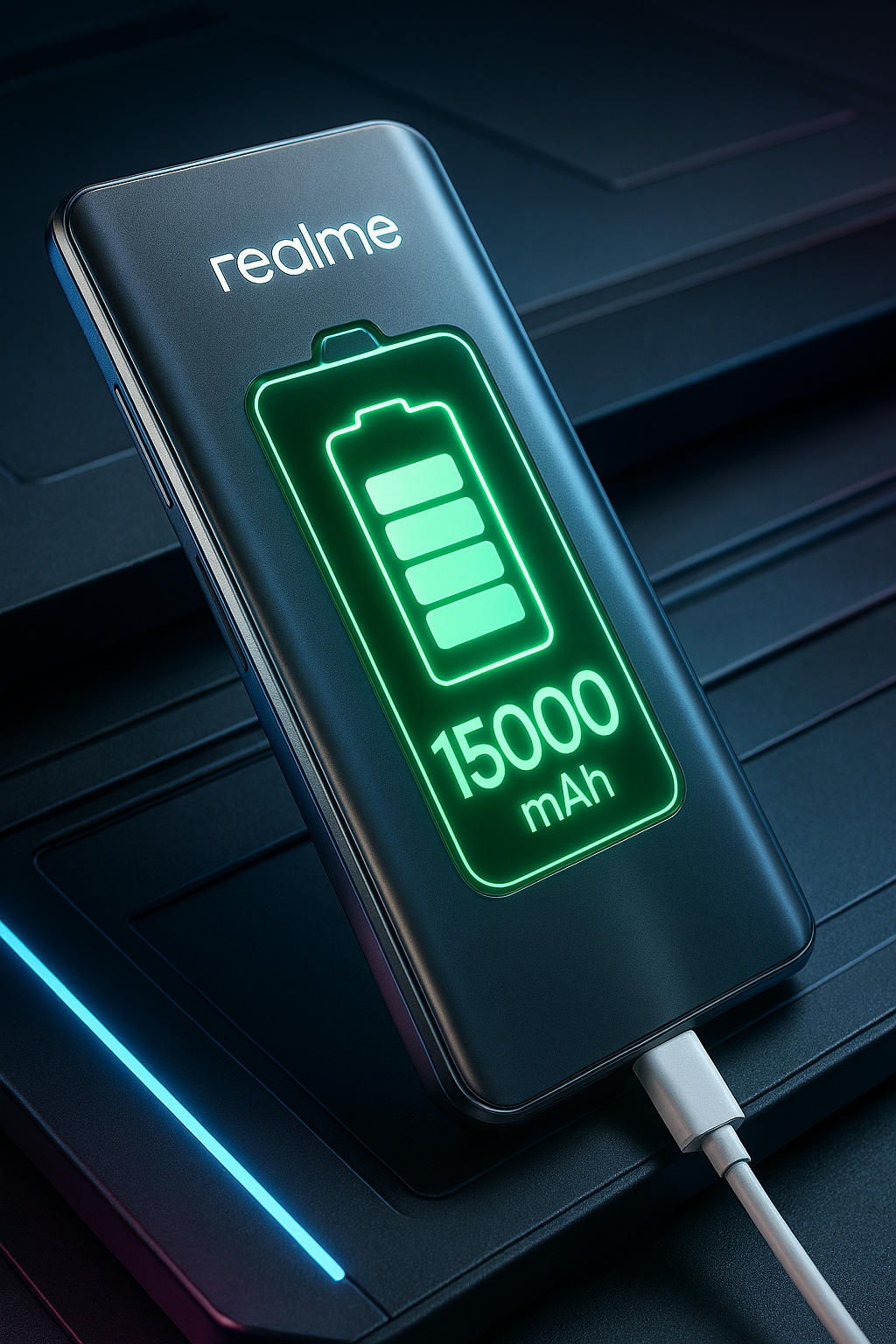
Realme has unveiled a futuristic 15000 mAh battery phone, redefining smartphone endurance and innovation. Here’s a complete look at design, specs, price expectations, and market impact.
Table of Contents
Introduction to High-Capacity Battery Technology in Smartphones
The mobile device industry is witnessing a significant development with Realme’s announcement of a concept smartphone featuring a 15000 mAh battery. This advancement addresses a persistent challenge faced by smartphone users globally: insufficient battery endurance during daily usage.
Modern smartphones have evolved considerably in processing capabilities, camera technology, and display quality over the past decade. However, battery performance has not kept pace with these improvements. Users frequently experience battery depletion during normal daily activities, requiring frequent charging sessions.
Current flagship devices typically provide 6-8 hours of active screen usage before requiring recharge. This limitation affects professionals, travelers, content creators, and mobile gaming enthusiasts who rely on their devices throughout the day. The Realme 15000 mAh battery concept represents an attempt to fundamentally address this gap between user requirements and available solutions.
This analysis examines the technical specifications, design considerations, market positioning, and potential industry implications of this high-capacity battery smartphone. We evaluate the device based on available information from industry sources, technical documentation, and market analysis reports as of 2025.
Realme Brand Background and Market Position
Realme entered the smartphone market in 2018 and has established itself through competitive pricing and feature-rich devices. The company focuses on delivering advanced specifications at accessible price points, competing directly with established manufacturers including Xiaomi, Samsung, Vivo, and Oppo.
The brand’s target demographic consists primarily of technology-aware consumers seeking flagship features without premium pricing. Realme has built market share through aggressive innovation cycles and direct competition in multiple price segments.
Market Research and Consumer Requirements
Industry analysis conducted throughout 2024 and early 2025 indicates that battery life ranks among the top three purchase considerations for smartphone buyers worldwide. Despite this consumer preference, most manufacturers have implemented incremental improvements, gradually increasing battery capacities from 4000 mAh to 5000 mAh over several product generations.
Gaming-oriented smartphones occasionally feature 6000-7000 mAh batteries, but mainstream flagship devices have largely maintained conservative battery capacities. Realme identified this discrepancy between consumer demand and market supply as an opportunity for differentiation.
Development Timeline and Commercial Intent
According to industry sources, the Realme 15000 mAh battery project commenced as an internal research initiative in mid-2024. Unlike many concept demonstrations that remain in prototype stages, available information suggests Realme intends commercial production, with expected market introduction in the second half of 2025 or early 2026.
The company has reportedly assembled specialized engineering teams focused on battery chemistry, thermal management systems, and structural design optimization. This investment indicates serious commercial intent rather than a marketing demonstration.
Technical Design and Engineering Specifications
The engineering challenge involves packaging 15000 mAh capacity within a form factor suitable for consumer use. Traditional lithium-ion batteries face physical constraints regarding energy density, requiring innovative approaches to achieve this capacity target.
Advanced Battery Architecture
The device reportedly utilizes multi-layered battery architecture incorporating advanced lithium polymer technology. This design approach includes several technical innovations:
Stacked Cell Configuration: Multiple thin battery cells are layered with precise alignment to maximize volumetric efficiency while maintaining structural stability. Each cell layer measures approximately 0.3-0.4mm thickness, allowing the complete battery assembly to remain relatively compact.
Silicon Anode Technology: Unlike conventional graphite anodes, silicon-based anodes can accommodate significantly more lithium ions, increasing energy density by 20-30%. This technology, previously limited to electric vehicle applications, has been adapted for smartphone implementation.
Graphene-Enhanced Thermal Conductivity: Graphene layers positioned between battery cells improve heat dissipation and electrical conductivity. This enables faster charging rates while reducing thermal generation during intensive usage patterns.
Optimized Internal Space Utilization: The battery occupies previously underutilized internal space, including areas surrounding camera modules and beneath the display assembly. This is achieved through custom-shaped battery sections conforming to available internal volume.
Physical Dimensions and Build Quality
Early prototype information suggests the device will measure approximately 9.8-10.5mm in thickness with weight between 240-260 grams. While these specifications exceed ultra-slim flagship devices, they remain within practical parameters for daily usage.
Chassis Construction: The frame utilizes aerospace-grade aluminum alloy reinforced with carbon fiber elements. This provides necessary structural strength without excessive weight while supporting the battery and protecting internal components from stress and impact forces.
Display Implementation: A 6.7-inch curved AMOLED panel with minimal bezels provides screen real estate. The display curves slightly at edges, creating a visual effect that reduces perceived thickness while improving grip ergonomics.
Ergonomic Design Elements: Despite its capacity, the device features carefully contoured edges and a slightly curved rear panel that distributes weight evenly. The center of gravity is positioned to minimize hand strain during extended holding periods.
Surface Finish Options: The device is expected in multiple color variants featuring gradient glass rear panels with anti-fingerprint coating, complemented by polished metallic side frames.
Thermal Management Systems
Managing heat generation from a 15000 mAh battery presents unique engineering requirements. The device incorporates a comprehensive cooling system with multiple components:
Vapor Chamber Implementation: A large vapor chamber spanning most of the internal area efficiently distributes heat away from the battery and processor, preventing localized temperature increases.
Graphene Thermal Interface Materials: Strategically positioned graphene sheets conduct heat from critical components to the chassis surface, where convection dissipates thermal energy.
AI-Based Thermal Control: Machine learning algorithms monitor multiple temperature sensors throughout the device, dynamically adjusting performance parameters to maintain optimal operating temperatures without user intervention.
Passive Airflow Design: Subtle ventilation channels within the frame structure permit passive airflow, enhancing natural cooling without requiring active fan components.
Hardware Specifications and Performance Capabilities
While the 15000 mAh battery represents the primary differentiation, the device reportedly features specifications comparable to current flagship offerings.
Processing Hardware
System-on-Chip: The device is expected to feature either Qualcomm Snapdragon 8 Gen 4 or MediaTek Dimensity 9400 processor. These chips represent current mobile computing capabilities as of late 2025, offering exceptional performance-per-watt ratios critical for maximizing battery capacity utilization.
Memory Configuration: Multiple variants will likely offer 12GB, 16GB, or 18GB of LPDDR5X RAM, ensuring smooth multitasking capability and application performance over extended usage periods.
Storage Capacity: Base models should begin at 256GB UFS 4.0 storage, with 512GB and potentially 1TB variants available for users requiring extensive local storage for media libraries and applications.
Network Connectivity: The device supports global 5G frequency bands, with advanced antenna design maintaining signal strength despite metal-intensive construction required for structural integrity.
Display Technology Specifications
Panel Characteristics: The 6.7-inch AMOLED display features 1.5K resolution (2772 x 1240 pixels), delivering sharp text rendering and color reproduction. Peak brightness exceeds 2000 nits for outdoor visibility, with HDR10+ support for enhanced video content playback.
Refresh Rate Technology: A 120Hz adaptive refresh rate adjusts dynamically based on displayed content, providing smooth animations when beneficial while conserving battery during static content display. LTPO technology enables scaling down to 1Hz for always-on display functionality.
Screen Protection: Corning Gorilla Glass Victus 2 or equivalent material protects against scratches and impact damage, with oleophobic coating resisting fingerprints and smudges.
Additional Display Features: In-display fingerprint sensor using ultrasonic technology provides fast, secure biometric authentication. The screen supports 10-bit color depth, displaying over one billion colors for professional-grade color accuracy.
Camera System Configuration
Primary Imaging Sensor: A 200MP main camera using Samsung’s ISOCELL HP5 or equivalent sensor captures detailed imagery. Pixel binning technology combines multiple pixels for improved low-light performance, while high resolution enables lossless digital zoom and 8K video recording capability.
Ultra-Wide Camera Module: A 50MP ultra-wide camera with 120-degree field of view captures expansive scenes and group photographs. Advanced distortion correction algorithms ensure natural-looking images across the entire frame.
Telephoto and Macro Capabilities: A periscope telephoto lens offering 5x optical zoom combined with a dedicated 5MP macro camera for extreme close-up photography provides versatility across shooting scenarios.
Front-Facing Camera: A 32MP selfie camera positioned within a minimal punch-hole cutout supports 4K video recording and advanced portrait modes with AI-enhanced processing algorithms.
Computational Photography: Realme’s AI algorithms enhance multiple aspects of image capture, including scene detection, HDR processing, night mode enhancement, and portrait effects. The powerful processor enables real-time processing without noticeable delay.
Charging Technology Implementation
Despite massive capacity, the device will not require extended charging periods.
Fast Charging Capability: Realme’s proprietary SuperVOOC charging technology will likely deliver 150W or potentially 200W charging speeds. This enables charging from 0-50% in approximately 25-35 minutes and full charge in 60-80 minutes.
Dual-Cell Architecture: The battery design allows simultaneous charging of both cells, effectively reducing charge time compared to single-cell configurations.
Safety Protection Systems: Advanced battery management systems continuously monitor temperature, voltage, and current, with multiple protection mechanisms preventing overcharging, overheating, and short circuits.
Reverse Charging Function: The device can function as a power source for other devices, charging wirelessly at 10W or via cable at 15W, providing utility during emergencies or travel.
Wireless Charging Support: The flagship may include 50W wireless charging capability, offering convenient charging options for users preferring cable-free solutions.
Battery Performance Analysis and Usage Scenarios
The 15000 mAh capacity fundamentally changes device usage patterns, potentially eliminating the daily charging routine established in modern smartphone use.
Projected Usage Endurance
Light Usage Pattern: For users primarily checking email, browsing social media, and making voice calls, the device could realistically provide 7-10 days between charging sessions. This assumes approximately 2-3 hours of active screen time daily with WiFi connectivity.
Moderate Usage Pattern: Typical users engaging in video streaming, social media interaction, navigation, photography, and casual gaming can expect 5-7 days of battery endurance with 4-6 hours of daily screen-on time.
Heavy Usage Pattern: Power users running demanding applications, playing graphics-intensive games, capturing 4K video, and maintaining constant connectivity should achieve 3-4 days between charges with 8-10 hours of daily screen-on time.
Extreme Usage Scenarios: Even under continuous heavy load—extended gaming sessions, video recording, or mobile hotspot usage—the device should provide 40-50 hours of operation before requiring charge.
Comparative Performance Analysis
Current flagship smartphones typically contain 4500-5000 mAh batteries, providing approximately 6-8 hours of screen-on time before depletion. The Realme 15000 mAh battery offers three times this capacity, theoretically delivering 18-24 hours of continuous screen-on time under comparable conditions.
Samsung’s Galaxy S25 Ultra features a 5000 mAh battery. The iPhone 16 Pro Max contains approximately 4685 mAh. Gaming phones like ASUS ROG Phone 8 Pro reach 6000 mAh. Even rugged outdoor devices designed specifically for battery endurance typically reach maximum capacities of 7000-8000 mAh.
User Benefits Across Different Categories
International Travel: Long flights, airport layovers, and days exploring unfamiliar locations become manageable without seeking charging outlets or carrying multiple power banks. The device serves as backup power for cameras, wireless earbuds, and smartwatches.
Mobile Professionals: Sales representatives, field technicians, healthcare workers, and others relying on smartphones throughout workdays gain reliable performance even under demanding usage patterns including video conferencing, navigation, and productivity applications.
Content Creation: Social media influencers and content creators can capture extensive video content, perform on-device editing, and upload without battery concerns interrupting creative workflow.
Mobile Gaming Enthusiasts: Extended gaming sessions become viable without thermal throttling or battery depletion concerns. The large capacity combined with efficient thermal management sustains peak performance for hours.
Emergency Preparedness: During natural disasters, power outages, or other emergencies when electrical infrastructure fails, the device becomes a critical communication and information resource lasting days rather than hours.
Remote Work Applications: Digital nomads and remote employees working from various locations throughout the day maintain connectivity without seeking charging opportunities.
Software Optimization and Battery Management
Hardware capacity requires intelligent software management to maximize efficiency and user experience.
Realme UI Battery Management Features
AI-Powered Usage Analysis: Machine learning algorithms analyze individual usage patterns, predicting daily routines and optimizing background processes accordingly. The system identifies frequently-used applications and their usage times, preloading them while restricting unnecessary background activity from rarely-used applications.
Adaptive Power Modes: Multiple battery profiles adjust system behavior based on remaining capacity and expected usage patterns. These include Ultra-Endurance Mode (restricting non-essential functions), Balanced Mode (optimizing performance and efficiency), and Performance Mode (prioritizing speed).
Application-Level Control: Users can set specific battery permissions for individual applications, controlling background data access, wake locks, and notification frequency to prevent battery drain from poorly-optimized applications.
Intelligent Charging Optimization: Smart charging algorithms learn user patterns, adjusting charge speed during overnight charging to reduce battery degradation and extend overall battery lifespan over years of usage.
Battery Health Monitoring: Detailed statistics display battery capacity degradation over time, charging cycles completed, and estimated remaining lifespan, helping users understand battery condition and when eventual replacement might become necessary.
Pricing Strategy and Market Positioning
While official pricing has not been confirmed, industry analysis and market positioning suggest strategic pricing balancing innovation costs with market accessibility.
Expected Pricing in Indian Market
The device is projected to launch at ₹45,000-₹55,000 for base configurations, with higher-specification variants potentially reaching ₹65,000-₹70,000. This pricing reflects several considerations:
Technology Development Costs: The advanced battery technology, custom manufacturing processes, and specialized materials command higher production costs than conventional smartphones.
Flagship Market Positioning: Realme aims to compete directly with premium offerings from established manufacturers, requiring specifications and build quality justifying flagship pricing.
Value-Based Disruption: Despite premium pricing, the device undercuts ultra-premium flagships (Samsung Galaxy S25 Ultra, iPhone 16 Pro Max) by ₹30,000-₹50,000 while offering superior battery endurance.
Integrated Solution Value: When compared to purchasing a flagship phone plus high-capacity portable power banks, the integrated solution offers better value, convenience, and user experience.
International Market Pricing
United States Market: $550-$700 depending on configuration and market timing
European Union: €500-€650 with regional variations based on taxes and import regulations
Southeast Asian Markets: Competitive pricing similar to India, leveraging Realme’s strong regional presence and manufacturing capabilities
Chinese Domestic Market: ¥3,500-¥4,500, potentially lower due to domestic market dynamics and reduced import costs
Configuration Variants
Multiple variants will likely accommodate different budget levels and usage requirements:
Entry-Level Configuration: 12GB RAM + 256GB storage at lower price point
Mid-Tier Configuration: 16GB RAM + 512GB storage representing optimal balance for most users
Premium Configuration: 18GB RAM + 1TB storage for enthusiasts and professionals demanding maximum specifications
Competitive Analysis and Market Landscape
The smartphone industry has implemented incremental battery improvements over recent years, with most manufacturers hesitant to significantly increase capacity due to weight, thickness, and cost considerations.
Current Market Leaders
Samsung Galaxy S25 Ultra: Features advanced camera systems, premium construction, and sophisticated software, but contains conventional 5000 mAh battery. Price: ₹1,29,999 and above.
Apple iPhone 16 Pro Max: Delivers exceptional performance and ecosystem integration with approximately 4685 mAh capacity. Price: ₹1,59,900 and above.
OnePlus 13 Pro: Offers flagship specifications with 5400 mAh battery, fast charging capability, and clean software experience. Price: ₹64,999-₹74,999.
Xiaomi 15 Ultra: Competes on camera quality and charging speed with 5000 mAh capacity. Price: ₹69,999-₹79,999.
ASUS ROG Phone 8 Pro: Gaming-focused device with 6000 mAh battery, currently the capacity leader among mainstream flagships. Price: ₹89,999.
Competitive Differentiation
Unmatched Battery Endurance: The 15000 mAh capacity provides 2.5-3x longer usage time than any competitor, creating an entirely new category of ultra-endurance smartphones.
Price-to-Performance Ratio: Significantly undercutting established flagships while offering comparable or superior specifications in most areas except brand recognition.
Innovation Leadership: Positioning Realme as a technology innovator rather than exclusively a value brand, potentially attracting premium-tier customers previously overlooking the brand.
Addressing Real Consumer Needs: Solving genuine consumer challenges rather than implementing incremental specification improvements, creating authentic differentiation in a commoditized market.
Potential Competitive Responses
Accelerated Battery Development: Samsung, Xiaomi, and other manufacturers may expedite their own high-capacity battery programs to avoid market share loss.
Alternative Technology Approaches: Some manufacturers might focus on even faster charging capabilities (300W+) or more efficient processors rather than larger batteries.
Niche Market Positioning: Competitors may characterize extreme battery capacity as excessive for most users, emphasizing their balanced approach to design, weight, and endurance.
Premium Brand Value Emphasis: Apple and Samsung might emphasize their ecosystem advantages, brand value, and refined user experience to justify price premiums despite smaller batteries.
Industry Impact and Market Implications
This device represents more than a single product launch—it could catalyze fundamental shifts in consumer expectations and industry priorities.
Evolving Consumer Expectations
For over a decade, smartphone marketing emphasized camera resolution, display quality, and processor performance. Battery life, despite universal importance, received secondary attention. This focus on battery endurance validates consistent consumer survey data indicating battery life matters more than marginal improvements in other specifications.
Success could demonstrate that consumers will accept slightly increased thickness and weight in exchange for multi-day battery life, fundamentally challenging industry assumptions about design priorities.
Manufacturing and Supply Chain Effects
Producing millions of devices with 15000 mAh batteries requires substantial battery manufacturing capacity. Realme has reportedly secured partnerships with leading battery suppliers and invested in specialized production facilities, signaling long-term commitment rather than experimental product development.
Success could drive increased investment in battery technology across the entire electronics industry, benefiting smartphones, tablets, laptops, and wearable devices.
Environmental Considerations
Longer-lasting batteries reduce charging frequency, lowering electricity consumption and environmental impact over device lifespans. However, larger batteries require more raw materials, particularly lithium, cobalt, and rare earth elements.
The environmental equation depends on device longevity. If users retain phones longer due to superior battery endurance, the overall environmental impact may be positive despite higher initial resource requirements.
Regulatory and Safety Compliance
Devices with large battery capacities face heightened regulatory scrutiny, particularly regarding air travel. International Civil Aviation Organization (ICAO) and national aviation authorities restrict lithium batteries on aircraft, though devices under 100Wh (approximately 20,000 mAh at 5V) generally face no restrictions.
The Realme 15000 mAh battery device should comply with current regulations, though travelers must understand airline policies regarding high-capacity batteries.
Consumer Response and Market Reception
Since information emerged about Realme’s 15000 mAh battery concept, online communities have responded with significant interest mixed with skepticism.
Technology Forum Discussions
Technology forums on Reddit, XDA Developers, and Android Authority have generated extensive discussions. Users debate whether the capacity is practical, express frustration with current battery life limitations, and speculate about potential compromises in design or performance.
Common discussion themes include excitement about addressing battery anxiety, questions about charging duration, and concerns about weight and bulk. Many users indicate willingness to accept additional thickness for significantly extended battery life.
Social Media Engagement
Twitter/X and Instagram discussions reveal younger consumers particularly interested in the concept. Content creators see value in extended recording capability without backup batteries. Travel enthusiasts appreciate potential freedom from charging anxiety during activities.
Some skeptics question whether the device represents vaporware or publicity demonstration, though Realme’s track record suggests genuine commercial intent.
Technology Reviewer Interest
Tech reviewers and YouTube channels have expressed strong interest in testing the device. Many view it as potentially significant if Realme delivers on the concept without major compromises. The novelty factor alone guarantees extensive media coverage upon launch.
Frequently Asked Questions (FAQs)
What is the Realme 15000 mAh battery smartphone?
The Realme 15000 mAh battery smartphone is a concept device announced by Realme featuring a 15000 milliampere-hour battery capacity—approximately three times larger than typical flagship smartphones. The device combines this battery with flagship-level specifications including powerful processor, high-quality display, advanced camera system, and fast charging technology. Unlike many concept devices, Realme intends commercial availability, with expected launch in late 2025 or early 2026.
How long will the battery last on a single charge?
Battery longevity depends on usage patterns. Light usage (email, calls, basic browsing) could provide 7-10 days between charges. Moderate users engaging in social media, video streaming, and casual gaming should expect 5-7 days of endurance. Heavy users running demanding applications and graphics-intensive games can anticipate 3-4 days between charges. Even under extreme continuous use, the battery should provide 40-50 hours of operation. These estimates assume efficient Snapdragon or MediaTek processors with excellent performance-per-watt ratios.
What is the expected price in different markets?
While Realme has not announced official pricing, industry analysis suggests launch at ₹45,000-₹55,000 in India for base configurations (12GB RAM, 256GB storage), with higher-specification variants potentially reaching ₹65,000-₹70,000 (18GB RAM, 1TB storage). International markets expect pricing around $550-$700 (United States), €500-€650 (Europe), and ¥3,500-¥4,500 (China), with regional variations due to taxes and import regulations. This positions the device as premium flagship while remaining significantly cheaper than ultra-premium offerings from Samsung and Apple.
Will the device be too bulky and heavy for daily use?
Despite housing 15000 mAh capacity, advanced engineering keeps the device practical. Expected dimensions include approximately 9.8-10.5mm thickness and 240-260 grams weight. While heavier than ultra-slim flagships (190-210 grams), specifications remain usable for daily activities. Multi-layered battery architecture with thin lithium polymer cells, silicon anode technology, and custom-shaped battery sections maximize internal space utilization. Chassis features aerospace-grade aluminum with carbon fiber reinforcement for strength without excessive weight. Ergonomic elements include contoured edges, curved back panel, and balanced weight distribution.
How fast will the 15000 mAh battery charge?
Despite massive capacity, Realme’s SuperVOOC fast charging technology will likely deliver 150W or potentially 200W charging speeds. Dual-cell battery architecture allows simultaneous charging of both cells, effectively halving charge times. Users can expect 0-50% charging in approximately 25-35 minutes and full charge in 60-80 minutes. The device will also support 50W wireless charging and provide reverse charging at 15W wired or 10W wireless.
When will the device be available for purchase?
Realme has not announced an official release date as of November 2025, but industry sources suggest launch window in late 2025 or early 2026. The company typically unveils devices in India and China first before expanding to Southeast Asia, Europe, and other markets over subsequent months. Given specialized battery technology and custom manufacturing processes, initial availability may be limited to specific markets where Realme has strongest presence. Interested buyers should monitor official Realme channels for announcements regarding pre-orders and launch dates.
How does it compare to other high-capacity battery smartphones?
The Realme 15000 mAh battery device operates in a category essentially by itself. Current market offerings from major manufacturers typically feature 4500-5000 mAh batteries in flagship devices. Gaming-focused phones like ASUS ROG Phone 8 Pro reach 6000 mAh, while specialized rugged phones occasionally hit 7000-8000 mAh. No mainstream smartphone currently available approaches 15000 mAh capacity. Beyond capacity, Realme maintains competitive flagship specifications including powerful processors, excellent displays, advanced camera systems, and fast charging, whereas many high-capacity battery phones sacrifice other features.
What are the potential drawbacks or limitations?
Weight and thickness exceed ultra-slim flagships, which some users may find less comfortable during extended one-handed use or pocket carrying. Larger battery increases manufacturing complexity and cost, reflected in premium pricing. Heat management becomes more challenging, requiring sophisticated cooling systems. Battery replacement costs will likely be higher than standard devices, with increased repair complexity. Air travel regulations, while currently permitting such devices, could potentially change. Premium price point may limit market to enthusiasts and power users rather than mainstream consumers.
Summary and Key Takeaways
The Realme 15000 mAh battery smartphone represents a significant attempt to address persistent battery life limitations in modern smartphones. The device combines unprecedented battery capacity with flagship-level specifications, including powerful processors, high-quality displays, advanced camera systems, and fast charging technology.
Technical innovations include multi-layered battery architecture, silicon anode technology, graphene-enhanced thermal management, and optimized internal space utilization. These engineering advances enable packaging 15000 mAh capacity within dimensions of approximately 9.8-10.5mm thickness and 240-260 grams weight.
Expected pricing positions the device as a premium flagship at ₹45,000-₹55,000 in India, with international markets seeing comparable positioning. This pricing strategy balances advanced technology development costs with Realme’s value-focused brand positioning.
Battery endurance varies by usage pattern, with light users potentially achieving 7-10 days between charges, while heavy users can expect 3-4 days. Even under extreme continuous use, the device should provide 40-50 hours of operation.
The device faces competition from established flagship manufacturers but offers 2.5-3x battery capacity compared to current market leaders. Success could catalyze industry-wide shifts in battery development priorities and consumer expectations.
Market reception shows significant consumer interest mixed with questions about practical implementation. Technology enthusiasts express excitement about addressing battery anxiety, while some skeptics question feasibility and commercial viability.
The environmental impact depends on device longevity—if users retain phones longer due to superior battery endurance, overall impact may be positive despite higher initial resource requirements.
Final Outlook: The Realme 15000 mAh battery smartphone represents an ambitious attempt to redefine smartphone battery standards. Success depends on execution quality, consumer acceptance of slightly increased dimensions, and market reception of premium pricing from a relatively young brand. Regardless of commercial success, the device has already succeeded in generating discussion about battery priorities in smartphone design.
About the Author
Nueplanet
Technology journalist specializing in mobile device analysis, battery technology developments, and consumer electronics market trends. With the years of experience covering smartphone industry innovations,nueplanet provides in-depth technical analysis based on official specifications, industry sources, and market research data.
Commitment to Accuracy: All information presented is sourced from official company announcements, verified industry reports, technical documentation, and reputable technology publications. Content is regularly updated to reflect the latest available information and market developments.
Editorial Standards: Analysis is conducted independently without promotional intent, affiliate relationships, or marketing objectives. Technical specifications and pricing information are verified against multiple authoritative sources before publication.
About This Publication: This platform is dedicated to providing accurate, comprehensive analysis of technology products and industry trends. Our goal is to help consumers make informed decisions based on verified information, technical specifications, and market context rather than promotional claims or unsubstantiated speculation.
Last Updated: August 29, 2025
Published: August 29, 2025
Note: Information in this analysis is based on available industry reports, technical documentation, and market analysis as of August 2025. Official specifications, pricing, features, and availability may differ when Realme makes formal announcements. Readers should consult official Realme channels and authorized retailers for confirmed information before making purchase decisions.
Helpful Resources
Latest Posts
Tag
Realme 15000 mAh
Related Posts













Post Comment