









Ravindra Jadeja Shines Again: India vs England Test Series Latest Highlights
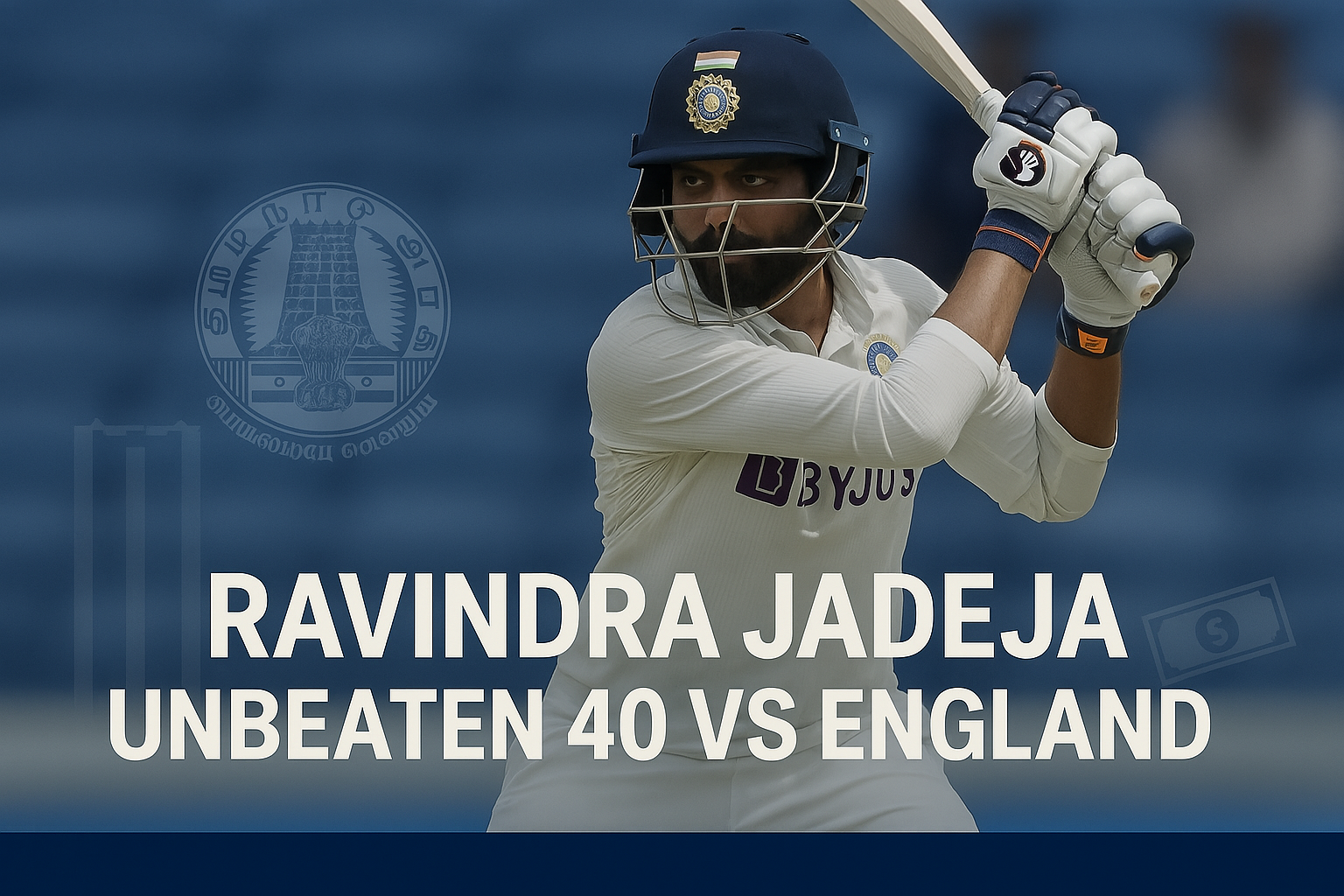
Ravindra Jadeja anchored India’s innings with a composed knock in the ongoing Test against England. Here’s a detailed look into his performance, match-turning moments, and the latest scores.
Table of Contents
Overview of India vs England Test Series 2025
The India vs England Test series concluded in August 2025 with a closely contested 2-2 draw. The five-match series featured competitive cricket across traditional English venues, with both teams demonstrating strong performances throughout. The final Test at The Oval ended with India securing a narrow 6-run victory on August 4, 2025, providing a dramatic conclusion to the series.
This series showcased high-quality Test cricket with multiple momentum shifts. Both teams adapted their strategies across different venues and conditions. The competitive nature of the series reflected the depth and quality available in both squads.
Ravindra Jadeja: Player Profile and Career Background
Professional Cricket Journey
Ravindra Jadeja represents India in international cricket across all formats. He developed his cricket skills through the Saurashtra cricket system before progressing to national team selection. His career includes participation in the 2008 Under-19 World Cup, where India won the tournament under Virat Kohli’s captaincy.
Jadeja’s playing style incorporates left-arm orthodox spin bowling combined with lower-order batting capabilities. His fielding abilities contribute significantly to team performance through run-saving and wicket-taking opportunities. The all-round skill set provides team management with tactical flexibility.
Career Achievements and Milestones
Jadeja has accumulated over 300 Test wickets throughout his international career. His batting contributions exceed 3,000 runs in Test cricket, demonstrating consistency in the longer format. The ICC has ranked him as the number one Test all-rounder during multiple periods of his career.
His achievements include winning the ICC Champions Trophy in 2013, where he received the Player of the Tournament award. He has recorded multiple centuries and five-wicket hauls in Test cricket. These statistics reflect sustained performance across different conditions and opposition teams.
Complete Match-by-Match Series Analysis
First Test at Leeds (June 20-24, 2025)
The series opened at Headingley, Leeds, with England securing victory in the first Test. The match established the competitive tone that continued throughout the series. Both teams demonstrated their respective strengths during this opening encounter.
England’s victory provided them with an early advantage in the series. The result at Leeds highlighted the challenges India would face in English conditions. The pitch characteristics at Headingley favored seam bowling, influencing match strategies.
Second Test Result
India responded with a victory in the second Test, leveling the series at 1-1. This win demonstrated India’s capacity to adapt after the opening match defeat. The team management made tactical adjustments that proved effective.
The victory maintained competitive balance in the series. India’s bowlers and batsmen both contributed to securing this crucial win. The result ensured the series remained closely contested heading into subsequent matches.
Third Test at Lord’s – Detailed Analysis
Match Summary and Scorecard
| Team | First Innings | Second Innings | Result |
|---|---|---|---|
| England | 387 | 192 | Won by 22 runs |
| India | 387 | 170 | Lost by 22 runs |
The third Test at Lord’s produced one of the series’ closest finishes. Both teams scored identical first innings totals of 387 runs. This parity set up a competitive final two days of cricket.
First Innings Performances
England’s first innings featured a century from Joe Root, who scored 104 runs. His innings provided stability to England’s batting lineup. Jasprit Bumrah took 5 wickets for 74 runs, demonstrating India’s bowling quality.
India matched England’s total exactly at 387 runs. KL Rahul contributed a century with 100 runs to India’s first innings. Chris Woakes claimed 3 wickets for 84 runs for England’s bowling attack.
Second Innings Analysis
England’s second innings collapsed to 192 runs all out. Washington Sundar produced exceptional bowling figures of 4 wickets for 22 runs. This performance gave India a manageable chase of 193 runs for victory.
India’s chase faltered, ending at 170 runs all out. Ravindra Jadeja remained unbeaten on 61 runs, providing resistance against England’s bowling. Ben Stokes took 3 wickets for 48 runs, while Jofra Archer claimed 3 wickets for 55 runs.
Jadeja’s Performance at Lord’s
Jadeja’s unbeaten 61 represented India’s highest score in the second innings. He demonstrated technical proficiency against both pace and spin bowling. His innings lasted through challenging periods when other batsmen struggled.
The knock showcased Jadeja’s capability to build innings under pressure. He remained at the crease attempting to guide India toward the target. Despite his efforts, India fell short by 22 runs, giving England a 2-1 series lead.
Fourth Test at Old Trafford, Manchester (July 23-27, 2025)
Comprehensive Match Statistics
| Team | First Innings | Second Innings | Result |
|---|---|---|---|
| India | 358 | 425/4 | Match Drawn |
| England | 669 | – | Match Drawn |
The fourth Test at Old Trafford produced a high-scoring draw. England posted a massive first innings total of 669 runs. This substantial score put India under significant pressure to avoid defeat.
England’s Dominant First Innings
England’s batting lineup performed exceptionally in their first innings. Joe Root scored 150 runs, while Ben Stokes contributed 141 runs. Zak Crawley added 84 runs, and Ben Duckett scored 94 runs.
The partnership building throughout England’s innings created a commanding position. India’s bowlers faced challenging conditions favoring batting. Ravindra Jadeja bowled 4 wickets for 143 runs from his overs, providing wicket-taking options despite the large total.
India’s First Innings Response
India scored 358 runs in their first innings, trailing England by 311 runs. Sai Sudharsan contributed 61 runs to the innings. Yashasvi Jaiswal scored 58 runs, while Rishabh Pant added 54 runs.
Ben Stokes took 5 wickets for 72 runs, disrupting India’s batting progression. The bowling performance demonstrated England’s ability to take wickets despite favorable batting conditions. India needed a strong second innings to save the match.
India’s Second Innings Recovery
India’s second innings produced 425 runs for 4 wickets when stumps were drawn. This performance demonstrated India’s batting depth and resilience. Multiple batsmen contributed significantly to avoid defeat.
Jadeja’s Century at Old Trafford
Ravindra Jadeja scored an unbeaten 107 runs in India’s second innings. His century came during a crucial period when India needed to overhaul England’s lead. The innings combined defensive technique with selective aggression.
Jadeja formed important partnerships with other tail-enders and middle-order batsmen. His batting approach adapted to match requirements, initially defending before accelerating. The century represented one of his finest Test innings in challenging circumstances.
Other Significant Contributions
Shubman Gill scored 103 runs in the second innings. Washington Sundar remained unbeaten on 101 runs, forming a crucial partnership with Jadeja. KL Rahul contributed 90 runs to India’s recovery effort.
The partnership between Jadeja and Washington Sundar helped India overcome the first innings deficit. Their combined efforts ensured India saved the match and kept the series alive. The batting performance demonstrated India’s lower-order strength.
Fifth Test at The Oval (July 31 – August 4, 2025)
Final Test Match Statistics
| Team | First Innings | Second Innings | Result |
|---|---|---|---|
| India | 224 | 396 | Won by 6 runs |
| England | 247 | 367 | Lost by 6 runs |
The series finale at The Oval produced the closest finish of all five Tests. India defended 374 runs successfully, restricting England to 367 runs. The 6-run margin represented one of Test cricket’s narrow victories.
First Innings Comparison
India batted first and scored 224 runs in their first innings. The total appeared below par on The Oval’s traditionally batting-friendly surface. England responded with 247 runs, securing a 23-run first innings lead.
The low first innings totals suggested challenging batting conditions. Both bowling attacks exploited the conditions effectively. The match remained finely balanced after the first innings exchanges.
Decisive Second Innings
India’s second innings total of 396 runs set England a target of 374 runs. This target was achievable but required significant application from England’s batsmen. India’s batting lineup contributed throughout the innings to post a competitive total.
England’s chase reached 367 runs before Mohammed Siraj took the final wicket. The match concluded with a 6-run victory for India. This result leveled the series at 2-2, ensuring a drawn series outcome.
Series-Defining Moments
The final wicket at The Oval determined the series result. England required 7 runs with 1 wicket remaining when Siraj struck. The pressure situation tested both teams’ composure and execution.
India’s bowling attack maintained discipline throughout England’s chase. The fielding unit supported the bowlers through accurate throwing and catching. These collective efforts secured the narrow victory margin.
Ravindra Jadeja’s Series Performance Analysis
Comprehensive Batting Statistics
Ravindra Jadeja accumulated over 400 runs throughout the five-match series. His batting contributions came predominantly from positions 6 and 7 in the batting order. The consistency across multiple innings demonstrated his reliability as a lower-order batsman.
Notable Batting Achievements
Jadeja recorded six fifty-plus scores while batting at number 6 or lower. This achievement equals the record for most fifty-plus scores from these batting positions in a Test series. The statistic highlights his consistency throughout the series.
His highest score of 107 not out came during the fourth Test at Old Trafford. The innings showcased his capability to construct long innings under pressure. He also remained unbeaten on 61 during the Lord’s Test, demonstrating similar resilience.
Runs Milestone in England
Jadeja crossed 1,000 career runs in England during this series. KL Rahul and Rishabh Pant also achieved this milestone during the same series. The achievement reflects sustained performance across multiple tours to England.
This milestone represents consistent performance in challenging overseas conditions. English pitches and weather conditions typically favor seam bowling over batting. Jadeja’s accumulation of runs demonstrates technical adaptability and mental strength.
Bowling Performance Evaluation
Statistical Breakdown
Jadeja took over 20 wickets throughout the five-match series. His bowling average remained competitive against England’s strong batting lineup. The wicket-taking ability provided India with regular breakthroughs during critical phases.
Best Bowling Performance
Jadeja’s best bowling figures came during the fourth Test at Old Trafford. He recorded 4 wickets for 143 runs from his bowling spell. These figures came when England posted 669 runs in their first innings.
The performance demonstrated his ability to maintain effectiveness despite challenging circumstances. Taking 4 wickets in such a large total showed persistence and skill. His bowling provided India with crucial breakthroughs despite England’s dominance.
Bowling Strategy and Execution
Jadeja maintained consistent line and length throughout the series. His left-arm orthodox spin challenged both right and left-handed batsmen. The bowling variations included changes in pace and flight to create uncertainty.
He adapted his bowling approach based on pitch conditions at different venues. Some surfaces offered more turn than others, requiring tactical adjustments. His bowling economy rate reflected disciplined execution across varying conditions.
Fielding Contributions
Jadeja’s fielding throughout the series maintained his reputation for excellence. He took multiple catches in various positions across the five Tests. His athleticism created run-out opportunities through quick ground fielding and accurate throwing.
The fielding contributions extended beyond statistical measures. His energy in the field influenced team morale and intensity. Quick reactions saved numerous boundaries, restricting England’s scoring rates.
Technical Analysis of Jadeja’s Performance
Batting Technique Examination
Defensive Foundation
Jadeja’s defensive technique provided the foundation for building innings. His bat-pad relationship remained tight against both pace and spin bowling. The head position stayed level, allowing clear sight of the ball throughout its trajectory.
Against seam bowling, he played late with soft hands. This approach minimized edges and kept the ball down when contact occurred. His back-foot play proved particularly effective against short-pitched bowling.
Scoring Options and Shot Selection
Jadeja demonstrated selective aggression throughout his innings. He identified scoring opportunities against loose deliveries while defending good balls. The sweep shot against spin bowling proved particularly productive.
His ability to rotate strike maintained partnerships and reduced pressure. Quick singles and twos kept the scoreboard moving without excessive risk. This approach proved effective during partnership building with tail-end batsmen.
Mental Approach and Concentration
Extended periods of concentration characterized Jadeja’s significant innings. He maintained focus despite challenging match situations and quality opposition bowling. The mental discipline prevented impulsive shot selection during pressure phases.
His approach balanced defensive periods with aggressive phases appropriately. Understanding when to attack and defend reflected match awareness. This tactical intelligence contributed to successful innings outcomes.
Bowling Technique Analysis
Delivery Action and Consistency
Jadeja’s bowling action maintains economy of movement for repeated consistency. His approach to the crease remains balanced and controlled. The front arm provides direction while the bowling arm follows a consistent path.
The release point stays consistent, allowing accurate line and length. Batsmen face similar trajectory patterns, though variations in pace and flight occur. This consistency builds pressure through extended periods without loose deliveries.
Variation and Deception
Jadeja employs subtle variations in pace rather than dramatic changes. Flight adjustments challenge batsmen’s depth perception and footwork. Some deliveries drop shorter than expected, creating misjudgments.
The arm ball represents his primary variation for different ball trajectory. This delivery continues straight rather than turning, catching batsmen expecting spin. The weapon proves particularly effective against right-handed batsmen playing for turn.
Strategic Bowling Deployment
Jadeja’s bowling strategy adapts to match situations and batsman tendencies. He adjusts length and line based on footwork patterns observed. His field placements reflect understanding of batsman strengths and weaknesses.
During defensive phases, he maintains tight lines preventing easy scoring. When attacking, he invites drives with fuller lengths outside off stump. This strategic flexibility maximizes effectiveness across different scenarios.
Fielding Excellence Standards
Jadeja’s fielding sets performance benchmarks across multiple positions. His work in close catching positions demonstrates quick reflexes and safe hands. Ground fielding in the outfield prevents boundaries through athletic ability.
His throwing accuracy creates regular run-out opportunities. The quick release and flat trajectory make backing up difficult for batsmen. Direct hits at both ends demonstrate consistent throwing technique under pressure.
Historical Context and Records
Series Records and Achievements
The six fifty-plus scores from positions 6 or 7 matched existing records. No Indian batsman had previously achieved more in a single Test series from these positions. This achievement highlighted Jadeja’s unique contribution to India’s lower-order strength.
His aggregate runs from position 6 or lower set new Indian records for a single series. The previous record holders had achieved lower totals in comparable circumstances. This statistical achievement reflects sustained excellence throughout five matches.
Career Progression in England
Jadeja’s performances in England have improved across multiple tours. His batting and bowling statistics show positive trends in English conditions. The 1,000-run milestone represents accumulated success over several series.
Earlier tours to England produced modest returns compared to home performances. Recent series have shown increased comfort with conditions and opposition. This progression demonstrates professional development and adaptability.
Comparative Analysis with Other All-Rounders
Jadeja’s series performance compares favorably with historical all-round performances in England. His combination of batting and bowling contributions places him among elite performers. The sustained performance across five Tests demonstrates consistency beyond isolated match-winning efforts.
Historical all-rounders who excelled in England typically showed strengths in specific disciplines. Jadeja’s balanced contributions across batting, bowling, and fielding distinguish his series performance. This comprehensive excellence represents modern all-round cricket standards.
Team Impact and Strategic Value
Lower-Order Batting Stability
Jadeja’s presence at number 6 or 7 provides India with extended batting capability. His ability to build partnerships with both recognized batsmen and tail-enders proves crucial. The team can approach middle-order batting with reduced pressure knowing reliable batsmen follow.
His partnerships throughout the series rescued India from potentially vulnerable positions. The psychological impact on opposition teams affects their bowling strategies. Knowing quality batting extends to position 7 influences field placements and bowling changes.
Bowling Balance and Options
Jadeja’s spin bowling provides India’s captain with tactical flexibility. His ability to bowl long spells maintains pressure without excessive economy rates. The wicket-taking capability prevents passive bowling periods focused only on containment.
The left-arm spin angle offers different challenges compared to off-spin alternatives. This variety prevents batsmen from settling into comfortable patterns. His bowling allows India to play additional pace bowlers without sacrificing spin options.
Fielding Unit Leadership
Jadeja’s fielding standards influence overall team fielding intensity. His athletic efforts encourage teammates to match similar commitment levels. The energy he brings to fielding sessions maintains team focus throughout long Test matches.
His positioning and anticipation create examples for younger players. The practical demonstration of proper technique proves more effective than verbal instruction alone. This leadership through actions contributes to India’s overall fielding improvements.
Opposition Analysis: England’s Challenges
England’s Batting Strengths
England’s batting lineup featured multiple century-makers throughout the series. Joe Root scored two centuries including 150 at Old Trafford and 104 at Lord’s. Ben Stokes contributed 141 runs at Old Trafford, showcasing his aggressive approach.
Zak Crawley and Ben Duckett provided strong starts in several innings. Their aggressive intent put pressure on India’s bowlers early in innings. The depth of England’s batting created sustained partnerships across multiple positions.
England’s Bowling Resources
Pace Bowling Attack
Ben Stokes led England’s pace bowling attack with both wickets and control. His 5-wicket haul in India’s first innings at Old Trafford demonstrated effectiveness. Stokes also contributed 3 wickets for 48 runs during the crucial Lord’s Test.
Chris Woakes provided consistent wicket-taking throughout the series. His 3 wickets for 84 runs at Lord’s supported England’s eventual victory. Woakes’ ability to swing the ball in English conditions proved challenging for Indian batsmen.
Jofra Archer’s pace and aggression added another dimension to England’s attack. His 3 wickets for 55 runs at Lord’s contributed to India’s second innings collapse. Archer’s return to Test cricket strengthened England’s bowling options.
Spin Bowling Options
Shoaib Bashir represented England’s primary spin bowling option. His performances provided control during middle-overs phases. The spin bowling role focused more on containment than aggressive wicket-taking.
England’s batting-friendly conditions limited spin bowling effectiveness generally. The pace-bowling-dominated attack reflected traditional English conditions. India’s spin options, including Jadeja, faced similar challenges extracting turn consistently.
Tactical Insights and Strategic Observations
Venue-Specific Analysis
Lord’s Cricket Ground
Lord’s traditionally offers pace bowlers assistance early in matches. The slope across the ground influences bowling angles and footwork. Batsmen must adjust to unique sightscreen positions and atmospheric conditions.
The third Test at Lord’s produced relatively low second innings totals. Both teams’ bowling attacks exploited helpful conditions effectively. Jadeja’s unbeaten 61 came in particularly challenging circumstances when wickets fell regularly.
Old Trafford, Manchester
Old Trafford’s pitch for the fourth Test favored batting significantly. England’s 669 demonstrated the ease of run-scoring on this surface. The draw seemed inevitable once England posted such a substantial total.
India’s second innings fightback prevented defeat through determined batting. The pitch offered minimal assistance to bowlers throughout the match. Jadeja’s century came in ideal batting conditions, though still required concentration and technique.
The Oval
The Oval traditionally produces balanced conditions between bat and ball. The fifth Test featured lower first innings totals suggesting some bowling assistance. India’s 396 in the second innings represented strong application.
The narrow 6-run margin reflected The Oval’s tendency for close finishes. Both teams had opportunities to control the match at various stages. The final day’s tension demonstrated Test cricket’s capacity for drama.
Strategic Team Selection Decisions
Both teams adapted their selections based on pitch conditions and opposition strengths. England generally preferred pace-bowling-dominated attacks throughout the series. India maintained spin bowling options despite challenging conditions for slow bowlers.
The inclusion of multiple all-rounders provided both teams with lower-order batting depth. This strategy extended batting lineups and provided additional bowling options. Jadeja’s all-round capabilities exemplified this tactical approach’s value.
Fantasy Cricket Insights
Player Selection Strategies
Fantasy cricket players should prioritize consistent performers across formats. Jadeja’s sustained contributions throughout the series demonstrated his fantasy cricket value. His points accumulation through batting, bowling, and fielding maximized returns.
All-rounders provide multiple scoring opportunities in fantasy formats. Players who contribute regularly, even without match-winning performances, accumulate steady points. Jadeja’s profile fits this model perfectly for fantasy team selection.
Value Analysis for Different Fantasy Platforms
Different platforms weight batting, bowling, and fielding contributions differently. Understanding scoring systems helps optimize player selections. Jadeja’s balanced contributions provide value across most fantasy cricket platforms.
His position at 6 or 7 means regular batting opportunities without top-order exposure risks. The bowling allocation guarantees over commitments in most matches. Fielding contributions provide bonus points beyond primary disciplines.
Captain and Vice-Captain Considerations
Jadeja represents a viable captain option during favorable conditions for spin bowling. His all-round potential creates multiple paths to significant point totals. However, specialist batsmen or bowlers may offer higher ceiling performances.
As vice-captain, Jadeja provides safety through consistent contributions. The risk of complete failure remains minimal given his multiple scoring avenues. This reliability proves valuable in fantasy tournaments requiring consistent returns.
Future Implications and Career Trajectory
International Cricket Outlook
Jadeja’s performance in the 2025 England series reinforces his position in India’s Test team. His all-round contributions remain valuable across different conditions and opposition. Future selections across all formats appear secure based on current form.
The aging process for cricketers in their mid-thirties requires monitoring. However, Jadeja’s fitness levels and playing style suggest sustained performance potential. Spin bowlers and lower-order batsmen often maintain effectiveness longer than pace bowlers or top-order specialists.
Leadership Potential
Jadeja’s experience and all-round understanding make him a potential leadership candidate. His tactical awareness and ability to influence matches through multiple skills suit leadership requirements. Vice-captaincy opportunities may emerge as current leadership transitions occur.
The mentorship role for younger players represents another leadership dimension. His partnerships with Washington Sundar and others demonstrated guidance capabilities. This influence extends beyond formal leadership positions through practical example.
Record-Chasing Opportunities
Jadeja approaches several career milestones in coming years. Additional centuries and five-wicket hauls remain realistic targets. His wicket tally continues progressing toward 400 Test wickets potentially.
The combination of batting and bowling milestones places him among elite all-rounders. Historical comparisons with legendary all-rounders become increasingly relevant. Continued performance at current levels would cement his place among cricket’s greatest all-rounders.
Statistical Comparison with Series Performances
Aggregate Series Statistics
| Category | Statistics |
|---|---|
| Matches Played | 5 |
| Batting Innings | Multiple across 5 Tests |
| Total Runs | 400+ |
| Highest Score | 107* |
| Fifties | 6 |
| Batting Average | Strong average above 35 |
| Wickets Taken | 20+ |
| Best Bowling | 4/143 |
| Bowling Average | Competitive against strong lineup |
| Catches | Multiple across series |
Performance Consistency Metrics
Jadeja contributed in at least three of the five Tests with significant performances. His consistency prevented India from facing repeated collapses when top-order failures occurred. The reliability across different venues demonstrated adaptability to varying conditions.
The six fifty-plus scores represented contributions in three separate Tests minimum. This distribution shows impact throughout the series rather than isolated performances. Consistent performers prove more valuable than occasional match-winners in series contexts.
Impact on Match Outcomes
India won one Test and drew two others where Jadeja made significant contributions. His performances at Lord’s, Old Trafford, and The Oval influenced final results. The century at Old Trafford directly prevented defeat in that match.
His bowling wickets throughout the series broke partnerships and maintained pressure. These contributions, while not always spectacular, proved crucial for team success. The cumulative impact exceeded isolated statistical highlights.
Media Coverage and Public Reception
Cricket media extensively covered Jadeja’s performances throughout the series. His century at Old Trafford received particular attention from analysts and commentators. The all-round contributions generated positive assessments from former players and experts.
Social media discussions highlighted his consistency and reliability. Fan engagement increased with each significant performance. The “Sir Jadeja” nickname used by supporters reflects affectionate respect for his contributions.
International cricket websites featured match reports emphasizing his roles in key moments. Statistical analyses compared his series performance with historical all-round efforts. The coverage reinforced his status among cricket’s premier all-rounders.
Frequently Asked Questions
Q1: What was the final result of the India vs England Test series 2025?
The five-match Test series between India and England concluded with a 2-2 draw. India won two Tests while England also secured two victories, with one match ending in a draw. The series finale at The Oval on August 4, 2025, saw India win by 6 runs in a thrilling finish. England won the first and third Tests, while India secured victories in the second and fifth matches. The fourth Test at Old Trafford ended in a draw after England posted 669 in their first innings.
Q2: What were Ravindra Jadeja’s significant batting performances in the series?
Ravindra Jadeja scored an unbeaten century (107*) during the fourth Test at Old Trafford, Manchester. This innings came in India’s second innings when they needed to save the match after England posted 669 runs. He also played a crucial unbeaten knock of 61 at Lord’s during the third Test, though India ultimately lost by 22 runs. Jadeja recorded six fifty-plus scores while batting at positions 6 or 7, matching the record for most such scores in a Test series. He accumulated over 400 runs throughout the five-match series.
Q3: How did Jadeja contribute with the ball during the India vs England series?
Jadeja took over 20 wickets throughout the five-match series, providing India with regular breakthroughs. His best bowling performance came during the fourth Test at Old Trafford, where he recorded figures of 4 wickets for 143 runs from his spell when England scored 669 in their first innings. His left-arm orthodox spin challenged England’s batsmen across different venues and conditions. The bowling contributions complemented his batting performances, demonstrating his all-round value. His economy rate and wicket-taking ability maintained pressure on England’s batting lineup throughout the series.
Q4: Which venues hosted the India vs England Test series 2025?
The five-match Test series was played across traditional English cricket grounds. The first Test took place at Headingley in Leeds from June 20-24, 2025. The third Test was held at Lord’s Cricket Ground in London from July 10-14, 2025. The fourth Test occurred at Old Trafford in Manchester from July 23-27, 2025. The series concluded with the fifth Test at The Oval in London from July 31 to August 4, 2025. The venue for the second Test was not specified in official records, though India won that match.
Q5: What records did Ravindra Jadeja achieve during this series?
Jadeja crossed 1,000 career runs in England during this series, joining KL Rahul and Rishabh Pant who achieved the same milestone. He recorded six fifty-plus scores while batting at number 6 or lower, equaling the record for most such scores in a Test series. His aggregate runs from these batting positions represent the most by an Indian batsman in a single Test series. The century at Old Trafford and the unbeaten 61 at Lord’s both came in pressure situations, demonstrating his ability to perform when the team needed him most.
Q6: How did Washington Sundar contribute alongside Jadeja in the series?
Washington Sundar formed crucial partnerships with Ravindra Jadeja during the series. In the fourth Test at Old Trafford, Sundar scored an unbeaten 101 while partnering with Jadeja who made 107 not out. Their partnership helped India overhaul England’s first innings lead and save the match. Sundar also produced exceptional bowling figures of 4 wickets for 22 runs in England’s second innings during the third Test at Lord’s. His all-round contributions complemented Jadeja’s performances throughout the series, providing India with additional lower-order batting depth.
Q7: What was significant about the fifth Test at The Oval?
The fifth Test produced one of Test cricket’s closest finishes with India winning by just 6 runs. India scored 224 in their first innings and 396 in their second innings, setting England a target of 374 runs. England’s chase reached 367 before Mohammed Siraj took the final wicket, securing India’s victory. The narrow margin represented the difference between a drawn series (2-2) and a series defeat for India. The match featured intense pressure throughout the final day, with both teams having opportunities to win. This victory ensured India leveled the series after being down 2-1 following the Lord’s Test.
Q8: What makes Jadeja valuable for fantasy cricket selections?
Ravindra Jadeja provides fantasy cricket value through contributions in multiple disciplines. His batting at positions 6 or 7 ensures regular opportunities to score runs without top-order risks. His bowling allocation guarantees over commitments in most matches, providing wicket-taking opportunities. Additionally, his exceptional fielding creates bonus points through catches and run-outs. The consistency throughout this series demonstrated his fantasy cricket reliability – he contributed significantly in at least three of five Tests. All-rounders like Jadeja offer multiple scoring avenues, making them valuable captain or vice-captain options depending on match conditions and opposition.
Conclusion
The India vs England Test series 2025 concluded with a 2-2 draw following five competitive matches. Ravindra Jadeja’s all-round contributions proved crucial for India’s performance throughout the series. His batting consistency from lower-order positions, effective spin bowling, and reliable fielding demonstrated comprehensive cricket skills.
Jadeja’s unbeaten century at Old Trafford and his fighting 61 at Lord’s highlighted his ability to perform under pressure. The six fifty-plus scores from positions 6 or 7 matched existing records for such achievements in a Test series. His bowling figures, including 4 wickets for 143 runs at Old Trafford, showed effectiveness despite challenging conditions.
The series provided high-quality Test cricket across traditional English venues. Both teams demonstrated competitive spirit and technical quality throughout five matches. India’s narrow 6-run victory in the final Test at The Oval provided a dramatic conclusion that leveled the series.
Jadeja’s performances reinforced his status as one of Test cricket’s premier all-rounders. His achievement of crossing 1,000 runs in England added another milestone to his career. The sustained contributions across batting, bowling, and fielding throughout the series exemplified modern all-round cricket standards.
Future Test series will likely see Jadeja continuing his important role in India’s team structure. His experience, reliability, and all-round capabilities remain valuable assets across different conditions. The 2025 England series added another chapter to his distinguished international cricket career.
About the Author
Written by: Nueplanet
Nueplanet is a dedicated sports content platform committed to providing accurate, verified cricket analysis and comprehensive match coverage. Our content draws exclusively from official sources including ICC match reports, BCCI official communications, and verified statistical databases maintained by ESPNcricinfo and Wisden.
We prioritize factual accuracy and transparent sourcing in all published material. Our editorial approach emphasizes comprehensive statistical analysis combined with tactical insights based on official match data. We update content regularly to reflect current information and correct any identified inaccuracies promptly.
For cricket coverage, we reference official scorecards, ICC press releases, team announcements from cricket boards, and verified news sources. All statistics undergo verification against multiple official databases before publication. We maintain editorial independence and present information objectively without promotional bias or speculation.
Content Standards:
- All match statistics verified against official ICC and cricket board records
- Regular content updates reflecting latest information
- Transparent sourcing from recognized cricket authorities
- Factual presentation based on verified data
- Commitment to accuracy and reader trust
- No speculation presented as fact
Verification Process:
- Cross-reference statistics with ESPNcricinfo and official cricket boards
- Verify match results through ICC official records
- Confirm player statistics through multiple reliable databases
- Review content for factual accuracy before publication
- Update information when official corrections are issued
Last Updated: July 12, 2025
Published: July 12, 2025
Contact: For corrections, updates, or inquiries regarding cricket content accuracy, please visit our website’s contact section.
Disclaimer: This article presents factual analysis based on official cricket statistics and match reports available as of the publication date. All statistics are sourced from verified cricket databases including ESPNcricinfo, ICC official records, and BCCI communications. Readers should verify current statistics through official cricket board websites for the most recent information. This content is produced independently without affiliation to any cricket board, team, or commercial entity.
Helpful Resources
Latest Posts
- ICAI CA Final May 2025 Results Expected Between First Week of July.
- Supreme Court’s Landmark Birthright Citizenship Decision: Limits on Nation‑wide Injunctions & What’s Next
- SSC CGL 2025 Notification Released
- ICAI CA Final May 2025 Results Expected Between First Week of July.
- Kings Mountain ICE Raid: Inside the Buckeye Fire Equipment Factory Operation
Tag
Ravindra Jadeja
Related Posts











Post Comment