









PF Balance Check: A Complete Guide for Employees
Checking your PF balance regularly helps you stay updated on your retirement savings. Learn all the ways to access your EPF balance easily.
Table of Contents
Published: August 23, 2025 | Last Updated: August 23, 2025
Overview: Understanding the Employees’ Provident Fund System
The Employees’ Provident Fund (EPF) serves as a statutory retirement savings scheme managed by the Employees’ Provident Fund Organization (EPFO) in India. Established under the Employees’ Provident Funds and Miscellaneous Provisions Act, 1952, the EPF functions as a mandatory social security contribution system for eligible employees across organized sectors. As of 2025, the EPF member base exceeds 35 million active contributors, making it one of Asia’s largest retirement security systems.
The EPF operates as a defined contribution retirement plan rather than a pension scheme, meaning individual account balances depend directly on accumulated contributions and accrued interest. Monthly contributions flow automatically from employee salaries, employer matches, and interest earnings credited annually. Understanding the mechanics of this system enables employees to make informed decisions about contribution optimization, withdrawal timing, and retirement planning strategies.
The current EPF interest rate stands at 8.1% annually, determined by the EPFO’s investment committee and revised based on market conditions and fund performance. This rate has remained relatively stable over recent years, providing predictable returns for retirement planning purposes. The interest crediting methodology and calculation period significantly impact long-term wealth accumulation and warrants careful monitoring by account holders.
Understanding PF Balance Components: The Building Blocks of Your Retirement Corpus
Employee Contribution Structure and Mechanism
Employee contributions to the EPF are deducted at 12% of basic salary plus dearness allowance (DA) monthly. This automatic deduction implements the widely recognized financial principle of “pay yourself first,” ensuring consistent retirement savings regardless of discretionary spending patterns. The contribution structure remained unchanged since 2004, making it a predictable and reliable savings mechanism for long-term financial planning.
The calculation basis includes basic salary and DA but excludes allowances such as house rent allowance, special allowance, or performance bonuses in most cases. This calculation methodology means that salary structure composition directly affects the PF contribution amount. Employees seeking to optimize their PF contributions should understand how various salary components interact with the contribution calculation.
Documentation requirements for employee contributions include maintaining salary slips, employment records, and contribution verification statements. Regular monthly monitoring of contributions ensures that the employer correctly calculates and deposits the mandated amount. Any discrepancies in contribution calculations should be raised immediately with the HR department to prevent compounding errors over time.
Employer Contribution and Matching Benefits
Employers contribute 12% of basic salary plus DA, allocated as 8.33% to the EPF account and 3.67% to the Employee Pension Scheme (EPS). This employer matching represents a significant financial benefit that effectively doubles the employee’s own contribution rate. The employer contribution is mandatory for organizations with more than 20 employees and optional for smaller establishments, though many opt-in voluntarily.
The EPS component funds a defined benefit pension for retirement, payable after meeting specified service requirements. Pension entitlements depend on both contribution duration and average salary calculations, meaning longer service periods yield higher pension benefits. Employees should understand that the EPS represents a valuable long-term benefit distinct from the EPF accumulation account.
The combined employee-employer contribution structure creates a built-in wealth multiplication effect. A professional earning ₹50,000 monthly in basic salary generates approximately ₹12,000 combined monthly contributions, or ₹1.44 lakh annually. Over a 30-year career, these contributions accumulate to a substantial retirement corpus before accounting for interest accrual.
Interest Accrual and Compound Growth Mechanics
The EPF pays interest annually, typically credited in March or April of each financial year. Interest calculation uses the average balance method, where interest accrues on the average balance maintained during the financial year rather than daily compounding. This calculation methodology means that withdrawal timing and contribution consistency affect the final interest earned.
Compound interest represents the most powerful wealth-building mechanism within the EPF structure. An employee beginning contributions at age 25 and continuing until 58 experiences 33 years of compound growth. Using the 8.1% annual rate and assuming consistent contributions, the compound growth multiplies initial investment many times over the contribution period.
Historical data shows that interest earnings constitute 30-40% of final EPF balance for employees with complete 33-year service records. This substantial portion demonstrates the critical importance of maintaining consistent contributions and avoiding premature withdrawals that interrupt compound growth cycles. Even small increases in contribution rates yield significantly larger final balances due to compound effects.
Comprehensive Overview of PF Account Types and Components
Primary EPF Account Functions and Features
The main EPF account accumulates combined employee and employer contributions while earning annual interest. Account holders maintain complete liquidity rights for approved withdrawal categories after meeting service requirements. The account balance remains accessible throughout employment and during unemployment periods, providing financial flexibility for various life situations.
Account features include detailed transaction history tracking, withdrawal request processing, and interest credit documentation. Account holders can access complete information regarding all deposits, interest earnings, and any withdrawals through official EPFO channels. This transparency enables verification of proper crediting procedures and identification of potential calculation errors.
The EPF account operates independently of employer changes, with provisions for fund transfer between successive employers. Modern digital systems enable relatively quick fund transfers, typically completing within 15-30 days when all documentation is properly submitted. Account holders should prioritize consolidating multiple accounts to simplify management and maintain compound growth continuity.
Employee Pension Scheme (EPS) Integration
The EPS component provides pension benefits calculated based on service period and average salary. Eligibility for pension requires minimum service duration, typically 10 years, and completion of prescribed contribution periods. Monthly pension amounts depend on salary levels and contribution years, making career continuity an important factor in retirement income planning.
Recent regulatory changes have expanded EPS benefits and improved calculation methodologies. Employees should verify their EPS eligibility status and estimated pension amounts through EPFO portals or direct inquiry with EPFO offices. Understanding EPS entitlements helps in comprehensive retirement income planning alongside EPF lump-sum amounts.
The EPS pension provides valuable post-retirement income security, particularly for employees with longer service periods. Unlike EPF balance withdrawals that deplete over time, pension income provides ongoing monthly support throughout retirement. Strategic career planning that considers EPS optimization contributes to enhanced overall retirement security.
Voluntary Provident Fund (VPF) Opportunities
The VPF allows employees to contribute additional amounts beyond the mandatory 12%, with balances invested at identical EPF interest rates. VPF contributions maintain the same tax treatment as EPF, providing tax deduction benefits under Income Tax Act Section 80C. Organizations typically offer VPF as an optional benefit, though specific eligibility varies by employer policy.
VPF contributions follow the same interest crediting cycle and calculation methodology as regular EPF. Account holders can increase or decrease VPF contributions as financial circumstances change, providing flexibility in wealth-building strategy. Many high-income professionals utilize VPF as part of comprehensive tax planning strategies within Section 80C limits.
The combination of guaranteed returns, tax benefits, and employer administrative support makes VPF an attractive investment vehicle for wealth accumulation. Employees seeking retirement corpus acceleration should evaluate VPF participation based on personal financial capacity and long-term goals. Current regulations permit substantial VPF contributions, enabling significant wealth building through this mechanism.
The Importance of Regular PF Balance Monitoring
Verification of Contribution Accuracy
Regular balance monitoring identifies contribution discrepancies, missed deposits, or calculation errors that can compound over time. Monthly verification against salary slips ensures employer compliance with mandatory contribution requirements. Early detection and resolution of contribution issues protects long-term wealth accumulation and prevents incomplete retirement corpus development.
Documentation should include copies of all salary slips, PF contribution receipts, and EPFO statements. Maintaining this documentation enables prompt dispute resolution if discrepancies emerge. In case of contribution disputes, documented records serve as critical evidence in formal grievance proceedings with EPFO.
The EPFO grievance portal enables employees to lodge formal complaints regarding contribution issues. Procedures typically require supporting documentation including salary slips, PF statements, and correspondence records. Resolution timelines vary but often require 30-45 days for investigation and determination.
Interest Calculation Monitoring
Interest crediting schedules and calculation methodologies should be verified annually when interest is credited. EPFO publishes detailed interest calculation procedures and adjusts rates based on fund performance. Understanding interest calculation enables verification that proper amounts were credited to accounts.
Interest calculation errors may occur due to system glitches or administrative oversights. Comparison of expected interest amounts against actual credits helps identify potential problems. The EPFO interest calculator tool available on official websites enables calculation verification before interest crediting.
Historical interest rate trends show that rates have ranged from 6.5% to 8.8% over the past decade. Current 8.1% represents a favorable rate environment for retirement savings. Employees should understand that rates may fluctuate based on market conditions, affecting long-term projection accuracy.
Strategic Planning Integration Through Monitoring
PF balance awareness enables accurate retirement corpus projections based on current contribution patterns and expected career duration. These projections form the foundation for comprehensive retirement planning and supplementary investment decisions. Regular monitoring facilitates timely adjustments to retirement planning strategies based on actual account performance.
Emergency fund planning benefits from complete understanding of available PF withdrawal options. Different withdrawal categories serve specific purposes including medical emergencies, education expenses, and property acquisition. Knowing available liquidity enables informed decisions during financial emergencies without excessive panic or suboptimal choices.
Tax planning considerations include understanding PF contribution deduction benefits and maturity tax treatment. Strategic employees coordinate PF contributions with other Section 80C investments to optimize overall tax efficiency. Understanding tax implications enables better integration of PF into comprehensive financial strategies.
Accessing Your PF Account: Digital and Alternative Methods
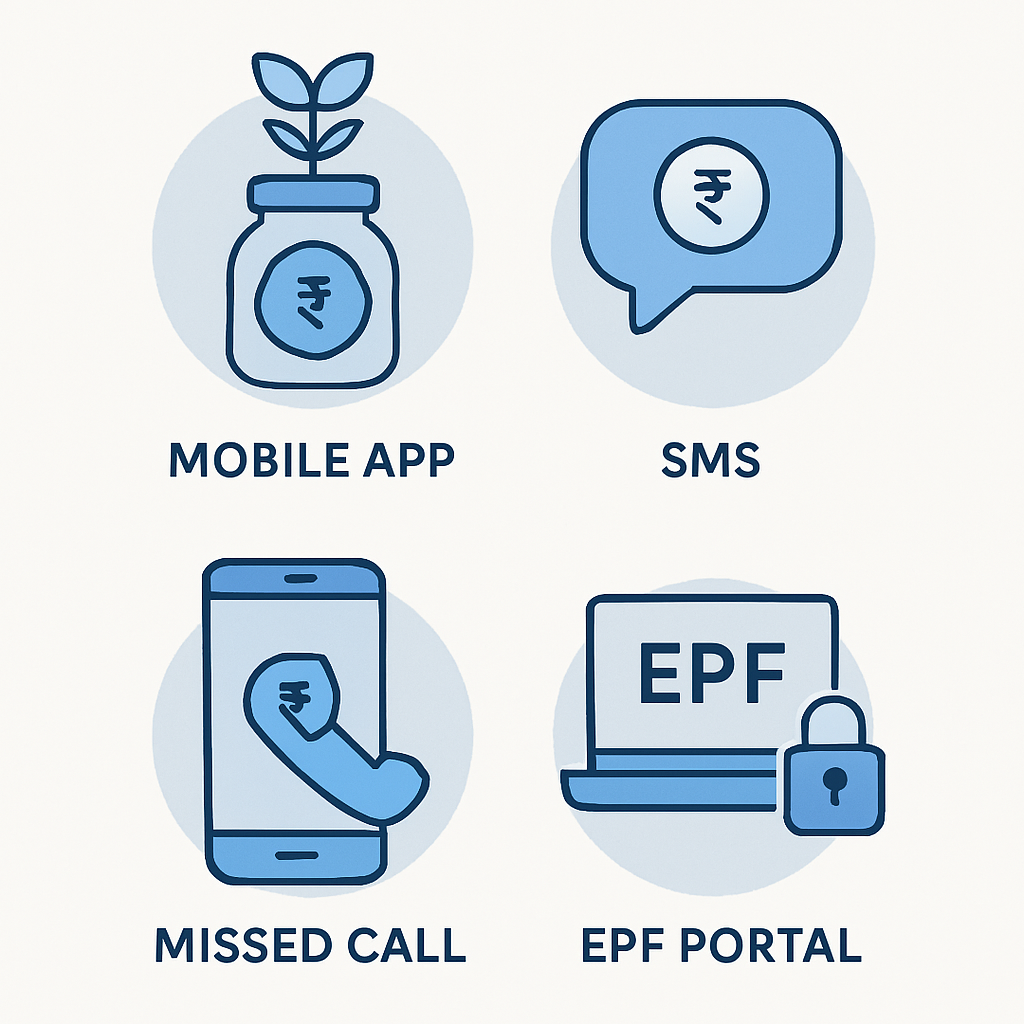
EPF Member Portal: Comprehensive Digital Platform
The official EPF Member Portal (https://www.epfindia.gov.in) serves as the primary digital gateway for comprehensive PF account management. Portal access requires UAN (Universal Account Number) verification and password creation through a straightforward registration process. Complete KYC (Know Your Customer) documentation enables full portal functionality and eliminates access restrictions.
Portal features include detailed contribution history, monthly transaction records, interest calculation breakdowns, and withdrawal status tracking. Advanced users leverage analytical dashboards to track contribution trends and project retirement corpus development. Document management functionality enables convenient access to PF statements and transaction records.
Mobile-responsive design ensures convenient portal access from smartphones, tablets, and desktop computers. Mobile optimization includes simplified navigation and focused feature presentation for enhanced mobile experience. Bookmark management and notification setup enable convenient recurring access to frequently used functions.
Security considerations include strong password creation, regular password updates, and multi-factor authentication where available. Users should avoid accessing portal from shared or public devices and should clear browser cache after sessions. The EPFO implements encryption and secure server infrastructure to protect sensitive financial information.
UMANG App: Integrated Government Services
The Unified Mobile Application for New-age Governance (UMANG) provides convenient access to EPF services alongside other government benefits. App availability on both iOS and Android platforms ensures broad device compatibility. UMANG integration offers comprehensive government service access within a single application interface.
UMANG features include real-time balance checking, transaction history access, withdrawal application status tracking, and service request submission. Biometric authentication options enhance security while simplifying login procedures. Push notifications alert users to important account events including interest crediting and withdrawal completions.
Service integration extends beyond EPF to include passport services, income tax filing, and other government schemes. This integrated approach streamlines government service access and creates comprehensive digital governance experiences. Users appreciate consolidated access to multiple services within a single platform rather than navigating separate portals.
Installation and initial setup require minimal time and effort. The app guides users through registration and KYC verification procedures with clear step-by-step instructions. Support resources including FAQ sections and video tutorials assist new users in platform navigation.
SMS and Missed Call Services: Basic Balance Access
The EPFO SMS service provides instant balance information through simple text message requests to designated numbers. SMS service operates 24/7 and requires no internet connectivity or special devices. Users receive response messages containing current balance information typically within seconds to one minute.
Missed call services enable balance checking by calling designated EPFO numbers and allowing the call to disconnect. Response messages arrive via SMS within minutes, containing balance and recent transaction information. This service proves particularly valuable in low-connectivity areas or for users with basic mobile phones lacking internet capability.
Both services provide basic balance information sufficient for routine monitoring purposes. Limited functionality means these services cannot handle complex transactions or provide detailed transaction history. For comprehensive account management, users should utilize full portal access for complete information and functionality.
Service availability and specific contact numbers vary by region. The EPFO website and official communications specify correct numbers for each state or region. Users should verify current contact information before attempting service access to ensure successful connections.
Analyzing Your PF Statement: Understanding Account Details
Contribution Component Analysis
PF statements display separate employee and employer contribution columns with monthly detail and periodic summaries. Contribution amounts should correspond to salary slip information, enabling verification of proper calculation and crediting. Year-on-year contribution changes reflect salary growth and should align with employment records.
Employee contribution sections show 12% of basic salary plus DA. Employer contribution sections show combined 12% consisting of 8.33% EPF and 3.67% EPS. Detailed itemization enables verification of proper allocation between EPF accumulation and pension scheme components.
Contribution history trends provide insights into salary progression and career development. Consistent contribution growth reflects career advancement and increased earning capacity. Gaps or reductions in contributions may indicate employment changes, sabbaticals, or employment termination periods.
Interest Credit Analysis and Verification
Annual interest credit statements specify interest amounts credited and calculation basis. Interest calculation typically uses average balance methodology, meaning account balances fluctuate throughout the year. Understanding this calculation method enables verification that proper interest amounts were credited based on average balances maintained.
Interest credit schedules specify dates when interest becomes available, typically in March or April following the financial year. Employees should verify that interest credits appear in accounts by specified dates. Delayed credits should be reported to EPFO for investigation and resolution.
Historical interest rate information in statements enables comparison with published EPFO rates. Discrepancies between expected and actual interest amounts warrant inquiry with EPFO regarding calculation details. The EPFO interest calculator tool on official websites enables independent verification of expected interest earnings.
Withdrawal and Transaction History Review
Transaction history sections document all withdrawals, partial encashments, and account transfers. Withdrawal dates and amounts should align with personal withdrawal requests and approval documentation. Any unauthorized or unexplained transactions should be immediately reported to EPFO for investigation.
Transfer transactions between multiple employers show in transaction history when applicable. Consolidation of multiple accounts appears as transfer credits from previous account numbers. Complete transaction history enables verification that all funds from previous employment transferred correctly to current accounts.
Administrative adjustments and corrections appear in transaction history with explanatory notation. These entries should include explanations of corrections made and justification for adjustments. Unexplained administrative entries warrant inquiry with EPFO for clarification.
Strategic PF Management and Optimization Techniques
UAN Management and Account Optimization
Proper UAN activation and profile completion form the foundation for comprehensive PF optimization. Complete KYC documentation including Aadhaar linking, PAN integration, and bank account verification enables full portal access and eliminates service restrictions. Profile completeness ensures prompt processing of all future transactions and service requests.
UAN consolidation addresses situations where employees have multiple UANs from different employers or employment periods. Consolidation requires submitting merger applications with supporting documentation including employment records and previous UAN details. The consolidation process typically completes within 45-60 days when documentation is complete and accurate.
Account portability during job changes requires proper UAN linking and transfer procedures. Documentation should include resignation letters from previous employers, joining letters from current employers, and identification proof. Proper execution of transfer procedures ensures seamless fund movement and uninterrupted compound growth.
Multi-Account Consolidation Strategies
Employees with multiple PF accounts from previous employers should prioritize consolidation to simplify management and enhance growth. Consolidation combines all balances into a single master account, eliminating the need to track multiple account numbers and statements. This simplified management reduces administrative burden and minimizes the risk of overlooking account details.
Consolidation procedures vary slightly by state but generally require submission of applications through EPFO portals or office visits. Applications must include proof of previous employment, UAN details from previous accounts, and identification documentation. Processing typically requires 30-45 days for verification and completion.
Timing considerations for consolidation include understanding interest crediting cycles and ensuring no pending transactions. Consolidated accounts maintain complete transaction history and interest earning records from all merged accounts. Employees should not delay consolidation due to procedural concerns, as benefits of simplified management outweigh administrative effort.
Digital Tools and Verification Procedures
The EPFO online portal includes the Interest Calculator tool enabling employees to independently verify expected interest earnings. This tool requires input of opening balance, contribution amounts, and withdrawal details. Comparison of calculator results against actual credited interest identifies potential discrepancies requiring EPFO investigation.
Document management features within EPFO portals enable convenient storage and access to KYC documents, salary slips, and withdrawal applications. Digital document storage reduces reliance on physical file maintenance and enables quick access during transactions or inquiries. Secure backup of important documents protects against loss or corruption.
Notification and alert systems enable real-time updates regarding account activities including contribution crediting and interest updates. Setup of these notifications ensures employees receive prompt information about account changes. Regular notification review identifies potential issues before they compound into larger problems.
PF Withdrawal Options: Balancing Current Needs with Retirement Security
Understanding Eligibility Criteria and Categories
PF withdrawal eligibility depends on employment status, service duration, and withdrawal purpose. Medical emergency withdrawals become available after six months of service, allowing withdrawals up to medical expense amounts. Education withdrawals require seven years of service and must be documented with educational institution receipts.
Property purchase withdrawals become available after five years of service and require property documentation including property agreement or registration details. Home loan repayment withdrawals can be claimed after specific service periods, provided adequate documentation of loan details is submitted. Unemployment withdrawals become available two months after employment termination due to involuntary job loss.
Full account withdrawal becomes available upon employment termination, with no service requirement restrictions. This flexibility enables fund access during employment gaps or job transitions. Retirement withdrawals at age 58 become available upon separation from service, enabling transition to pension income or alternative income sources.
Strategic Withdrawal Planning and Timing
Withdrawal decisions require careful evaluation of opportunity costs and long-term compound growth impacts. A withdrawal at age 40 eliminates 18 years of potential compound growth, significantly reducing final retirement corpus. Alternative funding sources including personal loans, family assistance, or employer advances might preserve larger long-term wealth accumulation.
Tax implications differ based on employment status at withdrawal time and service duration. Withdrawals before completion of five years of continuous service face tax consequences on interest earned. Withdrawals after five years of continuous service enjoy tax-free status on both accumulated principal and interest, making timing optimization important.
Partial withdrawal strategies enable addressing immediate needs while preserving retirement corpus for long-term security. Understanding proportional withdrawal calculations helps determine optimal amounts to withdraw while maintaining adequate retirement reserves. Consultation with financial advisors or EPFO representatives helps optimize withdrawal decisions based on individual circumstances.
Documentation and Process Requirements
Withdrawal applications require submission of specific documentation depending on withdrawal category. Medical emergency withdrawals require medical reports and hospital bills. Education withdrawals require fee payment receipts from educational institutions. Property withdrawals require property documentation including sale agreements or registration details.
Application submission through EPFO portals simplifies procedures compared to physical office visits. Portal submission enables convenient documentation upload and status tracking. Acknowledgment receipts should be retained for reference and follow-up purposes.
Processing timelines typically require 7-15 days for application approval following verification of submitted documentation. Fund transfer to designated bank accounts follows within an additional 3-5 days. Complete processing from application submission to fund receipt typically requires 15-20 days under normal circumstances.
Tax Implications and Optimization Strategies
Triple Tax Benefits of EPF Contributions
EPF contributions enjoy tax deduction benefits under Income Tax Act Section 80C, up to annual limits of ₹1.5 lakh. This deduction reduces taxable income dollar-for-dollar, providing immediate tax savings for employees in applicable tax brackets. Strategic contribution timing maximizes tax benefits within specified annual limits.
Interest earned within PF accounts accumulates tax-free throughout the employment period. This tax-free accumulation accelerates compound growth compared to taxable investment alternatives. Tax exemption on interest earnings represents a significant advantage distinguishing EPF from comparable investment options.
Maturity proceeds receive tax-free status upon withdrawal after completion of five years of continuous service. This comprehensive tax exemption on principal and accumulated earnings makes EPF a highly tax-efficient retirement savings vehicle. Understanding tax-free withdrawal conditions ensures maximum benefit realization at retirement.
Strategic Tax Planning Integration
Employees should coordinate PF contributions with other Section 80C investments including insurance premiums, home loan principal repayments, and education-related investments. Comprehensive tax planning ensures full utilization of ₹1.5 lakh annual Section 80C limit. Strategic contribution optimization maximizes overall tax efficiency without overlooking other important investment needs.
VPF contributions provide additional tax deduction opportunities within Section 80C limits. High-income employees should evaluate VPF participation as part of comprehensive tax planning strategies. Contribution coordination ensures maximum deduction utilization while maintaining balanced investment portfolios.
Withdrawal timing considerations include understanding that withdrawals before five years of continuous service face tax consequences. Planning employment continuity and strategically timing major expenses helps minimize tax implications. Consultation with tax professionals helps optimize withdrawal timing based on individual tax circumstances.
Documentation for Tax Compliance
Income tax returns should reflect PF contributions claimed under Section 80C with supporting documentation. Contribution receipts or EPFO statements provide substantiation of amounts claimed. Maintaining organized documentation facilitates smooth income tax filing procedures.
Withdrawal documentation should specify tax-free status eligibility and service completion details. PF withdrawal statements include tax treatment information helping employees understand tax consequences. Retention of withdrawal documentation supports tax compliance and enables reference if income tax authorities raise inquiries.
Advanced PF Management Strategies for Wealth Acceleration
Salary Structure Optimization for PF Contribution Maximization
Basic salary comprises the calculation basis for PF contributions, making salary structure composition strategically important. Employees should analyze how various salary components affect PF calculations. Negotiation of salary structure to maximize basic salary components increases PF contributions proportionally.
This strategy proves particularly valuable during salary negotiations or promotions. A modest increase in basic salary generates ongoing PF contribution increases throughout employment duration. Comparison of salary structure options during recruitment or promotion decisions considers long-term PF accumulation effects.
Documentation should include current salary structure breakdown and projected calculations under alternative structures. Financial impact analysis demonstrates long-term wealth accumulation differences resulting from salary structure variations. Professional financial advisors can assist in evaluating salary structure optimization opportunities.
Career Planning Integration with PF Strategy
Employment continuity directly impacts compound growth and retirement security benefits. Career changes should consider PF implications including interest crediting timing and contribution consistency impacts. Strategic timing of job transitions around interest crediting dates can optimize interest earnings.
Long-term career planning considers PF benefits alongside salary progression and professional development. Organizations offering higher employer benefits or favorable pension schemes may warrant consideration despite comparable salaries. Comprehensive career evaluation includes retirement security assessment alongside immediate compensation.
Service period milestones including five-year, ten-year, and fifteen-year marks carry specific significance for PF and pension benefits. Career planning that maintains service continuity through these milestones maximizes long-term retirement security. Understanding milestone benefits helps inform decisions regarding employment transitions and career transitions.
Supplement Investment Strategies Beyond EPF
While EPF provides foundational retirement savings, comprehensive retirement security typically requires supplementary investments. National Pension System (NPS) accounts offer market-linked investment options providing higher growth potential alongside EPF guaranteed returns. Combination strategies balance guaranteed EPF returns with growth potential from market-linked alternatives.
Real Estate Investment Trusts (REITs) and dividend-yielding stock investments provide income generation during retirement years. Portfolio diversification across multiple investment types reduces single-investment dependency and improves overall security. Strategic supplementary investments build comprehensive retirement portfolios addressing various financial objectives.
Regular investment reviews and rebalancing ensure that overall portfolios remain aligned with long-term objectives. Adjustment of contribution allocation between EPF, NPS, and other investments reflects changing financial circumstances and market conditions. Professional financial planning assistance helps optimize complex portfolio strategies.
Navigating Common PF Issues and Resolution Procedures
Identifying and Addressing Contribution Discrepancies
Monthly balance verification identifies contribution discrepancies promptly, enabling quick resolution. Comparison of expected contributions against actual credits identifies shortfalls or delays. Documentation including salary slips, bank statements showing deductions, and PF statements supports formal dispute procedures.
First-step resolution involves direct communication with employer HR departments requesting investigation and correction. Most discrepancies result from administrative delays or calculation errors resolvable through employer coordination. Documentation of communication and responses creates record for escalation if issues remain unresolved.
EPFO grievance portals enable formal complaints when employer resolution proves unsuccessful. Formal complaints require detailed documentation of discrepancies, amounts involved, and resolution attempts. EPFO investigation procedures typically require 30-45 days, with resolution communication provided upon completion.
Addressing Account Transfer Delays or Failures
Account transfers between employers require coordinated action between previous employers, current employers, and EPFO. Delays can occur due to incomplete documentation, administrative backlogs, or system issues. Tracking transfer status through EPFO portals identifies delays warranting follow-up action.
Proper documentation includes resignation letters, joining letters, UAN confirmation, and bank account details. Verification that all documentation was submitted correctly identifies documentation-related delays. Resubmission of incomplete documentation accelerates transfer completion.
Extended delays beyond normal processing periods warrant formal escalation to EPFO. Formal requests for transfer status investigation and expedited processing can prompt attention to delayed transfers. Escalation through EPFO regional offices or headquarters achieves resolution for prolonged delays.
Managing Multiple Account Consolidation Challenges
Consolidation of multiple accounts requires merger applications with supporting employment documentation. Challenges may arise if previous employment records are unavailable or documentation is incomplete. Employers can provide employment verification letters supporting consolidation requests.
UAN consolidation procedures occasionally face delays due to data matching issues across different periods or employers. Clarification of UAN details and employment dates helps resolve data matching problems. Direct communication with EPFO consolidation departments expedites resolution of technical issues.
Consolidation should be completed relatively promptly following employment transitions. Delays in consolidation can complicate future transactions and increase administrative complexity. Proactive initiation of consolidation applications prevents accumulation of unresolved multiple accounts.
Future Outlook and Emerging Opportunities in PF Management
Digital Innovation and Technology Integration
The EPFO continues digital infrastructure expansion to enhance service delivery and member experience. Artificial intelligence applications enable personalized retirement planning recommendations based on account data. Predictive analytics provide projected retirement corpus estimates incorporating various scenarios and assumptions.
Blockchain technology applications in PF systems enhance security, transparency, and transaction efficiency. Digital verification of contribution records and automated compliance monitoring improve system reliability. Future systems may enable real-time contribution tracking and instantaneous interest crediting rather than annual cycles.
Mobile app enhancements continue improving interface design and functionality based on user feedback. Expansion of service capabilities within mobile applications enables increasingly complex transactions through convenient mobile access. Integration with other fintech platforms provides comprehensive financial management experiences within unified platforms.
Regulatory Evolution and Benefit Enhancement
The government continues evaluating regulatory changes to enhance PF system effectiveness and member benefits. Recent policy discussions include potential interest rate improvements and simplified withdrawal procedures. Regulatory adaptations reflect changing workforce demographics and retirement security needs.
Proposed enhancements include simplified documentation requirements and digitized approval procedures. Administrative burden reduction through technology implementation makes PF management more convenient and accessible. Stay informed regarding regulatory changes through official EPFO communications and announcements.
Long-Term Retirement Security Outlook
Comprehensive retirement security increasingly requires integration of multiple income sources including EPF, pension, investment income, and alternative arrangements. Strategic planning that combines EPF core benefits with supplementary investments creates robust retirement security. Professional financial planning helps optimize complex retirement income structures.
Healthcare and inflation considerations require careful retirement planning ensuring adequate resources throughout extended retirement periods. Inflation adjustment strategies maintain purchasing power during extended retirement phases. Regular retirement plan reviews enable adjustments responding to changing circumstances and requirements.
Key Takeaways and Action Items
Understanding and optimizing your EPF account requires proactive engagement with available tools and strategies. Regular balance monitoring ensures contribution accuracy and identifies issues requiring immediate attention. Comprehensive understanding of account components and withdrawal options enables informed decision-making throughout employment and retirement.
Strategic career planning that considers PF implications supports long-term wealth accumulation and retirement security. Salary structure optimization and employment continuity directly impact final retirement corpus. Integration of EPF planning with supplementary investments creates comprehensive retirement security addressing various financial objectives.
Employees should implement systematic quarterly reviews of PF accounts, verify contribution accuracy, and adjust strategies based on career progression and changing circumstances. Utilization of digital tools including EPFO portals and UMANG app enables convenient ongoing account management. Proactive implementation of discussed strategies positions employees for enhanced retirement security and financial independence.
Frequently Asked Questions (FAQs)
FAQ 1: What is the current EPF interest rate, and how often does it change?
The current EPF interest rate stands at 8.1% annually as of 2025. The EPFO’s investment committee determines rates based on fund performance and market conditions. Rates are typically revised on an annual basis, with changes effective from April of each financial year. Historical rates have ranged from 6.5% to 8.8% over the past decade. Employees can track rate information through official EPFO communications and press releases.
FAQ 2: How do I register for the EPF Member Portal, and what information do I need?
EPF Member Portal registration requires your UAN (Universal Account Number), basic contact information, and valid identification documents. Visit https://www.epfindia.gov.in and follow the registration process. Complete KYC verification including Aadhaar linking enables full portal functionality. Processing typically completes within 24-48 hours. Technical support is available through EPFO help desk if registration issues arise.
FAQ 3: What documents are required for withdrawing PF money for medical emergencies?
Medical emergency withdrawals require submission of medical reports from recognized medical practitioners, hospital bills or invoices, and health insurance claim rejection letters if applicable. The withdrawal amount must not exceed documented medical expenses. Applications submitted through EPFO portals require document uploads with clear, legible images. Processing typically requires 7-15 days following documentation verification.
FAQ 4: What happens to my PF account if I change jobs?
Upon job change, your PF balance remains preserved in your existing account. Employers are required to transfer your balance to your new employer’s designated PF account through formal transfer procedures. The transfer typically completes within 15-30 days of proper documentation submission. Your account number and balance remain unchanged; you simply add contributions from the new employer to existing balances.
FAQ 5: Can I withdraw my entire PF balance before retirement, and what are the tax implications?
Complete PF withdrawal before retirement is possible only under specific circumstances including employment termination, involuntary job loss, or reaching age 58. Withdrawals before completion of five years of continuous service incur tax consequences on interest earned. Withdrawals after five years of continuous service benefit from tax-free status on both principal and interest. Consult tax professionals regarding your specific circumstances.
FAQ 6: What is the difference between EPF and EPS, and how do they benefit my retirement?
EPF (Employee Provident Fund) is an accumulation account holding employee and employer contributions earning annual interest. EPS (Employee Pension Scheme) is a defined benefit pension scheme funded through employer contributions. EPF provides lump-sum withdrawal options while EPS provides monthly pension income after retirement. Both components combine to create comprehensive retirement security through complementary benefits.
FAQ 7: Can I contribute more than the mandatory 12% to my EPF account?
Yes, Voluntary Provident Fund (VPF) allows contributions exceeding the mandatory 12% up to 100% of basic salary. VPF contributions earn identical 8.1% interest rates and receive tax deduction benefits under Section 80C. VPF contributions are flexible and can be increased, decreased, or suspended based on financial circumstances. Check with your employer regarding VPF eligibility and participation procedures.
FAQ 8: How can I access my PF account if I don’t have internet connectivity?
The EPFO SMS service provides balance checking through text messages sent to designated regional numbers. Alternatively, you can use the missed call service by calling designated EPFO numbers and allowing the call to disconnect. Response messages containing balance information arrive via SMS within minutes. Both services operate 24/7 and require no internet connectivity or special devices. Verify current contact numbers with EPFO before service access.
FAQ 9: What should I do if I discover errors in my PF contributions or interest calculations?
Document all suspected errors including specific dates, amounts, and discrepancies identified. Compare PF statements against salary slips to identify calculation issues. Contact your employer’s HR department requesting investigation and correction. If employer resolution proves unsuccessful, file formal complaints through EPFO grievance portals with supporting documentation. EPFO investigation procedures typically require 30-45 days for resolution.
FAQ 10: How is PF interest calculated, and when is it credited to my account?
PF interest is calculated annually using the average balance method, where interest accrues on average balance maintained during the financial year. The EPF investment committee determines interest rates based on fund performance. Interest is credited annually, typically in March or April following the financial year. You can verify calculations using the EPFO Interest Calculator tool available on official websites.
About the Author
Author: Nueplanet
Nueplanet is a financial content specialist dedicated to providing accurate, transparent, and evidence-based information about personal finance, retirement planning, and investment strategies. With expertise in Indian financial systems including the EPF, taxation frameworks, and retirement security, Nueplanet creates comprehensive guides designed to empower employees with actionable financial knowledge.
This guide incorporates information from official EPFO sources, government publications, verified financial institutions, and established regulatory documentation. All information reflects regulations and procedures current as of November 2025 and may be subject to future regulatory changes. Readers should consult current official sources for the most recent updates on EPF procedures and regulations.
Nueplanet remains committed to factual accuracy, transparent sourcing, and providing balanced analysis that serves reader interests rather than promotional objectives. Continuous content updates ensure that information reflects the latest regulatory changes and financial developments.
Helpful Resources
Latest Posts
Tag
PF Balance
Related Posts












Post Comment