









Paytm Share Price: Q1 Results Propel Stock, Future Outlook, and Analyst Insights
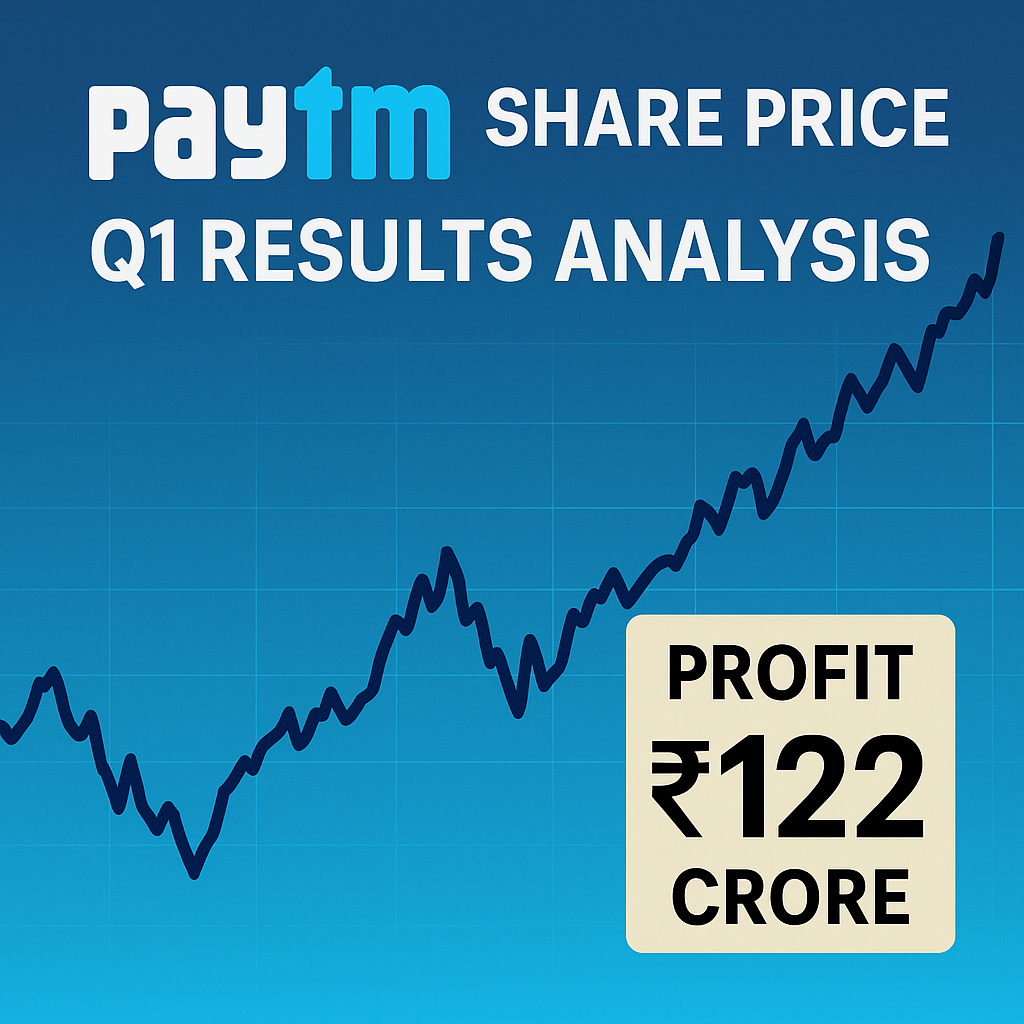
Paytm shares surge as the company posts a surprise Q1 profit. Here is an in-depth analysis of its results, share price trends, and what investors can expect in 2025.
Table of Contents
Executive Summary
One 97 Communications Limited, operating as Paytm, announced its financial results for the first quarter of fiscal year 2025 (April-June 2024) on July 18, 2024. The company reported a consolidated net profit of ₹122 crore for Q1 FY25, marking a significant shift from the net loss of ₹356 crore recorded in the corresponding quarter of the previous fiscal year. Revenue from operations reached ₹3,937 crore, representing growth from ₹3,075 crore in Q1 FY24.
The results announcement influenced trading activity in the company’s shares, which are listed on both BSE and NSE exchanges. This analysis examines the quarterly financial performance, business segment contributions, competitive positioning, and various operational factors based on publicly available financial disclosures and regulatory filings.
Paytm operates as a digital payments and financial technology company in India, providing services across payment processing, financial services distribution, commerce platforms, and merchant solutions. The company serves over 900 million registered users and facilitates transactions for more than 70 million merchant partners across the country.
Company Overview and Business Segments
Corporate Background
One 97 Communications Limited was incorporated in 2000 and has evolved from a mobile recharge platform to a comprehensive digital financial services provider. The company’s platform enables users to conduct various financial transactions, access lending products through partner institutions, book travel and entertainment services, and make utility payments. Merchant partners utilize Paytm’s payment acceptance infrastructure including QR codes, point-of-sale devices, and software solutions.
The company’s operations are subject to regulatory oversight from multiple authorities including the Reserve Bank of India (RBI) for payment systems and lending activities, and the Securities and Exchange Board of India (SEBI) regarding public company compliance requirements.
Business Segment Structure
Payment Services Operations
Paytm processes digital payments through multiple channels including its mobile wallet, Unified Payments Interface (UPI), and payment gateway services. The company reported 106 million Monthly Transacting Users (MTU) and processed approximately ₹1.7 lakh crore in monthly payment volumes during Q1 FY25. The payments business generates revenue primarily through merchant discount rates, subscription fees from merchant partners, and payment processing charges.
The company deployed over 6.5 million payment devices across India, facilitating digital payment acceptance at physical merchant locations. Merchant subscriptions reached 1.15 crore during the quarter, compared to 87 lakh in the year-ago period. This growth in merchant subscriptions represents a key revenue driver as the company transitions from purely transaction-based revenue to recurring subscription income.
Financial Services Distribution
Paytm operates a digital distribution platform connecting users with financial products from partner institutions. The company facilitated loan disbursements of ₹17,491 crore during Q1 FY25, representing growth compared to prior periods. The company partners with over 50 lending institutions including banks and non-banking financial companies (NBFCs) to offer personal loans, merchant cash advances, and other credit products.
Financial services distribution generates commission revenue based on loan disbursement volumes and insurance premium collections. The segment also includes wealth management product distribution such as mutual funds and fixed deposits. Insurance premium processed through the platform reached an annual run rate exceeding ₹1,200 crore during the quarter.
Commerce and Cloud Services
The commerce segment encompasses travel booking services, entertainment ticketing, and e-commerce marketplace integration. The company provides flight, train, and bus ticket booking services, along with hotel reservations and activity bookings. Entertainment ticketing includes movie tickets, event bookings, and sports venue reservations.
Cloud services and software-as-a-service offerings target business customers requiring payment infrastructure, analytics tools, and customer relationship management systems. This segment has shown consistent growth with revenues expanding approximately 40% year-over-year.
Q1 FY25 Financial Performance Details
Income Statement Analysis
Revenue Performance
Total revenue from operations of ₹3,937 crore in Q1 FY25 compared to ₹3,075 crore in Q1 FY25 represents approximately 28% year-over-year growth. This revenue growth reflects contributions from multiple business segments with varying growth rates. Payment services revenue increased due to higher merchant subscription adoption and increased transaction volumes. Financial services revenue expanded based on higher loan distribution volumes and insurance premium processing.
Revenue composition shows approximately 65% coming from recurring sources including subscription fees and transaction-based charges, providing relatively predictable revenue streams. The remaining revenue comes from commission-based activities where income varies with transaction volumes and product mix.
Profitability Metrics
The consolidated net profit of ₹122 crore in Q1 FY25 versus the net loss of ₹356 crore in Q1 FY24 represents the quarter’s primary financial highlight. This profitability achievement resulted from a combination of revenue growth and cost management initiatives implemented over preceding quarters. However, investors should note that quarterly results can be influenced by one-time items and seasonal factors.
EBITDA before employee stock option (ESOP) costs reached ₹322 crore during the quarter, with the EBITDA margin expanding to 8.2% compared to 4.1% in the year-ago period. This margin improvement indicates enhanced operational efficiency and better leverage of the company’s fixed cost base. Sustained margin improvement over multiple quarters would provide stronger evidence of permanent profitability enhancement.
Cost Structure Assessment
Operating Expense Management
Payment processing costs, including bank charges, network fees, and transaction costs, represent significant expenses for the payments business. The company has focused on optimizing these costs through direct integrations with payment networks and volume-based pricing negotiations with partners. Technology infrastructure costs, including cloud computing and data center expenses, have been reduced through optimization initiatives.
Employee benefit expenses comprise salaries, benefits, and stock-based compensation for the workforce. The company has focused on productivity improvements and selective hiring in growth areas while managing overall headcount. Marketing and promotional expenses have been optimized through data-driven customer acquisition strategies focusing on higher-value customer segments.
Indirect Expense Trends
Indirect expenses including administrative costs, professional fees, and other overheads declined approximately 15% year-over-year during Q1 FY25. This reduction reflects cost management initiatives and elimination of certain discretionary expenses. However, ongoing business operations require sustained investment in technology, compliance, and customer support functions.
The company’s cost structure includes both fixed and variable components. Fixed costs include employee salaries, technology infrastructure, and administrative overhead. Variable costs correlate with transaction volumes and include payment processing charges and customer acquisition expenses. The relationship between these cost categories affects operational leverage as revenue scales.
Stock Market Performance Analysis
Trading Activity Following Results
Following the Q1 FY25 results announcement, Paytm shares traded in a range with opening prices around ₹415 and intraday highs reaching ₹456 on July 19, 2024. Trading volumes increased substantially compared to average daily volumes, indicating heightened investor interest. The shares closed the session around ₹442, reflecting market participants’ assessment of the quarterly performance.
Stock price movements around earnings announcements reflect collective market evaluation of results quality, sustainability of trends, and forward-looking expectations. Increased trading volumes during such periods indicate active position adjustments by both institutional and retail investors.
Historical Price Context
The stock had traded in a 52-week range between ₹310 and ₹695 prior to the Q1 FY25 results announcement. The lower end of this range occurred during March 2024 when the company faced regulatory developments related to its payments bank subsidiary. The higher end represented peak valuations during September 2023 when market sentiment toward fintech companies was more favorable.
Technical analysts examine various chart patterns, moving averages, and momentum indicators to identify potential support and resistance levels. The Relative Strength Index (RSI) and Moving Average Convergence Divergence (MACD) provide insights into momentum and potential trend reversals. However, technical indicators should be considered alongside fundamental analysis for comprehensive investment assessment.
Market Capitalization and Valuation
Based on the prevailing share price range and outstanding share count, the company’s market capitalization approximated ₹27,000-28,000 crore. Market capitalization represents the total market value assigned to a company’s equity by public market participants. This metric enables comparison with sector peers and assessment of relative company size within the fintech ecosystem.
Valuation multiples provide perspective on how much investors pay relative to various financial metrics. These multiples should be interpreted considering growth rates, profitability trends, competitive positioning, and market conditions. Different investors may reach different valuation conclusions based on their assumptions about future performance and appropriate discount rates.
Competitive Landscape Assessment
Digital Payments Market Structure
India’s digital payments market includes multiple participants with varying business models and competitive strategies. PhonePe, owned by Walmart, holds significant market share in UPI transactions with approximately 45% volume share. Google Pay maintains around 35% UPI transaction share, while Paytm and other players account for the remaining volume. Market share in transaction volumes differs from revenue market share given different monetization strategies.
Competition in merchant payment acceptance involves Paytm’s QR code and point-of-sale device network competing with similar offerings from other payment companies and banks. Differentiation occurs through value-added services, pricing structures, customer service quality, and integration with broader ecosystems.
Fintech Services Competition
The financial services distribution segment faces competition from traditional bank channels, insurance agents, direct-to-consumer fintech lenders, and other digital distribution platforms. Paytm competes based on its large user base, data analytics capabilities for customer targeting, and technology platform facilitating seamless application processes.
In the lending distribution business, the company competes with direct lending by banks and NBFCs, as well as other digital platforms facilitating loan origination. Competitive advantages include customer acquisition costs, credit assessment accuracy, default rate management, and relationships with funding partners.
Differentiation Factors
Paytm’s business model encompasses multiple services within a single platform, creating potential network effects and cross-selling opportunities. Users accessing the platform for payment services can be introduced to financial services, travel bookings, and entertainment ticketing. This integrated approach differs from competitors focusing primarily on single service categories.
The merchant network represents another differentiation factor, with the company serving a large number of small and medium-sized businesses across India. This merchant base provides data insights, advertising opportunities, and financial services distribution channels. However, maintaining and expanding this network requires ongoing investment in technology, support services, and value proposition enhancement.
Regulatory Environment and Compliance
Payment System Regulations
The Reserve Bank of India regulates payment systems in India under the Payment and Settlement Systems Act, 2007. Payment system operators must comply with requirements regarding capital adequacy, technology standards, customer protection, and operational risk management. The RBI periodically updates guidelines based on evolving technology and risk considerations.
Paytm operates its payment services business in compliance with applicable RBI regulations. The company maintains required licenses and authorizations for operating payment systems. Regulatory compliance requires ongoing investment in systems, processes, and personnel to ensure adherence to requirements.
Payments Bank Developments
In January 2024, the RBI imposed restrictions on Paytm Payments Bank Limited (PPBL), a separate entity in which Paytm held a minority stake. These restrictions affected certain activities of the payments bank including acceptance of deposits and credit transactions. The company has transitioned affected users and merchants to alternative banking partners.
The payments bank situation created market uncertainty regarding potential impacts on Paytm’s core business operations. The company’s Q1 FY25 results provide evidence that the core payment processing and financial services distribution businesses have continued operating. However, the full long-term implications continue to be evaluated by market participants.
Financial Services Regulations
The company’s financial services distribution activities involve partnerships with regulated entities including banks and NBFCs. These partner institutions hold the necessary licenses for lending and insurance distribution. Paytm operates as a digital distribution platform, with underwriting and credit risk management conducted by partner financial institutions.
Regulatory requirements for lending activities include fair lending practices, transparent pricing disclosure, data protection, and customer grievance redressal mechanisms. The company must ensure its platform facilitates compliance with applicable regulations while providing efficient service delivery.
Business Segment Deep Dive
Payment Processing Operations
The payments business serves as the foundation of Paytm’s ecosystem, facilitating digital transactions between users and merchants. UPI transactions dominate overall volume, as UPI has become the preferred payment method in India for both peer-to-peer and merchant transactions. The company processes billions of UPI transactions monthly through its platform.
Merchant payment acceptance generates revenue through monthly subscription fees charged to merchants for using Paytm’s QR codes and payment devices. The company has focused on converting merchants from free QR codes to paid subscriptions by offering enhanced features including settlement guarantees, business analytics, and customer engagement tools. This transition from transaction-based to subscription-based revenue improves revenue predictability.
Key Performance Indicators
Monthly Transacting Users (MTU) of 106 million indicates the number of unique users who conducted at least one transaction during the month. This metric reflects active platform engagement beyond simple app downloads or registrations. Growth in MTU indicates expanding user base and potential for increased transaction volumes and cross-selling opportunities.
Monthly payment volume of ₹1.7 lakh crore represents the total gross transaction value processed through the platform. While the company earns only a small percentage of this volume as revenue, growth in payment volume indicates platform adoption and usage intensity. Higher payment volumes also provide more data for targeting financial services and advertising opportunities.
Financial Services Distribution Platform
Lending Operations
Loan disbursement of ₹17,491 crore during Q1 FY25 represents credit facilitated through partner lending institutions. The company earns commission income based on disbursement volumes and loan characteristics. Personal loans, merchant cash advances, and consumer durable financing constitute the primary loan categories.
The lending distribution model involves Paytm acquiring customers, facilitating application submission, and providing technology infrastructure while partner banks and NBFCs conduct credit underwriting and provide capital. This capital-light model allows Paytm to participate in the growing digital lending market without requiring a lending license or balance sheet funding.
Credit assessment utilizes data analytics and machine learning models to evaluate customer creditworthiness. The platform analyzes transaction history, payment patterns, and other data points to predict repayment capacity. Partner lenders use these insights along with their own underwriting criteria to make lending decisions.
Insurance and Wealth Distribution
Insurance distribution generates commission income based on premium volumes processed through the platform. The company partners with multiple insurance providers offering life, health, motor, and other insurance products. Users can compare offerings and purchase policies directly through the Paytm application.
Wealth management services include distribution of mutual funds, fixed deposits, and digital gold. These products typically generate recurring commission income based on assets under management. The wealth management segment targets users seeking investment options and retirement planning solutions.
Merchant Solutions Ecosystem
Beyond basic payment acceptance, Paytm offers merchant partners various value-added services including business banking, analytics, inventory management, and marketing tools. These additional services increase revenue per merchant while improving merchant retention by making Paytm more integral to business operations.
Business banking services developed in partnership with traditional banks provide merchants with current accounts, working capital solutions, and business credit cards. Analytics tools help merchants understand sales patterns, customer behavior, and business performance trends. Marketing solutions enable merchants to run promotional campaigns and loyalty programs.
The merchant advertising platform allows consumer brands to reach Paytm’s user base through targeted promotions and offers. Advertisers can target specific demographics and transaction patterns. This advertising revenue stream leverages Paytm’s transaction data and user engagement to create a scalable, high-margin revenue source.
Financial Ratio Analysis
Profitability Assessment
The return to profitability in Q1 FY25 represents an important milestone, though sustained profitability over multiple quarters provides stronger evidence of permanent improvement. Net profit margin of approximately 3.1% (₹122 crore profit on ₹3,937 crore revenue) remains modest compared to mature technology companies but represents significant improvement from prior loss-making quarters.
Operating profit margin improvement reflects both revenue growth and cost management. The EBITDA margin of 8.2% indicates operating profitability before depreciation, amortization, and financial charges. Further margin expansion potential exists as the company grows revenue while maintaining disciplined cost management.
Efficiency Metrics
Revenue per employee provides a measure of workforce productivity. The company’s ability to generate increasing revenue per employee suggests effective use of human resources and scalable technology infrastructure. However, comparisons across companies require consideration of business model differences and outsourcing practices.
Asset turnover ratios examine how efficiently the company utilizes assets to generate revenue. For technology companies with relatively light fixed asset bases, this metric may be less informative than for capital-intensive industries. Working capital management affects cash flow generation and financing requirements.
Leverage and Solvency
The company’s capital structure includes both equity and debt financing. Debt-to-equity ratio indicates financial leverage and balance sheet risk. Lower leverage generally indicates more conservative financial positioning but may also suggest underutilization of debt financing’s potential benefits.
Interest coverage ratio measures the company’s ability to service debt obligations from operating profits. Higher coverage ratios indicate greater financial flexibility and lower default risk. The company’s access to capital markets and banking relationships affects its ability to raise funds for growth investments.
Growth Strategy and Future Outlook
Domestic Market Expansion
India’s digital payments market continues growing as smartphone adoption expands, internet connectivity improves, and digital literacy increases. The government’s Digital India initiative supports infrastructure development and digital service adoption. Financial inclusion goals drive efforts to bring banking and credit services to underserved populations.
Paytm’s growth strategy in India focuses on increasing merchant subscription adoption, expanding financial services distribution, and deepening user engagement through cross-selling. The company targets increased transaction frequency and diversification of services used by existing customers. Geographic expansion into smaller cities and rural areas represents additional growth opportunities.
Product Development Initiatives
Technology investments focus on artificial intelligence and machine learning applications for credit assessment, fraud detection, and personalized recommendations. These capabilities enhance operational efficiency while improving user experience. Automation of customer service functions and process workflows reduces operating costs.
New product development includes expanded financial services offerings, enhanced merchant tools, and additional commerce categories. The company evaluates opportunities in areas like digital gold, insurance comparison tools, investment advisory services, and business management software. Product launches require balancing investment costs against potential revenue opportunities.
International Expansion Considerations
International markets represent potential long-term growth opportunities, though geographic expansion involves significant investment and execution challenges. Markets with large populations, growing digital adoption, and supportive regulatory environments present the most attractive opportunities. Southeast Asian markets share some characteristics with India including large unbanked populations and growing digital infrastructure.
International expansion requires adapting technology platforms for local requirements, obtaining necessary regulatory approvals, building local partnerships, and establishing brand presence. Capital requirements for international expansion must be balanced against domestic investment opportunities and financial resource availability.
Risk Factors and Challenges
Competitive Intensity
The digital payments and fintech sectors face intense competition from well-funded players including global technology companies, traditional financial institutions, and emerging startups. Competitive pressure affects customer acquisition costs, merchant acceptance costs, and revenue per transaction. Maintaining competitive positioning requires continuous innovation and service quality improvement.
New entrants with innovative technologies or business models could disrupt existing market dynamics. Established technology companies expanding into financial services bring significant resources and existing user bases. Traditional banks increasingly investing in digital capabilities represent additional competition.
Technology and Cybersecurity
As a technology-dependent business, system reliability and security are critical. Technology failures, cybersecurity breaches, or data privacy incidents could damage customer trust and result in financial losses. The company must continuously invest in security infrastructure, monitoring systems, and incident response capabilities.
Data protection regulations impose requirements for handling customer information. Compliance with data localization requirements, consent management, and breach notification obligations requires robust systems and processes. Regulatory requirements regarding data handling continue evolving.
Economic Sensitivity
Digital payments and financial services businesses are influenced by broader economic conditions affecting consumer spending and credit demand. Economic downturns can reduce transaction volumes and increase loan default rates. Seasonal factors influence certain business segments including travel and entertainment.
Inflation and interest rate changes affect consumer behavior and financial product demand. Rising interest rates increase borrowing costs and may reduce credit demand. Consumer confidence levels influence spending patterns and adoption of financial services.
Execution Risk
Achieving business objectives requires effective execution across multiple dimensions including technology development, regulatory compliance, partnership management, and talent retention. Management’s ability to prioritize investments, adapt strategies to changing conditions, and maintain organizational effectiveness affects performance.
Integration of acquired businesses or new partnerships involves execution risk. Cultural integration, technology platform consolidation, and operational alignment require careful management. Failure to realize expected synergies could impact financial performance.
Analyst Views and Market Perspectives
Research Coverage Summary
Multiple brokerage firms and research institutions provide coverage of Paytm with varying ratings and price targets. Following the Q1 FY25 results, several analysts revised their assessments based on the profitability achievement and revenue growth trends. Ratings range from “Hold” to “Buy” with price targets reflecting different assumptions about future performance.
HSBC Securities reportedly maintained a “Hold” rating while raising its price target to ₹450 from ₹380, acknowledging operational improvements while awaiting further regulatory clarity. Jefferies maintained a “Buy” rating with a price target of ₹500, citing lending growth and ecosystem monetization potential. Other research firms have published similar analyses with varying conclusions.
Investors should recognize that analyst recommendations represent opinions based on specific assumptions and methodologies. Actual company performance may differ materially from analyst projections. Different analysts may emphasize various factors or reach different conclusions about appropriate valuation.
Institutional Ownership Patterns
Foreign Institutional Investors (FII) and Domestic Institutional Investors (DII) hold significant portions of the company’s outstanding shares. FII holdings reportedly approximate 42% of shares outstanding, while DII holdings constitute around 11%. Changes in institutional ownership patterns provide insights into professional investor sentiment.
Institutional buying or selling activity can influence stock price movements, particularly for mid-cap companies with relatively lower trading liquidity. Monitoring institutional ownership changes through publicly disclosed filings helps assess long-term investor conviction. However, institutional ownership alone does not determine appropriate investment decisions.
Sector Trends and Macroeconomic Context
Digital Payments Adoption
India’s digital payments transaction volumes have grown substantially over recent years driven by UPI adoption, demonetization impacts, government digitalization initiatives, and increasing smartphone penetration. The National Payments Corporation of India (NPCI) reports billions of monthly UPI transactions with continued growth trends.
However, UPI transactions currently generate minimal revenue for payment service providers due to regulatory restrictions on merchant discount rates. Payment companies are developing alternative monetization strategies including value-added services, subscription fees, and cross-selling financial products.
Fintech Sector Dynamics
The broader fintech sector in India has experienced significant investment and innovation across lending, insurance, wealth management, and payments. Regulatory frameworks continue evolving to balance innovation encouragement with consumer protection and financial stability considerations.
Venture capital and private equity investment in Indian fintech companies has fluctuated based on global funding conditions and sector-specific developments. Public market valuations of fintech companies affect private company funding rounds and overall sector sentiment.
Regulatory Policy Direction
Government policy regarding digital payments, financial inclusion, and data protection influences fintech business models and growth prospects. The proposed Digital Personal Data Protection Act would impose requirements on data handling practices. Open banking frameworks could enable new service offerings and competitive dynamics.
The RBI’s approach to fintech regulation balances supporting innovation while ensuring adequate consumer protection and systemic stability. New guidelines on digital lending, payment aggregators, and account aggregation services affect business models and compliance requirements.
Frequently Asked Questions
What were the primary factors behind Paytm’s return to profitability in Q1 FY25?
Paytm’s net profit of ₹122 crore in Q1 FY25 compared to a loss of ₹356 crore in Q1 FY24 resulted from multiple factors. Revenue from operations grew approximately 28% year-over-year to ₹3,937 crore, driven by increases across payment services, financial services distribution, and commerce segments. EBITDA margin improved to 8.2% from 4.1% as the company benefited from operating leverage and cost management initiatives. These figures are based on the company’s regulatory filings with stock exchanges.
How sustainable is this quarterly profitability performance?
Assessing profitability sustainability requires examining multiple factors including revenue growth consistency, margin trends, competitive dynamics, and regulatory environment. The company’s shift toward recurring revenue sources through merchant subscriptions provides more predictable income streams. However, single-quarter results can be influenced by seasonal factors and one-time items. Investors typically monitor performance over multiple quarters to assess sustainable trends versus temporary favorable conditions.
What is Paytm’s current competitive position in digital payments?
Paytm operates in a competitive market where PhonePe and Google Pay collectively hold approximately 80% of UPI transaction volumes. However, competition in transaction volumes differs from competition in revenue generation. Paytm’s merchant payment acceptance network, subscription-based revenue model, and integrated financial services platform provide differentiation from competitors focused primarily on UPI transaction volume. The company’s competitive positioning depends on its ability to monetize its user base and merchant network effectively.
How have regulatory developments affected Paytm’s business operations?
The RBI’s restrictions on Paytm Payments Bank in January 2024 required the company to transition certain banking services to alternative partner banks. The company’s Q1 FY25 results suggest that core payment processing and financial services distribution operations continued. However, long-term implications of the payments bank situation continue to be evaluated. The company remains subject to various regulations regarding payment systems, lending distribution, and data protection.
What are the key financial metrics investors should monitor?
Important metrics for Paytm include revenue growth rates across business segments, profitability margins (gross, EBITDA, and net), Monthly Transacting Users, merchant subscription growth, loan disbursement volumes, and contribution margins from different services. Cash flow generation and working capital management affect the company’s financial flexibility. Investors should evaluate trends over multiple quarters rather than focusing solely on single-period results.
How does Paytm’s valuation compare to sector peers?
Valuation comparisons involve examining price-to-earnings ratios, price-to-sales ratios, and enterprise value-to-EBITDA multiples relative to growth rates and profitability. Paytm’s valuation multiples should be evaluated considering its growth prospects, competitive positioning, and profitability trajectory. Different fintech companies have varying business models and growth characteristics making direct comparisons complex. Valuation assessment requires consideration of company-specific factors alongside peer benchmarking.
What growth opportunities exist for Paytm’s business?
Growth opportunities include increasing merchant subscription adoption, expanding financial services product offerings, deepening user engagement through cross-selling, and geographic expansion into underserved markets. International expansion represents potential long-term growth but requires significant investment and execution capabilities. Product innovation in areas like credit assessment, insurance distribution, and business management tools could create additional revenue streams.
What are the primary risks facing Paytm’s business?
Key risks include intense competition affecting customer acquisition costs and revenue per user, regulatory changes impacting business models or compliance costs, technology failures or cybersecurity incidents, economic conditions affecting payment volumes and credit demand, and execution challenges in scaling operations. The payments bank situation created regulatory uncertainty that continues to influence market perceptions. Investors should carefully evaluate risk factors disclosed in company filings.
About the Author
Nueplanet
Fintech and Digital Payments Analyst
Nueplanet specializes in analyzing financial technology companies, digital payments ecosystems, and financial services sector trends in India. With the years of experience covering technology-enabled financial services, Nueplanet provides detailed examination of business models, regulatory frameworks, and competitive dynamics.
This analysis is based exclusively on publicly available information including stock exchange filings, regulatory disclosures, company press releases, and published analyst reports. Financial data cited comes from the company’s quarterly results filed with BSE and NSE. Market information reflects publicly available trading data from recognized stock exchanges.
Editorial Standards and Methodology
This content provides factual analysis of publicly disclosed information and observable market trends. The analysis examines multiple aspects of company performance, sector dynamics, and risk factors to enable informed reader assessment. No investment recommendations are provided, as individual investment decisions should reflect personal financial circumstances, risk tolerance, and professional consultation.
Information accuracy is verified through cross-referencing official company filings, stock exchange databases, and regulatory sources. Financial metrics and calculations are based on disclosed financial statements. Market data reflects information available from recognized exchanges and data providers.
Published: July 22, 2025
Last Updated: July 22, 2025
Disclaimer: This article provides informational analysis based on publicly available data and does not constitute investment advice, stock recommendations, or securities offers. Past performance does not guarantee future results. Readers should conduct independent research and consult qualified financial advisors before making investment decisions. Nueplanet and publisher assume no liability for financial decisions made based on this content.
Source References:
- One 97 Communications Limited quarterly results filed with BSE/NSE
- Stock exchange price and trading volume data
- Company press releases and investor presentations
- Reserve Bank of India regulatory guidelines and publications
- National Payments Corporation of India transaction statistics
Helpful Resources
Latest Posts
- Boeing 787 Dreamliner Crash: A Deep Dive into Safety Concerns and Corporate Accountability
- National CA Day 2025: Honouring India’s Accounting Backbone
- HBSE Compartment Exam 2025: Admit Cards Released for Haryana Class 10 and 12 – Check Full Details
- Karnataka 2nd PUC Exam 3 Results 2025 Declared on karresults.nic.in
- JAC Result 2025 Declared: Check Class 11 Pass Percentage, Websites, and More
Related Posts












Post Comment