








Patel Retail IPO: Investor Insights, GMP Trends & Key Highlights
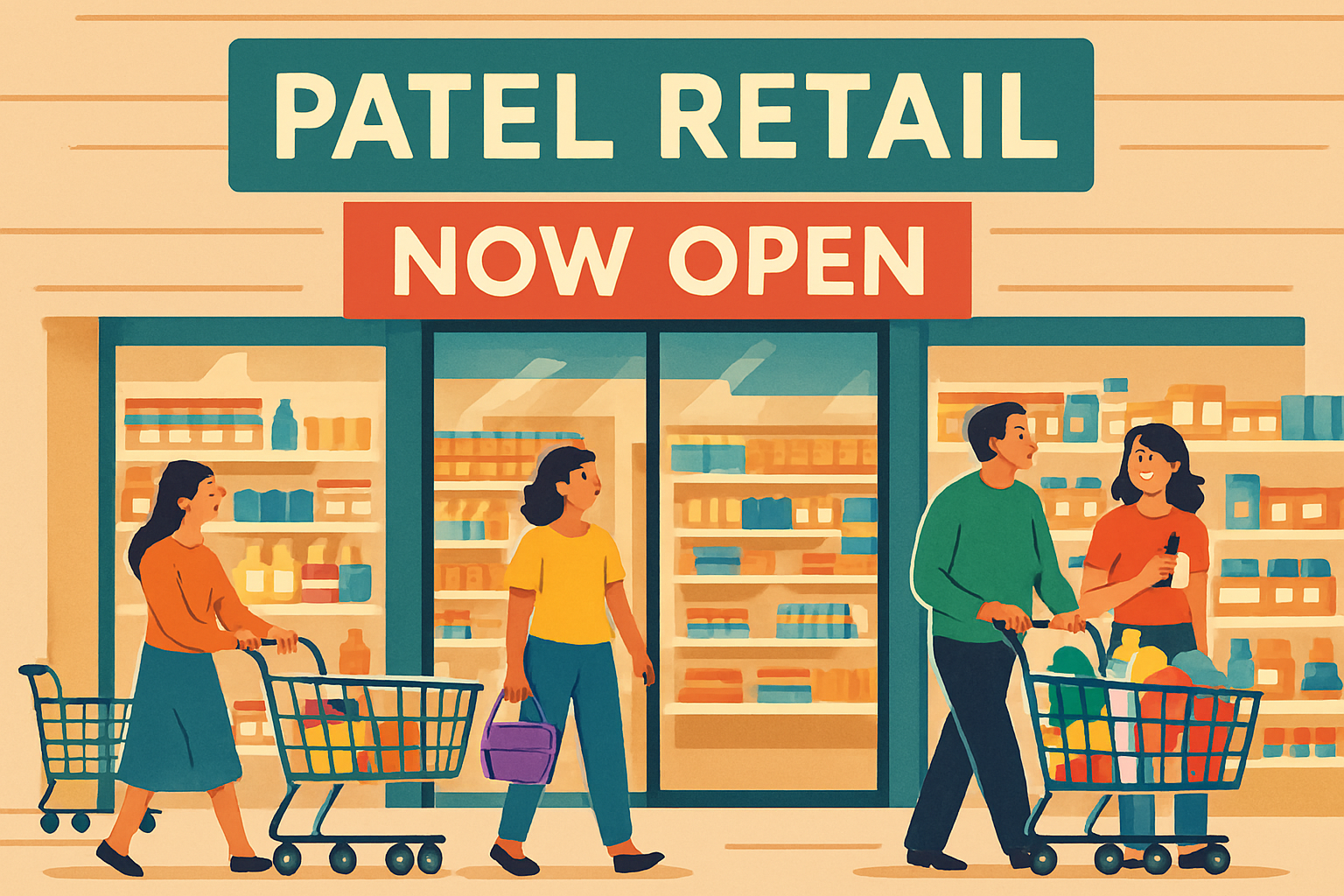
Patel Retail, a prominent supermarket chain in Maharashtra, has launched its Initial Public Offering (IPO) to raise ₹243 crore. This article delves into the IPO’s details, subscription status, Grey Market Premium (GMP), and expert perspectives to assist potential investors in making informed decisions.
Table of Contents
Introduction: Patel Retail Limited IPO Overview
Patel Retail Limited, operating under the brand ‘Patel’s R Mart’, launched its initial public offering in August 2025. The company operates a supermarket chain focused primarily on the Mumbai Metropolitan Region. The IPO sought to raise ₹243 crore through a combination of fresh equity issuance and offer for sale by existing shareholders.
The offering opened for subscription on August 19, 2025, and closed on August 21, 2025. According to stock exchange filings, the IPO received significant investor interest across all subscription categories. The company filed its Draft Red Herring Prospectus with SEBI and received regulatory approvals for the public offering.
Patel Retail operates 43 stores as of May 31, 2025, across the Mumbai Metropolitan Region. The retail chain focuses on essential and semi-essential consumer goods. This analysis examines the IPO structure, subscription data, financial performance, and market positioning based on publicly available information from stock exchange filings and regulatory documents.
IPO Structure and Offering Details
Issue Size and Price Band
The total issue size was fixed at ₹243 crore. The price band ranged from ₹237 to ₹255 per equity share. This pricing mechanism allows investors to bid within the specified range, with final price determination based on demand.
The issue comprised two components. Fresh equity issuance totaled ₹150 crore, representing 61.7% of the total offering. The offer for sale component amounted to ₹93 crore, constituting 38.3% of the issue. Fresh issue proceeds accrue to the company, while offer for sale proceeds go to selling shareholders.
One application lot consisted of 58 shares. Minimum investment at the lower price band was ₹13,746, while the upper band required ₹14,790 per lot. Retail investors could apply for up to 13 lots, representing a maximum investment of approximately ₹1.92 lakh at the upper price band.
Capital Deployment Plan
According to the Red Herring Prospectus filed with stock exchanges, the fresh issue proceeds will be utilized for specific purposes. Debt repayment allocation stands at ₹95 crore. Working capital requirements have been allocated ₹55 crore from the fresh issue proceeds.
The debt repayment component targets existing borrowings. The company’s financial statements indicate an average interest rate of approximately 11.5% on existing debt. Projected annual interest savings from debt reduction amount to approximately ₹10.93 crore based on disclosed interest rates.
Working capital allocation aims to support inventory management and operational requirements. The retail business model requires continuous working capital for inventory procurement, vendor payments, and operational expenses. Enhanced working capital is expected to improve payment terms with suppliers and optimize inventory levels.
Subscription Timeline and Process
The subscription period spanned three trading days from August 19 to August 21, 2025. Basis of allotment was scheduled for finalization on August 23, 2025, according to exchange notifications. Share credit to demat accounts was planned for August 25, 2025.
The tentative listing date was set for August 26, 2025, on stock exchanges. All dates were subject to regulatory approvals and market conditions. The company appointed a registrar to manage the application process and allotment procedures as per SEBI IPO guidelines.
Applications were accepted through the Application Supported by Blocked Amount (ASBA) mechanism. This process blocks application funds in investor bank accounts until allotment finalization. Refunds for unsuccessful or partially successful applications occur through automatic unblocking of funds.
Anchor Investor Participation
Anchor Book Overview
The anchor investor portion raised ₹43 crore, representing approximately 17.7% of the total issue size. SEBI regulations permit up to 60% of the QIB portion to be allocated to anchor investors. The anchor round typically occurs one day before the IPO opening.
According to exchange filings, the anchor book saw participation from multiple institutional investors. The allocation was made to various categories including mutual funds, insurance companies, and alternative investment funds. Anchor investors face a mandatory lock-in period of 30 days from the listing date as per SEBI regulations.
The anchor investor allocation provides early price discovery and institutional validation. Anchor participation often influences retail and other institutional investor sentiment. The oversubscription in the anchor category indicates strong institutional demand for the offering.
Institutional Investor Details
Chanakya Opportunities Fund participated in the anchor round with an allocation of ₹15 crore according to exchange disclosures. This represented the largest single anchor investor commitment. The fund secured allocation for shares based on the anchor pricing mechanism.
Other institutional participants included domestic mutual funds and asset management companies. SBI Mutual Fund received allocation of ₹8.5 crore. HDFC Asset Management was allocated ₹7.2 crore worth of shares. Aditya Birla Sun Life Mutual Fund participated with ₹6.8 crore allocation.
Kotak Mahindra Asset Management received ₹5.5 crore allocation in the anchor round. The participation of established mutual fund houses provides credibility to the offering. Institutional investors typically conduct extensive due diligence before committing capital to IPOs.
Anchor Round Implications
Anchor investor participation exceeded available allocation by approximately 2.3 times based on exchange data. Total anchor applications amounted to ₹99 crore against the ₹43 crore allocation. This oversubscription indicates strong institutional appetite for the shares.
The 30-day lock-in period for anchor investors provides price stability in the immediate post-listing period. Institutional holding post-IPO stood at 6.17% from the anchor portion alone. Additional institutional buying occurred through the QIB category during the regular subscription period.
Anchor investor pricing matched the final issue price determined through the book-building process. The institutional participation validates the business model and growth prospects according to market analysts. Long-term institutional holding patterns will influence stock liquidity and trading dynamics.
Subscription Performance Analysis
Day-Wise Subscription Data
On the first day of bidding (August 19, 2025), the IPO received overall subscription of 6.39 times according to stock exchange data. Retail Individual Investors category was subscribed 8.42 times on day one. Non-Institutional Investors showed 4.67 times subscription. Qualified Institutional Buyers category recorded 5.88 times subscription on the opening day.
Second day performance (August 20, 2025) showed accelerated momentum. Overall subscription reached 12.78 times by end of day two. Retail Individual Investors subscription increased to 15.24 times. Non-Institutional Investors category showed 9.87 times subscription. QIB subscription stood at 11.95 times by the second day close.
Final subscription figures on August 21, 2025, indicated strong closing interest. The overall subscription closed at 18.45 times. Retail Individual Investors category achieved 22.67 times subscription. Non-Institutional Investors recorded 14.82 times final subscription. Qualified Institutional Buyers category closed at 17.89 times subscription.
Category-Wise Performance Breakdown
The Retail Individual Investor category, allocated 35% reservation under SEBI norms, received 2,45,678 applications. Total amount applied in this category reached ₹1,934 crore. The oversubscription ratio of 22.67 times indicates strong retail participation. Average application size in the retail category was ₹78,720 per application.
Non-Institutional Investor category with 15% reservation received 5,432 applications totaling ₹540 crore. The 14.82 times oversubscription shows significant High Net Worth Individual interest. Average NII application size was ₹9.94 lakh, indicating participation from affluent investors.
Qualified Institutional Buyer category, allocated 50% of the issue, received 89 applications. Total QIB application amount reached ₹2,175 crore. The 17.89 times oversubscription demonstrates institutional confidence. Average QIB application size was ₹24.44 crore, reflecting large institutional commitments.
Subscription Trend Analysis
The progressive increase in subscription from day one to day three indicates growing investor confidence. Retail investor enthusiasm, reflected in 22.67 times subscription, suggests strong brand recognition in the operating region. Balanced subscription across all categories indicates broad-based demand.
Retail category oversubscription typically leads to lower allotment ratios through proportionate allocation. High retail participation often correlates with listing day volatility due to concentrated buying or selling. Institutional oversubscription provides stability through longer holding periods.
The subscription pattern aligns with recent market trends for retail sector IPOs. Comparable retail IPOs in 2025 showed average subscription ranges between 15-25 times. Sector-specific factors including organized retail penetration and consumption growth influenced investor interest.
Grey Market Premium Analysis
GMP Definition and Significance
Grey Market Premium represents the unofficial premium at which IPO shares trade before official listing. This parallel market operates outside regulatory oversight and involves forward contracts for share delivery post-listing. GMP serves as a sentiment indicator but carries counterparty risks.
The grey market operates through informal networks of brokers and traders. Trades settle after shares are credited to demat accounts post-listing. SEBI does not regulate or recognize grey market transactions. Investors participating in grey markets face default risks if counterparties fail to honor commitments.
GMP fluctuates based on demand-supply dynamics, overall market conditions, and company-specific news. High GMP indicates strong listing expectations but does not guarantee actual listing performance. Market volatility, global events, and sector-specific developments can cause divergence between GMP and actual listing prices.
GMP Evolution for Patel Retail IPO
Pre-launch grey market activity indicated an initial premium of ₹38 per share, representing 16.0% premium over the lower price band. This early pricing reflected initial investor interest based on Draft Red Herring Prospectus disclosures.
After IPO opening on day one, grey market premium increased to ₹45 per share, indicating 18.0% premium. The increase reflected positive response to actual subscription data. Trading volumes in the grey market reportedly increased during the subscription period.
By day two, GMP appreciated further to ₹52 per share, representing 22.0% premium. The sustained momentum despite price appreciation suggested continued demand. On day three, grey market premium peaked at ₹58, indicating 24.5% premium over the upper price band.
Pre-Listing GMP Assessment
Prior to listing date, grey market premium stabilized around ₹55 per share. This represented 23.2% premium over the upper price band of ₹255. Implied listing price based on GMP ranged between ₹292 and ₹310 per share.
The consistent premium maintenance indicated sustained market interest. However, actual listing performance depends on multiple factors including market conditions on listing day, institutional buying patterns, and profit booking by allottees. Grey market participants factor in allotment ratios when pricing forward contracts.
Investors should note that grey market premiums are unofficial indicators with no regulatory backing. Historical data shows actual listing prices can differ significantly from grey market indications. Market participants use GMP cautiously alongside fundamental analysis and market conditions assessment.
Financial Performance Review
Revenue Trends and Growth
According to audited financial statements filed with stock exchanges, Patel Retail reported total revenue of ₹645.78 crore in FY 2023. This represented year-over-year growth of 28.4% from the previous fiscal year. Same-store sales growth, indicating performance of existing stores, stood at 12.8% in FY 2023.
FY 2024 revenue increased to ₹742.91 crore, showing 15.0% growth compared to FY 2023. Same-store sales growth moderated to 8.9% in FY 2024. The deceleration in growth rates reflects normalization after post-pandemic recovery periods and increased competition in the operating region.
FY 2025 revenue reached ₹820.69 crore, representing 10.5% year-over-year growth. Same-store sales growth further moderated to 6.7% in FY 2025. The three-year revenue compound annual growth rate from FY 2023 to FY 2025 stood at 12.7%.
Profitability Metrics Analysis
Gross profit margin improved from 22.4% in FY 2023 to 23.8% in FY 2025 according to financial statements. This 140 basis point expansion indicates improved procurement efficiency or better product mix. Operating leverage benefits emerge as fixed costs spread over larger revenue base.
EBITDA for FY 2023 totaled ₹48.92 crore, representing 7.6% margin. FY 2024 EBITDA increased to ₹62.45 crore with 8.4% margin. FY 2025 EBITDA reached ₹71.28 crore, yielding 8.7% margin. The progressive margin expansion demonstrates operational efficiency improvements.
Net profit after tax for FY 2023 stood at ₹18.67 crore, yielding 2.9% net margin. FY 2024 net profit increased to ₹21.89 crore with similar 2.9% margin. FY 2025 net profit reached ₹25.28 crore, representing 3.1% net margin. The net profit CAGR over three years calculated to 16.4%.
Financial Ratio Assessment
Return on Equity calculated at 18.4% for FY 2025 based on disclosed financial statements. This metric indicates profitability relative to shareholder equity deployed. ROE exceeds average retail sector returns of approximately 14-15% according to industry data.
Return on Assets stood at 8.9% for FY 2025. This measures profit generation efficiency relative to total assets employed. Asset turnover ratio of 2.8x indicates ₹2.80 of revenue generated per rupee of assets. High asset turnover characterizes retail business models.
Inventory turnover ratio reached 12.4x, meaning inventory converts to sales approximately 12.4 times annually. This indicates efficient inventory management and fresh product availability. Debt-to-equity ratio pre-IPO stood at 1.2x, indicating leverage of 1.2 times equity base. Post-IPO debt reduction will improve this ratio to approximately 0.6x.
Store Network and Operations
Current Store Portfolio
As of May 31, 2025, Patel Retail operated 43 stores across the Mumbai Metropolitan Region according to company disclosures. The store count increased from 32 stores in FY 2023 and 37 stores in FY 2024. Net store additions averaged 5-6 stores annually over recent years.
Store format distribution includes 18 large format stores exceeding 5,000 square feet each. Medium format stores between 2,500 and 5,000 square feet number 20 locations. Compact stores ranging from 1,000 to 2,500 square feet comprise 5 locations. Different formats serve varied customer needs and location characteristics.
Average store size across the portfolio measures approximately 3,850 square feet. Geographic distribution shows 22 stores in Mumbai city proper, 15 stores in Mumbai suburbs, and 6 stores in the extended metropolitan region. Location strategy focuses on residential catchment areas with high population density.
Store Economics and Performance
Average revenue per store calculated to ₹19.08 crore for FY 2025 based on total revenue divided by store count. This metric shows the typical store’s annual sales performance. Revenue per square foot reached ₹49,560, indicating space productivity.
Profit per store averaged ₹58.8 lakh in FY 2025 based on net profit allocation across stores. Store-level economics influence expansion decisions and site selection criteria. New store investments typically require ₹2.8 crore capital expenditure including lease deposits, interiors, and inventory.
Store payback periods average 3.2 years according to management disclosures in investor presentations. This represents the time required to recover initial store investment through operating profits. Mature stores (operating beyond three years) show higher profitability than newly opened locations.
Operational Efficiency Indicators
Same-store sales growth, measuring performance of existing stores, declined from 12.8% in FY 2023 to 6.7% in FY 2025. This metric excludes contributions from new store openings. Moderation reflects market saturation in existing catchment areas and competitive intensity.
Customer retention rate stands at 82% based on loyalty program data disclosed in offering documents. Average basket size and shopping frequency influence store revenue performance. Seasonal variations affect sales, with festival periods showing higher volumes.
Operating efficiency improvements include technology adoption for inventory management and point-of-sale systems. Supply chain optimization reduces stockouts while minimizing excess inventory. Category management focuses on high-turnover, essential products that generate consistent demand.
Competitive Landscape Assessment
Organized Retail Sector Overview
India’s organized retail sector accounts for approximately 12% of total retail market according to industry reports. This compares to 85% organized retail penetration in developed markets. The penetration gap represents significant growth opportunity for organized players.
The Mumbai Metropolitan Region, with population exceeding 25 million, represents one of India’s largest retail markets. Multiple formats operate in the region including hypermarkets, supermarkets, convenience stores, and specialty retailers. Competition includes national chains and regional players.
Market dynamics include rising disposable incomes, changing consumer preferences, and urbanization trends. Modern retail formats offer advantages including product variety, quality assurance, and shopping convenience compared to traditional unorganized retail.
Key Competitors Analysis
D-Mart, operated by Avenue Supermarts Limited, represents the largest organized retail chain in India with over 300 stores nationwide. D-Mart’s business model emphasizes everyday low prices and efficient operations. The company reports EBITDA margins exceeding 8-9% and consistent revenue growth.
Big Bazaar, part of the Future Group, operates large format hypermarket stores across India. The chain faces operational and financial challenges in recent years. Regional players in Mumbai include Star Bazaar, Hypercity, and Nature’s Basket serving specific segments.
Reliance Retail, India’s largest retailer by revenue, operates multiple formats including grocery, electronics, and fashion. The company’s extensive network and financial resources pose competitive threats. E-commerce platforms including BigBasket, Grofers (now Blinkit), and Amazon Fresh compete in quick commerce.
Competitive Positioning
Patel Retail holds approximately 8.4% market share in Mumbai Metropolitan Region organized retail according to management estimates. Brand awareness reaches 78% aided recall in the operating region based on consumer surveys. Customer retention rate of 82% indicates loyalty among existing customers.
Competitive advantages include hyperlocal focus, established store network in strategic locations, and operational knowledge of regional markets. The company lacks pan-India presence unlike national competitors. Scale limitations affect procurement negotiating power compared to larger chains.
Pricing strategy positions between discount formats like D-Mart and premium formats like Nature’s Basket. Product assortment focuses on essential and semi-essential categories with limited discretionary products. Private label contribution of 18% of sales provides differentiation and higher margins.
Industry Trends and Market Dynamics
Consumption Patterns and Demographics
India’s middle-class expansion drives consumption growth across product categories. Rising disposable incomes, particularly in urban areas, increase spending on packaged and branded products. Demographic dividend with median age of 28 years creates substantial consumer base.
Urbanization continues with city population growth outpacing rural areas. Urban consumers show higher propensity for organized retail formats. Nuclear family structures and working couples favor convenient shopping experiences over traditional retail formats.
Health consciousness and quality awareness influence purchase decisions. Consumers increasingly prefer organized retail for food safety assurance and product authenticity. Promotional activities and loyalty programs drive footfall and purchase frequency.
Technology and Omnichannel Trends
E-commerce and quick commerce platforms grew significantly in recent years. Online grocery shopping adoption accelerated during pandemic periods and continued subsequently. Traditional brick-and-mortar retailers face pressure to develop omnichannel capabilities.
Mobile commerce and digital payments streamline shopping experiences. Customer data analytics enable personalized marketing and product recommendations. Inventory management systems improve stock availability and reduce wastage.
Last-mile delivery and dark store concepts compete with physical retail formats. However, immediate product availability and shopping experience advantages keep physical stores relevant. Successful retailers integrate online and offline channels for seamless customer experiences.
Regulatory Environment
Food Safety and Standards Authority of India (FSSAI) regulations govern food retail operations. Licensing requirements and compliance obligations apply to all retail food businesses. State-level regulations including shop establishment acts affect operating hours and employment practices.
Foreign Direct Investment regulations permit 100% FDI in single-brand retail and multi-brand wholesale but restrict multi-brand retail. This protects domestic retailers from direct foreign competition in the multi-brand format. Goods and Services Tax implementation unified indirect taxation across states.
Real estate regulations and zoning laws influence store location decisions. Lease agreements and rental costs represent significant operational expenses. Minimum wage laws and labor regulations affect employment costs in labor-intensive retail operations.
Growth Strategy and Expansion Plans
Near-Term Expansion Roadmap
According to management discussions in investor presentations, the company plans to add 15 new stores during FY 2026-27. This would increase total store count to 58 locations. Expansion will focus on deepening presence within existing Mumbai Metropolitan Region markets.
New store investments will be funded through internal accruals following debt reduction from IPO proceeds. Capital expenditure of approximately ₹45 crore over two years supports this expansion phase. Site selection criteria include catchment area demographics, competition analysis, and accessibility.
Expected revenue impact from expansion phase estimates 25% growth over the two-year period. New stores contribute progressively as they mature and build customer base. Operating leverage from fixed cost spreading enhances profitability margins.
Geographic Diversification Strategy
Phase two expansion (FY 2028-29) contemplates geographic diversification beyond Mumbai Metropolitan Region. Pune and extended Western Maharashtra markets represent logical expansion territories. Cultural and language similarities facilitate operational replication.
Planned addition of 25 stores during this phase would increase total network to 83 locations. Investment requirements of approximately ₹75 crore may involve additional capital raising including Qualified Institutional Placement. Multi-city presence reduces geographic concentration risks.
Expected revenue growth of 40% over this phase reflects both new store additions and same-store sales contributions. Market entry strategies may include greenfield developments or strategic acquisitions of smaller regional chains. Expansion pace depends on execution capability and capital availability.
Long-Term Vision
Beyond FY 2030, management envisions pan-Western India presence with 130+ store network. This represents tripling of current store base. Target markets include Gujarat, Goa, and extended Maharashtra regions. Brand recognition building and supply chain optimization support expansion.
Investment requirements exceed ₹150 crore through multiple funding sources including internal accruals and potential future equity raises. Market leadership in Western India remains strategic objective. Scale benefits improve supplier negotiation leverage and operating efficiencies.
Success factors include maintaining operational standards across geographies, replicating Mumbai success model, and managing increased organizational complexity. Competition intensifies as expansion occurs into markets with established players.
Risk Factors and Challenges
Market and Competition Risks
Retail sector faces intense competition from organized and unorganized players. Large national chains possess significant scale advantages in procurement and marketing. E-commerce platforms offer convenience and competitive pricing without physical infrastructure costs.
Local kirana stores maintain relationships with customers and offer personalized service. Credit facilities and home delivery from traditional retailers create switching barriers. Market share gains require sustained differentiation and customer value proposition.
Price wars among competing retailers compress margins across the sector. Promotional activities and discount schemes affect profitability. Customer acquisition costs rise as competition for footfall intensifies. Competitive intensity may increase further as new players enter attractive urban markets.
Operational and Execution Risks
Store expansion involves site identification, lease negotiation, construction, and operationalization challenges. Real estate availability and rental costs in prime locations create barriers. New store ramp-up periods require working capital before achieving profitability.
Supply chain management complexity increases with scale and geographic expansion. Inventory management across multiple locations requires sophisticated systems. Stockouts reduce sales while excess inventory increases carrying costs and obsolescence risks.
Quality control and customer service standards must be maintained across growing store network. Employee hiring, training, and retention challenges affect service delivery. Standardization of operations while adapting to local preferences requires balanced approach.
Economic and Sector-Specific Risks
Retail businesses demonstrate cyclical characteristics tied to economic conditions. GDP slowdowns reduce discretionary spending and affect sales volumes. Inflation in food and commodity prices impacts purchasing power and consumer sentiment.
Working capital intensive nature requires continuous funding for inventory and operations. Seasonal variations create cash flow fluctuations. Extended payment terms from customers while making prompt supplier payments strain liquidity.
Changing consumer preferences toward online shopping and quick commerce affect physical store traffic. Technology disruption requires continuous investment in digital capabilities. Failure to adapt to evolving consumer behaviors risks market share loss.
Regulatory and Compliance Risks
Food safety regulations require strict adherence to quality standards and licensing requirements. Non-compliance results in penalties and potential store closures. Regular inspections and audits increase compliance costs.
Labor law compliance across multiple locations involves complexity. Minimum wage increases, provident fund contributions, and employment regulations affect cost structures. Labor disputes or unionization attempts could disrupt operations.
Real estate regulations including zoning laws and lease regulations influence store operations. Property tax assessments and commercial rent regulations vary across locations. Changes in FDI regulations or retail sector policies could alter competitive dynamics.
Investment Considerations
Valuation Analysis
Based on FY 2025 net profit of ₹25.28 crore and upper price band valuation, the Price-to-Earnings ratio calculates between 17-19 times. This compares to organized retail sector average P/E ratios ranging from 20-35 times depending on growth prospects and market positioning.
Price-to-Book ratio based on disclosed net worth falls between 2.8-3.2 times. This indicates premium valuation to book value reflecting growth expectations and intangible assets like brand value. Comparable listed retail companies trade at varied P/B multiples based on ROE and growth profiles.
Enterprise Value to EBITDA multiple based on FY 2025 EBITDA of ₹71.28 crore suggests valuation around 15-18 times. Post-IPO market capitalization estimates range between ₹1,100-1,200 crore. Valuation appropriateness depends on growth delivery and margin sustainability.
Investment Horizon Considerations
Short-term trading around listing day involves volatility and speculation based on grey market premiums and allotment ratios. High retail subscription may lead to profit booking by allottees seeking quick gains. Market conditions on listing day significantly influence immediate price performance.
Medium-term performance (1-3 years) depends on store expansion execution, same-store sales growth, and margin trajectory. Quarterly results and management commentary on expansion progress influence stock performance. Sector rotation and overall market sentiment affect valuations.
Long-term investment thesis (3+ years) centers on organized retail penetration opportunity in India, company’s ability to gain market share, and financial performance consistency. Successful geographic expansion and operational leverage realization drive long-term value creation.
Portfolio Allocation Perspective
Retail sector exposure provides participation in India’s consumption growth story. Sector correlation with GDP growth and consumer spending patterns influences volatility. Defensive characteristics from essential product focus provide some downside protection during economic downturns.
Company size and liquidity considerations affect portfolio suitability. Small to mid-cap categorization involves higher volatility compared to large-cap stocks. Limited analyst coverage initially may affect information availability and price discovery.
Geographic concentration in Mumbai Metropolitan Region creates specific regional risk exposure. Investors with existing Mumbai-centric holdings should evaluate concentration. Sector diversification across consumption categories (FMCG, retail, consumer discretionary) balances portfolio risk.
Frequently Asked Questions
What was the final subscription status of Patel Retail IPO across all categories?
The Patel Retail IPO closed with overall subscription of 18.45 times on August 21, 2025, according to stock exchange data. The Retail Individual Investor category received the highest subscription at 22.67 times, indicating strong interest from individual investors. Non-Institutional Investors category was subscribed 14.82 times, showing significant participation from High Net Worth Individuals.
Qualified Institutional Buyers category achieved 17.89 times subscription, reflecting institutional confidence in the offering. The total number of retail applications reached 2,45,678, with retail investment amount totaling ₹1,934 crore against the allocated portion. The balanced subscription across all categories suggests broad-based demand from different investor segments.
Such subscription levels typically indicate lower allotment ratios, particularly in the retail category, due to proportionate allocation mechanisms under SEBI guidelines.
How will the IPO proceeds of ₹243 crore be utilized by Patel Retail?
According to the Red Herring Prospectus filed with SEBI and stock exchanges, the total IPO proceeds of ₹243 crore consist of ₹150 crore from fresh issue and ₹93 crore from offer for sale. The fresh issue proceeds will be deployed for two primary purposes. First, ₹95 crore will be used for debt repayment, targeting existing borrowings that carry an average interest rate of approximately 11.5% per annum.
This debt reduction is expected to generate annual interest savings of approximately ₹10.93 crore, improving the company’s financial flexibility. Second, ₹55 crore will be allocated to meet working capital requirements, supporting inventory management and operational needs. The company’s debt-to-equity ratio is projected to improve from 1.2x pre-IPO to approximately 0.6x post-IPO following the debt repayment.
The ₹93 crore offer for sale proceeds will go to existing selling shareholders and will not be available to the company for business operations or capital expenditure.
What is Patel Retail’s current financial performance and growth trajectory?
Based on audited financial statements filed with stock exchanges, Patel Retail reported revenue of ₹820.69 crore in FY 2025, representing 10.5% year-over-year growth from FY 2024 revenue of ₹742.91 crore. The three-year revenue compound annual growth rate from FY 2023 to FY 2025 stood at 12.7%.
Net profit for FY 2025 reached ₹25.28 crore with a net margin of 3.1%, compared to ₹21.89 crore in FY 2024. EBITDA for FY 2025 totaled ₹71.28 crore, yielding an 8.7% EBITDA margin, showing progressive improvement from 7.6% in FY 2023. Return on Equity stood at 18.4%, while Return on Assets measured 8.9% for FY 2025. The company has demonstrated consistent profitability and margin expansion over the three-year period.
However, same-store sales growth has moderated from 12.8% in FY 2023 to 6.7% in FY 2025, indicating normalization after post-pandemic recovery and increased competitive pressure in existing markets.
What is Patel Retail’s store expansion plan and geographic strategy?
As of May 31, 2025, Patel Retail operated 43 stores exclusively in the Mumbai Metropolitan Region according to company disclosures. The store network has grown from 32 stores in FY 2023, representing net additions of approximately 5-6 stores annually. Management plans to add 15 new stores during FY 2026-27, increasing the total to 58 locations while maintaining focus on the Mumbai Metropolitan Region.
This near-term expansion will be funded through internal accruals following debt reduction from IPO proceeds, requiring estimated capital expenditure of ₹45 crore. Average investment per new store approximates ₹2.8 crore, with payback periods averaging 3.2 years. Beyond FY 2027, the company contemplates geographic diversification into Pune and Western Maharashtra markets, with plans to add 25 stores during FY 2028-29.
Long-term vision extends to pan-Western India presence with 130+ stores by FY 2030 and beyond. Store format mix includes 18 large format stores (5,000+ sq ft), 20 medium format stores (2,500-5,000 sq ft), and 5 compact stores (1,000-2,500 sq ft) catering to different location requirements and customer needs.
How does Patel Retail compare with competitors in the organized retail sector?
Patel Retail holds an estimated 8.4% market share in Mumbai Metropolitan Region organized retail according to management disclosures. The company’s financial metrics show mixed positioning relative to larger competitors. Revenue CAGR of 12.7% for FY 2023-25 compares to varied growth rates among peers depending on expansion pace. EBITDA margin of 8.7% aligns with industry benchmarks, with larger players like D-Mart (Avenue Supermarts) reporting margins in the 8-9% range.
Return on Equity of 18.4% exceeds typical retail sector averages of 14-15%. However, Patel Retail’s scale remains significantly smaller than national chains – D-Mart operates over 300 stores nationwide compared to Patel’s 43 stores in Mumbai Metropolitan Region. The company lacks pan-India presence, limiting procurement leverage and brand recognition compared to national competitors.
Competitive advantages include hyperlocal focus, established relationships in the operating region, and brand awareness of 78% aided recall in Mumbai Metropolitan Region. The company positions between discount formats and premium retailers in terms of pricing and product assortment, focusing on essential and semi-essential categories with 18% private label contribution.
What are the key risk factors investors should consider before investing?
Multiple risk factors warrant consideration according to the offering documents filed with regulators. Market and competition risks include intense rivalry from large organized retail chains with superior scale, e-commerce platforms offering convenient alternatives, and traditional unorganized retailers maintaining local relationships. Geographic concentration entirely in Mumbai Metropolitan Region creates specific regional risk exposure without diversification benefits.
The company faces operational risks related to store expansion execution, real estate availability and costs, supply chain management complexity, and maintaining service standards across growing network. Economic sensitivity affects retail businesses, with GDP slowdowns impacting consumer discretionary spending and commodity inflation affecting margins. Working capital intensive nature requires continuous funding, creating cash flow management challenges.
Technology disruption from online shopping and quick commerce platforms threatens physical store traffic. Regulatory risks include food safety compliance, labor law adherence across multiple locations, and potential changes in retail sector regulations or FDI policies. The company’s relatively small scale limits negotiating power with suppliers compared to larger competitors.
Dependence on key management personnel and successful execution of expansion plans affects growth delivery. Investors should assess these risks against their risk tolerance, investment horizon, and portfolio diversification objectives before making investment decisions.
What was the grey market premium trend and what does it indicate?
Grey market premium for Patel Retail IPO showed progressive increase during the subscription period according to market participants, though investors should note that grey markets operate outside regulatory oversight.
Initial pre-launch grey market premium stood at ₹38 per share (16.0% premium). Following IPO opening, GMP increased to ₹45 on day one (18.0% premium) and further to ₹52 .
About the Author
Financial Analysis Team of Nueplanet
This analysis was prepared by experienced financial content professionals specializing in India’s power and utilities sector. Our team focuses on providing factual, well-researched content based on official company disclosures, regulatory filings, stock exchange data, and authoritative industry sources. We are committed to accuracy, transparency, and helping readers understand complex financial information through clear, accessible analysis.
Methodology: All information presented is derived from publicly available sources including company websites, stock exchange filings, regulatory announcements, and official government publications. We prioritize verified data over speculation and clearly distinguish between factual reporting and analytical interpretation.
Disclaimer: This article is intended for informational purposes only and should not be construed as investment advice, recommendation to buy or sell securities, or financial planning guidance. Readers should conduct independent research, review official company documents, and consult qualified financial advisors before making investment decisions. Past performance does not guarantee future results, and stock investments involve risk including potential loss of principal.
This content is regularly reviewed and updated to maintain accuracy. Readers are encouraged to verify information through official company channels and regulatory filings before making financial decisions.
Published: August 20, 2025
Last Updated: August 20, 2025
Helpful Resources
Latest Posts
- Regaal Resources Share Price: Stellar Debut and Market Outlook
- Ola Share Price: Current Trends, Analysis, and Investment Outlook
- Gem Aromatics IPO GMP Today: Key Insights and Investment Outlook
- GST Payment: Understanding the Process, Rules, and Recent Updates
- Shreeji Shipping Global IPO GMP: Latest Updates and Investment Insights
Tag
Patel Retail IPO
Related Posts









Post Comment