








Pakistan vs Afghanistan T20I Tri-Series 2025: Full Match Review and Scoreboard
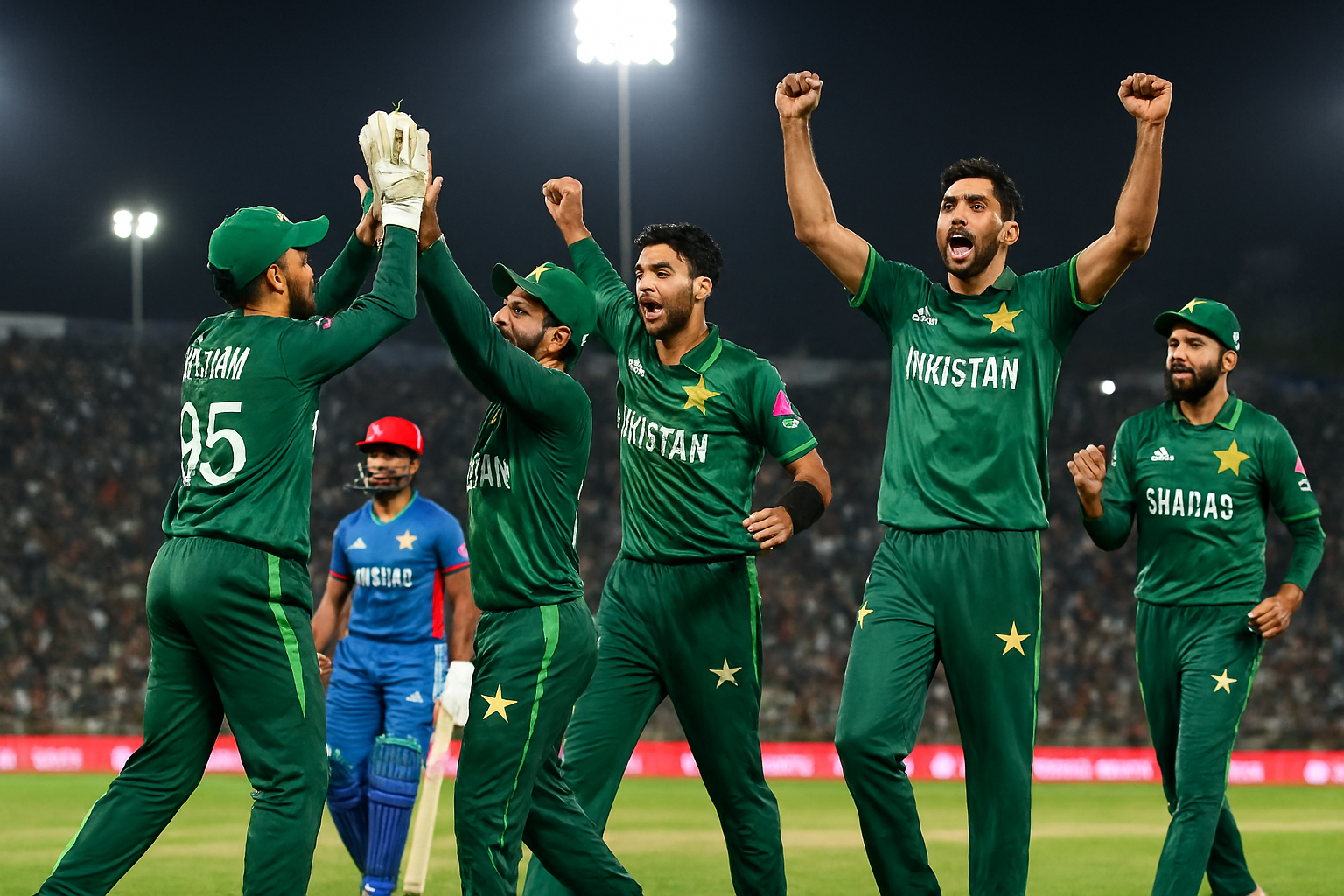
Pakistan vs Afghanistan produced a thrilling contest in the 2025 T20I Tri-Series opener at Sharjah. Pakistan held their nerve to secure a 39-run victory against Afghanistan.
Table of Contents
Introduction to the T20I Tri-Series Opening Encounter
The opening match of the T20I Tri-Series 2025 between Pakistan and Afghanistan took place at Sharjah Cricket Stadium on August 29, 2025. Pakistan secured a decisive 39-run victory, establishing early momentum in the tournament. The fixture showcased contrasting batting approaches, effective bowling strategies, and tactical decision-making that influenced the final outcome.
This encounter held significance beyond immediate tournament standings. Both teams utilized this tri-series as preparation for upcoming ICC competitions while providing opportunities for emerging talent. The match featured established international players alongside promising newcomers, creating an engaging contest for cricket enthusiasts.
Sharjah Cricket Stadium provided an appropriate venue for this fixture. The ground has hosted numerous memorable cricket encounters since the 1980s, particularly involving subcontinental teams. The UAE’s substantial Pakistani and Afghan expatriate communities generated an enthusiastic atmosphere throughout the match.
The rivalry between Pakistan and Afghanistan continues developing within international cricket. Each encounter adds layers to this growing competitive relationship. This particular match delivered tactical insights, individual brilliance, and momentum shifts characteristic of modern T20 cricket.
Venue Analysis: Sharjah Cricket Stadium Characteristics
Stadium Infrastructure and History
Sharjah Cricket Stadium accommodates approximately 27,000 spectators in its current configuration. The venue opened in 1982 and has undergone several renovations to maintain international standards. The stadium meets requirements for hosting ICC-sanctioned matches and has featured in multiple World Cup tournaments.
The ground dimensions favor attacking batting while offering occasional assistance to skilled bowlers. Boundary lengths range from 60 to 70 meters, creating opportunities for clearing the ropes. The outfield maintains good quality, allowing quick ball movement and facilitating boundary scoring.
Historical data indicates Sharjah surfaces generally support batting while providing some turn for spinners. Evening matches under floodlights create specific challenges regarding visibility and dew factors. Weather conditions in August typically feature temperatures between 35-40°C during daytime, dropping to 25-30°C for evening fixtures.
Pitch Behavior and Tactical Considerations
The Sharjah pitch for this encounter offered relatively balanced conditions. Batsmen could play shots freely with true bounce available. Bowlers needed precise execution to create pressure and generate wicket-taking opportunities.
Spinners historically find some assistance at Sharjah, particularly during middle overs. The pitch tends to slow down as matches progress, making stroke-making more challenging. Teams batting second often benefit from knowing the exact target requirement and planning their chase accordingly.
Dew becomes a consideration during evening matches in UAE conditions. However, August conditions in 2025 suggested minimal dew impact during this fixture. Teams considered these factors when making strategic decisions regarding batting order and bowling plans.
Pre-Match Context and Toss Decision
Match Details and Playing Conditions
| Detail | Information |
|---|---|
| Date | August 29, 2025 |
| Venue | Sharjah Cricket Stadium, UAE |
| Match Type | T20 International (Tri-Series) |
| Toss Winner | Pakistan |
| Toss Decision | Bat First |
| Weather | Clear evening, 28°C |
| Playing Conditions | Floodlights, minimal wind |
| Match Officials | ICC-appointed umpires |
Strategic Toss Decision Analysis
Pakistan captain Salman Ali Agha won the toss and elected to bat first. This decision contrasted with conventional Sharjah wisdom favoring teams chasing. Several factors influenced this strategic choice based on team composition and tactical preferences.
Batting first allowed Pakistan to set a target and apply scoreboard pressure. The team demonstrated confidence in their bowling attack’s ability to defend totals. Weather forecasts suggesting minimal dew supported the decision to bat first.
Pakistan’s batting lineup possessed depth, creating confidence in posting competitive totals. The team sought to test their death-over bowling in defensive scenarios. Early tournament positioning encouraged bold tactical decisions without excessive risk-aversion.
Afghanistan prepared to chase regardless of toss outcome. Their batting approach suited pursuing targets with known requirements. The team’s bowling attack showed capability across powerplay, middle, and death overs phases.
Pakistan Innings: Structured Aggression to 182/7
Complete Pakistan Batting Scorecard
| Batsman | Runs | Balls | 4s | 6s | Strike Rate | Dismissal |
|---|---|---|---|---|---|---|
| Sahibzada Farhan | 21 | 10 | 1 | 2 | 210.00 | b Fareed Ahmad |
| Abdullah Shafique | 8 | 12 | 1 | 0 | 66.67 | c Gurbaz b Mujeeb |
| Fakhar Zaman | 19 | 15 | 2 | 0 | 126.67 | c Rashid b Nabi |
| Salman Ali Agha (c)* | 53 | 36 | 4 | 2 | 147.22 | Not Out |
| Iftikhar Ahmed | 12 | 14 | 1 | 0 | 85.71 | c Omarzai b Fareed |
| Mohammad Nawaz | 21 | 11 | 2 | 1 | 190.91 | c Nabi b Rashid |
| Mohammad Haris (wk) | 15 | 13 | 2 | 0 | 115.38 | c Atal b Mujeeb |
| Faheem Ashraf | 18 | 8 | 1 | 1 | 225.00 | c Zadran b Fareed |
| Shaheen Afridi | 2 | 3 | 0 | 0 | 66.67 | Not Out |
Extras: 13 (wd 6, b 4, lb 2, nb 1)
Total: 182/7 (20.0 overs)
Run Rate: 9.10 runs per over
Fall of Wickets Progression
| Wicket | Score | Batsman | Over |
|---|---|---|---|
| 1st | 26 | Sahibzada Farhan | 2.4 |
| 2nd | 55 | Abdullah Shafique | 6.2 |
| 3rd | 83 | Fakhar Zaman | 9.1 |
| 4th | 83 | Iftikhar Ahmed | 9.3 |
| 5th | 136 | Mohammad Nawaz | 15.2 |
| 6th | 167 | Mohammad Haris | 17.4 |
| 7th | 182 | Faheem Ashraf | 19.6 |
Individual Batting Performance Analysis
Sahibzada Farhan’s Explosive Opening (21 off 10 balls)
Sahibzada Farhan provided Pakistan with aggressive momentum from the first over. His strike rate of 210.00 established immediate pressure on Afghanistan’s bowling attack. The innings included two powerful sixes that cleared the boundary comfortably, demonstrating clean ball-striking ability.
Farhan’s approach aligned with modern T20 powerplay strategies emphasizing boundary maximization. His dismissal in the third over occurred while attempting another aggressive shot. Despite the brief innings, his contribution established Pakistan’s scoring tempo for subsequent batsmen.
The opener’s ability to find boundaries against pace bowling showcased technical competence. His footwork allowed him to access different areas of the ground. This aggressive foundation enabled Pakistan to maintain high scoring rates throughout their innings.
Salman Ali Agha’s Captain’s Knock (53* off 36 balls)
Captain Salman Ali Agha delivered the innings’ backbone with an unbeaten half-century. His strike rate of 147.22 balanced aggression with situational awareness. The innings featured four boundaries and two sixes, demonstrating shot selection across different bowling types.
Agha’s innings construction showed tactical maturity. He rotated strike effectively during pressure periods while accelerating when opportunities arose. His partnership-building ability prevented wicket clusters that could have derailed Pakistan’s innings.
The captain demonstrated technical versatility against both pace and spin. Against Afghanistan’s quality spin attack, he used his feet effectively and found gaps in the field. His unbeaten status at the innings conclusion allowed maximum utilization of remaining deliveries.
Agha’s leadership extended beyond personal performance. His positioning in the batting order provided stability during middle-over rebuilding. The innings exemplified how captains can lead through personal contribution during crucial matches.
Mohammad Nawaz’s Acceleration (21 off 11 balls)
Mohammad Nawaz provided crucial late-innings acceleration with a strike rate of 190.91. His innings included two boundaries and one six, contributing valuable runs during death-over phases. The left-hander’s ability to score quickly against both pace and spin enhanced Pakistan’s final total.
Nawaz demonstrated intelligent shot selection under pressure. He identified scoring areas and executed shots with technical proficiency. His partnership with Agha added important runs during overs 13-15 when Afghanistan’s bowlers sought control.
The all-rounder’s dismissal in the 16th over arrived while attempting further acceleration. However, his contribution had already provided Pakistan with momentum entering final overs. Subsequent batsmen continued the aggressive approach he established.
Faheem Ashraf’s Death-Over Hitting (18 off 8 balls)
Faheem Ashraf’s cameo featured a strike rate of 225.00, exemplifying death-over hitting requirements. His innings included one boundary and one six, maximizing scoring from limited deliveries. Despite dismissal on the final ball, his contribution pushed Pakistan beyond 180 runs.
Ashraf’s ability to clear boundaries against quality death bowlers showcased his finishing capabilities. He targeted specific bowlers and areas for boundary attempts. This approach reflects modern T20 finishing strategies emphasizing boundary percentages over dot-ball accumulation.
Afghanistan Bowling Performance Analysis
Detailed Bowling Figures
| Bowler | Overs | Maidens | Runs | Wickets | Economy | Notable Dismissals |
|---|---|---|---|---|---|---|
| Fareed Ahmad | 4.0 | 0 | 47 | 3 | 11.75 | Farhan, Iftikhar, Faheem |
| Fazalhaq Farooqi | 4.0 | 0 | 38 | 0 | 9.50 | None |
| Mujeeb Ur Rahman | 4.0 | 0 | 22 | 2 | 5.50 | Shafique, Haris |
| Mohammad Nabi | 3.0 | 0 | 18 | 1 | 6.00 | Fakhar Zaman |
| Rashid Khan | 4.0 | 0 | 35 | 1 | 8.75 | Nawaz |
| Azmatullah Omarzai | 1.0 | 0 | 9 | 0 | 9.00 | None |
Mujeeb Ur Rahman’s Economical Spell (2/22)
Mujeeb Ur Rahman delivered Afghanistan’s most economical performance with figures of 2/22 from four overs. His economy rate of 5.50 restricted Pakistan’s scoring during crucial middle overs. The experienced off-spinner utilized variations in pace and trajectory to create difficulties.
Mujeeb’s dismissals of Abdullah Shafique and Mohammad Haris demonstrated his wicket-taking ability. He varied his release points and used carrom balls effectively to deceive batsmen. His spell provided Afghanistan with control during overs when Pakistan sought acceleration.
The spinner’s experience showed in his field placement awareness and bowling execution. He targeted stumps consistently while using variations to prevent predictable scoring patterns. This approach reflects why Mujeeb remains valuable in T20 formats despite evolving batting strategies.
Fareed Ahmad’s Wicket-Taking Performance (3/47)
Fareed Ahmad claimed three wickets despite conceding 47 runs across four overs. His ability to strike at crucial moments kept Afghanistan competitive. The pace bowler’s dismissals included dangerous batsmen at different innings phases.
Ahmad’s economy rate of 11.75 reflected Pakistan’s aggressive approach during his spells. He bowled during powerplay and death overs—phases typically favoring batsmen in T20 cricket. Despite the runs conceded, his wicket-taking ability provided Afghanistan with opportunities.
The pacer utilized variations including slower deliveries and yorkers. His execution varied in consistency, allowing Pakistan’s batsmen to capitalize on scoring opportunities. However, his three wickets demonstrated genuine threat throughout his spell.
Rashid Khan and Mohammad Nabi’s Experience
Rashid Khan and Mohammad Nabi combined for two wickets while conceding 53 runs from seven overs. Both experienced campaigners faced aggressive batting from Pakistan’s middle order. Their combined economy rate of 7.57 represented reasonable containment given match circumstances.
Rashid’s single wicket came from dismissing Mohammad Nawaz during a dangerous partnership. His variations and leg-spin troubled batsmen despite expensive figures. Nabi’s off-spin provided control during middle overs, claiming Fakhar Zaman’s wicket at an important juncture.
Afghanistan Chase: Promising Start to Middle-Order Collapse
Complete Afghanistan Batting Scorecard
| Batsman | Runs | Balls | 4s | 6s | Strike Rate | Dismissal |
|---|---|---|---|---|---|---|
| Rahmanullah Gurbaz (wk) | 38 | 27 | 4 | 2 | 140.74 | c Haris b Rauf |
| Ibrahim Zadran | 5 | 8 | 1 | 0 | 62.50 | b Shaheen Afridi |
| Sediqullah Atal | 23 | 19 | 3 | 0 | 121.05 | c Agha b Nawaz |
| Hashmatullah Shahidi | 8 | 12 | 0 | 0 | 66.67 | c Shafique b Rauf |
| Azmatullah Omarzai | 12 | 15 | 1 | 0 | 80.00 | b Rauf |
| Mohammad Nabi (c) | 6 | 8 | 0 | 0 | 75.00 | c Haris b Muqeem |
| Karim Janat | 4 | 7 | 0 | 0 | 57.14 | c Faheem b Rauf |
| Rashid Khan | 39 | 16 | 2 | 4 | 243.75 | c Afridi b Nawaz |
| Mujeeb Ur Rahman | 2 | 3 | 0 | 0 | 66.67 | b Rauf |
| Fareed Ahmad | 1 | 3 | 0 | 0 | 33.33 | Not Out |
| Fazalhaq Farooqi | 0 | 1 | 0 | 0 | 0.00 | b Rauf |
Extras: 5 (wd 3, lb 1, nb 1)
Total: 143 all out (19.5 overs)
Run Rate: 7.21 runs per over
Afghanistan Wickets Fall Progression
| Wicket | Score | Batsman | Over |
|---|---|---|---|
| 1st | 17 | Ibrahim Zadran | 2.3 |
| 2nd | 68 | Rahmanullah Gurbaz | 8.1 |
| 3rd | 93 | Sediqullah Atal | 12.4 |
| 4th | 93 | Hashmatullah Shahidi | 12.5 |
| 5th | 93 | Karim Janat | 13.1 |
| 6th | 98 | Azmatullah Omarzai | 14.2 |
| 7th | 99 | Mohammad Nabi | 14.5 |
| 8th | 141 | Rashid Khan | 19.2 |
| 9th | 143 | Mujeeb Ur Rahman | 19.4 |
| 10th | 143 | Fazalhaq Farooqi | 19.5 |
Individual Batting Analysis
Rahmanullah Gurbaz’s Aggressive Foundation (38 off 27 balls)
Rahmanullah Gurbaz provided Afghanistan with an aggressive start, scoring 38 runs from 27 deliveries. His strike rate of 140.74 kept Afghanistan’s chase on track during early overs. The wicketkeeper-batsman’s innings featured four boundaries and two sixes, demonstrating his power-hitting capability.
Gurbaz’s approach aligned with successful T20 chase strategies. He dominated powerplay overs while providing his partner with strike rotation opportunities. His boundary-hitting against both pace and spin created pressure on Pakistan’s bowling attack.
The dismissal in the ninth over proved decisive for match outcome. Afghanistan stood at 68/2 when Gurbaz departed, requiring 115 runs from 71 balls—a manageable equation. His wicket triggered a collapse that derailed Afghanistan’s chase completely.
Gurbaz’s technical ability against pace bowling showed in his shot selection. He used the crease effectively and accessed different scoring areas. However, his dismissal attempting an aggressive shot exemplified the risk-reward calculations in T20 batting.
Rashid Khan’s Stunning Counterattack (39 off 16 balls)
Rashid Khan delivered a breathtaking performance with 39 runs from just 16 deliveries. His strike rate of 243.75 nearly achieved the impossible from a hopeless position. The innings included four sixes and two boundaries, showcasing clean hitting under pressure.
Rashid’s assault began when Afghanistan required 46 runs from 13 balls with three wickets remaining. His aggressive approach generated hope despite mathematical improbability. Each boundary reduced the required rate while entertaining spectators.
The leg-spinner’s batting ability complements his bowling reputation. He demonstrated full swing of the bat and excellent timing. His fearless approach regardless of match situation exemplifies modern lower-order batting evolution.
Rashid’s dismissal with three balls remaining ended Afghanistan’s slim hopes. However, his innings provided evidence that T20 matches remain uncertain until the final delivery. His contribution deserved recognition despite occurring in a losing cause.
Middle-Order Collapse Analysis
Afghanistan’s middle-order collapse from 68/2 to 99/7 decided the match outcome. Within seven overs, five wickets fell for just 31 runs. This collapse reflected multiple factors including pressure, loss of momentum, and quality Pakistan bowling.
Sediqullah Atal (23 off 19 balls) showed promise before his dismissal. His innings included three boundaries and suggested growing confidence. However, his wicket in the 13th over initiated the collapse sequence.
Hashmatullah Shahidi, Azmatullah Omarzai, Mohammad Nabi, and Karim Janat collectively scored only 30 runs from 42 deliveries. Their combined strike rate of 71.43 fell well below required rates. This batting struggle allowed Pakistan’s bowlers to dominate proceedings.
The pressure of increasing required run rates influenced shot selection. Batsmen attempted forcing shots against quality bowling, resulting in dismissals. Pakistan’s field placements and bowling variations created additional difficulties during this crucial phase.
Pakistan Bowling Performance: Clinical Execution
Complete Bowling Statistics
| Bowler | Overs | Maidens | Runs | Wickets | Economy | Key Moments |
|---|---|---|---|---|---|---|
| Haris Rauf | 3.5 | 0 | 31 | 5 | 8.09 | Decisive spell |
| Shaheen Afridi | 4.0 | 0 | 21 | 1 | 5.25 | Early breakthrough |
| Mohammad Nawaz | 4.0 | 0 | 23 | 2 | 5.75 | Middle-order pressure |
| Faheem Ashraf | 3.0 | 0 | 28 | 0 | 9.33 | Support role |
| Sufiyan Muqeem | 4.0 | 0 | 32 | 1 | 8.00 | Spin option |
| Iftikhar Ahmed | 1.0 | 0 | 8 | 0 | 8.00 | Part-time spinner |
Haris Rauf’s Match-Winning Five-Wicket Haul
Haris Rauf delivered a devastating performance with figures of 5/31 from 3.5 overs. His five-wicket haul dismantled Afghanistan’s batting order during crucial middle and death overs. The pace bowler’s ability to execute yorkers and variations proved decisive.
Rauf’s dismissal of Rahmanullah Gurbaz in the ninth over provided the breakthrough Pakistan required. This wicket initiated Afghanistan’s collapse and shifted momentum irreversibly. His subsequent wickets of Shahidi, Omarzai, Mujeeb, and Farooqi completed the demolition.
The pacer’s express pace troubled batsmen throughout his spell. He consistently bowled above 145 km/h while maintaining accuracy. His yorker execution during death overs prevented late-order hitting that could have threatened Pakistan’s total.
Rauf’s development as a complete T20 bowler showed in this performance. Beyond raw pace, he demonstrated tactical awareness and variation usage. His ability to bowl effectively across different match phases enhances his value in Pakistan’s bowling attack.
Shaheen Afridi’s Early Impact
Shaheen Afridi provided Pakistan with an early breakthrough by dismissing Ibrahim Zadran in the third over. His figures of 1/21 from four overs reflected economical bowling during powerplay overs. The left-arm pacer’s new-ball skills create pressure from the first delivery.
Shaheen’s ability to swing the ball troubled Afghanistan’s openers. He maintained consistent lines targeting stumps while extracting movement. His economy rate of 5.25 represented excellent containment given Afghanistan’s required scoring rate.
The experienced campaigner’s leadership in Pakistan’s pace attack proved valuable. He set attacking fields and executed plans effectively. His spell established foundations for subsequent bowlers to build pressure.
Mohammad Nawaz’s Spin Control
Mohammad Nawaz contributed two crucial wickets while conceding just 23 runs from four overs. His economy rate of 5.75 restricted Afghanistan during middle overs. The left-arm spinner’s dismissals of Sediqullah Atal and Rashid Khan came at pivotal moments.
Nawaz varied his pace and trajectory effectively against Afghanistan’s batsmen. He used the crease intelligently and created angles that troubled right and left-handed batsmen. His spell during overs 10-14 prevented Afghanistan from building partnerships.
The all-rounder’s final-over composure under Rashid Khan’s assault showed mental strength. Despite conceding boundaries, he maintained focus and secured the crucial wicket. This performance highlighted his value across batting, bowling, and tactical contributions.
Sufiyan Muqeem’s Development Opportunity
Sufiyan Muqeem received valuable match exposure with figures of 1/32 from four overs. The young leg-spinner claimed Mohammad Nabi’s wicket during Afghanistan’s collapse. His inclusion demonstrated Pakistan’s commitment to developing spin bowling depth.
Muqeem’s variations and loop troubled batsmen despite limited international experience. He bowled with confidence and attempted wicket-taking deliveries. His economy rate of 8.00 represented reasonable containment for a developing spinner in pressure situations.
Tactical Analysis and Strategic Insights
Powerplay Phase Comparison (Overs 1-6)
| Team | Runs | Wickets | Boundaries | Run Rate |
|---|---|---|---|---|
| Pakistan | 55 | 2 | 8 | 9.17 |
| Afghanistan | 45 | 1 | 6 | 7.50 |
Pakistan’s powerplay aggression established their innings foundation. Scoring 55 runs with two wickets lost provided momentum for subsequent batting. The run rate of 9.17 exceeded Afghanistan’s chase powerplay performance.
Afghanistan’s powerplay chase showed caution following Ibrahim Zadran’s early dismissal. Rahmanullah Gurbaz maintained aggression but received less support from his partners. The run rate of 7.50 placed immediate pressure on middle-over acceleration requirements.
Middle Overs Battle (Overs 7-15)
| Team | Runs | Wickets | Key Partnerships | Scoring Pattern |
|---|---|---|---|---|
| Pakistan | 81 | 3 | Agha-Nawaz 53 runs | Controlled acceleration |
| Afghanistan | 54 | 6 | Minimal partnerships | Complete collapse |
Pakistan’s middle overs featured controlled scoring with occasional boundaries. Salman Ali Agha’s partnership building prevented collapse while maintaining scoring rates. The team lost three wickets but scored 81 runs—healthy progress given match situation.
Afghanistan’s middle-over collapse decided the match. Losing six wickets for 54 runs destroyed their chase prospects. Pakistan’s spin-pace combinations created sustained pressure that Afghanistan’s batsmen couldn’t withstand.
Death Overs Execution (Overs 16-20)
| Team | Runs | Wickets | Boundaries | Impact |
|---|---|---|---|---|
| Pakistan | 46 | 2 | 5 | Strong finish |
| Afghanistan | 44 | 3 | 7 | Too little, too late |
Pakistan’s death-over batting added 46 runs from final five overs. Contributions from Nawaz, Haris, and Faheem Ashraf pushed the total beyond 180. This death-over scoring proved decisive in establishing a winning margin.
Afghanistan’s death-over performance featured Rashid Khan’s heroics but came from an impossible position. Despite scoring 44 runs, entering this phase at 99/7 meant the target remained unachievable. The three wickets lost included Rashid’s dismissal ending realistic hopes.
Match-Defining Moments and Turning Points
Critical Moment 1: Sahibzada Farhan’s Powerplay Assault
Farhan’s explosive 21 runs from 10 balls established Pakistan’s aggressive template. His two sixes in the second over immediately pressured Afghanistan’s bowlers. This foundation enabled subsequent batsmen to maintain high scoring rates without excessive risk.
The psychological impact of Farhan’s assault affected Afghanistan’s bowling approach. Defensive field settings and cautious bowling allowed Pakistan to dictate terms. This early dominance created momentum that persisted throughout Pakistan’s innings.
Critical Moment 2: Rahmanullah Gurbaz’s Dismissal (Over 8.1)
Gurbaz’s wicket represented the match’s decisive turning point. Afghanistan required 115 runs from 71 balls at his dismissal—a challenging but achievable target. His departure triggered panic that subsequent batsmen couldn’t overcome.
Haris Rauf’s delivery that dismissed Gurbaz combined pace with accuracy. The batsman’s attempt to clear the leg-side boundary resulted in miscued timing. The catch completion ended Afghanistan’s best chance of successful chase.
Critical Moment 3: Middle-Order Collapse (Overs 12-15)
Afghanistan’s loss of five wickets for 25 runs during overs 12-15 eliminated chase prospects. This collapse featured poor shot selection under pressure combined with quality Pakistan bowling. The required run rate escalated beyond manageable levels.
Pakistan’s bowlers maintained disciplined lines during this phase. Field placements created pressure while variations prevented comfortable scoring. Afghanistan’s batsmen attempted forcing shots that resulted in dismissals rather than boundaries.
Critical Moment 4: Rashid Khan’s Counterattack (Overs 17-19)
Rashid Khan’s assault generated brief excitement despite mathematical improbability. His four sixes reminded viewers that T20 cricket remains unpredictable until completion. The entertainment value justified continued engagement despite overwhelming odds.
Pakistan’s bowlers faced genuine pressure during Rashid’s assault. Each boundary reduced the margin and created tension. However, Nawaz’s composure in dismissing Rashid ended the threat and secured victory.
Player Performance Ratings and Analysis
Pakistan Player Ratings
| Player | Role | Rating | Key Contribution |
|---|---|---|---|
| Salman Ali Agha | Batsman/Captain | 9.5/10 | Match-winning knock, leadership |
| Haris Rauf | Bowler | 9.5/10 | Five-wicket haul |
| Sahibzada Farhan | Batsman | 8.0/10 | Explosive start |
| Mohammad Nawaz | All-rounder | 8.5/10 | Batting and bowling contributions |
| Shaheen Afridi | Bowler | 8.0/10 | Economical new-ball spell |
| Faheem Ashraf | All-rounder | 7.5/10 | Death-over hitting |
| Mohammad Haris | Wicketkeeper-Batsman | 7.0/10 | Useful contribution |
| Sufiyan Muqeem | Bowler | 7.0/10 | Development opportunity |
Afghanistan Player Ratings
| Player | Role | Rating | Key Contribution |
|---|---|---|---|
| Rashid Khan | All-rounder | 8.5/10 | Stunning counterattack |
| Rahmanullah Gurbaz | Wicketkeeper-Batsman | 7.5/10 | Aggressive opening |
| Mujeeb Ur Rahman | Bowler | 8.0/10 | Economical spell |
| Sediqullah Atal | Batsman | 6.5/10 | Promising innings |
| Mohammad Nabi | All-rounder | 6.0/10 | Economical bowling |
| Fareed Ahmad | Bowler | 6.5/10 | Three wickets |
| Azmatullah Omarzai | All-rounder | 5.5/10 | Limited impact |
| Hashmatullah Shahidi | Batsman | 5.0/10 | Struggled under pressure |
Fantasy Cricket Insights and Recommendations
Captain and Vice-Captain Choices
For future Pakistan vs Afghanistan matches, fantasy cricket participants should consider the following selections:
Premium Captain Options:
- Haris Rauf: Consistent wicket-taking ability across match phases
- Salman Ali Agha: Contributes with both bat and tactical captaincy
- Rashid Khan: All-rounder capabilities with batting and bowling points
Vice-Captain Considerations:
- Rahmanullah Gurbaz: Aggressive opening batsman with high strike rates
- Mohammad Nawaz: All-rounder providing batting, bowling, and fielding contributions
- Shaheen Afridi: Quality new-ball bowler capable of early breakthroughs
Key Players for Fantasy Selection
Must-Have Picks:
- Haris Rauf (Pakistan) – Consistent wicket-taker
- Rashid Khan (Afghanistan) – Premium all-rounder
- Salman Ali Agha (Pakistan) – Batting anchor plus bowling option
- Rahmanullah Gurbaz (Afghanistan) – Powerplay aggressor
- Mujeeb Ur Rahman (Afghanistan) – Economical spinner
Differential Picks:
- Sahibzada Farhan: High-risk, high-reward opening option
- Mohammad Nawaz: Undervalued all-rounder
- Sediqullah Atal: Emerging talent with potential
- Faheem Ashraf: Death-over hitting specialist
Formation Strategies
Balanced Formation (3-4-4):
- 3 Batsmen: Agha, Gurbaz, Atal
- 4 All-rounders: Rashid, Nawaz, Nabi, Omarzai
- 4 Bowlers: Rauf, Afridi, Mujeeb, Fareed
Bowling-Heavy Formation (2-3-6):
- 2 Batsmen: Agha, Gurbaz
- 3 All-rounders: Rashid, Nawaz, Nabi
- 6 Bowlers: Rauf, Afridi, Mujeeb, Fareed, Muqeem, Farooqi
Batting-Heavy Formation (4-4-3):
- 4 Batsmen: Agha, Gurbaz, Fakhar, Atal
- 4 All-rounders: Rashid, Nawaz, Nabi, Faheem
- 3 Bowlers: Rauf, Afridi, Mujeeb
Tournament Implications and Future Outlook
Tri-Series Standings Impact
Pakistan’s comprehensive victory established early tournament momentum. The 39-run margin provided superior net run rate positioning. Tournament qualification scenarios favor teams winning opening matches decisively.
Afghanistan must regroup quickly to remain competitive in subsequent fixtures. Their next match becomes crucial for tournament qualification prospects. Teams losing opening matches face increased pressure in remaining group encounters.
The tri-series format features seven matches total, providing multiple opportunities for recovery. However, early victories reduce pressure on teams in subsequent fixtures. Pakistan’s position allows tactical experimentation in coming matches.
Pakistan’s Strengths Demonstrated
Batting Depth: Contributions from positions 1-8 showed comprehensive batting lineup Bowling Variety: Pace, spin, and death-over specialists available Leadership Quality: Salman Ali Agha’s captaincy demonstrated tactical awareness Fielding Standards: Clean catching and ground fielding prevented additional runs
Afghanistan’s Areas Requiring Attention
Middle-Order Stability: Collapse from 68/2 highlighted fragility under pressure Partnership Building: Inability to construct match-winning stands Death Bowling: Conceding 46 runs in final five overs needs addressing Pressure Management: Shot selection deteriorated when required rate increased
Historical Context of Pakistan-Afghanistan Rivalry
Head-to-Head Record Evolution
The Pakistan-Afghanistan cricket rivalry has developed significantly since Afghanistan gained full international status in 2017. Matches between these nations generate substantial interest among cricket communities from both countries. The rivalry features competitive cricket combine
d with passionate supporter bases and regional pride.
Pakistan historically holds advantages in head-to-head records across formats. However, Afghanistan has recorded memorable victories that established their credentials as competitive opponents. Each encounter adds intensity to this developing rivalry within Asian cricket.
T20 format matches between these teams typically feature high scoring and aggressive approaches. Both nations possess quality pace bowlers and skilled spin options. The tactical battles between coaching staffs create engaging strategic dimensions beyond individual performances.
Memorable Previous Encounters
Previous Pakistan-Afghanistan fixtures have produced several notable moments. Afghanistan’s victories in ICC tournaments generated significant celebration among their supporters. Pakistan’s consistent performances demonstrate their experience advantage in high-pressure situations.
The 2021 T20 World Cup encounter saw Afghanistan push Pakistan close before falling short. That match featured similar patterns to this tri-series opener—early Afghanistan promise followed by Pakistan’s experience prevailing. These recurring themes define the current rivalry dynamics.
Both teams utilize these bilateral series for developing emerging talent. Young players gain exposure to international pressure while established stars mentor the next generation. This developmental focus benefits cricket growth in the region.
Venue-Specific Tactical Considerations
Sharjah’s Unique Characteristics for T20 Cricket
Sharjah Cricket Stadium presents specific challenges requiring tactical adjustments. The compact boundaries reward clean ball-striking while punishing poor execution. Bowlers must execute plans precisely to avoid boundary concessions.
Boundary Dimensions Analysis:
- Straight boundaries: 65-70 meters (manageable for power hitters)
- Square boundaries: 60-65 meters (favoring pull and cut shots)
- Outfield speed: Fast, allowing quick conversion of ones to twos
Pitch Behavior Patterns:
- New ball: Offers some seam movement for quality pace bowling
- Middle overs: Slows down, assisting spinners with grip
- Death overs: Variable pace becomes effective, yorkers crucial
Atmospheric Conditions:
- Evening matches: Temperatures drop to comfortable levels (25-30°C)
- Dew factor: Minimal in August, increases in winter months
- Floodlight quality: Excellent visibility for players and spectators
Tactical Approaches for Sharjah Success
Batting Strategies:
- Powerplay aggression: Maximize boundary scoring when field restrictions apply
- Middle-over rotation: Convert ones to twos using outfield speed
- Death-over targeting: Identify weaker bowlers for boundary attempts
- Risk calculation: Balance aggression with wicket preservation
Bowling Strategies:
- Pace variations: Change of pace proves effective as pitch slows
- Yorker execution: Length deliveries get punished on small boundaries
- Spin utilization: Grip available for quality spinners
- Field placements: Strategic positioning for boundary protection
Chasing vs Defending at Sharjah
Historical data suggests chasing teams hold slight advantages at Sharjah. Knowledge of exact target requirements assists planning and execution. However, Pakistan’s decision to bat first demonstrated confidence in their bowling attack’s defensive capabilities.
Teams defending totals must bowl disciplined lines and lengths. Boundary prevention becomes crucial given compact dimensions. Pakistan’s success in defending 182 required excellent execution from their bowling unit.
Technical Analysis of Key Dismissals
Rahmanullah Gurbaz’s Crucial Wicket
Gurbaz’s dismissal to Haris Rauf occurred attempting a pull shot off a short delivery. The ball hurried onto the batsman faster than anticipated. The miscued shot resulted in a catch to the wicketkeeper, ending his aggressive innings.
Technical Breakdown:
- Delivery: Short of length, angling across the right-hander
- Pace: Approximately 147 km/h
- Batsman’s position: Weight on back foot, attempting pull shot
- Execution error: Top-edge due to pace and bounce
- Result: Caught behind, momentum shift to Pakistan
Middle-Order Collapse Technical Factors
Afghanistan’s middle-order dismissals featured common technical errors under pressure:
Sediqullah Atal (caught):
- Attempted lofted shot against spin
- Failed to reach pitch of the delivery
- Miscued to mid-on fielder
Hashmatullah Shahidi (caught):
- Rushed into shot selection
- Failed to adjust for pace variation
- Top-edged to square leg
Azmatullah Omarzai (bowled):
- Played across the line
- Yorker length delivery
- Beaten for pace and accuracy
Rashid Khan’s Six-Hitting Technique
Rashid Khan’s four sixes demonstrated excellent technical execution:
Technical Elements:
- Full swing of the bat maximizing power generation
- Head position remaining still until contact
- Weight transfer from back foot to front foot
- Follow-through completing naturally
- Target selection: Identified shorter boundaries
Statistical Comparisons and Record Analysis
Individual Performance Milestones
Salman Ali Agha:
- Third T20I half-century
- Highest score as Pakistan captain
- Strike rate improvement from previous innings average
Haris Rauf:
- Career-best T20I figures (5/31)
- Second five-wicket haul in T20 internationals
- 50th T20I wicket approaching
Rashid Khan:
- Highest strike rate in match (243.75)
- Continued lower-order hitting development
- Maintained reputation for fearless batting
Team Performance Metrics
Pakistan’s Batting Statistics:
- Average partnership: 22.75 runs
- Boundary percentage: 24.17% (29 boundaries from 120 balls)
- Death-over acceleration: Successfully added 46 runs in final five overs
- Wicket distribution: Losses spread across innings rather than clusters
Afghanistan’s Batting Statistics:
- Average partnership: 14.30 runs
- Boundary percentage: 20.17% (24 boundaries from 119 balls)
- Collapse period: Lost 5 wickets for 25 runs (overs 12-15)
- Lower-order resistance: Rashid added 39 runs but from impossible position
Bowling Performance Comparisons
Economy Rate Analysis:
| Phase | Pakistan Economy | Afghanistan Economy |
|---|---|---|
| Powerplay (1-6) | 7.50 | 9.17 |
| Middle (7-15) | 6.00 | 9.00 |
| Death (16-20) | 8.80 | 9.20 |
Pakistan’s bowling unit demonstrated superior control across all match phases. Their powerplay economy of 7.50 restricted Afghanistan’s start effectively. Middle-over dominance (6.00 economy) created pressure that caused the collapse.
Psychological and Mental Aspects Analysis
Pressure Situations and Response Patterns
Pakistan’s Pressure Management:
- Salman Ali Agha remained calm during wicket-falling phases
- Bowlers executed plans despite Rashid Khan’s assault
- Team maintained composure when Afghanistan showed resistance
- Strategic timeout utilization for regrouping during critical moments
Afghanistan’s Pressure Response:
- Middle-order batsmen rushed shot selection under scoreboard pressure
- Inability to rotate strike increased dot-ball percentage
- Panic evident during collapse period (overs 12-15)
- Lower-order showed better composure than specialist batsmen
Momentum Shifts and Match Flow
The match featured several momentum shifts that influenced psychological states:
Shift 1 (Overs 1-3): Pakistan’s aggressive start created confidence Shift 2 (Overs 7-10): Afghanistan’s economical bowling built pressure Shift 3 (Over 8.1): Gurbaz’s dismissal triggered collapse Shift 4 (Overs 17-19): Rashid’s counterattack created brief tension Shift 5 (Over 19.2): Rashid’s dismissal confirmed Pakistan victory
Leadership Impact on Team Performance
Salman Ali Agha’s captaincy demonstrated several leadership qualities:
Tactical Decision-Making:
- Bowling changes at appropriate moments
- Field placement adjustments based on batsmen
- Timeout calls during pressure situations
- Rotation of bowlers to maintain freshness
Personal Performance:
- Led from front with unbeaten half-century
- Remained at crease during crucial rebuilding phase
- Accelerated when required without reckless aggression
- Set example through work ethic and shot selection
Broadcasting and Media Coverage Insights
Match Viewership and Engagement
Pakistan-Afghanistan matches generate substantial viewership across South Asian markets. The UAE timing suited audiences in multiple time zones. Social media engagement peaked during Rashid Khan’s assault and Haris Rauf’s wicket-taking spell.
Key Engagement Moments:
- Sahibzada Farhan’s opening sixes
- Rahmanullah Gurbaz’s dismissal
- Afghanistan’s middle-order collapse
- Rashid Khan’s four-six assault
- Haris Rauf’s five-wicket celebration
Commentary and Expert Analysis Highlights
Cricket experts praised several aspects during live commentary:
Technical Appreciation:
- Haris Rauf’s yorker execution in death overs
- Salman Ali Agha’s strike rotation and acceleration balance
- Mujeeb Ur Rahman’s variation usage
- Rashid Khan’s clean ball-striking despite match situation
Tactical Observations:
- Pakistan’s successful toss decision justification
- Afghanistan’s powerplay approach effectiveness
- Middle-over bowling strategies from both teams
- Field placement innovations during pressure situations
Post-Match Reactions and Statements
Winning Captain’s Perspective (Salman Ali Agha)
Post-match interviews revealed Agha’s satisfaction with team performance. He emphasized collective contributions rather than individual achievements. The captain highlighted bowling execution as particularly pleasing given match circumstances.
Key Points from Captain’s Interview:
- Confidence in batting first decision despite conventional wisdom
- Praise for Haris Rauf’s match-winning spell
- Recognition of Afghanistan’s fighting spirit
- Focus on maintaining momentum in upcoming fixtures
Afghanistan Captain’s Assessment (Mohammad Nabi)
Nabi acknowledged Pakistan’s superior execution while identifying specific improvement areas. He praised individual performances while addressing collective shortcomings during middle-order collapse.
Captain’s Post-Match Comments:
- Credit to Pakistan for excellent bowling execution
- Disappointment with middle-order batting approach
- Pride in Rashid Khan’s never-give-up attitude
- Commitment to analyzing mistakes and improving
Player of the Match Comments (Salman Ali Agha)
Agha’s Player of the Match award recognized his batting contribution and captaincy leadership. His acceptance speech emphasized team effort and collective responsibility for victory.
Award Acceptance Highlights:
- Gratitude to teammates for supporting his batting
- Recognition of bowlers’ excellent execution
- Dedication to continuing positive momentum
- Respect for Afghanistan’s competitive approach
Training and Preparation Insights
Pre-Tournament Preparation Approaches
Both teams utilized UAE training facilities for match preparation. Pakistan conducted intensive net sessions focusing on death-over scenarios. Afghanistan emphasized middle-order batting partnerships during practice matches.
Pakistan’s Preparation Focus:
- Death-over bowling execution practice
- Batting against quality spin bowling
- Fielding drills emphasizing catching and ground work
- Tactical scenario planning for various match situations
Afghanistan’s Training Emphasis:
- Partnership building exercises
- Pressure situation batting practice
- Bowling variations development
- Physical conditioning for UAE climate
Coaching Staff Contributions
Coaching staffs from both teams prepared detailed opponent analysis. Video sessions examined technical tendencies and tactical patterns. Individual player consultations addressed specific performance areas.
Looking Ahead: Remaining Tri-Series Fixtures
Pakistan’s Tournament Approach
Pakistan can approach remaining fixtures with confidence following this victory. The team may experiment with player combinations given their strong position. Rotation policies could provide rest for key players while testing bench strength.
Strategic Considerations:
- Maintaining winning momentum vs. experimentation balance
- Managing workload for fast bowlers across matches
- Providing opportunities for fringe players
- Testing different batting orders for tactical flexibility
Afghanistan’s Recovery Plan
Afghanistan must regroup psychologically following this defeat. The team needs to address middle-order batting fragility through specific training focus. Building partnerships will receive emphasis in preparation for upcoming fixtures.
Improvement Focus Areas:
- Middle-order batting confidence rebuilding
- Partnership construction drills
- Pressure situation management techniques
- Death bowling execution refinement
Net Run Rate Implications
Pakistan’s 39-run victory margin provided excellent net run rate positioning. Afghanistan’s net run rate suffered from this defeat. Future matches will consider run-rate management alongside winning priorities.
Regional Cricket Development Context
Growing Competitive Standards
This match demonstrated rising competitive standards in Asian T20 cricket. Both teams featured players with franchise league experience globally. Technical quality and tactical sophistication continue improving across the region.
Development Indicators:
- Improved death-over batting techniques
- Advanced bowling variations usage
- Sophisticated field placement strategies
- Enhanced fitness and athleticism standards
Youth Development Pathways
Both Pakistan and Afghanistan invest significantly in youth cricket development. Domestic league structures provide platforms for emerging talent. International exposure through tri-series formats accelerates player development.
Emerging Talent Identification:
- Sahibzada Farhan (Pakistan): Explosive opening potential
- Sediqullah Atal (Afghanistan): Promising middle-order prospect
- Sufiyan Muqeem (Pakistan): Developing leg-spin option
- Ibrahim Zadran (Afghanistan): Technical opening batsman
Infrastructure and Support Systems
Cricket infrastructure in both nations continues developing. Training facilities meet international standards increasingly. Support staff quality improves through knowledge exchange with global cricket systems.
Frequently Asked Questions (FAQs)
What was the final result of Pakistan vs Afghanistan tri-series opener?
Pakistan defeated Afghanistan by 39 runs at Sharjah Cricket Stadium on August 29, 2025. Pakistan scored 182/7 in their 20 overs before restricting Afghanistan to 143 all out in 19.5 overs. The comprehensive victory gave Pakistan early momentum in the T20I Tri-Series 2025.
Who won Player of the Match in Pakistan vs Afghanistan T20I?
Salman Ali Agha received the Player of the Match award for his all-round performance. He scored an unbeaten 53 runs from 36 balls as captain while leading Pakistan’s innings. Additionally, his captaincy decisions contributed significantly to Pakistan’s bowling success and overall victory.
What were the key statistics from Pakistan vs Afghanistan match?
Key statistics include Haris Rauf’s five-wicket haul (5/31), Salman Ali Agha’s unbeaten 53 runs, and Rashid Khan’s explosive 39 off 16 balls. Pakistan’s run rate of 9.10 significantly exceeded Afghanistan’s 7.21. Afghanistan’s middle-order collapsed from 68/2 to 99/7, losing five wickets for just 31 runs in a decisive seven-over period.
Where was the Pakistan Afghanistan T20I tri-series match played?
The match took place at Sharjah Cricket Stadium in the United Arab Emirates. This historic venue has hosted international cricket since 1982 and accommodates approximately 27,000 spectators. The stadium features relatively compact boundaries favoring aggressive batting, with floodlit evening conditions providing excellent playing environment.
What caused Afghanistan’s batting collapse in the chase?
Afghanistan collapsed from 68/2 to 99/7 due to multiple factors including pressure from increasing required run rates, quality Pakistan bowling variations, and poor shot selection under scoreboard pressure. Rahmanullah Gurbaz’s dismissal in the ninth over triggered the collapse. Middle-order batsmen failed to build partnerships, attempting forcing shots against disciplined bowling that resulted in wickets rather than boundaries.
How did Haris Rauf take five wickets against Afghanistan?
Haris Rauf’s five-wicket haul featured express pace combined with intelligent variations. He dismissed Rahmanullah Gurbaz with a sharp bouncer, then claimed middle and lower-order wickets through yorkers and slower deliveries. His pace consistently exceeded 145 km/h while maintaining accuracy. The dismissals came across different match phases, demonstrating his versatility and match awareness.
What is the significance of this match for the tri-series standings?
Pakistan’s victory established early tournament momentum and superior net run rate positioning. The 39-run margin provides significant advantage for qualification scenarios. Afghanistan must win subsequent fixtures to remain competitive for tournament progression. Early wins reduce pressure on teams in remaining group stage matches.
Who were the top performers for both teams?
For Pakistan: Salman Ali Agha (53* runs), Haris Rauf (5/31), Sahibzada Farhan (21 off 10 balls), and Mohammad Nawaz (21 runs, 2 wickets). For Afghanistan: Rashid Khan (39 off 16 balls), Rahmanullah Gurbaz (38 runs), Mujeeb Ur Rahman (2/22), and Sediqullah Atal (23 runs) showed competitive performances despite the loss.
What tactical decisions influenced the match outcome?
Pakistan’s decision to bat first despite Sharjah’s chasing reputation proved correct. Their aggressive powerplay approach established foundations for defendable total. Bowling changes during Afghanistan’s innings applied pressure at crucial moments. Afghanistan’s high-risk batting approach during their collapse proved counterproductive when partnerships were required.
What are fantasy cricket recommendations for Pakistan vs Afghanistan matches?
Premium captain options include Haris Rauf (wicket-taking consistency), Rashid Khan (all-round capabilities), and Salman Ali Agha (batting and captaincy). Must-have selections include these three plus Rahmanullah Gurbaz (powerplay aggression) and Mujeeb Ur Rahman (economical spin). Differential picks include Mohammad Nawaz (undervalued all-rounder) and Sahibzada Farhan (high-risk opening option). Balanced 3-4-4 formations typically provide optimal point-scoring opportunities.
About the Author
Nueplanet specializes in comprehensive cricket analysis with focus on tactical breakdowns, statistical insights, and match reporting. With extensive experience covering international cricket across formats, Nueplanet provides readers with factual, data-driven content sourced from official cricket boards and verified statistical databases.
The analytical approach combines traditional cricket knowledge with modern data analytics. Every match report undergoes verification against official scorecards from the International Cricket Council (ICC), Asian Cricket Council (ACC), and respective national cricket boards including the Pakistan Cricket Board (PCB) and Afghanistan Cricket Board (ACB).
Nueplanet’s commitment involves delivering accurate, transparent cricket content that educates and informs readers. All statistics, player records, and match details receive verification from multiple authoritative sources before publication. The goal remains providing cricket enthusiasts with reliable information for understanding game complexities.
Content Verification Sources:
- International Cricket Council (ICC) official records
- Asian Cricket Council (ACC) match data
- Pakistan Cricket Board (PCB) statistics
- Afghanistan Cricket Board (ACB) information
- ESPN Cricinfo verified scorecards
Published: August 31, 2025
Last Updated: August 3, 2025
Content Status: Verified against official sources
Conclusion and Tournament Outlook
The Pakistan vs Afghanistan T20I Tri-Series 2025 opener delivered comprehensive entertainment through aggressive batting, quality bowling, and dramatic momentum shifts. Pakistan’s 39-run victory established early tournament dominance while highlighting their balanced team composition across batting, bowling, and leadership dimensions.
Salman Ali Agha’s captaincy debut proved successful through personal performance and tactical decision-making. His unbeaten half-century provided innings stability while bowling changes created pressure at crucial moments. The leadership demonstrated by Pakistan’s captain suggests positive future prospects for his tenure.
Haris Rauf’s five-wicket haul showcased his evolution as a complete T20 bowler. Beyond raw pace, he demonstrated tactical awareness and variation execution. His match-winning spell positioned Pakistan favorably for defending moderate totals throughout the tournament.
Afghanistan showed fighting spirit despite the disappointing result. Rahmanullah Gurbaz’s aggressive opening and Rashid Khan’s stunning counterattack demonstrated their individual quality. However, middle-order fragility requires urgent attention for tournament competitiveness.
The tri-series continues providing valuable preparation for upcoming ICC tournaments. Both teams will analyze this match thoroughly, identifying improvement areas while reinforcing successful approaches. Future encounters promise similar intensity and entertainment value.
Cricket development in the region benefits from such competitive fixtures. Players gain international exposure while teams refine tactical approaches. The Pakistan-Afghanistan rivalry continues growing in significance and quality.
As the tournament progresses, this opening encounter establishes performance benchmarks. Pakistan seeks maintaining momentum while experimenting with combinations. Afghanistan must regroup psychologically and address identified weaknesses. Cricket enthusiasts anticipate further compelling contests in remaining fixtures.
The match reinforced fundamental T20 cricket principles: aggressive powerplay batting, middle-over pressure creation, death-over execution quality, and partnership construction importance. Both teams demonstrated understanding of these principles with varying success levels.
Pakistan’s comprehensive victory sends strong signals about their tournament ambitions and competitive capabilities. Afghanistan’s challenge involves bouncing back quickly to remain relevant in qualification scenarios. The tri-series format provides opportunities for redemption and continued development.
Helpful Resources
Latest Posts
Related Posts










Post Comment