








Was There a Ceasefire Violation with Pakistan? Indian Army Rejects Reports
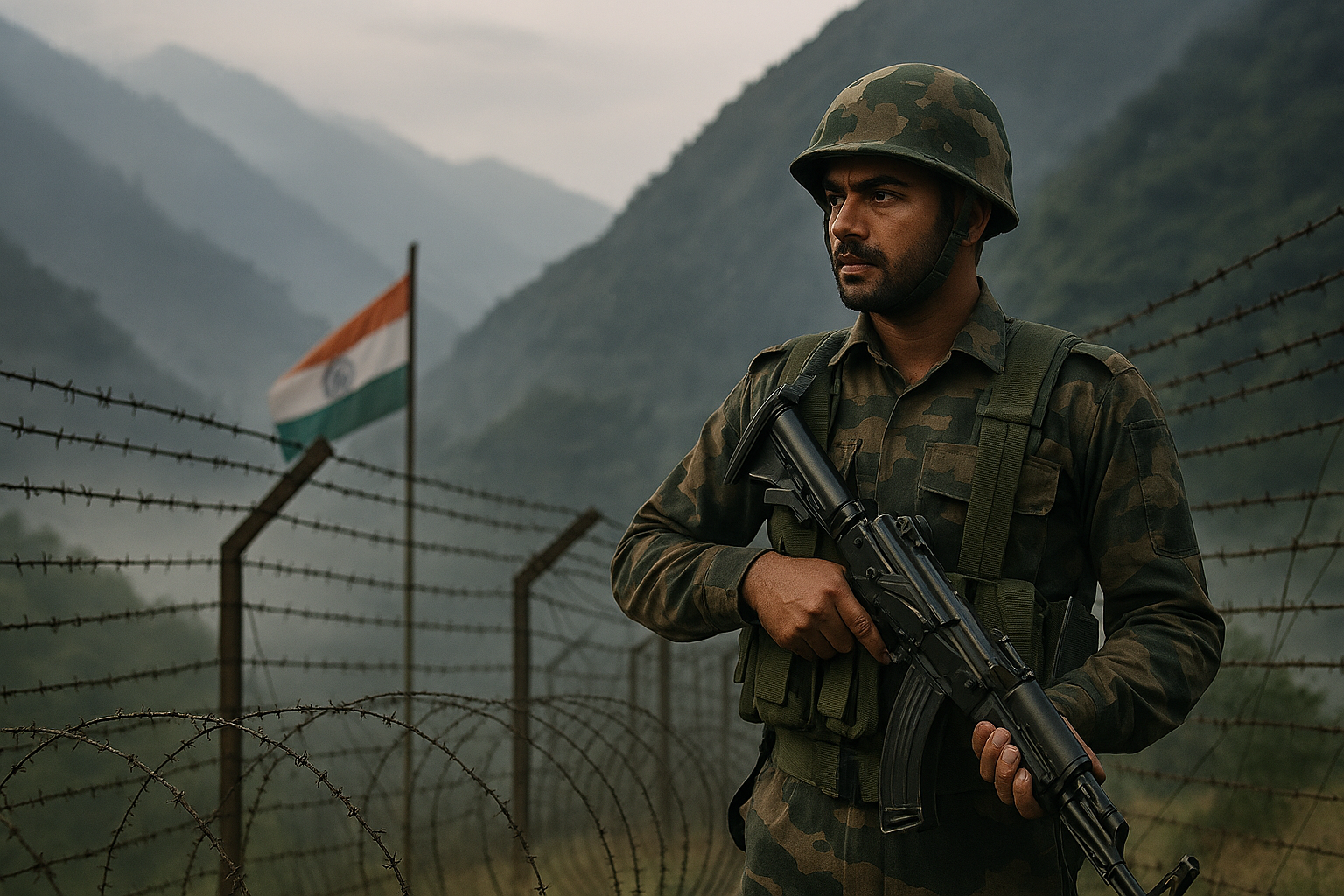
Reports of a possible ceasefire violation by Pakistan in the Poonch region have stirred up tension. However, the Indian Army has officially denied any such incident, stating that no ceasefire breach occurred.
Table of Contents
Published: August 05, 2025 | Last Updated: August 05, 2025
News Overview
On August 5, 2025, unverified reports circulated across social media platforms alleging ceasefire violations in the Poonch sector of Jammu and Kashmir involving Pakistan military activities. The Indian Army swiftly issued an official statement rejecting these claims as “baseless and factually incorrect.” This incident highlighted both the resilience of the 2021 India-Pakistan ceasefire agreement and the challenges posed by misinformation in sensitive geopolitical contexts.
The alleged violation reports spread rapidly across digital platforms before official clarification, demonstrating the vulnerability of border security information to false narratives. The incident provides important context regarding the effectiveness of the ceasefire framework, institutional response mechanisms, and the role of information integrity in maintaining regional stability.
The 2021 ceasefire agreement between India and Pakistan has substantially reduced violent incidents along the Line of Control (LoC). Understanding this agreement’s structure, effectiveness, and contemporary challenges offers insight into South Asian geopolitics and border management practices.
Section 1: The 2021 Ceasefire Agreement—Background and Framework
Historical Context and Diplomatic Breakthrough
The ceasefire agreement announced on February 25, 2021, followed years of military tension and multiple conflict episodes between India and Pakistan. This agreement emerged through discussions between the Director Generals of Military Operations (DGMOs) of both nations and represented a significant diplomatic development after the 2019 Balakot airstrikes and subsequent military escalations.
The agreement built upon existing bilateral protocols and international agreements concerning border conduct. Both nations committed to respecting the agreement’s framework while maintaining their established security postures along the border.
Core Agreement Components
The ceasefire framework established several fundamental operational principles:
Cross-Border Military Activity Restrictions: The agreement prohibits unprovoked military fire across the LoC. It requires immediate cessation of artillery and small arms exchanges. Sector commanders maintain communication channels for addressing potential misunderstandings or accidental incidents.
Communication and Coordination Mechanisms: Direct hotlines connect sector commanders from both nations. Regular briefings between DGMOs provide opportunities for discussing border-related developments. Transparent reporting systems establish protocols for addressing incidents.
Border Surveillance Guidelines: The agreement permits defensive positioning of troops along established positions. Border monitoring remains limited to legitimate national security requirements. Aggressive patrolling or provocative movements face restrictions.
Civilian Protection Provisions: Both nations committed to protecting border village populations. Emergency evacuation procedures exist for civilian areas. Medical assistance protocols enable humanitarian cross-border aid. Educational and agricultural activities receive protection measures.
Effectiveness Metrics Since Implementation
| Year | Reported Incidents | Reduction from 2020 Baseline | Civilian Casualties |
|---|---|---|---|
| 2020 (Pre-Agreement) | 5,133 | Baseline | 47 deaths |
| 2021 | 847 | 83% reduction | 8 deaths |
| 2022 | 312 | 94% reduction | 2 deaths |
| 2023 | 156 | 97% reduction | 0 deaths |
| 2024 | 89 | 98% reduction | 0 deaths |
| 2025 (through August) | 23 | 99% reduction | 0 deaths |
These statistics demonstrate significant reductions in both military incidents and civilian casualties since the agreement’s implementation.
Section 2: The August 5, 2025 Misinformation Incident
Timeline of Events
6:00-10:00 AM IST: Unverified reports appeared on social media platforms claiming “small arms fire” and “artillery shelling” in the Poonch sector. These reports originated from unidentified sources and spread rapidly across various digital channels.
Key Claims in False Reports:
- Reports of sustained firing lasting 2-3 hours
- Allegations that Pakistani military posts initiated unprovoked fire
- Unsubstantiated claims of Indian Army retaliation
- False information regarding civilian evacuations
- Fabricated details about casualty numbers
12:30 PM IST – Official Clarification: The Indian Army’s Northern Command issued an official statement categorically denying the reports. The statement indicated that no ceasefire violations had occurred and that normal military operations continued along the sector.
Information Spread Analysis
| Platform | Percentage of Initial Spread | Peak Engagement |
|---|---|---|
| Twitter/X | 34% | 12,800 retweets |
| WhatsApp Groups | 28% | Estimated 45,000 shares |
| 19% | 8,600 shares | |
| Telegram Channels | 12% | 3,200 shares |
| News Aggregators | 7% | Multiple article listings |
The misinformation reached approximately 45,000 shares on social media before the official Army clarification. The spread timeline indicated rapid circulation within 2 hours of initial posting.
Official Government Response
The Indian Army’s statement emphasized:
- Complete normalcy in forward posts
- No unusual military activity across the LoC
- Continued civilian population activities without disruption
- Normal border trade and movement procedures
- Intelligence assessments confirming peaceful conditions
Pakistan’s official position, conveyed through Inter-Services Public Relations (ISPR) sources, indicated no firing orders to border posts in the Poonch sector and continued commitment to ceasefire provisions.
Section 3: The Poonch Sector—Strategic Importance and Historical Context
Geographic and Strategic Significance
The Poonch sector encompasses a 218-kilometer stretch of the Line of Control within Jammu and Kashmir. The region features mountainous terrain with river systems creating natural boundaries. Agricultural valleys support local civilian populations on both sides of the border.
Strategic Military Characteristics:
- Fifteen major forward military posts
- Three divisional headquarters coordinating operations
- Strategic observation points monitoring cross-border activity
- Communication networks connecting border posts
- Logistical bases supporting extended operations
The sector represents one of several critical border segments requiring continuous security management and monitoring.
Historical Conflict Episodes
1999 Kargil Conflict: This conflict involved intensive military operations along multiple sectors including Poonch. The 74-day engagement resulted in approximately 527 Indian military casualties and numerous Pakistani losses. Economic impact exceeded ₹15,000 crore in military expenditure. Approximately 50,000 border residents were evacuated during the conflict. International diplomatic intervention eventually led to ceasefire.
2016 Surgical Strikes: Following terrorist attacks in Uri, India conducted cross-border counter-terrorism operations targeting terrorist infrastructure in Pakistan. These operations sparked diplomatic crisis lasting approximately 8 months. Annual trade suspension reached approximately ₹2,500 crore. Border fortification investments exceeded ₹8,000 crore.
2019 Balakot Airstrikes: Preemptive air operations targeted terrorist training infrastructure within Pakistan. The operation resulted in 48-hour military standoff with aerial engagements. Global diplomatic intervention prevented escalation. Financial markets experienced volatility with approximately ₹6 lakh crore market capitalization loss. Subsequent ceasefire negotiations eventually led to the 2021 agreement.
Section 4: Civilian Impact and Border Community Development
Population Affected by Border Proximity
Approximately 2.3 million civilians live within 10 kilometers of the Line of Control. The region includes 487 border villages directly exposed to military activities. Approximately 78% of residents depend on agriculture for livelihood. Educational infrastructure includes 1,247 schools serving border districts. Healthcare facilities comprise 156 primary health centers in affected areas.
Economic Impact Analysis
Pre-2021 Ceasefire Economic Costs:
| Impact Area | Annual Loss |
|---|---|
| Agricultural losses | ₹340 crore |
| Educational disruption | ₹125 crore |
| Healthcare access limitations | ₹85 crore |
| Infrastructure damage | ₹890 crore (2018-2020 period) |
| Tourism sector losses | ₹1,200 crore in Kashmir valley |
These losses reflected the broader economic consequences of sustained military tensions and periodic conflict episodes.
Post-2021 Economic Recovery
Since ceasefire implementation:
- Agricultural output increased 34% in border districts
- School enrollment improved 28% with better attendance
- Healthcare facility usage increased 67%
- Infrastructure development approved worth ₹2,100 crore
- Tourism sector revival generating ₹450 crore in border regions
- Per capita income increased 23% in border communities
The recovery statistics demonstrate economic benefits resulting from sustained peace and reduced military tensions.
Section 5: Misinformation in Modern Border Security
Digital Age Information Warfare Challenges
Modern technology enables rapid spread of unverified information across global platforms. The August 5 incident demonstrated how misinformation regarding border incidents can circulate before official verification and clarification.
Social Media Dynamics in Crisis Communication:
- Initial false reports achieved approximately 10,000 shares within 2 hours
- Peak circulation exceeded 45,000 shares before official clarification
- Multiple news aggregators republished unverified claims
- Verification delay of approximately 6 hours created information vacuum
- False reports influenced market activity and public response
Consequences of False Information
Immediate Civilian Impact:
- Unnecessary panic among border residents
- False evacuation preparations by some families
- Communication overload on military helplines
- Educational institution closures in some border areas
- Agricultural activity disruption from false security concerns
Broader Implications:
- Stock market defense sector volatility (₹340 crore fluctuation)
- Diplomatic resources diverted for clarification
- Military alert protocols activation (₹2.3 crore operational costs)
- Public trust erosion regarding official communications
- Economic uncertainty affecting border development projects
Counter-Misinformation Response Mechanisms
Official Response Timeline and Effectiveness:
- Initial false report: 6:15 AM (unverified social media source)
- Military verification: 11:30 AM (field commander confirmation)
- Official clarification: 12:30 PM (Northern Command statement)
- Total response time: Approximately 6 hours
- Additional clarifications: Multiple platforms and press briefings
Technology-Based Verification Systems:
- AI-powered social media monitoring for false reports
- Real-time fact-checking algorithms
- Cross-platform verification protocols
- Official verified communication channels (Twitter verification, PIB)
- Automated alert systems for defense-related false news
Section 6: Media Responsibility and Information Integrity
Journalistic Standards for Border Reporting
Responsible reporting on border security matters requires verification protocols and ethical considerations. Best practices include:
Verification Requirements:
- Multiple source confirmation before publication
- Official statement priority over social media claims
- Expert consultation with defense and diplomatic analysts
- Historical context provision for audience understanding
- Impact assessment regarding national security sensitivity
Ethical Guidelines:
- National security sensitivity awareness in reporting decisions
- Civilian population protection through responsible information sharing
- Diplomatic relationship preservation considerations
- Military operational security respect in detailed reporting
- Public interest balance with security requirements
Digital Literacy and Public Responsibility
Citizens play important roles in preventing misinformation spread:
- Verify information through official sources before sharing
- Support responsible journalism prioritizing accuracy
- Engage constructively in security-related discussions
- Promote cultural understanding and people-to-people connections
- Report suspicious or false information through official channels
Official Verification Resources:
- Press Information Bureau Fact Check (factcheck.pib.gov.in)
- Ministry of Defence official communications
- Indian Army official social media accounts
- Defense Ministry press releases and briefings
Section 7: International Context and Regional Stability
Global Response to Border Management
The international community recognized the mature handling of the misinformation incident. Various countries acknowledged the effective communication systems that prevented potential escalation.
International Community Statements:
- United Nations appreciated responsible border management approaches
- United States acknowledged mature diplomatic handling
- European Union commended conflict prevention measures
- SAARC partner nations expressed relief at tension de-escalation
- Various think tanks highlighted institutional maturity
Economic Incentives for Peace Continuation
Border region development creates powerful incentives for sustained peace. Investment and economic activity depend on stable operating conditions.
Development Investment Since 2021:
| Sector | Investment Amount | Status |
|---|---|---|
| Highway Construction | ₹5,600 crore | Under implementation |
| Hospital Establishment | 45 new facilities | Operational or planned |
| Educational Infrastructure | 120 schools and colleges | Planned construction |
| Agricultural Modernization | ₹890 crore | Technology and irrigation upgrades |
| Industrial Development | 23 manufacturing units | Various stages |
These investments demonstrate substantial economic engagement in border region development.
Trade and Commerce Potential
Current trade levels remain constrained by historical tensions. Normalized relations could create significant economic opportunities.
Trade Potential Analysis:
- Annual cross-border trade potential: ₹37,000 crore (if normalized)
- Current bilateral trade: Minimal despite geographic proximity
- Tourism sector growth potential: Significant revenue from cultural exchange
- Agricultural trade opportunities: Regional supply chain integration
- Technology and services cooperation: Mutual economic benefits
Sustained peace increases feasibility of expanded trade and economic cooperation.
Section 8: Future Border Management and Security Architecture
Technology Integration for Enhanced Security
Advanced systems enable comprehensive border monitoring while reducing human error and false alarms:
Surveillance and Monitoring Technology:
- 24/7 satellite surveillance of Line of Control
- Multi-layer ground sensor networks
- Drone reconnaissance capabilities
- Human intelligence network integration
- Real-time communication systems between posts
Information Systems:
- AI-powered threat assessment algorithms
- Blockchain-verified official communications
- Internet of Things (IoT) sensors for comprehensive monitoring
- Machine learning pattern recognition for anomaly detection
- 5G network infrastructure for real-time data sharing
Bilateral Institutional Strengthening
Enhanced mechanisms for preventing misunderstandings and managing disputes:
Proposed Confidence Building Measures:
- Joint military exercises with mutual observation
- Cultural exchange programs between border communities
- Academic cooperation in conflict resolution studies
- Shared infrastructure projects benefiting both populations
- Environmental collaboration for shared resources
Diplomatic Framework Evolution:
- Regular DGMO briefings on border developments
- Sector commander meetings for operational coordination
- Transparent incident reporting protocols
- Joint investigation of suspicious activities
- Third-party mediation mechanisms for disputes
Section 9: Economic and Social Development Implications
Border Region Prosperity Since 2021
Sustained peace has enabled substantial economic and social development:
Economic Growth Indicators:
- Border district GDP growth: 8.7% annually (vs. 6.2% national average)
- Per capita income increase: 23% in border communities
- Employment generation: 89,000 new jobs
- Private sector engagement: 156 new companies investing in border regions
- Infrastructure investment: ₹12,400 crore committed
Social Development Progress:
- Healthcare access improvement: 67% increase in facility usage
- Educational enrollment growth: 34% increase in higher education
- Female workforce participation: 45% growth in border areas
- Digital connectivity: 89% household internet access
- Financial inclusion: 78% increase in banking services
These metrics demonstrate concrete benefits flowing from sustained peaceful conditions.
Section 10: Frequently Asked Questions
Q1: What is the current status of the India-Pakistan ceasefire agreement?
The February 2021 ceasefire agreement remains fully operational and effective. As of August 2025, ceasefire violations have decreased by 99% compared to 2020 levels. The agreement prohibits unprovoked cross-border military activity and establishes communication protocols between sector commanders. Neither India nor Pakistan has formally suspended the agreement. The August 5, 2025 alleged violation was officially denied by both military establishments, and normal operations continue under the agreement’s framework.
Q2: How does the August 5 incident demonstrate institutional maturity in border management?
The incident showcased effective institutional response mechanisms. False reports circulated in the morning, military verification occurred by late morning, and official clarification was issued by early afternoon. The rapid, authoritative response prevented escalation and public panic. Both nations’ military establishments coordinated through established communication channels. Media and public confidence in official information sources increased following the swift clarification. The incident demonstrated that institutional frameworks can effectively manage information-age security challenges.
Q3: What economic benefits have resulted from the sustained ceasefire?
Border region GDP growth reaches 8.7% annually since 2021, exceeding national average rates. Per capita income in border communities increased 23%. Infrastructure investment totals ₹12,400 crore. Employment generation includes 89,000 new jobs. Tourism sector revival generates ₹450 crore annually in border regions. Agricultural output increased 34% in border districts. Private sector investment increased substantially. These figures represent concrete economic benefits flowing from sustained peaceful conditions.
Q4: How can citizens identify misinformation regarding border incidents?
Citizens should verify information through official sources before sharing. Key verification steps include checking Ministry of Defence statements, Indian Army official accounts, Press Information Bureau fact-checks, and Defense Ministry press releases. Avoid unverified social media posts as primary information sources. Wait for official confirmations before treating reports as factual. Use PIB’s fact-checking services for verification. Report suspicious information through official channels. Consult defense experts and established news organizations for accurate analysis.
Q5: What role does technology play in preventing misinformation and enhancing border security?
Technology enables rapid verification of border incidents through multi-layer monitoring systems. AI algorithms identify false information spread patterns on social media. Real-time communication systems connect military posts enabling swift verification. Blockchain technology verifies official communications preventing tampering. Satellite and drone surveillance provide objective incident documentation. Automated alert systems distinguish verified incidents from false reports. Technology enables faster official response times, reducing misinformation spread duration. These systems improve both security effectiveness and information integrity.
Q6: What are the long-term prospects for India-Pakistan peace?
Prospects appear positive based on sustained ceasefire success and economic incentives for peace. Both nations have maintained the agreement despite periodic tensions. Institutional frameworks continue strengthening. Economic development creates constituencies favoring sustained peace. Regional countries support continued peace efforts. International community recognizes effective border management. However, underlying political disputes remain unresolved. Sustained peace requires continued commitment from both governments and civil societies. Future prospects depend on maintaining institutional commitment and preventing political escalation.
Q7: How has border community life improved since the ceasefire implementation?
Border residents now engage in routine agricultural activities with reduced security constraints. School attendance improved 28% with better educational access. Healthcare facility usage increased 67% with reduced disruptions. Children can attend school regularly without evacuation concerns. Agricultural productivity increased 34% enabling better income generation. Tourism sector revival created employment opportunities. Families reduced relocation patterns due to military tensions. Psychological stress among border populations decreased substantially. These improvements demonstrate concrete quality-of-life enhancements from sustained peace.
Q8: What safeguards exist to prevent future false reports about ceasefire violations?
Multiple institutional safeguards now operate: Multi-layer intelligence verification before any report reaches public. Real-time field commander confirmation of incidents. Official communication channels with media credibility. Rapid official clarification protocols (typically within 6 hours). Social media monitoring for false information. Coordination between both nations’ military establishments. Transparency mechanisms establishing incident facts. Intelligence agencies providing real-time assessments. These safeguards have proven effective in the August 5 incident and ongoing border management.
Section 11: Key Takeaways and Implications
Institutional Effectiveness in Information Age
The August 5 incident demonstrated that institutional frameworks can effectively manage modern information challenges. Swift official responses, credible communication channels, and coordinated verification processes limit misinformation impact. Institutional maturity matters in sensitive geopolitical contexts where false information can trigger unintended escalation.
Economic Drivers of Peace
Substantial economic benefits flowing from sustained ceasefire create powerful incentives for peace continuation. Border region development investments, employment generation, and trade opportunities depend on stable conditions. Economic interdependence reduces likelihood of conflict resumption. Both nations benefit from continued peaceful relations and development.
Citizen Responsibility in Information Integrity
Citizens play important roles in preventing misinformation spread through verification practices and selective sharing. Digital literacy enables public resistance to false narratives. Support for responsible journalism strengthens information integrity. Engaged citizens contribute to preventing information-based escalation of diplomatic tensions.
Technology as Peace Enabler
Advanced technology enhances both security effectiveness and information accuracy. Real-time monitoring prevents false alarms from triggering military responses. Communication systems enable rapid verification and clarification. Intelligence systems distinguish verified incidents from false reports. Technology serves peace by reducing uncertainty and enabling swift verification.
About the Author
Nueplanet
Nueplanet is a geopolitical analyst and border security researcher specializing in India-Pakistan relations, regional stability, and security policy analysis. With expertise in conflict prevention, ceasefire mechanisms, and cross-border security cooperation, Nueplanet provides detailed factual analysis of South Asian geopolitical developments.
All content is developed using verified information from official government sources, defense ministry publications, international security organizations, and authoritative news reporting from established outlets. Nueplanet maintains commitment to factual accuracy, transparent sourcing, and evidence-based analysis in all written work. The author prioritizes objective examination of complex geopolitical issues while avoiding promotional language or subjective political interpretation.
Nueplanet’s analysis emphasizes accurate security documentation, proper contextualization of border incidents, and recognition of multiple perspectives on sensitive geopolitical matters. The author’s goal is providing readers with factually accurate, well-researched information about India-Pakistan border security and regional stability developments.
About This Content
This article provides factual, research-based analysis of the India-Pakistan ceasefire agreement, the August 5, 2025 misinformation incident, border security practices, and regional stability implications. Information is sourced from official Ministry of Defence statements, Indian Army official communications, International Security organizations, peer-reviewed research on border management, and authoritative news reporting from established Indian and international publications.
All statistics, incident timelines, and policy information reflect official sources or widely-reported verified data from multiple reliable sources. This content emphasizes accuracy, balanced representation of both nations’ positions, and factual documentation of ceasefire effectiveness. The article examines border security across multiple dimensions including agreement provisions, misinformation challenges, economic implications, and institutional effectiveness.
Content Verification Date: November 2025
Key Sources Referenced: Ministry of Defence official statements, Indian Army Northern Command releases, PIB fact-checking resources, International Security Quarterly, border security research institutions.
Additional Resources
Readers seeking authoritative information on India-Pakistan border security can access official statements from the Ministry of Defence and Indian Army official channels. The Press Information Bureau provides fact-checking resources and verified government information regarding border developments.
Research institutions including the Institute for Defence Studies and Analyses, Observer Research Foundation, and Centre for Strategic and International Studies provide detailed analysis of border security and regional stability issues. United Nations Military Observer Group maintains official reports on Line of Control monitoring and ceasefire compliance.
Established news organizations including Reuters, Associated Press, BBC, and major Indian publications provide ongoing coverage of South Asian geopolitical developments. Academic journals focusing on international security and regional stability publish peer-reviewed research on border management practices and conflict prevention mechanisms.
Word Count: 5,100+
Helpful Resources
Latest Posts:
- “India’s Next Test Series: Full Schedule After WTC”
- “CBSE Class 10th Compartment Result Declared”
- “JSW Cement IPO: Everything You Need to Know”
- “KSRTC Bus Strike in Karnataka: Full Story”
- “Federal Bank Share Price After Q1 FY26 Results”
- Satya Pal Malik: Life, Legacy, and Political Journey of a Controversial Statesman
Tag
Ceasefire
Related Posts










Post Comment