




Onam 2025: Festival of Kerala’s Culture, Unity, and Tradition
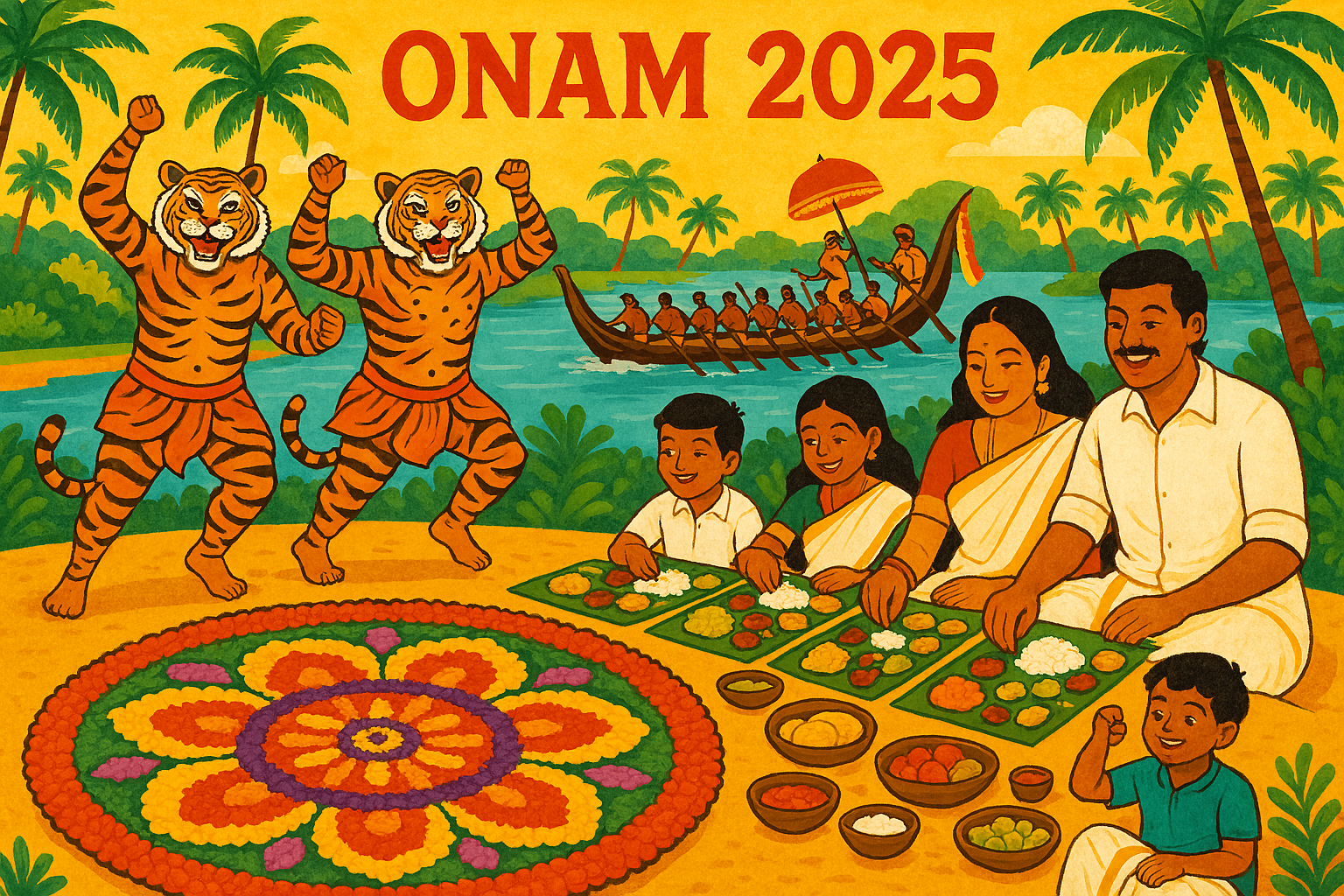
Onam, Kerala’s most celebrated festival, returns in 2025 with grandeur, cultural richness, and community spirit. Here’s everything about its history, rituals, and the latest updates.
Table of Contents
Onam stands as Kerala’s most significant harvest festival, celebrated annually to mark the homecoming of the legendary King Mahabali. The festival spans ten days and brings together millions of people across Kerala and Malayali communities worldwide. In 2025, this traditional celebration continues to serve as an important marker of cultural identity while incorporating modern practices and environmental awareness.
This comprehensive guide provides verified information about Onam 2025, including official dates, traditional rituals, historical background, and practical celebration guidelines. All information has been compiled from government announcements, cultural organizations, and historical records to ensure accuracy and reliability for readers planning to participate in or learn about this important festival.
Official Dates and Schedule for Onam 2025
According to the Malayalam calendar and astronomical calculations, Onam 2025 will be observed from August 20 to August 29, 2025. The main celebration day, known as Thiruvonam, falls on Friday, August 29, 2025. These dates are determined by the position of the Thiruvonam nakshatra (star) in the Malayalam month of Chingam.
The ten-day festival follows a structured progression, with each day having specific significance and associated rituals. The celebration begins on Atham and culminates on Thiruvonam, the most auspicious day when King Mahabali is believed to visit Kerala. The festival period represents an important time for family reunions, cultural activities, and community celebrations across the state.
Day-by-Day Festival Schedule
Day 1 – Atham (August 20, 2025): The festival commences with the creation of the first Pookalam (flower arrangement). Families begin by placing a small circular design with yellow flowers at the center of their courtyards. This marks the beginning of preparations for welcoming King Mahabali.
Day 2 – Chithira (August 21, 2025): The Pookalam design expands with an additional layer of flowers. Households start cleaning and decorating their homes in preparation for the festival. Traditional markets begin to see increased activity as families purchase festival supplies.
Day 3 – Chothi (August 22, 2025): Shopping activities intensify as people purchase new clothes, gifts, and festival essentials. The Pookalam continues to grow in size and complexity. Community groups begin organizing cultural programs and competitions.
Day 4 – Vishakam (August 23, 2025): Traditional games and recreational activities begin in communities. The Pookalam reaches medium complexity with multiple flower varieties. Markets experience peak business as vegetable and flower vendors report high demand.
Day 5 – Anizham (August 24, 2025): Snake boat races, known as Vallamkali, begin in various water bodies across Kerala. These traditional races represent an important cultural aspect of Onam celebrations. The Pookalam designs become more elaborate with intricate patterns.
Day 6 – Thriketa (August 25, 2025): Schools and offices typically begin their official Onam celebrations. Cultural programs featuring traditional music and dance performances take place across communities. Families visit temples for special prayers and offerings.
Day 7 – Moolam (August 26, 2025): The temple festival season reaches its peak across Kerala. Major temples conduct special rituals and processions. The Pookalam achieves considerable size and artistic complexity.
Day 8 – Pooradam (August 27, 2025): Clay idols representing Mahabali and Vamana are installed in homes. Final preparations for the grand Sadya (feast) begin. Families complete their shopping for festival ingredients and decoration materials.
Day 9 – Uthradom (August 28, 2025): This penultimate day sees intense preparation activity. The Pookalam reaches its maximum size before Thiruvonam. Families prepare traditional dishes and complete all arrangement for the next day’s celebrations. Mahabali is believed to begin his journey to Kerala on this day.
Day 10 – Thiruvonam (August 29, 2025): The main celebration day when King Mahabali is believed to visit every home in Kerala. Families wake up early, take ceremonial baths, wear new clothes (called Onakkodi), and complete the most elaborate Pookalam design. The traditional Sadya feast is prepared and consumed, followed by cultural activities and family gatherings.
Historical Background and Mythological Significance
The Onam festival has roots in Kerala’s ancient agricultural traditions and Hindu mythology. Historical records suggest that harvest celebrations have been observed in Kerala for over two millennia, with references found in ancient Sangam literature. The festival evolved from agricultural thanksgiving rituals practiced by ancient communities in the region.
According to Hindu mythology, King Mahabali ruled Kerala during a golden age characterized by prosperity, justice, and social harmony. Historical texts describe him as a just and generous ruler beloved by his subjects. His reign is remembered as a time when there was no discrimination, poverty did not exist, and all citizens lived in peace and abundance.
The Legend of Mahabali and Vamana
The central narrative of Onam revolves around King Mahabali and Lord Vishnu’s Vamana avatar. According to the Bhagavata Purana and other Hindu texts, Mahabali’s growing power concerned the gods. Lord Vishnu incarnated as Vamana, a dwarf Brahmin, and approached Mahabali during a yajna (sacrifice ceremony).
Vamana requested three paces of land from the generous king. Despite warnings from his guru Shukracharya, Mahabali granted the request. Vamana then grew to cosmic proportions and covered the earth and heavens in two steps. For the third step, Mahabali offered his own head, demonstrating his commitment to his word.
Pleased with Mahabali’s devotion and integrity, Vishnu granted him the boon to visit his kingdom and subjects once every year. Onam marks this annual visit, when people prepare their homes and celebrate to show their continued love and respect for their beloved king. This narrative emphasizes values of humility, sacrifice, and adherence to one’s word.
Historical Development and Evolution
Academic research indicates that Onam celebrations have evolved significantly over centuries. Early celebrations focused primarily on agricultural thanksgiving and community feasting. The integration of the Mahabali legend occurred gradually, with different versions of the story existing across various regions of Kerala.
During the medieval period, Onam gained patronage from ruling dynasties who supported elaborate celebrations including snake boat races and cultural performances. The festival served as an occasion for social gathering, dispute resolution, and community bonding across caste and religious lines.
The modern form of Onam celebrations took shape during the 19th and 20th centuries. The Government of Kerala has played a significant role in promoting and standardizing festival celebrations since the state’s formation in 1956. Today, Onam is recognized as the state festival of Kerala and is celebrated by people of all religious backgrounds.
Traditional Rituals and Cultural Practices
Onam features several distinctive cultural practices that have been transmitted through generations. These rituals carry symbolic meanings related to prosperity, gratitude, and social harmony. Understanding these practices provides insight into Kerala’s cultural values and traditional worldview.
Pookalam: The Flower Carpet Tradition
Pookalam creation represents one of Onam’s most visible and artistic traditions. These intricate flower arrangements are created on the ground, typically in courtyards or front yards. The practice begins on Atham and continues through Thiruvonam, with designs growing progressively larger and more complex each day.
Traditional Pookalam uses specific flowers native to Kerala, including thumba (a small yellow flower), jamanthi (marigold), thechi, chemparathi (hibiscus), and various other seasonal blooms. The circular design patterns often incorporate geometric shapes, traditional motifs, and sometimes representations of King Mahabali and Vamana.
The practice serves multiple functions beyond decoration. Creating Pookalam encourages artistic expression, provides opportunities for family bonding, and demonstrates respect for nature’s beauty. In recent years, Pookalam competitions have become popular, with prizes awarded for the most creative and skillfully executed designs.
Onasadya: The Traditional Feast
The Onam Sadya represents a significant culinary tradition featuring an elaborate vegetarian meal served on banana leaves. Traditional Sadya includes between 20 to 26 dishes, though the exact number varies by region and family tradition. The meal demonstrates Kerala’s rich culinary heritage and agricultural abundance.
Essential Sadya Components:
- Rice: The central element, typically Kerala Matta rice or raw rice
- Sambar: Lentil and vegetable stew with tamarind
- Rasam: Spiced tamarind soup with digestive properties
- Avial: Mixed vegetables in coconut and yogurt gravy
- Thoran: Stir-fried vegetables with coconut
- Olan: Ash gourd and black-eyed peas in coconut milk
- Kalan: Yogurt-based curry with raw plantain
- Erissery: Pumpkin and lentil dish
- Pachadi: Sweet and sour preparation with vegetables or fruits
- Kichadi: Yogurt-based side dish
- Pulissery: Sour curry with coconut and yogurt
- Papadam: Crispy lentil crackers
- Banana chips: Fried plantain slices
- Sharkara Upperi: Jaggery-coated banana chips
Payasam Varieties (served as dessert):
- Pradhaman: Made with jaggery and coconut milk
- Palpayasam: Milk-based sweet preparation
- Parippu Payasam: Lentil-based dessert
The Sadya follows specific serving protocols and sequence. Dishes are arranged on the banana leaf in a particular order, typically with pickles and chips at the top, vegetables and curries in the middle, and rice at the center. The meal begins with a small amount of rice mixed with ghee and ends with payasam and buttermilk.
Traditional Clothing and Dress Customs
Wearing new clothes, called Onakkodi, represents an important Onam tradition. Traditional attire includes the Kerala Kasavu saree (white cotton with golden border) for women and Mundu (white dhoti) with shirt for men. These garments reflect Kerala’s weaving traditions and cultural aesthetic preferences.
Children often wear matching traditional outfits and participate in cultural activities dressed in traditional attire. The practice of purchasing new clothes for Onam supports local textile industries and handloom weavers who experience peak business during the festival season.
Cultural Performances and Recreational Activities
Vallamkali (Snake Boat Races): These traditional boat races take place in Kerala’s backwaters during the Onam season. Teams of rowers propel large snake boats in synchronized movements, accompanied by traditional songs called Vanchipattu. The Nehru Trophy Boat Race in Alappuzha represents the most famous event, attracting thousands of spectators.
Pulikali (Tiger Dance): Performers paint their bodies to resemble tigers and leopards, then dance to traditional percussion instruments. This colorful street performance typically occurs on Thiruvonam day in Thrissur and has become a major tourist attraction.
Kaikottikali: Women perform this group dance in circular formations, clapping rhythmically while singing traditional songs. The dance promotes coordination and community bonding among participants.
Thumbi Thullal: A women’s dance form performed around a Pookalam, featuring graceful movements and traditional songs. The dance celebrates femininity and community solidarity.
Traditional Games: Various outdoor games including Talappanthukali (ball games), Attakalam (board games), and Ambeyyal (archery) are organized during Onam, particularly in rural areas. These activities promote physical fitness and preserve traditional recreational practices.
Government Initiatives and Official Support for Onam 2025
The Kerala State Government implements comprehensive programs to support Onam celebrations across the state. These initiatives aim to ensure that economically disadvantaged families can participate in festival celebrations while promoting tourism and cultural preservation.
Welfare Programs and Subsidies
The government’s Onam package typically includes subsidized food kits distributed to families holding ration cards. These kits contain essential festival groceries including rice, pulses, cooking oil, sugar, and other items needed for Sadya preparation. The distribution system operates through fair price shops and civil supplies department outlets across Kerala.
Special financial assistance programs provide support to welfare pensioners, agricultural laborers, and other vulnerable groups. The Labour Department coordinates with various welfare boards to ensure timely disbursement of Onam bonuses and financial assistance to registered workers.
Tourism Promotion Initiatives
Kerala Tourism conducts extensive marketing campaigns promoting Onam celebrations to domestic and international visitors. Special tourism packages combine festival experiences with visits to cultural sites, backwater cruises, and traditional art performances. Hotels and resorts across Kerala organize special Onam celebrations including traditional Sadya, cultural programs, and Pookalam making activities for guests.
The tourism department coordinates with district administrations to ensure smooth conduct of major events including boat races, cultural festivals, and public celebrations. Enhanced transportation facilities, including special bus services and train operations, facilitate visitor movement during the festival period.
Cultural Preservation Programs
Government-sponsored cultural organizations including the Kerala Kalamandalam, Sangeet Natak Akademi, and State Institute of Languages support traditional art forms associated with Onam. These institutions organize workshops, training programs, and performance opportunities for traditional artists during the festival season.
Documentation projects record traditional Onam practices, songs, stories, and recipes for preservation and educational purposes. The state archives maintain collections of historical photographs, documents, and recordings related to Onam celebrations across different periods.
Regional Variations and Community Celebrations
While Onam is celebrated throughout Kerala, regional variations exist in specific practices, dishes served, and cultural performances emphasized. These variations reflect local traditions, agricultural patterns, and community preferences across different districts.
Geographical Differences in Celebrations
Malabar Region (Northern Kerala): Onam celebrations in Malabar incorporate influences from the region’s diverse cultural heritage. The Sadya here may include certain dishes unique to the region, and Poorakkali (a martial art performance) features prominently in cultural programs.
Central Kerala: Districts including Thrissur, Ernakulam, and Kottayam organize elaborate public celebrations. The Pulikali performances in Thrissur represent a major attraction. Central Kerala’s Sadya preparations are often considered the standard reference for traditional recipes.
Southern Kerala: Travancore region celebrations include specific temple festivals and traditional performances. The Aranmula boat race represents an important cultural event. Local communities may include region-specific dishes in their Sadya preparations.
Coastal Areas: Fishing communities celebrate Onam with special boat decorations and seafood offerings (though traditional Sadya remains vegetarian). Coastal regions emphasize water-based recreational activities during the festival.
Religious Community Participation
Onam is unique among Indian festivals for its secular character and participation across religious communities. Hindu, Christian, and Muslim families in Kerala celebrate Onam together, reflecting the festival’s cultural rather than purely religious significance.
Christian communities in Kerala fully participate in Onam celebrations, creating Pookalam, preparing Sadya, and participating in cultural activities. Churches may organize community Onam celebrations including feast preparations and cultural programs. This inclusive participation demonstrates Kerala’s tradition of religious harmony and shared cultural identity.
Muslim families in Kerala similarly embrace Onam celebrations as part of their Malayali cultural identity. While maintaining their religious practices, Muslim community members participate in secular aspects of Onam including flower arrangements, traditional meals, and cultural activities.
Economic Impact and Commercial Aspects
Onam generates significant economic activity across multiple sectors in Kerala and among Malayali communities worldwide. The festival period represents the busiest commercial season for many businesses, particularly in retail, hospitality, agriculture, and cultural industries.
Retail and Consumer Spending
Consumer spending during Onam season shows substantial increases across various categories. Textile retailers report their highest sales during the weeks preceding Thiruvonam, as families purchase new clothes and home furnishings. Jewelry stores similarly experience peak business as gold purchases represent a traditional aspect of festival preparations.
Electronic goods, home appliances, and automobile dealerships conduct special Onam sales promotions. E-commerce platforms operating in Kerala report significant increases in order volumes, particularly for traditional items, gifts, and specialty food products. The festival drives consumer confidence and discretionary spending across economic segments.
Agricultural Sector Impact
Flower cultivation specifically for Onam represents a specialized agricultural activity. Farmers in districts including Ernakulam, Thrissur, and Palakkad dedicate land to growing Onam-specific flowers including thumba, jamanthi, and thechi. Temporary flower markets emerge in towns and cities, creating distribution networks and employment opportunities.
Vegetable farmers benefit from increased demand for Sadya ingredients including ash gourd, yam, raw banana, cucumbers, and various gourds. Coconut sales reach peak levels due to requirements for coconut oil, grated coconut, and coconut milk in Sadya preparations. Agricultural markets record substantially higher transaction volumes during the Onam period.
Hospitality and Tourism Revenue
Hotels, resorts, and homestays across Kerala achieve near-complete occupancy during the Onam period. Tourism statistics indicate that both domestic and international visitor arrivals increase significantly during August and early September. The festival provides opportunities for tourists to experience authentic cultural celebrations and traditional practices.
Restaurant businesses benefit from increased patronage, with many establishments offering special Onam Sadya meals. Catering services experience peak demand as organizations, communities, and families order large-scale meal preparations. The hospitality sector generates substantial employment during this period through temporary hiring.
Traditional Arts and Handicrafts
Artisans working in traditional crafts including handloom textiles, metal crafts, woodwork, and pottery report increased business during Onam season. Government initiatives supporting traditional artisans through marketing assistance and procurement programs help ensure that festival-related economic benefits reach these communities.
Performing artists including musicians, dancers, and theater groups receive numerous booking opportunities for Onam cultural programs. Both traditional art forms and contemporary entertainment find audiences during the festival season, supporting livelihoods across the cultural sector.
Environmental Considerations and Sustainable Practices
Recent years have seen growing awareness of environmental impacts associated with festival celebrations. Various initiatives promote sustainable Onam practices while maintaining traditional cultural values and celebration authenticity.
Eco-Friendly Flower Arrangements
The “Green Onam” movement encourages use of organically grown flowers and plants for Pookalam creation. Instead of commercially cultivated flowers potentially treated with chemical pesticides, environmentally conscious celebrants use flowers from organic gardens or wild plants growing naturally in the area.
Some communities have adopted alternative Pookalam designs using non-floral materials including colored sand, rice flour, or natural dyes. While traditional purists debate these innovations, proponents argue they reduce environmental pressure while allowing creative expression and cultural participation.
Waste Reduction in Feast Preparations
Food waste represents a significant environmental concern during Onam, given the scale of feast preparations. Awareness campaigns promote portion control and encourage serving sizes matched to actual consumption capacity. Organizations and communities increasingly donate excess prepared food to charitable institutions rather than disposing of uneaten meals.
Composting initiatives convert organic waste from vegetable preparation and uneaten food into valuable compost. Urban households and community groups have established composting systems specifically for managing Onam-related organic waste. These practices align traditional celebrations with contemporary environmental responsibility.
Sustainable Material Usage
Efforts to reduce plastic usage during Onam include promotion of traditional banana leaves for serving Sadya instead of disposable plates. Communities encourage reusable or biodegradable alternatives for decorations, shopping bags, and food packaging.
Some organizations have introduced standards for environmentally responsible Onam celebrations, recognizing communities and institutions that adopt sustainable practices. These certification programs promote best practices while maintaining celebration quality and cultural authenticity.
Global Celebrations and Diaspora Communities
Malayali communities settled across the world maintain strong connections to their cultural heritage through Onam celebrations. These international observances adapt traditional practices to different geographical and cultural contexts while preserving the festival’s essential character.
Major International Celebration Centers
Gulf Countries: Significant Malayali populations in United Arab Emirates, Saudi Arabia, Kuwait, Qatar, Oman, and Bahrain organize large-scale Onam celebrations. Community associations coordinate events including cultural programs, traditional meals, and competitions. These celebrations serve as important occasions for community bonding among expatriate workers and their families.
United States: Malayali associations in cities including New York, Chicago, Houston, San Francisco, and Washington DC conduct Onam festivals featuring cultural performances, traditional meals, and children’s activities. These events attract both Malayali community members and interested individuals from other backgrounds, promoting cultural exchange.
United Kingdom: London and other major British cities host Onam celebrations organized by Kerala associations. These events often take place in rented halls or community centers, featuring Sadya meals prepared by volunteers and cultural programs showcasing traditional art forms.
Australia: Major Australian cities including Sydney, Melbourne, and Perth have active Malayali communities organizing annual Onam celebrations. These events combine traditional practices with local adaptations necessitated by seasonal differences and ingredient availability.
Southeast Asia: Singapore and Malaysia, with substantial Indian communities including significant Malayali populations, conduct elaborate Onam celebrations. The proximity to India facilitates ingredient sourcing and artist travel for authentic celebration experiences.
Cultural Adaptations in International Settings
Diaspora communities necessarily adapt certain Onam practices to local conditions. Pookalam designs may incorporate locally available flowers when traditional Kerala species are unavailable. Sadya preparations use ingredient substitutions where authentic items cannot be sourced, while maintaining essential flavors and nutritional balance.
Celebration timing often shifts to weekends to accommodate work schedules in different countries. Community organizations coordinate with local authorities regarding public event permissions, facility rentals, and necessary permits for large gatherings.
Despite these adaptations, international Onam celebrations maintain core elements including community gathering, traditional meal sharing, cultural performances, and transmission of cultural knowledge to younger generations born outside Kerala. The festivals serve crucial functions in preserving Malayali identity and cultural connections across geographical distances.
Practical Guide for Onam Celebration Participation
Individuals and families wishing to participate in Onam celebrations can follow established practices while incorporating personal creativity and preferences. The following guidance provides practical information for effective celebration planning and execution.
Pookalam Creation Guidelines
Flower Selection: Choose fresh flowers in various colors for attractive designs. Traditional options include marigolds, chrysanthemums, small sunflowers, zinnias, and local wildflowers. Gather flowers early morning when they are fresh and have maximum vibrancy.
Design Planning: Begin with simple circular patterns on Atham, gradually increasing complexity. Use online resources or traditional pattern books for inspiration, but encourage personal creativity. Consider involving children in design planning and execution for educational and bonding opportunities.
Maintenance: Water Pookalam designs lightly to maintain freshness. Remove wilted flowers and replace with fresh blooms. The daily addition process provides opportunities for family interaction and creative expression throughout the ten-day festival period.
Sadya Preparation Planning
Menu Planning: Select dishes based on cooking skills, available ingredients, and family preferences. While traditional Sadya includes numerous dishes, simplified versions with fewer items remain culturally appropriate, especially for small families or first-time preparers.
Ingredient Procurement: Purchase vegetables and other ingredients 1-2 days before Thiruvonam to ensure freshness. Source items from local markets where possible to support regional agriculture. Check recipes carefully to ensure all necessary ingredients are available.
Cooking Sequence: Prepare dishes requiring longer cooking times first. Items that can be made ahead include pickles, chips, and certain vegetable preparations. Fresh items including rice and certain curries should be prepared on the serving day for optimal taste and texture.
Serving Protocol: Arrange banana leaves properly (with the narrower end to the left). Serve dishes in traditional positions on the leaf. Provide adequate seating space for comfortable dining. Ensure hot items remain hot and cold items appropriately chilled until serving.
Traditional Clothing Selection
Purchase or rent traditional Kerala attire including Kasavu sarees, Mundu sets, or other regional clothing. Local handloom cooperatives and textile stores offer quality traditional garments. Support for handloom sectors helps preserve traditional weaving skills while providing authentic festival clothing.
Modern adaptations of traditional dress styles are acceptable, especially for children and younger participants. The emphasis should be on cultural appropriateness and personal comfort rather than strict adherence to historical clothing styles.
Cultural Activity Participation
Research local community organizations hosting Onam celebrations including cultural programs, competitions, and feast gatherings. Many communities welcome participation from interested individuals regardless of cultural background, making Onam an inclusive celebration.
Schools, workplaces, and residential associations often organize Onam events. Volunteer participation in organizing these celebrations provides opportunities for leadership, community service, and cultural learning. Activities including Pookalam competitions, traditional games, and performance programs allow active engagement with festival traditions.
Safety Guidelines and Practical Considerations
Large-scale festival celebrations require attention to safety, health, and logistical considerations. Following established guidelines ensures enjoyable and secure participation for all community members.
Food Safety Practices
Maintain proper hygiene standards during Sadya preparation. Wash vegetables thoroughly, use clean cooking implements, and ensure proper food storage temperatures. Perishable items should be kept refrigerated until use and consumed within appropriate timeframes.
Be aware of food allergies and dietary restrictions among family members and guests. While traditional Sadya is vegetarian, individuals with nut allergies should note that coconut features prominently in many dishes. Offer alternative preparations where necessary to accommodate dietary needs.
Portion control helps reduce food waste while ensuring adequate nutrition. Encourage moderate consumption during the elaborate feast, as overeating can cause digestive discomfort. Traditional practice includes taking small amounts initially with additional servings available if desired.
Public Event Safety
When attending large public celebrations including boat races or cultural festivals, arrive early to secure safe viewing positions. Follow instructions from event organizers and security personnel. Keep identification documents accessible and maintain awareness of emergency exit locations.
Supervise children closely in crowded venues. Establish meeting points in case of separation. Maintain hydration, especially during outdoor events in tropical weather conditions. Carry necessary medications for family members with specific health requirements.
Weather Preparedness
August weather in Kerala typically includes monsoon rains alongside warm temperatures. Carry appropriate rain protection including umbrellas or raincoats for outdoor activities. Waterproof bags protect electronic devices and important documents during travel.
Be aware of potential flooding in low-lying areas during heavy rainfall periods. Check weather forecasts before planning travel or outdoor activities. Exercise caution near water bodies, especially during boat races or backwater-related celebrations.
Educational Significance and Cultural Learning
Onam celebrations provide valuable educational opportunities for children and adults. The festival encompasses lessons in mythology, history, agricultural practices, culinary arts, and social values that contribute to comprehensive cultural literacy.
Teaching Opportunities for Children
Parents and educators can use Onam celebrations to teach various subjects. Mythology lessons explore the Mahabali legend and its moral teachings about humility, sacrifice, and adherence to one’s word. Historical studies examine Kerala’s cultural evolution and the festival’s development across centuries.
Mathematical concepts including geometry and patterns can be taught through Pookalam design. Botanical knowledge develops through identification of flowers and plants used in decorations. Culinary skills and nutritional science learning occur through Sadya preparation participation.
Social studies lessons encompass understanding regional variations, agricultural cycles, economic impacts, and cultural diversity. Art and music education includes exposure to traditional performance forms and creative expression through festival-related activities.
Intergenerational Knowledge Transfer
Onam celebrations facilitate transmission of traditional knowledge from older to younger generations. Elderly family members share stories, recipes, and cultural practices with children and grandchildren. This intergenerational exchange preserves cultural heritage while strengthening family bonds across age groups.
Documentation of family traditions through photographs, videos, and written records creates valuable archives for future generations. Encouraging children to interview grandparents about Onam memories and practices generates historical awareness and family identity understanding.
Future Prospects and Cultural Evolution
Onam celebrations continue evolving in response to social changes, technological developments, and environmental awareness. Understanding these trends helps appreciate how traditional festivals adapt while maintaining cultural essence and community significance.
Technological Integration
Digital platforms increasingly facilitate Onam celebrations, particularly among dispersed families and diaspora communities. Video calling enables virtual family gatherings during festival periods. Social media platforms allow sharing of Pookalam designs, recipes, and celebration photographs across geographic distances.
Mobile applications provide resources including traditional recipes, Pookalam design ideas, and festival information. Online platforms facilitate purchase of traditional items including clothing, ingredients, and decorations, benefiting consumers while supporting traditional businesses through expanded market reach.
Sustainability Emphasis
Environmental consciousness influences celebration practices with growing adoption of eco-friendly materials, waste reduction measures, and sustainable sourcing. This trend reflects broader societal awareness of environmental challenges and desire to align traditional practices with contemporary environmental responsibility.
Future celebrations likely will emphasize sustainability more prominently, with innovations in biodegradable materials, organic ingredient sourcing, and carbon footprint reduction. These developments demonstrate cultural adaptation while preserving festival traditions and community values.
Cultural Tourism Development
Onam’s potential as a cultural tourism attraction continues expanding. Government and private sector initiatives promote Kerala as a destination for experiencing authentic festival celebrations. Tourism packages combining festival participation with regional exploration attract domestic and international visitors.
Investment in tourism infrastructure, hospitality training, and cultural preservation supports sustainable tourism development. The challenge involves balancing commercial tourism opportunities with maintaining celebration authenticity and respecting local community preferences and practices.
Key Takeaways and Summary
Onam 2025 represents Kerala’s most important cultural celebration, observed from August 20-29, 2025. The festival commemorates the legendary King Mahabali’s annual visit to his former kingdom, symbolizing values of justice, equality, and prosperity. Traditional practices including Pookalam flower arrangements, Onasadya feast, and cultural performances maintain continuity with historical traditions.
The festival demonstrates successful integration of ancient customs with contemporary practices. Environmental sustainability, technological integration, and global celebration demonstrate cultural adaptation while preserving essential traditions. Economic impacts span multiple sectors including retail, agriculture, hospitality, and cultural industries.
Onam’s inclusive character, with participation across religious communities, exemplifies Kerala’s tradition of social harmony and cultural pluralism. The festival serves educational functions, supports intergenerational knowledge transfer, and strengthens community bonds across geographical and social boundaries.
Participation opportunities exist for people of diverse backgrounds through community organizations, cultural events, and personal celebration practices. Understanding traditional rituals, historical significance, and contemporary adaptations enriches celebration experiences and cultural appreciation.
Frequently Asked Questions (FAQs)
1. What are the exact dates for Onam 2025 and when is the main celebration day?
Onam 2025 will be celebrated from August 20 to August 29, 2025. The main celebration day, Thiruvonam, falls on Friday, August 29, 2025. The festival spans ten days according to the Malayalam calendar, with each day having specific significance. Thiruvonam marks the day when King Mahabali is believed to visit Kerala, and families prepare elaborate celebrations including Pookalam, new clothes, and the traditional Sadya feast.
2. What is the significance of King Mahabali in Onam celebrations?
King Mahabali was a legendary ruler of Kerala whose reign represented a golden age of prosperity, justice, and social equality. According to Hindu mythology, Lord Vishnu appeared as Vamana and sent Mahabali to the netherworld but granted him permission to visit his subjects once annually. Onam celebrates this annual homecoming, when people prepare their homes and conduct celebrations to demonstrate continued love and respect for their beloved king. The festival symbolizes values of humility, sacrifice, and social harmony.
3. What is Onam Sadya and how many dishes does it traditionally include?
Onam Sadya is an elaborate vegetarian feast served on banana leaves, representing Kerala’s culinary heritage. Traditional Sadya includes 20 to 26 dishes, though the exact number varies by region and family tradition. Essential components include rice, sambar, rasam, avial, thoran, olan, kalan, various vegetable preparations, pickles, papadams, banana chips, and multiple payasam varieties for dessert. The meal follows specific serving protocols with dishes arranged in particular positions on the banana leaf.
4. Can people from other religions and cultures participate in Onam celebrations?
Yes, Onam is celebrated by people of all religious backgrounds in Kerala, including Hindu, Christian, and Muslim communities. The festival’s secular character emphasizes cultural rather than purely religious significance. People from any background can participate in Onam celebrations including creating Pookalam, preparing traditional meals, wearing traditional clothing, and attending cultural programs. This inclusive nature makes Onam unique among Indian festivals and demonstrates Kerala’s tradition of religious harmony.
5. What are the environmental initiatives associated with Onam 2025?
The “Green Onam” movement promotes sustainable celebration practices including use of organically grown flowers, biodegradable decoration materials, and waste reduction in feast preparations. Initiatives encourage composting of organic waste, avoiding single-use plastics, using traditional banana leaves instead of disposable plates, and sourcing ingredients locally to reduce carbon footprint. Government and community organizations recognize environmentally responsible celebration practices through certification programs and awareness campaigns.
6. How do Malayali communities outside Kerala celebrate Onam?
Malayali diaspora communities worldwide organize Onam celebrations adapted to local conditions. These events typically include community gatherings, traditional Sadya feasts prepared by volunteers, cultural programs featuring traditional performances, Pookalam competitions, and children’s activities. While some adaptations occur due to ingredient availability and seasonal differences, international celebrations maintain core elements including communal feast sharing, cultural performances, and transmission of traditions to younger generations. Major celebrations occur in Gulf countries, United States, United Kingdom, Australia, and Southeast Asia.
7. What is Pookalam and how is it created?
Pookalam is an intricate flower arrangement created on the ground, typically in courtyards or front yards. The practice begins on the first day of Onam (Atham) with a simple circular design that expands daily until Thiruvonam. Traditional designs use flowers including thumba, marigold, chrysanthemum, and other seasonal blooms arranged in circular patterns with geometric shapes and traditional motifs. Creating Pookalam encourages artistic expression, family bonding, and appreciation for nature’s beauty. Competitions are commonly held to recognize creative and skillfully executed designs.
8. What government support is available for Onam celebrations in Kerala?
The Kerala State Government implements welfare programs including subsidized Onam kits distributed to families holding ration cards, containing essential festival groceries. Special financial assistance is provided to welfare pensioners, agricultural laborers, and vulnerable groups. Tourism promotion initiatives include marketing campaigns, special tourism packages, and coordination of major events including boat races and cultural festivals. Enhanced transportation facilities and cultural preservation programs supporting traditional artists are also provided during the festival season.
About the Author
Nueplanet
Nueplanet is a cultural content writer specializing in Indian festivals, regional traditions, and heritage celebrations. With the years of experience researching and documenting cultural practices across India, Nueplanet focuses on providing accurate, well-sourced information about festivals and their social, economic, and cultural significance.
Nueplanet’s work emphasizes verified information from official cultural organizations, government announcements, historical records, and community sources.Nueplanet articles aim to help readers understand the rich cultural heritage of India while providing practical information for celebration participation and cultural learning.
The commitment to accuracy, cultural sensitivity, and comprehensive research drives Nueplanet’s methodology, which involves consultation with cultural experts, reference to historical texts, and verification through multiple authoritative sources
All content is regularly reviewed and updated to reflect current information and official announcements.
About This Publication
This publication is dedicated to providing accurate, well-researched information about Indian cultural festivals, religious celebrations, and heritage events. Our mission is to serve readers interested in understanding India’s diverse cultural traditions through reliable, factual content that respects cultural authenticity while maintaining high journalistic standards.
We prioritize information sourced from official government announcements, cultural organizations, historical records, academic research, and verified community sources. All content undergoes thorough fact-checking and review processes before publication. Articles are regularly updated to reflect schedule changes, new initiatives, and evolving celebration practices.
Our commitment to cultural sensitivity, accuracy, and comprehensive coverage guides every article we publish. We welcome feedback from readers, cultural experts, and community representatives to ensure our content remains current, respectful, and factually accurate. We believe in the power of cultural understanding to build bridges between communities and preserve important traditions for future generations.
Editorial Standards:
- Verification of all dates and official announcements through government sources
- Cross-reference of historical information with academic publications
- Consultation with cultural experts and community representatives
- Regular content updates to maintain accuracy
- Transparent correction of any errors identified after publication
Published: September 03,2025
Last Updated: September 03,2025
Additional Cultural Insights and Lesser-Known Facts
Understanding the deeper dimensions of Onam enriches participation and appreciation for this multifaceted celebration. The following insights provide enhanced perspective on aspects often overlooked in general festival coverage.
Astronomical and Agricultural Connections
Onam’s timing correlates with specific agricultural cycles in Kerala. The festival occurs during the Malayalam month of Chingam, which marks the beginning of the harvest season for major crops including rice. The Thiruvonam star’s position in the sky has been used for agricultural timing decisions for centuries, demonstrating traditional astronomical knowledge.
The ten-day festival period allows farmers to complete harvest activities while participating in celebrations. Historical agricultural practices included offering first harvests to temples and sharing produce with community members. Modern celebrations maintain symbolic connections to agricultural abundance through feast preparations emphasizing seasonal vegetables and locally sourced ingredients.
Linguistic and Literary Heritage
Onam features prominently in Malayalam literature spanning classical and contemporary periods. Ancient Manipravalam texts contain references to harvest celebrations and royal festivals that evolved into modern Onam observances. Medieval poetry includes descriptions of feast preparations, boat races, and cultural performances similar to current practices.
Traditional Onam songs, called Onappattukal, preserve folk knowledge about the festival’s significance, Mahabali’s legend, and celebration practices. These songs serve educational functions, transmitting cultural knowledge through memorable verses and melodies. Contemporary artists continue composing new Onam songs that blend traditional themes with modern musical styles.
Architectural and Spatial Dimensions
Traditional Kerala architecture influenced Onam celebration practices. The central courtyard (nadumuttam) of traditional homes provided ideal spaces for Pookalam creation, family gatherings, and feast preparations. Home design incorporated spaces for storing harvest produce and conducting seasonal rituals.
Temple architecture similarly accommodates festival celebrations with large courtyards for gatherings, mandapams for cultural performances, and kitchen facilities for community feasting. The spatial organization of traditional buildings reflects cultural values emphasizing communal activities and seasonal celebrations.
Medicinal and Nutritional Wisdom
Ayurvedic principles underlie Sadya’s composition and serving sequence. The meal’s vegetarian nature, diverse vegetables, coconut usage, and specific spice combinations align with traditional health concepts. Each dish serves particular digestive or nutritional functions according to Ayurvedic theory.
The serving sequence follows principles for optimal digestion, beginning with banana chips (to stimulate digestive fire), proceeding through various curries and rice combinations, and concluding with payasam and buttermilk. The post-meal buttermilk aids digestion and provides probiotic benefits. This systematic approach demonstrates sophisticated understanding of nutrition and digestion developed through centuries of culinary practice.
Musical Traditions and Sonic Landscape
Onam’s sonic environment includes specific musical traditions. Chenda (traditional drum) performances accompany boat races and temple processions. Nadaswaram (wind instrument) music features in ceremonial contexts. Traditional Onappattukal sung in groups create communal bonding experiences through shared melodic participation.
Contemporary Onam celebrations incorporate diverse musical styles while maintaining connections to traditional forms. Film songs referencing Onam have become part of festival soundscapes. Radio and television programs feature special Onam music broadcasts combining classical, folk, and popular genres.
Gender Dimensions and Women’s Roles
Women play central roles in Onam preparations and celebrations. Traditional practices assign women primary responsibility for Pookalam creation, Sadya preparation, and home decoration. These activities provide spaces for women’s artistic expression, culinary expertise, and cultural knowledge transmission.
Certain traditions specifically celebrate women’s contributions. Thumbi Thullal and Kaikottikali provide women-centered performance opportunities. Modern celebrations increasingly recognize women’s multifaceted roles while maintaining traditional practices. Discussions about gender equity in festival contexts reflect broader societal conversations about women’s status and contributions.
Economic Opportunities for Women
Onam season creates particular economic opportunities for women through various channels. Flower vendors, many of whom are women, experience peak business during the festival. Catering services and home-based food preparation businesses provide income opportunities. Traditional craft production including garment sewing, decoration making, and handicraft creation supports women’s economic participation.
Self-help groups and women’s cooperatives actively engage in Onam-related commercial activities. Government schemes supporting women’s entrepreneurship often intensify activities during festival seasons, recognizing the commercial opportunities and women’s traditional expertise in festival-related domains.
Children’s Participation and Learning
Onam provides structured opportunities for children’s cultural education and skill development. Schools organize comprehensive Onam celebration programs weeks in advance, incorporating lessons about history, mythology, arts, and cultural practices. Pookalam competitions, cultural performances, and traditional game activities allow children to actively engage with festival traditions.
Family participation in Onam preparations teaches practical skills including flower arrangement, cooking, home decoration, and event planning. Children learn traditional stories through narration, song, and dramatic performances. These experiences contribute to cultural identity formation and intergenerational continuity of practices.
Elder Care and Intergenerational Bonding
Onam serves important functions in maintaining family connections and elder care. The festival provides occasions for adult children living away from home to visit elderly parents. Family reunions during Onam strengthen bonds that support elder care through the year.
Elderly family members play valued roles as repositories of traditional knowledge. Their participation in festival activities provides meaningful engagement opportunities. The cultural emphasis on respecting elders manifests in Onam contexts through consulting them about proper practices, learning traditional recipes, and seeking their blessings.
Community Development and Social Capital
Onam celebrations build social capital through collaborative activities. Community associations organize collective celebrations that require coordination, resource pooling, and volunteer participation. These activities develop organizational skills, strengthen social networks, and create community cohesion.
Conflict resolution sometimes occurs through festival-related interactions. Estranged family members or neighbors may reconcile during Onam. The festival’s emphasis on harmony and prosperity creates conducive environments for healing social ruptures and rebuilding relationships.
Political and Civic Dimensions
Onam has political significance as Kerala’s official state festival. Political parties organize celebrations demonstrating their connection to cultural values and commitment to supporting traditional practices. Political leaders participate in major Onam events, making announcements about welfare programs and development initiatives.
The festival provides contexts for civic engagement including volunteering for community celebrations, participating in neighborhood beautification, and contributing to charitable activities. These civic dimensions demonstrate how cultural festivals support broader social functions beyond ceremonial observances.
Media Coverage and Cultural Representation
Malayalam media provides extensive Onam coverage through television specials, radio programs, newspaper supplements, and online content. This coverage shapes public understanding of the festival and influences celebration practices. Media representations balance traditional aspects with contemporary innovations, reflecting ongoing cultural negotiations.
Film and television industries produce Onam-themed content including special programs, films with festival settings, and advertisements utilizing Onam imagery. These representations influence popular understanding while generating commercial activity around festival themes.
Challenges and Contemporary Issues
Modern Onam celebrations face various challenges requiring thoughtful responses. Commercialization concerns arise as festivals become primarily shopping occasions rather than cultural celebrations. Consumer culture’s emphasis on material aspects may overshadow spiritual and community dimensions.
Migration patterns affect celebration practices as younger generations settle in cities or abroad. Maintaining traditions in nuclear families without extended family support requires adaptation. Digital technologies provide partial solutions through virtual connections, but cannot fully replicate in-person communal experiences.
Environmental impacts including excessive flower cultivation, food waste, and plastic usage require ongoing attention. Balancing traditional practices with sustainability concerns presents practical challenges. Education and awareness programs promote responsible celebration practices while respecting cultural values.
Accessibility and Inclusion
Ensuring Onam celebrations remain accessible to all community members regardless of economic status, physical abilities, or social circumstances represents an ongoing concern. Government welfare programs, community support initiatives, and inclusive celebration practices work toward ensuring universal participation opportunities.
Accommodations for differently-abled individuals include accessible venue designs, assistive technologies for participation, and adaptive approaches to traditional activities. These efforts reflect evolving understandings of inclusion and universal design principles applied to cultural celebrations.
Practical Resources and Reference Information
Kerala State Cultural Affairs Department
- Provides information about official celebrations, cultural programs, and artist schedules
- Supports traditional art forms and cultural preservation initiatives
District Administration Offices
- Coordinate local celebrations, safety measures, and public services
- Provide information about regional events and programs
Cultural Organizations and Community Groups
Kerala Kalamandalam
- Premier institution for traditional art forms
- Organizes performances and workshops during Onam season
- Contact information available through official channels
Malayali Association Networks
- Local and international community organizations
- Coordinate diaspora celebrations worldwide
- Maintain cultural connections and support networks
Temple Associations
- Organize religious ceremonies and cultural programs
- Coordinate community feasting and charitable activities
Educational Resources
Museums and Cultural Centers
- Provide exhibitions about Onam history and traditions
- Offer educational programs for schools and visitors
- Maintain archives of festival-related materials
Libraries and Archives
- House historical documents, photographs, and recordings
- Provide research resources about festival evolution
- Support documentation projects
Academic Institutions
- Conduct research on festival’s cultural, economic, and social aspects
- Organize seminars and cultural programs
- Publish scholarly articles and books
Emergency and Support Services
Tourist Police
- Provide assistance to visitors during festival season
- Available at major celebration venues and tourist locations
- Contact: [Emergency numbers]
Medical Services
- Hospitals and clinics maintain enhanced staffing during festival period
- First aid stations at major public events
- Emergency contact numbers widely publicized
Consumer Protection
- Authorities monitor business practices during festival season
- Address complaints about unfair pricing or substandard products
- Helplines available for consumer grievances
Conclusion and Final Thoughts
Onam 2025 represents a significant cultural celebration that effectively combines traditional practices with contemporary adaptations. The festival’s ten-day observance from August 20-29, 2025, provides opportunities for cultural participation, family bonding, and community celebration across Kerala and Malayali communities worldwide.
Understanding Onam’s historical roots, mythological significance, and cultural practices enhances appreciation for this multifaceted festival. The celebration demonstrates successful preservation of traditional knowledge while incorporating modern innovations in sustainability, technology, and global outreach. Economic impacts span multiple sectors while social benefits include community cohesion, cultural preservation, and intergenerational knowledge transfer.
Participation opportunities exist for people of diverse backgrounds through various channels including family celebrations, community events, and cultural learning experiences. The festival’s inclusive character and emphasis on universal values of justice, equality, and prosperity make it relevant beyond its regional origins.
As Onam continues evolving in response to social changes and contemporary challenges, maintaining balance between tradition and innovation remains essential. The festival’s proven adaptability and cultural resilience suggest continued relevance for future generations while honoring the wisdom and practices transmitted through centuries.
Whether participating through traditional Pookalam creation, preparing elaborate Sadya feasts, attending cultural performances, or learning about Kerala’s rich heritage, Onam offers meaningful engagement opportunities. The festival’s ultimate message emphasizing prosperity, harmony, and social justice remains powerfully relevant in contemporary contexts.
Helpful Resources
Latest Posts
Tag
Onam 2025
Related Posts




Post Comment