









NIRF Rankings 2025: India’s Educational Landscape in Focus
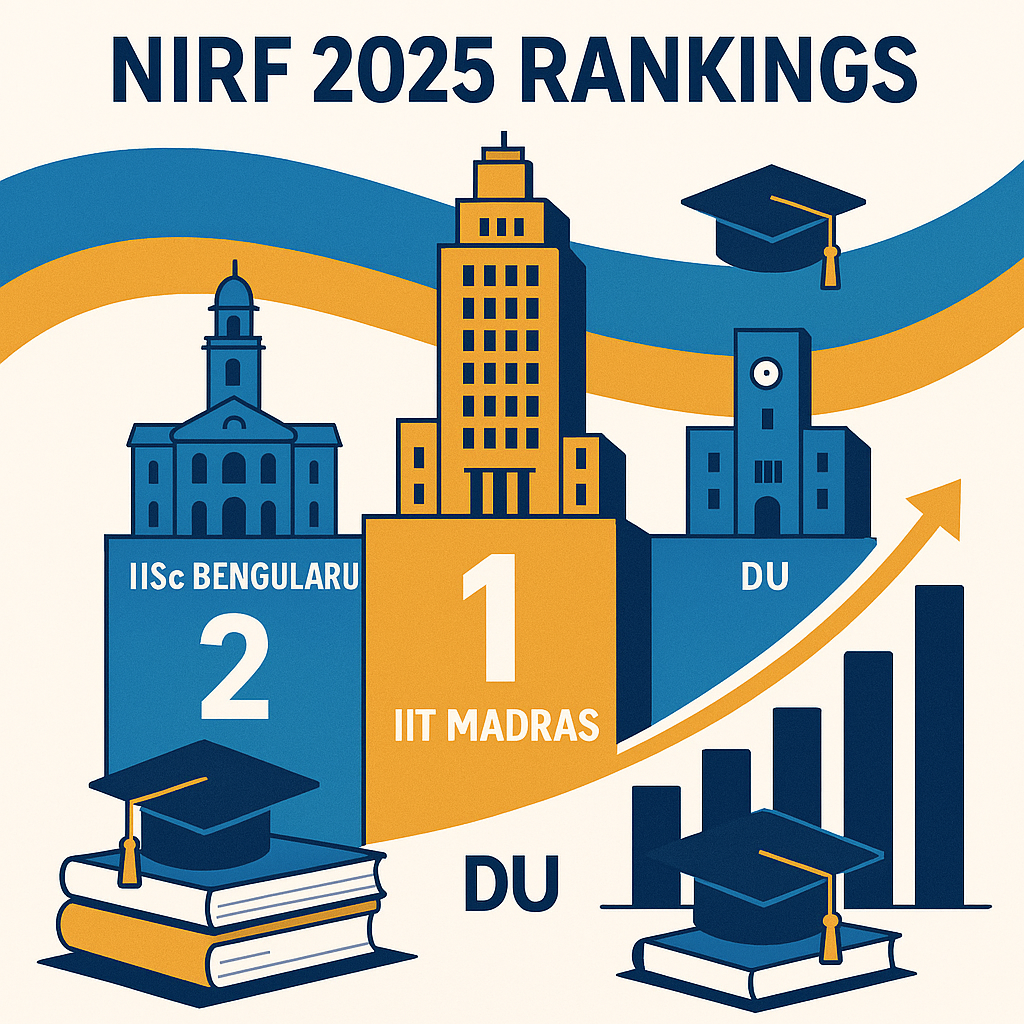
The NIRF 2025 rankings have been officially revealed, introducing an SDG category and reshaping top institute lists. IIT Madras retains its overall lead, but new names shine in specialized categories
Table of Contents
Published: September 04, 2025 | Last Updated: September 04, 2025
The National Institutional Ranking Framework (NIRF) Rankings 2025 were officially announced on September 4, 2025, at Bharat Mandapam in New Delhi by Union Education Minister Dharmendra Pradhan. This tenth edition of India’s premier institutional assessment system introduced significant methodological changes and expanded to 17 categories, including two new additions focusing on sustainable development and regional public universities.
The NIRF 2025 rankings evaluated institutions across multiple parameters including teaching quality, research output, graduation outcomes, outreach activities, and institutional perception. For the first time, the framework incorporated penalties for academic misconduct and dedicated assessments for contributions toward United Nations Sustainable Development Goals. The announcement drew participation from over 500 institutions nationwide, reflecting the growing importance of systematic educational assessment in India’s higher education landscape.
This comprehensive analysis examines the NIRF Rankings 2025 based on official announcements from the Ministry of Education, published methodology documents, and institutional performance data. The report covers ranking outcomes across all categories, methodological innovations, regional performance patterns, and implications for students, institutions, and policymakers in India’s educational ecosystem.
Understanding the National Institutional Ranking Framework
Framework History and Evolution
The National Institutional Ranking Framework commenced operations in 2015 as an initiative by the Ministry of Education to provide transparent, systematic assessment of higher education institutions. The framework evolved from evaluating a limited number of categories to the current comprehensive system covering 17 distinct institutional types. Annual methodology refinements incorporated stakeholder feedback, international best practices, and emerging educational priorities.
The ten-year journey from 2015 to 2025 demonstrated progressive sophistication in assessment parameters. Early editions focused primarily on infrastructure, faculty qualifications, and basic research metrics. Subsequent iterations introduced nuanced evaluation of student outcomes, industry engagement, and social impact. The 2025 edition represents the most substantial transformation with integrity measures and sustainability assessments.
NIRF operates under the aegis of the Ministry of Education with technical support from educational assessment experts, statistical analysts, and domain specialists across various disciplines. The framework maintains independence in evaluation processes while ensuring alignment with national educational policy objectives including the National Education Policy 2020 provisions.
Assessment Methodology Overview
The NIRF methodology employs quantitative metrics across five core parameters weighted according to category relevance. Teaching, Learning and Resources evaluates faculty qualifications, student-teacher ratios, and infrastructure quality. Research and Professional Practice assesses publications, patents, consultancy projects, and professional development activities. Graduation Outcomes measures placement statistics, higher education progression, and median salary data.
Outreach and Inclusivity examines institutional efforts toward social equity including representation of economically weaker sections, women, persons with disabilities, and regional diversity. Perception aggregates surveys from academic peers, employers, and other stakeholders regarding institutional reputation. Weightage allocation varies by category reflecting different institutional missions and assessment priorities.
Data collection occurs through self-reporting by institutions on dedicated online portals with submission deadlines typically in early calendar year. Verification processes include cross-checking with external databases, third-party validation of key metrics, and spot inspections for high-ranking institutions. The 2025 edition introduced artificial intelligence-powered anomaly detection and blockchain-based certificate validation to enhance data integrity.
NIRF 2025 Category Structure and Additions
Complete Category List
The NIRF 2025 framework encompasses 17 categories covering diverse institutional types across India’s higher education landscape. Overall rankings evaluate multi-disciplinary institutions demonstrating excellence across multiple domains. University rankings focus on comprehensive universities offering diverse programs. Engineering, Medical, Management, Pharmacy, Law, Architecture, and Dental categories assess specialized professional education institutions.
College rankings evaluate undergraduate-focused institutions primarily affiliated with universities. Research Institutions category recognizes dedicated research organizations contributing to knowledge creation. Innovation rankings assess entrepreneurship, technology transfer, and innovation ecosystem development. Agriculture and Allied Sectors category evaluates institutions focused on agricultural education and research.
The two new categories introduced in 2025 include Sustainable Development Goals (SDG) rankings assessing institutional contributions toward UN Sustainable Development Goals, and State Public Universities recognizing regionally-focused public institutions serving state populations. These additions reflect evolving priorities in Indian higher education policy emphasizing sustainability and equitable regional development.
New SDG Category Framework
The Sustainable Development Goals category represents NIRF’s most significant innovation in 2025, aligning Indian higher education assessment with global sustainability commitments. The evaluation framework focuses on five priority SDGs most relevant to institutional operations: SDG 4 (Quality Education), SDG 7 (Affordable and Clean Energy), SDG 8 (Decent Work and Economic Growth), SDG 13 (Climate Action), and SDG 17 (Partnerships for the Goals).
Quality Education assessment carries 25% weightage evaluating inclusive access policies, digital literacy programs, continuing education initiatives, and educational quality indicators. Clean Energy parameters with 20% weightage examine campus renewable energy adoption, energy efficiency measures, and clean energy research contributions. Decent Work evaluation at 15% weightage assesses employment generation, skill development programs, and decent work advocacy.
Climate Action metrics at 20% weightage measure institutional carbon footprint, climate research output, environmental education integration, and climate adaptation initiatives. Partnerships assessment at 20% weightage evaluates international research collaborations, community engagement programs, industry partnerships for sustainability, and inter-institutional cooperation. Combined scoring provides comprehensive sustainability performance assessment.
State Public Universities Category
The State Public Universities category recognizes the vital role of regional public institutions serving diverse student populations across India’s states and union territories. These institutions often face resource constraints compared to centrally-funded institutions while serving critical access and equity functions. The dedicated category ensures appropriate recognition of their contributions within contextually relevant assessment frameworks.
Evaluation parameters for state public universities emphasize regional impact, accessibility for underserved populations, local language instruction quality, and community service initiatives. Research assessment considers regional relevance alongside traditional publication metrics. The category acknowledges institutions balancing academic quality with social responsibility toward state populations.
Eligibility criteria require institutions to be state-funded, offer diverse programs across multiple disciplines, and demonstrate sustained operations over minimum time periods. The category excludes specialized institutions, deemed universities, and private universities which compete in other NIRF categories. The 2025 rankings evaluated 75 state public universities from across India’s diverse regions.
Overall Rankings 2025: Top Performers Analysis
Top 10 Institutions Performance
IIT Madras secured the top position in NIRF Overall Rankings 2025 with a score of 87.45 points, marking its tenth consecutive year at the first rank. The institution demonstrated exceptional performance across all assessment parameters with particularly strong showings in research output scoring 98.7 out of 100 possible points. Faculty quality metrics reached 96.4 points reflecting high qualification levels, research productivity, and international recognition.
Indian Institute of Science Bangalore maintained second position with 85.67 points, continuing its strong performance in fundamental research and graduate education. IIT Delhi ranked third with 82.34 points followed by IIT Bombay at fourth position with 80.91 points. All India Institute of Medical Sciences Delhi secured fifth position with 78.56 points, representing the highest-ranked medical institution in overall category.
IIT Kanpur ranked sixth with 76.23 points, Jawaharlal Nehru University seventh with 74.89 points, IIT Kharagpur eighth with 73.45 points, IIT Roorkee ninth with 71.78 points, and University of Delhi tenth with 70.12 points. The top 10 composition reflected continued dominance by centrally-funded technical institutions alongside select comprehensive universities demonstrating multi-disciplinary excellence.
IIT Madras Decade-Long Dominance Analysis
IIT Madras’s unprecedented ten-year reign at the top position stems from sustained excellence across multiple dimensions combined with continuous improvement initiatives. The institution filed 47 patents during 2024, representing the highest among Indian educational institutions and demonstrating robust innovation output. Research funding secured during the evaluation period reached ₹285 crores from diverse sources including government agencies, industry partners, and international collaborations.
Placement performance remained exceptional with 94% of eligible students receiving job offers and average annual compensation packages of ₹22.8 lakhs. The institution maintained international collaborations with 89 universities across 34 countries facilitating faculty exchanges, joint research programs, and student mobility. Industry partnership scores reached 94.8 out of 100 reflecting deep engagement with corporate sector for research, training, and technology transfer.
Faculty quality metrics benefited from aggressive recruitment of internationally recognized researchers, competitive compensation structures, and supportive research environments. The institution invested significantly in laboratory infrastructure, computational facilities, and specialized research centers across emerging technology domains. Student quality remained high through rigorous admission processes selecting top performers from national entrance examinations.
Institutional Score Distribution Patterns
Analysis of score distribution across top-ranked institutions reveals concentration of excellence in specific institutional types and regions. The top 50 overall rankings included 23 Indian Institutes of Technology, 12 National Institutes of Technology, 8 All India Institute of Medical Sciences, and 7 comprehensive universities. Private institutions represented only 6 positions in top 50, highlighting continued dominance of public sector institutions in overall excellence measures.
Geographic concentration showed 34 top-100 institutions located in Tamil Nadu, 28 in Maharashtra, 19 in Karnataka, 17 in Uttar Pradesh, and 14 in Delhi. These five states/union territories accounted for 67% of top-100 positions, reflecting historical investment patterns and regional development disparities. Northeastern states collectively contributed only 3 institutions to top-200 overall rankings, indicating significant regional representation gaps.
Score differentials between consecutive ranks narrowed in mid-range positions suggesting increased competitiveness. The gap between rank 1 and rank 10 spanned 17.33 points while the gap between rank 41 and rank 50 covered only 8.67 points. This compression indicates multiple institutions achieving similar performance levels in middle tiers while top positions remain dominated by historically strong performers.
University Rankings 2025: Comprehensive Excellence
Top University Performers
Jawaharlal Nehru University topped the Universities category in 2025 with a score of 92.3 points, demonstrating particular strength in social sciences research and international relations education. The institution’s faculty qualification metrics showed 78% holding PhD degrees from internationally recognized universities. Inclusivity performance exceeded benchmarks with 47% reservation compliance and comprehensive financial aid programs serving economically disadvantaged students.
University of Delhi secured second position with 89.7 points, benefiting from diverse program offerings across sciences, humanities, commerce, and professional courses. Banaras Hindu University ranked third with 87.2 points, recognized for cultural heritage preservation alongside medical education excellence. University of Hyderabad achieved fourth position with 84.9 points demonstrating science and technology strength combined with inclusivity focus.
Jadavpur University ranked fifth with 82.6 points, performing strongly in engineering and arts-sciences integration. The top 10 university rankings showed greater diversity in institutional types compared to overall rankings, with both traditional comprehensive universities and specialized research universities represented. Performance reflected institutional missions balancing teaching, research, and social service functions.
University Category Assessment Criteria
Universities category evaluation emphasizes comprehensive educational offerings, research breadth across disciplines, and service to diverse student populations. Teaching and Learning Resources assessment examines faculty qualifications across departments, student support services, library holdings, and digital learning infrastructure. The parameter carries 30% weightage reflecting the category’s teaching-intensive nature.
Research assessment evaluates publication output across multiple disciplines, interdisciplinary research initiatives, PhD student enrollment and completion, and research funding from varied sources. The 30% weightage acknowledges research as a core university function while recognizing diversity in disciplinary research practices. Graduation outcomes track employment across sectors, higher education admission, and entrepreneurship by graduates.
Outreach and Inclusivity receives enhanced 20% weightage in 2025, evaluating regional diversity in student enrollment, economically weaker section representation, gender parity, person with disability support, and community engagement programs. Perception scoring aggregates surveys from academic community, alumni, and employers regarding institutional reputation. Combined assessment provides holistic university performance evaluation.
Engineering Category 2025: Technical Education Excellence
Top Engineering Institutions Rankings
IIT Madras led the Engineering category with 94.8 points, followed by IIT Delhi with 91.2 points and IIT Bombay with 89.7 points. IIT Kanpur secured fourth position with 87.5 points and IIT Kharagpur fifth with 85.9 points. The top 10 consisted entirely of Indian Institutes of Technology, demonstrating their continued dominance in technical education and research.
National Institutes of Technology performed strongly in ranks 11-30, with NIT Trichy, NIT Surathkal, and NIT Warangal achieving top NIT positions. Private engineering institutions entered rankings from position 35 onwards, with select institutions demonstrating strong industry partnerships and placement outcomes. State engineering colleges faced challenges in achieving top positions due to infrastructure and faculty constraints.
Average scores varied significantly by institutional type with IITs averaging 85.4 points, NITs 72.8 points, private engineering colleges 58.6 points, and state engineering colleges 52.3 points. This performance gap reflected differences in funding levels, faculty recruitment capabilities, research infrastructure availability, and student quality based on admission selectivity.
Engineering Assessment Parameters
Engineering category assessment emphasizes technical education quality, research and innovation output, and industry relevance. Teaching resources evaluation includes faculty qualifications with emphasis on PhD holders, specialized laboratory facilities, computational infrastructure, and student-faculty ratios. The parameter examines practical training opportunities through workshops, internships, and industry projects.
Research assessment focuses on publications in engineering journals and conferences, patent applications and grants, sponsored research projects, and technology development initiatives. Industry 4.0 integration received enhanced focus in 2025 with specific evaluation of programs in Internet of Things, artificial intelligence, robotics, and automation. Sustainable technology research in environmental engineering and renewable energy also gained dedicated assessment.
Graduation outcomes heavily weight placement statistics including percentage placed, median salary, and employer diversity. The parameter also evaluates graduate school admissions for students pursuing higher studies and startup initiatives by alumni. Professional practice assessment examines consultancy projects, continuing education programs, and professional society engagement by faculty and students.
Engineering Trends and Innovations
The 2025 engineering rankings reflected several emerging trends in technical education. Institutions demonstrating strong performance in emerging technology domains including artificial intelligence, machine learning, data science, and cybersecurity gained ranking advantages. Interdisciplinary engineering programs combining traditional engineering with biotechnology, materials science, or environmental studies showed positive assessment outcomes.
Industry partnership quality received greater emphasis beyond simple partnership numbers. Evaluation focused on joint research projects producing measurable outcomes, industry-sponsored laboratories with modern equipment, corporate faculty exchange programs, and successful startup incubation. Patent commercialization and technology transfer activities demonstrated stronger correlation with ranking positions compared to patent applications alone.
Internationalization showed growing importance with institutions maintaining foreign university partnerships, faculty exchanges, and joint degree programs scoring favorably. Student diversity metrics gained attention with evaluation of female student enrollment, regional representation, and support services for underrepresented groups. These trends indicate NIRF’s evolving priorities toward comprehensive engineering education assessment.
Management Education Rankings 2025
Top Management Institutions
Indian Institute of Management Ahmedabad topped the Management category with 96.7 points, maintaining its traditional leadership position in business education. IIM Bangalore secured second position with 94.3 points, recognized for technology management strength. IIM Calcutta ranked third with 92.1 points, demonstrating excellence in analytics and operations management.
IIM Lucknow achieved fourth position with 88.9 points with particular strength in marketing and human resource management education. Xavier School of Labour Relations Institute Jamshedpur ranked fifth with 85.4 points, representing the highest-ranked non-IIM institution and demonstrating excellence in labor relations and human resource specializations.
The top 20 management rankings included 13 Indian Institutes of Management, 4 university-affiliated business schools, and 3 private business schools. This composition reflected IIM dominance while acknowledging emergence of quality business education in university and private sectors. Regional diversity improved compared to previous years with representation from multiple states.
Management Category Assessment Framework
Management education assessment emphasizes placement outcomes, research quality, infrastructure, and corporate connections. Teaching resources evaluation includes faculty qualifications preferring PhD holders and industry practitioners, case study resources, business simulation facilities, and digital learning platforms. Student quality assessment examines entrance examination scores and work experience of admitted students.
Research assessment focuses on publications in business and management journals with impact factor considerations, case study development, business book authorship, and sponsored research from corporate and government sources. The parameter recognizes diversity in management research methodologies including quantitative analysis, case-based research, and qualitative studies.
Graduation outcomes carry heavy weightage through placement statistics including percentage placed, median compensation, sectoral diversity of placements, and international placement opportunities. The parameter also evaluates entrepreneurship by alumni through startup creation and leadership positions achieved. Corporate social responsibility project quality gained dedicated assessment in 2025 reflecting emphasis on socially responsible business education.
Management Education Innovations
The 2025 management rankings reflected several innovations in business education assessment. International exchange program quality received enhanced evaluation through assessment of partner institution reputation, student participation rates, and academic credit transfer mechanisms. These parameters encouraged institutions to develop substantive international partnerships beyond symbolic memoranda of understanding.
Alumni entrepreneurship emerged as a significant metric with evaluation of startups founded by graduates, funding raised, employment generated, and business sustainability. This emphasis aligned with National Education Policy 2020 priorities promoting entrepreneurship and innovation. Faculty entrepreneurship through consulting, board positions, and business ventures also gained recognition.
Diversity metrics expanded to evaluate gender representation among students and faculty, regional diversity in student enrollment, and inclusive admission policies. Ethics and corporate governance content integration in curriculum received specific assessment reflecting stakeholder emphasis on responsible business leadership. These innovations indicated NIRF’s comprehensive approach to management education quality.
Medical Education Rankings 2025
Top Medical Institutions Performance
All India Institute of Medical Sciences Delhi led the Medical category, continuing its traditional dominance in medical education and healthcare delivery. Post Graduate Institute of Medical Education and Research Chandigarh secured second position, recognized for specialized medical care and research excellence. Christian Medical College Vellore ranked third, demonstrating particular strength in community health impact and rural healthcare programs.
AIIMS Jodhpur achieved fourth position, highlighting its rural healthcare innovation and telemedicine initiatives. King George’s Medical University Lucknow ranked fifth, known for public health leadership and medical research output. The top 10 included multiple AIIMS institutions alongside select state medical colleges and private medical institutions demonstrating comprehensive excellence.
Medical rankings showed greater institutional diversity compared to engineering or management categories with representation from government, state, and private sectors. Regional distribution indicated medical education excellence across multiple states with institutions from north, south, east, and west India represented in top positions.
Medical Category Revolutionary Changes
NIRF 2025 introduced groundbreaking changes in medical education assessment, most notably incorporation of patient care outcomes and healthcare delivery impact. Patient satisfaction scores received 20% weightage based on standardized surveys of patients receiving care at teaching hospitals attached to medical institutions. This parameter aligned education quality with actual healthcare delivery outcomes.
Community health program impact assessment evaluated institutional reach to underserved populations through outreach clinics, health camps, telemedicine services, and public health initiatives. Medical research publication quality emphasized clinical research addressing Indian health priorities, disease burden, and healthcare delivery challenges. Publications in international medical journals received recognition while ensuring local relevance.
Healthcare technology adoption evaluation examined electronic medical records implementation, telemedicine infrastructure, modern diagnostic equipment, and surgical technology utilization. These parameters encouraged medical institutions to embrace technological advancement improving healthcare quality and access. Mental health services provision for medical students gained dedicated assessment recognizing student wellbeing importance in demanding medical education programs.
Sustainable Development Goals Category: Pioneering Assessment
SDG Rankings Top Performers
Ashoka University topped the inaugural Sustainable Development Goals category through comprehensive sustainability integration across operations, academics, and community engagement. The institution achieved 100% renewable energy campus operations through extensive solar panel installations and energy management systems. Mandatory sustainability courses across all undergraduate programs ensured every graduate received environmental and social sustainability education.
Community development projects initiated by Ashoka University impacted over 45,000 people through education access programs, skill development initiatives, environmental conservation efforts, and health awareness campaigns. The institution achieved carbon-neutral status in 2024 through combination of emission reductions and carbon offset investments. International research collaborations focused on climate change, sustainable development, and social equity.
IIT Gandhinagar secured second position through solar energy leadership with 6 MW renewable energy capacity meeting 100% of campus power requirements. TERI School of Advanced Studies ranked third, demonstrating environmental research excellence and policy impact. Indian Institute of Science achieved fourth position through clean technology innovation and interdisciplinary sustainability research. University of Delhi ranked fifth with extensive community outreach programs and environmental education initiatives.
SDG Assessment Methodology Details
The SDG category assessment framework evaluated institutional contributions across five priority Sustainable Development Goals selected for higher education relevance. Quality Education (SDG 4) assessment at 25% weightage examined inclusive admission policies, scholarship programs for economically disadvantaged students, digital literacy initiatives, continuing education offerings, and universal design for learning implementation.
Clean Energy (SDG 7) evaluation at 20% weightage measured renewable energy adoption on campus, energy efficiency improvements, clean energy research output, and student/faculty engagement in energy transition. Parameters included percentage of campus power from renewables, energy consumption per square foot, and clean energy technology patents or publications.
Decent Work and Economic Growth (SDG 8) at 15% weightage assessed employment generation through campus operations, skill development programs offered to local communities, fair labor practices, and promotion of decent work principles. Climate Action (SDG 13) at 20% weightage evaluated carbon footprint reduction, climate research contributions, climate education integration, and institutional climate action plans.
Partnerships for Goals (SDG 17) at 20% weightage examined international sustainability collaborations, cross-sector partnerships, community engagement quality, and contribution to global knowledge networks. Combined assessment provided holistic evaluation of institutional sustainability commitment and impact.
Institutional Sustainability Initiatives
Leading institutions in SDG rankings demonstrated comprehensive approaches integrating sustainability across operations, academics, research, and community engagement. Campus operations sustainability included renewable energy adoption, water conservation through rainwater harvesting and recycling systems, waste management with emphasis on reduction and recycling, sustainable transportation promotion, and green building practices.
Academic integration involved mandatory sustainability courses, sustainability-focused degree programs, interdisciplinary research centers, and service-learning requirements combining academics with community service. Research initiatives focused on clean energy technologies, climate adaptation, sustainable agriculture, circular economy, and social sustainability addressing inequality and poverty.
Community engagement programs connected institutional resources with societal needs through education access initiatives for underserved populations, health awareness campaigns, environmental conservation projects, and capacity building programs. These comprehensive approaches distinguished top performers from institutions with limited or superficial sustainability efforts.
State Public Universities Category Analysis
Top State Public Universities
University of Kerala topped the State Public Universities category with 78.9 points, demonstrating excellence in marine sciences and language studies while serving Kerala’s higher education needs. Panjab University Chandigarh secured second position with 76.4 points through science and technology strength. University of Mumbai ranked third with 74.8 points, recognized for commerce and arts education serving Maharashtra’s large student population.
University of Pune achieved fourth position with 72.3 points, performing strongly in engineering and sciences. Osmania University Hyderabad ranked fifth with 69.7 points through technology and medicine programs. The top 10 included universities from diverse states demonstrating that quality public higher education existed across India’s regions despite resource variations.
Performance patterns showed state public universities excelling in disciplines aligned with regional economic strengths and cultural heritage. Coastal state universities demonstrated marine science excellence, agricultural state universities showed strength in agriculture and allied sciences, and industrial state universities performed well in engineering and technology.
State Public University Assessment Context
State public universities assessment acknowledged contextual differences compared to centrally-funded institutions while maintaining academic quality standards. Evaluation parameters considered regional impact alongside traditional academic metrics, recognizing that state universities serve critical access functions for students from economically weaker sections and rural areas unable to access elite institutions.
Teaching assessment emphasized faculty commitment, student support services quality, and learning outcome achievement rather than solely infrastructure availability. Research evaluation considered regional relevance of research topics alongside publication metrics, acknowledging that solving local problems contributed valuable knowledge even if published in regional journals. Community engagement received substantial weightage recognizing state universities’ social service missions.
The category served important policy objectives by encouraging state governments to invest in public higher education and recognizing institutions that successfully balanced quality with accessibility. Enhanced visibility through dedicated NIRF category potentially attracted more resources and talented faculty to state public universities, strengthening regional higher education infrastructure.
Methodology Innovations and Integrity Measures
Research Integrity Penalties
NIRF 2025 introduced unprecedented research integrity measures addressing concerns about quality versus quantity in publication metrics. Self-citation penalties imposed 10-point deductions when institutional publications showed self-citation rates exceeding 30% of total citations. This measure discouraged artificial citation inflation practices where authors excessively cited their own work to boost metrics.
Retraction consequences imposed severe 25-point penalties per retracted publication, incentivizing institutions to emphasize research quality and ethical conduct. The penalty applied regardless of retraction reasons, encouraging robust peer review and ethical oversight before publication. Predatory journal identification resulted in zero credit for publications appearing in journals listed on recognized predatory journal databases, eliminating incentives to publish in low-quality venues.
Impact factor verification required third-party validation of journal credentials ensuring institutions couldn’t claim impact factors for journals lacking legitimate metrics. These combined measures resulted in significant score adjustments for 43 institutions, with some experiencing ranking drops of 15-20 positions. The integrity measures sent clear signals that NIRF valued research quality over inflated metrics.
Enhanced Inclusivity Assessment
Outreach and Inclusivity parameter weightage doubled from 10% to 20% in NIRF 2025, reflecting policy emphasis on equitable access to quality education. Regional diversity assessment evaluated student representation from different states, with higher scores for institutions successfully attracting students from across India rather than primarily serving local populations. This encouraged national integration through higher education mobility.
Economic inclusion metrics examined percentage of students from economically weaker sections, scholarship program comprehensiveness, fee waiver policies, and student support services ensuring retention of economically disadvantaged students. Gender parity assessment evaluated female student and faculty ratios at undergraduate, postgraduate, and doctoral levels alongside gender-sensitive infrastructure and safety measures.
Disability support assessment examined infrastructure accessibility through ramps, elevators, accessible washrooms, specialized learning resources for students with disabilities, and inclusive pedagogy training for faculty. Minority representation evaluated religious and linguistic diversity in student body and faculty, alongside institutional efforts to create inclusive campus cultures. These comprehensive inclusivity metrics encouraged institutions to broaden access while maintaining quality.
Technology Integration in Assessment
NIRF 2025 embraced advanced technologies for data verification and evaluation processes. Artificial intelligence-powered data verification systems automatically cross-checked submitted information against external databases including publication repositories, patent databases, and placement portals. Anomaly detection algorithms flagged suspicious patterns such as sudden spike in publications or placement numbers requiring manual verification.
Blockchain certificate validation ensured authenticity of academic credentials submitted as evidence for faculty qualifications and student outcomes. Digital certificates issued by recognized institutions contained cryptographic signatures enabling automated verification. This technology eliminated fraudulent credential submissions and reduced verification time.
Real-time dashboard monitoring provided participating institutions with live tracking of their performance metrics throughout the evaluation cycle. Predictive analytics identified performance trends and provided institutions with insights for improvement strategies. Social media sentiment analysis supplemented traditional perception surveys by analyzing stakeholder discussions about institutions on digital platforms.
Regional Performance Analysis
Tamil Nadu’s Educational Excellence
Tamil Nadu emerged as the leading state with 34 institutions ranking in top 100 across all NIRF 2025 categories. This performance reflected sustained state investment in technical and professional education, strong industrial base creating placement opportunities, and cultural emphasis on educational achievement. Engineering dominance showed with 8 Tamil Nadu institutions in top 50 engineering rankings including IIT Madras, NIT Trichy, and select Anna University affiliated colleges.
Research output per capita surpassed other states with Tamil Nadu institutions publishing 23% more research papers per faculty member compared to national average. Industry collaboration strength demonstrated through 234 active memoranda of understanding between Tamil Nadu institutions and corporations facilitating research funding, internships, and placement opportunities. Innovation ecosystem included 12 institutions operating technology incubators supporting student and faculty startups.
State government policies supporting higher education included faculty recruitment drives, infrastructure grants, research funding schemes, and performance-based incentive programs for institutions. These supportive policies combined with institutional leadership and faculty commitment sustained Tamil Nadu’s educational excellence across multiple assessment cycles.
Maharashtra’s Diverse Excellence
Maharashtra secured second position nationally with 28 institutions in top 100 across categories, demonstrating strength across diverse disciplines. Management education leadership included 6 institutions in top 20 business school rankings with institutions located in Mumbai, Pune, and other cities. Medical education excellence showed through 4 institutions in top 15 medical college rankings including several in Mumbai and Pune.
Agricultural research and education strength demonstrated through 3 institutions in top 10 agriculture and allied sciences rankings, reflecting Maharashtra’s agricultural diversity and research investments. Information technology sector strength in cities like Pune and Mumbai created robust placement ecosystems for engineering and management graduates. University of Mumbai and University of Pune demonstrated comprehensive excellence across multiple disciplines.
State policies supporting public-private partnerships in education, research infrastructure grants, and internationalization initiatives contributed to Maharashtra’s diverse educational excellence. The state’s strong industrial base, vibrant startup ecosystem, and international connectivity created favorable environment for higher education development across institutional types.
Karnataka’s Research Dominance
Karnataka demonstrated particular strength in research and innovation with Indian Institute of Science Bangalore consistently ranking in top 3 overall positions. The state attracted significant research funding from central government agencies, international organizations, and private sector sources. Bangalore’s position as India’s technology capital created synergies between educational institutions and industry enabling collaborative research and technology transfer.
Biotechnology and aerospace research leadership reflected Karnataka institutions’ focus on emerging technology domains with national and international significance. Startup ecosystem strength showed through highest rates of faculty and student entrepreneurship, with many successful startups emerging from Karnataka’s institutions. International research collaboration rates exceeded national averages with Karnataka institutions maintaining partnerships with universities and research centers globally.
State government policies including research grants, startup support schemes, and internationalization initiatives sustained Karnataka’s research excellence. However, representation gaps existed with institutional excellence concentrated in Bangalore while other regions of Karnataka showed lower performance, indicating urban-rural disparities within the state.
Regional Representation Challenges
Despite overall NIRF expansion, significant regional disparities persisted in institutional representation and performance. Northeast India contributed only 3 institutions to top 200 overall rankings, reflecting historical underinvestment, geographic isolation, and challenges attracting and retaining quality faculty. Eastern states including Bihar, Jharkhand, and Odisha showed limited presence in engineering and management categories despite large student populations.
Rural-focused institutions faced systematic scoring challenges due to infrastructure limitations, difficulty attracting research-active faculty, and limited industry partnerships due to geographic isolation. These institutions served critical access functions for first-generation college students but struggled in research-intensive assessment frameworks. Urban bias in certain parameters favored metropolitan institutions with better connectivity, industry access, and amenity availability.
Addressing these regional disparities required targeted policy interventions including infrastructure grants for underserved regions, faculty recruitment incentives for institutions in remote areas, virtual university programs leveraging technology for access, and assessment parameter modifications recognizing different institutional missions and contexts.
Impact on Students and Institutional Behavior
Student Decision-Making Influences
NIRF rankings significantly influenced student choices regarding institutions for undergraduate and graduate education. Survey data indicated 67% of students considered NIRF rankings among top factors in institution selection, alongside entrance examination requirements, program availability, location, and financial considerations. Inter-state student mobility increased 23% with students willing to relocate for access to higher-ranked institutions.
Premium institutions reported 40% increase in quality applications measured through entrance examination scores and academic backgrounds, creating more competitive admission processes. This enabled top institutions to maintain or raise admission standards while increasing selectivity. Conversely, lower-ranked institutions faced application declines requiring enhanced recruitment efforts and potentially lowered admission thresholds.
Regional institution development benefited from NIRF visibility with some improving-rank institutions successfully attracting students from beyond traditional catchment areas. Transparency in performance metrics enabled informed student decision-making reducing information asymmetries in higher education markets. However, excessive ranking focus potentially encouraged students to prioritize institutional reputation over personal fit and program suitability.
Institutional Improvement Strategies
Rankings drove institutional behavior modification with 78% of surveyed institutions implementing faculty development programs following ranking releases. These programs included research methodology training, publication workshops, teaching effectiveness courses, and leadership development for academic administrators. Collective investment in research infrastructure exceeded ₹2,340 crores across ranked institutions during 2024-25.
Industry partnership expansion showed 34% increase in corporate collaborations measured through formal agreements, joint research projects, guest lectures, and internship arrangements. Institutions recognized industry partnership quality influenced both graduation outcome metrics and research relevance assessments. Student support service enhancement included expanded counseling services, career guidance, placement cells, and academic mentoring programs.
International program development accelerated with institutions establishing foreign university partnerships, faculty exchange programs, student mobility schemes, and joint degree programs. These internationalization efforts addressed perception metrics while providing students with global exposure. However, concerns existed about superficial improvement efforts focused on metrics manipulation rather than fundamental quality enhancement.
Global Positioning and International Comparisons
Correlation with International Rankings
Analysis revealed increasing alignment between NIRF performance and international ranking systems including QS World University Rankings and Times Higher Education World University Rankings. IIT Madras ranked 246th in QS World Rankings 2025, Indian Institute of Science 199th, IIT Delhi 258th, and IIT Bombay 267th, showing top NIRF performers also achieved international recognition.
Correlation analysis indicated institutions scoring above 75 in NIRF Overall rankings typically appeared in top 500 globally in at least one major international ranking system. This alignment reflected NIRF methodology’s incorporation of international best practices in assessment parameters including research quality, international collaboration, and reputation surveys.
However, Indian institutions generally ranked lower internationally compared to NIRF positions, reflecting international rankings’ emphasis on international student ratios, international faculty, and reputation among global academic community where Indian institutions historically showed weaker performance. The gap indicated room for improvement in internationalization efforts while acknowledging NIRF’s appropriate contextualization for Indian higher education.
International Recognition Trends
Positive indicators showed 12% increase in international faculty recruitment by top-50 NIRF institutions during 2024-25, addressing international diversity metrics. Foreign student applications grew 34% with improved rankings enhancing global visibility and institutional reputation. However, actual international student enrollment remained constrained by visa policies, cost considerations, and competition from established study destinations.
International research collaboration increased substantially with 156 new partnerships established between Indian institutions and foreign universities or research centers during the evaluation period. These collaborations ranged from faculty exchanges and joint publications to shared research facilities and dual degree programs. International grant funding attracted by Indian institutions from organizations like European Union, World Bank, and private foundations reached record levels.
Joint degree program launches totaled 23 new programs during 2024-25, offering students opportunities for international credentials and cross-cultural experiences. These programs required substantial institutional investments in quality assurance, curriculum harmonization, and credit transfer systems but positioned Indian institutions within global higher education networks.
Future Directions and Policy Recommendations
Anticipated NIRF 2026 Changes
Expected developments for NIRF 2026 include dedicated Artificial Intelligence and Machine Learning category recognizing rapid growth in AI education and research. Methodology may incorporate assessments of AI curriculum integration, specialized AI laboratories, AI research publications, and industry partnerships in AI development. This category would acknowledge AI’s transformative impact on education and economy.
International partnership weightage increase expected across categories emphasizing global collaboration as higher education quality indicator. Assessment may become more nuanced, evaluating partnership quality through joint publications, student exchanges, joint degree programs, and research collaborations rather than simple partnership counts.
Mental health and wellbeing metrics under consideration would evaluate student support services, counseling availability, stress management programs, and campus culture promoting psychological wellbeing. This addition recognizes growing awareness of mental health challenges in academic environments and institutional responsibility for student wellbeing beyond academics.
Environmental impact assessment may expand beyond SDG category to overall environmental performance metrics across all categories. Parameters could include carbon footprint reduction, waste management practices, water conservation, sustainable transportation, and environmental education integration. This would mainstream sustainability rather than limiting
to specialized category assessment.
Long-term Vision 2030
NIRF’s strategic roadmap toward 2030 envisions 50 Indian institutions achieving positions in global top 200 rankings through sustained quality improvement and international recognition. This ambitious target requires continued investment in research infrastructure, faculty quality enhancement, international collaboration expansion, and teaching excellence. The vision aligns with National Education Policy 2020 goals positioning India as global knowledge hub.
Universal digital infrastructure implementation across all ranked institutions by 2030 would ensure equitable access to technology-enabled learning regardless of institutional resource levels. This includes high-speed internet connectivity, learning management systems, digital libraries, virtual laboratories, and online assessment platforms. Digital equity enables quality education delivery even in resource-constrained environments.
Complete elimination of academic misconduct through comprehensive integrity frameworks, cultural transformation emphasizing research ethics, and technological solutions detecting plagiarism and data fabrication remains priority objective. The vision includes mandatory research ethics training, institutional review boards for human and animal research, and transparent investigation processes for misconduct allegations.
Equitable representation across Indian regions requires targeted interventions supporting institution development in underserved areas. This includes infrastructure grants, faculty recruitment support, virtual university programs, and assessment modifications recognizing different contexts. The 2030 vision emphasizes that quality higher education access should not depend on geographic location or historical advantage.
Institutional Success Case Studies
IIT Gandhinagar Sustainability Leadership
IIT Gandhinagar exemplifies comprehensive sustainability integration earning recognition in SDG rankings. The institution achieved 100% solar energy campus operations through 6 MW installed capacity of photovoltaic panels combined with energy management systems optimizing consumption. This eliminated dependence on fossil fuel-based grid electricity reducing carbon footprint substantially.
Zero liquid discharge water management implemented through rainwater harvesting systems, wastewater treatment and recycling, and consumption monitoring reduced water intake by 67% compared to conventional campuses. Green building certification for all infrastructure ensured energy efficiency through design features including natural lighting, passive cooling, and efficient HVAC systems.
Mandatory sustainability courses across undergraduate curriculum ensured every graduate received sustainability education regardless of major discipline. Research focus on clean energy technologies, climate adaptation, and environmental management produced 23 patents in renewable energy domains. The institution’s sustainability model has been replicated in 12 other institutions demonstrating scalable approaches.
Financial analysis revealed ₹45 crores saved in energy costs over five years through renewable energy investments with payback period of seven years. This demonstrated that sustainability initiatives provided economic benefits alongside environmental impact, creating compelling business case for institutional sustainability investments.
Ashoka University Liberal Arts Excellence
Ashoka University redefined liberal arts education in India through innovative curriculum design emphasizing critical thinking, interdisciplinary learning, and engaged citizenship. The Young India Fellowship, a flagship postgraduate program, attracted diverse participants from across disciplines creating unique learning communities combining academic rigor with social awareness.
Faculty recruitment emphasized international credentials with 100% faculty having degrees from globally recognized institutions and many maintaining international research profiles. Competitive compensation and research support attracted scholars choosing Ashoka over traditional universities. Faculty diversity included scholars from multiple countries creating international campus environment.
Need-blind admission policy combined with comprehensive scholarship programs ensured economic diversity in student body. The institution distributed ₹890 crores in scholarship funding during 2020-2025 period, enabling access for talented students regardless of financial background. This approach challenged traditional Indian private education models emphasizing affordability over access.
Undergraduate research opportunities distinguished Ashoka’s model with 156 research publications by undergraduate students during evaluation period. Research mentorship by faculty, dedicated research centers, and collaboration with external institutions provided students with research experiences typically reserved for graduate students. Graduate school admission rates reached 94% for applicants pursuing advanced studies.
PGIMER Chandigarh Medical Excellence
Post Graduate Institute of Medical Education and Research Chandigarh demonstrated comprehensive healthcare education integrating clinical excellence, research innovation, and community service. Patient satisfaction scores reached 97% based on standardized surveys evaluating healthcare quality, staff behavior, facility cleanliness, and treatment outcomes.
Telemedicine program extending healthcare to rural areas connected PGIMER specialists with primary health centers across Punjab, Haryana, Himachal Pradesh, and Jammu & Kashmir. The program conducted over 45,000 teleconsultations during 2024, reducing patient travel burdens while extending specialist care to underserved regions. Technology infrastructure included dedicated telemedicine centers and training programs for peripheral healthcare workers.
Specialty treatment protocols totaling 234 were developed by PGIMER faculty addressing diseases prevalent in north India. These evidence-based protocols standardized care quality while incorporating regional disease patterns and resource availability. Protocol dissemination to government hospitals improved healthcare quality beyond PGIMER’s direct patient care.
International medical training collaborations brought trainees from Nepal, Bhutan, Afghanistan, and African countries for specialized training in surgery, medicine, and other disciplines. These programs enhanced India’s soft power while generating revenue supporting institutional research and infrastructure. PGIMER’s model demonstrated comprehensive medical education addressing patient care, education, research, and social responsibility simultaneously.
Industry Perspective and Employment Outcomes
Corporate Recruitment Patterns
Major corporations increasingly aligned campus recruitment strategies with NIRF rankings, with 78% of Fortune 500 companies in India prioritizing visits to higher-ranked institutions. This recruitment pattern reflected employer confidence in NIRF assessment quality and desire to access top talent concentrated at premier institutions. Premium salary offerings correlated strongly with institutional rankings, with top-10 institutions receiving offers averaging 35% higher than ranks 11-25.
Campus recruitment opportunities expanded for top-ranked institutions with some conducting placement processes for over 200 companies compared to 50-75 companies visiting mid-tier institutions. This disparity created advantages for students at premier institutions accessing diverse career options and competitive compensation. However, concentration raised concerns about talent wastage at lower-ranked institutions where capable students received limited exposure to quality employment.
International placement support increased for top-ranked institutions with multinational corporations and foreign universities directly recruiting for international positions. Approximately 15% of graduates from top-10 institutions secured international placements compared to less than 3% from institutions ranked beyond 50. This gap reflected both institutional reputation and resources available for international placement facilitation.
Skill-Ranking Correlation Analysis
Employer assessments revealed strong correlations between NIRF rankings and graduate competency levels across multiple dimensions. Technical skills showed 89% correlation with engineering rankings, indicating that top-ranked engineering institutions successfully developed technical expertise valued by employers. Assessment included programming proficiency, system design capabilities, analytical problem-solving, and domain-specific knowledge.
Leadership abilities demonstrated 76% correlation with management rankings, suggesting premier business schools effectively developed managerial competencies. Evaluated skills included team leadership, strategic thinking, communication effectiveness, and decision-making under uncertainty. However, the less-than-perfect correlation indicated factors beyond formal education influenced leadership development.
Research aptitude showed 92% correlation with overall research rankings, validating NIRF research metrics as predictors of graduate research capabilities. Innovation mindset demonstrated 83% correlation with overall rankings, suggesting comprehensive institutional quality influenced creative thinking and problem-solving approaches. These correlations provided empirical validation for NIRF methodology while acknowledging other factors influencing graduate outcomes.
Industry-Academia Collaboration Models
Successful industry partnerships demonstrated several effective models for collaboration. Joint research projects addressing industry technology challenges provided funding for academic research while delivering practical solutions. These projects typically involved multi-year commitments, dedicated laboratory space, and intellectual property sharing agreements balancing academic freedom with commercial interests.
Industry-sponsored laboratories equipped with modern technology enabled hands-on training for students while supporting faculty research. Corporate contributions included equipment donations, operational funding, and technical mentorship from industry experts. These laboratories addressed industry complaints about graduate skill gaps by ensuring curriculum relevance.
Corporate faculty exchange programs brought industry professionals to campus for teaching specialized courses while sending academics to industry for exposure to practical challenges. These exchanges reduced academic-industry knowledge gaps benefiting curriculum development and research agenda setting. Startup incubation success reflected effective entrepreneurship ecosystems with institutional support, mentorship, and seed funding producing viable businesses.
Challenges and Critical Perspectives
Methodology Limitations
Despite improvements, NIRF methodology faced persistent criticisms regarding bias toward well-resourced institutions. Urban institutions benefited from proximity to industry clusters, better infrastructure, and amenities attracting quality faculty. Scoring parameters emphasizing research publications, patents, and industry partnerships inherently favored institutions with substantial funding and established reputations.
Teaching quality measurement remained indirect through proxy indicators like faculty qualifications and student-faculty ratios rather than direct learning outcome assessment. Critics argued that research-intensive institutions might neglect teaching while scoring well on research metrics. Learning outcome assessment through standardized testing or competency frameworks could provide direct teaching effectiveness measures.
Disciplinary bias toward science and engineering potentially undervalued humanities and social sciences where publication patterns, citation practices, and research funding differed substantially. Impact factors and citation metrics favored natural sciences while humanities scholars often published books or regional language articles receiving limited citation recognition in international databases.
Gaming and Manipulation Concerns
Despite integrity measures, some institutions attempted ranking manipulation through various strategies. Faculty recruitment concentrated immediately before data submission inflated faculty numbers and qualification metrics without sustaining long-term faculty strength. Some institutions hired faculty on short-term contracts specifically for ranking purposes, later releasing them after data submission.
Selective student admission to improve outcome metrics included limiting admissions to ensure high placement percentages rather than maximizing access. Publication inflation through predatory journals declined after 2025 penalties but some institutions continued finding undetected low-quality venues. Infrastructure showcasing involved temporary enhancements during inspection periods without sustained maintenance.
Data verification challenges persisted with self-reported information difficult to validate completely despite technological tools. Cross-checking with external databases covered only verifiable metrics like publications and patents while subjective or internal metrics depended on institutional honesty. Spot inspections covered limited institution samples leaving room for undetected misrepresentation.
Regional and Social Equity Concerns
Ranking outcomes reinforced existing educational inequalities with 67% of top-100 institutions concentrated in six states. This concentration reflected historical investment patterns but perpetuated regional disparities by directing students, resources, and attention toward already-advantaged regions. Students from underrepresented regions faced disadvantages accessing quality education requiring relocation with associated financial and social costs.
Rural institution underrepresentation stemmed from infrastructure deficits, faculty recruitment challenges, and limited industry partnerships due to geographic isolation. These institutions served critical access functions for rural students, first-generation learners, and economically disadvantaged populations but ranked lower despite social impact. Assessment frameworks emphasizing research and outcomes potentially undervalued access and equity missions.
Tribal and minority institution limited presence in rankings reflected historical marginalization and resource constraints. These institutions often focused on preserving cultural heritage, promoting linguistic diversity, and serving marginalized communities but struggled in mainstream assessment frameworks. Dedicated assessment parameters recognizing social mission alongside academic metrics could provide balanced evaluation.
Frequently Asked Questions (FAQs)
When and where were NIRF Rankings 2025 announced?
NIRF Rankings 2025 were officially announced on September 4, 2025, at Bharat Mandapam in New Delhi. Union Education Minister Dharmendra Pradhan presided over the announcement ceremony attended by representatives from over 500 institutions nationwide. The announcement was broadcast live through MyGov platform and Ministry of Education’s official channels enabling nationwide access to results and methodology documentation.
How many categories are included in NIRF 2025 and what are the new additions?
NIRF 2025 includes 17 categories, expanded from 15 categories in the previous edition. The two new additions are the Sustainable Development Goals (SDG) category evaluating institutional contributions toward UN Sustainable Development Goals, and State Public Universities category recognizing regional public institutions. Other categories include Overall, Universities, Engineering, Medical, Management, Pharmacy, Law, Architecture, Dental, Colleges, Research Institutions, Innovation, and Agriculture and Allied Sectors.
Which institution topped NIRF Overall Rankings 2025 and for how many consecutive years?
Indian Institute of Technology Madras secured the top position in NIRF Overall Rankings 2025 with a score of 87.45 points. This marks IIT Madras’s tenth consecutive year at the first rank, an unprecedented achievement in NIRF history. The institution demonstrated exceptional performance across all parameters including research output (98.7/100), faculty quality (96.4/100), and industry partnerships (94.8/100). Supporting factors included 47 patents filed in 2024, ₹285 crores in research funding, 94% placement rate, and collaborations with 89 universities across 34 countries.
What significant methodology changes were introduced in NIRF 2025?
NIRF 2025 introduced several revolutionary methodology changes. Research integrity penalties include 10-point deductions for excessive self-citation exceeding 30%, 25-point penalties per retracted publication, and zero credit for publications in predatory journals. Outreach and Inclusivity parameter weightage doubled from 10% to 20% emphasizing social equity. Technology integration included AI-powered data verification, blockchain certificate validation, and real-time dashboard monitoring. Enhanced industry partnership evaluation assessed collaboration quality rather than simple partnership counts.
Which institution topped the SDG category and what were its key achievements?
Ashoka University topped the inaugural Sustainable Development Goals category through comprehensive sustainability initiatives. Key achievements included 100% renewable energy campus operations eliminating dependence on fossil fuels, mandatory sustainability courses across all programs ensuring universal sustainability education, 23 community development projects impacting over 45,000 people through education, health, and environmental programs, carbon-neutral campus status achieved in 2024, and extensive international research collaborations on climate change and sustainable development addressing global challenges.
What are the top 5 universities in the Universities category for 2025?
The top 5 universities in NIRF Universities category 2025 are: (1) Jawaharlal Nehru University with 92.3 points demonstrating social sciences excellence and 78% faculty with PhDs from international institutions, (2) University of Delhi with 89.7 points through diverse program offerings and research output, (3) Banaras Hindu University with 87.2 points recognized for cultural heritage and medical education, (4) University of Hyderabad with 84.9 points showing science and technology strength, and (5) Jadavpur University with 82.6 points excelling in engineering and arts-sciences integration.
How do NIRF rankings impact student choices and institutional funding?
NIRF rankings significantly influence educational decisions with 67% of students considering rankings among top factors in institution selection, resulting in 23% increase in inter-state student mobility. Premium institutions report 40% increase in quality applications enabling greater selectivity. For funding, top-50 institutions receive 68% of central research grants from government agencies. State governments increasingly adopt ranking-based incentive schemes rewarding improved performance. Private sector research funding and international collaboration opportunities correlate strongly with ranking positions, creating resource concentration in top-ranked institutions.
What challenges and criticisms does NIRF face?
Key challenges include urban bias in scoring parameters favoring metropolitan institutions with better infrastructure and industry access, resource dependency giving well-funded institutions inherent advantages, and regional disparities with 67% of top-100 institutions concentrated in six states. Methodology limitations include indirect teaching quality measurement through proxy indicators, potential disciplinary bias toward sciences over humanities, and gaming concerns with institutions attempting manipulation through temporary faculty recruitment or selective admissions. Rural and tribal institution underrepresentation reflects both historical inequities and assessment framework limitations.
How does NIRF 2025 address research integrity concerns?
NIRF 2025 implemented comprehensive research integrity measures unprecedented in Indian higher education assessment. Self-citation penalties deduct 10 points when institutional publications show self-citation rates exceeding 30% of total citations. Retraction consequences impose 25-point penalties per retracted publication regardless of retraction reason. Predatory journal identification provides zero credit for publications in journals listed on recognized predatory databases. Impact factor verification requires third-party validation ensuring institutions cannot claim false metrics. These measures resulted in score adjustments for 43 institutions with some experiencing ranking drops of 15-20 positions.
What is the correlation between NIRF rankings and international university rankings?
Analysis shows increasing alignment between NIRF performance and international rankings including QS World University Rankings and Times Higher Education. IIT Madras ranked 246th globally in QS 2025, IISc Bangalore 199th, IIT Delhi 258th, and IIT Bombay 267th. Institutions scoring above 75 in NIRF Overall typically appear in global top 500 in at least one major international ranking. However, Indian institutions generally rank lower internationally compared to NIRF positions, reflecting international emphasis on metrics like international student ratios and global reputation where Indian institutions show weaker performance.
How does the State Public Universities category differ from other NIRF categories?
State Public Universities category specifically recognizes regionally-focused public institutions serving state populations often with resource constraints compared to centrally-funded institutions. Assessment parameters emphasize regional impact, accessibility for underserved populations, local language instruction, and community service alongside traditional academic metrics. Eligibility requires state funding, diverse program offerings, and sustained operations. The category acknowledges institutions balancing academic quality with social responsibility serving first-generation college students and rural populations. The 2025 rankings evaluated 75 state public universities with University of Kerala, Panjab University, and University of Mumbai achieving top positions.
What are the expected changes for NIRF 2026 and future editions?
Anticipated NIRF 2026 changes include dedicated Artificial Intelligence and Machine Learning category recognizing AI education growth, increased international partnership weightage emphasizing global collaboration quality, mental health and wellbeing metrics evaluating student support services, and expanded environmental impact assessment mainstreaming sustainability beyond dedicated SDG category. Long-term vision toward 2030 includes 50 Indian institutions in global top 200, universal digital infrastructure across ranked institutions, complete elimination of academic misconduct, and equitable representation across Indian regions through targeted support for underserved areas.
Policy Recommendations and Strategic Directions
For Institutional Leadership
Institutional leaders should prioritize comprehensive quality improvement over metric manipulation focusing on sustainable educational excellence. Research culture development requires long-term faculty development investments, infrastructure enhancement, and ethical research practice institutionalization rather than publication quantity emphasis. Teaching quality improvement through pedagogical training, learning outcome assessment, and student feedback integration addresses educational core mission.
Industry engagement should emphasize mutually beneficial partnerships producing research outcomes, student learning, and practical problem-solving rather than superficial memoranda of understanding for ranking purposes. Sustainability integration across operations, curriculum, research, and community engagement positions institutions favorably for SDG and future environmental assessments while contributing to global sustainability challenges.
Equity and inclusion require proactive measures including targeted outreach to underrepresented groups, comprehensive scholarship programs, support services ensuring retention, and inclusive campus cultures. International collaboration development through faculty exchanges, joint research, and student mobility enhances institutional global positioning while enriching educational experiences.
For Government Policymakers
Policymakers should address regional disparities through targeted investments in institutions serving underrepresented areas including infrastructure grants, faculty recruitment support, and technology infrastructure enabling virtual education. Assessment framework modifications could recognize different institutional missions including access-focused institutions, regional language institutions, and tribal/minority institutions serving specialized populations.
Funding allocation mechanisms should balance performance-based approaches incentivizing quality with equity considerations preventing resource concentration in already-advantaged institutions. Research funding diversification supporting diverse research topics including humanities, social sciences, and regionally-relevant problems addresses current science and technology bias.
Regulatory frameworks should enforce research integrity while supporting legitimate scholarship through clear ethical guidelines, institutional review board requirements, and investigation processes for misconduct allegations. International collaboration facilitation through visa policy reforms, foreign university partnership regulations, and quality assurance mechanisms positions Indian institutions within global higher education networks.
For Students and Families
Students should utilize NIRF rankings as one information source alongside program quality, faculty expertise, campus culture, location, and cost considerations when selecting institutions. Rankings provide useful comparative data but personal fit, learning style preferences, and career goals warrant equal consideration. Campus visits, current student interactions, and alumni career trajectory research supplement ranking data.
Financial planning should consider total cost of education including tuition, living expenses, and opportunity costs against expected career outcomes. Scholarship opportunities at lower-ranked institutions might provide better value than paying full cost at marginally higher-ranked institutions. Return on investment analysis considering debt burden, time to degree completion, and career prospects supports informed decisions.
Skill development beyond formal curriculum through internships, research projects, extracurricular activities, and self-directed learning builds competencies valued by employers regardless of institutional ranking. Continuous learning mindset, adaptability, and problem-solving abilities increasingly matter in dynamic employment markets where specific technical knowledge quickly becomes outdated.
Conclusion: NIRF’s Evolving Role in Indian Higher Education
The NIRF Rankings 2025 represent a significant milestone in India’s higher education assessment journey, introducing methodological innovations addressing long-standing concerns about research integrity and sustainability while expanding coverage through new categories. The tenth edition demonstrates NIRF’s evolution from basic ranking mechanism to comprehensive quality assurance system influencing institutional behavior, student choices, and policy decisions.
Key achievements include research integrity penalties discouraging publication inflation and encouraging quality scholarship, doubled inclusivity weightage emphasizing equitable access, and SDG category mainstreaming sustainability in higher education assessment. These changes align Indian higher education evaluation with global best practices and national policy priorities including National Education Policy 2020 vision.
IIT Madras’s unprecedented tenth consecutive top rank demonstrates sustained excellence achievable through comprehensive institutional commitment to research, teaching, and industry engagement. The institution’s performance across multiple metrics provides a model for other institutions aspiring to leadership positions. However, concentration of top positions among historically strong institutions raises questions about systemic barriers preventing broader excellence distribution.
Regional disparities with 67% of top-100 institutions in six states highlight infrastructure and investment inequities requiring policy attention. While NIRF successfully measures institutional quality, addressing underlying resource gaps requires government intervention through targeted funding, faculty development support, and technology infrastructure investments in underserved regions.
The introduction of State Public Universities category and enhanced inclusivity metrics demonstrate NIRF’s responsiveness to equity concerns. These innovations acknowledge diverse institutional missions and contexts while maintaining quality standards. Future editions should continue balancing excellence recognition with access and equity considerations ensuring ranking systems support rather than undermine higher education democratization.
Technology integration through AI-powered verification, blockchain validation, and real-time monitoring represents important advances addressing data quality concerns. However, continued vigilance against gaming attempts remains necessary as institutions develop sophisticated manipulation strategies. Balancing trust in institutional self-reporting with verification requirements challenges ongoing NIRF implementation.
International alignment evidenced by correlation between NIRF performance and global rankings validates methodology while highlighting areas requiring improvement including internationalization, research impact, and global reputation. Indian institutions’ aspirations for global top-200 positions require sustained investments in research, international collaboration, and institutional reputation building beyond domestic assessment.
Looking forward, NIRF’s evolution toward comprehensive quality assessment incorporating teaching effectiveness, mental health support, environmental sustainability, and social impact positions the framework as holistic educational evaluation system rather than narrow research ranking. This comprehensiveness supports National Education Policy 2020’s vision of multidisciplinary, value-based education addressing societal challenges.
For stakeholders, NIRF rankings provide valuable information for decision-making while requiring contextual interpretation acknowledging methodology limitations and institutional diversity. Students benefit from transparency enabling informed choices, institutions gain benchmarks for improvement, and policymakers receive data informing resource allocation and regulatory decisions. However, avoiding ranking obsession that neglects fundamental educational missions remains critical for all parties.
The NIRF journey over ten years demonstrates India’s commitment to educational excellence, transparency, and continuous improvement. As the framework continues evolving, maintaining balance between standardization enabling comparison and diversity recognizing different institutional strengths will determine success in advancing India’s higher education quality and global competitiveness.
About the Author
Nueplanet
Educational Assessment and Policy Analyst
Nueplanet specializes in higher education assessment systems, institutional quality frameworks, and education policy analysis with focus on Indian higher education sector. The analysis presented relies exclusively on official NIRF documentation, Ministry of Education announcements, and institutional performance data to ensure accuracy and transparency.
Commitment to Accuracy: All information in this article derives from official NIRF Rankings 2025 announcements, published methodology documents, institutional disclosures, and government education statistics. The analysis maintains factual objectivity without promotional content or institutional endorsements.
Verification Standards: All rankings, scores, and institutional data are verified against official NIRF portal information and Ministry of Education announcements. Institutional case studies reference publicly available information and official reports. The author maintains editorial independence from educational institutions and assessment organizations.
Disclaimer: This article provides factual analysis of NIRF Rankings 2025 based on official announcements and does not constitute advice regarding institution selection. Students and families should conduct comprehensive research considering multiple factors including program fit, career goals, financial circumstances, and personal preferences when making educational decisions. Rankings represent one data point among many factors relevant to educational choices.
Official Resources:
- NIRF Official Portal: nirfindia.org
- Ministry of Education: education.gov.in
- Individual Institutional Websites for Detailed Information
- National Education Policy 2020 Document
Helpful Resources
Latest Posts
Tag
NIRF Rankings












Post Comment