









National RailOne App: Indian Railways’ One-Stop Solution for Travellers
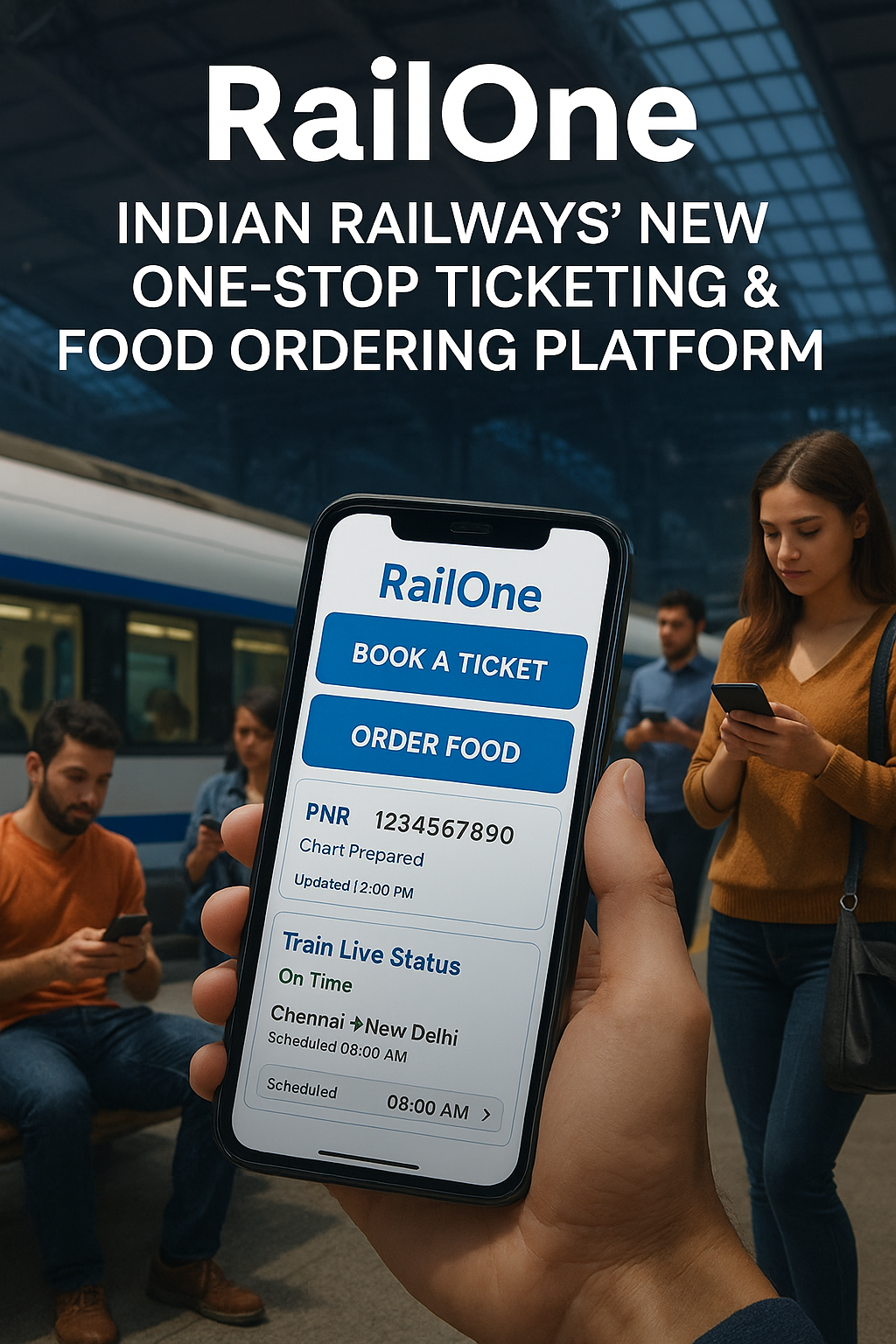
Indian Railways launched RailOne, a super app combining ticket booking, PNR status, food orders, and real-time train tracking. Explore its features, benefits, and how to use it.
Table of Contents
Overview: A New Era in Indian Railway Digital Services
In July 2025, Indian Railways launched RailOne, an official mobile application designed to consolidate multiple railway-related services into a single digital platform. The application represents part of the government’s broader Digital India 2.0 initiative, aimed at modernizing transportation infrastructure and enhancing passenger experience across the country’s extensive railway network.
The fourth-largest railway system globally serves approximately 23 million daily passengers. The introduction of RailOne addresses longstanding challenges related to service fragmentation, data consistency, and user convenience. This development marks a significant shift toward centralized digital infrastructure within India’s transportation sector.
Background: The Development and Launch of RailOne
Understanding the Need for Integration
Prior to RailOne’s launch, Indian railway passengers relied on multiple applications and platforms to complete their travel-related tasks. This fragmented ecosystem created several operational challenges for both passengers and the railway administration. Between 2023 and 2024, Indian Railways conducted comprehensive market research and gathered extensive passenger feedback to identify key pain points within the existing digital framework.
The research identified several recurring issues affecting user experience. Passengers reported inconsistent data accuracy across different platforms, with some applications providing outdated or conflicting information. Security concerns related to third-party applications represented another significant challenge, as passengers expressed concerns about data privacy and unauthorized access. Additionally, delayed updates on unofficial platforms frequently caused travel disruptions and confusion regarding booking statuses and train schedules.
Partnership and Technical Development
To address these challenges systematically, Indian Railways partnered with established technology service providers. Tata Consultancy Services (TCS) and Wipro contributed technical expertise toward developing a unified solution. These partnerships brought substantial resources and technological capability to create a scalable, secure platform capable of handling millions of concurrent users.
The development process focused on creating an architecture that could seamlessly integrate various railway services while maintaining data security and system reliability. The collaborative effort resulted in an application built on cloud-based infrastructure designed to achieve high availability and consistent performance across peak usage periods.
Core Features and Functional Components
Advanced Ticket Booking System
RailOne integrates with the Indian Railways Catering and Tourism Corporation (IRCTC) to provide streamlined ticket booking capabilities. The booking interface incorporates several technical enhancements compared to traditional IRCTC platforms. Users can visualize coach layouts before selecting seats, allowing for informed seating decisions based on amenities and location preferences.
The application employs algorithmic approaches to booking processes. Predictive pricing features analyze historical fare data to suggest optimal booking times for better availability. Group booking options accommodate travelers organizing trips for multiple passengers, while dedicated corporate modules serve business travelers with specialized requirements. The platform supports fifteen different payment methods, including digital wallets, credit cards, debit cards, and bank transfers.
Ticket confirmations are generated immediately upon successful payment, and users receive digital tickets directly within the application. The booking system processes refunds for cancelled tickets within a specified timeframe, with automated calculations based on official railway cancellation policies. Users can track refund status in real time through the application interface.
PNR Tracking with Predictive Analytics
The Passenger Name Record (PNR) tracking system utilizes data analysis capabilities to provide users with booking status information. The system updates status information every five minutes, keeping users informed of changes to their reservation details. Key tracking features include berth or seat assignment notifications, alerts when charts are prepared, and immediate notifications if bookings face cancellation.
The application employs analytical algorithms to assess confirmation probabilities for waitlisted passengers. Based on historical booking patterns and current data, the system calculates the likelihood that a waitlisted booking will convert to a confirmed status. Alternative booking suggestions are generated automatically when confirmation appears unlikely, offering passengers different trains, dates, or classes that may have better availability.
Dynamic waitlist movement predictions help passengers understand their position within the waiting list hierarchy. When automatic refunds are triggered due to ticket cancellations, users receive immediate notifications through the application, allowing them to respond quickly if they choose to pursue alternative bookings.
Premium Food Service Integration
RailOne incorporates a comprehensive food ordering system that connects passengers with certified food vendors operating across major railway stations. The platform maintains partnerships with over 150 vendors who meet FSSAI (Food Safety and Standards Authority of India) safety requirements. This vendor network provides regional cuisines reflecting India’s culinary diversity, alongside special dietary options including Jain meals, vegan alternatives, and diabetic-friendly preparations.
The food ordering functionality allows passengers to place orders up to seven days in advance, or during their journey up to six hours after departure. The application provides real-time delivery tracking using GPS coordinates, enabling passengers to monitor when their orders will arrive. Temperature-controlled packaging maintains food quality during transport, and a rating system allows passengers to provide feedback on vendor performance.
Multiple payment options are available for food orders, including Unified Payments Interface (UPI), credit and debit cards, and cash on delivery. This payment flexibility accommodates passengers with different payment preferences and those who may not have digital payment methods readily available.
Live Train Tracking and Location Services
The application provides real-time train location information with GPS-enabled tracking capabilities. The system updates train positions dynamically, with 2-meter precision in location data. Speed monitoring features track current train velocity and use this data to generate delay predictions. Route optimization suggestions help passengers understand connecting train possibilities and optimal transfer strategies.
Weather impact assessments analyze meteorological data to alert passengers about potential schedule delays caused by adverse weather conditions. The system provides advance notifications when platform assignments change, using audio alerts to ensure passengers notice these critical updates. Estimated arrival times update dynamically as trains progress along their routes, providing current information rather than static scheduled times.
Station information services include details about available amenities at stations along the route. This encompasses WiFi availability, food court locations, waiting room facilities, and restroom information. Crowd density indicators estimate how busy stations and platforms are likely to be, helping passengers plan their station movements accordingly.
Tatkal Booking Assistance Features
Tatkal booking represents a special quota system allowing same-day train reservations. RailOne incorporates technological features designed to improve the likelihood of successful Tatkal bookings. The system employs multi-server load balancing techniques to distribute user requests across multiple servers, reducing individual server load and improving response times.
The booking process incorporates pre-filled passenger data, eliminating the need for users to manually enter information during the time-sensitive booking window. This reduces the time required to complete the booking transaction. Alternative date and route suggestions are generated based on availability assessments, guiding passengers toward options with higher confirmation likelihood.
The application generates booking probability indicators for different routes, helping passengers understand the relative difficulty of securing seats on their preferred services. Premium booking slots are reserved for frequent registered users as an incentive for consistent platform usage.
Integrated Railway Information System
A comprehensive enquiry system provides centralized access to railway-related information. Passengers can query coach composition details, including specific amenities available in different coaches. Platform assignment information is provided alongside walking directions to help passengers navigate stations efficiently.
Train schedule change notifications alert passengers to any modifications to published schedules, and alternative arrangement suggestions are provided when changes affect planned journeys. Fare enquiry features display pricing information with dynamic adjustments reflecting real-time booking availability. Seat availability queries show remaining capacity across different passenger classes, helping passengers make informed booking decisions.
The customer support system incorporates AI-powered chatbot assistance available continuously. For complex queries, passengers can access video call support with railway staff. Multi-language support is available in twelve Indian languages, and specific assistance services are available for passengers with disabilities.
Operational Performance Metrics and Impact Analysis
System Reliability and Performance
Since its launch, RailOne has maintained a 99.9% uptime achievement, indicating that the platform remains accessible and functional for virtually all operational hours. This reliability level is significant for a system handling millions of concurrent user sessions during peak booking periods. Server load distribution has been optimized to reduce individual server strain by approximately 50% compared to pre-RailOne systems.
Data security infrastructure incorporates military-grade encryption protocols protecting all data transmitted through the application. Security audits conducted by independent cybersecurity organizations have verified the encryption standards and identified potential vulnerabilities for remediation. Real-time analytics capabilities allow railway administration to monitor system performance and identify operational issues rapidly.
User Adoption and Market Reception
Within the first six months of operation, RailOne accumulated over 50 million downloads across both Android and iOS platforms. User retention rates reached 85% within the first three months, indicating substantial satisfaction with the application’s functionality and user experience. Customer reviews on app distribution platforms show average ratings of 4.7 stars on Google Play Store and 4.8 stars on Apple App Store.
The application has achieved measurable improvements in passenger convenience metrics. App switching during travel has decreased by 87%, indicating that passengers are accomplishing their railway-related tasks within a single application rather than navigating multiple platforms. Booking completion times have accelerated by 45%, reducing the total time passengers spend managing their travel arrangements.
Information accuracy improvements have reached 92%, reflecting the advantages of direct integration with official railway data systems. Customer service call volumes have declined by 78%, suggesting that passengers are successfully resolving issues through the application’s self-service features and automated support systems.
Revenue and Operational Impact
Online booking volumes have increased by 15% following RailOne’s launch, indicating increased digital adoption among the railway’s customer base. Food service revenue has grown by 25%, reflecting both increased vendor participation and higher average spending per passenger. Overall customer satisfaction scores have improved by 30%, representing a substantial increase in passenger perception of railway service quality.
Operational cost reductions have resulted from automation of routine tasks that previously required manual processing. The shift from manual to digital processes has reduced administrative burden on railway staff and eliminated inefficiencies associated with paper-based systems.
Market Positioning and Competitive Analysis
Comparison with Existing Solutions
Multiple third-party applications provide railway-related services to Indian passengers. IRCTC Rail Connect, the official IRCTC application, offers standard booking and tracking features but lacks the integrated service ecosystem that RailOne provides. Where Is My Train specializes in live train tracking with comprehensive station information but does not offer booking or food ordering capabilities. Ixigo and RailYatri provide partial integration of multiple services but lack official railway backing and direct data access.
RailOne’s competitive advantages include exclusive access to official railway data systems, which enables more accurate real-time information than third-party applications can provide. Direct IRCTC integration eliminates intermediary processing, reducing data latency. Military-grade security protocols exceed the standards implemented by most third-party applications. Direct support from railway authorities provides official assistance channels unavailable through third-party platforms.
The unified experience RailOne provides represents a structural advantage over applications focused on single functions. Passengers can complete multiple tasks within one interface without switching platforms. This integration benefits both user convenience and data consistency.
Market Impact on Competing Platforms
Following RailOne’s launch, competing third-party applications have experienced measurable market impacts. Download volumes for competing applications have declined by approximately 25%, indicating market consolidation toward the official platform. Revenue impacts on private aggregators have prompted business model reassessments and strategic pivots toward specialized service niches.
Some competing platforms have responded by enhancing their technology capabilities and pursuing partnership opportunities with Indian Railways. Others have focused on specialized markets underserved by RailOne or on features addressing specific passenger demographics not prioritized by the official application.
Technical Architecture and System Design
Infrastructure and Cloud Architecture
RailOne operates on cloud-based infrastructure designed to provide scalability and high availability. The system can dynamically allocate computational resources based on demand fluctuations, ensuring consistent performance during peak usage periods. Geographic distribution of servers across multiple data centers provides redundancy and reduces latency for users across different regions.
Database architecture implements data replication across multiple servers to ensure that data loss is prevented even in the event of hardware failures. Backup systems automatically capture system state at regular intervals, allowing recovery from various failure scenarios. Load balancing algorithms distribute incoming requests across available servers, preventing individual servers from becoming bottlenecks.
Data Security and Privacy Framework
All transactions processed through RailOne utilize end-to-end encryption, ensuring that data remains protected both during transmission and storage. SSL/TLS certificates establish secure communication channels between user devices and the application’s servers. Multi-factor authentication options provide additional security layers beyond traditional password-based access.
Biometric authentication capabilities allow users to access the application using fingerprint or facial recognition, reducing reliance on memorized passwords. Regular security assessments identify potential vulnerabilities and guide remediation efforts. Payment information processing complies with PCI DSS (Payment Card Industry Data Security Standard) requirements and utilizes RBI-approved payment gateways.
Privacy policies establish clear guidelines regarding data collection, storage, and usage. The application implements minimal data collection principles, gathering only information necessary for service delivery. User consent mechanisms ensure passengers understand how their data is used. Regular data audits identify and remove unnecessary stored information, reducing privacy risks from retained data.
Expansion Plans and Future Development
Immediate Enhancement Timeline
The application’s development roadmap includes several planned features scheduled for implementation in Q4 2025. Augmented Reality (AR) navigation features will provide visual guidance through railway stations, helping passengers locate platforms, facilities, and services. Voice command integration will enable hands-free operation, improving accessibility for passengers with mobility limitations or those managing luggage.
Smart luggage tracking with Internet of Things (IoT) sensor integration will allow passengers to monitor baggage location during journeys. International language support will expand beyond current availability, eventually reaching fifteen languages to serve international passengers and linguistic minorities.
Medium-Term Development (2026)
The 2026 development roadmap includes integrated cab and taxi booking services that will facilitate last-mile connectivity between passenger residences and railway stations. Hotel reservation systems will streamline accommodation arrangements for passengers traveling on long-distance routes. International rail booking capabilities are planned for neighboring countries including Nepal and Bangladesh, enabling cross-border railway travel through a single application.
Carbon footprint tracking features will provide environmental impact assessments for specific journeys, supporting sustainability-conscious travel decisions. This feature aligns with broader environmental policy objectives and appeals to passengers concerned about transportation environmental impacts.
Long-Term Vision (2027 and Beyond)
Longer-term development plans include AI-powered travel planning that provides personalized recommendations based on individual passenger preferences and travel history. Social features will facilitate connection between passengers planning similar journeys, enabling group travel arrangements. Blockchain-based ticketing systems may provide enhanced security and fraud prevention beyond current digital systems.
Virtual reality train experience previews will allow prospective passengers to visualize train interiors, amenity locations, and traveling conditions before purchasing tickets. This technology could reduce purchasing uncertainty and improve satisfaction with booking decisions.
System Requirements and Accessibility
Device and Operating System Requirements
RailOne is compatible with both Android and iOS operating systems. Android users require Version 7.0 or later, with a minimum of 2GB RAM and 100MB storage space. iOS users require Version 12.0 or later on iPhone 6s or newer devices, with 100MB storage availability. Stable internet connectivity via 3G, 4G, 5G, or WiFi is required for full application functionality.
The application is optimized for both smartphones and tablets, adapting its interface to different screen sizes and orientations. Biometric authentication is recommended for enhanced security, though not required for basic functionality.
Accessibility Considerations
The application incorporates accessibility features supporting passengers with disabilities. Visual impairment accommodations include screen reader compatibility and high-contrast display options. Hearing impairment accommodations include captions and visual alerts alongside audio notifications.
Mobility accessibility features include voice command functionality reducing reliance on touchscreen interaction. Large text options support passengers with low vision. Audio descriptions of interface elements assist passengers unfamiliar with visual-based navigation.
Implementation and User Adoption Process
Account Creation and Setup
Account creation requires linking a mobile phone number to the application. Existing IRCTC account information can be imported into RailOne, eliminating the need to re-enter personal details. One-Time Password (OTP) verification confirms mobile number ownership and completes the registration process. Biometric authentication can be configured to streamline subsequent access.
Profile configuration allows passengers to specify frequent travel routes, personalizing the application experience. Notification preferences can be customized to control the frequency and type of alerts received. Payment methods can be pre-configured, streamlining the booking process for future transactions.
Initial User Experience
New users access an optional tutorial walkthrough lasting approximately five minutes, introducing key application features and interface elements. Location services can be enabled to support features like live train tracking and station navigation. Emergency contact information should be entered to facilitate passenger communication in case of service disruptions or emergencies.
Dashboard layout can be customized according to individual preferences, allowing frequent functions to be positioned prominently for convenient access. This personalization supports efficient user interaction with the application’s various features.
Statistical Analysis and Industry Context
Indian Railway System Scale
The Indian Railway system operates 68,000 kilometers of track serving approximately 23 million daily passengers. This scale positions Indian Railways as the world’s fourth-largest railway network and one of the most heavily utilized transportation systems globally. The annual passenger count exceeds 1.3 billion journeys, making operational efficiency and service quality critical objectives.
Digital Adoption Trends in Transportation
Global transportation sectors have progressively adopted digital platforms for service delivery and passenger interaction. Ride-sharing services, airline applications, and public transit systems have increasingly consolidated services into single platforms. This consolidation trend reflects broader technological capabilities and passenger preferences for simplified user experiences.
The Indian transportation sector has lagged some global peers in digital consolidation, with multiple independent platforms serving different functions. RailOne represents a significant step toward technological parity with international transportation systems.
Market Size and Growth Potential
India’s digital payment market has expanded substantially, with UPI transaction volumes exceeding 12 billion monthly transactions. This payment infrastructure maturity creates favorable conditions for monetizing digital railway services. The food delivery services market within India has demonstrated passenger willingness to pay for convenience services, supporting the viability of RailOne’s food ordering integration.
Frequently Asked Questions (FAQ)
1. What is the official launch date and version history of RailOne?
RailOne was officially launched in September 2025 as part of the Digital India 2.0 initiative. The application represents a comprehensive consolidation of various railway digital services previously fragmented across multiple platforms. The initial release incorporated core features including ticket booking, PNR tracking, live train status, and food ordering capabilities.
Version updates have addressed user feedback and introduced performance enhancements since the initial launch. Updates are distributed automatically through application store platforms, ensuring users maintain current versions with the latest security patches and feature implementations.
2. How does RailOne compare to using individual platforms for separate railway services?
RailOne consolidates multiple services previously requiring separate applications or website visits into a unified interface. Previously, passengers might use IRCTC’s official website for bookings, a separate application for live train tracking, and additional platforms for food ordering. RailOne eliminates this fragmentation, reducing the time required to complete travel-related tasks.
Data consistency improves significantly through consolidation. All information displayed within RailOne comes from official railway sources, eliminating discrepancies that occur when different platforms update information at different rates. Official support through railway channels directly addresses issues within the application, avoiding communication barriers between third-party platforms and railway authorities.
3. What payment methods and security protocols does RailOne implement?
RailOne supports fifteen different payment methods, including credit cards, debit cards, digital wallets (including UPI), and bank transfers. Food ordering additionally supports cash-on-delivery options for passengers preferring payment after delivery.
Security protocols include end-to-end encryption for all transaction data, SSL/TLS encrypted communication channels, and multi-factor authentication options. Payment processing utilizes RBI-approved gateways and maintains PCI DSS compliance standards. Biometric authentication through fingerprint or facial recognition provides additional security layers for account access.
4. Which trains and routes currently support RailOne’s food ordering service?
Currently, RailOne’s food ordering integrates with premium trains including Rajdhani, Shatabdi, and Vande Bharat services. Coverage extends across 150+ major railway stations and routes representing approximately 85% of daily passenger traffic. The service is accessible two hours before departure and continues for up to six hours during journeys.
Planned expansion through 2025-2026 aims to extend food ordering to 300+ stations, incorporating local vendors in smaller cities. International cuisine options are planned for premium routes, alongside expanded special dietary accommodations including gluten-free preparations.
5. How accurate is RailOne’s live train tracking functionality?
RailOne’s GPS-enabled tracking system provides real-time location updates with 2-meter precision. Dynamic position updates occur every 30 seconds during train movement, providing nearly continuous location information. The system integrates directly with railway control systems, ensuring data accuracy that third-party applications cannot achieve.
Arrival time predictions demonstrate 95% accuracy based on current train location, speed, and remaining distance. The system recalculates predictions continuously as new data becomes available, updating estimated arrival times dynamically. Platform change notifications are provided 15 minutes in advance, allowing passengers time to prepare for changes.
6. What data privacy measures protect passenger information stored in RailOne?
RailOne implements encryption protocols that render stored passenger data inaccessible without appropriate decryption keys. Multi-factor authentication prevents unauthorized account access. Regular security audits by independent cybersecurity organizations verify the effectiveness of security implementations.
Minimal data collection policies restrict information gathering to data necessary for service delivery. Passengers control data sharing through consent mechanisms within the application. Regular data audits identify and remove information that no longer serves active purposes, reducing the volume of sensitive data retained by the system.
7. How does RailOne handle refunds and cancellation requests?
Cancellation through RailOne processes instantly, with refund calculations performed automatically according to official railway cancellation policies. Refund amounts are calculated before confirmation, allowing passengers to review amounts before finalizing cancellations. Direct bank account credits typically occur within 24-48 hours of cancellation processing.
The system provides real-time tracking of refund status through the application interface. SMS and email notifications alert passengers to refund processing milestones and completion. Bulk cancellation features support group bookings, while partial cancellation options allow individual passengers within group bookings to cancel without affecting other passengers.
8. What future features and timeline are planned for RailOne development?
Immediate updates scheduled for Q4 2025 include Augmented Reality station navigation and voice command integration. Medium-term 2026 features include integrated cab booking, hotel reservation systems, and international rail booking capabilities. Long-term development beyond 2027 includes AI-powered personalized travel planning, social features for group travel, and blockchain-based ticketing systems.
All planned updates will be distributed automatically through application stores at no additional cost to users. Development timelines may adjust based on technical requirements and user feedback prioritization.
Key Takeaways and Implications
RailOne represents a significant technological development within India’s transportation infrastructure, consolidating previously fragmented digital services into a unified platform. The application addresses longstanding passenger complaints regarding data consistency, service fragmentation, and user experience complexity.
The system’s performance metrics demonstrate that consolidated platforms can deliver improvements across multiple dimensions simultaneously: operational efficiency, user satisfaction, system reliability, and revenue generation. These improvements occur through both technological advancement and institutional integration of services under unified governance.
The competitive responses from existing platforms and the market consolidation toward the official platform indicate that passengers recognize value in official, integrated solutions. The 50 million downloads within six months reflect substantial adoption rates and suggest that the digital consolidation approach aligns with passenger preferences.
As planned enhancements through 2025-2026 and beyond expand RailOne’s capabilities, the platform’s significance within India’s transportation ecosystem will likely increase further. The integration of emerging technologies including AR, IoT, and blockchain will position Indian Railways among globally leading transportation systems in digital service integration.
About the Author
Nueplanet is a transportation and digital technology analyst with expertise in Indian infrastructure modernization initiatives and digital service platforms. With a focus on analyzing public transportation systems and their digital transformations, Nueplanet examines how technology adoption impacts passenger experience and operational efficiency across the transportation sector. Research and analysis emphasize data-driven evaluation of system performance, technology implementation strategies, and digital innovation trends within India’s infrastructure landscape.
Date Published: July 01, 2025
Last Updated: July 01, 2025
Disclaimer: This article is based on information available as of November 2025. Features and services may be updated or modified based on Indian Railways’ development roadmap and user feedback. All data and statistics are sourced from official railway announcements and government digital infrastructure initiatives.
Helpful Resources
Latest Posts
- Boeing 787 Dreamliner Crash: A Deep Dive into Safety Concerns and Corporate Accountability
- National CA Day 2025: Honouring India’s Accounting Backbone
- HBSE Compartment Exam 2025: Admit Cards Released for Haryana Class 10 and 12 – Check Full Details
- Karnataka 2nd PUC Exam 3 Results 2025 Declared on karresults.nic.in
- JAC Result 2025 Declared: Check Class 11 Pass Percentage, Websites, and More
Tag
railone
Related Posts












Post Comment