









National CA Day 2025: Honouring India’s Accounting Backbone
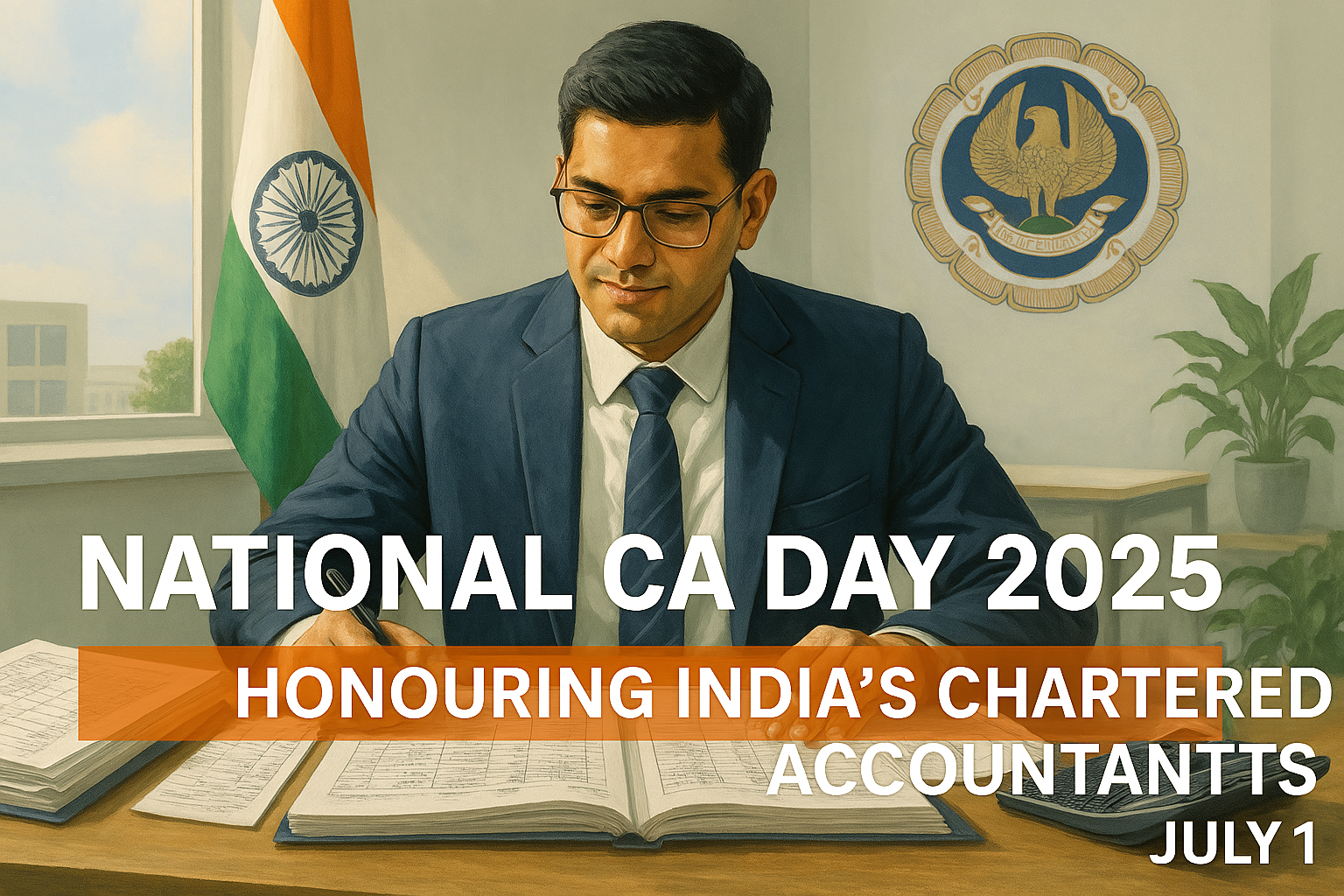
July 1 marks National CA Day 2025, celebrating Chartered Accountants who power India’s economic integrity and growth. Discover its history, ICAI significance, and this year’s theme.
Table of Contents
Published: July 01, 2025 | Last Updated: July 01, 2025 | Author: Nueplanet
Overview: Understanding National CA Day 2025
July 1, 2025, marks the annual observance of National Chartered Accountant (CA) Day in India, commemorating the establishment of the Institute of Chartered Accountants of India (ICAI) on July 1, 1949. This significant professional day recognizes the contributions of qualified accountants who maintain financial integrity and transparency across India’s economic sectors.
The celebration acknowledges the role of over 400,000 qualified chartered accountants and approximately 700,000 aspiring students within the ICAI framework. As the world’s second-largest accounting body, ICAI plays a crucial regulatory and professional role in shaping India’s financial landscape. The annual observation provides an opportunity to examine the evolving responsibilities, career opportunities, and technological transformations within the accounting profession.
Historical Context: The Foundation and Evolution of ICAI
Establishment and Legislative Framework
The Institute of Chartered Accountants of India was formally established through the Chartered Accountants Act, 1949, during India’s early post-independence period. Prime Minister Jawaharlal Nehru’s administration recognized the necessity of creating a regulated accounting profession to support the newly independent nation’s economic infrastructure.
Prior to ICAI’s establishment, India’s business environment operated without standardized accounting practices. Financial reporting varied significantly across regions and industries, creating inconsistencies that hindered business operations and investor confidence. The absence of a unified qualification framework meant that accounting expertise lacked standardization and professional oversight.
Pre-1949: Accounting Landscape
Before the establishment of ICAI, Indian businesses faced several significant challenges:
- Absence of standardized accounting methodologies across different business sectors
- Lack of regulatory oversight and enforcement mechanisms for financial reporting
- No unified qualification framework for accounting professionals
- Inconsistent audit practices varying by region and industry
- Limited investor confidence in financial data due to unregulated reporting practices
These conditions hampered economic growth and prevented India from establishing reliable financial governance standards necessary for large-scale commerce and international trade relationships.
Post-1949: Transformation and Development
Following ICAI’s establishment, the accounting profession underwent systematic transformation:
- Implementation of consistent accounting principles across all sectors
- Establishment of professional conduct codes and ethical standards
- Creation of rigorous examination systems ensuring professional competency
- Integration of Indian standards with international accounting practices
- Development of regulatory oversight mechanisms for financial compliance
The organizational structure established in 1949 created a framework through which accounting professionals could maintain independence, exercise professional judgment, and support India’s transition into a modern market economy.
Major Milestones in ICAI’s Development
ICAI’s organizational history demonstrates consistent evolution in response to India’s changing economic needs:
| Year | Milestone Achievement | Economic Impact |
|---|---|---|
| 1949 | ICAI Establishment | Foundation of regulated accounting profession |
| 1956 | First CA Examination | Professional qualification framework established |
| 1962 | Regional Council System | Decentralized governance structure across India |
| 1988 | Computer Training Program | Technology integration into accounting practice |
| 1994 | International Collaboration | Global partnership development initiated |
| 2007 | IFRS Convergence Initiative | International standards alignment process |
| 2016 | GST Implementation Support | Tax reform leadership and guidance |
| 2020 | Digital Transformation | Virtual examination systems introduced |
| 2025 | AI Integration Programs | Future-ready skill development initiatives |
This timeline reflects how ICAI has adapted to technological changes, economic reforms, and evolving regulatory requirements throughout India’s development as a major economy.
ICAI’s Current Standing and Economic Significance
Organizational Scale and Global Position
As of 2025, ICAI represents a substantial professional body with considerable influence in India’s financial sector. The institute operates through 164 regional branches and councils positioned throughout India, facilitating local professional engagement and regulatory oversight.
The organization’s international presence extends across multiple continents. Indian chartered accountants work in over 40 countries, with concentrated populations in regions significant to global finance and commerce. This international distribution reflects both the quality of Indian accounting education and the demand for qualified professionals in global markets.
Direct Economic Contributions
ICAI members contribute substantially to India’s economic output through various professional services:
- Chartered accountants directly contribute 12-15 percent of India’s gross domestic product through advisory services, auditing, and financial management
- Approximately 95 percent of listed companies on Indian stock exchanges utilize CA services for regulatory compliance and financial reporting
- An estimated 78 percent of direct tax collections involve CA-prepared or CA-assisted tax returns
- Over 25 million small and medium enterprises receive accounting support from qualified chartered accountants
- The profession supports approximately 15 lakh direct and indirect employment positions across India
These metrics demonstrate that India’s economic growth, corporate governance standards, and tax administration depend significantly on the competency and integrity of the chartered accounting profession.
Professional Qualification Structure and Examination Framework
Three-Tier Qualification System
ICAI maintains a structured qualification pathway consisting of three examination levels, each requiring specific eligibility criteria and educational preparation periods.
CA Foundation (Entry-Level Qualification)
The CA Foundation program serves as the entry point for individuals pursuing chartered accountancy. This foundational level establishes basic accounting principles and business knowledge before advancing to intermediate studies.
- Eligibility: Completion of Class 12 education with specific subject requirements
- Registration Duration: 4 months of registration followed by examination
- Pass Rate: Typically between 35-40 percent of candidates
- Subject Areas: Accounting fundamentals, business law, economics, and mathematics
- Purpose: Assessment of basic accounting knowledge and analytical abilities
The Foundation level ensures that all CA candidates possess fundamental accounting concepts and business law understanding before specializing in advanced accounting practices.
CA Intermediate (Advanced Professional Level)
The Intermediate examination represents a more rigorous assessment phase requiring deeper technical knowledge and practical application skills.
- Eligibility: Prior successful completion of CA Foundation examination plus graduation from an accredited university
- Articleship Period: 8 months of mandatory practical training combined with examination preparation
- Pass Rate: Approximately 25-30 percent of candidates
- Subject Areas: Advanced accounting principles, taxation concepts, audit procedures, and corporate law
- Scope: Assessment of intermediate-level accounting expertise and professional application
Intermediate-level qualification typically precedes professional employment in accounting firms or corporate finance departments, allowing candidates to apply theoretical knowledge in practical business environments.
CA Final (Professional Mastery Level)
The CA Final examination represents the highest level of professional qualification, demonstrating comprehensive mastery of accounting principles, taxation, and financial management at the strategic level.
- Eligibility: Successful CA Intermediate qualification plus completion of 3-year articleship program
- Duration: Intensive preparation period combining practical experience with final examination studies
- Pass Rate: Between 15-20 percent of candidates achieving qualification
- Subject Areas: Strategic management, advanced taxation planning, international accounting standards, and financial analysis
- Significance: Full professional qualification enabling independent practice as a chartered accountant
Upon completion of CA Final examinations, candidates receive formal recognition as qualified chartered accountants, authorized to provide audit services, financial advisory services, and taxation consultation.
Continuing Professional Development Requirements
Following initial qualification, Indian chartered accountants must maintain their professional competency through mandatory continuing education:
- Annual Learning Requirement: 40 hours of structured learning activities plus 10 hours of unstructured professional development
- Specialized Programs: Industry-specific skill development initiatives aligned with current business practices
- Technology Training: Regular workshops on digital accounting tools and emerging technologies
- Ethics Refresher: Annual updates on professional conduct standards and ethical requirements
This mandatory professional development framework ensures that Indian chartered accountants remain current with evolving accounting standards, technological innovations, and regulatory changes throughout their careers.
National CA Day 2025: Theme, Celebrations, and Strategic Direction
The Central Theme: “Empowering Trust, Transforming Businesses”
The 2025 National CA Day theme encapsulates the dual role of modern chartered accountants in contemporary business environments. The theme consists of three interconnected pillars that define the profession’s current priorities and future direction.
Pillar 1: Empowering Trust
This dimension emphasizes chartered accountants’ foundational responsibility for maintaining financial integrity and stakeholder confidence:
- Strengthening stakeholder trust through transparent and accurate financial reporting
- Establishing robust internal control systems that prevent financial misstatement and fraud
- Enhancing audit independence and quality to protect public interest
- Developing ethical leadership competencies that promote sustainable business practices
Financial trust represents the essential foundation for capital market functionality and investor confidence. By maintaining rigorous professional standards, chartered accountants enable stakeholders to make informed decisions based on reliable financial information.
Pillar 2: Transforming Businesses
This component addresses how chartered accountants support organizational modernization and strategic development:
- Implementing technology solutions that improve operational efficiency and enable better decision-making
- Facilitating ESG (Environmental, Social, and Governance) framework integration for sustainable growth
- Supporting digital transformation initiatives across diverse industries and business models
- Enabling startup financing and supporting entrepreneurship ecosystems
As businesses adapt to changing market conditions and regulatory requirements, accountants provide advisory services that facilitate organizational transformation while maintaining financial discipline and risk management.
Pillar 3: Building Future-Ready Professionals
This pillar focuses on professional development and skill evolution necessary for emerging business environments:
- Integrating artificial intelligence and advanced data analytics into daily accounting practice
- Developing international competencies for cross-border business operations
- Creating specialized expertise in emerging sectors including fintech, blockchain, and cryptocurrency
- Fostering leadership capabilities for managing organizational transformation
Professional development ensures that chartered accountants remain equipped to address emerging business challenges and opportunities throughout their careers.
Major Celebration Events in New Delhi
ICAI’s headquarters in New Delhi hosted comprehensive celebration programs throughout July 1, 2025, featuring multiple sessions and engagement activities:
Morning Session (9:00 AM – 12:00 PM):
- Flag hoisting ceremony conducted by ICAI President
- National anthem recitation and professional pledge
- Presidential address focused on “Future of Accounting Profession”
- Release of ICAI Annual Report for 2024-2025
- Awards ceremony recognizing meritorious members and students
- Inaugural address by Union Minister of Corporate Affairs
Afternoon Session (2:00 PM – 6:00 PM):
- Panel discussion addressing “Technology Disruption in Accounting”
- Student achievement awards and scholarship distribution programs
- International collaboration agreements signing ceremony
- Cultural program celebrating Indian heritage and professional values
- Vote of thanks and national song performance
Regional Celebrations Across India
National CA Day celebrations extended throughout India through organized regional programs acknowledging local economic contributions and regional business characteristics:
Northern Region Initiatives
Punjab and Chandigarh: Agricultural sector forums discussing farmer financial literacy and rural accounting practices
Rajasthan: Exhibition highlighting heritage business practices and traditional accounting methodologies relevant to regional commerce
Uttar Pradesh: Workshops addressing MSME development, entrepreneurship guidance, and small business accounting requirements
Haryana: Industrial CA summit examining manufacturing sector challenges and accounting practices specific to industrial operations
Western Region Programs
Mumbai: Specialized seminars addressing capital markets, investment banking, and securities compliance
Gujarat: International trade workshops focusing on export financing and cross-border transaction documentation
Maharashtra: Cooperative sector accounting programs supporting rural development initiatives and agricultural cooperatives
Goa: Tourism industry financial management workshops addressing seasonal business models and sustainability practices
Southern Region Engagements
Bangalore: Technology sector conclave supporting startup ecosystem development and fintech accounting practices
Chennai: Automotive industry financial analysis addressing global supply chain management and manufacturing accounting
Hyderabad: Pharmaceutical sector compliance programs covering regulatory requirements and international standards
Kerala: Spices trade financing and agricultural commodity accounting relevant to regional commercial activities
Eastern Region Activities
Kolkata: Traditional industries modernization programs preserving heritage business structures while integrating modern accounting practices
Bhubaneswar: Tribal cooperative development initiatives promoting financial inclusion in underserved communities
Guwahati: Northeast development financing addressing cross-border trade facilitation and regional economic development
Ranchi: Mining sector accounting programs addressing environmental compliance and resource extraction accounting
Virtual Celebration Programs
ICAI organized comprehensive digital programming to ensure nationwide participation:
- Global webinar series: 24-hour continuous programming accommodating multiple international time zones
- Student engagement programs: Interactive sessions connecting students with successful CA practitioners and industry leaders
- Technology demonstrations: Live presentations of AI tools, blockchain applications, and digital audit methodologies
- Professional development workshops: Sessions addressing emerging trends and future skill requirements
Technology Transformation in Accounting Practice
Artificial Intelligence Integration
Artificial intelligence technologies are fundamentally reshaping accounting practices and professional service delivery:
Automated Data Processing Applications
Modern AI systems can perform routine accounting tasks with increased speed and accuracy:
- Invoice and Document Recognition: OCR technology automatically extracts data from invoices, receipts, and financial documents
- Transaction Categorization: Machine learning algorithms classify business expenses into appropriate accounting categories
- Bank Reconciliation: Automated systems match transactions and identify variances without manual intervention
- Financial Statement Preparation: Template-based systems generate standardized financial reports from underlying accounting data
These automation applications reduce manual data entry errors while enabling accountants to focus on analytical and advisory functions requiring professional judgment.
Predictive Analytics and Financial Forecasting
Advanced data analytics enable accountants to provide forward-looking financial insights:
- Cash Flow Prediction: AI models forecast cash requirements and liquidity positions based on historical patterns and business conditions
- Financial Risk Assessment: Algorithmic analysis evaluates credit risk, market risk, and operational risks
- Market Trend Analysis: Data-driven insights support strategic planning based on industry trends and market conditions
- Performance Benchmarking: Comparative analysis using industry benchmarks and historical performance data
Predictive capabilities allow accountants to move beyond historical financial reporting toward strategic business advisory services.
Audit Technology Enhancement
Technological tools are improving audit effectiveness and efficiency:
- Continuous Auditing: Real-time transaction monitoring systems detect anomalies during business operations rather than after-the-fact
- Fraud Detection: Pattern recognition algorithms identify suspicious activities and potential fraudulent transactions
- Sampling Optimization: Statistical models optimize audit sample selection to ensure adequate coverage with fewer procedures
- Digital Documentation: Automated systems maintain comprehensive audit trails and documentation
Blockchain and Cryptocurrency Accounting
Emerging digital technologies create new accounting practice areas:
Cryptocurrency Accounting Challenges
Cryptocurrency transactions present distinct accounting challenges requiring specialized knowledge:
- Valuation Methodologies: Fair value measurement for cryptocurrency holdings accounting for volatile market prices
- Blockchain Auditing: Verification procedures for distributed ledger transactions and cryptocurrency wallet balances
- Smart Contract Analysis: Assessment of automated agreement execution and financial settlement through code-based contracts
- Decentralized Finance Assessment: Evaluation of risks in decentralized finance (DeFi) protocols and cryptocurrency lending arrangements
These specialized areas require accountants to develop cryptocurrency and blockchain knowledge to serve technology-focused businesses and investors.
Regulatory Compliance and GST Implementation
GST Ecosystem Contributions
Since the Goods and Services Tax implementation in 2017, chartered accountants have played crucial roles supporting tax administration and business compliance:
CA Support Functions
- Return Preparation: Monthly, quarterly, and annual GST return filing for registered businesses
- Compliance Auditing: GST audit support and guidance for assessment proceedings
- Refund Management: Optimization of input tax credit and refund processing procedures
- Dispute Resolution: Representation before GST tribunal and appellate authorities
GST Implementation Impact Metrics
Quantifiable results demonstrate the profession’s contribution to GST administration:
- Business Registration: Over 140 million businesses registered with GST utilizing CA assistance
- Compliance Rate Improvement: Compliance rates improved from 78 percent to 89 percent between 2017-2025
- Revenue Collection: CAs facilitated average annual GST collections of ₹18.45 lakh crore
- MSME Integration: Approximately 95 percent of small and medium enterprises achieved GST compliance through CA guidance
Global Presence and International Opportunities
Indian Chartered Accountants in Global Markets
Qualified chartered accountants from India work throughout the world in concentrated populations:
- Middle East: Over 45,000 Indian CAs employed in UAE, Saudi Arabia, Qatar, and surrounding regions
- North America: Approximately 25,000 CAs working in United States and Canadian accounting and finance sectors
- United Kingdom: About 18,000 Indian CAs concentrated in London financial district and other major centers
- Australia: Roughly 12,000 CAs contributing to Australian accounting profession and finance sector
- Singapore: Approximately 8,000 CAs supporting Asian financial hub operations and regional accounting services
International Recognition and Partnerships
ICAI has established recognition arrangements with multiple countries and professional bodies:
- Mutual Recognition Agreements: 15 countries recognize ICAI qualifications and credential requirements
- International Partnerships: Collaborative relationships with 25 global accounting bodies and professional organizations
- Quality Certifications: ISO certification for ICAI education and training programs
- Global Rankings: Consistent top-5 positioning in international accounting education and professional development rankings
These international relationships facilitate career mobility for qualified accountants and establish recognition of Indian accounting standards globally.
Career Opportunities and Compensation Trends
Diverse Career Pathways for Chartered Accountants
Traditional Practice Areas
Public Accounting and Auditing Services
- Statutory Audits: Company law compliance and financial statement verification
- Internal Audits: Operational efficiency evaluation and internal control assessment
- Tax Audits: Income tax and GST audit fulfillment and compliance support
- Specialized Audits: Bank audits, insurance company audits, and cooperative society auditing
Corporate Finance Management
- Chief Financial Officer (CFO) Roles: Strategic financial leadership and executive-level decision-making
- Finance Director Positions: Board-level financial oversight and governance responsibility
- Controller Functions: Financial reporting accuracy and compliance management
- Treasury Management: Cash management optimization and investment strategy
Taxation and Advisory Services
- Tax Consulting: Direct and indirect tax planning and compliance strategies
- Transfer Pricing: International tax optimization and documentation for multinational transactions
- GST Advisory: Goods and Services Tax strategic planning and compliance optimization
- International Tax: Cross-border transaction structuring and compliance management
Emerging High-Growth Sectors
Fintech and Digital Finance
The fintech sector represents a rapidly expanding career area for accountants with digital expertise:
- Cryptocurrency Accounting: Digital asset valuation, reporting, and tax implications
- Payment System Auditing: Digital transaction security and compliance verification
- Robo-Advisory Services: Oversight of automated investment platforms and algorithmic trading
- Blockchain Consulting: Distributed ledger implementation, auditing, and strategic advisory
ESG and Sustainability Reporting
Environmental, social, and governance expertise represents an increasingly important specialization:
- Environmental Accounting: Carbon footprint measurement, reporting, and environmental cost allocation
- Social Impact Assessment: Corporate social responsibility evaluation and social return on investment measurement
- Governance Framework Development: Board effectiveness assessment and ethical compliance systems
- Sustainability Auditing: ESG performance verification and sustainability reporting assurance
Data Analytics and Business Intelligence
Data analysis capabilities enable accountants to provide strategic business insights:
- Financial Data Analysis: Big data interpretation and strategic insight generation
- Predictive Modeling: Financial forecasting and scenario planning capabilities
- Performance Analytics: Key performance indicator development and dashboard creation
- Risk Analytics: Quantitative risk assessment and mitigation strategy development
Compensation and Career Progression
Chartered accountant compensation varies significantly based on experience, specialization, and geographic location:
| Experience Level | Average Salary Range (₹ Lakhs) | Top 10% Earnings (₹ Lakhs) | Annual Growth Rate |
|---|---|---|---|
| Articleship | 2.5-4.0 | 5.0-6.0 | Foundation Stage |
| 0-2 Years | 6.0-12.0 | 15.0-20.0 | 35% average |
| 3-5 Years | 12.0-25.0 | 30.0-40.0 | 28% average |
| 6-10 Years | 25.0-50.0 | 60.0-80.0 | 22% average |
| 10+ Years | 50.0-1.5 Crore | 2.0-5.0 Crore | 18% average |
Industry specialization significantly affects compensation levels:
- Investment Banking: 40-50 percent premium over average accountant salaries
- Private Equity/Venture Capital: 35-45 percent higher compensation
- Management Consulting: 30-40 percent premium compensation
- Technology Sector: 25-35 percent higher salaries for digital transformation expertise
- International Assignments: 2-3 times Indian salary levels for overseas positions
ICAI’s Strategic Vision for 2030
Technology Integration Roadmap
ICAI has outlined a three-phase technology implementation strategy extending through 2030:
Phase 1 (2025-2026): Foundation Building
Initial technology integration focuses on establishing infrastructure and education:
- AI Tool Implementation: Integration of artificial intelligence into routine accounting tasks
- Blockchain Education: Curriculum development addressing distributed ledger technology
- Cloud Migration: Transition to cloud-based practice management and collaboration systems
- Digital Examination: Complete transition to computer-based examination formats
Phase 2 (2027-2028): Advanced Implementation
Advanced technology integration builds on foundational capabilities:
- Machine Learning Applications: Predictive analytics implementation for financial forecasting
- IoT Data Integration: Internet of Things data incorporation into financial reporting processes
- Virtual Reality Training: Immersive learning experiences for complex accounting scenarios
- Cybersecurity Specialization: Advanced training in financial data protection and information security
Phase 3 (2029-2030): Global Leadership Position
Final phase positioning ICAI as global accounting leadership:
- Quantum Computing Readiness: Preparation for quantum computing technology implementation
- Global Standard Setting: Leadership role in international accounting standards development
- Space Economy Accounting: Specialized practices for emerging space industry financial management
- Sustainable Finance Leadership: Global expertise in green finance and climate-related accounting
Sustainability and ESG Integration
Environmental, social, and governance considerations represent central components of ICAI’s future vision:
Environmental Accounting Excellence
- Carbon Accounting: Comprehensive training in greenhouse gas measurement and emissions reporting
- Renewable Energy Finance: Solar, wind, and alternative energy project financial evaluation
- Circular Economy Modeling: Resource efficiency and waste reduction accounting methodologies
- Climate Risk Assessment: Financial impact analysis of climate change scenarios on business operations
Social Impact Measurement
- Community Development Accounting: Social return on investment methodologies and impact measurement
- Diversity Metrics: Workplace equality measurement and diversity reporting frameworks
- Human Capital Accounting: Employee value creation and workforce development tracking
- Stakeholder Engagement: Multi-stakeholder reporting and communication frameworks
International Collaborations and Strategic Partnerships
ICAI maintains active partnerships with major international accounting organizations:
Major International Partnerships
Association of Chartered Certified Accountants (ACCA) – United Kingdom
- Mutual Recognition Agreement: Streamlined qualification pathways for mutual members
- Joint Certification Programs: Specialized courses developing international competencies
- Research Collaboration: Joint studies examining emerging accounting practices
- Student Exchange: International exposure programs for aspiring professionals
American Institute of CPAs (AICPA) – United States
- Professional Development: Advanced training in US GAAP and PCAOB audit standards
- Technology Sharing: Exchange of best practices in audit technology and digital transformation
- Market Access: Facilitated opportunities for Indian CAs entering US accounting markets
- Quality Standards: Joint quality assurance and peer review programs
Institute of Chartered Accountants in England and Wales (ICAEW)
- Historical Partnership: Traditional professional relationships between organizations
- Global Mobility: Enhanced international career development opportunities
- Standards Convergence: Collaborative development of international accounting standards
- Innovation Labs: Joint research in accounting technology and future practices
Regional Collaboration Initiatives
BRICS Accounting Alliance
Collaborative accounting development with emerging market economies:
- Brazil: Programs addressing emerging market accounting practices
- Russia: Technology transfer and digital transformation initiatives
- China: Belt and Road Initiative financial reporting standardization
- South Africa: African market entry facilitation and business partnerships
SAARC Professional Integration
South Asian region accounting coordination:
- Regional Standards: South Asian accounting standards harmonization
- Cross-Border Practice: Professional mobility facilitation within South Asian region
- Capacity Building: Joint training programs for developing economies
- Trade Facilitation: International trade finance and documentation expertise
Implications and Future Outlook
Accounting Profession Evolution
The accounting profession is undergoing significant transformation driven by technological advancement, regulatory evolution, and changing business models. Chartered accountants increasingly serve as strategic business advisors rather than primarily historical financial reporters. This evolution requires continuous professional development and specialization in emerging areas.
Economic Significance
Chartered accountants will continue playing essential roles supporting India’s economic development as the country pursues its goal of becoming a $5 trillion economy. Professional expertise in regulatory compliance, financial reporting accuracy, and business advisory services remains critical for sustainable economic growth and capital market confidence.
Technological Adaptation
Accounting professionals must embrace technological tools including artificial intelligence, blockchain, and data analytics while maintaining professional judgment and ethical standards. The balance between technological automation and human expertise represents an ongoing challenge and opportunity for the profession.
Key Takeaways
- Institutional Significance: ICAI’s establishment in 1949 created the regulatory framework enabling modern financial governance in India
- Professional Scale: Over 400,000 qualified members and 700,000 students represent substantial professional capacity
- Economic Contribution: Chartered accountants contribute 12-15 percent of India’s GDP through professional services
- Technological Transformation: AI, blockchain, and data analytics are reshaping accounting practice delivery
- Career Opportunities: Diverse career paths offer compensation ranging from ₹6 lakhs to ₹5 crores annually
- Global Presence: 45,000 Indian CAs work in Middle East; thousands more serve in North America, Europe, Australia, and Asia
- Future Vision: ICAI’s 2030 strategy emphasizes technology integration, sustainability expertise, and global leadership
Frequently Asked Questions
Why is National CA Day observed on July 1st each year?
National CA Day is observed on July 1st because this date marks ICAI’s formal establishment in 1949 under the Chartered Accountants Act, 1949. This legislation created the regulatory framework for organized accounting practice in India following independence. July 1st was selected as the official foundation date and is observed annually to commemorate the establishment of professional accounting standards and practices in India.
What does the theme “Empowering Trust, Transforming Businesses” mean in the 2025 context?
The theme encompasses three interconnected dimensions of modern accounting practice. “Empowering Trust” emphasizes maintaining financial integrity and stakeholder confidence through transparent reporting and strong internal controls. “Transforming Businesses” acknowledges chartered accountants’ role in supporting organizational modernization, technology adoption, and sustainability initiatives. Together, these themes reflect how accountants balance their traditional responsibility for financial accuracy with their evolving role as business transformation advisors.
How many chartered accountants currently practice in India and what is ICAI’s global ranking?
As of 2025, ICAI has over 400,000 qualified members and approximately 700,000 aspiring students. ICAI ranks as the world’s second-largest accounting body globally. The organization operates through 164 regional branches throughout India and has significant international presence with members working in over 40 countries worldwide.
What are the three examination levels required for CA qualification and their approximate pass rates?
The three examination levels are: CA Foundation (4-month registration period with 35-40 percent pass rate), CA Intermediate (8-month articleship with 25-30 percent pass rate), and CA Final (intensive preparation following 3-year articleship with 15-20 percent pass rate). These levels progressively assess accounting knowledge from foundational concepts through advanced professional expertise.
How have chartered accountants supported India’s GST implementation since 2017?
Chartered accountants facilitated over 140 million business GST registrations, improved compliance rates from 78 percent to 89 percent, supported ₹18.45 lakh crore average annual GST collections, and helped 95 percent of small and medium enterprises achieve GST compliance. CAs provided essential support for tax return preparation, compliance auditing, refund management, and dispute resolution throughout the GST system implementation.
What emerging sectors offer high-growth career opportunities for qualified accountants?
Emerging high-growth sectors include fintech and digital finance (cryptocurrency accounting, digital payments), ESG and sustainability reporting (environmental accounting, social impact measurement), and data analytics/business intelligence (financial forecasting, risk assessment). These sectors typically offer 25-35 percent salary premiums compared to traditional accounting practice areas.
How much do chartered accountants earn in India and what factors affect compensation levels?
Compensation varies from ₹2.5-4 lakhs during articleship to ₹50 lakhs-1.5 crore annually for professionals with 10+ years experience. Top 10 percent earners can earn ₹2-5 crore annually. Investment banking offers 40-50 percent premiums; private equity offers 35-45 percent premiums; international assignments pay 2-3 times Indian salary levels. Experience, specialization, geographic location, and industry sector significantly affect compensation.
What are ICAI’s specific plans for technology integration through 2030?
ICAI’s three-phase roadmap includes Phase 1 (2025-2026) foundational implementation of AI, blockchain education, cloud systems, and digital examinations; Phase 2 (2027-2028) advanced implementation of machine learning, IoT integration, virtual reality training, and cybersecurity specialization; Phase 3 (2029-2030) quantum computing readiness, global standard-setting leadership, space economy accounting, and sustainable finance expertise development.
How many Indian chartered accountants work internationally and in which regions?
Over 100,000 Indian chartered accountants work internationally including 45,000+ in Middle East (UAE, Saudi Arabia, Qatar), 25,000+ in North America (USA, Canada), 18,000+ in United Kingdom (London concentration), 12,000+ in Australia, and 8,000+ in Singapore. These professionals support global business operations and financial services across multiple continents.
What international collaborations and mutual recognition agreements does ICAI maintain?
ICAI maintains partnerships with 25 global accounting bodies including ACCA (UK), AICPA (USA), and ICAEW (England). Fifteen countries recognize ICAI qualifications through mutual recognition agreements. ICAI participates in BRICS accounting alliance collaboration and SAARC professional integration initiatives. These partnerships facilitate international career mobility and recognition of Indian accounting standards globally.
About the Author
Nueplanet is a business and finance content specialist dedicated to providing accurate, well-researched information on professional development, economic trends, and institutional contributions to India’s business landscape. With a focus on verified sources and factual analysis, Nueplanet examines significant professional and economic developments that shape India’s growth trajectory.
This article draws from official ICAI communications, government publications, and verified institutional data to provide comprehensive insights into the accounting profession’s role in India’s economic infrastructure. All statistics, dates, and organizational information are sourced from publicly available ICAI resources and verified through authoritative business and government sources.
Disclaimer: This article is for informational purposes only. For official announcements, specific celebration details, and professional qualification requirements, readers should refer to ICAI’s official website and communications. Career compensation information represents general industry trends and may vary based on individual circumstances, qualifications, and market conditions.
Helpful Resources
Latest Posts
Related Posts













Post Comment