







Mumbai Rains Weather: City Waterlogged Amid Heavy Showers, IMD Predicts More Rain
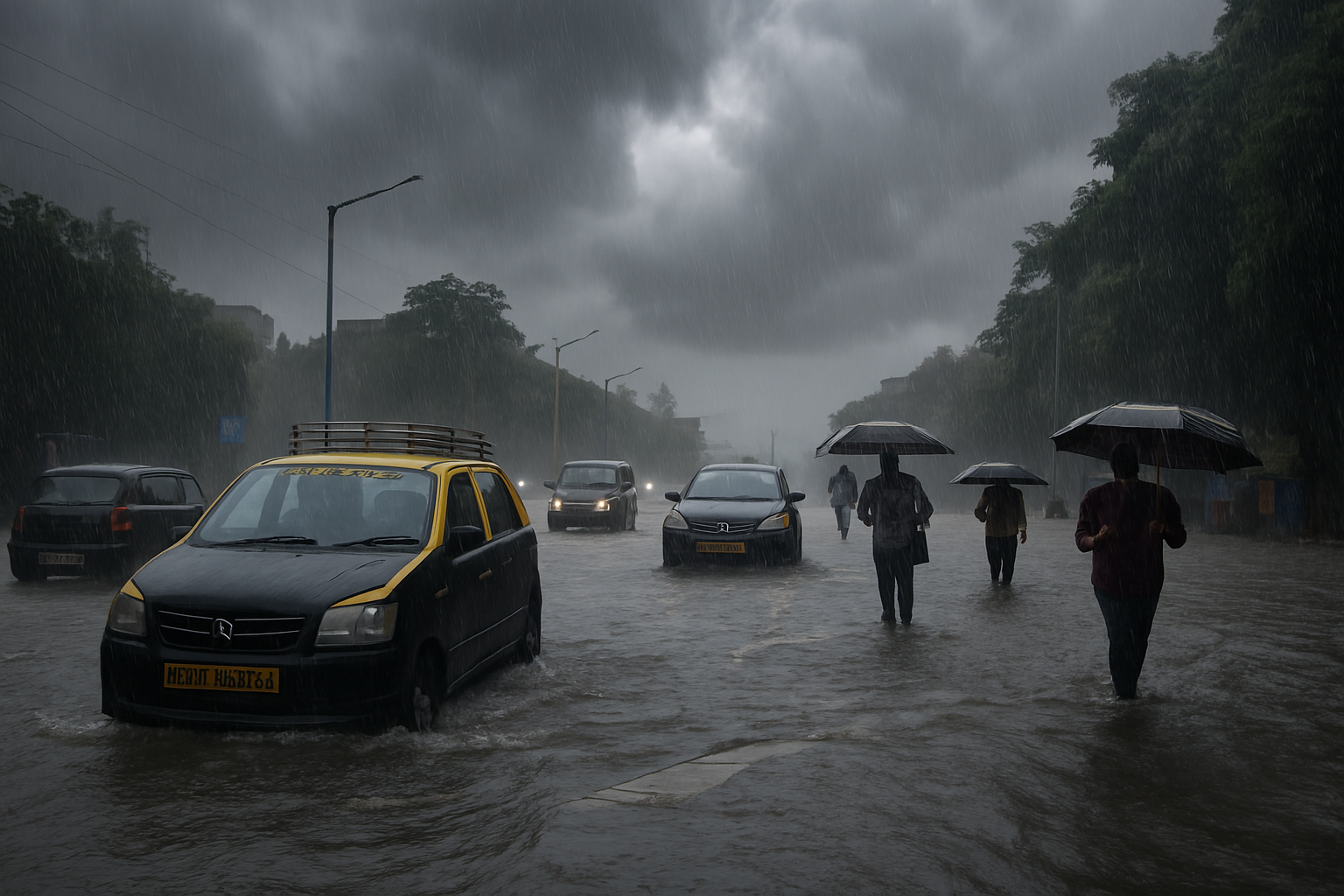
Mumbai continues to face heavy rainfall with severe waterlogging in multiple areas. IMD forecasts more showers for the coming days as civic authorities remain on alert.
Table of Contents
Executive Overview
Mumbai’s 2025 monsoon season has presented significant urban challenges as the city contends with heavy precipitation, widespread waterlogging, and transportation disruptions. Beginning in late September 2025, the meteorological event brought rainfall intensity that exceeded historical norms, affecting millions of residents across India’s financial capital. The situation underscores broader questions about urban infrastructure capacity, climate adaptation, and the intersection of rapid urbanization with environmental pressures in one of the world’s most densely populated metropolitan areas.
This comprehensive analysis examines the current weather conditions, infrastructure impacts, government response mechanisms, and long-term resilience strategies that Mumbai is implementing to address recurring monsoon challenges.
Current Weather Situation: September 2025 Analysis
Meteorological Parameters and Rainfall Intensity
The India Meteorological Department (IMD) documented significant precipitation patterns during the September 2025 monsoon event. Heavy rainfall in Mumbai commenced late Sunday night and extended into early morning hours of September 15, 2025, with peak precipitation occurring between 2:00 AM and 5:30 AM.
The rainfall intensity classification exceeded standard parameters during this period. Precipitation measurements categorized as “heavy to very heavy” ranged from 64.5 millimeters to 204.4 millimeters within a 24-hour window. The IMD maintained an orange alert status for multiple districts including Palghar, Pune, Ahilyanagar, and Beed, indicating heightened risk of localized flooding and severe weather conditions.
The meteorological department projected continuous precipitation patterns extending 48 to 72 hours from the initial event, with associated thunderstorm activity and gusty wind conditions. Rainfall forecasts indicated sustained heavy precipitation through Tuesday, September 16, 2025, prompting public advisories recommending residents remain indoors during peak rainfall periods.
Historical Context and Rainfall Patterns
Mumbai’s average monsoon rainfall ranges approximately 230 centimeters annually, characterized by high spatial and temporal variability. This metric demonstrates the inherent unpredictability of the city’s weather patterns during the June-through-September monsoon season.
Historical rainfall records provide essential context for understanding 2025’s precipitation patterns. During July 2005, Mumbai recorded 944 millimeters of rainfall in a single 24-hour period, establishing a benchmark for extreme weather events. This catastrophic event significantly influenced subsequent infrastructure development and disaster management protocols. The 2025 monsoon, while severe, demonstrated different precipitation distribution patterns compared to the 2005 event, though cumulative rainfall totals have continued challenging city infrastructure.
Notably, preliminary May 2025 data indicated Colaba station recorded 135 millimeters of rainfall by 8:30 AM, contributing to a monthly total of 295 millimeters. This measurement surpassed the previous century-old record of 279.4 millimeters established in 1918, marking the highest May precipitation in over 100 years at this monitoring station.
Geographic Impact: Severely Affected Areas
Critical Waterlogging Zones
Andheri East and West
Andheri experienced among the most severe flooding impacts during the September 2025 event. As a major commercial and residential hub supporting substantial daily commuter populations, waterlogging in this region created cascading disruptions across multiple sectors. Complete subway closure affected thousands of daily transit users, with transportation alternatives becoming overwhelmed. The area’s dense infrastructure and population concentration meant that localized flooding had disproportionate impact on broader city operations.
Dadar and Parel
These historically flood-prone, low-lying areas experienced significant inundation during the September event. Dense residential and commercial populations in these zones complicated emergency response operations. Vehicular movement virtually halted in severely affected micro-neighborhoods, isolating residents and restricting access to essential services. The pre-existing vulnerability of these areas, combined with infrastructure limitations, exacerbated flooding duration and intensity.
Kurla and Sion
Eastern suburban zones experienced partial flooding that disrupted public transportation networks. BEST bus services required significant route modifications, while auto-rickshaw operations faced substantial availability constraints. The cascading transportation disruptions affected commercial activity and commuter patterns throughout the eastern metropolitan region.
Western Express Highway
This vital arterial route experienced unprecedented traffic gridlock coinciding with peak rainfall periods. Reduced visibility combined with extensive road surface waterlogging created hazardous driving conditions. The highway’s role as a primary north-south transportation corridor meant that congestion effects extended throughout the broader metropolitan transportation network.
Infrastructure Impact Analysis
Transportation Network Disruptions
Railway Systems
The Central, Western, and Harbour railway lines experienced severe disruptions affecting millions of daily passengers. Track flooding in low-lying areas forced service cancellations and extended delays. The Harbour Line, particularly vulnerable to waterlogging in coastal zones, operated at reduced capacity. Metropolitan Railway services encountered operational challenges in underground sections, requiring modified service protocols and passenger communication strategies.
Aviation Sector
Mumbai International Airport issued red alert advisories during peak rainfall conditions. Major carriers including Air India and IndiGo implemented travel advisory protocols, with substantial flight disruptions and diversions. The airport’s critical role in national and international connectivity meant that weather-related operational challenges extended beyond local impacts to affect national aviation operations.
BEST Bus Services and Road Transportation
Significant route diversions and service cancellations affected BEST bus operations. Taxi and auto-rickshaw availability declined sharply in severely affected areas. Private vehicle movement decreased as drivers encountered flooded roads and hazardous conditions. Commercial transportation faced supply chain disruptions as goods movement became constrained.
Utilities and Essential Services
Power Distribution
Extensive power outages affected residential and commercial zones in Andheri, Kurla, and Chembur. Electrical infrastructure vulnerability during waterlogging events created secondary hazards including electrocution risks and equipment damage. Utility companies implemented emergency response protocols to restore services in critical zones.
Telecommunications
Network congestion occurred as increased communication demand coincided with infrastructure stress. Localized service disruptions affected mobile and broadband connectivity in severely waterlogged areas. Communication system resilience proved essential for emergency coordination and public information dissemination.
Water Supply and Sanitation
Flood-affected areas faced groundwater contamination risks and water supply disruption. Sewage system overflow during intense rainfall mixed stormwater with waste systems, creating public health hazards. Water quality concerns extended beyond immediate flooding areas as pollutants dispersed through municipal water networks.
Healthcare Services
Emergency services faced access challenges in severely flooded zones. Ambulance routing required modification as standard routes became impassable. Hospital operations continued through emergency protocols, though patient transportation and supply logistics faced constraints during peak flooding periods.
Root Cause Analysis: Understanding Mumbai’s Chronic Flooding
Colonial-Era Infrastructure Limitations
Mumbai’s drainage infrastructure reflects planning standards from the British colonial period, designed for significantly lower rainfall intensities and substantially smaller urban populations. The legacy drainage systems prove inadequate for contemporary monsoon patterns and urban density. Modifications and upgrades have been implemented since independence, yet infrastructure expansion has not kept pace with rapid urbanization.
The fundamental constraint stems from drainage system capacity limitations. Designed for approximately 250 millimeters of rainfall over extended periods, contemporary precipitation events frequently deliver similar or greater volumes within 24-hour or shorter timeframes, overwhelming system capacity.
Urbanization and Environmental Degradation
Rapid urban expansion has eliminated natural water absorption mechanisms that historically managed stormwater. Wetland areas, formerly covering substantial metropolitan zones, have been converted to commercial and residential construction. Mangrove ecosystems along coastal areas have been reduced through development pressures, removing natural flood barriers and nursery habitats for marine species.
Extensive concretization of previously permeable surfaces prevents natural water infiltration. Soil impermeability increases surface runoff, concentrating water flow toward drainage systems already operating at or beyond capacity. Urban heat islands created by dense construction intensify atmospheric convection, potentially contributing to localized precipitation intensification.
Waste Management and Drainage Blockages
Plastic pollution and garbage accumulation in stormwater drains create critical blockages during heavy rainfall. These obstructions prevent normal water flow, exponentially increasing flood risk across affected areas. Pre-monsoon desilting operations address accumulated debris, yet ongoing waste management challenges create recurring seasonal problems.
Government Response and Disaster Management
Brihanmumbai Municipal Corporation Operations
The BMC has implemented comprehensive disaster management operations during the September 2025 event. High-capacity water pumping machinery was strategically deployed in critical flooding zones to facilitate rapid water evacuation. Emergency response teams were positioned across vulnerable areas to provide immediate assistance.
Ward-level coordination structures enabled localized response efforts. Real-time monitoring systems tracked waterlogging levels across the city, informing resource allocation decisions. The BMC maintained round-the-clock operational status throughout the precipitation event, demonstrating organized disaster response capabilities.
Advanced Flood Management Infrastructure
Automated pumping stations capable of processing substantial water volumes were activated during peak rainfall periods. Early warning systems communicated flood risks to vulnerable populations. Designated emergency shelters provided temporary housing for displaced residents in severely affected areas. Medical response teams remained on standby to address health emergencies during extended flooding.
IMD Weather Forecasting and Public Communication
The IMD released weather forecasts and extended-range projections covering the period of September 11-24, 2025, with monthly outlook data for September precipitation patterns. Weather predictions provided essential guidance for emergency planning and public safety protocols. The department issued press releases detailing current weather status and meteorological analysis.
Impact on Daily Life and Economic Activity
Transportation Crisis and Commuter Challenges
The monsoon-induced transportation paralysis affected millions of daily commuters. Central, Western, and Harbour railway lines experienced substantial delays and cancellations. Metro services faced operational challenges in underground sections. Alternative transportation options became overwhelmed as conventional routes were disrupted.
Aviation disruptions affected domestic and international travel. Road transportation faced gridlock in multiple corridors. Emergency service access was compromised in severely affected zones, affecting ambulance and fire service response times.
Educational and Corporate Sector Adaptations
Educational institutions implemented precautionary closure measures during peak rainfall periods, prioritizing student safety. Schools modified schedules to accommodate severe weather conditions. Universities and colleges adjusted academic calendars to accommodate weather-related disruptions.
Corporate sector organizations implemented work-from-home policies during severe weather. Flexible work timing arrangements reduced peak-hour commuter loads. Enhanced employee safety protocols prioritized worker welfare during weather emergencies.
Business Operations and Economic Impact
Reduced business productivity resulted from employee absenteeism and transportation delays. Retail establishments closed during flooding events, incurring inventory damage and lost sales. Manufacturing operations faced supply chain disruptions affecting production schedules. Service industries encountered client meeting cancellations and service delivery delays.
Direct economic losses included transportation network repair costs, utility infrastructure replacement, building damage restoration, and emergency response expenditures. Manufacturing disruptions affected supply chains for downstream industries. Commercial property damage extended economic impacts beyond immediate flooding events.
Long-Term Resilience and Infrastructure Solutions
Smart City Infrastructure Integration
The integration of Internet of Things (IoT) sensor networks enables real-time drainage system monitoring and water level tracking. Artificial intelligence applications provide predictive flood modeling and risk assessment. Mobile applications deliver weather updates and emergency assistance guidance to residents.
Geographic Information Systems map flood-prone areas and evacuation routes. Blockchain technology facilitates transparent disaster relief fund management. These technological applications collectively support more effective urban flood management.
Nature-Based Solutions and Green Infrastructure
Urban wetland restoration projects recreate natural flood management capabilities. Rooftop rainwater harvesting systems distribute water management responsibilities across the urban landscape. Vertical gardens and building-integrated green spaces absorb precipitation. Bioswales integrated into urban design function as natural drainage channels.
Mangrove ecosystem restoration protects coastal areas from storm surge and flooding. Urban forest expansion increases natural water absorption capacity. These nature-based approaches complement technological solutions in comprehensive flood management strategies.
Infrastructure Modernization Roadmap
Next-generation drainage systems incorporate AI-enabled predictive management capabilities. Green infrastructure integration embeds nature-based solutions within urban design. Climate-proof transportation networks maintain mobility during severe weather. Flood-resistant building standards mandate resilient architecture for new construction.
Community Response and Social Resilience
Grassroots Support Networks
Community kitchens provided food for stranded residents during the September 2025 event. Private homes opened doors to displaced individuals, demonstrating neighborhood solidarity. WhatsApp groups and social media networks facilitated real-time information sharing. Collective procurement initiatives pooled community resources for emergency supplies.
NGO and Volunteer Organizations
Professional disaster relief organizations coordinated with local volunteers. Student organizations contributed to rescue and relief operations. Religious institutions served as emergency shelters and supply distribution centers. Corporate social responsibility programs directed business sector resources toward community relief.
Traditional Knowledge and Cultural Adaptation
Monsoon festival celebrations foster community bonding during the rainy season. Indigenous water management practices offer historical insights for contemporary flood management. Seasonal agriculture techniques adapted for urban gardening support food security. Community storytelling preserves resilience narratives and survival experiences. Intergenerational knowledge transfer conveys elder wisdom to younger residents.
Environmental and Health Considerations
Water Quality and Public Health Risks
Sewage system overflow during heavy rainfall creates water contamination. Industrial pollution and chemical runoff enter flood waters. Solid waste dispersion spreads garbage and plastic throughout water bodies. Groundwater contamination risks extend public health concerns beyond visible flooding areas.
Vector-borne disease risks increase through mosquito breeding in stagnant water. Mold and fungal growth emerge in damp residential and commercial spaces. Respiratory health concerns affect sensitive populations exposed to humidity-related pollution. Skin infections develop from contact with contaminated flood water.
Healthcare Responses and Preventive Measures
Emergency medical services maintained operational readiness during flooding events. Pharmaceutical supply chains remained functional for medication access. Mental health support services addressed stress and trauma during extended weather emergencies. Alternative healthcare facility routing directed patients through passable corridors.
Government Policy Framework and Legislative Response
State-Level Initiatives
Building code regulations mandate flood-resistant construction standards for new development. Environmental clearance requirements assess project impacts on natural drainage. Disaster management protocols standardize emergency response procedures. Insurance policy mandates require flood coverage for properties in vulnerable areas.
Multi-billion rupee allocations fund drainage system upgrades and infrastructure improvements. Emergency response budgets support disaster management operations. Smart city solution investments enhance flood prediction and management capabilities. International partnerships facilitate climate resilience expertise sharing.
Central Government Support Systems
National disaster management frameworks integrate state-level operations with central coordination. Early warning systems connect with national meteorological networks. Financial assistance programs support state-level flood management implementation. Technical expertise transfers knowledge from other flood-prone Indian cities. Climate change adaptation policies address urban vulnerability to extreme weather events.
Future Outlook: Building Climate-Resilient Infrastructure
Vision for Sustainable Urban Development
Mumbai’s transformation into a climate-resilient megacity requires integrated planning addressing environmental sustainability, social equity, and economic viability. Infrastructure modernization incorporates next-generation drainage systems with predictive AI capabilities. Green infrastructure integration embeds nature-based solutions throughout urban design.
Resilient transportation networks maintain mobility during adverse weather. Smart building standards mandate flood-resistant architecture. IoT networks provide city-wide real-time monitoring. Artificial intelligence applications deliver predictive analytics for flood prevention.
Community Participation and Citizen Engagement
Participatory governance involves residents in flood management decision-making. Local knowledge integration incorporates traditional wisdom with modern solutions. Volunteer network expansion systematizes citizen response capabilities. Educational program implementation builds disaster preparedness awareness from school levels through professional training.
Small business support systems help local enterprises adapt to climate challenges. Employment diversification creates weather-independent economic opportunities. Insurance sector development expands comprehensive climate-related risk coverage.
Frequently Asked Questions
Q1: Why does Mumbai experience recurrent waterlogging despite ongoing infrastructure improvements?
A1: Mumbai’s waterlogging challenges stem from multiple interconnected factors. Legacy drainage infrastructure, designed during the colonial period for substantially lower rainfall intensity and smaller populations, proves inadequate for contemporary weather patterns and urban density. Rapid urbanization has eliminated natural water absorption areas previously managed by wetlands and permeable surfaces. High spatio-temporal rainfall variability, coastal tidal influences, and plastic waste blocking drains compound infrastructure limitations. The scale of contemporary urban development creates cumulative pressures that modernized infrastructure has not fully addressed, despite ongoing upgrades and investment.
Q2: How reliable are IMD weather forecasts for monsoon predictions in Mumbai?
A2: IMD weather predictions have demonstrated substantial accuracy improvements through satellite technology integration, AI-powered modeling systems, and real-time data processing. The department maintains multiple monitoring stations throughout Mumbai and surrounding regions, providing localized weather intelligence. While no forecasting system achieves 100 percent accuracy, IMD forecasts provide essential guidance for emergency planning and public safety protocols. Residents should combine official meteorological alerts with local observation and community networks for comprehensive emergency preparedness.
Q3: What specific actions can individual residents implement to improve personal flood preparedness?
A3: Residents should maintain 72-hour emergency supply kits containing food, water, medicines, and fully charged communication devices. Documentation should be stored in waterproof containers. Physical cash reserves facilitate transactions during power outages. Residents in low-lying areas should pre-identify evacuation routes and safe zone locations. Upper floor accessibility ensures vertical movement during ground-level flooding. Emergency contact information should be readily available. Vehicle owners should maintain emergency supplies including first aid kits and communication devices.
Q4: How do current 2025 rainfall patterns compare with historical monsoon data?
A4: The 2025 monsoon season has demonstrated significant intensity with record precipitation at multiple monitoring stations. Colaba recorded 135 millimeters by 8:30 AM in May 2025, contributing to a monthly total of 295 millimeters—the highest-ever recorded in over a century, surpassing the previous 1918 record of 279.4 millimeters. Current rainfall statistics indicate excess precipitation compared to historical averages. This pattern suggests accelerating climate change impacts with increasingly frequent extreme weather events. Mumbai must adapt infrastructure and emergency response systems to accommodate potentially new normal precipitation patterns.
Q5: What specific initiatives is BMC implementing to reduce chronic flooding?
A5: BMC has deployed high-capacity pumping machinery in critical flooding zones and established 24-hour monitoring systems. Ward-level emergency response teams provide localized support. Pre-monsoon drainage desilting operations address debris accumulation. The corporation has invested in automated pumping stations, early warning systems, and community alert mechanisms. Regular updates through social media and news channels keep residents informed. However, effectiveness remains constrained by monsoon intensity and ongoing urbanization pressures. Long-term solutions require sustained infrastructure investment integrated with comprehensive urban planning approaches.
Q6: How does Mumbai’s transportation system adapt during severe weather emergencies?
A6: Transportation authorities implement real-time passenger information systems during severe weather. Alternative route planning facilitates bypass around flooded corridors. Reserved emergency lanes prioritize essential and medical services. Airlines issue travel advisories during heavy rain conditions, sometimes canceling or diverting flights. Railway authorities maintain emergency supplies and medical assistance for stranded passengers. BEST bus services operate modified routes when primary corridors become impassable. During severe weather, authorities recommend avoiding non-essential travel and following official transportation guidelines.
Q7: What climate resilience strategies are being implemented for long-term flood mitigation?
A7: Mumbai is investing in smart city infrastructure incorporating IoT-enabled flood monitoring systems. Mandatory green building standards require rainwater harvesting and flood-resistant construction. Wetland and mangrove ecosystem restoration recreates natural flood management capabilities. Next-generation drainage systems incorporate AI-powered predictive management. Urban forest expansion increases natural water absorption. Community engagement programs build grassroots resilience through volunteer networks and educational initiatives. Participatory governance integrates traditional knowledge with modern technological solutions.
Q8: How can communities and individual citizens contribute to reducing flood risks?
A8: Citizens can reduce flood risks through responsible waste disposal preventing drain blockages. Rooftop rainwater harvesting systems distribute water management across the urban landscape. Participation in community emergency preparedness programs builds collective readiness. Support for environmental conservation initiatives protects natural drainage mechanisms. Neighborhood support networks enhance mutual assistance during emergencies. Social media information sharing facilitates real-time emergency communication. Volunteering with local NGOs during emergencies expands community response capacity. Advocacy for sustainable development practices influences policy decisions. Individual emergency preparedness reduces burden on municipal emergency services.
Key Takeaways and Implications
Mumbai’s 2025 monsoon season has reinforced long-standing challenges regarding urban infrastructure capacity and environmental sustainability in rapidly urbanizing megacities. The persistent waterlogging despite ongoing infrastructure improvements highlights the complexity of flood management in dense urban environments with legacy infrastructure systems.
Climate change implications suggest increasingly frequent extreme precipitation events in coming decades. Current infrastructure modernization efforts represent essential adaptations to changing meteorological patterns. However, sustainable solutions require integrated approaches combining technological innovation, nature-based solutions, and comprehensive urban planning that prioritizes environmental resilience alongside economic development.
Community participation and grassroots preparedness remain critical components of comprehensive disaster management. Individual residents and neighborhood associations play essential roles in emergency response when formal systems become overwhelmed. Education, communication, and inclusive governance structures strengthen overall urban resilience.
The integration of advanced weather prediction systems, real-time monitoring technologies, and AI-powered analytics provides improved situational awareness for emergency management. These technological advances, combined with green infrastructure and nature-based solutions, offer evidence-based pathways for enhancing Mumbai’s climate resilience. Continued investment in these interconnected approaches will be essential for managing future monsoon challenges while maintaining the economic vitality that defines this global financial center.
Author Information
About the Author: Nueplanet
Nueplanet is an independent researcher and content creator specializing in urban environmental challenges, climate adaptation, and disaster management in South Asian megacities. With a focus on evidence-based analysis and verified data sourcing, Nueplanet examines the intersection of rapid urbanization, environmental sustainability, and public policy. This article draws from publicly available data from the India Meteorological Department, Brihanmumbai Municipal Corporation press releases, and peer-reviewed research on urban flood management.
Commitment to Accuracy and Verification
This article prioritizes accuracy through reliance on official government sources, established research institutions, and verified news agencies. The India Meteorological Department provides meteorological data and forecasting information. The Brihanmumbai Municipal Corporation furnishes operational response details. Historical rainfall records derive from official monitoring stations maintained by IMD.
Publish Date: July 23, 2025
Last Updated: July 23, 2025
Disclaimer
This article presents factual information based on publicly available data and official government sources. The content is intended for informational purposes and does not constitute professional engineering, meteorological, or emergency management advice. Readers should consult official government agencies, meteorological departments, and emergency management authorities for authoritative guidance during weather emergencies. Individual circumstances may require personalized professional consultation from relevant experts.
Helpful Resources
Latest Posts
- HBSE Compartment Exam 2025: Admit Cards Released for Haryana Class 10 and 12 – Check Full Details
- Karnataka 2nd PUC Exam 3 Results 2025 Declared on karresults.nic.in
- JAC Result 2025 Declared: Check Class 11 Pass Percentage, Websites, and More
- National RailOne App: Indian Railways’ One-Stop Solution for Travellers
- HDB Financial Services IPO Allotment GMP: All You Need to Know
Related Posts










Post Comment