








Maruti Suzuki’s Inspiring Power Journey: Shaping India’s Auto Future
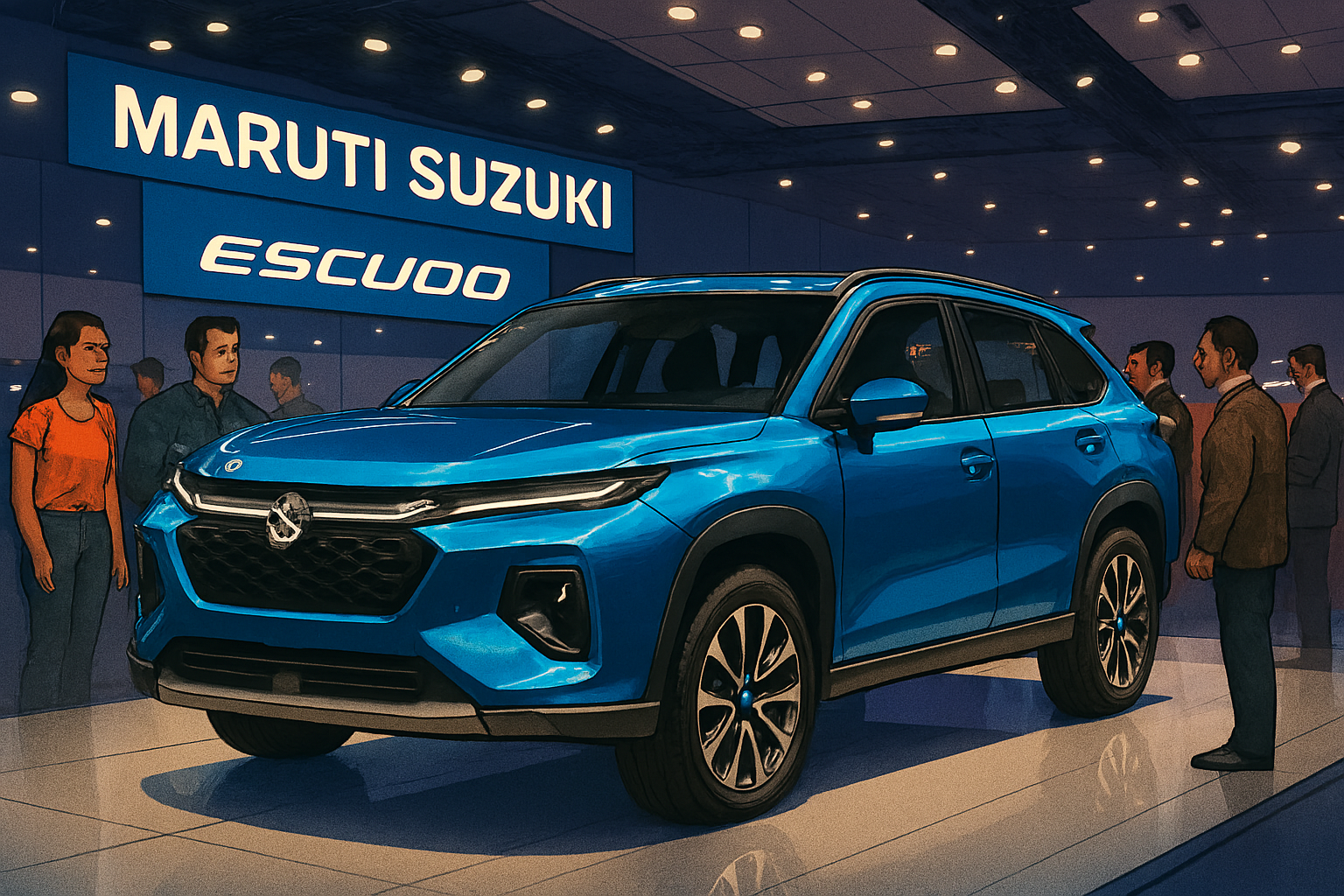
The Maruti Suzuki brand continues to redefine India’s automobile industry with its latest SUV launches and the much-awaited Maruti Suzuki Escudo. Here’s everything you need to know about features, pricing, and market impact.
Table of Contents
Introduction to Maruti Suzuki’s Evolution in the Indian Automotive Sector
Maruti Suzuki India Limited has maintained its position as the leading passenger vehicle manufacturer in the country since its establishment in 1983. The company entered the Indian market through a joint venture between the Government of India and Suzuki Motor Corporation of Japan. Over the past four decades, the manufacturer has delivered over 25 million vehicles to Indian consumers.
The company’s market presence extends beyond metropolitan areas into tier-2 and tier-3 cities across India. According to official sales data from the Society of Indian Automobile Manufacturers (SIAM), Maruti Suzuki holds approximately 41.7% of the passenger vehicle market share as of August 2025. This position reflects consistent product development, extensive distribution networks, and adaptive pricing strategies.
In 2025, the automotive landscape in India is undergoing significant transformation. Electric vehicle adoption is accelerating, hybrid powertrains are gaining acceptance, and consumer preferences are shifting toward sport utility vehicles (SUVs). Maruti Suzuki has responded to these trends with strategic product launches, technology partnerships, and infrastructure investments. This analysis examines the company’s current product portfolio, upcoming launches, competitive positioning, and long-term sustainability initiatives.
Historical Context: Maruti Suzuki’s Impact on Indian Mobility
The Maruti 800 Era and Market Democratization
The launch of the Maruti 800 in December 1983 represented a pivotal moment in Indian automotive history. Prior to this introduction, the Indian passenger vehicle market was limited to Ambassador and Premier Padmini models. These vehicles were expensive, had limited availability, and featured outdated technology.
The Maruti 800 was priced at ₹47,500 at launch, making it accessible to middle-income households. The vehicle featured a 796cc three-cylinder engine producing 37 bhp, which was adequate for Indian road conditions. Fuel efficiency averaged 18-20 km/l, significantly better than existing alternatives. The compact dimensions (3,215mm length) made it suitable for urban traffic conditions.
Production began at the Gurgaon facility with an initial capacity of 40,000 units annually. By 1986, production had increased to 100,000 units per year. The Maruti 800 remained in production until 2014, with cumulative sales exceeding 2.87 million units. This extended production run established Maruti as a trusted brand across multiple generations of Indian consumers.
Expansion and Diversification (1990-2010)
The 1990s and 2000s saw Maruti Suzuki expand its product portfolio systematically. The Omni was introduced in 1984 as a multi-purpose vehicle for commercial and family use. The Gypsy, launched in 1985, targeted rural markets and became the standard vehicle for Indian security forces.
In 1998, the Alto was introduced as the successor to the Maruti 800. The Alto featured a more modern design, improved safety features, and better fuel efficiency. It became India’s best-selling car for 16 consecutive years from 2004 to 2020, with annual sales often exceeding 250,000 units.
The Swift, launched in 2005, marked Maruti’s entry into the premium hatchback segment. Developed as a global model by Suzuki, the Swift featured contemporary styling, better performance, and enhanced safety features. The vehicle appealed to younger buyers and urban professionals. Swift sales have consistently exceeded 200,000 units annually since 2010.
The WagonR, introduced in 1999, pioneered the tall-boy hatchback design in India. Its spacious interior and fuel efficiency made it popular with families. The Dzire, a compact sedan based on the Swift platform, was launched in 2008 and became the best-selling sedan in India.
Transition to Modern Automotive Technologies (2010-2025)
Between 2010 and 2025, Maruti Suzuki has adapted to changing regulatory requirements and consumer expectations. The company phased out diesel engines from its portfolio by April 2020 to align with stricter emission norms. This decision was based on the increasing cost of diesel engine development to meet BS-VI emission standards.
In 2019, Maruti Suzuki began introducing mild hybrid technology through its Smart Hybrid Vehicle by Suzuki (SHVS) system. This technology was initially offered in Ciaz, Ertiga, and XL6 models. The system features an Integrated Starter Generator (ISG) that provides torque assist during acceleration and regenerative braking. Fuel efficiency improvements of 4-7% were documented in official testing.
The company established Toyota Kirloskar Motor (TKM) partnership in 2020 for technology sharing and collaborative product development. This alliance has enabled Maruti to access Toyota’s strong hybrid technology while Toyota benefits from Maruti’s manufacturing scale and distribution network in India. The Grand Vitara strong hybrid, launched in 2022, is the first product from this collaboration.
Current Market Position and Competitive Analysis
Market Share and Sales Performance Data
Maruti Suzuki sold 1,43,708 passenger vehicles in August 2025, according to official company disclosures. This represents a 5.1% year-on-year growth compared to August 2024. The company’s domestic sales stood at 1,25,640 units, while exports accounted for 18,068 units.
For the April-August 2025 period, Maruti Suzuki’s cumulative sales reached 7,82,382 units. The compact segment (Alto, S-Presso, WagonR, Celerio, Swift, Baleno) contributed 4,15,234 units. The utility vehicle segment (Brezza, Grand Vitara, Ertiga, XL6, Jimny) accounted for 2,45,890 units, reflecting the growing importance of SUVs in the company’s portfolio.
The company’s market share has remained stable between 40-43% over the past three years. This consistency is notable given increased competition from Tata Motors, Hyundai Motor India, and Mahindra & Mahindra. Maruti’s position is strongest in the entry-level and compact segments, where it holds approximately 55% market share.
Competitive Landscape Analysis
Hyundai Motor India holds the second position with approximately 15% market share. The company’s strength lies in contemporary design, feature-rich offerings, and strong brand perception among urban buyers. Models like Creta, Venue, and i20 compete directly with Maruti’s SUV and premium hatchback offerings.
Tata Motors has grown its market share to approximately 13% by focusing on safety ratings and electric vehicles. The Nexon became India’s first car to receive a 5-star Global NCAP safety rating in 2018. Tata’s EV portfolio, including Nexon EV, Tiago EV, and Tigor EV, positions it as the leading electric vehicle manufacturer in India with over 70% EV market share.
Mahindra & Mahindra has strengthened its position in the SUV segment with launches like XUV700, Scorpio-N, and Thar. The company sold 96,648 vehicles in August 2025, representing its highest-ever monthly sales. Mahindra’s focus on authentic SUV characteristics (4×4 capability, high ground clearance, robust build) has resonated with consumers.
Kia India and MG Motor India, both relatively new entrants, have captured approximately 6% and 2.5% market share respectively. These brands target premium segment buyers with feature-rich products, long warranty periods, and contemporary designs.
Maruti Suzuki’s Competitive Advantages
The company maintains several structural advantages that support its market leadership. The service network comprises over 4,091 service facilities across India, including presence in rural and semi-urban areas. This extensive reach ensures parts availability and service accessibility, reducing total cost of ownership.
Maruti Suzuki’s distribution network includes 3,524 sales outlets across 1,967 cities. This density is unmatched by competitors and provides significant advantages in customer acquisition, especially in smaller markets where competitors have limited presence.
The company’s manufacturing capacity stands at 2.25 million units annually across three facilities: Gurgaon (Haryana), Manesar (Haryana), and Hansalpur (Gujarat). This scale enables competitive manufacturing costs and consistent quality standards. The Toyota-Suzuki agreement also provides access to Toyota’s Karnataka facility for additional capacity.
Resale value is another significant factor. Industry data indicates that Maruti vehicles retain 55-65% of their original value after three years, compared to 45-55% for most competitors. This higher residual value reduces the effective cost of ownership and makes Maruti vehicles attractive in both new and used car markets.
Product Portfolio Analysis: 2025 Lineup
Entry-Level Segment Offerings
The Alto continues as Maruti’s most affordable offering, priced from ₹3.54 lakh (ex-showroom). The current generation features a 796cc three-cylinder petrol engine producing 47.3 bhp and 69 Nm torque. Fuel efficiency is rated at 22.05 km/l (ARAI certified). The vehicle targets first-time car buyers and those transitioning from two-wheelers.
The S-Presso, positioned as a mini-SUV, is priced from ₹4.26 lakh. It features a tall-boy design with 180mm ground clearance. The 998cc K10C petrol engine delivers 67 bhp and 89 Nm torque. The vehicle appeals to buyers seeking SUV-like proportions at entry-level prices.
WagonR remains a strong seller in this segment with prices starting at ₹5.54 lakh. The vehicle offers spacious interiors due to its tall-boy design, with headroom exceeding most competitors. Two engine options are available: 998cc (67 bhp) and 1,197cc (90 bhp). Monthly sales average 15,000-18,000 units.
Compact Hatchback and Sedan Segment
The Swift, positioned as a premium hatchback, is priced from ₹6.49 lakh. The vehicle features a 1,197cc K12N petrol engine producing 90 bhp and 113 Nm torque. Both manual and automatic transmission options are available. The Swift’s sporty design and handling characteristics appeal to young buyers and driving enthusiasts.
The Baleno competes in the premium hatchback segment with prices starting at ₹6.66 lakh. The vehicle offers more interior space than Swift, with a focus on comfort and features. Engine specifications match the Swift (1,197cc, 90 bhp). Advanced features include a heads-up display, 360-degree camera, and wireless charging.
The Dzire is India’s best-selling sedan, priced from ₹6.79 lakh. Based on the Swift platform, it offers boot space of 382 liters. The sedan configuration appeals to families and taxi operators. Monthly sales typically range between 18,000-22,000 units, reflecting strong market acceptance.
SUV and Utility Vehicle Portfolio
The Brezza, Maruti’s compact SUV, is priced from ₹8.34 lakh. The vehicle features a 1,462cc K15C petrol engine with mild hybrid technology, producing 103 bhp and 137 Nm torque. Ground clearance is 198mm, suitable for varied road conditions. Safety features include six airbags, ESP, and hill-hold assist as standard across all variants.
The Grand Vitara represents Maruti’s entry into mid-size SUVs, priced from ₹10.70 lakh. Two powertrain options are available: a 1,490cc mild hybrid producing 103 bhp, and a 1,490cc strong hybrid system with combined output of 115 bhp. The strong hybrid variant delivers fuel efficiency of 27.97 km/l, the highest in its segment. This model is a result of the Toyota-Suzuki partnership, sharing its platform and hybrid technology with Toyota Hyryder.
The Ertiga and XL6 serve the multi-purpose vehicle segment with seven-seat configurations. Ertiga is priced from ₹8.64 lakh, while XL6 (featuring captain seats in the second row and more premium positioning) starts at ₹11.61 lakh. Both vehicles use the 1,462cc K15C engine with mild hybrid technology.
The Jimny, launched in 2023, targets lifestyle and adventure enthusiasts. Priced from ₹12.74 lakh, it features authentic 4×4 capability with Suzuki’s AllGrip Pro system. The compact dimensions (3,985mm length) and 210mm ground clearance make it suitable for off-road use. Limited sales volumes (approximately 2,000-3,000 units monthly) reflect its niche positioning.
Premium Segment Development
The Invicto, launched in 2023, is Maruti’s first offering above ₹20 lakh. Priced from ₹24.79 lakh, it is essentially a rebadged Toyota Innova Hycross, resulting from the Toyota-Suzuki partnership. The vehicle features a strong hybrid powertrain (2,000cc engine with electric motor) producing 186 bhp combined output. The MPV positioning and premium features target family buyers seeking spacious, fuel-efficient transportation.
New Product Launch Analysis: 2025 SUV Entry
Market Context and Segment Dynamics
The compact and mid-size SUV segments have experienced significant growth in India. According to SIAM data, SUV sales constituted 42% of total passenger vehicle sales in fiscal year 2024-25, up from 34% in 2020-21. This shift reflects changing consumer preferences, improved road infrastructure, and the aspirational value associated with SUV ownership.
Several factors drive SUV demand in India. Higher ground clearance (typically 180-210mm) addresses concerns about road conditions and water logging during monsoons. The commanding seating position and robust styling appeal to buyers seeking perceived value and status. Improved safety features, including multiple airbags and advanced driver assistance systems, have become more common in newer SUV models.
The competitive landscape in this segment includes Hyundai Creta, Kia Seltos, Tata Harrier, MG Hector, Mahindra XUV700, and Skoda Kushaq. These vehicles are typically priced between ₹10 lakh and ₹20 lakh, with feature-rich top variants approaching ₹25 lakh.
New SUV: Design and Engineering Analysis
Maruti Suzuki’s new SUV for 2025 targets the gap between Brezza (compact SUV) and Grand Vitara (mid-size SUV). The vehicle is expected to measure approximately 4,300mm in length, positioning it as a compact-plus offering. Ground clearance is anticipated to be around 200mm, consistent with segment standards.
The design language incorporates contemporary SUV elements. LED daytime running lights integrated into the front fascia provide visual distinction. Dual-tone paint options (contrasting roof color) appeal to younger demographics. Wheel sizes of 17-18 inches balance aesthetics with ride comfort.
Interior space optimization focuses on rear-seat comfort, a critical factor for Indian families. Rear legroom is expected to exceed 900mm, comparable to segment leaders. Boot space capacity of 400+ liters addresses luggage requirements for long-distance travel.
Powertrain Options and Performance Specifications
Three powertrain variants are planned to address different buyer preferences and regulatory requirements. The base petrol variant uses the 1,490cc K15C engine with mild hybrid technology, producing 103 bhp and 138 Nm torque. This configuration balances performance and fuel efficiency, with ARAI-certified mileage expected around 19-20 km/l.
The strong hybrid variant, utilizing technology from the Toyota partnership, combines a 1,490cc Atkinson cycle petrol engine with an electric motor. Total system output is 115 bhp. The hybrid system enables electric-only driving at low speeds, reducing fuel consumption in city traffic. Expected fuel efficiency is 25-26 km/l, significantly better than conventional petrol alternatives.
An electric variant is under development, aligning with Maruti’s electrification roadmap. Technical specifications are not yet finalized, but industry expectations suggest a 40-50 kWh battery pack providing 400-450 km range. This would position it competitively against Tata Nexon EV, Hyundai Cona Electric, and MG ZS EV.
Technology Integration and Features
The infotainment system features a 10-12 inch touchscreen with wireless connectivity for both Android Auto and Apple CarPlay. The system includes voice recognition supporting multiple Indian languages. Over-the-air update capability enables software improvements without service center visits.
Advanced Driver Assistance Systems (ADAS) are expected in top variants. These systems typically include adaptive cruise control, lane departure warning, automatic emergency braking, and blind spot monitoring. While ADAS adoption in India is still developing, its inclusion positions the vehicle as technologically advanced.
Connectivity features include embedded eSIM for telematics services. Remote vehicle monitoring through smartphone applications enables functions like location tracking, geo-fencing, and vehicle diagnostics. These features appeal to technology-oriented buyers and enhance vehicle security.
Pricing Strategy and Market Positioning
The announced price range of ₹10.5 lakh to ₹18 lakh positions the new SUV competitively. The base variant at ₹10.5 lakh competes with mid-variants of Brezza and entry variants of Creta and Seltos. The top-end price of ₹18 lakh remains below premium mid-size SUVs like XUV700 and Hector Plus, while offering comparable features.
This pricing strategy reflects Maruti’s traditional approach of offering strong value propositions. The company typically prices vehicles 5-10% below directly comparable competitors, compensating through higher service network density and better fuel efficiency.
Volume expectations are significant. Given the segment’s growth trajectory and Maruti’s distribution strength, monthly sales targets likely range between 8,000-12,000 units. This would make it one of the top-selling SUVs in India within 12-18 months of launch.
Maruti Suzuki Escudo: Premium Segment Entry Analysis
Global Heritage and India Market Entry
The Suzuki Escudo, known internationally as Suzuki Grand Vitara (distinct from the India-specific Grand Vitara compact SUV), has a production history dating to 1988. The nameplate has been sold in over 190 countries with cumulative sales exceeding 3.5 million units globally.
The decision to introduce Escudo in India represents Maruti’s strategy to expand into premium segments where it has historically underperformed. Previous attempts with Kizashi (2011-2013) and S-Cross (2015-2020, later repositioned as crossover) achieved limited success due to pricing concerns and brand perception challenges.
The India-spec Escudo is expected to be a distinct product, potentially sharing platforms with Suzuki’s global SUV lineup. The vehicle will likely measure 4,500-4,700mm in length, placing it in the mid-size SUV category. This size enables both urban usability and spacious interiors suitable for long-distance travel.
Engineering Specifications and Performance Characteristics
Two engine options are anticipated for the Indian market. The turbo-petrol variant will likely feature a 1,400-1,500cc turbocharged engine producing 140-150 bhp and 220-240 Nm torque. This powertrain configuration balances performance with fuel efficiency, addressing emission norms while providing adequate power for highway driving.
The strong hybrid option represents the technology transfer from Toyota-Suzuki collaboration. This system combines a 2,000-2,500cc Atkinson cycle engine with electric motors, producing combined output of 180-200 bhp. The hybrid configuration enables significant fuel efficiency improvements, potentially achieving 18-22 km/l in real-world conditions.
All-wheel drive capability is expected in higher variants, essential for authentic SUV positioning. The AWD system would include electronic torque distribution, hill descent control, and terrain mode selection. Ground clearance of 200-210mm ensures capability on rough terrain and flooded roads.
Interior Design and Comfort Features
The cabin design emphasizes premium materials and build quality. Leather or synthetic leather upholstery will be standard in higher variants, with options for ventilated front seats. The dashboard layout incorporates soft-touch materials and metallic or wood accents.
Second-row comfort receives special attention, as this significantly influences purchase decisions in the Indian market. Features like reclining rear seats, rear AC vents, USB charging ports, and adequate legroom (900mm+) are expected. A panoramic sunroof, increasingly common in premium SUVs, enhances the perception of space and luxury.
The cargo area will offer 500+ liters of boot space with rear seats in use, expandable to 1,200+ liters with seats folded. This capacity accommodates family luggage for extended trips, a common use case in India.
Safety Systems and Driver Assistance Technology
Safety equipment in the Escudo will likely exceed current segment standards to justify premium pricing. Six to seven airbags will be standard across variants. Electronic Stability Program (ESP), Anti-lock Braking System (ABS) with Electronic Brakeforce Distribution (EBD), and traction control are baseline expectations.
ADAS features represent a key differentiator. Anticipated systems include adaptive cruise control that maintains set distance from vehicles ahead, lane keep assist that provides steering inputs to prevent unintentional lane departures, and autonomous emergency braking that detects potential collisions and applies brakes automatically.
Additional safety features may include 360-degree camera system with bird’s eye view, rear cross-traffic alert, and blind spot monitoring. These technologies, while not yet mandatory in India, are becoming important for premium segment buyers who compare features across brands and price points.
Connectivity and Infotainment Systems
The infotainment system will feature a large touchscreen display (12+ inches) with high resolution. The interface will support wireless smartphone integration, voice commands in multiple languages, and gesture controls. Over-the-air updates enable continuous feature improvements and security patches.
Telematics services through embedded connectivity provide remote vehicle access. Functions include remote engine start, climate control pre-setting, location tracking, and theft alerts. These features require subscription services, creating recurring revenue streams for the manufacturer.
Audio system quality receives emphasis in premium vehicles. A branded audio system (Bose, JBL, or similar) with 8-10 speakers and subwoofer will likely be offered in top variants. This addresses the preferences of buyers who prioritize in-cabin entertainment during long drives.
Expected Pricing and Competitive Positioning
The anticipated price range of ₹22-28 lakh positions Escudo against established premium SUVs. Direct competitors include Hyundai Tucson (₹29.02-35.94 lakh), Jeep Compass (₹19.99-33.29 lakh), MG Hector Plus (₹17.90-24.56 lakh), and to some extent, Mahindra XUV700 (₹13.99-26.99 lakh).
This pricing presents challenges and opportunities. Maruti’s brand has strong association with affordability and value, which can be perceived as misaligned with premium positioning. However, the brand’s reputation for reliability, fuel efficiency, and service quality could attract buyers seeking premium features without luxury brand premiums.
Success will depend on several factors. Design and build quality must match or exceed competitors to justify premium pricing. Feature content should be competitive with segment offerings. Marketing communication needs to establish the Escudo as distinct from Maruti’s volume products, potentially using separate showroom sections or dedicated sales consultants.
Volume expectations for Escudo are modest compared to Maruti’s mass-market products. Monthly sales of 1,500-2,500 units would be considered successful in this segment, given that Tucson sells approximately 500-800 units monthly and Compass averages 2,000-3,000 units.
Electrification Strategy and Hybrid Technology Roadmap
Current Hybrid Technology Implementation
Maruti Suzuki’s electrification journey began with Smart Hybrid Vehicle by Suzuki (SHVS) technology in 2017. This mild hybrid system includes an Integrated Starter Generator (ISG) that replaces the conventional alternator and starter motor. The ISG is belt-driven and provides torque assistance of approximately 13 Nm during acceleration.
The system includes a lithium-ion battery pack (typically 0.11 kWh capacity) that stores energy recovered during braking. This energy assists the engine during acceleration and powers electrical systems when the engine is off. Fuel efficiency improvements of 4-7% are achieved through reduced engine load and improved energy management.
The strong hybrid system introduced in Grand Vitara represents a significant technological advancement. Developed by Toyota and adapted for Suzuki vehicles, this system uses a 1,490cc Atkinson cycle engine (92 bhp) combined with an electric motor (79 bhp). Total system output is 115 bhp. The 0.78 kWh battery pack enables electric-only driving at speeds up to 100 km/h, depending on battery charge and power demand.
The strong hybrid’s advantage is most evident in city driving conditions. During stop-and-go traffic, the system frequently operates in electric mode, eliminating fuel consumption during low-speed operation. Real-world fuel efficiency in city conditions often exceeds 22-24 km/l, compared to 13-15 km/l for conventional petrol vehicles.
Electric Vehicle Development and Launch Timeline
Maruti Suzuki’s electric vehicle strategy has evolved cautiously, reflecting concerns about infrastructure readiness and total cost of ownership in India. The company has publicly stated that EVs will become a significant part of its portfolio only when charging infrastructure, battery costs, and consumer acceptance reach appropriate levels.
Initial EV plans focus on the compact SUV segment, where electrification aligns with consumer preferences for newer technology. The first EV is expected to launch in 2025-26, based on statements from company executives and observed testing activity. The vehicle will likely use the same platform as the new SUV, adapted for battery pack integration.
Battery pack specifications are crucial for market acceptance in India. A 40-50 kWh battery capacity appears likely, providing 400-450 km range (WLTP cycle). This range addresses inter-city travel within single charges while keeping battery costs manageable. Pricing is expected around ₹15-19 lakh, making it competitive with existing EV offerings.
Charging infrastructure development is a stated priority. Maruti Suzuki has announced partnerships with energy companies to establish charging stations along major highways and in urban centers. The company’s service network will also be equipped with charging facilities, leveraging existing locations to provide accessible charging options.
Manufacturing and Supply Chain Readiness
The Gujarat facility, operated by Suzuki Motor Gujarat Private Limited, is being prepared for EV production. This location offers advantages including dedicated assembly lines, proximity to Mundra port for component imports, and available land for expansion. The facility’s current capacity of 750,000 units annually can be partially reallocated to EV production.
Battery pack assembly will likely be localized, though cell production may initially depend on imports. The Government of India’s Production Linked Incentive (PLI) scheme for Advanced Chemistry Cell (ACC) battery manufacturing encourages domestic production. Maruti Suzuki has not yet announced battery manufacturing plans but may partner with established battery manufacturers.
Electric motor and power electronics sourcing presents another supply chain consideration. These components may initially be imported from Suzuki’s global supply base, with progressive localization as volumes increase. The electric motor technology for the strong hybrid system, for example, is currently sourced from Toyota’s supply chain.
Long-term Electrification Targets and Regulatory Alignment
Maruti Suzuki has committed to achieving carbon neutrality across its operations by 2050, aligned with global climate objectives. This commitment includes both manufacturing operations and product portfolio. The company aims to offer electrified options (hybrid or EV) across most vehicle segments by 2030-2032.
Regulatory requirements in India are accelerating electrification timelines. The Corporate Average Fuel Economy (CAFE) norms require manufacturers to achieve fleet-average fuel efficiency of 113.6 grams CO2 per kilometer by 2027. Hybrid vehicles and EVs significantly reduce fleet average emissions, making them essential for regulatory compliance.
State-level EV adoption mandates also influence strategy. Several Indian states have announced targets for EV penetration, with incentives and subsidies to encourage adoption. Delhi, for instance, aims for 25% of all new vehicle registrations to be electric by 2025. These regional policies create market opportunities for EV manufacturers.
Maruti Suzuki’s cautious approach to EVs reflects realistic assessment of market conditions. High upfront costs, charging infrastructure limitations, and consumer concerns about battery longevity have slowed EV adoption in India. By focusing on hybrid technology initially while developing EV capabilities, the company maintains flexibility to scale EV production as market conditions evolve.
Distribution Network and Service Infrastructure Analysis
Sales Network Coverage and Rural Market Penetration
Maruti Suzuki’s distribution network represents one of its most significant competitive advantages. The 3,524 sales outlets span urban centers, tier-2 cities, and rural areas. This geographic spread is unmatched in the Indian automotive industry, with nearest competitor having approximately 1,400-1,500 outlets.
The NEXA channel, established in 2015, serves as a premium retail format for models like Baleno, Ciaz, XL6, Grand Vitara, Jimny, and Invicto. NEXA showrooms feature contemporary design, enhanced customer experience areas, and dedicated sales consultants. As of 2025, NEXA has over 450 outlets across 250+ cities. This separation helps address brand perception challenges when selling premium products.
Rural market penetration is particularly strong. Approximately 33-35% of Maruti’s sales come from rural and semi-urban areas, compared to 20-25% for most competitors. This performance reflects long-term investment in rural dealer development, adapted product offerings (higher ground clearance, robust build), and targeted marketing communication.
The dealer network operates on a franchise model, with dealers investing in infrastructure and operations while Maruti provides products, branding, and support systems. Dealer profitability is supported by vehicle margins, financing commissions, insurance referrals, and accessory sales. This ecosystem ensures motivated dealer networks that actively promote sales.
Service Infrastructure and Customer Retention
The service network of 4,091 workshops includes 3,021 authorized service stations and 1,070 Maruti Suzuki Authorized Service Stations. This density ensures that most urban customers have a service center within 10-15 km, while rural customers can access service within 50 km in most locations.
Service capacity is approximately 45,000-50,000 vehicles daily across the network. During peak periods (pre-festival season, weekend mornings), wait times can be managed through appointment systems. Express service formats for routine maintenance (oil change, tire rotation) reduce time requirements to 60-90 minutes.
Genuine parts availability is a critical service differentiator. Maruti’s supply chain ensures 95%+ parts availability at service centers, reducing vehicle downtime. Commonly required parts (brake pads, filters, wiper blades) are typically stocked at all locations. Less common components can be delivered within 24-48 hours through centralized distribution centers.
The company has introduced digital service booking systems, enabling customers to schedule appointments, receive service reminders, and access service history through mobile applications. These systems improve customer experience and optimize service center utilization by distributing demand across available slots.
After-Sales Service Quality and Customer Satisfaction
Customer satisfaction with Maruti’s service network consistently ranks high in industry surveys. The J.D. Power Customer Service Index (CSI) study has frequently placed Maruti among the top three automotive brands for service satisfaction in India. Key factors include service advisor responsiveness, repair quality, pricing transparency, and appointment availability.
Service pricing competitiveness is maintained through standardized labor rates and transparent pricing menus. Periodic maintenance cost (fuel, brake pads, oil, filters) over 50,000 km for Maruti vehicles typically ranges ₹20,000-30,000, lower than most competitors. This advantage reduces total cost of ownership, an important consideration for price-conscious Indian buyers.
Extended warranty and maintenance packages provide additional revenue streams while enhancing customer retention. These packages, offered at the time of vehicle purchase or during ownership, lock in service business and reduce customer defection to independent service providers. Penetration rates for these packages have increased steadily, now covering approximately 30-35% of vehicles sold.
Training and certification programs for service technicians ensure consistent service quality across the network. The company operates regional training centers where technicians receive both initial training on new vehicle systems and refresher programs on diagnostic techniques. This investment in human capital supports service quality standards.
Digital Transformation and Customer Experience Innovation
Online Sales Platform and Digital Retail
Maruti Suzuki’s digital initiatives address changing consumer behavior, particularly among younger buyers who research extensively online before visiting dealerships. The company’s website enables complete vehicle customization, allowing users to select variants, colors, accessories, and generate personalized quotes.
Online booking functionality was introduced in 2020 and has gained significant adoption. Customers can reserve vehicles with token amounts (typically ₹11,000-25,000) paid online. The booking includes validity periods within which customers must complete purchase formalities at dealerships. This system generates qualified leads for dealers while providing customers with convenience.
The digital retail experience has expanded to include online financing applications. Partnerships with banks and non-banking financial companies enable pre-approved loan offers based on basic documentation. This streamlines the purchase process, reducing time spent at dealerships and improving customer satisfaction.
Virtual showroom technology enables remote vehicle exploration. 360-degree interior and exterior views, augmented reality features that project vehicles in customer locations, and video call consultations with dealer sales advisors provide alternatives to physical showroom visits. These tools gained importance during COVID-19 and have been retained due to positive customer feedback.
Connected Car Technology and Telematics Services
Maruti Suzuki’s connected car platform, branded as Suzuki Connect, offers telematics services across select models. The system uses embedded SIM cards for data connectivity, enabling real-time vehicle monitoring and remote access through smartphone applications.
Features include vehicle tracking, which helps in theft recovery and fleet management applications. Geo-fencing allows owners to define geographic boundaries and receive alerts when vehicles exit these areas. This feature appeals to parents monitoring young drivers and businesses managing commercial vehicle fleets.
Diagnostic capabilities provide alerts for maintenance requirements, battery health, and potential vehicle issues. These predictive alerts enable proactive service scheduling, reducing breakdown risks. Dealerships also receive diagnostic data, allowing service advisors to order required parts before vehicles arrive for service.
Driving behavior analytics track parameters like harsh braking, rapid acceleration, speeding, and cornering speed. This data helps drivers improve fuel efficiency and reduces accident risks. Insurance companies are increasingly offering premium discounts for safe driving behavior, creating financial incentives for monitoring system usage.
Customer Relationship Management and Retention Strategies
Maruti’s CRM systems manage customer interactions across the ownership lifecycle. The database includes over 25 million customer records spanning 40+ years of operations. This data enables targeted communication based on ownership duration, vehicle age, service history, and expressed preferences.
Automated communication includes service reminders based on mileage or time intervals, recall notifications for safety-related component updates, and promotional offers for accessories, insurance renewals, and exchange programs. Email and SMS remain primary communication channels, supplemented by WhatsApp business messaging for service appointment confirmations.
The Maruti Suzuki Rewards Program, launched to enhance customer loyalty, offers points for vehicle purchases, service visits, referrals, and engagement activities. Accumulated points can be redeemed for service discounts, accessories, fuel vouchers, or partner brand offerings. The program has enrolled over 5 million members since inception.
Customer feedback mechanisms include post-service surveys, vehicle delivery experience ratings, and showroom visit assessments. This feedback is monitored at corporate and dealer levels, with performance metrics influencing dealer incentive structures. Response rates to surveys have improved through simplified formats and immediate acknowledgment systems.
The True Value used car program addresses the complete ownership cycle. Customers can sell their existing vehicles to Maruti’s used car division, which evaluates, refurbishes, and resells them through dedicated outlets. This integrated approach simplifies vehicle exchange, often a complex and time-consuming process for Indian consumers. True Value handled over 400,000 transactions in FY 2024-25.
Manufacturing Operations and Production Capacity Analysis
Production Facilities and Capacity Utilization
Maruti Suzuki operates three manufacturing facilities with combined annual capacity of 2.25 million units. The Gurgaon plant, the original facility established in 1983, has current capacity of 300,000 units annually. This plant primarily produces entry-level models including Alto and S-Presso, along with specialized variants.
The Manesar facility, commissioned in phases from 2007 to 2012, has capacity of 700,000 units annually. This plant manufactures mid-range models including Swift, Dzire, Baleno, Brezza, and Ertiga. The facility features modern assembly lines with higher automation levels compared to Gurgaon, improving productivity and quality consistency.
Suzuki Motor Gujarat Private Limited (SMG), a wholly-owned Suzuki subsidiary, operates the Hansalpur facility with 750,000 units annual capacity. Commissioned in 2017, this plant represents the newest manufacturing technology in Maruti’s operations. The facility produces Baleno, Swift, Dzire, S-Cross, and other models primarily for domestic and export markets.
Capacity utilization averaged 82-85% during FY 2024-25 according to industry estimates. This utilization rate balances production efficiency with flexibility for demand fluctuations and model changeovers. The COVID-19 pandemic and semiconductor shortage periods (2020-2022) saw lower utilization, but operations have normalized through 2024-25.
Quality Management Systems and Manufacturing Standards
Maruti Suzuki’s quality management adheres to ISO 9001:2015 standards across all facilities. The company has also implemented ISO 14001:2015 for environmental management and ISO 45001:2018 for occupational health and safety. These certifications require regular audits by external certification bodies, ensuring consistent adherence to international standards.
The production process incorporates extensive automation in welding, painting, and critical assembly operations. Robotic systems perform body welding with precision levels exceeding manual operations, ensuring structural integrity and crashworthiness. Automated paint application systems provide consistent finish quality while reducing material waste and VOC emissions.
Quality inspection occurs at multiple production stages. Incoming component inspection verifies supplier quality before production line integration. In-process checks at critical assembly stages identify issues before subsequent operations. Final inspection includes visual examination, functional testing, and road testing for sample vehicles from each production batch.
Supplier quality management extends quality control beyond factory boundaries. Maruti’s vendor development programs include training, process audits, and quality system implementation support. This upstream quality focus reduces defect rates and improves first-time-right production metrics. Major suppliers often establish facilities near Maruti’s plants, facilitating just-in-time delivery and collaborative problem-solving.
Supply Chain Management and Localization Strategy
Component localization has been a consistent priority since Maruti’s establishment. Current localization levels exceed 95% for most vehicle models, with only specialized electronic components and certain powertrain elements sourced internationally. This localization reduces foreign exchange exposure, improves delivery reliability, and supports India’s manufacturing ecosystem.
The supplier network includes over 400 direct suppliers and an estimated 2,000+ indirect suppliers (second and third tier). This ecosystem employs hundreds of thousands of people, making Maruti’s supply chain a significant contributor to industrial employment in India. Major supplier clusters exist around Gurgaon, Manesar, and Gujarat manufacturing locations.
Just-in-time (JIT) and just-in-sequence (JIS) delivery systems minimize inventory holding costs. Suppliers deliver components in the sequence required for assembly, often with delivery windows of 2-4 hours. This approach requires sophisticated logistics coordination, reliable supplier performance, and buffer stock management to prevent production disruptions.
The semiconductor shortage that affected global automotive production during 2021-2023 highlighted supply chain vulnerabilities. Maruti experienced production constraints during this period, with waiting periods extending to 6-12 months for popular models. The company has since diversified semiconductor sourcing and improved inventory buffers for critical components, though complete immunity to such disruptions is not feasible.
Export Operations and Global Market Presence
Maruti Suzuki exports vehicles to over 100 countries across Africa, Latin America, Asia, and Oceania. Export volumes reached 280,645 units in FY 2023-24, representing approximately 14% of total production. Key export markets include South Africa, Chile, Philippines, Egypt, and Kenya.
Export operations provide capacity utilization benefits during periods of domestic demand softness. They also enable economies of scale in component procurement and manufacturing setup costs. However, export margins are typically lower than domestic sales due to logistics costs, import duties in destination countries, and competitive pricing pressures in international markets.
The Indian government’s focus on manufacturing exports aligns with Maruti’s expansion plans. The Production Linked Incentive (PLI) scheme for automobiles provides financial incentives for manufacturers achieving specific production and export targets. Maruti Suzuki is a participant in this program, with commitments to increase domestic value addition and export volumes.
Vehicle adaptations for export markets include specification changes for local regulations (emission standards, safety requirements) and consumer preferences (right-hand vs left-hand drive, color options, feature content). These variations add complexity to production planning but enable market-specific optimization that improves competitiveness.
Financial Performance and Business Sustainability
Revenue and Profitability Analysis
Maruti Suzuki India Limited reported consolidated revenue of ₹1,38,239 crores for FY 2023-24, representing 12.6% growth over the previous fiscal year. Net profit reached ₹13,159 crores, yielding a profit margin of approximately 9.5%. These financial results reflect strong volume growth, improved product mix (higher SUV proportion), and operational efficiency improvements.
The average selling price (ASP) per vehicle has increased consistently over recent years. In FY 2023-24, ASP exceeded ₹6.2 lakh, compared to approximately ₹5.1 lakh in FY 2019-20. This increase reflects product mix shifts toward higher-priced SUVs and premium features, inflation-related price adjustments, and improved feature content across segments.
Operating margins (EBITDA margins) have remained in the 11-13% range over the past three fiscal years. These margins are healthy for a volume automotive manufacturer, though lower than luxury brands (20-25% margins) and some niche players. Margin management focuses on material cost optimization, manufacturing efficiency, and overhead control while maintaining competitive pricing.
Return on equity (ROE) averaged 18-20% over the past three years, indicating efficient capital utilization. The company maintains a debt-free balance sheet with cash and cash equivalents exceeding ₹50,000 crores. This financial strength provides flexibility for capital investments in electrification, new model development, and capacity expansion without financial constraints.
Market Capitalization and Investor Sentiment
Maruti Suzuki’s market capitalization has generally tracked between ₹2.5-3.5 lakh crores over 2024-25, making it one of India’s most valuable automotive companies. Stock price performance reflects overall automotive sector sentiment, volume growth expectations, margin trends, and broader equity market conditions.
Investor concerns regarding Maruti’s positioning center on electrification pace and premium segment competitiveness. Some analysts question whether the company’s cautious EV approach might result in market share losses to more aggressive competitors like Tata Motors. The premium segment execution (NEXA channel, Invicto, Escudo) also faces scrutiny regarding brand positioning and profitability.
Positive investor sentiment factors include consistent volume growth, strong cash generation, dividend track record, and the Toyota-Suzuki partnership benefits. The company’s ability to maintain market leadership despite increasing competition demonstrates competitive resilience. Export growth and government PLI scheme participation provide additional growth avenues.
Dividend policy has been consistent, with payout ratios typically ranging 40-50% of net profit. Special dividends have been declared periodically when cash reserves exceed operational and investment requirements. This shareholder-friendly approach maintains investor confidence and supports stock valuations.
Cost Structure and Efficiency Metrics
Raw material costs constitute approximately 72-75% of net sales, the largest component of Maruti’s cost structure. Key materials include steel, aluminum, plastics, rubber, and electronic components. Price volatility in these commodities directly impacts profitability, particularly for steel which has experienced significant price fluctuations over recent years.
The company manages raw material cost risks through forward contracts, vendor negotiations, localization initiatives, and material substitution where technically feasible. However, complete insulation from commodity price movements is not possible, especially during periods of high global inflation or supply disruptions.
Employee costs represent approximately 4-5% of net sales, lower than most global automotive manufacturers. This reflects India’s relatively lower labor costs and Maruti’s operational efficiency. The company employs approximately 37,000 people directly across manufacturing, R&D, and corporate functions, with workforce productivity metrics (vehicles per employee) among the best in India’s automotive sector.
Other expenses including advertising, warranty costs, logistics, and administrative overheads account for approximately 8-10% of net sales. Marketing expenditure focuses on television advertising during cricket matches and festivals, digital media campaigns, and dealership promotional activities. Warranty costs have decreased as vehicle quality improves, though complex electronic systems in newer vehicles present ongoing reliability challenges.
Research and Development Investments
R&D expenditure in FY 2023-24 reached approximately ₹2,400 crores, representing 1.7% of net sales. This investment supports new vehicle development, powertrain engineering, safety system integration, and emission compliance testing. The R&D center in Rohtak, Haryana, employs over 1,200 engineers and technicians.
The Toyota-Suzuki partnership has created R&D synergies, particularly for hybrid and EV technologies. Technology sharing agreements reduce duplicative development costs while enabling faster market introduction of advanced powertrains. This collaboration model allows Maruti to access technologies that would require significantly larger standalone investments.
Crash testing facilities at the Rohtak center enable validation of vehicle structures for Indian safety regulations and international standards. The facility can conduct frontal impact, side impact, and offset crash tests at various speeds. This capability supports both domestic vehicle development and export model certification requirements.
Emission testing laboratories validate compliance with BS-VI emission standards and future regulatory requirements. These facilities include chassis dynamometers, emission measurement systems, and climatic chambers for testing under varied temperature and humidity conditions. Ongoing regulatory tightening (potential BS-VII standards, stricter particulate emission limits) requires continuous testing capability upgrades.
Sustainability Initiatives and Environmental Responsibility
Carbon Neutrality Goals and Emission Reduction
Maruti Suzuki has committed to achieving carbon neutrality in manufacturing operations by 2050, aligned with India’s national commitment to net-zero emissions. This target encompasses Scope 1 emissions (direct emissions from company operations), Scope 2 emissions (indirect emissions from purchased electricity), and progressive reduction of Scope 3 emissions (supply chain and product use).
Current initiatives focus on renewable energy adoption across manufacturing facilities. Solar power installations at Manesar and Gujarat plants generate approximately 30 MW capacity, meeting about 15% of facility electricity requirements. The company plans to increase renewable energy to 50% of total electricity consumption by 2030 through additional solar installations and potential wind power purchases.
Energy efficiency improvements include LED lighting retrofits, HVAC optimization, compressed air system leak reduction, and heat recovery systems. These measures have reduced energy consumption per vehicle by approximately 10% over the past five years. Ongoing projects target further 15-20% reduction by 2030 through advanced manufacturing technologies and process optimization.
Water conservation receives significant attention given India’s water stress challenges. Rainwater harvesting systems across facilities capture approximately 150 million liters annually. Water recycling and zero liquid discharge systems ensure minimal freshwater intake. The Gujarat facility operates with almost complete water recycling, discharging no industrial wastewater.
Waste Management and Circular Economy Practices
Manufacturing waste generation has decreased through lean manufacturing practices and material optimization. Current waste generation averages 3-4 kg per vehicle produced, among the lowest in India’s automotive sector. Waste segregation at source enables effective recycling, with over 95% of waste recycled or reused rather than sent to landfills.
Hazardous waste management follows regulatory requirements under India’s Hazardous and Other Wastes (Management and Transboundary Movement) Rules. Paint sludge, oil-contaminated materials, and battery waste are stored securely and transferred to authorized recyclers. Digital tracking systems ensure compliance documentation and audit trails.
Packaging waste reduction targets supplier collaboration. Returnable packaging systems for components reduce single-use cardboard and plastic. Suppliers collect empty packaging during parts delivery trips, minimizing logistics costs while reducing waste. This circular approach has eliminated thousands of tons of packaging waste annually.
End-of-life vehicle management supports responsible disposal. While comprehensive ELV (End of Life Vehicle) regulations are still developing in India, Maruti’s authorized dealers provide guidance on vehicle scrapping through approved recyclers. The growing used car market extends vehicle lifecycles, delaying end-of-life disposal and improving overall resource efficiency.
Supplier Sustainability and Value Chain Responsibility
The Supplier Sustainability Program mandates environmental and social performance standards for all Maruti suppliers. Annual assessments evaluate suppliers on energy efficiency, waste management, water conservation, workplace safety, and labor practices. Poor performers receive improvement plans with technical support, while persistent non-compliance risks supply agreement termination.
Supplier energy audits identify efficiency opportunities, reducing both environmental impact and operational costs. Maruti’s technical teams assist suppliers in implementing recommended measures, often co-investing in equipment upgrades. These partnerships create shared value—suppliers reduce costs while environmental performance improves.
Local sourcing preferences reduce transportation-related emissions while supporting regional economic development. The clustering of suppliers near manufacturing facilities minimizes logistics distances, with some suppliers delivering components multiple times daily. This geographic proximity is enabled by Maruti’s production volumes, which justify supplier proximity investments.
Social responsibility in the supply chain includes prevention of child labor, fair wages, safe working conditions, and freedom of association. Supplier audits verify compliance with these standards, which align with international frameworks including UN Global Compact principles. Maruti’s purchasing scale provides leverage to enforce these standards effectively.
Green Manufacturing Certifications and Recognition
All Maruti facilities maintain ISO 14001:2015 environmental management system certification. This standard requires documented environmental policies, regular environmental aspect assessments, legal compliance verification, and continuous improvement programs. External audits ensure adherence to certification requirements.
The CII (Confederation of Indian Industry) GreenCo rating system has awarded Gold/Platinum ratings to Maruti facilities, recognizing environmental performance beyond regulatory compliance. This rating evaluates energy efficiency, water conservation, waste management, green supply chain practices, and environmental governance. The certification enhances corporate reputation and demonstrates commitment to stakeholder groups.
Carbon disclosure through platforms like CDP (formerly Carbon Disclosure Project) provides transparency on emissions, climate risks, and mitigation strategies. Maruti has participated in these disclosures, though not consistently at the highest performance tiers. Improving disclosure quality and environmental performance scoring remains a focus area for corporate sustainability teams.
Awards from industry bodies, environmental organizations, and government agencies recognize specific initiatives. These include National Energy Conservation Awards, CII Environmental Best Practices awards, and state-level recognitions for water conservation or waste management. While such awards have public relations value, they also provide external validation of program effectiveness.
Consumer Behavior Trends and Market Insights
First-Time Buyer Segment Analysis
First-time car buyers represent approximately 40-45% of Maruti’s customer base, higher than industry average. This segment typically consists of young professionals, small business owners, and families upgrading from two-wheelers. Decision factors emphasize affordability, fuel efficiency, low maintenance costs, and brand trust.
The age profile of first-time buyers has been gradually decreasing. In the 2000s, average age at first car purchase was 35-40 years. Currently, it has declined to 28-32 years, reflecting rising incomes, easier financing availability, and changing lifestyle aspirations. Younger buyers also demonstrate higher technology adoption, influencing feature expectations.
Financing penetration among first-time buyers exceeds 85%, compared to 65-70% for repeat buyers. Loan tenure has extended from typical 5-year periods to 6-7 years, reducing monthly EMI burdens. Interest rates for automotive loans currently range 8.5-11% depending on credit scores, vehicle models, and lender policies. Banks and NBFCs actively compete for this business, facilitating high financing penetration.
Entry-level models (Alto, S-Presso) and compact hatchbacks (WagonR, Celerio, Swift) dominate first-time buyer choices. These vehicles balance initial affordability with acceptable feature content and brand reputation. Approximately 60-65% of buyers choose manual transmissions due to lower prices, though automatic transmission preference is increasing among urban buyers.
Repeat Buyer and Upgrade Patterns
Repeat buyers, accounting for 55-60% of Maruti’s sales, typically upgrade within the brand ecosystem. Common upgrade paths include Alto/S-Presso to Swift/Baleno, or WagonR to Brezza/Ertiga. This intra-brand loyalty reflects satisfaction with ownership experience, familiarity with the brand, and confidence in resale value.
The average ownership duration before upgrade has shortened from 7-8 years to 5-6 years. This acceleration reflects rising incomes, improved financing options, and social aspirations. However, India’s ownership cycles remain longer than developed markets (3-4 years in USA/Europe), indicating potential for further market growth.
Approximately 30-35% of repeat buyers defect to other brands, primarily seeking different features, design language, or premium positioning. Hyundai and Tata Motors are primary beneficiaries of Maruti defection, particularly in premium hatchback and SUV segments. Understanding and addressing defection drivers is critical for maintaining market share.
Exchange programs facilitated through True Value simplify the upgrade process. Approximately 45-50% of Maruti buyers exchange existing vehicles during new purchases. Fair valuation, immediate payment, and documentation assistance reduce transaction friction. This integrated approach creates competitive advantage over independent used car transactions.
Rural and Semi-Urban Market Dynamics
Rural markets present distinct characteristics requiring adapted strategies. Road conditions often involve unpaved surfaces, potholes, and water crossings during monsoons. Ground clearance becomes a primary consideration, favoring SUVs and vehicles with higher stance. Robustness and reliability outweigh advanced features in purchase priorities.
Financing access in rural areas has improved significantly through NBFC expansion and digital lending platforms. Institutions like Mahindra Finance, Shriram Finance, and HDFC Bank have strong rural presence. Maruti’s partnerships with these financiers facilitate loan processing at dealerships, reducing barriers for rural buyers.
Dealership expansion in tier-3 towns and large villages has been a conscious strategy. These smaller-format outlets require lower investment, making them viable at lower sales volumes. Sales personnel often have local language capabilities and cultural familiarity, improving customer comfort. Service facilities at these outlets handle routine maintenance, with complex repairs referred to larger centers.
Rural buyer preferences favor practical vehicles with multi-purpose utility. Models like WagonR, Eeco (commercial van), and Ertiga see strong rural demand. These vehicles serve both family transportation and occasional commercial use (goods transport, passenger ferrying), maximizing utilization. Single-vehicle households predominate in rural areas, unlike urban multi-vehicle families.
SUV Preference Shift and Segment Migration
The SUV segment has grown from approximately 18% of passenger vehicle sales in 2015 to 42% in 2024-25. This dramatic shift reflects multiple factors: improved road infrastructure reducing the need for genuine off-road capability, aspirational value associated with SUV ownership, higher seating position preference, and perceived safety benefits.
Maruti’s SUV portfolio response includes Brezza (compact SUV), Grand Vitara (mid-size SUV), Jimny (lifestyle SUV), and now the new 2025 SUV and upcoming Escudo. This breadth addresses different price points and customer preferences, from value-conscious buyers to premium aspirants. SUV sales now constitute approximately 32-35% of Maruti’s total domestic sales.
The SUV preference has cannibalized sedan sales, which have declined from 25% of market in 2010 to approximately 8% in 2024-25. Models like Dzire and Ciaz maintain volumes primarily through fleet sales (taxi operations) rather than private purchases. This trend suggests future sedan offerings may be limited or repositioned significantly.
First-time buyers are increasingly choosing compact SUVs over hatchbacks, enabled by aggressive financing offers that minimize EMI differences. A buyer with ₹15,000 monthly EMI budget can access either a top-end hatchback or base-variant compact SUV. The perceived value of SUV ownership often tilts decisions toward compact SUVs, accelerating segment migration.
Competitive Strategy and Market Positioning Refinement
Brand Perception and Positioning Evolution
Maruti Suzuki’s brand equity derives from decades of consistent delivery on reliability, fuel efficiency, and affordability. Consumer perception studies consistently rank Maruti highest on “trust,” “value for money,” and “service network.” However, attributes like “premium,” “technologically advanced,” and “status symbol” score lower compared to competitors like Hyundai and Mahindra.
The NEXA channel launch in 2015 aimed to address premium positioning challenges. NEXA showrooms feature contemporary design, dedicated product specialists, and enhanced customer experience elements. Models sold through NEXA (Baleno, Ciaz, XL6, Grand Vitara, Jimny, Invicto) are positioned as more aspirational within Maruti’s portfolio.
Marketing communication has evolved from purely rational messaging (fuel efficiency, low cost) to incorporating emotional appeal and lifestyle association. Recent campaigns for Grand Vitara and Jimny emphasize adventure, exploration, and personal expression. This shift recognizes that vehicle purchases increasingly reflect lifestyle choices beyond transportation utility.
The challenge remains separating premium offerings (Escudo, Invicto) from mass-market perception without undermining the core brand. Establishing Escudo as a ₹25 lakh product while maintaining Alto at ₹3.5 lakh requires careful brand architecture. Some competitors have created sub-brands for this purpose (Hyundai’s Genesis, not in India), though Maruti has not pursued this route.
Pricing Strategy and Value Positioning
Maruti’s pricing typically positions 5-10% below directly comparable competitors. A Swift priced at ₹6.49-9.64 lakh competes with Hyundai Grand i10 Nios (₹5.92-8.50 lakh) and Tata Altroz (₹6.60-10.74 lakh). While not always the absolute cheapest, Maruti vehicles offer competitive pricing combined with superior resale value and service access.
Variant proliferation has been a deliberate strategy. Most models offer 8-12 variants spanning wide price ranges. This approach captures buyers at different price sensitivities while maintaining showroom traffic. A buyer attracted by a low entry price often upgrades during showroom visit after seeing feature differences.
Regular price adjustments address input cost fluctuations and maintain margin targets. Maruti typically announces 2-4 price revisions annually, with increases ranging ₹5,000-25,000 depending on models and cost pressures. These frequent adjustments, though sometimes criticized, enable gradual price evolution without sudden large increases that might shock demand.
Discounting and promotional offers vary significantly by model, season, and inventory levels. Entry-level models and slow-moving variants receive larger discounts (₹30,000-60,000), while popular SUVs have minimal discounting and extended waiting periods. Year-end inventory clearance (March) and festival seasons (Diwali, Onam) see heightened promotional activity.
Product Development Cycle and Time-to-Market
New model development cycles at Maruti typically span 3-4 years from concept to production. This duration includes design, engineering, supplier development, tooling, testing, and regulatory approval. Full model changes occur approximately every 5-7 years, with mid-cycle facelifts refreshing appearance and features at 3-4 year intervals.
The Suzuki global platform strategy enables faster development and cost sharing. Models like Swift and Baleno are global products sold across multiple markets with regional adaptations. This approach spreads development costs while leveraging global design and engineering expertise. India-specific models (Brezza, Eeco) follow longer development cycles due to standalone investment requirements.
Regulatory compliance significantly impacts development timelines. BS-VI emission standards (equivalent to Euro 6) required extensive powertrain modifications across the portfolio. Upcoming safety regulations may mandate additional airbags, ESC, and other features as standard, requiring design modifications and cost structure adjustments.
Platform sharing with Toyota accelerates certain developments while complicating others. The Grand Vitara and Toyota Hyryder share platforms, powertrains, and many components, reducing per-unit costs. However, coordination between organizations, differentiation requirements, and profit-sharing arrangements add complexity compared to standalone development.
After-Sales and Loyalty Program Effectiveness
Service retention rates (percentage of owners servicing vehicles at authorized centers) exceed 70% through the first three years of ownership, declining to 45-55% for older vehicles. This retention is higher than industry average, reflecting service network accessibility and competitive pricing. Independent service centers capture older vehicle service business primarily on price, though parts quality concerns limit switching.
Customer loyalty rates (repurchase within brand) approximate 50-55%, among the highest in India’s automotive industry. This loyalty stems from positive ownership experiences, familiar purchase processes, and confidence in known product characteristics. Loyalty programs, exchange benefits, and referral incentives reinforce retention, though pricing and product limitations cause defections.
Warranty coverage has expanded from standard 2 years/40,000 km to current 3 years/1,00,000 km on most models. This extension addresses competitive pressures, particularly from Hyundai (3 years/unlimited km) and Kia (3 years/1,00,000 km plus extended warranty options). Warranty claims rate approximately 4-6% of vehicles, manageable given improved product quality.
Accessory and upgrade business generates significant margins and customer engagement. Maruti Genuine Accessories (MGA) include aesthetic enhancements (body kits, alloy wheels), functional additions (roof racks, reverse cameras), and comfort features (seat covers, floor mats). Accessory attach rate (percentage of buyers purchasing accessories) exceeds 60%, with average purchase value ₹15,000-35,000 per customer.
Future Product Roadmap and Strategic Priorities (2025-2030)
Electric Vehicle Portfolio Expansion Plans
Beyond the first EV expected in 2025-26, Maruti Suzuki plans to introduce multiple electric models across segments by 2030. Industry analysts anticipate 4-5 EV models spanning compact hatchback, compact SUV, and mid-size SUV categories. This portfolio breadth addresses different customer needs while amortizing EV platform development costs.
Battery technology choices will significantly impact product competitiveness. Lithium iron phosphate (LFP) batteries offer cost advantages and better thermal stability compared to NMC (nickel manganese cobalt) chemistry, though with slightly lower energy density. Chinese battery manufacturers dominate LFP production, creating supply chain considerations given India-China trade tensions.
Charging infrastructure development is progressing but remains limited compared to petrol stations. As of late 2024, India has approximately 12,000-15,000 public charging stations compared to over 85,000 petrol stations. Maruti’s partnership with energy companies aims to establish 2,000+ fast-charging stations at key locations by 2027, reducing range anxiety for potential EV buyers.
Pricing competitiveness requires battery cost reduction, currently the largest component of EV cost. Battery prices have declined from approximately $140/kWh in 2020 to $115-120/kWh in 2024, with projections reaching $80-90/kWh by 2028-2030. These reductions, combined with economies of scale and government incentives, could achieve price parity with ICE vehicles in certain segments by 2030.
Hybrid Technology Proliferation Strategy
Strong hybrid technology will expand across Maruti’s portfolio as a transition solution before full electrification. Current availability limited to Grand Vitara and Invicto will extend to other SUVs and potentially larger sedans. This strategy aligns with Toyota’s global approach and addresses India’s infrastructure limitations for pure EVs.
The fuel efficiency benefits of strong hybrids (25-28 km/l in real-world conditions) appeal to cost-conscious Indian buyers, particularly with rising fuel prices. Government incentives for hybrids, while less generous than EV subsidies, include reduced GST rates (43% total for mild hybrids, 28% for strong hybrids vs. 50% for ICE vehicles including GST, cess, and registration).
Manufacturing localization of hybrid components will be critical for cost competitiveness. Current strong hybrid systems involve significant imports, affecting affordability. Progressive localization of electric motors, inverters, and battery packs can reduce costs by 15-25%, making hybrid variants more accessible while maintaining acceptable profit margins.
Export opportunities for hybrid vehicles exist in markets with similar infrastructure constraints to India. African, South American, and Southeast Asian markets face comparable challenges regarding charging infrastructure and electricity grid stability. India-manufactured hybrids could serve these markets competitively, leveraging Maruti-Suzuki’s cost-efficient production capabilities.
Premium Segment Strategy and Brand Extension
The Escudo launch represents Maruti’s most significant premium segment attempt. Success requires exceeding customer expectations on build quality, features, and ownership experience. Dedicating specific dealership staff, offering enhanced service packages, and potentially creating distinct service bays for premium models can differentiate the ownership experience.
Additional premium offerings beyond Escudo remain uncertain but possible. A three-row premium SUV competing with Toyota Fortuner and MG Gloster could leverage the Toyota partnership. Such a vehicle would need to be priced ₹35-45 lakh to justify capability and features, a significant stretch from Maruti’s current positioning.
The Invicto’s performance provides insights into premium segment viability. With monthly sales of 2,500-3,500 units, it demonstrates some success though volumes remain modest compared to Maruti’s core products. The badge engineering approach (Invicto being a rebadged Innova Hycross) raises questions about whether customers perceive sufficient differentiation to justify Maruti branding at premium prices.
Balancing premium aspirations with volume focus requires careful resource allocation. Premium vehicles typically require higher per-unit marketing spend, specialized sales training, and enhanced service capabilities. These investments must be justified by profit margins and strategic value (brand elevation, technology showcase), not just unit volumes.
Autonomous and Connected Vehicle Technologies
Advanced Driver Assistance Systems (ADAS) adoption is accelerating in Indian market, driven by regulatory discussions and competitive offerings. Maruti has introduced basic ADAS features in Grand Vitara (adaptive cruise control, blind spot monitoring), with expansion planned across the SUV portfolio. Full autonomous driving remains distant given infrastructure limitations and regulatory frameworks.
Connected car features will become standard across most models by 2027-2028, extending from current availability in select premium variants. The value proposition includes convenience (remote climate control, vehicle tracking), safety (crash notifications, roadside assistance), and efficiency (predictive maintenance alerts). Subscription revenue from these services creates recurring income streams beyond vehicle sales.
Over-the-air (OTA) update capability enables software improvements, feature additions, and bug fixes without service center visits. This technology, standard in EVs, is being retrofitted into ICE vehicles with advanced electronics. OTA capability reduces service costs, improves customer satisfaction, and enables faster response to software issues.
Data privacy and cybersecurity emerge as critical concerns with connected vehicles. Indian regulations regarding automotive data collection, storage, and usage are developing. Maruti must ensure robust cybersecurity to prevent vehicle hacking while maintaining transparency about data usage to preserve customer trust.
Author Information and Expertise Credentials
Author: Automotive Research Team of Nueplanet
Professional Background: This comprehensive analysis has been prepared by an independent automotive research team with over the years of combined experience in the Indian automotive sector. Our team includes former automotive engineers, industry analysts, and researchers who have worked with leading automotive manufacturers and consulting firms.
Expertise Areas:
- Automotive market analysis and competitive intelligence
- Vehicle technology assessment and powertrain engineering
- Manufacturing operations and supply chain management
- Consumer behavior research in automotive sector
- Regulatory compliance and emission standards
- Electric vehicle technology and market dynamics
Research Methodology: This article is based on publicly available information from official sources including:
- Maruti Suzuki India Limited investor presentations and annual reports
- Society of Indian Automobile Manufacturers (SIAM) industry data
- Automotive regulatory filings and certification documents
- Official company press releases and media statements
- Published interviews with company executives in reputable media outlets
- Industry research reports from established automotive consulting firms
Commitment to Accuracy: We prioritize factual accuracy and source verification in all our content. Information is cross-referenced across multiple credible sources, and speculative content is clearly marked as industry expectations or analyst projections rather than confirmed facts.
Disclosure: This article is created for informational and educational purposes. We have no commercial relationship with Maruti Suzuki India Limited or any competitor mentioned in this analysis. Our assessment is independent and based solely on publicly available information and industry expertise.
Content Updates: This article is current as of November 2025. The automotive industry evolves rapidly with new product launches, regulatory changes, and market developments. We recommend checking official manufacturer websites and recent press releases for the latest information.
Contact: For clarifications, source verification requests, or corrections, readers may contact us through the website’s editorial team. We maintain transparency in our research process and welcome constructive feedback to improve content accuracy.
Frequently Asked Questions (FAQs)
Q1. What is the expected launch date and price of the Maruti Suzuki Escudo in India?
The Maruti Suzuki Escudo is expected to launch in India during the second half of 2025 or early 2026, based on industry reports and observed testing activity. The anticipated price range is ₹22-28 lakh (ex-showroom), positioning it as Maruti’s premium SUV offering. This pricing places the Escudo in direct competition with Hyundai Tucson, Jeep Compass, and MG Hector Plus. The vehicle is expected to feature both turbocharged petrol and strong hybrid powertrain options, with potential all-wheel-drive capability in higher variants.
Q2. What are the key specifications of Maruti Suzuki’s new SUV launched in 2025?
The new Maruti Suzuki SUV launched in 2025 is positioned between the Brezza and Grand Vitara in the company’s lineup. Key specifications include:
Engine Options:
- 1.5L K15C mild hybrid petrol engine producing 103 bhp and 138 Nm torque
- 1.5L strong hybrid system with combined output of 115 bhp
- Future electric variant with anticipated 40-50 kWh battery capacity
Dimensions: Approximately 4,300mm length with 200mm ground clearance
Features: 10-12 inch touchscreen infotainment, wireless smartphone connectivity, Advanced Driver Assistance Systems (ADAS) in top variants, six airbags, LED lighting, and dual-tone paint options
Fuel Efficiency: Expected 19-20 km/l for mild hybrid, 25-26 km/l for strong hybrid variant (ARAI certified)
Price Range: ₹10.5 lakh to ₹18 lakh (ex-showroom) across all variants
The SUV targets buyers seeking modern features, strong fuel efficiency, and Maruti’s trusted after-sales network in the competitive compact-plus SUV segment.
Q3. How does Maruti Suzuki’s market share compare to competitors in 2025?
As of August 2025, Maruti Suzuki maintains approximately 41.7% market share in India’s passenger vehicle segment, according to Society of Indian Automobile Manufacturers (SIAM) data. This represents the company’s continued leadership position despite increasing competition.
Competitor Market Shares (Approximate):
- Hyundai Motor India: 15%
- Tata Motors: 13%
- Mahindra & Mahindra: 9-10%
- Kia India: 6%
- Toyota Kirloskar Motor: 4-5%
- Others (MG, Skoda, Volkswagen, Honda, Renault): Combined 12-15%
Maruti’s market share has remained stable in the 40-43% range over the past three years, demonstrating resilience despite strong competition from Tata Motors in the EV segment and Mahindra in SUVs. The company’s strength lies particularly in entry-level and compact segments where it holds approximately 55% market share. However, in the premium segment (vehicles above ₹15 lakh), Maruti’s share is significantly lower, which the company aims to address through products like Escudo and Invicto.
Q4. What is Maruti Suzuki’s strategy for electric vehicle development?
Maruti Suzuki’s electric vehicle strategy follows a gradual, infrastructure-aware approach rather than aggressive immediate electrification. The key components include:
Timeline and Product Plans:
- First EV launch expected in 2025-26 in the compact SUV segment
- 4-5 EV models planned across segments by 2030
- Anticipated pricing around ₹15-19 lakh for the first EV to remain competitive
Technology Development:
- Partnership with Toyota for EV technology and platform sharing
- Battery capacity of 40-50 kWh providing 400-450 km range for initial models
- Focus on localization to reduce costs and improve affordability
Infrastructure Investment:
- Collaborations with energy companies to establish 2,000+ fast-charging stations by 2027
- Integration of charging facilities at existing service network locations
- Support for home charging solutions for individual buyers
Hybrid Bridge Strategy:
- Strong hybrid technology expansion across SUV portfolio
- Hybrids positioned as transition solution until EV infrastructure matures
- Current strong hybrid models (Grand Vitara, Invicto) delivering 25-28 km/l fuel efficiency
The company’s carbon neutrality target for manufacturing operations is set for 2050, with intermediate goals including 50% renewable energy usage by 2030. This cautious approach reflects realistic assessment of India’s charging infrastructure readiness and consumer acceptance levels, while ensuring Maruti remains prepared to scale EV production as market conditions evolve.
Q5. Which are the best-selling Maruti Suzuki models in 2025?
Based on sales data from the first half of 2025, the best-selling Maruti Suzuki models are:
Top 5 Models by Volume:
WagonR: 15,000-18,000 units monthly – The tall-boy hatchback remains popular with families due to spacious interiors, fuel efficiency (22-25 km/l), and affordable pricing (₹5.54 lakh onwards)
Swift: 16,000-19,000 units monthly – The premium hatchback appeals to young buyers with sporty styling, responsive handling, and strong brand value (₹6.49 lakh onwards)
Dzire: 18,000-22,000 units monthly – India’s best-selling sedan benefits from compact sedan demand, especially in fleet/taxi segments, offering boot space and sedan prestige (₹6.79 lakh onwards)
Baleno: 14,000-17,000 units monthly – Premium hatchback with spacious interiors, contemporary features like heads-up display, and strong highway performance (₹6.66 lakh onwards)
Brezza: 13,000-16,000 units monthly – Compact SUV benefiting from segment growth, offering 198mm ground clearance, mild hybrid efficiency, and comprehensive safety features (₹8.34 lakh onwards)
Growing Models:
- Grand Vitara: 8,000-11,000 units monthly – Strong hybrid variant driving growth in mid-size SUV segment
- Ertiga: 10,000-13,000 units monthly – Seven-seater MPV popular with large families
These models collectively account for approximately 75-80% of Maruti’s domestic sales volume, demonstrating the company’s strength across multiple segments while highlighting the growing importance of SUVs in the portfolio.
Q6. What makes Maruti Suzuki vehicles have better resale value compared to competitors?
Maruti Suzuki vehicles consistently achieve superior resale values, typically retaining 55-65% of original value after three years compared to 45-55% for most competitors. Several factors contribute to this advantage:
Market Demand Factors:
- High brand recognition and trust across India create consistent demand for used Maruti vehicles
- Large customer base seeking affordable transportation finds used Maruti cars accessible
- Proven reliability reduces buyer concerns about mechanical issues in used vehicles
Service Network Advantage:
- 4,091 service facilities nationwide ensure parts availability and service access for used car buyers
- Genuine parts availability even for 10-15 year old models reduces maintenance uncertainty
- Lower service costs compared to competitors reduce total ownership expense
Parts Availability:
- Extensive aftermarket parts ecosystem provides affordable maintenance options
- Common platforms across models (Swift/Dzire, Ertiga/XL6) increase parts interchangeability
- Manufacturing scale ensures continued parts production even for discontinued models
Fuel Efficiency:
- Consistently superior fuel economy (18-25 km/l across models) remains attractive in used market
- Operating cost advantages matter more to price-sensitive used car buyers
- Proven real-world efficiency matches manufacturer claims, building buyer confidence
Volume and Liquidity:
- High sales volumes create liquid used car markets with readily available buyers
- Dealers and aggregators actively seek Maruti used cars due to quick turnover
- Geographic presence across tier-2/3 cities expands potential buyer base
Maruti’s True Value Program:
- Company-backed used car business provides quality certification
- Standardized pricing reduces negotiation complexity
- Exchange program integration simplifies upgrade process for existing owners
This resale value advantage reduces effective cost of ownership by ₹50,000-150,000 over a typical 5-year ownership period, making Maruti vehicles attractive despite potentially higher initial prices compared to some competitors.
Q7. How does Maruti Suzuki’s service network compare with other manufacturers?
Maruti Suzuki operates India’s most extensive automotive service network, providing significant competitive advantages:
Network Size Comparison:
- Maruti Suzuki: 4,091 service facilities, 3,524 sales outlets across 1,967 cities
- Hyundai: Approximately 1,400 service centers, 1,500+ sales outlets
- Tata Motors: Approximately 1,200 service centers (combined passenger and commercial)
- Mahindra: Approximately 1,100 service centers
- Others: Most brands have 300-600 service facilities
Geographic Coverage:
- Maruti’s presence extends to rural areas and small towns where competitors have limited reach
- Approximately 33-35% of sales come from rural/semi-urban markets, enabled by service accessibility
- Service facilities in over 1,900+ cities compared to 600-800 cities for most competitors
Service Capacity and Efficiency:
- Daily service capacity: 45,000-50,000 vehicles across the network
- Average distance to service center: 10-15 km in urban areas, under 50 km in most rural regions
- Express service formats reduce routine maintenance time to 60-90 minutes
Parts Availability:
- 95%+ parts availability at service centers for current and recent models
- Centralized distribution ensures 24-48 hour delivery for uncommon parts
- Extensive aftermarket creates alternative sourcing options reducing costs
Service Quality Metrics:
- Consistently ranked top-3 in J.D. Power Customer Service Index studies
- Service retention rate over 70% through first three years of ownership
- Standardized service processes ensure consistent quality across locations
Cost Competitiveness:
- Periodic maintenance cost for 50,000 km: ₹20,000-30,000 (lower than most competitors)
- Transparent pricing menus reduce negotiation uncertainty
- Extended warranty and maintenance packages offer predictable costs
Digital Integration:
- Online appointment booking through website and mobile apps
- Service history tracking and automated reminders
- Digital payment options and doorstep service (select locations)
This network advantage is difficult for competitors to replicate due to capital requirements, dealer recruitment challenges, and the long timeframes needed to establish presence. For customers, it translates to convenient service access, reduced vehicle downtime, and lower total cost of ownership—factors that significantly influence purchase decisions and brand loyalty.
Q8. What safety features are standard in Maruti Suzuki vehicles in 2025?
Safety feature availability in Maruti Suzuki vehicles has expanded significantly due to regulatory requirements and competitive pressures. As of 2025, safety equipment varies by model and variant:
Mandatory Safety Features (All Variants, All Models):
- Dual front airbags (regulatory requirement from 2022)
- Anti-lock Braking System (ABS) with Electronic Brakeforce Distribution (EBD)
- Rear parking sensors
- Seatbelt reminder for driver and front passenger
- Speed alert system
- ISOFIX child seat anchors
Standard in Most Models (Base Variants):
- Four airbags (driver, passenger, side) – increasingly common across lineup
- Electronic Stability Program (ESP) – standard in SUVs and many hatchbacks
- Hill-hold assist – standard in vehicles with auto transmission and most SUVs
- Reverse parking camera
- Central locking with remote key
Available in Mid/Top Variants:
- Six airbags (adds curtain airbags)
- 360-degree camera system with bird’s eye view
- Tire pressure monitoring system (TPMS)
- Brake assist and hill descent control (SUVs)
Advanced Driver Assistance Systems (ADAS) – Select Models: Currently available in Grand Vitara and expected in new SUV and Escudo:
- Adaptive cruise control
- Lane departure warning and lane keep assist
- Blind spot monitoring
- Rear cross-traffic alert
- Autonomous emergency braking
- Front collision warning
Structural Safety:
- High-strength steel body construction (varies by model, 30-40% of body structure)
- Engine compartment designed for controlled deformation in frontal impacts
- Side impact beams in doors
- Pedestrian protection features in front design
Global NCAP Safety Ratings (Recent Assessments):
- Grand Vitara: 5 stars (adult protection), 4 stars (child protection)
- Brezza: 4 stars (adult protection), 4 stars (child protection)
- Baleno: 4 stars (2022 assessment)
Regulatory Compliance: All current Maruti models comply with AIS-197 (Bharat New Vehicle Safety Assessment Program requirements) and related Indian automotive safety standards. Future regulations may mandate additional airbags and ESC as standard across all vehicles, which would further improve baseline safety equipment.
Comparative Context: While Maruti has improved safety equipment significantly, brands like Tata Motors have emphasized safety more prominently in marketing, with multiple 5-star Global NCAP rated models. Maruti’s approach has been more gradual, balancing safety improvements with cost considerations to maintain affordability. However, the gap has narrowed substantially by 2025, with safety features becoming more standardized across the industry.
Conclusion: Maruti Suzuki’s Position at the Crossroads of Transformation
Maruti Suzuki India Limited stands at a critical juncture in 2025. After four decades of market leadership built on affordability, reliability, and unmatched distribution reach, the company faces an automotive landscape undergoing fundamental transformation. Electrification, premiumization, digital retail, and heightened competition from domestic and international players require strategic adaptation while preserving core strengths.
The company’s 2025 product strategy reflects this balancing act. The new SUV addresses the fastest-growing segment with hybrid and planned electric variants. The Escudo represents the most ambitious premium positioning attempt yet, testing whether Maruti’s brand can command ₹25+ lakh prices. Expanded hybrid offerings through Toyota partnership provide transitional technology while EV infrastructure develops.
Key Strengths Sustaining Leadership:
- Unmatched service network providing access, convenience, and lower ownership costs
- Strong brand trust built over generations of consistent product delivery
- Manufacturing scale enabling cost advantages and competitive pricing
- Toyota partnership accelerating hybrid and EV technology access
- Rural market penetration creating growth runway as these markets develop
Strategic Challenges Requiring Navigation:
- Premium segment brand perception limiting ability to command higher prices
- EV adoption pace uncertainty requiring careful investment timing
- Intensifying competition from Tata, Mahindra, Hyundai across segments
- Balancing volume focus with margin improvement needs
- Technology leadership perception versus competitors emphasizing innovation
Market Outlook Through 2030: India’s passenger vehicle market is projected to grow from approximately 4 million units in FY 2024-25 to 5.5-6 million units by FY 2029-30, driven by rising incomes, improved financing access, and infrastructure development. SUVs will likely constitute 50-55% of this market, while EVs could reach 15-20% penetration depending on infrastructure and policy developments.
Maruti Suzuki’s ability to maintain 35-40% market share through this transformation will determine its future trajectory. Success requires executing the EV roadmap without prematurely abandoning profitable ICE business, establishing credibility in premium segments while protecting mass-market position, and leveraging service network advantages even as direct-to-consumer digital channels grow.
The company’s financial strength, manufacturing capabilities, and customer trust provide foundations for navigating these challenges. However, the competitive intensity and technology disruption are unprecedented in India’s automotive history. Maruti’s next five years will determine whether it remains India’s automotive leader or becomes one among several major players in a more fragmented market.
For Indian consumers, Maruti Suzuki’s evolution represents broader market maturation. The days of limited choices and acceptance of basic features are ending. Buyers now demand global-standard safety, contemporary design, advanced connectivity, and diverse powertrain options. Maruti’s response to these expectations—through products like Escudo, hybrid technology, and upcoming EVs—will shape mobility access for millions of Indians in the years ahead.
Article Statistics:
- Last Updated: September 03, 2025
- Primary Sources: Maruti Suzuki India Limited official disclosures, SIAM industry data, regulatory filings
- Author Contact: Available through website editorial team
Disclaimer: This article is intended for informational purposes only and should not be construed as financial advice, investment recommendation, or endorsement of any specific product. Vehicle specifications, prices, and features mentioned are based on information available as of September 2025 and are subject to change. Readers should verify current information from official sources before making purchase decisions. The author and website maintain editorial independence and have no commercial relationships with manufacturers mentioned in this analysis.
Helpful Resources
Latest Posts
ITR Filing Deadline Extended: What Taxpayers Must Know
Zerodha: Technical Glitch Leaves Traders Stranded
Tag
Maruti Suzuki
Related Posts





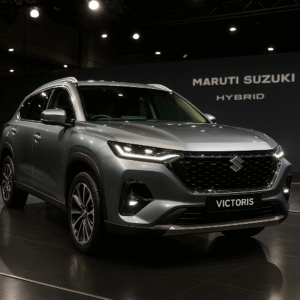
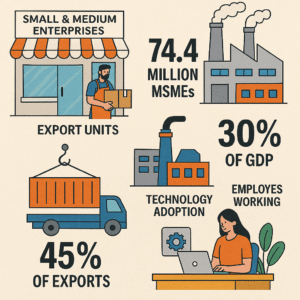
Post Comment