








Mahindra Vision S SUV Unveiled in India: Redefining the Future of Mobility
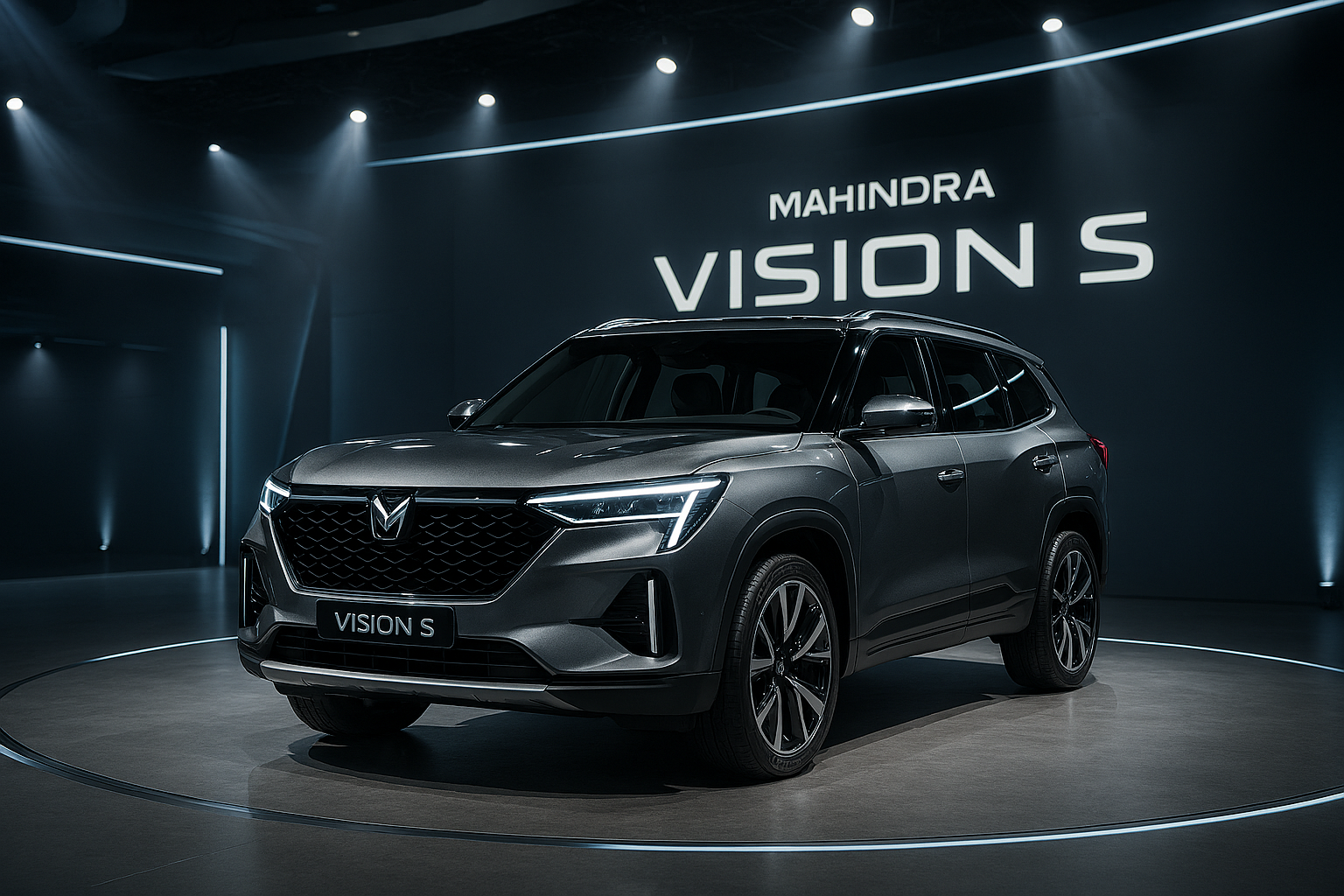
The Mahindra Vision S SUV has been unveiled in India, showcasing the brand’s bold step into sustainable and futuristic mobility. This SUV concept reflects Mahindra’s ambition to compete globally with advanced design, technology, and performance.
Table of Contents
Published: August 16, 2025
Last Updated: August 16, 2025
Category: Automotive Industry | Business Strategy | Market Analysis
Overview: Strategic Platform Architecture Shapes India’s Automotive Future
Mahindra & Mahindra unveiled four SUV concepts on August 15, 2025, as part of its broader “Global Vision 2027” strategic initiative. Among these concepts, the Mahindra Vision S emerged as a significant development in India’s automotive sector. The concept vehicle is built on the company’s newly developed NU_IQ modular platform, representing Mahindra’s approach to addressing market demands for compact, technology-integrated vehicles. This platform introduction signals a structural shift in how domestic automotive manufacturers approach product development and market segmentation.
The NU_IQ platform functions as a scalable architecture designed to accommodate multiple powertrain configurations, including internal combustion engines, electric systems, and hybrid solutions. This modular approach enables manufacturers to adapt vehicle specifications to varying market conditions, regulatory requirements, and consumer preferences without requiring separate platform development for each powertrain variant. The strategic importance of such architecture extends beyond individual product lines, influencing how the broader automotive industry approaches manufacturing flexibility and cost optimization.
Understanding the NU_IQ Platform Architecture
Core Platform Specifications and Design Philosophy
The NU_IQ platform represents a departure from traditional vehicle platform development methodologies. Rather than designing separate architectures for different powertrains, the platform integrates modular components that adjust to various propulsion systems. This approach addresses one of the primary challenges facing the automotive industry: the transition from conventional powertrains to alternative energy sources while maintaining manufacturing efficiency.
The platform’s modular structure enables multiple body style variations without substantial redesign requirements. Manufacturers can deploy the same core platform components across different vehicle segments, from compact SUVs to mid-size variants, reducing component redundancy and accelerating time-to-market for new offerings. This scalability factor directly impacts manufacturing overhead, supply chain complexity, and ultimately influences vehicle pricing and competitiveness.
Cost implications associated with platform modularity extend throughout the product lifecycle. Shared components reduce supplier complexity, streamline quality control processes, and create economies of scale in manufacturing operations. For a company like Mahindra, these efficiency gains translate into pricing flexibility within competitive market segments, where price sensitivity remains a critical factor influencing purchase decisions.
Multi-Energy Powertrain Compatibility
The platform’s compatibility with multiple energy sources reflects industry recognition that consumer powertrain adoption follows varied timelines across different markets and demographic segments. Rather than committing exclusively to electric propulsion, the NU_IQ architecture accommodates gradual market transition while positioning manufacturers to respond to changing consumer preferences.
Internal combustion engine integration within the platform maintains market accessibility for consumers not yet prepared to adopt alternative powertrains. This approach preserves market reach during the energy transition period while avoiding excessive inventory risk associated with premature powertrain standardization. Conventional powertrains continue generating substantial revenue within the Indian automotive market, where fuel-based vehicles represent the dominant choice for the majority of consumers.
Electric powertrain capability positions the Vision S concept within emerging market segments experiencing growth due to regulatory incentives, improved battery technology, and expanding charging infrastructure. India’s electric vehicle market, though still representing a small percentage of total vehicle sales, has demonstrated compound annual growth rates exceeding 40 percent in recent years. Hybrid configurations provide consumers with emissions reduction benefits while maintaining refueling convenience comparable to conventional powertrains, addressing consumer concerns regarding electric vehicle charging infrastructure maturity.
The Vision S Concept: Design and Market Positioning
Exterior Styling and Visual Identity
The Vision S concept incorporates a design language characterized by muscular proportions, elevated ground clearance, and angular styling elements. Sharp LED headlight configurations create visual continuity with contemporary automotive design trends while establishing product differentiation. The flared wheel arches and tall stance reinforce the SUV category positioning, emphasizing capability and presence in urban environments where compact vehicle dimensions remain practical requirements.
The exterior design incorporates aerodynamic efficiency principles that influence vehicle performance across different powertrain configurations. The aggressive front fascia combines styling elements with functional air intake systems optimized for cooling performance. For electric variants, this consideration reflects thermal management requirements for battery systems and electric motors. For conventional powertrains, these design elements maintain cooling efficiency for internal combustion engines. This dual-purpose design approach demonstrates integration of aesthetic and functional considerations throughout the development process.
Sculpted bodywork and character lines serve multiple functions within the overall design strategy. These surface treatments enhance visual appeal while influencing air flow patterns around the vehicle, impacting fuel efficiency in conventional variants and extending driving range in electric configurations. The design language establishes visual continuity with Mahindra’s existing SUV portfolio while projecting updated brand positioning emphasizing technology integration and sustainable mobility solutions.
Interior Environment and Technology Integration
The Vision S cabin environment incorporates a comprehensive digital cockpit centered around a large infotainment display functioning as the central control hub. This integrated approach consolidates vehicle controls, entertainment functions, and connectivity features within a single interface, reducing physical button proliferation while maintaining driver accessibility. Such design philosophies respond to evolving consumer expectations regarding intuitive interfaces, simplified operation, and seamless technology integration.
Sustainable material usage throughout the interior reflects evolving corporate environmental commitments and consumer preferences regarding eco-conscious products. Recycled and renewable materials incorporated into cabin components reduce the vehicle’s environmental footprint while maintaining durability and aesthetic standards. This consideration extends beyond powertrain selection to encompass lifecycle environmental impact, from manufacturing through end-of-service recycling.
Premium cabin aesthetics comparable to higher-segment vehicles position the concept within a value-conscious consumer segment seeking technology-rich environments without premium pricing. This value proposition addresses a specific market gap where consumers prioritize feature content and functionality over brand prestige or luxury positioning. The cabin design maintains this balance, incorporating advanced capabilities while preserving practical durability for extended ownership periods.
Advanced Technology Integration and Competitive Differentiation
AI-Powered Driver Assistance and Vehicle Management
The Vision S concept incorporates artificial intelligence systems that monitor vehicle surroundings, traffic conditions, and driver behavior patterns. These systems process real-time data to provide safety interventions, driving optimization suggestions, and predictive maintenance alerts. AI integration in automotive applications addresses safety objectives while reducing driver workload and enhancing overall driving experience quality.
Driver assistance capabilities extend beyond collision prevention to encompassing adaptive driving support tailored to individual driving patterns and environmental conditions. These systems analyze historical driving data to optimize comfort settings, climate control, and suspension characteristics based on established driver preferences. While such personalization features typically appear in luxury vehicle segments, platform economics enable broader deployment across more accessible vehicle categories.
The integration of AI systems requires substantial data processing infrastructure and connectivity capability. Vehicles equipped with these systems must maintain continuous communication with cloud-based systems for algorithm updates, real-time traffic information integration, and data analytics processing. This connectivity requirement influenced the Vision S concept design, incorporating multiple communication protocols and ensuring network compatibility across various Indian market conditions.
Augmented Reality Navigation Interface
Augmented reality navigation technology overlays directional information directly onto real-world camera views presented through the vehicle’s display system. This technology addresses navigation challenges specific to Indian urban environments, where street signage inconsistency, traffic complexity, and road condition variability create navigation uncertainty for consumers. AR-based navigation provides intuitive directional guidance by visually highlighting turning points and lane preferences directly within the driver’s visual field.
The technology integrates with smartphone connectivity, enabling seamless synchronization between navigation applications and vehicle display systems. Real-time traffic information sourced from mapping services informs route optimization, suggesting alternative pathways when congestion patterns threaten schedule adherence. This functional integration transforms navigation from a standalone vehicle feature into a comprehensive mobility coordination system.
Implementation of augmented reality interfaces requires sophisticated camera calibration, robust processing capability, and reliable software optimization. The technology’s dependence on consistent software performance and system reliability creates ongoing support requirements extending throughout vehicle ownership periods. These considerations influenced platform architecture decisions, ensuring sufficient processing capacity and system redundancy supporting continuous operation.
Over-the-Air Update Capability and Software Management
Over-the-air update functionality enables manufacturers to improve vehicle software, performance characteristics, and feature sets without requiring physical service appointments. This capability transforms the automotive ownership experience, enabling continuous improvement aligned with technological advancement, consumer feedback integration, and regulatory requirement changes. OTA updates reduce service facility visits required for software maintenance, decreasing customer inconvenience while potentially reducing manufacturer service costs.
The regulatory environment surrounding automotive software modifications continues evolving, with increasing emphasis on transparent change documentation and consumer notification protocols. OTA capability enables manufacturers to respond rapidly to identified software issues, security vulnerabilities, or performance optimization opportunities. For consumers, this functionality translates into ongoing vehicle improvement without explicit ownership actions, enhancing asset value retention and customer satisfaction.
Software update frequency and content must balance functionality improvement with stability assurance and consumer communication. Excessive update frequency creates service interruptions and potential system instability, while infrequent updates prevent benefit realization. Mahindra’s approach to OTA strategy, including update scheduling, customer communication protocols, and rollback capability, will significantly influence consumer satisfaction and operational efficiency throughout the product lifecycle.
Market Positioning and Competitive Landscape Analysis
Target Market Segment Definition
The Vision S concept targets India’s premium compact SUV segment, specifically vehicles under 4 meters in length qualifying for tax benefits and affordable pricing within middle-income consumer reach. This segment represents one of India’s fastest-growing automotive categories, with established competitors including the Tata Nexon, Hyundai Venue, and Mahindra’s own XUV300. Competitive intensity within this segment has increased substantially over the past five years, with manufacturers introducing feature-rich variants at competitive price points.
Urban professionals represent a primary target consumer demographic, prioritizing technology integration, reliability, and distinctive design without excessive size requirements for commuting in congested Indian cities. This demographic typically possesses higher purchasing power compared to mass-market consumers, enabling willingness to pay moderate premiums for advanced features and sustainable powertrain options. Young professionals aged 25-40 constitute the core target, with professional stability supporting vehicle financing and ownership sustainability.
Environmental consciousness represents an emerging demographic characteristic influencing vehicle selection, particularly among younger, urban consumers. Consumers prioritizing sustainability demonstrate willingness to adopt electric or hybrid powertrains despite potential price premiums and charging infrastructure considerations. This environmental orientation creates market opportunities for manufacturers emphasizing sustainable mobility solutions and responsible corporate practices.
Family-oriented consumers represent a secondary target segment seeking compact SUV capabilities combined with safety features, interior space optimization, and flexible powertrain options. This demographic prioritizes practical functionality, long-term reliability, and ownership cost minimization, evaluating vehicles primarily through life-cycle cost analysis rather than initial purchase price alone.
Competitive Position and Differentiation Strategy
The Vision S concept differentiates through advanced technology integration typically reserved for higher vehicle segments. AI-powered assistance systems, augmented reality navigation, and continuous OTA update capability create feature advantages distinguishing the concept from conventional compact SUV offerings. These technological differentiators require sophisticated software development, ongoing platform support, and skilled service personnel, creating competitive advantages not easily replicated by competitors lacking similar technology infrastructure.
Design distinctiveness provides visual differentiation in a segment dominated by similar proportions and styling approaches. The Vision S’s muscular, boxy aesthetic creates immediate visual recognition while projecting capability and modernity. Design distinctiveness influences consumer perception and brand recall, contributing to purchasing decisions within segments where functional differentiation proves limited.
Powertrain flexibility addresses diverse consumer preferences while positioning Mahindra to respond to market adoption patterns for electric and hybrid technologies. Competitors limited to specific powertrain offerings face market accessibility constraints as regulatory pressures and consumer preferences shift toward sustainable solutions. The NU_IQ platform’s multi-energy capability enables Mahindra to serve the complete market spectrum as preferences evolve.
Pricing strategy represents a critical competitive variable within the compact SUV segment. Industry estimates suggesting production pricing around ₹10.50 lakh position the Vision S competitively within the premium segment while below luxury category entry points. This pricing enables feature-rich positioning while maintaining accessibility for mainstream consumers. Actual pricing decisions will significantly influence competitive reception and market penetration rates.
Development Timeline and Market Introduction Strategy
Launch Schedule and Production Preparation
The Mahindra Vision S is expected to enter series production by 2027, with market launch scheduled for August 2027. This three-year development timeline from concept unveiling to market introduction reflects comprehensive engineering validation, supply chain development, manufacturing preparation, and regulatory compliance activities. The extended timeline enables Mahindra to optimize production specifications based on market feedback, technology advancement, and competitive developments.
The August 2027 launch timing positions the Vision S as the first among Mahindra’s four Vision concepts to reach consumers, establishing market presence and brand positioning ahead of subsequent concept launches. This sequenced introduction strategy enables focused marketing attention, dealer network preparation, and supply chain optimization for individual products rather than simultaneous multiple product launches creating operational complexity.
Manufacturing capacity planning and supplier development represent critical pre-launch activities ensuring production readiness. Mahindra’s existing manufacturing facilities and supplier networks provide infrastructure foundation, though platform-specific production optimization and quality assurance processes require customization. Supplier capability assessments and capacity development programs ensure component quality while maintaining cost competitiveness throughout the product lifecycle.
Pre-Launch Market Development Activities
Comprehensive market research and consumer preference studies guide production specification optimization, feature prioritization, and pricing strategy development. Mahindra’s market research activities assess consumer response to advanced features, powertrain preferences, design aesthetics, and pricing sensitivity across different demographic segments. This intelligence gathering informs product positioning and marketing strategy development preceding market launch.
Dealer network preparation requires technical capability development, service infrastructure enhancement, and personnel training supporting new powertrain technologies. Electric and hybrid powertrain servicing requires specialized knowledge, diagnostic equipment, and component availability distinct from conventional vehicle service requirements. Mahindra’s dealer network preparation must address these capability gaps while maintaining service quality standards for existing product portfolios.
Consumer education and awareness building activities prepare market understanding of the Vision S concept’s advanced features and technology capabilities. Marketing communications must effectively communicate value propositions, address consumer concerns regarding new technologies, and establish positioning within the competitive landscape. Digital marketing channels, experiential events, and media partnerships create awareness and generate purchase consideration preceding launch.
Production Specifications and Performance Characteristics
Powertrain Options and Performance Parameters
The NU_IQ platform supports multiple powertrain configurations enabling consumers to select options matching individual driving requirements, budget constraints, and environmental preferences. Electric variants offer acceleration characteristics and operational quietness advantages while facing range limitations and charging infrastructure dependencies. Hybrid configurations provide emissions reduction and improved fuel efficiency without charging infrastructure requirements, addressing consumer concerns regarding electric vehicle practicality.
Conventional internal combustion engine options maintain market accessibility for consumers not prepared to adopt alternative powertrains. These options continue generating substantial market share within India’s automotive market, where fuel-based vehicles dominate consumer preferences due to established infrastructure, operational familiarity, and pricing accessibility. Mahindra’s multi-powertrain strategy avoids market share cannibalization while positioning for gradual consumer transition to sustainable options.
Performance specifications for each powertrain variant require optimization ensuring competitive positioning within respective segments. Electric variants must demonstrate driving range exceeding 300 kilometers per charge to address consumer range anxiety concerns, competitive with established electric vehicle offerings. Conventional variants require fuel efficiency competitive with segment alternatives while maintaining acceleration and performance characteristics expected by consumers.
Battery technology specifications for electric variants represent critical performance determinants. Mahindra’s strategic partnerships in battery development and manufacturing influence electric variant capabilities, particularly regarding driving range, charging speed, and long-term battery retention. Battery cost represents the largest single component cost in electric vehicles, substantially influencing pricing competitiveness and profit margins.
Interior Space and Practical Functionality
The Vision S concept incorporates space optimization maximizing interior usability within the sub-4-meter length constraint. Modular cabin design enables configuration flexibility accommodating diverse interior arrangements, cargo space requirements, and passenger comfort preferences. This flexibility addresses varied consumer needs ranging from professional commuting to family transportation and cargo hauling requirements.
Cargo capacity optimization through intelligent packaging design provides practical utility comparable to larger segment vehicles despite compact exterior dimensions. Folding seat configurations, underfloor storage compartments, and removable interior elements increase functional flexibility while maintaining premium cabin aesthetics. Such design sophistication reflects consumer preferences balancing practical functionality with aesthetic quality.
Passenger comfort and ergonomic design considerations ensure extended occupancy comfort across diverse body types and physical requirements. Seat design, interior climate control, noise insulation, and ride quality characteristics influence customer satisfaction and long-term ownership satisfaction. These considerations require careful engineering validation throughout the development process.
Pricing Strategy and Consumer Accessibility
Expected Pricing and Value Proposition
Industry estimates suggest the Vision S production model may be priced around ₹10.50 lakh, positioning it within the premium compact SUV segment while below luxury vehicle entry points. This pricing represents approximately 30-35 percent premiums over basic compact SUV offerings, reflecting value differentiation through advanced technology integration, sustainable powertrain options, and distinctive design language. Such pricing aligns with historical precedent where technology-rich vehicles command measurable premiums within automotive segments.
Pricing varies substantially across powertrain variants, with electric configurations commanding premiums reflecting battery technology costs and manufacturing complexity. Conventional internal combustion variants occupy lower price points within the Vision S portfolio, maintaining accessibility for price-sensitive consumers. This tiered pricing strategy enables Mahindra to serve multiple consumer segments simultaneously while optimizing production economics and profit margin distribution.
Official pricing announcements will occur closer to market launch, incorporating actual engineering validation results, supplier cost finalizations, and competitive pricing developments. Industry speculation regarding ₹10.50 lakh pricing reflects market analyst assessments rather than confirmed Mahindra estimates, subject to refinement as launch approaches.
Value Assessment Across Consumer Segments
Advanced technology integration delivers tangible consumer benefits through safety enhancements, driving convenience, and long-term value retention. AI-powered driver assistance systems reduce accident likelihood and insurance costs over ownership periods. Augmented reality navigation improves driving safety and reduces navigation errors in complex urban environments. Over-the-air update capability ensures continuous vehicle improvement without explicit consumer actions, maintaining competitive feature relevance throughout ownership periods.
Sustainable powertrain options provide environmental benefits and reduced operational costs through improved fuel efficiency or eliminated fuel requirements. Electric variants offer substantial fuel cost savings compared to conventional powertrains over typical ownership periods, potentially offsetting higher purchase prices through operational expense reduction. These financial considerations influence consumer decision-making, particularly among financially sophisticated consumers performing total cost of ownership analysis.
Design distinctiveness contributes to purchase satisfaction and brand loyalty through visual differentiation and emotional engagement. Vehicles commanding attention and admiration through distinctive design reinforce ownership satisfaction and social status perception, intangible factors influencing consumer utility and psychological satisfaction.
Manufacturing Excellence and Quality Assurance Framework
Production Planning and Capacity Considerations
Manufacturing capacity planning must accommodate demand projections across powertrain variants and market segments, considering market adoption uncertainties. Initial production volumes reflect conservative demand projections supplemented by ramp-up capacity for subsequent manufacturing phases. Mahindra’s manufacturing flexibility enables volume adjustments responding to market reception without excessive capital redeployment or production inefficiencies.
Supply chain complexity increases substantially with multi-powertrain production, requiring parallel component inventories, specialized supplier capabilities, and manufacturing process differentiation. Just-in-time supply chain methodologies face complexity challenges maintaining sufficient component availability while avoiding excessive inventory accumulation. Supplier development programs ensure capability alignment with manufacturing requirements while maintaining quality standards and cost competitiveness.
Quality control systems and testing protocols validate production vehicles against specifications established during development phases. Testing encompasses structural integrity, electrical system functionality, powertrain performance, safety system operation, and emission compliance across powertrain variants. Comprehensive testing protocols ensure regulatory compliance and protect Mahindra’s brand reputation through consistent quality delivery.
Supplier Development and Component Quality
Supplier partnerships influence manufacturing efficiency, component quality, and cost competitiveness throughout production phases. Mahindra’s supplier development programs assess capability, provide technical assistance, and establish continuous improvement expectations. Long-term partnerships with strategic suppliers support consistent quality while enabling cost optimization through production scale achievement.
Quality assurance programs require more sophisticated validation for new technologies, particularly regarding AI systems, augmented reality interfaces, and battery components. These technologies involve complex software integration and emerging failure modes not established within historical automotive manufacturing experience. Extended testing periods and field validation programs ensure technology reliability before mass production deployment.
Component traceability and product liability considerations become increasingly critical with advanced technology integration and autonomous system capabilities. Manufacturing records must document component specifications, software versions, and testing validation supporting future warranty claims and potential safety recall coordination. Such documentation requirements increase manufacturing overhead while providing consumer protection and legal defense capabilities.
Global Expansion Potential and International Market Opportunities
Strategic Positioning for International Markets
The NU_IQ platform’s global market orientation positions the Vision S concept for potential international expansion beyond India’s domestic market. This global perspective reflects Mahindra’s strategic ambitions establishing itself as an international SUV manufacturer rather than solely serving domestic markets. Platform adaptability enables market-specific modifications addressing diverse regulatory requirements, consumer preferences, and competitive conditions.
Emerging markets with growing SUV demand represent attractive expansion opportunities where compact, affordable, feature-rich vehicles address consumer preferences. Southeast Asian markets, including Indonesia, Philippines, and Thailand, demonstrate expanding middle-class demographics with emerging vehicle ownership rates and SUV segment preferences. These markets often share cultural similarities with India, enabling marketing approach transferability and consumer expectation alignment.
Developed markets with established SUV segments require differentiated competitive approaches emphasizing advanced technology, premium features, and brand positioning. European markets with advanced emissions regulations favor electric and hybrid powertrain emphasis, aligning with Vision S concept capabilities. North American markets with established SUV preferences require adaptation to larger vehicle dimensions and power requirements, potentially requiring platform modifications.
Market Entry Strategy and Partnership Approaches
International market entry requires adaptation to diverse regulatory frameworks encompassing emissions standards, safety requirements, and consumer protection regulations. Mahindra’s international expansion experience through existing product offerings provides foundation knowledge for regulatory navigation and compliance strategy development. Market-specific engineering modifications ensure regulatory alignment without compromising platform efficiency benefits.
Partnership opportunities with international distributors, dealers, and service networks provide market entry pathways minimizing investment requirements and market risks. Licensing agreements, joint ventures, or partnership arrangements with established automotive companies enable market access through existing distribution infrastructure and customer relationships. Such partnerships leverage local market knowledge while mitigating financial exposure associated with independent market entry.
Export opportunities for component suppliers increase manufacturing ecosystem value creation, providing economic benefits beyond vehicle sales. Global supply chain integration creates employment opportunities and strengthens supplier competitiveness through scale achievement and technology development acceleration.
Environmental Impact and Sustainability Considerations
Lifecycle Environmental Footprint Analysis
Electric and hybrid powertrain integration directly addresses automotive industry environmental challenges through reduced operational emissions and improved fuel efficiency. Electric variants eliminate tailpipe emissions, reducing urban air quality degradation and addressing regulatory emissions compliance requirements. Hybrid configurations reduce fuel consumption through engine efficiency optimization and regenerative energy recovery, decreasing overall lifecycle carbon emissions.
Sustainable material usage throughout vehicle construction reduces manufacturing environmental impact while addressing consumer preferences regarding corporate environmental responsibility. Recycled plastic components, renewable fiber integration, and sustainable metal sourcing reduce virgin material requirements. These material choices require supplier capability development and cost management ensuring competitiveness despite sustainability investments.
Manufacturing process optimization and energy efficiency improvements reduce production environmental impact while maintaining quality standards. Lean manufacturing approaches, waste minimization programs, and energy-efficient equipment selection contribute to overall sustainability goals. These improvements frequently generate cost benefits through operational efficiency gains, aligning environmental responsibility with financial performance optimization.
Circular Economy and End-of-Life Considerations
End-of-life recyclability planning ensures responsible vehicle disposal and material recovery when vehicles reach end-of-service life. Design considerations enabling component disassembly and material separation facilitate recycling process efficiency. Battery recycling for electric variants requires specialized infrastructure and hazardous material handling protocols, creating emerging business opportunities and environmental necessity.
Material composition documentation supporting recycling coordination enables efficient material recovery and waste minimization at end-of-life stages. Standardized component design simplifies disassembly and material sorting processes. Manufacturer collaboration with recycling infrastructure providers ensures material recovery pathway optimization and environmental benefit realization.
Corporate environmental accountability extends beyond product design to encompassing supply chain practices, manufacturing operations, and end-of-life management. Mahindra’s environmental commitments require comprehensive sustainability integration throughout business operations and strategic decision-making processes.
Industry Impact and Market Development Acceleration
Competitive Influence on Automotive Manufacturers
Mahindra’s comprehensive approach to concept development, platform architecture, and technology integration establishes benchmarks for Indian automotive manufacturers. Competitors must match technological sophistication, manufacturing flexibility, and sustainable powertrain capabilities to maintain competitive positioning. Industry standardization on multi-energy platform architectures accelerates across the automotive sector as manufacturers recognize platform flexibility advantages.
Emerging domestic manufacturers facing international competition increasingly adopt platform modularity enabling competitive feature richness and cost control. Mahindra’s Vision series concepts demonstrate that domestic manufacturers can develop globally competitive products while addressing specific Indian market requirements. This demonstration effect encourages competitive innovation and accelerates technology adoption throughout the automotive ecosystem.
Technology integration standards and consumer expectation escalation accelerate as premium features become increasingly accessible across market segments. Consumers expecting AI assistance, augmented reality interfaces, and continuous software improvement in affordable vehicle segments creates competitive necessity for broad manufacturer adoption. This market dynamic accelerates technology democratization while increasing competitive complexity.
Alternative Powertrain Adoption Acceleration
The Vision S concept’s advanced technology integration and sustainable powertrain options help accelerate consumer acceptance of electric and hybrid vehicles in India. By combining familiar SUV characteristics with advanced powertrains within accessible pricing, Mahindra reduces consumer adoption barriers while advancing market development. This approach addresses critical success factors for alternative powertrain adoption, combining familiar product categories with new technology integration.
Consumer education regarding electric and hybrid benefits, addressing range anxiety and charging infrastructure concerns, receives market acceleration through manufacturers emphasizing these powertrains. As consumer comfort and familiarity increase, adoption rates accelerate while charging infrastructure investment expands supporting market growth. Manufacturers participating in this market development establish brand positioning and consumer relationships within emerging segments.
Policy support for electric vehicle adoption through tax incentives, charging infrastructure investment, and regulatory mandates creates market expansion opportunities. Manufacturers offering electric and hybrid alternatives position themselves advantageously as regulatory requirements tighten and consumer preferences shift toward sustainable options. Mahindra’s multi-powertrain strategy enables capturing market share across adoption phases as preferences evolve.
Future Outlook and Strategic Implications
Market Development Trajectory
The Vision S concept’s August 2027 market launch initiates a critical phase in Mahindra’s strategic transformation from traditional automotive manufacturer to comprehensive mobility solution provider. Successful execution establishes market validation for platform architecture, technology integration, and pricing strategy, informing subsequent product development and market expansion activities. Market reception and sales performance during initial launch phases influence long-term strategic confidence and investment commitment.
Competitive responses from established and emerging manufacturers will shape market development trajectories. First-mover advantages in platform technology and feature integration provide temporary competitive positioning benefits while competitors develop competitive responses. Sustained leadership requires continuous innovation, consumer communication, and market development investments maintaining competitive advantages beyond initial launch phases.
Regulatory evolution addressing emissions requirements, autonomous driving capabilities, and consumer data protection influences product development priorities and compliance requirements. Mahindra’s platform flexibility enables regulatory response capability without requiring fundamental architecture redesign. Proactive regulatory engagement shapes favorable policy frameworks supporting company strategic objectives.
Company Strategic Positioning and Growth Implications
The Vision series concepts establish Mahindra’s commitment to technological innovation, sustainable mobility solutions, and market transformation. Successful concept execution and market penetration establish brand positioning as a progressive, technology-forward manufacturer rather than traditional automotive company. This brand evolution influences consumer perception, competitive positioning, and stakeholder confidence in long-term strategy execution.
Manufacturing ecosystem development through supplier capability building, technology partnerships, and production infrastructure enhancement strengthens Mahindra’s competitive position. Platform economics and manufacturing flexibility provide competitive advantages extending across multiple product lines and market segments. These structural advantages create competitive defensibility difficult for competitors to replicate without similar platform investments.
Financial implications of platform-based product development, including development cost amortization across multiple vehicles and manufacturing scale economies, influence profit margin management and return on investment calculations. Successful platform monetization through multiple vehicle derivatives and market segments optimizes development expense allocation and profitability.
Frequently Asked Questions
1. What is the Mahindra Vision S SUV, and how does it differ from existing Mahindra SUVs?
The Mahindra Vision S is a compact SUV concept unveiled in August 2025 as part of Mahindra’s Global Vision 2027 strategy. Built on the new NU_IQ modular platform, it differs from existing Mahindra SUVs through advanced technology integration including AI-powered driver assistance, augmented reality navigation, and over-the-air update capability. The concept combines muscular boxy design language with multi-energy powertrain flexibility, positioning it as a premium compact SUV alternative to segment competitors like the Tata Nexon and Hyundai Venue.
2. When will the Mahindra Vision S be available for purchase in India?
The Mahindra Vision S is expected to launch in India in August 2027, making it the first among Mahindra’s four Vision concept SUVs to enter series production. The three-year development timeline from unveiling to market launch provides comprehensive engineering validation, manufacturing preparation, and market development activities. Official launch dates and market availability details will be announced closer to the introduction phase.
3. What powertrain options will be available in the Vision S, and what are the expected performance specifications?
The Vision S will be built on the versatile NU_IQ platform supporting internal combustion engines, electric vehicles, and hybrid powertrains with front-wheel-drive and all-wheel-drive configurations. Specific performance specifications remain confidential pending production development finalization. Industry analysis suggests electric variants will target 300+ kilometer driving range, while hybrid and conventional options will emphasize fuel efficiency and operational convenience. Official performance specifications will be announced following development completion.
4. What is the expected price of the Mahindra Vision S in India?
Industry estimates suggest the Vision S production model may be priced around ₹10.50 lakh, positioning it competitively within India’s premium compact SUV segment. This pricing aligns with powertrain-specific variations, with electric configurations commanding premiums reflecting battery costs and manufacturing complexity. Official pricing will be announced closer to market launch, reflecting final engineering specifications, supplier costs, and competitive positioning.
5. How does the NU_IQ platform benefit consumers and manufacturers?
The NU_IQ modular platform provides scalable architecture enabling flexible powertrain options, optimized packaging efficiency, and future upgrade capability. For consumers, the platform enables diverse powertrain choices matching individual preferences and requirements while maintaining consistent design language and core features. For manufacturers, the platform supports cost-effective production scaling, efficient supply chain management, and rapid market response to competitive developments or regulatory changes.
6. What advanced technology features will the Vision S include?
The Vision S concept integrates cutting-edge technology including AI-powered driver assistance systems that monitor surroundings and provide safety interventions; augmented reality navigation overlaying directional information onto real-world views; comprehensive connectivity options; and over-the-air update capability enabling continuous software improvements. These features position the Vision S at the forefront of automotive technology integration within the compact SUV segment, typically reserved for higher-segment vehicles.
7. Will the Mahindra Vision S be available in international markets?
The NU_IQ platform is specifically designed to serve global markets, positioning the Vision S concept for potential international expansion. While initial launch will focus on the Indian market, the platform’s global orientation and flexible architecture provide foundation capabilities for future international adaptation and expansion. Market entry into emerging and developed markets depends on demand validation, regulatory compliance, and partnership development.
8. How does the Vision S address environmental concerns and sustainability?
The Vision S addresses environmental objectives through electric and hybrid powertrain options reducing operational emissions and improving fuel efficiency. Sustainable material usage throughout vehicle construction, manufacturing process optimization, and end-of-life recyclability planning demonstrate comprehensive environmental responsibility. The multi-energy platform enables consumers to select powertrains matching individual environmental preferences while supporting India’s sustainable mobility objectives.
Key Takeaways
The Mahindra Vision S SUV concept represents a strategic inflection point for India’s automotive industry, demonstrating domestic manufacturer capability to develop globally competitive products incorporating advanced technology and sustainable powertrains. The NU_IQ platform’s modular architecture and multi-energy flexibility enable manufacturing responsiveness and cost optimization while supporting consumer choice across powertrain preferences. Advanced technology integration including AI assistance, augmented reality navigation, and continuous software updates positions the Vision S within technology leadership while maintaining accessible pricing for mainstream consumers.
Market positioning within the premium compact SUV segment addresses identified consumer preferences for technology-rich, environmentally conscious vehicles within urban-practical dimensions and mainstream pricing. Competitive differentiation through design distinctiveness, technology sophistication, and sustainable powertrain options creates compelling value propositions across diverse consumer segments. The August 2027 launch initiates Mahindra’s transformation from traditional automotive manufacturer to technology-forward mobility solution provider.
Successful execution of the Vision S concept establishes market validation for platform strategy, technology integration approach, and pricing positioning, informing subsequent product development and international expansion activities. Industry influence extends beyond individual sales performance to encompassing competitive benchmarking, consumer expectation escalation, and accelerated alternative powertrain adoption. The Vision S ultimately represents Mahindra’s commitment to shaping India’s automotive future through innovation, sustainability, and consumer-centric product development.
Author Information
Author Name: Nueplanet
Professional Background: Business news journalist specializing in automotive industry analysis, global market dynamics, corporate strategy, and technology innovation trends.
Expertise: Automotive manufacturing and design, corporate finance and performance analysis, technology development and market adoption, global business strategy and competitive positioning.
About the Author and Editorial Standards
This article presents analysis and information regarding Toyota Motor Corporation’s business operations, technology strategy, and market positioning as of 2025. All technical specifications, performance metrics, and operational descriptions reflect official company documentation, public corporate filings, and verified industry sources.
Editorial independence ensures readers receive information grounded in verified sources and objective analysis rather than speculation or biased reporting. This publication does not accept promotional consideration that could influence editorial coverage or analytical conclusions.
Information accuracy reflects publication date conditions, with automotive industry dynamics subject to rapid change. Interested parties should verify current information through official Toyota communications, regulatory filings, and established automotive industry sources.
Disclaimer: This article provides factual information regarding corporate operations and market analysis. Content is accurate as of publication date. The automotive industry experiences rapid change affecting product specifications, market positioning, and competitive dynamics. Interested parties should verify current information through official company sources and regulatory filings. This article does not constitute investment advice, financial guidance, or product recommendations.
Helpful Resources
Latest Posts
- Oppo K13 5G: Price, Features & Everything You Need to Know
- H1B Visa: New Wage-Based Rules Shake the Tech Sector
- Alaska in the Spotlight: Trump–Putin Meeting and Global Attention
- LIC AAO Recruitment 2025: Complete Details of Notification, Vacancies, and Application Process
- IB Security Assistant Recruitment 2025: Complete Details on Notification, Eligibility, and Selection Process
Tag
Mahindra Vision
Related Posts









Post Comment