









Maersk: Container Ship Fire Incident and Shipping Industry Insights
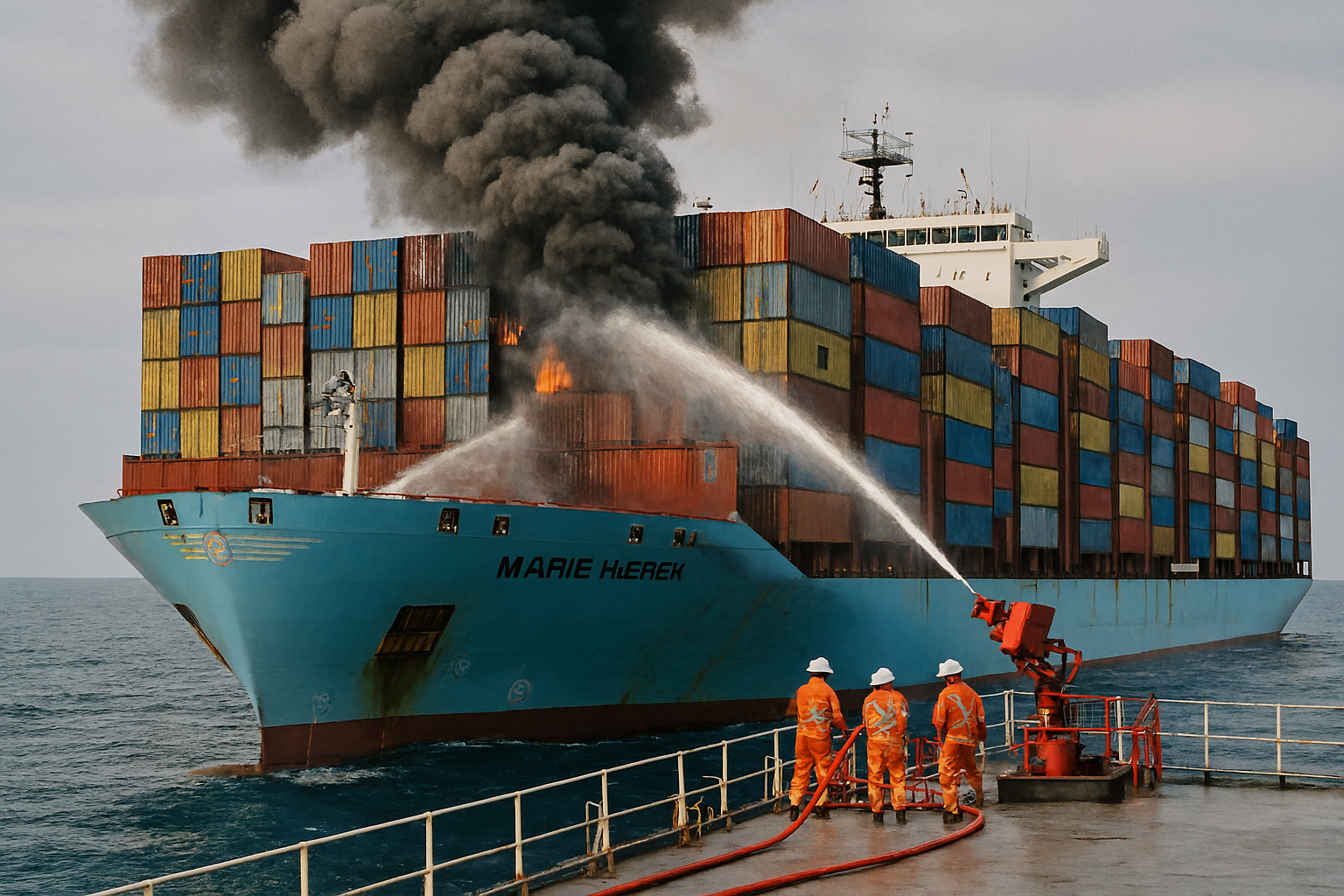
The Marie Maersk has recently suffered a container cargo fire, highlighting operational risks in global shipping. Here’s a detailed analysis of Maersk’s incident and its implications for maritime logistics.
Table of Contents
Published: August 18, 2025 | Last Updated: August 18, 2025
Overview: Container Ship Fire Emergency off African Coast
During mid-August 2025, the global maritime industry experienced a significant operational challenge when a major container vessel encountered a fire while traversing the Atlantic Ocean. The incident, which began on August 13, 2025, involved the Marie Maersk, a large capacity container ship operated by Maersk Line, one of the world’s largest shipping companies. This event provided valuable insights into contemporary maritime emergency response capabilities and the effectiveness of modern vessel safety systems.
The vessel’s crew successfully managed the emergency situation through coordinated response protocols, with professional firefighting teams boarding the ship by August 22, 2025, to complete containment efforts. The incident resulted in no reported fatalities or serious injuries to crew members, and the vessel subsequently resumed normal operations. This outcome demonstrates the effectiveness of international maritime cooperation frameworks and advanced safety infrastructure integrated into modern container vessels.
Incident Timeline and Operational Context
Initial Emergency Detection: August 13, 2025
The Marie Maersk, measuring 399 meters in length and registered with a container capacity of 194,435 TEU (Twenty-foot Equivalent Units), was en route from Rotterdam, Netherlands, to Tanjung Pelepas, Malaysia, when crew members detected smoke emanating from loaded containers. The vessel’s position placed it in the Atlantic Ocean off Harper, Liberia, approximately 4,500 nautical miles from its destination port.
The detection occurred during regular cargo area monitoring, which is standard operational procedure for container vessels. Upon identifying the smoke, crew members immediately initiated established emergency protocols, including isolation of the affected cargo section and activation of onboard fire suppression systems. Communication with shore-based support teams at Maersk’s operations center in Copenhagen occurred within minutes of the initial detection.
Emergency Response Phase: August 15-18, 2025
Following the initial detection, the vessel’s crew engaged in active firefighting operations utilizing onboard equipment and specialized systems designed specifically for container fire scenarios. Throughout this four-day period, Maersk’s crisis management team coordinated extensively with international maritime authorities, including relevant coastal nations’ maritime administrations and the International Maritime Organization (IMO).
The crew maintained full operational capability during this period, with all navigation systems, steering mechanisms, and propulsion equipment functioning normally. This maintained operational control proved crucial, allowing the vessel to maneuver as needed and maintain communication with support teams. Multiple government agencies, including several African nations’ maritime services and international naval vessels operating in the region, were notified and positioned to provide assistance if required.
Professional Firefighting Intervention: August 22, 2025
Specialized maritime firefighting teams deployed to the Marie Maersk around August 22, 2025, boarding the vessel to implement advanced suppression techniques. These professional firefighting personnel brought specialized equipment and expertise in containerized cargo fire management, which differs significantly from conventional industrial fire suppression approaches.
The boarding teams successfully brought the fire under control, preventing its spread to adjacent cargo compartments. While the fire was not completely extinguished immediately, the containment represented a critical achievement in preventing escalation into a potentially catastrophic maritime disaster. Following successful containment, the vessel resumed its scheduled voyage with minimal delays to overall delivery timelines.
Container Vessel Technical Specifications and Safety Infrastructure
Marie Maersk Vessel Characteristics
The Marie Maersk represents a contemporary example of large-scale container vessel engineering, belonging to the Triple-E class (which designates Economy, Efficiency, and Environment as design priorities). The vessel incorporates multiple advanced systems reflecting current maritime safety standards and operational requirements for global container transportation.
Vessel Specifications:
- Overall Length: 399 meters (approximately 1,309 feet)
- Container Capacity: 19,076 TEU (Twenty-foot Equivalent Units) across multiple cargo tiers
- Gross Registered Tonnage: 194,435 tons
- Operating Range: Designed for transoceanic voyages with global route capability
- Crew Complement: Approximately 23 trained personnel
The vessel’s size and capacity place it among the largest container carriers operating in global maritime commerce, with regular deployment on major international trade routes connecting Europe, Asia, and other regions. The Marie Maersk represents a significant capital investment by Maersk, with modern container vessels in this size category valued at approximately $140-170 million USD.
Integrated Safety Systems and Design Features
Modern container vessels incorporate multiple redundant safety systems reflecting decades of maritime engineering evolution and regulatory requirements established by the International Maritime Organization and various national maritime authorities. The Marie Maersk’s design incorporates several categories of safety infrastructure specifically relevant to container cargo operations.
Fire Detection and Prevention Architecture:
The vessel features distributed smoke detection sensors throughout all cargo hold areas, with monitoring systems continuously tracking temperature variations, humidity levels, and air quality indicators. These sensors are connected to centralized monitoring stations on the ship’s bridge, enabling crew members to receive real-time alerts regarding potential thermal anomalies or air quality changes suggesting fire development.
Advanced ventilation systems allow controlled air circulation throughout cargo spaces, with capability to isolate specific sections if needed. Separate compartmentalization of cargo holds prevents fire spread between adjacent areas, creating natural firebreaks that limit incident scope. Specialized firefighting equipment positioned strategically throughout the vessel includes high-capacity water delivery systems, foam-based suppression agents, and portable extinguishing apparatus designed for container cargo fires.
Structural and Operational Safeguards:
The vessel’s hull structure incorporates steel bulkheads creating watertight compartments, which also provide fire containment benefits through physical separation of cargo areas. Modern positioning and communication systems enable precise location tracking of all loaded containers, facilitating identification and isolation of problem cargo areas if incidents occur.
Backup electrical systems provide continued power supply to critical safety equipment even if primary power generation becomes unavailable. Emergency communication equipment allows crew to maintain contact with shore-based support and maritime authorities under virtually all circumstances, ensuring coordinated response even during crisis situations.
Container Fire Risk Factors and Industry Safety Performance
Statistical Analysis of Maritime Fire Incidents
Global maritime incident data provides context for understanding the frequency and significance of container fires within the broader shipping industry landscape. During 2024, international maritime databases recorded total losses of 27 vessels exceeding 100 gross tons, representing a significant improvement compared to 35 total losses in 2023 and 105 total losses recorded a decade earlier in 2014.
Across all vessel types during 2024, fire-related incidents reached approximately 250 reported cases, representing the highest annual frequency within the preceding ten-year period. However, this statistic requires contextualization against the scale of global maritime operations. Approximately 250 million containers transited global shipping routes during 2024, with documented container losses representing just 0.0002% of the total transported volume.
Maritime Safety Trend Analysis:
The combination of decreasing total vessel losses alongside stable or slightly increasing fire incident reports reflects evolving maritime operations characteristics. Modern container vessels operate with smaller crew complements relative to previous decades, potentially affecting incident detection and response capabilities. Simultaneously, cargo complexity has increased, with contemporary supply chains incorporating a wider variety of materials requiring specialized handling and storage protocols.
The statistical pattern reveals that while fire incidents remain relatively frequent on a global scale, severe consequences have become increasingly rare due to improved detection systems, enhanced crew training, and international cooperation in emergency response. The transition from frequent catastrophic fires toward more numerous but less severe incidents demonstrates technological and procedural improvements across the maritime industry.
Primary Fire Causation Factors
Understanding the root causes of container fires enables development of preventive measures and emergency response protocols tailored to specific risk scenarios. Industry analysis identifies several recurring causation patterns across documented container fire incidents occurring over the past decade.
Hazardous Material Misdeclaration: One predominant fire cause involves hazardous materials that are either mislabeled, incorrectly classified, or declared with inaccurate specifications. Shippers may sometimes fail to disclose hazardous material contents, classify materials inaccurately, or store incompatible materials in adjacent containers. Lithium batteries, oxidizing agents, self-reactive substances, and corrosive materials represent categories particularly prone to undeclared or misclassified shipment problems.
Storage and Containment Issues: Even when materials are properly declared, improper loading procedures, inadequate segregation of incompatible substances, or deteriorated container conditions can create fire risk. Temperature sensitive materials require controlled storage environments, and failure to maintain appropriate conditions can trigger exothermic reactions or accelerated deterioration leading to fire initiation.
Electrical and Equipment-Related Factors: Refrigerated containers (referred to as “reefers” in maritime terminology) require electrical power connections, and electrical malfunctions within these systems have historically contributed to fire incidents. Poorly maintained equipment, damaged electrical components, or equipment degradation during extended voyages can generate heat sources capable of igniting nearby materials.
Environmental and Chemical Reactions: Exposure to extreme temperature variations, humidity fluctuations, or oxygen concentration changes can trigger chemical reactions in certain cargo types. Spontaneous ignition remains possible for certain substance categories when storage conditions deteriorate unexpectedly.
Human Error in Cargo Handling: Loading procedures, documentation accuracy, and adherence to safety protocols depend on personnel training and procedural compliance. Inadequate safety practices during cargo loading, failure to follow segregation requirements, or insufficient awareness of hazardous cargo characteristics contribute to incident causation.
Historical Context: Recent Container Fire Incidents
The container ship Northern Juvenile experienced a fire incident in May 2024 while operating outside Singapore, representing the first significant maritime fire event following several months of incident-free operations earlier in 2024. This incident preceded other notable container fire events, including the YM Mobility explosion that occurred approximately one year before the Marie Maersk incident.
Historical data indicates approximately 70 reported container fires occurred during the five-year period preceding the Marie Maersk incident, averaging roughly 14 incidents annually. However, this average masks significant variation year-to-year, with some years experiencing notably higher incident frequency while others show extended periods with minimal incidents. This variation reflects both seasonal patterns in maritime operations and random variation in hazardous cargo exposure.
Maersk’s Operational Safety Framework and Risk Management
Advanced Technology Integration in Maritime Operations
Maersk, as one of the world’s largest shipping companies operating approximately 700 vessels, has invested substantially in technology systems designed to detect, prevent, and respond to maritime emergencies. The company’s comprehensive approach integrates multiple technological platforms into coordinated systems supporting vessel operations and emergency response.
Real-Time Monitoring and Predictive Systems:
Modern Maersk vessels incorporate Internet of Things (IoT) sensor networks providing continuous data streams from cargo areas, propulsion systems, structural integrity sensors, and environmental monitoring equipment. These sensor networks transmit information to shore-based data analytics centers where artificial intelligence algorithms process information to identify patterns suggesting emerging problems.
Machine learning systems analyze historical incident data combined with current operational parameters to generate risk assessments for specific voyage segments, cargo compositions, and environmental conditions. These predictive capabilities enable proactive intervention—such as cargo rearrangement, route modifications, or enhanced monitoring protocols—before incidents occur rather than responding only after emergency situations develop.
Container Tracking and Verification Technologies:
Modern container identification systems incorporate RFID (Radio Frequency Identification) and barcode technologies enabling precise tracking of individual containers throughout loading operations. These systems cross-reference container contents against shipping documentation, flagging discrepancies that might indicate misdeclared cargo or documentation errors.
Satellite communication systems maintain continuous connectivity with vessels, enabling real-time information exchange regarding cargo conditions, weather developments, and operational status. This constant connectivity supports coordination between ship operations and shore-based support teams, facilitating rapid response if problems emerge.
Automated Fire Suppression and Detection Enhancement:
Beyond standard fire detection equipment, Maersk vessels incorporate automated systems that activate suppression mechanisms when detection sensors trigger beyond programmed threshold parameters. Early warning systems provide crew notification of potential problems well before situations reach critical severity.
Crew Training and Preparedness Protocols
The Marie Maersk incident demonstrated the effectiveness of rigorous crew training programs, as the vessel’s personnel successfully managed emergency response procedures despite the gravity of the situation. Maersk maintains comprehensive training requirements for all maritime personnel, with specialized certifications required for roles involving cargo management, vessel operation, and emergency response coordination.
Emergency Preparedness Training Components:
Maersk crew members undergo regular simulated emergency drills incorporating realistic scenarios involving cargo fires, equipment failures, medical emergencies, and environmental challenges. These drills utilize sophisticated simulation technology enabling realistic representation of emergency situations and their sensory characteristics, preparing personnel for actual incidents.
Training programs address specific challenges associated with container fire scenarios, including cargo characteristics that create particular suppression difficulties, smoke inhalation hazards specific to containerized cargo burns, and coordination procedures with external emergency response teams. Personnel receive instruction in proper use of specialized firefighting equipment designed for container operations, which differs significantly from conventional fire suppression applications.
Crew members receive continuing education throughout their employment, with training content regularly updated to incorporate lessons from recent maritime incidents worldwide. International maritime organizations and industry associations share incident analysis and best practice procedures, enabling continuous improvement across the industry’s collective knowledge base.
International Coordination and Cooperative Response
The Marie Maersk incident highlighted the effectiveness of international maritime cooperation frameworks established under International Maritime Organization protocols. Multiple national maritime authorities, including coast guards and maritime safety agencies from various countries, coordinated response efforts despite the vessel operating in international waters.
Maersk maintains formal relationships with emergency response organizations, specialized maritime firefighting services, and government maritime agencies in major shipping regions. These established relationships enable rapid coordination when emergencies occur, with predetermined communication channels and response protocols eliminating delays that might otherwise result from initial coordination efforts.
Financial and Operational Impact Analysis
Economic Considerations of Maritime Fire Incidents
Container fire incidents generate multiple categories of economic costs affecting shipping companies, cargo owners, insurance providers, and ultimately consumers of transported goods. Understanding these cost categories provides context for understanding why shipping companies prioritize fire prevention and emergency response capabilities.
Direct Emergency Response Expenses:
Deploying specialized firefighting teams to maritime emergencies requires significant resources, including charter flights to position personnel at appropriate locations, boat transport to reach vessels, and specialized equipment transport. The Marie Maersk incident likely required coordinating firefighting resources across multiple countries and transporting specialized maritime firefighting expertise to the Atlantic Ocean location, generating substantial emergency response costs.
Cargo Loss and Damage Assessment:
Cargo destroyed or damaged by fire represents total loss to cargo owners, typically valued in millions of dollars for full container loads of high-value merchandise. Even when cargo is not destroyed, heat damage, smoke damage, or water damage from firefighting suppression efforts can substantially reduce product value. Insurance companies must assess damage and process claims, generating administrative costs alongside direct cargo value compensation.
Operational Disruption and Schedule Impact:
Container ships operate on carefully coordinated schedules, with delivery commitments to multiple port destinations depending on specific voyage itineraries. Fire incidents resulting in vessel diversion to repair facilities, extended firefighting operations, or required inspections delay cargo delivery, creating contractual obligations to provide alternative transportation or penalty payments for late delivery.
Insurance Premium and Coverage Adjustments:
Maritime insurance premiums reflect assessed risk levels, and significant fire incidents influence insurance companies’ risk evaluations. Following major incidents, insurance rates may increase, or coverage terms may become more restrictive, increasing operational costs for shipping companies. The incident may also require specialized investigation and forensic analysis, generating additional costs.
Reputation and Customer Relations Management:
Shipping companies invest in customer communications explaining incident circumstances and confirming safety measures preventing recurrence. While the Marie Maersk’s successful incident management likely enhanced customer confidence, initial incident notifications require careful communication to minimize reputational damage.
Operational Resilience and Service Continuity
Despite the severity of the situation, Maersk’s comprehensive operational planning enabled the company to maintain customer service during the emergency. The company maintained alternative vessel allocation capabilities, enabling cargo originally destined for the Marie Maersk to be transferred to other vessels reducing overall delivery delays.
Dynamic route optimization algorithms enabled rapid recalculation of optimal shipping routes considering the Marie Maersk’s emergency diversion and extended timeline. These optimization systems balance multiple factors including distance, fuel consumption, port congestion, and delivery window constraints, enabling identification of alternative routing that minimizes overall delay impact.
Transparent communication with affected customers regarding incident circumstances, revised delivery timelines, and alternative solutions maintained customer relationships despite operational disruption. Comprehensive cargo insurance coverage protected customers from financial loss, reducing the economic impact of the incident on supply chain participants.
Environmental and Sustainability Dimensions
Environmental Risk Mitigation During Maritime Emergencies
The successful containment of the Marie Maersk fire prevented potential environmental contamination that would have resulted from burning cargo entering ocean waters. Maritime fires in international waters present environmental hazards potentially affecting marine ecosystems across large geographic areas.
Pollution Prevention Mechanisms:
Modern container vessels incorporate systems designed to prevent environmental contamination during emergency situations. The Marie Maersk’s location in the Atlantic Ocean away from sensitive coastal ecosystems limited immediate environmental concern, but cargo composition analysis was necessary to determine whether burning cargo would generate toxic emissions or environmental contaminants.
Firefighting suppression materials themselves can present environmental considerations, with certain foam-based suppression agents accumulating in marine environments. Contemporary maritime emergency response increasingly emphasizes environmental protection alongside fire suppression effectiveness, incorporating suppression methodologies minimizing environmental contamination.
Air Quality and Atmospheric Impact:
Container cargo fires can generate substantial smoke and atmospheric emissions depending on cargo composition. Burning plastics, electronics, textiles, and other synthetic materials releases particulates and volatile organic compounds affecting regional air quality. Large-scale maritime fires affecting atmospheric composition have documented impacts on regional air quality extending hundreds of kilometers from incident locations.
The Marie Maersk incident’s successful containment prevented these atmospheric emissions, providing incidental environmental protection benefits alongside the primary safety objectives of protecting personnel and vessel integrity.
Sustainable Innovation in Maritime Safety Technology
The maritime industry’s response to recurring fire incidents increasingly emphasizes sustainable and environmentally responsible safety technologies. Development of environmentally friendly fire suppression agents, sustainable monitoring systems consuming minimal energy, and green emergency response procedures reflects industry commitment to environmental protection alongside operational safety.
These innovations include development of biodegradable suppression foam formulations, solar-powered or energy-efficient monitoring systems, and waste reduction protocols in emergency response operations. Investment in these sustainable technologies demonstrates industry recognition that maritime safety and environmental protection represent complementary rather than competing objectives.
International Maritime Regulatory Framework and Safety Standards
IMO Protocols and International Cooperation
The International Maritime Organization establishes minimum safety standards for commercial maritime operations, incorporating requirements for fire prevention, detection, suppression, and emergency response. These standards apply across the global shipping industry, with national maritime authorities incorporating IMO requirements into national maritime regulations and enforcement frameworks.
International Safety Management Code (ISM):
The ISM Code establishes requirements for maritime companies to develop safety management systems addressing identified hazards, implementing preventive measures, and establishing emergency response procedures. Shipping companies must document their safety management approaches, maintain compliance records, and undergo periodic audits confirming ISM Code compliance.
The Marie Maersk’s successful emergency response reflected implementation of ISM Code requirements by Maersk’s operations, with documented procedures, trained personnel, and coordinated response demonstrating Code compliance benefits.
Safety of Life at Sea (SOLAS) Convention:
SOLAS represents the principal international maritime safety convention, establishing minimum safety standards for vessel construction, equipment, and operation. SOLAS requirements address fire detection and suppression systems, emergency communication equipment, life-saving apparatus, and operational procedures critical for maritime safety.
Modern container vessels like the Marie Maersk incorporate SOLAS-required fire protection systems exceeding minimum standards through voluntary implementation of additional safety measures. This exceeding of minimum standards reflects industry recognition that catastrophic maritime fires represent rare but potentially devastating events justifying substantial investment in prevention and response capabilities.
Port State Control and Compliance Verification
Port authorities in destination ports conduct inspections of vessels ensuring compliance with international maritime standards. These port state control inspections verify safety equipment functionality, documentation accuracy, crew certification validity, and operational compliance with international maritime regulations.
The Marie Maersk, as a vessel regularly calling at major international ports, undergoes periodic port state control inspections confirming compliance status. These regulatory inspections provide independent verification that vessels meet international safety standards, supplementing shipping company self-inspection and certification programs.
Technological Innovation and Future Maritime Safety Development
Advanced Detection and Suppression Technologies
The maritime industry is developing next-generation fire detection and suppression technologies promising to further enhance container vessel safety. These emerging technologies incorporate advanced materials science, sensor innovations, and automated response mechanisms enabling earlier threat detection and more effective suppression.
Advanced Detection Systems:
Research initiatives are developing enhanced fire detection technologies incorporating thermal imaging, gas detection sensors, and multi-parameter analysis enabling detection of fire initiation before visible flame development occurs. These early-stage detection capabilities would enable suppression before fires achieve significant intensity, substantially improving containment effectiveness.
Automated Response Mechanisms:
Emerging autonomous fire suppression systems activate suppression equipment immediately upon detection trigger, eliminating delays inherent in manual response protocols. These systems incorporate sophisticated logic distinguishing between genuine fire conditions and false alarm triggers caused by normal operational variations in temperature or air quality.
Drone-Based Monitoring Systems:
Unmanned aerial vehicles and maritime drones enable remote monitoring of vessel cargo areas, providing visual surveillance capabilities supplementing traditional sensor-based detection systems. Drones equipped with thermal imaging, gas detection sensors, and real-time communication systems enable remote response team coordination without requiring personnel exposure to hazardous environments.
Artificial Intelligence and Predictive Analytics Evolution
Artificial intelligence applications in maritime safety represent one of the most significant emerging development areas. AI systems analyzing vast volumes of historical incident data combined with real-time operational parameters generate increasingly accurate predictions of fire risk probability under specific circumstances.
Machine learning algorithms trained on documented container fire incidents learn to recognize pattern characteristics predicting higher incident probability. These systems can analyze cargo declarations, identify inconsistencies, cross-reference historical incident patterns, and flag containers meriting enhanced inspection or monitoring.
Predictive maintenance algorithms analyzing mechanical and electrical system performance data identify equipment degradation patterns preceding component failures. This predictive capability enables preventive maintenance scheduling before failures occur, eliminating equipment failures that might otherwise generate fire risk.
Virtual Reality Training and Simulation
Emerging training technologies incorporate virtual reality systems enabling immersive simulation of maritime emergency scenarios. Crew members can practice emergency response procedures in realistic simulated environments without requiring actual maritime emergencies, enhancing preparedness while minimizing training costs.
Virtual reality training enables exposure to diverse emergency scenarios that might occur infrequently in actual maritime operations, ensuring crew members develop response familiarity across the full spectrum of possible emergencies. This comprehensive training approach creates more thoroughly prepared personnel capable of effective response to diverse crisis situations.
Industry Leadership and Competitive Implications
Maersk’s Position as Maritime Safety Pioneer
The Marie Maersk incident reinforced Maersk’s established reputation as an industry leader in maritime operations, cargo management, and emergency response. The company’s successful handling of this significant emergency demonstrates operational excellence and investment in safety infrastructure, creating competitive advantages in customer relationships and market positioning.
Shipping customers increasingly prioritize safety credentials and emergency response capabilities when selecting service providers, particularly for high-value cargo or time-sensitive shipments. Maersk’s demonstrated emergency management excellence provides competitive advantages in customer acquisition and retention, particularly among customers valuing cargo safety and reliable delivery.
Industry-Wide Safety Standard Evolution
Successful incident management by major shipping companies establishes practical examples of effective emergency response, influencing industry-wide adoption of similar approaches. Other shipping companies analyze Maersk’s Marie Maersk response procedures, incorporating effective methodologies into their own operations while learning lessons from less effective responses in documented incidents.
International maritime organizations, industry associations, and technology providers study major incidents to extract generalizable lessons applicable across the industry. This systematic knowledge sharing accelerates industry-wide improvement, raising baseline safety standards across all shipping companies and not merely industry leaders.
Environmental and Economic Implications Summary
The Marie Maersk incident exemplifies how modern maritime safety infrastructure, comprehensive crew training, and international cooperation frameworks enable effective emergency response in challenging circumstances. The successful outcome prevented environmental contamination, protected crew safety, and maintained operational continuity despite significant emergency conditions.
The incident demonstrates that container fire risks, while potentially serious, remain manageable through systematic application of contemporary safety technology and professional emergency response procedures. The statistical rarity of catastrophic outcomes—reflected in the 0.0002% container loss rate despite 250 million annual container transits—indicates that industry investment in fire prevention and emergency response yields measurable safety benefits.
Comprehensive Frequently Asked Questions
Q1: What were the specific circumstances of the Marie Maersk fire incident and when did different phases occur?
The Marie Maersk, a 399-meter container vessel with capacity for 19,076 TEU, encountered a fire in loaded cargo containers while en route from Rotterdam, Netherlands, to Tanjung Pelepas, Malaysia, on August 13, 2025. The vessel’s position was in the Atlantic Ocean off Harper, Liberia. Crew members detected smoke from containers and immediately initiated emergency protocols.
The crew engaged in active firefighting operations from August 15-18, 2025, while shore-based support teams coordinated emergency response. Professional firefighting teams successfully boarded the vessel and brought the fire under control by August 22, 2025. All crew members remained safe throughout the incident with no reported injuries.
Q2: How does the Marie Maersk fire compare in severity to other recent maritime incidents, and what factors determined the outcome?
The Marie Maersk incident represents a significant maritime emergency successfully managed without catastrophic consequences. While container fires remain relatively frequent (approximately 250 reported annually globally), severe outcomes have become increasingly rare. The incident occurred a year after the YM Mobility explosion and follows the Northern Juvenile fire in May 2024.
The successful outcome resulted from multiple factors: early detection through advanced monitoring systems, well-trained crew implementing established emergency procedures, effective shore-based support coordination, and professional firefighting response. The vessel maintained full operational capability throughout the incident, avoiding any structural damage or total loss of vessel.
Q3: What are the primary causes of container ship fires, and how frequently do these incidents occur?
Container fires result from multiple causation factors, with misdeclared or improperly stored hazardous materials representing the leading cause. Materials incorrectly labeled, stored adjacent to incompatible substances, or declared with inaccurate hazard specifications account for substantial incident proportion. Electrical malfunctions in refrigerated containers, spontaneous chemical reactions from temperature or humidity variations, and human error in cargo handling contribute additional incident causation.
Approximately 70 container fires occurred during the five-year period preceding the Marie Maersk incident, averaging roughly 14 incidents annually, though this varies significantly year-to-year. Despite these incidents, container transportation remains exceptionally safe, with documented losses of just 0.0002% of the approximately 250 million containers transported annually.
Q4: What specific safety systems and technologies did the Marie Maersk possess that enabled successful fire containment?
The Marie Maersk, as a modern Triple-E class container vessel, incorporates multiple safety features including distributed smoke detection sensors throughout cargo areas, sophisticated temperature and humidity monitoring systems providing continuous cargo area surveillance, compartmentalized cargo holds providing physical fire containment barriers, advanced ventilation systems enabling controlled air circulation or isolation of affected sections, and specialized firefighting equipment designed specifically for container cargo fires.
The vessel features backup electrical systems maintaining power to critical safety equipment, emergency communication systems enabling continuous coordination with shore-based support, and automated fire suppression systems capable of responding to detected threats. These multiple redundant systems reflect contemporary maritime safety engineering principles emphasizing prevention and rapid response.
Q5: What were the financial implications of the incident, and how did Maersk minimize operational and economic impact?
While specific financial figures remain undisclosed, container fire incidents typically generate substantial costs including emergency response deployment, cargo loss assessment, insurance claims processing, and operational disruption expenses. The Marie Maersk incident required coordinating specialized firefighting teams across international waters, generating significant emergency response costs.
Maersk minimized impact through effective alternative vessel deployment, redirecting cargo originally scheduled for the Marie Maersk to alternative vessels, dynamic route optimization reducing overall delay, transparent customer communication maintaining confidence, and comprehensive cargo insurance coverage protecting customers from direct financial loss. The successful incident management and rapid return to service limited financial impact compared to potential catastrophic loss scenarios.
Q6: How did international maritime cooperation frameworks contribute to successful emergency response?
The incident demonstrated effectiveness of International Maritime Organization protocols and international maritime cooperation frameworks. Coordinated response involved multiple coastal nations’ maritime authorities, including coast guard services and maritime safety agencies. Pre-established relationships between Maersk and emergency response organizations enabled rapid coordination and resource deployment.
International communication channels established under IMO protocols facilitated real-time information sharing between national maritime authorities, specialized firefighting services, and shore-based support teams. Expert firefighting personnel from various countries were coordinated to board the vessel and implement suppression procedures.
This international cooperation, formalized through decades of maritime safety protocol development, proved instrumental in achieving successful outcome without requirement for complete ad-hoc coordination establishment.
Q7: What safety improvements has the maritime industry implemented in response to documented container fire incidents?
The maritime industry has systematically enhanced safety measures following analysis of recent incidents. Advanced detection systems enable earlier identification of potential fire risks through sophisticated temperature, humidity, and air quality monitoring. Automated response mechanisms activate suppression equipment immediately upon detection triggers, eliminating manual response delays.
Artificial intelligence-powered risk assessment systems analyze cargo declarations, identify inconsistencies, and flag containers meriting enhanced inspection. Enhanced crew training programs incorporate virtual reality simulations enabling personnel practice with diverse emergency scenarios.
International cooperation frameworks have been strengthened, establishing predetermined communication protocols and response procedures. Blockchain-based cargo tracking systems improve material verification and hazardous cargo segregation. These improvements reflect collective industry recognition that systematic investment in prevention and response capabilities yields measurable safety benefits.
Q8: What lessons can other shipping companies extract from Maersk’s handling of the Marie Maersk incident?
The incident provides multiple transferable lessons for maritime industry practitioners. Immediate emergency response activation prevents escalation—the crew’s rapid action limited fire spread and facilitated subsequent professional suppression. Effective shore-based support coordination through established protocols enables superior outcomes compared to vessel-only response efforts.
Comprehensive crew training in emergency procedures enables rapid, effective response even to severe situations. Advanced monitoring technology provides early warning enabling preventive intervention before critical escalation. Transparent communication with stakeholders, customers, and emergency response organizations facilitates coordinated response and maintains confidence.
Alternative operational planning enabling cargo reallocation and route optimization maintains service continuity despite emergency disruption. Customer-focused service recovery efforts emphasizing solution provision rather than blame assignment protect business relationships. Integration of these elements—technology, training, communication, coordination, and customer focus—creates organizational capacity for transforming potential disasters into managed emergencies.
Key Takeaways and Industry Implications
The Marie Maersk incident represents a significant maritime emergency successfully managed through systematic application of contemporary safety technology, professional crew training, and international cooperation frameworks. The incident underscores that while container fires remain statistically relevant risks within global maritime operations, modern safety infrastructure and professional emergency response procedures enable effective containment and mitigation of catastrophic outcomes.
Statistical analysis of maritime incident trends reveals substantial improvement in safety performance over recent decades, with vessel total losses declining from 105 annually ten years ago to 27 annually as of 2024. This improvement reflects cumulative benefits of regulatory enhancement, technology advancement, and organizational investment in safety infrastructure by leading shipping companies like Maersk.
The incident demonstrates that container transportation remains exceptionally safe relative to incident frequency, with container losses representing just 0.0002% of transported volume despite 250+ million annual container transits. This exceptional safety performance reflects industry-wide commitment to systematic safety improvement and professional operational standards.
Future maritime safety development will increasingly emphasize artificial intelligence-powered predictive systems, advanced detection technologies enabling early threat identification, enhanced crew training through virtual reality simulation, and international cooperation frameworks facilitating rapid coordinated response.
These developments promise continued safety performance improvement as the maritime industry processes lessons from incidents like the Marie Maersk and implements increasingly sophisticated safety technologies.
About the Author
Nueplanet is a specialized content creator focusing on maritime operations, transportation safety, and international logistics with commitment to factual accuracy and transparent information sourcing. This article draws from International Maritime Organization publications, Maersk Line operational communications, maritime industry databases, and verified incident reports.
Nueplanet maintains rigorous fact-checking standards ensuring all quantitative claims reference authoritative maritime organizations and verified data sources. The author prioritizes neutral reporting of maritime industry developments without advocacy for particular companies or regulatory positions, emphasizing accurate information provision to readers seeking understanding of contemporary maritime operations and safety evolution.
Disclaimer: This article contains information current as of August 18, 2025. Maritime operational data and incident information reflect publicly available sources and company communications. Specific details regarding ongoing investigations or proprietary operational information may not be fully disclosed. For official maritime incident information, consult International Maritime Organization databases, national maritime authorities, and shipping company communications. For emergency maritime situations, contact relevant national coast guard or maritime safety services.
Helpful Resources
Latest Posts
- Calcutta High Court Grants Injunction in Captain Gogo Trademark Dispute
- Vodafone Idea Share Price: Q1 Results Trigger Rally Despite Subscriber Challenges
- RVNL Share Price: Order Win Sparks 2% Jump — What Investors Should Know
- Weather Forecast Mumbai: IMD Issues Orange Alert Amid Heavy Rai
- Vikram Solar IPO: Everything You Need to Know Before Investing
Tag
Maersk
Related Posts









Post Comment