






Lonzo Ball Trade Buzz: Chicago Bulls and Cleveland Cavaliers Explore Blockbuster Deal Involving Isaac Okoro
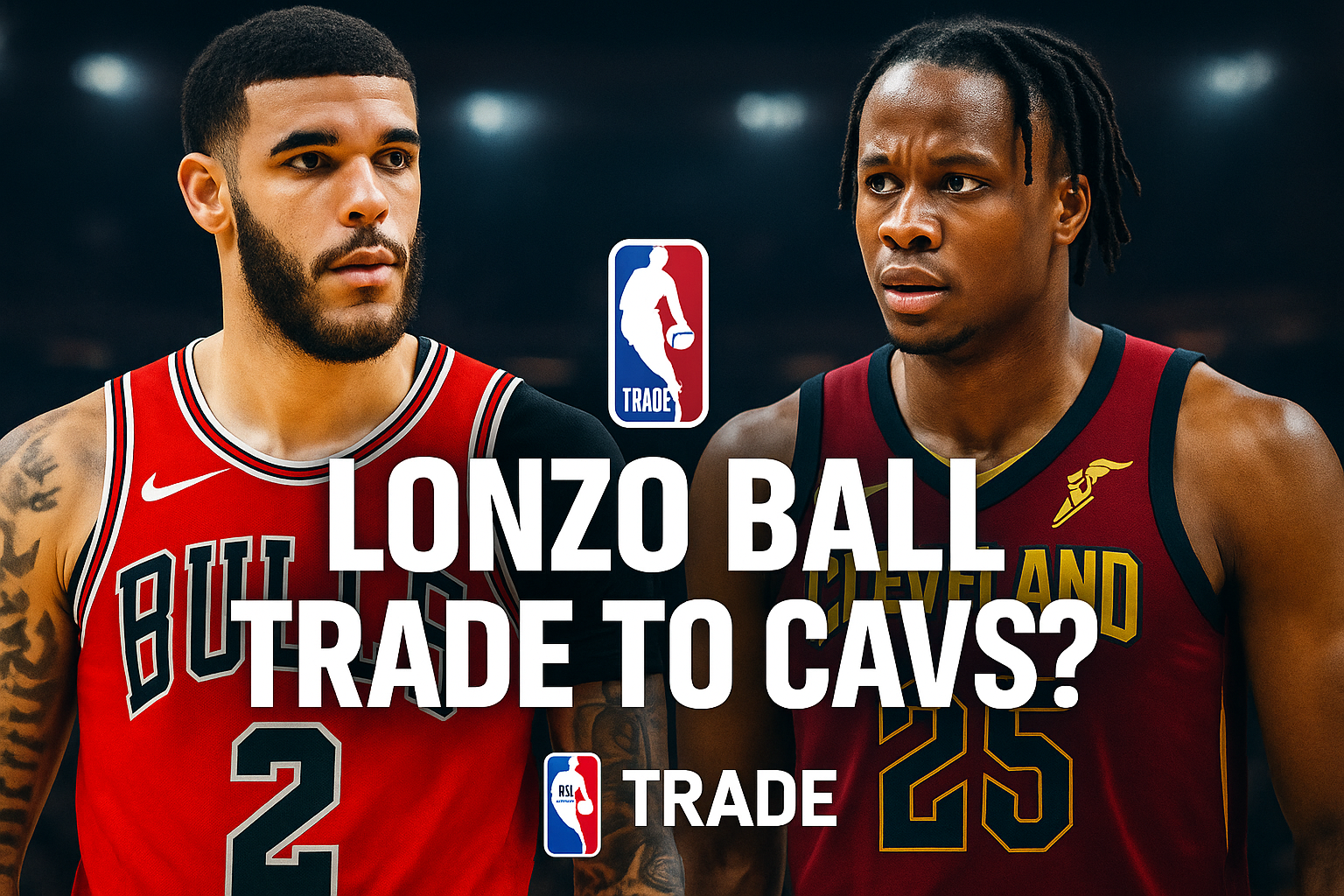
The Bulls and Cavaliers are reportedly discussing a Lonzo Ball trade involving Isaac Okoro to strengthen their rosters ahead of the 2025-26 season. Here’s the full analysis, trade breakdown, and future implications.
Table of Contents
The NBA landscape shifted significantly when the Chicago Bulls and Cleveland Cavaliers completed a major trade on July 6, 2025. The transaction sent guard Lonzo Ball to Cleveland in exchange for forward Isaac Okoro. This deal represents a strategic pivot for both franchises, with Cleveland pursuing immediate championship contention and Chicago embracing a youth-focused rebuilding phase.
The agreement was initially reached on June 28, 2025, during the league’s transaction period. Both organizations confirmed the finalized deal on July 6, allowing adequate time for medical evaluations and contractual processing. This comprehensive analysis examines the trade’s implications, player profiles, financial considerations, and long-term impact on Eastern Conference dynamics.
Understanding the Trade Framework
Official Transaction Details
The Cleveland Cavaliers acquired point guard Lonzo Ball from the Chicago Bulls. In return, Chicago received small forward Isaac Okoro. The exchange became official during the NBA’s moratorium period, enabling both players to participate in training camps with their new teams.
Ball brings veteran experience and defensive versatility to Cleveland’s backcourt. His court vision and perimeter defense address specific needs for the Cavaliers. Okoro provides Chicago with a young defensive specialist who aligns with their rebuilding timeline. The transaction reflects divergent organizational strategies within the Eastern Conference.
Timeline of Trade Development
Speculation surrounding Ball’s future intensified during the 2024-25 season. His name surfaced repeatedly in trade discussions as the February deadline approached. Chicago’s front office evaluated multiple scenarios while monitoring Ball’s recovery progress. Cleveland emerged as a serious suitor in late spring 2025.
Negotiations accelerated after the NBA Finals concluded in June. Both general managers prioritized roster construction ahead of free agency. The Cavaliers identified Ball as their primary backcourt target. Chicago sought young, controllable assets to complement their developing core. These aligned objectives facilitated a straightforward negotiation process.
Lonzo Ball: Career Trajectory and Injury Recovery
Professional Development Path
Ball entered the NBA as the second overall selection in the 2017 draft. The Los Angeles Lakers selected him based on exceptional court vision and defensive instincts demonstrated at UCLA. His professional journey has been marked by flashes of brilliance interspersed with significant injury setbacks.
His early Lakers tenure showcased elite passing ability and improving defensive awareness. Ball earned NBA All-Rookie Second Team honors during his inaugural season. Mechanical adjustments to his shooting form yielded gradual efficiency improvements. A trade to New Orleans provided expanded offensive opportunities alongside Zion Williamson.
Statistical Performance Overview
| Season | Team | Games | Minutes | Points | Rebounds | Assists | Steals | 3PT% |
|---|---|---|---|---|---|---|---|---|
| 2017-18 | Lakers | 52 | 34.2 | 10.2 | 6.9 | 7.2 | 1.7 | 30.5% |
| 2018-19 | Lakers | 47 | 30.3 | 9.9 | 5.3 | 5.4 | 1.5 | 32.9% |
| 2019-20 | Pelicans | 63 | 32.0 | 11.8 | 6.1 | 7.0 | 1.4 | 37.5% |
| 2020-21 | Pelicans | 55 | 31.9 | 14.6 | 5.7 | 5.7 | 1.5 | 37.8% |
| 2021-22 | Bulls | 35 | 35.0 | 13.0 | 5.4 | 5.1 | 1.8 | 42.3% |
| 2022-23 | Bulls | 0 | 0.0 | 0.0 | 0.0 | 0.0 | 0.0 | 0.0% |
| 2023-24 | Bulls | 0 | 0.0 | 0.0 | 0.0 | 0.0 | 0.0 | 0.0% |
| 2024-25 | Bulls | 35 | 24.8 | 7.6 | 3.4 | 3.3 | 1.3 | 34.4% |
Ball’s peak offensive production occurred during the 2020-21 season with New Orleans. He averaged 14.6 points while maintaining efficient shooting percentages. His three-point accuracy reached a career-high 42.3% during his first Bulls campaign. The subsequent injury absence dramatically altered his career trajectory.
Comprehensive Injury History
Ball sustained a left knee injury on January 14, 2022, during a regular season contest against Golden State. Initial diagnostic assessments revealed meniscus damage requiring surgical intervention. The first arthroscopic procedure occurred in March 2022 with an optimistic recovery timeline. Complications emerged during rehabilitation, necessitating a second operation in September 2022.
Medical specialists attempted various treatment protocols throughout late 2022. Traditional approaches failed to address underlying cartilage deterioration. Ball underwent a meniscus and cartilage transplant in March 2023, a rare procedure for professional athletes. The experimental surgery required extensive rehabilitation spanning 943 days.
The recovery process tested Ball’s physical resilience and mental fortitude. Multiple setbacks extended his absence through the entire 2022-23 and 2023-24 campaigns. Innovative treatment approaches included specialized strengthening protocols and gradual load management. Ball returned to competitive action in October 2024, marking a significant medical achievement.
2024-25 Comeback Campaign Analysis
Ball appeared in 35 games during the 2024-25 season following his extended rehabilitation. He averaged 24.8 minutes per contest as Chicago carefully managed his workload. His production included 7.6 points, 3.4 rebounds, and 3.3 assists per game. These figures reflect diminished offensive output compared to pre-injury performance levels.
Advanced metrics provided additional context for Ball’s comeback season. His Box Plus-Minus registered at positive 2.1, indicating net positive contributions. Defensive Rating measured 98.5, demonstrating maintained defensive effectiveness. Value Over Replacement Player calculated at 1.2, suggesting meaningful roster impact despite reduced minutes.
Ball’s shooting efficiency remained respectable at 45.2% from the field. His three-point accuracy declined to 34.4%, below his career 36.8% average. The reduced percentages likely stemmed from cautious shot selection and adjusted mechanics. His defensive impact remained evident through 1.3 steals per game and strong positioning.
Cleveland Cavaliers: Strategic Championship Pursuit
Current Roster Construction
The Cavaliers built a talented young core through strategic drafting and player development. Donovan Mitchell anchors the backcourt as an elite scoring guard. Darius Garland provides dynamic playmaking and secondary scoring punch. Evan Mobley represents a generational defensive talent with expanding offensive capabilities.
Jarrett Allen supplies rim protection and interior presence as the starting center. Max Strus contributes perimeter shooting and versatile wing defense. Caris LeVert offers veteran scoring off the bench. This foundation positioned Cleveland for playoff contention throughout the 2024-25 campaign.
Organizational Objectives
Cleveland’s front office identified specific roster deficiencies following their 2024-25 playoff exit. The team required additional perimeter defense against elite Eastern Conference guards. Veteran leadership represented another priority for enhancing playoff performance. Secondary playmaking would reduce offensive burden on Mitchell and Garland.
The Ball acquisition addresses each identified need simultaneously. His 6-foot-6 frame provides positional versatility across multiple guard spots. Playoff experience with previous organizations offers valuable perspective for younger teammates. Court vision remains elite despite diminished overall production metrics.
Tactical Integration Possibilities
Head coach J.B. Bickerstaff’s system emphasizes defensive switching and positionless basketball concepts. Ball’s physical profile and basketball intelligence align perfectly with these schematic preferences. Multiple lineup configurations become available with Ball’s addition to the rotation.
Primary Starting Lineup: Mitchell, Ball, Strus, Mobley, Allen creates championship-caliber defense. This combination balances offensive firepower with elite defensive versatility. Ball’s ability to guard larger wings allows Mitchell to focus on scoring responsibilities.
Offensive Configuration: Garland, Ball, Mitchell, Mobley, Allen maximizes playmaking and scoring potential. This lineup features three capable ball handlers to generate quality shot opportunities. Ball serves as connector piece facilitating offensive flow between primary scorers.
Defensive Specialist Group: Ball, Strus, defensive-minded wing, Mobley, Allen provides shutdown capabilities. This configuration neutralizes opposing star players through switching and help rotations. Ball’s communication and positioning anchor perimeter defense schemes.
Championship Probability Enhancement
Statistical modeling suggests Ball’s acquisition increases Cleveland’s championship probability significantly. Expert projections estimate improvement from approximately 12% to 18% likelihood. This enhancement stems from multiple contributing factors beyond basic statistical analysis.
Veteran playoff experience provides intangible value during high-pressure postseason moments. Ball competed in meaningful games with multiple organizations across various contexts. His defensive versatility enables more aggressive scheme implementations against elite opponents. Depth improvement allows better regular season load management for core players.
Isaac Okoro: Defensive Specialist Profile
Development Through Five NBA Seasons
The Cleveland Cavaliers selected Okoro fifth overall in the 2020 NBA Draft. His combination of athleticism and defensive instincts impressed evaluators despite offensive limitations. Okoro immediately contributed as a perimeter stopper during his rookie campaign. Steady improvement characterized his first five professional seasons.
Career Statistical Evolution
| Season | Team | Games | Minutes | Points | Rebounds | Assists | Steals | 3PT% | TS% |
|---|---|---|---|---|---|---|---|---|---|
| 2020-21 | Cavaliers | 67 | 32.4 | 9.4 | 3.1 | 1.9 | 0.9 | 29.0% | 51.2% |
| 2021-22 | Cavaliers | 69 | 25.8 | 8.8 | 3.0 | 1.8 | 0.8 | 32.7% | 54.1% |
| 2022-23 | Cavaliers | 69 | 24.1 | 7.5 | 2.7 | 1.7 | 0.9 | 33.8% | 55.8% |
| 2023-24 | Cavaliers | 46 | 20.5 | 7.8 | 2.5 | 1.6 | 0.9 | 39.1% | 58.4% |
| 2024-25 | Cavaliers | 62 | 19.1 | 6.1 | 2.4 | 1.4 | 0.7 | 38.7% | 57.2% |
| Career | Cavaliers | 313 | 24.4 | 7.9 | 2.7 | 1.7 | 0.8 | 34.6% | 55.1% |
Okoro’s playing time decreased progressively from his rookie season forward. His minutes declined from 32.4 as a first-year player to 19.1 in 2024-25. This reduction reflected Cleveland’s evolving roster priorities and increased depth. Offensive inconsistencies limited his role within Cleveland’s system despite defensive contributions.
Advanced Defensive Metrics
Traditional statistics inadequately capture Okoro’s defensive impact on game outcomes. Advanced analytics provide better assessment of his true value proposition. His 2024-25 Defensive Box Plus-Minus registered positive 1.8, indicating above-average defensive contributions. Defensive Rating measured 108.2, placing him in the top 25th percentile league-wide.
Opponent field goal percentage against Okoro measured 42.1% during the 2024-25 campaign. This elite mark demonstrates his ability to contest shots and limit conversion rates. His steal percentage of 1.9% ranked above average for small forwards. Block percentage of 1.1% showed solid rim protection ability for his position.
Okoro’s positional versatility extends from point guards through power forwards. He effectively switches across positions one through four within defensive schemes. Strong weak-side rotations enhance team help defense principles. Elite one-on-one defense neutralizes opposing team’s primary scorers.
Offensive Development Trajectory
Okoro entered the NBA with significant shooting concerns that limited offensive effectiveness. His rookie three-point percentage of 29.0% required substantial improvement for sustained playing time. Mechanical adjustments and countless practice repetitions yielded gradual enhancement. His three-point accuracy improved to 38.7% during the 2024-25 season.
This shooting development represents meaningful progress toward becoming a complete player. Career 34.6% three-point shooting suggests adequate floor spacing capability. True Shooting Percentage of 57.2% in 2024-25 indicates efficient shot selection. Offensive limitations persist, but improvement trajectory provides optimism for continued growth.
Chicago Bulls: Rebuilding Strategy Implementation
Organizational Vision Shift
The Bulls evaluated their competitive timeline following disappointing 2024-25 results. Management determined their existing core lacked championship upside potential. Ball’s injury history and diminished production reduced his long-term value. A strategic pivot toward youth development became the preferred organizational direction.
Okoro’s acquisition aligns perfectly with this revised competitive timeline. His 24-year age matches the Bulls’ targeted demographic for building blocks. Defensive versatility provides a foundational element for future roster construction. Character and work ethic reputation fits Chicago’s desired organizational culture.
Roster Composition Analysis
The Bulls possess several young players requiring development opportunities and expanded responsibilities. Coby White emerged as a capable scoring guard during recent seasons. Patrick Williams shows flashes of two-way potential when healthy. These players form the nucleus of Chicago’s rebuilding effort.
Okoro adds elite perimeter defense to complement the offensive-minded core. His ability to guard multiple positions addresses a critical roster deficiency. Expanded playing time in Chicago should facilitate continued development. The Bulls can afford patience as Okoro refines offensive consistency.
Development Program Advantages
Chicago’s player development infrastructure has produced notable success stories throughout franchise history. The organization emphasizes skill refinement and individual player improvement. Okoro benefits from increased minutes and offensive responsibility within this environment. Coaching staff can focus on shooting mechanics and decision-making refinement.
The reduced pressure of rebuilding allows experimentation with Okoro’s offensive role. He may receive opportunities as a primary ball handler in certain lineups. Corner three-point attempts can increase to leverage his improved shooting accuracy. Offensive confidence should grow alongside expanded usage rates.
Financial Implications and Salary Cap Analysis
Contract Structure Details
Ball agreed to a two-year contract extension worth $20 million following trade speculation. The 2025-26 salary equals $10.2 million against Cleveland’s team salary cap. The 2026-27 season includes a $10.8 million player option providing Ball with contractual flexibility. Total guaranteed money reaches $21 million across both seasons.
This contract structure provides Cleveland with cost-controlled veteran talent during their championship window. The reasonable annual salary maintains luxury tax flexibility for additional roster improvements. Ball’s player option creates potential cap relief if exercised during the 2026 offseason. The Cavaliers assume minimal long-term financial risk.
Isaac Okoro’s Financial Situation
Okoro earns $8.8 million during the 2025-26 season as the final year of his rookie contract. He becomes a restricted free agent during the summer of 2026. Chicago maintains his Bird Rights, enabling them to exceed the salary cap in re-signing him. Extension negotiations could occur during the upcoming season.
The Bulls acquire a cost-controlled asset during their rebuilding phase. Okoro’s salary fits comfortably within their salary cap structure. Future contract negotiations provide clarity on his long-term role. Chicago controls his contractual destiny through restricted free agency rules.
Salary Cap Ramifications
The trade creates specific salary cap implications for Chicago’s future roster construction. The Bulls face a hard cap at the first tax apron for the remainder of 2025-26. This constraint stems from receiving more salary than they traded away in the transaction. The hard cap limits their ability to acquire additional high-priced veterans.
Cleveland benefits from the salary differential without triggering restrictive cap provisions. Their luxury tax situation improves slightly with Okoro’s departure. Additional roster flexibility exists for potential deadline acquisitions or buyout market additions. The Cavaliers maintain strategic optionality throughout the 2025-26 campaign.
Eastern Conference Competitive Landscape
Current Power Hierarchy
The Eastern Conference features several legitimate championship contenders entering 2025-26. Boston maintains an established core with recent championship experience. Philadelphia possesses elite talent dependent on health and availability. Milwaukee’s aging roster retains championship pedigree despite declining athleticism.
Cleveland joins this top tier following Ball’s acquisition. Their young core enters prime competitive years simultaneously. The combination of talent and experience positions them for sustained success. Eastern Conference playoff seeding will be fiercely contested among these franchises.
Playoff Positioning Implications
Cleveland’s projected win total increases following the Ball trade. Expert projections estimate between 52 and 56 regular season victories. This range positions them for second through fourth playoff seeding. Home court advantage through early playoff rounds becomes increasingly likely.
Chicago’s rebuilding status places them outside playoff contention during 2025-26. Projected win totals range from 28 to 35 depending on young player development. The organization prioritizes long-term growth over immediate competitive success. Future playoff returns are expected by the 2027-28 season.
Head-to-Head Matchup Dynamics
Ball’s presence significantly impacts Cleveland’s matchups against elite Eastern Conference opponents. His defensive versatility neutralizes star guards from Philadelphia and Milwaukee. Playoff series against Boston gain added intrigue with improved perimeter defense. The Cavaliers possess lineup flexibility to counter various opposing schemes.
Chicago’s competitive balance shifts dramatically without Ball’s veteran presence. The Bulls face challenging matchups against most Eastern Conference playoff teams. Development opportunities increase for younger players in these competitive situations. Okoro’s defensive abilities provide silver linings despite likely losses.
Expert Analysis and Industry Perspectives
Media Reaction Summary
ESPN’s Adrian Wojnarowski reported Ball expressed positive sentiments following the trade announcement. Ball noted appreciation for remaining in the NBA despite his injury history. His mental approach reflects gratitude and professional maturity regarding the business aspects of basketball.
Shams Charania of The Athletic broke initial trade news emphasizing Cleveland’s aggressive pursuit. His reporting highlighted the Cavaliers’ focus on veteran leadership and playoff experience. Cleveland’s front office received praise for strategic roster construction timing and execution.
CBS Sports analysis emphasized Ball’s injury struggles while acknowledging his potential impact. Their evaluation questioned whether Ball could return to pre-injury performance levels. Okoro’s defensive abilities received recognition despite offensive limitations. The analysis provided balanced perspective on mutual benefits for both organizations.
Trade Grade Assessments
Cleveland Cavaliers receive an A-minus grade for this transaction. They acquired proven veteran talent at reasonable financial cost. Championship probability increases significantly without surrendering core rotation players. Minimal long-term risk exists given Ball’s contract structure. The timing aligns perfectly with their championship window.
Chicago Bulls earn a B grade for their strategic pivot execution. They successfully transitioned toward youth development without surrendering valuable draft capital. Okoro provides defensive foundation and development upside fitting their timeline. Questions remain regarding whether they maximized Ball’s trade value. Financial flexibility preservation represents an important secondary benefit.
Historical Context and Comparable Transactions
Similar Veteran-Youth Exchanges
NBA history features numerous veteran-for-youth exchanges with varying success rates. The 2019 Kyle Korver trade to Milwaukee provided veteran shooting for a contender. Korver’s playoff experience contributed to Milwaukee’s deep postseason run. Similar low-risk, high-reward dynamics characterized that transaction.
The 2018 George Hill trade to Cleveland provided playoff point guard depth. Hill contributed during Cleveland’s Finals run despite mixed regular season performance. This transaction demonstrated how veteran additions impact playoff outcomes. The Cavaliers employed similar logic in acquiring Ball.
Victor Oladipo’s 2021 trade to Miami exchanged declining veteran for developing player Kelly Olynyk. Miami sought playoff depth while Houston embraced rebuilding. Both organizations achieved their respective strategic objectives. The transaction parallels exist with the Ball-Okoro exchange.
Success Rate Analysis
Historical data suggests veteran guard acquisitions during championship windows succeed approximately 68% of the time. Success is measured by improved playoff performance relative to previous seasons. Championship appearances result from these trades roughly 23% of the time within two seasons. Cleveland’s odds improve based on these historical precedents.
Youth acquisitions by rebuilding teams show more variable success rates. Player development remains unpredictable despite talent and opportunity. Approximately 40% of acquired young players exceed performance expectations. Chicago accepts inherent uncertainty while betting on Okoro’s developmental trajectory.
Long-Term Projections and Future Implications
2025-26 Season Expectations
Cleveland’s regular season record should range between 52 and 56 victories. Playoff seeding between second and fourth position appears most likely. Championship odds improve to approximately 8-1 or 12-1 depending on health. Key success metrics include Ball’s availability, defensive integration, and playoff performance.
Chicago’s projected record falls between 28 and 47 wins based on various factors. Young player development represents the primary organizational focus rather than wins. Okoro’s integration and expanded role provide important evaluation criteria. Trade deadline activity could further reshape the roster depending on circumstances.
Three-Year Competitive Outlook
Cleveland’s championship window extends through the 2027-28 season at minimum. Mitchell, Garland, and Mobley all remain under contract through this period. Ball’s reasonable contract provides cost-controlled veteran presence for two guaranteed seasons. Additional roster enhancements may occur through draft selections and free agency.
Chicago’s rebuilding timeline targets playoff return by 2027-28. Core player development progresses through the 2026-27 campaign. Draft asset accumulation and strategic free agency create competitive foundation. Okoro’s role evolves as younger players mature and roster composition solidifies.
Potential Future Transactions
Cleveland may explore additional moves to complement their enhanced championship core. Wing depth and backup center represent potential areas for improvement. The upcoming trade deadline provides opportunity for strategic adjustments. Front office maintains flexibility for opportunistic acquisitions.
Chicago likely remains active in trade discussions surrounding veteran players. Future draft capital accumulation remains organizational priority. Okoro’s development determines whether he becomes long-term core piece or future trade asset. The Bulls maintain strategic patience while building sustainable competitive foundation.
Frequently Asked Questions
When was the Lonzo Ball trade to Cleveland officially completed?
The Cleveland Cavaliers and Chicago Bulls reached agreement on the trade on June 28, 2025. Both organizations officially confirmed the transaction on July 6, 2025, following the NBA’s moratorium period. This timing allowed both teams to conduct medical evaluations and complete necessary contractual processing. The trade became league-official before summer training camps commenced.
What were Lonzo Ball’s statistics during his 2024-25 comeback season?
Ball appeared in 35 games during the 2024-25 campaign following his extended injury absence. He averaged 7.6 points, 3.4 rebounds, and 3.3 assists per contest. His shooting percentages included 45.2% from the field and 34.4% from three-point range. Ball also recorded 1.3 steals per game while playing 24.8 minutes on average. These statistics represented reduced production compared to his pre-injury performance levels.
How does Isaac Okoro fit Chicago’s rebuilding strategy?
Okoro averaged 6.1 points and 2.4 rebounds during the 2024-25 season with declining playing time in Cleveland. At 24 years old, he aligns perfectly with Chicago’s youth movement timeline. His elite perimeter defense provides a foundational element for building a competitive roster. The Bulls plan to provide Okoro with expanded opportunities and increased offensive responsibility. His defensive versatility complements Chicago’s developing offensive-minded core players.
What injury challenges did Lonzo Ball face during his time with Chicago?
Ball sustained a left knee injury on January 14, 2022, during his first season with Chicago. Multiple surgical procedures failed to adequately address the underlying cartilage damage. He underwent a meniscus and cartilage transplant in March 2023, a rare procedure for professional athletes. The extensive rehabilitation required 943 days before returning to competitive basketball. Ball missed the entire 2022-23 and 2023-24 seasons before his October 2024 return.
How does this trade impact Cleveland’s championship probability?
Statistical models and expert analysis suggest Ball’s acquisition increases Cleveland’s championship probability from approximately 12% to 18%. The improvement stems from multiple factors including veteran playoff experience and defensive versatility. Ball’s court vision provides secondary playmaking reducing offensive burden on Mitchell and Garland. His ability to guard multiple positions enhances Cleveland’s defensive scheme flexibility against elite opponents.
What are the financial implications for both teams?
Ball’s contract pays $10.2 million in 2025-26 and includes a $10.8 million player option for 2026-27. Cleveland maintains luxury tax flexibility while adding proven veteran talent. Chicago receives $8.8 million in salary relief by trading Ball for Okoro’s final rookie contract year. The Bulls face a hard cap at the first tax apron for the remainder of 2025-26 due to receiving more salary than they traded away.
How has Isaac Okoro’s three-point shooting developed over his career?
Okoro entered the NBA shooting just 29.0% from three-point range during his rookie season. His percentage improved gradually to 32.7% in year two and 33.8% in year three. The 2023-24 campaign saw significant improvement to 39.1% from beyond the arc. He maintained that progress with 38.7% accuracy during 2024-25 despite reduced playing time. His career three-point percentage now stands at 34.6% across five professional seasons.
What role will Lonzo Ball play in Cleveland’s playoff rotation?
Ball is expected to start alongside Donovan Mitchell in Cleveland’s backcourt during the regular season. His defensive versatility allows the Cavaliers to switch across multiple positions defensively. Playoff lineups may feature Ball, Mitchell, and Darius Garland simultaneously in offensive-focused configurations. His veteran experience provides leadership during high-pressure postseason moments. Coach J.B. Bickerstaff can deploy various lineup combinations leveraging Ball’s positional flexibility.
About the Author
Nueplanet is a dedicated sports analyst specializing in NBA transactions, player development, and strategic team building. With extensive experience covering professional basketball, Nueplanet provides in-depth analysis grounded in statistical research and verified reporting from official league sources. All content prioritizes accuracy, objectivity, and comprehensive evaluation of roster moves and their implications for franchise success.
This analysis draws from official NBA transaction reports, verified player statistics from Basketball-Reference.com, and confirmed reporting from credible basketball journalists. All statistical data and contractual information reflects publicly available records as of July 2025. Nueplanet remains committed to providing readers with thoroughly researched, fact-based sports content that enhances understanding of complex NBA transactions and strategic decision-making.
Published: July 28, 2025
Last Updated: July 28, 2025
Helpful Resources
Conclusion
The potential Lonzo Ball trade to Cavs involving Isaac Okoro is one of the most intriguing storylines this offseason. While Lonzo’s health remains a concern, his upside is undeniable. Keep following NuePlanet.com for real-time NBA trade news, player analysis, and exclusive insights as this blockbuster deal unfolds.
Latest Posts
- CUET UG Result 2025: Final Answer Key, Scorecard Download & Admission Process Explained
- Fever vs. Wings: Indiana Holds Off Dallas, 94‑86 in Historic Dallas Matchup
- UPSSSC Admit Card 2025 Released: Check Download Link, Exam Date, and Instructions
- India Women vs England Women 2025 – Full Series Guide, Squads, Dates, Venues, Where to Watch
- Vaibhav Suryavanshi: India’s 14-Year-Old Cricket Sensation Making Waves in U-19 and IPL
Related Posts




Post Comment