









Kospi Index: South Korean Market Trends and Global Impact
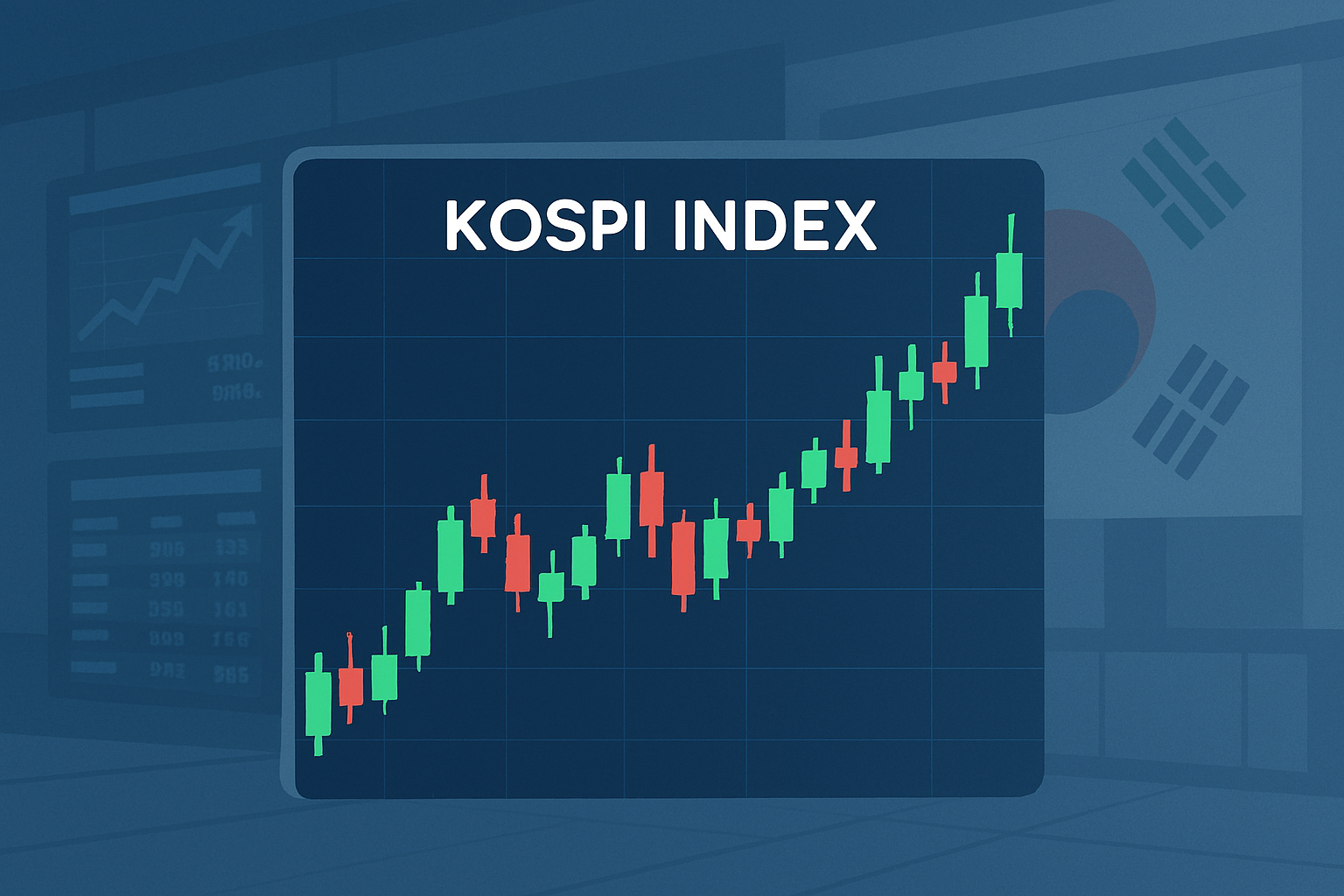
The Kospi Index has witnessed sharp fluctuations in 2025, driven by global tech selloffs and investor sentiment. Here’s a detailed look at its movement, factors, and what it means for the global market.
Table of Contents
Published: August 22, 2025 | Last Updated: August 22, 2025
Overview: Understanding South Korea’s Primary Stock Market Benchmark
The Kospi Index (Korea Composite Stock Price Index) serves as South Korea’s principal equity market indicator and primary benchmark for measuring stock market performance. Listed on the Korea Exchange (KRX), the index comprises common stocks from companies across multiple economic sectors reflecting the broader South Korean economy. The Kospi Index functions similarly to other national equity indices such as India’s Nifty 50 or the United States’ S&P 500, providing comprehensive measurement of stock market movements and economic trends.
The index provides quantitative measurement of market performance through market capitalization weighting methodology, incorporating real-time trading data from hundreds of listed companies. Movements in the Kospi Index reflect investor assessments of economic conditions, corporate profitability, and future growth expectations. The index maintains significant importance for investors globally seeking exposure to South Korea’s advanced economy and technology-driven industries.
Understanding the Kospi Index requires examining its structure, historical development, sector composition, calculation methodology, and relationship with broader economic trends. This analysis provides factual examination of the index’s characteristics and market significance without investment recommendations or performance predictions.
Historical Development and Index Establishment
Index Creation and Evolution
The Korea Composite Stock Price Index received official establishment in January 1980 with a base value of 100 points, providing a historical reference point for measuring subsequent market movements. The index began official trading at the Korea Exchange with comprehensive tracking of listed company stocks. Initial scope encompassed smaller numbers of listed companies compared to current composition, reflecting market development over subsequent decades.
The Korea Exchange itself received government authorization and began operations in 1956, predating the Kospi Index by approximately 24 years. The decision to create the Kospi Index reflected growing recognition of the need for comprehensive market measurement tools tracking stock market performance. Early index calculations relied on manual processes before transitioning to computerized systems enabling real-time calculation and broader market access.
Gradual expansion of listed companies resulted in index composition increasing from initial hundreds of companies to current levels exceeding several hundred securities. Index methodology enhancements occurred periodically to reflect evolving market conditions and investor requirements. The transition to market capitalization weighting from earlier methodologies represented significant advancement in index calculation precision.
Market Development Phases
South Korea’s equity market underwent several development phases reflecting broader economic transformation. Initial post-war development phase involved reconstruction and economic stabilization. Subsequent industrialization phase of 1960s-1970s involved manufacturing sector expansion and export orientation.
The 1980s marked expansion of financial markets and development of institutional infrastructure. The 1990s involved globalization of Korean capital markets and increased foreign investor participation. 2000s witnessed technology sector emergence as dominant market force. Recent decades show continued technological advancement and international integration of capital markets.
The Kospi Index reflected these transformation phases through composition changes, sector representation shifts, and increasing market capitalization. Index movements documented South Korea’s economic trajectory from reconstruction through development to advanced economy status.
Index Structure and Calculation Methodology
Market Capitalization Weighting System
The Kospi Index employs market capitalization weighting methodology assigning weight to each constituent company proportional to its market value. Larger companies receiving higher weightings exert greater influence on index movements. Companies representing 1% of total market capitalization influence the index approximately 1% compared to the aggregate market.
Floating-share adjustment applies to weighting calculations accounting for shares available for public trading excluding restricted or controlled holdings. This adjustment provides more accurate representation of freely tradable equity values. Free-float methodology aligns with international index calculation standards used in comparable equity indices globally.
Real-time index calculation updates continuously during trading hours reflecting ongoing stock transactions. Index value calculated every few seconds incorporating recent trading data. Closing index value determined at market close representing official daily performance measurement.
Constituent Selection and Maintenance
All common stocks listed on the Korea Exchange’s main market receive inclusion in Kospi Index calculations. This comprehensive approach differs from selective indices like the Kospi 100 or Kospi 200 which include predetermined numbers of largest companies. The inclusive approach provides broader market representation.
Regular index maintenance procedures address corporate actions including new listings, delistings, stock splits, mergers, and spin-offs. Index committees review constituent status periodically ensuring appropriate representation. Changes to corporate structures trigger automatic index adjustments maintaining continuity.
Quarterly rebalancing procedures review sector weightings and constituent representation ensuring index accuracy. Market capitalization changes from trading activity automatically adjust constituent weightings without manual intervention. This automatic adjustment reflects market participant trading activity.
Index Calculation Formula
The Kospi Index calculation incorporates market capitalization data from all constituent companies with adjustments for corporate actions and methodological requirements. Base calculation compares current market capitalization to base period market capitalization. Base period market capitalization established at index inception determines baseline values.
Dividend adjustment procedures ensure dividend payments and corporate distributions receive appropriate accounting in index calculation. Adjustment mechanisms prevent artificial index declines from regular dividend distributions. This treatment aligns index calculation with total shareholder return objectives.
Advanced calculation procedures incorporate liquidity adjustments, free-float adjustments, and capping mechanisms ensuring index reflects market conditions accurately. Calculation transparency maintained through published methodological documentation enabling external verification.
Sector Composition and Industry Representation
Technology and Electronics Sector
The technology and electronics sector represents substantial Kospi Index weighting reflecting South Korea’s position as global technology manufacturing hub. Samsung Electronics comprises significant portion of index weighting as one of the world’s largest semiconductor and consumer electronics manufacturers. SK Hynix represents important memory semiconductor manufacturer with global market significance.
LG Electronics participates as consumer electronics manufacturer producing display technologies, home appliances, and electronic components. Other technology companies included in index composition reflect software development, electronics manufacturing, and technology services. Technology sector represents approximately 35-40% of total index weighting reflecting market capitalization concentration.
This sector concentration provides investors with significant exposure to global technology trends, semiconductor industry dynamics, and consumer electronics demand patterns. Technology company earnings fluctuations significantly influence overall index movements. Global supply chain disruptions particularly affect this sector’s performance and index valuations.
Financial Services Sector
The financial services sector encompasses banking, insurance, and investment services companies representing approximately 15-20% of index weighting. Major Korean banks provide commercial and investment banking services supporting domestic and international operations. Insurance companies offer insurance products and asset management services.
Financial sector companies demonstrate relationships with broader economic conditions affecting credit demand, interest rates, and asset valuations. Financial sector profitability reflects economic conditions including growth rates, employment levels, and consumer confidence. Asset management subsidiaries manage substantial investment portfolios including domestic and international securities.
Automotive and Manufacturing Sector
The automotive sector includes Hyundai Motor Company and Kia Motors representing approximately 10% of index weighting. These companies maintain global manufacturing operations serving international markets. Automotive parts suppliers provide components for domestic and exported vehicles.
Chemical and materials companies serve industrial markets including semiconductor manufacturing, automotive production, and construction. Steel producers manufacture products for automotive, construction, and manufacturing applications. Manufacturing sector represents approximately 15-20% of index weighting reflecting South Korea’s manufacturing economy base.
Other Sectors and Diversification
Energy companies including petroleum refining, power generation, and utilities represent approximately 5-10% of index weighting. Telecommunications companies provide network infrastructure and communications services. Retail and consumer goods companies distribute products through domestic and international channels.
Construction companies engage in domestic and international infrastructure projects. Media and entertainment companies produce content and provide broadcasting services. Pharmaceutical and biotechnology companies develop healthcare products and services.
Market Performance Characteristics and Volatility Patterns
Historical Performance Trends
The Kospi Index demonstrated substantial long-term appreciation trajectory across several decades reflecting South Korea’s economic development. Performance varied across market cycles including growth periods, corrections, and recovery phases. The index historically recovered from downturns reflecting underlying economic resilience and recovery capabilities.
Comparative analysis with other major stock indices reveals Kospi performance broadly aligned with regional and global equity market trends. However, Kospi movements sometimes diverged from Western equity markets reflecting South Korea-specific factors and economic conditions. Technology sector dominance means global technology trends significantly influence Kospi performance.
Seasonal patterns affect stock market performance with year-end rallies and January effects observed in Kospi trading history. Specific holidays in Korean market calendar affect trading patterns. Understanding historical patterns assists in comprehensive market analysis though past performance does not predict future results.
Volatility Analysis
The Kospi Index experiences volatility arising from multiple sources including global economic developments, interest rate changes, currency fluctuations, and company-specific factors. Volatility intensity varies across market cycles with increased volatility during uncertain periods and reduced volatility during stable conditions.
Volatility measurement using standard deviation or beta calculations indicates market risk levels. Higher volatility periods create both risks and opportunities for various investor categories. Professional investors employ volatility analysis for portfolio risk assessment and hedging decisions.
Foreign exchange volatility of Korean Won influences Kospi performance through export competitiveness and foreign investor returns effects. Currency strength affects overseas earnings translations and competitive positioning of Korean exporters. Managing currency-related risks requires active consideration by international investors.
Valuation Metrics Analysis
Price-to-earnings ratios calculated as market price divided by company earnings provide valuation perspective. Comparing Kospi valuations to historical averages and other markets indicates whether index appears relatively expensive or inexpensive. Forward-looking valuations incorporate analyst earnings projections for future years.
Price-to-book ratios comparing market value to accounting book value indicate financial market valuation relative to accounting values. Dividend yields calculated as annual dividends divided by share price indicate income generation from equity holdings. Earnings growth rates reflect corporate profitability expansion supporting equity valuations.
Kospi Index Global Significance and International Impact
Regional Economic Indicator Status
The Kospi Index functions as indicator of Asia-Pacific economic conditions reflecting South Korea’s regional economic importance. As world’s 10th largest economy by GDP, South Korea’s economic performance indicates broader regional trends. Export-oriented Korean economy reflects global demand trends and economic activity levels.
Manufacturing capabilities and technology production concentration mean Kospi performance indicates global supply chain conditions. Semiconductor production dominance means Kospi technology sector movements reflect global chip industry trends. Consumer electronics exports indicate international demand for technology products.
Emerging Markets Index Representation
The Kospi Index comprises significant weighting in MSCI Emerging Markets Index reflecting South Korea’s emerging market classification. MSCI Emerging Markets Index weight in Kospi Index substantial enough to significantly influence emerging market index performance. Kospi movements affect emerging market investment fund flows and investor sentiment.
Classification as emerging market despite advanced economy status reflects stock market development and liberalization characteristics. South Korea maintains emerging market classification in most major index providers’ frameworks. This classification affects investor flows from dedicated emerging market investment funds.
Global Technology Sector Significance
Samsung Electronics as world’s largest semiconductor manufacturer means Kospi technology sector movements reflect global semiconductor industry conditions. Memory chip prices and supply dynamics significantly influence Samsung and SK Hynix earnings. Smartphone and consumer electronics demand patterns affect technology company performance and Kospi movements.
Display technology production concentrated in Korean companies means OLED and LCD market dynamics influence Kospi performance. 5G telecommunications infrastructure deployment and advancement affect Korean telecommunications equipment manufacturers. Artificial intelligence and advanced computing technology development progress influences Korean technology company valuations.
Economic Factors Influencing Kospi Performance
South Korea Domestic Economic Conditions
Gross domestic product growth rates directly influence corporate profitability and equity valuations. Employment levels and unemployment rates affect consumer spending and economic activity. Export performance particularly important for export-dependent South Korean economy represents significant economic growth component.
Government fiscal and monetary policy decisions influence economic conditions and interest rates affecting equity valuations. Central bank interest rate decisions affect discount rates used in equity valuation calculations. Inflation rates and price trends influence corporate cost structures and profitability.
Global Economic Influences
United States Federal Reserve interest rate decisions influence global liquidity and capital flows affecting Kospi Index. U.S. economic growth trends influence demand for Korean exports particularly technology products. Global supply chain conditions affect Korean manufacturing companies and export performance.
China’s economic performance and policies significantly influence Korean economy as major regional trading partner. Trade relationships and geopolitical tensions between countries affect business confidence and investment decisions. Commodity prices particularly petroleum influence Korean manufacturing costs and corporate profitability.
Currency Market Dynamics
Korean Won exchange rate fluctuations affect overseas earnings of export-oriented companies when translated to domestic currency. Won strength increases price competitiveness concerns for exported products. Won weakness improves export competitiveness but may increase import costs.
Foreign investor flows depend partially on currency considerations. Foreign investors evaluate both equity returns and currency return components. Currency depreciation reduces returns for foreign investors converting won-denominated proceeds to foreign currency.
Investment Characteristics and Market Access
Index Weighting and Sector Concentration
The Kospi Index weighting concentration in technology sector (35-40%), financial services (15-20%), and manufacturing (15-20%) creates sector-specific risk profiles. Individual stock weightings in index vary based on market capitalizations. Top 10 holdings typically represent approximately 40-50% of total index weighting.
This concentration means index performance heavily influenced by largest companies’ performance. Sector concentration means index benefits from strong performance in technology sector but faces headwinds if technology sector declines. Diversification exists across multiple sectors but major sector influences index movements significantly.
Liquidity Characteristics
The Kospi Index represents highly liquid market with substantial daily trading volumes. Major constituent stocks trade with minimal bid-ask spreads enabling efficient execution of large orders. High liquidity facilitates investment vehicle creation and index tracking capabilities.
Market capitalization of approximately 2 trillion USD (estimated based on historical data) makes market significant compared to other Asian bourses. Daily trading volumes sufficient to support large institutional investor participation. Liquidity generally adequate for most investor objectives though individual stocks vary in liquidity characteristics.
Access Methods for International Investors
International investors access Kospi Index exposure through multiple mechanisms. Exchange-traded funds (ETFs) tracking Kospi Index trade on major international exchanges. American Depositary Receipts (ADRs) provide direct access to major Korean companies. International mutual funds offer Kospi Index exposure through professionally managed portfolios.
Regulatory restrictions limit certain types of foreign investment but generally permit equity investment. Foreign investor registration procedures enable account opening with Korean investment firms. Currency considerations influence access mechanisms with currency-hedged options available through certain investment vehicles.
Current Market Conditions and Recent Developments
Recent Trading Activity and Price Movements
Recent Kospi Index trading reflected multiple influences including global technology sector developments, interest rate considerations, and domestic economic factors. Index movements demonstrated volatility reflecting uncertain global economic conditions. Professional market analysts provided varying assessments of near-term direction.
Specific earnings announcements, macroeconomic data releases, and policy decisions influenced daily trading activity. International news developments regarding geopolitics and trade relationships affected market sentiment. Seasonal patterns and calendar effects influenced trading activity during specific periods.
Analysis of Market Drivers
Global interest rate environment influenced equity valuations across major markets including South Korea. Technology sector realignment in major markets created ripple effects affecting Kospi technology components. Currency market movements influenced export competitiveness and foreign investor returns.
Domestic policy developments including government spending initiatives and regulatory changes influenced business conditions. Corporate earnings reports provided direct information on company performance affecting individual stock valuations. Analyst recommendations and institutional investor positioning influenced trading activity and price movements.
Market Outlook Perspectives
Market experts provided varying outlooks for equity market conditions reflecting different assumptions and analytical approaches. Some analysts emphasized fundamental economic strengths supporting long-term market performance. Others highlighted near-term risks and volatility concerns affecting shorter-term performance prospects.
Professional consensus emphasized importance of maintaining long-term perspective despite near-term volatility. Historical market analysis indicated opportunities often emerge during periods of uncertainty and temporary price declines. Diversification and appropriate risk management emphasized as important investor practices.
Key Economic Indicators for Kospi Tracking
Manufacturing and Production Indicators
Manufacturing PMI (Purchasing Managers’ Index) provides monthly measurement of manufacturing sector activity levels. PMI above 50 indicates expansion while below 50 indicates contraction. Korea Manufacturing PMI movements influence investor sentiment toward manufacturing-dependent economy.
Industrial production indices measure actual output levels from manufacturing sector. Capacity utilization rates indicate whether facilities operate at full capacity or have slack capacity. Production levels affect corporate profitability and earnings growth supporting equity valuations.
Demand and Consumption Indicators
Consumer confidence indices measure household sentiment regarding economic conditions and future prospects. Consumer spending levels directly influence corporate revenues and profitability. Retail sales data provides measurement of actual consumer spending activity.
Export volumes and values indicate international demand for Korean products particularly technology and automotive products. Export growth supports company revenues and economic activity. Export declines indicate softening international demand affecting business conditions.
Financial Market Indicators
Interest rates established by Bank of Korea influence discount rates used in equity valuation calculations. Lower interest rates reduce required returns increasing equity valuations. Higher interest rates increase required returns reducing equity valuations.
Currency exchange rates affect overseas earnings translations and export competitiveness. Unemployment rates indicate labor market conditions affecting consumer spending and economic activity. Inflation rates influence corporate cost structures and profitability levels.
Risk Factors and Investment Considerations
Market Risk and Volatility
Equity market risk inherent in stock price fluctuations means investor returns subject to significant variation. Market downturns create capital loss risks for equity investors. Volatility during uncertain periods can create substantial short-term losses.
Diversification and appropriate asset allocation help manage equity market risk. Long-term investment horizons reduce impact of short-term volatility. Professional risk management techniques including hedging can reduce specific risks.
Sector Concentration Risk
Technology sector concentration creates risk that technology sector downturns significantly affect index performance. Manufacturing sector exposure creates vulnerability to global demand fluctuations. Financial sector exposure creates interest rate and credit cycle sensitivities.
Sector imbalances mean index does not represent even distribution across economy sectors. Economic shifts affecting major sectors significantly influence index performance. Investor understanding of sector weightings important for risk assessment.
Geopolitical and Currency Risks
Regional geopolitical tensions can affect business confidence and investment decisions. Currency fluctuations affect foreign investor returns and export competitiveness. Government policy changes can affect business conditions and regulatory environment.
International trade relationships and policies influence business conditions for export-oriented companies. Geopolitical developments affecting supply chains create business uncertainty. Currency depreciation affects foreign investor returns despite favorable equity price changes.
Frequently Asked Questions (FAQs)
FAQ 1: What exactly is the Kospi Index, and how does it function as an economic indicator?
The Kospi Index (Korea Composite Stock Price Index) represents South Korea’s primary equity market benchmark comprised of all common stocks listed on the Korea Exchange. The index measures stock market performance through market capitalization weighting assigning larger companies greater influence on index movements. Real-time index calculation incorporates trading data from hundreds of companies across multiple economic sectors.
The Kospi Index functions as economic indicator reflecting investor assessments of economic conditions, corporate profitability, and future growth expectations. Index movements indicate market sentiment regarding economic prospects. Rising index typically indicates investor confidence in economic conditions while declining index may suggest economic concerns. As comprehensive market measurement tool, the Kospi Index reflects both domestic South Korean economic trends and global economic influences affecting South Korea’s export-dependent economy.
FAQ 2: When was the Kospi Index established, and what has been its historical development trajectory?
The Kospi Index received official establishment in January 1980 with base value of 100 points. The Korea Exchange received government authorization and began operations in 1956 approximately 24 years before index creation. Initial index scope included available listed companies with gradual expansion as Korean stock market developed.
Index composition expanded from initial hundreds of companies to current levels exceeding several hundred securities. Index calculation methodology evolved from manual processes to computerized systems enabling real-time calculation. Market development reflected South Korea’s economic transformation from post-war reconstruction through industrialization to advanced technology-driven economy. Kospi Index movements documented this economic trajectory with index values appreciating substantially reflecting economic development and growth.
FAQ 3: Which companies and sectors most significantly influence Kospi Index movements?
Technology and electronics sector represents approximately 35-40% of index weighting with Samsung Electronics and SK Hynix as major constituents. Samsung Electronics comprises significant weighting as world’s largest semiconductor and consumer electronics manufacturer. Technology sector weighting means global technology trends significantly influence index performance.
Financial services sector represents approximately 15-20% with major banks and insurance companies included. Automotive sector including Hyundai and Kia motors represents approximately 10% of weighting. Manufacturing, energy, telecommunications, and other sectors provide additional diversification. Top 10 holdings typically represent approximately 40-50% of total index weighting. Sector concentration means index performance heavily influenced by largest companies particularly in technology and financial sectors.
FAQ 4: How do international investors access Kospi Index exposure, and what methods are available?
International investors access Kospi Index through multiple mechanisms. Exchange-traded funds (ETFs) tracking Kospi Index trade on major international exchanges providing convenient access. American Depositary Receipts (ADRs) provide direct access to major Korean companies through international trading. Global Depositary Receipts (GDRs) offer similar access mechanisms for international investors.
International mutual funds offer Kospi Index exposure through professionally managed portfolios. Direct investment through Korean investment firms possible though requires account registration procedures. Currency-hedged investment options available through certain vehicles enabling management of foreign exchange risk. Regulatory framework generally permits foreign equity investment in Korean market though certain restrictions apply. Professional investment advisors can provide guidance on appropriate access methods for individual circumstances.
FAQ 5: What factors cause Kospi Index volatility, and how does this affect investors?
Multiple factors contribute to Kospi Index volatility including global economic developments, interest rate changes, currency fluctuations, corporate earnings variations, and company-specific events. Global technology sector realignment affects major Kospi holdings. Interest rate environment influences equity valuations through discount rate effects. Korean Won exchange rate fluctuations affect export competitiveness and foreign investor returns.
Volatility creates both risks and opportunities for investors. Increased volatility during uncertain periods creates downside risks and potential capital losses. However, volatility also creates opportunities for contrarian investors to purchase assets at reduced prices during temporary declines. Volatility measurement using standard deviation indicates market risk levels. Professional investors employ risk management techniques to manage volatility impacts. Understanding volatility sources assists in comprehensive risk assessment and management.
FAQ 6: What is the relationship between Kospi Index performance and South Korea’s economic conditions?
The Kospi Index reflects South Korea’s economic conditions as comprehensive equity market measurement tool. Index movements correlate with economic growth rates, corporate profitability, employment levels, and consumer spending. Strong economic conditions typically support rising equity valuations and index appreciation. Economic weakness typically corresponds with declining index values.
Export performance particularly important for export-dependent South Korean economy influences index performance. Manufacturing and technology sector strength reflects index performance. Interest rates and inflation conditions affect corporate profitability and equity valuations. Government policy decisions influence economic conditions affecting index performance. International economic conditions affect South Korea as major trading nation. Analyzing economic indicators provides insight into index performance drivers and future prospects.
FAQ 7: How does the Kospi Index influence global investors and international financial markets?
The Kospi Index exerts significant influence on global investment markets through multiple channels. As major component of MSCI Emerging Markets Index, Kospi movements influence emerging market investment fund flows. Technology sector dominance means Kospi movements reflect global semiconductor industry trends affecting international technology investors. Korean company earnings affect international investors’ portfolios through direct holdings and index tracking.
Currency movements related to Kospi performance affect Korean Won valuations. Supply chain implications of Korean manufacturing mean Kospi trends may indicate changes in international trade patterns. Foreign investment flows into Korean market respond to Kospi performance and investor sentiment. International investors evaluate Kospi Index for Asia-Pacific economic indicators and technology sector exposure. Global equity portfolios incorporating Korean market exposure benefit from diversification and regional economic representation.
FAQ 8: What factors should investors consider when evaluating Kospi Index as investment opportunity?
Investors should evaluate multiple factors when considering Kospi Index exposure. Economic fundamentals including growth rates, profitability, and employment support long-term market valuations. Sector diversification considerations including technology concentration and industry representation affect risk profiles. Valuation metrics including price-to-earnings and price-to-book ratios indicate relative valuations. Historical performance patterns and volatility characteristics assist risk assessment. Geopolitical factors and regulatory environment influence business conditions. Currency considerations affect foreign investor returns. Time horizon and investment objectives determine appropriate allocation strategies. Professional financial advisors can provide guidance on incorporating Kospi Index exposure into diversified portfolios considering individual circumstances and objectives.
Summary and Key Takeaways
The Kospi Index serves as South Korea’s comprehensive stock market measurement tool reflecting performance of hundreds of listed companies across multiple economic sectors. The index utilizes market capitalization weighting assigning larger companies greater influence on index movements. Real-time calculation and high liquidity provide convenient measurement of South Korean equity market performance.
South Korea’s position as advanced technology-driven economy with significant manufacturing base creates unique characteristics distinguishing Kospi Index from other regional indices. Technology sector concentration provides investors with exposure to global technology trends and semiconductor industry dynamics. Export orientation means Kospi performance reflects both domestic economic conditions and international economic trends.
International investors access Kospi Index through multiple mechanisms including ETFs, ADRs, mutual funds, and direct investment. Understanding index structure, sector composition, and performance drivers enables informed investment analysis. Risk management and appropriate diversification remain important considerations given equity market volatility and sector concentration.
The Kospi Index continues functioning as important indicator of South Korea’s economic health and regional Asia-Pacific economic trends. Long-term economic development and technology sector leadership support sustained market relevance. Professional investment analysis and individual circumstances assessment guide appropriate investment approach decisions.
About the Author
Author: Nueplanet
Nueplanet is a financial markets analyst and international economics specialist focused on providing factual, research-based analysis of global equity markets, emerging economies, and international financial systems. With expertise in Asian financial markets, equity index analysis, and macroeconomic trends, Nueplanet creates comprehensive guides designed to improve public understanding of global financial markets and investment concepts.
This guide incorporates information from Korea Exchange official publications, financial market databases, academic research on Korean markets, and established financial analysis frameworks. All information reflects market structure and historical data as of November 2025 and may be updated as new information becomes available. Analysis maintains neutral perspective avoiding promotional language or investment recommendations.
Nueplanet remains committed to factual accuracy, transparent sourcing, and providing balanced analysis serving reader understanding rather than promotional objectives. Content undergoes regular updates ensuring information reflects latest developments in Korean market structure, company composition, and market dynamics. Continuous monitoring of official sources and financial publications identifies material developments warranting content updates.
Helpful Resources
Conclusion
The Kospi Index continues to play a crucial role in the global financial landscape. Despite recent declines, it remains a powerful reflection of South Korea’s economic strength and the broader technology-driven growth story. For investors, monitoring the Kospi is essential to understanding both regional and global market trends.
Latest Posts
Tag
Kospi Index
Related Posts











Post Comment