








KIOCL: Performance Review, Market Sentiment, and Future Outlook
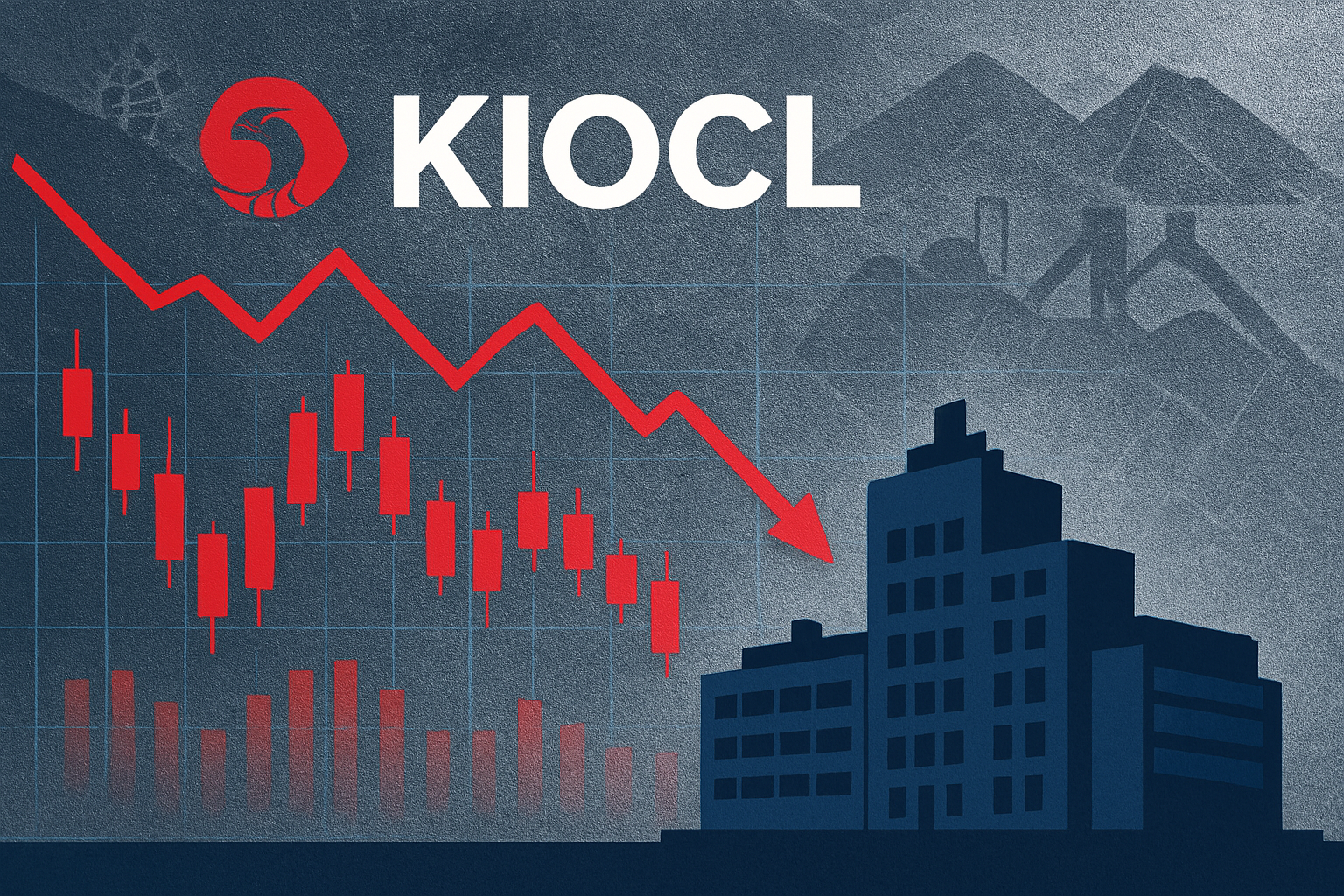
KIOCL has recently drawn significant attention in the stock market as analysts weigh in on its financial performance and technical indicators. With mixed signals emerging, investors are carefully evaluating the trajectory of this public sector undertaking before making their next move.
Table of Contents
Introduction to KIOCL Limited
Kudremukh Iron Ore Company Limited (KIOCL) operates as a Mini Ratna Category I Public Sector Undertaking under the Ministry of Steel, Government of India. Established in 1976 and headquartered in Bengaluru, Karnataka, the company specializes in iron ore mining, beneficiation, and pellet manufacturing. KIOCL represents a significant player in India’s steel raw material supply chain, serving both domestic and international markets.
The company’s primary operations include a 3.5 million tonnes per annum (MTPA) iron oxide pellet plant and a blast furnace unit with an annual capacity of 2.16 lakh tonnes of pig iron, both located in Mangaluru, Karnataka. As an Export Oriented Unit (EoU), KIOCL maintains its status as a profit-making entity with continuous dividend payments and positive net worth. This article examines KIOCL’s operational performance, financial metrics, market position, and growth initiatives based on official company disclosures and market data.
Company Background and Operational Infrastructure
Corporate Structure and Ownership
KIOCL operates under significant government ownership, with promoter holding standing at 99.03% as per recent regulatory filings. This ownership structure reflects the strategic importance of iron ore resources and pellet production to India’s industrial policy. The company’s Mini Ratna Category I status grants it enhanced operational autonomy while maintaining accountability to the Ministry of Steel.
The government ownership provides certain advantages including access to policy support, potential participation in national infrastructure projects, and alignment with governmental initiatives such as Make in India and Atmanirbhar Bharat. However, this structure also means corporate decisions may be influenced by broader policy objectives beyond purely commercial considerations.
Production Facilities and Capacity
KIOCL’s manufacturing infrastructure consists of two primary units located in Mangaluru, Karnataka. The pellet plant has an installed capacity of 3.5 MTPA for iron oxide pellets, which are essential raw materials for blast furnaces and direct reduction iron plants in the steel industry. The blast furnace unit produces pig iron with an annual capacity of 2.16 lakh tonnes.
During the financial year 2023-24, KIOCL produced 1.906 million tonnes of pellets according to company reports. This production figure represents approximately 54% capacity utilization of the pellet plant’s installed capacity. The capacity utilization rate provides insight into operational efficiency and market demand conditions during the period.
In FY2024, the company commissioned a Vertical Pressure Filter (VPF) system at the pellet plant unit. This technological upgrade aims to improve the efficiency of the dewatering process in pellet production, potentially reducing water consumption and improving overall operational economics.
Financial Performance Analysis
Revenue and Profitability Metrics
For the financial year 2023-24, KIOCL reported revenues of ₹534 crores according to the source document. This revenue figure must be viewed in the context of the cyclical nature of the iron ore and steel industries, where commodity prices, demand fluctuations, and global economic conditions significantly impact financial performance.
The mining and metals sector experiences natural cyclical patterns influenced by global steel production trends, infrastructure spending cycles, and raw material price movements. Companies in this sector typically experience periods of strong profitability during commodity upswings and margin pressure during downturns.
Investors analyzing KIOCL’s financial statements should examine several key metrics including EBITDA margins, return on capital employed (ROCE), debt-to-equity ratios, and working capital management. These indicators provide comprehensive insight into operational efficiency and financial health beyond top-line revenue figures.
Market Capitalization and Valuation
KIOCL’s market capitalization stands at ₹27,646 crores as per the source document, representing a 16.4% increase over the previous year. Market capitalization reflects investor sentiment and expectations regarding the company’s future earnings potential and growth prospects.
The stock trades at 16.2 times its book value according to available data. The price-to-book (P/B) ratio helps investors assess whether a stock is trading above or below its accounting value. For asset-intensive businesses like mining and manufacturing, book value includes significant tangible assets such as plant, machinery, and mineral reserves.
Valuation metrics should be compared with industry peers operating in similar segments. Companies like NMDC Limited, Sesa Goa (Vedanta subsidiary), and other iron ore producers provide relevant benchmarks for assessing relative valuation in the sector.
Strategic Projects and Capital Investments
Devadari Iron Ore Mining Project
In June 2024, the Government of India approved a capital outlay of ₹882.46 crores for the commencement of the Devadari Iron Ore Mining Project (DIOM) Phase I. This project represents a significant expansion of KIOCL’s upstream mining capabilities, potentially reducing dependence on external ore procurement and improving supply chain integration.
The Devadari project aims to develop iron ore mining capacity, though specific production targets and implementation timelines were not detailed in available public disclosures. Investors should monitor official company announcements and regulatory filings for updates on project milestones, capital deployment schedules, and expected commissioning dates.
Major capital projects in the mining sector typically involve extended gestation periods, requiring substantial upfront investments before generating revenues. The project’s success depends on factors including geological assessments, environmental clearances, mining infrastructure development, and market conditions at the time of production commencement.
Mineral Exploration Initiatives
KIOCL has undertaken G4 level mineral exploration for base metal minerals across multiple blocks in Karnataka. The company has also conducted exploration activities for kyanite minerals in the state. These diversification efforts indicate strategic initiatives to expand beyond iron ore into other mineral resources.
G4 level exploration represents detailed investigation aimed at establishing ore reserves with reasonable confidence, typically involving drilling, sampling, and resource estimation. Successful exploration can add value through discovery of economically viable mineral deposits, though exploration activities inherently carry geological and commercial risks.
Base metals including copper, zinc, and lead have applications in various industries including electrical equipment, construction, and manufacturing. Kyanite finds use in refractory materials and ceramics. Diversification into these minerals could provide alternative revenue streams, though commercialization depends on resource viability and market conditions.
India’s Iron Ore and Steel Industry Context
Domestic Steel Production Trends
India ranks as the world’s second-largest steel producer, with annual crude steel production exceeding 120 million tonnes according to World Steel Association data. The domestic steel industry serves as the primary customer base for iron ore pellets, driving demand for KIOCL’s products.
Steel consumption in India correlates with infrastructure development, real estate construction, automobile manufacturing, and capital goods production. Government infrastructure initiatives including the National Infrastructure Pipeline, Bharatmala road projects, and urban development schemes influence steel demand trajectories.
The Ministry of Steel’s National Steel Policy 2017 envisions increasing India’s steel production capacity to 300 million tonnes by 2030-31. Achievement of these targets would require proportionate expansion in raw material availability, including iron ore and pellets, potentially benefiting producers like KIOCL.
Iron Ore Market Dynamics
India possesses substantial iron ore reserves, primarily located in states including Odisha, Chhattisgarh, Jharkhand, and Karnataka. The country produces both hematite (high-grade) and magnetite (lower-grade) iron ore. KIOCL’s beneficiation and pelletization capabilities add value by converting lower-grade ore into high-quality pellets suitable for steelmaking.
Iron ore prices demonstrate significant volatility, influenced by global steel production trends, particularly in China which accounts for approximately 50% of world steel output. Chinese steel demand, influenced by property sector conditions and infrastructure spending, significantly impacts international iron ore markets.
Domestic iron ore pricing in India reflects both international benchmarks and local supply-demand dynamics. Regulatory policies including mining lease allocations, export duties, and environmental regulations affect domestic availability and pricing. The Supreme Court-mandated e-auction system for mining leases has impacted ore availability and cost structures for steel producers.
Pellet Market Characteristics
Iron ore pellets command premium pricing compared to lump ore due to their superior characteristics for blast furnace operations. Pellets offer advantages including consistent size, higher iron content, better reducibility, and lower impurities. These properties improve blast furnace productivity and reduce coke consumption per tonne of steel produced.
The pellet market in India includes both captive production by integrated steel plants and merchant pellet producers serving small and medium steel units. KIOCL operates in the merchant segment, competing with other dedicated pellet producers and integrated steel plants selling surplus pellet production.
Pellet pricing typically correlates with iron ore fines prices plus a conversion premium reflecting beneficiation and pelletization costs. Market conditions, alternative material availability, and steel industry demand influence the premium realization for pellet producers.
Technical and Market Performance Indicators
Stock Price Performance
KIOCL’s share price has exhibited movements reflecting both company-specific developments and broader market trends in the mining and metals sector. The stock demonstrates support levels around the ₹390-420 range with resistance near ₹450 based on recent trading patterns mentioned in the source material.
Technical analysis indicators referenced include moving averages, relative strength index (RSI), and volume patterns. The source document mentions a “Strong Buy” signal based on technical indicators, though investors should note that technical analysis represents one analytical approach among multiple methodologies for investment decision-making.
Stock price performance should be evaluated over multiple time frames including short-term (3-6 months), medium-term (1-2 years), and long-term (3-5 years) periods. Comparing performance against relevant benchmarks such as the Nifty Metal index, BSE PSU index, and peer company stocks provides context for relative performance assessment.
Trading Volume and Liquidity
Trading volume analysis helps assess stock liquidity and investor interest. Higher volumes during price movements can indicate stronger conviction in directional trends. Average daily trading volumes and delivery percentages provide insights into whether trading activity reflects genuine investment interest or speculative short-term positioning.
Institutional shareholding patterns, including holdings by mutual funds, insurance companies, and foreign portfolio investors (FPIs), offer additional perspective on investor composition. Changes in institutional holdings over quarters can signal evolving sentiment among professional investors.
Regulatory and Compliance Framework
Environmental and Sustainability Requirements
Mining and metals companies operate under extensive environmental regulations including the Environment Protection Act, Forest Conservation Act, and various state-level environmental rules. KIOCL must maintain environmental clearances for its mining and manufacturing operations, with conditions regarding air and water quality, waste management, and land rehabilitation.
The company files Business Responsibility and Sustainability Reports (BRSR) as mandated by SEBI for listed companies meeting specified criteria. The BRSR framework requires disclosure across environmental, social, and governance (ESG) parameters, providing stakeholders with standardized information on corporate sustainability performance.
Environmental compliance represents both an operational requirement and a reputational consideration. Companies demonstrating strong environmental performance may attract ESG-focused investors, while environmental violations can result in production disruptions, penalties, and negative market sentiment.
Mining Regulations and Lease Management
Iron ore mining in India operates under the Mines and Minerals (Development and Regulation) Act, 1957 (MMDR Act) as amended. The 2015 amendments introduced transparent auction mechanisms for mining leases and emphasized resource conservation and revenue optimization.
Mining leases granted before the 2015 amendments required conversion through auction processes or received extensions under specific provisions. Companies must comply with National Mineral Policy guidelines, maintain required mining plans and mine closure plans, and meet progressive mine closure obligations.
The allocation and renewal of mining leases significantly impacts long-term operational viability for mining companies. Investors should monitor regulatory developments affecting mining rights, royalty rates, and compliance requirements that could influence operating costs and production sustainability.
Risk Factors and Considerations
Commodity Price Volatility
Iron ore and steel prices exhibit cyclical volatility influenced by global economic conditions, steel production trends, and supply-demand imbalances. Price downturns can pressure revenues and profitability for iron ore producers and pellet manufacturers like KIOCL.
During commodity price downturns, companies with high fixed costs may experience margin compression. The ability to reduce variable costs, maintain operational efficiency, and manage working capital becomes critical during periods of weak pricing.
Conversely, commodity price upswings can generate strong cash flows and profitability improvements. Companies entering upcycles with expanded capacity may benefit from operating leverage as volumes and realizations improve simultaneously.
Competition and Market Structure
KIOCL competes with other pellet producers including NMDC, JSW Steel’s pellet operations, and various smaller producers in the merchant pellet market. Competition extends to alternative iron-bearing materials including lump ore and imported pellets.
Competitive dynamics depend on factors including production costs, product quality specifications, logistics efficiency, and customer relationships. Companies with integrated mining operations may enjoy cost advantages compared to those dependent on external ore procurement during periods of high ore prices.
Market concentration in the steel industry affects pellet producers’ negotiating power. Large integrated steel producers with captive pellet capacity may source externally only for marginal requirements, while smaller steel producers without captive facilities represent the primary customer base for merchant pellet producers.
Operational and Execution Risks
The Devadari mining project’s success depends on multiple execution factors including timely environmental clearances, land acquisition, infrastructure development, and achievement of planned production capacities. Project delays or cost overruns could impact expected returns on capital employed.
Mining operations face inherent geological risks, including ore grade variations, geological discontinuities, and ground conditions affecting mining economics. Operational risks include equipment failures, supply chain disruptions, and labor availability.
Manufacturing operations at the pellet and pig iron plants face risks including raw material quality variations, energy cost fluctuations, and equipment reliability. Unplanned maintenance shutdowns or capacity utilization constraints can affect production volumes and financial performance.
Regulatory and Policy Risks
Changes in mining regulations, royalty structures, or export policies could impact operating economics. Environmental regulations may impose additional compliance costs or operational constraints affecting production flexibility.
As a public sector undertaking, KIOCL’s operations may be influenced by broader government policy objectives beyond purely commercial considerations. Decisions regarding capital allocation, pricing strategies, or strategic initiatives may reflect governmental priorities in addition to shareholder value maximization.
The steel industry’s performance depends partially on government infrastructure spending and policy support for manufacturing sectors. Changes in government priorities or fiscal constraints affecting infrastructure spending could indirectly impact steel demand and consequently raw material requirements.
Investment Considerations
Fundamental Analysis Perspective
Investors analyzing KIOCL should examine financial fundamentals including revenue growth trends, profitability margins, return ratios (ROE, ROCE), debt levels, cash flow generation, and dividend policies. Comparison with industry peers provides relative performance context.
The cyclical nature of the mining and metals sector means financial performance varies significantly across commodity cycles. Analyzing performance across multiple years helps distinguish cyclical patterns from secular trends and assess management’s ability to navigate industry cycles.
Asset quality assessment includes evaluation of plant and equipment efficiency, mineral reserve quality and longevity, and receivables quality. For mining companies, reserve life (reserves divided by annual production) indicates the sustainability of mining operations.
Valuation Methodology
Multiple valuation approaches apply to mining and metals companies. Enterprise value-to-EBITDA ratios adjust for different capital structures and provide earnings-based valuation metrics. Price-to-book ratios assess market valuations relative to accounting asset values.
Discounted cash flow (DCF) analysis estimates intrinsic value by projecting future cash flows and discounting to present value. For cyclical businesses, DCF models should incorporate assumptions about commodity price cycles and capacity utilization variations over time.
Valuation should account for growth investments such as the Devadari project, adjusting for capital requirements and expected returns. Companies trading below replacement cost of assets may offer value opportunities, while premium valuations require justification through superior returns or growth prospects.
Dividend and Shareholder Returns
KIOCL’s characterization as a continuous dividend-paying company indicates commitment to returning capital to shareholders. Dividend sustainability depends on cash flow generation, capital expenditure requirements, and dividend policy frameworks applicable to public sector undertakings.
The Department of Investment and Public Asset Management (DIPAM) provides guidelines on dividend payments for central public sector enterprises. These guidelines typically specify minimum dividend payout ratios based on profitability and net worth considerations.
Total shareholder returns incorporate both dividend yields and capital appreciation. Investors should evaluate dividend yields relative to alternative investment opportunities and assess dividend growth sustainability based on earnings growth and payout policies.
Sector Outlook and Macroeconomic Factors
Infrastructure Development Impact
India’s infrastructure development initiatives including the National Infrastructure Pipeline (NIP) aim to invest ₹111 lakh crores across infrastructure sectors through 2024-25 according to government estimates. Infrastructure spending drives steel demand through construction, transportation, and urban development projects.
The Bharatmala road development program, Sagarmala port modernization initiative, and various urban metro projects represent specific infrastructure programs consuming substantial steel volumes. Railway infrastructure expansion and affordable housing initiatives under Pradhan Mantri Awas Yojana also contribute to steel demand.
The government’s capital expenditure on infrastructure has increased significantly in recent budgets, with multiplier effects on economic activity and industrial production. Sustained infrastructure spending supports domestic steel demand, benefiting upstream raw material producers.
Manufacturing Sector Growth
The Production Linked Incentive (PLI) schemes across multiple manufacturing sectors aim to enhance domestic production and export competitiveness. Sectors including automobiles, electronics, solar modules, and advanced chemistry cell batteries utilize steel and specialty metals in manufacturing.
India’s manufacturing sector growth influences steel consumption patterns. Automobile production, consumer durables, capital goods, and construction equipment manufacturing represent steel-intensive industries. Growth in these sectors translates to derived demand for steel raw materials.
The government’s emphasis on reducing import dependence and enhancing domestic value addition in manufacturing creates potential demand drivers for domestic steel and raw material industries. Success in achieving manufacturing growth targets would positively impact companies across the steel value chain.
Global Economic Conditions
International steel and iron ore markets influence domestic pricing through import-export arbitrage opportunities. Global steel production trends, particularly in China, significantly impact iron ore demand and pricing internationally.
Economic growth in emerging markets drives infrastructure and manufacturing expansion, supporting commodity demand. Conversely, economic slowdowns in major economies can pressure commodity prices through demand reduction.
Global trade policies, including tariffs, anti-dumping duties, and trade agreements, affect competitive dynamics in steel and raw material markets. India’s trade policies regarding iron ore exports and steel imports influence domestic market conditions.
Comparable Company Analysis
NMDC Limited
NMDC Limited operates as India’s largest iron ore producer with mining operations in Chhattisgarh and Karnataka. The company produces both lump ore and fines for domestic steel producers and export markets.
NMDC’s financial performance and market valuation provide a reference point for evaluating KIOCL’s relative positioning. Key comparative metrics include production volumes, revenue per tonne, EBITDA margins, and market capitalization relative to production capacity.
Unlike KIOCL’s focus on pellet production, NMDC primarily sells run-of-mine ore and concentrates with limited pelletization capacity. This difference in product mix affects revenue realizations, operating margins, and customer profiles between the two companies.
Vedanta Limited (Iron Ore Business)
Vedanta Limited operates iron ore mining through its subsidiary Sesa Goa, with operations primarily in Goa and Karnataka. The company produces iron ore for domestic consumption and exports to international markets.
Vedanta’s integrated business model spanning multiple commodities differs from KIOCL’s focused approach on iron ore pellets and pig iron. However, the iron ore division’s performance provides insights into mining economics and market conditions relevant to KIOCL’s operations.
JSW Steel and Integrated Producers
Integrated steel producers including JSW Steel, Tata Steel, and SAIL operate captive iron ore mining and pellet production facilities. These companies provide perspective on vertical integration benefits and pellet production economics within the steel value chain.
Captive pellet producers may enjoy different cost structures and market positioning compared to merchant producers like KIOCL. Understanding integrated producers’ approaches to pellet self-sufficiency versus merchant procurement helps assess market dynamics for merchant pellet suppliers.
Management and Corporate Governance
Board Structure and Oversight
As a government company, KIOCL’s board composition includes government nominees, independent directors, and functional directors. The board structure follows corporate governance requirements applicable to listed public sector undertakings.
Board committees including audit committees, nomination and remuneration committees, and stakeholder relationship committees provide specialized oversight across governance functions. Committee composition and meeting frequencies indicate governance activity levels.
Transparency in corporate governance practices, including timely disclosures, investor communications, and compliance with listing regulations, affects investor confidence. Regular monitoring of board changes, committee reports, and governance disclosures provides insights into governance quality.
Management Experience and Track Record
Evaluation of management quality includes assessment of leadership experience in the mining and metals industry, track record in operational performance, and capability in executing strategic initiatives including major capital projects.
Management’s ability to navigate commodity cycles, maintain operational efficiency, and allocate capital effectively influences long-term value creation. Past performance during challenging market conditions provides insights into management capability.
For public sector undertakings, management tenures may be influenced by government appointment processes. Continuity in senior management and clarity in strategic direction affect organizational effectiveness and execution capability.
Long-Term Sustainability Factors
Resource Security and Reserve Life
Mining companies’ long-term viability depends on mineral reserve adequacy relative to production rates. The Devadari project aims to enhance KIOCL’s upstream mining capabilities, potentially extending operational sustainability.
Reserve estimation follows standardized methodologies categorizing reserves as proven, probable, or possible based on geological confidence levels. Reserve quality including ore grades and metallurgical characteristics affects economic viability.
Exploration activities in base metals and kyanite represent efforts to diversify beyond iron ore, potentially extending the company’s resource base and operational longevity across multiple mineral commodities.
Technology and Innovation
Adoption of advanced technologies in mining, beneficiation, and pelletization can improve operational efficiency and product quality. The Vertical Pressure Filter installation represents technological upgrading aimed at process improvements.
Digitalization initiatives including automation, predictive maintenance, and data analytics applications can enhance operational efficiency and reduce costs. Technology adoption varies across mining companies, with leaders potentially gaining competitive advantages.
Research and development activities focused on process optimization, energy efficiency, and environmental performance contribute to long-term competitiveness. Partnerships with research institutions and technology providers can accelerate innovation adoption.
Environmental and Social Performance
Mining companies face increasing expectations regarding environmental stewardship and social responsibility. Performance on parameters including emissions, water usage, waste management, and land rehabilitation affects stakeholder relationships and regulatory standing.
Community relations management, including local employment, social infrastructure development, and grievance redressal mechanisms, influences social license to operate in mining areas. Effective stakeholder engagement reduces operational risks from community opposition.
Climate-related considerations including carbon footprint reduction and transition risks associated with steel industry decarbonization may affect long-term demand patterns for different steel production routes. Companies aligning with evolving sustainability expectations may be better positioned for long-term resilience.
Frequently Asked Questions
What is KIOCL’s current production capacity and utilization?
KIOCL operates a 3.5 million tonnes per annum iron oxide pellet plant and a blast furnace unit with 2.16 lakh tonnes annual pig iron capacity located in Mangaluru, Karnataka. During financial year 2023-24, the company produced 1.906 million tonnes of pellets. This production level represents approximately 54% utilization of the pellet plant’s installed capacity.
Capacity utilization rates in the mining and metals sector fluctuate based on market demand conditions, raw material availability, and operational considerations. Investors should monitor quarterly production reports for trends in capacity utilization and factors affecting production volumes.
What is the Devadari Iron Ore Mining Project and its significance?
The Devadari Iron Ore Mining Project received government approval in June 2024 with a capital outlay of ₹882.46 crores for Phase I implementation. This project aims to develop KIOCL’s upstream iron ore mining capabilities, potentially enhancing supply chain integration by reducing dependence on external ore procurement.
The project represents significant capital investment aimed at expanding KIOCL’s mining operations, though specific production targets and commissioning timelines should be monitored through official company disclosures.
Success of this project depends on obtaining necessary clearances, executing infrastructure development, and achieving planned production capacities. The project’s progress and eventual contribution to KIOCL’s operational performance will become clearer as implementation advances.
How does government ownership affect KIOCL’s operations?
KIOCL operates with 99.03% promoter (government) holding as a Mini Ratna Category I public sector undertaking under the Ministry of Steel. Government ownership provides certain advantages including policy support, potential participation in government initiatives, and access to strategic resources. However, this structure also means corporate decisions may reflect broader policy objectives beyond purely commercial considerations.
As a listed PSU, KIOCL must balance governmental priorities with obligations to minority shareholders and regulatory requirements.
The Mini Ratna Category I status grants enhanced financial and operational autonomy compared to other PSU categories, allowing the board to make certain investment and expenditure decisions without individual government approvals up to specified limits. Investors should consider both the benefits of government backing and the constraints of public sector operating frameworks when evaluating KIOCL.
What are the key risk factors affecting KIOCL’s performance?
KIOCL faces multiple risk categories inherent to mining and metals businesses. Commodity price volatility significantly impacts revenues and profitability as iron ore and steel prices fluctuate with global economic conditions and supply-demand dynamics. Operational risks include mining challenges, equipment reliability, and raw material quality variations affecting production.
Regulatory risks encompass mining lease management, environmental compliance requirements, and potential policy changes affecting operating costs. The Devadari project carries execution risks including potential delays or cost overruns. Competition from other pellet producers and alternative materials affects market positioning.
As a cyclical business, KIOCL’s financial performance varies across economic cycles, requiring investors to assess the company’s ability to manage through industry downturns while positioning for upswings.
How does KIOCL compare with other iron ore companies in India?
KIOCL’s business model differs from major iron ore miners like NMDC Limited and Vedanta’s Sesa Goa operations. While these companies primarily produce and sell iron ore lumps and fines, KIOCL focuses on value-added pellet production using beneficiation technologies to convert lower-grade ore into high-quality pellets.
This positioning places KIOCL in the iron ore processing segment rather than pure mining. Production scale differs significantly, with NMDC producing over 30 million tonnes of iron ore annually compared to KIOCL’s pellet production of approximately 1.9 million tonnes in FY24. Integrated steel producers including JSW Steel, Tata Steel, and SAIL operate captive pellet production, representing both potential customers and competitors depending on their captive sufficiency levels.
Investors should evaluate KIOCL based on pellet market dynamics and value-addition economics rather than direct comparisons with large-scale iron ore miners.
What is the current valuation and stock performance of KIOCL?
KIOCL’s market capitalization stands at ₹27,646 crores with the stock trading at 16.2 times book value according to available data. The market capitalization has increased 16.4% over the past year as referenced in source materials. Valuation metrics should be assessed relative to peer companies in the iron ore and steel raw materials sector, considering factors including production capacity, financial performance, growth investments, and market conditions.
Stock price performance reflects both company-specific developments and broader trends in mining and metals sectors. Technical indicators mentioned include support levels around ₹390-420 and resistance near ₹450, though investors should conduct comprehensive analysis incorporating fundamental factors, industry conditions, and individual investment objectives.
Valuation attractiveness depends on assumptions regarding commodity price trends, capacity utilization improvement, and returns from capital investments including the Devadari project.
What is KIOCL’s dividend policy and shareholder returns?
KIOCL is characterized as a continuous dividend-paying company with positive net worth, indicating a track record of returning capital to shareholders. Specific dividend amounts and payout ratios should be verified from official company announcements and annual reports. As a central public sector enterprise, KIOCL follows dividend policy guidelines issued by the Department of Investment and Public Asset Management (DIPAM), which specify minimum dividend payout requirements based on profitability and net worth criteria.
Dividend sustainability depends on the company’s cash flow generation, capital expenditure requirements for projects like Devadari, and working capital needs. Investors seeking dividend income should evaluate dividend yields relative to alternative investment options and assess consistency of dividend payments across business cycles. Total returns incorporate both dividend income and capital appreciation, requiring holistic assessment of stock performance over relevant investment horizons.
How does India’s infrastructure development affect KIOCL’s business?
India’s infrastructure development initiatives significantly influence steel demand, which in turn drives requirements for iron ore pellets. The National Infrastructure Pipeline and various sector-specific infrastructure programs including road, railway, port, and urban development projects consume substantial steel volumes in construction.
Increased infrastructure spending by central and state governments supports domestic steel production, benefiting raw material suppliers like KIOCL. The government’s emphasis on capital expenditure and programs like Bharatmala and Sagarmala creates sustained demand drivers for steel and consequently for iron ore pellets. However, the relationship between infrastructure spending and KIOCL’s business performance depends on multiple factors including overall steel production trends, pellet market dynamics, competitive positioning, and capacity utilization.
While infrastructure development creates a favorable demand environment for the steel value chain, company-specific execution and market positioning determine individual business outcomes.
About the Author
Nueplanet
Nueplanet is a financial content analyst specializing in Indian equity markets, with particular focus on public sector enterprises and industrial sectors. With the years of experience analyzing listed companies across mining, metals, and manufacturing industries, Nueplanet provides fact-based analysis grounded in official company disclosures, regulatory filings, and verifiable market data.
Nueplanet’s analytical approach emphasizes transparency and accuracy, drawing exclusively from authoritative sources including stock exchange filings, Ministry of Corporate Affairs records, company annual reports, and government policy documents. Nueplanet maintains strict editorial standards prioritizing factual accuracy over promotional content.
Commitment to Accuracy:
All information presented in this analysis derives from publicly available official sources including company filings with stock exchanges, annual reports, investor presentations, and government notifications. Readers are encouraged to verify critical information through direct reference to official company documents and regulatory databases. This article is intended for informational and educational purposes only.
Last Updated: August 21, 2025
Published: August 21, 2025
Disclaimer
This analysis is provided for informational and educational purposes only and should not be construed as financial advice, investment recommendation, or solicitation to buy or sell securities. Readers should conduct independent research and consult qualified financial advisors before making investment decisions.
Information presented herein is based on publicly available data as of the publication date and may not reflect the most current developments. Stock prices, financial metrics, and company circumstances change over time. Past performance does not guarantee future results, and all investments carry inherent risks including potential loss of principal.
The author and publisher make no representations regarding the completeness or accuracy of information and disclaim liability for investment decisions made based on this content. Investors should refer to official company filings, consult multiple information sources, and consider their individual financial circumstances, risk tolerance, and investment objectives.
References to technical analysis, valuation metrics, and market trends represent analytical perspectives subject to interpretation and do not constitute predictions of future performance. Mining and metals companies operate in cyclical industries subject to commodity price volatility, regulatory changes, and various operational risks that can significantly impact financial performance.
This article does not establish an advisory relationship, and readers retain sole responsibility for their investment decisions and outcomes.
Helpful Resources
Latest Posts
Tag
KIOCL
Related Posts











Post Comment