









Jagannath Yatra 2025: History, Rituals, and Complete Guide to Puri’s Grand Rath Yatra
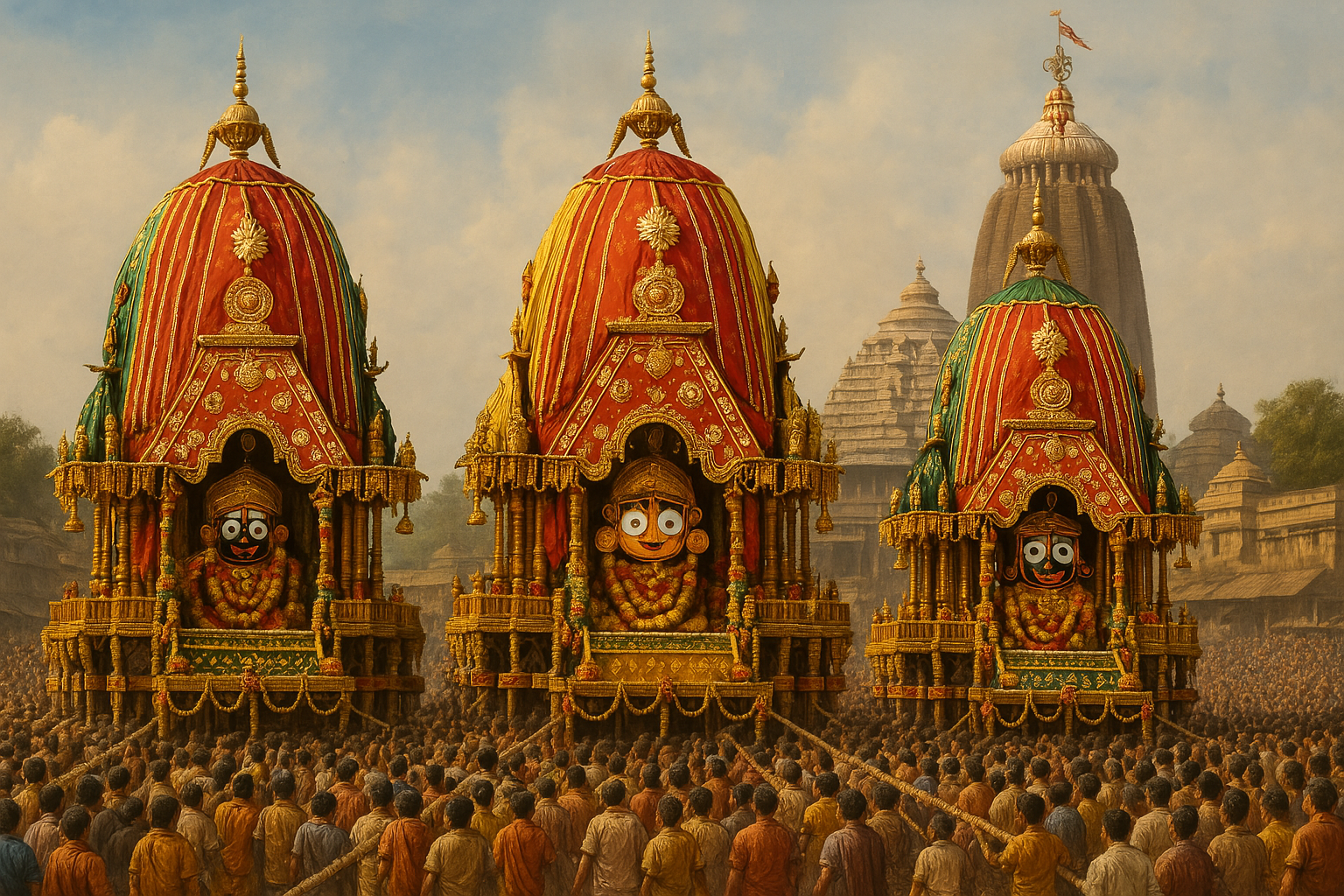
Experience Jagannath Rath Yatra 2025 in Puri. Know dates, rituals, history, live streaming, and significance of India’s grand spiritual festival this year.
Table of Contents
The Jagannath Rath Yatra represents one of India’s most ancient and widely celebrated religious festivals. Each year, millions of devotees gather in Puri, Odisha, to witness the ceremonial procession of Lord Jagannath, Lord Balabhadra, and Goddess Subhadra. The 2025 edition of this festival continues a tradition that spans several centuries, offering devotees an opportunity to participate in sacred rituals and witness the movement of divine deities through the streets of Puri.
This comprehensive guide provides verified information about the Jagannath Rath Yatra 2025, including official dates, historical context, ritual schedules, and practical travel information. All details have been compiled from temple board announcements, historical records, and official government sources to ensure accuracy and reliability.
Historical Origins and Religious Significance of Jagannath Rath Yatra
The Jagannath Rath Yatra has been observed for over eight centuries in Puri, Odisha. Historical records indicate that King Anantavarman Chodaganga Deva initiated the formal festival structure during the 12th century when the present Jagannath Temple was constructed. Ancient Sanskrit texts, including the Skanda Purana and Brahma Purana, contain references to chariot processions dedicated to Lord Jagannath, establishing the festival’s connection to Vedic traditions.
According to Hindu religious texts, Lord Jagannath is considered a manifestation of Lord Vishnu or Krishna. The festival commemorates the deity’s annual visit to the Gundicha Temple, identified in religious narratives as his maternal aunt’s residence. This journey symbolizes the importance of family connections and humility in spiritual practice, as even divine beings honor kinship bonds.
The Rath Yatra holds particular significance in Hindu philosophy for its emphasis on social equality. During the festival, devotees from all social backgrounds participate in pulling the temple chariots, a practice that challenged traditional social hierarchies. This inclusive approach has made the festival a symbol of unity and collective devotion in Indian religious culture.
Official Dates and Complete Schedule for Jagannath Rath Yatra 2025
According to the Puri Jagannath Temple administration, the Rath Yatra 2025 will commence on Tuesday, June 24, 2025. The ceremonial procession typically begins in the morning hours, with the main chariot-pulling event starting around noon. The festival follows the Hindu lunar calendar, with dates determined by temple authorities based on traditional astronomical calculations.
The return journey, known as Bahuda Yatra, is scheduled for Wednesday, July 2, 2025. During this ceremony, the deities are brought back to the main Jagannath Temple from the Gundicha Temple. The complete festival cycle spans approximately nine days, incorporating multiple rituals and observances.
Pre-Festival Rituals and Ceremonies
Snana Purnima (June 8, 2025): This ritual marks the ceremonial bathing of the deities. Temple priests perform the abhisheka (sacred bathing ceremony) using water drawn from the Golden Well within the temple complex. The deities are bathed with 108 pitchers of water mixed with sacred ingredients including sandalwood paste, turmeric, and aromatic herbs.
Anavasara Period (June 9-23, 2025): Following the bathing ceremony, the deities are kept in seclusion for fifteen days. According to temple traditions, this period allows the deities to recover from the elaborate bathing ritual. During Anavasara, the temple remains closed to public darshan, and devotees instead worship Alarnatha at nearby Brahmagiri.
Netrotsava (June 23, 2025): The temple reopens on this day, and devotees receive the first darshan of the deities after the Anavasara period. The priests perform special rituals to mark the occasion, and thousands of devotees visit the temple to witness the renewed forms of the deities.
Main Festival Day Rituals
Chhera Pahanra (June 24, 2025): Early morning on the Rath Yatra day, the Gajapati King of Puri performs the Chhera Pahanra ceremony. In this ritual, the king sweeps the chariot platforms with a golden-handled broom and sprinkles sandalwood water. This ceremony emphasizes the principle that all devotees, regardless of social status, are equal in service to the divine.
Pahandi Vijaya: The deities are brought out from the temple sanctum in a ceremonial procession. Temple servitors carry the deities on their shoulders in a rhythmic, swaying motion accompanied by traditional music and devotional chants. Each deity is then placed on their respective chariot.
Chariot Pulling (Ratha Tana): The main event begins around noon when devotees pull the three chariots from the Jagannath Temple to the Gundicha Temple. The procession covers approximately 3 kilometers along the Bada Danda (Grand Road) of Puri. Thousands of devotees participate in pulling the thick ropes attached to each chariot.
Stay at Gundicha Temple (June 25 – July 1, 2025)
The deities remain at the Gundicha Temple for seven days. During this period, devotees can visit the temple for darshan and participate in daily worship rituals. The temple conducts regular arati ceremonies and accepts offerings from devotees throughout this week.
Return Journey and Post-Festival Ceremonies
Bahuda Yatra (July 2, 2025): The return procession follows the same route back to the main Jagannath Temple. The chariots stop at the Mausi Maa Temple, where the deities are offered poda pitha, a traditional rice cake preparation. This stop honors the tradition of the maternal aunt offering sweets to the visiting deities.
Suna Besha (July 3, 2025): On the day following the return, the deities appear in golden attire. The temple administration adorns the deities with gold ornaments weighing several kilograms. This spectacular display attracts large crowds who gather to witness the golden appearance of the deities.
Adhara Pana (July 4, 2025): This ritual involves offering a special drink made from milk, cheese, banana, camphor, and other ingredients to Lord Jagannath. The offering symbolizes relief from the summer heat and marks the conclusion of the Rath Yatra festivities.
Detailed Description of the Three Sacred Chariots
The temple administration commissions new chariots each year, built according to specifications preserved in ancient temple records. Traditional carpenters known as Maharanas, belonging to specific hereditary families, undertake the construction using prescribed materials and techniques.
Nandighosa – Chariot of Lord Jagannath
The chariot dedicated to Lord Jagannath stands as the tallest of the three vehicles. It measures approximately 45.6 feet in height and features 16 wooden wheels, each with a diameter of about 7 feet. The chariot is decorated in red and yellow colors, with red representing Shakti (divine energy) and yellow symbolizing knowledge and prosperity.
The chariot’s covering is made from red and yellow cloth, featuring traditional patterns and motifs. The charioteer deity is Garuda, and the protective deity is Narsimha. Four horses—Shankha, Balahaka, Shweta, and Haridashwa—are depicted as pulling the chariot, though in practice, devotees provide the actual pulling force through ropes.
Taladhwaja – Chariot of Lord Balabhadra
Lord Balabhadra’s chariot measures 45 feet in height and has 14 wheels. The chariot is decorated in red and green colors, with green representing agricultural prosperity and natural abundance. As the elder brother of Lord Jagannath, Balabhadra’s chariot leads the procession.
The charioteer deity is Matali, and the protective deity is Vasudev. The chariot is associated with four horses named Tribra, Ghora, Dirghasharma, and Swornanava. The construction requires approximately 763 wooden pieces assembled according to traditional architectural principles.
Darpadalana (Padmadhwaja) – Chariot of Goddess Subhadra
The chariot of Goddess Subhadra stands 44.6 feet tall with 12 wheels. It features red and black decorative colors, with black representing the mysterious and all-encompassing nature of divine consciousness. This chariot typically moves between the chariots of her two brothers during the procession.
The charioteer deity is Arjuna, and the protective deity is Jayadurga. Four horses—Rochika, Mochika, Jita, and Aparajita—are symbolically associated with this chariot. The construction design emphasizes grace and aesthetic beauty while maintaining structural stability.
Cultural Impact and Social Significance
The Jagannath Rath Yatra serves multiple functions beyond religious worship. Sociologically, the festival has historically provided a platform for social mixing across caste and class divisions. The practice of allowing all devotees to pull the chariot ropes represented a significant departure from strict social segregation that characterized many aspects of traditional society.
The festival’s economic impact on Puri and surrounding regions is substantial. The Odisha state government estimates that the Rath Yatra period generates significant revenue through tourism, hospitality, and related commercial activities. Local artisans, particularly those involved in creating religious items, handicrafts, and traditional textiles, experience increased business during the festival season.
Global Observance and International Reach
The International Society for Krishna Consciousness (ISKCON) has helped establish Rath Yatra celebrations in over 100 cities worldwide. Major celebrations occur in London, New York, San Francisco, Moscow, and Sydney, among other cities. These international observances follow similar ritualistic patterns, with local devotee communities constructing chariots and organizing processions.
The global spread of the festival has contributed to increased awareness of Indian religious traditions and cultural practices. Many international participants attend these celebrations to experience the cultural aspects of the festival, even if they do not practice Hinduism themselves.
Government and Administrative Preparations for 2025
The Odisha state government, in coordination with the Puri district administration and temple authorities, implements extensive preparation measures to ensure safe and orderly conduct of the festival. These preparations typically begin several months in advance and involve multiple government departments.
Security and Crowd Management
The Odisha Police deploys several thousand personnel across Puri during the festival period. Security arrangements include plainclothes officers, bomb disposal squads, and specialized units trained in crowd management. The police establish multiple security zones along the chariot route, with restricted access points and designated entry and exit routes for devotees.
The district administration installs over 600 CCTV cameras at strategic locations throughout Puri. These cameras provide real-time monitoring capabilities to a central control room, allowing authorities to respond quickly to any incidents. Facial recognition technology and drone surveillance supplement ground-level security measures.
Public Health and Sanitation
The Puri Municipal Corporation establishes temporary medical camps at regular intervals along the chariot route. These camps are staffed by medical professionals and equipped with emergency medicines, first-aid supplies, and ambulance connectivity. Special provisions are made for treating cases of dehydration, heat exhaustion, and minor injuries.
Sanitation facilities include the installation of over 1,000 mobile toilets throughout the city. The municipal corporation also arranges drinking water stations at multiple locations, with water quality testing conducted regularly. Waste management teams work continuously to maintain cleanliness along the procession route.
Transportation and Accommodation
Indian Railways operates special trains connecting Puri with major cities across India during the festival period. The Eastern Railway and East Coast Railway zones typically run over 100 special trains to accommodate the influx of pilgrims. Advance reservation systems help manage the increased demand for rail transportation.
The Odisha Tourism Department coordinates with hotel associations to ensure adequate accommodation availability. Budget accommodations, including dharamshalas (charitable guesthouses) managed by religious trusts, provide affordable options for pilgrims. The state government also establishes temporary accommodation facilities with basic amenities for devotees who arrive without prior reservations.
Viewing Options: Live Telecast and Digital Access
For devotees unable to attend the festival physically, multiple broadcasting options provide live coverage of the main ceremonies. Doordarshan, India’s public broadcaster, has transmitted the Rath Yatra since the 1980s, making it accessible to millions of households across the country.
Television Broadcasting
DD National and DD Odia channels provide comprehensive coverage beginning early morning on the Rath Yatra day. The broadcast typically includes expert commentary explaining the significance of various rituals, interviews with temple officials, and aerial views of the procession. Regional language channels in Odisha also offer extended coverage with local commentary.
Online Streaming Platforms
The official website of the Jagannath Temple provides live streaming services during major festival events. The temple administration has partnered with technology platforms to ensure high-quality video transmission with minimal buffering. YouTube channels operated by religious organizations and media houses also offer live streams with multiple language options.
Social media platforms serve as additional information sources, with the temple administration maintaining active presence on Facebook and Twitter. These channels provide real-time updates, photographs, and short video clips throughout the festival period. However, devotees are advised to rely on official temple sources for accurate information regarding ritual timings and any schedule changes.
Practical Travel Information for Visitors
Planning a visit to Puri for the Rath Yatra requires advance preparation due to the large number of attendees. The following information helps visitors prepare effectively for their journey.
Transportation to Puri
By Air: Biju Patnaik International Airport in Bhubaneswar, located approximately 60 kilometers from Puri, serves as the nearest airport. Regular flights connect Bhubaneswar with major Indian cities including Delhi, Mumbai, Kolkata, and Bangalore. From the airport, visitors can hire taxis or use pre-paid taxi services to reach Puri, with the journey typically taking 90 minutes to two hours depending on traffic conditions.
By Rail: Puri Railway Station connects directly with numerous cities through regular and special trains. The station experiences significantly increased traffic during the festival period, and advance booking is essential. Trains from Kolkata, Delhi, Chennai, and Mumbai provide direct connectivity to Puri.
By Road: Puri is accessible via National Highway 316, with regular bus services operated by state transport corporations from Bhubaneswar, Cuttack, and other Odisha cities. Private bus operators also run services during the festival period, though advance booking is recommended.
Accommodation Options and Booking
Temple Guesthouses: The temple administration manages several guesthouses offering basic accommodation at nominal rates. These facilities are typically reserved months in advance, and devotees should contact the temple office directly for booking information.
Hotels: Puri offers accommodation options ranging from budget hotels to luxury beach resorts. Properties along the Swargadwar beach area and CT Road generally command premium rates. Booking at least three to six months in advance is recommended, as most hotels achieve full occupancy during the festival period.
Dharamshalas: Charitable trusts and religious organizations operate dharamshalas providing simple accommodation for pilgrims. These facilities typically charge minimal fees and operate on a first-come, first-served basis, though some accept advance reservations.
Practical Tips for Festival Attendees
Weather Considerations: June temperatures in Puri typically range from 27°C to 35°C, with high humidity levels. Visitors should carry light, breathable cotton clothing, sun protection including hats and sunscreen, and remain hydrated throughout the day. The monsoon season usually begins by late June, so carrying rain protection is advisable.
Personal Safety: Large crowds require vigilance regarding personal belongings. Keeping valuables secure, maintaining awareness of surroundings, and staying with group members helps ensure safety. Emergency contact numbers should be saved on mobile phones, and copies of identification documents should be carried separately from originals.
Temple Protocol: Specific dress codes apply for temple entry, generally requiring covered shoulders and legs. Leather items are prohibited within the temple complex. Photography restrictions apply in certain areas, and visitors should respect these guidelines. Maintaining quiet and respectful behavior within sacred spaces is expected.
Financial Preparation: While ATMs are available in Puri, they may experience heavy usage during the festival. Carrying adequate cash for daily expenses, temple offerings, and emergencies is recommended. Digital payment options are increasingly accepted, but cash remains the primary transaction method for many vendors.
Estimated Budget and Cost Planning
The financial requirements for attending the Rath Yatra vary significantly based on travel distance, accommodation choices, and personal preferences. The following estimates provide general guidance for budget planning.
Budget Category (₹5,000 – ₹15,000 per person)
This category includes dormitory-style dharamshala accommodation, second-class train travel from nearby cities, street food and simple meals, and minimal shopping for religious items. Advance planning and group travel help reduce costs further within this category.
Mid-Range Category (₹15,000 – ₹40,000 per person)
Mid-range budgets accommodate three-star hotel stays, AC train travel from major cities, restaurant meals, local transportation, and moderate shopping for religious items and souvenirs. This category allows for comfortable travel while maintaining cost consciousness.
Premium Category (₹50,000+ per person)
Premium experiences include four or five-star hotel accommodations, air travel, private transportation within Puri, fine dining options, and comprehensive shopping. This category provides maximum comfort and convenience, particularly suitable for families with elderly members or young children.
Additional costs to consider include special darshan fees (if applicable), photography services, religious offerings, and incidental expenses. Emergency funds should be allocated for unexpected situations or medical requirements.
Environmental and Sustainability Considerations
Recent years have seen increased attention to the environmental impact of large religious gatherings. The temple administration and state government have implemented several measures to address sustainability concerns during the Rath Yatra.
Waste Management Initiatives
The Puri Municipal Corporation deploys additional sanitation workers and establishes temporary waste collection points throughout the festival area. Segregation of biodegradable and non-biodegradable waste occurs at source, with separate disposal mechanisms for each category. Plastic bag bans are enforced more strictly during the festival period.
Eco-Friendly Practices
Devotees are encouraged to use cloth bags and avoid single-use plastics. Temple authorities promote the use of biodegradable materials for offerings and decorations. Some religious organizations have introduced awareness campaigns highlighting the spiritual importance of environmental stewardship.
Chariot Construction Sustainability
The use of specific wood types for chariot construction raises sustainability questions. Temple authorities maintain that wood is sourced from designated forest areas with proper permissions and reforestation commitments. The traditional practice of building new chariots annually is rooted in religious prescriptions documented in temple records.
Key Takeaways and Important Reminders
The Jagannath Rath Yatra 2025 offers devotees and cultural enthusiasts an opportunity to witness one of India’s most significant religious festivals. Successful participation requires advance planning, understanding of festival protocols, and respect for local customs and traditions.
The festival’s historical significance extends beyond religious observance to encompass social reform movements and cultural preservation efforts. The emphasis on equality and inclusive participation continues to resonate with contemporary values while maintaining connections to ancient traditions.
Visitors should prioritize safety, follow official guidelines, and maintain respectful behavior throughout their visit. The combination of proper planning and spiritual openness ensures a meaningful and memorable festival experience.
For those unable to attend in person, live broadcast options provide access to major ceremonies and rituals. These digital platforms help maintain spiritual connections and allow global participation in this significant cultural event.
Frequently Asked Questions (FAQs)
1. What is the exact date of Jagannath Rath Yatra 2025?
The Jagannath Rath Yatra 2025 is scheduled for Tuesday, June 24, 2025. The return journey (Bahuda Yatra) will take place on Wednesday, July 2, 2025. These dates are determined by temple authorities based on the Hindu lunar calendar and traditional astronomical calculations. Pre-festival rituals begin with Snana Purnima on June 8, 2025.
2. What is the religious significance of the Rath Yatra?
The Rath Yatra commemorates Lord Jagannath’s annual visit to the Gundicha Temple, representing his maternal aunt’s home. The festival symbolizes the importance of family bonds and humility in spiritual practice. The event emphasizes social equality, as devotees from all backgrounds participate in pulling the temple chariots, a practice that historically challenged social hierarchies in Indian society.
3. Can people of all religions participate in the Rath Yatra?
Yes, the Rath Yatra is open to participation by people of all faiths and backgrounds. The inclusive nature of the festival is one of its defining characteristics. Anyone can pull the chariot ropes, witness the procession, and participate in the festivities. However, certain areas within the main temple complex may have specific entry restrictions based on traditional temple regulations.
4. How far do the chariots travel during the Rath Yatra?
The chariots travel approximately 3 kilometers from the Jagannath Temple to the Gundicha Temple along the Bada Danda (Grand Road) of Puri. The same route is followed during the return journey on Bahuda Yatra. The actual distance covered depends on the specific path and any ceremonial stops made during the procession.
5. What is the best time to reach Puri for the festival?
Devotees planning to witness the main chariot-pulling ceremony should reach Puri by June 23, 2025, to secure accommodation and familiarize themselves with the area. Arriving early also allows participation in the Netrotsava ceremony on June 23. Those wishing to witness the complete festival cycle, including the return journey, should plan for a stay extending through early July 2025.
6. Are there specific safety guidelines for Rath Yatra attendees?
Yes, the Odisha state government and temple administration issue specific safety guidelines each year. Key recommendations include staying hydrated, avoiding overcrowded areas during peak times, keeping emergency contacts readily available, following police instructions for crowd movement, and maintaining awareness of personal belongings. Medical camps are stationed at regular intervals along the procession route for emergency assistance.
7. What is the significance of building new chariots each year?
Traditional temple prescriptions require construction of new chariots annually using specific types of wood and following precise architectural specifications. This practice is documented in ancient temple records and is considered essential for maintaining ritual purity. The old chariot parts are typically offered to devotees as sacred items or used in temple-related construction projects.
8. How can I watch the Rath Yatra if I cannot visit Puri?
Live television coverage is available on DD National, DD Odia, and various regional channels beginning early morning on June 24, 2025. The official Jagannath Temple website provides live streaming services during major ceremonies. Multiple YouTube channels operated by religious organizations also offer live streams. Social media channels maintained by the temple administration provide real-time updates and photographs throughout the festival period.
About the Author
Nueplanet
Nueplanet is a devotional content writer specializing in Hindu religious festivals and temple traditions. With the years of experience researching and documenting religious celebrations across India, Nueplanet focuses on providing accurate, well-sourced information about spiritual events and cultural practices.
Nueplanet’s work emphasizes the importance of verified information from official temple boards, religious organizations, and government sources. Nueplanet articles aim to help devotees and cultural enthusiasts understand the historical context, ritualistic significance, and practical aspects of participating in religious festivals.
The commitment to accuracy and transparency drives Nueplanet’s research methodology, which involves consultation with temple authorities, reference to ancient texts, and verification through multiple reliable sources. All content is regularly updated to reflect official announcements and schedule changes.
About This Publication
This publication is dedicated to providing accurate, well-researched information about Hindu religious festivals, temple traditions, and spiritual events across India. Our goal is to serve devotees, spiritual seekers, and cultural enthusiasts with reliable content that respects religious traditions while maintaining journalistic standards.
We prioritize information sourced from official temple boards, religious authorities, government notifications, and verified historical records. All content undergoes careful fact-checking before publication, and articles are regularly updated to reflect any changes in schedules, guidelines, or official announcements.
Our commitment to accuracy, transparency, and respect for religious traditions guides every article we publish. We welcome feedback from readers and temple authorities to ensure our content remains current and factually correct.
Published: June 27, 2025
Last Updated: June 27, 2025
Helpful Resources
Latest Posts
- Maharashtra FYJC Admission 2025: Complete Guide to CAP Round 1, Merit List, and Admission Process
- Amazon launches home diagnostic services in 6 cities through app
- Microsoft Xbox Division Layoffs 2025: What It Means and How Tech Professionals Can Respond
- SSC MTS Notification 2025: Selection Process, Dates & Eligibility
- SSC GD Score Card 2025: Download Link, Direct Access @ssc.nic.in
Related Posts












Post Comment