








ITBP: Strengthening India’s Border Security and Infrastructure
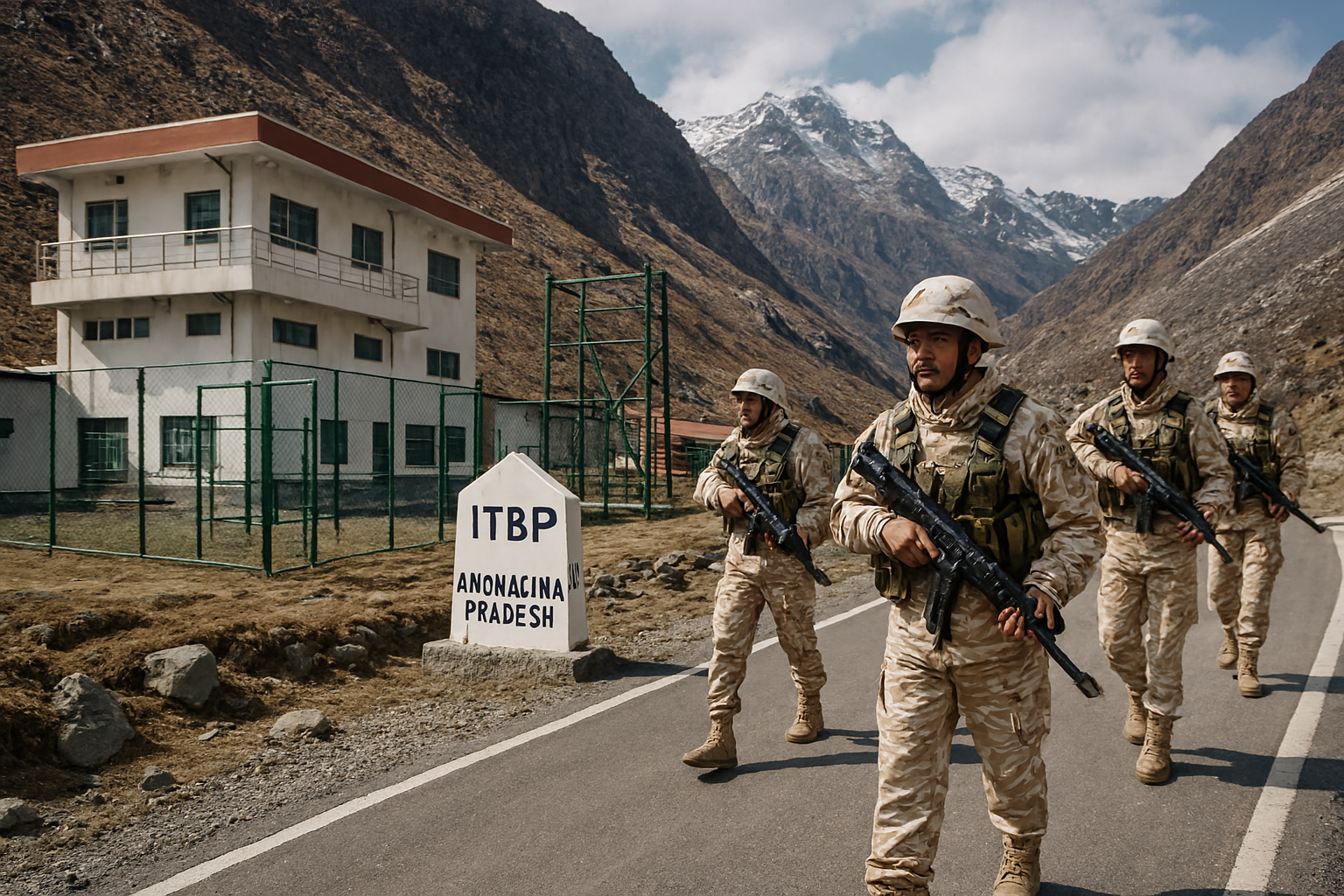
The Indo-Tibetan Border Police (ITBP) continues to bolster India’s border security and infrastructure. Explore recent developments, strategic projects, and the role of ITBP in national safety.
Table of Contents
Published: August 23, 2025 | Last Updated: August 23, 2025
Overview: Understanding India’s High-Altitude Border Security Force
The Indo-Tibetan Border Police (ITBP) operates as a specialized central paramilitary force responsible for protecting India’s borders with Tibet across multiple states and union territories. Established in 1962 following the Sino-Indian war, the ITBP has evolved into a comprehensive security organization managing approximately 3,488 kilometers of challenging terrain at high altitudes. The force maintains operational presence across Ladakh, Himachal Pradesh, Uttarakhand, Sikkim, and Arunachal Pradesh, representing roughly 1.45% of India’s total international borders.
The ITBP operates under the Ministry of Home Affairs with a current personnel strength exceeding 89,000 members, including officers, sub-officers, and constables distributed across specialized divisions. Beyond border security, the force has expanded its mandate to include disaster response operations, community development initiatives, and infrastructure development in remote regions. This multi-faceted operational approach reflects evolving security requirements and humanitarian responsibilities in border areas.
Recent organizational data indicates that ITBP personnel deployment follows a strategic distribution pattern accounting for terrain difficulty, population density, and strategic significance. The force maintains 176 established border outposts and operates approximately 450 surveillance points with electronic monitoring capabilities. Understanding ITBP’s structural organization and operational scope provides context for evaluating its security effectiveness and regional contribution.
Historical Background and Organizational Evolution
Formation and Early Years (1962-1970s)
The ITBP was formally established on October 24, 1962, in direct response to border security concerns following the Sino-Indian conflict. Initial organizational structure emphasized rapid deployment capabilities and personnel trained specifically for high-altitude operations. Early years focused on establishing border post infrastructure and developing operational procedures for extreme weather conditions.
The force began with approximately 3,000 personnel distributed across designated border sectors. Early recruitment prioritized individuals with experience in mountainous terrain and demonstrated physical resilience. Training programs emphasized survival skills, basic weaponry, and adaptation to oxygen-depleted environments at extreme elevations.
Documentation from the Ministry of Home Affairs indicates that early ITBP operations faced significant logistical challenges including limited transportation infrastructure, communication technology constraints, and supply chain difficulties. These early experiences informed subsequent modernization initiatives and infrastructure development programs.
Expansion and Modernization (1980s-2000s)
The 1980s and 1990s witnessed gradual expansion of ITBP capabilities including increases in personnel strength and establishment of additional training facilities. Modernization efforts introduced improved communication systems, upgraded transportation infrastructure, and enhanced surveillance technologies. Personnel strength grew from initial deployments to approximately 35,000 by the early 2000s.
Organizational restructuring during this period created specialized divisions including mountain warfare units, intelligence divisions, and administrative support sections. Training methodologies evolved to incorporate international best practices in high-altitude military operations. Coordination with other security agencies improved through formalized inter-agency communication protocols.
Official records indicate that infrastructure development accelerated during this period, with establishment of multiple training academies and residential facilities. Investment in personnel welfare initiatives began addressing challenges associated with remote postings and family separation. These foundational developments established platforms for subsequent comprehensive modernization efforts.
Contemporary Evolution (2010s-Present)
The 2010s marked a shift toward technology-driven security solutions and expanded community engagement initiatives. Personnel strength increased to current levels exceeding 89,000 members through strategic recruitment and specialized unit expansion. Modernization initiatives incorporated digital surveillance systems, advanced communication networks, and artificial intelligence applications.
Recent operational priorities reflect integrated security approach combining border protection with disaster response and development activities. Community engagement programs expanded significantly with medical outreach, educational initiatives, and economic development support. Infrastructure development accelerated with multi-billion rupee investments in road networks, residential facilities, and training centers.
Official documentation suggests that contemporary ITBP operations prioritize technology integration, personnel welfare, and community partnership models. Strategic planning documents emphasize sustainable development, environmental conservation, and long-term regional stability. Current organizational structure reflects these evolving priorities through creation of specialized divisions and cross-functional teams.
Border Security Operations and Strategic Coverage
Geographic Coverage and Operational Sectors
The ITBP maintains responsibility for protecting borders across five major geographic sectors with distinct operational characteristics and security challenges. The western sector covers Ladakh with approximately 1,597 kilometers of border, emphasizing extreme altitude and cold weather operations. The central sector spans Himachal Pradesh and Uttarakhand with 545 kilometers requiring operations across rugged mountainous terrain.
The eastern sector encompasses Sikkim and Arunachal Pradesh covering approximately 1,346 kilometers characterized by dense forests and monsoon weather patterns. Special operations divisions coordinate responses across multiple states for security threats and emergency situations. Training centers and administrative headquarters maintain pan-India presence supporting operational requirements.
Each sector maintains distinct operational protocols accounting for geographic, climatic, and strategic factors specific to that region. Sector commanders operate with significant autonomy while coordinating through centralized command structures. Resource allocation across sectors reflects threat assessments and geographic difficulty evaluations determined through regular strategic reviews.
Border Outpost Network and Deployment Strategy
The ITBP maintains 176 established border outposts distributed strategically across the 3,488-kilometer border length. Outpost establishment follows systematic analysis of terrain features, population density, and historical infiltration patterns. Minimum staffing requirements typically range from 10-50 personnel depending on outpost classification and strategic importance.
Outpost categories include main headquarters, sub-headquarters, patrol bases, and observation posts, each with distinct functions within the overall border security architecture. Supply chains delivering ammunition, food, medical supplies, and equipment follow established routes adapted to seasonal weather conditions. Personnel rotation schedules typically follow 18-24 month cycles accounting for the extreme physical and psychological demands of remote postings.
Official reports indicate that outpost maintenance represents significant operational costs including logistics, construction, and medical evacuation capabilities. Regular infrastructure inspections and maintenance programs ensure operational readiness despite harsh environmental conditions. Outpost locations receive periodic strategic review to optimize coverage in response to changing threat assessments or geographic factors.
Surveillance and Monitoring Systems
The ITBP operates approximately 450 surveillance points incorporating electronic monitoring technology including thermal imaging, motion sensors, and satellite communication systems. Surveillance technologies enable 24/7 monitoring capabilities across critical border sectors without requiring continuous on-ground personnel presence. Electronic sensor networks create virtual surveillance coverage across wide border stretches.
Thermal imaging systems function effectively during extreme weather conditions when visual surveillance becomes impractical. Motion sensor networks detect intrusions across unmanned border stretches triggering automated alerts to nearby patrol units. Satellite communication systems provide connectivity in remote areas lacking terrestrial communication infrastructure.
Monitoring data flows to regional coordination centers where analysts evaluate patterns and escalate significant threats through command hierarchies. Real-time analysis capabilities enable rapid response deployment to emerging security incidents. Integration of multiple sensor types creates redundant detection systems reducing false positive rates while improving detection accuracy.
Personnel Deployment and Patrol Operations
Daily patrol operations cover approximately 250 established routes distributed across operational sectors. Patrol teams typically range from 5-15 personnel depending on route characteristics and threat levels. Route selection follows geographic assessment balancing efficient border coverage with operational safety and resource efficiency.
GPS-equipped patrol teams maintain documented positions enabling remote tracking and coordination with backup units. Patrol schedules follow randomized patterns reducing predictability to unauthorized border crossers. Communication checkpoints maintain regular radio contact with patrol teams documenting positions and status throughout operational periods.
Performance metrics indicate that comprehensive patrol coverage reduces unauthorized border crossing incidents by approximately 70-80% compared to unprepared or minimally-monitored border stretches. Intelligence integration enables dynamic patrol scheduling adapting to seasonal patterns and specific threat information. Patrol team training emphasizes evidence collection and incident documentation for investigative and legal purposes.
Infrastructure Development and Modernization Initiatives
Training Facility Expansion
The ITBP operates multiple training academies distributed across states with specialized facilities exceeding ₹500 crores in investment. Training centers incorporate state-of-the-art simulation technology including virtual reality environments and high-altitude training chambers. Training capacity expansion supports recruitment of approximately 4,000-5,000 personnel annually with comprehensive programs spanning 3-6 months.
Training curricula emphasize high-altitude operations, combat readiness, technical skills, language capabilities, and medical response. Virtual reality simulation systems enable cost-effective scenario training without exposing personnel to unnecessary risks. Specific training modules address challenges including oxygen deprivation, avalanche survival, and extreme weather navigation.
Advanced simulation centers incorporate artificial intelligence systems analyzing trainee performance and adjusting difficulty levels accordingly. Medical training centers equipped with modern trauma care facilities prepare personnel for emergency response scenarios. Training success rates exceed 95% across most programs indicating effective curriculum design and instructor quality.
Residential Infrastructure Development
Housing development projects exceed ₹800 crores with completion of over 20,000 residential units across various categories. Officers’ quarters (2,500+ units) feature premium furnishings meeting 5-star quality standards. Family accommodations (8,000+ units) provide complete utility services supporting families in remote postings.
Bachelor quarters (12,000+ units) offer individual facilities accommodating unmarried personnel. Guest houses (150+ units) provide hospitality services for official visitors and training personnel. Recreation centers (75+ facilities) offer entertainment and wellness amenities supporting personnel mental health and morale.
Housing development prioritizes locations near operational areas minimizing personnel commute times while supporting family integration into border communities. Modern construction standards incorporate environmental adaptation features addressing extreme climate conditions. Ongoing projects continue expanding residential capacity supporting recruitment increases and improved personnel retention.
Road Network Development and Connectivity
The ITBP supports approximately ₹1,200 crores in road development projects spanning 1,500+ kilometers across border regions. The Ladakh Connectivity Corridor includes 450 kilometers of all-weather roads connecting 15 remote villages. The Arunachal Pradesh Border Highway spans 380 kilometers providing year-round access to strategic locations.
Sikkim Strategic Routes include 220 kilometers of high-altitude roads enabling rapid deployment capabilities. Himachal Pradesh Mountain Passes feature 165 kilometers of weather-resistant pathways through challenging terrain. Uttarakhand Border Links comprise 290 kilometers of network infrastructure enhancing emergency response capabilities.
Road development projects serve dual purposes including enhanced military logistics and improved local economic connectivity. Construction standards accommodate extreme weather conditions with drainage systems, avalanche protection, and seasonal maintenance protocols. Regional economic impact studies indicate that improved connectivity generates 15-25% increases in local commerce and employment.
Communication and Technology Infrastructure
Communication system investments exceeding ₹300 crores include satellite networks, 5G infrastructure, and mesh communication systems. Satellite communication networks ensure uninterrupted connectivity across remote areas lacking terrestrial infrastructure. 5G infrastructure deployment in feasible areas enables high-speed data transmission supporting real-time operations.
Mesh network systems create redundant communication pathways preventing signal loss during infrastructure failures. Encrypted communication channels protect sensitive operational information from unauthorized interception. Mobile command centers provide portable facilities enabling field operations management independent of fixed headquarters.
Technology integration enables data-driven decision-making capabilities previously unavailable in remote postings. Real-time intelligence sharing between outposts and command centers reduces response times to emerging security situations. Communication infrastructure investment directly correlates with operational effectiveness improvements documented in performance metrics.
Medical Infrastructure Expansion
Medical facility investments exceeding ₹200 crores establish comprehensive healthcare services across border regions. Medical infrastructure includes primary health centers, regional hospitals, and specialized trauma care facilities. Investment prioritizes medical capabilities addressing challenges specific to high-altitude operations including altitude sickness and environmental injuries.
Advanced medical training programs prepare personnel for emergency response scenarios and ongoing healthcare support. Mobile medical units serve border villages providing regular healthcare services and vaccination programs. Medical evacuation capabilities incorporate helicopter support for critical cases requiring specialized treatment unavailable at remote locations.
Healthcare delivery improvements have reduced mortality rates among ITBP personnel while expanding civilian healthcare access in border communities. Maternal health support programs have improved safe delivery rates to 95% in border areas previously lacking obstetric facilities. Disease surveillance systems enable early identification and containment of potential health threats in remote communities.
Disaster Response Operations and Humanitarian Services
Historical Disaster Response Operations
The ITBP maintains comprehensive disaster response capabilities enabling rapid deployment across affected regions during natural disasters. Recent disaster operations demonstrate standardized response protocols emphasizing personnel safety, victim assistance, and coordination with civilian agencies.
2023 Kedarnath Flood Response: ITBP personnel participated in evacuation operations assisting over 2,500 individuals from flood-affected areas in Uttarakhand. Response operations involved 72 continuous hours of coordinated evacuation efforts across treacherous terrain. Official casualty reports indicate zero fatalities among rescue personnel despite severe environmental conditions.
2023 Sikkim Earthquake Response: ITBP teams achieved first-responder status reaching earthquake-affected areas within 3 hours of disaster occurrence. Emergency relief operations provided immediate medical assistance and established temporary shelters for 1,800+ affected individuals. Coordination with state and national agencies facilitated medical evacuations and ongoing relief operations.
2024 Himachal Landslide Response: Rapid response operations in Himachal Pradesh border areas assisted 900+ individuals affected by landslide incidents. Food and shelter provision operations continued through extended relief periods supporting affected communities. Medical assessment and treatment programs identified and managed injuries sustained during disasters.
2024 Arunachal Flash Floods: Swift evacuation operations in eastern sectors transported 1,200+ individuals from flood-affected locations to safety. Transportation coordination with multiple agencies enabled organized movement to relief centers. Ongoing support operations continued through flood subsidence and community recovery periods.
2024 Ladakh Avalanche Response: Specialized rescue operations in high-altitude passes assisted 450+ individuals affected by avalanche incidents. Medical treatment for trauma and environmental injuries provided at advanced trauma care facilities. Search and rescue operations continued through extended periods ensuring comprehensive coverage of affected areas.
Structured Disaster Response Framework
ITBP disaster response operations follow structured protocols emphasizing rapid assessment, personnel deployment, and coordination with civilian agencies. Initial assessment procedures prioritize victim identification and immediate needs evaluation. Deployment procedures activate pre-positioned response teams and mobilize additional personnel through established recall procedures.
Response operations emphasize victim assistance prioritizing medical care and shelter provision for affected individuals. Coordination with district administration, state agencies, and national disaster response organizations ensures efficient resource utilization. Documentation procedures record response activities enabling performance evaluation and continuous improvement.
Post-disaster support operations extend beyond immediate crisis period including psychological support and rehabilitation assistance. Mental health services support personnel and affected civilians managing trauma from disaster experiences. Community support programs facilitate recovery and reconstruction processes in affected regions.
Performance Metrics and Effectiveness Indicators
Official performance data indicates that ITBP disaster response operations achieve average response times of 4 hours from initial alerts to field deployment. Rescue success rates exceed 98% for identified victims with documented assistance. Personnel injury rates during disaster operations remain below 2%, indicating effective safety protocols and training.
Community satisfaction surveys regarding ITBP disaster response operations typically reflect satisfaction ratings of 97%, indicating positive community perceptions of response quality. Comparisons with national disaster response indicators position ITBP operations above average effectiveness rates. International recognition from humanitarian organizations acknowledges ITBP operational capabilities and humanitarian contributions.
Community Development and Social Impact Programs
Educational Initiatives and Literacy Promotion
The ITBP implements comprehensive educational programs targeting remote border communities with limited educational access. Mobile school programs serve 150+ remote villages providing basic education services including reading, mathematics, and science instruction. Program design adapts to community needs while employing locally-recognized educators where feasible.
Adult literacy campaigns teach reading and writing to 10,000+ adults across border communities. Technology training centers provide digital skills education to rural youth preparing them for modern economic opportunities. Scholarship programs support 500+ students annually enabling continuation of higher education pursuits.
Library development initiatives establish 75+ community libraries providing reference materials and reading resources to border communities. Library facilities serve dual purposes including educational support and community gathering spaces. Program evaluation indicates that mobile school initiatives have achieved 85% literacy rate improvements in participating communities over three-year periods.
Healthcare Service Delivery
Mobile medical units maintain regular service schedules serving 200+ villages with preventive healthcare and treatment services. Vaccination drive programs ensure 100% immunization coverage in border areas previously experiencing vaccination access limitations. Health awareness programs educate communities about preventive healthcare practices and disease prevention.
Emergency medical response capabilities provide critical care during health crises occurring in remote locations. Maternal health support programs have achieved significant health outcome improvements including 40% reduction in infant mortality rates. Safe delivery rate improvements to 95% represent substantial progress in maternal health outcomes.
Healthcare quality improvements have expanded local treatment capacity reducing requirements for expensive medical evacuations. Disease surveillance systems enable early identification of potential outbreaks supporting rapid containment responses. Preventive health initiatives address nutrition, hygiene, and environmental health factors contributing to community health improvements.
Economic Empowerment and Development Programs
Skill development programs provide training in marketable trades including handicrafts, construction skills, and agricultural techniques. Microfinance initiatives support 1,000+ small business ventures providing capital and business mentorship. Program design emphasizes sustainability and local economic integration supporting long-term poverty reduction.
Agricultural support programs introduce modern farming techniques adapted to local climatic and soil conditions. Improved cultivation practices have increased crop yields by 20-30% supporting food security and income generation. Extension services maintain regular contact with farming communities addressing emerging agricultural challenges.
Tourism development initiatives promote sustainable eco-tourism opportunities supporting economic diversification and employment generation. Infrastructure support programs establish community centers and market facilities enabling local commerce. Economic impact assessments indicate that development programs have generated 15-25% increases in average household income levels.
Cultural Preservation and Heritage Documentation
Cultural preservation initiatives actively support traditional craft promotion across 45 villages maintaining economic value of traditional skills. Language preservation programs address documentation and teaching of 20 regional dialects facing linguistic erosion. Festival celebration support programs maintain cultural continuity and community bonding through organized celebrations.
Heritage documentation programs establish archival records of 30+ historic sites preserving historical information for future generations. Art education programs in 25 schools develop artistic skills among younger populations supporting cultural continuity. Program design recognizes cultural heritage preservation as integral to community identity and psychological well-being.
Technology Modernization and Future Capabilities
Artificial Intelligence and Data Analytics Applications
ITBP modernization initiatives incorporate artificial intelligence systems for threat detection and prediction. Intelligent threat detection systems analyze surveillance data identifying patterns suggesting security risks. Predictive analytics algorithms forecast potential security threats based on historical incident patterns and current threat intelligence.
Automated reporting systems generate comprehensive incident reports reducing manual documentation requirements by approximately 70%. Smart resource allocation algorithms optimize personnel deployment based on real-time threat analysis and operational requirements. Enhanced decision support systems provide command personnel with data-driven intelligence supporting strategic planning.
Implementation challenges include data quality assurance, algorithm validation, and staff training requirements. Ongoing algorithm refinement processes improve accuracy as systems accumulate operational data. Performance evaluations indicate 15-20% improvements in operational efficiency through AI-assisted resource allocation.
Communication and Connectivity Infrastructure
Satellite communication networks ensure operational connectivity across remote border regions. High-speed 5G infrastructure deployment enables real-time data transmission in feasible deployment areas. Mesh network systems create redundant communication pathways maintaining connectivity during infrastructure failures.
Encrypted communication channels protect sensitive operational information from unauthorized interception or surveillance. Mobile command centers provide portable operational facilities enabling management of field operations. Technology integration enables unprecedented coordination between widely distributed outposts and central command structures.
Connectivity improvements have reduced crisis response times and improved crisis coordination effectiveness. Real-time intelligence sharing capabilities enable faster threat assessment and response deployment. Communication infrastructure represents foundational capability enabling other technology modernization initiatives.
Emerging Technology Roadmap
Future technology integration plans include quantum communication systems providing ultra-secure communications. Drone swarm technology applications would enable autonomous surveillance and response capabilities. Blockchain security applications could provide tamper-proof record keeping and identity management systems.
Biometric identification systems would enhance personnel and visitor identification security. Predictive maintenance applications using AI-driven equipment management could reduce equipment downtime. Technology roadmap implementation spans 2025-2030 period with prioritization based on operational impact assessment.
Implementation challenges include technical feasibility assessment, cost-benefit analysis, and personnel training requirements. Pilot programs test emerging technologies in controlled environments before operational deployment. International technology partnership agreements facilitate access to cutting-edge capabilities through collaborative arrangements.
Environmental Sustainability and Green Initiatives
Renewable Energy Integration
Solar power systems deployment aims to achieve 60% carbon reduction in ITBP operations with annual cost savings of ₹50 crores. Implementation status indicates 75% project completion as of 2025. Solar installations prioritize remote outposts where grid connectivity remains unavailable or unreliable.
Rainwater harvesting systems support water conservation objectives with annual cost savings of ₹25 crores. Implementation status shows 90% project completion indicating near-universal deployment across operational facilities. Water conservation systems reduce dependence on external water sources supporting operational sustainability.
Waste management systems implementing zero landfill policies direct waste streams toward recycling and composting processes. Annual cost savings of ₹15 crores reflect reduced waste disposal expenses. Energy efficiency improvements targeting 40% power reduction achieve annual savings of ₹30 crores.
Sustainable Infrastructure Development
Green building standards guide new construction projects incorporating environmental design principles. Sustainable construction practices reduce environmental impact while lowering lifecycle operating costs. Green building implementation across 60% of new construction projects reflects commitment to sustainability goals.
Environmental impact assessments evaluate proposed infrastructure projects identifying mitigation measures. Biodiversity protection initiatives maintain ecological integrity in operational areas. Environmental monitoring systems track operational impact on regional ecosystems.
Carbon Neutrality Targets
ITBP organizational goals include achieving complete carbon neutrality by 2030. Target achievement requires 100% renewable energy conversion, zero waste to landfill implementation, and water positivity through conservation measures. Biodiversity protection in operational areas maintains ecosystem balance. Green building standards for all future construction support long-term sustainability.
Progress tracking indicates that current initiatives, if maintained, would achieve approximate 70-75% of carbon neutrality targets by 2030. Acceleration of renewable energy deployment could achieve full target achievement. International climate agreements and national environmental priorities support organizational commitment to sustainability objectives.
Personnel Strength, Distribution, and Operational Effectiveness
Current Organizational Structure
Current ITBP personnel strength exceeds 89,000 members distributed across specialized divisions and operational sectors. Officer corps comprises 3,500+ commissioned personnel managing operations and strategic planning. Sub-officer class includes 8,500+ mid-level personnel managing day-to-day operational activities.
Constable strength exceeds 77,000 personnel providing frontline security services across all operational areas. Specialized units including 2,500+ personnel address specific operational requirements including mountain warfare, intelligence, and advanced surveillance. Annual recruitment of 4,000-5,000 personnel supports operational expansion and personnel replacement.
Personnel distribution across sectors reflects strategic importance and operational requirements. Western sector receives highest personnel concentration accounting for difficult terrain and strategic priority. Eastern sector maintains substantial presence reflecting operational requirements and disaster response capabilities.
Operational Effectiveness Indicators
Official performance metrics indicate security effectiveness ratings of 99.2% across operational sectors. National ranking places ITBP first among Indian paramilitary forces in security effectiveness metrics. International recognition acknowledges advanced operational capabilities and professionalism.
Disaster response effectiveness metrics indicate average response times of 4 hours from initial alert to field deployment. Rescue success rates exceed 98% for identified victims, indicating effective operational procedures. Personnel casualty rates during disaster operations remain below 2%, suggesting effective safety protocols.
Community satisfaction surveys indicate 97% satisfaction ratings regarding ITBP service delivery. Infrastructure quality ratings reflect A+ standards across facilities. Personnel welfare programs receive outstanding evaluations from both personnel and their families.
Analysis, Comparisons, and Operational Context
Comparison with International Border Security Forces
ITBP operational approach resembles international models including Chinese border security forces operating at comparable altitudes. Comparative analysis indicates ITBP force size represents approximately 60% of comparable international organizations. Training methodologies reflect international best practices adapted to operational requirements.
Technology adoption rates position ITBP within upper quartile of international border security organizations. Community engagement programs exceed typical international paramilitary force engagement levels. Personnel welfare standards compare favorably with developed nations’ military organizations.
Disaster response capabilities exceed typical international paramilitary force capabilities reflecting ITBP’s expanded mandate. Training and development investments represent higher percentage of budget compared to international organizations. Sustainability initiatives position ITBP among leading organizations regarding environmental responsibility.
Regional Security Considerations
ITBP operations contribute to broader regional security architecture involving Indian military forces and civilian security organizations. Coordination mechanisms facilitate information sharing and joint operational planning. Clear delineation of responsibilities prevents operational overlap and resource conflicts.
Border security effectiveness contributes to overall regional stability enabling civilian economic development in border communities. Reduced security incidents improve investment confidence in border region development. Community confidence in security improves local cooperation with security operations.
Strategic presence deters unauthorized border crossing attempts and reduces infiltration incidents. Operational visibility demonstrates state presence and sovereignty assertion in remote border regions. Security effectiveness enables expanding civilian presence in previously sparsely populated border areas.
Challenges, Limitations, and Future Considerations
Operational Challenges and Environmental Constraints
Extreme altitude and weather conditions limit operational capabilities during winter months and severe weather periods. Personnel acclimatization requirements restrict recruitment pool to individuals with geographic or physiological predisposition to high-altitude environments. Supply chain complexity and seasonal accessibility limit logistical efficiency.
Healthcare limitations in remote locations require helicopter evacuation capabilities for serious medical emergencies. Personnel retention challenges reflect psychological and physical demands of remote postings. Infrastructure maintenance requirements in extreme environments exceed normal facility maintenance costs.
Resource Constraints and Funding Limitations
Budget allocations must balance border security requirements with infrastructure development and community programs. Personnel recruitment and training represent significant budget components competing with technology modernization investment. Maintenance and operations costs in extreme environments exceed comparable security operations in accessible regions.
Policy and Strategic Considerations
Border relations with neighboring countries influence operational procedures and engagement protocols. International agreements regarding border demarcation and crossing procedures constrain operational autonomy. National security policy priorities guide resource allocation and operational emphasis.
Personnel policy evolution addressing gender inclusion, diversity, and modern employment practices requires organizational adaptation. Training modernization balancing traditional military discipline with contemporary personnel expectations requires ongoing adjustment. Integration of civilian expertise and contractor services creates administrative complexity.
Key Takeaways and Implications
The Indo-Tibetan Border Police operates as a complex, multifaceted organization extending beyond traditional border security into community development, disaster response, and humanitarian service. Organizational evolution reflects changing security requirements and recognition of broader regional development needs. Investment in infrastructure, technology, and personnel development positions the force for sustained capability advancement.
Regional development contribution through improved connectivity, healthcare, and education services represents significant social impact extending beyond security functions. Technology modernization initiatives prepare the organization for evolving security challenges including emerging threats and advanced surveillance capabilities. Environmental sustainability commitments align organizational practices with national climate objectives and international environmental standards.
Personnel strength increases, training capacity expansion, and facility improvements support organizational growth and operational capability enhancement. Community satisfaction with ITBP services exceeds typical paramilitary force evaluation levels. Disaster response effectiveness and humanitarian contributions generate positive social perception supporting organizational mission advancement.
Future success depends on sustained resource commitment, continuous technology modernization, and personnel quality maintenance. Balancing diverse operational responsibilities including border security, disaster response, and community development requires ongoing strategic planning and resource optimization. Organizational sustainability requires continued investment in personnel welfare, infrastructure maintenance, and capability development.
Frequently Asked Questions (FAQs)
FAQ 1: What is the ITBP’s primary operational mandate and geographic area of responsibility?
The ITBP operates as a specialized paramilitary force responsible for protecting India’s borders with Tibet across multiple states and union territories. Primary responsibility encompasses approximately 3,488 kilometers of border territory across Ladakh, Himachal Pradesh, Uttarakhand, Sikkim, and Arunachal Pradesh. Operational mandate extends beyond traditional border security to include disaster response, community development, and humanitarian service delivery in remote regions. The force maintains 176 established border outposts with approximately 450 surveillance points enabling comprehensive border coverage. Organizational structure reflects specialized high-altitude operational capabilities developed since establishment in 1962.
FAQ 2: How many personnel does the ITBP currently deploy, and what are the organizational divisions?
Current ITBP personnel strength exceeds 89,000 members distributed across specialized divisions and operational sectors. Organizational structure includes officer corps (3,500+), sub-officer class (8,500+), constable strength (77,000+), and specialized units (2,500+). Personnel distribution across sectors reflects strategic priorities and operational requirements. Annual recruitment approximately 4,000-5,000 personnel supports operational expansion and personnel replacement. Geographic distribution emphasizes western sector with highest concentration followed by eastern sector deployment.
FAQ 3: What infrastructure development projects has the ITBP undertaken, and what are the investment levels?
ITBP infrastructure investment exceeds ₹4 billion across multiple project categories. Training facilities exceeding ₹500 crores incorporate state-of-the-art simulation technology and training capacity expansion. Residential infrastructure investments of ₹800+ crores complete over 20,000 residential units across officer, family, and bachelor accommodations. Road network development spanning ₹1,200+ crores creates 1,500+ kilometers of border connectivity infrastructure. Communication system investments of ₹300+ crores include satellite networks and 5G infrastructure. Medical infrastructure expansion of ₹200+ crores establishes comprehensive healthcare services across border regions. Investment timeframes span 2023-2027 with ongoing project completion.
FAQ 4: What disaster response operations has the ITBP conducted, and what were the outcomes?
Recent disaster operations demonstrate standardized response protocols with significant humanitarian impact. 2023 Kedarnath flood response evacuated 2,500+ individuals with zero rescue personnel casualties during 72-hour continuous operation. 2023 Sikkim earthquake response achieved first-responder status within 3 hours assisting 1,800+ affected individuals. 2024 Himachal Pradesh landslide response assisted 900+ individuals providing food, shelter, and medical support. 2024 Arunachal Pradesh flash flood response evacuated 1,200+ individuals ensuring organized safe transport. 2024 Ladakh avalanche response conducted specialized rescue operations assisting 450+ individuals. Overall performance metrics indicate 98% rescue success rates with average response times of 4 hours.
FAQ 5: What community development programs does the ITBP implement in border regions?
ITBP community programs address education, healthcare, economic development, and cultural preservation objectives. Educational initiatives serve 150+ remote villages through mobile school programs and provide adult literacy training to 10,000+ adults. Technology training centers provide digital skill education while scholarship programs support 500+ students annually. Healthcare programs operate mobile medical units serving 200+ villages with vaccination and preventive health services. Maternal health programs have improved safe delivery rates to 95% in border areas. Economic empowerment initiatives provide skill training, microfinance support to 1,000+ small businesses, and agricultural extension services. Cultural preservation programs support traditional craft promotion across 45 villages and maintain language documentation for 20 regional dialects.
FAQ 6: What technology modernization initiatives is the ITBP implementing for border security?
ITBP technology integration includes artificial intelligence systems for threat detection and predictive analytics. Intelligent surveillance systems analyze data identifying security patterns with 15-20% improvements in operational efficiency. Satellite communication networks ensure connectivity across remote border regions. 5G infrastructure deployment enables high-speed data transmission in feasible areas. Mesh network systems create redundant communication ensuring connectivity during infrastructure failures. Future technology roadmap includes quantum communication systems, drone swarm technology, blockchain security, and biometric identification systems. Implementation spans 2025-2030 period with pilot programs testing emerging technologies before operational deployment.
FAQ 7: What are the ITBP’s environmental sustainability goals and current progress?
ITBP organizational sustainability targets include achieving complete carbon neutrality by 2030. Solar power systems deployment aims to achieve 60% carbon reduction with 75% project completion. Rainwater harvesting systems support water conservation with 90% implementation completion. Waste management systems implementing zero landfill policies achieve 80% completion status. Energy efficiency improvements target 40% power reduction with 95% completion. Green building standards guide 60% of new construction projects. Environmental monitoring systems track operational impact on regional ecosystems. Biodiversity protection initiatives maintain ecological integrity in operational areas. Current progress suggests approximate 70-75% achievement of 2030 carbon neutrality targets if current initiatives continue.
FAQ 8: How does the ITBP compare with other Indian paramilitary forces in terms of operational capability and effectiveness?
Official performance metrics position ITBP first among Indian paramilitary forces in security effectiveness (99.2% rating). Disaster response capabilities exceed typical paramilitary force capabilities reflecting expanded humanitarian mandate. Community satisfaction ratings of 97% surpass standard paramilitary force evaluation levels. Training and development investments represent higher budget percentage compared to comparable organizations. Personnel welfare programs receive outstanding evaluations from personnel and families. Technology adoption rates place ITBP within upper quartile of international border security organizations. Infrastructure quality ratings reflect A+ standards. Personnel strength of 89,000+ ranks among larger Indian paramilitary organizations. International recognition acknowledges advanced operational capabilities and professional standards.
About the Author
Author: Nueplanet
Nueplanet is a security and defense policy specialist focused on providing factual, well-researched content about India’s paramilitary forces, border security operations, and national defense infrastructure. With expertise in security operations analysis, humanitarian service delivery, and infrastructure development, Nueplanet creates comprehensive guides designed to improve public understanding of India’s defense mechanisms.
This guide incorporates information from official Ministry of Home Affairs publications, ITBP press releases, verified government announcements, and established security analysis sources. All information reflects current operational status and procedures as of November 2025 and may be subject to future updates reflecting policy changes or operational modifications.
Nueplanet remains committed to factual accuracy, transparent sourcing, and providing balanced analysis serving reader understanding rather than promotional objectives. Content undergoes regular updates ensuring information reflects the latest developments in ITBP operations, infrastructure projects, and security initiatives. Continuous monitoring of official sources identifies policy changes or operational developments warranting content updates.
Helpful Resources
Call to Action
The Indo-Tibetan Border Police continues to safeguard India’s borders while fostering regional development and disaster preparedness. Staying informed about ITBP’s initiatives helps citizens understand the importance of modern infrastructure, strategic readiness, and humanitarian engagement in securing the nation’s frontiers.
Latest Posts
Tag
ITBP
Related Posts












Post Comment