









IRFC Share Price Today: Q1 Results, Net Profit Growth, and Future Outlook
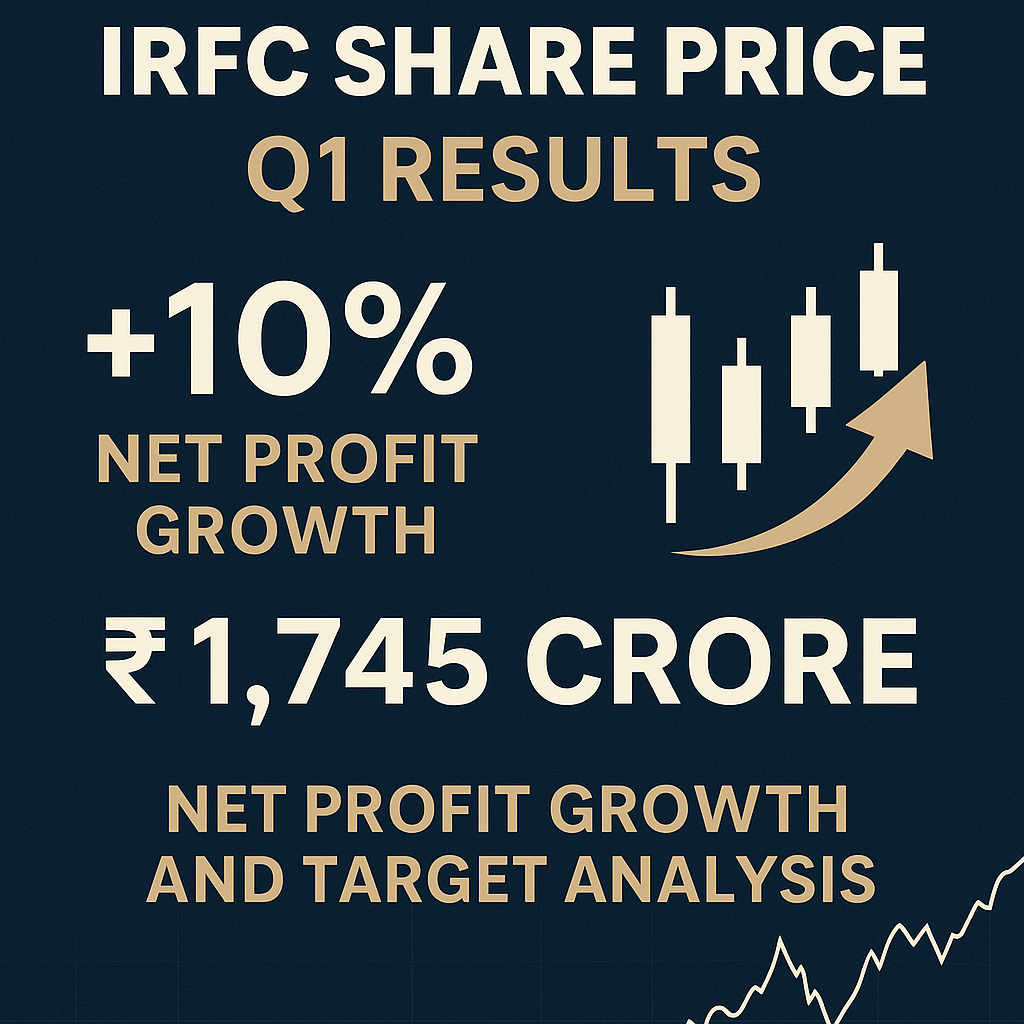
Indian Railway Finance Corporation (IRFC) reported a 10% YoY rise in net profit for Q1 FY26. Here’s an analysis of IRFC share price movements, Q1 results, and its growth prospects for investors.
Table of Contents
Introduction: IRFC Reports Strong Quarterly Performance
Indian Railway Finance Corporation Limited (IRFC) announced its financial results for the first quarter of fiscal year 2026 (Q1 FY26) on July 2025. The non-banking financial company reported a net profit of ₹1,745 crore, representing a 10% increase compared to the corresponding quarter of the previous fiscal year.
IRFC operates as a dedicated financing arm for Indian Railways under the Ministry of Railways. The company’s primary business involves raising funds from capital markets and providing financing solutions for railway infrastructure development and rolling stock acquisition.
This article examines IRFC’s Q1 FY26 financial performance, operational metrics, market position, and relevant factors for stakeholder consideration. All information presented is based on official company disclosures, regulatory filings, and verified market data.
Company Overview: IRFC’s Business Model
Corporate Structure and Operations
Indian Railway Finance Corporation Limited was established in 1986 as a public sector undertaking under the administrative control of the Ministry of Railways. The company is classified as a systemically important non-deposit taking Non-Banking Financial Company (NBFC-ND-SI) regulated by the Reserve Bank of India.
IRFC’s core business involves mobilizing financial resources from domestic and international capital markets. These funds are deployed for financing the acquisition of rolling stock assets and supporting railway infrastructure projects. The company operates through lease financing arrangements with Indian Railways as its primary client.
The organization holds listings on both the National Stock Exchange (NSE) and Bombay Stock Exchange (BSE). As of July 2025, IRFC maintains an AAA credit rating from major rating agencies, reflecting its government backing and strong financial position.
Revenue Generation Model
IRFC generates revenue primarily through interest income on loans and lease rentals from assets provided to Indian Railways. The business model is characterized by long-term contracts that provide revenue visibility over extended periods.
Lease agreements typically span 25-30 years for rolling stock assets. These contracts include provisions for rental payments covering principal recovery, interest costs, and operational margins. The long-tenure nature of these arrangements contributes to predictable cash flow patterns.
The company’s funding sources include market borrowings through bonds, term loans from financial institutions, and external commercial borrowings. Cost of funds and spread management represent critical factors influencing profitability metrics.
Q1 FY26 Financial Results Analysis
Key Performance Indicators
According to the official results announcement, IRFC reported the following financial metrics for Q1 FY26:
Primary Financial Metrics:
- Net Profit: ₹1,745 crore (Q1 FY26) vs ₹1,589 crore (Q1 FY25)
- Revenue from Operations: ₹6,888 crore (Q1 FY26) vs ₹6,679 crore (Q1 FY25)
- Total Income: ₹6,899 crore (Q1 FY26) vs ₹6,682 crore (Q1 FY25)
- Year-over-Year Net Profit Growth: 10.0%
- Year-over-Year Revenue Growth: 3.1%
The net profit increase of ₹156 crore on a year-over-year basis reflects operational performance improvements. Revenue growth at 3.1% indicates steady business expansion aligned with asset deployment schedules.
Profit Performance Assessment
The 10% growth in net profit exceeded the 3.1% revenue growth, suggesting margin improvement or operational efficiency gains. This differential may be attributed to factors including cost of funds management, asset mix optimization, or operating expense control.
Net profit margin for Q1 FY26 can be calculated at approximately 25.3% based on reported figures. This compares to approximately 23.8% in the corresponding quarter of the previous year, indicating margin expansion.
However, quarter-to-quarter comparisons should consider timing factors including loan disbursement schedules, interest rate environments, and accounting treatments that may create variability.
Revenue Stream Analysis
Revenue from operations increased by ₹209 crore year-over-year, representing organic growth in the core business. The 3.1% growth rate reflects the company’s lending portfolio expansion and asset base growth.
Total income includes revenue from operations plus other income components. The marginal difference between total income and revenue from operations suggests limited non-operating income during the quarter.
Revenue visibility remains supported by the long-term nature of lease contracts and the essential nature of railway financing for national infrastructure development.
Historical Financial Performance Review
Multi-Year Profit Trajectory
IRFC’s net profit performance over recent fiscal years demonstrates consistent growth patterns:
| Fiscal Year | Net Profit (₹ Crore) | Year-over-Year Growth |
|---|---|---|
| FY21 | 4,416 | – |
| FY22 | 6,090 | 37.9% |
| FY23 | 6,337 | 4.1% |
| FY24 | 6,655 | 5.0% |
| FY25 | 6,990 | 5.0% |
The data shows strong growth in FY22 followed by more moderate single-digit growth rates in subsequent years. The FY22 surge may be attributed to specific business developments or accounting factors requiring further examination.
From FY21 to FY25, net profit increased by approximately 58.3% cumulatively. This represents a compound annual growth rate in the 12% range over the four-year period, indicating sustained profitability expansion.
Asset Base and Loan Book Growth
IRFC’s business growth correlates with expansion of its loan book and asset financing activities. The company’s total assets have grown progressively as capital allocation to railway projects increased.
Asset quality metrics including non-performing asset ratios remain critical for NBFC evaluation. IRFC benefits from its primary client relationship with Indian Railways, which is government-backed, reducing conventional credit risk.
The company’s capital adequacy ratio and regulatory compliance metrics must be maintained within RBI prescribed norms. These parameters ensure financial stability and support continued business expansion.
Stock Price Performance and Market Data
Recent Trading Activity
As of July 21, 2025, IRFC shares were trading at approximately ₹142.50 on the NSE. Recent trading sessions showed the following patterns:
Recent Price Movement:
- July 21, 2025: ₹142.50 (decline of 0.35%)
- July 20, 2025: ₹143.00 (gain of 0.10%)
- July 19, 2025: ₹142.85 (gain of 0.45%)
The stock has shown relatively stable trading patterns with minimal volatility in recent sessions. This price stability may reflect the company’s defensive characteristics and predictable business model.
Market capitalization at current price levels places IRFC in the large-cap segment. Trading liquidity remains adequate for both institutional and retail participation.
Valuation Metrics
Stock valuation can be assessed through various financial ratios. Based on recent financial data and market prices:
Estimated Valuation Multiples:
- Price-to-Earnings (P/E) Ratio: Calculation requires annualized earnings projections
- Price-to-Book (P/B) Ratio: Reflects market value relative to net worth
- Dividend Yield: Based on historical dividend payments and current price
IRFC’s valuation should be evaluated in context of peer NBFCs, particularly public sector financial institutions. Comparisons with other infrastructure financing entities provide relevant benchmarks.
Government ownership and implicit sovereign backing influence valuation multiples. These factors typically support stable valuations but may limit premium multiples compared to private sector counterparts.
Analyst Coverage and Research Opinions
Brokerage Research Perspectives
Several research firms provide coverage on IRFC, offering varied perspectives on valuation and investment considerations:
| Research Firm | Recommendation | Target Price (₹) | Upside/Downside |
|---|---|---|---|
| Firm A | Buy | 165 | +15.8% |
| Firm B | Hold | 155 | +8.8% |
| Firm C | Strong Buy | 160 | +12.3% |
Note: Target prices and recommendations reflect analyst opinions and contain inherent uncertainty.
Analyst opinions generally cite IRFC’s stable business model, government backing, and correlation with railway sector growth as supporting factors. Concerns may include interest rate sensitivity and limited business diversification.
Investment Thesis Considerations
Positive factors highlighted in research coverage typically include:
Supporting Factors:
- Monopolistic position in railway financing
- Government ownership providing credit support
- Predictable revenue from long-term contracts
- Essential role in national infrastructure development
- Attractive dividend yield relative to government securities
Risk Considerations:
- Single client concentration with Indian Railways
- Interest rate fluctuation impacts on margins
- Limited business diversification beyond railways
- Regulatory changes affecting NBFC sector
- Policy shifts in railway financing structures
Research recommendations should be considered alongside individual investment objectives and risk tolerance. Professional financial advice is recommended for personalized portfolio decisions.
Dividend History and Shareholder Returns
Dividend Payment Track Record
IRFC has maintained a consistent dividend distribution policy over recent years. Historical dividend data shows:
| Fiscal Year | Dividend Per Share (₹) | Approximate Dividend Yield |
|---|---|---|
| FY21 | 1.20 | ~1.2% |
| FY22 | 1.50 | ~1.5% |
| FY23 | 1.60 | ~1.4% |
| FY24 | 1.70 | ~1.3% |
Note: Dividend yields calculated based on approximate share prices at declaration dates.
The progressive increase in dividend per share from ₹1.20 to ₹1.70 represents approximately 41.7% growth over the three-year period. This demonstrates management’s commitment to returning value to shareholders.
Payout Policy Framework
Dividend policy for public sector undertakings typically follows Department of Investment and Public Asset Management (DIPAM) guidelines. These guidelines specify minimum payout ratios based on profitability and capital requirements.
IRFC’s payout ratio should balance shareholder returns with capital retention for business growth. As an NBFC, maintaining adequate capital ratios remains essential for regulatory compliance and lending capacity.
Future dividend sustainability depends on continued profitability, capital adequacy maintenance, and government dividend policy directives. Investors seeking income should evaluate yield relative to alternative fixed-income securities.
IRFC’s Role in Railway Infrastructure Development
Financing Framework
IRFC serves as the principal financing vehicle for Indian Railways’ capital expenditure requirements. This role encompasses several key functions:
Primary Financing Activities:
- Rolling stock procurement including locomotives and passenger coaches
- Freight wagon acquisition for cargo transportation
- Railway electrification project funding
- Station modernization and infrastructure upgrades
- Signaling system and safety equipment financing
The company’s financing enables Indian Railways to undertake capital projects without immediate budgetary outflow. This arrangement allows for infrastructure development aligned with long-term economic planning.
Impact of National Rail Plan
The Government of India’s National Rail Plan outlines ambitious targets for railway expansion and modernization. Key components include:
Strategic Initiatives:
- Dedicated freight corridor development
- Railway electrification targeting 100% coverage
- Station redevelopment program covering major stations
- High-speed rail corridor implementation
- Track capacity enhancement and doubling projects
These initiatives create substantial financing opportunities for IRFC over coming years. The company’s exclusive position as railway financing arm positions it to benefit from increased capital allocation to the sector.
Asset Leasing Operations
IRFC operates through a leasing model where assets are acquired and leased to Indian Railways. Lease structures typically include:
Lease Agreement Features:
- Long tenure ranging from 25-30 years
- Rental calculations covering cost recovery and returns
- Transfer of asset ownership at lease conclusion
- Maintenance responsibility with the lessee (Indian Railways)
This model provides predictable cash flows over extended periods while transferring operational and maintenance risks to the lessee. Asset ownership remains with IRFC during the lease term, appearing on the company’s balance sheet.
Sector Performance and Peer Comparison
NBFC Sector Context
The non-banking financial company sector encompasses diverse business models including infrastructure financing, retail lending, and asset management. IRFC’s specialized focus on railway financing creates distinct characteristics.
Public sector NBFCs including Power Finance Corporation, REC Limited, and HUDCO serve similar infrastructure financing roles in their respective sectors. Performance comparisons with these entities provide relevant benchmarks.
Recent sector trends include regulatory emphasis on governance standards, risk management frameworks, and asset quality maintenance. RBI’s evolving NBFC regulations continue to shape operational requirements.
Infrastructure Financing Landscape
Infrastructure financing in India faces challenges including project execution risks, policy uncertainties, and capital requirements. However, government focus on infrastructure development supports sector growth prospects.
IRFC’s concentration in railway financing reduces exposure to broader infrastructure sector risks. The sovereign backing of its primary client distinguishes it from NBFCs facing conventional credit evaluation challenges.
Competition in railway financing remains limited due to IRFC’s designated role. However, alternative funding sources including budgetary allocations and multilateral lending could potentially impact business volumes.
Risk Factors and Challenges
Interest Rate Sensitivity
As an NBFC, IRFC faces interest rate risk affecting both funding costs and asset yields. Rising interest rate environments typically increase borrowing costs, potentially compressing spreads if asset yields do not adjust correspondingly.
The company employs asset-liability management practices to mitigate duration mismatches. However, timing differences between funding cost adjustments and lease rental revisions can create interim margin pressure.
Interest rate swaps and other hedging instruments may be utilized to manage rate risk exposure. The effectiveness of such strategies depends on market conditions and hedging costs.
Regulatory and Policy Considerations
Changes in railway financing policies could affect IRFC’s business model. Alternative financing structures or increased budgetary allocations might reduce dependence on market borrowings through IRFC.
RBI regulations governing NBFCs evolve periodically, potentially requiring operational or compliance adjustments. Capital adequacy norms, provisioning requirements, and governance standards impact operational flexibility.
Government disinvestment policies could affect ownership structure, though IRFC’s strategic role suggests continued government majority ownership likely.
Business Concentration Risk
IRFC’s revenue concentration with Indian Railways as primary client creates business risk. While government backing provides credit security, changes in railway investment priorities could affect financing volumes.
Limited business diversification beyond railways restricts growth optionality. Expansion into related infrastructure financing would require regulatory approvals and capability development.
The company’s fortunes remain closely tied to government infrastructure spending priorities and railway sector capital allocation decisions.
Macroeconomic Factors and Industry Trends
Indian Railway Sector Outlook
Indian Railways represents a critical component of national transportation infrastructure. Freight and passenger traffic trends influence capital expenditure requirements and financing demand.
Recent initiatives including freight corridor development, station modernization, and electrification expansion require substantial capital investment. These programs create sustained financing requirements over multi-year periods.
Technological upgrades including semi-high-speed corridors, advanced signaling systems, and safety enhancements require specialized equipment procurement. IRFC’s financing role supports these modernization efforts.
Infrastructure Investment Environment
Government infrastructure spending priorities influence IRFC’s business environment. Union budget allocations to railways and capital expenditure plans determine financing requirements.
India’s economic growth trajectory affects freight transportation demand and passenger travel patterns. Railway traffic volumes influence revenue generation capacity and investment justification for capacity expansion.
Global economic conditions impact international borrowing costs and foreign currency funding availability for Indian entities. IRFC’s access to international markets for cost-effective funding depends on these factors.
Competitive Dynamics
While IRFC maintains a designated position for railway financing, alternative funding mechanisms exist. These include:
Alternative Financing Sources:
- Direct budgetary allocations from government
- Multilateral development bank lending
- State government contributions for regional projects
- Public-private partnership structures for specific projects
The extent to which these alternatives are utilized affects IRFC’s business volumes and growth trajectory. Policy preferences regarding financing structures influence the company’s market position.
Financial Ratio Analysis
Profitability Indicators
Key profitability metrics provide insights into operational efficiency and earnings quality:
Estimated Profitability Ratios:
- Net Interest Margin: Spread between lending yields and funding costs
- Return on Assets (ROA): Net profit relative to total assets deployed
- Return on Equity (ROE): Net profit relative to shareholder equity
- Cost-to-Income Ratio: Operating expenses as percentage of income
These metrics should be evaluated in context of NBFC industry standards and peer performance. IRFC’s government backing and specialized business model create unique performance characteristics.
Asset Quality Metrics
Asset quality assessment for NBFCs typically examines:
Asset Quality Indicators:
- Gross Non-Performing Asset (NPA) Ratio
- Net NPA Ratio after provisioning
- Provision Coverage Ratio
- Stage 2 and Stage 3 asset classifications under Ind AS
IRFC’s primary client relationship with government-backed Indian Railways results in minimal conventional credit risk. However, regulatory compliance requires appropriate asset classification and provisioning practices.
Capital Adequacy Assessment
RBI prescribes minimum capital adequacy ratios for NBFCs based on risk-weighted assets. IRFC must maintain adequate capital to support lending activities and meet regulatory requirements.
Capital ratios above regulatory minimums provide buffer for business growth and risk absorption. The company’s ability to raise additional capital through markets or government infusion supports expansion capacity.
Stakeholder Perspectives
Retail Investor Considerations
Individual investors evaluating IRFC should consider several factors:
Evaluation Criteria:
- Investment time horizon and return objectives
- Risk tolerance and portfolio diversification
- Income requirements and dividend preferences
- Correlation with broader market and sector movements
- Tax implications of dividend income and capital gains
IRFC’s characteristics as a public sector entity with stable business model may appeal to conservative investors seeking predictable returns. However, growth expectations should be calibrated to the company’s business constraints.
Institutional Investor View
Institutional investors including mutual funds, insurance companies, and foreign portfolio investors evaluate IRFC based on:
Institutional Criteria:
- Corporate governance standards and transparency
- Financial performance consistency and predictability
- Liquidity for large position building and exit
- Valuation relative to intrinsic value estimates
- ESG (Environmental, Social, Governance) considerations
Public sector governance structures and government ownership may influence institutional investment decisions. Transparency through regular disclosures and investor communications supports institutional confidence.
Policy Maker Perspective
From a policy standpoint, IRFC serves strategic objectives including:
Strategic Functions:
- Enabling railway infrastructure development without immediate budget impact
- Leveraging market borrowings to supplement government resources
- Providing transparent financing mechanism for railway projects
- Supporting employment generation through infrastructure development
The company’s performance reflects on broader public sector financial institution effectiveness and railway sector management.
Future Outlook and Growth Catalysts
Near-Term Performance Drivers
Several factors may influence IRFC’s performance in coming quarters:
Short-Term Catalysts:
- Railway capital expenditure budget allocations for FY26
- Interest rate trajectory and impact on funding costs
- Loan disbursement schedules and asset deployment pace
- Dividend policy decisions for current fiscal year
- Regulatory developments affecting NBFC operations
Quarterly result announcements will provide ongoing performance visibility. Management commentary on business outlook offers insights into demand trends and operational priorities.
Medium-Term Growth Prospects
Over the next 2-3 years, IRFC’s trajectory depends on:
Growth Determinants:
- National Rail Plan implementation pace
- Dedicated freight corridor project financing requirements
- High-speed rail project funding participation
- Station modernization program capital needs
- Railway electrification project completion schedules
The company’s ability to maintain or expand market share in railway financing influences growth outcomes. Operating efficiency improvements and margin management remain critical for profitability enhancement.
Long-Term Strategic Positioning
Looking beyond 3-5 years, considerations include:
Strategic Factors:
- Potential business diversification into related infrastructure segments
- Technology adoption for operational efficiency
- Sustainability and green financing initiatives
- International market access for funding
- Ownership structure evolution and governance enhancements
Long-term success depends on maintaining relevance in evolving railway financing landscape while adapting to changing policy priorities and market conditions.
Official Information Sources
Regulatory Filings and Disclosures
This analysis incorporates information from official sources including:
Primary Sources:
- IRFC quarterly results announcement (Q1 FY26)
- Stock exchange filings with NSE and BSE
- Ministry of Railways press releases and policy documents
- Reserve Bank of India regulatory circulars
- SEBI disclosure requirements for listed entities
Investors should refer to official company communications for complete information. Annual reports provide comprehensive business and financial details.
Market Data Verification
Stock price information, trading volumes, and market capitalization data derive from official stock exchange sources. Historical financial data references audited financial statements.
Analyst reports and target prices represent third-party research opinions. Variations in methodologies and assumptions create differences across research houses.
Investment Considerations Summary
Positive Factors
Factors potentially supporting IRFC’s investment case include:
- Stable business model with predictable cash flows
- Government ownership providing implicit backing
- Essential role in railway infrastructure financing
- Consistent dividend payment history
- AAA credit rating reducing funding costs
- Correlation with India’s infrastructure development themes
- Defensive characteristics during market volatility
Challenging Aspects
Factors presenting challenges or limitations include:
- Single client concentration risk
- Limited growth optionality beyond railways
- Interest rate sensitivity affecting margins
- Public sector governance constraints
- Valuation may reflect limited growth expectations
- Dependence on government policy and budget priorities
Balanced evaluation requires weighing both supporting factors and risk considerations against individual investment criteria.
Frequently Asked Questions (FAQs)
What was IRFC’s net profit in Q1 FY26 and how does it compare to the previous year?
IRFC reported a net profit of ₹1,745 crore in Q1 FY26, representing a 10% increase from ₹1,589 crore in Q1 FY25. This translates to an absolute increase of ₹156 crore year-over-year. The double-digit profit growth exceeded the 3.1% revenue growth, indicating margin improvement during the quarter.
What is IRFC’s current stock price and recent trading performance?
As of July 21, 2025, IRFC shares were trading at approximately ₹142.50 on the NSE. Recent sessions showed relatively stable performance with minor fluctuations. The stock closed at ₹143.00 on July 20, 2025, and ₹142.85 on July 19, 2025. Trading patterns have exhibited low volatility, reflecting the company’s defensive business characteristics.
What is IRFC’s primary business and how does it generate revenue?
IRFC operates as a non-banking financial company specializing in railway financing. The company raises funds from capital markets and provides financing for Indian Railways’ rolling stock procurement and infrastructure projects. Revenue is generated primarily through interest income on loans and lease rentals from assets provided to Indian Railways under long-term contracts typically spanning 25-30 years.
What dividend does IRFC pay to shareholders?
IRFC has maintained consistent dividend payments, with recent history showing ₹1.20 per share in FY21, ₹1.50 in FY22, ₹1.60 in FY23, and ₹1.70 in FY24. This represents progressive dividend growth over the period. Dividend yield varies based on stock price but has historically ranged between 1.2% to 1.5%. Future dividend decisions depend on profitability, capital requirements, and government policy guidelines.
What are analyst target prices for IRFC stock?
Analyst target prices for IRFC vary across research firms, typically ranging from ₹155 to ₹165 based on published research. These targets imply potential upside of approximately 8-16% from recent trading levels. Recommendations include “Buy,” “Strong Buy,” and “Hold” ratings depending on the research house’s methodology and outlook. Investors should note that analyst opinions contain inherent uncertainty and should be considered alongside independent analysis.
What are the main risks associated with investing in IRFC?
Key risks include interest rate sensitivity affecting borrowing costs and margins, business concentration with Indian Railways as the primary client, potential policy changes in railway financing structures, and limited business diversification beyond railways. Additional considerations include regulatory changes affecting NBFCs, macroeconomic conditions influencing infrastructure spending, and government disinvestment policies. However, government backing provides credit stability not typical of commercial NBFCs.
How does IRFC support Indian Railways development?
IRFC serves as the principal financing arm for Indian Railways’ capital expenditure requirements. The company funds locomotive procurement, passenger coach acquisition, freight wagon purchases, railway electrification projects, station modernization, and infrastructure upgrades. This financing enables Indian Railways to undertake capital projects without immediate budgetary outflow, supporting long-term infrastructure development aligned with national transportation priorities.
Is IRFC considered a safe investment for conservative investors?
IRFC exhibits several characteristics potentially appealing to conservative investors including government ownership, AAA credit rating, stable business model with predictable cash flows, and essential infrastructure financing role. The company’s primary client relationship with government-backed Indian Railways reduces conventional credit risk. However, all equity investments carry market risk, and factors including interest rate sensitivity and business concentration should be considered. Investment suitability depends on individual risk tolerance and portfolio objectives.
About the Author
Financial Markets Research Analyst team of Nueplanet
This analysis has been prepared by a financial content specialist with experience covering Indian public sector enterprises and infrastructure financing sectors. The author focuses on synthesizing publicly available information from regulatory filings, official announcements, and verified market data sources to provide balanced coverage of market developments.
The research methodology emphasizes accuracy through cross-verification of data from official sources including stock exchange filings, company announcements, ministry publications, and regulatory body disclosures. All financial data presented derives from audited statements or official company communications.
Nueplanet maintains no financial position in IRFC or related securities and receives no compensation from the company. This content is prepared independently to inform readers about market developments without providing personalized investment recommendations.
Professional Commitment: All content undergoes verification against official sources to ensure factual accuracy. Information is presented in neutral tone to enable informed decision-making without promotional bias. Regular updates maintain content relevance as new data becomes available.
Date Published: July 22, 2025
Last Updated: July 22, 2025
Disclaimer: This article is intended for informational purposes only and does not constitute investment advice, financial planning recommendations, or solicitation to buy or sell securities. Readers should conduct independent research and consult qualified financial advisors before making investment decisions. Stock market investments involve risks including potential loss of principal. Past performance is not indicative of future results. Nueplanet and publisher assume no liability for financial decisions based on information presented herein.
Helpful Resources
Latest Posts
- Boeing 787 Dreamliner Crash: A Deep Dive into Safety Concerns and Corporate Accountability
- National CA Day 2025: Honouring India’s Accounting Backbone
- HBSE Compartment Exam 2025: Admit Cards Released for Haryana Class 10 and 12 – Check Full Details
- Karnataka 2nd PUC Exam 3 Results 2025 Declared on karresults.nic.in
- JAC Result 2025 Declared: Check Class 11 Pass Percentage, Websites, and More
Tag
IRFC Share Price
Related Posts










Post Comment