









IRCTC Ticket: 20% Discount Offer Comes with a Catch
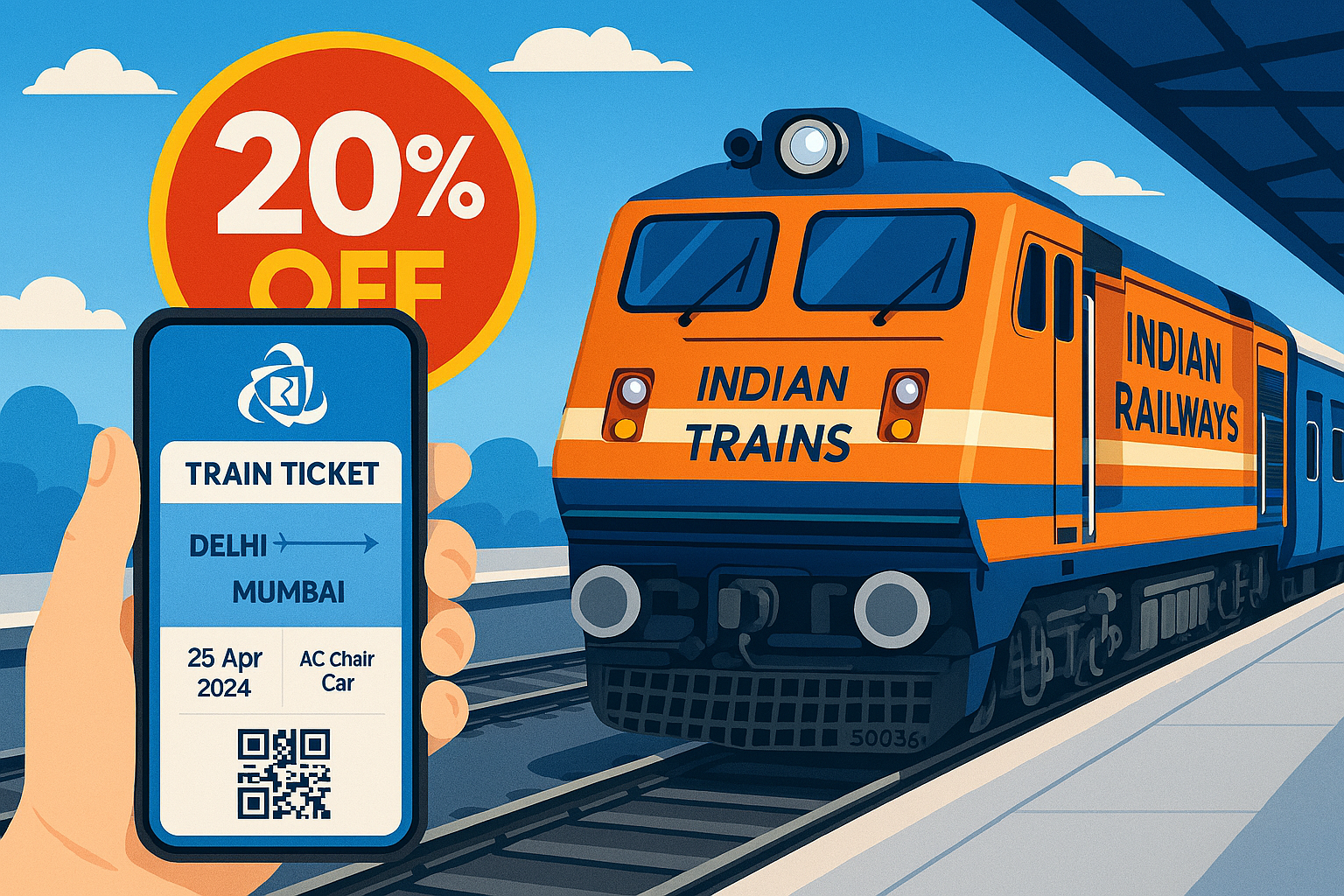
IRCTC is offering a 20% discount on railway ticket bookings, but passengers need to meet certain conditions to avail the benefit. Here’s what you need to know before booking your next trip.
Table of Contents
Published: August 14, 2025 | Last Updated: August 14, 2025
Introduction: Understanding IRCTC’s Latest Fare Reduction Initiative
The Indian Railway Catering and Tourism Corporation (IRCTC) introduced a substantial fare reduction program in September 2025. This initiative offers passengers a 20% discount on base fares for selected train services across India’s railway network. The program represents one of the most significant fare adjustment measures implemented by the railway booking authority in recent years.
This discount scheme operates under specific terms and conditions that determine eligibility. The initiative targets certain routes and train categories while maintaining exclusions for premium services. Understanding these parameters helps travelers maximize potential savings while planning railway journeys during the program’s validity period.
The implementation reflects IRCTC’s approach to optimizing train utilization patterns while addressing passenger affordability concerns. This analysis examines the program’s structure, eligibility criteria, booking procedures, and practical implications for railway travelers across India.
Program Overview and Implementation Timeline
Launch Details and Operational Framework
IRCTC announced the 20% discount program in September 2025 following analysis of occupancy patterns across the railway network. The initiative underwent planning throughout 2024, with pilot implementations tested on select routes during early 2025. Positive responses from initial testing phases informed the comprehensive rollout structure.
The program employs data-driven mechanisms to identify trains with suboptimal occupancy rates. This targeted approach aims to improve resource utilization while delivering value to cost-conscious passengers. Railway officials indicate that the scheme balances operational efficiency requirements with passenger affordability objectives.
The discount applies to base fare calculations rather than total ticket costs. Additional charges including reservation fees, superfast charges, and other levies remain separate from the discount calculation. This distinction affects the actual savings percentage passengers experience on total booking amounts.
Key Dates and Validity Period
The program operates within defined timeframes affecting booking and travel dates:
Booking Window:
- Start Date: September 15, 2025
- End Date: December 31, 2025
- Extension: The booking period received extension from an initial October deadline
Travel Period:
- Valid Travel Start: October 1, 2025
- Valid Travel End: March 31, 2026
- Duration: Six-month travel window
Advance Booking:
- Standard 120-day advance reservation period applies
- Bookings follow regular IRCTC reservation rules
- Seat availability subject to real-time booking patterns
The extended booking period indicates IRCTC’s confidence in program adoption and passenger interest. Industry observers note this extension provides greater flexibility for travelers planning multiple journeys or extended trips during the discount period.
Eligible Train Categories and Services
Included Train Types
The discount program covers specific train categories based on operational criteria and occupancy patterns:
Inter-City Express Services: These trains connect major cities with regular frequency. Inter-city express services typically operate on high-traffic routes providing connectivity between metropolitan areas. The discount availability on these services varies based on route demand and departure timing.
Mail Express Trains: Mail express services form a substantial component of Indian railway passenger operations. These trains connect remote areas with major urban centers. The program’s inclusion of mail express trains makes railway travel more accessible for passengers from smaller cities and towns.
Passenger Express Services: Local and regional passenger express trains benefit from discount application, particularly during off-peak travel periods. These services traditionally experience lower occupancy rates during specific times, making them suitable candidates for fare reduction initiatives.
Selected Superfast Express Trains: Certain superfast express services qualify for discounts based on route popularity and time slots. Not all superfast trains participate in the program—eligibility depends on operational requirements and occupancy forecasts for specific routes.
Service Coverage and Route Selection
The program covers an extensive network spanning multiple regions. However, coverage varies significantly based on route demand, seasonal patterns, and operational considerations. Popular metropolitan corridors may have limited discount availability compared to less-frequented routes.
Trains operating during off-peak hours typically show higher discount availability. Early morning departures and late-night services often have better discount seat allocation compared to convenient daytime slots. This pattern reflects IRCTC’s objective of improving occupancy during traditionally lower-demand periods.
Regional connectivity routes, particularly those serving tier-2 and tier-3 cities, show substantial program participation. This coverage pattern supports affordability objectives for passengers from smaller urban centers seeking connectivity to major cities.
Excluded Train Categories and Services
Premium Train Service Exclusions
Several premium train categories remain outside the discount program’s scope:
Rajdhani Express: India’s premier long-distance train service connecting the national capital with major state capitals maintains regular pricing. These trains consistently achieve high occupancy rates and serve passengers willing to pay premium fares for faster journey times and included meal services.
Shatabdi Express: High-speed intercity services operating primarily during daytime hours continue with standard fare structures. Shatabdi trains serve business travelers and premium passengers prioritizing speed, comfort, and convenience over cost considerations.
Vande Bharat Express: India’s semi-high-speed trains representing advanced railway technology maintain premium pricing. These trains offer superior amenities including reclining seats, onboard entertainment, and faster journey times. The fare structure reflects the enhanced service standards and technological features.
Duronto Express: Non-stop long-distance services providing rapid connectivity between major cities operate outside the discount program. Duronto trains serve passengers prioritizing minimum journey time through elimination of intermediate stops.
Quota and Booking Category Restrictions
Tatkal Bookings: The emergency booking facility maintains its premium pricing structure. Tatkal quota serves passengers requiring last-minute reservations and operates on a first-come-first-served basis with higher fare rates. The discount program does not apply to tatkal reservations.
Premium Tatkal: The highest priority booking option continues with standard premium charges. This quota provides immediate confirmation for urgent travel requirements at significantly higher fare rates than regular bookings.
Foreign Tourist Quota: Specialized quotas designed for international visitors operate under separate pricing mechanisms. These quotas remain excluded from the domestic discount program due to their specialized nature and administrative requirements.
Special Quota Categories: Various special quotas including ladies quota, senior citizen quota, and defense quota may have limited discount availability depending on overall train eligibility and seat allocation patterns.
Offer Combination Restrictions
The program includes specific limitations regarding offer combinations:
No Stacking with Other Discounts: Passengers cannot combine the 20% discount with other promotional offers, seasonal discounts, or category-specific concessions. Travelers must choose between the program discount and other available benefits like senior citizen concessions or student discounts.
Group Booking Limitations: Large group reservations may face restrictions on discounted seat availability per transaction. The program limits apply to prevent commercial exploitation while ensuring individual travelers can access benefits.
Festival Season Exclusions: Major festival periods with high travel demand may have limited discount availability or complete exclusions. Peak travel periods during Diwali, Holi, summer vacations, and other high-demand seasons typically show reduced program participation.
Detailed Booking Process and Procedures
Step-by-Step Booking Guide
Phase 1: Platform Access
Navigate to the official IRCTC website at www.irctc.co.in or download the official IRCTC Rail Connect mobile application from authorized app stores. Complete the login process using registered credentials. Verify that account information remains current and accurate before initiating booking procedures.
New users must complete registration procedures including identity verification and contact information submission. The registration process requires valid identification documents and contact details for booking confirmation communication.
Phase 2: Journey Search
Enter departure and destination stations using the search functionality. Select preferred travel dates considering flexibility for maximum discount availability. Choose passenger count and class preferences based on travel requirements. Initiate the train search to view available services.
The search interface displays available trains with timing, duration, and fare information. Discount-eligible trains show special indicators or promotional markers distinguishing them from regular-fare services. Compare options considering both fare benefits and journey convenience factors.
Phase 3: Train Selection
Review search results for trains displaying discount tags or promotional markers. Compare regular fares with discounted options to understand potential savings. Evaluate train timings, journey duration, and available amenities alongside discount benefits.
The fare breakdown section displays base fare, discount amount, and additional charges separately. This transparency helps passengers understand actual savings and total booking costs. Consider factors beyond price including departure timing, arrival timing, and journey comfort when selecting trains.
Phase 4: Booking Completion
Enter accurate passenger information for all travelers including names matching identification documents. Review booking details carefully including fare breakdown and discount application. Proceed to payment processing through available gateway options including debit cards, credit cards, net banking, and digital wallets.
Upon successful payment, the system generates booking confirmation and e-ticket. Save confirmation details and carry proper identification during travel. The e-ticket contains journey details, passenger information, and seat/berth allocation.
Optimization Strategies for Maximum Savings
Flexible Date Strategy:
Travelers with schedule flexibility should examine multiple dates within a weekly timeframe. Tuesday and Wednesday departures often show higher discount availability compared to weekend travel. Mid-week journeys typically experience lower demand, making them prime candidates for fare reduction programs.
Avoiding peak travel periods including weekend starts, festival dates, and holiday seasons increases discount availability likelihood. Off-peak periods provide better seat selection options alongside fare benefits.
Route Alternative Analysis:
Consider alternative routes or connecting city options that might offer superior discount opportunities. Sometimes slight route modifications or breaking long journeys into segments can result in significant overall savings. Examine connectivity patterns to identify optimal routing strategies.
Junction stations and major railway hubs often provide multiple routing options. Comparing different route combinations helps identify the most cost-effective travel path while maintaining reasonable journey times.
Class Comparison Approach:
Compare discount availability across different travel classes. Second AC might offer better discount percentages compared to Third AC on certain routes. Conversely, sleeper class may show higher discount seat allocation on specific trains.
The cost-benefit analysis should consider comfort preferences alongside savings potential. Sometimes upgrading to a higher class with discount proves more economical than lower class without discount, while providing better journey comfort.
Timing Flexibility:
Trains departing very early morning or late night frequently have better discount availability. These slots experience lower passenger preference due to inconvenient timing. Travelers willing to adjust schedules for these departures often access superior discount opportunities.
Overnight journeys save accommodation costs while maximizing travel time efficiency. The combination of fare discounts and eliminated hotel expenses creates substantial overall savings for budget-conscious travelers.
Economic Impact and Passenger Benefits
Savings Potential Analysis
The discount program provides measurable economic benefits for railway passengers. Estimated savings range from ₹500 to ₹2,000 per journey depending on route length and original fare structure. Long-distance journeys show higher absolute savings compared to shorter routes.
For families planning multiple trips during the program period, accumulated savings can reach tens of thousands of rupees. This becomes particularly significant for middle-class families where transportation costs represent substantial household expenses. Students, senior citizens, and frequent travelers also benefit from reduced fare structures.
The actual savings percentage on total ticket cost varies from the 20% base fare discount. Additional charges including reservation fees, superfast charges, and goods and services tax remain separate from discount calculations. Total ticket cost reductions typically range from 15% to 18% depending on fare structure composition.
Revenue Management Strategy
IRCTC’s approach reflects sophisticated revenue management practices adopted from aviation industry models. Offering discounts on underutilized trains maximizes overall revenue compared to operating services with empty seats at full fare. This economic principle drives program sustainability.
Railway officials indicate that increased passenger volume at reduced rates generates higher total revenue than maintaining high fares with poor occupancy. The strategy improves asset utilization while maintaining financial viability. Dynamic pricing models enable optimization of revenue across varying demand patterns.
The program also generates secondary benefits including increased platform ticket sales, catering revenue from additional passengers, and enhanced brand perception. These spillover effects contribute to overall financial performance beyond direct ticket revenue.
Competitive Positioning Impact
The discount program strengthens Indian Railways’ competitive position against alternative transportation modes. Private bus operators, budget airlines, and other transportation services compete for the same passenger base. Strategic fare reductions position railways advantageously for budget-conscious travelers.
Railway travel offers advantages including comfort, safety, reliability, and environmental sustainability. Fare discounts enhance these inherent benefits, making railways more attractive compared to alternatives. The program particularly impacts medium-distance routes where multiple transportation options compete.
Technology Integration and User Experience
Mobile Application Enhancements
IRCTC enhanced its mobile application specifically for program implementation. New features facilitate discount identification and booking procedures:
Discount Indicator Dashboard: A dedicated section highlights available discount trains based on user search patterns. This feature saves time by filtering eligible services from comprehensive search results. Users can set preferences for preferred routes to receive targeted discount availability information.
Price Alert System: Automated notifications inform users when discount seats become available on preferred routes. This feature helps travelers monitoring specific journeys for optimal booking timing. Alerts consider user search history and saved preferences for personalized notifications.
Savings Calculator: Integrated tools display total savings compared to regular fares. This transparency helps users make informed decisions by quantifying financial benefits. The calculator accounts for all fare components providing accurate savings representations.
Website Optimization Features
Advanced Filtering Options: Enhanced search filters allow users to specifically search for discount-eligible trains. This functionality streamlines the booking process by eliminating non-eligible services from search results. Users can combine discount filters with other preferences including timing, class, and duration.
Visual Discount Indicators: Clear graphical representations of discount availability and savings potential appear throughout the booking process. Visual cues help users quickly identify beneficial options without extensive fare comparison efforts. Color coding and iconography enhance user interface clarity.
Comparative Fare Display: Side-by-side comparison of regular and discounted fares highlights savings opportunities. This feature enables informed decision-making by presenting cost information clearly. Users can evaluate whether schedule adjustments or route changes justify available discounts.
Regional Impact and Route-Specific Patterns
Major Route Analysis
Delhi-Mumbai Corridor: This high-traffic route shows selective discount availability on specific trains. Weekday departures and non-peak seasons typically offer better discount opportunities. The corridor serves diverse passenger segments including business travelers, tourists, and family visitors.
Chennai-Bangalore Connection: Regular commuter route benefits from substantial discount opportunities. This corridor serves business travelers and frequent visitors between two major southern metropolitan areas. Enhanced affordability supports commercial and personal travel requirements.
Kolkata-Delhi Route: Strategic discount placement on selected trains helps balance occupancy across multiple daily services. This busy route connects eastern and northern regions with diverse passenger demographics. Discount availability varies significantly based on departure timing and train type.
North-East Connectivity: Special emphasis on improving connectivity to northeastern states through attractive discount offers. These routes traditionally experience lower occupancy rates due to distance factors and limited demand. The program supports regional integration and accessibility objectives.
Regional Economic Implications
The discount program particularly benefits smaller cities and towns by improving railway travel affordability. Residents from tier-2 and tier-3 cities seeking connectivity to major metropolitan areas benefit from reduced fare structures. This enhanced accessibility supports regional economic development through improved mobility.
Tourism sectors in smaller destinations benefit from increased visitor accessibility. Lower transportation costs encourage domestic tourism, supporting local economies dependent on visitor spending. The program indirectly promotes regional tourism development through affordability improvements.
Educational institutions in major cities become more accessible for students from smaller towns. Reduced transportation costs decrease the overall expense burden for families supporting students in distant educational centers. This accessibility supports educational mobility and opportunity expansion.
Security and Safety Considerations
Booking Security Protocols
IRCTC maintains comprehensive security measures throughout the discount booking process:
Secure Payment Gateways: Multiple verified payment options ensure safe financial transactions. Payment gateways employ encryption technologies protecting sensitive financial information. Users can select from various payment methods including cards, net banking, and digital wallets.
Account Protection: Enhanced authentication measures protect user accounts from unauthorized access. Two-factor authentication options provide additional security layers. Users receive alerts for account access from new devices or locations.
Fraud Prevention: Sophisticated algorithms detect and prevent fraudulent booking attempts. The system monitors unusual booking patterns potentially indicating commercial exploitation or fraudulent activity. Suspicious transactions undergo additional verification procedures.
Travel Safety Guidelines
Booking Verification: Always verify booking confirmation and carry proper identification during travel. Passengers should ensure names on tickets match identification documents exactly. Discrepancies can lead to boarding complications or ticket cancellation.
Document Requirements: Maintain updated contact information in IRCTC profiles for communication regarding bookings or travel updates. Carry original identification documents used during booking. Digital copies serve as backups but may not satisfy verification requirements.
Emergency Contact Information: Ensure emergency contact details remain current in passenger profiles. This information facilitates communication during travel disruptions or emergencies. Railway authorities use contact information for journey updates and important notifications.
Program Limitations and Practical Considerations
Availability Constraints
Discount seat allocation follows dynamic availability patterns based on real-time booking trends. Popular routes and convenient timings may exhaust discount quotas quickly. Early booking during initial availability periods increases success probability.
Last-minute bookings typically show limited discount availability as seats get reserved progressively. Advance planning and early booking strategies maximize discount access opportunities. Monitoring availability patterns for specific routes helps identify optimal booking timing.
Festival seasons, long weekends, and school vacation periods experience high demand reducing discount availability. These peak travel periods may show complete discount exclusions on certain routes. Planning travel around high-demand periods improves discount access likelihood.
Cancellation and Modification Policies
Cancellation and modification procedures for discounted tickets follow standard IRCTC rules. Refund amounts calculate based on discounted fare paid rather than original prices. Cancellation charges apply according to regular railway cancellation policies.
Partial cancellations in group bookings process individually with each passenger’s refund calculated separately. Time-based cancellation charges increase as departure time approaches. Understanding refund policies helps passengers make informed cancellation decisions.
Modification requests including date changes or passenger name corrections follow regular procedures. Some modifications may result in fare adjustments if new travel dates have different discount availability. Major modifications might require cancellation and fresh booking.
Usage Restrictions
While IRCTC hasn’t specified explicit limits on discounted tickets per user, practical limitations exist. The standard maximum of 12 passengers per booking transaction applies. Overall seat availability on eligible trains constrains booking quantities.
The program operates on first-come-first-served basis with limited seat allocation under discount quotas. Heavy usage patterns might face scrutiny to prevent commercial exploitation. Individual travelers focusing on personal travel requirements generally face no restrictions.
Commercial entities attempting bulk bookings for resale purposes violate program terms. Such activities risk account suspension and booking cancellation. The program targets individual travelers rather than commercial operators.
Future Implications and Program Evolution
Potential Program Extensions
Railway officials indicate that program continuation depends on initial success metrics. Positive passenger response and improved occupancy rates could lead to extensions beyond the current validity period. Future iterations might include route diversification and category expansion.
Seasonal extensions during specific low-demand periods represent possible evolution paths. The program framework could adapt to varying demand patterns throughout the year. Flexible program structures enable responsive adjustments to operational requirements.
Category expansion might gradually include premium train services during specific periods or routes with lower demand. However, such expansions would carefully consider revenue implications and operational requirements. Balanced approaches maintain financial sustainability while expanding passenger benefits.
Long-term Strategic Direction
The discount program represents part of IRCTC’s broader digital transformation and customer-centric approach. Future developments may include personalized discount offers based on travel history and preferences. Advanced analytics could enable targeted promotions matching individual passenger patterns.
Integration with loyalty programs and frequent traveler schemes could provide tiered benefits. Regular passengers might access enhanced discounts or priority access to discount quotas. Such developments would reward customer loyalty while encouraging repeat bookings.
Dynamic pricing models may evolve incorporating real-time demand patterns and predictive analytics. Sophisticated revenue management systems could optimize fare structures automatically across the network. These technological advances would balance revenue objectives with passenger affordability considerations.
Environmental and Social Impact
Sustainable Transportation Promotion
The discount program indirectly promotes sustainable transportation by making railway travel more attractive compared to private vehicles or air travel. Railways represent one of the most environmentally efficient mass transportation options available. Increased railway patronage reduces carbon emissions and environmental impact.
Mode shift from road to rail reduces traffic congestion in urban areas and along highway corridors. This transition provides environmental benefits alongside reduced travel stress for passengers. Railway travel’s energy efficiency per passenger-kilometer significantly exceeds private vehicle travel.
Social Accessibility Enhancement
Reduced fare structures improve transportation accessibility for middle-class families, students, and senior citizens. Groups previously finding railway travel cost-prohibitive for certain routes gain improved access. This social inclusivity dimension supports equitable transportation access across economic segments.
Enhanced connectivity between regions supports social integration and cultural exchange. Affordable travel enables family visits, educational pursuits, and employment opportunities in distant locations. The program’s accessibility benefits extend beyond immediate financial savings to broader social welfare improvements.
Frequently Asked Questions
Which specific train services qualify for the IRCTC 20% discount program?
The discount applies to selected Mail Express, Inter-city Express, Passenger Express, and certain Superfast Express trains. Eligibility depends on real-time occupancy data and route demand patterns analyzed by IRCTC. Premium services including Rajdhani, Shatabdi, Vande Bharat, and Duronto Express remain excluded from the program. To identify eligible trains, look for discount tags or promotional markers during the booking process on the official IRCTC website or mobile application. The system displays clear indicators showing which trains offer discount benefits for specific routes and travel dates. Availability varies based on occupancy forecasts and operational requirements for individual train services.
Can passengers combine the 20% discount with senior citizen concessions or other promotional offers?
No, the 20% discount cannot be combined with any other promotional offers, discounts, or concessions. This includes senior citizen concessions, student discounts, seasonal promotional fares, or category-specific benefits. The program operates independently, requiring passengers to choose between the 20% discount or other available concessions. During the booking process, passengers can compare both options and select the more beneficial choice for their specific journey. The booking system prevents automatic stacking of multiple discounts to maintain program integrity. Passengers should calculate total costs under different discount scenarios to determine optimal booking approaches.
How can travelers identify whether their preferred train journey qualifies for the discount?
During the booking process on official IRCTC platforms, eligible trains display clear discount indicators or promotional tags. The fare breakdown section explicitly shows the original price, discount amount, and final fare. If no discount indicator appears for searched routes and dates, travelers should try alternative dates or nearby departure times, as availability varies based on occupancy forecasts. The mobile application’s discount dashboard feature helps identify eligible trains based on search preferences. Checking multiple date options within a weekly timeframe often reveals better discount availability patterns. Early morning and late-night departure slots typically show higher discount seat allocation compared to convenient daytime timings.
What is the validity period for the IRCTC discount program and can it be extended?
The current discount program operates from September 15, 2025, to December 31, 2025, for bookings, with travel validity extending to March 31, 2026. This represents a limited-time initiative rather than a permanent offering. The booking period already received one extension from an initial October deadline, indicating IRCTC’s flexibility based on passenger response. Future extensions depend on program success metrics including occupancy improvements and passenger adoption rates. IRCTC may introduce similar programs subsequently based on operational requirements and passenger demand patterns. Travelers should complete bookings within the specified period to ensure discount availability. Monitoring official IRCTC announcements provides information about potential extensions or future discount programs.
Are discount bookings exclusively available through official IRCTC platforms or can travel agents process them?
The 20% discount is exclusively available through official IRCTC channels including the official website at www.irctc.co.in and the official IRCTC Rail Connect mobile application. Third-party booking platforms, travel agents, and railway station counters cannot access or apply these promotional discounts. This exclusivity ensures program integrity and provides IRCTC complete control over discount allocation and passenger verification. Passengers must have active IRCTC accounts with verified credentials to access discount bookings. Registration procedures require identity verification and contact information submission. The restriction prevents unauthorized discount application and maintains booking system security.
What happens to refunds if passengers cancel tickets booked under the discount program?
Cancellation policies for discounted tickets follow standard IRCTC rules with refund amounts calculated based on the discounted fare paid rather than original prices. Cancellation charges apply according to regular railway cancellation policies based on time remaining before departure. Any refund reflects the actual amount paid after discount application minus applicable cancellation charges. Partial cancellations in group bookings process individually, with each passenger’s refund calculated based on their discounted fare. Time-based cancellation charges increase progressively as departure time approaches. Complete understanding of refund policies helps passengers make informed decisions about booking modifications or cancellations. Processing timelines for refunds follow standard IRCTC procedures regardless of discount application.
Are there restrictions on the number of discounted tickets individual users can book?
While IRCTC hasn’t specified explicit per-user limits on discounted tickets, practical limitations exist through the standard maximum of 12 passengers per booking transaction and overall seat availability under discount quotas. The program operates on a first-come-first-served basis with limited seat allocation per train. Heavy usage patterns indicating commercial exploitation rather than personal travel might face scrutiny. Individual travelers booking for personal requirements generally encounter no specific restrictions beyond standard booking rules. The system prevents commercial bulk booking for resale purposes through monitoring algorithms. Passengers should focus on legitimate personal travel needs when utilizing program benefits to avoid potential account complications.
Does the discount apply equally to all travel classes or are specific classes excluded?
The discount program typically covers Sleeper Class, Third AC, Second AC, and First AC compartments on eligible trains subject to availability. However, actual availability varies significantly by train, route, and departure timing. Executive Class compartments on premium services may have different discount structures or complete exclusions. During booking procedures, the system clearly displays which classes have discount availability for specific journeys and travel dates. Comparing discount availability across different classes helps optimize savings while maintaining desired comfort levels. Some trains may offer discounts only in specific classes based on occupancy patterns. The fare breakdown section provides complete transparency about class-specific discount application and total cost calculations.
About the Author
Nueplanet is a dedicated content creator specializing in transportation policy analysis, travel industry trends, and consumer services affecting Indian travelers. With a commitment to evidence-based reporting, Nueplanet draws exclusively on official sources including IRCTC announcements, railway ministry publications, and verified institutional data to provide accurate, comprehensive analysis.
The goal is to present factual information helping readers understand important developments in India’s transportation sector while maintaining strict neutrality and journalistic standards. All content undergoes verification against official sources and established data before publication, ensuring readers receive reliable information for travel planning decisions.
Expertise Areas: Railway policy analysis, travel industry reporting, consumer services, transportation economics, booking systems and procedures
Sources: Content relies exclusively on IRCTC official announcements, Indian Railways publications, government press releases, verified institutional reports, and established transportation industry data to ensure accuracy and reliability.
Commitment: Providing transparent, verified information empowering travelers to make informed decisions about railway bookings, discount programs, and travel planning strategies based on factual data rather than promotional content.
Disclaimer: This article provides informational analysis of the IRCTC 20% discount program based on available official information. Program terms, conditions, and availability may change. Readers should verify current details through official IRCTC channels before making booking decisions. This content does not constitute booking advice or guarantee discount availability for specific journeys.
Helpful Resources:
Latest Posts
- Kospi Index: South Korea’s Economic Barometer and Global Market Indicator
- MRF Share Price Analysis: Latest Trends, Q1 Results & Market Outlook
- UP NEET Counselling 2025: Round 1 & Round 2 Key Updates for Medical Aspirants
- Ashok Leyland Share: Q1 Results Push Investor Sentiment Up
- Bombay High Court Forms Expert Committee on Pigeon Feeding and Public Health
Tag
IRCTC Ticket
Related Posts












Post Comment