








International Labour Organization (ILO): Advancing Global Labor Standards and Workers’ Rights
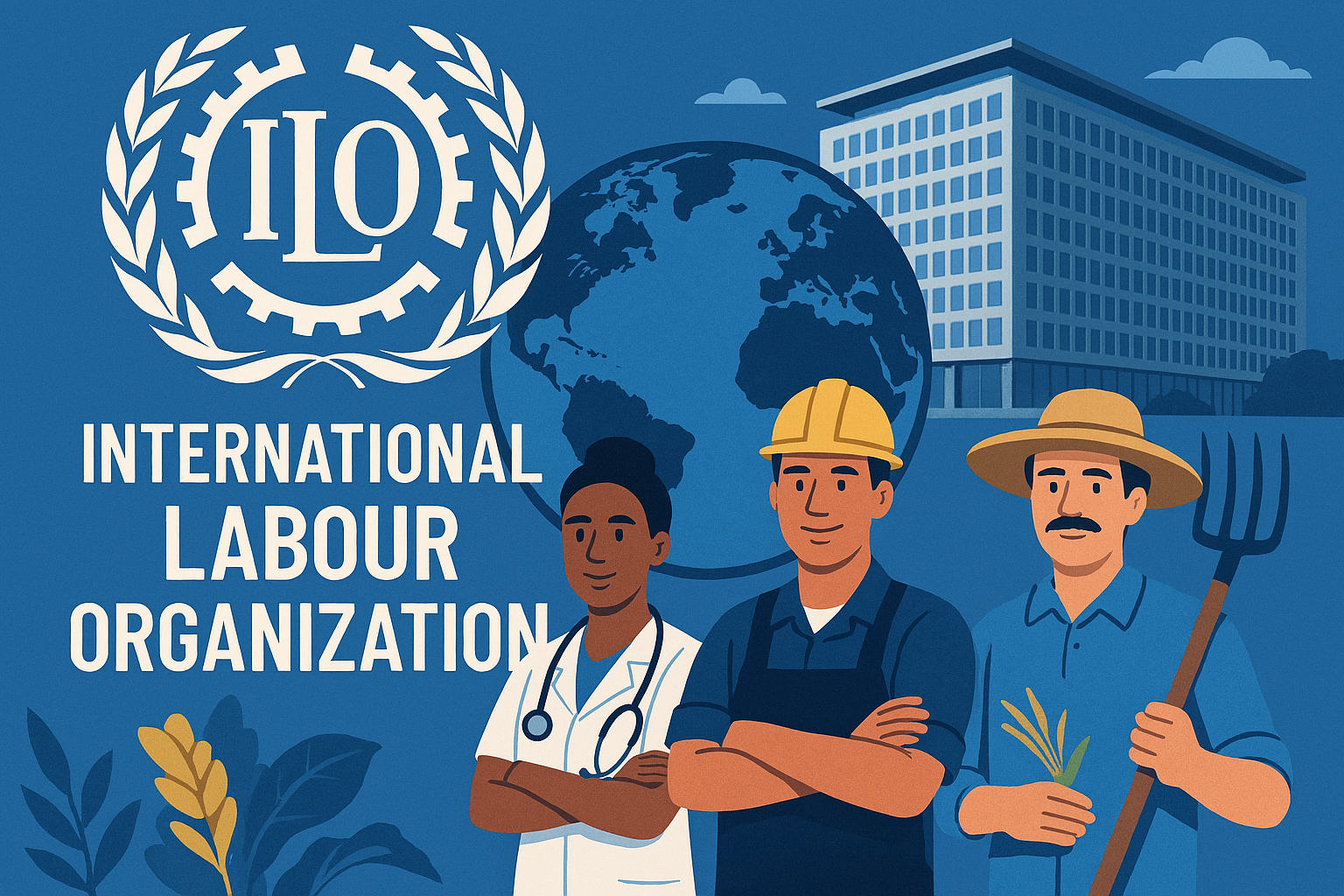
The International Labour Organization (ILO) plays a pivotal role in setting global labor standards and advocating for workers’ rights. This blog provides a detailed look at its history, functions, recent updates, and ongoing initiatives worldwide.
Table of Contents
Overview of the International Labour Organization’s Global Impact
The International Labour Organization (ILO) represents a cornerstone institution in the advancement of global labor rights and workplace standards. Established in 1919 as part of the Treaty of Versailles, this specialized United Nations agency has developed into the world’s foremost authority on employment policies and worker protections. The organization currently comprises 187 member states, representing nearly every nation worldwide.
The ILO operates on a fundamental principle that universal peace requires social justice and equitable labor practices. This concept marked a transformative shift in international governance when first introduced over a century ago. Today, the organization’s influence extends across multiple dimensions of working life, affecting billions of workers globally through policy development, standard-setting, and technical assistance programs.
What distinguishes the ILO from other international bodies is its unique tripartite governance structure. This proven framework brings together government representatives, employer organizations, and worker unions in collaborative decision-making processes. This balanced approach ensures that labor policies reflect diverse stakeholder perspectives rather than serving singular interests.
The organization’s mission encompasses promoting decent work opportunities, improving workplace safety protocols, eliminating exploitative child labor, advancing gender equality in employment, and protecting vulnerable worker populations. These interconnected objectives form a comprehensive strategy for achieving global labor justice in an increasingly complex economic environment.
Historical Development and Institutional Evolution
Establishment in the Post-World War I Era (1919-1930)
The ILO’s founding in 1919 represented a revolutionary moment in international cooperation. World leaders, labor activists, and social reformers recognized that the industrial revolution and World War I’s devastating consequences created unprecedented challenges requiring coordinated global responses. The Treaty of Versailles included Part XIII, which established the ILO based on several fundamental principles that remain relevant today.
These founding principles recognized that labor should not be treated merely as a commodity subject to market forces. The framework acknowledged that freedom of expression and association were essential rights for workers seeking improved conditions. Additionally, the founding documents established that poverty anywhere constituted a danger to prosperity everywhere, and that any nation’s failure to adopt humane labor conditions posed obstacles to other nations’ improvement efforts.
The organization’s initial years featured ambitious standard-setting activities and rapid institutional development. The first International Labour Conference convened in Washington D.C. during October and November 1919. This inaugural gathering adopted six conventions covering fundamental workplace issues including industrial working hours, unemployment protection, maternity protection, night work restrictions, and minimum age requirements for industrial employment.
Expansion During Economic Depression and Global Conflict (1930-1945)
Throughout the 1930s, the ILO continued expanding its mandate despite challenging international political conditions. Economic depression, rising authoritarianism, and eventual global warfare created obstacles for international cooperation. Nevertheless, the organization developed many significant early conventions addressing child labor, working time regulations, and social security provisions that later became foundational elements of modern labor law systems worldwide.
World War II presented significant operational challenges. The organization temporarily relocated its headquarters from Geneva to Montreal, Canada, between 1940 and 1948. Despite these disruptions, the ILO played a crucial role in post-war reconstruction planning. The Philadelphia Declaration of 1944 reaffirmed and expanded the organization’s fundamental principles for the post-war era, establishing frameworks that continue to guide its work today.
Integration into the United Nations System (1946-Present)
In 1946, the ILO achieved a historic milestone by becoming the first specialized agency of the newly established United Nations system. This integration provided enhanced legitimacy, broader institutional support, and improved coordination mechanisms with other international organizations addressing related social and economic issues. The designation strengthened the ILO’s authority and expanded its capacity to influence global labor policies.
The post-war period witnessed dramatic membership expansion as decolonization brought numerous newly independent nations into the international community. This expansion significantly diversified the organization’s membership base and broadened its geographical and cultural perspectives on labor issues. The resulting diversity led to more comprehensive and inclusive approaches to international labor standard-setting that reflected varied economic development levels and cultural contexts.
Organizational Structure and Governance Framework
The Tripartite System: An Innovative Governance Model
The ILO’s tripartite structure represents one of the most successful and democratic approaches to international governance ever developed. Unlike traditional intergovernmental organizations where only national governments participate in decision-making, the ILO includes equal representation from three distinct constituencies: governments, employer organizations, and worker organizations.
This arrangement ensures that all major stakeholders in labor relations have direct input into international labor standards and policy development. Government representatives typically include labor ministers and senior officials responsible for employment and social policies. Employer representatives come from national business confederations and associations that speak for private sector interests. Worker participation occurs through national trade union centers and international trade union federations advocating for employee rights across all economic sectors.
The tripartite system operates at multiple organizational levels. The International Labour Conference, often called the “World Parliament of Labor,” brings together delegations from all member states. Each delegation consists of two government delegates, one employer delegate, and one worker delegate. This composition ensures that every major decision reflects input from all three constituencies, preventing any single group from dominating the organization’s agenda.
Key Institutional Bodies and Decision-Making Processes
International Labour Conference
The International Labour Conference serves as the organization’s supreme decision-making body. This assembly meets annually in Geneva to set international labor standards, adopt organizational budgets and work programs, and provide strategic guidance on emerging labor issues. The conference’s decisions shape the ILO’s priorities and operational direction for the coming year.
Governing Body
The Governing Body consists of 56 members: 28 government representatives, 14 employer representatives, and 14 worker representatives. This executive council functions between annual conferences, meeting three times yearly to oversee conference decision implementation, supervise the International Labour Office operations, and provide policy guidance on operational matters. The Governing Body ensures continuity in organizational leadership and strategic direction.
International Labour Office
The International Labour Office serves as the organization’s permanent secretariat and technical arm. The Director-General, elected by the Governing Body for five-year terms, heads this office. Approximately 3,500 staff members work worldwide, including economists, lawyers, statisticians, occupational safety specialists, and technical experts. These professionals conduct research, provide technical assistance to member states, and support standard-setting and promotional activities.
Core Functions and Strategic Mandates
International Labor Standard-Setting: The Foundation of Global Labor Rights
One of the ILO’s most powerful contributions to global labor governance has been developing a comprehensive system of international labor standards through conventions and recommendations. This standard-setting function represents the organization’s primary mechanism for establishing minimum standards for workers’ rights and working conditions that apply universally.
ILO conventions are legally binding international treaties that become effective for member states upon ratification through national legislative processes. Once ratified, conventions create legal obligations for governments to implement provisions through national legislation and ensure effective practical application. The ratification process varies among countries but typically involves parliamentary approval and may require constitutional or legislative amendments.
The organization has adopted 190 conventions since 1919, covering virtually every aspect of working life. These include:
- Fundamental rights at work
- Employment policy and promotion
- Labor administration and inspection
- Industrial relations and collective bargaining
- Working conditions and environment
- Social security and maternity protection
- Migrant workers’ rights and protections
ILO recommendations, while not legally binding, provide detailed guidance on policy and practice that complements convention provisions. Recommendations typically contain more technical guidance than conventions and may address emerging issues where international consensus on binding standards has not yet been achieved.
Technical Cooperation and Capacity Building Programs
Beyond standard-setting activities, the ILO provides extensive technical cooperation and capacity-building assistance to help member states implement international labor standards and improve labor market performance. This technical cooperation takes multiple effective forms, delivering proven results across diverse economic contexts.
Policy Advice and Legislative Drafting
The organization provides expert policy advice and assists with legislative drafting to ensure national laws align with international standards. This support helps governments develop comprehensive legal frameworks that protect worker rights while supporting economic development objectives.
Institutional Capacity Building
The ILO strengthens institutional capacity for labor administrations and social partners through targeted training and organizational development programs. These initiatives enhance the effectiveness of government agencies, employer associations, and trade unions in fulfilling their respective roles.
Training and Education Programs
Comprehensive training programs target government officials, employer representatives, and trade union leaders. These educational initiatives build skills and knowledge necessary for effective labor market governance and social dialogue.
Development Project Support
The ILO provides direct support for specific development projects addressing pressing labor market challenges. These projects often involve multi-year commitments and substantial financial resources from the organization’s regular budget and voluntary donor contributions.
Research and Knowledge Generation: Informing Global Labor Policy
The ILO maintains one of the world’s most comprehensive research programs on labor and employment issues. The organization generates authoritative data, analysis, and policy recommendations that inform decision-making by governments, employers, workers, and international organizations worldwide.
Research activities encompass:
- Global and regional employment trends analysis
- Labor market institution effectiveness studies
- Wage and income distribution research
- Occupational safety and health risk assessments
- Social protection coverage and adequacy evaluations
The ILO’s flagship publications provide authoritative analysis of global labor market trends. The World Employment and Social Outlook series, Global Wage Report, World Social Protection Report, and Safety and Health at Work reports serve as essential references for policymakers, researchers, and practitioners worldwide. These publications combine rigorous statistical analysis with policy-oriented recommendations that help countries address specific labor market challenges.
Recent Developments and Contemporary Challenges
Organizational Reforms and Internal Governance Improvements
In recent years, the ILO has undertaken significant internal reforms aimed at improving organizational effectiveness and enhancing transparency. These reforms reflect broader trends in international organizations toward greater accountability and participatory management, addressing specific challenges identified by staff, member states, and external evaluators.
Staff concerns about internal management practices and workplace transparency prompted comprehensive reviews of human resources policies, communication procedures, and decision-making processes. These reviews led to implementing new grievance procedures, enhanced staff consultation mechanisms, and improved transparency in staffing decisions and organizational restructuring initiatives.
The organization has also undertaken strategic planning processes to better align programs and activities with contemporary labor market challenges. These planning exercises involved extensive consultations with governments, employers, workers, and other stakeholders to ensure the ILO’s work remains relevant and effective.
Response to Global Workforce Transformation
The contemporary global economy presents unprecedented challenges requiring innovative responses from the ILO. Digital transformation and technological advancement are fundamentally reshaping work processes, skill requirements, and employment relationships across all economic sectors. These changes create both opportunities for improved productivity and risks of job displacement and increased inequality.
The ILO has responded through comprehensive research programs examining technological change’s labor market impacts. The organization provides policy recommendations for managing transitions to digitalized work environments and offers technical assistance programs helping countries develop reskilling and upskilling initiatives for affected workers.
Platform Work and the Gig Economy
The organization has developed new analytical frameworks for understanding the implications of platform work, artificial intelligence, and automation for traditional employment relationships and social protection systems. These frameworks help policymakers navigate the complex challenges posed by non-standard employment arrangements that fall outside conventional regulatory frameworks.
Climate Change and Just Transition Policies
Climate change presents both significant challenges and opportunities for global labor markets. The ILO’s approach emphasizes “just transition” policies ensuring environmental protection measures don’t disproportionately burden workers and communities dependent on environmentally harmful industries. Just transition policies include retraining opportunities, income support during transition periods, and investment in sustainable industries providing alternative employment opportunities.
Addressing Persistent Global Labor Challenges
Despite decades of international cooperation and standard-setting activities, significant labor market challenges persist worldwide. These ongoing issues require continued attention and innovative approaches from the ILO and its member states.
Youth Unemployment
Youth unemployment remains a critical challenge in many regions. Young people face difficulties accessing decent work opportunities that provide fair wages, career development prospects, and social protection coverage. The ILO has developed targeted programs addressing youth employment through skills development initiatives, entrepreneurship support, and labor market policy reforms.
Gender Equality in Employment
Women worldwide continue facing wage gaps, occupational segregation, limited access to leadership positions, and disproportionate responsibility for unpaid care work. These challenges limit women’s labor market participation and career advancement opportunities. The ILO has developed comprehensive programs addressing these issues through policy recommendations, technical assistance, and research highlighting effective approaches to promoting gender equality.
Child Labor and Forced Labor
Child labor and forced labor remain serious problems affecting millions of workers worldwide. The ILO estimates that 152 million children are engaged in child labor globally, with 73 million working in hazardous conditions threatening their health, safety, and development. Similarly, approximately 25 million people worldwide are victims of forced labor, including debt bondage, trafficking, and modern slavery. The organization’s programs address these challenges through prevention initiatives, victim support services, and strengthened enforcement mechanisms.
International Conventions and Standards Framework
Fundamental Conventions and Core Labor Standards
The ILO has identified eight conventions as “fundamental” because they address core labor standards considered essential for workers’ rights regardless of economic development level or political system. These fundamental conventions address four categories of core labor standards.
Freedom of Association and Collective Bargaining
The Freedom of Association and Protection of the Right to Organise Convention (No. 87) and the Right to Organise and Collective Bargaining Convention (No. 98) establish fundamental principles regarding workers’ rights to form and join trade unions, participate in collective bargaining, and engage in legitimate trade union activities without interference. These conventions recognize that effective industrial relations systems based on voluntary negotiations between independent organizations are essential for achieving social justice.
Elimination of Forced and Compulsory Labor
The Forced Labour Convention (No. 29) and the Abolition of Forced Labour Convention (No. 105) prohibit all forms of forced or compulsory labor. These conventions require governments to take effective measures to prevent and eliminate such practices, recognizing that forced labor is fundamentally incompatible with human dignity and democratic principles.
Abolition of Child Labor
The Minimum Age Convention (No. 138) and the Worst Forms of Child Labour Convention (No. 182) establish comprehensive frameworks for eliminating child labor and ensuring children have access to education and development opportunities appropriate to their age and maturity level. These powerful standards recognize that child labor deprives children of childhood, education, and development opportunities while perpetuating cycles of poverty.
Elimination of Discrimination in Employment
The Equal Remuneration Convention (No. 100) and the Discrimination (Employment and Occupation) Convention (No. 111) establish principles of non-discrimination and equal treatment in employment. These conventions apply to all aspects of working life including recruitment, training, promotion, remuneration, and termination, recognizing that discrimination violates individual human rights and represents inefficient utilization of human resources.
Governance and Technical Conventions
Beyond fundamental conventions, the ILO has adopted numerous governance and technical conventions addressing specific aspects of labor administration, working conditions, social security, and employment policy. Governance conventions are considered priority instruments because they address issues particularly relevant to effective functioning of the international labor standards system.
Labour Inspection Convention (No. 81)
This convention requires countries to maintain adequate systems of labor inspection to ensure compliance with legal provisions relating to conditions of work and worker protection. Effective labor inspection systems are essential for translating legislative commitments into practical workplace improvements.
Employment Policy Convention (No. 122)
This convention commits countries to pursue active policies designed to promote full, productive, and freely chosen employment. It establishes frameworks for coordinated employment policy development that addresses both labor supply and demand factors.
Technical Conventions
Technical conventions address specific working conditions, occupational safety and health standards, and social security provisions. Examples include the Occupational Safety and Health Convention (No. 155), which establishes comprehensive frameworks for preventing workplace accidents and occupational diseases, and the Social Security (Minimum Standards) Convention (No. 102), which sets minimum standards for comprehensive social security systems.
Implementation and Supervision Mechanisms
The ILO has developed sophisticated mechanisms for supervising the implementation of ratified conventions and monitoring compliance with international labor standards. These supervision mechanisms create accountability while providing support for countries working to achieve full compliance.
Regular Supervision System
Countries must submit periodic reports on their implementation of ratified conventions. The Committee of Experts on the Application of Conventions and Recommendations, composed of independent legal experts, examines these reports. The committee issues observations and direct requests concerning countries’ compliance with obligations and provides guidance on necessary improvements.
Conference Committee on the Application of Standards
This tripartite committee of the International Labour Conference examines selected cases based on the Committee of Experts’ findings. The process provides opportunities for governments to explain their situations and receive guidance from employer and worker representatives. This public examination creates peer pressure for compliance and facilitates technical cooperation.
Global Impact and Regional Influence
Transformation of National Labor Legislation
The ILO’s influence on national labor legislation worldwide represents one of its most significant and enduring contributions to global social progress. Virtually every country’s labor code reflects ILO standards to some degree, with many nations explicitly incorporating convention provisions into national legislation.
The process of incorporating international labor standards into national law typically involves several stages:
- Ratification of relevant conventions through constitutional or parliamentary procedures
- Review and amendment of existing legislation to ensure compatibility with international obligations
- Development of implementing regulations and administrative procedures
- Establishment of enforcement mechanisms including labor inspection services and judicial procedures
Many countries have undertaken comprehensive labor law reforms explicitly designed to align national legislation with ILO standards. These reforms often involve extensive consultation processes with employer organizations and trade unions, reflecting the tripartite principles guiding the ILO’s operations.
Regional Variations and Cultural Adaptations
While ILO conventions establish universal minimum standards, implementation varies considerably across regions. These variations reflect different legal traditions, economic development levels, cultural contexts, and political systems, demonstrating both the flexibility of the international labor standards system and the challenges of achieving universal application.
Asia
Rapid economic development and industrialization in Asian countries have created both opportunities for improving working conditions and challenges related to labor market segmentation, informal employment, and weak enforcement mechanisms. Many Asian countries have ratified significant numbers of ILO conventions and undertaken substantial legal reforms, though implementation often faces obstacles related to limited administrative capacity and large informal sectors.
Africa
African countries have generally shown strong commitment to ILO principles and have ratified numerous conventions. However, implementation faces significant challenges related to limited resources, weak institutional capacity, and large informal economies where conventional labor regulation mechanisms have limited reach. The ILO has developed specialized programs for African countries emphasizing capacity building and approaches to extending labor protection to informal sector workers.
Europe
European countries generally demonstrate high levels of compliance with ILO standards, reflecting strong traditions of social dialogue, comprehensive social protection systems, and effective labor administration. However, contemporary challenges including migration, technological change, and economic integration require ongoing adaptation of labor market institutions.
Latin America
Latin American countries have diverse experiences with ILO standards implementation. The region has been particularly active in addressing child labor and forced labor issues, often with substantial ILO technical assistance and cooperation from international donors.
Impact on Workplace Safety and Health Standards
The ILO’s influence on occupational safety and health standards worldwide has contributed significantly to reducing workplace accidents, occupational diseases, and work-related deaths. The organization’s comprehensive approach encompasses prevention strategies, risk assessment methodologies, regulatory frameworks, and promotion of safety culture in workplaces.
ILO occupational safety and health conventions establish fundamental principles including:
- Employers’ obligations to provide safe and healthy working conditions
- Workers’ rights to information about workplace hazards and to refuse dangerous work
- Governments’ responsibilities to establish effective regulatory and enforcement systems
These principles have been incorporated into national legislation worldwide and have contributed to substantial improvements in workplace safety performance. The organization’s World Day for Safety and Health at Work, observed annually on April 28, raises global awareness about occupational safety issues and promotes prevention efforts worldwide.
Future Initiatives and Strategic Directions
Expanding Decent Work in Emerging Sectors
The ILO’s future strategic direction emphasizes expanding decent work opportunities in emerging economic sectors that offer potential for job creation while addressing contemporary challenges. These sectors represent powerful opportunities for creating quality employment while advancing broader social and environmental objectives.
Green Economy Transition
The green economy transition presents significant opportunities for job creation in renewable energy, energy efficiency, sustainable agriculture, and environmental restoration. Realizing these opportunities requires coordinated policies and investments in skills development to ensure workers can access these emerging employment opportunities.
Care Economy Development
The care economy represents another area of significant potential for decent job creation, particularly as aging populations increase demand for health care, long-term care, and social services. The ILO has identified care work as essential infrastructure supporting all other economic activities while providing opportunities for women’s employment and career advancement.
Digital Economy Growth
Digital economy development offers opportunities for economic growth and job creation but also presents challenges related to skills requirements, working conditions in digital platforms, and social protection coverage for digital workers. The organization’s future work emphasizes ensuring technological advancement contributes to decent work creation rather than job displacement or deteriorating conditions.
Strengthening Social Protection Systems
Universal social protection coverage represents a key priority for the ILO’s future work. Comprehensive social protection systems are essential for economic security, social cohesion, and sustainable development. The organization’s framework emphasizes systems providing adequate benefits throughout people’s life cycles and protecting against various risks including unemployment, illness, disability, and old age.
The COVID-19 pandemic highlighted both the importance of robust social protection systems and significant coverage gaps worldwide. Many countries provided temporary income support and health protection measures during the pandemic, demonstrating the feasibility of rapid social protection expansion while revealing limitations of existing systems.
Climate Change and Just Transition Policies
Climate change presents both significant challenges and opportunities for global labor markets. The ILO’s approach emphasizes “just transition” policies ensuring environmental protection measures don’t disproportionately burden workers in carbon-intensive industries.
Just transition policies typically include:
- Retraining and reskilling opportunities for affected workers
- Income support during transition periods
- Investment in sustainable industries providing alternative employment
- Community development programs supporting economic diversification
The organization’s future work includes supporting countries in developing just transition strategies, providing technical assistance for green skills development programs, and conducting research on employment implications of various climate policy scenarios.
Key Takeaways and Implications
The ILO’s century-long commitment to promoting social justice through fair labor practices demonstrates the enduring relevance of multilateral cooperation in addressing global challenges. From its founding in 1919 to its contemporary efforts addressing digitalization, climate change, and persistent inequalities, the organization has consistently adapted its approaches while maintaining its core commitment to decent work for all.
The comprehensive framework of international labor standards developed by the ILO provides essential foundations for national labor legislation worldwide. These standards establish minimum protections for workers’ fundamental rights while allowing flexibility for different national contexts and development levels. The organization’s tripartite structure ensures standards reflect balanced perspectives from governments, employers, and workers.
Contemporary challenges including technological transformation, climate change, demographic transitions, and persistent inequalities require innovative responses building upon the ILO’s established strengths. The organization’s future effectiveness depends on maintaining relevance for member states while developing new approaches appropriate to changing circumstances.
For students, researchers, policymakers, and practitioners, the ILO’s work provides essential insights into effective approaches for promoting social justice and economic development. The organization’s research publications, policy recommendations, and technical assistance programs offer valuable resources for improving working conditions and employment opportunities globally.
About the Author
Nueplanet
Nueplanetis a professional content writer specializing in international labor policy, employment law, and workplace rights. With the of experience covering labor issues and international organizations,Nueplanet is committed to producing accurate, well-researched content based on official sources and verified data. Nueplanet regularly consults ILO publications, UN reports, and authoritative labor research institutions to ensure content accuracy and reliability.
Content Standards:
- All information sourced from official ILO publications, UN documents, and verified international organizations
- Regular content updates to reflect the most current organizational developments and labor market trends
- Transparent citation of sources and commitment to factual accuracy
- Independent analysis based on publicly available authoritative data
Published: September 06, 2025
Last Updated: September 06, 2025
Frequently Asked Questions About the International Labour Organization
What is the International Labour Organization and when was it established?
The International Labour Organization (ILO) is a specialized United Nations agency established in 1919 as part of the Treaty of Versailles following World War I. The organization was created to promote social justice and internationally recognized labor rights through a unique tripartite governance structure involving governments, employers, and workers. It currently operates from its headquarters in Geneva, Switzerland, and serves 187 member states representing virtually every country worldwide.
How does the ILO’s tripartite system function in practice?
The ILO’s tripartite system brings together equal representation from governments, employer organizations, and worker organizations in all major decision-making processes. Each member state delegation to the International Labour Conference consists of two government delegates, one employer delegate, and one worker delegate. This structure ensures that international labor standards and policies reflect balanced perspectives from all major stakeholders in the global economy rather than serving singular interests. The system operates across all organizational levels including the annual conference, the Governing Body, and various technical committees.
What are the ILO’s fundamental conventions and why are they important?
The ILO has identified eight conventions as “fundamental” because they address core labor standards essential for workers’ rights regardless of economic development level. These conventions cover four categories: freedom of association and collective bargaining (Conventions 87 and 98), elimination of forced labor (Conventions 29 and 105), abolition of child labor (Conventions 138 and 182), and elimination of discrimination in employment (Conventions 100 and 111). These fundamental standards provide the foundation for decent work and are considered universal rights that should apply to all workers worldwide.
What recent challenges has the ILO faced in its operations?
Recent challenges include staff concerns about internal management practices and workplace transparency, which prompted comprehensive reviews of human resources policies and decision-making processes. The organization also faces enforcement gaps in implementing international labor standards across diverse national contexts, funding constraints that limit operational capacity, and the need to adapt to rapidly changing global economic conditions including digitalization, platform work, and climate change impacts on labor markets.
How does the ILO influence national labor legislation?
The ILO influences national labor legislation through its comprehensive system of conventions and recommendations that establish international minimum standards. When countries ratify ILO conventions, they create legal obligations to implement provisions through national legislation. Virtually every country’s labor code reflects ILO standards to some degree, with many nations explicitly incorporating convention provisions into their laws. The organization also provides technical assistance to help countries align their legislation with international standards through policy advice, legislative drafting support, and capacity building programs.
What is the ILO’s role in addressing child labor and forced labor?
The ILO plays a central role in global efforts to eliminate child labor and forced labor through standard-setting, research, and technical cooperation programs. The organization estimates that 152 million children are engaged in child labor globally, with 73 million working in hazardous conditions. Similarly, approximately 25 million people worldwide are victims of forced labor. The ILO addresses these issues through fundamental conventions establishing prohibition frameworks, technical assistance programs supporting prevention and victim support initiatives, research and data collection to monitor progress, and collaboration with governments, employers, and workers to strengthen enforcement mechanisms.
How is the ILO responding to technological transformation and the future of work?
The ILO is responding to technological transformation through comprehensive research programs examining labor market impacts of digitalization, artificial intelligence, and automation. The organization provides policy recommendations for managing transitions to digitalized work environments and offers technical assistance for reskilling and upskilling initiatives. The Centenary Declaration for the Future of Work, adopted in 2019, provides a framework for addressing these challenges through human-centered approaches prioritizing workers’ rights and well-being. The organization has also developed analytical frameworks for understanding platform work, gig economy employment, and non-standard work arrangements.
What are the ILO’s priorities for strengthening social protection systems?
The ILO prioritizes achieving universal social protection coverage as essential for economic security, social cohesion, and sustainable development. The organization’s framework emphasizes comprehensive systems providing adequate benefits throughout people’s life cycles and protecting against risks including unemployment, illness, disability, and old age. Future work focuses on supporting countries in developing systems combining contributory social insurance schemes with non-contributory social assistance programs to ensure universal coverage, including informal sector workers and rural populations. The COVID-19 pandemic experience demonstrated both the importance of robust social protection and significant gaps requiring continued attention.
This article provides information based on official ILO publications, UN documents, and verified international sources. Readers are encouraged to consult the ILO’s official website and publications for the most current information on organizational activities and labor standards.
Helpful Resources
Latest Posts
- Apple iPhone 17 Pro: Price, Features, and Everything You Need to Know
- MSME Sector in India: Challenges, Reforms, and Future Outlook
- Maruti Suzuki Victoris Price Reveal: Full Details on Launch, Features, and Expectations
- UNIRAJ Result 2025: Complete Guide to Rajasthan University Results, Merit Lists & Next Steps
- BPSC 71st Prelims Admit Card 2025: How to Download and Exam Updates
Related Posts











Post Comment