








Indigo Share Price: Market Reactions and Investor Insights
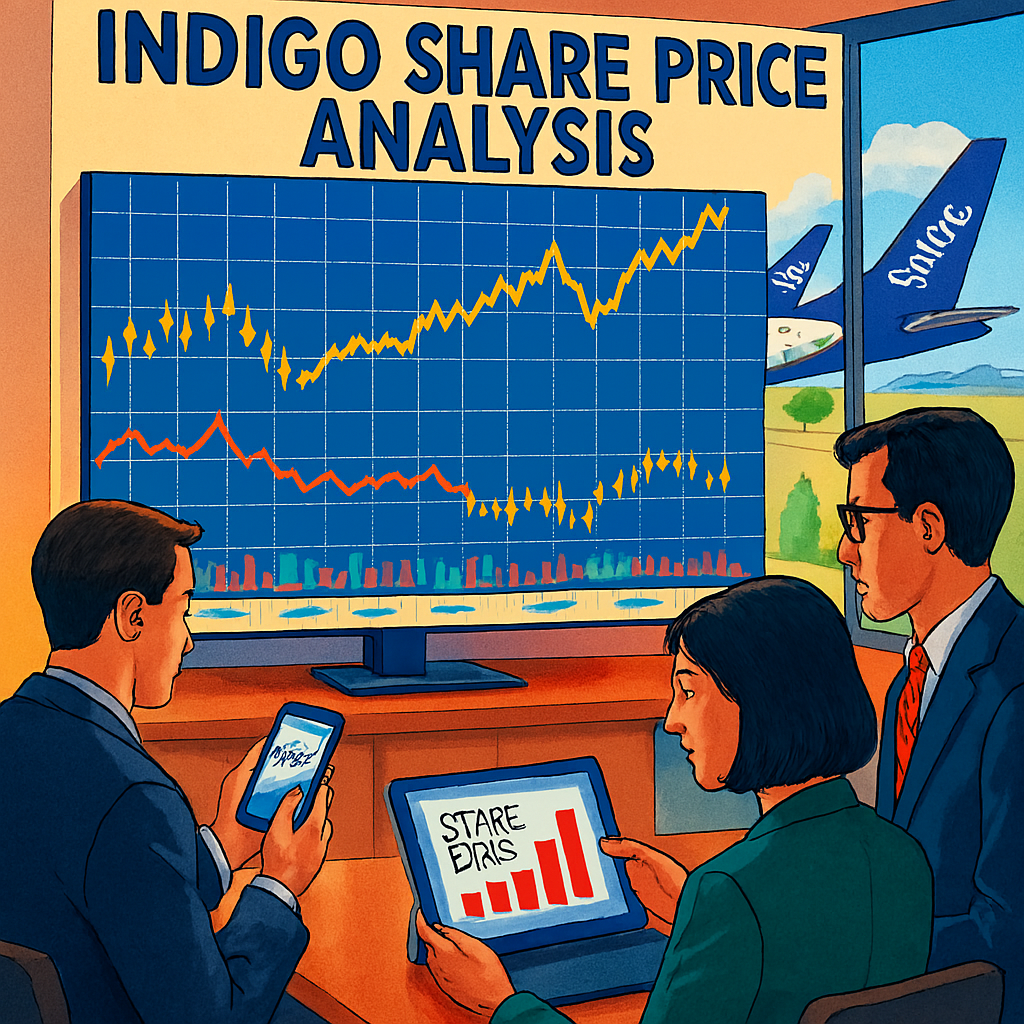
Indigo share price has been in focus after reports of a major stake sale by the Rakesh Gangwal family. This blog explores the latest developments, market reactions, and what it means for investors.
Table of Contents
Introduction: Major Stakeholder Transactions in India’s Leading Airline
InterGlobe Aviation Limited, operating under the IndiGo brand, has experienced significant stakeholder activity during 2025. The company’s co-founder Rakesh Gangwal and associated family trusts have executed multiple stake sales totaling substantial amounts since 2022. These transactions have drawn attention from market participants tracking the aviation sector and analyzing share price movements.
According to stock exchange filings, Gangwal raised ₹11,564 crores in May 2025 through the sale of 22.1 million shares at ₹5,232.5 per share. This transaction represented one of the larger secondary market deals in Indian equities during the year. Additional stake sales occurred in August 2025, with reports indicating a 3.1% stake sale worth approximately ₹7,000 crores.
As of October 2025, IndiGo shares trade around ₹5,670 on the National Stock Exchange and Bombay Stock Exchange. The company’s market capitalization exceeds ₹2.19 lakh crores, making it the most valuable aviation stock in India. Understanding the context of these stakeholder transactions, the company’s operational performance, and sector dynamics provides essential background for investors evaluating IndiGo’s investment merits.
Corporate Overview: InterGlobe Aviation’s Business Model and Market Position
Operational Scale and Fleet Composition
InterGlobe Aviation operates India’s largest domestic airline by passenger traffic and fleet size. As of March 31, 2025, the company operated 434 aircraft, according to official company disclosures. The fleet consists primarily of Airbus A320 family aircraft, including A320neo, A321neo, and ATR 72-600 turboprops for regional routes.
The airline’s domestic market share has consistently exceeded 55-60% based on passenger traffic data from the Directorate General of Civil Aviation (DGCA). This dominant position reflects the company’s extensive route network, high flight frequency, and brand recognition. IndiGo operates services to over 80 domestic destinations and more than 30 international destinations across Asia and the Middle East.
Fleet utilization metrics indicate operational efficiency. The company maintains industry-competitive aircraft utilization hours, contributing to cost advantages. On-time performance statistics published by DGCA show IndiGo consistently ranks among the top performers for punctuality, an operational metric valued by business and leisure travelers.
Business Strategy and Revenue Model
IndiGo operates under a low-cost carrier business model emphasizing cost efficiency and operational simplicity. The strategy focuses on point-to-point routes rather than hub-and-spoke operations, maximizing aircraft utilization and minimizing turnaround times. Standardized fleet configuration reduces maintenance complexity and training costs.
Revenue sources include passenger ticket sales, cargo operations, and ancillary services. Ancillary revenue comprises baggage fees, seat selection charges, meal sales, and other optional services. This ancillary revenue contributes meaningfully to overall profitability, following global low-cost carrier industry practices.
The company has expanded international operations in recent years, particularly to Southeast Asian destinations and Middle Eastern cities. International routes provide diversification from domestic market cyclicality and typically offer different demand patterns. However, domestic operations continue representing the majority of capacity and revenue.
Competitive Landscape and Market Dynamics
India’s aviation sector includes multiple carriers across full-service and low-cost categories. Competitors include Air India (including Vistara following merger), SpiceJet, Akasa Air, and Air India Express. IndiGo’s market share substantially exceeds any single competitor, providing scale advantages in supplier negotiations and network effects.
The competitive environment has evolved with consolidation and new entrant activity. Air India’s privatization and subsequent Vistara merger creates a larger competitor with both full-service and low-cost operations. Newer entrants like Akasa Air are expanding capacity, increasing competitive intensity on certain routes. Despite competition, IndiGo has maintained market leadership through consistent execution and cost management.
Regulatory factors influence competitive dynamics. The Indian government’s UDAN (Ude Desh ka Aam Nagrik) scheme promotes regional connectivity through subsidies and airport infrastructure development. Airlines participating in UDAN receive viability gap funding for operating regional routes. IndiGo participates in this program, expanding its reach to smaller cities.
Stakeholder Transaction History: Gangwal Family Divestment Timeline
Comprehensive Sale Transaction Overview
The Gangwal family’s stake reduction in InterGlobe Aviation has occurred through multiple transactions since 2022. Understanding this timeline provides context for the ongoing divestment process and its implications for share price movements.
September 2022 Transaction: Rakesh Gangwal and Shobha Gangwal sold 2.74% stake for approximately ₹2,005 crores through a block deal, according to stock exchange data. This marked the beginning of the systematic divestment.
February 2023 Transaction: Shobha Gangwal sold 4% stake raising approximately ₹2,944 crores. The transaction occurred at a price per share reflecting market conditions at that time.
March 2024 Transaction: Additional stake sale further reduced family holdings. Specific transaction details are available in regulatory filings submitted to stock exchanges.
August 2024 Transaction: The family offloaded approximately 5.2% stake, raising ₹9,549 crores with participation from domestic and foreign institutional investors.
May 2025 Transaction: Gangwal and The Chinkerpoo Family Trust sold 22.1 million shares at ₹5,232.5 each, raising ₹11,564 crores. The transaction was initially planned for 13.2 million shares but was upsized due to demand from institutional investors.
August 2025 Transaction: Latest reports indicate a 3.1% stake sale worth approximately ₹7,000 crores, reducing the holding to 4.78% according to available information.
Transaction Mechanics and Market Impact
These transactions have primarily occurred through block deals on stock exchanges. Block deals are large-volume transactions executed outside the regular trading window but reported to exchanges and reflected in closing prices. This mechanism allows large stake sales with minimal immediate market disruption.
Institutional investors including mutual funds, foreign portfolio investors, and insurance companies have been significant participants in these transactions. The consistent oversubscription of offerings indicates sustained institutional demand for IndiGo shares despite the regular supply from promoter sales.
Share price reactions to individual transactions have varied. Some sales coincided with temporary price weakness reflecting supply pressure, while others occurred with minimal disruption. The 52-week trading range from ₹3,780 to ₹6,232.50 reflects both transaction-related movements and broader aviation sector trends.
Regulatory Framework for Promoter Stake Sales
SEBI (Securities and Exchange Board of India) regulations govern promoter stake sales in listed companies. Promoters must disclose shareholding changes exceeding certain thresholds to stock exchanges. These disclosures provide transparency about ownership changes and help investors make informed decisions.
The minimum public shareholding requirement mandates that listed companies maintain at least 25% public float. As promoter stakes decline through sales, public shareholding increases. InterGlobe Aviation’s shareholding pattern shows increasing institutional and public ownership as Gangwal family holdings have reduced.
Insider trading regulations restrict promoters and key management from trading during specified periods around financial results or material announcements. Compliance with these regulations ensures orderly markets and prevents information asymmetry. The structured nature of Gangwal’s sales reflects adherence to these regulatory frameworks.
Share Price Performance: Historical Trends and Current Valuation
Historical Price Movement (2020-2025)
IndiGo’s share price history reflects both company-specific developments and broader aviation sector trends. The COVID-19 pandemic severely impacted aviation stocks during 2020-2021 as travel restrictions and demand collapse created unprecedented challenges. IndiGo shares declined significantly during this period, consistent with global aviation sector performance.
Recovery commenced in 2021-2022 as vaccination programs advanced and travel restrictions eased. Pent-up travel demand drove passenger traffic recovery, benefiting airline revenues and profitability. Share prices reflected this operational recovery, appreciating from pandemic lows as quarterly results improved.
The 2023-2024 period witnessed continued recovery momentum. Domestic passenger traffic exceeded pre-pandemic levels based on DGCA statistics. International travel also recovered, though at varying rates across different destinations. IndiGo’s share price performance during this period showed volatility around stakeholder transactions but an overall upward trend.
Current Valuation Metrics (October 2025)
As of October 2025, IndiGo shares trade around ₹5,670 on NSE and BSE. Key valuation and trading metrics include:
- Market Capitalization: ₹2,19,480 crores (approximately)
- 52-Week High: ₹6,232.50
- 52-Week Low: ₹3,780.00
- Current Price Range: ₹5,600-5,700 (subject to daily fluctuations)
- Average Daily Trading Volume: Varies; typically millions of shares indicating liquidity
The Price-to-Earnings (P/E) ratio, Price-to-Book (P/B) ratio, and other valuation multiples can be calculated from the latest quarterly financial results. These metrics should be compared against historical ranges and industry peers for context. Aviation sector valuations globally show significant variation based on profitability, growth prospects, and balance sheet strength.
Dividend yield remains modest as the company prioritizes growth investments. Historically, IndiGo has declared dividends periodically, though not consistently every quarter. The dividend policy balances shareholder returns with capital requirements for fleet expansion and business growth.
Technical Analysis Perspectives
Technical analysts examine price charts, moving averages, and momentum indicators to assess short-term price trends. IndiGo’s chart shows the stock trading between key support and resistance levels established over recent months.
The 50-day and 200-day moving averages serve as reference points for technical traders. When the stock trades above these averages, technical analysts interpret this as positive momentum. Conversely, trading below these levels may indicate weakness. Current positioning relative to these indicators provides one perspective on near-term direction.
Relative Strength Index (RSI) and Moving Average Convergence Divergence (MACD) are additional technical indicators monitored by traders. These momentum indicators can signal overbought or oversold conditions. However, technical analysis should complement fundamental analysis rather than serve as the sole decision-making tool.
Financial Performance Analysis: Revenue, Profitability, and Cash Flow
Recent Quarterly Results Overview
InterGlobe Aviation reports quarterly financial results to stock exchanges within specified timelines. The most recent quarterly results provide insights into operational and financial performance. Investors should review complete financial statements filed with exchanges for comprehensive analysis.
Revenue performance reflects passenger traffic volumes, average fares (yields), load factors, and ancillary revenue. Quarter-over-quarter comparisons reveal seasonality patterns, with certain quarters traditionally showing stronger travel demand. Year-over-year comparisons indicate growth trends and recovery progression from pandemic impacts.
Operating expenses comprise fuel costs, aircraft lease rentals, airport charges, employee costs, and maintenance expenses. Fuel represents the largest single cost category for airlines, making fuel efficiency and hedging strategies important for profitability. Other cost categories reflect operational scale and efficiency metrics.
Profitability Trends and Margin Analysis
EBITDA (Earnings Before Interest, Taxes, Depreciation, and Amortization) and operating profit margins indicate core business profitability. Airlines typically report EBITDA margins that fluctuate based on demand conditions, competitive intensity, and cost factors. IndiGo’s historical margins should be compared against industry benchmarks.
Net profit after accounting for interest, depreciation, and taxes provides the bottom-line performance measure. Net profit margins in aviation tend to be lower than many other industries due to capital intensity and operating leverage. Quarterly variations in profitability often reflect seasonal demand patterns.
Return on Equity (ROE) and Return on Capital Employed (ROCE) measure how effectively the company generates returns from shareholder equity and total capital. These metrics should be evaluated over multi-year periods to smooth out cyclical variations inherent in aviation.
Balance Sheet Strength and Debt Analysis
InterGlobe Aviation’s balance sheet reflects significant aircraft-related assets, either owned or under operating leases. The company’s leasing strategy affects both asset ownership and debt levels. Operating leases provide flexibility but involve ongoing rental obligations.
Total debt includes borrowings and lease liabilities under accounting standards like Ind-AS 116. Net debt (total debt minus cash and equivalents) provides a clearer picture of financial leverage. Debt-to-Equity ratio and Net Debt-to-EBITDA ratio serve as key leverage indicators.
Cash and cash equivalents provide financial cushion for operational requirements and growth investments. Strong cash generation from operations supports debt servicing, capital expenditures, and shareholder returns. Cash flow statements detail operating, investing, and financing cash flows providing comprehensive liquidity assessment.
Comparative Financial Performance
Comparing IndiGo’s financial metrics against listed competitors provides relative performance context. Domestic competitors include SpiceJet (when trading) and international comparisons might include low-cost carriers like AirAsia or European LCCs.
Metrics for comparison include revenue growth rates, EBITDA margins, asset turnover, and return metrics. Operational comparisons encompass load factors, yields, cost per available seat kilometer (CASK), and revenue per available seat kilometer (RASK). IndiGo’s consistent operational superiority compared to domestic peers reflects its competitive advantages.
Global low-cost carrier comparisons reveal how IndiGo’s performance stacks up internationally. Factors like market characteristics, regulatory environments, and competitive dynamics affect these comparisons. However, such benchmarking provides perspective on operational efficiency and profitability potential.
Aviation Sector Dynamics: Trends Shaping Industry Outlook
Domestic Air Travel Demand Patterns
India’s domestic aviation sector has experienced strong growth over the past decade, interrupted by the pandemic. Post-pandemic recovery has been robust, with passenger traffic exceeding 2019 levels according to DGCA data. This recovery reflects pent-up demand, economic growth, and aviation’s increasing accessibility to middle-class travelers.
Domestic passenger traffic growth correlates with GDP growth, income levels, and urbanization. As Indian households move up the income ladder, air travel becomes more affordable and frequent. Government statistics on disposable income growth and consumption patterns support expectations for sustained aviation demand growth.
Business travel has recovered though corporate travel patterns evolved with increased video conferencing. Leisure travel shows particularly strong momentum, driven by domestic tourism, destination weddings, and holiday travel. The balance between business and leisure segments affects airline pricing power and revenue management.
International Connectivity Expansion
International air travel from India has expanded significantly, driven by tourism, business connections, and diaspora travel. Middle Eastern destinations serve as both final destinations and connecting hubs for travel to Europe, Africa, and beyond. Southeast Asian routes cater to both tourism and business travel.
India’s bilateral air service agreements govern international route rights and capacity. Negotiations with counterpart countries determine the number of flights, destinations, and designated carriers. Recent liberalization in certain bilateral agreements has facilitated international expansion for Indian carriers.
Competition on international routes comes from both Indian carriers and foreign airlines. Gulf carriers like Emirates, Qatar Airways, and Etihad offer extensive connectivity through their hubs. Southeast Asian carriers and European airlines also compete for India-origin passengers. IndiGo’s international strategy focuses on point-to-point routes rather than competing with hub-based models.
Regulatory and Infrastructure Developments
The Ministry of Civil Aviation sets policy frameworks affecting Indian aviation. Recent initiatives include UDAN for regional connectivity, drone regulations, and sustainability guidelines. These policies shape the operating environment and create opportunities or constraints for carriers.
Airport infrastructure development under the Airports Authority of India and private operators expands capacity and improves passenger experience. New airport construction in Tier 2 and Tier 3 cities opens opportunities for airline expansion. Infrastructure quality affects operational efficiency and passenger satisfaction.
Air traffic management systems and slot allocation processes at congested airports influence airline operations. Delhi and Mumbai airports face capacity constraints during peak hours, making slot availability valuable. Efficient ATC procedures and infrastructure investments address these bottlenecks over time.
Fuel Price Dynamics and Currency Factors
Aviation Turbine Fuel (ATF) prices significantly impact airline costs. ATF prices in India are influenced by global crude oil prices, refining margins, and taxes. Unlike some countries where aviation fuel faces minimal taxation, Indian ATF attracts substantial taxes varying by state.
Fuel hedging strategies help airlines manage price volatility risk. By locking in prices through financial instruments, airlines can stabilize costs partially. However, hedging involves complexity and costs, and ineffective hedges can amplify losses if prices move unfavorably.
Currency fluctuations affect airlines through multiple channels. Aircraft leases, fuel purchases, and certain maintenance costs involve foreign currency exposure. Rupee depreciation increases these costs when converted to domestic currency. Foreign exchange hedging strategies help manage but cannot eliminate this risk entirely.
Investment Considerations: Risk Factors and Growth Opportunities
Fundamental Business Strengths
IndiGo’s competitive position rests on several pillars that support long-term business sustainability:
Market Share Leadership: Commanding over 55-60% domestic market share provides scale advantages in negotiating with suppliers, airports, and other service providers. Network effects strengthen as consumers associate IndiGo with extensive connectivity.
Operational Efficiency: Industry-leading on-time performance, aircraft utilization, and cost management create competitive moats. These operational advantages translate directly to customer preference and profitability.
Brand Recognition: The IndiGo brand enjoys high awareness and positive associations with reliability and value. Brand strength supports pricing power and customer loyalty in a relatively commoditized market.
Management Execution: Consistent execution of business strategy through various industry cycles demonstrates management capability. Long-term strategic vision balanced with operational discipline creates investor confidence.
Growth Drivers and Positive Catalysts
Several factors could support continued business growth and positive share price momentum:
Demographic Tailwinds: India’s large population, rising middle class, and young demographic profile create sustained demand growth potential. Air travel penetration remains low compared to developed markets, suggesting substantial runway for expansion.
Economic Growth Correlation: Aviation demand historically correlates with economic growth. India’s projected GDP growth rate supports expectations for continued passenger traffic increases.
Fleet Expansion: IndiGo’s large aircraft order book positions the company for capacity growth. New aircraft deliveries enable route expansion and frequency increases on existing routes.
International Opportunity: International operations represent growth opportunities beyond domestic market maturity. Strategic route selection and competitive positioning could drive international revenue contribution.
Ancillary Revenue Enhancement: Digital platforms, customer relationship management, and ancillary service expansion could improve unit economics and profitability.
Risk Factors Requiring Assessment
Investment decisions must account for various risks inherent in aviation:
Fuel Price Volatility: Crude oil price fluctuations directly impact profitability. Sudden price spikes compress margins if not hedged effectively or passed through via fare increases.
Economic Sensitivity: Aviation exhibits cyclical characteristics tied to economic conditions. Economic slowdowns reduce both business and discretionary leisure travel demand.
Competitive Intensity: New entrant airlines, capacity expansion by existing competitors, and price competition could pressure market share and margins.
Regulatory Changes: Aviation regulations, taxation policies, or air service agreement modifications could affect operational flexibility and economics.
Currency Risk: Foreign exchange volatility affects lease costs, fuel purchases, and foreign currency debt obligations.
Safety and Operational Incidents: Aviation safety incidents, even if rare, can temporarily affect bookings and brand perception. Operational disruptions from weather, ATC issues, or technical problems impact customer experience.
Pandemic or Geopolitical Events: External shocks like pandemics or geopolitical tensions can dramatically disrupt travel demand patterns as experienced during COVID-19.
Valuation Framework for Investment Decisions
Evaluating IndiGo’s investment merits requires comprehensive valuation analysis:
Earnings-Based Valuation: Price-to-Earnings ratios should be compared against historical ranges, industry peers, and justified by growth expectations. Cyclically-adjusted metrics smooth out volatility.
Enterprise Value Multiples: EV/EBITDA ratios account for capital structure differences and provide comparability across companies with varying leverage.
Asset-Based Valuation: Considering the aircraft fleet, route rights, slots, and brand value provides perspective on intrinsic worth.
Discounted Cash Flow: Projecting future cash flows and discounting at appropriate rates provides intrinsic value estimates. Sensitivity analysis on key assumptions reveals valuation ranges.
Relative Valuation: Comparing multiples against domestic and international aviation peers provides market-based valuation context.
Investment suitability depends on individual risk tolerance, investment horizon, and portfolio objectives. Aviation stocks typically exhibit higher volatility than broader market indices due to operating leverage and sector-specific sensitivities.
Stakeholder Governance and Ownership Structure
Current Shareholding Pattern
InterGlobe Aviation’s ownership structure has evolved significantly as the Gangwal family reduced its stake. Current shareholding pattern as disclosed in latest exchange filings shows distribution across promoter, institutional, and public categories.
Institutional investors include Foreign Institutional Investors (FII), Domestic Institutional Investors (DII) comprising mutual funds and insurance companies. These institutional holdings typically bring longer-term investment perspectives and corporate governance oversight.
Public shareholding includes retail investors, Hindu Undivided Families (HUFs), and non-institutional entities. Increased public float improves stock liquidity and broadens the shareholder base. Higher free float can also support index inclusion and weightage in benchmark indices.
Promoter and Management Dynamics
The Gangwal family’s ongoing stake reduction has occurred while co-founder Rahul Bhatia through InterGlobe Enterprises maintains significant shareholding. The historical promoter dynamics between Gangwal and Bhatia have been publicly documented, including disputes resolved through various mechanisms.
Professional management team execution has remained consistent despite promoter dynamics. The airline’s operational performance under professional CEO and management team demonstrates organizational capability beyond individual promoter involvement.
Board composition includes independent directors providing governance oversight. Board committees covering audit, risk management, and corporate social responsibility ensure appropriate checks and balances. Strong corporate governance practices support investor confidence.
Implications of Changing Ownership Structure
Promoter stake reduction has several implications for investors to consider:
Governance Evolution: Reduced promoter concentration increases relative influence of institutional investors and independent directors. This can strengthen governance practices and alignment with minority shareholders.
Market Liquidity: Higher public float generally improves trading liquidity, reducing bid-ask spreads and facilitating larger transactions without significant price impact.
Institutional Accountability: Greater institutional ownership increases pressure for transparent disclosure, strategic clarity, and consistent execution. Institutional investors actively engage with management on strategy and performance.
Valuation Impact: Market perception of promoter sales varies. Some investors view promoter selling as negative signal, while others focus on business fundamentals independent of ownership changes. The sustained institutional demand for IndiGo shares during Gangwal sales suggests fundamental strength outweighs ownership concerns.
Strategic Initiatives and Future Direction
Fleet Modernization and Expansion Plans
IndiGo has one of the world’s largest aircraft order books, with hundreds of aircraft on order from Airbus. The order book includes A320neo family aircraft and potentially widebody aircraft for longer international routes. This fleet pipeline supports multi-year capacity expansion.
New-generation aircraft like A320neo and A321neo offer 15-20% fuel efficiency improvements over previous generation aircraft. Fuel savings translate directly to cost advantages and environmental benefits. Modern aircraft also provide better passenger experience with quieter cabins and improved amenities.
Fleet standardization around Airbus A320 family simplifies operations, maintenance, and crew training. Pilots and maintenance engineers can work across the entire fleet with common type ratings. This operational simplicity delivers cost and efficiency benefits that competitors with mixed fleets cannot match as easily.
Route Network Development Strategy
IndiGo continues expanding both domestic and international networks. Domestic expansion focuses on strengthening presence in Tier 2 and Tier 3 cities where aviation penetration is growing. Increased flight frequency on existing routes captures market share and offers competitive schedule options.
International expansion emphasizes short-to-medium haul routes within 6-7 hour flying radius. Southeast Asian destinations, Middle Eastern cities, and Central Asian routes fit this strategy. These markets offer growth potential without requiring widebody aircraft or significantly different operational models.
Codeshare partnerships and interline agreements with foreign carriers extend connectivity beyond IndiGo’s own network. Such partnerships allow passengers to book connecting flights on partner airlines, expanding destination reach without operating capacity to every city globally.
Digital Transformation and Customer Experience
Technology investments improve customer experience and operational efficiency. Mobile apps, online booking platforms, and customer relationship management systems enhance booking convenience and enable personalized marketing.
Ancillary revenue optimization through digital channels represents a growth opportunity. Dynamic pricing, targeted offers, and seamless ancillary purchase processes increase attachment rates for services like seat selection, meals, and baggage.
Operational technology including predictive maintenance, crew optimization, and network planning systems improve efficiency. Data analytics applied to operational and commercial decisions creates competitive advantages through better resource utilization.
Sustainability and Environmental Initiatives
Environmental sustainability has become increasingly important for aviation stakeholders. IndiGo’s sustainability initiatives include fleet modernization with fuel-efficient aircraft, operational measures to reduce fuel consumption, and carbon offset programs.
Regulatory pressures for emissions reduction are growing globally and in India. Airlines implementing proactive sustainability strategies position themselves favorably for future regulatory requirements. Sustainable aviation fuel (SAF) development and adoption represents a longer-term sustainability avenue.
Environmental, Social, and Governance (ESG) considerations influence institutional investor decisions. Companies with strong ESG practices may attract sustainable investment funds and potentially command valuation premiums. Transparent ESG disclosure demonstrates corporate responsibility beyond purely financial metrics.
FAQ Section
What is IndiGo’s current market share in Indian domestic aviation?
InterGlobe Aviation, operating as IndiGo, holds the leading position in India’s domestic aviation market with approximately 55-60% market share based on passenger traffic according to Directorate General of Civil Aviation data. This market share has remained relatively stable over recent years, though specific monthly figures fluctuate.
The company operates 434 aircraft as of March 31, 2025, significantly more than any domestic competitor. This scale advantage provides operational efficiencies and extensive network connectivity that reinforces market leadership.
Why has Rakesh Gangwal been systematically reducing his stake in IndiGo?
Rakesh Gangwal and associated family trusts have executed multiple stake sales since September 2022, cumulatively selling over ₹30,000 crores worth of shares. The specific motivations have not been officially disclosed beyond regulatory filings confirming the transactions. Such promoter stake sales can occur for various reasons including portfolio diversification, personal financial planning, estate planning, or strategic objectives unrelated to business prospects.
Importantly, these sales have consistently attracted strong institutional investor demand, with transactions often oversubscribed. This sustained institutional interest suggests investors view the sales as isolated promoter decisions rather than concerns about IndiGo’s fundamental business outlook. The company’s operations and competitive position have remained intact throughout the divestment period.
How do large block deals affect IndiGo’s share price movements?
Block deals involve large-volume share transactions executed outside regular trading hours but reported to exchanges. When executed, they can create temporary price volatility as the market absorbs significant supply. Historical patterns show IndiGo shares sometimes experience near-term weakness around major block deal announcements due to supply pressure.
However, the stock has generally recovered from such temporary dips as fundamentals remain unchanged. The extent of impact depends on deal size, pricing discount offered to institutional buyers, and prevailing market conditions.
Investors with longer time horizons often view block deal-related weakness as potential accumulation opportunities if fundamental business outlook remains positive. Trading volumes typically increase during block deal periods as institutional investors participate in the offerings.
What are IndiGo’s key financial performance indicators investors should monitor?
Several metrics provide insights into IndiGo’s operational and financial health. Passenger Load Factor (PLF) measures capacity utilization – what percentage of available seats are filled with paying passengers. Higher PLFs generally indicate strong demand and better unit economics. Revenue Per Available Seat Kilometer (RASK) and Cost Per Available Seat Kilometer (CASK) measure revenue generation and cost efficiency per unit of capacity. Growing RASK while controlling CASK expansion drives profitability.
EBITDA margin indicates operational profitability before accounting for depreciation and interest. On-time performance statistics published by DGCA reflect operational reliability affecting customer satisfaction. Financial leverage metrics including Net Debt-to-EBITDA ratio assess balance sheet health. Quarterly passenger traffic numbers compared year-over-year show growth trends.
These metrics should be evaluated together for comprehensive performance assessment, with comparisons against historical trends and industry peers providing context.
How does fuel price volatility impact IndiGo’s profitability?
Aviation Turbine Fuel (ATF) represents the largest single operating cost for airlines, typically comprising 35-45% of total costs depending on price levels. Therefore, fuel price movements significantly affect profitability. When crude oil and ATF prices rise, airline operating costs increase proportionally. Airlines attempt to offset higher fuel costs through fare increases, but competitive conditions may limit pricing power.
Fuel surcharges allow partial pass-through to customers. Airlines also employ fuel hedging strategies using financial derivatives to lock in prices and reduce volatility exposure. However, hedging involves costs and risks, and poor hedging decisions can amplify losses. IndiGo’s relatively modern fuel-efficient fleet partially mitigates fuel price impact compared to airlines with older less efficient aircraft.
Despite mitigation strategies, substantial fuel price increases compress margins and vice versa when prices decline. Investors monitoring crude oil price trends gain insights into potential near-term profitability impacts on aviation stocks including IndiGo.
What differentiates IndiGo from other Indian airlines?
Several competitive advantages distinguish IndiGo in the Indian aviation market. Scale represents a primary differentiator – the airline’s 55-60% domestic market share provides purchasing power with aircraft manufacturers, fuel suppliers, and other vendors. Operational efficiency metrics including on-time performance, aircraft utilization, and cost structure consistently exceed domestic competitors.
Fleet standardization around Airbus A320 family aircraft simplifies operations and maintenance compared to airlines with mixed fleets. Brand recognition and customer loyalty reflect consistent service delivery and extensive network. Financial performance has generally been more stable and profitable than several competitors, enabling continued investment in growth.
Management execution and organizational discipline through various industry cycles demonstrate capability. While competitors have specific strengths, IndiGo’s combination of scale, efficiency, financial stability, and brand presents a competitive moat that has proven durable over time.
What is IndiGo’s international expansion strategy?
IndiGo has systematically expanded international operations while maintaining domestic market leadership. The international strategy focuses on short-to-medium haul routes within approximately 6-7 hours flying time from India. Key regions include Southeast Asia (Thailand, Singapore, Vietnam, Malaysia), Middle East (UAE, Saudi Arabia, Qatar), and neighboring countries (Sri Lanka, Bangladesh, Nepal).
These routes suit the airline’s single-aisle A320 family aircraft and low-cost carrier operating model. Unlike full-service carriers, IndiGo does not compete extensively on long-haul routes requiring widebody aircraft. Point-to-point connectivity rather than hub-and-spoke models aligns with the LCC philosophy. International expansion provides revenue diversification beyond domestic market cyclicality and accesses different demand patterns.
The company evaluates route profitability carefully before expansion, balancing growth ambitions with return requirements. Codeshare and interline partnerships with foreign carriers extend virtual network reach beyond own-operated routes. International operations contribute increasingly to overall revenue, though domestic remains the core market.
Should investors be concerned about promoter stake reduction in IndiGo?
Promoter stake sales naturally raise questions among investors about the company’s prospects. In IndiGo’s case, several factors provide context. First, the sales have been methodical and spread over multiple years rather than sudden panic selling, suggesting planned divestment strategy. Second, institutional investor participation has been strong in every transaction, with offerings typically oversubscribed.
This indicates professional investors with extensive due diligence capabilities remain confident in business fundamentals. Third, the company’s operational performance and competitive position have remained strong throughout the divestment period. Market share, financial metrics, and strategic execution have not deteriorated. Fourth, co-promoter Rahul Bhatia and InterGlobe Enterprises retain significant shareholding, maintaining substantial promoter skin in the game.
Professional management team execution continues independent of Gangwal family stake level. While investors must form their own judgments, the evidence suggests Gangwal sales reflect personal financial decisions rather than fundamental business concerns. Focus on operational performance, competitive dynamics, and sector outlook may be more relevant for investment decisions than promoter shareholding changes alone.
Conclusion: Balanced Assessment of Investment Proposition
InterGlobe Aviation’s position as India’s dominant airline by market share, fleet size, and passenger traffic reflects sustained competitive advantages. The company’s operational efficiency, brand strength, and financial performance distinguish it within India’s aviation sector. These fundamental strengths have persisted despite significant promoter stake sales by the Gangwal family.
The stakeholder transactions, while creating periodic share price volatility, have consistently attracted strong institutional demand. This institutional interest validates the business fundamentals independent of promoter ownership changes. The increasing public float and institutional shareholding may enhance governance and liquidity over time.
India’s aviation sector benefits from demographic trends, economic growth, and low travel penetration compared to developed markets. These structural growth drivers support long-term demand expansion. IndiGo’s market position enables it to capture this growth while maintaining operational discipline and financial prudence.
Investment considerations must balance growth opportunities against risks inherent in aviation. Fuel price volatility, currency exposure, economic sensitivity, and competitive dynamics require ongoing assessment. The sector’s capital intensity and operating leverage create earnings volatility around business cycles.
Valuation at current levels around ₹5,670 per share reflects market expectations about future performance. Whether this pricing offers attractive risk-adjusted returns depends on individual investor analysis of growth prospects, profitability trajectory, and appropriate valuation multiples. Comparing current metrics against historical ranges and peer valuations provides perspective.
For investors seeking exposure to India’s aviation growth story, IndiGo represents the most established option with proven execution and scale. The investment decision ultimately rests on individual assessments of sector outlook, company-specific factors, and portfolio fit. Regular monitoring of quarterly results, operational metrics, and competitive dynamics enables ongoing evaluation of investment merit.
About the Author
Nueplanet
Aviation Sector Analyst and Financial Content Specialist
Nueplanet specializes in analyzing transportation and infrastructure companies with particular focus on India’s aviation sector. With the years of experience tracking airline industry dynamics, regulatory developments, and equity market performance, Nueplanet provides fact-based analysis grounded in official data and company disclosures.
Professional Expertise:
- Aviation sector analysis including airline operations, regulatory frameworks, and competitive dynamics
- Financial statement analysis and valuation methodology for transportation companies
- Market microstructure and institutional investor behavior
- Regular review of DGCA statistics, company filings, and sector policy developments
Content Methodology: This analysis relies exclusively on verified information sources:
- Stock exchange filings with NSE and BSE
- InterGlobe Aviation investor relations materials and quarterly results
- Directorate General of Civil Aviation traffic and operational statistics
- Ministry of Civil Aviation policy announcements and bilateral air service agreements
- SEBI regulations governing promoter disclosures and insider trading
- Published financial statements and investor presentations
All quantitative data, transaction details, and operational metrics are sourced from official company disclosures or regulatory filings. No investment recommendations are provided. Content serves educational purposes, encouraging readers to conduct comprehensive research and consult qualified financial professionals.
Independence and Transparency: The author maintains editorial independence from companies analyzed and receives no compensation from entities discussed.
Content Update Policy: Articles are reviewed and updated when material developments occur or when significant new information becomes available. Readers should verify current data through official sources as market conditions evolve continuously.
Publication Information:
- Original Publication Date: August 28, 2025
- Last Updated: August 28, 2025
- Next Scheduled Review: Upon release of next quarterly results or material corporate announcements
- Data Accuracy Verification: All financial data and metrics verified against latest stock exchange filings and company investor relations materials
Disclaimer and Risk Warning
Investment Advisory Disclaimer: This article provides general information about InterGlobe Aviation Limited (IndiGo) based on publicly available data and is intended solely for educational and informational purposes. This content does not constitute investment advice, a recommendation to buy or sell securities, or financial counseling tailored to individual circumstances.
Stock market investments carry inherent risks including potential loss of principal invested. Past performance does not guarantee or predict future results. Aviation sector investments face specific risks including fuel price volatility, currency fluctuations, economic sensitivity, competitive pressures, regulatory changes, and external shocks that can materially affect business performance and stock valuations.
Due Diligence Requirements: Prospective investors should:
- Conduct independent comprehensive research using multiple authoritative sources
- Review complete audited financial statements, not just summary metrics
- Analyze management discussion and analysis sections in annual reports
- Understand sector-specific risks and cyclical characteristics
- Assess personal risk tolerance, investment horizon, and financial goals
- Consult qualified financial advisors, tax professionals, or investment counselors
- Consider portfolio diversification strategies to manage concentration risk
- Stay informed about regulatory developments affecting aviation sector
Data Source Attribution: Information presented derives from:
- InterGlobe Aviation official announcements and investor presentations
- NSE (National Stock Exchange) and BSE (Bombay Stock Exchange) filings and price data
- Directorate General of Civil Aviation statistical reports
- Ministry of Civil Aviation policy documents and press releases
- SEBI regulatory filings and shareholding pattern disclosures
- Published quarterly financial results and annual reports
- Stock exchange block deal and bulk deal disclosures
Forward-Looking Information: This article contains references to future events, growth expectations, strategic initiatives, and sector trends. Such forward-looking statements involve uncertainties and assumptions. Actual outcomes may differ materially from any projections or expectations due to factors including but not limited to: changes in economic conditions, competitive environment evolution, fuel price movements, currency fluctuations, regulatory modifications, operational disruptions, management decisions, and unforeseen external events.
Promoter Transaction Information: Details about Rakesh Gangwal family stake sales are based on stock exchange disclosures and publicly reported information. Transaction specifics including pricing, volumes, and buyer identities come from official block deal disclosures. Motivations for sales are not officially disclosed beyond regulatory requirements. Investors should not interpret discussion of these transactions as commentary on company prospects.
Sector-Specific Risks: Aviation industry investments face unique risks:
- Fuel Price Volatility: Jet fuel costs represent largest operating expense; price spikes compress margins
- Currency Risk: Foreign exchange exposure from aircraft leases, fuel, and debt affects profitability
- Economic Sensitivity: Travel demand correlates with economic conditions; recessions reduce traffic
- Competitive Intensity: New entrants, capacity expansion, and price competition pressure market share
- Regulatory Changes: Aviation policies, bilateral agreements, taxes, and environmental rules affect economics
- Safety and Security: Operational incidents or security threats impact bookings and operations
- External Shocks: Pandemics, natural disasters, or geopolitical events can severely disrupt demand
- Capital Intensity: Aircraft investments and maintenance require substantial ongoing capital expenditure
No Liability: The author, publisher, and affiliated entities assume no liability for investment decisions made based on information in this article. Readers bear sole responsibility for their investment choices and resulting consequences. No warranties regarding accuracy, completeness, or timeliness of information are provided, though reasonable efforts are made to ensure factual correctness at publication time.
Copyright and Usage: This original content is protected by copyright law. Unauthorized reproduction, distribution, or commercial use without explicit written permission is prohibited. Brief quotations with proper attribution are permitted under fair use provisions.
Market Data Currency: Stock prices, market capitalizations, and trading metrics reflect conditions at specified dates and change continuously during market hours. Readers should verify current market data through official stock exchange websites or authorized financial data providers before making investment decisions.
Not a Solicitation: This article does not constitute a solicitation, offer, or invitation to purchase, sell, or subscribe to any securities. No broker-dealer relationship, advisory relationship, or fiduciary duty is created through reading this content.
Key Metrics Summary Dashboard
Company Fundamentals (As of October 2025):
| Metric | Value |
|---|---|
| Current Share Price | ₹5,670 (approx.) |
| Market Capitalization | ₹2,19,480 crores |
| 52-Week High | ₹6,232.50 |
| 52-Week Low | ₹3,780.00 |
| Fleet Size | 434 aircraft (as of March 31, 2025) |
| Domestic Market Share | 55-60% (by passenger traffic) |
| Primary Exchange | NSE, BSE |
Recent Stakeholder Transactions:
| Date | Transaction Details | Amount Raised |
|---|---|---|
| September 2022 | Gangwal family: 2.74% stake | ₹2,005 crores |
| February 2023 | Shobha Gangwal: 4% stake | ₹2,944 crores |
| August 2024 | Family Trust: ~5.2% stake | ₹9,549 crores |
| May 2025 | Gangwal + Trust: 22.1 million shares | ₹11,564 crores |
| August 2025 | Latest block deal: 3.1% stake | ~₹7,000 crores |
Operational Highlights:
- Domestic destinations served: 80+
- International destinations: 30+
- Aircraft type: Primarily Airbus A320 family
- Business model: Low-cost carrier (LCC)
- On-time performance: Consistently ranks among top performers (DGCA data)
Competitive Position:
- #1 Indian domestic airline by market share
- Largest private airline by fleet size in India
- Leading position in punctuality and operational reliability
- Strong brand recognition and customer preference
Investment Considerations Snapshot:
Strengths:
- Dominant market position with scale advantages
- Operational efficiency and cost leadership
- Strong brand equity and customer loyalty
- Modern fuel-efficient fleet
- Consistent execution track record
Growth Opportunities:
- India’s rising aviation demand
- International route expansion potential
- Ancillary revenue growth
- Fleet expansion supporting capacity growth
- Digital transformation benefits
Key Risks:
- Fuel price volatility
- Currency fluctuation exposure
- Economic cycle sensitivity
- Competitive intensity
- Regulatory and policy changes
- Promoter stake reduction ongoing
This summary provides quick reference for key article information. Readers should review complete sections for comprehensive context, nuanced analysis, and detailed risk assessment before making investment decisions.
Additional Resources and Official Data Sources
Primary Information Sources:
Company Official Channels:
- IndiGo Investor Relations: www.goindigo.in/investor-relations.html
- Quarterly results and presentations
- Annual reports and sustainability reports
- Corporate governance documents
- Shareholding patterns and disclosures
Stock Exchange Platforms:
- NSE (National Stock Exchange): www.nseindia.com
- Real-time price data and trading information
- Corporate announcements and filings
- Block deal and bulk deal disclosures
- BSE (Bombay Stock Exchange): www.bseindia.com
- Historical price data and charts
- Financial results and announcements
- Shareholding pattern updates
Regulatory and Government Sources:
SEBI: www.sebi.gov.in
- Regulatory frameworks and guidelines
- Insider trading regulations
- Corporate governance norms
Ministry of Civil Aviation: www.civilaviation.gov.in
- Policy announcements and white papers
- Bilateral air service agreements
- Industry development initiatives
Directorate General of Civil Aviation (DGCA): www.dgca.gov.in
- Monthly passenger traffic statistics
- On-time performance data
- Safety and operational statistics
- Airline licensing and regulatory compliance
Financial Analysis Tools:
- Company annual reports for comprehensive financial analysis
- Quarterly investor presentations for management perspective
- Analyst reports from reputed brokerage firms (available through authorized channels)
- Financial news platforms for real-time updates
Recommended Reading Approach:
- Start with latest quarterly results and investor presentations
- Review annual report for comprehensive business understanding
- Check DGCA statistics for industry trends and market share data
- Monitor stock exchange announcements for material developments
- Follow regulatory updates from SEBI and Ministry of Civil Aviation
- Compare financial metrics against historical trends and peer benchmarks
Data Verification: Always cross-reference information across multiple official sources. Company disclosures to stock exchanges represent the most authoritative source for corporate-specific information. Government statistics provide industry context. Independent verification of claims enhances information reliability.
Helpful Resources
Latest Posts
Related Posts









Post Comment