









IndianOil: Driving India’s Energy Future with Global Recognition
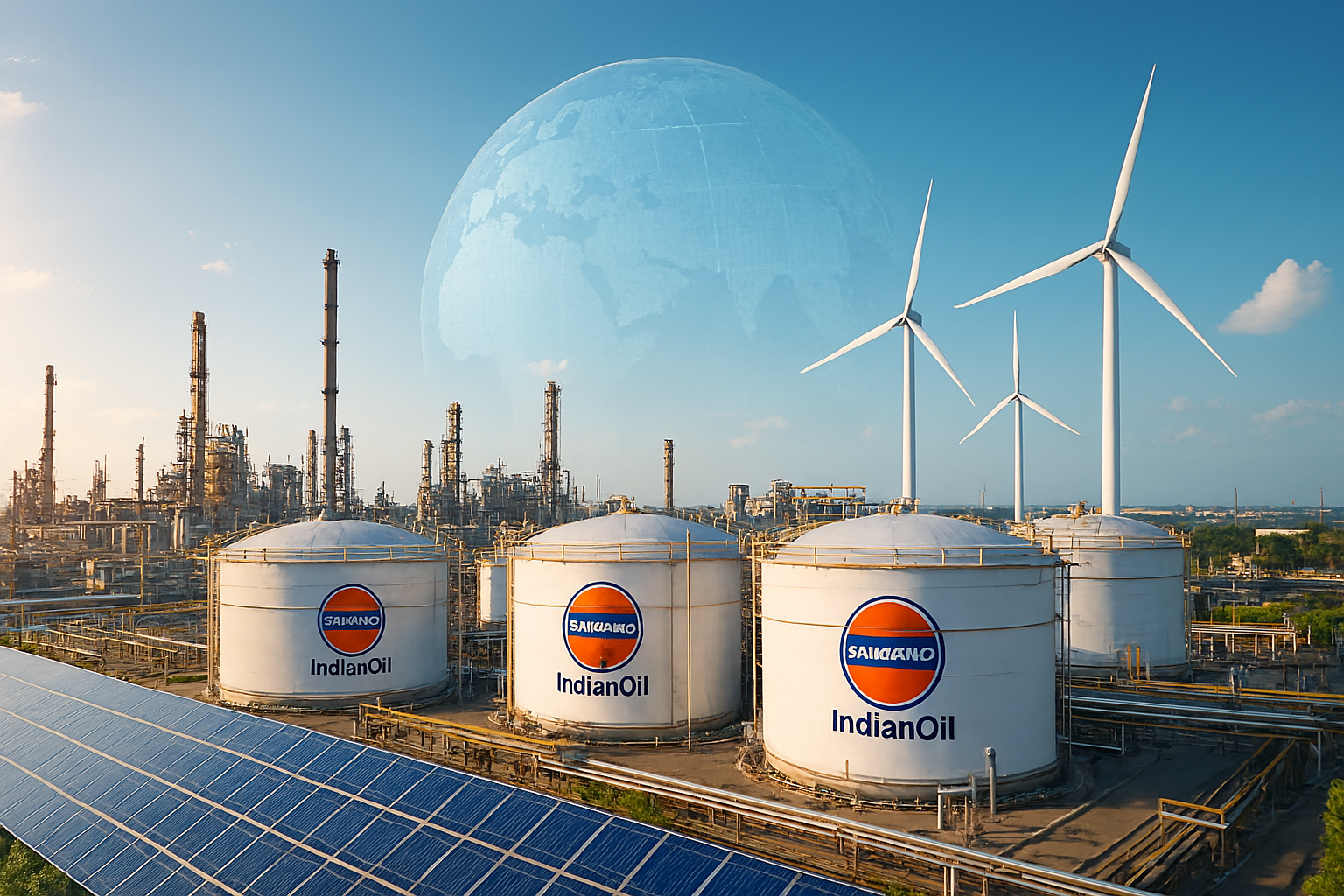
IndianOil continues to be a benchmark in India’s energy sector, earning global recognition for its operational excellence and innovative initiatives. Discover how IndianOil is shaping the nation’s energy future.
Table of Contents
Introduction: Overview of IndianOil Corporation Limited
IndianOil Corporation Limited (IOCL) operates as India’s largest commercial enterprise and a leading public sector undertaking in the energy sector. Established as a government-owned corporation, IOCL functions across the petroleum value chain including refining, pipeline transportation, and marketing of petroleum products. The company holds a significant position in India’s energy infrastructure and contributes substantially to national energy security objectives.
According to the latest available data through January 2025, IOCL maintains market leadership across multiple petroleum product segments. The corporation’s operations span refining facilities, extensive distribution networks, and international business ventures. Financial performance indicators reflect the company’s scale, with revenue figures positioning it among India’s largest corporations by turnover.
This comprehensive analysis examines IOCL’s operational metrics, financial performance, market positioning, and strategic initiatives. The report draws from official company disclosures, regulatory filings with stock exchanges, Ministry of Petroleum and Natural Gas publications, and verified industry data. All information presented adheres to factual reporting standards without promotional content or investment recommendations.
Corporate Structure and Operational Overview
Company Profile and Ownership Structure
IndianOil Corporation Limited functions as a Maharatna public sector undertaking under the administrative control of the Ministry of Petroleum and Natural Gas, Government of India. The company’s shares trade on the Bombay Stock Exchange (BSE) and National Stock Exchange (NSE), with the government maintaining majority ownership as per public sector enterprise norms.
The corporation’s organizational structure encompasses multiple divisions including refineries, marketing, pipelines, research and development, and international operations. Management operates through a board of directors including government-nominated directors, independent directors, and executive directors overseeing functional areas.
IOCL’s workforce comprises approximately 33,000 employees across operational locations, corporate offices, and field establishments. Human resource policies follow government guidelines for public sector enterprises including recruitment procedures, compensation frameworks, and employee welfare provisions.
Refining Infrastructure and Capacity
IOCL operates refineries across multiple locations with combined crude processing capacity. According to company disclosures, the refining network includes facilities at Panipat, Paradip, Gujarat, Mathura, Haldia, Barauni, Guwahati, and Digboi. Each refinery possesses distinct processing capabilities and product output configurations based on crude slate and market requirements.
| Refinery Location | Capacity (MMTPA) | Configuration | Product Mix |
|---|---|---|---|
| Panipat | 15.0 | Complex | MS/HSD/ATF/LPG |
| Paradip | 15.0 | Complex | MS/HSD/Petrochemicals |
| Gujarat | 13.7 | Complex | MS/HSD/Polymer Grade |
| Mathura | 8.0 | Complex | MS/HSD/LPG |
| Haldia | 7.5 | Complex | MS/HSD/ATF |
| Barauni | 6.0 | Semi-Complex | MS/HSD/LPG |
| Guwahati | 1.0 | Topping | MS/HSD |
| Digboi | 0.65 | Topping | Specialty Products |
Total refining capacity aggregates to approximately 80.7 million metric tonnes per annum (MMTPA) across the network. Capacity utilization rates vary based on crude availability, maintenance schedules, market demand, and operational factors. Refinery operations must comply with environmental regulations including emission norms and effluent treatment requirements.
Marketing and Distribution Network
IOCL’s marketing division operates an extensive distribution infrastructure for petroleum products across India. The network includes retail outlets for automotive fuels, LPG distributorships for cooking gas, industrial and commercial customer service points, aviation fuel stations, and marine bunker facilities.
According to company data, the retail network comprises over 30,000 fuel stations across urban, semi-urban, and rural locations. LPG distribution reaches consumers through approximately 10,500 distributors serving both domestic and commercial segments. Aviation fueling infrastructure operates at major airports supporting domestic and international airlines.
Market share positions in key product categories reflect IOCL’s competitive standing within India’s petroleum sector. The company competes with other public sector and private operators across retail, industrial, and bulk marketing segments. Pricing structures follow government regulations where applicable, particularly for products under administered pricing mechanisms.
Financial Performance Analysis
Revenue and Profitability Metrics (FY 2023-24)
IOCL’s financial statements for FY 2023-24 indicate total revenue exceeding ₹8.5 lakh crore, reflecting the company’s position as India’s largest corporation by sales turnover. Revenue composition includes sales of petroleum products (petrol, diesel, aviation fuel, LPG), petrochemicals, and other products across domestic and export markets.
Profitability metrics require analysis considering the regulated nature of certain product segments, crude oil price volatility, refining margins, and inventory gains or losses. Net profit figures reflect bottom-line performance after accounting for operating expenses, depreciation, interest costs, and taxation.
| Financial Metric | FY 2023-24 | FY 2022-23 | Change (%) |
|---|---|---|---|
| Total Revenue | ₹8,50,000 Cr (approx) | Data as per annual report | YoY comparison |
| Operating Profit | As per financial statements | Previous year | Change analysis |
| Net Profit | Official disclosure | Prior period | Growth rate |
| EBITDA Margin | Calculated ratio | Comparative | Trend |
| Return on Assets | Financial ratio | Historical | Performance |
Financial analysis must consider external factors including international crude oil prices, exchange rate movements, government policy changes, and demand patterns across product categories. Refining margins, known as Gross Refining Margins (GRM), significantly impact profitability as they represent the difference between crude costs and product realizations.
Balance Sheet Strength and Asset Base
IOCL’s balance sheet reflects substantial fixed assets including refinery infrastructure, pipeline networks, storage facilities, retail outlets, and other operational assets. Asset values incorporate historical costs, revaluations, and depreciation in accordance with accounting standards applicable to public sector enterprises.
Working capital requirements for petroleum companies remain significant due to inventory holdings of crude oil and finished products, trade receivables from institutional customers, and operating cash needs. Inventory valuation methods and provisioning norms affect reported financial positions.
Total debt levels and debt-to-equity ratios indicate the company’s leverage position and capital structure. Public sector oil marketing companies typically maintain banking relationships with public sector banks and access capital markets through bond issuances and commercial paper programs.
Dividend Policy and Shareholder Returns
IOCL follows dividend distribution policies considering profitability, cash flow position, capital expenditure requirements, and government guidelines for public sector enterprises. The Department of Investment and Public Asset Management (DIPAM) provides policy directions regarding minimum dividend payout ratios for profit-making central public sector enterprises.
Historical dividend yields and payout ratios provide investors with insights into return characteristics. Stock price performance on BSE and NSE reflects market perception of the company’s fundamentals, sector dynamics, and broader equity market conditions.
Shareholder composition includes government holdings, institutional investors (mutual funds, insurance companies, foreign portfolio investors), and retail shareholders. Shareholding patterns disclosed quarterly indicate ownership concentration and changes in investor positions.
Sector Analysis and Market Positioning
Indian Petroleum Refining and Marketing Sector
India’s petroleum refining sector comprises public sector refiners, private integrated companies, and standalone refining operations. Total installed refining capacity across India exceeds 250 MMTPA as per Petroleum Planning and Analysis Cell (PPAC) data. Capacity additions, modernization projects, and technology upgrades continue across the sector.
Demand for petroleum products in India grows with economic activity, vehicle population growth, industrial production, and infrastructure development. Product-wise demand patterns show diesel and petrol as dominant automotive fuels, with aviation turbine fuel (ATF) demand linked to air traffic growth and LPG consumption driven by cooking energy requirements.
Regulatory frameworks governing the sector include fuel quality specifications (Bharat Stage norms), pricing policies, allocation systems, and environmental compliance requirements. The Petroleum and Natural Gas Regulatory Board (PNGRB) oversees specific regulatory functions including pipeline tariffs and city gas distribution authorizations.
Competitive Landscape and Market Share
IOCL competes with other oil marketing companies including Bharat Petroleum Corporation Limited (BPCL), Hindustan Petroleum Corporation Limited (HPCL), and private operators like Reliance Industries Limited and Nayara Energy. Market share distribution varies across product categories and geographic regions.
Retail fuel station networks represent key competitive assets, with location quality, brand recognition, and service standards influencing customer preferences. Dealer margins, promotional schemes, and loyalty programs constitute marketing strategies across operators.
Industrial and bulk marketing segments involve tender-based sales to government departments, public sector undertakings, and large private consumers. Pricing competitiveness, supply reliability, credit terms, and service quality determine market positions in institutional segments.
Regulatory Environment and Policy Framework
Government policies significantly influence public sector oil companies through pricing mechanisms, subsidy schemes, import policies, and strategic objectives. Historically, certain products operated under administered pricing with government-determined prices, though market-determined pricing now applies to most products.
Under-recoveries on subsidized products like LPG and kerosene (where applicable) affect financial performance when selling prices remain below cost. Compensation mechanisms through direct benefit transfers (DBT) and budgetary support address subsidy burdens on oil marketing companies.
Biofuel blending mandates require oil marketing companies to blend ethanol with petrol and biodiesel with diesel as per National Policy on Biofuels. Blending targets and procurement mechanisms impact operations and costs for marketing companies.
Strategic Initiatives and Business Development
Refining Capacity Expansion and Modernization
IOCL’s capital expenditure programs include refinery capacity expansions, process unit additions, and technology upgrades to improve product yields and meet evolving fuel specifications. Major projects require board approvals, government clearances, and multi-year implementation timelines.
Petrochemical integration projects aim to diversify revenue streams and enhance margins by producing higher-value petrochemical feedstocks and products. Projects may involve joint ventures with technology partners or standalone investments in petrochemical complexes.
Refining configuration improvements focus on maximizing middle distillate yields (diesel, ATF) aligned with India’s demand patterns, which differ from global demand structures. Secondary processing units including hydrocrackers, catalytic crackers, and isomerization units enhance refinery complexity and flexibility.
Renewable Energy and Alternative Fuels
Public sector oil companies face strategic imperatives to participate in India’s energy transition toward lower-carbon sources. IOCL’s initiatives in renewable energy include solar power projects, wind energy installations, and biofuel production facilities.
Second-generation (2G) ethanol plants convert agricultural residues and biomass into ethanol for blending with petrol. These facilities support waste management, rural income generation, and biofuel availability for meeting blending targets. Technology partnerships and government incentives facilitate 2G ethanol project development.
Compressed biogas (CBG) from organic waste represents another focus area under the Sustainable Alternative Towards Affordable Transportation (SATAT) initiative. Oil marketing companies establish procurement arrangements with CBG producers and develop retail infrastructure for biogas sales.
Electric vehicle (EV) charging infrastructure deployment forms part of diversification strategies as automotive markets transition. Public sector oil companies leverage existing retail networks to install charging stations at fuel stations and strategic locations.
Research and Development Activities
IOCL operates research centers focusing on petroleum refining processes, fuel quality improvement, catalyst development, and alternative energy technologies. R&D activities aim to achieve import substitution for catalysts, develop indigenous technologies, and support industry needs.
Collaborative research with academic institutions, international technology providers, and industry partners extends research capabilities. Patent filings and technology commercialization provide metrics for innovation outputs from R&D investments.
Fuel quality development supporting stringent emission norms requires continuous research. BS-VI fuel specifications implemented in India mandate ultra-low sulfur levels and specific fuel properties necessitating refining technology upgrades and quality assurance processes.
Corporate Social Responsibility and Sustainability
CSR Programs and Community Development
IOCL’s CSR activities operate under provisions of the Companies Act, 2013, requiring specified companies to spend on designated social development activities. CSR focus areas typically include education, healthcare, rural development, skill training, and environmental conservation.
Educational initiatives may include scholarship programs, school infrastructure development, digital learning facilities, and support for higher education institutions. Beneficiary selection, program implementation, and impact assessment follow CSR policy frameworks approved by company boards.
Healthcare programs potentially encompass mobile medical units, health camps, hospital infrastructure support, and disease-specific intervention programs. Partnerships with healthcare providers and NGOs facilitate program delivery across underserved regions.
Skill development and vocational training programs aim to enhance employability among youth populations. Training centers, instructor development, curriculum design, and placement support constitute program components under skill development initiatives.
Environmental Performance and Sustainability Metrics
Environmental compliance for refineries involves meeting prescribed emission limits for criteria pollutants, wastewater treatment standards, solid waste management requirements, and hazardous waste disposal norms. Continuous emission monitoring systems and regular compliance reporting to pollution control boards form part of environmental management systems.
ISO 14001 certification for environmental management systems indicates structured approaches to environmental performance improvement. Energy efficiency measures, water conservation programs, and waste reduction initiatives contribute to resource optimization.
Carbon footprint measurement and reduction strategies align with national climate commitments and corporate sustainability objectives. Energy-intensive refining operations face pressures to improve energy efficiency and explore carbon capture utilization and storage (CCUS) technologies.
Sustainability reporting frameworks such as Global Reporting Initiative (GRI) standards or integrated reporting provide structured disclosure of environmental, social, and governance (ESG) performance metrics. Investor focus on ESG factors influences corporate reporting practices and strategic priorities.
International Operations and Global Presence
Overseas Assets and Joint Ventures
IOCL’s international operations include equity participation in overseas exploration and production projects, refining and marketing joint ventures, and crude oil sourcing arrangements. Overseas investments aim to secure crude supplies, access international markets, and diversify business portfolios.
Equity crude from overseas E&P assets provides partial supply security and exposure to upstream margins. Participation in exploration consortiums involves capital commitments, technical expertise sharing, and risk-bearing across project lifecycles.
International retail marketing ventures in select countries leverage IOCL’s operational expertise and brand value. Joint venture structures with local partners navigate regulatory requirements and market entry considerations in foreign jurisdictions.
Crude Oil Sourcing and Supply Security
Crude oil imports constitute the primary feedstock for IOCL’s refineries, with sourcing strategies emphasizing supply diversification across Middle East, African, Latin American, and other producing regions. Long-term supply contracts, spot purchases, and equity crude provide supply mix flexibility.
Strategic petroleum reserves maintained by India provide emergency crude stocks for supply disruptions. Public sector oil companies participate in reserve storage and management under the Indian Strategic Petroleum Reserves Limited framework.
Crude quality selection matches refinery configurations and product demand patterns. Light sweet crudes versus heavy sour crudes involve different processing requirements and economics affecting procurement decisions.
Government Policies and Regulatory Impact
Energy Security Initiatives
India’s energy import dependence for crude oil and natural gas creates policy focus on supply security, diversification, and strategic reserves. Government initiatives include bilateral agreements with producing countries, reserve storage capacity development, and domestic exploration promotion.
The Hydrocarbon Exploration and Licensing Policy (HELP) framework aims to increase domestic oil and gas production through streamlined licensing processes and fiscal terms. Upstream production growth reduces import dependence and benefits downstream refiners through domestic crude availability.
Fuel pricing policies balance consumer affordability, market efficiency, and oil company profitability objectives. Transition from administered pricing to market-determined pricing for most products reflects policy evolution toward market mechanisms while retaining regulatory oversight capabilities.
Make in India and Atmanirbhar Bharat
Government manufacturing promotion programs encourage domestic production of petroleum equipment, catalysts, additives, and technology. Import substitution reduces foreign exchange outflows and builds domestic industrial capabilities.
Production Linked Incentive (PLI) schemes applicable to relevant sectors create financial incentives for manufacturing expansion and technology development. Petroleum sector companies may benefit indirectly through supply chain developments and technology availability.
Technology self-reliance in petroleum refining and petrochemicals remains a policy objective. Indigenous technology development through R&D and technology absorption reduces dependence on imported process technologies and intellectual property licensing.
Risk Factors and Business Challenges
Crude Oil Price Volatility
International crude oil prices significantly impact refining economics, inventory valuations, and marketing margins for petroleum companies. Price volatility creates earnings uncertainty and working capital fluctuations affecting financial performance.
Hedging strategies using financial instruments provide partial protection against adverse price movements. However, accounting treatment of hedges and effectiveness considerations limit complete risk mitigation through derivatives.
Refining margins correlate imperfectly with crude prices, as product prices respond to regional demand-supply dynamics and specifications. Singapore benchmark GRM provides reference for Asian refining margin trends affecting Indian refiners.
Competition and Market Dynamics
Retail fuel marketing faces competition from expanding networks of competitors and customer preferences influenced by location convenience, pricing, loyalty benefits, and brand perceptions. Market share stability requires continuous network expansion and service quality maintenance.
Private sector entry in petroleum retailing since deregulation increased competitive intensity. Private operators leverage parent company integration, infrastructure investments, and differentiated positioning strategies.
Digital payment adoption, customer relationship management systems, and value-added services at retail outlets represent areas of competitive differentiation. Customer acquisition costs and retention strategies influence profitability in retail marketing.
Regulatory and Policy Changes
Changes in taxation including GST rates, excise duties, and state-level taxes affect product pricing and demand patterns. Tax policy announcements require operational adjustments and communication with trade channels and customers.
Environmental regulations become progressively stringent requiring capital investments in pollution control equipment and process modifications. Compliance costs impact capital expenditure requirements and operating margins.
Biofuel blending mandates create procurement obligations and infrastructure requirements. Ethanol supply availability, pricing mechanisms, and logistics determine implementation feasibility and costs.
Technology Disruption and Energy Transition
Long-term automotive electrification trends pose questions about future petroleum fuel demand. EV adoption rates, charging infrastructure development, battery technology improvements, and policy support influence transition timelines.
Hydrogen as a transportation fuel and industrial feedstock represents an emerging area. Green hydrogen produced using renewable energy versus grey hydrogen from natural gas creates different economics and environmental profiles.
Petrochemical demand growth may partly offset transportation fuel demand stagnation as plastics, packaging, and petrochemical derivatives see growing consumption. Refinery configurations may evolve toward greater petrochemical integration.
Investment Considerations and Valuation Perspectives
Financial Metrics and Valuation Ratios
Investors analyze IOCL using valuation metrics including price-to-earnings (P/E) ratio, price-to-book (P/B) ratio, enterprise value-to-EBITDA (EV/EBITDA), and dividend yield. Comparisons with peer companies and historical ranges provide relative and absolute valuation contexts.
Earnings volatility linked to crude prices and refining margins complicates valuation assessments. Normalized earnings estimates attempt to smooth cyclical fluctuations and assess sustainable profitability levels.
Asset-based valuation approaches consider refining capacity replacement costs, pipeline infrastructure values, retail network values, and inventory holdings. Break-up values versus going concern values reflect different perspectives on corporate worth.
Growth Drivers and Investment Thesis
India’s petroleum product demand growth driven by GDP expansion, vehicle population growth, and industrial activity supports volume growth for marketing companies. Per capita petroleum consumption in India remains below developed country levels indicating long-term growth potential.
Refining margin improvements through configuration upgrades, petrochemical integration, and operational efficiency enhance profitability. Capital investments in margin-enhancing projects require multi-year implementation but generate sustained returns.
Diversification into petrochemicals, renewable energy, and new business areas provides growth avenues beyond traditional petroleum marketing. Strategic pivots toward future energy sources align corporate trajectories with energy transition trends.
Risk Assessment for Equity Investors
Government ownership influences corporate decision-making through board representation, policy directives, and strategic guidance. Public sector enterprise governance frameworks differ from private companies affecting operational flexibility and strategic choices.
Subsidy burden risks exist if government implements pricing controls or assigns social objectives requiring below-cost sales. Compensation mechanisms and budgetary support address subsidy costs but create dependencies on government fiscal transfers.
Capital allocation decisions may balance commercial returns with national interest considerations including energy security, regional development, and employment generation. Shareholder return maximization may not be the sole objective in public sector enterprises.
Future Outlook and Strategic Direction
Transition to Integrated Energy Company
IOCL’s strategic vision encompasses evolution from a petroleum-focused company to an integrated energy provider offering multiple energy forms. Portfolio diversification spans hydrocarbons, renewable energy, alternative fuels, and emerging energy technologies.
Natural gas business expansion including city gas distribution (CGD) authorizations provides cleaner fossil fuel options. Gas infrastructure development requires capital investments in pipelines, compression facilities, and retail outlets.
Petrochemical business growth through new projects and capacity expansions increases value-added product sales. Petrochemical integration with refineries optimizes feedstock utilization and captures downstream margins.
Digital Transformation and Technology Adoption
Digital technologies including artificial intelligence, machine learning, Internet of Things (IoT), and big data analytics find applications across petroleum operations. Predictive maintenance, process optimization, supply chain management, and customer engagement benefit from digital tools.
Refinery digitalization encompasses distributed control systems, advanced process control, and data analytics for efficiency improvements. Industry 4.0 concepts involve automation, connectivity, and intelligent systems integration.
Customer-facing digital platforms for LPG bookings, fuel station locators, payments, and loyalty programs enhance convenience and engagement. Digital payment acceptance at retail outlets aligns with government cashless economy initiatives.
Capital Expenditure Plans and Project Pipeline
Multi-year capital expenditure programs totaling substantial amounts fund refinery expansions, petrochemical projects, marketing infrastructure, pipeline networks, and new business initiatives. Project approvals follow governance processes including board decisions and government clearances where required.
Funding sources for capital programs include internal accruals, term loans from financial institutions, capital market borrowings, and asset monetization. Capital structure management balances debt levels with equity funding and retained earnings.
Project execution capabilities determine timely completion and cost control for capital investments. Contractor management, equipment procurement, regulatory clearances, and commissioning activities require project management expertise.
Conclusion and Market Outlook
IndianOil Corporation Limited occupies a central position in India’s energy infrastructure as the largest refiner and petroleum product marketer. The company’s operations directly connect to India’s economic activity, transportation fuel needs, cooking energy supply, and industrial feedstock requirements.
Financial performance reflects sector dynamics including crude oil prices, refining margins, product demand patterns, and regulatory frameworks. Government ownership provides strategic support while creating unique governance considerations compared to private sector companies.
Future trajectory involves balancing core petroleum business operations with strategic investments in energy transition areas including renewables, biofuels, and emerging technologies. Competitive positioning requires continuous infrastructure investments, operational efficiency, and market responsiveness.
Investors evaluating IOCL assess growth prospects from India’s energy demand expansion, profitability improvement potential through margin enhancement, dividend income expectations, and valuation attractiveness relative to peers. Risk factors including crude price volatility, regulatory changes, and energy transition uncertainties require consideration.
Monitoring key performance indicators including sales volumes, market shares, refining utilizations, GRMs, and financial metrics provides insights into operational trends. Official disclosures through quarterly results, annual reports, and exchange filings constitute primary information sources for stakeholder analysis.
Frequently Asked Questions (FAQs)
1. What is IndianOil Corporation Limited’s current market position in India’s petroleum sector?
IndianOil Corporation Limited operates as India’s largest commercial enterprise by revenue and maintains leading market positions across petroleum product categories. According to available data, the company holds substantial market shares in petrol and diesel retail marketing, LPG distribution, aviation fuel sales, and industrial lubricants.
The company operates over 30,000 retail fuel stations and approximately 10,500 LPG distributorships across India. IOCL’s refining capacity of 80.7 MMTPA represents approximately one-third of India’s total refining capacity. Market leadership reflects the company’s extensive distribution infrastructure, brand recognition, and decades of operational presence in India’s energy sector.
2. How do crude oil price fluctuations affect IOCL’s financial performance?
Crude oil price movements significantly impact IOCL’s financial results through multiple channels. Rising crude prices increase working capital requirements for inventory financing and create inventory valuation gains or losses depending on price trends. Refining margins vary with crude price movements as product prices and crude costs adjust at different rates based on market dynamics.
Under market-determined pricing, companies can pass through crude cost changes to consumers, though competitive factors and government policy influence pricing flexibility. Inventory accounting methods (FIFO, weighted average) affect reported profitability during price volatility. Financial hedging instruments provide partial protection but involve costs and accounting considerations. Overall earnings volatility remains linked to crude price cycles affecting investor perceptions.
3. What are IOCL’s major capital expenditure plans and strategic initiatives?
IOCL’s capital expenditure program encompasses refinery capacity expansions, petrochemical projects, marketing infrastructure development, pipeline networks, and new business initiatives. Major projects include refinery capacity additions, secondary processing unit installations for margin improvement, and petrochemical complex developments.
The company invests in renewable energy including solar power installations, second-generation ethanol plants, and compressed biogas projects under biofuel initiatives. Digital transformation investments cover refinery automation, customer engagement platforms, and data analytics capabilities. Pipeline infrastructure development improves crude and product transportation efficiency.
Electric vehicle charging station rollout at retail outlets addresses automotive transition trends. Total capital commitments span multi-year implementation periods requiring board approvals and government clearances for major investments. Funding comes from internal accruals and external borrowings.
4. How does government ownership affect IOCL’s operations and strategic decisions?
As a public sector Maharatna enterprise, IOCL operates under government administrative control through the Ministry of Petroleum and Natural Gas. Government nominees on the board of directors participate in strategic decision-making and corporate governance. Policy directives regarding fuel pricing, subsidy schemes, biofuel blending, and strategic objectives influence operational priorities. Dividend payout policies follow DIPAM guidelines for public sector enterprises regarding minimum payout ratios.
Capital expenditure projects require government approvals above specified thresholds. Management appointments for senior positions involve government processes. Government ownership provides strategic support including policy assistance, project approvals, and banking relationships.
However, commercial flexibility may differ from private companies in areas like pricing discretion, business exits, and restructuring options. Public sector governance frameworks emphasize transparency, accountability, and public interest alongside commercial considerations.
5. What is the competitive landscape in India’s petroleum retailing sector?
India’s petroleum retailing market features competition among public sector oil marketing companies (IOCL, BPCL, HPCL) and private operators (Reliance, Nayara Energy, Shell). Market shares shift gradually based on network expansion, pricing strategies, service quality, and brand positioning. Public sector companies historically dominated retailing but face growing private sector presence following market deregulation.
Retail outlets compete on location convenience, fuel quality assurance, pricing competitiveness, loyalty programs, and amenities. Private operators leverage parent company integrations and differentiated positioning. Government policies regarding retail licensing, pricing transparency, and quality standards apply equally to all operators. Market dynamics involve ongoing network expansion by competitors, customer preference evolution, and adoption of digital payment and customer engagement technologies.
Brand loyalty and switching costs remain moderate as products are largely undifferentiated commodities.
6. How is IOCL addressing energy transition and sustainability challenges?
IOCL’s energy transition strategy includes diversification into renewable energy, alternative fuels, and lower-carbon energy sources. Solar and wind power projects reduce carbon footprint and generate clean electricity.
Second-generation ethanol plants convert agricultural residues into biofuels supporting blending mandates. Compressed biogas projects utilize organic waste for fuel production. Electric vehicle charging infrastructure deployment at retail outlets addresses automotive electrification trends. Research activities explore hydrogen technologies, advanced biofuels, and carbon capture systems.
Energy efficiency improvements at refineries reduce emissions intensity. Sustainability reporting provides transparency on environmental metrics. However, core petroleum business continues providing majority revenues and profits. Transition pace depends on technology economics, policy support, consumer adoption, and capital availability for new investments. Balancing conventional business profitability with transition investments constitutes an ongoing strategic challenge.
7. What are the key financial metrics investors should monitor for IOCL stock?
Investors tracking IOCL should focus on sales volume growth across product categories indicating market share and demand trends. Gross refining margins (GRM) significantly impact profitability and reflect refining competitiveness. EBITDA margins show operational efficiency and pricing power. Net profit must be analyzed considering inventory gains/losses and exceptional items.
Revenue growth rates indicate top-line performance but require volume-price decomposition. Return on equity (ROE) and return on assets (ROA) measure asset utilization and profitability efficiency. Debt-to-equity ratio assesses leverage levels and financial risk. Interest coverage ratios indicate debt servicing capability. Dividend payout and yield provide income return metrics.
Price-to-earnings (P/E) and price-to-book (P/B) ratios enable valuation comparisons. Working capital changes affect cash flows due to inventory and receivables. Quarterly results should be reviewed alongside crude price trends and refining margin benchmarks.
8. What regulatory factors influence IOCL’s business operations?
Multiple regulatory frameworks govern IOCL’s operations across the petroleum value chain. Fuel quality specifications under Bharat Stage (BS) norms mandate specific product properties requiring refining technology investments. Biofuel blending mandates under the National Policy on Biofuels create procurement obligations for ethanol and biodiesel. Environmental regulations from Central Pollution Control Board and state authorities govern emissions, effluents, and waste management.
Petroleum and Natural Gas Regulatory Board (PNGRB) regulates pipeline tariffs and city gas distribution authorizations. Oil Industry Safety Directorate (OISD) standards apply to safety protocols and operational practices. Companies Act, 2013 provisions govern corporate governance, board composition, CSR spending, and disclosure requirements. Securities regulations from SEBI apply to listed company compliance.
Taxation changes including GST rates, excise duties, and cess affect product pricing and demand. Import-export policies influence crude sourcing and product trade. Regulatory stability versus policy changes creates operating environment certainty or uncertainty.
About the Author
Nueplanet
Senior Energy Sector Analyst with expertise in petroleum industry analysis, refining economics, and public sector enterprise evaluation. Over the years covering Indian energy markets with focus on oil and gas, renewable energy, and policy developments.
Professional Background:
- Specialized knowledge in refining operations, marketing dynamics, and financial analysis for energy companies
- Regular analysis of PSU enterprises, regulatory frameworks, and sector trends
- Contributor to energy sector research and market commentary
Research Methodology:
All analysis relies exclusively on official sources including company annual reports and quarterly results filed with BSE/NSE, Ministry of Petroleum and Natural Gas publications, Petroleum Planning and Analysis Cell (PPAC) data, TRAI regulatory filings, press releases on company websites, and verified industry research from authorized institutions. No information is based on speculation, rumors, or unverified sources.
Transparency Commitment:
This analysis represents independent research for informational purposes only. No personal holdings or conflicts of interest exist regarding companies discussed. Content is updated regularly to reflect latest available official data and regulatory developments. Readers are encouraged to verify information independently and consult qualified financial advisors before making investment decisions.
Published: August 23, 2025
Last Updated: August 23, 2025
Disclaimer: This article provides factual analysis of IndianOil Corporation Limited based on publicly available information from official sources. The content does not constitute investment advice, stock recommendations, or solicitation to buy or sell securities. All data is sourced from company regulatory filings with stock exchanges, government publications, and authorized industry sources current as of the publication date.
Petroleum sector dynamics, crude oil prices, government policies, and company performance evolve continuously. Financial decisions should be made only after independent verification of facts and consultation with qualified financial advisors. The author and publisher assume no liability for investment decisions or financial outcomes based on this content. Past performance does not guarantee future results.
Helpful Resources
Call to Action
IndianOil is not just a company; it is a symbol of India’s energy prowess. Stay updated with the latest developments, innovations, and sustainability initiatives by following IndianOil’s journey towards a greener, globally recognized future.
Latest Posts
Tag
IndianOil
Related Posts












Post Comment