






Indian Army & Kargil Vijay Diwas 2025: Tribute, History, and Legacy 🇮🇳
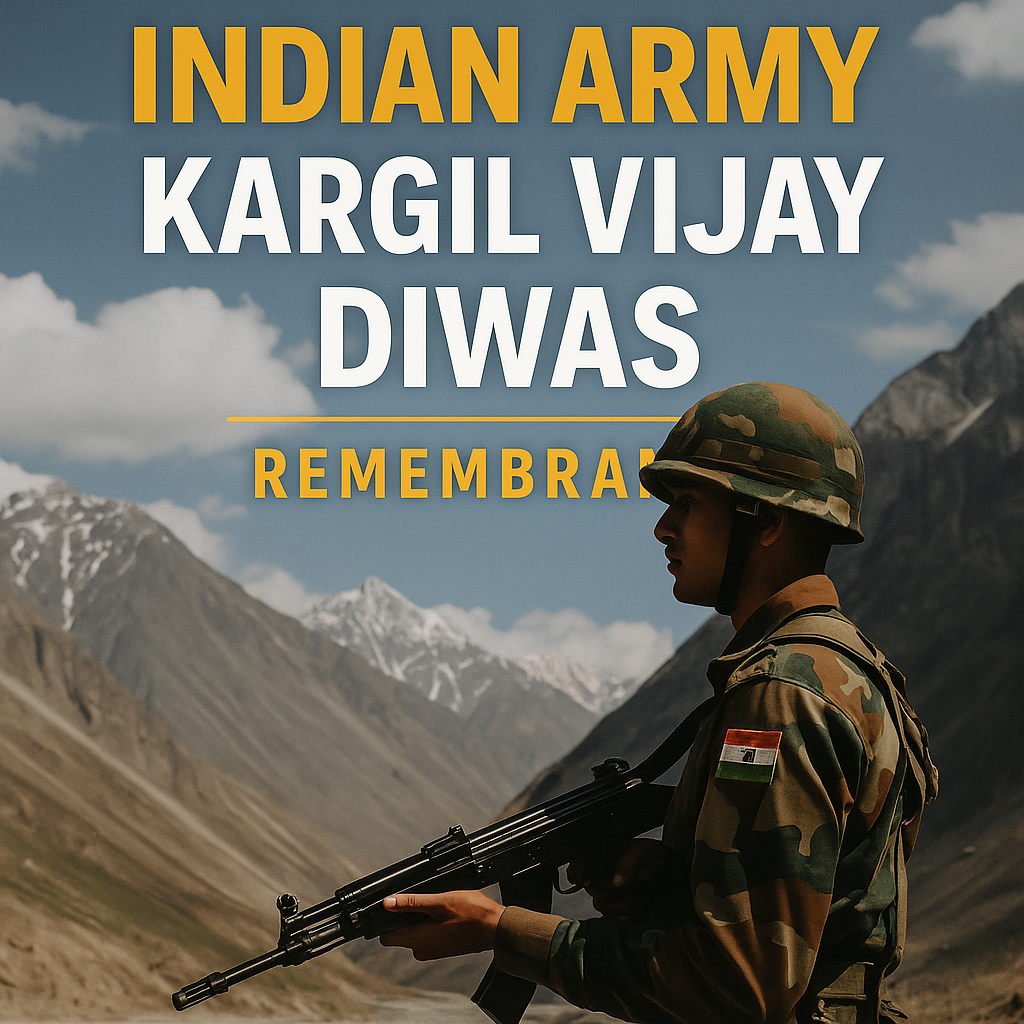
On Kargil Vijay Diwas 2025, India remembers the bravery of its armed forces during the Kargil conflict. This article revisits Indian Army’s role in Kargil, shares notable insights, quotes, and ongoing legacy.
Table of Contents
Executive Summary
On July 26 each year, India observes Kargil Vijay Diwas to commemorate the nation’s military victory in the 1999 Kargil War. This annual observance honors the sacrifice of Indian military personnel who lost their lives during the conflict and recognizes the strategic importance of India’s territorial defense along the Line of Control in the Jammu and Kashmir region. The 2025 observance marked the 26th anniversary of this significant military achievement, with national leaders, military officials, and citizens participating in tribute ceremonies and remembrance events across the country.
The Kargil conflict remains a pivotal moment in modern Indian military history, representing both the capabilities of India’s armed forces and the human cost of territorial defense. Understanding the historical context, military significance, and contemporary commemoration practices provides insight into India’s defense posture and national memory of this conflict.
Historical Context: The 1999 Kargil War
Timeline and Geographic Scope
The Kargil conflict unfolded between May and July 1999 in the mountainous terrain of the Kargil district in Jammu and Kashmir. This high-altitude region, characterized by challenging topography and extreme weather conditions, became the theater for military operations that would define a generation of Indian military service. The conflict emerged during the early summer months when snow melt and improving weather conditions made military operations feasible in previously inaccessible mountain passes.
The dispute centered on strategic locations along the Line of Control, the de facto military boundary established following the 1949 Ceasefire Agreement between India and Pakistan. This demarcation line divides Jammu and Kashmir between Indian and Pakistani-administered territories, stretching approximately 740 kilometers across difficult terrain.
Military Situation and Territorial Occupation
Pakistani military forces, operating in conjunction with armed irregular groups, had established unauthorized positions at multiple strategic mountain heights along the Line of Control. These positions, at elevations frequently exceeding 5,000 meters, provided military advantage and threatened Indian territorial control. The infiltration occurred during winter months when heavy snow concealed movement and made detection more difficult.
Indian military intelligence identified the infiltration in early May 1999, triggering a comprehensive military response. The scale of Pakistani military involvement extended beyond conventional armed forces to include regular army personnel, though official Pakistani acknowledgment of direct military involvement remained limited during the conflict period.
The strategic objective of the infiltration appeared designed to disrupt Indian control over Kashmir, demonstrate Pakistani military capability, and potentially force negotiations regarding the Kashmir territorial dispute. However, the Indian military response prevented achievement of these objectives.
Indian Military Response: Operation Vijay
The Indian Army mobilized substantial military resources in response to the infiltration. Operation Vijay represented a coordinated military campaign involving extensive ground assaults, artillery support, and air force operations. The military strategy focused on dislodging Pakistani and irregular forces from occupied heights while minimizing casualties among Indian military personnel.
Ground operations involved specialized mountain warfare units adapted to high-altitude combat conditions. Infantry units conducted frontal assaults on fortified positions, frequently fighting in thin air at extreme elevations where physical exertion created additional challenges. Artillery units provided fire support, though the mountainous terrain limited artillery effectiveness and required precise positioning.
Air force operations conducted targeting missions against Pakistani positions and supply lines. Fighter aircraft conducted bombing campaigns and reconnaissance missions, though air engagement remained limited compared to historical conflicts. Pakistan maintained air defense systems, creating operational constraints for Indian aviation assets.
The military campaign extended over approximately 60 days, with intensity fluctuating based on weather conditions, terrain challenges, and tactical considerations. Indian commanders employed phased approach strategies, progressively advancing through difficult terrain and securing strategic positions.
Casualty Figures and Human Cost
Official Indian military records documented over 500 soldiers killed during Operation Vijay. The majority of casualties resulted from combat operations against entrenched positions. Mountain warfare inherently created dangerous conditions, with soldiers frequently operating at high elevations in extreme weather conditions while engaging enemy forces.
Pakistani military sources acknowledged fewer total casualties, though international assessments indicated significant losses on both sides. The exact number of Pakistani military and irregular force casualties remained subject to diplomatic dispute, with different sources reporting varying figures.
The human cost extended beyond battlefield casualties to encompass wounded soldiers, long-term health effects from high-altitude operations, and psychological impacts on military personnel and their families. Many soldiers experienced lasting effects from combat exposure and altitude-related health challenges.
Conflict Resolution and Aftermath
The conflict concluded with India’s military control of previously infiltrated positions by July 26, 1999. Pakistani military forces withdrew from occupied heights, effectively ending active combat operations. The conflict did not result in formal peace treaty, but rather represented restoration of the previous territorial status quo along the Line of Control.
The resolution occurred following diplomatic intervention and international pressure. The United States, among other nations, engaged in diplomatic efforts encouraging Pakistani withdrawal. The withdrawal prevented further escalation and potential expansion of the conflict.
International observers noted that India had demonstrated substantial military capability and resolve in defending territorial integrity. The conflict influenced subsequent defense policy discussions and military modernization initiatives within India.
Understanding Kargil Vijay Diwas: Observance and Significance
Official Commemoration Framework
Kargil Vijay Diwas is observed annually on July 26, the date marking Indian military success and territorial recovery in 1999. The observance has become institutionalized as a national day recognizing military sacrifice and achievement. Unlike some other national observances, Kargil Vijay Diwas enjoys bipartisan political support, with leaders from across the political spectrum participating in commemoration events.
The observance objectives include honoring the courage demonstrated by military personnel, recognizing the strategic capabilities of the Indian Armed Forces, reinforcing national pride in military institutions, and maintaining collective memory of the conflict and its lessons. The annual commemoration ensures that the sacrifice of those who died during military service remains part of national consciousness.
Strategic and Political Significance
The Kargil conflict held strategic importance beyond the immediate military engagement. India’s successful response demonstrated military capability to defend territorial interests against foreign military actions. The conflict highlighted India’s capacity to rapidly mobilize military resources, conduct coordinated operations across multiple military branches, and sustain operations in challenging geographic conditions.
Politically, the conflict influenced India-Pakistan relations and territorial discussions regarding Kashmir. Indian military success reinforced the nation’s assertion of territorial control and reduced the likelihood of similar infiltration attempts in subsequent years. The conflict also influenced international perceptions of Indian military capability and strategic resolve.
Territorial and Border Security Implications
The conflict underscored the vulnerability of India’s mountainous borders and the strategic importance of maintaining military presence in high-altitude regions. Indian defense planners subsequently prioritized border infrastructure development, troop positioning, and surveillance capabilities in mountain regions. The conflict influenced long-term military strategy regarding northern border defense.
The successful Indian military response established a precedent for managing border incursions and demonstrated that infiltration attempts would encounter organized military resistance. Subsequent Indian defense policies reflected lessons learned from the Kargil experience.
2025 Kargil Vijay Diwas Commemoration Events
National-Level Ceremonies and Tributes
The 2025 observance of Kargil Vijay Diwas featured ceremonies and events across India commemorating the 26th anniversary of military victory. National leaders participated in formal tributes at significant memorials and ceremonial venues. The observance included wreath-laying ceremonies at locations symbolizing national military sacrifice and remembrance.
Senior government officials from the Defense Ministry participated in official ceremonies. The Chief of Army Staff and military leadership attended formal events recognizing the achievement and sacrifice of armed forces personnel. These high-level participations underscore the official significance attributed to the conflict and its commemoration.
The Prime Minister’s office issued formal statements reaffirming national gratitude toward military personnel and acknowledging their sacrifice in defending territorial integrity. Defence Ministry officials released press statements detailing the significance of the conflict and contemporary defense challenges.
Memorial Sites and Ceremonial Locations
The Kargil War Memorial, constructed to honor soldiers who died during the 1999 conflict, served as a primary location for 2025 commemoration events. Located in New Delhi, the memorial receives official visits from government leaders and military officials during the annual observance period. The memorial features names of fallen soldiers and serves as a focal point for national remembrance.
Amar Jawan Jyoti, historically serving as a symbolic location for honoring fallen soldiers, featured in 2025 commemorations. This location has received visits from political leaders and military officials during the 2025 observance period, following the tradition of annual tribute visits.
Regional commemorations occurred at military establishments, army headquarters, and local memorials throughout the country. Military bases in border regions and Jammu & Kashmir observed the day with special ceremonies and events involving stationed personnel and local communities.
Media Coverage and Public Participation
National and regional media outlets provided extensive coverage of 2025 Kargil Vijay Diwas commemorations. Television broadcasts featured documentaries, interviews with veterans, and retrospectives examining the conflict and its historical significance. Print and digital media published commemorative articles analyzing the military campaign and its contemporary relevance.
Public participation in 2025 observances included attendance at memorial events, social media engagement with commemorative content, and participation in awareness programs. Schools and educational institutions incorporated Kargil history into curricula and observance programs, educating younger generations about the conflict.
Military personnel stationed across India observed the day with formal parades, ceremonies, and reflection periods. These events reinforced military institutional culture and connected contemporary armed forces personnel to historical precedents and sacrifice.
Major Milestones and Historical Events: Timeline
Pre-Conflict Period and Intelligence Assessment (1998-Early 1999)
The period preceding the Kargil conflict witnessed escalating border tensions and military positioning by both India and Pakistan. Intelligence reports indicated potential military incursion planning, though definitive confirmation emerged only after infiltration occurred. Indian military intelligence agencies maintained surveillance along the Line of Control but were not fully prepared for the scale and timing of the infiltration attempt.
Infiltration and Initial Response (May 1999)
Discovery of Pakistani infiltration occurred during early May 1999 when Indian patrols identified unauthorized military positions at strategic heights. Initial Indian military response involved reconnaissance operations confirming the extent of infiltration. The Indian government determined that a comprehensive military response was necessary to restore territorial control.
Operation Vijay Progression (May-July 1999)
Military operations proceeded through stages as Indian forces progressively secured strategic positions. Early operations focused on intelligence gathering and establishing control over lower elevations. Subsequent phases involved frontal assaults on heavily fortified positions requiring intensive ground combat. Artillery bombardments intensified during mid-campaign phases, followed by infantry assaults on isolated positions.
Conflict Conclusion and Territorial Restoration (July 1999)
By late July 1999, Indian military forces had regained control of substantially all infiltrated positions. Pakistani military withdrew from occupied heights by July 26, 1999, effectively concluding active combat operations. This date became institutionalized as Kargil Vijay Diwas, marking the restoration of Indian territorial control.
Post-Conflict Period and Strategic Adjustments (1999-Present)
Following the conflict, Indian defense planners implemented strategic adjustments addressing vulnerabilities revealed during the war. Military modernization initiatives focused on surveillance capabilities, border infrastructure, and high-altitude warfare capabilities. Ongoing military operations maintained heightened border surveillance and rapid response capabilities to prevent similar incidents.
Key Military Leadership and Strategic Decision-Makers
Chief of Army Staff During Kargil Conflict
General Ved Prakash Malik served as Chief of Army Staff during the final phases of the Kargil conflict, assuming the position in June 1999. General Malik directed the concluding operations of Operation Vijay and oversaw the strategic decisions that led to the successful conclusion of the campaign. His leadership during this critical period influenced the subsequent trajectory of Indian military operations.
Political Leadership and Government Decision-Making
The political leadership, including the Prime Minister’s office and Defence Ministry, made critical decisions regarding military authorization and resource allocation during the conflict. The government authorized comprehensive military response and provided necessary support for sustained operations. Political leadership maintained public communication regarding the conflict progress and national objectives.
Field Commanders and Operational Leadership
Senior military commanders conducted field operations during the conflict. Divisional and regimental commanders directed ground operations against entrenched positions. These commanders adapted tactics to challenging mountain terrain and developed strategies for dislodging well-positioned forces.
Significance of Kargil War Memorial and Amar Jawan Jyoti
Historical Role of Amar Jawan Jyoti
Amar Jawan Jyoti historically served as a symbolic flame representing eternal remembrance of fallen soldiers. Located in New Delhi, this memorial has received tributes from national leaders during significant military commemorations. The site holds cultural significance as a location where citizens and leaders pay respects to military sacrifice.
The memorial underwent institutional changes in recent years, with modifications to its ceremonial role and physical configuration. Despite these changes, the location continues serving as a focal point for military commemoration and national remembrance during Kargil Vijay Diwas observations.
Kargil War Memorial: Dedicated Remembrance Site
The Kargil War Memorial, constructed specifically to commemorate the 1999 conflict, provides a dedicated location for Kargil-specific remembrance. The memorial features architectural elements symbolizing military achievement and sacrifice. Visitor engagement at the memorial during 2025 observations demonstrated continued public interest in Kargil history.
The memorial serves educational purposes, informing visitors about the conflict, its historical context, and its significance in Indian military history. School groups, tourists, and military personnel visit the memorial throughout the year, making it an active educational and commemorative site.
Symbolic Importance in National Memory
Both memorial sites function as physical manifestations of national memory regarding military sacrifice. These locations provide spaces where citizens can engage in personal reflection and collective remembrance. The annual observances at these sites reinforce the cultural significance attributed to military service and sacrifice in Indian national consciousness.
Contemporary Role of the Indian Armed Forces
Ongoing Border Defense and Line of Control Management
The Indian Armed Forces maintain continuous military presence along the Line of Control and across India’s international borders. Border security operations involve surveillance, rapid response capabilities, and coordination with paramilitary forces. The lessons from the Kargil conflict influence contemporary border defense strategies.
Military personnel stationed in high-altitude border regions operate under demanding conditions, maintaining vigilance against potential infiltration attempts. These operations remain continuous, extending beyond annual commemorative periods. The sacrifice of Kargil-era personnel influences the mindset and commitment of contemporary military personnel.
Counter-Insurgency and Internal Security Operations
The Indian Armed Forces conduct counter-insurgency operations in Jammu & Kashmir and northeastern Indian states. These operations address ongoing security challenges emerging from insurgent groups and destabilizing elements. The military experience in Kargil influences tactical approaches in contemporary counter-insurgency operations.
International Peacekeeping and Humanitarian Missions
Indian military personnel serve in United Nations peacekeeping missions across Africa, Asia, and the Middle East. These deployments include operations under Mission d’Observation des Nations Unies au Congo (MONUSCO) in the Democratic Republic of Congo and United Nations Interim Force in Lebanon (UNIFIL). India maintains one of the world’s largest peacekeeping personnel contributions.
Disaster Relief and Humanitarian Assistance
The Indian Armed Forces respond to natural disasters including earthquakes, floods, avalanches, and other emergency situations. Military personnel provide rescue operations, medical assistance, and logistical support during humanitarian crises. During the COVID-19 pandemic, military units assisted in vaccination drives and humanitarian relief operations.
Quotes and Statements from 2025 Observance
Official Government Statements
Political leaders issued formal statements during the 2025 Kargil Vijay Diwas observance. These statements emphasized national pride in military achievements, acknowledged sacrifice of fallen personnel, and reaffirmed commitment to border defense. Government communications stressed the importance of maintaining military preparedness and honoring those who died during the conflict.
Official statements typically include phrases such as “The nation salutes its bravehearts who paid the ultimate price to protect our border,” reflecting the emphasis on sacrifice and national gratitude. These communications reinforce the cultural narrative surrounding military service and national defense.
Military Leadership Statements
Senior military officials provided statements recognizing the significance of Kargil victory and its implications for contemporary military operations. Military leadership emphasized lessons learned from the conflict, including importance of coordinated operations, technological advancement, and personnel training. Statements from military officials often reference ongoing border security challenges and the continued relevance of Kargil experience.
Veteran and Family Statements
Veterans and families of fallen personnel participated in commemorative events and media interviews during 2025 observations. Personal narratives from individuals who experienced the conflict provide emotional depth to national commemorations. Families of fallen soldiers frequently emphasize the ongoing significance of their relatives’ sacrifice and the national gratitude they have received.
Social Media and Public Engagement
Commemorative Content and Messaging
Social media platforms hosted extensive commemorative content during the 2025 Kargil Vijay Diwas observance. Government agencies, military institutions, media outlets, and individual citizens shared content recognizing the significance of the conflict and honoring fallen personnel. Suggested messaging frequently incorporated themes of sacrifice, courage, and national pride.
Typical social media captions included messages such as “Honouring the heroes of Operation Vijay. Kargil Vijay Diwas 2025” and “Their sacrifice, our freedom—saluting the Indian Army on Kargil Vijay Diwas.” These messages resonated with public audiences and generated engagement across social platforms.
Shareable Content and Visual Elements
Commemorative graphics featured imagery of mountain terrain representing the Kargil region, military equipment and personnel, memorial sites, and national symbols. Visual content typically included overlay text emphasizing sacrifice and gratitude. Suggested captions directed users to share images with acknowledgment of military service and national appreciation.
Images depicting Indian Army personnel against mountain backdrops, particularly imagery symbolizing the Kargil terrain, proved particularly shareable during the observance period. These visual elements connected abstract concepts of military sacrifice with concrete geographic and personal elements.
Youth and Educational Engagement
Younger demographic groups engaged with Kargil commemorations through social media, educational programs, and youth-oriented content. Educational institutions utilized the observance period to teach younger generations about Kargil history and its significance. Digital content specifically designed for youth engagement, including infographics and documentary clips, circulated widely across social platforms.
Strategic Analysis: Kargil’s Impact on Indian Military Policy
Military Modernization and Technological Development
The Kargil conflict highlighted technological gaps and capability limitations within the Indian military. Subsequent military modernization initiatives prioritized surveillance technology, communications systems, and advanced weaponry. Defense spending allocations reflected increased focus on border security infrastructure and technological advancement.
India’s defense establishment recognized the importance of aerial reconnaissance and real-time intelligence gathering based on Kargil experience. Subsequent military modernization emphasized satellite surveillance capabilities, unmanned aerial systems, and integrated command and control systems.
Doctrine Development and Training Protocols
Military doctrine evolved to incorporate lessons from the Kargil conflict. Training programs for military personnel incorporated high-altitude warfare concepts and mountain combat techniques. The conflict influenced the development of specialized units trained specifically for border defense in challenging terrain.
Officer training academies incorporated Kargil case studies into curricula, ensuring that military leaders understood the conflict’s historical significance and strategic implications. This educational emphasis ensured that institutional memory of the conflict influenced military planning and strategic thinking.
Structural Changes in Military Organization
Organizational changes within the Indian military reflected Kargil-related assessments. Inter-service coordination mechanisms improved following recognition of the importance of unified operations combining ground forces, air support, and logistics. These structural adjustments aimed at preventing similar strategic surprises and improving response capabilities.
Frequently Asked Questions
Q1: When is Kargil Vijay Diwas observed, and why is this specific date chosen?
A1: Kargil Vijay Diwas is observed annually on July 26, marking the date when Indian military forces successfully regained control of infiltrated positions from Pakistani forces in 1999. The Indian Army launched Operation Vijay to dislodge Pakistani military and irregular forces from strategic heights along the Line of Control.
By July 26, 1999, after approximately 60 days of intensive military operations, Indian forces had secured all major infiltrated positions and Pakistani forces had withdrawn. This date was subsequently institutionalized as an annual national observance to commemorate the military victory and honor the sacrifice of those who died during operations.
Q2: What was the strategic importance of the Kargil conflict, and how did it influence Indian military policy?
A2: The Kargil conflict held significant strategic importance as it demonstrated India’s military capability to rapidly respond to territorial threats and conduct coordinated operations in challenging mountain terrain. The conflict validated the effectiveness of the Indian military’s operational planning and execution capabilities. Strategically, the successful Indian response reinforced India’s control over disputed territories and established a precedent that infiltration attempts would encounter organized military resistance.
The conflict influenced subsequent military modernization initiatives, emphasizing surveillance technology, border infrastructure development, and high-altitude warfare capabilities. Defense planners incorporated Kargil lessons into military doctrine, training protocols, and organizational structures. The conflict also influenced India’s strategic deterrence posture regarding Pakistan and demonstrated India’s resolve in defending territorial integrity.
Q3: How many military personnel were killed during the Kargil conflict, and what was the human cost of the war?
A3: Official Indian military records documented over 500 soldiers killed during Operation Vijay between May and July 1999. These casualties resulted primarily from combat operations against well-fortified Pakistani positions in high-altitude terrain. Beyond battlefield fatalities, many additional soldiers were wounded during the conflict, some sustaining permanent disabilities from combat injuries or altitude-related health complications.
The human cost extended beyond individual casualties to encompass psychological impacts on military personnel and their families. Long-term health effects from high-altitude operations affected numerous veterans, with some experiencing chronic health conditions resulting from exposure to extreme elevation and combat stress. The families of fallen personnel received national recognition and government support programs, though the loss remained deeply significant for affected families and military communities.
Q4: What was Operation Vijay, and what military strategies did the Indian Army employ during the Kargil conflict?
A4: Operation Vijay was the formal designation for the Indian military campaign to dislodge Pakistani forces from infiltrated positions along the Line of Control during May-July 1999. The military strategy employed a phased approach involving initial reconnaissance operations, establishment of base positions, artillery support, and progressively intensive ground assaults. Indian forces utilized specialized mountain warfare units adapted to high-altitude combat conditions, with infantry units conducting frontal assaults on fortified positions frequently at elevations exceeding 5,000 meters.
Artillery units provided fire support, though mountainous terrain limited artillery effectiveness. Indian air force conducted bombing missions and reconnaissance operations against Pakistani positions and supply lines. The strategy emphasized coordination between ground forces, air support, and logistics while minimizing Indian casualties. Phased operations proceeded as Indian forces progressively secured strategic positions, with intensity fluctuating based on weather conditions and tactical considerations.
Q5: Who were the key military leaders during the Kargil conflict, and what roles did they play in achieving victory?
A5: General Ved Prakash Malik served as Chief of Army Staff during the final phases of the Kargil conflict, assuming the position in June 1999 as operations were concluding. General Malik directed final operations of Operation Vijay and oversaw strategic decisions that resulted in successful conflict conclusion.
Senior military commanders at divisional and regimental levels directed field operations against entrenched positions. These commanders adapted tactics to challenging mountain terrain and developed operational strategies for dislodging well-positioned forces. Political leadership, including the Prime Minister’s office and Defence Ministry, made critical decisions regarding military authorization and resource allocation.
The Prime Minister’s office issued directives authorizing comprehensive military response and provided necessary political support for sustained military operations.
Q6: What are the Kargil War Memorial and Amar Jawan Jyoti, and what significance do these sites hold in Indian national consciousness?
A6: The Kargil War Memorial, located in New Delhi, was constructed specifically to commemorate the 1999 Kargil conflict and honor soldiers who died during operations. The memorial features architectural elements symbolizing military achievement and sacrifice and displays names of fallen personnel.
The site serves as a focal point for national remembrance and receives official visits from government leaders and military officials during annual Kargil Vijay Diwas observations. Amar Jawan Jyoti historically served as a symbolic location representing eternal remembrance of fallen soldiers across all military conflicts. Located in New Delhi, this site traditionally received tributes from national leaders during military commemorations and remains culturally significant in Indian national consciousness.
Both memorial sites function as physical manifestations of national memory regarding military sacrifice, providing spaces where citizens engage in personal reflection and collective remembrance. These locations receive particular attention during Kargil Vijay Diwas observances, with formal ceremonies and public participation reinforcing their cultural significance.
Q7: How do contemporary Indian military operations reflect lessons learned from the Kargil conflict?
A7: Contemporary Indian military operations incorporate multiple lessons from the Kargil conflict experience. Border defense operations emphasize surveillance capabilities, early detection systems, and rapid response mechanisms designed to prevent infiltration attempts similar to 1999. Military training programs emphasize mountain warfare techniques and high-altitude combat capabilities based on Kargil experience.
Defense spending allocations prioritize technological development, communication systems, and surveillance infrastructure influenced by Kargil-era capability assessments. Military doctrine incorporates inter-service coordination principles developed during Operation Vijay, ensuring unified operations combining ground forces, air support, and logistics.
Officer training academies incorporate Kargil case studies into curricula, ensuring institutional memory of the conflict influences contemporary military planning. Personnel deployed to high-altitude border regions receive specialized training and equipment reflecting lessons from the conflict.
Q8: What role does the Indian Armed Forces play in contemporary national security and beyond border defense?
A8: The Indian Armed Forces maintain multiple roles extending beyond traditional border defense. Military personnel serve in United Nations peacekeeping missions across Africa, Asia, and the Middle East, with India contributing among the world’s largest peacekeeping personnel contingents.
Military units conduct counter-insurgency operations in Jammu & Kashmir and northeastern Indian states, addressing ongoing security challenges from insurgent groups. The armed forces respond to natural disasters including earthquakes, floods, and avalanches, providing rescue operations and humanitarian assistance. During the COVID-19 pandemic, military resources supported vaccination drives and humanitarian relief operations.
Additionally, the military maintains strategic deterrence posture regarding potential external security threats and conducts research and development initiatives advancing defense technology. These diverse roles reflect the Indian military’s evolution beyond traditional warfare toward broader national security and humanitarian dimensions.
Implications and Key Takeaways
National Memory and Military Heritage
Kargil Vijay Diwas serves as an anchor point in Indian national consciousness regarding military sacrifice and territorial defense. The annual observance ensures that the Kargil conflict remains prominent in national memory, influencing how contemporary citizens understand military service and national security. The conflict’s prominence in national discourse reflects broader cultural values emphasizing sacrifice, courage, and commitment to national interests.
Continuing Relevance of Border Security
The Kargil conflict remains strategically relevant to contemporary India-Pakistan relations and border security concerns. The conflict established patterns influencing military deterrence, escalation management, and crisis response protocols. Contemporary border security operations continue reflecting Kargil-era lessons and strategic considerations.
Evolution of Military Institutions
The Kargil experience influenced the development and evolution of Indian military institutions, including training protocols, doctrine development, and organizational structures. Military modernization initiatives reflect priorities identified during the conflict. The conflict remains a reference point for military planning and strategic analysis.
Legacy and Future Implications
The legacy of the Kargil conflict extends into contemporary military operations and strategic planning. Future military leaders continue receiving education regarding Kargil history and its implications for national defense. The conflict’s historical significance ensures its continued relevance to Indian military thinking and national security strategy.
Conclusion
The 2025 observance of Kargil Vijay Diwas commemorated the 26th anniversary of India’s successful military operations regaining territorial control along the Line of Control during the 1999 Kargil conflict. The annual observance honors the sacrifice of military personnel and recognizes the strategic capabilities demonstrated by the Indian Armed Forces. National leaders, military officials, and citizens participated in commemoration events, ceremonies, and social media engagement reflecting the cultural significance attributed to this military achievement.
The Kargil conflict remains a defining moment in modern Indian military history, representing both military capability and the human costs of territorial defense. The lessons learned from the conflict continue influencing military doctrine, training protocols, and strategic planning. The institutionalized observance of Kargil Vijay Diwas ensures that contemporary and future generations maintain awareness of the conflict’s significance and honor the memory of those who sacrificed during military operations.
As India continues addressing contemporary security challenges, the Kargil experience provides historical context and strategic precedents informing military decision-making. The conflict’s prominence in national memory and military institutional culture ensures its lasting impact on Indian defense policy and military operations. The 2025 observance reinforced these connections while acknowledging the evolving nature of national security challenges.
Author Information
About the Author: Nueplanet
Nueplanet is an independent researcher and content strategist specializing in military history, national security policy, and institutional analysis of government operations. With expertise in contemporary defense issues and historical military conflicts, Nueplanet provides evidence-based analysis grounded in official sources and verified information.
This article draws from official government statements, Defence Ministry press releases, historical military records, and public commemorative events documented during the 2025 Kargil Vijay Diwas observance.
Commitment to Accuracy and Verification
This article prioritizes factual accuracy through reliance on official government sources, military institutional records, and publicly available information. The Defence Ministry of India maintains official records regarding Kargil conflict operations and casualty figures. Government statements and public statements from military leadership are sourced from official press releases and authenticated public communications. Historical timelines and event documentation are verified against multiple authoritative sources.
Publish Date: July 26, 2025
Last Updated: July 26, 2025
Nueplanet’s Credentials and Content Philosophy
The author commits to neutral, factual reporting emphasizing accuracy and transparency over editorial interpretation. Content development prioritizes official and authoritative sources while acknowledging the diverse perspectives that exist regarding historical military events. Verification protocols ensure that statistical data, quotes, and historical facts are accurately represented and properly attributed.
Disclaimer
This article presents factual information based on publicly available data, official government statements, and authenticated historical records regarding the Kargil conflict and its commemoration. The content is intended for informational and educational purposes.
Readers should consult official Defence Ministry sources, military historical institutions, and government communications for authoritative information regarding specific military operations, casualty figures, or defense policy details. The representation of historical events reflects available documented information while acknowledging that some aspects of military operations remain subject to official classifications and security protocols.
Helpful Resources
Latest Posts
- https://nueplanet.com/war-2-trailer-cast-release-date-storyline/
https://nueplanet.com/bajaj-finance-share-price-today-analysis/
- https://nueplanet.com/realme-15-pro-5g-mobile-price-india-launch/
- https://nueplanet.com/iqoo-z10r-price-specifications/
Conclusion
On Kargil Vijay Diwas 2025, India united in remembrance of the bold Indian Army soldiers whose courage secured the nation’s borders. As time moves forward, their legacy continues to inspire volunteers and professionals defending peace and integrity. We owe them gratitude—and this tribute is here to ensure that memory lives on.
Tag
Indian Army
Related Posts







Post Comment