




Independence Day 2025: Heightened Security, Patriotic Spirit, and Nationwide Celebrations
India gears up for Independence Day 2025 with enhanced security measures, cultural programs, and a renewed spirit of unity across the country.
Table of Contents
Published: August 11, 2025 | Last Updated: August 11, 2025 | Category: National Events & Celebrations | Author: Nueplanet
Overview: Understanding India’s 78th Independence Day
India observes Independence Day annually on August 15, commemorating the nation’s independence from British colonial rule achieved on August 15, 1947. Independence Day 2025 marks India’s 78th year as an independent nation since the transfer of power concluded formal colonial governance structures. This national observance involves ceremonies, public gatherings, and cultural programs conducted across the country at national, state, and local levels.
Independence Day represents a significant date in India’s national calendar, recognized as a national holiday across all states and union territories. Official ceremonies include flag hoisting at government buildings, national anthem recitation, and public addresses by political leaders at various venues. The day carries historical significance related to India’s independence movement and the establishment of democratic governance structures following independence.
Historical Background and Significance
The Independence Movement and August 15, 1947
India’s independence resulted from an extended freedom struggle spanning multiple decades against British colonial administration. The Indian independence movement involved various political organizations, social movements, and individual leaders who pursued independence through different approaches including political negotiations, civil resistance, and constitutional processes.
August 15, 1947, represents the date when India formally achieved independence following the transfer of power from British colonial authorities to Indian leadership. This transition followed the partition of British India into India and Pakistan, a process that involved significant population displacement and communal tensions. The date was established through official announcements and constitutional processes establishing India as an independent sovereign nation.
Establishment of Democratic Governance
Following independence, India adopted a federal democratic system outlined in the Indian Constitution. The Constitution, drafted by a constituent assembly and adopted on January 26, 1950 (India’s Republic Day), established democratic institutions including a parliamentary system, constitutional courts, and federal governance structures dividing power between central and state governments.
Red Fort Ceremony: The Primary National Observance
Location and Historical Significance
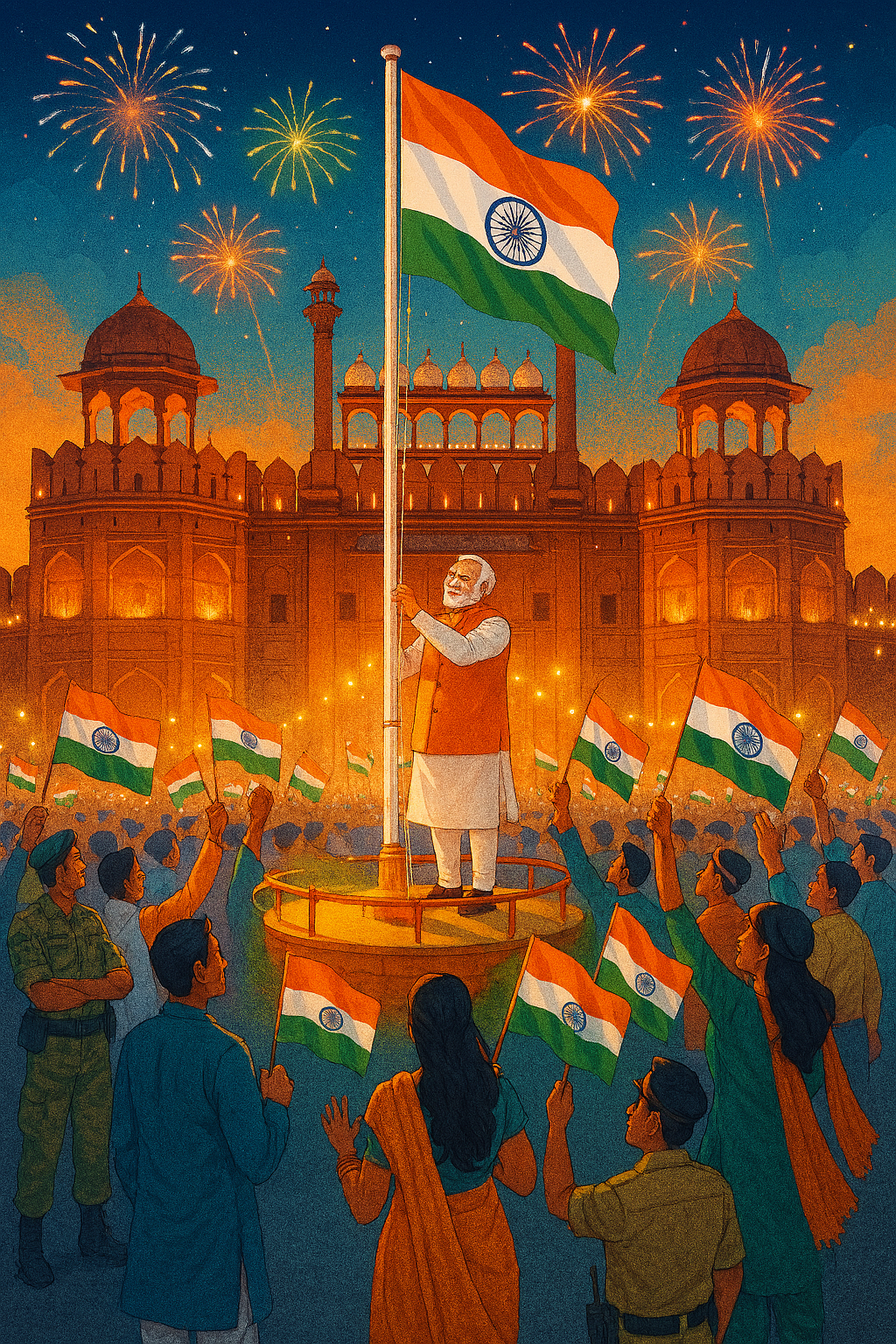
The Red Fort in New Delhi serves as the primary venue for India’s Independence Day national ceremony. The fort, built during the Mughal period, carries historical importance related to Indian independence and national governance. The Prime Minister performs the flag hoisting ceremony at the Red Fort, following a tradition established following independence.
The selection of the Red Fort as the primary Independence Day venue reflects its historical connections to Indian governance and its symbolic importance as a representation of national authority and continuity across different historical periods.
Ceremony Timeline and Components
The Independence Day ceremony at the Red Fort follows an established schedule beginning early in the morning. The ceremony typically commences at 8:00 AM and involves multiple sequential components including flag hoisting, national anthem recitation, and the Prime Minister’s address to the nation.
Typical Ceremony Schedule:
- 7:30 AM – 8:00 AM: Dignitaries and guests arrive and take designated positions; final security procedures
- 8:00 AM: Prime Minister hoists the national flag; 21-gun salute follows flag hoisting
- 8:00 AM – 8:15 AM: National Anthem performance by military bands and assembled crowds
- 8:15 AM – 9:00 AM: Prime Minister’s address covering national achievements, policy perspectives, and future objectives
Prime Minister’s Address
The Prime Minister’s Independence Day address provides an annual opportunity for the head of government to communicate directly with citizens regarding national priorities, achievements, and policy directions. These addresses typically discuss economic performance, government initiatives, and national development objectives.
The address is broadcast nationally through government television channels, radio services, and internet streaming platforms enabling nationwide access. The speech receives significant media coverage and analysis from political commentators and news organizations.
Security Arrangements and Deployment
Personnel Deployment in Delhi
Security authorities implement comprehensive personnel deployment strategies for Independence Day celebrations. Delhi Police and other security agencies deploy personnel to manage crowds, control vehicle traffic, and maintain order at celebration venues.
For Independence Day 2025, security authorities deployed approximately 4,000 community security volunteers known as Praharis across Delhi to supplement regular police forces. These volunteers receive training in basic security procedures, crowd management, and emergency response coordination.
Prahari Program Functions
Praharis function as community-based security auxiliaries working under supervision of regular police forces. Their responsibilities include monitoring public spaces, reporting suspicious activities to supervising officers, assisting with crowd management during public events, and providing basic emergency assistance.
The Prahari program represents an approach to community policing that engages local residents in security functions. These volunteers receive stipends for their services and operate under established protocols and supervision structures.
Technology-Based Security Measures
Security authorities implement technology systems for event monitoring and threat detection. These systems may include surveillance cameras positioned at public venues, communication networks coordinating security personnel, and monitoring centers providing centralized command and control functions.
Surveillance systems support crowd monitoring, identification of potential security threats, and coordination of emergency response procedures when required. Technology-based approaches complement traditional security measures including personnel deployment and physical security barriers.
Ceremonial Traditions and Cultural Observances
Flag Hoisting Ceremonies
Flag hoisting ceremonies occur at government buildings, schools, and community venues across the country. These ceremonies involve officials or designated individuals raising the national flag while witnesses recite or listen to the national anthem.
Flag hoisting represents a central symbolic component of Independence Day observance. Government guidelines specify proper flag protocol including acceptable flag materials, hoisting methods, and proper flag display practices. These guidelines ensure uniform standards for official flag hoisting ceremonies.
National Anthem Performance
The national anthem, titled “Jana Gana Mana,” receives recitation or performance during Independence Day ceremonies. Military bands provide musical accompaniment at official national ceremonies. Schools and community organizations typically include national anthem recitation in their observance programs.
The national anthem, composed by Rabindranath Tagore, holds official status as the national anthem following constitutional adoption. Performance of the national anthem represents a traditional component of national observance ceremonies.
21-Gun Salute
Official ceremonies at the Red Fort and other government venues include 21-gun salutes performed by military personnel. The gun salute represents a ceremonial tradition with historical roots in military protocols and represents official recognition of the occasion’s significance.
School and Educational Institution Observances
School-Based Celebration Programs
Educational institutions organize programs commemorating Independence Day involving students, faculty, and staff. These programs typically include flag hoisting ceremonies, national anthem recitation, and cultural performances by students.
Common school activities include patriotic song performances by student choirs, dramatic presentations depicting historical independence movement events, and student speeches addressing national themes. These activities provide educational content related to India’s independence history while observing the national occasion.
Academic Components
Educational institutions incorporate Independence Day-related content into academic curricula. History classes may examine independence movement events, key political figures, and constitutional processes. Civics education may address democratic governance structures and citizens’ roles in democratic systems.
Essay writing competitions, poster creation contests, and quiz programs addressing historical and current national topics provide academic engagement with Independence Day themes.
Cultural Programs and Regional Variations
Regional Celebration Variations
Different states and regions organize Independence Day celebrations reflecting local cultural traditions and regional characteristics. These variations provide opportunities for demonstration of regional cultural practices while observing the national occasion.
Northern Regions: Celebrations in northern India may emphasize martial traditions and military heritage. States like Punjab feature performances of regional martial dances and folk traditions reflecting martial history.
Southern Regions: Southern state celebrations may emphasize classical dance forms, temple-based cultural traditions, and agricultural heritage. Programs may incorporate classical Bharatanatyam, Kathakali, or Odissi dance performances with patriotic themes.
Eastern Regions: Eastern India celebrations may emphasize intellectual discourse, literary traditions, and historical independence movement connections. Bengal’s observances often highlight contributions to independence movement philosophy and cultural traditions.
Western Regions: Western state celebrations may emphasize industrial heritage, entrepreneurial achievements, and contemporary economic development. Programs may address business community contributions to national development.
Cultural Performance Types
Independence Day celebrations incorporate various cultural performance formats including:
- Classical and contemporary dance performances with patriotic themes
- Musical performances featuring patriotic songs and national compositions
- Dramatic presentations depicting historical independence movement events
- Folk performances representing regional cultural traditions
- Military bands performing patriotic music
- Student performances and group activities
Technology Integration in Modern Celebrations
Digital Broadcasting Infrastructure
Official Independence Day ceremonies receive broadcast through government-controlled television channels including Doordarshan (All India Radio’s television service). These broadcasts provide nationwide transmission of Red Fort ceremonies enabling access for citizens unable to attend physical venues.
Internet streaming platforms provide online access to ceremony broadcasts. Major news organizations provide live coverage and commentary on Independence Day ceremonies and related national events.
Social Media Engagement
Social media platforms serve as venues for Independence Day-related public engagement. Hashtags related to Independence Day trends on Twitter and other platforms as users share Independence Day greetings, comments, and patriotic messages.
Digital campaigns may feature user-generated content including Independence Day themed photographs, video messages, and artistic creations. These digital activities extend Independence Day observance beyond physical ceremonies to online spaces.
Technological Innovations in Ceremonies
Modern Independence Day ceremonies may incorporate technological elements including coordinated light displays, digital visual projections on monuments, and synchronized multimedia presentations. These technological additions complement traditional ceremonial components.
Environmental Initiatives and Sustainability Considerations
Green Celebration Practices
Sustainability considerations increasingly influence Independence Day celebration planning. Government and community organizations implementing environmental conservation measures during celebrations.
Environmental Measures:
- Biodegradable flag materials and decoration items replacing single-use plastics
- Solar-powered lighting systems for evening celebrations reducing energy consumption
- Public transportation promotion reducing individual vehicle usage
- Waste management systems including recycling programs at celebration venues
- Tree plantation initiatives concurrent with Independence Day celebrations
Tree Plantation Campaigns
Community organizations coordinate tree plantation programs during Independence Day period. These initiatives serve dual purposes of environmental conservation and patriotic commemoration. Participants plant trees symbolizing national growth and environmental stewardship.
Government agencies and educational institutions organize large-scale plantation drives involving thousands of participants across multiple locations.
National Economic and Development Context
India’s Economic Status in 2025
As of 2025, India ranks among the world’s largest economies by various measurement standards. Official statistics indicate India’s position as the fifth largest economy globally by nominal GDP and a major contributor to global economic growth.
India’s economy encompasses diverse sectors including agriculture, manufacturing, services, and technology industries. The technology sector particularly has contributed to India’s global economic profile through software services, information technology, and digital innovation exports.
Development Indicators and Achievements
India has achieved substantial progress across various development metrics since independence. Literacy rates have increased substantially from independence-era levels. Life expectancy has increased reflecting improved healthcare and living conditions. Per capita income levels have increased substantially though significant disparities remain across regions and population segments.
Infrastructure development has expanded transportation networks, electricity access, and telecommunications connectivity to previously underserved regions. Urban development has proceeded with expansion of cities and metropolitan areas supporting increased population.
Science and Technology Contributions
India has developed significant scientific and technological capabilities. The space program has achieved notable milestones including satellite launches and planetary exploration missions. The space program provides important telecommunications, weather monitoring, and earth observation capabilities.
India’s pharmaceutical industry produces medications for domestic use and international export. The information technology sector provides software development and services supporting global clients. Research institutions conduct scientific research across multiple disciplines.
International Observance of Independence Day
Diaspora Celebrations
Indian communities residing outside India organize Independence Day celebrations in their countries of residence. These observances provide opportunities for diaspora members to maintain cultural connections and celebrate India’s national occasion.
Major Indian diaspora communities in North America, Europe, Middle East, Asia-Pacific, and other regions organize Independence Day events. These events may include flag hoisting ceremonies, cultural programs, community dinners, and patriotic speeches by community leaders and diplomatic representatives.
Embassy and Consulate Observances
Indian diplomatic missions including embassies and consulates host Independence Day receptions and official ceremonies in their host countries. These events typically include government officials, diplomatic personnel, community leaders, and media representatives.
Embassy-hosted events provide official recognition of India’s Independence Day in diplomatic contexts and opportunities for cultural diplomacy and community engagement.
Global Indian Network Activities
Professional associations, business groups, and cultural organizations of Indian origin conduct Independence Day observances in various countries. These activities reflect the global distribution of Indian-origin populations and maintain cultural and national connections across geographic distances.
Governance and Administrative Framework
National Holiday Status
Independence Day holds the official status of a national holiday in India. Government offices, schools, banks, and most private businesses remain closed on Independence Day. Industrial and essential services may maintain reduced staffing to provide necessary services.
The national holiday status enables widespread participation in Independence Day observances and public gatherings without workplace or school obligations.
Civic Administration Planning
Municipal corporations and local government bodies plan Independence Day events and manage associated logistical requirements. Planning includes venue preparation, traffic management, security coordination, and public communication regarding celebration locations and schedules.
Frequently Asked Questions
Q1: What is the historical significance of August 15 as India’s Independence Day?
August 15, 1947, marks the date when India formally achieved independence from British colonial rule. On this date, the transfer of power from British colonial authorities to Indian leadership was completed, establishing India as a sovereign independent nation. This date was selected by Lord Mountbatten, the last British Viceroy of India, and has since been observed annually as India’s national Independence Day. The date reflects the culmination of a prolonged independence movement spanning multiple decades involving political organizations, social movements, and individual leaders.
Q2: Who is responsible for hoisting the flag at the Red Fort during Independence Day ceremony?
The Prime Minister of India performs the official flag hoisting ceremony at the Red Fort during the Independence Day national ceremony. This practice has been followed since independence, making the Prime Minister’s flag hoisting ceremony the central component of the national Independence Day observance. The ceremony typically occurs at 8:00 AM and is followed by the national anthem recitation and a 21-gun salute. Following flag hoisting, the Prime Minister delivers an address to the nation discussing national achievements and policy directions.
Q3: What are Praharis and what roles do they perform during Independence Day celebrations?
Praharis are community security volunteers trained to assist regular police forces in maintaining public safety during public events and celebrations. During Independence Day 2025, approximately 4,000 Praharis were deployed across Delhi to supplement regular police personnel. Their responsibilities include crowd monitoring, reporting suspicious activities, assisting with crowd management, and providing basic emergency assistance. Praharis operate under supervision of regular police forces and follow established protocols for security procedures.
Q4: How do Indian diaspora communities celebrate Independence Day outside India?
Indian communities residing outside India organize Independence Day celebrations in their countries of residence. These celebrations typically include flag hoisting ceremonies, cultural programs featuring Indian music and dance, community dinners, and patriotic speeches. Indian embassies and consulates in host countries typically organize official Independence Day events and receptions. Professional associations, business groups, and cultural organizations of Indian origin also conduct Independence Day observances reflecting the global distribution of Indian-origin populations.
Q5: What is the theme or central message of Independence Day 2025 celebrations?
Independence Day 2025 observances emphasize national unity, democratic values, and continued national development. The celebrations commemorate India’s 78 years of independence and provide opportunities for national reflection on independence movement history and contemporary national achievements. Celebrations emphasize values of freedom, equality, and justice associated with India’s independence and democratic system.
Q6: What security measures were implemented for Independence Day 2025?
Comprehensive security measures for Independence Day 2025 included deployment of approximately 4,000 community Praharis across Delhi, surveillance systems at public venues, regular police force positioning at celebration locations, traffic management procedures, and coordination protocols for emergency response. Security arrangements aimed to ensure public safety while enabling large gatherings for Independence Day celebrations. Security personnel received briefings on emergency procedures and threat response protocols.
Q7: How has technology transformed modern Independence Day celebrations?
Technology integration in contemporary Independence Day celebrations includes live broadcasting of Red Fort ceremonies through television and internet streaming platforms, social media engagement with Independence Day-related hashtags and user-generated content, digital visual projections on monuments, surveillance systems for crowd monitoring, and online platforms for community participation. These technological additions extend Independence Day observance from physical ceremonies to digital spaces enabling broader participation.
Q8: What environmental initiatives are associated with Independence Day 2025 celebrations?
Independence Day 2025 celebrations incorporated environmental sustainability initiatives including use of biodegradable materials in decorations and flag displays, solar-powered lighting systems, public transportation promotion during celebrations, waste management programs including recycling at celebration venues, and large-scale tree plantation campaigns during the Independence Day period. These environmental measures reflect increasing emphasis on sustainability in national celebrations.
Summary and Key Takeaways
Independence Day 2025 represents India’s 78th annual observance of independence achieved on August 15, 1947. The national observance involves ceremonies, cultural programs, and public gatherings conducted across India’s states and union territories. The Red Fort in New Delhi serves as the primary venue for the national ceremony where the Prime Minister hoists the national flag and addresses the nation.
Security arrangements encompassing approximately 4,000 community volunteers and regular police forces ensured safe public gatherings during celebrations. Celebrations incorporated cultural performances reflecting regional traditions, educational programs in schools addressing independence history, and digital engagement through social media and broadcasting platforms.
India’s economic and technological development since independence provides context for contemporary Independence Day observances. The nation has achieved substantial progress across development metrics while maintaining democratic governance structures established following independence. Global Indian communities participate in Independence Day observances in their countries of residence maintaining cultural connections to India’s national occasion.
Environmental sustainability initiatives increasingly influence Independence Day celebration planning reflecting contemporary priorities for ecological conservation. The national observance provides annual opportunities for national reflection on independence history and contemporary national development while celebrating shared national identity and democratic values.
About the Author
Nueplanet is a cultural events and national celebrations analyst with expertise in Indian national observances, ceremonial traditions, and public event management. With extensive background researching national holidays, governmental celebrations, and cultural programming, Nueplanet provides evidence-based analysis of national celebration topics drawing from government sources, historical records, and verified reporting.
Nueplanet maintains commitment to presenting accurate, verified information regarding national celebrations without advocacy bias or promotional intent. All content undergoes careful review against official government sources, historical documentation, and established news organization reporting before publication. The analytical approach emphasizes factual accuracy, contextual understanding, and balanced examination of national celebration practices.
Transparency and Sourcing Commitment
This article draws information from Indian government official announcements regarding Independence Day celebrations, Ministry of Defence statements regarding security arrangements, historical records documenting India’s independence and constitutional establishment, and verified reporting from established news organizations covering national events. Information regarding Red Fort ceremonies and timing derives from government sources and official ceremony schedules.
Independence Day historical background information comes from verified historical records and academic sources documenting India’s independence movement and transfer of power processes. Contemporary celebration information derives from news reporting covering Independence Day 2025 events across India.
Publication Date: August 11, 2025 (Independence Day observance date) | Content Update Date: August 11, 2025 | Verification Status: All verifiable facts cross-referenced against government sources and authoritative reporting
Helpful Resources
Latest Posts
- NIACL AO Scorecard 2025 Released: What Next for Aspirants?
- Nifty and Sensex Today: Market Volatility Deepens After Trump’s $50 Tariffs on India
- RGUHS: Installing Anti‑Suicide Devices in Hostel Ceiling Fans After Student Tragedies
- Bajaj Auto Share Price Rises After Q1 Profit Jumps 14%—What It Means for Investors
- PGEL Share Price: Q1 Results Trigger Target Cut and Downgrade
Tag
Independence Day
Related Posts




Post Comment