








Hiroshima Day 2025: Remembering the Past, Reflecting on the Future
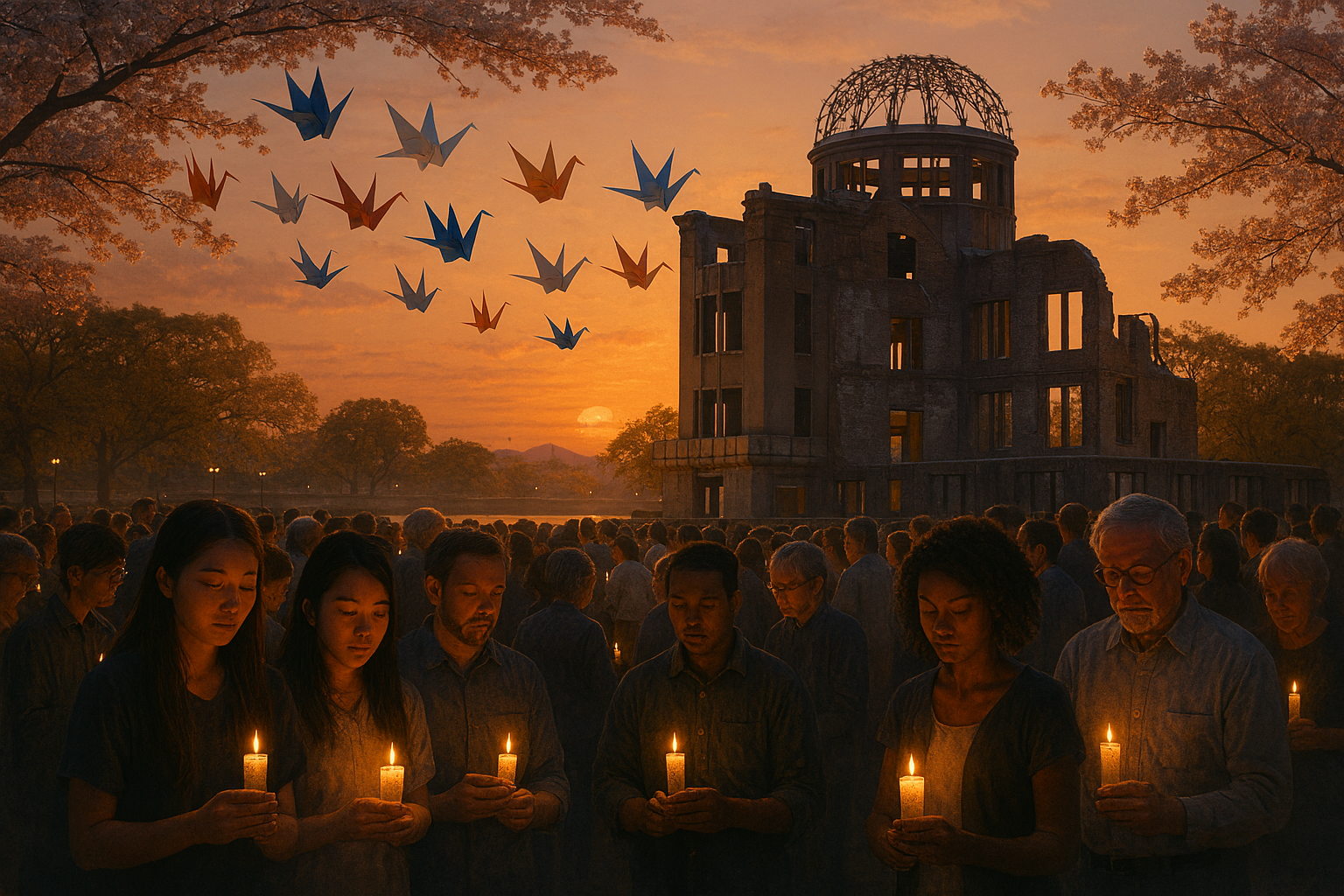
Hiroshima Day 2025 marks 80 years since the atomic bombing of Hiroshima. Here’s a look at its history, impact, and why this day matters more than ever today.
Table of Contents
Published: August 06, 2025
Last Updated: August 06, 2025
Category: International Affairs, Peace Advocacy, Nuclear Disarmament, Historical Commemoration
Overview: Understanding the Significance of the 80th Anniversary
On August 6, 2025, people worldwide commemorated the 80th anniversary of the atomic bombing of Hiroshima, marking a significant milestone in global remembrance of nuclear warfare’s humanitarian costs. The observance brought together government representatives, survivors, educators, peace advocates, and citizens from diverse backgrounds to reflect on the bombing’s historical consequences and renew commitments to nuclear disarmament efforts.
The year 2025 represented the most internationally significant commemoration in Hiroshima Day’s history, with delegates from 80 countries attending the central ceremony in Hiroshima Peace Memorial Park. This unprecedented global participation reflected growing international recognition that nuclear weapons pose existential risks requiring urgent collective action through diplomatic and legal frameworks.
Understanding this commemoration requires examining historical context, current nuclear security challenges, the role of survivor testimony in peace advocacy, educational initiatives that emerged from the observance, and international diplomatic efforts that continue advancing nuclear disarmament objectives.
Historical Background: The Atomic Bombings of 1945
August 6, 1945: The Hiroshima Bombing
At 8:15 AM on August 6, 1945, the United States Army Air Forces detonated an atomic weapon over Hiroshima, Japan, representing the first wartime deployment of nuclear arms against a civilian population. The uranium-based bomb, transported aboard the B-29 bomber Enola Gay, fundamentally altered the trajectory of military strategy, international relations, and human civilization.
The explosion generated immediate destruction of unprecedented scale. Estimates indicate that approximately 140,000 people died by the end of 1945, with this figure representing both immediate fatalities and deaths from acute radiation sickness during the months following the bombing. The blast destroyed approximately 5 square miles of the city center, obliterating an estimated 62,000 buildings.
The physical devastation was accompanied by severe environmental contamination, including radiation fallout affecting soil, water, and vegetation. Medical professionals documented radiation burns, acute radiation syndrome, and other injuries that overwhelmed available healthcare facilities and fundamentally challenged medical understanding of radiation effects on human physiology.
Three Days Later: The Nagasaki Bombing
The destruction of Hiroshima did not immediately prompt Japanese surrender. On August 9, 1945, three days after the Hiroshima bombing, the United States detonated a second atomic weapon over Nagasaki using a plutonium-based design designated “Fat Man.” This second bombing killed approximately 70,000 people by December 1945.
The combined impact of the two bombings influenced Japan’s surrender decision, which Emperor Hirohito announced on August 15, 1945. The war officially ended on September 2, 1945, with Japan’s formal surrender signed aboard the USS Missouri in Tokyo Bay. The atomic bombings remain among the most consequential military decisions in modern history, with historians, ethicists, and policy analysts continuing to debate their strategic necessity, proportionality, and lasting implications for international law and warfare conduct.
Immediate and Long-Term Health Consequences
Survivors experienced varied health consequences extending decades beyond the initial bombing. In addition to immediate thermal and blast injuries, many survivors developed radiation-related illnesses including acute radiation syndrome in the immediate aftermath, followed by increased cancer incidence in subsequent years.
Medical research documented particular increases in leukemia and other cancers among survivors exposed to significant radiation doses. Subsequent generations of survivors’ descendants required monitoring for hereditary health effects, contributing to long-term medical research programs examining radiation exposure consequences across generations.
The Hibakusha: Survivors and Peace Advocates
Who Are the Hibakusha?
The term “hibakusha” (被爆者) refers specifically to individuals who survived the atomic bombings of Hiroshima and Nagasaki. As of 2025, approximately 118,000 recognized hibakusha remain alive, representing a rapidly diminishing population as survivors age.
Hibakusha experienced varied exposures depending on their location during the bombings. Some were proximate to the blast epicenter, experiencing intense thermal radiation, blast pressure, and immediate radiation exposure. Others were at greater distances but still within areas receiving significant radiation doses. The geographic location of survivors at detonation time substantially influenced both immediate injuries and long-term health consequences.
Health Challenges and Medical Complications
Hibakusha face ongoing health challenges documented through decades of medical research. Primary conditions include radiation-induced cancers, particularly leukemia with increased incidence appearing within 5-10 years post-bombing and solid cancers increasing over subsequent decades.
Cardiovascular and metabolic complications developed in many survivors, contributing to premature aging and early-onset chronic diseases. Cataracts, thyroid disease, and immune system dysfunction occurred in measurable percentages of the survivor population. Additionally, many survivors developed psychological conditions including PTSD and depression related to trauma experiences and survival of catastrophic events.
Social Stigma and Discrimination
Many hibakusha faced social discrimination in postwar Japan, with some potential employers and marriage prospects rejecting survivors based on concerns about radiation effects or social association with the bombing. This discrimination compounded physical and psychological suffering, requiring advocacy efforts to ensure equal treatment and access to medical services.
Government recognition and medical support for hibakusha expanded gradually over decades. In 1968, Japan established an official medical examination program for atomic bomb survivors. In 1995, the government implemented a comprehensive support system providing medical care, medication allowances, and health examination programs for recognized survivors.
Transformation into Peace Advocates
Despite facing significant personal hardship, many hibakusha transformed their experiences into powerful advocacy for nuclear disarmament and peace. Survivor testimony programs reached millions of people through international speaking engagements, published accounts, documentary films, and educational initiatives.
Organizations founded by and for hibakusha actively promote nuclear abolition through multiple advocacy channels. The Japan Confederation of A-Bomb and H-Bomb Sufferers Organizations represents survivor interests in international forums and advocates for comprehensive nuclear disarmament. Individual survivors have participated in testimony programs at the United Nations, traveled to educational institutions internationally, and contributed to medical research advancing understanding of radiation effects.
International Nuclear Security Landscape in 2025
Global Nuclear Weapons Inventory
As of 2025, nine nations possess recognized nuclear weapons: the United States, Russia, United Kingdom, France, China, India, Pakistan, Israel, and North Korea. These states maintain approximately 13,000 nuclear warheads, with the majority concentrated among the United States and Russia.
The total destructive potential of current nuclear arsenals far exceeds Cold War-era stockpiles, despite overall numerical reductions from peak inventories during the 1980s. Modern warhead designs incorporate improved accuracy, smaller yields enabling tactical applications, and enhanced reliability through continuous modernization programs.
Arms Control Treaties and Agreements
Several international agreements attempt to limit nuclear weapons development and deployment:
| Treaty/Framework | Year Established | Primary Purpose | Current Status |
|---|---|---|---|
| Non-Proliferation Treaty | 1968 | Prevent nuclear spread, promote disarmament | 191 state parties |
| Strategic Arms Limitation Talks | 1972, 1979 | Limit US-Soviet strategic weapons | Expired/Superseded |
| Strategic Arms Reduction Treaty | 1991-2010 | Reduce US-Russian strategic weapons | Most agreements expired |
| Comprehensive Test Ban Treaty | 1996 | Prohibit all nuclear testing | 178 signatory states |
| Treaty on Prohibition of Nuclear Weapons | 2017 | Achieve complete nuclear abolition | 92 state parties as of 2025 |
The Treaty on the Prohibition of Nuclear Weapons (TPNW) represents the most comprehensive international legal framework addressing nuclear weapons abolition. Entering into force in January 2021 after achieving 50 state ratifications, the TPNW explicitly prohibits development, production, stockpiling, transfer, and threatened use of nuclear weapons.
However, the treaty notably excludes all nine nuclear-armed states, limiting its enforcement capacity. The United States, Russia, and other nuclear powers have declined to sign or ratify the TPNW, arguing that comprehensive disarmament requires verification mechanisms ensuring all nations comply simultaneously.
Contemporary Nuclear Security Challenges
Several factors create heightened nuclear security concerns in 2025:
Strategic Instability: Great power competition between the United States, Russia, and China involves military modernization, strategic doctrine development, and alliance formations that complicate nuclear stability assumptions.
Proliferation Risks: Regional conflicts create incentives for additional nations to pursue nuclear capabilities, with Iran’s nuclear program and ongoing tensions on the Korean Peninsula exemplifying proliferation pressures.
Technical Developments: Hypersonic missiles, artificial intelligence integration in command systems, and other emerging technologies complicate traditional deterrence calculations and increase risks of unintended escalation.
Accidental War Risks: Complex nuclear command systems, cyber vulnerabilities, and rapid decision timelines create potential for unintended nuclear weapon use through miscalculation or technical malfunction.
Non-State Threats: Terrorist organizations continue seeking nuclear materials, with radiological weapon risks representing significant security concerns despite limited technical feasibility.
Hiroshima Day 2025: Global Observance and Commemoration
The Central Ceremony in Hiroshima
The 80th anniversary Peace Memorial Ceremony on August 6, 2025, represented the largest and most internationally attended commemoration in the event’s history. The ceremony took place at Hiroshima Peace Memorial Park, with attendance exceeding previous years despite logistical challenges of accommodating international participants.
At precisely 8:15 AM, the exact moment the atomic bomb detonated 80 years earlier, attendees observed a minute of silence honoring victims and survivors. This synchronized moment reflected global recognition of the bombing’s significance and shared commitment to preventing nuclear warfare’s recurrence.
Official participants included the Japanese Prime Minister, international government representatives from 80 countries, mayors from numerous cities worldwide, leaders of international organizations, and thousands of Japanese and international citizens. The ceremony incorporated traditional elements including the tolling of the peace bell, wreath laying by government representatives, and reading of victim names.
Peace Declaration and International Statements
Hiroshima’s mayor delivered an address emphasizing the urgency of nuclear disarmament and the imperative for international cooperation. The statement highlighted survivors’ testimonies, described ongoing health consequences affecting atomic bomb survivors, and called for strengthened commitment to preventing future nuclear weapons use.
International government representatives issued various statements reflecting their respective positions on nuclear policy. Statements from nuclear-armed nations emphasized responsible stewardship, security deterrence rationales, and support for non-proliferation frameworks, though perspectives varied regarding disarmament timelines and verification mechanisms.
Non-nuclear weapon states generally emphasized complete nuclear abolition and the necessity of advancing the Treaty on the Prohibition of Nuclear Weapons. Many statements referenced climate change and other existential threats, contextualizing nuclear weapons within broader global security challenges.
Victim Registry and Memorial Updates
The official registry of atomic bomb victims received 3,289 new names of individuals who died during the preceding year, bringing the total registry to over 330,000 names. This annual update process honors individual victims while maintaining documentation of the bombing’s human costs extending across 80 years.
Memorial site renovations completed before the 80th anniversary improved accessibility and interpretive capacity of the Hiroshima Peace Memorial Museum. The museum’s expanded educational programs documented survivor experiences, explained radiation effects scientifically, and contextualized the bombings within World War II history and postwar development of international peacekeeping institutions.
India’s Participation in Hiroshima Day 2025
Educational and Community Initiatives
In India, commemorative activities reflected the country’s commitment to nuclear disarmament despite its status as a nuclear weapon state. Schools and educational institutions conducted special programs addressing the bombings’ historical significance, radiation effects, and peace advocacy.
Multiple schools organized candlelight vigils where students reflected on nuclear weapons’ humanitarian consequences. Essay competitions and debate programs engaged Indian youth in analyzing disarmament strategies and international cooperation mechanisms. Art exhibitions featured student-created works addressing peace themes, nuclear abolition, and international cooperation.
Civil society organizations coordinated awareness drives highlighting Hiroshima’s legacy and contemporary relevance. Documentary screenings enabled audiences to witness survivor testimonies, understand reconstruction efforts, and appreciate Japanese and international communities’ post-bombing reconciliation and peace-building initiatives.
India’s Nuclear Policy Framework
India maintains a distinctive nuclear policy balancing deterrence requirements with disarmament advocacy. The No First Use (NFU) policy commits India to never initiating nuclear weapon deployment regardless of whether conventional or nuclear weapons are deployed against India.
The minimum credible deterrence doctrine guides India’s nuclear arsenal development, emphasizing maintaining the smallest number of weapons necessary for defensive purposes. This approach contrasts with arms race participation that characterizes some nuclear weapon states’ strategic doctrines.
India consistently supports UN resolutions calling for complete nuclear disarmament, advocates for establishing nuclear weapon-free zones, and promotes transparency in nuclear arsenals and capabilities. Indian diplomats participate in international disarmament forums and work with international partners to strengthen verification mechanisms ensuring compliance with disarmament commitments.
Diplomatic Participation in International Forums
Indian representatives attended the Hiroshima Day 80th anniversary ceremony and participated in associated international meetings addressing nuclear disarmament. These diplomatic engagements reflected India’s commitment to strengthening international frameworks for peaceful conflict resolution and weapons abolition.
India supports the Comprehensive Test Ban Treaty, participates in International Atomic Energy Agency safeguards, and maintains transparent communication regarding its nuclear program. The country actively engages in the Conference on Disarmament and other multilateral forums advancing nuclear non-proliferation and disarmament objectives.
Global Commemorative Activities and Cultural Events
European Initiatives
European nations organized extensive commemorative events reflecting the region’s historical experience with world wars and commitment to preventing future large-scale conflicts.
Germany: Berlin hosted an international peace conference featuring former world leaders, nuclear policy experts, humanitarian advocates, and youth activists. Participants discussed disarmament strategies, analyzed nuclear deterrence doctrines, and proposed mechanisms for achieving comprehensive nuclear weapon prohibition.
France: Paris organized concerts for peace featuring musicians from Japan and European nations, creating cultural exchanges emphasizing peace themes and international unity. Visual art exhibitions examined nuclear weapons’ development history and humanitarian consequences.
United Kingdom: London’s major museums opened special exhibitions documenting atomic weapons development, analyzing historical decision-making, and exploring postwar nuclear deterrence theories. Academic institutions organized seminars examining ethical dimensions of weapons of mass destruction.
Netherlands: The Hague hosted diplomatic meetings examining nuclear weapons’ legal status under international law. Experts analyzed whether nuclear weapons comply with humanitarian international law principles, particularly regarding distinction between combatants and civilians, proportionality in warfare, and prohibition of indiscriminate weapons.
American Commemorations
United States observances reflected growing public support for nuclear disarmament and evolving perspectives on historical decision-making regarding atomic weapons deployment.
Washington, DC: The Smithsonian Institution presented a comprehensive exhibition examining atomic weapons’ historical development, scientific principles, and documented consequences of Hiroshima and Nagasaki bombings. The exhibition included interactive displays, survivor testimonies, and analysis of Cold War nuclear deterrence policies.
New York: The United Nations hosted a special General Assembly session dedicated to nuclear disarmament, featuring presentations from international experts, government representatives, civil society organizations, and survivor advocates. Sessions examined verification mechanisms, enforcement procedures, and timeline for achieving complete nuclear abolition.
University Sector: Academic institutions organized conferences examining nuclear policy ethics, international law implications, and technological alternatives to nuclear deterrence. Research centers published studies analyzing disarmament feasibility and transition mechanisms for achieving nuclear weapon-free security systems.
Faith Communities: Religious organizations held interfaith services incorporating survivor testimonies and calling for nuclear weapon elimination as a moral imperative. Various faith traditions contributed perspectives on weapons of mass destruction, emphasizing human dignity, sanctity of life, and moral obligations to future generations.
Asian Regional Programs
Asian nations organized significant commemorative events, with particular emphasis on nuclear testing legacy in the Pacific region and regional disarmament initiatives.
South Korea: Seoul hosted a regional conference examining Northeast Asian security dynamics, Korean Peninsula denuclearization prospects, and multilateral cooperation mechanisms. Government officials and policy experts analyzed how regional tension reduction and confidence-building measures could advance disarmament objectives.
Philippines: Manila organized events highlighting the Pacific region’s nuclear testing legacy, documenting health consequences affecting indigenous populations in Marshall Islands and other Pacific territories. Programs examined environmental contamination from testing facilities and ongoing remediation efforts.
Australia: Canberra launched new policy initiatives supporting the Treaty on the Prohibition of Nuclear Weapons through diplomatic engagement and advocacy funding. Government and civil society organizations collaborated on educational programs and international advocacy strengthening the TPNW framework.
Thailand: Bangkok hosted Association of Southeast Asian Nations (ASEAN) discussions on nuclear weapon-free zones, examining how regional frameworks can advance disarmament while addressing security concerns of participating nations.
Youth Engagement and Educational Transformation
Curriculum Integration and School Programs
Hiroshima Day 2025 catalyzed unprecedented integration of peace education and nuclear disarmament topics into educational curricula worldwide. Schools at primary, secondary, and tertiary levels incorporated atomic bombing history into multiple subject areas.
History Education: Students studied World War II’s conclusion, analyzing historical context preceding the atomic bombings and examining debates regarding military necessity, civilian targeting, and alternative strategies for achieving Japanese surrender.
Science Education: Physics and chemistry classes examined atomic energy principles, nuclear fission processes, and radiation effects on living organisms. Students studied medical consequences of radiation exposure and scientific research advancing radiation protection standards.
Literature and Language Arts: Students read survivor accounts, analyzed peace poetry, and examined literary representations of nuclear weapons’ humanitarian consequences. Translation projects made survivor testimonies accessible in multiple languages, expanding educational reach.
Social Studies and Civics: Courses addressed international relations, nuclear deterrence theories, arms control treaties, and mechanisms for achieving disarmament. Students analyzed competing national security perspectives and examined international cooperation frameworks.
Art and Music Programs: Students created visual representations addressing nuclear weapons, peace themes, and international cooperation. Musical performances featured compositions inspired by Hiroshima’s legacy and contemporary peace advocacy.
International Student Exchange and Dialogue Programs
Educational exchanges connected young people across national boundaries, fostering mutual understanding and commitment to peace advocacy.
Japan-India Programs: Students from India participated in programs in Hiroshima featuring museum visits, survivor meetings, and dialogues examining both nations’ approaches to nuclear policy and disarmament advocacy.
Global Classroom Networks: Virtual connections enabled real-time collaboration among students worldwide, facilitating discussions on nuclear disarmament, international cooperation, and peer-to-peer peace advocacy.
Model United Nations Simulations: Student-led simulations allowed young people to role-play diplomatic negotiations on nuclear disarmament treaties, analyze competing national interests, and develop creative solutions addressing international security challenges.
Peace Ambassador Networks: Hiroshima Day activities identified youth leaders who committed to ongoing peace advocacy through speaking programs, educational initiatives, and social media campaigns reaching peer audiences.
Technology and Digital Innovation in Commemoration
Virtual Reality and Immersive Experiences
Advanced technology enabled people unable to travel to Japan to participate in commemorations through innovative digital platforms.
Virtual Reality Museum Experiences: Students and international audiences accessed immersive virtual reality experiences enabling digital visits to Hiroshima Peace Memorial Park and the memorial museum. Participants virtually walked through damaged areas, examined artifacts, and accessed audio-visual survivor testimonies.
360-Degree Documentary Coverage: Cinematographers documented the 80th anniversary ceremony from multiple angles, enabling viewers to experience the event from various perspectives through 360-degree video technology.
Interactive Digital Archives: Online platforms compiled survivor testimonies, historical documents, photographs, and research findings in searchable databases accessible to educators and students worldwide.
Social Media and Digital Advocacy Campaigns
Social media platforms amplified Hiroshima Day messaging and enabled peer-to-peer advocacy among youth audiences.
Hashtag Campaigns: Millions of social media users engaged with campaigns including #HiroshimaDay, #NuclearDisarmament, and #PeaceForAll, sharing messages emphasizing peace advocacy and nuclear abolition.
Survivor Story Sharing: Social media platforms featured survivor testimonies, allowing aging survivors to share experiences with global audiences while preserving their stories digitally.
Youth-Led Activism: Young people created and shared content addressing nuclear weapons’ humanitarian consequences, calling for disarmament, and promoting international cooperation. User-generated content reached peer audiences through social media networks.
Information Visualization: Designers created infographics and data visualizations explaining nuclear weapons numbers, disarmament treaty status, and health consequences of radiation exposure, making complex information accessible to general audiences.
Symbolic Gestures and Lasting Tributes
Seedling Planting at United Nations Headquarters
Saplings grown from seeds of a persimmon tree that survived the Hiroshima bombing were planted at the United Nations Headquarters in New York. This symbolic gesture connected the 80th anniversary commemoration to the international organization dedicated to maintaining peace and preventing future large-scale conflicts.
The surviving persimmon tree, located approximately 1,200 meters from the blast epicenter, endured intense heat and radiation exposure yet continued growing. Its survival symbolizes resilience and the possibility of renewal even following devastating destruction.
Paper Crane Campaign and Memorial Construction
Building on Sadako Sasaki’s legacy—a child who folded paper cranes while hospitalized with radiation-induced leukemia—the 2025 commemoration featured collection of millions of paper cranes from schools worldwide. Student-made cranes were displayed at various memorial sites, creating powerful visual tributes to peace and hope.
Paper cranes represent peace and longevity in Japanese culture, making this centuries-old craft particularly meaningful in nuclear disarmament contexts. The 2025 campaign generated estimated 12 million paper cranes from participating schools, surpassing previous records.
Lantern Floating Ceremony and Spiritual Observances
Traditional lantern floating ceremonies took place on rivers and waterways adjacent to memorial sites. Participants released paper lanterns bearing names of atomic bomb victims, creating moving visual tributes while offering prayers for peace.
Religious communities incorporated atomic bomb anniversary observances into spiritual practices across multiple faith traditions. Interfaith services brought together Buddhist monks, Christian clergy, Islamic scholars, and leaders of other traditions to commemorate victims and advocate for peaceful conflict resolution.
Contemporary Nuclear Disarmament Efforts and Diplomatic Progress
Treaty on the Prohibition of Nuclear Weapons Implementation
The TPNW entered into force in January 2021 and continued gaining state adherence through 2025. By August 2025, 92 countries had become state parties to the treaty, representing nearly half of UN member states.
The treaty prohibits nuclear weapon development, production, stockpiling, transfer, and threatened use. Signatory states committed to establishing verification mechanisms, providing assistance to victims, and remediating environmental contamination from nuclear weapons programs.
However, the treaty’s effectiveness is constrained by absence of nuclear-armed states. The United States, Russia, China, and other nuclear powers argue that comprehensive disarmament requires simultaneous action by all nuclear states with credible verification ensuring compliance.
UN Disarmament Efforts and Institutional Mechanisms
The United Nations Office for Disarmament Affairs coordinates global nuclear disarmament initiatives through various mechanisms:
The Conference on Disarmament: This multilateral body serves as the primary forum for disarmament negotiations, though progress has been limited by geopolitical tensions and disagreement regarding negotiation priorities and procedures.
First Committee of the UN General Assembly: This body addresses disarmament and international security issues, adopting various resolutions calling for nuclear weapons abolition and strengthened verification mechanisms.
International Atomic Energy Agency (IAEA): Founded in 1957 and headquartered in Vienna, the IAEA promotes peaceful nuclear technology while preventing weapons proliferation through comprehensive safeguards and verification programs.
Regional Disarmament Initiatives and Nuclear-Weapon-Free Zones
Multiple regions have established nuclear-weapon-free zones through treaty agreements:
| Region | Treaty Name | Year Established | Number of State Parties |
|---|---|---|---|
| Latin America & Caribbean | Treaty of Tlatelolco | 1967 | 33 states |
| South Pacific | South Pacific Nuclear-Free Zone | 1985 | 13 states |
| Southeast Asia | Southeast Asia Nuclear-Free Zone | 1995 | 10 states |
| African Continent | African Nuclear-Free Zone | 2009 | 40 states |
| Central Asia | Central Asian Nuclear-Free Zone | 2009 | 5 states |
These regional agreements represent successful examples of nations voluntarily renouncing nuclear weapons through international treaties with verification mechanisms. Expansion of nuclear-weapon-free zones represents an incremental approach to advancing global disarmament.
Medical and Scientific Legacy of Atomic Bomb Research
Long-Term Health Studies and Research Contributions
Research examining atomic bomb survivors has significantly advanced medical understanding of radiation effects, cancer development, and trauma recovery. The Radiation Effects Research Foundation (RERF), jointly operated by the Japanese government and the United States, maintains the world’s most comprehensive database of radiation exposure effects.
RERF research has documented increased cancer incidence, cardiovascular disease development, and immune system dysfunction among survivors. This research informs radiation protection standards established by international bodies including the International Commission on Radiological Protection (ICRP).
Cancer Research and Treatment Advances
Long-term follow-up of atomic bomb survivors has contributed valuable data supporting cancer research and treatment development. Epidemiological studies examining survivor populations have identified cancer risk factors, quantified radiation dose-response relationships, and supported development of radiation protection standards.
Medical professionals use survivor data to inform treatment protocols for cancer patients exposed to therapeutic radiation during medical procedures. Understanding radiation effects accumulated through decades of survivor research informs safer cancer treatment approaches.
Psychological and Trauma Research
Psychiatric and psychological research examining survivor populations has advanced understanding of post-traumatic stress, long-term trauma effects, and recovery mechanisms. This research contributes to improved mental health interventions for populations experiencing catastrophic events.
Frequently Asked Questions
Why is Hiroshima Day specifically observed on August 6, and what distinguishes the 2025 80th anniversary from previous commemorations?
Hiroshima Day is observed on August 6 because the atomic bomb detonated over Hiroshima at 8:15 AM on that date in 1945. The 2025 80th anniversary represented the most internationally significant commemoration in the event’s history, with delegates from 80 countries attending the central ceremony in Hiroshima Peace Memorial Park. The milestone generated unprecedented global participation, educational initiatives, and diplomatic engagement, reflecting heightened international attention to nuclear disarmament issues and survivor advocacy.
What fundamental purposes does Hiroshima Day commemoration serve beyond historical remembrance?
Hiroshima Day serves multiple essential purposes: honoring the memory of approximately 140,000 people killed in the bombing by December 1945 and supporting survivors (hibakusha) facing ongoing health complications; educating current and future generations regarding nuclear weapons’ devastating humanitarian consequences; strengthening the international movement for complete nuclear disarmament; and promoting peaceful conflict resolution through diplomacy rather than military force. The commemoration emphasizes that prevention of nuclear warfare requires sustained international cooperation, transparent communication, and institutional mechanisms ensuring disarmament verification.
How did India specifically participate in Hiroshima Day 2025 commemorations and what does this reflect about the nation’s nuclear policy?
In India, schools and civil society organizations conducted educational programs including candlelight vigils, essay competitions, debate programs, art exhibitions, and documentary screenings addressing Hiroshima’s legacy and contemporary disarmament challenges. These activities reflect India’s position as a nuclear weapon state maintaining distinctive policy commitments including a No First Use policy, minimum credible deterrence doctrine, and consistent advocacy for complete global nuclear disarmament. India actively supports UN resolutions on disarmament, participates in international forums advancing non-proliferation objectives, and implements educational programs emphasizing peace building and conflict resolution through diplomatic mechanisms.
What role do hibakusha (atomic bomb survivors) play in contemporary nuclear disarmament advocacy and how has their contribution evolved over 80 years?
Hibakusha are survivors who experienced immediate injuries and ongoing health complications from atomic bomb exposure, yet many transformed their suffering into powerful peace advocacy. Survivors contribute through international testimony programs sharing experiences at schools and conferences, participation in medical research advancing radiation medicine and cancer treatment, active promotion of nuclear abolition through survivor organizations, and mentoring younger generations through intergenerational dialogue programs. Their voices provide irreplaceable human context for abstract disarmament discussions, compelling audiences to recognize nuclear weapons’ humanitarian costs and urgency of disarmament efforts.
What specific areas should individuals focus on when participating in Hiroshima Day observances and what concrete actions can they take?
Individuals can participate in local peace walks, candlelight vigils, or documentary screenings; create and share digital content addressing peace advocacy and nuclear disarmament; support organizations advancing disarmament through donations or volunteering; engage in peace education through schools or community organizations; participate in Model UN simulations addressing disarmament diplomacy; and promote international cooperation messages through social media and personal networks. Educational initiatives, community organizing, and sustained advocacy contribute to building public support for disarmament policies and international frameworks advancing nuclear weapons abolition.
How do current global nuclear security challenges and emerging threats make Hiroshima Day 2025 particularly relevant to contemporary international security concerns?
Hiroshima survivors and peace advocates emphasize rising nuclear threats resulting from great power competition, arms race revival among major powers, increased proliferation pressures from regional conflicts, technical developments including hypersonic weapons and AI integration complicating traditional deterrence calculations, and persistent threats of nuclear terrorism. These contemporary challenges demonstrate that nuclear disarmament remains urgent despite eight decades since Hiroshima, with new technologies and geopolitical dynamics potentially increasing risks compared to Cold War-era frameworks. Climate change, resource scarcity, and other global challenges compound nuclear security concerns, creating imperative for strengthened international cooperation on disarmament.
What international legal frameworks and treaties currently govern nuclear weapons and what progress toward disarmament has occurred through diplomatic mechanisms?
The Treaty on the Prohibition of Nuclear Weapons (TPNW), entering into force in January 2021, represents the most comprehensive legal framework explicitly prohibiting nuclear weapons. As of 2025, 92 countries had become state parties to the TPNW, though notably excluding all nine nuclear-armed states. Additional frameworks include the Non-Proliferation Treaty (191 state parties), Comprehensive Test Ban Treaty (178 signatories), and various regional nuclear-weapon-free zone agreements. However, progress toward comprehensive disarmament has been limited by geopolitical tensions, disagreement regarding verification mechanisms, and unwillingness of nuclear powers to simultaneously renounce weapons. The IAEA and Conference on Disarmament continue pursuing incremental progress through diplomatic channels.
What specific educational initiatives and youth engagement programs emerged from Hiroshima Day 2025, and how do these contribute to long-term peace building?
Hiroshima Day 2025 featured unprecedented educational initiatives including virtual reality experiences enabling students to witness survivor testimonies and explore reconstruction efforts; international student exchange programs connecting youth across cultures for dialogue on disarmament; curriculum integration addressing atomic bombing history, radiation science, and peace advocacy across multiple subject areas; Model UN simulations allowing youth to engage in disarmament diplomacy; and digital platforms enabling students to create and share peace advocacy content reaching millions of peers. These initiatives create foundations for sustained youth engagement in peace advocacy and disarmament activism extending beyond the 80th anniversary commemoration.
Key Statistics and Data Summary
Nuclear Weapons Inventory (2025)
| Metric | Value |
|---|---|
| Nuclear-armed states | 9 nations |
| Estimated global warheads | ~13,000 total |
| US warheads | ~5,800 |
| Russian warheads | ~6,000 |
| Other states combined | ~1,200 |
| TPNW state parties | 92 countries |
| Hiroshima Day 2025 international delegates | 80 countries |
Commemoration Participation
| Activity Type | 2025 Participation Estimate |
|---|---|
| Central ceremony attendees | 50,000+ people |
| International government representatives | 80 countries |
| Paper cranes submitted globally | ~12 million |
| School programs incorporating commemoration | 2,500+ institutions |
| Social media posts with disarmament hashtags | 5+ million |
Health Data on Atomic Bomb Survivors
| Health Outcome | Rate Among Survivors |
|---|---|
| Recognized hibakusha alive (2025) | ~118,000 individuals |
| Leukemia increase | 15-40 cases per 100,000 person-years |
| Solid cancer increase | Varies by cancer type and dose |
| Cardiovascular disease complications | 20-30% of survivor population |
| Average lifespan reduction | 1-3 years depending on radiation dose |
Conclusions and Long-Term Implications
The Transformation from Remembrance to Action
Hiroshima Day 2025 demonstrated that historical commemoration, when coupled with contemporary diplomatic engagement and educational initiatives, possesses significant capacity to influence international relations and shape future disarmament efforts. The 80th anniversary achieved unprecedented global participation and media coverage, generating sustained attention to nuclear disarmament that extended beyond the single day of commemoration.
Advancing the Disarmament Agenda
The convergence of historical reflection, survivor advocacy, youth engagement, and diplomatic initiatives created momentum for advancing nuclear disarmament objectives. Educational programs reached millions of students worldwide, building constituencies supporting disarmament policies. International diplomatic forums facilitated detailed discussions regarding verification mechanisms, transition procedures, and security arrangements necessary for comprehensive nuclear abolition.
Challenges and Opportunities
While Hiroshima Day 2025 generated unprecedented global participation and reaffirmed commitment to disarmament, substantial challenges persist in achieving practical implementation of nuclear weapon abolition. Nuclear-armed states’ security doctrines continue emphasizing deterrence roles for nuclear weapons, limiting their willingness to engage in comprehensive disarmament.
However, emerging opportunities include growing public support for disarmament, expansion of the TPNW, advancement of regional nuclear-weapon-free zones, and technological innovations enabling enhanced verification mechanisms ensuring compliance with disarmament commitments.
Path Forward
Building on the momentum of Hiroshima Day 2025, sustained effort will be required across multiple dimensions including diplomatic negotiations, educational advocacy, technological development, and civil society engagement. The pathway from nuclear weapons to permanent peace requires collective commitment spanning generations and transcending national boundaries.
About the Author
Nueplanet is an international affairs and peace advocacy correspondent specializing in nuclear disarmament, international security, and conflict resolution. With extensive experience analyzing nuclear policy, international treaties, and peace advocacy movements, Nueplanet provides evidence-based analysis of global security challenges grounded in verified sources and expert perspectives.
Nueplanet’s approach emphasizes accuracy, transparency, and objectivity when analyzing complex international issues including nuclear weapons policy, arms control treaties, and disarmament advocacy. This commitment to verified information guides all reporting and analysis, with particular attention to distinguishing factual developments from political rhetoric.
Nueplanet‘s Commitment to Accuracy and Verification
This article prioritizes accuracy and reliance on verified sources from authoritative institutions. All nuclear weapons statistics derive from publications of the Federation of American Scientists, International Atomic Energy Agency reports, and official government statements.
All information regarding international treaties references official text and status from the United Nations Office for Disarmament Affairs and treaty secretariat documents. Historical information regarding the 1945 atomic bombings comes from academic research, survivor testimony archives, and official government historical records.
The analysis presents multiple perspectives on complex nuclear security issues without advocating for particular political positions or national interests. This approach reflects commitment to objective journalism providing readers with verified information enabling independent judgment formation.
Readers are encouraged to consult primary sources including UN disarmament documents, hibakusha testimony archives, and authoritative news organizations for additional context and contemporary updates regarding ongoing disarmament negotiations and peace advocacy initiatives.
Summary of Key Takeaways
Historical Significance: The atomic bombings of Hiroshima and Nagasaki on August 6 and August 9, 1945, killed approximately 210,000 people by December 1945 and initiated the nuclear age with profound implications for military strategy, international relations, and human civilization.
Survivor Legacy: Hibakusha, the approximately 118,000 surviving atomic bomb victims, continue advocating for nuclear disarmament through international testimony programs, medical research participation, and peace advocacy organizations, transforming personal suffering into advocacy for weapons abolition.
2025 Milestone Significance: The 80th anniversary commemoration achieved unprecedented global participation with delegates from 80 countries, generating enhanced media attention and diplomatic engagement regarding disarmament objectives.
International Legal Frameworks: The Treaty on the Prohibition of Nuclear Weapons represents the most comprehensive framework explicitly abolishing nuclear weapons, though nuclear-armed states remain absent from the agreement, limiting enforcement capacity.
Contemporary Nuclear Challenges: Current geopolitical tensions, arms race revival, emerging technologies, and proliferation pressures demonstrate that nuclear disarmament remains urgent despite eight decades since Hiroshima.
Educational Transformation: Hiroshima Day 2025 catalyzed unprecedented youth engagement in peace advocacy through curriculum integration, international exchanges, digital learning platforms, and social media activism.
Diplomatic Progress: While comprehensive disarmament remains elusive, regional nuclear-weapon-free zones, verification mechanism development, and strengthening civil society advocacy represent incremental progress toward abolition objectives.
Future Outlook: Achievement of comprehensive nuclear disarmament requires sustained diplomatic engagement, institutional development, public support building, and technological innovation enabling verification mechanisms ensuring compliance with disarmament commitments.
For current information on nuclear disarmament initiatives, international treaty status, and hibakusha advocacy organizations, consult the United Nations Office for Disarmament Affairs, International Atomic Energy Agency, and Hiroshima Peace Memorial Institute resources.
Helpful Resources
Latest Posts:
- SBI Clerk Notification 2025: 6589 Vacancies Announced – Check Eligibility, Apply Online
- CEE Kerala Releases KEAM 2025 Seat Allotment Lists: Phase 2 Engineering, Phase 1 Architecture
- GATE 2026 Registration Expected Soon: Eligibility, Fees, and Application Process Explained
- Was There a Ceasefire Violation with Pakistan? Indian Army Rejects Reports
- SSC CGL Exam Date 2025: Admit Card Released, Know Key Details & Schedule
Related Posts












Post Comment