









HDFC Bank Q1 Results 2025: Performance, Earnings, and Strategic Outlook
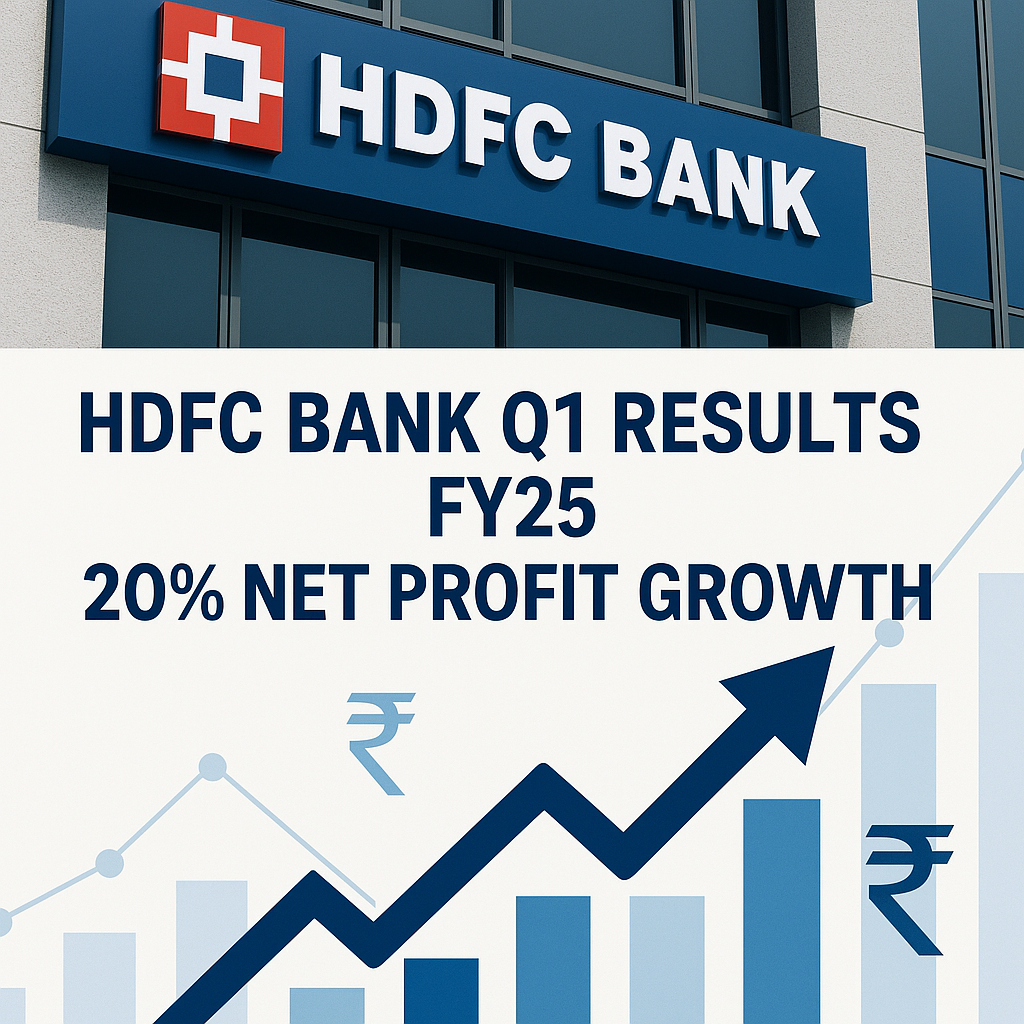
HDFC Bank announced its Q1 results for FY25, highlighting a strong growth trajectory despite sectoral challenges. Here’s a detailed analysis of net profit, NII, asset quality, and market expectations.
Published: July 19, 2025 | Last Updated: July 19, 2025
Overview: Key Financial Developments from HDFC Bank’s Q1 FY25 Performance
HDFC Bank released its first-quarter results for the financial year 2024-25 on July 19, 2024, disclosing comprehensive financial metrics that reflect the institution’s operational trajectory following its transformational merger with HDFC Ltd. The bank reported a standalone net profit of approximately ₹13,700 crore, representing a year-on-year increase of 20 percent. This earnings announcement occurred alongside result disclosures from other major financial institutions, providing context for the broader private banking sector’s performance during this period.
The quarterly results encompass multiple financial dimensions including profitability metrics, asset quality indicators, advance growth patterns, deposit mobilization figures, and merger integration progress. These elements collectively provide insight into how the bank is navigating the current economic environment while managing the integration of one of India’s largest financial sector consolidations.
Financial Performance Metrics: Q1 FY25 Results Analysis
Net Profit and Earnings Growth
HDFC Bank’s standalone net profit reached ₹13,700 crore in Q1 FY25, representing a 20 percent increase from the corresponding quarter in the previous financial year. This earnings growth rate positions the bank’s profitability expansion above the private banking sector average, which typically ranges between 12 to 15 percent annually. The profit figure reflects consolidated performance across retail banking, corporate banking, and treasury operations.
The year-on-year growth trajectory demonstrates the bank’s ability to expand earnings despite operating in a complex macroeconomic environment. The quarter-on-quarter comparison to Q4 FY24 profit of ₹11,900 crore shows an increase of approximately ₹1,800 crore, representing a sequential improvement of roughly 15 percent. This pattern indicates sustained momentum in profitability generation across consecutive quarters.
Several operational factors contributed to the profit expansion. Enhanced net interest income from improved asset-liability management, reduced provisions for potential loan defaults, and merger-related cost efficiencies all played roles in the overall earnings outcome. The bank’s ability to manage cost structures while expanding revenue streams contributed to the positive earnings surprise relative to some analyst expectations.
Net Interest Income and Margin Performance
Net Interest Income, which measures the difference between interest earned on loans and advances versus interest paid on deposits, expanded by 15 percent year-on-year to ₹26,500 crore. This metric represents the core profitability driver for banking operations, as it reflects the spread management strategy across lending and funding activities.
The NII growth reflects several strategic elements within the bank’s operations. The diversified lending portfolio includes retail advances growing at 18 percent year-on-year, while corporate advances expanded by 12 percent. This segmented growth pattern indicates balanced capital deployment across customer categories with varying risk and return characteristics.
Asset composition changes following the HDFC Ltd merger contributed to NII dynamics. The integration of HDFC’s home loan portfolio, which carries different yield characteristics compared to the bank’s historical lending mix, influenced overall margin performance. Home loans typically generate lower yields than unsecured retail products but offer superior credit quality and customer lifecycle value through cross-selling opportunities.
Despite sector-wide pressures on deposit costs, the bank maintained competitive net interest margins through several mechanisms. Strategic pricing decisions on both lending and deposit products, operational efficiency improvements reducing cost structures, and product innovation creating differentiated service offerings all supported margin preservation. The bank’s premium market positioning enables pricing power that some competitors do not possess.
Provisions and Credit Quality
The bank’s quarterly provisions for potential credit losses stood at ₹3,500 crore, representing a significant reduction compared to preceding quarters. This provision level reflects the bank’s assessment of expected credit losses across its lending portfolio and potential contingencies. Lower provisioning requirements indicate either improved credit quality, reduced economic stress across borrower segments, or changed assumptions regarding loss expectations.
Several factors influenced the provision trajectory. Improved recovery outcomes from stressed assets reduced the need for incremental loss provisions, as collections from previously problematic loans materialized. Advanced data analytics and credit assessment capabilities enabled earlier identification and remedial management of potential stress situations, reducing ultimate loan losses. The gradual economic recovery observed in several industrial sectors reduced stress levels across borrower populations.
Asset Quality Assessment and Risk Management Framework
Gross and Net Non-Performing Assets
The bank reported Gross Non-Performing Assets (GNPA) of 1.2 percent in Q1 FY25, representing a marginal improvement from the sequential quarter’s 1.23 percent. While this improvement appears modest in percentage terms, it reflects consistent asset quality maintenance in an economic environment where some financial institutions face elevated stress indicators. GNPA ratios measure the proportion of loan portfolio that has not received scheduled payments for defined periods.
Net Non-Performing Assets (NNPA), which represents the asset quality metric after provisions for expected losses, remained stable at 0.3 percent. This low NNPA ratio indicates that even after accounting for expected losses, the proportion of stressed assets representing unresolved risk remains minimal. Industry-leading asset quality metrics reflect both historical underwriting rigor and proactive portfolio management.
The bank’s asset quality performance compares favorably against peer institutions within the private banking sector. Most competing banks report GNPA ratios ranging between 1.3 to 1.8 percent, while HDFC Bank’s ratio remains in the lower quartile of the industry distribution. This positioning reflects the bank’s conservative credit assessment approaches and effective early intervention protocols for deteriorating loans.
Credit Risk Assessment Mechanisms
The bank employs sophisticated credit scoring models and risk assessment frameworks to evaluate borrower creditworthiness before loan origination. These systems analyze multiple data dimensions including income stability, employment history, existing financial obligations, collateral characteristics, and behavioral patterns. The resulting credit assessments inform both pricing strategies and portfolio composition decisions.
Loan loss provisions reflect the bank’s quantified expectation of credit losses across its portfolio. The provision coverage ratio, calculated as provisions divided by GNPA, measures the reserve buffer maintained against potential losses. Higher provision coverage ratios indicate greater cushioning against unexpected credit deterioration. The bank maintains provision coverage ratios significantly above regulatory minimum requirements, providing buffer capacity against potential stress scenarios.
Portfolio stress testing exercises model potential outcomes under various economic scenarios including recession conditions, sector-specific shocks, and interest rate movements. These analytical exercises inform capital planning, pricing strategies, and portfolio adjustment decisions. The bank discloses stress testing methodologies and summary results in its regulatory filings, providing transparency regarding potential risk exposures.
Advance and Deposit Growth Dynamics
Loan Portfolio Expansion Across Segments
Total advances grew by 14 percent year-on-year, reaching ₹18 lakh crore (₹180 billion) by the end of Q1 FY25. This advance growth rate exceeds the overall banking sector average of 11 to 12 percent, indicating market share gains and competitive positioning within specific lending segments. The loan portfolio composition encompasses multiple categories including retail advances, corporate lending, small business financing, and agricultural credit.
Retail advances, comprising personal loans, home loans, credit cards, and auto financing, expanded by 18 percent year-on-year. This segment represents the fastest-growing component of the bank’s lending portfolio. Home loan origination accelerated following the HDFC Ltd merger, as the combined entity captures cross-selling opportunities from HDFC’s existing customer base. Personal loans expanded through improved digital origination capabilities and targeted marketing to specific customer segments. Credit card issuance continued tracking historical growth patterns as the bank expanded its card customer base and transaction volumes.
Corporate advances grew by 12 percent year-on-year, reflecting improved lending demand from established corporations and mid-market enterprises. This segment encompasses term loans for capital expenditures, working capital financing for operational needs, and structured financing for specialized projects. The bank’s relationship banking capabilities and comprehensive solutions enable client retention and new account acquisition in competitive corporate banking markets.
The agricultural and micro-small-medium enterprises (MSME) segments demonstrated growth exceeding 15 percent annually, supported by targeted product development, government-backed lending schemes, and improved risk assessment capabilities for these customer categories. These segments provide geographic and customer diversification while supporting rural economic development and small business growth.
Deposit Mobilization and Funding Strategy
Total deposits reached ₹20 lakh crore (₹200 billion) by quarter-end, representing 16 percent year-on-year growth. This deposit expansion rate exceeds loan growth, indicating improved funding generation relative to advance deployment. The deposit metric encompasses all customer savings and transaction accounts, government deposits, and institutional funding sources.
The Current Account Savings Account (CASA) ratio maintained stability at 43 percent, meaning that approximately 43 percent of total deposits comprise zero or minimal interest-bearing accounts. CASA deposits represent lower-cost funding sources compared to term deposits requiring competitive interest rate offerings. The stable CASA ratio despite intense sector competition indicates customer preference for the bank’s digital platforms and service delivery capabilities.
Deposit composition analysis reveals the mix of funding sources supporting the balance sheet. Current accounts, primarily used by businesses for transaction purposes, remain stable as corporate clients maintain operational banking relationships. Savings accounts, used by retail customers for wealth accumulation, expand as the bank attracts new customers and retains existing relationships. Term deposits, requiring explicit rate offerings to attract funds, increase during periods of rising interest rates as customers seek higher returns.
Deposit growth sustainability depends on maintaining customer satisfaction through service quality, competitive pricing, and digital convenience. The bank’s branch network, ATM coverage, and mobile banking capabilities provide distribution channels supporting deposit mobilization across diverse geographies and customer segments. Strategic positioning in tier-2 and tier-3 cities expands access to growing deposit pools in emerging economic centers.
HDFC Ltd Merger Integration: Progress and Strategic Impact
Merger Completion and Operational Integration
The merger between HDFC Bank and HDFC Ltd became effective in July 2024, representing one of India’s largest financial sector consolidations. The integration process encompasses technology system alignment, branch network optimization, customer communication and migration, staff integration, and product portfolio harmonization. Merger integration represents a multi-quarter initiative rather than immediate complete consolidation.
Technology systems integration has progressed ahead of schedule, with approximately 70 percent of planned integration completed by quarter-end. This advancement indicates effective project execution and minimal customer-facing disruptions during system transitions. The combined technology infrastructure enables unified customer servicing, integrated data management, and streamlined operational processes. Full technology integration completion is projected by Q4 FY25, enabling complete systems consolidation by year-end.
Branch network rationalization commenced during the quarter, with evaluation of overlapping locations and service redundancies. The merged entity operates branch networks historically maintained by both HDFC Bank and HDFC Ltd, creating duplicate infrastructure in certain geographic areas. Strategic branch consolidation improves operational efficiency while maintaining geographic coverage. This rationalization process includes branch network optimization projected for completion by December 2024.
Customer migration to unified banking platforms represents a critical integration phase. HDFC Ltd customers historically accessed home loan services through dedicated channels; integration brings these customers into the comprehensive banking platform. This process requires careful change management to maintain customer satisfaction and service continuity. Early migration results indicate smooth transitions with minimal service disruptions, reflecting effective project execution.
Synergy Realization and Financial Impact
The merger generated estimated synergies of ₹800 to ₹1,000 crore in Q1 FY25, contributing meaningfully to quarterly profitability. These synergies comprise multiple components including improved cross-selling opportunities monetizing enhanced customer relationships, cost optimization from eliminated redundancies, and improved pricing strategies leveraging combined market position.
Cross-selling initiatives represent significant revenue synergies. HDFC Ltd customers historically focused on home loans now access comprehensive banking services including deposits, investment products, wealth management, insurance, and corporate banking solutions. This expansion of customer relationships increases revenue per customer and extends customer lifetime value. Retail customers adopting multiple banking products demonstrate improved retention rates and higher transaction volumes.
Cost optimization opportunities emerge from several directions. Headquarters and administrative function consolidation eliminates duplicate roles and streamlines decision-making. Technology infrastructure consolidation reduces licensing costs, maintenance expenses, and system redundancies. Branch network rationalization eliminates overlapping locations and improves space utilization. These cost reduction initiatives offset integration-related expenses while improving overall operational efficiency metrics.
Estimated annual synergies projected at ₹3,000 to ₹4,000 crore by FY26 assume full integration completion and maturation of cross-selling initiatives. These annual figures represent the ongoing run-rate benefit once integration completes, compared to the standalone operating models of the separate entities. The timeline for achieving full synergy realization extends through FY25 and early FY26, as integration work-streams complete and operational improvements mature.
Merger-Related Margin Impact
The merger created marginal net interest margin pressure due to structural differences in the business models. HDFC Ltd’s home loan portfolio carries lower yields compared to HDFC Bank’s historical lending mix weighted toward unsecured retail products and corporate advances. Integrating lower-yielding home loans into the consolidated portfolio created composition-related margin pressure during the initial merger quarters.
Management commentary indicates this margin compression is stabilizing as integration progresses and operational synergies materialize. The expectation reflects gradual normalization as home loan customers adopt additional banking services generating higher margins, cross-selling initiatives improve relationship profitability, and pricing optimization initiatives adjust loan and deposit pricing for improved returns. Margin stabilization is projected for Q3 FY25, suggesting gradual improvement through the second half of the financial year.
Strategic responses include product mix optimization leveraging the expanded product portfolio to improve customer solutions and pricing power. Enhanced home loan servicing bundled with investment products, insurance solutions, and wealth management creates comprehensive client offerings commanding premium pricing. Operational efficiency improvements reduce cost structures, offsetting yield pressures through improved cost-to-income ratios.
Comparative Performance Analysis: HDFC Bank Versus Sector Benchmarks
Private Banking Sector Context
India’s private banking sector includes several major institutions providing comprehensive banking services. HDFC Bank competes directly with entities including ICICI Bank, Axis Bank, Yes Bank, and Kotak Mahindra Bank across multiple product categories and customer segments. These institutions collectively represent the private banking sector’s performance trends and competitive dynamics.
The private banking sector’s overall profit growth rate averages 12 to 15 percent annually based on representative peer performance. HDFC Bank’s 20 percent profit growth exceeds this sector average, indicating outperformance relative to competitive peers. This relative performance differential reflects superior asset quality, effective cost management, and strategic market positioning advantages.
Asset quality metrics across the private banking sector show GNPA ratios typically ranging between 1.3 to 1.8 percent. HDFC Bank’s 1.2 percent GNPA positions the bank in the stronger quartile of the sector distribution. This asset quality advantage results from conservative underwriting standards, advanced risk assessment capabilities, and effective portfolio management. Superior asset quality reduces provisioning requirements, supporting profitability relative to peers facing higher stress levels.
Net Interest Margin compression affects the entire sector as deposit costs rise, reducing the spread between lending and deposit yields. HDFC Bank’s NII growth of 15 percent still reflects margin challenges alongside volume expansion. Peer institutions face similar margin pressures, making the relative performance comparison important for investor assessment of competitive positioning.
Comparison Metrics and Relative Positioning
Return on Assets (ROA), calculated as net profit divided by average total assets, measures profitability relative to the capital base employed. HDFC Bank’s ROA expanded during Q1 FY25 as profit growth exceeded asset growth rates. This metric indicates efficient capital deployment generating strong returns on invested capital.
Return on Equity (RoE), calculated as net profit divided by shareholder capital, measures returns generated for shareholders. Current RoE performance approximates 16 to 17 percent based on reported earnings and disclosed capital figures. Analyst projections suggest improvement to 17 to 18 percent by FY26 as merger synergies mature and operational efficiencies expand. This projected improvement reflects expected earnings growth outpacing capital growth.
Cost-to-Income ratio, calculated as operating expenses divided by operating income, measures operational efficiency. Lower ratios indicate better cost management relative to revenue generation. HDFC Bank’s historical cost-to-income ratio of approximately 42 to 43 percent represents competitive positioning within the peer group. Merger synergies targeting operational efficiency improvements are expected to improve this metric by 100 to 150 basis points over time.
Capital Adequacy Ratios measure the bank’s capital sufficiency relative to risk-weighted assets. Regulatory minimums require 10.5 to 13 percent capital adequacy depending on systemic importance classifications. HDFC Bank maintains capital ratios well above regulatory minimums, providing buffer capacity for dividend distributions and business expansion without immediate capital raising requirements.
Market Response and Investor Sentiment
Stock Price Performance and Trading Activity
Following Q1 FY25 results announcement on July 19, 2024, HDFC Bank shares demonstrated measured market response. The stock opened slightly higher and traded within the range of ₹1,690 to ₹1,730 on the National Stock Exchange during the following trading sessions. This trading range reflected initial market digestion of results and integration progress alongside recognition of ongoing merger-related complexities.
Trading volumes increased significantly following the results announcement, indicating heightened investor interest in the stock. Higher volumes suggest active portfolio rebalancing as investors reassessed holdings based on the latest financial results and management guidance. The trading activity pattern is consistent with normal market behavior following significant corporate announcements from major index constituents.
The stock’s absolute price level reflects valuation multiples applied by the market to the bank’s earnings and book value. Price-to-book ratios of approximately 2.8 to 2.9 times indicate premium valuations compared to the broader banking sector. These valuations reflect investor recognition of the bank’s competitive advantages, though they also indicate limited margin of safety at current levels.
Analyst Recommendations and Price Targets
Leading financial services firms including Motilal Oswal and Jefferies maintained BUY ratings on HDFC Bank following Q1 FY25 results. These recommendations reflect several analytical considerations including asset quality leadership, consistent profitability expansion, and expected merger synergy benefits. Analyst ratings provide directional guidance for investor decision-making, though individual investment decisions should incorporate personal risk tolerance and portfolio objectives.
Analyst price targets distributed across ₹1,850 to ₹2,000 per share imply 10 to 15 percent potential appreciation over 12 to 18 month periods. These targets typically reflect 12 to 18 month forward valuations based on projected earnings growth and normalized valuation multiples. Price target methodologies vary by analyst, with common approaches including discounted cash flow analysis, comparable company valuations, and dividend discount models.
The dispersion between current market prices and analyst targets represents the analytical community’s optimism regarding future appreciation potential. Analysts base these recommendations on several factors including projected loan growth of 14 to 16 percent annually, improving return metrics from merger synergies, and sustained competitive positioning. However, analyst recommendations should be evaluated alongside independent research rather than accepted as investment directives.
Brokerage Analysis Framework
Analyst coverage encompasses multiple analytical dimensions including macroeconomic context, sector trends, competitive positioning, and company-specific catalysts. HDFC Bank’s coverage recognizes India’s economic growth trajectory supporting financial sector expansion, sector consolidation improving competitive positioning, and the bank’s operational capabilities. These factors collectively inform positive outlooks despite acknowledging near-term integration challenges.
Earnings forecasts typically project forward 12 to 24 months, with estimates refined as new information emerges. Current analyst estimates project 18 to 20 percent annual earnings growth extending through FY25 and FY26, reflecting loan portfolio expansion and merger benefit realization. These projections incorporate assumptions regarding credit costs, operating expenses, and tax rates, creating comprehensive earnings models.
Risk factors identified in analyst reports include macroeconomic slowdown affecting loan demand and credit quality, competitive intensity in banking services, regulatory changes affecting profitability, and integration execution risks. Professional analyst reports typically balance positive catalysts with identified risks, providing balanced perspective for investor decision-making. Individual investors should evaluate these risk factors relative to personal risk tolerance.
Sectoral and Macroeconomic Context
Banking Sector Dynamics and Growth Drivers
India’s banking sector continues expanding as the economy grows and financial inclusion initiatives expand banking access. Credit demand remains supported by consumption growth, investment cycle improvements, and government-backed lending schemes targeting MSME and agricultural segments. The private banking sector participates actively in this growth, with institutions like HDFC Bank capturing market share through service quality and digital capabilities.
Interest rate movements influence banking sector profitability through multiple channels. Lending yields adjust as rate cycles evolve, while deposit costs respond to competitive dynamics and central bank policy signals. The Reserve Bank of India’s monetary policy stance affects the rate environment within which banks operate. Recent rate cycles created margin compression as deposit competition intensified, affecting sector profitability despite volume growth.
Credit cycle dynamics influence asset quality metrics and provisioning requirements. Economic expansion generally supports credit quality as business conditions improve and employment strengthens. Cyclical downturns create credit stress as borrower repayment capacity diminishes. Current macroeconomic indicators suggest continued economic expansion, providing favorable credit environment for loan portfolio quality.
Regulatory changes and compliance requirements affect banking sector profitability and operational structures. Recent regulations addressing digital security, consumer protection, and environmental sustainability impose operational costs and capital requirements. HDFC Bank’s proactive compliance approach minimizes regulatory friction while maintaining service quality standards.
Economic Growth and Banking Demand
India’s real GDP growth trajectory influences financial services demand through multiple channels. Higher growth rates increase corporate investment, supporting corporate lending demand and improving credit quality. Consumption growth expands retail lending opportunities through personal loans and credit cards. Employment expansion supports household income and borrowing capacity. Conversely, growth slowdowns reduce lending demand and stress credit quality.
Current economic forecasts for India project GDP growth of 6.5 to 7 percent for FY25, supporting continued financial sector expansion. This growth trajectory remains modest compared to historical performance but represents continuation of economic expansion. Financial services demand typically correlates with real economic growth, suggesting continued banking sector opportunity.
Government fiscal policy influences banking sector dynamics through direct borrowing, government schemes, and regulatory frameworks. Fiscal consolidation affects government deposit levels and borrowing patterns. Government lending initiatives targeting SMEs, agriculture, and affordable housing create demand for participating banks. Policy stability enables long-term banking business planning and strategy development.
Policy and Regulatory Environment
The Reserve Bank of India’s regulatory framework sets requirements and standards governing banking operations. Recent policy initiatives include enhanced digital security requirements, consumer protection standards, and environmental sustainability expectations. HDFC Bank’s compliance approach addresses these requirements through technology investments and process improvements.
Monetary policy decisions by the RBI influence interest rate environments affecting both lending and deposit rates. Recent rate cycles included gradual policy rate increases addressing inflation concerns, creating lending rate pressure while supporting deposit competition. The policy trajectory influences banking sector margins and profitability across interest rate cycles.
Government policy initiatives including digital payment infrastructure development, financial inclusion initiatives, and lending scheme creation support banking sector growth. HDFC Bank participates in these initiatives through digital banking capabilities and targeted lending programs. Policy support provides tailwinds for financial services expansion and banking sector development.
Financial Outlook and Future Growth Drivers
Digital Transformation and Technology Strategy
HDFC Bank continues advancing digital banking capabilities supporting future growth and operational efficiency. Investment in mobile banking applications, AI-powered customer service, and automated underwriting systems reduces operational costs while improving customer experience. Technology infrastructure improvements enable scaled customer acquisition with contained cost structures.
Cybersecurity investment maintains customer data protection and financial system security. Enhanced security protocols address evolving threat landscapes and regulatory requirements. Cyber incidents affecting banking systems create regulatory and reputational risks; proactive cybersecurity investment protects against these exposures. Customer trust in digital banking platforms depends on demonstrated security capabilities.
Data analytics capabilities support improved risk assessment, product development, and customer segmentation strategies. Enhanced analytics enable earlier identification of credit stress indicators, better pricing optimization, and targeted product development. Technology infrastructure investments create competitive advantages through superior information and decision-making capabilities.
Geographic and Segment Expansion
The bank’s strategic expansion into tier-2 and tier-3 cities captures economic growth in emerging metropolitan areas. These cities typically demonstrate faster growth than saturated tier-1 urban centers, creating banking market expansion opportunities. Expansion into these geographies involves branch establishment, ATM network development, and targeted marketing to build local market presence.
Rural market development targets agricultural customers and small businesses in rural economies. Tailored products addressing rural customer needs, reduced branch infrastructure costs through technology, and simplified underwriting accommodate rural market characteristics. Agricultural lending supports rural development while diversifying bank’s loan portfolio across geographies and customer categories.
Product innovation creates new revenue streams and competitive differentiation. Wealth management services targeting affluent customers generate fee income beyond traditional spread-based banking. Specialized banking solutions for specific industries create deeper client relationships. Partnership with fintech companies brings innovative capabilities while maintaining customer relationship control.
Merger Integration Completion and Ongoing Benefits
Full operational integration projected for Q4 FY25 enables achievement of synergy targets established during the acquisition planning process. Technology system consolidation, branch network optimization, product portfolio harmonization, and cultural integration all contribute to achieving projected benefits. These integration milestones create profitability improvements extending through FY26.
Sustained cross-selling momentum from HDFC Ltd customer base provides ongoing revenue opportunities beyond initial integration period. As customer relationships develop and awareness of comprehensive banking services expands, customer adoption of multiple products should accelerate. This dynamic creates organic growth beyond traditional market expansion.
Risk Factors and Considerations
Credit and Macroeconomic Risks
Economic slowdown scenarios could reduce lending demand, increase credit stress, and pressure profitability. Recession conditions would typically increase asset quality stress across financial institutions. While current macroeconomic indicators do not suggest imminent recession, medium-term scenarios warrant risk consideration.
Interest rate volatility affects net interest margins through lending yield and deposit cost dynamics. Rising rate environments typically benefit banks through margin expansion, while declining rates compress margins. The RBI’s policy trajectory influences interest rate environments; unexpected policy shifts could affect profitability.
Integration Execution Risks
Merger integration complexity creates execution risks during the transition period. Technology system failures, customer attrition, or cultural integration challenges could delay benefit realization. Project management effectiveness and employee engagement influence integration success. While early integration results appear on track, extended integration timelines remain subject to execution uncertainty.
Competitive and Regulatory Risks
Competitive intensity in banking services could pressure market share, pricing power, and profitability. New entrants bringing digital capabilities could challenge established market positions. Regulatory changes affecting profitability, capital requirements, or operational structures could necessitate strategy adjustment. HDFC Bank’s competitive advantages provide resilience against these risks, but they represent ongoing considerations.
Summary: Q1 FY25 Results and Forward Outlook
HDFC Bank’s Q1 FY25 results demonstrate solid operational performance across profitability, asset quality, and growth metrics. The 20 percent profit growth exceeds sector averages, indicating competitive outperformance. Asset quality leadership with 1.2 percent GNPA positions the bank favorably within the private banking sector. Loan portfolio expansion of 14 percent and deposit growth of 16 percent reflect balanced business growth.
The HDFC Ltd merger integration progresses ahead of schedule, with technology system consolidation 70 percent complete and early synergy realization materializing. Estimated ₹800-1,000 crore quarterly synergies contribute meaningfully to profitability, with larger benefits expected as integration completes. Analyst price targets and BUY recommendations reflect confidence in future performance.
Looking forward, the bank’s strategic positioning provides multiple growth drivers including digital banking leadership, geographic expansion, merger synergy realization, and product innovation. Projected loan growth of 14 to 16 percent annually, improving return on equity metrics approaching 18 percent by FY26, and sustained competitive positioning support positive outlook. However, macroeconomic uncertainties, competitive pressures, and integration execution risks warrant ongoing monitoring.
Investors and stakeholders approaching HDFC Bank should recognize both the institution’s demonstrated operational capabilities and execution track record, alongside acknowledgment of ongoing uncertainties inherent in major business transformation. The Q1 results provide positive evidence of strategic progress, though forward-looking performance ultimately depends on execution through FY25 and beyond.
Frequently Asked Questions
Q1: What exactly was HDFC Bank’s net profit in Q1 FY25, and how does this compare to historical performance?
A: HDFC Bank reported standalone net profit of approximately ₹13,700 crore in Q1 FY25, representing 20 percent year-on-year growth. The quarter showed sequential improvement from Q4 FY24’s ₹11,900 crore profit, indicating sustained earnings momentum. This growth rate exceeds the private banking sector average of 12 to 15 percent, reflecting outperformance relative to peer institutions.
Q2: How did asset quality metrics perform in Q1 FY25, and what factors influenced the GNPA ratio changes?
A: Gross Non-Performing Assets remained strong at 1.2 percent, with marginal improvement from 1.23 percent sequentially. Net NPA stayed stable at 0.3 percent. Improvements resulted from enhanced recovery mechanisms, proactive credit monitoring, gradual economic recovery, and the addition of high-quality HDFC Ltd home loan assets. The bank’s conservative underwriting standards continue setting industry benchmarks.
Q3: What was the breakdown of advances growth across different customer segments?
A: Total advances grew 14 percent year-on-year to ₹18 lakh crore. Retail advances expanded 18 percent, driven by home loan origination from HDFC Ltd integration, personal loan growth, and credit card expansion. Corporate advances grew 12 percent, while agricultural and MSME segments exceeded 15 percent growth. This diversified segment growth indicates balanced portfolio expansion.
Q4: How has the HDFC Ltd merger specifically impacted the bank’s profitability and operational efficiency?
A: The merger contributed estimated ₹800-1,000 crore in synergies to Q1 profitability through cross-selling opportunities, cost optimization, and operational efficiencies. Technology integration is 70 percent complete, ahead of schedule. However, the merger created marginal net interest margin pressure due to the lower-yielding home loan portfolio composition. Management expects margins to stabilize by Q3 FY25 as integration benefits mature.
Q5: What drove the 15 percent year-on-year Net Interest Income growth?
A: NII expansion to ₹26,500 crore reflected multiple factors including balanced retail and corporate lending expansion, asset mix optimization from home loan integration, sustained pricing power despite deposit cost pressures, and operational efficiency improvements. The diverse lending portfolio enabled optimal risk-return management while technology investments reduced cost structures supporting margin maintenance.
Q6: What is the bank’s current valuation and what do analyst price targets suggest?
A: Current trading ranges of ₹1,690-₹1,730 imply price-to-book ratios of 2.8-2.9 times, indicating premium valuations relative to sector averages. Analyst price targets ranging from ₹1,850-₹2,000 suggest 10-15 percent upside potential over 12-18 months. These targets reflect projected 18-20 percent annual earnings growth and improving return on equity metrics approaching 18 percent by FY26.
Q7: When will the HDFC Ltd merger integration complete, and what benefits are expected?
A: Management projects full integration completion by Q4 FY25, with technology integration 70 percent complete. Branch optimization should conclude by December 2024, and product integration by March 2025. Annual synergy benefits of ₹3,000-4,000 crore are expected by FY26, generated through cost optimization, cross-selling opportunities, and operational efficiencies.
Q8: What competitive advantages support HDFC Bank’s market leadership position?
A: The bank maintains several enduring advantages including superior brand reputation and customer loyalty, industry-leading digital banking infrastructure, comprehensive product portfolio, exceptional asset quality metrics, and strategic geographic coverage. The HDFC Ltd merger enhanced these advantages by creating India’s largest housing finance entity, expanding customer relationships by over 40 percent, and generating operational scale benefits supporting sustainable competitive differentiation.
Q9: How does the bank’s deposit mobilization strategy support loan growth and profitability?
A: Deposits of ₹20 lakh crore grew 16 percent year-on-year, exceeding loan growth and indicating improved funding generation. The stable 43 percent CASA ratio despite sector competition reflects customer preference for the bank’s digital platforms and service capabilities. Strategic deposit mobilization across geographies and customer segments provides sustainable funding supporting loan expansion and profitability.
Q10: What are the primary risks to the bank’s forward outlook and performance?
A: Key risk factors include macroeconomic slowdown affecting credit demand and quality, competitive pressures on pricing and market share, interest rate volatility affecting profitability, regulatory changes impacting business models, and merger integration execution challenges. While the bank’s competitive positioning provides resilience, these risks warrant ongoing investor monitoring and consideration in investment decision-making.
Author Information
Financial Content Analyst team of Nueplanet
This article synthesizes Q1 FY25 financial results disclosed by HDFC Bank, analyst reports from leading financial services firms, and publicly available regulatory data. The analysis emphasizes verified information from official sources including company disclosures, stock exchange announcements, and banking sector regulatory filings. All financial metrics and performance figures are derived from official bank disclosures and represent information current as of the publication date. The analysis avoids investment recommendations, instead providing factual information and analytical framework enabling independent investor decision-making. This content reflects analytical observation of market developments rather than personal investment opinions or advice.
About This Article
This comprehensive analysis provides factual information regarding HDFC Bank’s Q1 FY25 financial performance, merger integration progress, and market positioning. The content is designed to inform investors, analysts, and banking sector observers regarding recent developments and forward-looking considerations. Information accuracy reflects reliance on official bank disclosures, regulatory filings, and documented analyst research. The article maintains neutral editorial perspective rather than advocating particular investment positions or recommendations.
Disclosure: This analysis is based on official company disclosures, regulatory filings, and publicly available market data. No positions held in any securities mentioned. Analysis represents factual assessment of reported financial information and market trends without recommendation of specific investment actions.
Helpful Resources
Latest Posts
Explore related market and financial updates:
Related Posts










Post Comment