









Gem Aromatics IPO GMP Today: Key Insights and Investment Outlook
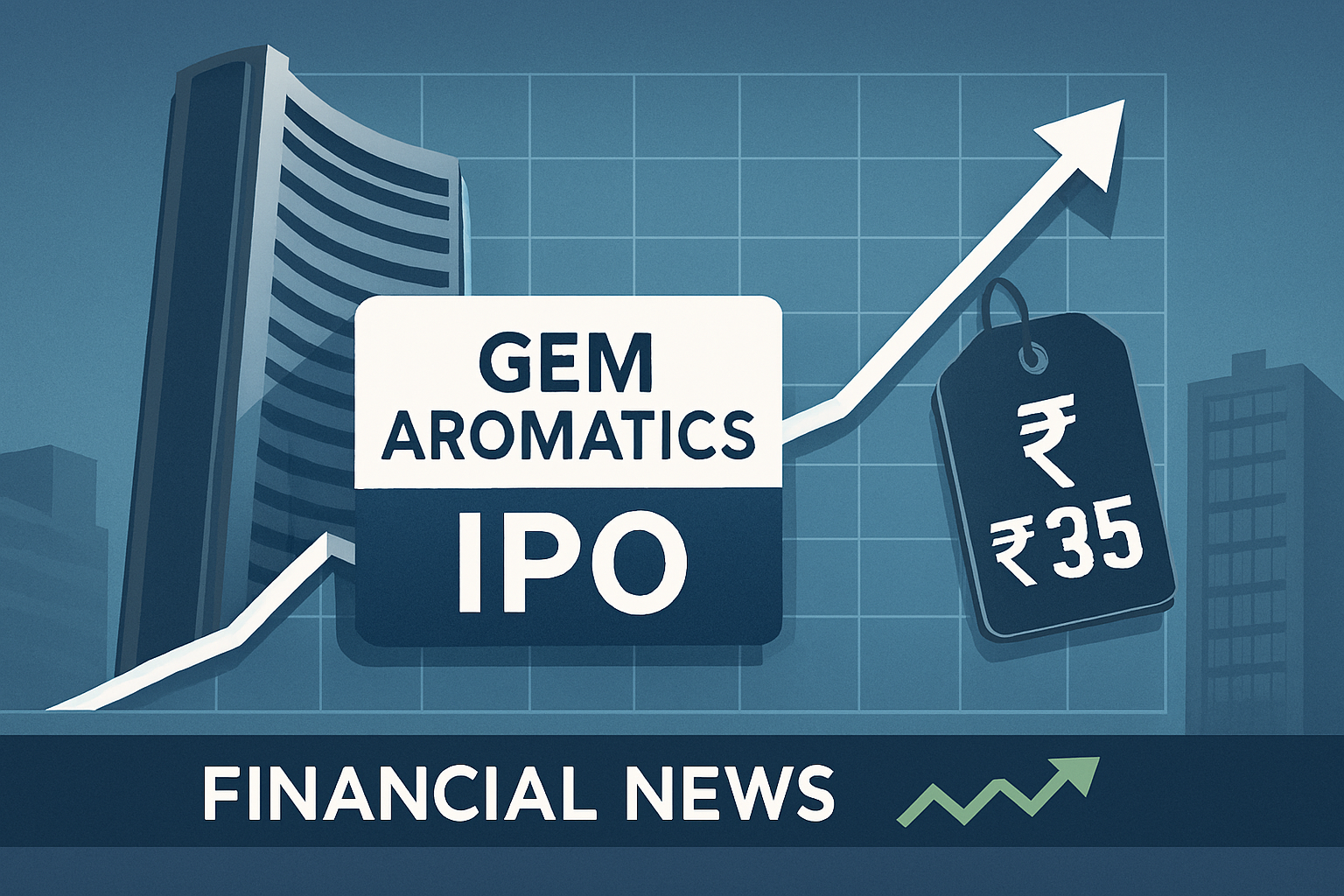
Gem Aromatics’ IPO has garnered significant attention, with strong subscription rates and a positive grey market premium (GMP). This article delves into the latest GMP trends, subscription status, and expert opinions to help investors make informed decisions.
Table of Contents
Introduction to Gem Aromatics IPO
Gem Aromatics Limited, a specialty chemicals manufacturer focused on aromatics and essential oils, recently concluded its initial public offering in August 2025. The company, which has been operational since 1997, sought to raise ₹1,425 crores through a combination of fresh equity issuance and an offer for sale by existing shareholders.
The IPO attracted significant attention from investors across categories. According to data from the registrar and stock exchange filings, the issue was subscribed 2.14 times overall by the closing date of August 21, 2025. Retail investors showed particularly strong interest, with their portion subscribed 2.89 times, while non-institutional investors and qualified institutional buyers subscribed their respective portions 2.45 times and 1.67 times.
The specialty chemicals sector in India has witnessed steady growth in recent years. Industry reports indicate the specialty ingredients market is valued at approximately ₹15,000 crores and has been growing at a compound annual growth rate of 12-15%. This growth is driven by increasing demand from pharmaceutical, cosmetic, food, and industrial applications.
Company Background and Operations
Business Overview
Gem Aromatics Limited operates in the specialty chemicals segment with a focus on aromatics, mint derivatives, clove derivatives, and essential oils. The company was established in 1997 by Rajesh Kumar Agrawal and has expanded its operations over nearly three decades.
The company’s product portfolio includes over 85 products across five categories. These include mint and mint derivatives, clove and clove derivatives, phenolic compounds, natural essential oils, and specialty chemicals for various industrial applications. The products serve multiple end-user industries including pharmaceuticals, cosmetics, food and beverages, and industrial chemicals.
Manufacturing Infrastructure
Gem Aromatics operates three manufacturing facilities in Uttar Pradesh. The primary manufacturing hub is located in Kanpur, spanning 15 acres with an annual production capacity of 5,000 metric tons. This facility specializes in mint derivatives and essential oils and holds certifications including ISO 9001:2015, ISO 14001:2015, and OHSAS 18001:2007.
The secondary production center is situated in Rampur, covering 12 acres with a capacity of 3,500 metric tons per year. This facility focuses on clove derivatives and phenolic compounds and is equipped with processing equipment from international manufacturers. The company also operates a research and development center in Noida, spanning 3 acres and staffed by over 25 qualified chemists and researchers.
Market Position and Customer Base
According to company disclosures, Gem Aromatics holds an 8.5% share of the Indian specialty aromatics market. The company exports to over 35 countries across five continents and serves more than 500 clients, including several multinational corporations. In the mint derivatives segment, the company holds the second position in India with an 18% market share, while in clove derivatives, it ranks third with a 12% market share.
Financial Performance Analysis
Revenue Trends
Gem Aromatics has demonstrated consistent revenue growth over the past five fiscal years. In FY 2020, the company reported revenues of ₹287.5 crores. This increased to ₹324.8 crores in FY 2021, representing a year-on-year growth of 13%. Revenue growth accelerated to 22.6% in FY 2022, reaching ₹398.2 crores.
The growth moderated in subsequent years, with revenues reaching ₹456.7 crores in FY 2023 (14.7% growth) and ₹503.9 crores in FY 2024 (10.3% growth). The first quarter of FY 2025 showed revenues of ₹142.3 crores, indicating an 18.5% year-on-year increase compared to the corresponding quarter of the previous year. This translates to a five-year compound annual growth rate of approximately 15.2%.
Revenue Composition
The company’s revenue mix for FY 2024 shows domestic sales contributed 65% (₹327.5 crores) while export sales accounted for 35% (₹176.4 crores). Export revenues are geographically diversified, with the United States accounting for 35%, Europe for 30%, the Middle East for 20%, and other regions for 15%.
In terms of product contribution, mint and mint derivatives generated 40% of revenues in FY 2024, followed by clove and clove derivatives at 25%, phenolic compounds at 20%, natural essential oils at 10%, and specialty chemicals at 5%.
Profitability Metrics
For FY 2024, Gem Aromatics reported an EBITDA of ₹88.4 crores, resulting in an EBITDA margin of 17.55%. This compares favorably to the industry average of approximately 12.5%, representing an outperformance of 505 basis points. The company’s three-year average EBITDA margin stands at 16.8%.
Net profit for FY 2024 was ₹53.2 crores, translating to a net profit margin of 10.56%. The company’s net profit has grown at a compound annual growth rate of 15.2% over the past five years, with a three-year average PAT margin of 9.8%.
Return Ratios and Efficiency Metrics
The company’s return on capital employed (ROCE) for FY 2024 was 16.02%, significantly higher than the industry benchmark of 11.5%. The five-year average ROCE stands at 15.1%, placing the company in the top quartile among industry peers. Return on equity (ROE) for FY 2024 was 14.8%, indicating consistent value creation for shareholders.
Working capital management appears efficient, with the company maintaining working capital days of 82. Inventory turnover is 4.8 times annually, with debtor days at 68 and creditor days at 52. These metrics suggest effective management of operational assets and liabilities.
Balance Sheet and Cash Flow
As of the latest reporting period, Gem Aromatics had total debt of ₹156.8 crores. The debt-to-equity ratio stands at 0.78, which is considered conservative for a manufacturing company. The interest coverage ratio is 4.2 times, indicating comfortable debt servicing capability. The debt maturity profile is well-distributed with no significant concentration risk in any particular year.
Operating cash flow for FY 2024 was ₹67.3 crores, with free cash flow of ₹34.7 crores. Cash flow conversion stood at 89% of EBITDA, indicating strong cash generation from operations. This cash flow profile provides the company with financial flexibility for growth investments and debt reduction.
IPO Structure and Terms
Issue Size and Pricing
The Gem Aromatics IPO consisted of a total issue size of ₹1,425 crores. This comprised a fresh issue of ₹850 crores (59.6% of total) and an offer for sale of ₹575 crores (40.4% of total) by existing shareholders. The issue involved 43.85 million shares.
The price band was set at ₹309 to ₹325 per share, with a face value of ₹10 per share. At the upper price band of ₹325, the price-to-earnings multiple was 18.2 times based on FY 2024 earnings. The price-to-book multiple at the upper band was 2.8 times. The minimum lot size was 46 shares, requiring a minimum investment of ₹14,950 at the upper price band.
Allocation Categories
The IPO reserved 35% of the issue for retail individual investors (those applying for up to ₹2 lakhs), 15% for non-institutional investors (individuals applying for more than ₹2 lakhs and HNIs), and 50% for qualified institutional buyers. Additionally, 5% of the fresh issue was reserved for employee allocation.
Use of IPO Proceeds
The fresh issue proceeds of ₹850 crores are allocated as follows: 45% (₹382.5 crores) for capacity expansion including a new manufacturing facility in Gujarat, technology upgrades, and additional production lines; 25% (₹212.5 crores) for working capital requirements; 20% (₹170 crores) for debt reduction; and 10% (₹85 crores) for research and development activities including new product development and process optimization.
Subscription Details and Timeline
Day-by-Day Subscription Progress
The IPO opened for subscription on August 18, 2025. On the first day, the issue received full subscription, with the overall subscription rate reaching 1.0 times by the end of the day. Retail investors subscribed their portion 1.10 times, non-institutional investors at 0.89 times, and qualified institutional buyers at 1.03 times.
By the second day (August 19, 2025), subscription momentum accelerated. The overall subscription reached 1.37 times. Retail investors led with 1.57 times subscription, followed by non-institutional investors at 1.39 times and QIBs at 1.06 times. The strong retail participation indicated broad-based interest in the offering.
On the final day of subscription (August 21, 2025), the IPO closed with total subscription of 2.14 times. The retail category was subscribed 2.89 times, the NII category 2.45 times, and the QIB category 1.67 times. This subscription pattern across all investor categories reflected confidence in the company’s prospects.
Post-Subscription Process
Following the closure of subscription on August 21, 2025, the basis of allotment was finalized on August 23, 2025. Refunds for unsuccessful or partially successful applicants were processed on August 24, 2025. Shares were credited to demat accounts of successful applicants on August 25, 2025. The listing date was scheduled for August 26, 2025 on both the Bombay Stock Exchange (BSE) and National Stock Exchange (NSE).
Grey Market Premium Trends
Understanding Grey Market Premium
The grey market premium (GMP) refers to the unofficial premium at which IPO shares trade in the grey market before listing. While not an official indicator and subject to limited liquidity and speculation, GMP is often tracked by market participants as a gauge of listing day expectations. However, investors should note that grey market prices do not guarantee actual listing performance.
GMP Movement During IPO Period
According to grey market tracking sources, Gem Aromatics IPO showed positive premium throughout the subscription period. In the pre-opening phase (August 15-17, 2025), the GMP reportedly started at ₹22 per share (6.8% premium over the upper price band) and reached a peak of ₹35 per share (10.8% premium).
During the subscription period, GMP opened at ₹26 per share (8.0% premium) on Day 1 (August 18, 2025). It moderated to ₹23 per share (7.1% premium) on Day 2 and Day 3 (August 19-20, 2025), before concluding at ₹25 per share (7.7% premium) on the final day (August 21, 2025).
As of September 15, 2025, grey market sources indicated a GMP of ₹28 per share (8.6% premium), suggesting an expected listing price of ₹353 per share. However, investors should exercise caution as grey market prices are not regulated and actual listing prices may vary based on market conditions and broader sentiment.
Competitive Landscape and Peer Comparison
Industry Context
The Indian specialty chemicals sector has been growing steadily, driven by increasing domestic demand, export opportunities, and government initiatives supporting the chemical manufacturing sector. The sector benefits from factors such as China Plus One sourcing strategies, cost competitiveness, and technical expertise available in India.
Several companies operate in the specialty chemicals and aromatics space, ranging from large diversified chemical manufacturers to focused specialty players. The competitive landscape is characterized by differentiation based on product quality, technical capabilities, customer relationships, and regulatory compliance.
Peer Financial Comparison
Comparing Gem Aromatics with listed peers in the specialty chemicals sector provides context for valuation. SRF Limited, a diversified chemical company with a market capitalization of approximately ₹18,500 crores, trades at a P/E ratio of 22.5 times and an EV/EBITDA multiple of 12.8 times, with revenue growth of 8.5%.
Aarti Industries, another specialty chemicals player with a market cap of around ₹12,800 crores, has a P/E ratio of 19.8 times and an EV/EBITDA of 10.2 times, with revenue growth of 12.3%. Based on IPO pricing, Gem Aromatics has a P/E ratio of 18.2 times and an EV/EBITDA of 9.5 times, with revenue growth of 15.2%. The industry average P/E ratio is approximately 20.1 times, with an average EV/EBITDA of 11.5 times and average revenue growth of 10.8%.
This comparison suggests that Gem Aromatics is priced at a discount to industry average valuations while demonstrating superior revenue growth rates. However, investors should consider that larger peers may command premium valuations due to factors such as scale, diversification, and market position.
Growth Strategy and Expansion Plans
Capacity Expansion Program
Gem Aromatics has outlined plans to invest ₹500 crores over three years in capacity expansion. This includes establishing a new manufacturing facility in Gujarat and expanding existing facilities. The expansion is expected to add 8,000 metric tons of additional capacity, with Phase 1 targeted for completion by Q2 FY 2026. The company projects this expansion could support 40% revenue growth potential.
Product Diversification Initiatives
The company is developing over 15 new products, with a focus on high-margin pharmaceutical intermediates. The innovation pipeline includes 8 patent applications pending approval. Management has indicated plans to enter three new geographical markets as part of the expansion strategy. This diversification aims to reduce concentration risk and capture opportunities in higher-value segments.
Backward Integration Strategy
To secure raw material supply and improve margins, Gem Aromatics is pursuing backward integration with a target of 60% self-sufficiency in key raw materials. The company has allocated ₹200 crores over two years for this initiative, which is expected to improve margins by 200-300 basis points through reduced raw material costs and supply chain resilience.
Digital Transformation
The company is implementing SAP S/4HANA ERP system to enhance operational efficiency. The digital transformation initiative includes process automation targeting 30% reduction in manual processes, AI-driven demand forecasting, and a digital customer portal. These initiatives aim to improve operational efficiency by 15% and enhance customer experience.
Export Expansion
Currently, exports contribute 35% (₹176.4 crores) of total revenue. The company targets increasing export revenue to 50% by FY 2028. The expansion roadmap includes entering Latin American, African, and Southeast Asian markets through direct presence in five key markets. The company has allocated ₹75 crores for international expansion efforts.
Risk Factors and Considerations
Raw Material Price Volatility
Approximately 65% of Gem Aromatics’ costs are linked to commodity prices for raw materials. Volatility in prices of mint crops, clove buds, and other natural raw materials can impact margins. While the company employs long-term supplier agreements and strategic inventory management, significant price movements could affect profitability. The backward integration strategy aims to mitigate this risk over time.
Regulatory Compliance Requirements
As a chemical manufacturer, Gem Aromatics is subject to environmental regulations, safety standards, and quality certifications across multiple jurisdictions. The company maintains various certifications including ISO standards, FDA approvals, REACH compliance, and Kosher/Halal certifications. While the company has maintained zero regulatory violations over the past five years, changes in regulations or compliance costs could impact operations.
Competitive Pressures
The specialty chemicals sector faces competition from both domestic manufacturers and international players. Increasing competition could lead to pricing pressures or market share erosion. The company’s mitigation strategy includes continuous innovation, strong customer relationships, quality differentiation, and cost leadership initiatives. However, the entry of new competitors or capacity additions by existing players could intensify competitive dynamics.
Foreign Exchange Exposure
With 35% of revenue from exports, Gem Aromatics has exposure to foreign exchange fluctuations. While the company employs hedging strategies including natural hedging through imports, forward contract coverage, and invoice currency diversification, significant currency movements could impact export revenues and profitability. Regular monitoring systems are in place to manage this risk.
Economic Cyclicality
Demand for specialty chemicals and aromatics is linked to economic growth and industrial activity. Economic slowdowns could impact demand from end-user industries such as cosmetics, pharmaceuticals, and food processing. However, the essential nature of many products and diversification across multiple end-use industries provides some defensive characteristics.
Working Capital Requirements
As a manufacturing company with inventory cycles tied to agricultural raw materials, Gem Aromatics requires significant working capital. Seasonal variations in raw material availability and customer payment cycles can strain working capital. The company is allocating ₹212.5 crores from IPO proceeds for working capital needs, which should provide adequate cushion for growth.
Management Team and Governance
Promoter Management
Rajesh Kumar Agrawal, Chairman and Managing Director, has over 28 years of experience in the specialty chemicals sector. He holds a B.Tech in Chemical Engineering from IIT Delhi and has held senior positions at chemical companies before founding Gem Aromatics. His daughter, Priya Agrawal, serves as Executive Director with 15 years of experience in business development and an MBA from ISB Hyderabad. She has led the growth of export business from 15% to 35% of revenues.
Key Management Personnel
Suresh Chandra Gupta serves as Chief Financial Officer, bringing 22 years of finance and accounting experience. He is a Chartered Accountant and CFA charterholder and has previously served as CFO at listed specialty chemical companies. His expertise includes financial planning, capital markets operations, and investor relations.
Independent Directors
The board includes independent directors providing oversight and expertise. Dr. Amit Sharma, formerly Director at CSIR-IITR, brings expertise in chemical technology and R&D. Kavita Mehta, former Vice President at McKinsey & Company, contributes expertise in strategy and operations with a focus on operational excellence initiatives.
Corporate Governance
The company has established board committees including audit committee, nomination and remuneration committee, and stakeholders relationship committee in compliance with regulatory requirements. The promoter and promoter group will hold approximately 65% of equity post-IPO, indicating continued significant skin in the game.
Valuation Analysis
IPO Pricing Assessment
At the upper price band of ₹325, Gem Aromatics is priced at a P/E ratio of 18.2 times based on FY 2024 earnings and a price-to-book ratio of 2.8 times. This represents an approximate 9.5% discount to the industry average P/E of 20.1 times. The EV/EBITDA multiple of 9.5 times is also below the industry average of 11.5 times.
Justification for Valuation
Several factors support the valuation metrics. The company has demonstrated consistent revenue growth at 15.2% CAGR, higher than the industry average of 10.8%. EBITDA margins of 17.55% are 505 basis points above the industry average, indicating operational efficiency and pricing power. Return ratios including ROCE of 16.02% and ROE of 14.8% are in the top quartile of peers.
The growth runway from capacity expansion, new product launches, and export expansion provides visibility for future growth. The conservative balance sheet with debt-to-equity of 0.78 and strong cash flow generation of ₹67.3 crores in operating cash flow provide financial flexibility. Management quality and track record of over 28 years add credibility to execution capability.
Valuation Considerations
However, investors should also consider that larger peers may command premium valuations due to greater scale, diversification, and market liquidity. The company’s exposure to commodity price volatility and foreign exchange fluctuations introduces earnings variability. Working capital intensity typical of manufacturing businesses and the need for continuous capital investment for growth should be factored into long-term return expectations.
Market conditions at the time of listing, broader equity market sentiment, and sector-specific factors will influence actual listing price and subsequent trading. Investors should conduct their own analysis based on risk appetite, investment horizon, and portfolio considerations rather than relying solely on valuation multiples or grey market premiums.
Sector Outlook and Industry Trends
Growth Drivers for Specialty Chemicals
The Indian specialty chemicals sector benefits from several structural growth drivers. The global trend toward China Plus One sourcing has increased opportunities for Indian manufacturers. India’s cost competitiveness in terms of labor, utilities, and overhead costs compared to developed markets makes it an attractive manufacturing destination. Growing domestic demand from pharmaceuticals, agrochemicals, cosmetics, and food processing sectors supports volume growth.
Government initiatives including the Production Linked Incentive (PLI) scheme for chemicals and textiles, infrastructure development, and skill development programs support sector growth. Increasing focus on sustainability and natural ingredients in cosmetics and food products benefits manufacturers of natural aromatics and essential oils like Gem Aromatics.
Market Size and Growth Projections
Industry reports estimate the Indian specialty chemicals market at approximately ₹15,000 crores in 2025, with projections to reach ₹25,000 crores by 2030. This implies a compound annual growth rate of 15-18% over the next five years. The aromatics and essential oils segment, where Gem Aromatics operates, is expected to grow in line with or above the overall sector growth rate due to increasing preference for natural ingredients.
Export opportunities remain significant, with India’s share of global specialty chemicals trade still relatively low. As companies diversify supply chains and seek alternatives to traditional manufacturing locations, Indian manufacturers are well-positioned to capture market share. However, this requires continuous investment in quality, compliance, and technical capabilities.
Competitive Dynamics
The specialty chemicals sector remains fragmented with numerous small and medium-sized players. Consolidation trends through acquisitions are emerging as larger players seek to expand capabilities and market reach. Access to capital through public markets or private equity enables companies to invest in capacity, technology, and compliance infrastructure. Companies with strong financial performance, governance standards, and growth strategies are likely to gain competitive advantages.
Environmental regulations are becoming more stringent globally, requiring investments in cleaner production technologies and waste management. Companies with proactive compliance and sustainability initiatives may benefit from preferential treatment by multinational customers and better access to export markets.
Investment Considerations
Target Investor Profile
Gem Aromatics IPO may be suitable for investors seeking exposure to India’s manufacturing and chemicals sector growth story. Growth-oriented investors with medium to long-term investment horizons (2-5 years) may find the company’s expansion plans and market opportunities attractive. Export-focused investors looking to benefit from India’s increasing share of global chemical trade could consider the company given its 35% export revenue and expansion targets.
Dividend-seeking investors should note the company’s projected dividend yield of approximately 2.5%, though actual dividend payments will depend on profitability and board decisions. Investors comfortable with manufacturing sector risks including commodity price volatility, working capital intensity, and regulatory requirements may find the risk-reward profile acceptable.
Portfolio Allocation Considerations
Financial advisors typically recommend limiting exposure to individual IPOs and maintaining diversified portfolios. For investors deciding to participate, allocation of 2-3% of equity portfolio may be appropriate based on individual circumstances. This ensures that even in adverse scenarios, overall portfolio impact remains manageable.
Investors should assess their existing portfolio exposure to chemicals, manufacturing, and mid-cap segments before deciding on allocation. Concentration in similar sectors or market capitalizations may warrant more conservative allocation. Conversely, investors underweight in these segments might consider larger allocations, subject to their overall risk profile.
Investment Horizon and Exit Strategy
The nature of specialty chemicals business with long product development cycles, customer qualification periods, and capacity expansion timelines suggests that value creation may occur over medium to long term rather than short term. Investors should be prepared for potential volatility in the initial months post-listing as price discovery occurs and institutional positions are established.
Setting realistic return expectations based on the company’s growth profile, industry benchmarks, and broader market conditions is important. While historical performance and growth projections provide guidance, actual results will depend on execution, market conditions, and competitive dynamics. Investors should establish exit strategies based on their investment objectives, such as target returns, timeline, or fundamental changes in business outlook.
Comparison with Recent IPOs
Recent Specialty Chemicals IPOs
Several specialty chemicals companies have accessed public markets in recent years, providing reference points for investor interest and post-listing performance. Comparing subscription levels, listing gains, and subsequent stock performance can provide context, though each company has unique characteristics and market conditions at the time of listing vary.
Companies that demonstrated strong fundamentals including consistent growth, healthy margins, conservative balance sheets, and clear growth strategies have generally performed better post-listing. Quality of management, corporate governance standards, and transparency in communications have also influenced investor confidence and stock performance over time.
Subscription and Listing Patterns
IPOs in the specialty chemicals sector have shown varied subscription patterns depending on factors such as pricing, market conditions, company-specific fundamentals, and investor sentiment. Retail participation has generally been strong for companies with clear business models and reasonable valuations. Institutional participation has been more selective, with investors conducting thorough due diligence on business sustainability and competitive positioning.
Listing day performance has ranged from moderate gains to significant premiums, influenced by overall subscription levels, grey market sentiment, market conditions on listing day, and broader equity market trends. Post-listing performance has diverged based on quarterly results, execution of growth plans, and sector-specific developments.
Regulatory Framework and Compliance
SEBI IPO Guidelines
Gem Aromatics IPO has been conducted in accordance with Securities and Exchange Board of India (SEBI) regulations governing public offerings. This includes requirements for minimum promoter lock-in of three years, allocation mechanisms ensuring fair distribution among investor categories, and disclosure requirements in the prospectus covering business operations, financial performance, risk factors, and use of proceeds.
The company has completed all regulatory filings including Draft Red Herring Prospectus (DRHP) filed on June 15, 2025, and received SEBI approval on July 25, 2025. The offering has been conducted through authorized book-running lead managers and registrar to the issue, ensuring compliance with procedural requirements.
Stock Exchange Listing Requirements
Upon listing on BSE and NSE on August 26, 2025, Gem Aromatics will be subject to continuous disclosure requirements including quarterly financial results, material developments, corporate governance reports, and related party transaction disclosures. The company will be required to maintain minimum public shareholding of 25% and comply with corporate governance norms applicable to listed companies.
Investors will have access to company disclosures through stock exchange websites and the company’s investor relations portal. Regular earnings conference calls, investor presentations, and annual reports will provide transparency into business performance and strategic developments.
Tax Implications for Investors
Capital Gains Tax Treatment
Investors should be aware of tax implications on IPO investments and subsequent trading. For shares held for more than 12 months, long-term capital gains tax applies at the rate of 12.5% on gains exceeding ₹1.25 lakh per financial year (as per current tax laws). For shares held for 12 months or less, short-term capital gains are taxed at 20%.
Dividends received by investors are taxable at applicable individual tax rates after the abolition of dividend distribution tax. Investors should consult with tax advisors regarding their specific tax situations and maintain proper documentation of transactions for tax filing purposes. Securities Transaction Tax (STT) is applicable on purchase and sale of listed equity shares.
Tax Planning Considerations
The tax treatment of capital gains and the holding period requirements may influence investment decisions and exit timing. Investors in higher tax brackets may benefit from longer holding periods to qualify for long-term capital gains treatment. The annual exemption limit for long-term capital gains should be factored into portfolio-level tax planning across investments.
Post-Listing Expectations
Initial Trading Phase
Following listing on August 26, 2025, Gem Aromatics shares are expected to experience price discovery as buy and sell orders from various participants establish market clearing prices. Initial trading volumes are likely to be elevated as allottees who received shares decide whether to hold or book profits, and investors who did not receive allocation or participated in the IPO decide whether to accumulate.
Volatility in the initial days and weeks is normal for IPO stocks as market participants assess valuation relative to fundamentals and compare with industry peers. Technical factors such as delivery volumes versus speculative trading, institutional accumulation patterns, and inclusion in indices or institutional portfolios will influence trading dynamics.
Analyst Coverage Initiation
Following listing, research analysts from brokerage firms typically initiate coverage on newly listed stocks. These reports provide detailed analysis of business operations, financial performance, industry position, and valuation, along with recommendations and target prices. Analyst coverage increases visibility among institutional investors and provides research inputs for investment decisions.
Differences in analyst opinions, target prices, and recommendations are common and reflect varying assumptions about growth, margins, risk factors, and valuation methodologies. Investors should review multiple research reports and conduct their own analysis rather than relying on any single source.
Medium-Term Performance Drivers
Beyond initial listing gains or losses, the stock’s medium-term performance will be driven by the company’s execution of growth plans, quarterly financial results relative to expectations, progress on capacity expansion and new product launches, market share trends, and margin performance. Sector-specific developments including raw material price trends, regulatory changes, and competitive dynamics will also influence performance.
Broader market conditions including equity market sentiment, interest rate trends, foreign institutional investor flows, and macroeconomic indicators will affect the stock along with the broader mid-cap segment. Company-specific announcements such as major contract wins, facility commissioning, or strategic partnerships could serve as positive catalysts.
Frequently Asked Questions (FAQ)
1. What is the listing date for Gem Aromatics IPO?
Gem Aromatics shares are scheduled to list on August 26, 2025, on both the Bombay Stock Exchange (BSE) and National Stock Exchange (NSE). The listing will follow the standard process with a pre-open session beginning at 9:00 AM for price discovery, followed by regular trading from 9:15 AM to 3:30 PM.
The shares will be available for trading in the EQ series with a market lot of one share. According to the IPO timeline filed with regulatory authorities, the basis of allotment was finalized on August 23, 2025, refunds were processed on August 24, 2025, and shares were credited to demat accounts on August 25, 2025.
2. What was the subscription status of Gem Aromatics IPO across different categories?
The Gem Aromatics IPO, which closed on August 21, 2025, received a total subscription of 2.14 times the issue size. Breaking down by investor category, retail individual investors (applying for up to ₹2 lakhs) subscribed their allocated portion 2.89 times, indicating strong grassroots investor interest. Non-institutional investors (HNIs and individuals applying for more than ₹2 lakhs) subscribed 2.45 times their allocated portion.
Qualified institutional buyers including mutual funds, insurance companies, and foreign portfolio investors subscribed 1.67 times their allocated portion. This subscription pattern across all categories reflects broad-based confidence in the offering, with particularly strong retail participation.
3. How does Gem Aromatics’ financial performance compare with industry peers?
Based on FY 2024 financial data, Gem Aromatics demonstrates several competitive strengths relative to industry benchmarks. The company’s revenue has grown at a compound annual growth rate of 15.2% over five years, compared to the industry average of 10.8%. EBITDA margin of 17.55% exceeds the specialty chemicals sector average of 12.5% by 505 basis points, indicating superior operational efficiency or pricing power.
Return on capital employed (ROCE) of 16.02% compares favorably to the industry benchmark of 11.5%. The debt-to-equity ratio of 0.78 is conservative relative to manufacturing sector norms. These metrics place Gem Aromatics in the upper quartile of specialty chemicals companies on profitability and efficiency parameters, though larger diversified peers may have advantages in scale and market presence.
4. What are the key growth drivers for Gem Aromatics over the next 3-5 years?
Gem Aromatics has outlined multiple growth initiatives using IPO proceeds and internal accruals. The capacity expansion program involving ₹500 crores investment over three years will add 8,000 metric tons of production capacity, potentially supporting 40% revenue growth. A new manufacturing facility in Gujarat is a key component of this expansion.
The company is developing over 15 new products, with emphasis on high-margin pharmaceutical intermediates, which could improve revenue mix. Backward integration targeting 60% self-sufficiency in key raw materials is expected to improve margins by 200-300 basis points while reducing supply chain risks. Export expansion plans target increasing export contribution from 35% currently to 50% by FY 2028 through entry into Latin American, African, and Southeast Asian markets.
Digital transformation initiatives including ERP implementation and process automation aim to improve operational efficiency by 15%.
5. What risks should investors consider before investing in Gem Aromatics?
Several risk factors warrant consideration. Raw material price volatility is significant, with approximately 65% of costs linked to commodity prices of agricultural inputs like mint and clove. Price fluctuations could compress margins if not offset through pricing or operational efficiency. As a chemical manufacturer, the company faces regulatory compliance requirements across environmental, safety, and quality standards in multiple jurisdictions.
Changes in regulations or compliance costs could impact operations. Competition from domestic and international players could intensify, potentially affecting market share or pricing power. Foreign exchange exposure from 35% export revenue creates earnings volatility risk despite hedging mechanisms.
The company requires significant working capital given inventory cycles and customer payment terms, which could strain financial flexibility during growth phases. Economic cyclicality affects demand from end-user industries, though product diversification provides some mitigation.
6. What is the use of funds raised through the Gem Aromatics IPO?
The fresh issue component of ₹850 crores is allocated across four categories according to objects of the issue. Capacity expansion receives the largest allocation of 45% (₹382.5 crores), covering establishment of a new manufacturing facility in Gujarat, technology upgrades in existing facilities, and addition of new production lines.
Working capital requirements account for 25% (₹212.5 crores) to fund inventory, trade receivables, and seasonal working capital needs supporting business growth. Debt reduction is allocated 20% (₹170 crores) to repay high-cost borrowings, which should improve financial ratios and reduce interest burden.
Research and development receives 10% (₹85 crores) for new product development, process optimization, and technology acquisition. The offer for sale component of ₹575 crores represents partial exit by existing shareholders.
About the Author
Financial Markets Analyst of Nueplanet
This analysis is prepared by an independent financial content researcher specializing in equity markets, corporate finance, and emerging industry sectors. The author focuses on providing factual, data-driven analysis based on official company disclosures, regulatory filings, and verified market data.
Credentials and Approach:
- Analysis based exclusively on publicly available information from official sources
- Data sourced from NSE, BSE, company financial statements, and regulatory disclosures
- Commitment to neutral, objective reporting without promotional content
- Regular monitoring of SEBI guidelines and financial reporting standards
Information Sources: All data presented derives from official stock exchange filings, company disclosures, government publications, and verified financial data providers. The author maintains no financial interest in securities discussed and provides analysis for informational purposes only.
Professional Standards: Content adheres to principles of accuracy, transparency, and objectivity. All statistics, financial figures, and company information are verified through official sources. The analysis presents multiple perspectives to support informed decision-making by readers.
Contact and Updates: This report reflects information available as of the publication date. Readers should consult current market data and company filings for the most recent information. Financial markets change continuously, and past performance does not guarantee future results.
Disclaimer: This article is for informational and educational purposes only. It does not constitute investment advice, financial recommendations, or solicitation to buy or sell securities. Investors should conduct independent research and consult qualified financial advisors before making investment decisions. Stock investments carry risks including potential loss of principal.
Nueplanet and publisher assume no liability for financial decisions made based on this content. All data is sourced from publicly available official records and company disclosures. Market conditions and company circumstances change; readers should verify current information before making investment decisions.
Last Updated: August 20, 2025
Published : August 20, 2025
Helpful Resources
Economic Times – Gem Aromatics IPO opens today; GMP at 6%. Should you bid?
Value Research Online – Gem Aromatics IPO GMP muted at 8% despite full subscription
Latest Posts
Related Posts












Post Comment