









Ethanol Fuel in India — Policy, Controversy, and the Road Ahead
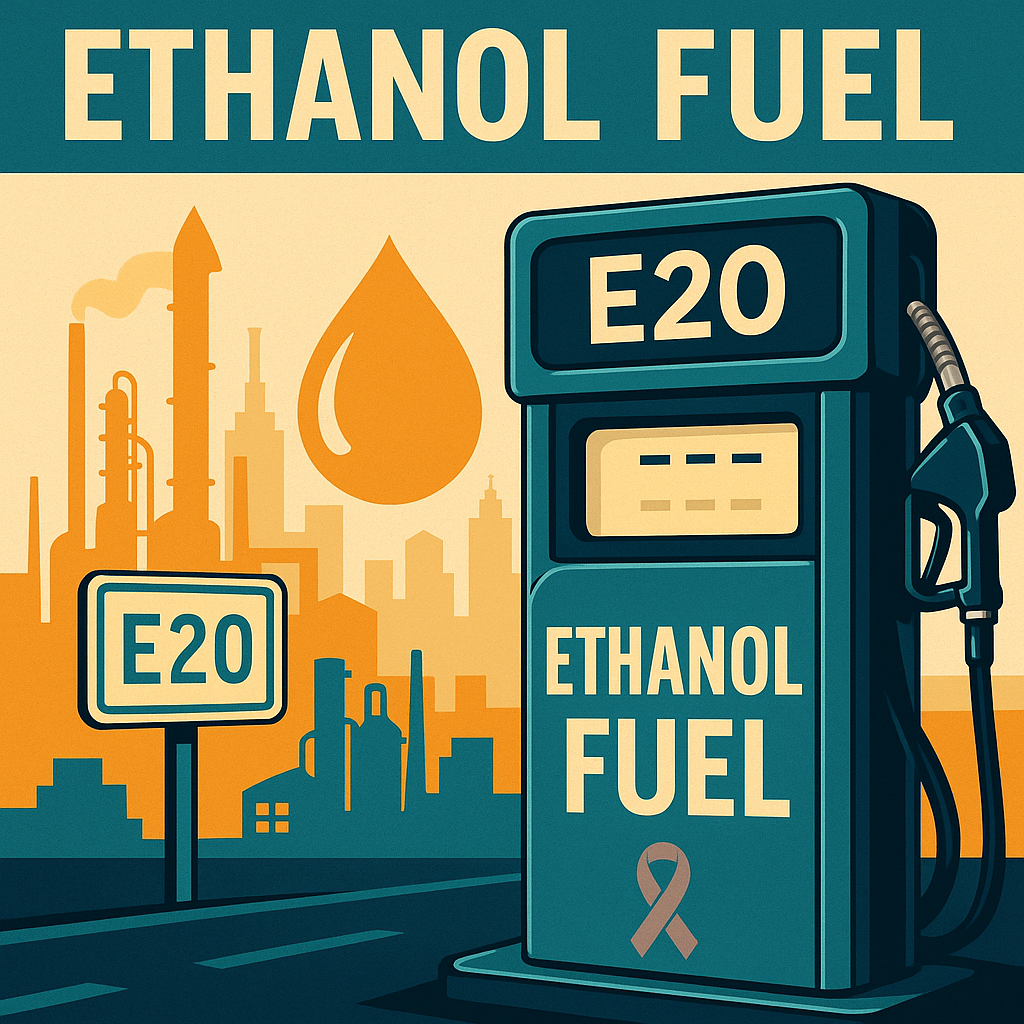
India’s shift to E20 fuel (20% ethanol blend) marks a clean energy milestone. But as Supreme Court hearings and public backlash ramp up, the policy faces fierce debate.
Table of Contents
Published: August 31, 2025
Last Updated: August 31, 2025
Reading Time: 22 minutes
Introduction: Energy Policy Transformation Under Judicial Review
India’s transition to E20 ethanol-blended fuel has emerged as a significant policy initiative with far-reaching implications for the energy sector, automobile industry, and agricultural economy. The government’s mandate requiring 20% ethanol content in petrol represents a substantial shift from the 1.5% blending ratio observed in 2014. This policy transformation aims to reduce crude oil import dependency, support agricultural income, and address environmental concerns related to transportation emissions.
A Public Interest Litigation filed in the Supreme Court of India has brought this policy under judicial scrutiny. The case, scheduled for hearing on September 1, 2025, raises questions about consumer choice, vehicle compatibility, and implementation methodology. The judicial review occurs at a critical juncture when the policy has been rolled out across major urban centers, affecting millions of vehicle owners and fuel consumers.
This analysis examines the ethanol blending program from multiple perspectives including policy objectives, economic impacts, technical considerations, and legal challenges. The assessment draws on official government data, industry reports, and technical studies to provide a comprehensive understanding of India’s ethanol fuel transition and its implications for various stakeholders.
Policy Evolution and Implementation Timeline
Historical Development of Ethanol Blending Program
The Ethanol Blended Petrol Programme began in 2003 with limited success due to inadequate ethanol production capacity and supply chain constraints. Initial targets of 5% blending by 2003 and 10% by 2008 were not achieved due to structural challenges in ethanol procurement and distribution infrastructure.
Significant progress occurred after 2014 when renewed policy focus addressed supply-side bottlenecks. The blending percentage increased from 1.5% in 2014 to approximately 5% by 2018. The National Policy on Biofuels 2018 provided comprehensive framework including ethanol production from multiple feedstock sources beyond sugarcane.
The acceleration intensified from 2019 onwards with systematic annual increases. Blending levels reached 10% during 2021-2022, driven by enhanced sugarcane diversion for ethanol production and improved procurement mechanisms. The government advanced the E20 target from 2030 to 2025, representing a five-year acceleration of the original timeline.
Current Implementation Status
As of October 2025, E20 fuel is available at fuel stations across major cities and gradually expanding to tier-2 and tier-3 urban centers. The Ministry of Petroleum and Natural Gas reports that approximately 60% of fuel retail outlets nationwide now dispense E20 blended petrol. Complete nationwide rollout is targeted for completion by March 2026.
The government has facilitated this transition through regulatory modifications, pricing incentives for ethanol producers, and investments in blending infrastructure at refineries and storage facilities. Oil marketing companies including Indian Oil Corporation, Bharat Petroleum, and Hindustan Petroleum have invested approximately ₹15,000 crores in infrastructure upgrades to support E20 distribution.
Ethanol procurement has increased substantially with 2024-25 fiscal year witnessing approximately 5 billion liters of ethanol procurement for blending purposes. This represents significant growth from 1.9 billion liters in 2020-21, demonstrating the program’s rapid scaling.
Economic Rationale and Strategic Objectives
Energy Security and Import Reduction
India imports approximately 85% of its crude oil requirements, creating significant foreign exchange outflows and vulnerability to international price volatility. Petroleum imports constitute one of the largest components of India’s trade deficit. The Ministry of Petroleum estimates that each 1% increase in ethanol blending saves approximately $400 million in foreign exchange annually.
At 20% blending levels, the program is projected to reduce crude oil imports by approximately 5 billion liters annually. This translates to foreign exchange savings of approximately $2-2.5 billion per year at prevailing international crude oil prices. These savings contribute to macroeconomic stability by reducing current account deficit pressures.
The strategic dimension extends beyond immediate cost savings. Reduced import dependency enhances energy security by decreasing vulnerability to international supply disruptions, geopolitical conflicts, and price manipulation by oil-producing nations. Domestic ethanol production creates indigenous energy supply chains that can be scaled based on national requirements.
Agricultural Sector Support
The ethanol procurement program has created alternative revenue streams for agricultural producers, particularly sugarcane farmers who historically faced price volatility and periodic oversupply situations. Government data indicates ethanol procurement has generated over ₹50,000 crores in payments to farmers and ethanol producers since program intensification in 2014.
This income support mechanism operates through guaranteed procurement prices announced by the government annually. The Food Corporation of India and oil marketing companies purchase ethanol at predetermined rates, providing price certainty that contrasts with volatile sugar market prices. This stability encourages continued sugarcane cultivation and provides financial predictability for rural households.
The program has expanded beyond sugarcane to include ethanol production from rice, maize, damaged food grains, and agricultural residues. This diversification creates additional income opportunities across different cropping systems and geographic regions. States including Uttar Pradesh, Maharashtra, Karnataka, and Tamil Nadu have particularly benefited from expanded ethanol production infrastructure.
Environmental Impact Considerations
Transportation sector accounts for approximately 13% of India’s greenhouse gas emissions according to data from the Ministry of Environment, Forest and Climate Change. Road transport constitutes the majority of this sectoral contribution. Ethanol blending offers potential emission reductions through renewable fuel substitution.
Technical studies indicate that E20 fuel can reduce carbon dioxide emissions by 2-3% compared to pure gasoline on a lifecycle basis. Additional benefits include reduced carbon monoxide and unburned hydrocarbon emissions during combustion. These reductions contribute to India’s Nationally Determined Contributions under the Paris Agreement and domestic air quality improvement objectives.
However, comprehensive lifecycle analysis must consider emissions from agricultural production, ethanol manufacturing processes, and land use changes associated with feedstock cultivation. Critics note that these upstream emissions partially offset combustion-phase benefits, necessitating sustainable production practices to maximize net environmental gains.
Consumer Concerns and Market Response
Fuel Efficiency and Operating Cost Impact
Vehicle owners have reported varying experiences with E20 fuel, with fuel efficiency being a primary concern. Ethanol contains approximately 30% lower energy density compared to gasoline, theoretically resulting in reduced fuel economy. Real-world reports indicate efficiency reductions ranging from 2% to 6% depending on vehicle type, age, and driving conditions.
For an average household vehicle traveling 12,000 kilometers annually, a 3% efficiency reduction translates to approximately 36 additional liters of fuel consumption. At prevailing petrol prices of approximately ₹100 per liter, this represents an additional annual cost of ₹3,600. Commercial vehicle operators including taxi services and goods transport businesses face proportionally higher cost impacts.
The actual efficiency impact varies significantly across vehicle categories. Newer vehicles with advanced engine management systems that automatically adjust fuel-air mixtures based on ethanol content typically experience lower efficiency penalties. Older vehicles without such adaptive capabilities may experience higher fuel consumption increases. Two-wheelers and small displacement engines appear more sensitive to ethanol content compared to larger automotive engines.
Availability of Alternative Fuel Options
A significant consumer grievance involves the discontinuation of lower ethanol content fuels and ethanol-free petrol. Prior to E20 rollout, consumers could typically access E5 or E10 blended fuels, with some premium stations offering ethanol-free options. The transition to mandatory E20 has eliminated these alternatives at most retail outlets.
This forced transition has created particular concerns for owners of vintage vehicles, high-performance automobiles, certain two-wheelers, and small engines including lawnmowers and portable generators. These applications may not have fuel system components designed for ethanol compatibility. The absence of alternatives effectively compels usage of fuel that may not optimize equipment performance or longevity.
Consumer advocacy organizations argue this situation violates principles of market choice and informed consumer decision-making. They contend that even if E20 is suitable for most vehicles, maintaining alternative options respects consumer preferences and accommodates legitimate technical concerns for specific vehicle categories.
Information Disclosure and Transparency
The implementation has faced criticism regarding transparency and consumer awareness. Many fuel dispensing units lack clear, conspicuous labeling indicating ethanol content. Consumers report difficulty determining whether purchased fuel contains ethanol and at what concentration. This information gap creates uncertainty and contributes to negative perceptions about the program.
Consumer protection principles require clear product labeling enabling informed purchase decisions. The absence of standardized, prominent ethanol content disclosure at fuel pumps represents a significant gap in implementation. Additionally, comprehensive consumer education campaigns explaining ethanol fuel characteristics, compatibility considerations, and proper usage have been limited in reach and effectiveness.
Vehicle owners also report insufficient guidance from automobile manufacturers regarding ethanol compatibility for specific vehicle models and years. While manufacturers have issued general statements supporting E20, detailed model-specific information remains limited. This creates uncertainty for consumers attempting to assess compatibility for their particular vehicles.
Legal Challenge: Supreme Court Public Interest Litigation
Petition Grounds and Arguments
The Public Interest Litigation filed in the Supreme Court presents multiple legal grounds challenging the E20 implementation approach. The petition, supported by consumer rights organizations and individual vehicle owners, raises constitutional, statutory, and procedural objections to mandatory ethanol blending without adequate safeguards.
Constitutional Arguments: The petition invokes Article 19(1)(g) of the Constitution, which guarantees citizens the right to practice any profession or carry on any occupation, trade, or business. Petitioners argue that mandatory E20 consumption restricts their operational choices and may adversely affect economic activities dependent on vehicles. The forced usage of fuel that reduces efficiency allegedly infringes on these fundamental rights.
Consumer Protection Claims: The petition cites violations of the Consumer Protection Act 2019, particularly provisions requiring adequate product information disclosure and protection against unfair trade practices. The absence of clear ethanol content labeling and limited availability of alternatives allegedly constitute unfair trade practices that harm consumer interests.
Property Rights Concerns: Vehicle owners argue that mandatory E20 usage potentially damages their property without adequate compensation or recourse. Ethanol’s chemical properties may cause accelerated wear on fuel system components in vehicles not designed for ethanol compatibility. The petition contends this constitutes deprivation of property rights without due process.
Procedural Fairness: The petition challenges the implementation methodology, arguing that inadequate stakeholder consultation, limited consumer education, and absence of gradual transition mechanisms violate principles of procedural fairness and administrative reasonableness.
Relief Sought by Petitioners
The litigation seeks comprehensive remedial directions from the Supreme Court:
- Mandatory E0 Availability: Ensure ethanol-free petrol remains available at all or designated fuel stations to provide consumer choice
- Clear Labeling Requirements: Implement prominent, standardized ethanol content labeling at all fuel dispensing points
- Consumer Education: Launch comprehensive awareness programs about ethanol fuel characteristics, vehicle compatibility, and proper usage
- Compensation Framework: Establish mechanisms for addressing vehicle damage claims reasonably attributable to ethanol usage
- Gradual Implementation: Replace immediate mandatory rollout with phased, voluntary adoption allowing market-driven transition
- Monitoring Mechanism: Create independent oversight for program implementation, consumer grievance redressal, and impact assessment
Judicial Precedents and Legal Framework
The case potentially establishes important precedents regarding the balance between environmental policy objectives and consumer rights. Indian courts have historically recognized that fundamental rights are not absolute and may be subject to reasonable restrictions serving compelling state interests. The challenge for the Court involves determining whether the E20 mandate represents a reasonable restriction or an excessive infringement.
International legal precedents from jurisdictions including Brazil and the United States have addressed similar issues. Brazilian courts have generally upheld ethanol blending mandates while ensuring consumer choice through continued availability of multiple fuel options. U.S. litigation has focused on environmental benefits versus economic impacts, with courts generally deferring to regulatory agencies on technical determinations while requiring adequate environmental review and stakeholder consultation.
The Supreme Court’s approach will likely consider doctrines including proportionality (whether the means adopted are proportionate to the objectives sought), legitimate expectations (whether consumers had reasonable expectations of continued fuel choice), and precautionary principle (whether adequate safeguards exist against potential harms).
Industry Perspectives and Technical Assessments
Automobile Manufacturer Positions
Major automobile manufacturers operating in India have generally supported the E20 transition while providing assurances regarding vehicle compatibility. The Society of Indian Automobile Manufacturers, representing major automakers, has stated that vehicles manufactured after 2010 incorporate materials and components compatible with up to 20% ethanol blending.
Specific manufacturer statements indicate that fuel system components including seals, gaskets, fuel lines, and injectors in modern vehicles utilize materials resistant to ethanol’s corrosive properties. Engine management systems incorporate adaptive fuel control that automatically adjusts fuel injection and ignition timing based on detected fuel composition, optimizing performance across varying ethanol concentrations.
However, manufacturer communications also acknowledge that older vehicles may require inspection and potential component replacement to ensure ethanol compatibility. Aftermarket solutions including ethanol-compatible fuel system component kits are available for vehicle retrofitting, though costs and installation requirements vary significantly across vehicle types.
Manufacturers have committed to honoring warranty obligations regardless of ethanol content in fuel used, provided the fuel meets Bureau of Indian Standards specifications. This assurance addresses consumer concerns about potential warranty denial based on ethanol-related claims, though specific warranty terms vary by manufacturer and may exclude pre-existing conditions or improper maintenance.
Petroleum Industry Implementation
Oil marketing companies have undertaken substantial infrastructure investments to support E20 distribution. These investments include ethanol storage tanks at refineries and depots, blending equipment, transportation logistics for ethanol from production facilities to blending points, and modifications to fuel dispensing equipment at retail outlets.
Indian Oil Corporation, the largest fuel retailer, reports installing ethanol-compatible infrastructure at over 30,000 retail outlets nationwide. Bharat Petroleum and Hindustan Petroleum have undertaken similar upgrades across their distribution networks. The industry emphasizes that ethanol procurement and supply chains have been established across multiple states, ensuring reliable availability.
Quality control measures include regular testing of blended fuel to ensure ethanol content meets specifications and contamination levels remain within acceptable limits. The industry contends that when properly blended and handled, E20 fuel provides consistent performance and reliability comparable to traditional petrol.
Pricing mechanisms for E20 remain aligned with regular petrol, with no consumer price premium or discount for ethanol content. The government absorbs any differential between ethanol procurement costs and petroleum product pricing through subsidy mechanisms or adjustments to tax structures.
Technical Research and Testing
The Automotive Research Association of India, an independent testing and certification organization, has conducted extensive E20 compatibility testing across various vehicle categories. Test protocols evaluate emission characteristics, fuel system durability, engine performance parameters, and long-term reliability under controlled laboratory conditions and real-world driving simulations.
ARAI findings generally support E20 compatibility for modern vehicles, reporting:
- Emission reductions of 5-10% for carbon monoxide and unburned hydrocarbons
- No accelerated corrosion or degradation in fuel system components designed for ethanol compatibility
- Fuel consumption increases of 2-4% aligning with ethanol’s lower energy density
- Adequate engine performance and drivability across normal operating conditions
However, ARAI studies acknowledge increased variability in older vehicles and recommend inspection of fuel system components in vehicles manufactured before 2010. The organization emphasizes proper maintenance practices and use of ethanol-compatible replacement parts when servicing older vehicles.
Independent academic research from institutions including IIT Delhi and IIT Bombay has examined long-term durability aspects and emission characteristics. These studies generally confirm manufacturer and ARAI findings while highlighting the importance of proper blending practices, quality control, and consumer education for successful implementation.
Economic Impact Analysis Across Sectors
Impact on Oil Marketing Companies
The transition to E20 has created both opportunities and challenges for petroleum marketing companies. On the positive side, ethanol blending reduces crude oil procurement requirements, potentially lowering raw material costs. The infrastructure investments, while substantial, create long-term assets supporting the biofuels economy.
However, challenges include managing dual supply chains for ethanol and petroleum products, ensuring quality consistency across numerous blending points, and handling logistical complexities of ethanol transportation and storage. Ethanol’s hygroscopic nature (tendency to absorb moisture) requires careful handling to prevent contamination that could cause engine problems.
The pricing structure under government regulation limits companies’ ability to pass through additional costs to consumers. Infrastructure investments must be recovered through overall operational efficiency improvements rather than direct cost recovery through fuel pricing premiums.
Agricultural Sector Economic Effects
The ethanol program has significantly impacted agricultural economics, particularly in sugar-producing states. Guaranteed ethanol procurement provides price floor effects for sugarcane, reducing volatility that historically created periodic distress for farmers. This stability encourages continued cultivation and provides income predictability.
However, concerns exist regarding food security implications if ethanol production diverts grain and sugarcane from food and sugar markets. Government policy addresses this through prioritization of agricultural waste, damaged grains, and surplus production for ethanol while ensuring adequate food grain reserves and sugar availability.
Regional economic development has occurred in ethanol-producing areas through distillery investments, employment generation, and local economic multiplier effects. States have competed to attract ethanol production capacity through policy incentives, infrastructure support, and streamlined regulatory approvals.
The expansion of ethanol production from diverse feedstocks beyond sugarcane creates opportunities for farmers cultivating maize, rice, and other crops. This diversification potentially reduces monoculture dependencies and provides crop rotation benefits, though actual adoption depends on local agroclimatic conditions and market infrastructure.
Consumer Expenditure Patterns
The net impact on consumer expenditures depends on multiple variables including fuel efficiency changes, driving patterns, vehicle types, and frequency of usage. For average household vehicles, the additional annual cost from reduced fuel efficiency ranges from ₹2,400 to ₹7,200 based on reported 2-6% efficiency reductions.
Commercial vehicle operators face more significant impacts due to higher annual mileage. A taxi traveling 40,000 kilometers annually could experience additional costs of ₹8,000-24,000 depending on efficiency impact. These increased operating costs potentially translate to higher service prices for consumers or reduced operator incomes.
The absence of price differential between E20 and traditional petrol means consumers do not receive cost savings to offset efficiency losses. In markets where ethanol-blended fuels are priced lower than pure gasoline, consumers can make value-based choices balancing price versus efficiency. India’s uniform pricing structure eliminates this consideration.
However, aggregate national benefits from reduced import expenditure and agricultural income support may indirectly benefit consumers through improved macroeconomic stability, reduced fiscal deficits, and enhanced rural purchasing power that stimulates overall economic growth.
Environmental and Sustainability Considerations
Greenhouse Gas Emission Analysis
The environmental benefits of ethanol blending depend significantly on production methodologies and feedstock sources. Lifecycle assessment must consider emissions from agricultural cultivation, fertilizer production and application, harvesting, transportation, ethanol manufacturing process, and distribution to retail outlets.
Studies conducted by organizations including The Energy and Resources Institute (TERI) indicate that sugarcane-based ethanol can reduce lifecycle greenhouse gas emissions by 40-60% compared to gasoline when produced through efficient processes. However, coal-fired distilleries or energy-intensive production methods substantially reduce net benefits.
First-generation ethanol from food crops faces criticism regarding land use change impacts and potential displacement of food production. Second-generation ethanol from agricultural waste, crop residues, and non-food biomass offers superior environmental profiles by utilizing materials that would otherwise decompose or be burned, generating emissions without productive use.
India’s ethanol program increasingly emphasizes second-generation pathways, though current production remains predominantly first-generation due to technological and economic constraints. Government research and development initiatives support advanced biofuel technologies that could significantly enhance environmental benefits over the long term.
Air Quality Impact in Urban Areas
Transportation emissions significantly contribute to urban air quality challenges in Indian cities. Particulate matter, nitrogen oxides, and unburned hydrocarbons from vehicle exhaust create health impacts and visibility impairment. Ethanol blending offers potential benefits through altered combustion characteristics.
Ethanol’s oxygen content promotes more complete combustion, reducing carbon monoxide and hydrocarbon emissions. Studies in Delhi, Mumbai, and other metropolitan areas have attempted to quantify air quality improvements from ethanol blending, though isolating ethanol’s contribution from other factors including vehicle technology improvements, fuel quality upgrades, and emission standards remains methodologically challenging.
Critics note that ethanol may increase nitrogen oxide emissions under certain conditions and potentially elevate evaporative emissions if fuel systems and retail dispensing equipment are not properly sealed. These considerations emphasize the importance of comprehensive emission testing and proper infrastructure design.
The net air quality benefit depends on fleet composition, driving patterns, meteorological conditions, and interactions with other pollutant sources. While ethanol offers theoretical benefits, realizing them requires coordinated approaches including vehicle emission standards, fuel quality specifications, and urban transportation planning.
Water Resource and Land Use Implications
Ethanol feedstock cultivation, particularly sugarcane, requires substantial water resources. In water-stressed regions, diverting water to ethanol crops raises sustainability concerns. The program’s expansion must consider regional water availability and competing demands from food production, industrial uses, and ecological requirements.
Land use considerations involve assessing whether ethanol production displaces food crops, encroaches on forest areas, or converts ecologically sensitive lands. Government policy aims to avoid these negative outcomes through utilization of wasteland, degraded agricultural land, and integration with existing cropping patterns rather than displacement.
Sustainable intensification approaches that improve yields of ethanol feedstocks on existing agricultural land without expansion minimize land use concerns. Research initiatives focus on improved crop varieties, better agronomic practices, and efficient ethanol production technologies that maximize output per unit of land and water resources.
Comparative International Experience
Brazil’s Ethanol Program Evolution
Brazil represents the world’s most mature and successful ethanol fuel program, initiated during the 1970s oil crises. Current blending reaches 27% ethanol in gasoline, with flex-fuel vehicles capable of operating on any ethanol-gasoline combination comprising over 90% of new vehicle sales. Brazil’s experience offers valuable insights for India’s program.
Key success factors include consumer choice (continued availability of multiple fuel blends), significant government support during program establishment, extensive sugarcane cultivation infrastructure, and gradual market evolution allowing adaptation. Brazil also developed complete domestic auto industry supporting flex-fuel technology, creating ecosystem advantages.
Challenges encountered include periodic ethanol supply shortages causing price volatility, environmental concerns about sugarcane cultivation expansion, and debates over food security versus fuel production. Brazil’s experience demonstrates that successful programs require sustained policy commitment, market mechanisms supporting supply reliability, and balancing multiple policy objectives.
The Brazilian model’s emphasis on consumer choice contrasts with India’s mandatory approach. Brazilian consumers select fuels based on relative pricing, vehicle capability, and personal preferences. This market-driven mechanism potentially offers greater political sustainability and consumer acceptance.
United States Renewable Fuel Standard
The U.S. Renewable Fuel Standard mandates minimum volumes of renewable fuels including ethanol in transportation fuel. Most gasoline sold in the U.S. contains 10% ethanol (E10), with higher blends available in certain markets for flex-fuel vehicles. The RFS has generated considerable debate regarding environmental benefits, economic impacts, and food-versus-fuel concerns.
Implementation occurred gradually over two decades with extensive stakeholder consultation, environmental impact assessment, and technological development support. Consumer education campaigns addressed compatibility concerns and proper usage. Infrastructure development for ethanol distribution and flex-fuel vehicles proceeded systematically.
Legal challenges to the RFS have generally been resolved through regulatory adjustments addressing specific concerns while maintaining overall program structure. Courts have deferred to administrative agency expertise on technical matters while requiring adequate environmental review and consideration of economic impacts.
The U.S. experience highlights the importance of flexibility in implementation, stakeholder engagement throughout program development, and maintaining consumer choice through continued availability of alternative fuel options alongside mandated blends.
European Union Biofuel Policies
The EU’s Renewable Energy Directive permits member states to implement biofuel blending up to 10% while emphasizing sustainability criteria, lifecycle emission calculations, and protection of biodiversity. Implementation varies significantly across member states based on national preferences, agricultural conditions, and environmental priorities.
European policy strongly emphasizes sustainability certification, requiring demonstration that biofuels meet greenhouse gas emission reduction thresholds and are not produced from lands with high biodiversity value or high carbon stock. These requirements reflect concerns about unintended environmental consequences of biofuel promotion.
Consumer choice and clear labeling requirements characterize European implementation. Fuel stations prominently display ethanol content, and multiple fuel options typically remain available. This transparency approach supports informed consumer decisions and reduces opposition to biofuel policies.
The EU experience demonstrates the feasibility of balancing environmental objectives with consumer rights through comprehensive sustainability standards, transparent labeling, and maintained market choice.
Market Implications for Energy and Related Sectors
Impact on Oil and Gas Industry
The ethanol blending program affects petroleum demand projections and long-term industry investment planning. Reduced gasoline consumption from ethanol substitution influences refinery utilization rates, crude oil import requirements, and pricing dynamics in domestic fuel markets.
Oil marketing companies listed on stock exchanges including Indian Oil Corporation (NSE: IOC), Bharat Petroleum (NSE: BPCL), and Hindustan Petroleum (NSE: HINDPETRO) face both risks and opportunities. Reduced petroleum product sales volumes could pressure revenues, though diversification into biofuels creates new business lines.
Stock market analysts incorporate ethanol policy impacts into valuation models for petroleum sector companies. The transition creates uncertainties regarding future margin structures, capital expenditure requirements for infrastructure adaptation, and competitive positioning as the energy landscape evolves.
International crude oil producers and exporters potentially face reduced Indian demand, though India’s overall consumption growth from economic development and vehicle population increases substantially exceeds ethanol substitution volumes. The program’s impact on global oil markets remains modest given India’s relatively small share of global consumption.
Automobile Sector Implications
Automobile manufacturers face requirements to ensure vehicle compatibility with E20 and potentially higher ethanol blends in the future. Research and development investments focus on engine optimization for ethanol fuels, improved fuel economy to offset ethanol’s lower energy density, and flex-fuel technology development.
Major automakers including Maruti Suzuki (NSE: MARUTI), Tata Motors (NSE: TATAMOTORS), Mahindra & Mahindra (NSE: M&M), and Hyundai have publicly committed to E20 compatibility across their product portfolios. Future vehicle development incorporates ethanol compatibility as a standard design requirement rather than afterthought.
The shift potentially creates competitive advantages for companies successfully marketing vehicles optimized for ethanol blends with minimal efficiency penalties. Consumer awareness of ethanol-specific vehicle performance may influence purchase decisions, rewarding manufacturers demonstrating superior ethanol compatibility.
Auto component manufacturers must similarly adapt, producing ethanol-compatible fuel system parts as standard offerings. This transition creates business opportunities for suppliers demonstrating material science expertise and quality control capabilities ensuring long-term durability with ethanol exposure.
Agricultural Commodity Market Effects
Ethanol demand influences prices for sugarcane, maize, rice, and other feedstock commodities. Increased demand from ethanol production provides price support and reduces oversupply situations that periodically depress agricultural markets. This dynamic benefits farmers through improved income stability and reduced distress selling.
However, concerns exist regarding potential food price impacts if significant grain volumes divert to ethanol production. Government policy prioritizes food security through buffer stock maintenance, export-import management, and limiting ethanol production from food grains when availability constraints emerge.
Sugar industry economics have transformed with ethanol providing alternative revenue streams beyond sugar production. Sugar mills have invested substantially in distillery capacity, creating integrated operations that optimize returns based on relative sugar versus ethanol pricing. This flexibility enhances industry financial stability and reduces cyclical volatility.
Commodity trading markets incorporate ethanol policy impacts into price discovery and hedging strategies. Traders analyze ethanol production targets, procurement prices, and blending mandates when assessing supply-demand balances for agricultural commodities.
Future Policy Directions and Projections
E30 Roadmap and Advanced Blending Targets
Government statements indicate intentions to progress toward 30% ethanol blending (E30) by 2030, though specific implementation timelines await detailed policy announcements. This further acceleration would require substantial additional ethanol production capacity, expanded feedstock cultivation, and continued infrastructure investments.
The transition to E30 raises additional technical considerations regarding vehicle compatibility. While modern flex-fuel vehicles can accommodate high ethanol blends, conventional vehicles may face increased compatibility challenges above 20% ethanol. This progression likely necessitates greater emphasis on flex-fuel vehicle adoption and potentially phased implementation based on fleet composition.
Ethanol production capacity expansion requirements are substantial. Current production satisfies E20 requirements with some margin, but E30 demands approximately 50% additional ethanol output. This expansion requires continued investment in distilleries, feedstock availability assurance, and supply chain reliability.
Policy focus increasingly emphasizes second-generation ethanol from agricultural waste and cellulosic materials. Demonstration projects and commercial-scale facilities are under development with government support. Successfully scaling these technologies would significantly enhance environmental benefits and reduce food-versus-fuel tensions.
Regional Implementation Variations
Ethanol blending implementation varies across Indian states based on local ethanol production capacity, logistical infrastructure, and agricultural conditions. States with substantial sugarcane or grain production and established distillery capacity have progressed faster than states relying on ethanol transportation from distant production regions.
Policy may increasingly recognize these regional variations through differentiated implementation timelines, infrastructure investment prioritization, and tailored approaches respecting local conditions. Uniform national mandates face practical challenges when regional circumstances differ substantially.
Interstate ethanol transportation logistics remain complex due to regulatory requirements, infrastructure limitations, and cost considerations. Enhanced coordination between central and state governments, streamlined regulatory approvals for distillery expansion, and transportation infrastructure investments could address these constraints.
Federal structure considerations involve balancing national energy security and environmental objectives with state-level agricultural, economic, and administrative realities. Successful implementation likely requires collaborative federalism approaches respecting state concerns while advancing national priorities.
Flex-Fuel Vehicle Adoption Strategies
Flex-fuel vehicles capable of operating on any ethanol-gasoline blend from 0-100% ethanol offer greater consumer flexibility and support higher blending targets. Several automobile manufacturers have announced intentions to introduce flex-fuel models in the Indian market, though volumes remain limited currently.
Government incentives could accelerate flex-fuel adoption through tax benefits, reduced registration fees, or preferential financing terms. These measures would address price premiums associated with flex-fuel technology while creating market pull for manufacturer investment in model development.
Retrofit solutions converting existing vehicles to flex-fuel capability represent another pathway, though technical feasibility, cost-effectiveness, and warranty implications require careful assessment. Pilot programs could evaluate retrofit viability across different vehicle categories and ages.
Consumer acceptance depends on demonstrating flex-fuel benefits including performance advantages from ethanol’s higher octane rating, fuel cost savings when ethanol prices are favorable, and environmental contributions. Marketing strategies emphasizing these benefits could drive market transformation.
Frequently Asked Questions
What is E20 fuel and how does it differ from regular petrol?
E20 fuel is a blend containing 20% ethanol and 80% gasoline (petrol). Ethanol is an alcohol produced from renewable sources including sugarcane, grains, and agricultural waste. Regular petrol historically contained no ethanol or lower percentages such as 5% (E5) or 10% (E10).
Key differences include energy content, with ethanol containing approximately 30% lower energy density than gasoline. This characteristic contributes to the fuel efficiency reductions reported by consumers. However, ethanol provides higher octane rating, potentially benefiting high-compression engines. Combustion characteristics differ, with ethanol producing lower carbon monoxide and hydrocarbon emissions. Chemical properties including ethanol’s corrosive nature and moisture absorption tendency require compatible fuel system materials.
The transition to E20 represents government policy to reduce crude oil imports, support agricultural income, and address environmental concerns. Implementation has proceeded rapidly with most urban fuel stations now dispensing E20 as standard offering.
Why has the government mandated E20 fuel implementation?
Government policy objectives for E20 implementation include multiple strategic priorities. Energy security represents the primary driver, with India importing approximately 85% of crude oil requirements at annual cost exceeding $140 billion. Ethanol blending directly reduces import volumes and foreign exchange expenditure.
Agricultural support provides another key objective. Ethanol procurement creates additional income streams for sugarcane farmers and grain producers, generating over ₹50,000 crores in payments since program intensification. This income support mechanism addresses periodic agricultural distress and enhances rural economic stability.
Environmental considerations include reducing greenhouse gas emissions from transportation sector and improving urban air quality. India’s commitments under the Paris Climate Agreement and domestic environmental protection goals are supported through renewable fuel adoption.
Economic development benefits include attracting private investment in ethanol production capacity, creating employment opportunities in rural areas, and developing domestic renewable energy industrial capacity that reduces long-term dependence on imported fossil fuels.
Will E20 fuel damage older vehicles not designed for ethanol?
Vehicle compatibility with E20 depends primarily on manufacturing year and fuel system materials. Vehicles produced after 2010 generally incorporate ethanol-compatible components including Viton seals, stainless steel fittings, and corrosion-resistant materials. These vehicles can typically use E20 without compatibility concerns.
Pre-2010 vehicles may contain materials including natural rubber seals, certain aluminum alloys, and brass components that can deteriorate with prolonged ethanol exposure. However, many older vehicles have successfully operated on E10 for years without significant problems, suggesting some compatibility margin exists.
Automobile manufacturers including Maruti Suzuki, Hyundai, Tata Motors, and others have issued statements supporting E20 compatibility for their vehicles and confirming warranty coverage validity. However, specific model and year information varies by manufacturer.
Preventive measures for older vehicles include regular inspection of fuel system components, replacement of deteriorated parts with ethanol-compatible alternatives, and monitoring for unusual wear patterns. Aftermarket retrofit kits are available for specific applications, though costs and installation requirements vary.
What is the expected impact on fuel efficiency and operating costs?
Fuel efficiency impact varies based on vehicle type, age, engine management system sophistication, and driving conditions. Reported real-world efficiency reductions range from 2% to 6%, with newer vehicles typically experiencing lower impacts than older vehicles.
For a typical household vehicle traveling 12,000 kilometers annually with 3% efficiency reduction, additional fuel consumption approximates 36 liters per year. At prevailing petrol prices near ₹100 per liter, this translates to approximately ₹3,600 additional annual cost.
Commercial vehicle operators face proportionally higher impacts due to greater annual mileage. A taxi traveling 40,000 kilometers annually could experience ₹12,000-24,000 in additional fuel costs depending on efficiency impact severity.
However, these calculations assume no offsetting factors. Ethanol’s higher octane rating may benefit certain engines through improved performance or reduced knocking. Additionally, proper engine tuning and maintenance can potentially minimize efficiency losses. Long-term national benefits from reduced import expenditure and agricultural support may indirectly benefit consumers through macroeconomic improvements.
When will the Supreme Court hear the E20 case and what are possible outcomes?
The Supreme Court is scheduled to hear the Public Interest Litigation challenging E20 implementation on September 1, 2025. A three-judge bench headed by Chief Justice B.R. Gavai will preside, joined by Justices K. Vinod Chandran and N.V. Anjaria.
Possible outcomes include multiple scenarios. The Court might mandate continued availability of ethanol-free petrol (E0) alongside E20, ensuring consumer choice while allowing the ethanol program to continue. This balanced approach addresses consumer concerns without dismantling the policy framework.
Alternatively, the Court could uphold mandatory E20 implementation, determining that national security and environmental imperatives justify restrictions on consumer choice. This outcome would likely include directions for improved labeling, consumer education, and grievance redressal mechanisms.
A middle path might involve phased implementation timelines allowing gradual market adaptation, mandatory transparency requirements including clear ethanol content labeling, and establishment of compensation frameworks for legitimate vehicle damage claims. The Court might also direct independent technical assessment of compatibility concerns and long-term impact monitoring.
About the Author
Financial Content Analyst of Nueplanet
This analysis was prepared by a financial content research team specializing in equity market coverage and company analysis. Our goal is to provide factual, data-driven content based on publicly available information from official sources including stock exchange filings, company announcements, and regulatory disclosures.
We are committed to accuracy, transparency, and objective analysis. All information presented derives from verifiable sources including SEBI filings, stock exchange websites, company annual reports, and official press releases. We do not provide investment recommendations or personalized financial advice.
Methodology: Our analysis examines publicly available financial statements, regulatory filings, market data, and company disclosures. We focus on factual presentation of information rather than subjective opinions or predictions.
Disclosure: This content is for informational purposes only and does not constitute investment advice. Investors should conduct independent research and consult qualified financial advisors before making investment decisions. Stock market investments carry risks including potential loss of capital.
Helpful Resources
Latest Posts
Tag
Ethanol Fuel
Related Posts












Post Comment