





Diogo Jota: Liverpool Star Dies in Car Crash – Full Details and Legacy
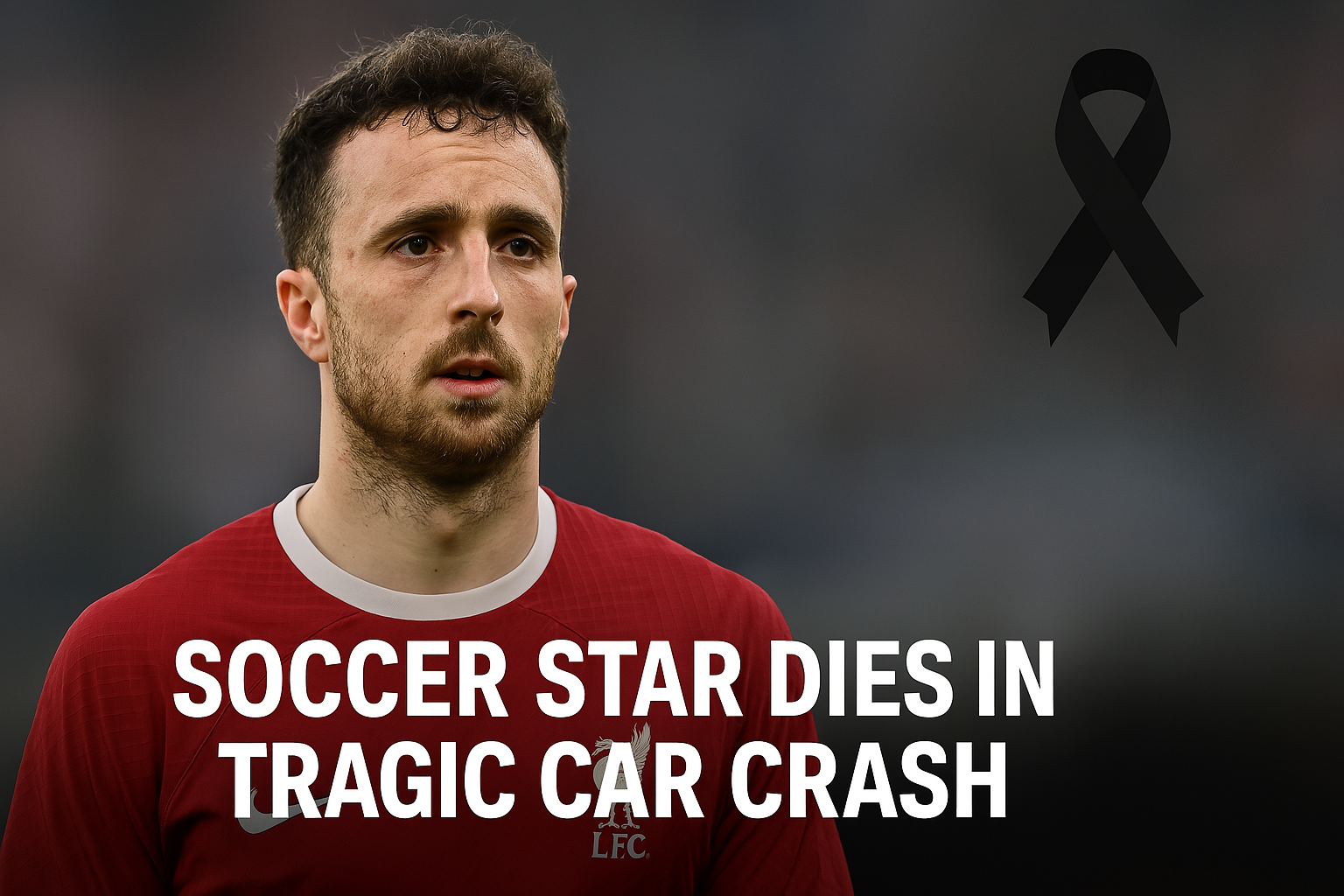
Liverpool forward Diogo Jota tragically dies in a car accident, leaving the football world in shock. Read full details about the incident and his career.
Table of Contents
Overview: A Celebrated Career Cut Short
On a tragic day in northwestern Spain, the football world lost one of its rising talents. Diogo Jota, a 28-year-old Portuguese forward who had become a key player for Liverpool Football Club, died in a car accident alongside his brother, Andre Silva. The incident sent shockwaves through the international football community, prompting tributes from fellow athletes, clubs, and fans across the globe.
Jota’s death marked a sudden and devastating end to a professional football career that had shown exceptional promise and demonstrated consistent growth across multiple top-tier European clubs. His contributions to Liverpool FC during his time at the club had established him as a vital component of the team’s attacking strategy under manager Jurgen Klopp.
Early Life and Family Background
Birth and Youth Years
Diogo José Teixeira da Silva was born on December 4, 1996, in Massarelos, a parish in Porto, Portugal. Growing up in one of Portugal’s major cities provided early exposure to the country’s passionate football culture. His family background reflected working-class Portuguese traditions, with football representing both a cultural passion and potential pathway for advancement.
Jota’s early years in Massarelos were spent developing his athletic abilities in local youth competitions. The region’s strong football heritage meant access to structured youth programs and coaching facilities. His parents recognized his potential early and supported his participation in organized football training during his childhood years.
Youth Career Development
His formal youth career began at local club Gondomar, where he participated in regional youth leagues. This early training period established foundational technical skills and tactical understanding. The competitive environment at Gondomar helped develop his discipline and commitment to football training.
Following his initial youth development at Gondomar, Jota progressed to Paços de Ferreira’s youth academy. This move represented an important step toward professional football, as Paços de Ferreira operated a recognized development program feeding players into the professional ranks. His time in this academy system refined his technical abilities and exposed him to higher-level competitive standards.
Professional Career Trajectory
Paços de Ferreira: First Professional Steps
Jota’s professional debut came with Paços de Ferreira in Portugal’s top division. During this period, he developed as a versatile forward capable of playing across multiple attacking positions. His performances attracted attention from larger European clubs seeking promising young talent with growth potential.
At Paços de Ferreira, Jota demonstrated the technical qualities that would define his later career: pace, ball control, and finishing ability. His willingness to work defensively and contribute beyond just goal-scoring showed maturity in his approach to football. The club provided an important developmental stage where he refined his professional approach to training and match preparation.
Atlético Madrid: European Advancement
In 2016, Jota secured a move to Atlético Madrid, one of Spain’s most prominent football clubs. This transfer represented a significant career advancement, placing him within one of Europe’s elite football institutions. At Atlético, he competed in La Liga and European competitions, testing himself against higher-caliber opposition.
His time at Atlético Madrid included loan spells that provided competitive experience. These temporary assignments to other clubs allowed Jota to develop confidence and consistency at professional levels approaching his ultimate career trajectory. The loan system gave him valuable minutes in competitive matches while maintaining the security of a contract with a top-tier club.
Wolverhampton Wanderers: Premier League Emergence
Jota’s breakthrough into consistent international prominence came with Wolverhampton Wanderers in the English Premier League. Joining Wolves provided him with a platform to demonstrate his abilities in one of the world’s most competitive football leagues. During his time in the Midlands, he developed into a consistent performer capable of competing at the highest professional levels.
His Premier League performances attracted significant attention from larger clubs. Jota’s combination of pace, technical skill, and goal-scoring ability made him one of the league’s notable attacking talents during this period. His work rate and tactical flexibility impressed both supporters and professional observers of English football.
Liverpool Football Club: Peak Career Years
In September 2020, Liverpool Football Club secured Jota’s services for a reported transfer fee of approximately £45 million. This represented substantial investment in his abilities and reflected the club’s confidence in his potential contribution to their attacking setup. Manager Jurgen Klopp specifically identified Jota as a player whose qualities would enhance Liverpool’s attacking options.
Integration and Early Impact
Jota’s integration into Liverpool’s squad proceeded smoothly despite the challenges of joining mid-season. His debut came against Arsenal in the Carabao Cup, where he scored immediately—an auspicious beginning to his Liverpool career. This early goal set a positive tone for his tenure at the club.
During his first full season at Liverpool, Jota made significant contributions to the team’s performance. He appeared in multiple competitions including the Premier League, UEFA Champions League, and domestic cup competitions. His versatility allowed him to play across the forward line, providing tactical flexibility to manager Jurgen Klopp’s strategic planning.
Notable Performances and Achievements
Among Jota’s memorable performances for Liverpool was a hat-trick against Atalanta in the UEFA Champions League. This three-goal performance demonstrated his capability to perform at the highest levels of European club football. Such performances confirmed his status as a player of genuine quality capable of impacting matches against elite opposition.
Jota’s contributions extended beyond goal-scoring statistics. His work rate in pressing opposing defenses, his ability to retain possession under pressure, and his willingness to make defensive contributions made him a complete attacking player. These qualities aligned with Klopp’s tactical philosophy emphasizing team cohesion and shared defensive responsibility.
During seasons affected by injury disruptions to Liverpool’s squad, Jota provided crucial continuity and attacking threat. His performances during periods when other attacking players were unavailable demonstrated his importance to the team’s competitive structure. He maintained standards while the club managed various injury challenges.
Playing Style and Technical Qualities
Jota’s playing style combined several valuable attributes. His acceleration allowed him to exploit space quickly, creating opportunities for himself and teammates. His close control enabled him to navigate congested areas of the pitch. His finishing ability converted created opportunities into goals consistently.
Beyond technical qualities, Jota’s football intelligence contributed to his effectiveness. His positioning sense allowed him to anticipate play development and position himself advantageously. His decision-making regarding when to shoot, pass, or dribble showed tactical maturity. These mental aspects of his game complemented his physical abilities.
Personal Life and Character
Family and Marriage
Jota maintained a relatively private personal life despite his professional prominence. He was married to Rute Cardoso, whom he had wed just eleven days before the tragic accident that claimed his life. This recent marriage represented a significant personal milestone in his life outside professional football.
The couple’s relationship had developed away from intense media scrutiny. Jota’s preference for maintaining privacy regarding personal matters reflected his personality—focused and dedicated to football while compartmentalizing his private life. His marriage to Rute Cardoso appeared to bring him personal happiness during what was professionally a stable and successful period of his career.
His family relationships remained important throughout his career. His connection with his brother Andre Silva extended beyond familial bonds—Silva also pursued a professional football career, competing in Portugal’s second division with Penafiel. The brothers’ shared dedication to football created a common ground for their relationship.
Off-Field Interests and Personality
Away from professional football, Jota maintained interests reflecting his personality. Gaming represented a significant off-field interest, with reports indicating his participation in competitive e-sports tournaments. This interest demonstrated engagement with contemporary entertainment and competitive experiences outside traditional sports.
Those who knew Jota described him as intelligent, soft-spoken, and thoughtful. His colleagues and friends characterized him as dedicated to his craft while maintaining humility about his professional status. His work ethic impressed coaches and teammates throughout his career. His focus remained consistently directed toward improving his football performance and contributing to his team’s success.
The Tragic Accident: Timeline and Details
The Incident in Northwestern Spain
The fatal accident occurred in northwestern Spain, specifically in an area near Puebla de Sanabria. The incident involved the vehicle that Jota was operating—a high-performance Lamborghini. The exact circumstances leading to the loss of vehicle control remain subject to official investigation.
According to reports from local authorities and emergency services, the vehicle veered off the roadway and subsequently burst into flames. The speed limit for the road where the accident occurred was established at 120 kilometers per hour (approximately 74 miles per hour). Investigations into the specific factors contributing to the accident—including road conditions, weather, or mechanical factors—proceeded under Spanish police supervision.
Emergency Response and Fatalities
Emergency services responded to the incident, arriving at the scene of the accident. Despite prompt response and medical intervention efforts, both occupants of the vehicle—Diogo Jota and his brother Andre Silva—suffered fatal injuries. Medical personnel were unable to revive either individual despite emergency response protocols.
The accident scene revealed significant vehicle damage consistent with high-impact collision. Debris and vehicle remains scattered along the roadside, including remains of the Lamborghini. Photographic evidence documented the extent of damage to the vehicle and surrounding area, illustrating the severity of the impact.
Official Confirmation and Investigation
Spanish authorities officially confirmed the deaths. The investigation proceeded under the jurisdiction of relevant Spanish police authorities, with formal reports to be submitted to the Puebla de Sanabria court. Authorities indicated that their investigation remained incomplete at the time of initial reports, with full findings pending completion of comprehensive accident reconstruction and analysis.
Official statements from relevant authorities maintained appropriate discretion regarding ongoing investigation details while confirming basic facts of the incident. The investigative process involved standard accident reconstruction protocols to determine precise contributing factors.
Global Football Community Response
Immediate Reactions from Clubs and Players
The news of Jota’s death prompted immediate responses from across the football world. Liverpool Football Club released official statements expressing profound sadness regarding the loss of a valued player and team member. The club’s management and remaining squad members expressed their grief and supported affected family members.
Manager Jurgen Klopp issued a personal statement: “We lost a phenomenal player and a beautiful soul. Football was his passion, but his kindness was his true strength.” This statement encapsulated the personal impact Jota had made on the club’s leadership and playing squad.
Teammates past and present shared tributes recognizing both Jota’s professional contributions and his personal character. Fellow players highlighted his work ethic, professionalism, and positive influence within team environments. Current Liverpool squad members expressed their shock and sadness regarding the loss of a colleague.
Portuguese Football Community
Portugal’s national football team, with which Jota had represented his country internationally, released statements of mourning. Teammates from the national squad expressed their shock and sadness regarding the loss of a fellow international player. The Portuguese Football Federation acknowledged his contributions to the national team.
Broader Sports and Media Response
Major sports media outlets provided comprehensive coverage of the incident and its aftermath. International football journalists and commentators reflected on Jota’s career trajectory and potential future development. The incident generated significant discussion regarding safety, tragedy in sports, and the human dimension of professional athletics.
The Funeral Service
Ceremony Details and Attendance
The funeral service for Diogo Jota and his brother Andre Silva took place on Saturday following the accident. The service was held at Igreja Matriz de Gondomar church in Gondomar, near Porto—the brothers’ hometown and the location of their early football development. This location held personal significance for the family.
Attendance at the funeral reflected the breadth of Jota’s impact and connections within professional football. Family members, close friends, and professional colleagues attended to pay respects. Jota’s wife Rute Cardoso and his parents were present at the service, receiving support from the football community and extended family.
Liverpool FC and Professional Football Representation
Players and staff from Liverpool Football Club attended the funeral, representing the club and honoring their departed colleague. Captain Virgil van Dijk was among those present, reflecting the significance of the occasion and the respect Jota commanded within the squad.
The club’s representatives carried flowers arranged in the shape of football shirts, bearing the brothers’ respective shirt numbers. Van Dijk carried a shirt numbered 20, representing Jota’s Liverpool shirt number. Andy Robertson brought another shirt numbered 30, honoring Silva’s number with Penafiel. These symbolic gestures represented the football community’s respect and remembrance.
National Team Representation
Members of Portugal’s national football team attended to pay respects to their international colleague. This representation acknowledged Jota’s contributions to Portuguese football at the national level and reflected the bonds formed between international teammates.
Career Statistics and Records
Liverpool FC Record
During his time at Liverpool, Jota made 131 appearances across all competitions. These appearances included Premier League matches, UEFA Champions League fixtures, and domestic cup competitions. His 43 goals across all competitions represented a significant contribution to the club’s attacking output.
His goal-scoring record demonstrated consistent effectiveness in front of goal. His assists and creative contributions complemented his goal-scoring, providing a complete attacking profile. His appearances without goals reflected his contributions beyond direct goal involvement—pressing defense, possession retention, and tactical positioning.
International Record
Jota earned 31 caps for the Portuguese national team, scoring 6 international goals. His selection for Portugal’s national squad reflected his development into a player of sufficient quality to compete at the international level. His international appearances encompassed various competition formats including World Cup qualifiers, European Championship qualifications, and friendly matches.
Legacy and Professional Impact
Playing Style Influence
Jota represented a particular style of forward play characterized by technical quality, work rate, and versatility. His ability to function across multiple attacking positions provided tactical flexibility valuable to his clubs. His pressing defense and possession contribution set standards for modern forward play emphasizing comprehensive team contribution.
His career trajectory from Portugal’s second division through elite European clubs illustrated the potential for systematic player development and progression. His performances demonstrated that quality players could emerge from less prominent initial environments through consistent development and appropriate competitive placement.
Impact on Liverpool’s Tactical System
Within Liverpool’s attacking system, Jota provided valuable tactical options. His pace and technical ability complemented other attacking players. His pressing defense aligned with the team’s defensive strategy emphasizing immediate pressure on ball loss. His consistency provided reliability to Liverpool’s attacking department.
Inspiration for Young Portuguese Players
Jota’s career path inspired younger Portuguese players pursuing professional football opportunities. His progression from local Portuguese clubs to elite European institutions demonstrated a realistic pathway for talented players. His success at multiple levels provided practical examples of systematic career development.
Analysis and Commentary
Career Trajectory Assessment
Jota’s career demonstrated steady progression through European football’s hierarchy. His development from Paços de Ferreira through Atlético Madrid, Wolverhampton Wanderers, and finally Liverpool reflected typical pathways for talented European players. His consistent improvement at each level demonstrated adaptability and commitment to development.
By the time of his death, Jota had established himself as a settled professional at one of Europe’s elite clubs. His performances suggested potential for continued development and increased influence within Liverpool’s system. His age—28 at the time of his death—placed him at a career point where he typically would enter peak professional years combining experience with physical capability.
Significance in Contemporary Football
Jota represented contemporary football’s emphasis on versatile, technically competent attackers capable of contributing beyond goal-scoring. His playing style aligned with modern tactical trends valuing complete players over specialists. His career reflected the increasing internationalization of professional football, with Portuguese talent competing successfully within top European leagues.
Lasting Remembrance
Media and Public Memory
Following Jota’s death, media outlets and football organizations established various memorial initiatives. Tributes appeared across digital and traditional media platforms. Supporters’ groups organized commemorative events. These responses reflected the genuine connection fans and professionals felt toward Jota.
Club and Organizational Tributes
Liverpool Football Club established memorial initiatives honoring Jota’s memory and contributions. The club recognized his professional achievements while acknowledging the personal tragedy affecting his family. These institutional responses reflected both professional respect and human recognition of loss.
Family Support and Continuity
The football community provided support to Jota’s family following his death. Institutional support from clubs and football organizations aimed to assist the family during their grief. These actions reflected football’s community dimension—extending beyond professional performance to acknowledge shared humanity.
Key Statistics Summary
| Aspect | Details |
|---|---|
| Full Name | Diogo José Teixeira da Silva |
| Birth Date | December 4, 1996 |
| Birthplace | Massarelos, Porto, Portugal |
| Death | Car accident, northwestern Spain |
| Age at Death | 28 years |
| Liverpool Appearances | 131 (all competitions) |
| Liverpool Goals | 43 |
| International Caps | 31 for Portugal |
| International Goals | 6 |
| Transfer Fee to Liverpool | Approximately £45 million |
| Joined Liverpool | September 2020 |
Frequently Asked Questions (FAQ)
1. When did Diogo Jota die, and what were the circumstances?
Diogo Jota died in a car accident in northwestern Spain near Puebla de Sanabria. The vehicle he was operating, a Lamborghini, veered off the roadway and burst into flames. The road’s speed limit was 120 kilometers per hour (74 miles per hour). His brother Andre Silva, who was also in the vehicle, died from his injuries. Emergency services responded but were unable to revive either occupant. Spanish authorities conducted investigations into the specific circumstances, with findings to be submitted to the Puebla de Sanabria court.
2. How old was Diogo Jota at the time of his death?
Diogo Jota was 28 years old at the time of the accident. He was born on December 4, 1996, and the incident occurred before his 29th birthday. His age placed him at a point in his professional career where he typically would be entering peak years combining experience with physical capability.
3. Which clubs did Diogo Jota play for during his professional career?
Jota played for several clubs throughout his professional career: Gondomar (youth), Paços de Ferreira (initial professional club in Portugal), Atlético Madrid (Spain), Wolverhampton Wanderers (English Premier League), and Liverpool Football Club (English Premier League). His career showed progression through European football’s competitive hierarchy, culminating in his tenure at Liverpool beginning in September 2020.
4. What was Diogo Jota’s transfer fee when he joined Liverpool?
Liverpool acquired Diogo Jota for an estimated transfer fee of approximately £45 million in September 2020. This represented substantial investment by the club and reflected the value placed on his qualities as an attacking player. The transfer occurred during the club’s competitive period under manager Jurgen Klopp.
5. How many goals did Diogo Jota score for Liverpool Football Club?
During his time at Liverpool, Jota scored 43 goals across all competitions, including Premier League matches, UEFA Champions League fixtures, and domestic cup competitions. He made 131 appearances for the club across these competitions. His goal-scoring record contributed significantly to Liverpool’s attacking output during his tenure.
6. Did Diogo Jota play for Portugal’s national football team?
Yes, Diogo Jota earned 31 caps for Portugal’s national football team, scoring 6 international goals. His selection for the Portuguese national squad reflected his development into a player of sufficient quality to represent his country at the international level. His international appearances encompassed various competition formats.
7. Who was Diogo Jota married to at the time of his death?
Diogo Jota was married to Rute Cardoso. The couple had married just 11 days before the tragic accident. His wife was among those who attended the funeral service held at Igreja Matriz de Gondomar church in Gondomar, Portugal.
8. What was significant about Diogo Jota’s playing style and abilities?
Jota’s playing style combined several valuable attributes: acceleration and pace for exploiting space, close ball control for navigating congested areas, accurate finishing for converting opportunities, intelligent positioning, and tactical maturity. Beyond goal-scoring, he contributed through defensive pressing, possession retention, and tactical positioning. His versatility allowed him to function across multiple attacking positions, providing tactical flexibility to his clubs. These comprehensive abilities made him a complete attacking player rather than a specialist.
9. How did the football community respond to Diogo Jota’s death?
The football community responded with widespread tributes and expressions of grief. Liverpool Football Club released official statements, with manager Jurgen Klopp providing a personal tribute. Teammates from Liverpool and the Portuguese national team shared remembrances. International football media outlets provided comprehensive coverage. The funeral service attracted attendees from across professional football, including Liverpool players who carried flowers arranged as football shirts bearing the brothers’ numbers. Support extended to the family during their grief.
10. Where did the funeral service take place?
The funeral service for Diogo Jota and his brother Andre Silva took place at Igreja Matriz de Gondomar church located in Gondomar, near Porto, Portugal. This location held personal significance as the brothers’ hometown and the location of their early football development. The service took place on Saturday following the accident.
Conclusion and Lasting Impact
Diogo Jota’s career demonstrated the pathway available to talented footballers through systematic development and consistent progression through competitive levels. His professional achievements at Liverpool and representation of Portugal’s national team marked him as a player of significant quality. His integration into modern football’s tactical systems illustrated the value of versatile, technically competent attackers.
Beyond statistical achievements, Jota established personal connections with teammates, supporters, and colleagues that reflected his character and professional approach. The widespread tributes following his death illustrated the genuine regard in which he was held across football.
His death represented a tragic loss to professional football and a profound impact on his family, colleagues, and supporters worldwide. The memorial initiatives and continued remembrance reflect his lasting impression on the football community. His professional legacy remains defined by consistent achievement, technical quality, and contributions to his teams’ competitive success.
About the Author
Nueplanet is a sports journalism and football analysis specialist dedicated to providing factual, well-researched content about professional football and athletes. With a commitment to accuracy and respectful coverage of both professional achievements and significant events, Nueplanet creates informative articles drawing from official sources, verified reporting, and authoritative sports organizations. Research focuses on delivering comprehensive context, professional analysis, and balanced perspectives regarding football and sports developments.
Commitment to Sources: All information presented in this article derives from official statements, verified news reports from established sports media organizations, club communications, and authoritative sources including Sky News, Liverpool Football Club official statements, and Portuguese football authorities.
Date Published: July 03, 2025
Last Updated: July 03, 2025
Disclaimer: This article is based on information available from verified news sources and official statements regarding the incident and Diogo Jota’s professional career. Information was accurate at the time of publication. This article is respectfully presented as a factual account of a notable football professional’s career and the tragic circumstances surrounding his death, intended to commemorate his professional contributions and impact on the football community.
Helpful Resources
Conclusion
Diogo Jota’s death at just 28 is a monumental loss to football. From his beginnings in Portugal to becoming a Liverpool star, his journey inspired many. His dedication, humility, and relentless work ethic will remain his legacy forever.
Stay updated with more news about football, sports personalities, and global updates at NuePlanet.com. Share your tributes to Diogo Jota in the comments below.
Latest Posts
- HBSE Compartment Exam 2025: Admit Cards Released for Haryana Class 10 and 12 – Check Full Details
- Karnataka 2nd PUC Exam 3 Results 2025 Declared on karresults.nic.in
- JAC Result 2025 Declared: Check Class 11 Pass Percentage, Websites, and More
- National RailOne App: Indian Railways’ One-Stop Solution for Travellers
- HDB Financial Services IPO Allotment GMP: All You Need to Know
Tag
diogo jota
Related Posts







Post Comment