








Delhi University UG Admissions 2025 – CSAS Round 3 Explained
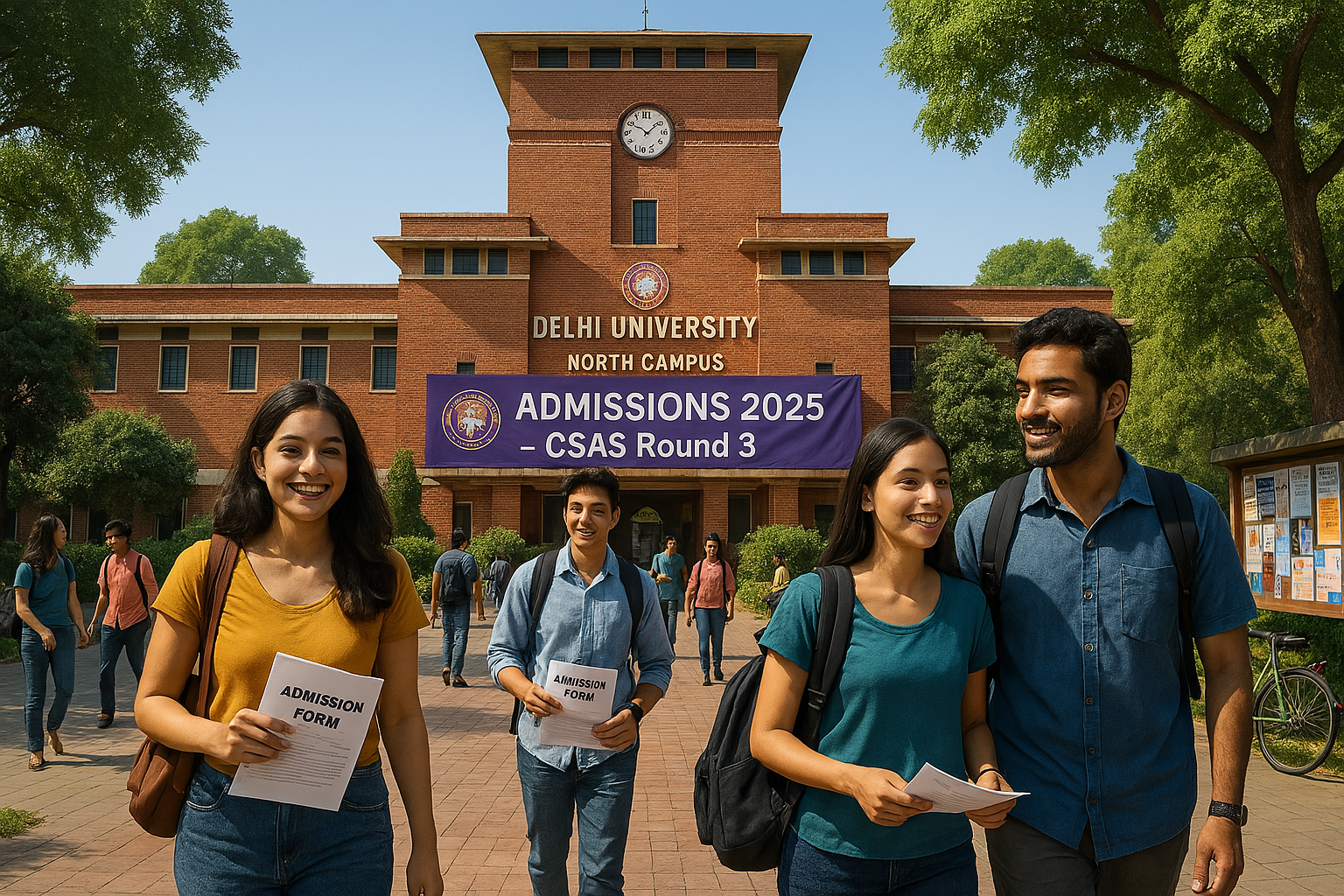
Delhi University UG Admissions 2025 have entered their pivotal third phase under the Common Seat Allocation System (CSAS), offering seat upgrades, mid‑entry opportunities, and category‑based allotments. With major cut‑off shifts and process reforms, candidates must act before key deadlines conclude
Table of Contents
Delhi University has announced the third round of its Common Seat Allocation System (CSAS) for undergraduate admissions for the 2025-26 academic session. This round provides opportunities for seat upgrades, fresh applications through mid-entry, and category-based allocations for qualified CUET UG 2025 candidates.
The CSAS Round 3 process incorporates proven mechanisms for transparent seat allocation. This guide provides comprehensive information about eligibility criteria, registration procedures, important dates, and effective strategies for successful admission to Delhi University’s undergraduate programs.
Understanding Delhi University’s Admission System
CUET-Based Selection Process
Delhi University transitioned to CUET (Common University Entrance Test) based admissions in 2022. CUET scores now serve as the primary criteria for merit determination. Class 12 marks are used only as tie-breakers when candidates have identical CUET scores.
The CUET UG 2025 examination follows this format:
| Component | Details |
|---|---|
| Duration | 3 hours per session |
| Question Type | Multiple Choice Questions (MCQs) |
| Subjects | Language, Domain-specific, General Test |
| Scoring | 100 marks per subject |
| Marking Scheme | Negative marking applicable |
| Mode | Computer-Based Test (CBT) |
| Test Centers | 500+ centers across India and internationally |
| Languages | 13 languages including Hindi and English |
About Delhi University
Delhi University is one of India’s largest and most respected higher education institutions. The university comprises 91 affiliated colleges, 86 academic departments, and enrolls over 130,000 students annually. DU offers more than 500 undergraduate programs across diverse disciplines including arts, science, commerce, and professional courses.
The institution maintains recognition in QS World University Rankings and has produced notable alumni across various fields including government, business, academia, and arts.
CSAS Round 3 Eligibility Criteria
Category 1: Upgrade Seekers
Candidates who received seat allocations in CSAS Round 1 or Round 2 can participate in Round 3 for upgrades. These candidates can reorder their preferences to seek admission to higher-preference programs or colleges.
Key features for upgrade seekers:
- No additional application fee required
- Current seat remains protected until successful upgrade
- Automatic acceptance of upgraded seat upon allocation
- Unlimited preference modifications within the designated window
- Notifications sent via SMS and email
Category 2: Mid-Entry Applicants
Fresh applicants who missed earlier rounds can apply through the mid-entry window. This category includes:
- First-time applicants who could not register in previous rounds
- Previously rejected candidates due to subject mapping errors
- Candidates with resolved documentation issues
- CUET UG 2025 qualified students seeking new opportunities
- Applicants with updated category certificates
Application Fee: Rs 1,000 (non-refundable)
The mid-entry fee covers subject mapping corrections, preference modifications, and access to all available vacant seats across participating colleges.
Category 3: Specialized Quota Candidates
Round 3 includes allocations for specialized categories:
Performance-Based Quotas:
- Music programs (Hindustani, Carnatic, Western classical)
- Fine Arts (BFA) including painting and sculpture
- Physical Education and sports science
- Dance programs (classical and contemporary)
Extra-Curricular Activities (ECA) Quota:
- Cultural activities (theatre, literature, debate)
- Social service and community development
- Technical skills (photography, journalism)
- Leadership and student governance experience
Sports Quota:
- National level competition participants
- State championship medalists
- University sports team members
- Certified coaching experience holders
Children/Ward (CW) Categories:
- Armed forces personnel dependents
- Paramilitary forces children
- Central government employee wards
- Freedom fighters’ descendants
Complete Timeline for CSAS Round 3
| Stage | Date and Time | Duration | Applicable To |
|---|---|---|---|
| Upgrade & Preference Reorder | August 2, 5:00 PM – August 3, 4:59 PM | 24 hours | Round 1-2 admitted students |
| Upgraded Allocations Declaration | August 5, 5:00 PM | Instant | Upgrade applicants |
| College Verification | August 5, 5:00 PM – August 6, 4:59 PM | 24 hours | Colleges review applications |
| Fee Payment (Upgraded) | August 7, 4:59 PM | Extended window | Upgraded candidates |
| Vacant Seats Display | August 8, 5:00 PM | Public access | All candidates |
| Mid-Entry Application Window | August 8, 5:00 PM – August 10, 4:59 PM | 48 hours | Fresh/rejected applicants |
| Round 3 Allocation Announcement | August 13, 5:00 PM | Results release | All categories |
| Seat Acceptance Window | August 13, 5:00 PM – August 17, 4:59 PM | 4 days | All allocated candidates |
| College Verification (Final) | August 13, 5:00 PM – August 18, 4:59 PM | 5 days | All allocated candidates |
| Final Fee Payment Deadline | August 19, 4:59 PM | Final deadline | All admitted students |
Important Note: The university has clarified that no grievances regarding preferences submitted before August 10 will be entertained after the deadline.
Step-by-Step Registration Process
For Upgrade Seekers
Step 1: Portal Access Visit the official admission portal at admission.uod.ac.in. Log in using your existing CSAS credentials from previous rounds.
Step 2: Preference Modification Navigate to the upgrade section during the designated window (August 2-3). Review your current allocation and available options. Reorder preferences based on your priority, placing preferred programs and colleges at the top.
Step 3: Research and Strategy Analyze previous round cutoffs for realistic selection. Consider seat availability in preferred programs. Include backup options within your preference list. Monitor the portal continuously during the modification window.
Step 4: Submit Changes Review all modifications carefully before submission. Save confirmation details and transaction records. Document your updated preference list for reference.
Step 5: Await Results Upgraded allocations will be declared on August 5 at 5:00 PM. If upgraded, seats are automatically accepted unless fees remain unpaid. Complete fee payment by August 7, 4:59 PM to confirm admission.
For Mid-Entry Applicants
Step 1: Document Preparation Gather required documents before the application window:
- CUET UG 2025 scorecard
- Class 10 and 12 mark sheets and certificates
- Category certificate (if applicable)
- Recent passport-size photographs (digital format)
- Valid email address and mobile number
Step 2: Application Submission Access the mid-entry section on admission.uod.ac.in starting August 8, 5:00 PM. Complete the application form with accurate personal and academic details. Upload all required documents in specified formats (PDF/JPEG).
Step 3: Subject Mapping Verify or correct subject mappings for accurate program matching. Ensure selected programs align with your CUET subject combinations. Review eligibility criteria for each preferred program.
Step 4: Preference Selection Select up to the permitted number of program-college combinations. Arrange preferences in order of priority. Consider cutoff trends and seat availability for strategic selection.
Step 5: Fee Payment Pay the Rs 1,000 non-refundable mid-entry fee. Payment methods include net banking, credit/debit cards, and UPI. Save the payment receipt and transaction ID immediately.
Step 6: Final Submission Review the complete application before final submission. Download and print the confirmation page. Maintain digital copies of all documents and receipts.
For Category-Specific Candidates
Performance and ECA Quota Process:
Category-specific candidates must follow additional procedures:
- Submit online applications during the designated window
- Register for skill trials or interviews as per department schedule
- Complete performance demonstrations or portfolio submissions
- Await evaluation results from expert committees
- Accept allocated seats if selected during Round 3 announcements
Trial and Evaluation Process:
An 18-member expert committee evaluates category-specific applications. The committee includes academic representatives, industry experts, student representatives, and external evaluators. Digital trial processes enable remote participation for candidates unable to attend in person.
Evaluation criteria are standardized across categories to ensure fairness. Results are declared with detailed scorecards for transparency.
Effective Strategies for Successful Admission
For Current Students Seeking Upgrades
Research Thoroughly: Analyze cutoff trends from previous rounds. Identify programs with declining cutoffs or increased seat availability. Focus on realistic upgrade possibilities based on your CUET percentile.
Strategic Preference Setting: Place genuinely preferred options at the top. Include moderately competitive choices in the middle. Add safe backup options at the end.
Document Readiness: Keep all documents ready for quick verification. Ensure certificates are clear and legible. Maintain both original and self-attested copies.
Monitor Continuously: Check the portal regularly for updates and notifications. Set reminders for critical deadlines. Subscribe to SMS and email alerts.
For Mid-Entry Candidates
Comprehensive Research: Study available programs and their specific requirements. Understand fee structures across different colleges. Research placement records and infrastructure facilities.
Realistic Expectations: Assess seat availability based on vacant seat displays. Consider off-campus colleges for better chances. Balance preference between popular and less competitive programs.
Application Accuracy: Double-check all entered information for accuracy. Ensure subject mappings are correct and complete. Upload clear, readable document scans.
Financial Preparation: Keep admission fees ready for immediate payment. Understand the complete fee structure including additional charges. Explore scholarship and financial aid options.
For Category-Specific Applicants
Portfolio Development: Maintain updated records of achievements and performances. Prepare presentation materials for trials. Practice demonstration skills regularly.
Specific Requirement Understanding: Review detailed eligibility criteria for your category. Understand evaluation parameters and scoring systems. Prepare alternative options within the same category.
Skill Enhancement: Continue developing relevant skills before trials. Seek feedback from mentors and experts. Participate in practice sessions if available.
Understanding DU’s Tie-Breaking Mechanism
When multiple candidates have identical CUET scores, Delhi University applies a multi-tier tie-breaking system:
Primary Tie-Breaker: Class 10 marks (aggregate percentage) serve as the first criterion. Candidates with higher Class 10 percentages receive preference.
Secondary Tie-Breaker: If Class 10 marks are also identical, specific subject scores are considered. Mathematics and English scores from Class 10 are typically used for this purpose.
Final Tie-Breaker: When all previous criteria result in ties, date of birth determines priority. Older candidates receive preference in the final selection.
This system replaces the previous reliance on Class 12 percentages, aligning with the CUET-based admission framework.
Seat Availability Trends and Analysis
NCWEB Programs
Non-Collegiate Women’s Education Board (NCWEB) programs have shown favorable trends for applicants:
- Cutoffs declined by up to 10% year-over-year in popular programs
- BA and BCom programs show increased accessibility
- Greater flexibility in program selection for eligible candidates
- Enhanced opportunities for students with moderate CUET scores
Off-Campus Colleges
Off-campus institutions continue to have seat vacancies due to several factors:
Contributing Factors:
- Limited infrastructure compared to main campus colleges
- Absence of hostel facilities for outstation students
- Transportation challenges in reaching college locations
- Strong candidate preference for established North Campus colleges
University Solutions: Delhi University has implemented several measures to address these challenges:
- Over-admission policies allowing up to 50% extra admissions
- Infrastructure development initiatives
- Enhanced faculty recruitment programs
- Industry partnership development
- Special scholarship programs to attract quality students
Popular Programs and Colleges
High-Demand Undergraduate Programs:
- BCom (Honours) – Consistently highest demand
- BA Economics (Honours) – Strong preference among humanities students
- BSc Computer Science – Growing demand in technology sector
- BA English (Honours) – Traditional favorite for literature enthusiasts
- BSc Mathematics (Honours) – Popular among science stream students
Preferred Colleges:
- Shri Ram College of Commerce (SRCC) – Leading commerce college
- Hindu College – Prestigious arts and science programs
- St. Stephen’s College – Elite liberal arts education
- Miranda House – Top women’s college
- Hansraj College – Popular science programs
Emerging Trends: Recent patterns indicate increased interest in interdisciplinary programs, colleges with industry partnerships, institutions offering international exposure, and programs with strong research opportunities.
Fee Structure and Financial Planning
Application and Registration Fees
| Category | Fee Amount |
|---|---|
| Regular CSAS Registration (General) | Rs 250 |
| Regular CSAS Registration (SC/ST) | Rs 100 |
| Mid-Entry Application | Rs 1,000 |
| Category-Specific Trials | Rs 200-500 |
Annual Tuition Fees (2025-26)
| Program Type | Fee Range |
|---|---|
| Regular College Programs | Rs 10,000-15,000 per year |
| Premium Programs | Rs 25,000-50,000 per year |
| Professional Courses | Rs 75,000-1,50,000 per year |
| International Programs | Rs 2,00,000-5,00,000 per year |
Additional Expenses
Accommodation and Living:
- Hostel accommodation: Rs 15,000-25,000 per year
- Mess facilities: Rs 30,000-40,000 per year
- Books and study materials: Rs 8,000-12,000 per year
- Transportation: Rs 10,000-20,000 per year
Scholarship Opportunities
Merit-Based Scholarships:
- University merit scholarships: Up to Rs 50,000 annually
- Department-specific awards: Rs 10,000-25,000 annually
- Alumni endowment funds: Variable amounts
- Corporate sponsorships: Full tuition coverage available
Need-Based Financial Aid:
- Complete fee waiver programs for economically weaker sections
- Monthly stipends: Rs 2,000-5,000
- Emergency financial support for crisis situations
- Educational loan partnerships with major banks
Official Portal Features and Communication
Admission Portal Capabilities
The official portal at admission.uod.ac.in provides comprehensive features:
Dashboard Functions:
- Real-time seat availability tracking across all colleges
- Instant notification system for important updates
- Personalized candidate profiles with application history
- Interactive cutoff calculators for informed decisions
- Mobile-responsive design for access on various devices
- Multi-language support for diverse backgrounds
Communication Channels:
- SMS alerts for critical deadlines
- Email notifications for status updates
- Helpline support during extended hours
- Official social media updates
- Mobile app with push notifications (where available)
Important Notice Regarding Grievances
Delhi University has clearly stated that grievances concerning preferences submitted before the August 10 deadline will not be entertained. Candidates must ensure accuracy before the final submission deadline to avoid issues later in the process.
Post-Admission Process
Document Verification
Candidates must complete document verification within specified timelines:
Required Documents:
- Original CUET UG 2025 scorecard
- Class 10 certificate and mark sheet
- Class 12 certificate and mark sheet
- Character certificate from last attended institution
- Migration certificate (if applicable from different board)
- Category certificate (SC/ST/OBC/EWS – if claiming reservation)
- Income certificate (for EWS category)
- Recent passport-size photographs (multiple copies)
- Address proof (Aadhaar card or similar)
Verification Process: Colleges review submitted documents during designated windows. Original documents must be presented for physical verification. Self-attested photocopies are collected for college records. Certificates must be valid and within their validity periods.
Fee Payment
Admitted candidates must complete fee payment by August 19, 4:59 PM. Payment methods include online banking, credit/debit cards, and UPI. Late payments may result in automatic seat cancellation. Maintain payment receipts for future reference.
Academic Session Commencement
The academic session for 2025-26 is expected to begin in early October 2025. Exact dates will be announced by individual colleges. New students should attend orientation programs and complete all registration formalities as directed by their respective colleges.
Technology Integration and Innovation
Auto-Accept Technology
Delhi University has implemented automatic seat acceptance for upgraded allocations. When candidates receive upgraded seats, the system automatically accepts them if previous round fees have been paid. This mechanism reduces missed opportunities due to manual confirmation delays.
Benefits include:
- Significant reduction in lost opportunities
- Instant confirmation through multiple channels
- Seamless integration with fee payment systems
- Real-time seat status updates
- Complete transparency in the allocation process
Digital Infrastructure
The university has modernized its admission infrastructure:
- 24/7 portal availability for candidate convenience
- Mobile-first approach for tech-savvy students
- Comprehensive help documentation for self-service
- Reduced paperwork through complete digitization
- Faster processing times for applications
Recent Policy Reforms
Delhi University has introduced several reforms to enhance the admission experience:
Key Improvements:
- Real-time eligibility filtering using advanced algorithms
- Automated seat allocation reducing manual intervention
- Expansion of performance-quota opportunities
- Enhanced mid-entry options for second-chance seekers
- Transparent tie-breaking mechanisms
- Digitized trial processes for ECA admissions
- Streamlined fee payment with extended deadlines
- Comprehensive grievance redressal mechanisms
These reforms aim to create a more equitable, transparent, and efficient admission system for all candidates.
Campus Experience and Infrastructure
Orientation Programs
Delhi University colleges have improved orientation processes following pandemic-related challenges:
Recent Improvements:
- Staggered schedules to reduce crowding
- Shorter waiting times through efficient queue management
- Well-coordinated sessions across North Campus colleges
- Comprehensive information sessions for new students
- Digital resource distribution for paperless processes
Infrastructure Enhancements
Several colleges have undertaken significant infrastructure upgrades:
- Miranda House: Renovated auditorium facilities
- Ramjas College: Advanced laboratory upgrades
- Hindu College: Modern library digitization
- St. Stephen’s College: Heritage building restoration
- SRCC: Technology integration in classrooms
Career Support and Alumni Network
Placement Services
Delhi University colleges provide comprehensive career support:
Placement Cell Services:
- Dedicated placement teams in major colleges
- Industry partnerships for internships and employment
- Campus recruitment drives by leading companies
- Career counseling and guidance services
- Alumni network support for job placements
Employment Statistics: Top colleges report placement rates exceeding 95%. Average salary packages for fresh graduates range from Rs 4-15 lakhs per annum. Diverse industry sectors recruit from DU including technology, finance, consulting, and government services.
Skill Development
Available Programs:
- Entrepreneurship incubators supporting startup ventures
- International exchange programs with global universities
- Industry mentorship connecting students with professionals
- Skill development workshops for employability enhancement
- Research opportunities with faculty members
Common Mistakes to Avoid
During Registration:
- Missing critical deadlines due to last-minute rush
- Entering incorrect personal or academic information
- Uploading unclear or illegible document scans
- Poor strategic planning in preference selection
- Ignoring official notifications and updates
During Counselling:
- Failing to accept allocated seats within deadlines
- Missing document verification appointments
- Delaying fee payments beyond final deadlines
- Not maintaining copies of important documents
- Ignoring communication from colleges and university
General Errors:
- Relying on unofficial sources for information
- Not verifying subject mapping accuracy
- Overlooking category-specific requirements
- Inadequate financial planning for fees and expenses
- Poor time management during critical windows
Frequently Asked Questions (FAQs)
Q1: Who is eligible to participate in DU CSAS Round 3?
Three categories can participate in Round 3: (1) Current students from Rounds 1 or 2 seeking upgrades or preference reordering, (2) Fresh applicants or previously rejected candidates through the mid-entry window (August 8-10) after paying Rs 1,000, and (3) Category-specific candidates including performance-based, ECA, sports, and CW quota aspirants. Each category has specific eligibility requirements and designated application windows.
Q2: What is the fee for mid-entry applications and when must it be paid?
The mid-entry application fee is Rs 1,000 (non-refundable). Payment must be completed between August 8, 5:00 PM and August 10, 4:59 PM. This fee provides access to preference editing, subject mapping corrections, and seat allotment opportunities. Payment methods include net banking, credit/debit cards, and UPI. No extensions are granted beyond the specified deadline.
Q3: When will Round 3 allocation results be announced?
Round 3 allocations will be declared on August 13, 2025, at 5:00 PM. This includes performance-based, CW, ECA, and sports quota seats. Additional category results may be announced on August 15 at 5:00 PM. Following allocation, candidates must accept seats between August 13-17, complete college verification by August 18, and finalize fee payment by August 19, 4:59 PM.
Q4: How does the upgrade process work for Round 1 and 2 students?
Students admitted in previous rounds can request upgrades during August 2, 5:00 PM to August 3, 4:59 PM through the official portal. Candidates can reorder preferences to seek better program-college combinations. Upgraded allocations announced on August 5 are automatically accepted if previous fees were paid. The current seat remains protected until a successful upgrade is secured, ensuring no risk of losing existing admission.
Q5: What is the tie-breaking mechanism for identical CUET scores?
When candidates have identical CUET scores, DU uses a multi-tier system: (1) Class 10 aggregate marks serve as the primary tie-breaker, (2) Mathematics and English scores from Class 10 as secondary criteria, and (3) Date of birth (older candidates preferred) as the final determinant. This system eliminates previous reliance on Class 12 percentages, aligning with CUET-based admission reforms.
Q6: Why do off-campus colleges have more vacant seats?
Off-campus colleges face challenges including limited infrastructure, absence of hostel facilities, transportation difficulties, and strong candidate preference for established North Campus colleges. DU addresses these issues through over-admission policies (up to 50% extra admissions), infrastructure development programs, enhanced faculty recruitment, industry partnerships, and special scholarship programs to attract quality students.
Q7: What documents are required for document verification?
Required documents include: CUET UG 2025 scorecard (original and photocopy), Class 10 and 12 certificates with mark sheets, character certificate from last institution, migration certificate (if applicable), category certificate for reservation claims, income certificate (EWS), PwD certificate if applicable, recent passport-size photographs, and address proof (Aadhaar card or similar). Both original and self-attested photocopies must be submitted during verification.
Q8: Can preferences be modified after the August 10 deadline?
No. Delhi University has clearly stated that no grievances regarding preferences submitted before August 10 will be entertained after the deadline. Candidates must ensure accuracy and completeness of all information before final submission. Once the mid-entry window closes on August 10, 4:59 PM, no modifications to preferences or subject mappings will be permitted.
Q9: What are the most popular undergraduate programs at DU?
The most sought-after programs include BCom (Honours) with consistently highest demand, BA Economics (Honours) popular among humanities students, BSc Computer Science with growing demand in technology, BA English (Honours) as a traditional favorite, and BSc Mathematics (Honours) popular among science students. Emerging trends show increased interest in interdisciplinary programs and courses with industry partnerships.
Q10: What scholarship opportunities are available for DU students?
DU offers multiple scholarship options: University merit scholarships up to Rs 50,000 annually, department-specific awards of Rs 10,000-25,000, alumni endowment funds with variable amounts, and corporate sponsorships including full tuition coverage. Need-based financial aid includes complete fee waivers for economically weaker sections, monthly stipends of Rs 2,000-5,000, emergency support, and educational loan partnerships with major banks.
Key Takeaways
Delhi University CSAS Round 3 provides multiple pathways for admission to undergraduate programs for 2025-26. Current students can seek upgrades during August 2-3, while fresh applicants can apply through mid-entry during August 8-10. Category-specific allocations for performance, ECA, sports, and CW quotas are integrated into Round 3 announcements.
Critical deadlines include preference submission by August 10, seat allocation announcement on August 13, seat acceptance by August 17, and final fee payment by August 19.
The automatic seat acceptance mechanism for upgrades reduces missed opportunities. The multi-tier tie-breaking system ensures fairness when CUET scores are identical.
Candidates should research thoroughly, set realistic preferences, maintain complete documentation, and monitor the official portal regularly. Off-campus colleges offer better chances due to higher seat availability. Financial planning should account for tuition, accommodation, and additional expenses.
Next Steps for Candidates
Immediate Actions:
- Visit admission.uod.ac.in and review your application status
- Gather all required documents and organize them systematically
- Research programs and colleges based on your CUET scores
- Set reminders for all critical deadlines
- Subscribe to official SMS and email alerts
For Upgrade Seekers:
- Prepare your preference modification strategy before August 2
- Analyze cutoff trends from previous rounds
- Keep fee payment ready for upgraded allocations
- Monitor the portal continuously during the modification window
For Mid-Entry Applicants:
- Complete document preparation before August 8
- Keep Rs 1,000 ready for application fee payment
- Verify subject mappings carefully before submission
- Research off-campus colleges for better opportunities
For All Candidates:
- Stay updated through official channels only
- Avoid relying on unofficial or unverified sources
- Maintain digital and physical copies of all documents
- Plan your finances including fees and living expenses
- Prepare for document verification and orientation programs
Candidates should avoid relying on unofficial sources, third-party websites, or unverified information. All dates, procedures, and requirements should be confirmed from official university communications.
About the Author
Nueplanet
Nueplanet is an educational content specialist focusing on higher education admissions in India. With expertise in covering university admission processes, entrance examinations, and counselling procedures, nueplanet is committed to providing accurate, verified, and timely information to students and parents.
This article is based on official notifications from Delhi University and publicly available information as of October 2025. All details have been verified from the university’s official admission portal and related government communications. The content is regularly reviewed and updated to reflect the latest information and changes in admission procedures.
About This Platform:
This platform is dedicated to providing verified, accurate, and comprehensive information about educational admissions, entrance examinations, and career opportunities in India. We prioritize official sources including university portals, government notifications, and authorized communications to ensure content reliability. Our goal is to help students make informed decisions based on factual, transparent information.
Published: August 03, 2025
Last Updated: August 03, 2025
Disclaimer: This article is based on official information available at the time of publication. Candidates are strongly advised to verify all details including dates, fees, eligibility criteria, and procedures from the official Delhi University admission portal at admission.uod.ac.in and related official sources before making any decisions. The author and platform are not responsible for any changes made by the authorities after publication. Always refer to official notifications for the most current and accurate information.
Latest Posts
- 71st National Film Awards 2025
- Pakistan Champions vs South Africa Champions – WCL 2025 Final Match Report
- Dortmund vs LOSC: BVB’s Dominant 3-1 Victory in Club Friendly Clash
- The POCSO Act in 2025: Law, Challenges & Real‑World Impact
- NEET PG 2025 – Exam Day Timing, Format, and Candidate Review
- Delhi Metro Yellow Line – Route, Operations & Future Expansions












Post Comment