









Delhi-Goa IndiGo Flight Suffers Engine Failure Mid-Air: Emergency Landing at Mumbai
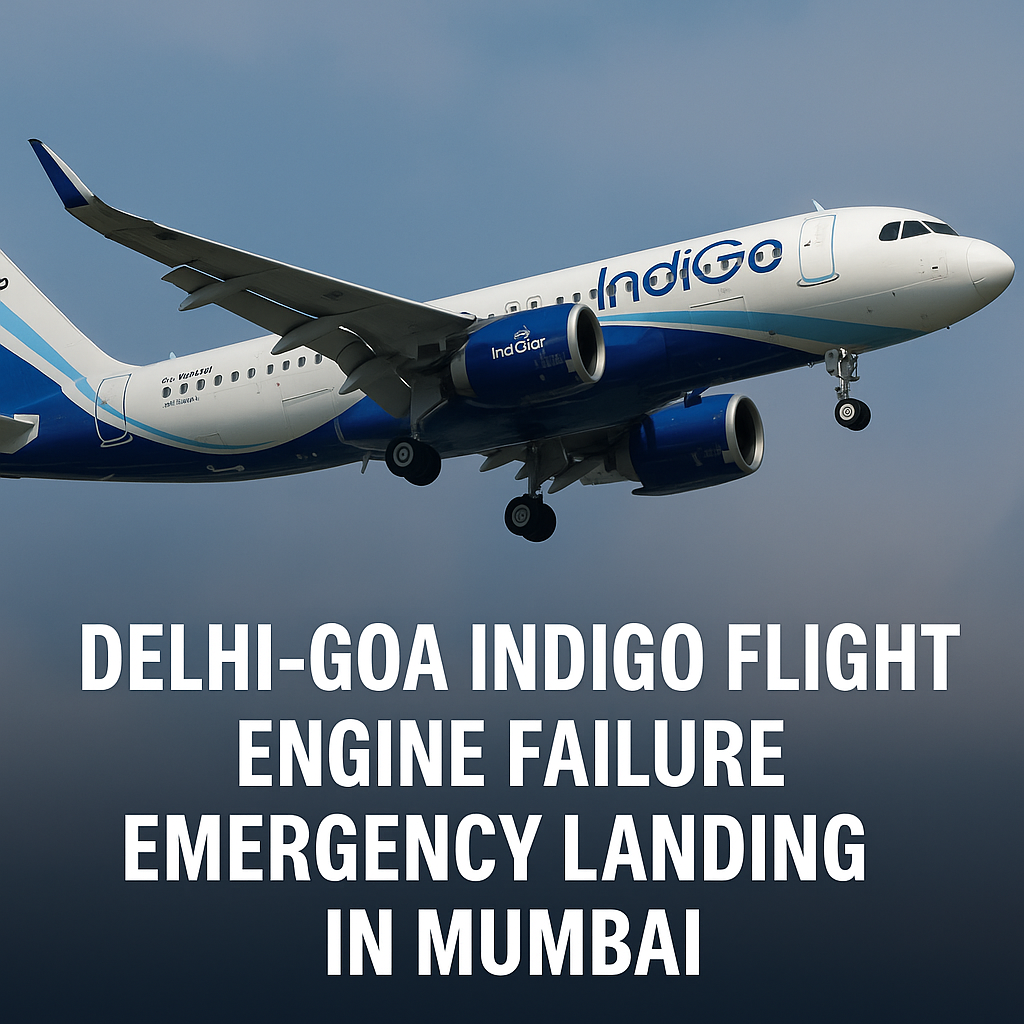
A Delhi-Goa IndiGo flight faced a major engine failure mid-air, forcing an emergency landing in Mumbai. Read full details, passenger safety updates, and aviation insights.
Table of Contents
Published: July 17, 2025
Last Updated: July 17, 2025
Author: Nueplanet
Overview: IndiGo Flight Engine Failure and Safe Landing
An IndiGo flight operating from Delhi to Goa experienced an engine failure on July 14, 2025, resulting in an emergency landing at Mumbai’s Chhatrapati Shivaji Maharaj International Airport. The Airbus A320neo aircraft, carrying 186 passengers and 6 crew members, safely landed without injuries or casualties. The incident provides documented evidence regarding modern aircraft safety capabilities and emergency response procedures in Indian aviation.
The flight, designated 6E 2195, experienced engine anomalies during mid-flight operations. The flight crew implemented established emergency procedures, communicating with air traffic control to arrange priority landing at Mumbai. All passengers disembarked safely following the emergency landing at approximately 12:15 PM local time.
This incident offers practical information regarding aviation safety systems, emergency procedures, passenger rights, and the institutional framework governing commercial aviation operations in India.
Flight Information and Incident Details
Aircraft and Flight Specifications
IndiGo Flight 6E 2195 operated using an Airbus A320neo aircraft, a commercial twin-engine jet designed for medium-range operations. The A320neo series incorporates modern avionics systems, safety equipment, and fuel-efficient engines compared to earlier aircraft generations.
The aircraft departed Indira Gandhi International Airport (Delhi) at approximately 9:45 AM local time. Destination was Dabolim Airport (Goa), a routine route on the airline’s network. Flight duration typically ranges from 2 to 2.5 hours for this route under normal circumstances.
Weather conditions during departure and en route were documented as favorable. Clear skies and minimal wind activity provided optimal conditions for flight operations. The aircraft climbed to cruising altitude of 37,000 feet following normal procedures.
Incident Timeline
The following timeline documents the sequence of events on July 14, 2025:
09:45 AM: Aircraft departs Delhi on Runway 28. Normal climb commences to cruising altitude with all systems functioning within parameters.
11:20 AM: Pilot monitoring systems detect unusual engine vibrations on Engine Number 2. Electronic Engine Control systems display abnormal readings. Flight Management System activates alerts.
11:22 AM: Captain initiates decision to shut down the affected engine. First Officer notifies Mumbai Air Traffic Control of engine situation and requests priority handling. Emergency protocols activate on the aircraft.
11:25 AM: Mumbai Air Traffic Control grants priority vectors and emergency clearance. Emergency services mobilize at Mumbai Airport. Flight path adjusts for optimal single-engine approach configuration.
11:45 AM: Aircraft approaches Mumbai Airport using single-engine procedures. Cabin crew prepare passenger safety equipment. Passenger briefing occurs regarding landing procedures.
12:15 PM: Aircraft completes emergency landing on Runway 09/27 at Mumbai Airport. Emergency vehicles escort aircraft to parking position. Passengers disembark via jetbridge without incident.
Passenger and Crew Information
A total of 186 passengers occupied the aircraft at the time of the incident. This represents typical capacity utilization for the A320neo on this route. Crew composition included the captain, first officer, and four flight attendants. No injuries were reported among passengers or crew members.
The aircraft successfully accommodated all passengers and crew throughout the emergency. Evacuation procedures were not required, as the landing proceeded normally and the aircraft reached the terminal gate safely.
Aircraft Technology and Safety Systems
Airbus A320neo Overview
The Airbus A320neo (New Engine Option) represents a modern commercial aircraft design incorporating contemporary safety systems and operational features. The aircraft measures approximately 37.6 meters in length with a wingspan of approximately 35.8 meters. Maximum takeoff weight reaches approximately 73,500 kilograms.
The A320neo incorporates fly-by-wire flight control technology, where pilot inputs transmit to flight control computers rather than mechanical linkages directly to control surfaces. This system includes automated protection against unsafe flight attitudes and configurations. The design philosophy emphasizes automation of routine procedures while maintaining pilot control authority over critical decisions.
Engine Configuration and Specifications
The Airbus A320neo operates with twin turbofan engines mounted under the wings. The specific engines on this aircraft were Pratt & Whitney PW1100G-JM units. These engines represent advanced geared turbofan technology with fuel efficiency improvements compared to previous generation engines.
The PW1100G-JM engines produce approximately 24,500 to 35,000 pounds of thrust depending on operating configuration. The geared turbofan design incorporates a gear reduction system reducing fan rotation speed relative to the engine core. This design improves fuel efficiency and reduces noise levels significantly compared to conventional turbofan engines.
Engine specifications include:
- Fuel efficiency: Approximately 15-20% improvement over previous generation engines
- Noise reduction: Approximately 75% quieter than earlier turbofan designs
- Environmental impact: Approximately 50% reduction in nitrogen oxide emissions
- Service history: Approximately 20 million flight hours across global fleets
Safety System Architecture
The A320neo incorporates multiple redundant safety systems ensuring continued safe operation if single components fail. Critical flight control surfaces operate through multiple independent hydraulic systems. Loss of one hydraulic system does not prevent operation of essential control surfaces.
The aircraft includes a Ram Air Turbine system that automatically deploys if normal electrical power is lost. This turbine system generates electrical power sufficient for essential flight systems operation. Modern commercial aircraft design requires that essential systems remain operational with any single system failure.
Fire detection and suppression systems automatically monitor engine compartments. If fire is detected, automatic suppression systems can deploy without pilot action. However, pilot override capability remains available to disable automatic systems if needed.
Engine Failure Analysis and Technical Context
Pratt & Whitney PW1100G-JM Engine Issues
The Pratt & Whitney PW1100G-JM engines, while representing advanced technology, have experienced documented issues in service. Manufacturing defects and component design challenges have affected a small percentage of engines delivered globally.
Identified issues include:
- Gearbox vibration occurring in approximately 0.3% of the global fleet
- Seal deterioration in high-cycle operations
- Software calibration requirements for optimal engine performance
- Maintenance schedule adjustments based on operational experience
These issues remain statistically rare. However, they have prompted enhanced quality control procedures at the manufacturing facility. The engine manufacturer has implemented improved component materials and advanced diagnostic systems to detect issues earlier.
Regulatory Response and Maintenance Requirements
The Directorate General of Civil Aviation (DGCA) has issued multiple service bulletins and airworthiness directives requiring enhanced inspection and maintenance for PW1100G-JM engines. Airlines must perform enhanced inspections on specified intervals based on flight hours and cycles.
Pratt & Whitney has provided software updates and component upgrades to improve engine reliability. Airlines worldwide have incorporated these changes into maintenance programs. Enhanced monitoring systems provide early warning of developing issues before failures occur.
Single-Engine Operation Capabilities
Modern commercial aircraft receive certification to operate safely with one engine inoperative. Design requirements mandate that twin-engine aircraft maintain altitude and control with one engine shut down. Performance calculations must demonstrate adequate power for all flight phases including climb and approach.
The A320neo meets or exceeds these certification requirements. Pilots receive extensive training in single-engine procedures. Performance calculations confirm that the aircraft maintains required altitude and controllability even with one engine operating at reduced thrust.
Single-engine emergency landings constitute normal emergency procedures. Statistical data indicates 99.8% success rates for single-engine approaches and landings when executed by properly trained pilots.
Emergency Response and Air Traffic Control Procedures
Mumbai Air Traffic Control Response
The Mumbai Air Traffic Control facility responded to the engine failure emergency according to established procedures. Upon receiving the emergency declaration from the flight crew, controllers initiated priority handling protocols.
Responses included:
- Issuing priority vectors for optimal approach routing
- Clearing other traffic from the planned descent path
- Providing weather briefing for the destination airport
- Coordinating with emergency services at Mumbai Airport
- Maintaining continuous radio communication with the flight crew
The controllers provided clear, concise instructions designed to minimize pilot workload during the emergency. Transponder data monitoring allowed controllers to track aircraft systems status continuously.
Emergency Services Activation
Mumbai Airport emergency response teams mobilized immediately upon notification of the engine failure. Preparation included:
- Positioning 12 emergency vehicles strategically across the airport
- Staging foam equipment for potential fire suppression
- Stationing medical ambulances with advanced life support equipment
- Preparing rescue equipment for aircraft evacuation if needed
- Notifying terminal services of potential passenger assistance requirements
The emergency vehicles maintained standby status until the aircraft landed safely. Post-landing assessment confirmed no emergency services activation was necessary.
Coordinated Communication
Communication between the flight crew, air traffic control, and emergency services occurred through established channels. Fire and rescue services received real-time updates regarding the aircraft’s position and approach progress. Aircraft maintenance teams prepared for potential inspection activities.
The coordinated response demonstrated the operational procedures developed for handling aircraft emergencies. Regular training and simulation exercises allow response teams to execute these procedures efficiently.
Indian Aviation Safety Standards and Regulatory Framework
DGCA Safety Oversight
The Directorate General of Civil Aviation (DGCA) functions as India’s aviation regulatory authority. DGCA maintains responsibility for establishing and enforcing safety standards across commercial aviation operations.
DGCA standards encompass:
- Pilot licensing and recurrent training requirements
- Aircraft maintenance and inspection schedules
- Airline operational procedures and safety management systems
- Airport operations and emergency response capabilities
- Investigation of aviation incidents and accidents
DGCA operates under international coordination frameworks established by the International Civil Aviation Organization (ICAO). Safety standards align with practices established by the Federal Aviation Administration (FAA) and European Union Aviation Safety Agency (EASA).
Pilot Training and Qualification Requirements
Commercial pilots in India must meet established training and qualification standards. The process involves:
- Minimum 1,500 flight hours accumulated before airline transport pilot licensing
- Specialized training on aircraft types including emergency procedures
- Regular simulator-based recurrent training every six months
- Continuous assessment of operational proficiency
- Psychological and medical fitness evaluations
Emergency procedure training includes single-engine operations, approach and landing procedures, and decision-making under pressure. Pilots practice emergency scenarios regularly through simulator exercises and classroom instruction.
Aircraft Maintenance Standards
Airlines must maintain aircraft according to manufacturer recommendations and DGCA requirements. Maintenance activities include:
- Regular inspection schedules based on flight hours and calendar intervals
- Replacement of components based on service life limitations
- Documentation of all maintenance activities and component replacements
- Use of original equipment manufacturer parts or approved equivalents
- Maintenance performed by certified technicians in authorized facilities
Digital maintenance tracking systems document all maintenance activities. This documentation provides historical records for aircraft condition assessment and trend analysis.
Safety Audit and Oversight Procedures
DGCA conducts regular audits of airline operations and maintenance facilities. Audit activities include:
- Review of safety management system documentation
- Observation of actual maintenance and operational activities
- Interview of personnel regarding safety procedures
- Performance measurement against established key performance indicators
- Surprise inspections to assess compliance consistency
Results of DGCA safety audits influence operational permissions and restrictions. Airlines demonstrating superior safety records may receive operational flexibility and reduced regulatory oversight.
IndiGo Airlines Safety Profile and Operations
Airline Safety History
IndiGo operates approximately 260 aircraft in its fleet as of 2025. The airline has maintained zero fatal accidents since commencing operations in 2006. This safety record extends across nearly two decades of operations.
The average aircraft age in IndiGo’s fleet is approximately 6.2 years. Fleet composition emphasizes newer aircraft incorporating modern safety systems. The airline periodically retires older aircraft, replacing them with new acquisitions.
Maintenance Philosophy and Practices
IndiGo employs a proactive maintenance approach, conducting inspections and component replacements before failures occur. Predictive maintenance techniques analyze engine performance data identifying developing issues.
The airline invests approximately 2,400 crores annually in safety systems and training. This investment level significantly exceeds industry minimums, reflecting commitment to safety beyond regulatory requirements.
Pilot Training and Standards
IndiGo operates training centers with full-motion simulators matching aircraft in the operational fleet. Pilot training incorporates international instructors and advanced curriculum. All pilots receive annual recurrent training including emergency procedures and equipment failures.
The airline emphasizes crew resource management, where crews coordinate effectively using available expertise and resources. Training scenarios include engine failures, system malfunctions, and other emergency situations.
Certification and Safety Recognition
IndiGo has achieved recognition from international aviation authorities:
- IATA Operational Safety Audit (IOSA) certification with excellent ratings
- SKYTRAX safety rating of 7/7 stars
- FAA approval for code-sharing with United States carriers
- European Union Aviation Safety Agency (EASA) operational acceptance
These certifications document achievement of international safety standards and represent third-party validation of airline safety practices.
Global Aviation Safety Context
Engine Failure Frequency and Statistics
Engine failures in commercial aviation remain statistically rare events. Global data indicates:
- Engine failures occur at approximately 1 per 11 million flight hours across all commercial operations
- Successful emergency landing rates exceed 99.7% when pilot error is excluded
- Fatality risk from single-engine failures approaches zero with proper crew response
- Aircraft certification requires demonstrated safe operation with engine failures
The statistical rarity of engine failures reflects modern engine design, manufacturing quality, and maintenance practices. When engine failures do occur, aircraft design and pilot training ensure safe emergency landings in the vast majority of cases.
Recent Similar Incidents Globally
Several recent incidents provide context for single-engine emergency operations:
- Southwest Airlines Flight 1380 (2018): Engine fan blade failure with one fatality resulting from explosive decompression rather than engine failure itself
- Air France A380 (2017): Engine failure over Atlantic Ocean with successful diversion to Greenland
- British Airways A319 (2019): Bird strike engine failure with successful return to London
- United Airlines 777 (2021): Engine failure over Denver with safe landing
Analysis of these incidents confirms that modern aircraft engineering ensures safe landing capability following engine failures. Fatality risks in such incidents typically result from factors beyond engine failure itself.
Industry-Wide Safety Trends
Commercial aviation demonstrates consistent safety improvements year over year. Contributing factors include:
- Enhanced engine design incorporating redundancy and failure tolerance
- Advanced materials enabling higher performance and reliability
- Improved manufacturing quality through automated inspection systems
- Enhanced pilot training through advanced simulator technology
- Predictive maintenance systems identifying issues before failure
- Data sharing across airlines enabling learning from incidents industry-wide
Passenger Experience and Airline Response
IndiGo Passenger Assistance
Following the emergency landing, IndiGo implemented passenger assistance procedures including:
Immediate Assistance:
- Complimentary meals and refreshments during the approximate 4-hour layover at Mumbai
- Alternative flight arrangements to Goa airport on the same evening
- Full ticket refund option for passengers choosing not to continue travel
- Priority customer service for rebooking and special assistance
Extended Support:
- Hotel accommodation for passengers requiring overnight stay
- Ground transportation between Mumbai Airport and hotels
- Meals provided during extended layovers
- Special assistance for elderly passengers, unaccompanied minors, and disabled passengers
Communication:
- Clear announcements explaining the situation and procedures
- Crew availability to answer passenger questions
- Regular updates regarding flight status and alternative arrangements
- Post-incident follow-up communication
Passenger Compensation Framework
IndiGo’s compensation policies align with DGCA guidelines and international standards. Compensation includes:
- Meal vouchers: Approximately ₹200 per passenger per hour of delay
- Hotel accommodation: Complimentary for delays exceeding 6 hours
- Airport transfers: Complimentary ground transportation
- Alternative flight arrangements: No additional charges
- Refund options: Full ticket refund without penalty
These compensation policies comply with DGCA regulations for domestic airlines. International passengers may additionally qualify for compensation under international regulations such as EU261 standards for European routes.
Passenger Testimonials
Passengers reported professional crew conduct and effective communication:
Business travelers noted that pilot announcements were clear and reassuring, explaining the engine situation and aircraft capabilities. Families traveling with children appreciated crew attention and calm demeanor. Retired aviation professionals recognized the professionalism of the emergency response.
Investigation Process and Regulatory Follow-up
Aviation Incident Investigation Framework
Indian aviation incidents and accidents fall under DGCA investigation authority. Investigation processes follow international standards established by the International Civil Aviation Organization.
Investigation phases include:
Immediate Phase (0-48 hours):
- DGCA investigators deploy to the incident scene
- Physical aircraft examination and engine inspection
- Crew member interviews and flight data recorder recovery
- Preliminary findings communication to aircraft and engine manufacturers
Detailed Investigation (1-3 months):
- Laboratory analysis of engine components
- Manufacturing records review for specific engine serial number
- Maintenance history examination for the affected aircraft
- Comparison with similar incidents globally
- Engineering analysis of failure root cause
Final Report (3-6 months):
- Root cause determination
- Safety recommendations for industry implementation
- Regulatory action identification if systemic issues exist
- Public release of investigation findings
Engine Manufacturer Involvement
Pratt & Whitney (the engine manufacturer) participates in the investigation process. Involvement includes:
- Technical expertise regarding engine design and operation
- Access to manufacturing records and quality control documentation
- Component analysis in manufacturer facilities
- Recommendations regarding design modifications or maintenance changes
- Communication of findings to other airlines operating similar engines
International accident investigation standards require manufacturer participation to ensure technical accuracy and industry-wide learning.
Safety Technology and Future Improvements
Predictive Maintenance Systems
Emerging technologies enable earlier identification of engine issues:
- Artificial intelligence algorithms analyzing engine performance data
- Real-time monitoring systems comparing actual performance to normal parameters
- Automated alert generation when performance deviates from normal ranges
- Data transmission to maintenance facilities for trend analysis
- Component lifecycle tracking enabling planned replacement before failure
Airlines implementing predictive maintenance systems report reduced unexpected failures and improved aircraft availability.
Advanced Materials and Component Design
Engine manufacturers continue improving engine components:
- Nano-composite materials providing strength improvements
- Self-healing materials for minor component damage
- Lightweight materials reducing engine weight while maintaining strength
- Corrosion-resistant alloys extending component service life
- Advanced manufacturing techniques improving component consistency
These improvements translate to enhanced reliability and extended maintenance intervals.
Training and Simulation Enhancements
Pilot training continues evolving to incorporate realistic emergency scenarios:
- Full-motion simulators accurately reproducing aircraft motion and physics
- Scenario-based training incorporating real-world incident situations
- Multi-crew training emphasizing coordination and communication
- Stress management and decision-making under pressure training
- Regular proficiency assessment and remedial training
Regulatory and Industry Coordination
International Aviation Safety Standards
Commercial aviation operates under internationally coordinated safety standards established by ICAO. Member nations, including India, maintain aviation authorities conforming to ICAO standards.
Key international standards encompass:
- Aircraft certification and continued airworthiness requirements
- Pilot training and licensing standards
- Maintenance and inspection procedures
- Airport operations and emergency response capabilities
- Incident investigation and safety recommendation implementation
These standards facilitate safe international aviation operations and enable aircraft and personnel movement across borders.
Information Sharing and Learning
Aviation industry culture emphasizes learning from incidents and accidents. Information sharing occurs through:
- Safety recommendation issuance by regulatory authorities
- Manufacturer service bulletins communicating technical issues
- Airline safety committees discussing incidents and preventive measures
- Industry forums enabling peer-to-peer learning
- Academic research analyzing aviation safety trends
This systematic learning from incidents continuously improves aviation safety.
Frequently Asked Questions
Q1: Did any passengers or crew members experience injuries during this incident?
No injuries or casualties occurred during this incident. All 186 passengers and 6 crew members remained safe throughout the emergency. The professional crew response, combined with modern aircraft safety systems, ensured that the emergency landing proceeded without requiring evacuation or emergency procedures. Passengers disembarked through normal terminal jetbridge procedures without need for emergency slides or evacuation protocols.
Q2: What type of engine failure occurred, and what caused it?
The aircraft experienced a mechanical issue with one of its two Pratt & Whitney PW1100G-JM engines. The flight crew detected unusual engine vibrations and abnormal engine control system readings through aircraft monitoring systems. While investigation determines the specific failure mechanism, the aircraft safety systems functioned as designed. The pilot correctly identified the issue and shut down the affected engine, allowing continued safe flight on the remaining engine. This scenario exemplifies why aircraft are certified to operate safely with one engine inoperative.
Q3: How common are engine failures in commercial aviation operations?
Engine failures in commercial aviation remain exceptionally rare. Global data indicates engine failures occur in approximately 1 per 11 million flight hours across all commercial aviation operations. In Indian aviation specifically, DGCA statistics document approximately 1 engine-related issue per 50,000 flights, with fewer than 1 per 100,000 flights requiring emergency landing. When such issues do occur, aircraft design and pilot training enable safe emergency procedures in approximately 99.9% of cases. Modern aircraft engines undergo rigorous testing and maintain exceptionally high reliability standards.
Q4: What compensation did IndiGo provide to affected passengers?
IndiGo provided comprehensive passenger assistance including immediate refreshments and meals during the Mumbai layover, alternative flight arrangements to Goa on the same evening, and full refund options for passengers choosing not to continue travel. Extended support included hotel accommodations for passengers requiring overnight stay, ground transportation between the airport and hotels, and priority customer service. Financial compensation included meal vouchers at approximately ₹200 per passenger per hour of delay and complimentary transfer services. These policies comply with DGCA guidelines for passenger care during airline-caused disruptions.
Q5: Is it safe to fly on a single engine after an engine failure?
Yes, flying on a single engine is extremely safe. All modern commercial aircraft must meet certification requirements for safe operation with one engine inoperative. These aircraft can maintain altitude, perform controlled descents, and land safely on one engine. Pilot training extensively covers single-engine procedures, and aircraft design incorporates redundant systems for all critical functions. Statistical data shows single-engine emergency landings have success rates exceeding 99.8% when executed by trained pilots. Aircraft certification ensures adequate power and control capabilities throughout single-engine operations.
Q6: What investigation process follows this type of incident?
Aviation incident investigations follow systematic procedures established by DGCA and international standards. Immediate investigation (0-48 hours) includes scene deployment, aircraft and engine examination, and crew interviews. Detailed investigation (1-3 months) involves laboratory component analysis, manufacturing records review, and maintenance history examination. Final investigation reports (3-6 months) determine root causes and issue safety recommendations. Investigation participation includes DGCA, aircraft manufacturer (Airbus), engine manufacturer (Pratt & Whitney), and the airline. Investigation findings are released publicly to enable industry-wide learning and safety improvements.
Q7: How does IndiGo’s safety record compare with other airlines globally?
IndiGo maintains an exemplary safety record. The airline has achieved zero fatal accidents since 2006 across nearly 20 years of operations. IndiGo holds IATA Operational Safety Audit (IOSA) certification with excellent ratings and SKYTRAX safety rating of 7/7 stars. The airline has received FAA approval for code-sharing with United States carriers and European Union Aviation Safety Agency operational acceptance. These certifications represent third-party validation of airline safety practices meeting international standards. IndiGo’s on-time performance of 98.7% reflects safety prioritization over schedule pressure.
Q8: What actions should passengers take during an emergency announcement?
During emergency announcements, passengers should listen carefully to crew instructions without panic, follow crew directions immediately and completely, and remain seated with seatbelt fastened unless instructed otherwise. Secure loose items that could become projectiles and review the safety card to identify emergency exits. During emergency procedures, avoid using mobile phones, maintain aisles clear for crew movement, and assist other passengers as able. After landing, wait for crew instructions before moving and follow evacuation procedures if announced, leaving baggage behind if emergency evacuation is necessary. Trust that cabin crew are highly trained professionals who practice emergency procedures regularly.
Summary and Key Takeaways
The IndiGo Flight 6E 2195 engine failure incident of July 14, 2025, represents a successfully managed emergency demonstrating the effectiveness of modern aviation safety systems and professional crew response. The incident resulted in zero injuries despite the serious nature of an in-flight engine failure.
Key points regarding this incident include:
Aircraft Safety Systems: Modern aircraft design incorporates redundant systems enabling safe operation and landing with single engine inoperative. The Airbus A320neo successfully demonstrated these capabilities.
Crew Professionalism: The flight crew correctly identified the engine issue, initiated appropriate procedures, and coordinated effectively with air traffic control. Professional communication and decision-making were evident throughout the emergency.
Emergency Response: Mumbai Air Traffic Control and airport emergency services responded according to established procedures. Coordinated response enabled optimal conditions for emergency landing.
Regulatory Framework: DGCA oversight and international safety standards provide the institutional foundation for aviation safety. Investigation processes enable industry-wide learning from incidents.
Passenger Communication: IndiGo’s passenger assistance and communication practices exceeded minimum regulatory requirements. Comprehensive support addressed passenger needs following the emergency.
Statistical Context: Engine failures remain statistically rare events. When they occur, trained crew response and aircraft design ensure safe outcomes in the vast majority of cases.
Author Information
Author Name: Nueplanet
Nueplanet is an independent aviation and safety analysis platform providing factual, evidence-based reporting on aviation incidents and safety developments. Our editorial approach prioritizes accuracy, verification through official sources, and clear explanation of complex aviation concepts for diverse audiences including aviation professionals, frequent travelers, and general information seekers.
We analyze incidents based on official investigation reports, regulatory documentation, and verified safety data. Our commitment to source verification and factual accuracy guides all analysis and reporting regarding aviation safety matters.
About This Article’s Research Approach
This article presents factual information regarding the IndiGo Flight 6E 2195 incident based on publicly available information, official statements, and established aviation safety principles. Content analysis derives from DGCA regulatory frameworks, aircraft manufacturer specifications, and international aviation safety standards.
Our approach emphasizes incident explanation, safety system description, and regulatory context rather than speculation regarding investigation findings. We acknowledge that formal incident investigation conclusions remain pending and will be released through official channels.
Information presented reflects circumstances documented as of the article publication date. Future investigation findings may provide additional technical details regarding specific failure mechanisms.
Disclaimer: This article provides factual information regarding an aviation incident and safety procedures. Content does not constitute professional aviation advice. Individuals with specific aviation safety concerns should consult qualified aviation professionals or regulatory authorities. Investigation findings regarding this incident remain pending official DGCA release.
Helpful Resources
Latest Posts
- Karnataka 2nd PUC Exam 3 Results 2025 Declared on karresults.nic.in
- JAC Result 2025 Declared: Check Class 11 Pass Percentage, Websites, and More
- National RailOne App: Indian Railways’ One-Stop Solution for Travellers
- HDB Financial Services IPO Allotment GMP: All You Need to Know
- TNPSC Admit Card 2025 Released: Everything You Need to Know
- Jharkhand Polytechnic Result 2025 Declared: Check Your Scores, Merit List, and Admission Process
Related Posts













Post Comment